




Abstract
BACKGROUND:
No study has yet investigated the use of electronic nose (eNose) technology to reveal pattern recognition of urological diseases, including bladder cancer.
OBJECTIVE:
We sought to determine the diagnostic performance of the eNose in recognizing urinary odour in patients with bladder cancer.
METHODS:
The eNose is a commercially available model equipped with two sensors. The angle of the two sensors (
RESULTS:
Based on ROC analysis of the quantity in patients with bladder cancer, an optimal cut-off value for
CONCLUSION:
The eNose is a small, portable, rapid, low cost, and noninvasive instrument for distinguishing bladder cancer from other benign conditions.
Introduction
Urine has many components and varies depending on multiple factors, including age, hormonal condition, physical activity, food consumption and condition of the urinary tract system [1, 2, 3, 4, 5]. The identification of biomarkers in urine for early and non-invasive diagnosis purposes has been the subject of much research [6, 7, 8], and these studies revealed the chemical complexity of urine components applied to liquid urine [9] and even to its gaseous headspace [3]. The analysis of urine odour for cancer diagnosis has recently become a subject of great research interest [10, 11].
Since the first case study reported the olfactory detection of cancer [12], experimental studies using trained dogs in the detection of cancer have shown promising preliminary outcomes [13, 14]. Trained dogs were able to detect prostate cancer using urine samples with high sensitivity and specificity, leading to considerable attention [10]. However, there were possible issues regarding costs, space, duration and reproducibility, which was affected by the canine olfactory skills depending on the performance of sniffer dogs.
The electronic nose (eNose) is an instrument that emulates the human olfactory system [15]. With development of key technology such as odour handling and delivery system, odour sensor, signal processing, pattern analysis, eNose has been used in numerous applications, including in the food and beverage quality assessment and in the detection of explosive and chemical agents [16, 17, 18, 19]. The interaction of volatile organic compounds with an array of partial selective chemical sensors that may react like the olfactory receptors in the human nose results in a conductance change in the sensors, which is transmitted to a processor. Studies have shown that the use of eNose technology has many useful potential applications for medical field, including the diagnosis of bile acid diarrhoea, tuberculosis, renal dysfunction, urinary tract infection, and cancers [20, 21, 22, 23, 24]. In addition, great achievement to show the usefulness of eNose for the detection of lung cancer was reported [25].
Although several studies have reported comparisons on the use odour for the detection of bladder cancer using urine samples from cancer patients and health controls [14, 21, 26, 27, 28], to our knowledge, no study has yet investigated the use of eNose technology to reveal pattern recognition of urological diseases, including bladder cancer. In this retrospective pilot study, we sought to determine the diagnostic performance of the eNose in recognizing urinary odour in patients with bladder cancer.
Materials and methods
Study population
Urine samples selected from 36 untreated patients with bladder cancer of various stages and grades,29 patients with urolithiasis, 10 patients with urinary tract infection (UTI), and 27 healthy volunteers were obtained at Kitasato University Hospital. There were no samples from patients with chronic renal failure, diabetes mellitus or other malignancies. All bladder cancer patients were treated with transurethral resection or radical cystectomy. Histological cancer types other than urothelial carcinoma were also excluded. The 2002 TNM classification system developed by the American Joint Committee on Cancer and the Union for International Cancer Control (UICC) [29], was used for pathological staging (Ta: 4 patients; Tis: 2; T1: 7; T2: 9; T3: 10; T4: 4), and the 1973 World Health Organization classification was used for pathological grading (grade 1: 4 patients; grade 2: 12; grade 3: 20). The bladder cancer patients consisted of 27 male and 9 female subjects, with a median age of 74 years (range, 52–85; mean, 73.0). None of the patients had received chemotherapy or radiation before surgery. Patients with urolithiasis including renal and ureteral stones were diagnosed by imaging. Patients suffered from UTI consisted of acute pyelonephritis and cystitis. Healthy volunteers did not have urogenital cancers, other malignancies, uropathological conditions or other diseases.
Urine samples were collected at the time of spontaneous urination before treatment. Immediately after sample collection, urine samples were centrifuged at 1,000
This study was approved by the Ethics Committee of Kitasato University School of Medicine (approval number: C09-504, B17-164). All patients were informed of the aim of the study and gave consent for the use of their samples.
Olfactory measurement
Urine odour feature. The output of A sensor (SA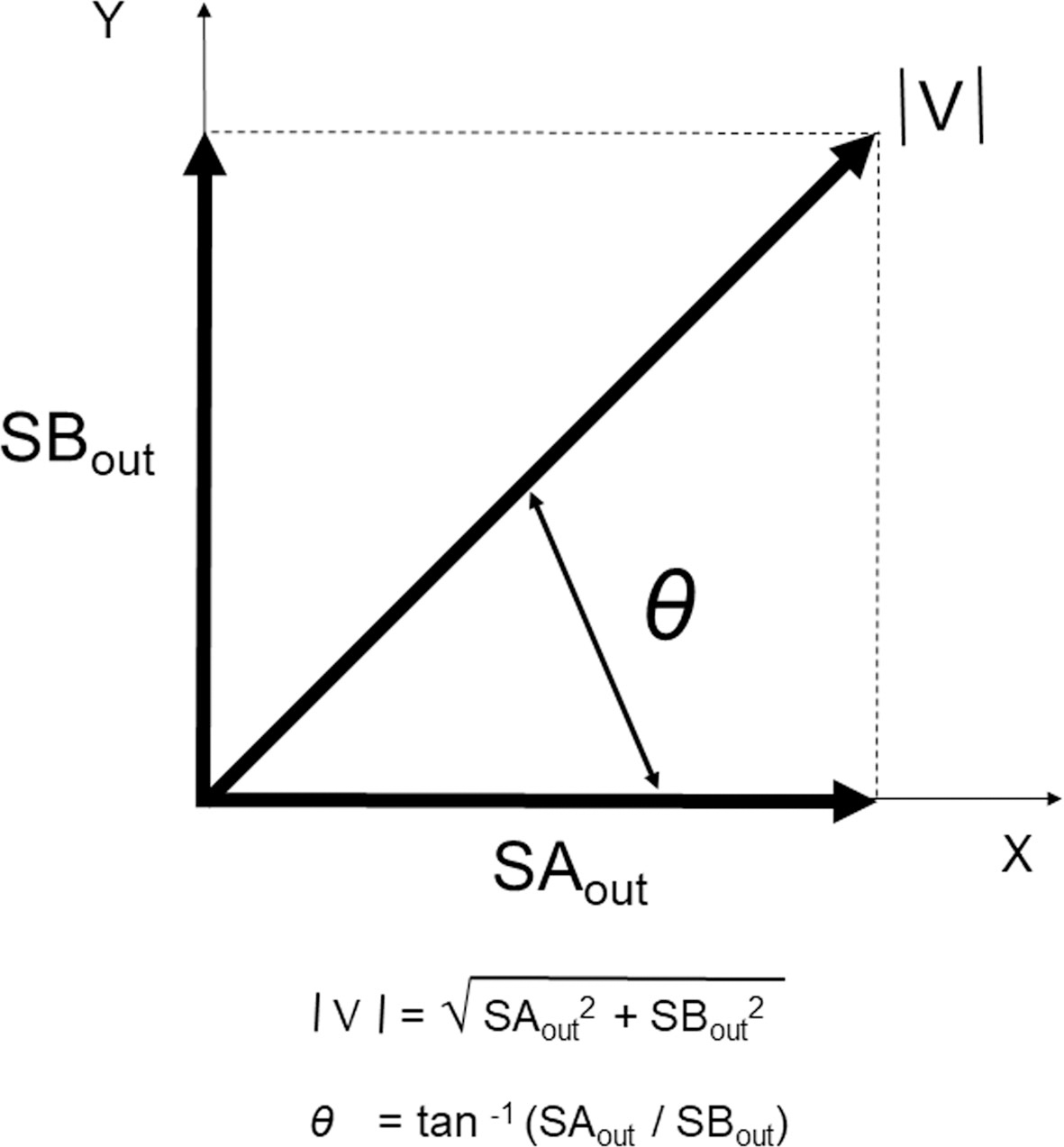
The strength of volatile NH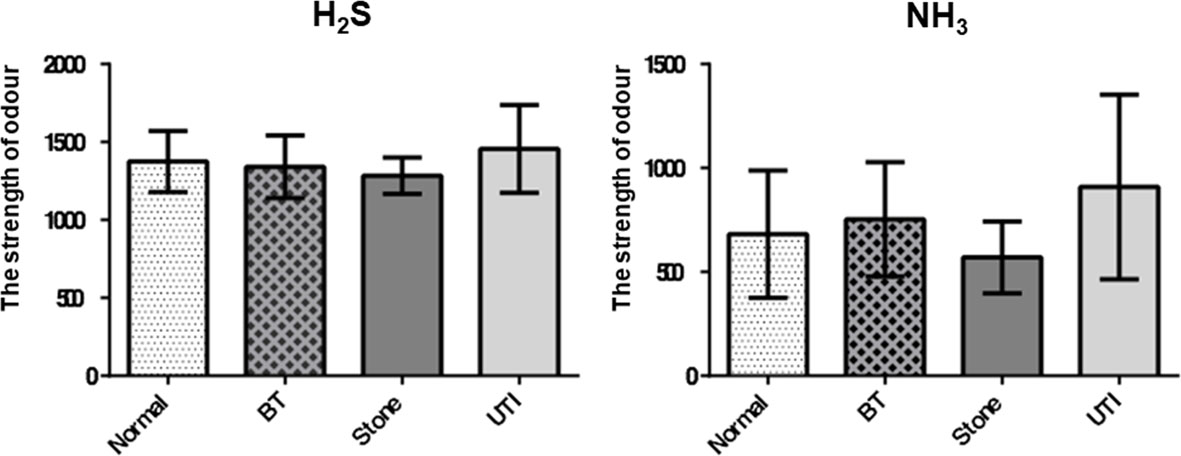
The eNose used in this study is a commercially available model (e-nose
The measurement equipment consisted of a polysty-rene cell culture flask (25 ml) with air filter cap covered by paraffin film. An 18 G intravenous cannula was connected to a silicon tube, and the afferent side was connected to the eNose. These equipment were used only once. Before analysis, samples were slowly thawed and gently mixed. Urine (5 ml) was put into a culture flask. The sample in the flask was heated to 45
For this analysis, gender, age (
Results
Strength of volatile NH
and H
S
The strength of volatile NH
AUC and best cut-off points for urine odour quantity and feature based on ROC analysis.
AUC and best cut-off points for urine odour quantity and feature based on ROC analysis.
AUC: area under curve; ROC: receiver-operating characteristic curve; CI: confidence interval; normal: healthy volunteer; BT: bladder cancer; UTI: urinary tract; * Mann-Whitney
The association of urine odour quantity and feature. The results of odour feature (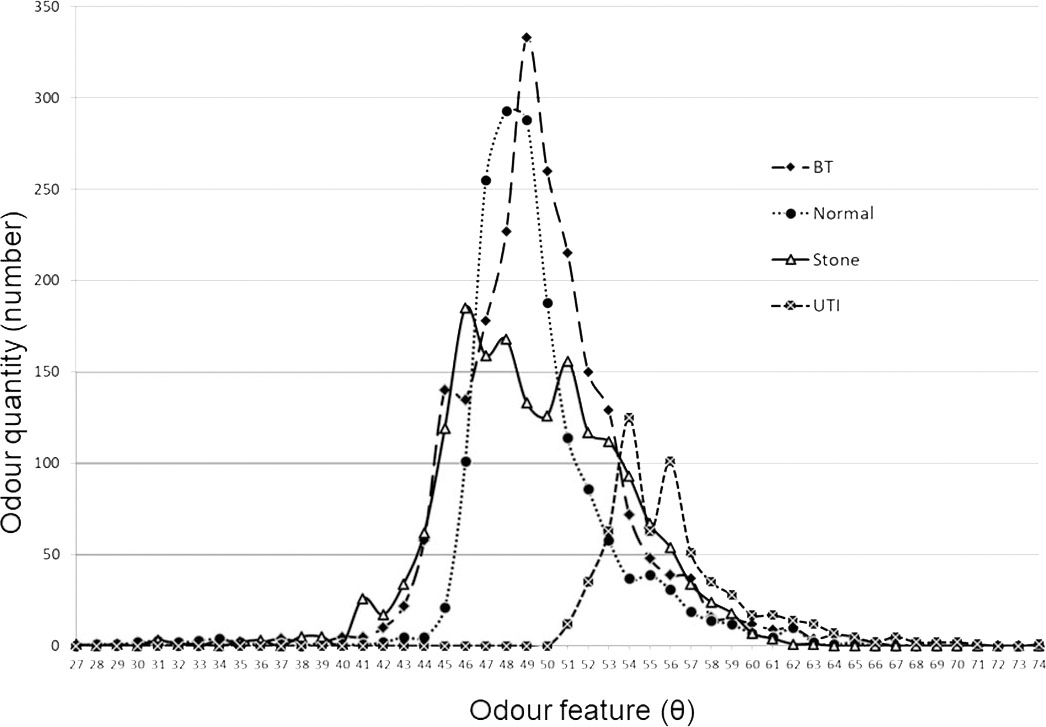
The results of the feature of odour (
Based on ROC analysis of the odour of bladder cancer after checking the number of odour peaks, an optimal cut-off value for
Receiver-operating characteristic curve analysis according to the association of odour feature and quantity. a: bladder cancer and healthy volunteers; b: bladder cancer and urolithiasis; c: bladder cancer and urinary tract infection.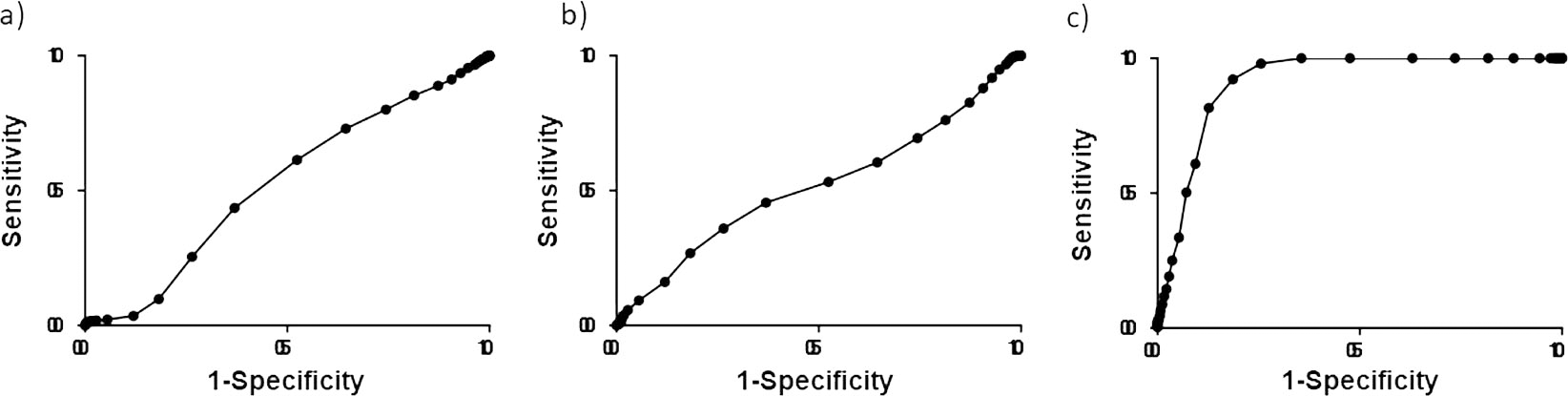
A relationship between V and
The association of the urine odour strength and feature. The results of odour feature (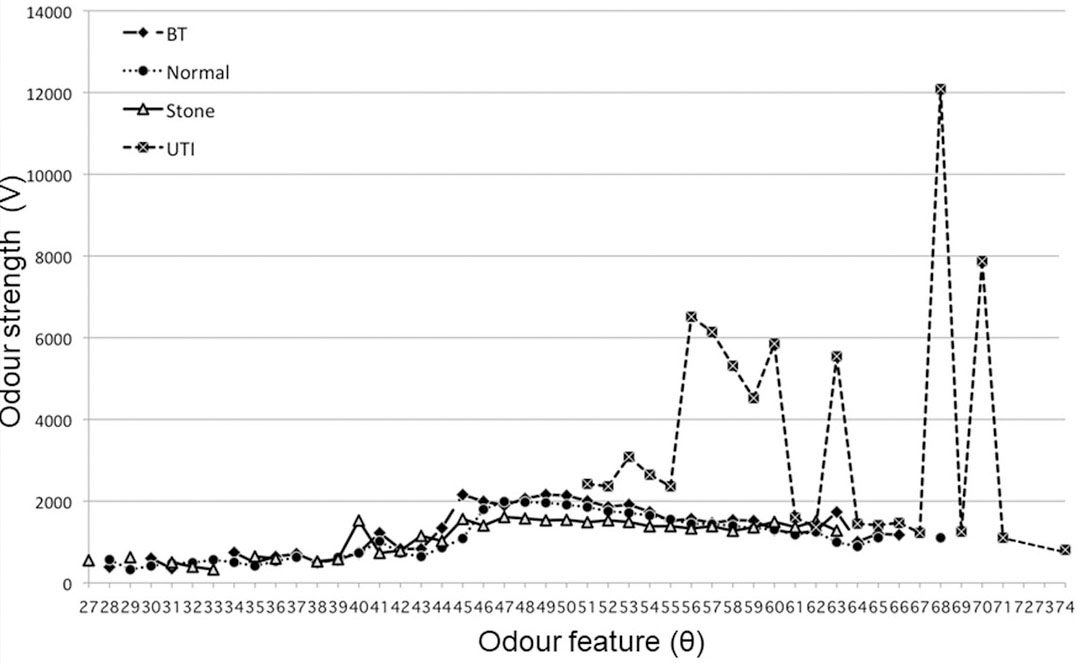
Based on pattern recognition, the detection of various conditions from urine samples using eNose equipment is a high-throughput method. We found that the association between urine odour feature (
Regarding urological oncology, bladder cancer is one of the diseases that received olfactory analysis in animal models as a diagnostic modality. One study demonstrated that dogs can be well trained to recognize bladder cancer in urine samples, showing a diagnostic success rate of 41%, compared to a 14% success rate reported for chance [14]. The other study using sniffer mice indicated that trained mice discriminated between the urinary odour of pre- and post-transurethral resection in individual patients with bladder cancer, achieving a success rate of 100% [26].
Several studies have also investigated urinary odour for the detection of bladder cancer using the eNose instead of an animal model. Bernabei et al. evaluated odour using eNose and was able to discriminate the urine samples of healthy patients from those of patients with bladder cancer, with a diagnostic accuracy of 100% [21]. Heers et al. showed that the eNose correctly detected 93.3% already confirmed transitional cell carcinoma and 86.7% of healthy controls by urine samples [27]. Another experiment reported by Weber et al. studied the interaction between volatile organic compounds in the urine sample and bladder cancer [28]. An accuracy of 70% was reached, but this was lower when regarding patients with other infection diseases. They concluded that more sophisticated pattern recognition is needed to improve the results. The response provided by the eNose may depend on a certain property of the sensor that was transduced into an electrical signal. However, based on previous reports, diagnostic accuracy in urinary odour was merely reported between bladder cancer patients and healthy volunteers. The presented results demonstrate clear pattern recognition and discrimination between patients with bladder cancer and other conditions using the feature of odour (
UTIs are a significant cause of morbidity, with a continuously rising number of patients. The analysis of the volatile organic compounds connected to these diseases by means of the eNose was investigated as a possible instrument of diagnosis. One study showed the detection of microbial contaminants such as Escherichia coli in urine samples using the eNose [20]. In the present study, the odour of UTI was the strongest in the groups in terms of volatile NH
Some limitations of our study should be mentioned. First, the number of cases was retrospective and small to permit definitive conclusions on the diagnostic accuracy of the eNose, although the preliminary data appears at least promising. Second, we used urine samples stored at
Conclusions
The eNose is a small, portable, rapid, low cost, and noninvasive instrument for distinguishing bladder cancer from other benign conditions. An analysis of the spectrum of urinary odour is possible, reinforcing its potential as a clinical tool, though results need to be validated due to the limited number of subjects involved in the study. More studies are needed to establish protocols for the use of the eNose in a clinical setting. The eNose could either become a diagnostic tool for excluding patients with urolithiasis and UTI or for selecting patients for more invasive procedures like cystoscopy.
Footnotes
Acknowledgments
This study was supported in part by JSPS KAKENHI Grant Number JP18K09206.