




Abstract
OBJECTIVE:
To analysis the expression of VEGF in gastric carcinoma cell and tumor tissue, our study determined the relationship between the expression of VEGF and tumor incidence, metastasis and prognosis in human gastric carcinoma.
METHODS:
Treatment of ZD6474 at dose of 30
RESULTS:
The mRNA and protein expression of VEGF in treatment group were significantly lower than that of control group (
CONCLUSION:
Our data demonstrated that the expression of VEGF was significantly related to the tumor incidence, metastasis and prognosis of patients with gastric cancer, which provides new leads to the diagnosis of gastric cancer.
Introduction
Gastric cancer represents a type of the tumors invading digestive tract, and seriously threatens the health and life of humans. Particularly, the failure of radical treatment or postoperative recurrence of tumors leads to unsatisfactory postoperative 5-year survival rate of patients due to metastases and infiltration characteristics [1, 2]. Gastric cancer is a kind of malignant epithelial tumor of glands. Surgical resection is the most important treatment mean for early gastric cancer, and if it is combined with chemotherapy and radiotherapy, the 5-year survival rate of patients with gastric cancer can be elevated [3, 4]. With the development of molecular biological technique and its application in the tumor therapy, evidence from a large amount of research revealed that new lymphatic vessels and blood vessels play crucial roles in tumor invasion and metastasis. New blood vessels serve as vehicle transferring nutrients to tumors, and tumor cells can also metastasize through new lymphatic vessels. Thus by inhibiting the generation of new lymphatic vessels and blood vessels, the metastasis of tumor cells can be effectively prevented and the prognosis will be improved correspondingly [5, 6]. Vascular endothelial growth factor (VEGF) contributes to important function in blood vessels and promoting angiogenesis, promotes the proliferation and differentiation of vascular endothelial cells, and causes the neovascularization [7]. It has been demonstrated that VEGF promoted angiogenesis and further affects tumor development, which was considered as an as an important evaluation index for the distant metastasis of tumors [8]. Previous evidence indicated that VEGF was involved in the pathogenetic processes of bladder cancer and gallbladder cancer, but the relationships of VEGF expression with the incidence, metastasis and prognosis of gastric cancer remain unclear yet [9]. In this study, we aimed to measured the expression of VEGF in gastric cancer cells and patients with gastric cancer, and determine the potential relationships of VEGF expression with pathogenesis and prognosis of gastric cancer.
Research objects and methods
Research objects and grouping
A total of 60 patients received radical operation for gastric cancer in our hospital from January 2008 to January 2011 were collected as gastric cancer group, and another 30 patients received subtotal gastrectomy in our hospital were selected as control group. Among patients in gastric cancer group, there were 32 males and 28 females in the age range of 46–68. According to tumor-node-metastasis (TNM) staging, there were 7 cases in stage II, 25 cases in stage III and 28 cases in stage IV. Among patients in control group, there were 15 males and 15 females aging from 45 to 63 years old. There were no statistical differences in age and gender of patients between gastric cancer group and control group. Inclusion criteria of all cases: (1) patients without history of serious cardiovascular and immune system diseases; (2) patients without severe hepatic and renal dysfunction; (3) patients without chronic and acute infectious diseases; (4) patients who agreed to be followed up. All patients selected signed the informed consent personally, and they all completed clinical and pathological data. This experimental scheme was reviewed and approved ethically by our hospital.
Cell culture
Gastric cancer cell line BGC823 was purchased from the Shanghai Cell Bank, Chinese Academy of Sciences. After resuscitation, cells were incubated using a culture flask with Roswell Park Memorial Institute (RPMI) 1640 medium (Invitrogen, CA, USA) containing 10% fetal bovine serum (FBS) in an incubator with 5% CO
Detection of cell proliferation, migration and invasion capabilities
Cells in the logarithmic growth phase were paved on a plate, and the cell density was adjusted into 1
The cell density was adjusted into 3
The cell density was adjusted into 1.5
Detection of VEGF messenger ribonucleic acid (mRNA) expressions in gastric cancer cells and tissues via quantitative polymerase chain reaction (qPCR)
After treatment and cells culture, 500
After tissue samples were obtained from patients in gastric cancer group and control group, they were added with TRIzol reagent at a ratio of 100 mg tissue: 1 mL TRIzol. The steps of RNA extraction, reverse transcription and qPCR were the same as described above.
Detection of VEGF protein expressions in gastric cancer cells and tissues via Western blotting
Cells were added with protein lysis buffer at a volume ratio of 1:1. The tissues of patients in two groups were added with protein lysis buffer (100 mg: 1 mL) and 1% proteinase inhibitor, followed by homogenization using an ultrasound homogenizer and centrifugation at 1200 g and 4
Survival curve drawing
The VEGF protein expression in cancer tissues of each patient with gastric cancer was determined, and patients were divided into two groups: VEGF-positive group and VEGF-negative group. Patients in both groups were followed up for 5 years. The 5-year survival rate of patients was recorded. The survival curves of patients in both groups were drawn, and Cox multivariate regression analyses were performed to analyze the factors on the prognoses of patients between two groups.
VEGF expression in cells. A: VEGF mRNA level by qPCR; B: VEGF protein expression by western blotting; C: statistical graph of protein expression level; the mRNA and protein expression levels of VEGF in cells were significantly reduced in drug group compared to that of control.
Proliferation capacity of gastric cancer cell lines. The cell proliferation capacity in drug group was significantly lower than that in control group via MTT assay (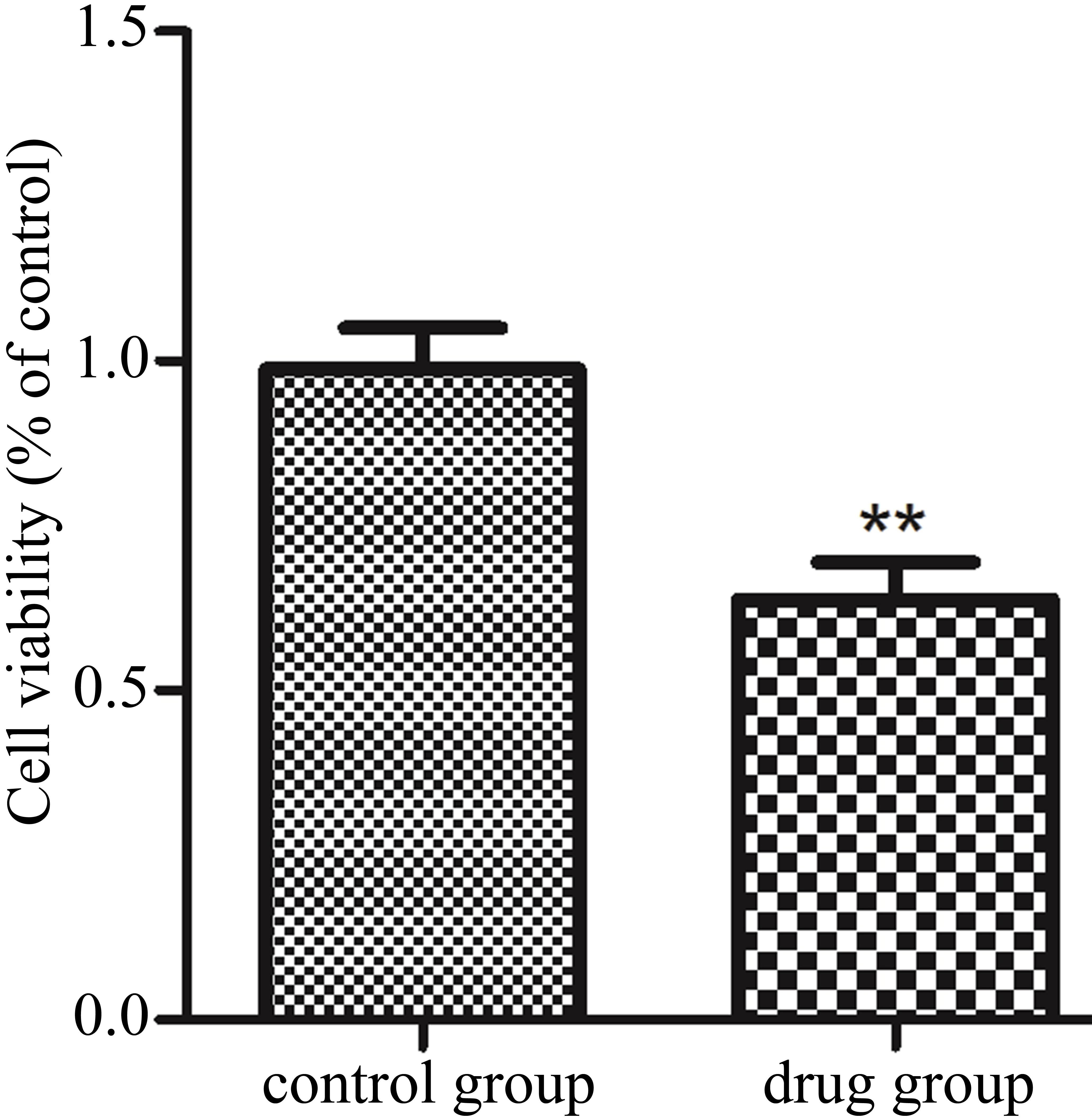
Data in this study were presented as mean
Results
VEGF expression in cells
The mRNA and protein expressions of VEGF in cells after being treated with ZD6474 were detected via qPCR and Western blotting, respectively. Results showed that ZD6474 significantly reduced the expression of VEGF in cells at both mRNA and protein levels compared to control group (
Effects of VEGF on proliferation, migration and invasion of gastric cancer cells
The proliferation of gastric cancer cell line BGC823 after ZD6474 treatment was detected via MTT assay. The result showed that the cell proliferation capacity after the down regulation of VEGF was significantly decreased compared with that in control group (
Migration and invasion capacities of gastric cancer cells. A: migration of cells by wound healing assay; B: statistical graph of relative migration distance; C: invasion of cells by transwell assay; D: statistical graph of Transwell assay. The cell migration and invasion capacities in drug group were significantly lower than those in control group (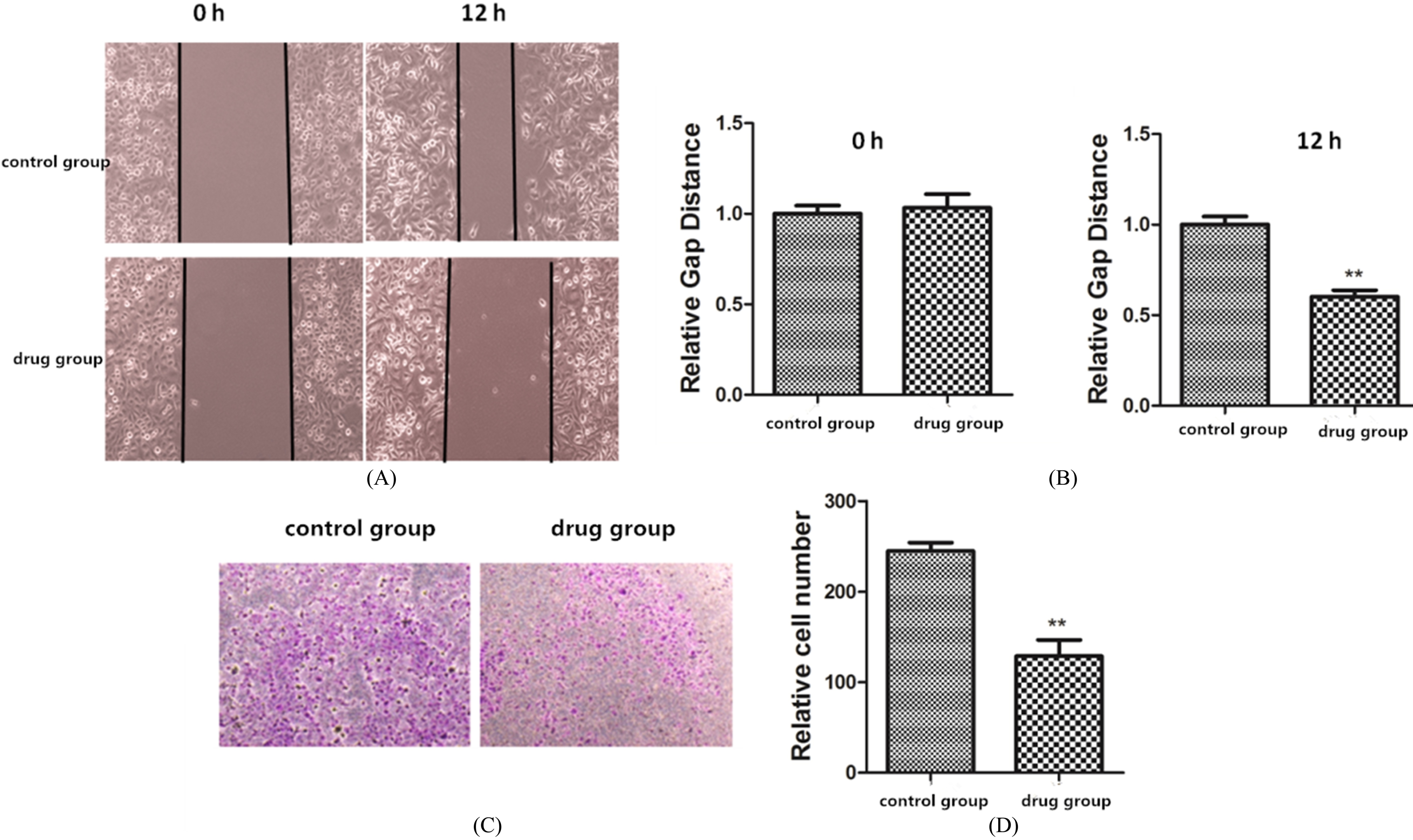
VEGF expression in tissues of patients with gastric cancer. A: level of VEGF mRNA by qPCR; B: expression of VEGF protein by western blotting; C: statistical graph of protein expression level; the mRNA and protein expression levels of VEGF in gastric cancer group were significantly higher than those in control group (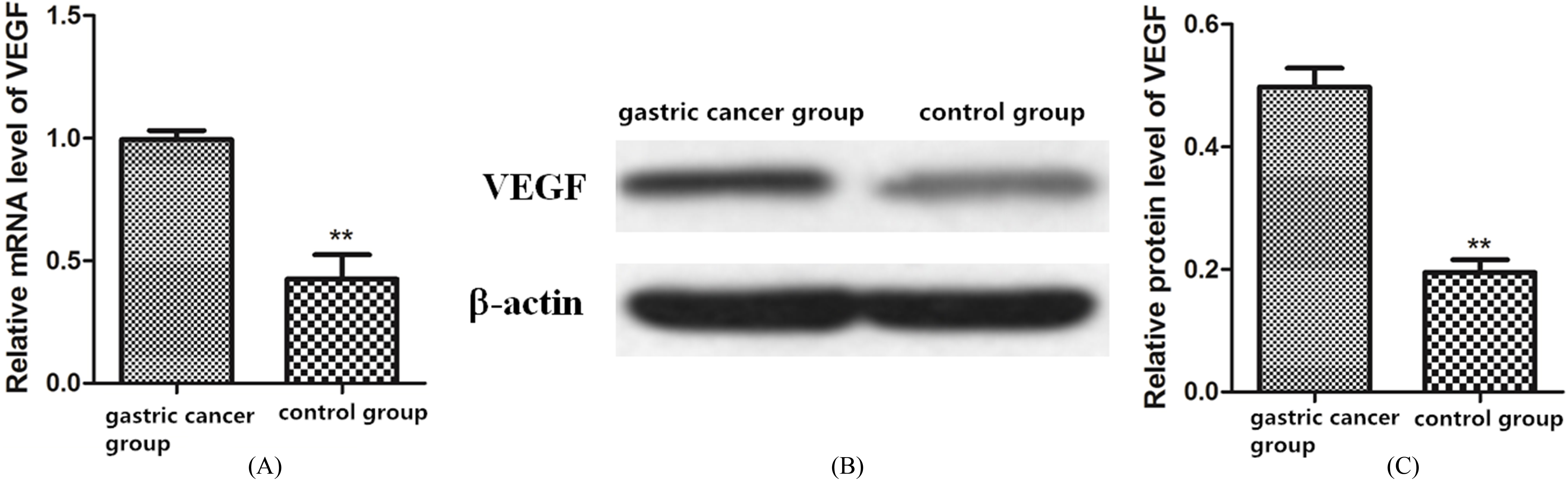
We also detected the mRNA and protein expressions of VEGF in gastric tissues of patients with gastric cancer. Similar to the in vitro result, the mRNA and protein expression levels of VEGF in gastric cancer group were obviously higher than those in control group (
Survival rate of patients with gastric cancer
All patients with gastric cancer were followed up after the operation. The 5-year survival was recorded and revealed that the survival rate of gastric cancer patients with VEGF-negative expression was significantly higher than that of patients with VEGF-positive expression (Fig. 5).
Correlations of VEGF expression in gastric cancer tissues with clinical data
Correlations of VEGF expression in gastric cancer tissues with clinical data
Cox regression analyses of prognostic factors of gastric cancer
Clinicopathological data of patients with gastric cancer were recorded. Our data showed no correlation between the expression of VEGF and the gender, age, growth mode of patients with gastric cancer (
Cox regression analyses of prognostic factors of gastric cancer
Cox multivariate regression analyses were performed to analyze factors affecting the prognosis of patients with gastric cancer. Lymph node metastasis, tumor staging and VEGF expression were found to be critical in the prognosis of patients (Table 2).
Survival curves of patients with gastric cancer. The 5-year survival rate of gastric cancer patients with VEGF-negative expression was significantly higher than that of patients with VEGF-positive expression.
Gastric cancer is a complex and multifactorial process, among which, the local invasion and distant metastasis severely threaten the survival rate of patients [10, 11]. The structural change and reducing adhesion of tumor cells lead to the separation of tumor cells from tumor tissues, thereby distant metastasis and local invasion occur through the new lymphatic vessels [12]. VEGF was characterized with binding activity to heparin, and showed critical effect on vascular endothelial cells, promoting formation of blood vessels, permeability of blood vessels and proliferation of tumor cells [13]. Augusto et al [14] found that the size of breast tumor was positively correlated with the VEGF expression in cancer tissues. Stacey and Aleksander [15] reported that VEGF was spontaneously produced or induced during the growth process of tumors, increasing the permeability of blood vessels. Moreover, VEGF exerted to promoting function to the lymphatic metastasis of cancer cells, regulated the differentiation of tumor and aggravated the malignant degree of tumor [16].
Previous evidence unraveled that ZD6474, an angiogenesis inhibitor, selectively targeted vascular endothelial growth factor receptor-2 (VEGFR-2; KDR) tyrosine kinase and epidermal growth factor receptor (EGFR) tyrosine kinase, as well as inhibited tumor growth and intraperitoneal dissemination in a highly metastatic orthotopic gastric cancer model [17]. In recent study, novel antiangiogenic drugs have emerged specifically targeting VEGF receptors, PlGF, FGF, MET, and angiopoietin. For instance, ramucirumab, a monoclonal antibody, particularly directed against the VEGFR-2 [18]. ZD6474 can obviously inhibit the VEGF signaling pathway and reduce the expression and effect of VEGF [19]. Consistent with the previous study, through the treatment of ZD6474, VEGF level was found down regulated in gastric cancer cell line BGC823, with the decrease of proliferation, migration and invasion capacities of cancer cells, manifesting that the treatment of ZD6474 suppressed the development of gastric cancer by targeting VEGF. Our in vivo study also indicated that VEGF mRNA and protein expressions in gastric cancer tissues were significantly higher than those in non-cancerous tissues. The above results suggest that VEGF is involved in the pathogenesis, metastasis and invasion of gastric cancer. Li et al. [20] demonstrated that the expression of VEGF in gastrointestinal tumors was closely related to tumor staging, differentiation degree and liver metastasis, and these results were also consistent with our study. VEGF can promote the formation of new blood vessels in tumor tissues, via providing a large amount of nutrition for the growth of tumors [21]. In addition, this study showed that the 5-year survival rate of gastric cancer patients with VEGF-positive expression was significantly lower than that of patients with VEGF-negative expression, which was in agreement with previous study that VEGF affected the metastasis of gastric cancer cells and seriously influenced the prognosis of patients with gastric cancer [22]. Previous evidence based on 60 radically resected gastric cancer specimens indicated that Rac1, HIF-1alpha, and VEGF played an important role in tumor invasion and metastasis, especially in tumor angiogenesis [23]. Our in vitro and in vivo studies, along with the 5-year follow-up data, suggest the importance of VEGF level in gastric cancer and can be applied in the prognosis, although the diagnostic value remains to be further validated within a large cohort of patients.
Conclusion
Our study demonstrated that VEGF expression affected the proliferation, migration and invasion of gastric cancer cells, which was statistically correlated with tumor size, differentiation degree, lymph node metastasis and tumor staging and provides a theoretical basis for the application of drugs acting on VEGF expression in clinical treatment of gastric cancer.
Footnotes
Acknowledgments
This work was supported by The China Association of Funded Projects (2016); Xingtai Science and Technology Plan Projects in 2016 (2016ZC289).