




Abstract
BACKGROUND:
LncRNA and microRNA play an important role in the development of human cancers; they can act as a tumor suppressor gene or an oncogene. LncRNA GAS5, originating from the separation from tumor suppressor gene cDNA subtractive library, is considered as an oncogene in several kinds of cancers. The expression of miR-221 affects tumorigenesis, invasion and metastasis in multiple types of human cancers. However, there’s very little information on the role LncRNA GAS5 and miR-221 play in CRC. Therefore, we conducted this study in order to analyze the association of GAS5 and miR-221 with the prognosis of CRC and preliminary study was done on proliferation, metastasis and invasion of CRC cells. In the present study, we demonstrate the predictive value of long non-coding RNA GAS5 (lncRNA GAS5) and mircoRNA-221 (miR-221) in the prognosis of colorectal cancer (CRC) and their effects on CRC cell proliferation, migration and invasion.
METHODS:
One hundred and fifty-eight cases with CRC patients and 173 cases of healthy subjects that with no abnormalities, who’ve been diagnosed through colonoscopy between January 2012 and January 2014 were selected for the study. After the clinicopathological data of the subjects, tissue, plasma and exosomes were collected, lncRNA GAS5 and miR-221 expressions in tissues, plasma and exosomes were measured by reverse transcription quantitative polymerase chain reaction (RT-qPCR). The diagnostic values of lncRNA GAS5 and miR-221 expression in tissues, plasma and exosomes in patients with CRC were analyzed using receiver operating characteristic curve (ROC). Lentiviral vector was constructed for the overexpression of lncRNA GAS5, and SW480 cell line was used for the transfection of the experiment and assigned into an empty vector and GAS5 groups. The cell proliferation, migration and invasion were tested using a cell counting kit-8 assay and Transwell assay respectively.
RESULTS:
The results revealed that LncRNA GAS5 was upregulated while the miR-221 was downregulated in the tissues, plasma and exosomes of patients with CRC. The results of ROC showed that the expressions of both lncRNA GAS5 and miR-221 in the tissues, plasma and exosomes had diagnostic value in CRC. While the LncRNA GAS5 expression in tissues, plasma and exosomes were associated with the tumor node metastasis (TNM) stage, Dukes stage, lymph node metastasis (LNM), local recurrence rate and distant metastasis rate, the MiR-221 expression in tissues, plasma and exosomes were associated with tumor size, TNM stage, Dukes stage, LNM, local recurrence rate and distant metastasis rate. LncRNA GAS5 and miR-221 expression in tissues, plasma and exosomes were found to be independent prognostic factors for CRC. Following the overexpression of GAS5, the GAS5 expressions was up-regulated and miR-221 expression was down-regulated; the rate of cell proliferation, migration and invasion were decreased.
Introduction
Colorectal cancer (CRC) is one of the leading causes of cancer-related death in the world, mainly due to the historical changes in the risk factors (including decreased smoking and red meat consumption and increased use of aspirin), and the incidence and mortality rate have shown a massive increase in the past couple of decades in China [1, 2]. At the time of diagnosis, between 8–29% of the patients with CRC had symptoms of a malignant obstruction, and approximately 75% of colon obstructions could be observed on the left side of the colon [3]. Because of its prevalence in the population and occurrence as both sporadic and familial diseases, there have been a number of studies on CRC at the molecular level in order to characterize the genetic, epigenetic and proteomic changes for the purpose of disease detection [4]. Based on previously accumulated data, an estimated number of 700000 people die from CRC annually [5]. It has been reported that the expression of microRNA (miR) might affect the survival rate in patients after their diagnosis with CRC [6].
It has been previously detected that MiRs play an important role in the multistep processes of carcinogenesis through their oncogenic or tumor suppressor functions, and have been extended into many kinds of tumors, including CRC [7, 8]. A previous study revealed that in patients with CRC, expression of miR-221 was significantly higher in their blood samples when compared to those in the control group [9]. Long non-coding RNA (LncRNA) plays an important role in various aspects of cellular homeostasis, including survival, proliferation, and migration rates [10]. ncRNAs are secreted by cells and can enter into the extracellular environment and this extracellular signaling mechanism is associated with physiology and pathology; a recent study has revealed the involvement of ncRNAs in the pathobiology of CRC [11]. Due to its tumor suppressive functions in several types of cancers, lncRNA GAS5 was regarded to be a diagnostic and prognostic biomarker and a therapy target [12]. LncRNA GAS5 affected cell proliferation and can lead to the poor prognosis of CRC in patients [13]. Based on a previously acquired evidence GAS5 can directly bind to miR-221, leading to the decrease in miR-221 expression and lncRNA GAS5 functioned as a competing endogenous RNA for miR-221 decreasing cell growth in osteosarcoma [14]. LncRNA GAS5 has been reported to inhibit cell proliferation, induce G0/G1 arrest and apoptosis, and function as a prognostic marker in CRC [15]. In another study, it was indicated that LncRNA GAS5 contributed to lymphatic metastasis in CRC [16]. The aforementioned studies led to the hypothesis that miR-221 and lncRNA GAS5 are involved in CRC, thus we conducted the present study in order to explore the effects of LncRNA GAS5 on cell proliferation, migration and invasion by the down-regulation of miR-221.
Subjects and methods
Ethics statement
All participants signed an informed consent. This study is consistent with the relevant ethical standards and has been approved ethical institutions that follow the National Research Council standards.
Study subjects
A total of 158 patients, including 95 males and 63 females between the ages of 30–72 years (mean age: 56.9
Sample collection
All CRC tissues were extracted through a surgical process from patients: normal colon tissue with healthy colonic mucosal samples confirmed by the pathology were regarded as the control group. The samples were fixed in the neutral formalin immediately, dehydrated with gradient ethanol, and cleaned with formaldehyde. Next, the paraffin-embedded samples were cut into 4
The 4 mL peripheral venous blood was collected from CRC patients who’ve undergone fasting the morning before the surgery and was put into an ethylene diamine tetraacetic acid (EDTA) anticoagulant tube. The samples were centrifuged at 2000 r/min for 10 min, and the serum was separately put into an eppendorf (EP) tube and cryopreserved at
The steps of extraction of exosomes by differential ultracentrifugation were as follows: The serum was centrifuged at 10000 g for 30 min, and then the supernatant was centrifuged at 110000 g for 70 min in a low temperature ultra-high speed centrifuge l-80XP (Eppendorf, Hamburg, Germany) and the precipitate was obtained. Afterwards, phosphate buffered saline (PBS) was added in order to resuspend the precipitate which was then centrifuged at ultra-high speed with the exosomes obtained. Finally, 100 uL PBS was added into the exosomes for resuspension, followed by the cryopreservation of the exosomes at
Reverse transcription quantitative polymerase chain reaction (RT-qPCR)
Total RNA was extracted from the tissues, plasma and exosomes using RNAiso plus (D9108A) Trizol (Dalian Biotech Co., Ltd., Dalian, Liaoning, China). Chloroform (200
RT-qPCR primer sequences
RT-qPCR primer sequences
Notes: RT-qPCR, reverse transcription quantitative polymerase chain reaction; F, forward; R, reverse.
The follow up date was scheduled 30 days after surgery for a period of 6 months. The follow-up visits were done through regular outpatient visits, home visits, telephone and e-mails. The blood samples were collected from the patients and the survival, recurrence and metastasis rates were investigated. Overall survival rate was the percentage of the number of the survival cases at the end of follow-up visits to the total number of observed cases. Local recurrence rate was the recurrence rate caused by local jumping foci or tumor cell residues due to other causes. Distant metastasis rate referred to the percentage of the number of the distant metastases cases at the end of follow-up visits to the total number of observed cases. The complete data was collected from the follow-up of the patients without losing any files, which lasted until March 2017.
Lentivirus packaging, infection and identification
Passaged 293T cells that have already been passaged were prepared, for the use of lentivirus packaging operation when the cell density reached 60%–80%. The transfection was carried out after 24 h. The former solution was changed to complete culture medium without penicillin/streptomycin (P/S) (dulbecco’s modified eagle medium [DMEM]
lncRND GAS5 was upregulated while the miR-221 was downregulated in tissues, plasma and exosomes of patients with CRC. Note: RT-qPCR was used to determinate the expression of lncRNA GAS5 and miR-221 in tissues, plasma and exosomes of patients with CRC. Panel A, the scatter plot reveals that lncRNA GAS5 is poorly expressed in tissues, plasma and exosomes in the CRC group; Panel B, the scatter plot reveals that miR-221 is highly expressed in tissues, plasma and exosomes in the CRC group; 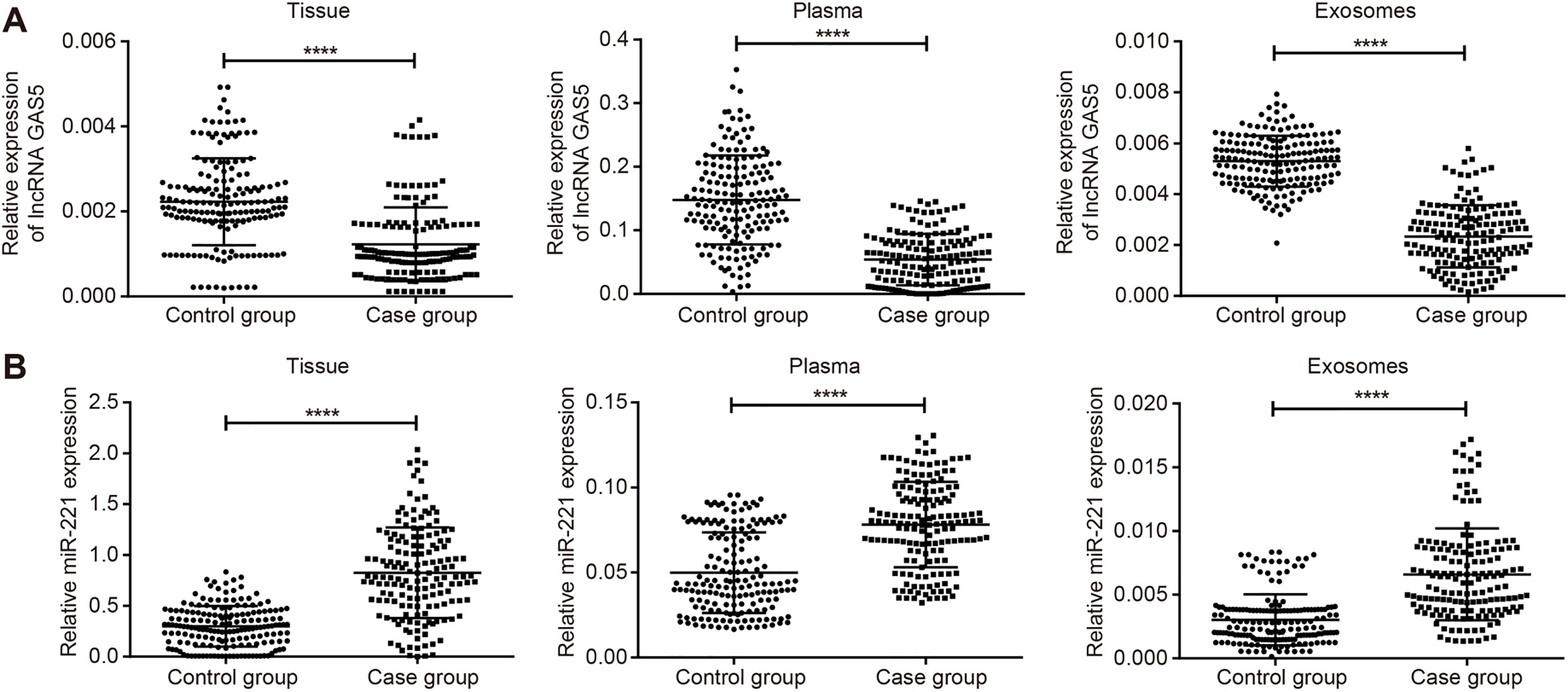
lncRNA GAS5 and miR-221 expression in tissues, plasma and exosomes had diagnostic value in CRC. Note: Panel A, ROC curve reveals that lncRNA GAS5 expression in tissues, plasma and exosomes had diagnostic value in CRC; Panel B, ROC curve reveals that miR-221 expression in tissues, plasma and exosomes had diagnostic value in CRC. The data are presented as mean 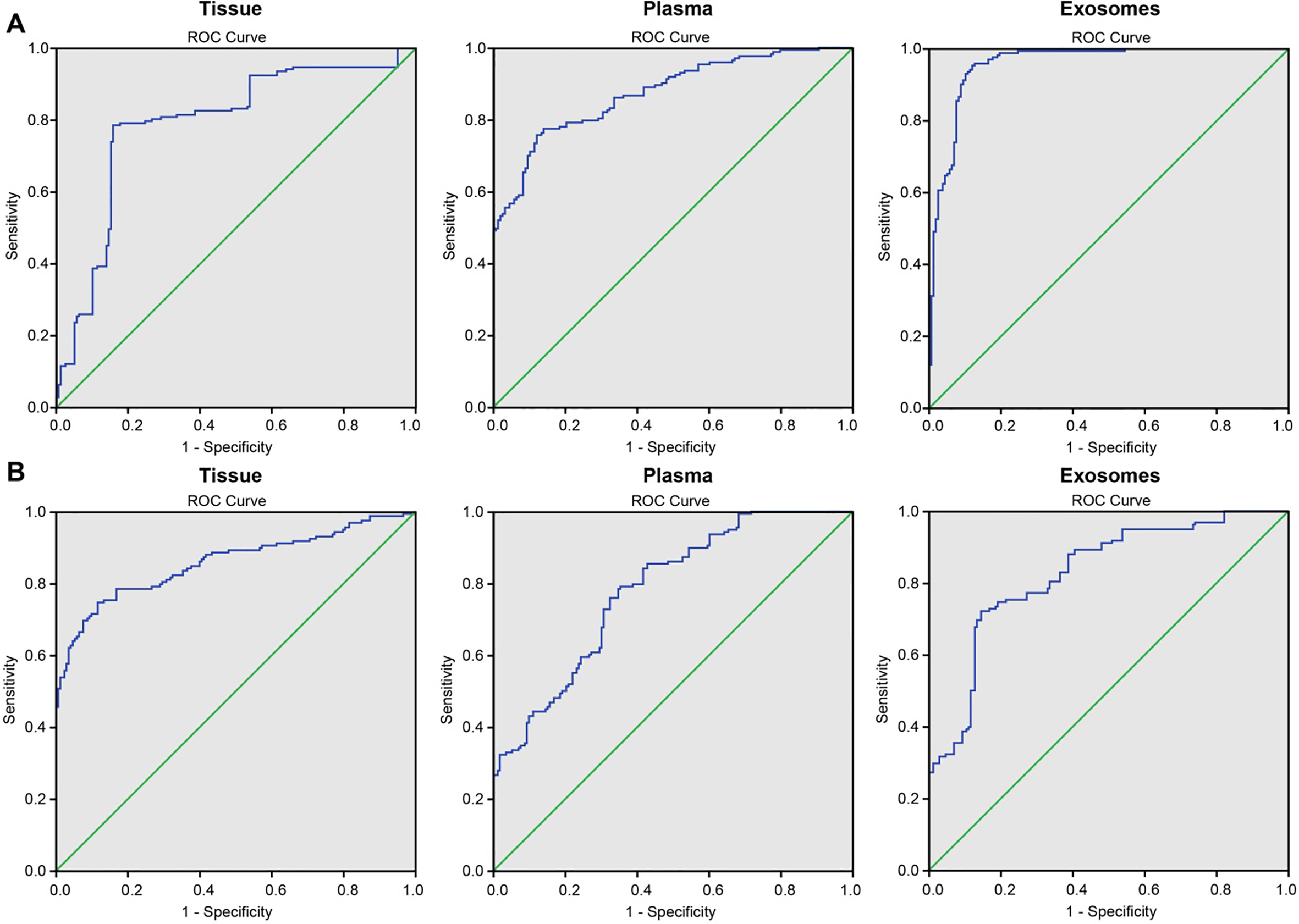
Human CRC cell line SW480 (Cellular Resource Center, Shanghai Institutes for Biological Sciences, Chinese Academy of Sciences, Shanghai, China) was cultured with a DMEM medium containing 10% FBS and 1% antibiotics (penicillin, streptomycin and mitomycin) in a 5% CO
Cell counting kit-8 (CCK-8) assay
After the digestion and inoculation of cells into a 96-well culture plate, with 100
Transwell assay
After the cells in logarithmic growth phase were treated with trypsin and counted, the cell density was diluted to 2.5
Matrigel was dissolved on ice and diluted (1:6) with the pre-cooled serum-free medium, followed by the vertical addition of 100
Statistical analysis
All data were processed by SPSS 19.0 (IBM Corp. Armonk, NY, USA). The measurement data were expressed as mean
Results
lncRND GAS5 is upregulated while the miR-221 is reciprocal in tissues, plasma and exosomes of patients with CRC
The results indicated that lncRNA GAS5 might be down-regulated and miR-221 up-regulated in patients
The expression of lncRNA GAS5 is associated with TNM stage, Dukes stage, differentiation and LNM in patients with CRC
The expression of lncRNA GAS5 is associated with TNM stage, Dukes stage, differentiation and LNM in patients with CRC
Notes: TNM, tumor node metastasis; LNM, lymph node metastasis; N, numbers; lncRNA GAS5, Long non-coding RNA GAS5; miR-221, microRNA-221; CRC, colorectal cancer.
The expression of miR-221 is associated with tumor size, TNM stage, Dukes stage, differentiation and LNM in patients with CRC
Notes: TNM, tumor node metastasis; LNM, lymph node metastasis; N, numbers; lncRNA GAS5, Long non-coding RNA GAS5; miR-221, microRNA-221; CRC, colorectal cancer.
with CRC. Initially, RT-qPCR was performed in order to investigate the expression of lncRNA GAS5 and miR-221 in tissues, plasma and exosomes of patients with CRC. The results of RT-qPCR (Fig. 1) showed that compared with the control group, there was a significantly lower expression of lncRNA GAS5 while miR-221 was highly expressed (all
lncRNA GAS5 expression and miR-221 expression in exosomes are independent prognostic factors for CRC. Note: Panel A, survival curve was used to analyze the 3-year overall survival rate, local recurrence rate and distant metastasis rate among the 158 patients (67.72%, 55.06% and 29.75%); Panel B, the 3-year overall survival rate, local recurrence rate and distant metastasis rate differ between patients with high expression of lncRNA GAS5 in tissues and those with poor expression; Panel C, the 3-year overall survival rate, local recurrence rate and distant metastasis rate differ between patients with high expression of lncRNA GAS5 in plasma and those with poor expression; Panel D, the 3-year overall survival rate, local recurrence rate and distant metastasis rate differ between patients with high expression of lncRNA GAS5 in exosomes and those with poor expression.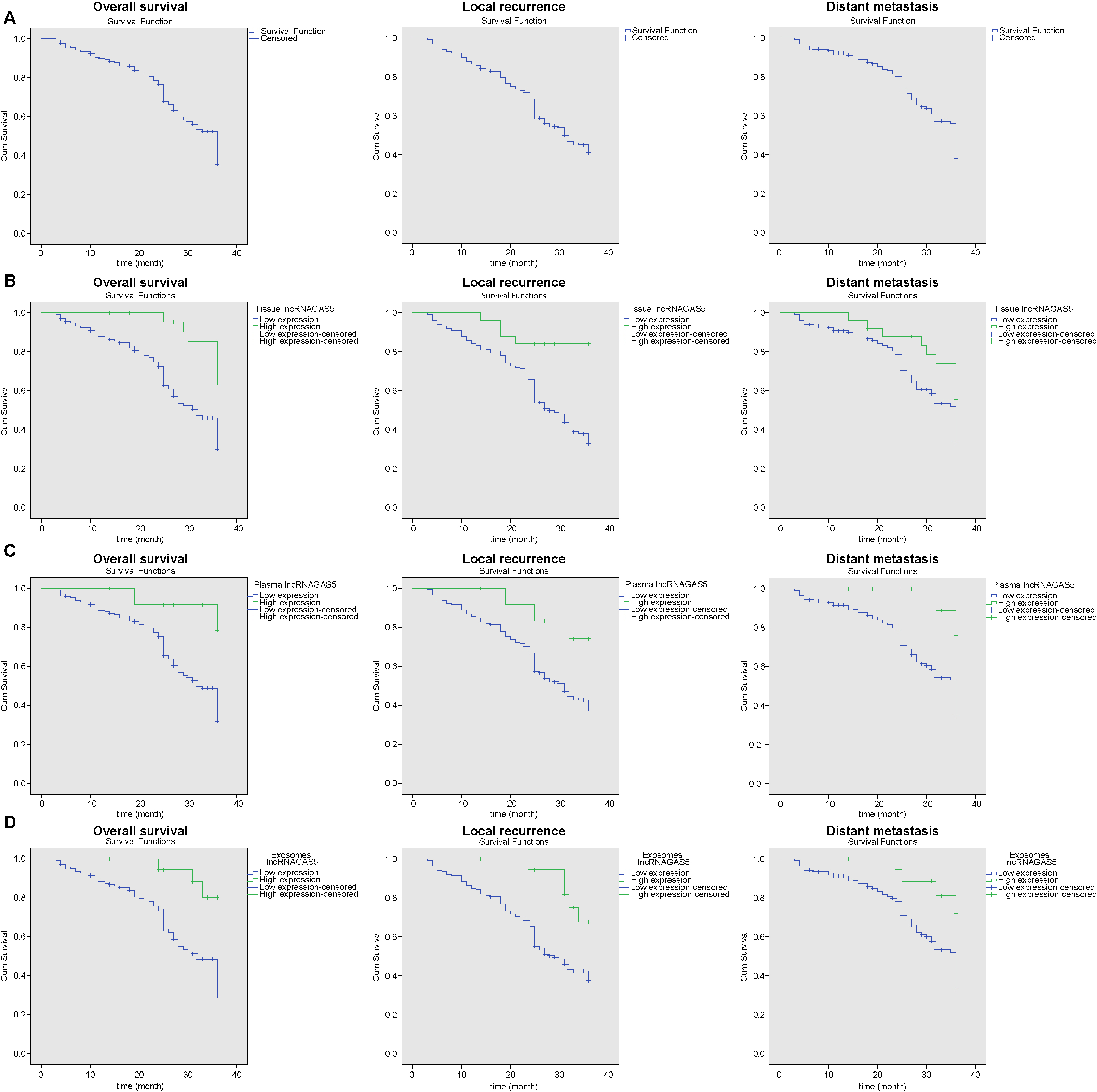
continued. Panel E, the 3-year overall survival rate, local recurrence rate and distant metastasis rate differ between patients with high expression of miR-221 in tissues and those with poor expression; Panel F, the 3-year overall survival rate, local recurrence rate and distant metastasis rate differ between patients with high expression of miR-221 in plasma and those with poor expression; Panel G, the 3-year overall survival rate, local recurrence rate and distant metastasis rate differ between patients with high expression of miR-221 in exosomes and those with poor expression; The data are presented as mean 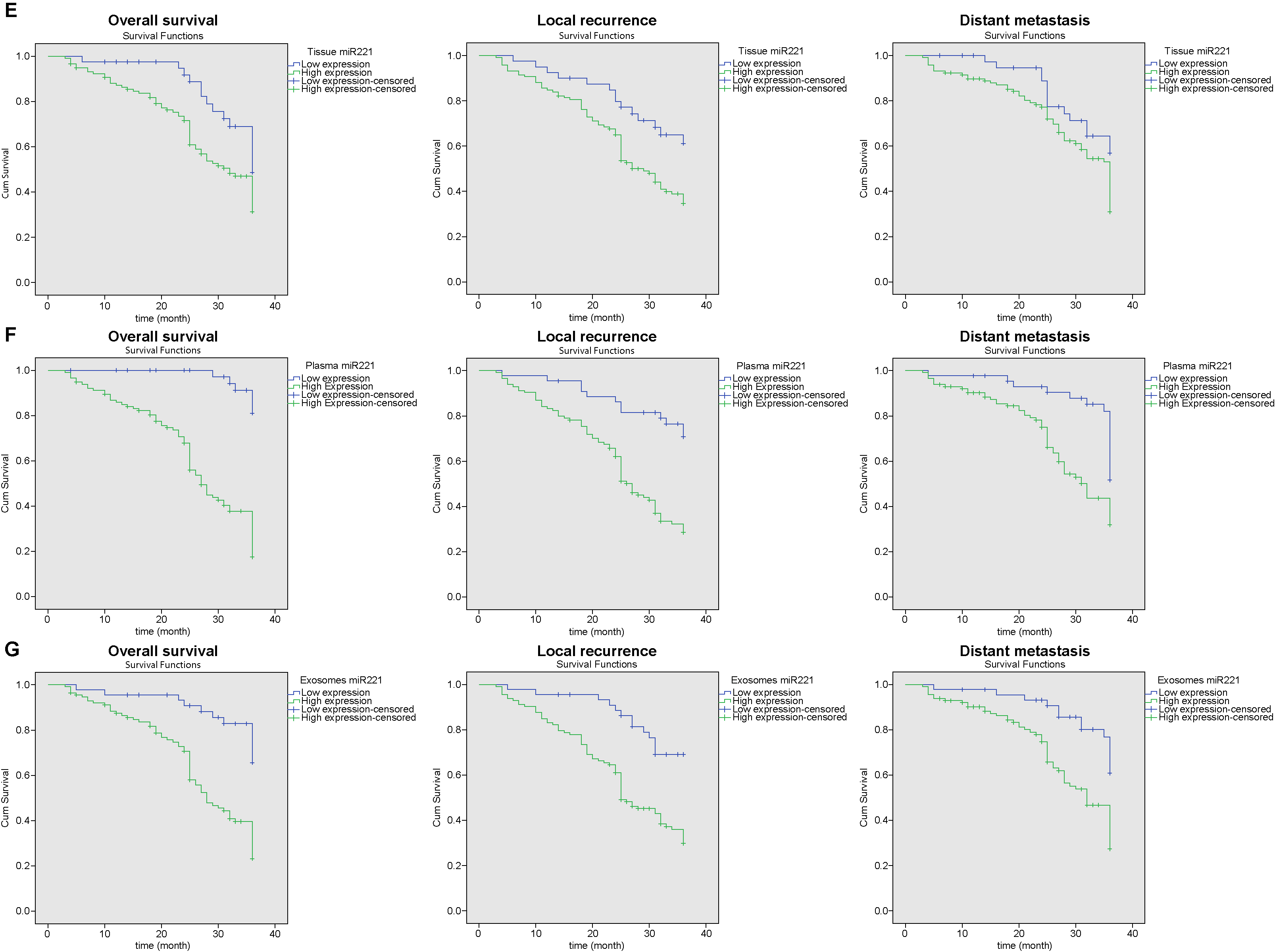
Tumor size, TNM stage, LNM, lncRNA GAS5 and miR-221 expression in tissues, plasma and exosomes are independent prognostic factors for patients with CRC
Notes: TNM, tumor node metastasis; LNM, lymph node metastasis; lncRNA GAS5, Long non-coding RNA GAS5; miR-221, microRNA-221; CRC, colorectal cancer; N, numbers; CRC, colorectal cancer.
lncRNA GAS5 expression and miR-221 expression in exosomes are independent prognostic factors for CRC
Notes: TNM, tumor node metastasis; LNM, lymph node metastasis; OR, odds ratio; CI, confident interval; lncRNA GAS5, Long non-coding RNA GAS5; miR-221, microRNA-221; CRC, colorectal cancer.
ROC was performed in order to explore the diagnostic value of lncRNA GAS5 and miR-221 expression in tissues, plasma and exosomes in CRC (Fig. 2). The results showed under the area of the curve (AUC) values of lncRNA GAS5 expression in tissues, plasma and exosomes in CRC were 0.791 (95% confidence interval [CI]: 0.739–0.842,
The expression of miR-221 is associated with tumor size, TNM stage, Dukes stage, differentiation and LNM in patients with CRC
The association of the expression of lncRNA GAS5 and miR-221 with clinicopathological features of patients with CRC was investigated and the results from the analysis of lncRNA GAS5 and miR-221 expressions in tissues, plasma and exosomes and the clinicopathological features are shown in Tables 2 and 3. The lncRNA GAS5 expression in tissues, plasma and exosomes was only associated with tumor node metastasis (TNM) stage, Dukes stage, differentiation degree and lymph node metastasis (LNM) of the patients (all
Tumor size, TNM stage, LNM, lncRNA GAS5 and miR-221 expression in tissues, plasma and exosomes are independent prognostic factors for patients with CRC
The association of lncRNA GAS5 and miR-221 expression and clinicopathological data with the prognosis of CRC patients was investigate. The 3-year survival rate, local recurrence rate and distant metastasis rate of patients with CRC and lncRNA GAS5 and miR-221 expression in tissues, plasma and exosomes are shown in Fig. 3. Among the 158 patients, the 3-year overall survival rate, local recurrence rate and distant metastasis rate were found to be 67.72%, 55.06% and 29.75%, respectively (Fig. 3A). The 3-year overall survival rate, local recurrence rate and distant metastasis rate of patients with high expression of lncRNA GAS5 in tissues were 88.00%, 20.00%, 8.00% respectively and the 3-year overall survival rate, local recurrence rate and distant metastasis rate of patients with poorly expressed lncRNA GAS5 in tissues were 63.91%, 61.65%, 33.83%, respectively (all
lncRNA GAS5 expression and miR-221 expression in exosomes are independent prognostic factors for CRC
Next, the multivariate Cox regression method was used to analyze the risk factors for the prognosis of patients with CRC, including the factors of statistical differences in univariate analysis. The results showed that the overall survival rate was associated with TNM stage, Dukes stage, LNM, lncRNA GAS5 and miR-221 expression in plasma and exosomes in patients with CRC (all
GAS5 was upregulated in SW480 cells after overexpression of GAS5. Note: RT-qPCR assay was used to determine the relative expression of GAS5 in the supernatant liquid of SW480 cells after transfection. After the overexpression of GAS5, GAS5 was upregulated in SW480 cells. 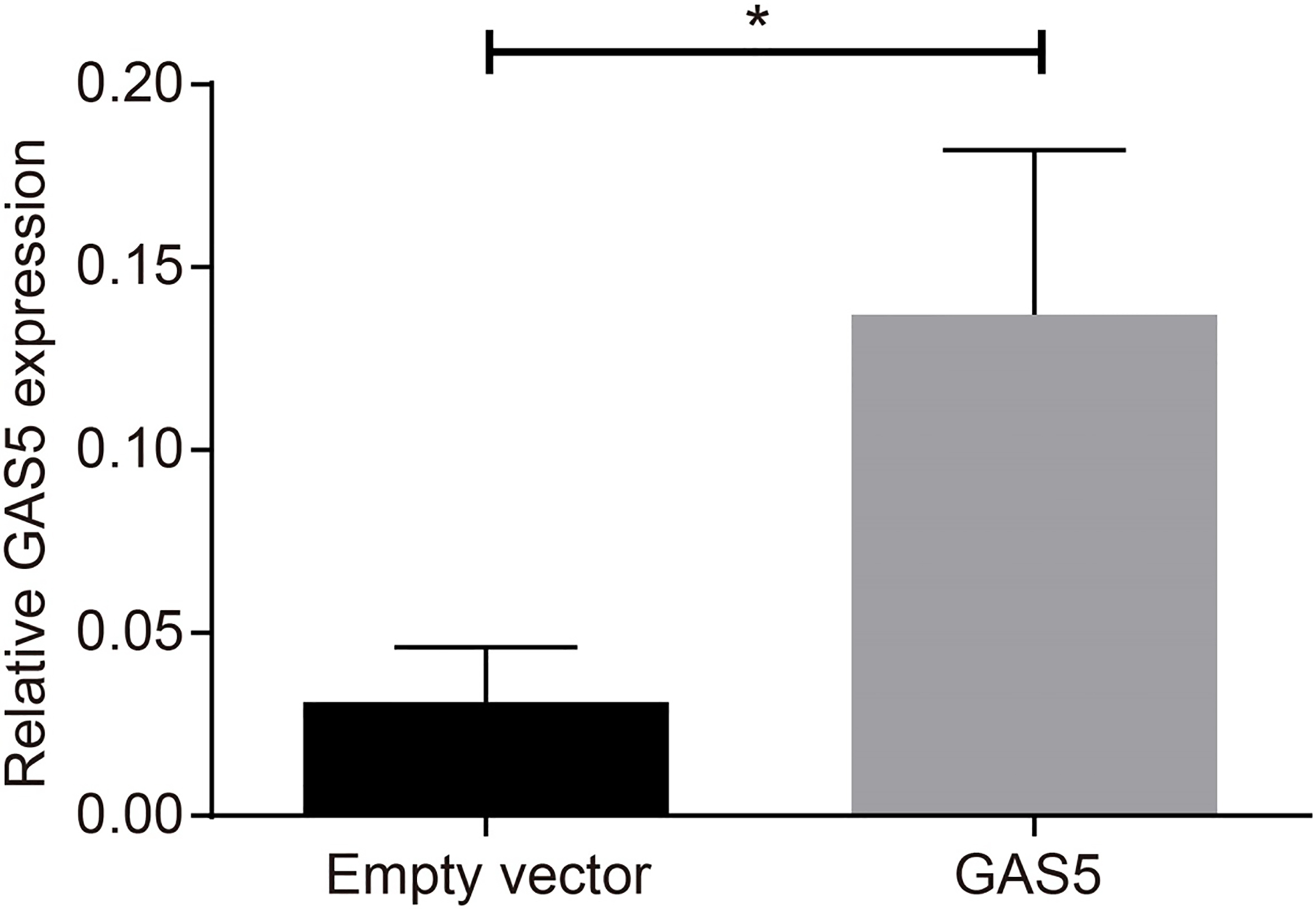
Overexpression of lncRNA GAS5 inhibits the expression of miR-221. Note: RT-qPCR assay was used to determine the relative expression of miR-221 in the supernatant liquid of SW480 cells after transfection. The determination by RT-qPCR assay reveals that overexpression of lncRNA GAS5 could inhibit the expression of miR-221. 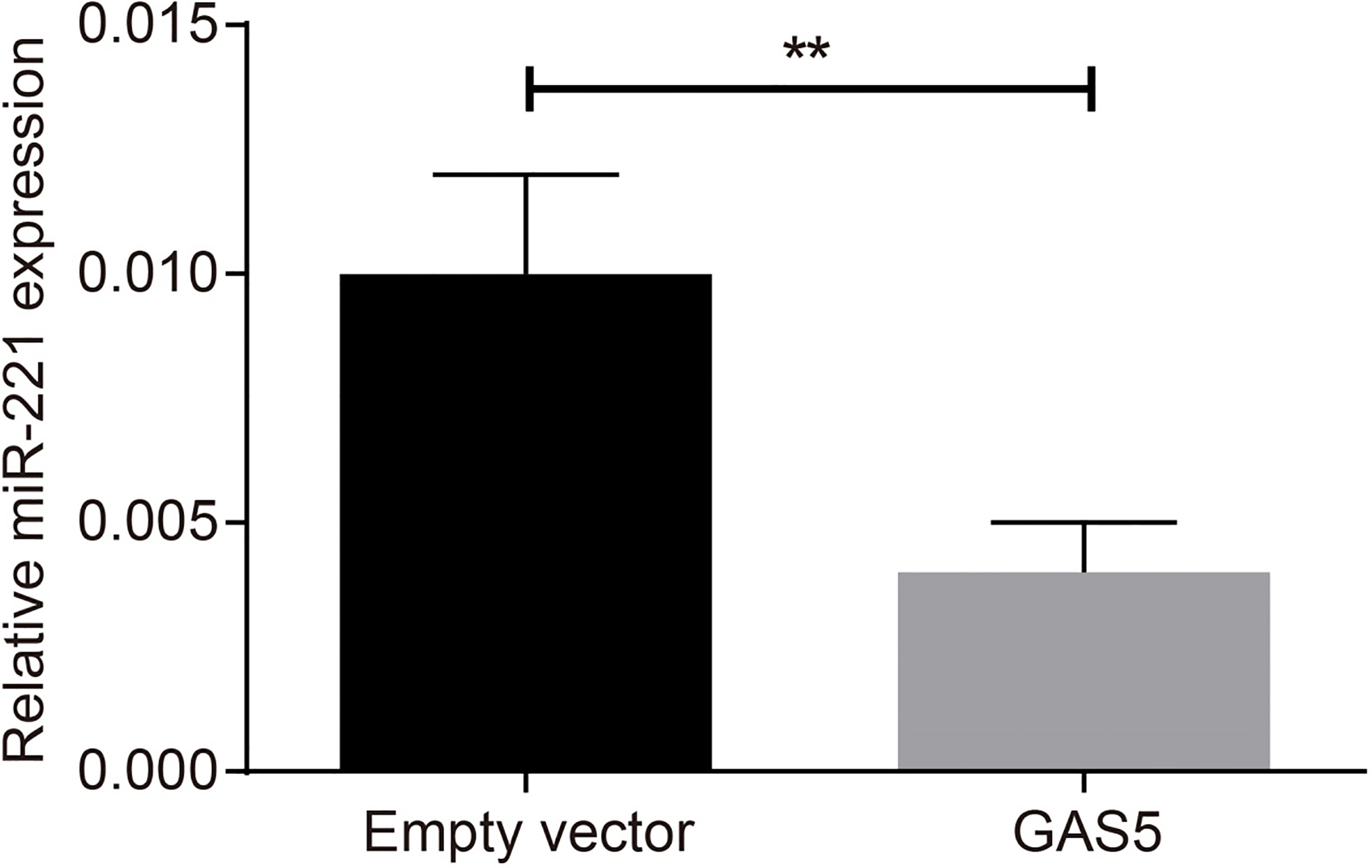
Overexpression of lncRNA GAS5 inhibits SW480 cell proliferation, migration and invasion. Note: Panel A, SW480 cells treated by overexpression of lncRNA GAS5 show lower OD values 1, 2, 3, 4, 5 d after treatment. Panel B, lncRNA GAS5 inhibits SW480 cell migration and invasion in the scatter and histograms. 
Subsequently, RT-qPCR was performed in order to observe the change in the expression of GAS5 after the overexpression of GAS5. The results, as shown in (Fig. 4) showed that GAS5 expression in the empty vector group was 0.031
Overexpression of lncRNA GAS5 inhibits the expression of miR-221
In addition, it was investigated whether or not lncRNA GAS5 could affect miR-221. RT-qPCR was performed in order to measure the expression of miR-221 after the overexpression of GAS5. The results, as shown in Fig. 5, led to the following conclusions: miR-221 expression in the empty vector group was 0.010
Overexpression of lncRNA GAS5 inhibits SW480 cell proliferation, migration and invasion
Lastly, CCK-8 assay and Transwell assay were conducted to investigate whether lncRNA GAS5 could affect SW480 cell proliferation, migration and invasion. The results of CCK-8 showed that 1 d–5 d after cell transfection, compared with the empty vector group, the cell proliferation in the GAS5 group markedly decreased (all
Discussion
As the third most commonly diagnosed cancer in the world, CRC is regarded as a global health burden [5]. Based on previous studies, it was found that the perturbed expression of numerous miRs in CRC may have a functional effect on tumor cell behavior, and some miRs, which could potentially contribute to the prognosis of CRC, might be of clinical importance [8]. In the present study, the correlations among lncRNA GAS5, miR-221 and prognosis of CRC were explored and the results highly suggested that lncRNA GAS5 and miR-221 have certain diagnostic and prognostic values in CRC. It was found that lncRNA GAS5 inhibited CRC cell proliferation, migration and invasion by the down-regulation of miR-221.
The results of RT-qPCR revealed that there was a significantly lower level of lncRNA GAS5 expression, while the expression of miR-221 was elevated in tissues, plasma and exosomes in patients with CRC, and the overexpression of lncRNA GAS5 repressed miR-221 expression. It is well-known that lncRNA GAS5, a tumor suppressor, is expressed at a low level in various cancers, such as head and renal cell carcinoma, glioblastoma, prostate cancer and breast cancer [13]. In a previous study conducted by Li et al., it was observed that there was an under-expression of lncRNA GAS5 in CRC, which was consistent with the results obtained from the present study [19]. MiR-221 is an oncogene, because it can repress p27 (Kip1) and CDKNC/p57, which are key cell cycle inhibitors [20]. In addition, miR-221 is reported to be overexpressed in numerous types of cancer, such as urinary bladder cancer, breast cancer, pancreatic cancer, gastric cancer and glioblastoma [21]. A previous study revealed that miR-221 expression was higher in CRC tumors than in their corresponding adjacent normal tissues [22], which was identical to our results. Additionally, circulating miR-221 that is extended from plasma in a direct manner has revealed to be a promising diagnostic as well as prognostic marker of colorectal cancer, as it regulates p53 expression [23]. Secreted miRNAs enclosed in exosomes can act as intercellular bio-messengers [24]. According to previous studies, miRNA-221 was associated with increased oncogenic activity in gastric cancer and promoted tumor progression in glioma [25, 26]. Importantly, a prior study provided evidence that lncRNA GAS5 could repress miR-221 expression by directly binding to miR-221 in osteosarcoma cells [14]. LncRNAs play an important role in modulating gene expression and is also able to mediate biological functions through transcriptional regulation, splicing and translation; it has been reported that due to its endogenous sponge functions, Gas5 could bind to miR-222 and their reciprocal repression might result from RNA-induced silencing complex [27]. Therefore, it was presumed that the downregulation of miR-221 by GAS5 might follow a similar mechanism.
Furthermore, our results found that lncRNA GAS5 expression is negatively correlated with tumor size, TNM stage, Dukes stage, LNM, local recurrence rate and distant metastasis rate and is positively correlated with differentiation degree and the 3-year overall survival rate, while miR-221 acted on the contrary. Based on a preceding study, low lncRNA GAS5 contributes to larger tumor size and more advanced TNM stage in patients with CRC [19]. The downregulation of lncRNA GAS5 plays a crucial role in LNM [16]. A recent study implied that in patients with low lncRNA GAS5 expression, the survival time was shorten in comparison to those with high lncRNA GAS5 expression [13]. Consistently, Zheng et al. observed that low lncRNA GAS5 expression is correlated with the poor prognosis of CRC [16]. According to a key finding, miR-221 expression tended to increase with the progression of TNM stage and tumor size in patients with hepatocellular carcinoma [28]. In addition, coinciding with our results, Li et al. observed that cutaneous malignant melanoma patients with high miR-221 expression displayed LNM and poor differentiation when compared with the patients with low miR-221 expression [29]. Another study also revealed that miR-221 overexpression plays an essential role in distant metastasis in patients with pancreatic cancer [30]. Similarly, a different study found that miR-221 overexpression decreased the overall survival rate to 5-years [31]. Therefore, decreased lnc-GAS5 expression and increased miR-221 expression were closely correlated with the poor prognosis of CRC.
Finally, in the present study, it was observed that lncRNA GAS5 overexpression inhibits SW480 cell proliferation, migration and invasion. According to a previous study, the downregulation of lncRNA GAS5 expression promotes cell proliferation [19]. LncRNA GAS overexpression was also found to repress cell invasion and melanoma cell migration [32, 33]. A previous study documented that decreased miR-221 expression inhibited CRC cell migration and invasion [20]. Moreover, it has been previously proven that miR-221 overexpression is involved in cancer cell proliferation [34]. Another study also revealed that lncRNA GAS5 could inhibit miR-221 expression by directly binding to miR-221 in osteosarcoma cells [14]. The above findings showed that the overexpression of lncRNA GAS5 suppressed CRC cell proliferation, migration and invasion by decreasing miR-221 expression
In conclusion, our study was able to provide evidence on the effects of lncRNA GAS5 and miR-221 in the cell proliferation, migration and invasion of CRC. Based on the findings, the overexpression of lncRNA GAS5 can inhibit CRC cell proliferation, migration and invasion by the suppression of miR-221, and the overexpression of lncRNA GAS5 and the down-expression of miR-221 highly improve the prognosis of CRC, which facilitates an improved diagnosis and prognosis of CRC and enhance CRC treatment. However, further study should be focus on the concrete mechanism of lncRNA GAS5 and miR-221 in CRC due to the limited experimental conditions in this experiment.
Footnotes
Acknowledgments
This study was supported by the study of Effect and Mechanism of lncRNA GAS5-miR-221/miR-26-RECK Signaling Axis on Colorectal Cancer Metastasis (2017D01Z385, 2017.7.1–2020.6.30).
Conflict of interest
None.