




Abstract
BACKGROUND:
Breast cancer is a malignancy that occurs in cells in the breast tissue where cells in the breast divide and grow out of control, invade surrounding tissues, or spread (metastasize) to distant areas of the body.
METHOD:
This review was systematically carried out through PubMed, Scopus, ScienceDirect, and Google Scholar websites in English and Indonesian using the keyword content of the article, obtaining 21 selected articles. This review demonstrates honey’s promising mechanism of combined synergistic effect for breast cancer management.
CONCLUSION:
Antioxidants in honey intercept free radicals of phenolic compounds which are the main factors responsible for the antioxidant activity of honey. The antimicrobial activity in most honey is due to the enzymatic production of hydrogen peroxide, and its anti-cancer properties are discussed in this section.
Introduction
Breast cancer is a malignancy that occurs in cells in the breast tissue and originates from the epithelial components (the epithelium of the ducts and lobules) and components other than glands, such as fatty tissue, blood vessels, and innervation of breast tissue [1]. Breast cancer is a malignant neoplasm originating primarily in women, and the number of cases is 100 times higher in women than in men [2]. Breast cancer attacks the breast organs, where cells in the breast divide and grow out of control, attacking surrounding tissues or spreading (metastasizing) to distant areas of the body. This cancer is one of the most common types of cancer the community suffers, especially in women [3].
According to WHO (2018), the prevalence of breast cancer is 80,653,000 cases, with 58,256,000 cases occurring in developing countries and causing 22,692,000 deaths from breast cancer [4]. Globocan data in 2020 shows that new breast cancer cases reached 16.6% of 396,914 new cancer cases in Indonesia [5]. Based on Riskesdas data, the prevalence of tumors/cancer in Indonesia increased from 1.4 per 1000 population in 2013 to 1.79 per 1000 population in 2018. In 2020, it reached 396,914 cases, and the total number of deaths was 234,511 [6].
Standard treatment in cancer treatment, namely surgery, radiotherapy, and chemotherapy, is still an option in cancer treatment because they are an essential part of treatment and supportive care for cancer with chemotherapy agents that attack cancer cells and cells that generally divide [7].
Cancer is a preventable disease, and there are adequate medical resources available in developed countries that can protect against this disease, such as annual screening mammography or daily use of chemopreventive drugs [8]. Treatment with chemotherapy has a beneficial effect on the prognosis of breast cancer. Still, it is feared that it can cause side effects such as bone marrow depression, diarrhea, hair loss, nausea and vomiting, and other health problems, so people with breast cancer tend to take complementary therapy during the treatment period [9].
Complementary therapy is known as traditional therapy or alternative therapy. Several studies have been directed to use the potential of natural ingredients as chemoprevention agents or chemotherapy companions that aim to increase the sensitivity of cancer cells and reduce side effects caused by chemotherapy and chemoprevention agents [10]. One of the complementary therapies for treating breast cancer patients is recommended to use Honey because Honey is easy to obtain at an affordable cost. Honey contains various enzymes, sugars, vitamins, minerals, phenolic acids, and flavonoids from nectar and is processed by bees [11]. Polyphenols, flavonoids, and some vitamins are major contributors to antioxidant activity and are also present in other natural foods [12]. The potential of honey as an anti-cancer has received much attention because several compounds support this function.
The phenolic content of honey has the ability to fight several types of leukemia cells; the flavonoids and phenolic acids also contribute significantly to its pharmacological properties, many of them working together to provide a combined effect such as anti-cancer activity has also been demonstrated in a variety of tissues and cancer cells such as breast cancer [13], High antioxidants make honey have the potential to prevent cancer growth due to free radicals that encourage the formation of cancer cells [14].
This honey constituent has been shown to provide anti-inflammatory, antioxidant, anti-proliferative, anti-tumor, antimetastatic, and anti-cancer effects. This review article highlights the role of honey in modulating the development and progression of tumors or cancer, as well as various possible mechanisms by which honey can inhibit cancer growth. Finding the antimetastatic, anti-proliferative, and anti-cancer effects of honey in multiple forms of cancer, such as breast cancer.
Method
This review was systematically carried out through the PubMed, Scopus, ScienceDirect, and Google Scholar websites using English and Indonesian by using the keyword I in the search column “Honey” AND “breast cancer,” showing results of 267 articles, then entering the keyword II “Honey” AND “content” returns a total of 195 articles. Furthermore, the combination of keywords I and II, “honey” AND “content” AND “breast cancer”, displays the results of 78 articles. Moreover, filtering 47 full-text articles, human studies, and using English was taken from 31 relevant articles. The screening was conducted based on the article’s content, and 21 selected articles were obtained. This review demonstrates’ honey’s promising mechanism of combined synergistic effect for breast cancer management.
Result
Structure of main flavonoids and phenolic acids in honey
Flavonoids biologically have a 15-carbon structure (C6-C3-C6) consisting of two benzene rings linked by a heterocyclic pyran ring. Honey is generally classified as flavonols (e.g., kaempferol, quercetin, and pinobanksin), flavones (e.g., chrysin, luteolin, and apigenin), flavanones (e.g., pinocembrin, naringenin, and hesperetin), isoflavones and anthocyanidins [15]. Several flavonoids, such as chrysin, genistein, naringenin, and luteolin, exhibit estrogenic activity and are often referred to as phytoestrogens. The chemical structures of some of the major flavonoids present in wide varieties of honey are shown in Fig. 1. Figure 2 shows the chemical structure of 17-β-estradiol (endogenous estrogen), which shows similarities to flavonoids. Figure 3 shows the chemical structure of some of the phenolic acids in honey [16].
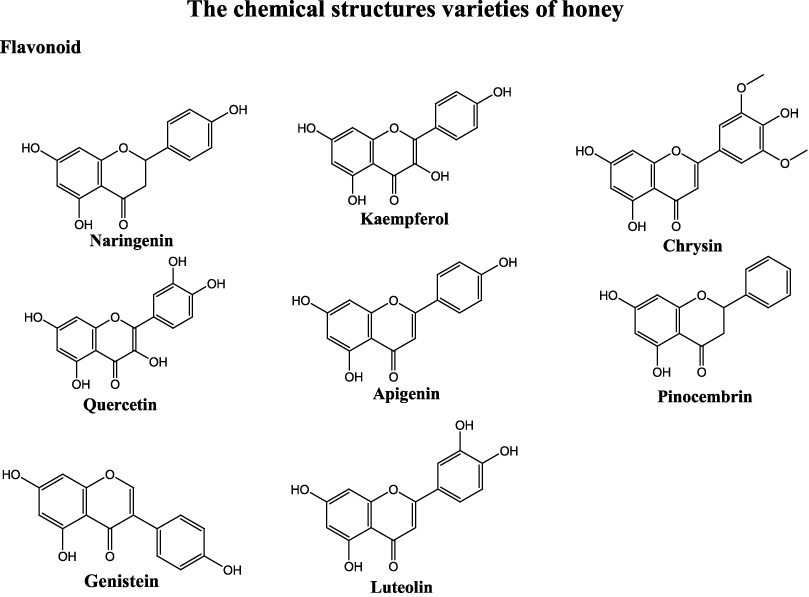
Flavonoid.
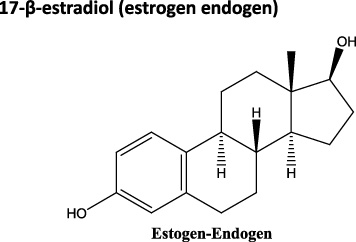
17-β-estradiol (estrogen endogen).
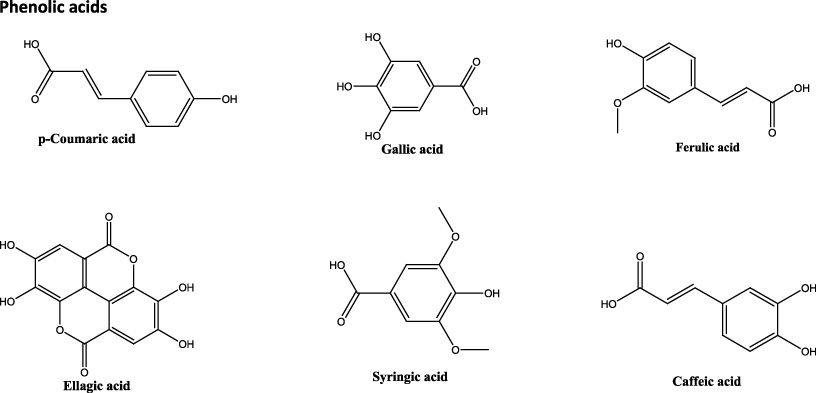
Phenolic acids.
Antioxidant activity Oxidant agents such as oxygen prevent damage and act as antioxidants detected in food and the human body [17]. Although the function of natural antioxidants in the human body is not yet fully understood, natural honey’s effects in many aging and activating processes of highly reactive oxygen species called free radicals and reactive oxygen species (ROS) are generated during metabolism [18]. These materials interact with lipids and protein components in cell membranes, enzymes, and DNA [19]. These deleterious reactions can lead to various diseases. Fortunately, antioxidants intercept free radicals before they can do any damage. Both enzymatic and nonenzymatic substances act as protective antioxidants. Honey’s ability to antioxidant properties Therefore, darker honey has a higher antioxidant value [20]. It has been shown that phenolic compounds are the main factors responsible for the antioxidant activity of honey because the phenolic content is related to the value of the radical absorbance activity of honey [21].
Honey for chemoprevention
The adverse side effects of chemotherapy treatment can significantly affect patients’ quality of life. Therefore, therapy can prevent progression to malignancy, reduce the required dose of conventional drugs, or reduce the severity of side effects. Honey has biological properties such as antioxidant, anti-proliferative, anti-bacterial, and anti-cancer. In vitro trials examined the antioxidant ability of honey and found that honey reduced the proliferation of breast cancer cells and increased apoptosis in them. In addition, animal studies have shown that honey, as a cancer prevention agent, can reduce the number, growth rate, volume, and weight of tumors [1].
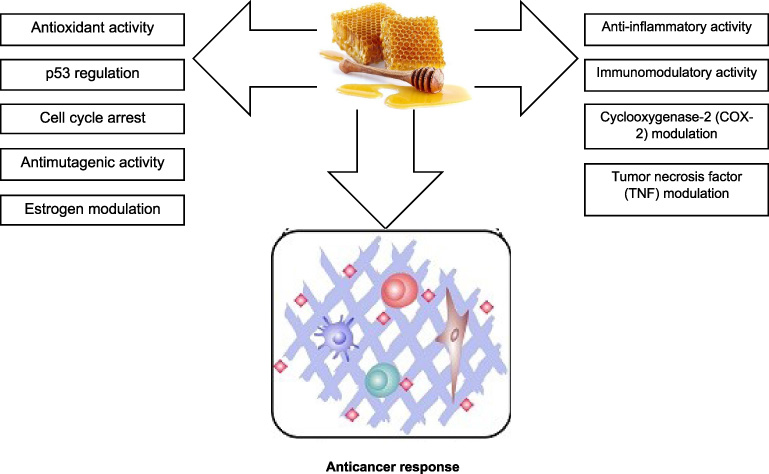
Breast cancer activity scheme in honey.
Moreover, Tsiapara et al. studied the effect of honey acquired from thyme, pine, and fir plants on McF-7 (breast cancer), Ishikawa (endometrial), and pc-3 (prostate) cell lines. The results indicated that all the studied honey contained hydroxymethyl furfural, total phenolics, phenolic acids, sugars, and volatile compounds. Thyme honey had more of these ingredients than other honey. Thyme, pine, and fir honey displayed anti-estrogenic and limited estrogenic effects at low and high concentrations on McF-7 cell lines. Thyme honey reduced the viability of pc-3 and Ishikawa cells, while fir honey stimulated the survival of McF-7 cells [2].
Another unclear aspect that may impact the results of in vitro studies is the effects of sugars on cell proliferation. Glucose is the favored nutrient of cancer cells. Sugar in honey has been suggested to have mutagenic and anti-mutagenic effects. A review by Porcza et al. (2016) described the impact of honey on the viability of prostate, colon, breast, and various types of brain tumor cell lines. They demonstrated that only in some cell lines the effect of honey could overcome the impact of sugars. This may be because of honey’s phenolic content, the metabolism of sugars, and the number of glucose transporters expressed by cancer cells. In the present study, treatment with both H1 and H2 for 6–24 h increased the viability of MDA-MB-231 cells; however, prolonging the treatment to 48 h resulted in cytotoxic effects [3].
The results of the present study suggest that honey has anti-cancer effects and is promising as an adjunct to conventional cancer therapy with minimum side effects. The anti-cancer activity of honey may be related to its ability to modulate the expression of MMPs and TIMPs. Additional studies are required to test the effects of using honey at the molecular level and improve our understanding of the positive effects of honey on cancer therapy.
One of the factors in developing breast cancer is that circulating estrogen levels and irregular estrogen signal pathways play a significant role in the development and progression of breast cancer [26]. Consequently, breast cancer therapies often target estrogen receptor (ER) signalling pathways [27]. Several attempts have investigated whether honey can modulate this critical pathway. Lee D’s study evaluated the potential of Greek thyme, pine, and spruce honey extracts to modulate estrogenic activity and breast cancer cell viability (MCF-7) [28]. The authors found that honey samples exhibited biphasic activity in MCF-7 cells depending on concentrations—antiestrogenic effects at low concentrations and estrogenic effects at high concentrations. It contains estradiol, thyme extract, and pine honey found to antagonize estrogen activity, while spruce honey extract increased estrogen activity in MCF-7 cells [29].
This study also reported varying effects of the three honey extracts on cell viability. While the study found no effect of thyme and pine honey on MCF-7 cells, spruce honey increased the viability of MCF-7 cells [30]. This dual effect of the honey extract is most likely due to its high content of phenolic compounds such as kaempferol and quercetin. Phenolic compounds are phytoestrogens that exert a dual action, both inhibitory and stimulatory effects [31]. Phytoestrogens are phytochemicals structurally similar to mammalian estrogens and, therefore, can bind to the estrogen receptor causing an estrogenic effect depending on certain factors such as concentration [31]. Quercetin has been reported to induce apoptotic effects through ER- and ER-dependent mechanisms. It is unclear why only spruce honey and neither thyme nor pine honey increased MCF-7 cell viability [30]. Further studies can reveal that fir honey contains more nutrients such as phenolic compounds, amino acids, vitamins, minerals, and enzymes, especially glucose oxidase, which produces moderate levels of ROS. All of these can enhance MCF-7 cell survival [13].
Honey and cancer Current studies show that honey may exert anti-cancer effects through several mechanisms. Investigations have shown that honey has anti-cancer properties by interfering with several cell signalling pathways, including inducing apoptosis, anti-mutagenic, anti-proliferative, and anti-inflammatory pathways [32]. Honey and cancer Current studies show that honey may exert anti-cancer effects through several mechanisms. Investigations have shown that honey has anti-cancer properties by interfering with several cell signalling pathways, including inducing apoptosis, anti-mutagenic, anti-proliferative, and anti-inflammatory pathways [33]. However, more research is needed to improve our understanding of the positive effects of honey and cancer.
The cytotoxic effect of tualang honey has also been demonstrated on human breast cancer cells MCF-7 and MDA-MB-231. Cytotoxicity is evidenced by increased lactate dehydrogenase (LDH) leakage from cell membranes. Tualang honey has been shown to induce apoptosis and reduce mitochondrial membrane potential [34]. The authors also found that honey had no cytotoxic effect in MCF-10A, a standard breast cell line. Therefore, this indicates that the cytotoxic effect of tualang honey is specific and selective against breast cancer cell lines [34]. This is important because selectivity and specificity are critical characteristics of an excellent chemotherapeutic agent.
The study also found that tualang honey’s anti-cancer effect on breast cancer cells was similar to tamoxifen’s. Cytotoxic effect on breast cancer cells (MCF-7) revealed that honey could exert cytotoxicity on MCF-7 and MDA-MB-231, which were ER-positive and ER-negative breast cancer cells, respectively [35]. This can be attributed to the flavonoids and phenolic compounds in honey. These constituents, phytoestrogens, have been shown to stimulate the ER-α and –β subtypes [36]. Several studies also have confirmed honey’s antimetastatic, anti-proliferative, and anti-cancer effects on breast tumors or cancer in rodents. In a murine tumor model (mammary carcinoma), the antimetastatic effect of honey, when applied before tumor cell inoculation, has been reported [33]. The antimetastatic effect of honey may be due to its flavonoids, such as chrysin which have been shown to inhibit the metastatic potential of human breast cancer cells [37].
Similarly, a study investigated the anti-tumor effect of two honey samples containing different phenolic content against Ehrlich’s ascites and solid carcinoma. Both kinds of honey inhibited Ehrlich’s ascitic carcinoma growth significantly. However, honey containing higher phenolic content gave a greater anti-tumor effect [38]. Tomasin and Gomes-Marcondes investigated the combined effect of aloe vera and honey on tumor growth and cell proliferation of Walker 256 carcinoma implants in Wistar rats. Both agents were found to suppress tumor growth and inhibit -cell proliferation [39]. In a recent study, Abd Kadir and colleagues investigated the inhibitory effect of Malaysian tualang honey on the development of 7,12-dimethylbenz (α)anthracene (DMBA)-induced breast cancer in mice. The researchers found untreated DMBA-induced breast cancer mice (control mice) exhibited much earlier tumor development than honey-treated DMBA-induced breast cancer mice. Control mice also showed a marked increase in tumor size over a shorter period. Cancer mice fed honey had fewer tumors than controls [29]. Although not statistically significant, increasing the dose of honey tends to increase the apoptotic index. While most cancer mice treated with honey developed low or medium-grade tumors, the untreated mice mostly had high-grade tumors. Histological analysis also revealed that cancer cells from honey-treated mice were more identical, with denser nuclei, whereas control mice had more pleomorphic cells with more prominent nuclei [40]. Other findings included less noticeable blood vessels around tumor nodules and significantly reduced tumor mass weight and volume (smaller, softer, and paler with necrotic spots) in honey-treated mice [33]. These data suggest that honey exhibits anti-cancer effects, as evidenced by its antiestrogen activity and potential to induce mitochondrial membrane depolarization and apoptosis in breast cancer cells. The anti-proliferative and antimetastatic effects of honey were also demonstrated by its ability to suppress tumorigenesis and reduce tumor size and number in DMBA-induced breast cancer in mice. The data also support previous observations that honey’s biological or pharmacological effects may vary among honey samples and are dose-dependent. Additional data, especially those from in vivo studies, are needed to support or strengthen the anti-cancer effect of honey on breast cancer.
Although the incidence rate of breast cancer is high in developed countries, almost half of breast cancer cases and more than half of deaths occur in developing countries. The 5-year relative survival rate from breast cancer varies widely in developed and developing countries. Breast cancer is preventable, and adequate medical resources available in developed countries can protect against this disease, such as annual mammography screening or daily use of chemopreventive drugs [41]. This increase in prevalence is driven by certain factors, such as the adoption of Western lifestyles in some developing countries, an aging population, increased awareness, and increased cancer screening and diagnosis; given the financial burden of developing countries, clinical breast examination is an effective way of diagnosing breast cancer at an early stage [42]. Moreover, if the woman is educated about breast cancer, breast self-examination may be a simple, economical, and motivated method to prevent this disease.
Mechanisms of Anti-proliferative, Antimetastatic, and Anti-cancer Effects of Honey Several mechanisms by which honey can exert its anti-proliferative, antimetastatic, and anti-cancer effects are discussed in this section. These include, but are not limited to, cell cycle arrest, activation of mitochondrial pathways, induction of mitochondrial outer membrane permeabilization, Molecule, induction of apoptosis, modulation of oxidative stress, repair of inflammation, modulation of insulin signalling, and inhibition of angiogenesis [33].
Apoptotic activity Cancer cells are characterized by inadequate apoptotic turnover and uncontrolled cell proliferation [43]. Chemicals used for cancer treatment are apoptosis inducers [44]. Honey induces apoptosis in many cancer cells through mitochondrial membrane depolarization [44,45]. Honey enhances caspase three activation and poly (ADP-ribose) polymerase (PARP) cleavage in human colon cancer cell lines associated with its high phenolic content [46]. In addition, honey induces apoptosis by modulating the expression of pro and anti-apoptotic proteins in colon cancer [46]. Honey induces the expression of p53, caspase 3, and the proapoptotic protein Bax downregulates the expression of the anti-apoptotic protein Bcl2 [33]. Honey produces ROS leading to p53 and p53 activation, which modulates the expression of pro and anti-apoptotic proteins such as Bcl-2 and Bax [47]. The oral administration of honey increased the expression of the proapoptotic Bax protein. Also, it reduced the term of the anti-apoptotic Bcl-2 protein in tumor tissue of Wistar mice [47]. Intravenous injection of manuka honey exerts an apoptotic effect on cancer cell lines through caspase 9 and activates caspase-3, an executor protein. Apoptosis created by manuka honey also involves PARP activation, DNA fragmentation, and loss of Bcl-2 expression [48]. The apoptotic properties of honey allow it to be a natural ingredient as an anti-cancer agent because many chemotherapies currently used are apoptosis-inducing agents.
Apoptosis is programmed cell death to help regulate cell growth and eliminate damaged cells. Several apoptotic pathways are deregulated in cancer cells, supporting survival [49]. The apoptotic pathway involves MOMP, which releases proapoptotic proteins such as cytochrome c, which activates a caspase cascade resulting in mitochondrial dysfunction and cell death [50]. Treating cancer cells with honey was shown to cause apoptotic cell death in breast cancer cells by induction of caspase-3/7 and -9 activation [51]. Honey has also recently been reported to increase tamoxifen-induced apoptosis by activating caspase-3/7, -8, and -9 [35]. The effect of honey has also been demonstrated on several enzymes, genes, and transcription factors associated with apoptosis. Honey-treated colorectal cancer cell lines HCT-15 and HT-29 show downregulating poly (ADP-ribose) polymerase (PARP) expression [34]. PARP is an enzyme that plays an important role in apoptosis and DNA repair [52]. Inhibition of PARP activity by honey will prevent DNA repair and thus contribute to increased cytotoxicity of honey on cancer cells.
Further studies revealed that honey treatment induced or activated the expression of caspase-3, p53, and Bax, while it decreased the expression of Bcl2. Honey has also been shown to exert an anti-mutagenic effect by inhibiting error-prone repair pathways [38]. P53, also known as the tumor suppressor p53, is an important transcription factor regularly inactivated in various human tumors [53]. It mediates tumor suppression by modulating the transcription of many genes that regulate apoptosis [44,45]. Honey treatment in diethylnitrosamine (DEN)-induced carcinogenic mice was reported to be associated with nearly normal hepatocytes and some neoplastic cells, whereas untreated carcinogenic mice were characterized by severely injured hepatocytes, multiple neoplastic cells, and up-regulated p53 expression [53]. Studies show that the antineoplastic effect of honey is mediated through the restoration of p53 expression. Tomasin studies evaluating the effect of honey and aloe on apoptosis in mice with Walker’s carcinoma 256 reported that tumors from mice treated with honey and aloe vera had a higher Bax/Bcl-2 ratio [39]. The apoptotic effect of honey is most likely due to its phenolics. According to research, quercetin has stated that honey can inhibit the growth of pancreatic and breast cancer cells and induce apoptosis through downregulation of Bcl-2 expression and upregulation of Bax expression [54]. Recent evidence reveals that chrysin, the main constituent of honey, exerts an antimetastatic effect on human breast cancer cells [36]. Similarly, chrysin-induced cell apoptosis was shown to have caspase-3 and Bax activation in B16-F1 and A375 melanoma cells [55]. Bcl-2 is an anti-apoptotic protein that is generally overexpressed in various forms of cancer [56]. Cancer cells typically have molecular characteristics of deregulation or impaired apoptosis due to the down-regulation of proapoptotic proteins or up-regulation of anti-apoptotic proteins [56]. Therefore, these findings reveal that honey induces cancer cell death or apoptosis through caspase cascade activation, p53 induction, upregulation of proapoptotic protein Bax, and downregulation of anti-apoptotic proteins such as Bcl-2. These data also show honey flavonoids’ role in honey’s apoptotic effect on cancer cells and breast cancer.
Conclusion
Studies reveal that honey’s medicinal effects may be due to its anti-bacterial, anti-inflammatory, apoptotic, and antioxidant properties. This review should provide practitioners with overwhelming evidence supporting the medical use of honey. Although few studies have tested the efficacy of honey for medical purposes, more research is needed to cover all aspects of honey treatment.
Honey is a natural product that exhibits the potential effect of inhibiting or suppressing the development and progression of tumors and cancer. Its anti-proliferative, anti-tumor, antimetastatic, and anti-cancer effects are mediated through diverse mechanisms, including cell cycle arrest, activation of the mitochondrial pathway, induction of mitochondrial outer membrane permeabilization, induction of apoptosis, modulation of oxidative stress, repair of inflammation, modulation of insulin signalling, and inhibition of angiogenesis in cancer cells. Honey is highly and selectively cytotoxic to tumors or cancer cells, while it is non-cytotoxic to normal cells. It can inhibit cancerogenesis by modulating or interfering with molecular processes or events of initiation, promotion, and developmental stages. Therefore, it can be considered a potentially promising anti-cancer agent that requires further research in experimental and clinical studies.
Breast cancer is the most common cancer worldwide and continues to impact cancer deaths globally significantly. Global efforts are needed to cope with its growing burden, especially in transitional countries where incidence is increasing rapidly, and death rates remain high.
Footnotes
Conflict of interest
The authors declare no conflict of interest to declare.