




Abstract
Adaptive context-aware learning environments (ACALEs) can detect the learner’s context and adapt learning materials to match the context. The support for context-awareness and adaptation is essential in these systems so that they can make learning contextually relevant. Previously, several related surveys have been conducted, but they are either outdated or they do not consider the important aspects of context-awareness, adaptation and pedagogy in the domain of ACALEs. To alleviate this, a comprehensive literature search on ACALEs was first performed. After filtering the results, 53 studies that were published between 2010 and 2018 were analyzed. The highlights of the results are: (i) mobile devices (PDAs, mobile phones, smartphones) are the most common client types, (ii) RFID/NFC are the most common sensors, (iii) ontology is the most common context modeling approach, (iv) context data typically originates from the learner profile or the learner’s location, (v) rule-based adaptation is the most used adaptation mechanism, and (vi) informative feedback is the most common feedback type. Additionally, we conducted a trend analysis on technology usage in ACALEs throughout the covered timespan, and proposed a taxonomy of context categories as well as several other taxonomies for describing various aspects of ACALEs. Finally, based on the survey results, directions for future research in the field were given. These results can be of interest to educational technology researchers and to developers of adaptive and context-aware applications.
Introduction
Recent development of advanced information technologies, such as wireless communications, sensors, and the Internet of Things, has enabled researchers to develop sophisticated adaptive and context-aware learning approaches. This paper uses a previous definition of context as a set of entities that constitutes the learner’s situation [68]. Examples of these contextual entities in a learning environment are the learner’s current location, time, other nearby learners, as well as the learner’s personal learning style and learning history. Context-awareness is defined as the process of detecting context entities by various methods, such as collecting data via sensors and user input, and refining the collected information into higher level knowledge that constitutes the context of the user, which can be useful in various applications. How these context data are used depends largely on the target application. In some cases, the context data is merely provided to the user as-is (e.g. temperature in a weather application), whereas in other cases the application’s behavior and contents are automatically modified according to the context data in a process called adaptation (e.g. location-aware language learning application). In this paper, a deliberate distinction is made between the concepts of context-awareness and adaptation, thus allowing us to analyze learning environments from both perspectives. Gams et al. [42] distinguishes these terms as well, but as properties of ambient intelligence systems, focused only on the user’s context.
The term “intelligent tutoring system” (ITS) refers to a system which uses techniques of artificial intelligence to model a human tutor in order to improve learning by providing better support for the learner [32]. ITSs belong to the umbrella term of “adaptive learning systems” [47,64]. As an example, Adaptive Hypermedia Systems (AHS) provide personalized learning by associating educational resources with hyperlinks in order to adapt presentation formats or learning paths [15]. ITSs and AHSs that are aware of the learner’s context fall under the broader category of Adaptive Context-Aware Learning Environments (ACALEs), on which we focus in this survey.
Effectiveness, efficiency and ability to engage the learner are among the most desired features of any learning environment. A learning environment is called “smart”, if it achieves these characteristics by being context-aware and adaptive to the learner’s needs and preferences [53,103]. Smart learning environments (SLEs) can therefore be seen as overlapping with ACALEs. Consequently, some of the ACALEs covered by this survey can be categorized as smart environments (e.g. a smart museum learning environment [22,24,56,115]); however, we refer to them simply as ACALEs for consistency. Smart television systems and vehicle infotainment systems that adapt the user interface to the user behavior are further demonstrations of the broadness of the category of smart environments, which includes adaptive context-aware systems [11].
Adaptation and context-awareness can improve learning efficiency compared to traditional classroom-based learning approaches because in ACALEs learning resources and activities are adapted to match the learner’s current situation. The abilities of a learning environment to detect the learner’s context and to adapt its behavior accordingly play a crucial role in personalized learning [45]. Those abilities are inherent to ACALEs. Several studies that were conducted in the field of adaptive and context-aware learning show positive effects of the usage of ACALEs on learning and teaching across domains and levels, including but not limited to effectiveness, efficiency, interaction, support, immersion, and motivation [40,44,56,57,78,79,87].
Related work. Aspects for classification values are: context-awareness (CA), adaptation (A), pedagogy (P), research methodology (RM)
Related work. Aspects for classification values are: context-awareness (CA), adaptation (A), pedagogy (P), research methodology (RM)
Despite interesting and valuable surveys that have done in past, there has not been a recent study which would thoroughly analyze contemporary learning environments from the perspectives of context-awareness, adaptation and pedagogical approaches. In this study the term “pedagogy” encompasses both the aspects of teaching and learning. In order to understand the landscape, the pedagogy, and the technical approaches of ACALEs published between 2010 and 2018, this study sets to analyze 53 articles which proposed context-aware, adaptive learning environments for different purposes. In particular, focus is set on identifying and comparing the overall purposes of these systems, and the pedagogical and technical solutions through which context-awareness and adaptation have been achieved. Then, the discovered information is used to give directions for the development of future ACALEs. In summary, the research contributions of this review are fivefold:
Explore and compare ACALEs in 2010–2018
Identify the technical approaches through which context-awareness and adaptation have been established in these systems
Identify the pedagogical approaches which have been employed in the reviewed systems
Propose several new and updated taxonomies to help comparing ACALEs: a taxonomy of context entities, a taxonomy of ontologies, a taxonomy of adaptation, a taxonomy of client types, a taxonomy of sensors, a taxonomy of context modeling approaches, taxonomy of learning feedback types, taxonomy of learning modes, and taxonomy of assessment
Based on the literature review findings, give directions for the development of future ACALEs
This survey is an extended version of a conference article published at the International Conference on Computer Supported Education in 2017 [51]. We have not only gathered more data (25 more reviewed studies) and deepened the analysis, but also added the perspectives of adaptation and pedagogy that were not present in the conference article, along with new taxonomies and eight aspects of classification and analysis (e.g. adapted target, method and mechanism of adaptation, learning mode, assessment). Moreover, we have provided an analysis of previous surveys on context-aware and adaptive systems, thus showing the need for this study. Finally, we have conducted a trend analysis, which was missing in the previous survey. The results of this study complement the scholarly repository of the Journal of Ambient Intelligence and Smart Environments with an in-depth review on state-of-the-art context-aware and adaptive learning environments.
Researchers have published several literature reviews in relation to adaptive context-aware systems from diverse perspectives. Table 1 provides a comparative list of 20 previous works in terms of the timespan covered, the number of reviewed studies, types of reviewed studies, aspects of classification used to classify or analyze the reviewed studies, and finally the methodology utilized to conduct the literature review. The types of reviewed studies indicate the unified scopes of conducted literature reviews of the target studies (e.g. context-aware recommender systems, intelligent tutoring systems, mobile learning environments), which we established based on a careful analysis of the studies. A simplified version of comparison of previous studies in terms of “aspects of classification” was done in order to evaluate the depth of their analysis. Categories for this classification are the same as in our literature survey, namely Context-awareness (CA); Adaptation (A); Pedagogy (P) and additional category – Research methodology (RM). The authors of the reviewed studies conducted their surveys either by using their own method, classified here as “Self”, or by using one of the established literature review methods. Two of the 20 listed related works relied on Kitchenham et al.’s [65] review methodology which we also used in this survey.
A major difference between previous surveys and this study is the depth of analysis: although some of the previous studies had both context-awareness and adaptation as the aspects of classification and analysis ([6,80,81,96]), their depth of analysis was on a surface level. In fact, only two of these works ([6,81]) had all three major aspects (CA, A, P) covered by our survey. Magnisalis et al.’s [81] survey covers an impressive number (105) of systems, but the latest one is eight years old. Moreover, the classification scheme used in the study is vastly different from ours, thus making the two studies complementary rather than overlapping. In the case of Baccari et al. [6], the number of reviewed studies was very modest (8), which is not sufficient to form a big picture of the diverse dimensions associated with ACALEs. Another distinct feature of our work compared to the previous work is that the ACALEs that we surveyed cover diverse types of learning environments, thus making the results more generalizable. Additionally, our study proposes novel taxonomies to categorise various aspects of context-awareness, adaptation and pedagogy in ACALEs. Finally, none of the previous reviews included studies published in 2018, which makes our survey the most up-to-date.
Methodology
This survey employs a simplified version of the systematic literature review methodology proposed by Kitchenham et al. [65]. Essentially, their methodology comprises a set of guidelines for planning, conducting, and reporting a systematic literature review with focus on the software engineering field. Figure 1 depicts the phases and the steps of an adapted version of this methodology.
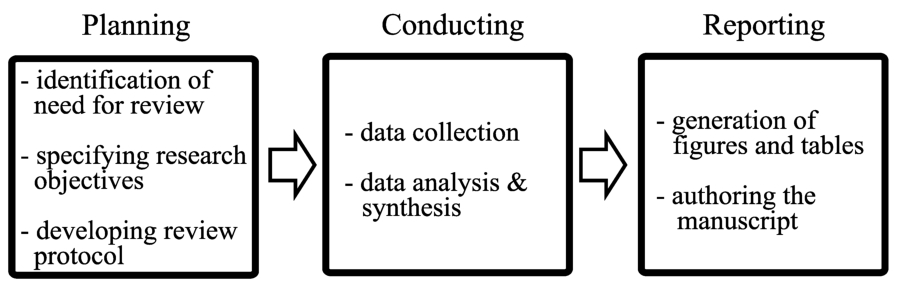
Simplified version of Kitchenham et al. [65] review methodology.
The following describes the details of an adaptation of this methodology in terms of data collection, analysis and synthesis.
First, we defined literature search parameters to be used when acquiring the related work literature for this survey. The parameters were as follows: a combination of predefined keywords (“context” OR “context-aware” OR “context-awareness” OR “ubiquitous” OR “pervasive”) AND (“adapt” OR “adaptive” OR “adaptation” OR “intelligent” OR “smart”) AND (“education” OR “learning” OR “learning environment” OR “system”); publication time range 2010–2018; types of publication forums (conference proceedings and journals); and digital libraries/search tools (Google Scholar, IEEE, and ACM). A filtering criterion was also defined as relevance to the field of adaptive context-aware education, thus each selected publication should describe a learning environment that is both context-aware and adaptive.
Data collection and filtering were performed in four steps using the aforementioned parameters and criterion. We first conducted the literature search using the established parameters. Of the search results we read through the titles (and abstracts if necessary) whilst applying the filtering criterion. Duplicates were removed when noticed. In this first step, 103 potential articles were discovered. In the second step we read through all the abstracts and skimmed through the previously filtered results. Finally, the remaining articles were thoroughly analyzed and the filtering criterion was once more applied. At the end, 53 ACALEs were analyzed for this survey.
Data analysis and synthesis
In order to analyze the findings in a structured manner, taxonomies for describing and comparing the reviewed systems were meticulously established. These taxonomies enable classification of various aspects of the reviewed ACALEs and thereby help understanding their similarities and differences. Some of the taxonomies were discovered from previous research; some of them were established out of necessity. After selecting the taxonomies to be used, an in-depth analysis of the selected papers was performed to assign appropriate value to each aspect. Finally, based on this classification of ACALEs into different aspects, the findings were synthesized and interpretations of the results were given so as to provide useful ideas for future research and development of ACALEs.
Results
In this section, a comparative overview of the reviewed learning environments is presented, together with the technical and pedagogical approaches that were used in these systems to establish context-awareness and adaptation. Thus, the following subsections present an overview of the reviewed systems, their approaches to context-awareness, adaptation techniques, and pedagogy, respectively. This section is then wrapped up with an analysis of technology adoption trends during the evaluation period. The main results are summarized in Tables A1–A4 that are placed in Appendices at the end of the article.
The results of the review are presented through a set of taxonomies that were established in the data analysis step. Figure 2 shows an overall view of the taxonomies for the four aforementioned categories. These taxonomies will be expanded and explained in detail in the following sections. It must be noted that some required data were not extractable from the analyzed articles due to lack of details in their presentation. Such cases are marked with ‘n/a’ as in not available.
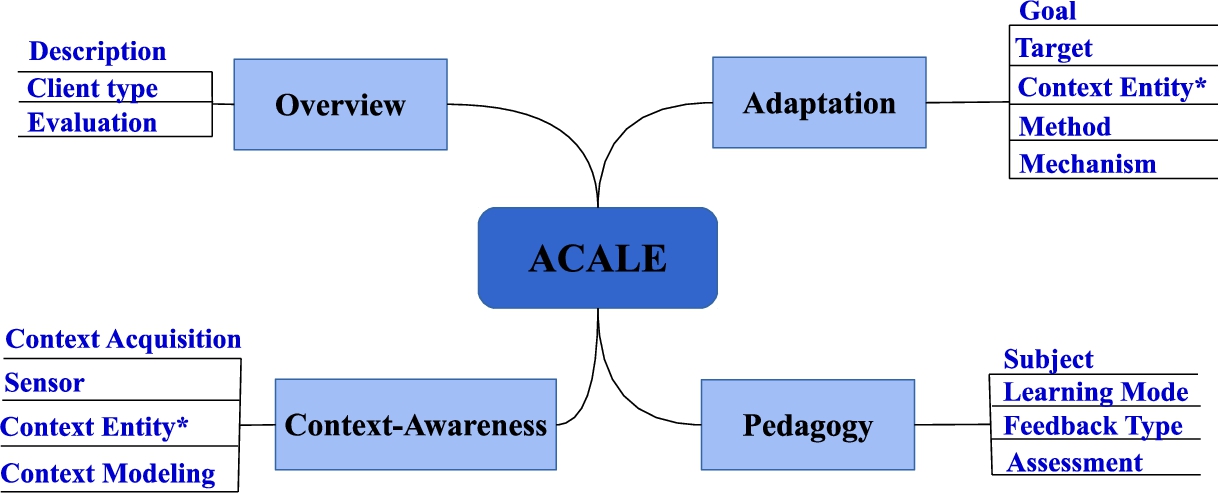
Taxonomies for analyzing and comparing ACALEs.
Table A1 provides an overview of the surveyed ACALEs with names (or authors), succinct descriptions, client types and evaluation types (where applicable). As the table indicates, ACALEs have been developed for various, mostly informal, learning scenarios and subjects to be used by both children and adults. Most of these systems were developed as prototypes and are not publicly accessible. Figure 3 illustrates the timeline of the surveyed systems, indicating that years 2011 and 2012 were particularly fruitful.
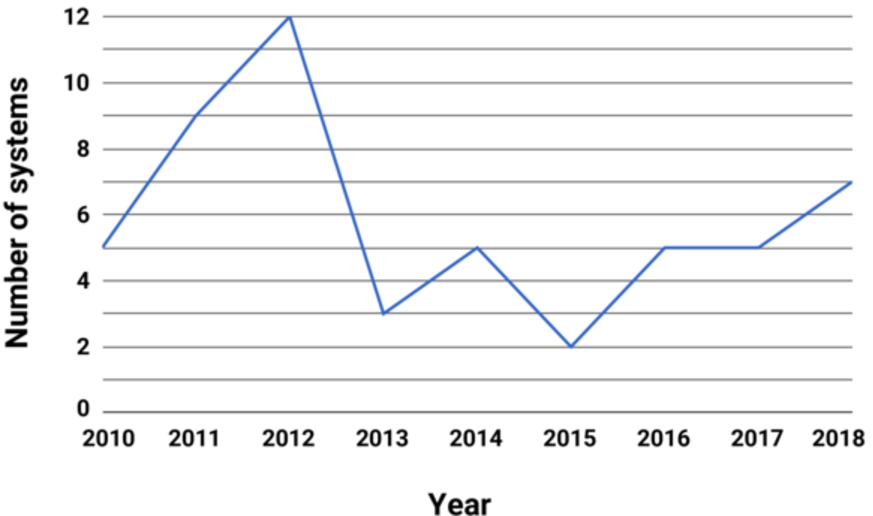
Timeline of the surveyed systems.
“Client type” refers to a device or software through which learners use the learning environment. Clients used in the reviewed learning environments were categorized into six types: (i) Personal Digital Assistants (PDA), (ii) Mobile phones (including also smartphones) (MP), (iii) Tablets (T), (iv) Wearables (W), (v) Laptops/PCs (PC), and (vi) Web browsers (WB). Mobile devices were often used as clients in the reviewed systems. In particular, mobile/smart phones and PDAs were the most common clients. There were 20 systems with web browser clients, thus making them platform independent. Only one article proposed the use of wearables (smartwatches) in the learning process [97]. Finally, supporting multiple clients types was a fairly common feature in the reviewed ACALEs.
Figure 4 presents the percentages of client type categories that were identified from the reviewed learning environments. It is important to note that not all of the reviewed articles explained the types of client used.
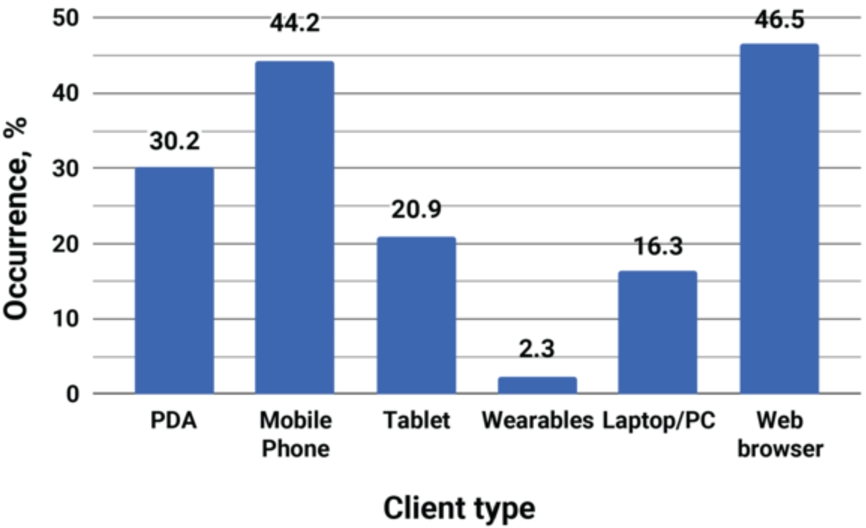
Distribution of client types.
The reviewed systems were evaluated in various ways. Accordingly, a taxonomy comprising three evaluation types was established and respective values were assigned to the evaluation column of Table A1. These evaluation types are: (i) Technical evaluation (Tech), including methods such as performance benchmarking and algorithm accuracy tests; (ii) Pedagogical evaluation (Ped), such as measurement of learning performance and learning experience; and (iii) Perceptual evaluation (Per), i.e. how learners or educators perceive the learning environment. Figure 5 depicts the distribution of evaluation types among the surveyed articles.
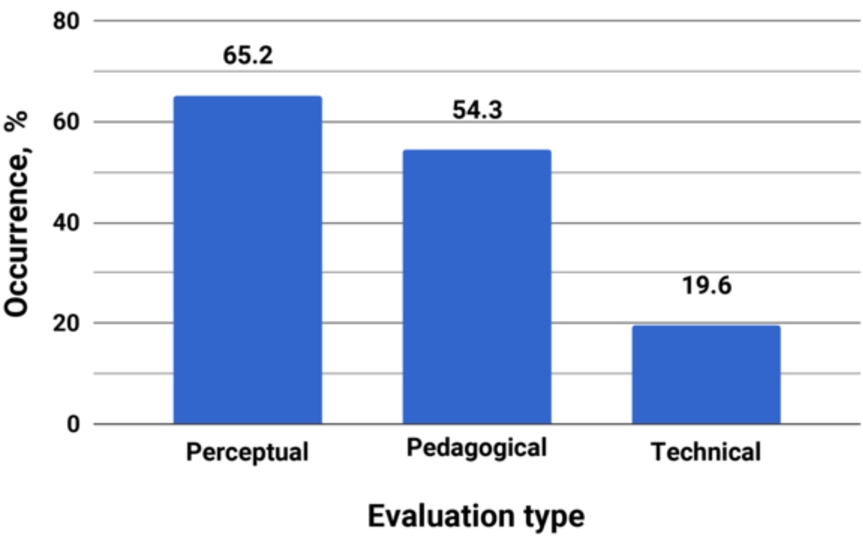
Distribution of evaluation types.
To understand and to compare the technical approaches through which context-awareness has been established in contemporary ACALEs, a classification scheme using the following aspects was defined: Context Acquisition, Context Modeling, Context Entities, and Sensors. In the following, before presenting the results, these aspects with their respective taxonomies are explained.
Context acquisition refers to the process of capturing snapshots of data that constitutes the learner’s current context. The ways to acquire context data vary significantly depending on the available technology and the application’s intended use of the collected context data. According to Perera et al. [92], there are three fundamental ways to achieve context acquisition: (i) context can be sensed directly through sensors, (ii) it can be derived from sensed raw data through computation, or (iii) it can be simply provided by the learner manually. Accordingly, the context acquisition taxonomy consists of classes: Sensor (S), Derived (D), and User Input (UIn).
Context modeling defines a way of representing the context in a format that can be understood and processed by the computer. There are six context modeling approaches that have been previously proposed and used in context-aware systems: Key-value, Markup scheme, Graphical, Object-based, Logic-based, and Ontology-based [105]. To complement this list, Database-based models that employ a database (e.g., relational, NoSQL) to store data of the learner’s context was added. This amendment was required because several ACALEs were found to simply store context data in a database instead of using a more elaborate context modeling technique.
To compare the depth of context-awareness in the surveyed ACALEs, it is required to understand what context entities they detect and utilize. There are many ways to categorize context entities into taxonomies (e.g. [8,45,76,83,111]), but none of these suited perfectly for describing the results. Therefore, based on the analysis of the surveyed studies, a taxonomy that comprises five context entity groups was established: User (U), Technical (T), Spatio-Temporal (ST), Pedagogical (P), and Environmental (E). Figure 6 illustrates this taxonomy with example entities in each group.
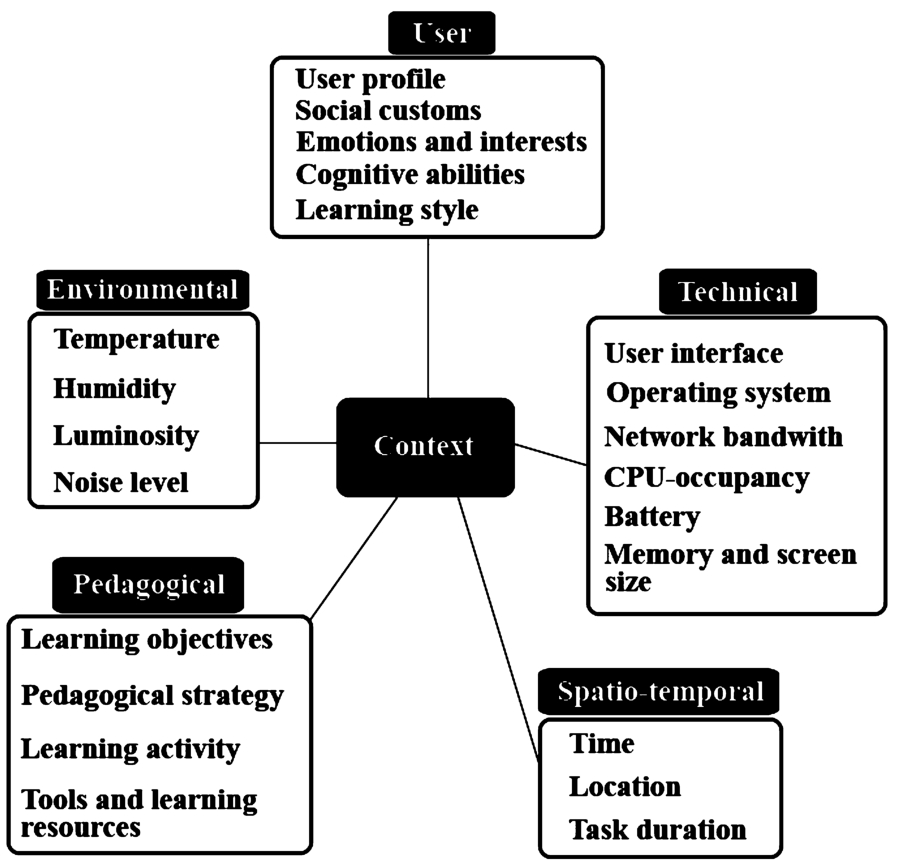
A taxonomy of context entities.
The Sensors aspect refers to hardware-based sensors that have been used in the reviewed ACALEs. The analysis revealed eight groups of sensor technologies that have been used: RFID/NFC, GPS, Camera, Microphone, Accelerometer, Network, Light sensor and IR (infrared)-based sensors. Martin et al. [82] provides further discussion on the use of sensors to facilitate interaction and context-awareness in learning environments. Additionally, there were studies that did not precisely specify which sensors were used (e.g., “mobile device sensors”) and studies that listed a large quantity of sensors. These cases were reported as sensor groups according to their descriptions, such as mobile device sensors, physiological sensors, or inertial sensors.
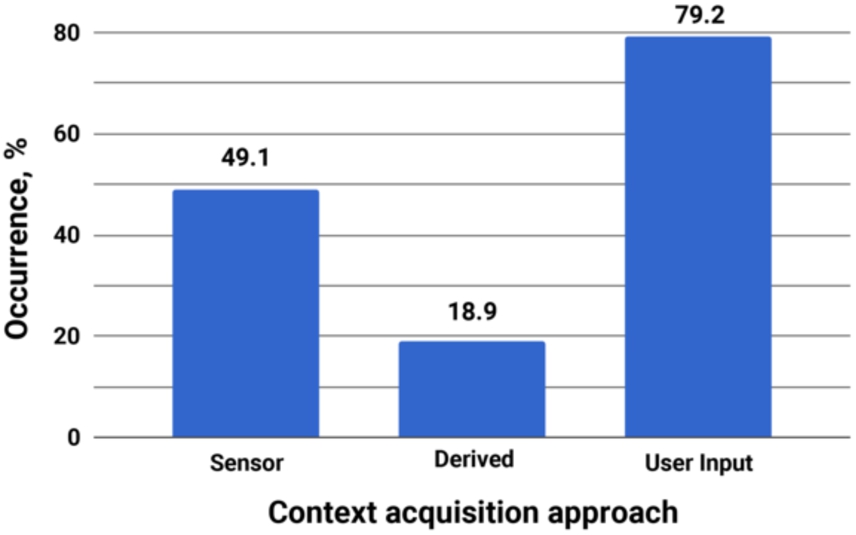
Distribution of context acquisition approaches.
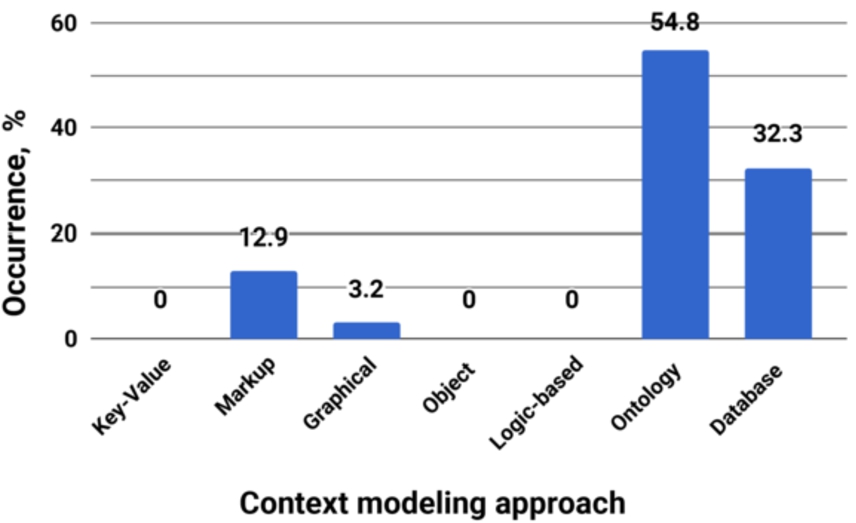
Distribution of context modeling approaches.
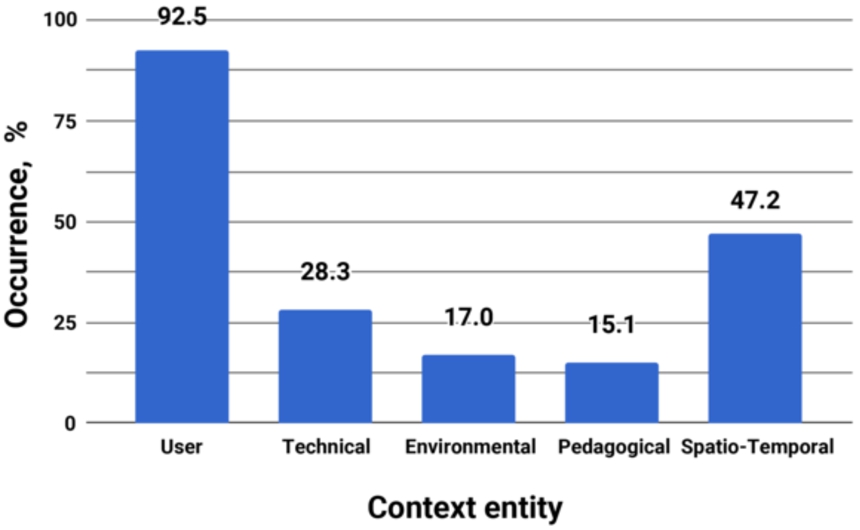
Distribution of context entities.
Table A2 presents the results of the analysis of context-awareness in the surveyed ACALEs according to the aforementioned classification aspects. The distributions of the aspects’ values are reported in Figs 7–10. Due to lack of technical details available in some of the reviewed articles, some data in the table are not available.
In terms of context acquisition, user input and sensors were the most common sources of context data with 42 and 26 instances, respectively, and many learning environments used a combination of these two. A typical example would be that a learning environment asks the user to insert (UIn) learning preferences and background information before learning, and during the learning process the learner’s location is sensed (S) with RFID [74,97,116]. Using these context entities, a learning environment can provide personalized, location-sensitive materials to the learner. Derived data (D), which is based on refining raw data into information with a higher level of abstraction, was much less common. An example of derived context data that has been used is the distance between learners, which is computed based on the location coordinates of the learners [56].
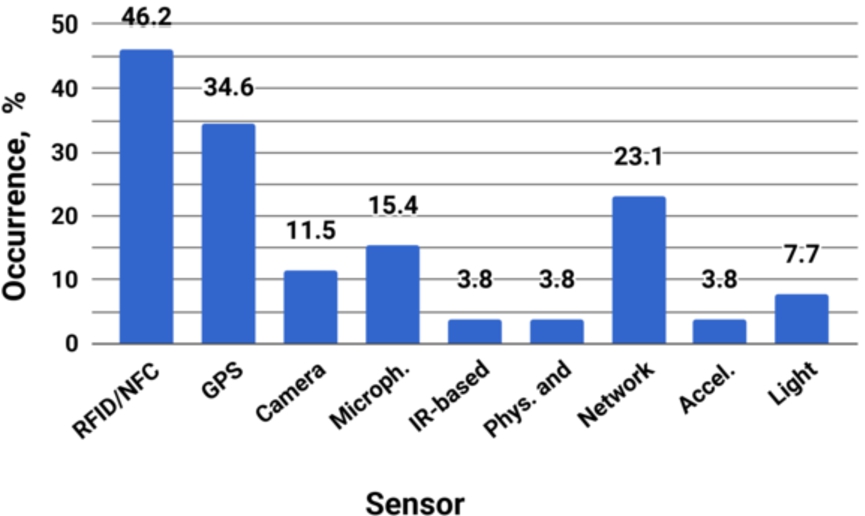
Distribution of sensors.
Before conducting this study, ontologies were hypothesized to be the most common context modeling approach today, but there would also be significant numbers of representatives of other approaches as well. The analysis proved the first part of the hypothesis correct, and the second part only partially correct. The ontology-based context modeling approach was found to be used in 17 of the surveyed systems, thus making it the most popular context modeling approach in ACALEs. Databases were also common with 10 instances, but other approaches were nearly non-existent. Some articles also described the types of ontologies, such as learner ontology, device ontology, domain ontology, and content ontology [10,50,60,112].
Various context entities were employed to establish context-awareness in the reviewed learning environments. The results in Fig. 9 suggest that user context (U) and the spatio-temporal context (ST) were the most common entity groups with having 49 and 25 occurrences, respectively. A typical user context entity was user profile with information such as previously studied learning materials, learning preferences and personal learning style. Within the spatio-temporal context entity, location of the user (ST.L) was the most common entity. Location was often used in conjunction with a timestamp (ST.T) to determine where the learner is at a specific time. Technical (T), pedagogical (P) and environmental (E) contexts were utilized in 15, 9 and 8 of the ACALEs, respectively.
As Fig. 10 illustrates, location-awareness was clearly visible in the popularity of tagging and positioning sensor technologies with RFID/NFC and GPS occurring 12 and 9 times, respectively. A typical example of using RFID/NFC in the reviewed ACALEs was to provide location-sensitive learning content when the learner reads a tag with a mobile device [24,116,119]. In another example, adaptations of media types and sizes of resources were done by sensing network properties such as connection type (WiFi or mobile network) and bandwidth [10,35]. Camera and microphone were used only in a handful of ACALEs, for example when the learner captures their learning log or the system automatically records and processes audio signals [35,74,124]. Infrared was used for indoor positioning [98]. Accelerometer and Light sensors were utilized to detect if the learner is moving or not, and how much the surrounding environment is illuminated, respectively [35]. Some of the reviewed ACALEs did not use sensors or details about sensors were omitted.
To understand how adaptation has been done in the surveyed ACALEs, a classification scheme was defined using the following aspects: Goal of Adaptation, Target of Adaptation, Context of Adaptation, Method of Adaptation, and Mechanism of Adaptation. After this scheme was created in the data analysis phase, two previously proposed categorization schemes [14,85] that resemble the scheme presented here were discovered. Figure 11 depicts the aspects of the proposed scheme with their relationships and example values. A scenario of adaptation can be constructed as a sentence with help of five fundamental elements as aspects using the following template: “Adapt ‘target’ to ‘context’ by ‘method’ and/or ‘mechanism’ in order to reach ‘goal”’. Thus, an example adaptation scenario can be as follows: “adapt navigation to user context and pedagogical context by a structural method and a rule-based mechanism in order to improve learning.” Before presenting the results, the aspects related to adaptation with their respective taxonomies are explained.
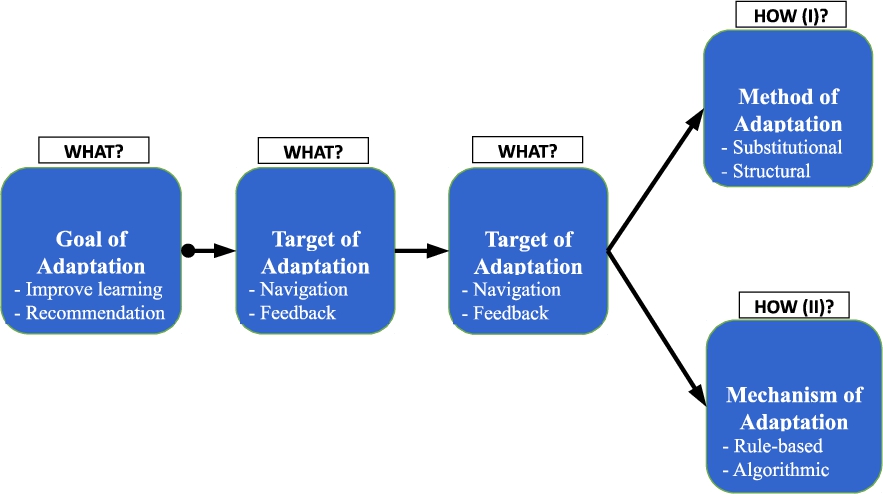
Adaptation taxonomy.
The goal of adaptation seeks to answer the questions: (i) why a particular adaptation strategy is needed, and (ii) what problems related to the learning process it helps solving? Depending on the type of a learning environment, the goal can be for example to recommend (personalized) learning contents or learning activities [10,41], to improve learning [112,121], or to increase motivation [22,63]. ACALEs can also combine multiple adaptation goals.
One of the important questions in the adaptation process is: “What is to be adapted?”, hence the target of adaptation. Example targets include learning content selection (LC Selection), learning content sequence (LC Sequence), navigation, navigation to locations (Nav. to Loc.), learning activity (L. Activity), media type (MT), media format (MF), assessment, feedback, UI, learning tool (L. Tool), and communication and interaction (Comm. & Inter.).
Another aspect of adaptation that was considered in the analysis is the context of adaptation. This has essentially the same meaning than context entities in Table A2. It was found to be useful, for the sake of comparison, to include the context entities in Table A3 as well. By bringing in the context entities one can more easily form a big picture of the adaptation process.
A helpful question for classifying the method and the mechanism of adaption is: “How to adapt?” Previous works indicated two ways of answering the question: there are substitutional or structural methods of adaptation [117], and there are rule-based or algorithmic mechanisms of adaptation [110]. The proposed classification of adaptation methods, as originally proposed by Wilke and Bergmann [117], was initially intended to be used for case-based reasoning; some of its approaches were used in this study as a general adaptation classification. One of its categories is “transformational” adaptation, which originally referred to the transformation of an old solution of a similar problem into a new solution. There are two subcategories of transformational adaptation that were used to form a taxonomy for the method of adaptation: substitutional adaptation and structural adaptation. An example of substitutional adaptation is when an educational system adapts media size depending on available network bandwidth [10]. Structural adaptation is exemplified by the adaptation of the sequence of learning contents in [50].
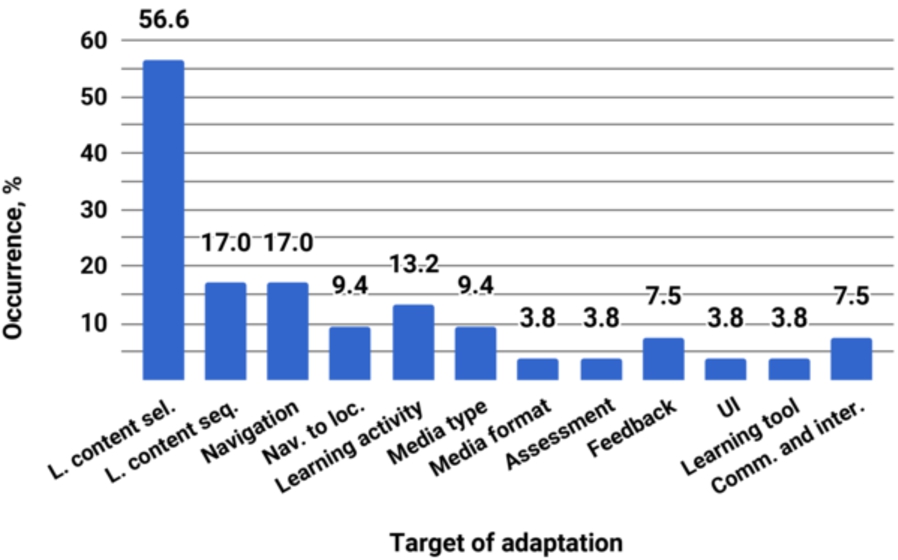
Distribution of targets of adaptation.
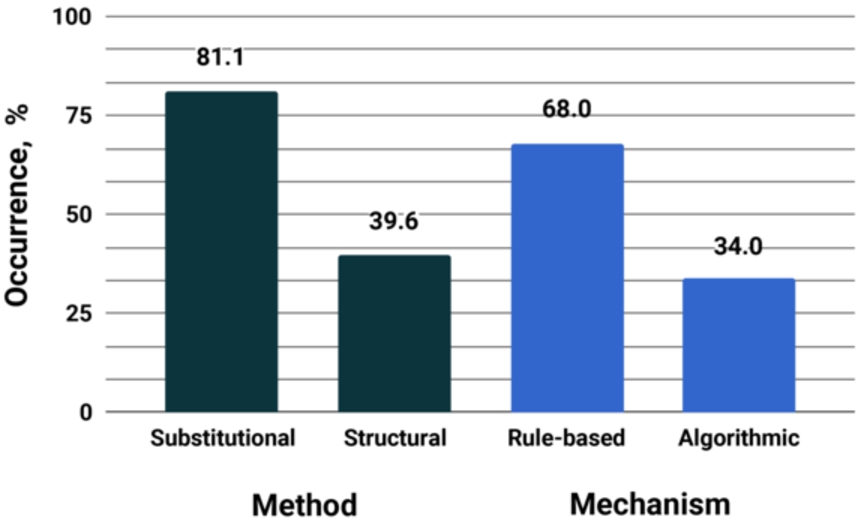
Distribution of methods and mechanisms of adaptation.
The classification of adaptation mechanisms is based on the approach of Vassiliadis and Stefani [110], which was originally used for adaptive hypermedia systems. Rule-based adaptation is a mechanism where a learning environment assigns a value to the adapted target with help of predefined rules (e.g. in IF-ELSE form) [45]. Algorithmic adaptation is a comparatively new mechanism of adaptation. In algorithmic adaptation mechanism, a learning environment applies a complex algorithm or algorithms to context data. For example, navigation to locations can be adapted with help of an algorithm or a set of algorithms that are parametrized to accept different variables, such as location, time, task duration and learning goal [56].
Table A3 presents the results of the analysis on how adaptation has been implemented in recent ACALEs with corresponding value distributions depicted in Figs 12–13. The results show that the most commonly set goals for adaptation are to improve learning and to recommend learning contents. Regarding adaptation targets, the results clearly indicate that the frequency of learning content selection (30 cases) is much higher than other targets. For example, a learning environment may select appropriate learning content based on the learner’s personal context, such as previous knowledge, preferences, and pedagogical objectives [123]. Other prominent adaptation targets are learning content sequence and navigation with 9 occurrences in both cases; these constitute approximately 39% of the reviewed ACALEs. As an example, a learning environment rearranges or reorders the navigation and the sequencing of educational resources that are linked to each other [22,60]. The adaptation targets of learning content sequence and navigation were mostly combined with context entities in the user context entity group, such as the learner’s preferences, learning style, and so forth. In terms of methods and mechanisms of adaptation, substitutional (43 cases) and rule-based (34 cases) were the most popular techniques, respectively. In most of these cases, learning content selection was adapted by a substitutional method, and learning content sequence by a structural method. A non-mandatory connection was observed between a popular target (learning content selection) and a popular method (substitutional), which makes sense from the adaptation strategy point of view. Repeating the results of the previous section, the most popular context entity groups were user profile and spatio-temporal.
In order to analyze the surveyed ACALEs from a pedagogical viewpoint, a classification scheme with the following aspects was defined: Subject, Learning Mode, Assessment and Feedback Type. These aspects are elaborated below before the results are presented.
The way the learner approaches the learning contents or learning activities provided by the learning environment falls into the aspect of learning mode. To compare different learning modes in ACALEs, the following taxonomy was used: individual learning and collaborative learning.
Feedback Type refers to the reaction of the learning environment to the learner’s responses. Appropriate feedback allow students to progressively revise their work, evaluate their progress, and become motivated. The ways of providing feedback in ACALEs vary, and for explaining these ways a taxonomy from a previous study [43] was adapted. Based on the revised taxonomy, feedback type can be informative (right or wrong without explanation of why), corrective (correction and instruction on how to get the correct answer), explanatory (explanation of why the answer was right or wrong), diagnostic (explanation of why a wrong answer was chosen, and correction of the mistake), point-based (measurement of the answer’s accuracy and quality), consequence-based (reaction by changing the system’s path of actions), and interactional (provision of corrective feedback based on the learner’s utterances, for instance, on pronunciation).
The Assessment aspect allows one to analyze and compare how the evaluation of the learning process is accomplished in the surveyed ACALEs. In essence, assessments conducted by ACALEs can be formative, which occurs during the process of learning, or summative, which happens at the end of learning experience [19].
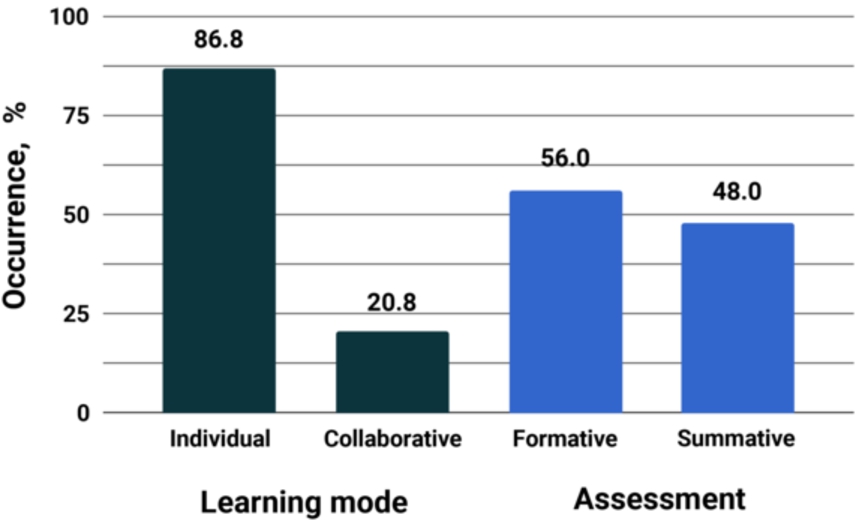
Distribution of learning modes and assessment.
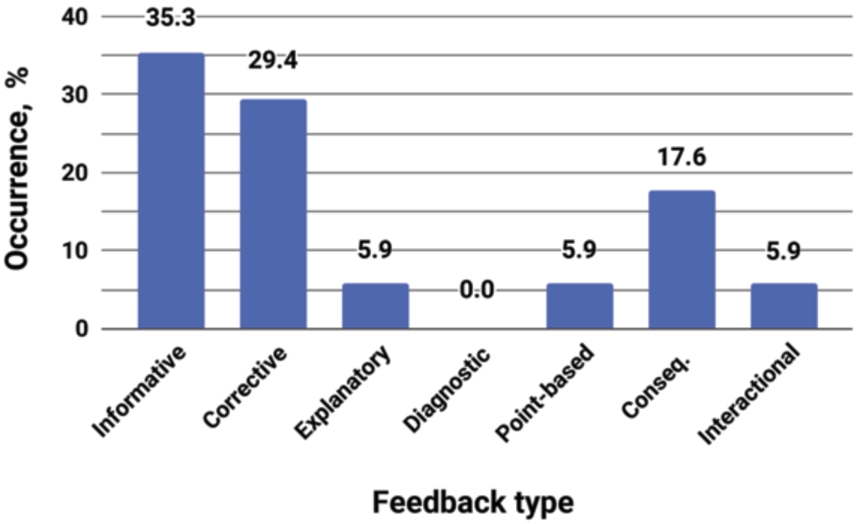
Distribution of feedback types.
Table A4 presents the results of the analysis of the pedagogical aspects employed in the surveyed ACALEs, and the distributions of learning mode, assessment, and feedback type are shown in Figs 14–15. Computer science, English and workplace learning occured as learning subjects 13, 9 and 4 times, respectively. Within the computer science subject, some popular topics were identified, such as programming (Java, C, C++), SQL, and computer networks. For example, the Oscar application is implemented in form of a conversational intelligent tutoring system to deliver SQL tutorials for undergraduate students. It can detect the learning style of the learner during a conversation and present a predefined version of the SQL study materials suited to the detected learning style. The most popular learning mode was individual learning, which was observed in 87% of the ACALEs. A majority of the surveyed articles did not mention what type of learning feedback was implemented, if any. Among the 17 discovered feedback cases, informative feedback was the most frequently used feedback type with 6 occurrences. Among the 26 surveyed articles which described their assessment strategies, 12 utilized summative assessment and 14 adopted formative assessment. This makes the two assessment types nearly equally distributed. The usage of both assessment types only in one case [125] could be detected. Moreover, formative assessment was often supported with informative feedback through which ACALEs indicated the strengths and the weaknesses of the learner, thus making the learner aware of their individual performance [24,50,77].
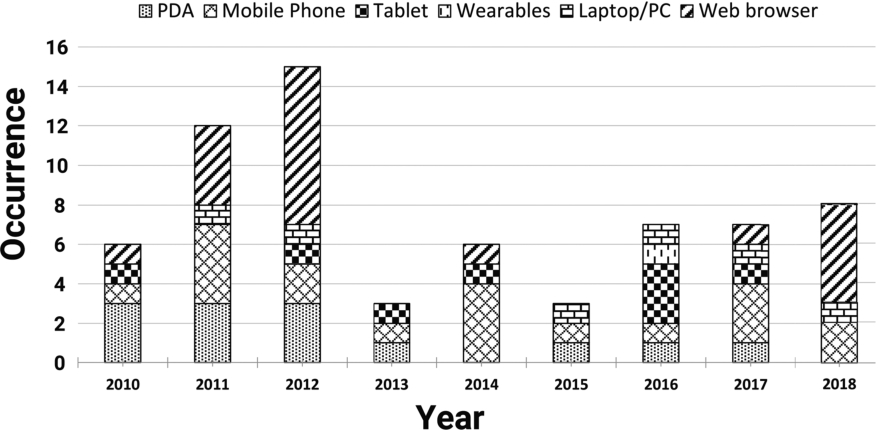
Occurrences of client types through time.
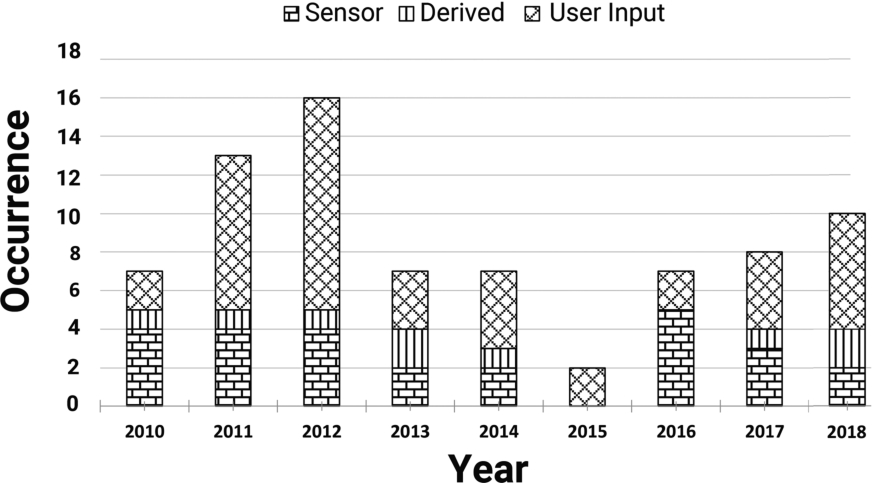
Occurrences of context acquisition approaches through time.
A trend analysis was conducted to illustrate how various technologies and approaches have been used in ACALEs during the review period (2010–2018). Figures 16–18 show the trends related to client types, sensor types, and context acquisition types based on the surveyed systems. A few noteworthy results can be observed from these figures. Firstly, PDAs were more popular in the early years of the surveyed period, but occurred almost every year. Secondly, even though the derivation was the least popular context acquisition approach, its utilization was observed almost every year, except in 2015 and 2016. Thirdly, none of the ACALEs utilized sensor technologies in 2015, but the number of ACALEs among the surveyed systems for that year was just two. Lastly, the highest diversities of utilized sensor technologies occurred in 2010 and 2017, although the number of surveyed ACALEs in those years (5 in both) was below those of the top years (2011 with 9, and 2012 with 12 ACALEs), as shown in Fig. 3.
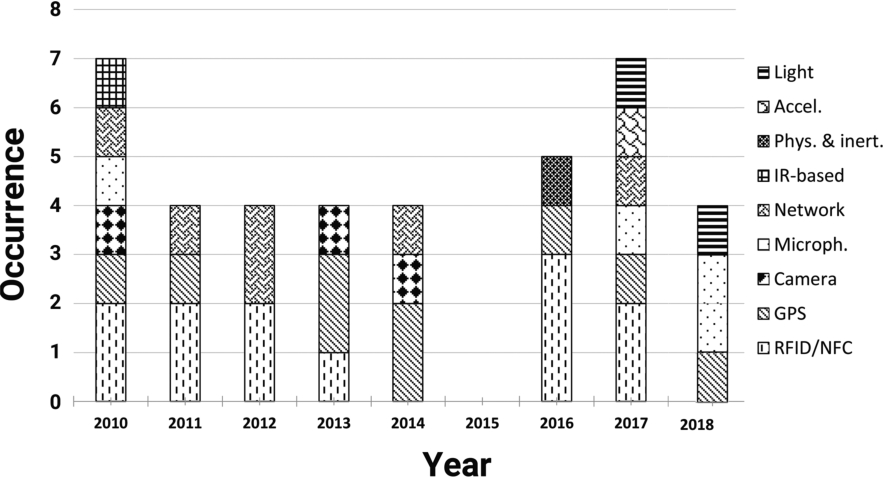
Occurrences of sensor types through time.
We have presented the results of a systematic literature review of 53 adaptive and context-aware learning environments. Our interpretative elaboration on the findings is presented in the following sections.
Client types
The results presented in Fig. 4 show that the most used devices in ACALEs were PDAs and mobile phones. This is probably due to their high mobility, which allows learners to take their devices into authentic learning environments where situated learning experiences can take place [91]. This is a particularly great affordance for learning environments that are based on informal learning contexts, such as museums, science centers and parks. Recent technological advances in mobile devices have made them truly powerful in terms of processing power, connectedness and sensing capabilities. Moreover, many PDA devices and smartphones have an additional advantage in form of RFID or NFC reader modules, which allow the learner to interact with surrounding objects. Finally, the popularity of PDAs over smartphones is somewhat surprising given the fact that smartphones have taken over the markets of smart handheld devices since the launch of the first iPhone in 2007. Not as a client device but as a client type, web browsers were at the same level of popularity with PDAs. This is mostly possibly due to the cross-platform potential of web technologies, which allows ACALEs to adapt learning content to different devices in a simple manner.
The popularity of smartphones and PDAs was expected given their pervasiveness in our lives. However, it was somewhat surprising that wearable technologies, such as smartwatches and smart goggles, were not utilized much in the reviewed systems. Wearable technologies have been identified to possess considerable affordances for learning applications [13]. Perhaps educators and educational technology researchers are not yet convinced about this, or perhaps it is a matter of financial investment. Whatever the reason is, this may change in the near future, as the number of wearable shipments has been projected to grow [59].
Context-awareness
Location-awareness is strongly present in the reviewed learning environments. A possible reason for this is that most ACALEs are not developed to be used classrooms; they are informal learning environments located beyond the physical school boundaries. In such scenarios, it is essential that the learning environment can adapt its behavior according to the learner’s whereabouts. The popularity of RFID/NFC and GPS sensors proves that point, and this result is aligned with the findings on the popularity of the spatio-temporal context entity group. Interestingly, these findings are also aligned with the findings of a previous survey on context-aware learning environments published in 2009 [67]. In this previous survey, the authors discovered that RFID was the most common sensor technology, and predicted that RFID would become the next big thing in wireless mobile communication. The results of the current survey suggest that this has been the case in ACALEs, but a question that remains is: how long will the popularity of RFID/NFC last, given the recent advances in indoor positioning and automatic object recognition through machine vision?
Figure 7 indicates that the least used context acquisition method is derivation. The other two methods (user input, sensors) are utilized by approximately 91% and 57% of the surveyed learning environments, respectively. Based on these results and the state-of-the-art research in computer science, a prediction is made that future learning environments will be increasingly designed towards generating context data by performing computational operations on raw sensor data. Therefore, the popularity of derived context acquisition will grow as well. This prediction is heralded by the recent boom in machine learning approaches, such as deep learning [71], which allow the derivation of higher level knowledge based on massive quantities of data inputs.
As Fig. 8 illustrates, ontology-based and database-based context modeling approaches were almost solely used among the reviewed learning environments. The main advantages of ontologies is that they support reasoning and content validation, thus making them a popular and effective way to model the context. Ontologies are expected to keep their dominant place as a context modeling approach in ACALEs in the near future. Yet in longer term we might see a growth in distributed context modeling approaches where agents in the Internet of Things are forming a collective understanding of large-scale contexts.
The ontologies that were described in the surveyed ACALEs cover several categories that are used to model various aspects of the learner’s context. Based on the analysis of these ontologies and their categories, a taxonomy of ontologies for ACALEs was established. Table 2 illustrates this taxonomy and descriptions of each ontology type. This taxonomy, in whole or in part, can be used as a super-ontology by developers who wish to harness the power of ontologies in ACALEs.
Taxonomy of ontologies for ACALEs
Taxonomy of ontologies for ACALEs
The most popular adapted target was found to be learning content selection. It is the basic and traditional approach which may partly explain its popularity. Rule-based adaptation was the dominant adaptation mechanism. It is possibly due to its simplicity and easiness of implementation. A prediction was made above that the popularity of machine learning approaches will increase the usage of derived context in the future. For the same reason, the number of algorithmic mechanism of adaptation is also likely to increase. Vassiliadis and Stefani [110] mentioned the potential efficiency of hybrid mechanisms that combine rule-based and algorithmic approaches for adaptation, but this idea has neither been proven nor discussed in depth. This efficiency is expected due to the powerful nature of a combination of complex algorithms that can handle massive amounts of data and user-defined rules, which are powered by human intelligence.
Pedagogy
Computer science and English were the most frequently taught subjects in the reviewed ACALEs. For the English language, this is likely because many of the reviewed studies were done in countries where English is used as a second language [45,63,90]. The results suggest that these and other target subjects are well-suited for demonstrating ACALEs, yet they are only the tip of the iceberg of the potential subjects that ACALEs could be used for. One cannot help but to wonder whether the primary motivation of the researchers who build the surveyed ACALEs was technological innovation, whilst leaving pedagogical goals aside with secondary importance. ACALE developers are encouraged to invite pedagogical experts and end-users (i.e. educators, learner) to join the design process as early as possible to expand the research from technological to pedagogical domain and thereby increase the pedagogical meaningfulness of the end result.
As the results indicated, both formative and summative assessment types were used in the reviewed ACALEs. Yet formative assessment is likely to take the lead in the assessment designs of future ACALEs. This leadership is predicted due to higher benefits over summative assessment, such as clarifying learning goals, ensuring continuous monitoring, responding to the learner’s progress, and encouraging adaptation and improvements of learning outcomes. Spector et al. [104] emphasized the significant role of formative assessment in learning environments. It is also effective to have a combination of formative and summative assessments, and encourage ACALE designers to consider the pedagogical impact of this kind of combination [125].
The most used feedback type is also the simplest: informative. This is possibly because developing feedback mechanisms that are both complex and pedagogically rich is not a trivial task. Moreover, as suggested above, educational technology developers may be more concerned with technological advancements than with pedagogical diversity and effectiveness. Expectedly, in the near future, with the advent of artificial intelligence (AI), learning feedback will become advanced so that learning environments will be able to automatically provide a real-time full diagnosis of the learning process. Feedback could also be adaptive to the learner’s context (e.g. cognitive needs, emotional state). An example of such adaptive scaffolding is that the more proficient the learner is at a particular skill, the more subtle the hint becomes. Conversely, if the learner has low proficiency in the skill, they would be presented with a more obvious hint. Those types of adaptive feedback would help learners improve their productive learning behaviors (e.g. self-explanation [31]).
A connection between formative assessment and some types of feedback, such as informative, corrective, partially explanatory and diagnostic, was observed. Theoretically, a learning environment is performing assessment by rendering adaptive feedback to the learner. Conversely, formative assessment during the learning process gives chances for the feedback mechanism to provide more complex feedback types to the learner, such as diagnostic.
Relations between taxonomies
This survey analysed 53 ACALEs using three taxonomies that describe ACALEs from different perspectives: context-awareness, adaptation and pedagogy. Although the results regarding these taxonomies were presented separately, they have dependencies that are important to acknowledge. The context-awareness taxonomy, as presented in Table A2, is directly related to the adaptation taxonomy (Table A3) in a way that all adaptive systems are by default context-aware since, in order to be adaptive, the system should be aware of its surrounding context. This direct relation is inevitably expressed by the presence of context entities column in both tables and it is the strongest connection among any two taxonomies.
The adaptation taxonomy is linked to the pedagogical taxonomy (Table A4) through target of adaptation as in a majority of the reviewed ACALEs the adaptation target is related to teaching or learning: content selection, learning content sequence, learning activity assessment or feedback type [46,89,125]. The pedagogical taxonomy is linked to the context-awareness taxonomy as well by means of pedagogical context entities which play the role of a utilized contextual entity in some of the surveyed ACALEs [1,101,123].
Current and future trends
It is difficult to make complete and precise inferences on the trend analysis of popular technologies in ACALEs (Section 4.5) due to a relatively low number of samples as shown in Fig. 3. Nevertheless, the trend analysis illustrates how technology adoption in ACALEs has progressed over time, providing us with observations on which further interpretations can be constructed. The iPhone’s and Android operating system’s launches in 2007 and 2008, respectively, did not seem to have an effect on the client types used in ACALEs in the early years of 2010, as PDAs kept their strong position between 2010–2012. Likewise, the number and the types of sensors used in ACALEs do not seem to correlate with what one might expect as the result of technical development and circuit integration; that the number of sensor usage would grow as they become increasingly integrated into smartphones and other devices around us. While sensors and user input were identified as the dominant context acquisition approaches, it was interesting to observe that derived context acquisition was used as early as 2010, despite its deemed complexity compared to the other two approaches. Finally, it is important to keep in mind that the trend analysis presented in Section 4.5 is based on a relatively small number of systems, thus the results can be considered to be directive rather than conclusive.
While context-awareness and adaptation can provide great affordances to the learning process, there remain significant challenges and questions that have not been adequately tackled by the surveyed studies. Firstly, given the large amounts of context data presumably acquired by the reviewed ACALEs, it was surprising that there was very little discussion on data security and privacy. It seems to us that innovative use of technology and/or good learning outcomes have been prioritized over data safety. Many learning environments, and mobile applications in general, follow the learner’s location in real-time. Will the issues of data security and privacy become more topical when future learning environments will be able to detect far more personal data of the learner, such as emotions and intentions? Or will the learner simply accept this further invasion of privacy just like they have accepted and embraced location-based mobile applications, which are granted with the power of following the learner around the clock? Secondly, in addition to security and privacy concerns, there are unanswered questions related to classroom dynamics and ACALEs, such as: how will the involvement of artificial intelligence in learning environments affect the roles of educators? Which steps are needed to be taken to retain emotional intelligence in the learning environment? [30,72]. How can ACALEs replicate the social exchanges that occur among individuals in a classroom? All these questions are suggested to be tackled sooner than later.
Among state-of-the-art technologies, blockchain technology has a great potential for different users associated with ACALEs, such as learners, teachers, researchers and developers [25,49]. Students can benefit from blockchain integration as source of motivation if this technology is applied as a smart contract between the teacher and the student. Moreover, using the blockchain technology, students can earn digital currency as a reward, which has been referred to as “learning is earning” [25,100]. It can also be used to secure and transparent educational certificate management, avoiding problems of forgery of grades and degrees [48].
As another example of future technologies for ACALEs, augmented and mixed reality technologies (e.g. the new Google Glass) can be used to present virtual and contextually relevant content on top of a real world view. These kinds of immersive technologies can empower learning environments with richness of adaptivity (e.g. new adapted targets or new forms of existing targets), multimodal interaction and freedom of exploration [95,118].
Finally, ACALE researchers and developers could enrich their work in exploring the adoption and usefulnesses of brain-computer interfaces (BCI) technology if more interdisciplinary projects in the area would be launched [69]. It will not be surprise when BCI will enable deeper context-awareness and adaptation to the cognitive and emotional states of the learner, or incrementing the learner’s reading engagement physiologically [5], thus changing the view on education and educational technologies.
Limitations
There are some limitations that should be considered when applying these results to future studies. Firstly, not all information were available to be inserted to Tables A1–A4 due to lack information in the source articles. For example, the authors planned to include a column on context reasoning techniques in Table A2, but only a few articles reported about applied context reasoning methods. Secondly, although thorough searches in popular scientific databases were performed, there may exist articles that were not found during the search. Moreover, some articles were inaccessible behind a paywall. In spite of these limitations, these results shed some light into contemporary ACALEs and therefore they can be useful to interested parties.
Conclusion
ACALEs form a promising research field within educational technology, and they are transforming the ways of learning and teaching. This is particularly true in informal learning contexts, such as museums, where the state of the environment and the learner’s state within can be valuable assets to the learning process. This survey presented the state-of-the-art learning environments that employ both context-awareness and adaptiveness to provide personalized learning experiences. The survey provided general overview of the surveyed systems, technical foundations of their adaptive context-aware architectures, as well as pedagogical aspects through which learning has been facilitated. In particular, the most used technologies were highlighted, together with the methods of acquiring and modeling context information, and adapting the learning experience accordingly. These results can provide valuable insights to ACALE designers, developers and researchers who plan to contribute to the future of this field.
The contemporary technologies and approaches identified in this survey will remain to dominate ACALEs for some time, but one can already see changes in the horizon. The future of ACALEs looks bright given the unprecedented availability of affordable smart gadgets that form the Internet of Things around us. These devices, together with highly sophisticated algorithms for context-awareness and adaptation, will form the backbone of future ACALEs that not only personalize and serve but also learn and improve. The next step is to utilize the findings of this survey to propose a conceptual model for future ACALEs that will be subsequently implemented and prototyped.
Footnotes
Overview of ACALEs
(Continued)
| System | Description | Client type | Evaluation |
| Yin et al. (2013) [123] | Offers real-time learning opportunities to technicians during maintenance work | PDA, MP | – |
| SCROLL (2013) [74] | Helps Japanese language learners to record their learning logs and gives them personalized recommendations | T | Ped, Per |
| AMDPC (2013) [121] | Provides personalized presentation module based on cognitive and learning styles of the learner | n/a | Ped |
| Protus 2.0 (2012) [112] | Tutoring system designed to help learners in learning basics of programming languages | WB | Ped, Per |
| Kasaki et al. (2012) [61] | A location-aware language learning system with adaptive correlation computing methods | WB | Tech |
| MLAS (2012) [29] | Applies a case-based reasoning approach to determine appropriate content for the learner | PDA, T, MP | – |
| Learn-B (2012) [101] | Learning environment for workers at a car manufacturer, SMEs and at a teachers’ professional association | WB | Ped, Per |
| Gallego et al. (2012) [41] | A virtual science hub that generates recommendations proactively or following the learner’s requests | MP, T, PC | – |
| CAULS (2012) [24] | Learning in museum with participating elementary school teachers and students | PDA | Ped, Per |
| Wu et al. (2012) [119] | Supports cognitive apprenticeships in skill training for nurses | PDA | Ped, Per |
| Alharbi et al. (2012) [4] | Provides a student-centric approach to lifelong learning | WB | – |
| Oscar (2012) [70] | ITS which dynamically predicts and adapts to the student’s learning style during a tutor-led conversation | WB | Ped, Per |
| Behaz and Djoudi (2012) [9] | E-learning environment that adapts learning resources using the MBTI theory | WB | – |
| Despotovic-Zrakic et al. (2012) [37] | Provides a method for creating adaptive courses to enhance an existing e-education system | WB | Ped, Per |
| Dwi and Basuk (2012) [18] | Provides personalized courseware material sequencing based on the student’s perceptions | WB | Ped |
| ePH (2011) [114] | A multi-agent system that provides support for various learning scenarios | PDA, MP, PC | – |
| IWT (2011) [20] | Provides personalized e-learning | WB | – |
| Jia et al. (2011) [60] | A workplace e-learning system using the Key Performance Indicator and ontology-based approaches | WB | Ped, Per |
| Wang and Wu (2011) [116] | A ubiquitous learning system that gives courseware recommendations at a museum | PDA | Ped |
| Yaghmaie and Bahreininejad (2011) [120] | An adaptive learning system using multi-agents that adapts course topics according to the learner’s experiences | n/a | – |
| EDUCA (2011) [17] | An adaptive and intelligent tutoring system using a Kohonen network for learning style identification | PDA, MP | Per |
| Lecomps5 (2011) [77] | Supports both the management of learning materials and the automated construction of personalized courses | WB | Ped, Per |
| PLCAM (2011) [106] | Provides a personalized learning content adaptation mechanism that defines data format by considering the learner’s preference and device and network settings | WB, MP | Tech |
| Wang and Wang (2011) [115] | A ubiquitous learning platform based on a service-oriented architecture | MP | – |
| CAMLES (2010) [88] | Allows the learner to study adaptive materials for the TOEFL English test | PDA, MP | Per |
| Scott and Benlamri (2010) [98] | A collaborative learning space applied to university lectures | WB | Tech |
| ELLA (2010) [124] | Implements a semantic learning space infrastructure and English learning assistant | T | Tech, Per |
| TANGO (2010) [90] | Supports language learning (English, Japanese, Chinese and Spanish) | PDA | Per |
| PCULS (2010) [23] | Provides English vocabulary learning based on the learner’s location, learning time, individual English vocabulary abilities and leisure time | PDA | Ped, Per |
Context-awareness in ACALEs
(Continued)
| System | Context Acquisition | Context Modeling | Context Entities | Sensors |
| Dwi and Basuk [18] | (UIn) | Ontology-based | (U) | – |
| ePH [114] | (UIn), (S), (D) | Ontology-based | (U), (T), (E), (P), (ST) | GPS |
| IWT [20] | (UIn) | Ontology-based | (U), (T), (P) | – |
| Jia et al. [60] | (UIn) | Ontology-based | (U) | – |
| Wang and Wu [116] | (S), (UIn) | DB | (U) | RFID |
| Yaghmaie and Bahreininejad [120] | (UIn) | Ontology-based | (U) | – |
| EDUCA [17] | (UIn) | DB (relational) | (U) | – |
| Lecomps5 [77] | (UIn) | Markup scheme (XML) | (U) | – |
| PLCAM [106] | (UIn), (S) | Markup scheme (XML) | (U), (T) | Network (bandwidth) |
| Wang and Wang [115] | (S) | Ontology-based | (U), (P), (ST.L) | RFID |
| CAMLES [88] | (UIn) | n/a | (U), (ST) | – |
| Scott and Benlamri [98] | (S), (D), (UIn) | Ontology-based | (U), (T), (ST) | IR |
| ELLA [124] | (S) | Ontology-based | (U), (T), (ST.T) | RFID, Camera, Mic., GPS |
| TANGO [90] | (S) | n/a | (U), (ST) | RFID |
| PCULS [23] | (S) | DB | (U), (ST) | Network (WLAN positioning) |
Adaptation in ACALEs
(Continued)
| System | Goal | Adapted target | Context Entities | Method | Mechanism |
| Jia et al. [60] | Improve learning | Navigation, LC Sequence | (U) | Substitut., Structural | Rule-based |
| Wang and Wu [116] | Improve learning | LC Selection | (U) | Substitut. | Algorithmic |
| Yaghmaie and Bahreininejad [120] | Improve learning | LC Sequence | (U) | Substitut. | Rule-based |
| EDUCA [17] | Improve learning | LC Selection, LC Sequence | (U) | Substitut., Structural | Rule-based |
| Lecomps5 [77] | Improve learning | LC Sequence | (U) | Substitut., Structural | n/a |
| PLCAM [106] | Improve learning | LC Selection, MF | (U), (T) | Substitut. | Algorithmic |
| Wang and Wang [115] | n/a | LC Selection | (U), (P), (ST.L) | Substitut. | n/a |
| CAMLES [88] | Improve learning | LC Sequence, Navigation | (U), (ST) | Substitut. | Rule-based |
| Scott and Benlamri [98] | Improve learning | LC Selection | (U), (T), (ST) | Substitut. | Rule-based |
| ELLA [124] | Improve learning | LC Selection, MT | (U), (T), (ST.T) | Substitut., Structural | Rule-based |
| TANGO [90] | Improve learning | Feedback | (U), (ST) | Structural | Rule-based |
| PCULS [23] | Improve learning | LC Selection, Assessment | (U), (ST) | Substitut. | Rule-based |
Pedagogy in ACALEs
(Continued)
| System | Subject | Learning mode | Feedback type | Assessment |
| Gomez et al. [44] | Nursery, Medicine, Systems Engineering | Collaborative learning | n/a | Summative |
| CAALS [22] | Astronomy | Individual learning | n/a | Summative |
| MobiSWAP [50] | Computer science | Individual learning | Informative | Formative |
| U-learn [36] | n/a | Collaborative learning | n/a | n/a |
| Benlamri and Zhang [10] | Computer Science [C ], Photography | Individual learning | n/a | n/a |
| Kim and Lee [63] | English | Individual learning | n/a | n/a |
| UoLmP [45] | Business, English | Individual learning, Collaborative learning | n/a | n/a |
| E-SoRS [3] | Graduate-level course | Collaborative learning | n/a | n/a |
| Chookaew et al. [28] | Computer Science [Basic programming] | Individual learning | n/a | n/a |
| Yin et al. [123] | Workplace Learning | Individual learning | n/a | n/a |
| SCROLL [74] | Japanese | Individual learning | n/a | n/a |
| AMDPC [121] | Computer Science [Computer Networks] | Individual learning | n/a | n/a |
| Protus 2.0 [112] | Computer Science [Java programming] | Individual learning | Informative | Formative |
| RLP Adaptation Model [61] | Language learning | Individual learning | n/a | n/a |
| MLAS [29] | n/a | Individual learning | n/a | n/a |
| Learn-B [101] | Workplace Learning | Individual learning | n/a | n/a |
| Gallego et al. [41] | n/a | Individual learning | n/a | n/a |
| CAULS [24] | Learning in museum | Individual learning | Informative | Formative |
| Wu et al. [119] | Nursery | Individual learning | Point-based | Formative |
| Alharbi et al. [4] | Research work, Electrical Engineering | Collaborative learning | n/a | n/a |
| Oscar [70] | Computer Science [SQL] | Individual learning | Corrective | Formative |
| Behaz and Djoudi [9] | Computer Science [Computer Networks] | Individual learning | n/a | n/a |
| Despotovic-Zrakic et al. [37] | n/a | Individual learning, Collaborative learning | n/a | Summative |
| Dwi and Basuk [18] | English | Individual learning | n/a | Formative |
| ePH [114] | History, Geography, Natural Sciences, Culture | Individual learning | n/a | n/a |
| IWT [20] | Logic | Individual learning | n/a | n/a |
| Jia et al. [60] | Workplace Learning | Individual learning | Explanatory | Formative |
| Wang and Wu [116] | Botanics | Individual learning | n/a | n/a |
| Yaghmaie and Bahreininejad [120] | n/a | Individual learning | n/a | n/a |
| EDUCA [17] | Computer Science, Mayan language | Individual learning, Collaborative learning | n/a | Summative |
| Lecomps5 [77] | Computer Science | Individual learning | Informative | Formative |
| PLCAM [106] | Botanics: Plants | Individual learning | n/a | n/a |
| Wang and Wang [115] | n/a | Individual learning | n/a | n/a |
| CAMLES [88] | English | Individual learning | Corrective | Formative |
| Scott and Benlamri [98] | n/a | Collaborative learning | n/a | Summative |
| ELLA [124] | English | Individual learning | n/a | Summative |
| TANGO [90] | English | Collaborative learning | Consequence-based | Formative |
| PCULS [23] | English | Individual learning | n/a | Summative |