




Abstract
Amphetamine (Benzedrine) contains in its structure one carbon atom which is asymmetric and it has been resolved by suitable means into 2 optically active forms:
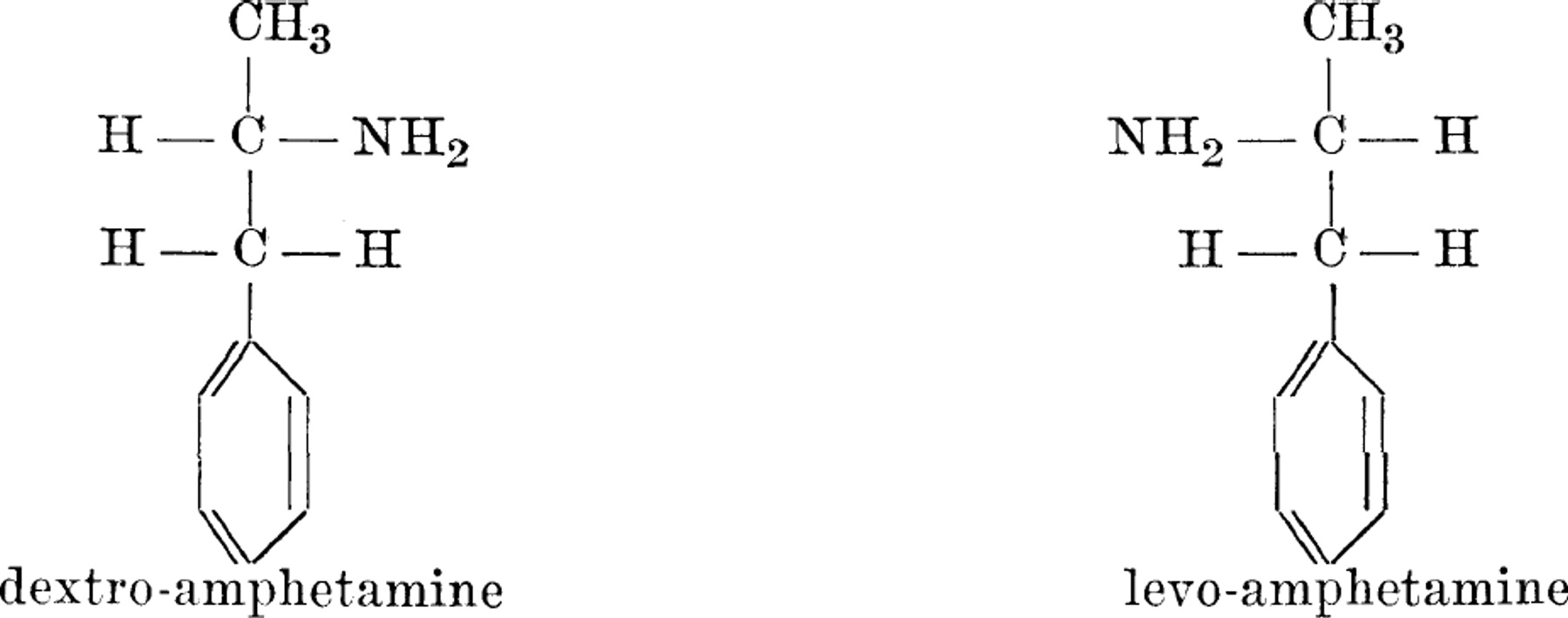
A study of the comparative physiological actions of these isomers in experimental animals and in 3 normal persons, by Alles, 1 showed that the peripheral actions of these isomers are closely the same and similar to those of the racemic compound. However, the central actions of these compounds were found to differ considerably, the dextro isomer being more active than the racemic compound and from 2 to 4 times more active than the levo isomer. Trevan 2 has reported the analeptic effect against paraldehyde anesthesia of mice to be greater for the dextro isomer than for the levo isomer.
These observations made it of interest to determine whether dextro-amphetamine (dextro-Benzedrine) would prove to be more efficient clinically than either the racemic compound or its levo isomer. The clinical conditions chosen for study were those which have been found to be benefited principally by the central nervous system stimulant effects of the racemic compound (Benzedrine). The method of study in narcolepsy was similar to that of Prinzmetal and Bloomberg, 3 and in post-encephalitic Parkinson's disease like that of Solomon, Mitchell and Prinzmetal. 4 Four cases of narcolepsy were each under observation for several months, until at least 2 sets of observations of the effective dosage of the optically active isomers and of the racemic compound were completed. Two cases of post-encephalitic Parkinson's disease have also been under observation for several months, and while it is more difficult to quantitatively evaluate therapy in this disease than in narcolepsy, the relative effectiveness of the isomers is clearly apparent. One case of postural hypotension has also been studied with the isomeric compounds.
Get full access to this article
View all access options for this article.