




Abstract
One phase of the duck disease study previously outlined 1 is an investigation to determine the probability of “alkali poisoning” as the cause of this malady. This report deals with preliminary data obtained in the forced feeding of salts and mixtures of salts, such as are known to occur naturally in some of the disease areas.
Male and female ducks of the pintail species, weighing from 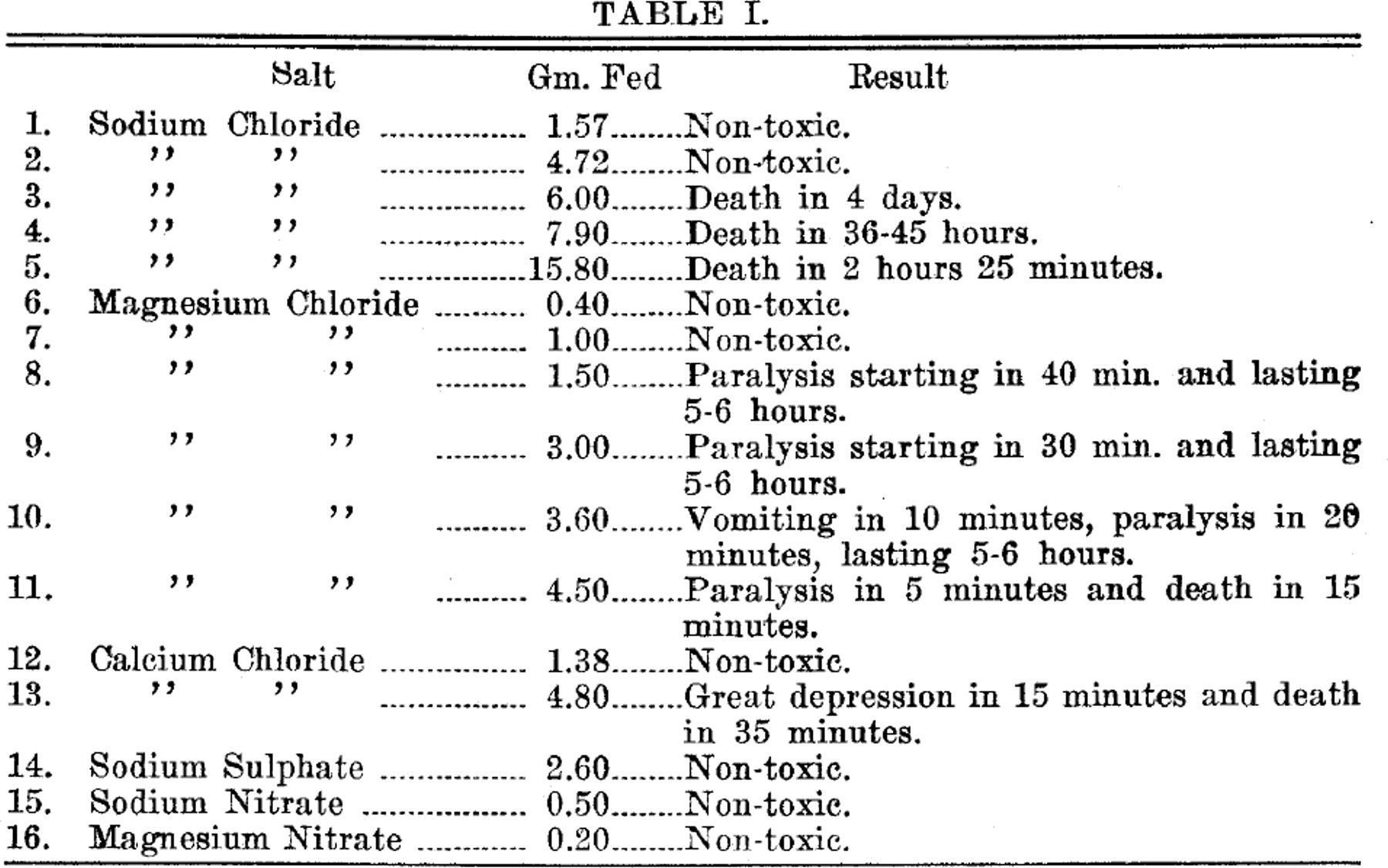
The results indicate that less than 5 gm. of sodium chloride is non-toxic; while 6 gm. or more is lethal, the time required to produce death decreasing as the dose is increased. Toxicity appears after administration of 1.5 gm. magnesium chloride, but an amount approximately 4.5 gm. is required for a lethal dose. Calcium chloride totaling 1.4 gm. was non-toxic, while 4.8 gm. was lethal in 35 minutes.
The symptoms of sodium chloride toxicity were nausea, general depression, and torticollis. Magnesium chloride produced a typical paralysis, rendering the bird entirely helpless for the period during which the effect lasted. With calcium chloride the ante mortem symptoms appeared to be general depression rather than paralysis. Details of the symptoms produced, together with the blood and pathological changes, will form a separate report.
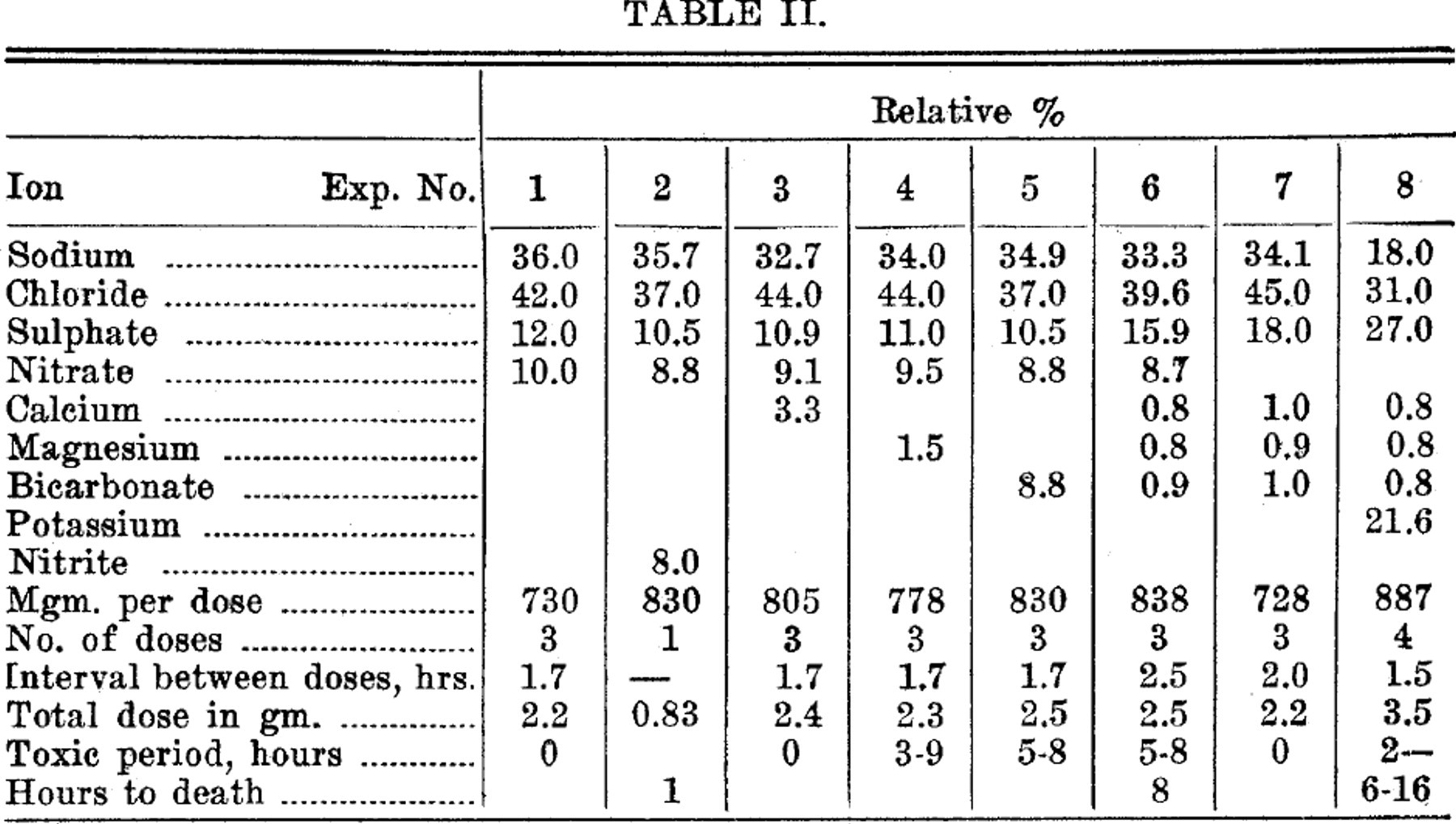
Data of particular significance were obtained from the administration of certain mixtures, a marked increase in toxicity king noted in those solutions which contained nitrate together with either magnesium or bicarbonate. It should be noted in Experiment 3 that calcium with nitrate did not produce a similar toxicity, nor was toxicity developed in Experiment 7 in which magnesium and bicarbonate were used but no nitrate.
Get full access to this article
View all access options for this article.