




Abstract
During the course of some experiments on jaundiced puppies we noted a fairly progressive lowering of the blood serum calcium, which, in several instances fell to the tetany level. 1 , 2 None of the animals evinced the slightest evidence of increased neuromuscular excitability; on the other hand, some degree of apathy was the rule. It was thought that either some of the circulating biliary constituents or some one or more intermediary products resulting from the perversion of liver function had raised the threshold of nervous excitability, or, that the parathyroids had assumed an added function and were playing some rôle in keeping the animals out of tetany. Apart from such intercepting factors there was every reason to expect the early precipitation of tetany in very young animals with extensive morphologic changes in the liver, a markedly disturbed intestinal condition and in addition a lowering of the blood serum calcium. To remove suspicion from the parathyroids, a series of animals, young and adult, were, after a period of jaundice lasting 16 to 18 days, induced by division of the common duct between ligatures, subjected to thyroparathyroidectomy. Blood calcium determinations were made in the normal, jaundiced and parathyroprivic states.
In the first group of experiments puppies, 8 to 10 weeks old, were used. Only slight symptoms of tetany were noted and in more than 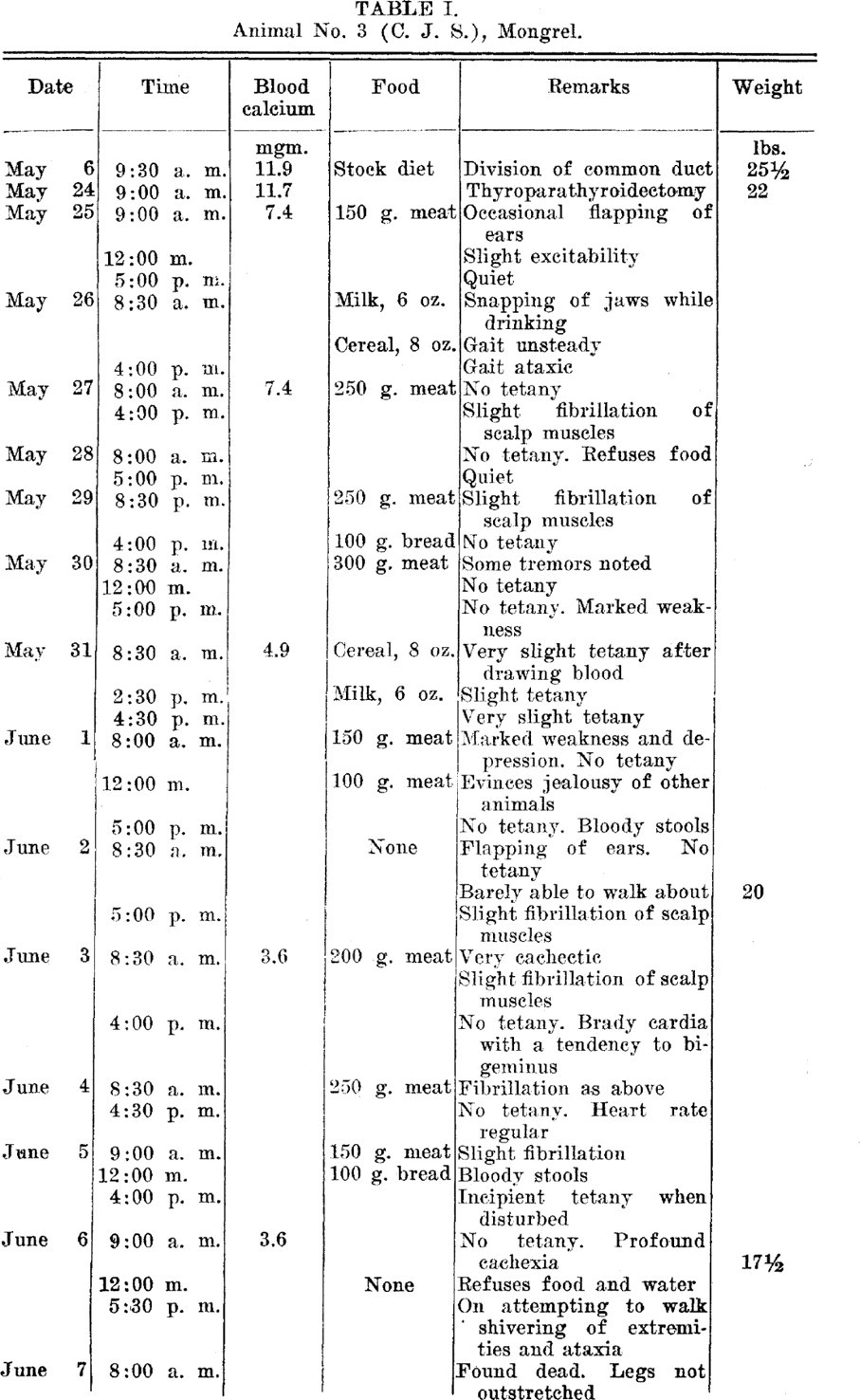
Get full access to this article
View all access options for this article.