




Abstract
We have found that ether is more rapidly bactericidal in relation to gram-negative organisms (Escherichia coli, Eberthellia typhi, Eberthellia dysenteriae, Eberthellia paradysenteriae (Flexner), Alcaligines fecalis, Salmonella paratyphi, Salmonella Schotmulleri, Pseudomonas aeruginosa, Pseudomonas fluoresoens, Proteus vulgaris, Serratia marcescens, Encapsulatus pneumoniae, Neisseria intracellularis) than in relation to a number of gram-positive organisms (Staphylococcus albus, Staphylococcus aureus, Staphylococcus tetragenus, Diplococcus pneumoniae (Types II and III), Streptococcus pyogenes). It appears at present that acid fast gram-positive organisms (Mycobacteria), diphtheroids (Corynebacteria) and possibly the Lactobacilli, stand midway between the two first mentioned groups in sensitiveness to this reagent.
We further tested a number of substances containing hydrocarbon chains and possessing varying degrees of lipoid solvent activity on gram-negative and gram-positive bacteria. Our results are shown in Table I.
In general it will be seen that all of these substances act in much the same manner as does ether.
From Table 11, it is seen that alkalis act as do the substances containing hydrocarbon chains, but acids act more rapidly on 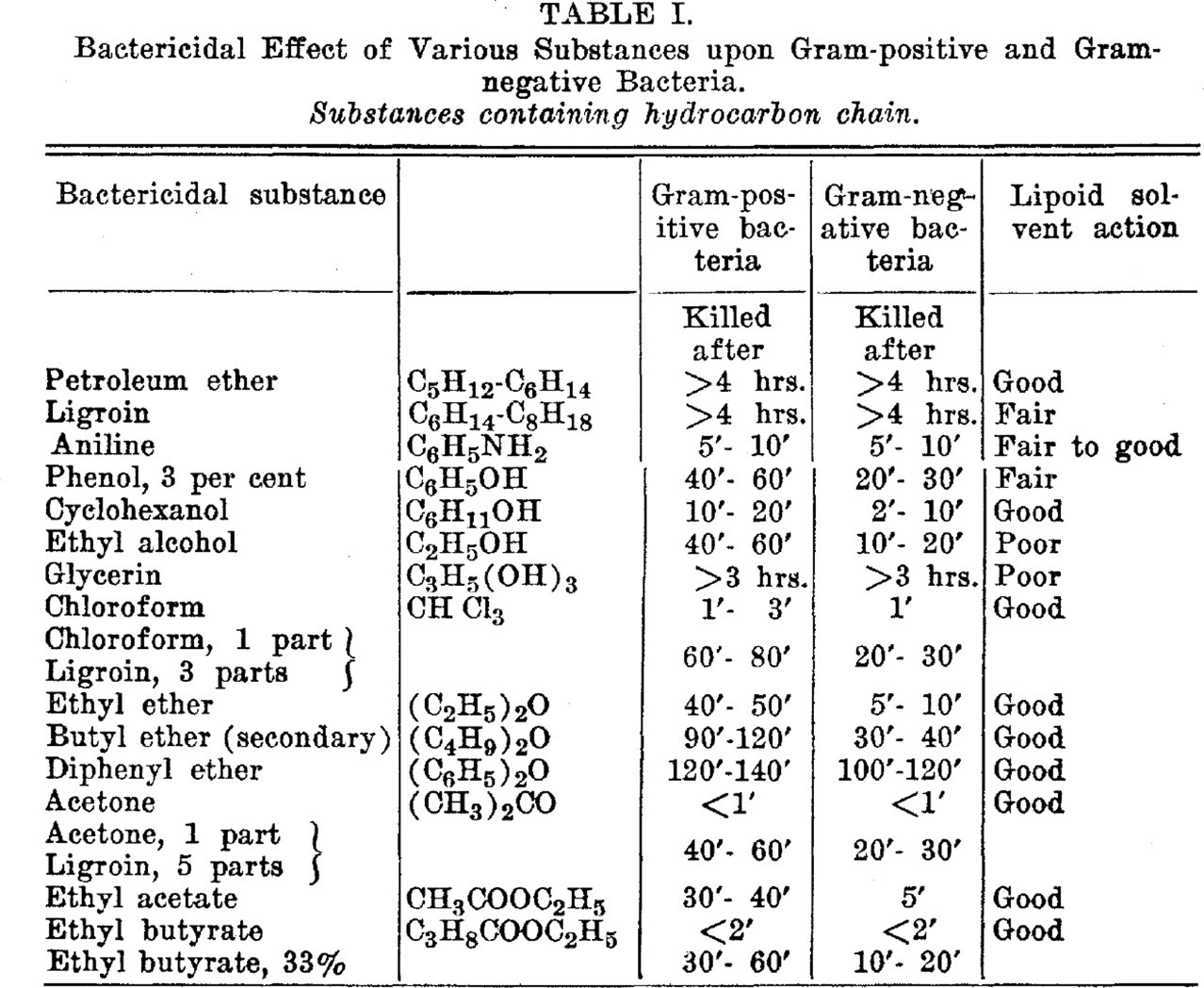
Get full access to this article
View all access options for this article.