




Abstract
In order to understand the influence of the position of the electrocardiographic electrodes upon the form of the electrocardiogram it is necessary to have some idea of the laws which govern the flow of electric currents in solid conductors.
When a constant difference of potential is produced in a thin conducting sheet of infinite extent, the potential (V1) of any point of that sheet is determined according to the following equation: 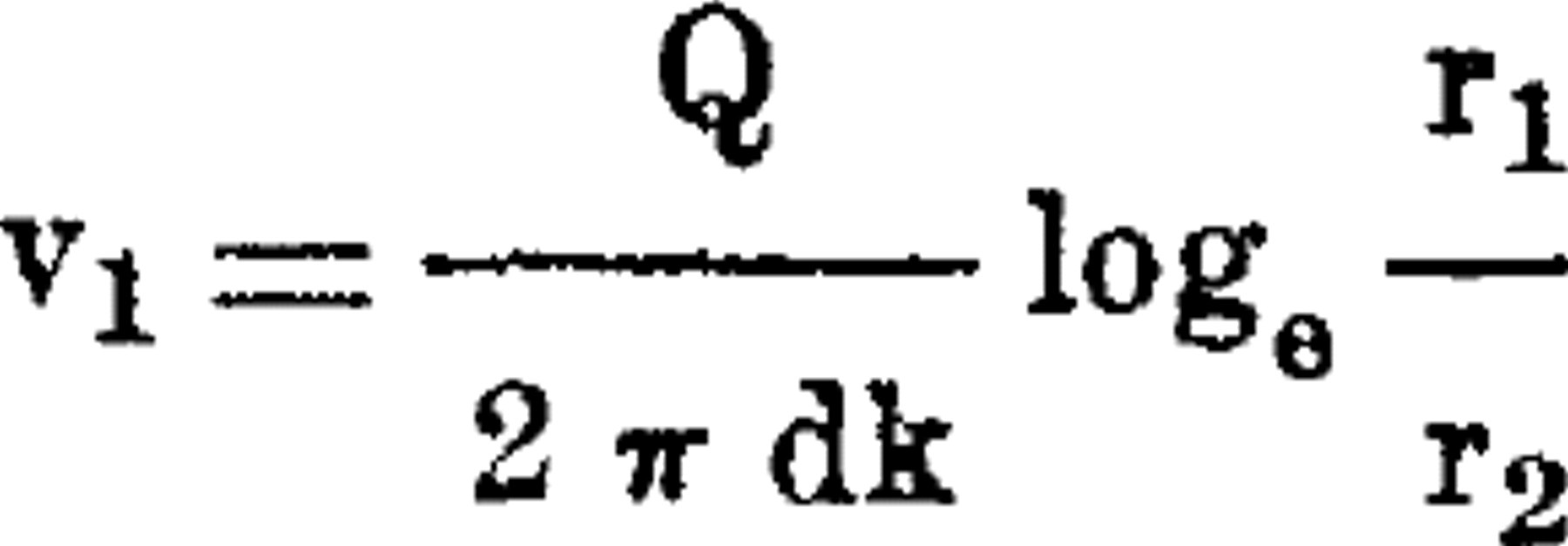 in which Q is the quantity of electricity flowing in unit time, d the thickness of the sheet, k the conductivity of the material of which the sheet is composed, and r
1 and r2 the distances of the point from the sink and the source respectively. In dealing with the difference in potential between two points at a given instant the expression
in which Q is the quantity of electricity flowing in unit time, d the thickness of the sheet, k the conductivity of the material of which the sheet is composed, and r
1 and r2 the distances of the point from the sink and the source respectively. In dealing with the difference in potential between two points at a given instant the expression 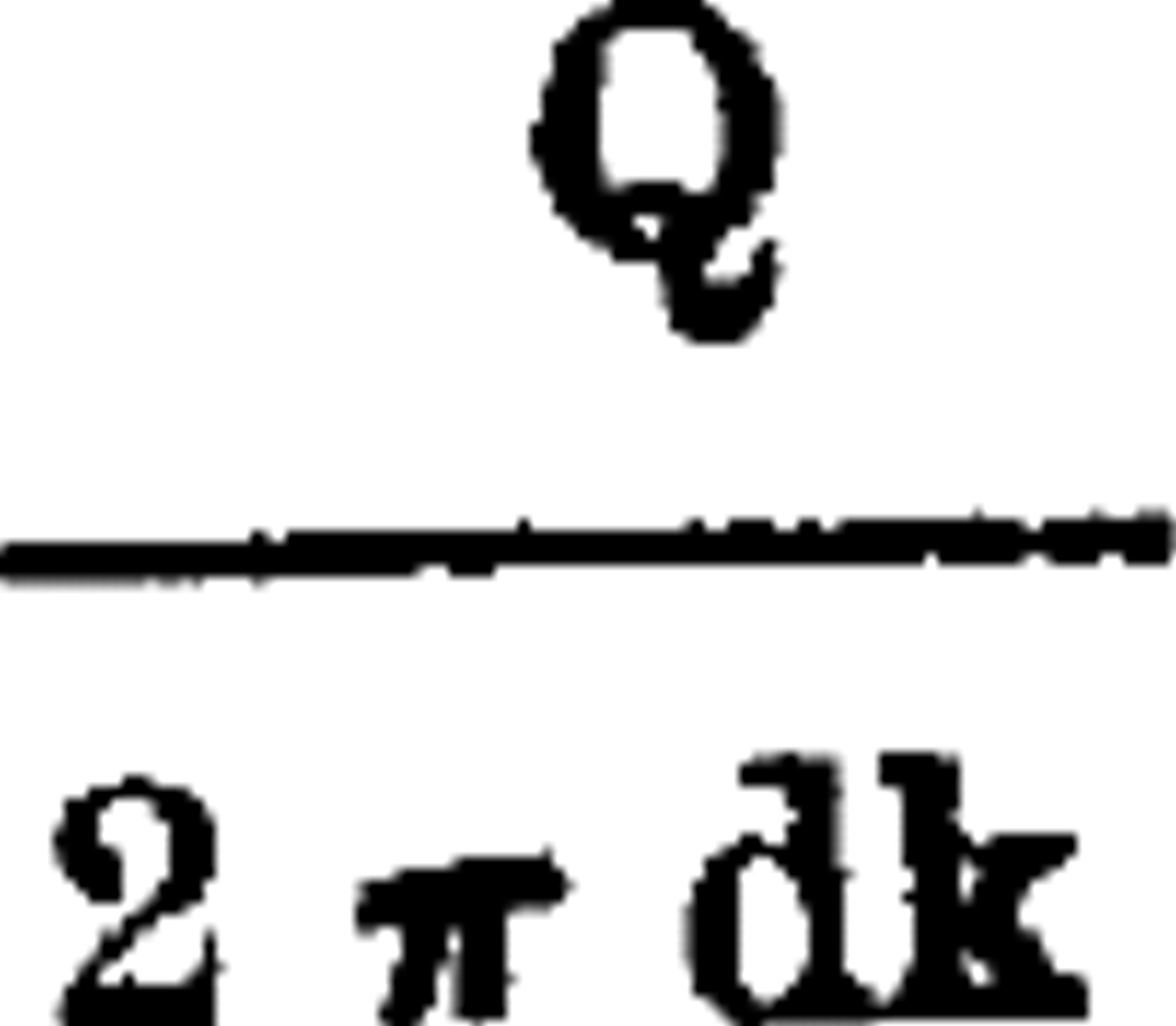 may be replaced by k. Then
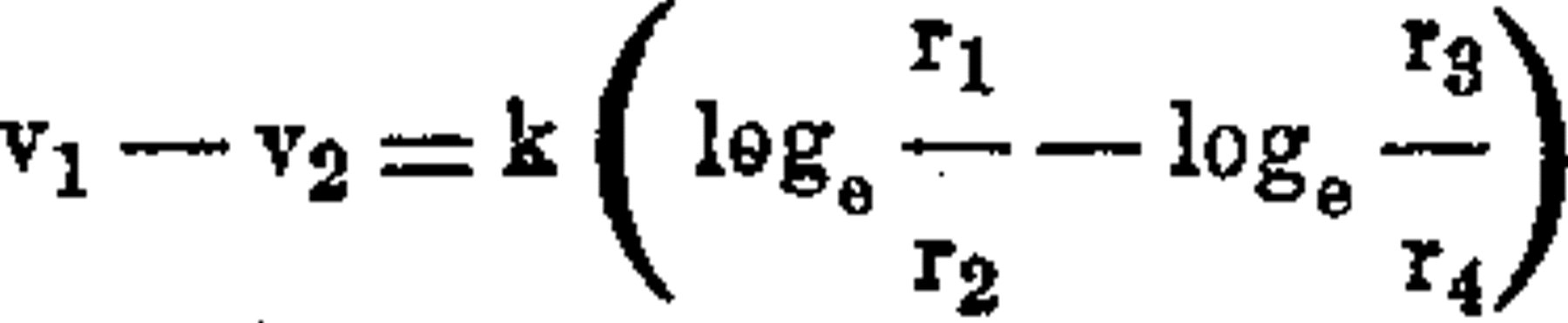
in which r 3 and r 4 are the distances of the second point from the sink and source respectively. In the case of a solid conductor a similar expression holds: 2

in which the letters r 1, r 2, r 3, and r 4 have the same significance as before.
The body is not a conductor of infinite extent, nor can it be assumed that all body tissues have the same conductivity. The potential differences produced by the heart are not constant. Nevertheless, the potential differences produced by the heart-beat within the body or at its surface are determined by factors similar to those which appear in the equations given above.
Within the heart during the period of its electric activity a great number of sinks and sources exist. It may be demonstrated theoretically and experimentally that the differences of potential produced by the heart-beat at the body surface are of much greater magnitude in the immediate neighborhood of the heart than at a distance from it.
Get full access to this article
View all access options for this article.