



Abstract
The clinical analyst is sometimes confused in his calculations from comparison colorimetric (or turbidimetric) readings, especially if circumstances force him to deviate slightly from the definite directions of any given method. To avoid irritation and loss of time the author keeps on his desk the following equation:
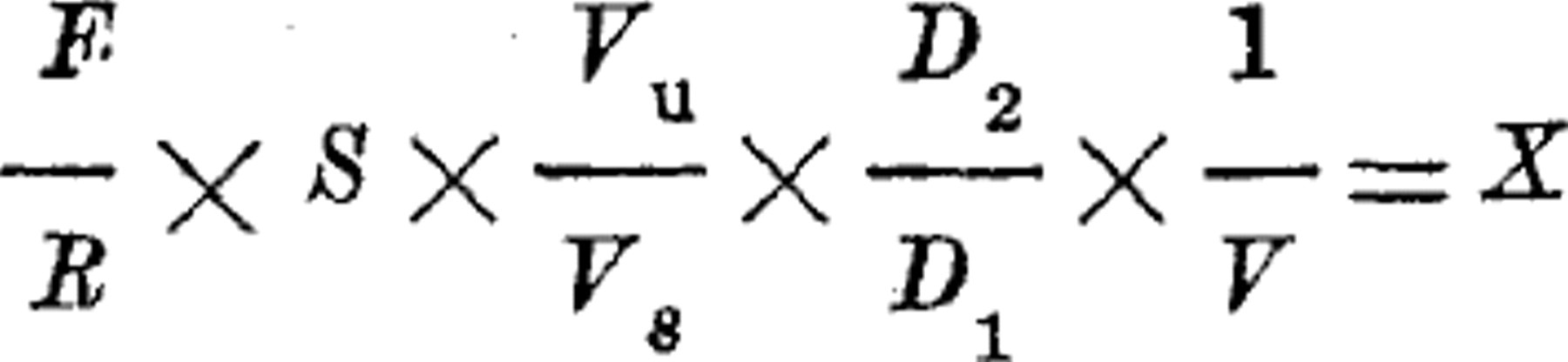
F, scale reading of the standard in millimeters, usually fixed at some definite point; R, scale reading of the sample analyzed; S, concentration of the standard, usually milligrams per 100 cc.; V
u, volume of the colored (or turbid) solution as matched against the standard; V
s, volume of the standard solution; D
1, volume of the sample (or the aliquot extract) taken for analysis; D
2, volume to which D
1 is diluted before developing color (or precipitating); V, the volume of D
2 used in developing the color; X, the concentration of the unknown in terms comparable to S, i. e., milligrams per cc. if S is given as milligrams; multiply X by 100 if mg. per 100 cc. is required. In most routine clinical work all but the first two and last terms (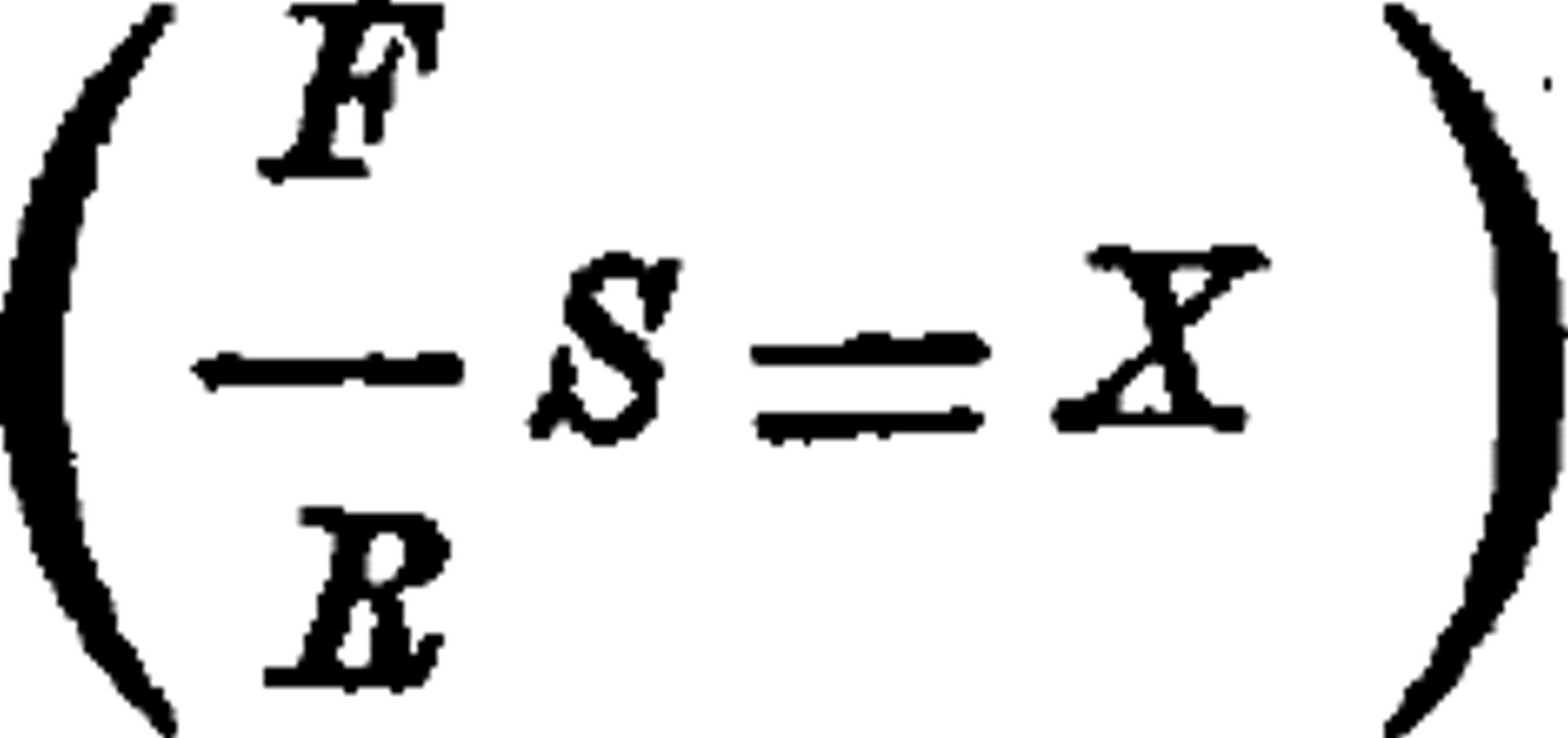 ) are unity and out of mind. When not in unity it is more often a simple two times, a five times or a ten times dilution, but odd dilutions may occur, as, for instance, when the sample available becomes limited through accident or otherwise. The mathematics involved should not deter the technician from saving his case.
Get full access to this article
View all access options for this article.