




Abstract
The excretion rate of urea in normal men increases directly as the blood urea concentration, and as the square root of the volume of urine, so long as the latter remains within ordinary limits, under about 5 liters per day. These relations are expressed in the formula,  D representing the rate of urea excretion, calculated as grams per 24 hours, B the blood urea concentration (grams per liter), V the rate of urine excretion, calculated as liters per 24 hours. When the size of the individual (W = weight in kilos) is introduced the equation becomes
 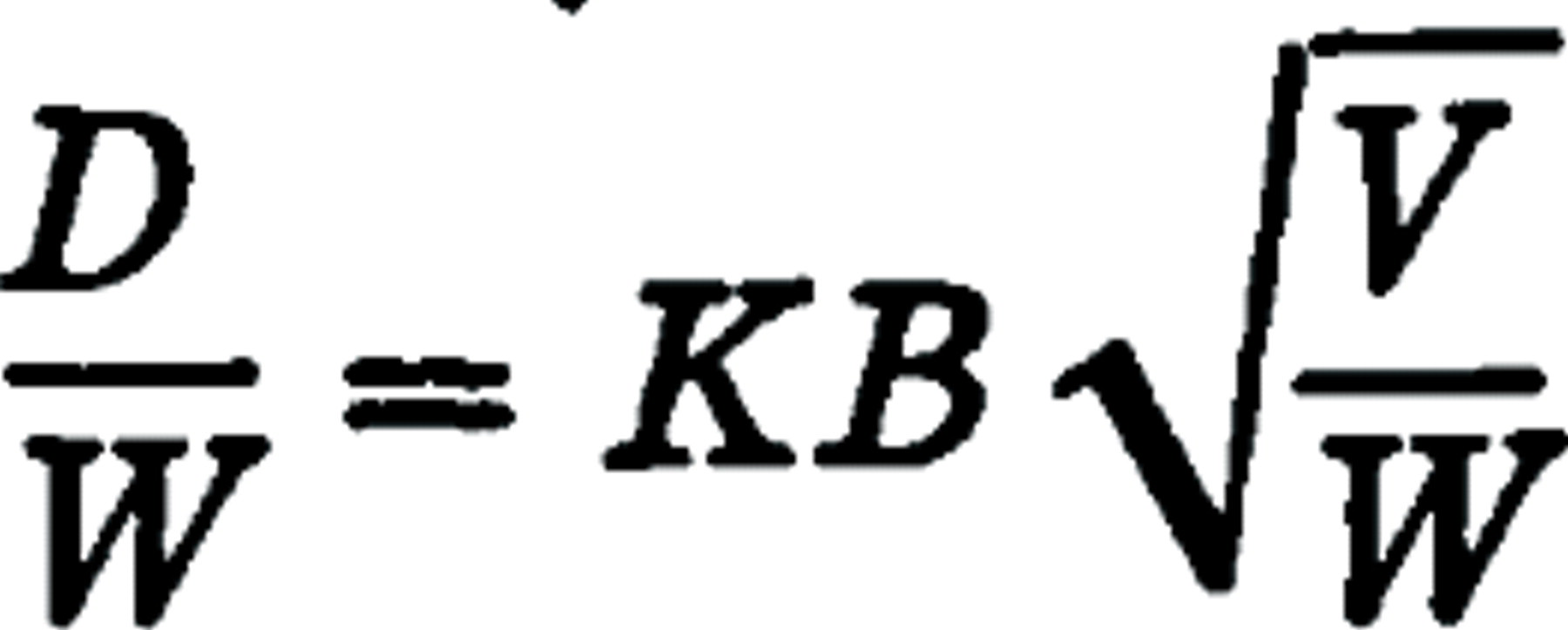 , or
, or 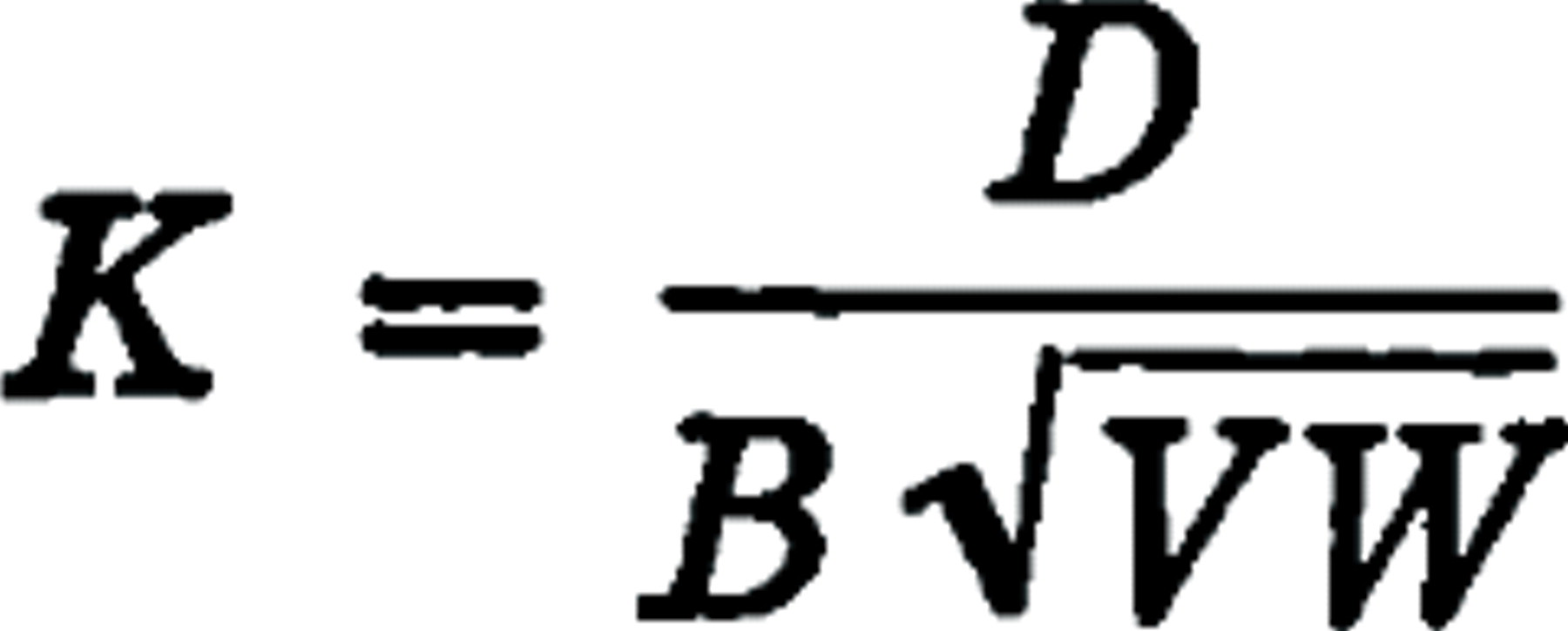 . K = 7.5 ± 3 for normal individuals. When deficiency of the urea-excreting function is present K has a lower value. Increase in volume output beyond the rate of about 200 c.c. per hour, or 5 liters per 24 hours, ceases to accelerate urea excretion, so that for volumes of V in excess of 5, the figure 5 may be inserted in place of the actual V. The above formula gives more consistent results than that of Ambard, which assumes erroneously that the excretion rate increases as the square rather than the first power of the blood urea; and correlates the excretion with the concentration of the urea in the urine rather than with the volume of the urine. In calculating the rate of urine and urea output from short time periods, errors occasionally occur from failure completely to empty the bladder at either the beginning or end of the period. Such errors may be reduced by basing the output calculations on the creatinine content of the sample, rather than the time over which it is collected, since Shaffer has shown the hourly creatinine output to be constant throughout the 24 hours, e.g., if the creatinine content of the sample analyzed is 1/20 of the individual's known daily creatinine output, the urea and volume output are calculated to a 24-hour basis by multi-plying by 20.
Get full access to this article
View all access options for this article.