




Abstract
The object of this experiment was to determine the effect upon the weight of pituitary in the rabbit following the administration of sheep's thyroid. Both males and females were used. The male rabbits were divided into two groups. The animals of one were thyroidectomized and those of the other used as controls. To one half of the thyroidectomized animals and one half of the control group a capsule containing one tenth of a gram of Armour and Company's desiccated sheep's thyroid was administered on alternate days. The females were treated in precisely the same manner and thus each sex was composed of animals under four conditions: first those which were entirely normal, second those normal and fed thyroid, third those thyroidectomized and not fed thyroid, and fourth thyroidectomized and fed thyroid.
The males and females were kept separate but under the same conditions and each animal was weighed once a week. All the animals were killed at the end of about six months after operation and in every case of thyroidectomy postmortem examination showed that the thyroid had been completely removed. The body weight of each animal was corrected by deducting the weight of contents of stomach, intestines, and bladder. The pituitary was carefully dissected out and weighed to the tenth of a milligram and the weight of each pituitary was then calculated in milligrams per kilo of corrected body weight.
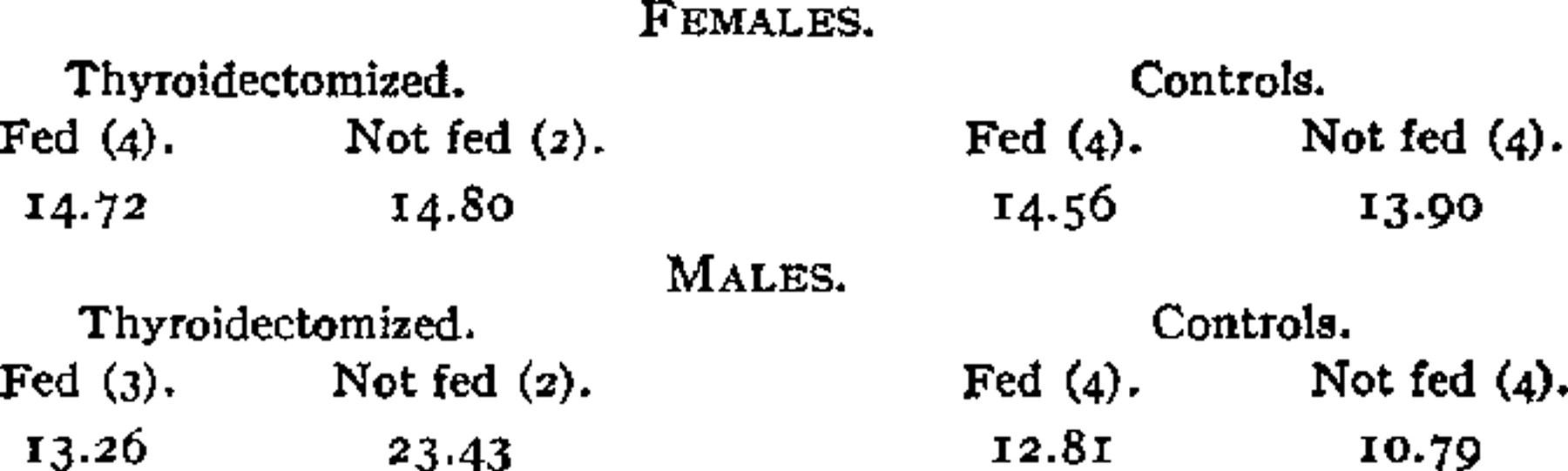
The average weight of the pituitary, of the animals under the above-described conditions, in milligrams per kilo of corrected body weight may best be seen in the following table. The figures in parenthesis indicate the number of animals used in each case.
In the literature dealing with this subject it is generally agreed that removal of the thyroid is followed by an increase in the weight of the pituitary, but whether this increase is due to absence of the internal secretion of the thyroid or to some other cause has not been determined.
Get full access to this article
View all access options for this article.