




Abstract
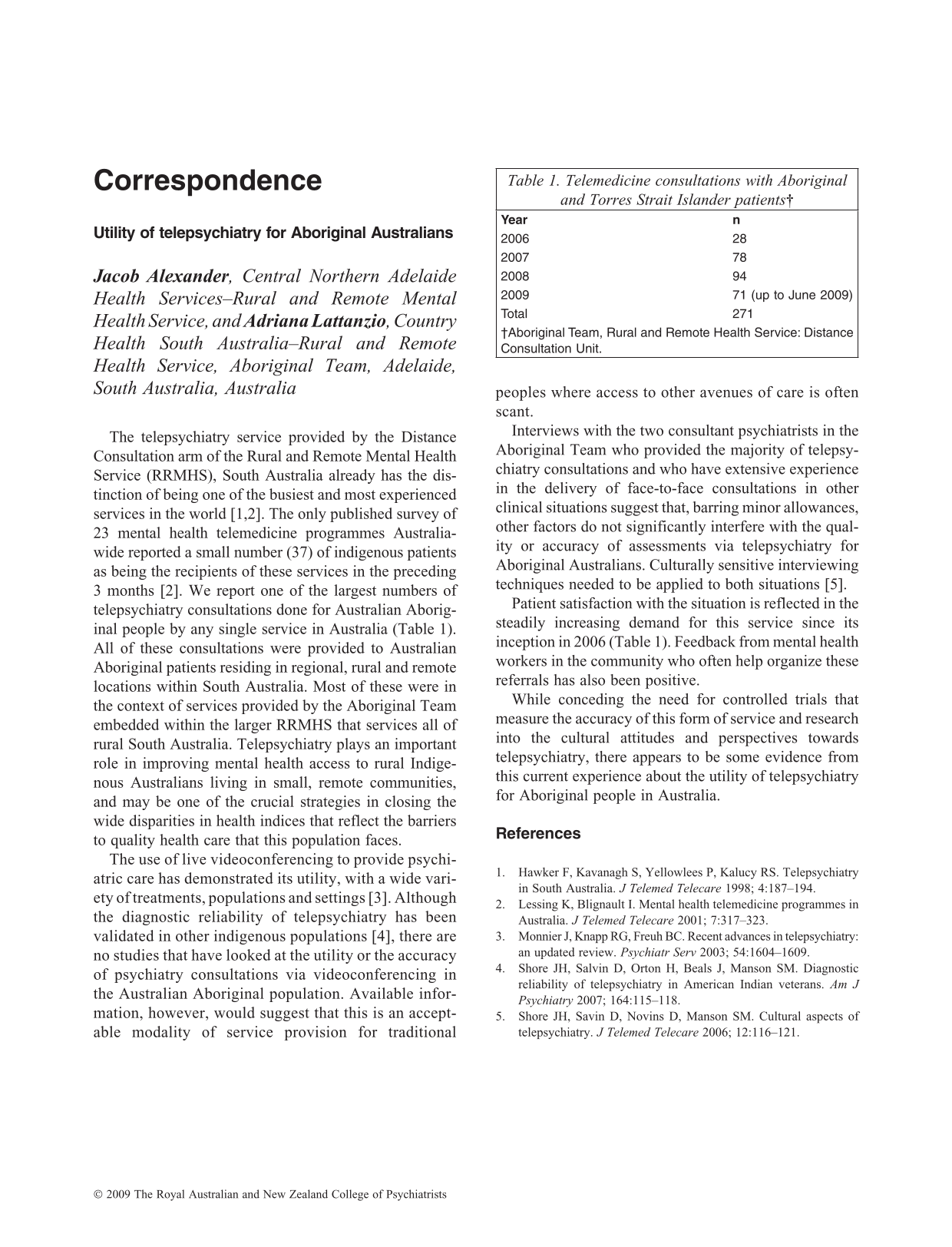
The telepsychiatry service provided by the Distance Consultation arm of the Rural and Remote Mental Health Service (RRMHS), South Australia already has the distinction of being one of the busiest and most experienced services in the world [1,2]. The only published survey of 23 mental health telemedicine programmes Australiawide reported a small number (37) of indigenous patients as being the recipients of these services in the preceding 3 months [2]. We report one of the largest numbers of telepsychiatry consultations done for Australian Aboriginal people by any single service in Australia (Table 1). All of these consultations were provided to Australian Aboriginal patients residing in regional, rural and remote locations within South Australia. Most of these were in the context of services provided by the Aboriginal Team embedded within the larger RRMHS that services all of rural South Australia. Telepsychiatry plays an important role in improving mental health access to rural Indigenous Australians living in small, remote communities, and may be one of the crucial strategies in closing the wide disparities in health indices that reflect the barriers to quality health care that this population faces.
Telemedicine consultations with Aboriginal and Torres Strait Islander patients†
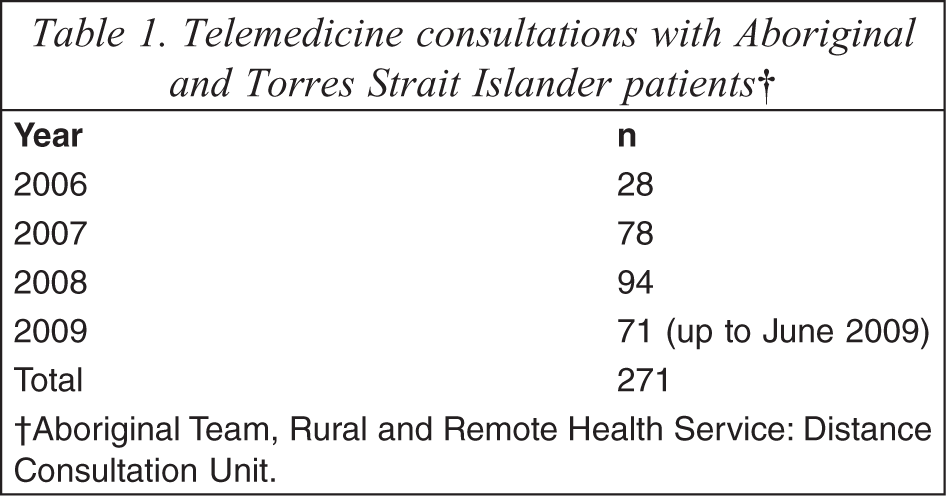
†Aboriginal Team, Rural and Remote Health Service: Distance Consultation Unit.
The use of live videoconferencing to provide psychiatric care has demonstrated its utility, with a wide variety of treatments, populations and settings [3]. Although the diagnostic reliability of telepsychiatry has been validated in other indigenous populations [4], there are no studies that have looked at the utility or the accuracy of psychiatry consultations via videoconferencing in the Australian Aboriginal population. Available information, however, would suggest that this is an acceptable modality of service provision for traditional peoples where access to other avenues of care is often scant.
Interviews with the two consultant psychiatrists in the Aboriginal Team who provided the majority of telepsychiatry consultations and who have extensive experience in the delivery of face-to-face consultations in other clinical situations suggest that, barring minor allowances, other factors do not significantly interfere with the quality or accuracy of assessments via telepsychiatry for Aboriginal Australians. Culturally sensitive interviewing techniques needed to be applied to both situations [5].
Patient satisfaction with the situation is reflected in the steadily increasing demand for this service since its inception in 2006 (Table 1). Feedback from mental health workers in the community who often help organize these referrals has also been positive.
While conceding the need for controlled trials that measure the accuracy of this form of service and research into the cultural attitudes and perspectives towards telepsychiatry, there appears to be some evidence from this current experience about the utility of telepsychiatry for Aboriginal people in Australia.