




Abstract
This paper examines the relationship between subject specialization in high school and university undergraduate degree program choices. Focusing on a reform in England that encouraged students to opt for studying mathematics in the last 2 years of high school, the study analyzes its effect on undergraduate enrollment in Science, Technology, Engineering, and Mathematics (STEM) fields. The findings indicate that the reform increased the likelihood of students pursuing and completing STEM undergraduate degrees. Thus, encouraging mathematics specialization during high school enhances the number of STEM graduates. However, despite the reform’s implementation, gender and socioeconomic disparities in STEM participation remained unchanged, suggesting that interventions during adolescence might not effectively address the underrepresentation of specific groups, such as females, in STEM programs.
There is extensive evidence demonstrating that university degrees vary in their returns in the labor market, with Science, Technology, Engineering, and Mathematics (STEM) degrees consistently offering higher-paid employment opportunities (Altonji et al., 2012; Belfield et al., 2019; Chevalier, 2011; Hastings et al., 2013; Kirkeboen et al., 2016; Walker & Zhu, 2011). One key factor contributing to this wage premium is the emphasis on developing quantitative skills within STEM programs, which are highly valued by employers (Autor & Handel, 2013). Proficiency in mathematics is often considered a prerequisite for studying STEM disciplines at higher education and is typically indicated by specializing in mathematics in high school. However, our understanding of the impact of mathematics education at high school on enrollment in STEM undergraduate degrees is still limited, with only a few notable exceptions in the existing research such as Joensen and Nielsen (2009). This is a complex undertaking as it necessitates addressing the issue of endogeneity, whereby students with specific observable and unobservable characteristics tend to select certain subjects of study. Previous research investigating the determinants of degree choice has predominantly relied on belief elicitation and structural models (Arcidiacono, 2004; Arcidiacono et al., 2016; Stinebrickner & Stinebrickner, 2014; Wiswall & Zafar, 2015).
Moreover, increasing the proportion of the population specializing in STEM subjects is a pressing concern due to the significance of having a large pool of STEM graduates for the economy. A substantial supply of qualified STEM professionals is crucial for meeting the demands of the job market (HM Treasury et al., 2004; HM Treasury & Department for Business, Innovation and Skills, 2014; The President’s Council of Advisor on Science and Technology, 2012). Governments strive to enhance the overall quantity and quality of the STEM workforce by employing generous migration policies to retain or attract foreign high-skilled STEM workers (such as HB1 visa and the STEM Job Act of 2012 and 2015 in the United States, as well as the Blue Card Directive in Europe). Another way of addressing the challenges associated with meeting the economy’s needs in the STEM sector is to implement interventions in educational programs aimed at augmenting the internal supply of skilled STEM workers. 1
This study investigates a specific high school reform in England aimed at increasing the pool of students in STEM subjects during high school. 2 In March of Year 11 (equivalent of 10th grade in the United States), students face an important decision about whether or not to continue on to the final 2 years of high school (defined as Key Stage 5 or KS5) and, if so, which subjects to study during those final 2 years. This paper examines the effects of this reform on KS5 high school students, including their likelihood of studying mathematics in the final 2 years of high school, obtaining a qualification in mathematics upon high school completion, enrolling in higher education, and pursuing and completing a STEM undergraduate program. The reform, henceforth referred to as the “Mathematics Reform” or MR, involved a reduction in the content covered during the 2-year mathematics course taken in the final 2 years of high school, equivalent of the 11th and 12th grades in the United States. This was done by eliminating one module in applied mathematics. However, the allocated learning time of the mathematics course remained unchanged across the last 2 years of high school. This change in the mathematics curriculum serves a natural experiment, lowering both anticipated and actual costs of studying mathematics in the final 2 years of high school. Consequently, this alteration has led to a heightened probability of students opting for and achieving a mathematics qualification, referred to as the mathematics A-level, upon completing high school.
Note that in this paper the term high school is used to refer to the English secondary school. The English secondary school starts at 6th grade instead of 9th grade, as it is in the United States, and finishes at 12th grade. The reform under investigation occurred in mid-2000s in England. Its objective was to increase the proportion of students choosing to study and attaining a mathematics qualification at the end of high school, as the historical level of attainment in this subject was at a significant low during that period. In the cohorts analyzed, compulsory education concluded at the age of 16. Between the ages of 16 and 18, students have the option to continue their education in high school, commonly known as KS5. Roughly half of the student population who complete schooling at 16 pursue further studies at KS5, while the other half pursue vocational courses or enter the labor market. At KS5, students select the (usually four) subjects they wish to study for 2 years. At the end of the second year, their knowledge in the subject is tested through national exams, and subject-specific qualifications, called A-levels, are awarded. These courses are comparable to Advanced Placement courses in the United States as they have a national exam at the end of the school year, and they serve to access university programs. It is important to note that the English higher education system differs from that of the United States. The choice of the subject to study at undergraduate degree is made in October or January (depending on the undergraduate program and university) of the last year of high school (which is Year 13, equivalent of 12th grade in the United States). Thus, when students are admitted to university, they are already enrolled in an undergraduate degree studying a specific subject. Once enrolled in higher education, switching between degrees is uncommon.
To study the impact of studying mathematics in the last 2 years of high school on choice of subject at university, a longitudinal dataset is used, which tracks students from primary school through to their potential graduation from higher education. This dataset is constructed by linking administrative data from schools in England and universities in the United Kingdom. The analysis sample is composed of all KS5 high school students who did their A-level exams between 2003/2004 and 2008/2009. Thus, we observe two cohorts of students just before the MR was implemented (A-level exam cohorts 2003/2004–2004/2005) and four cohorts just after the MR was implemented (A-level exam cohorts 2005/2006–2008/2009). 3
The empirical strategy exploits the fact that the MR, by reducing the perceived difficulty of studying mathematics, resulted in an increase in the likelihood of choosing to study mathematics in the last 2 years of high school and of finishing high school with a mathematics A-level qualification. Thus, we can investigate whether the probability of studying a STEM undergraduate degree has changed for the cohorts affected by the reform compared to those not affected by it: if the cohorts affected by the MR have been more likely to complete high school with a mathematics A-level, we can investigate whether they have also been more likely to enroll in a STEM undergraduate degree compared to the cohorts not affected by the MR. Furthermore, to disentangle cohort-specific characteristics and shocks from the impact of the reform (the MR constituted a nationwide reform that influenced all students in specific cohorts), the empirical specification exploits the fact that students must have a high level of prior performance in mathematics courses to study mathematics in the last 2 years of high school. Hence, a difference-in-differences design is adopted where the implementation of the MR defines the “pre” and “post” periods and the baseline mathematics ability of the students defines the “treated” and “control” groups. More specifically, KS5 students with low baseline mathematics ability are used as a control group for KS5 students with high baseline mathematics ability, to account for any common shocks or characteristics specific to each cohort. The definition of the baseline mathematics ability of students derives from the standardized mathematics grade obtained at the end of primary school, at the age of 11, which is unaffected by the MR. Summarizing, the empirical strategy compares the probability of pursuing a STEM undergraduate degree across KS5 students with varying levels of baseline mathematical ability in the post-MR versus pre-MR cohorts (for a similar strategy, see Clotfelter et al., 2012, 2015). The estimates of the average treatment effect obtained through the difference-in-differences methodology indicate that being affected by the MR increases the probability of studying mathematics in the last 2 years of high school and of attaining a mathematics A-level by 10.5% relative to the pre-reform mean. Accordingly, being affected by the MR increases the probability of enrolling in a STEM undergraduate degree by 1.5% relative to the pre-reform mean. When analyzing students’ baseline mathematics ability divided into quintiles, those in the top quintile exhibit a 10.7% increase in the likelihood of obtaining a mathematics A-level upon high school completion and a 5.4% rise in STEM undergraduate degree enrollment compared to the quintile-specific pre-reform mean.
Various robustness checks ensure the reliability of the findings by showing that the estimates are not influenced by cohort-specific effects, concurrent policies, or pre-existing conditions. Additionally, there is supporting evidence suggesting that the heightened probability of enrolling in STEM undergraduate degrees is driven from a shift in preferences from non-STEM to STEM subjects.
Lastly, it is important to acknowledge that in most societies, significant gender and socioeconomic status (SES) gaps in STEM subjects, both at the high school and university levels, exist (Cavaglia et al., 2020; Cimpian et al., 2016, 2020; Codiroli Mcmaster, 2017; Copur-Gencturk et al., 2020; McNally, 2020). To further investigate these disparities, some heterogeneity analysis is conducted on the gender and the SES dimensions by interacting the variable of interest (gender or SES indicator) with the relevant independent variables in the difference-in-differences equation. The reform did not impact the gender gap in STEM degree participation among KS5 students. On the other hand, following the MR, the SES gap in STEM degree enrollment, which favors students from privileged backgrounds, widened, although the statistical significance of this finding is marginal. Overall, the findings of the heterogeneity analysis suggest that interventions aimed at addressing gender and SES imbalances in education during adolescence may be insufficient or introduced too late in the educational trajectory. These results are consistent with students already having strong differences in subject taste or preferences in teenager-hood depending on their gender (De Philippis, 2021; Zafar, 2013) and SES (Cooper & Berry, 2020; McDool & Morris, 2020; Rozek et al., 2019), which may arise for a range of reasons, including the wider societal context.
This study makes a valuable contribution to an emerging strand of literature that examines the impact of subject specialization during high school on subsequent human capital investment and labor market outcomes (Broecke, 2013; Clotfelter et al., 2015; De Philippis, 2021; Falch et al., 2014; Goodman, 2019; Joensen & Nielsen, 2009). The finding that studying mathematics during the last 2 years of high school has a positive effect on the choice of pursuing STEM undergraduate degrees aligns well with the existing body of related research. De Philippis (2021), for instance, provides evidence of increased STEM degree participation, particularly among males, following the expansion of science hours offered to 14-year-old students in England. 4 Joensen and Nielsen (2009, 2014) find that the introduction of the option to combine advanced chemistry with advanced mathematics in Danish high schools during the 1980s resulted in increased enrollment in more math-intensive degree programs. This, in turn, led to higher earnings and more prestigious careers, particularly among women. Similarly, Goodman (2019) observes a positive effect on earnings for individuals who completed a greater number of standard mathematics modules during high school due to the changes prompted by the 1983 report “A Nation at Risk” in the United States. However, this effect primarily stems from the sorting of individuals into occupations requiring high cognitive skills rather than a change in degree choice. In North Carolina, the acceleration of entry into algebra courses during middle school has been found to benefit high-performing students in later related courses but has had detrimental effects for lower-performing students (Clotfelter et al., 2015).
Despite the various differences among the cited papers, such as the country and historical period examined, as well as the focus on advanced courses rather than standard courses, all the reforms investigated share a common feature with the MR. Specifically, they incentivize students to deepen their knowledge of mathematics or science during middle or high school, without mandating an increase in teaching time or targeting specific groups of students. 5 These findings suggest that reforms that influence the voluntary decision of students to enhance their mathematics and science proficiency in middle and high school can potentially serve as an effective tool for shaping their future acquisition of human capital. However, it is important to consider the specific context in which these reforms are implemented to achieve the desired outcomes.
The subsequent sections of this paper are structured as follows: Section “The English System of Education” provides an elucidation of the English system of education. A comprehensive account of the MR is presented in Section “The Mathematics Reform,” and Section “Data and Sample” outlines the datasets employed. The empirical strategy is detailed in Section “Empirical Strategy,” while Section “Results” presents the findings. Lastly, Section “Discussion and Conclusion” offers a concluding summary.
The English System of Education
The English system of education is structured into different levels known as Key Stages (KSs). At the end of most KSs, there are national exams which are standardized and graded anonymously by external evaluators. This study specifically focuses on the last 2 years of high school or KS5, equivalent of 11th and 12th grades in the United States, as this is the stage where the MR was implemented. KS5 represents the academic path for students aged 16 who aim to attend university and it lasts for 2 years. An alternative vocational track is available post-16. During the first year of KS5, students take exams in their chosen (typically four) subjects and receive an AS (Advanced Subsidiary) qualification for each subject. This AS qualification can be considered standalone or can be further pursued in the following year to obtain the complete A-level qualification. The English education system possesses three distinct characteristics that make it an ideal setting for studying subject choices and their long-term impacts.
First, the system exhibits early specialization, where performance in one educational stage influences the options available in the subsequent stage. This is evident when transitioning from KS4 to KS5 and from KS5 to university. Figure 1 offers a visualization of the transitions across the different levels of schooling (KS3, KS4, and KS5) and to university, which is explained in the following points:
From KS3 to KS4: Toward the end of Year 9, in the Spring or Summer term, when most students are 14 years old, students choose usually about eight subjects to study. Only Mathematics, English, and Science are compulsory subjects. The compulsory and chosen subjects are all studied for 2 years in Years 10 and 11, when students are 15–16 years old. At the end of Year 11, students take exams, called General Certificate of Secondary Education (GCSE), usually in May and June. GCSE’s exam results are available in August.
From KS4 to KS5: In Year 11, students choose whether they want to keep studying A-levels, which is the academic route leading to university, or do vocational courses or enter the labor market. High schools have entry requirements for KS5 subjects, which vary depending on the course and the school itself. Generally, for studying A-levels, most high schools will expect students to have gained at least five A*–C grades in GCSEs and to have a GCSE at grade B or above in the subjects that students want to continue studying at A-level. While the exact deadline for choosing KS5 subjects is not standardized, the application deadlines will typically be by March and definitely before August, which is the month when students obtain their GCSEs results. Due to this, students will have to apply to high schools using their predicted grades for GCSEs, which are generally calculated based on a range of evidence that students have built up throughout the course. The most important element is composed of the mock exams and end of unit tests that students completed. Other pieces of work, such as essays, projects, or other assignments, may also be used. However, there is no standardized way to calculate a predicted grade and so the exact method may vary between different high schools. Students start studying for their A-levels in the first September after they have completed their GCSEs. KS5 courses last for 2 years, Years 12 and 13, when students are 17 and 18 years old, respectively. A-level exams are taken in the second year of study starting from the second week of May.
From KS5 to university: In Year 13, the final year of high school, students can apply for studying a university degree through the Universities and Colleges Admissions Service (UCAS) by listing their preferred universities and degrees. UCAS applications are submitted in October (for any course at the universities of Oxford and Cambridge, or for most courses in medicine, veterinary medicine/science, and dentistry) or January (all other courses) in Year 13, which is before A-level exams take place. High schools fill in students’ predicted grades in their UCAS applications. The predicted grade is normally generated at the end of Year 12, after students have taken subject-specific mock exams. University admissions are centralized: national-level allocation is determined based on the match between university requirements and students’ high school predicted scores. It is important to highlight that the higher education system in England demonstrates significant diversity in its admission requirements, which vary depending on the specific degree program and university. Certain university departments have specific A-level grade requirements, and certain subjects may be compulsory. For instance, most universities require a mathematics A-level for students pursuing a STEM degree, and some institutions may also have additional grade and subject combination requirements. To illustrate, to enroll in an undergraduate Economics program at Brunel University, students need a combination of three A-levels with grades BBB. Conversely, Oxford University mandates at least two A-levels with an A grade, one A-level with an A* grade, and one of these A-levels must be in mathematics. Figure A2 provides a visualization of the variation in entry standards for Engineering degrees among different universities during the 2009 academic year, as measured by the UCAS tariff score. The UCAS tariff score translates students’ predicted qualifications and grades into a numerical value, which is used by universities to assess whether students meet their entry requirements for a particular course. Figure A2 shows that the University of Strathclyde required a minimum tariff score of 529, Nottingham University required 331, while the University of Bangor had a lower requirement of only 162.
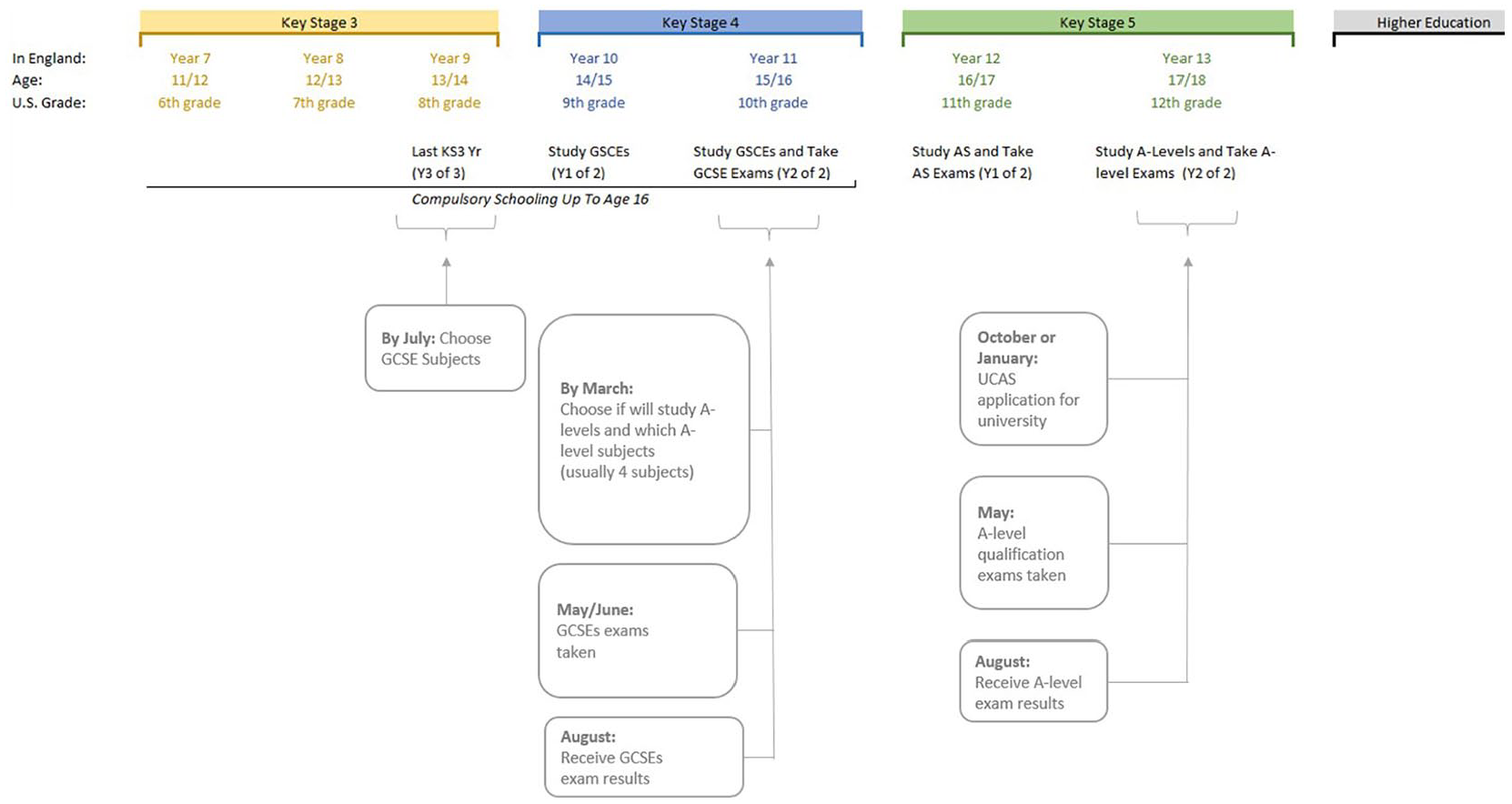
Transitions at high school and higher education.
Second, once students enter the higher education system, opportunities for adjustment are limited. The selection of subjects and university occurs during high school, and it is uncommon for these choices to change during higher education. Dropout rates are minimal and have remained stable over time (Powdthavee & Vignoles, 2009). An undergraduate degree typically spans 3 years, and the examination schedule is predetermined, providing no flexibility for students to choose when to take exams.
Third, the higher education supply is not completely capacity-constrained. In cases where prospective students are unable to secure admission to their preferred universities through the UCAS application, a second round called “clearing” is conducted. During clearing, students are offered places in the same or similar programs at universities that still have available spots. Universities are state funded through the Higher Education Funding Council for England (HEFCE). In the period considered, there were caps in terms of domestic students (i.e., UK and EU nationals) that could be enrolled in each university set by the HEFCE. A 2% margin of over-subscription above the cap was allowed (Higher Education Funding Council for England, 2000).
The Mathematics Reform
The primary objective of the MR was to address the unintended consequences of a previous reform known as Curriculum 2000. Under Curriculum 2000, a modular system was introduced at KS5, where all subjects had to be examined at the end of the first and second year of KS5, as opposed to just the second year. Although the mathematics curriculum remained unchanged, the implementation of this modular system resulted in a 20% decline in the number of students taking mathematics A-level (Baldwin & Lee, 2014; Mathematics in Education and Industry [MEI], 2005). This drop occurred due to the difficulties associated with changes in teaching and examination methods, as students struggled to manage the increased workload. Concerned by the decline, a public inquiry was conducted, which considered the introduction of financial incentives to encourage more students to pursue mathematics post-16 (Smith, 2004). The decrease in mathematics entries at the high school level had a negative impact on STEM degree enrollments at the university level (MEI, 2005).
As a response to the concerns raised by higher education representatives, employers, and the wider society, the MR was implemented just 4 years after the Curriculum 2000 reform. Changes in content to study were introduced for the mathematics AS and A-level exams in the academic years 2004/2005 and 2005/2006, respectively. Figure 2 shows the timeline of when the MR was announced and implemented and the cohorts affected.
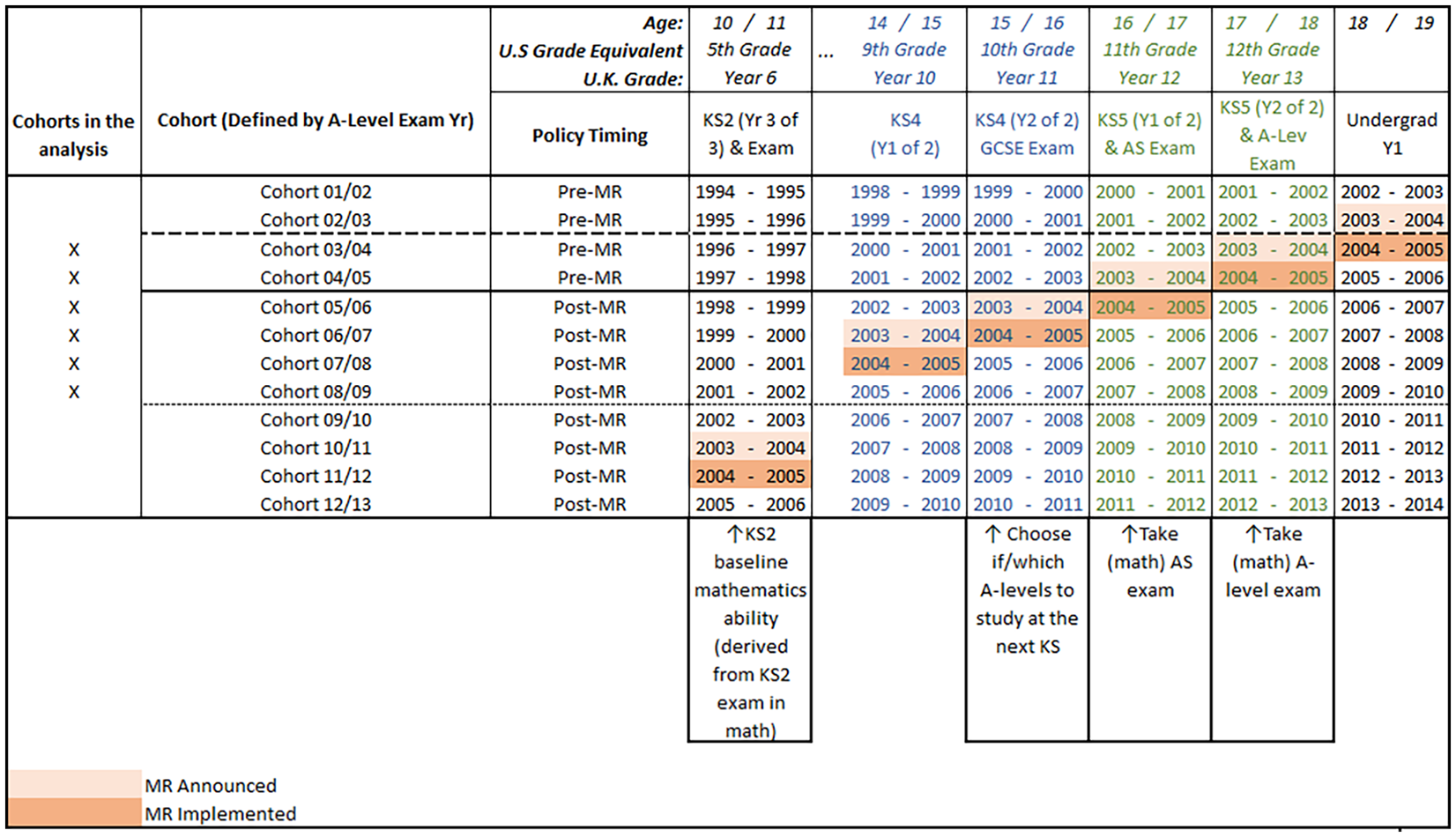
A-level exam cohorts (2001/2002–2012/2013) and MR announcement and implementation.
The MR aimed to alleviate the situation by reducing the mathematics curriculum, specifically by eliminating one module of applied mathematics. Prior to the MR, students were required to study two modules of applied mathematics, but after the reform, they only had to study one. The overall teaching time allocated to the mathematics curriculum remained unchanged. Consequently, the pure mathematics program, which remained the same throughout, was distributed across four modules over the 2 years of KS5, instead of three modules as before the MR. Figure 3 graphically describes the changes introduced by the MR; a more detailed explanation of the reform is available in Appendix B.
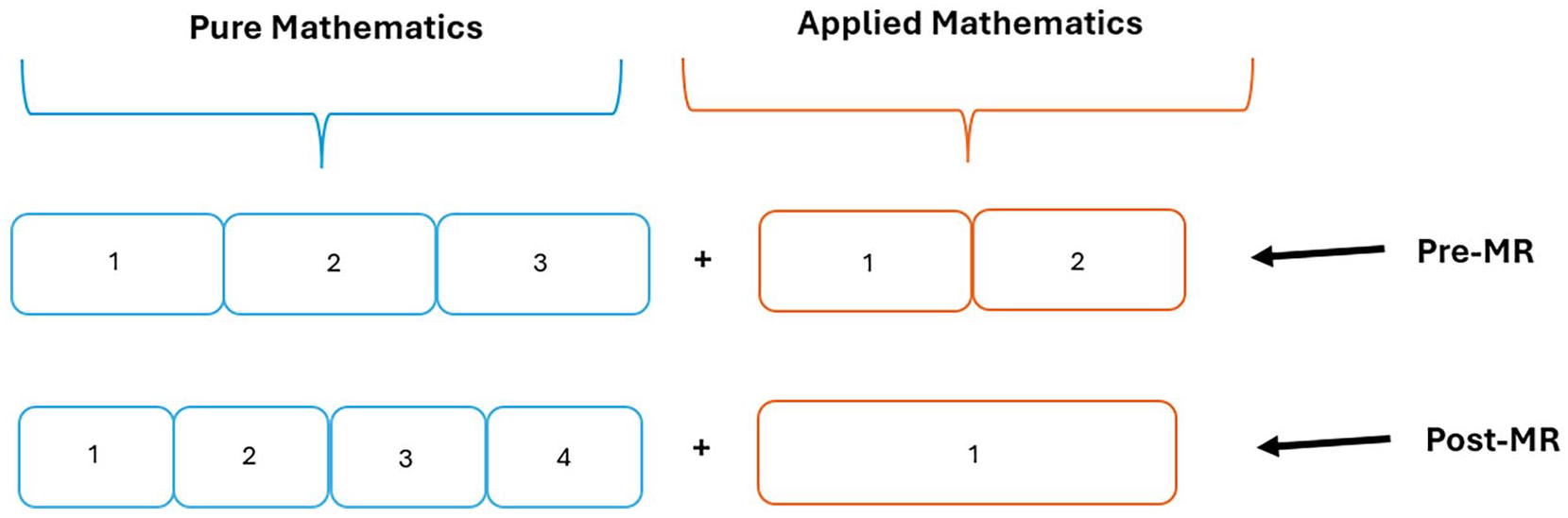
A graphical illustration of the MR.
The MR was implemented with relatively short notice, being announced only one academic year prior to its enforcement (Porkess, 2003). The plausible lack of anticipation by schools, teachers, and students allows us to consider the MR as an unexpected shock to the cost of studying mathematics for the affected cohorts. It is uncertain how schools may have responded to the MR, such as adjusting class sizes, sorting students by ability, or increasing the number of mathematics teachers. Nevertheless, it is highly unlikely that schools reacted promptly to the reform given that the MR was implemented suddenly, that its effect was very uncertain, and that there is scarce availability of mathematics teachers in high schools. Furthermore, this paper studies the cohorts immediately affected by the MR, thus limiting the concern that high schools had time to adjust to the reform in any specific way.
Figure 4 illustrates the changes in KS5 qualification uptake and attainment by the year of examination following the implementation of both the Curriculum 2000 and MR reforms. In Figures 4a to 4d, the three vertical lines denote the first A-level exam cohort of students affected by Curriculum 2000 (long-dash line), by the MR (solid line), and by other changes 6 (short-dash line). After the implementation of Curriculum 2000, the number of students taking mathematics A-level decreased. Figure 4b shows a decline of about 10,000 mathematics A-levels in 2001/2002 compared to 2000/2001. Passes and grades 7 in mathematics A-levels (Figure 4d) increased, suggesting that the most academic able pupils studied mathematics in that period. After the introduction of the MR, there was a continuous increase in the uptake of both mathematics AS and A-level qualifications (Figures 4a and b). In 2009/2010, the number of A-level entries reached about 65,000. The grades and pass rates in both mathematics AS and A-level qualifications also showed slight improvements (plots in Figures 4c and d). Nevertheless, it is challenging to compare the mathematical abilities of students under the different systems due to the alterations in the curriculum.
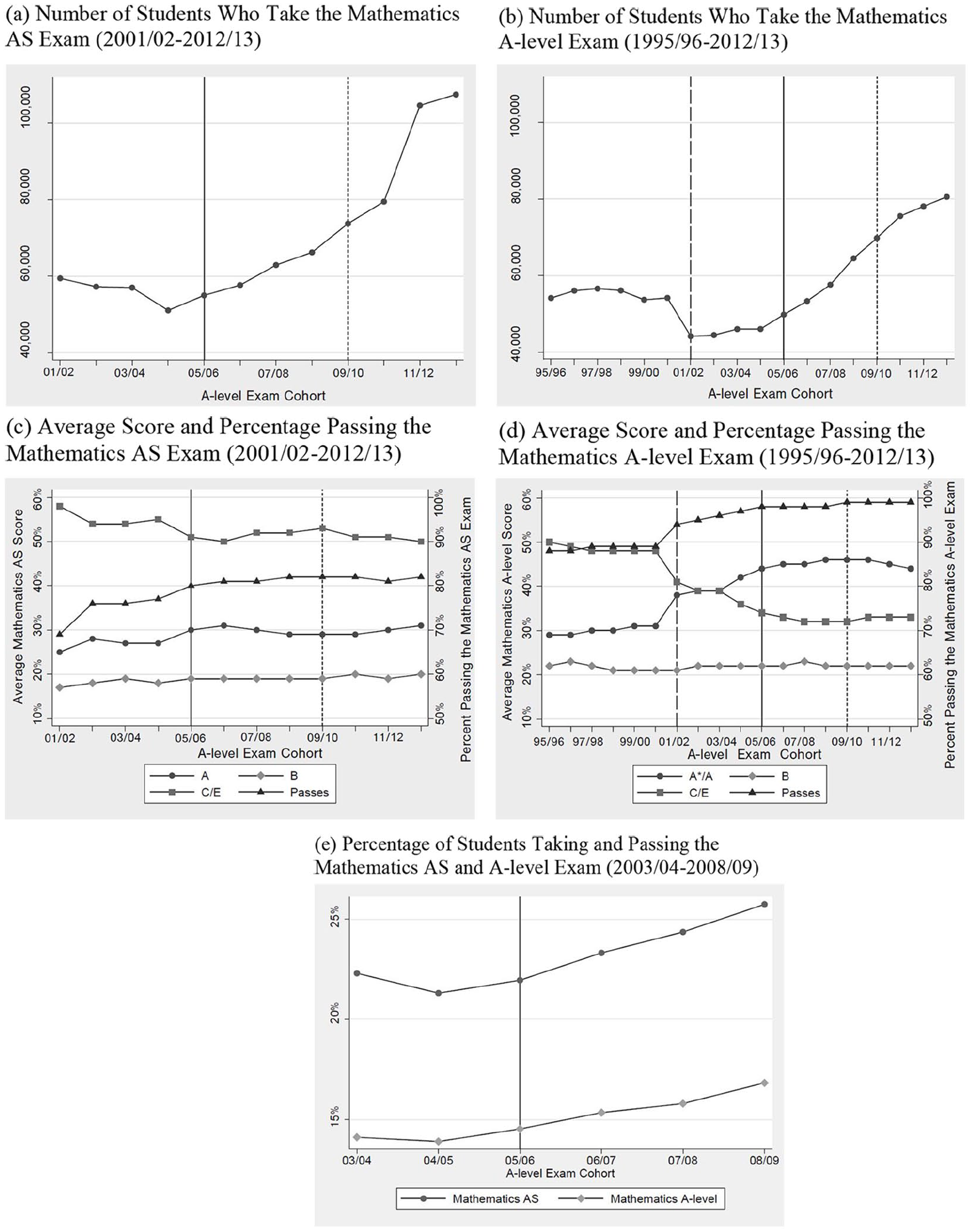
Mathematics AS and A-level: uptake and performances by A-level exam cohorts. (a) Number of students who take the mathematics AS exam (2001/2002–2012/2013). (b) Number of students who take the mathematics A-level exam (1995/1996–2012/2013). (c) Average score and percentage passing the mathematics AS exam (2001/2002–2012/2013). (d) Average score and percentage passing the mathematics A-level exam (1995/1996–2012/2013), and (e) Percentage of students taking and passing the mathematics AS and A-level exam (2003/2004–2008/2009).
This study considers the two cohorts of high school students taking A-level exams just before the MR was implemented (A-level exam cohorts 2003/2004–2004/2005) and the first four cohorts of high school students taking A-level exams just after the MR was implemented (A-level exam cohorts 2005/2006–2008/2009). 8 Figure 4e shows the average percentage of mathematics AS and A-level uptake by A-level exam cohort in the analysis population, which is described in the next section. 9 The share of students within A-level exam cohort taking AS and A-level exams in mathematics in the analysis population gradually increased from the first cohort affected by the MR onward, indicating a positive trend in mathematics qualifications since the implementation of the MR.
Data and Sample
This study utilizes two datasets, the National Pupil Database (NPD) and the higher education Student Record (SR), linked through anonymous individual identifiers. This dataset includes all students who completed primary school education in England between the academic years 1996/1997 and 2001/2002 (corresponding to A-level exam cohorts 2003/2004–2008/2009). These students were then followed up until their graduation, if they reached that stage of education. Figure 2 shows where this six cohorts of students stand in terms of the announcement of the MR and its actual implementation and their educational trajectory up to higher education.
The NPD is an administrative educational dataset that contains information on the educational performances and characteristics of pupils in state sector and non-maintained special schools in England. It provides valuable data on the socioeconomic and demographic backgrounds of students, including ethnicity, month of birth, eligibility for free school meals (FSM), 10 whether English is an additional language (EAL), the level of deprivation in the pupil’s area (Income Deprivation Affecting Children Index [IDACI]), and whether any special educational needs (SEN) are present. Additionally, the dataset includes students’ attainment at various educational stages and identifies the schools they attended. The final sample for analysis consists of approximately 1,460,000 young individuals. 11 This analysis sample is composed of KS5 students (i.e., those following an academic path post-16) taking A-level exams in academic years 2003/2004 to 2008/2009. Detailed summary statistics for the main socioeconomic and demographic variables used in the analysis are presented in Table A1.
The SR provides information on the higher education outcomes of students, such as the university they enrolled in and the type of degree pursued, as well as graduation status. The SR data cover the academic years 2004/2005 to 2014/2015. Certain data adjustments are made to ensure that the estimates are not influenced by factors such as the fact that for early NPD cohorts of students a longer period in which they could have studied in higher education is observed. Appendix C provides a detailed explanation of these data adjustments and tests their implications for the main findings of the study.
Empirical Strategy
As highlighted in the introduction, understanding the factors influencing STEM specialization is a pertinent policy concern. The primary research question in this study is whether obtaining a mathematics qualification after the age of 16 has an impact on future human capital investment, and specifically the likelihood of enrolling in a STEM degree. However, it is important to acknowledge that the decision to study mathematics in the last 2 years of high school is endogenous. Students with certain characteristics, which may not all be observable, are more inclined to pursue both mathematics at high school and STEM subjects at university. Failing to account for this endogeneity issue could lead to biased estimates.
To address this concern, a suitable approach is to leverage an idiosyncratic change or shock that increases the probability of deciding to study and obtaining a mathematics A-level at the end of high school. This allows for a comparison between two groups of students, one with a lower cost of pursuing a mathematics A-level due to the shock (group A), and another with a higher cost because they were not exposed to the same shock (group B). The degree choice of students in group B represents a counterfactual scenario of what would have occurred if students in group A experienced a lower cost of pursuing a mathematics A-level. In this study, the idiosyncratic shock exploited is the MR, which reduced the cost of studying an A-level in mathematics. Thus, the first source of variation exploited in the empirical strategy is the variation between cohorts in the cost of studying mathematics A-level: We would expect to see an increase in the likelihood of studying mathematics in the last 2 years of high school and of obtaining a mathematics A-level for the cohorts affected by the MR, compared to those not affect by it, due to the lowering of the cost of studying it.
Another requirement for estimating the effect of the MR on subject specialization at high school and at university is to net out any other possible confounding cohort-specific factors. This is done by comparing the outcomes of students within the same cohort across their baseline mathematics ability. The MR had a significant effect on reducing the cost of studying a mathematics A-level for those students who had higher test scores in mathematics at the end of primary school, as they were those who could potentially pursue a specialization in mathematics at the high school level. Thus, the second source of variation exploited in the estimation method is the within-cohort difference in students’ baseline mathematics ability: We would expect that those students with low baseline mathematics ability were not affected by the reform and hence can be used as a control group for high baseline mathematics ability students to net out any confounding cohort-specific characteristics and common trends.
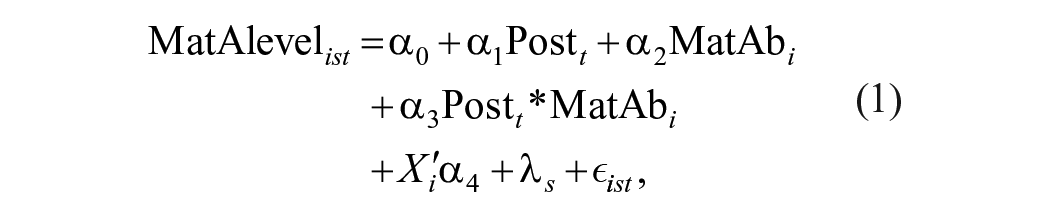
The empirical analysis employs a difference-in-differences estimator which compares the differences in outcomes before and after the MR across students’ baseline mathematics ability distribution. The cohorts affected by the MR are identified using the dummy variable labeled Post. Students’ baseline mathematics ability, which is captured by their primary school mathematics scores, is labeled MatAb. The estimated equations are the following:
and

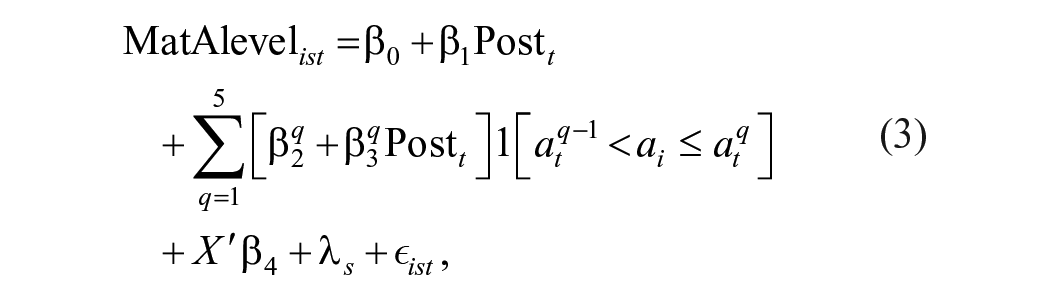
Subscript i represents the individual, s denotes the high school attended, and t indicates the cohort student belongs to. The analysis sample is composed of KS5 students taking A-level exams in academic years 2003/2004 to 2008/2009. MatAlevel indicates whether student i studied mathematics in the last 2 years of high school and obtained a mathematics A-level. STEM indicates whether student i enrolled in a STEM degree. Given that the estimation method employed is a linear probability model, the probability of the outcome of interest to occur is: E[MatAlevel ist ] = Pr(MatAlevel ist = 1) and E[STEM ist ] = Pr(STEM ist = 1). The variable Post takes a value of 1 if the student belongs to a cohort affected by the MR (A-level exam cohorts 2003/2004–2004/2005), and 0 otherwise (A-level exam cohorts 2005/2006–2008/2009).
The baseline mathematics ability, MatAb, is captured by the KS2 mathematics score, which is standardized within each cohort (mean = 0, SD = 1) to account for grade inflation. The use of KS2 grades ensures that the MR could not have affected the composition of students’ mathematics abilities, as it was announced and implemented after all students in all cohorts had completed their KS2 exams (see Figure 2). In this context, the group of students who were never eligible to study mathematics at the high school level consists of those with the lowest baseline mathematics ability among KS5 students, as determined by their mathematics scores at age 11. By considering the baseline mathematics ability within the high-performing group of KS5 students, who are following an academic path to higher education, we can distinguish between low and high baseline mathematics abilities within a homogeneous (and thus comparable) group of students. This enhances the credibility of the identification strategy, which relies on estimating the impact of the reform across similar students, except for their baseline mathematics ability and, consequently, their eligibility to study mathematics at KS5.
How well a student fares in mathematics in primary school is highly predictive of future attainment. In the pre-MR cohorts, only 39.1% of high school students with a high (i.e., equal or above the median level) baseline mathematics ability achieved a mathematics grade lower than A at KS4, just before starting the last 2 years of high school. The percentage for lower (i.e., below the median level) baseline mathematics ability students is 87.7%.
Various student characteristics, such as sex, ethnicity, and FSM eligibility, are controlled for and represented by the vector X. These characteristics are all measured when students enter KS4, at age 11. The coefficient of interest is α3, which indicates whether there is any change in STEM degree participation after the implementation of the MR for a 1 standard deviation (1 SD) increase in baseline mathematics ability. This estimate corresponds to an intention-to-treat estimate.
In an alternative specification, students’ baseline mathematics ability is divided into quintiles instead of being treated as a continuous variable (where quintiles are defined according to the baseline mathematics ability within each A-level exam cohort of KS5 students):
and
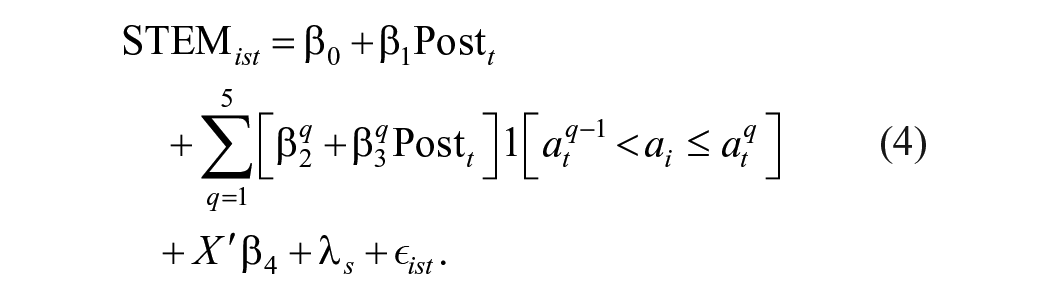
where 1[.] is the indicator function and
The key identifying assumption in this context is that, in the absence of the MR, trends in STEM degree participation would not have varied across KS5 students with different mathematics abilities. Although there are only two pre-reform cohorts, Figures 5a and 5b support this assumption, showing similar time trends before the MR across the baseline mathematics ability quintiles in terms of mathematics specialization at high school and STEM undergraduate degree enrollment at university. It is worth noting that the empirical specification further restricts the comparison across baseline mathematics ability quintiles of students of the same gender, ethnicity, socioeconomic background, and attending the same high school by controlling for a comprehensive set of student characteristics and employing high school fixed effects.
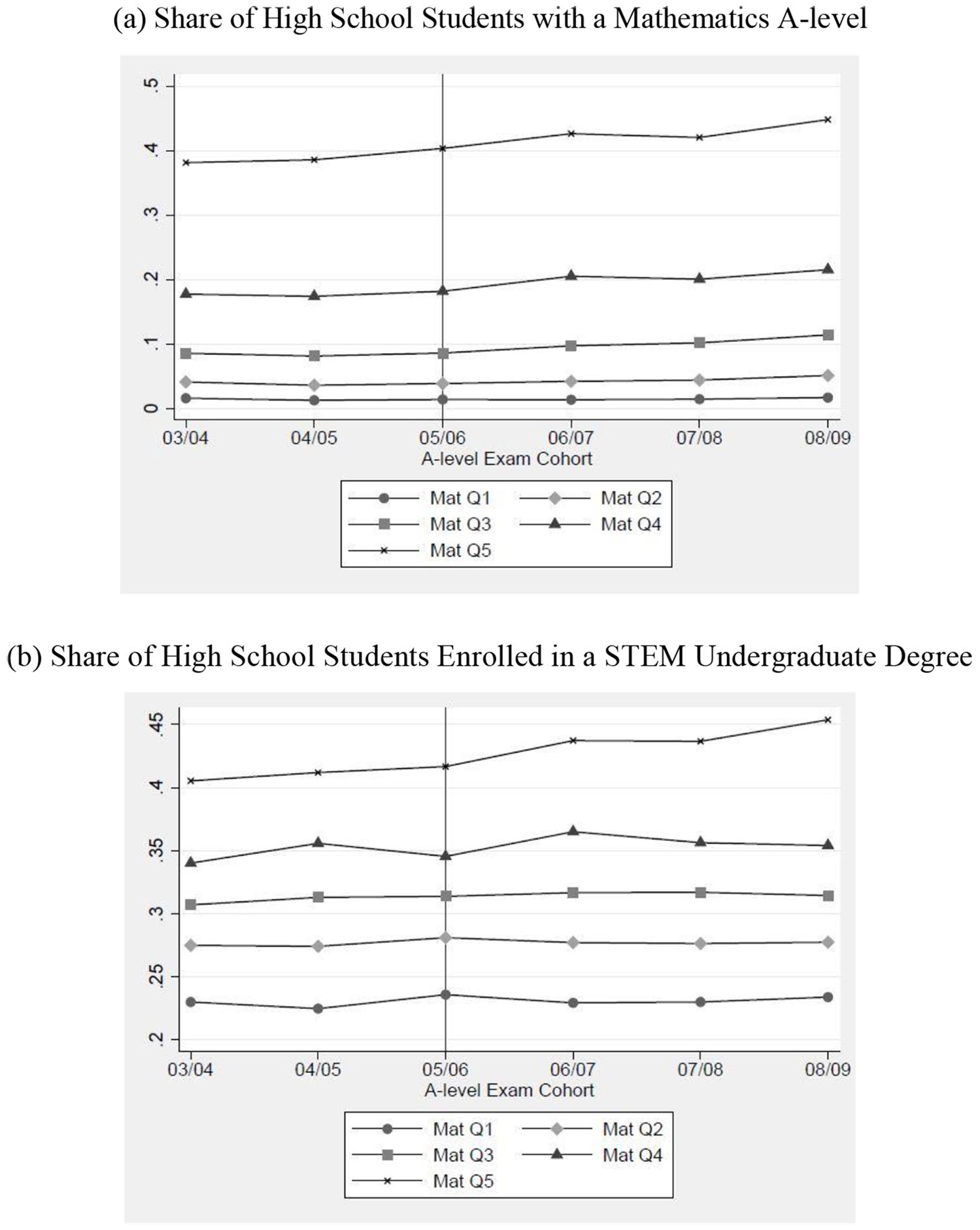
Time trends of the main outcomes by baseline mathematics ability. (a) Share of high school students with a mathematics A-level. (b) Share of high school students enrolled in a STEM undergraduate degree.
Figure 5a illustrates that as KS5 students’ baseline mathematics ability increases, there is a corresponding increase in the proportion of students completing high school with a mathematics A-level after the MR. For the highest baseline mathematics ability quintile, the proportion of KS5 students with a mathematics A-level increased by 15% from the first to the last observed A-level exam cohort. Similarly, Figure 5b shows a 12% increase in the proportion of KS5 students enrolling in STEM undergraduate degrees for the highest baseline mathematics ability quintile.
Results
The Effect of the MR on Finishing High School With a Mathematics A-Level
Before analyzing the impact of having a mathematics A-level on STEM undergraduate degree enrollment, it is crucial to demonstrate that the MR had a positive effect on the likelihood of students pursuing a mathematics A-level. Specifically, the reform encouraged students who would not have otherwise chosen to study mathematics to select it as a subject to study in the last 2 years of high school and to obtain a mathematics A-level qualification by the end of high school. The analysis described in Appendix D suggests that the reform did not result in more KS5 students passing the mathematics exam who would have chosen to study the subject anyway. Instead, it attracted marginal students to study mathematics and earn an A-level qualification. Consequently, the primary variable of interest to study the impact of the MR is whether KS5 students studied mathematics in the last 2 years of high school and successfully passed the mathematics A-level exam upon completing high school. This variable is of particular significance as most STEM undergraduate degrees require students to have obtained a mathematics A-level for admission.
Panel A of Table 1 presents the estimated coefficient of the interaction between the dummy variable Post and students’ baseline mathematics ability, with the latter specified as a continuous variable. For cohorts affected by the MR compared to control cohorts, a 1 SD increase in baseline mathematics ability raises the probability of having a mathematics A-level by 1.4pp, corresponding to a 10.5% increase relative to the pre-MR mean (0.133). The coefficient of the interaction in Column 1 remains unchanged when incorporating a comprehensive set of individual control variables (Column 2) and high school fixed effects (Column 3). Panel B of Table 1 further divides baseline mathematics ability into quintiles, with Q5 representing the quintile of students with the highest baseline mathematics ability among KS5 students. In this specification as well, the inclusion of individual controls and school fixed effects has minimal impact on the estimates. The probability of obtaining an A-level in mathematics increases with higher baseline mathematics ability. The magnitude of the estimates rises from 0.5pp for Q2, to 1.6pp for Q3, to 2.4pp for Q4, and finally reaches 4.1pp for Q5. In comparison to the lowest quintile, those in the highest baseline mathematics ability quintile experience a 10.7% increase in the probability of attaining a mathematics A-level relative to the quintile-specific pre-MR mean (0.383). Overall, Table 1 shows that the impact of the reform on obtaining a mathematics A-level at the end of high school has been significant, primarily affecting students with a strong baseline mathematics ability.
Whether Finished High School With a Mathematics A-Level
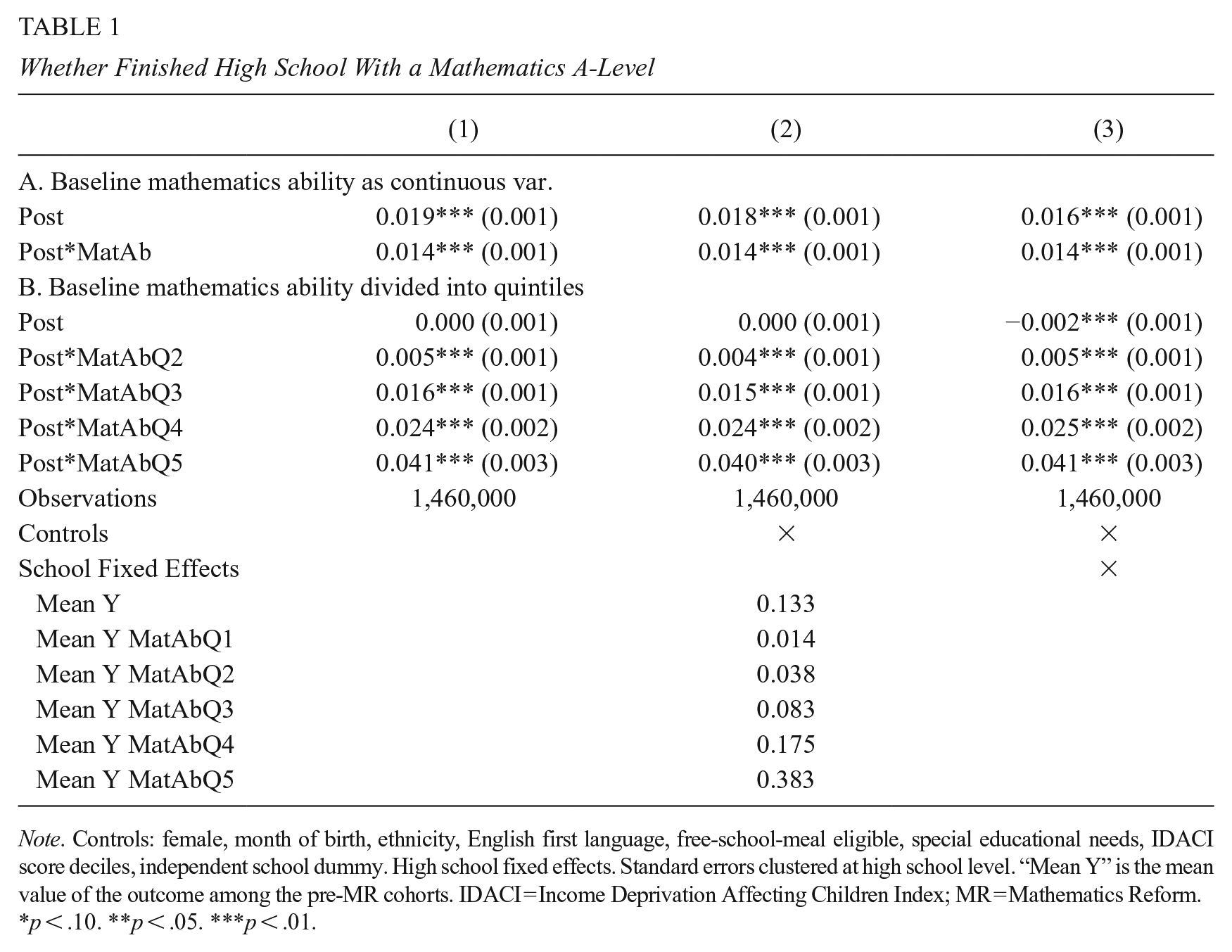
Note. Controls: female, month of birth, ethnicity, English first language, free-school-meal eligible, special educational needs, IDACI score deciles, independent school dummy. High school fixed effects. Standard errors clustered at high school level. “Mean Y” is the mean value of the outcome among the pre-MR cohorts. IDACI = Income Deprivation Affecting Children Index; MR = Mathematics Reform.
p < .10. **p < .05. ***p < .01.
If the MR influenced the likelihood of choosing mathematics as a subject in the last 2 years of high school, we would not anticipate a subsequent impact on the uptake of another subject that is typically not studied alongside mathematics at KS5. This expectation is confirmed in Column 1 of Table A2 in the Appendix, which examines whether students obtained a Classical Studies A-level (a subject chosen by 0.44% of students who obtained a mathematics A-level in the pre-MR cohorts). On the other hand, we anticipate that the reform could have affected the uptake of English. English is, typically, a required A-level for many undergraduate degrees and, therefore, one of the most popular choices. In the pre-MR cohorts, 9.6% of students obtaining a mathematics A-level studied English. Following the reform, for students in Q3, Q4, and Q5 of baseline mathematics ability, the probability of studying English A-level decreased by 0.6pp, 0.9pp, and 1.7pp, respectively, compared to Q1, as shown in Column 2 of Table A2. This decrease can be attributed to the fact that, for certain students with a preference for STEM subjects, mathematics A-level replaced English A-level after the MR.
The Effect of the MR on Enrolling in a STEM Undergraduate Degree
The previous section documented an increase in the proportion of KS5 students studying and attaining a mathematics A-level as a result of the MR, particularly among students at the top of the baseline mathematics ability distribution. We will now examine whether for this same group, there is an increased probability of enrolling in a STEM undergraduate degree.
The estimates in Table 2 indicate that a 1 SD increase in baseline mathematics ability raises the probability of STEM degree enrollment by 0.2pp, equivalent to a 1.5% increase relative to the pre-MR mean (Column 3 in Panel A). The inclusion of individual controls and high school fixed effects does not substantially alter these estimates.
Whether Enrolled in a STEM Undergraduate Degree
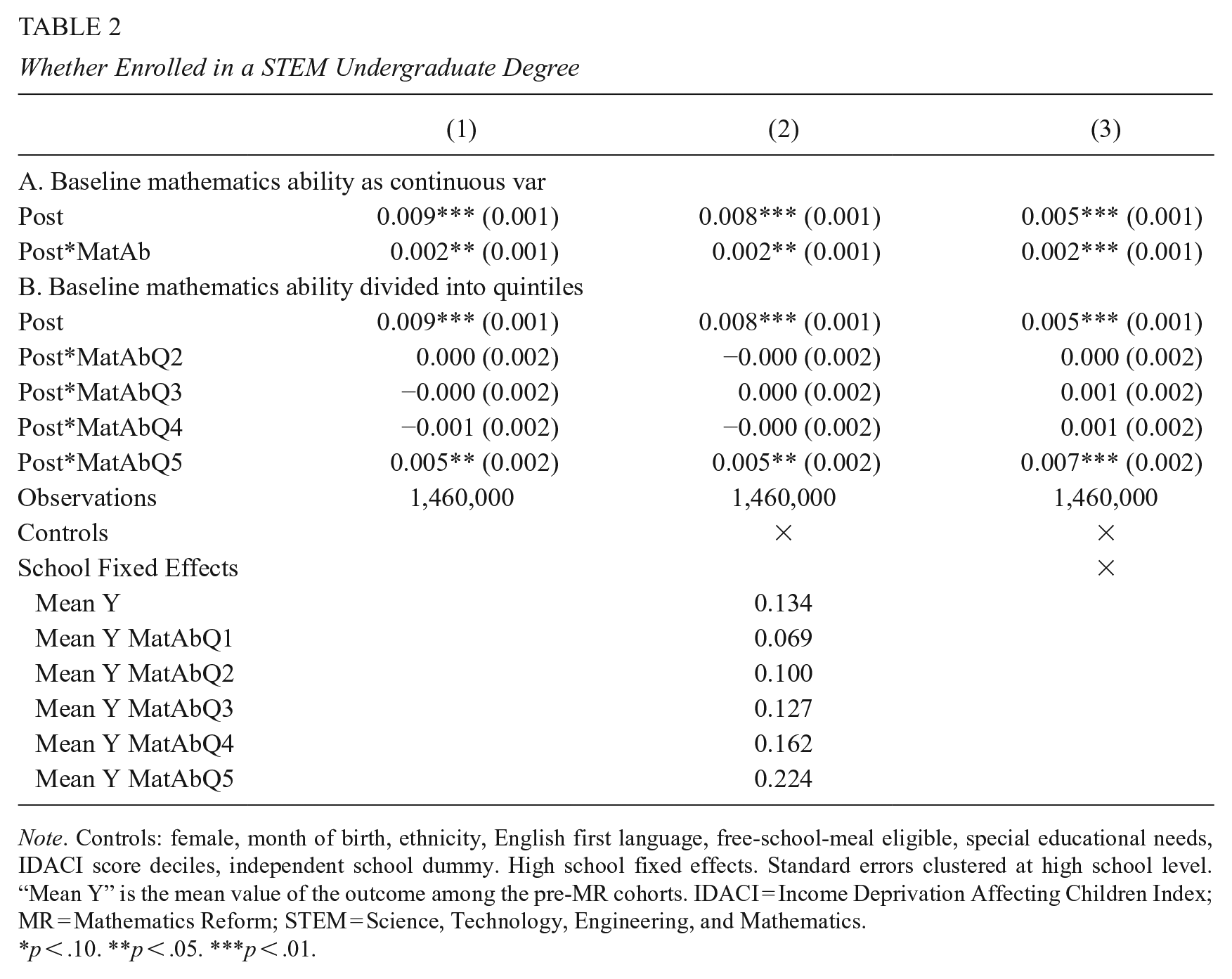
Note. Controls: female, month of birth, ethnicity, English first language, free-school-meal eligible, special educational needs, IDACI score deciles, independent school dummy. High school fixed effects. Standard errors clustered at high school level. “Mean Y” is the mean value of the outcome among the pre-MR cohorts. IDACI = Income Deprivation Affecting Children Index; MR = Mathematics Reform; STEM = Science, Technology, Engineering, and Mathematics.
p < .10. **p < .05. ***p < .01.
When considering the specification that divides baseline mathematics ability into quintiles (Panel B of Table 2), we observe a statistically significant increase in STEM enrollment of 0.5pp across all low-middle baseline mathematics ability quintiles. However, for students in the top quintile, there is a significantly higher increase in STEM participation (by 0.7pp) compared to the common trend. There is evidence of a greater increase in STEM enrollment for students in the top quintile, the same group that experienced the largest increase in mathematics A-level attainment due to the MR. Post-reform, students in the top quintile demonstrate a 3% higher enrollment in STEM degrees compared to those in the bottom quintile, a statistically significant result at the 1% level. Overall, high baseline mathematics ability students after the MR increased their likelihood of specializing in mathematics at high school by 10.2% and of enrolling in a STEM degree at university by 5.4%, respect to the pre-MR quintile-specific mean values.
Possible Threats to Identification and Robustness Checks
(i) Cohort-specific and pre-treatment confounding effects
Table 3 provides several robustness checks to verify the validity of the findings presented above. These checks aim to assess whether the estimates are influenced by cohort-specific and pre-treatment confounding effects. The following specifications and sample changes are examined:
Column 1 includes cohort fixed effects to ensure that the results are not driven by other factors specific to each cohort.
In addition to the inclusion of high school fixed effects in the main specification, Column 2 introduces primary school fixed effects to account for potential heterogeneity across primary schools.
Column 3 extends the previous specification by allowing the primary school fixed effects to vary between the pre- and post-reform periods through an interaction with the post-MR dummy variable.
Column 4 repeats the main specification, excluding high schools in London. This specification aims at addressing concerns that the results might be driven by the unique characteristics of this area, which is known for its schools being subjected to extensive educational interventions and randomized controlled trials.
As additional controls in the main specification, attainment in mathematics and English at KS4 are included in Column 5. 12 This is done to address concerns that changes occurring at other stages of education between KS2 and KS5 may be primarily responsible for the observed effects.
Robustness Checks: Whether Enrolled in a STEM Undergraduate Degree
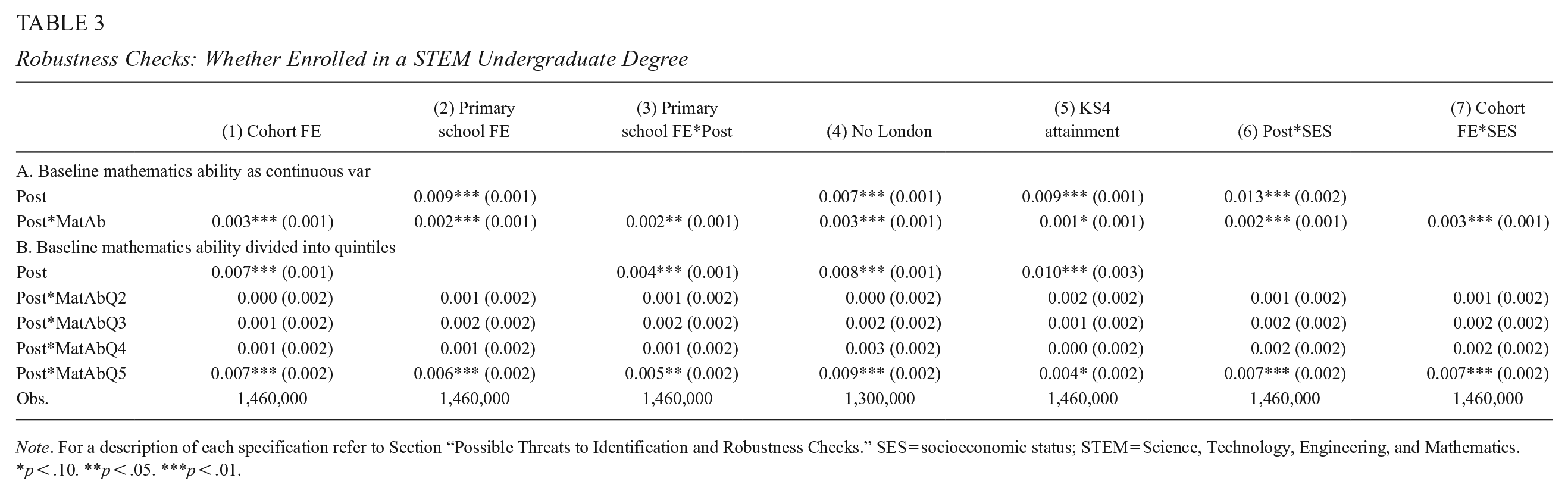
Note. For a description of each specification refer to Section “Possible Threats to Identification and Robustness Checks.” SES = socioeconomic status; STEM = Science, Technology, Engineering, and Mathematics.
p < .10. **p < .05. ***p < .01.
These robustness checks strengthen the validity of the findings presented earlier, affirming that the MR had a significant effect on the probability of enrolling in a STEM degree for mathematically capable students.
(ii). Confounding policy
Another relevant concern for identifying the effect of the MR on STEM undergraduate degree specialization is the presence of potential confounding policies. In the academic year 2006/2007, a higher education financial reform was implemented, affecting the same cohorts as the MR. This reform involved an increase in tuition fees and changes in the loan scheme and maintenance grants. 13 However, it is established in the literature (Crawford, 2012; Dearden et al., 2011; Murphy et al., 2019) that this higher education reform had no significant impact on overall higher education participation. 14 The study by Azmat and Simion (2021) provides the most compelling evidence, finding no significant impact on various outcomes related to university choice, subject of study, and dropout behavior, although they find a 2% decrease in the socioeconomic gap in higher education participation.
As a further check, some additional analysis is implemented. The main variables indicating students’ SES are interacted with the post-MR dummy variable. This accounts for the possibility that students’ educational choices in response to the higher education reform differed based on their SES. The rationale behind it is that the higher education reform does not constitute a threat to identification as long as it did not impact differently students of diverse baseline mathematics ability within the same SES. The inclusion of these interactions in Column 6 of Table 3 confirms that the estimated effects remain unaffected. Furthermore, Column 7 introduces separate interactions between the SES indicators and each cohort, demonstrating that the main findings remain consistent.
The Effect of A-Level Mathematics on Additional Higher Education Outcomes
The rise in enrollment for STEM undergraduate degrees among KS5 students may be attributed to (1) a change in the composition of undergraduate students resulting from a shift in the likelihood of pursuing an undergraduate degree, (2) a shift in preference from non-STEM to STEM undergraduate programs, or (3) a combination of both factors. Further examination supports the second explanation. Specifically, Table 4 presents the findings of an analysis regarding the probability of enrolling in any degree (Column 1) and the probability of enrolling in a STEM versus non-STEM degree among students participating in higher education (Column 2). Figure A1 offers a visualization of when these outcomes are measured in the educational trajectory and where they stand compared to the main outcomes discussed in Section “The Effect of the MR on Finishing High School With a Mathematics A-Level” and Section “The Effect of the MR on Enrolling in a STEM Undergraduate Degree.” Note that given that the analytical sample investigated in the empirical strategy is composed of high school students only, the decisions reported in the blue area of Figure A1 have already been made by those students.
Additional Higher Education Outcomes
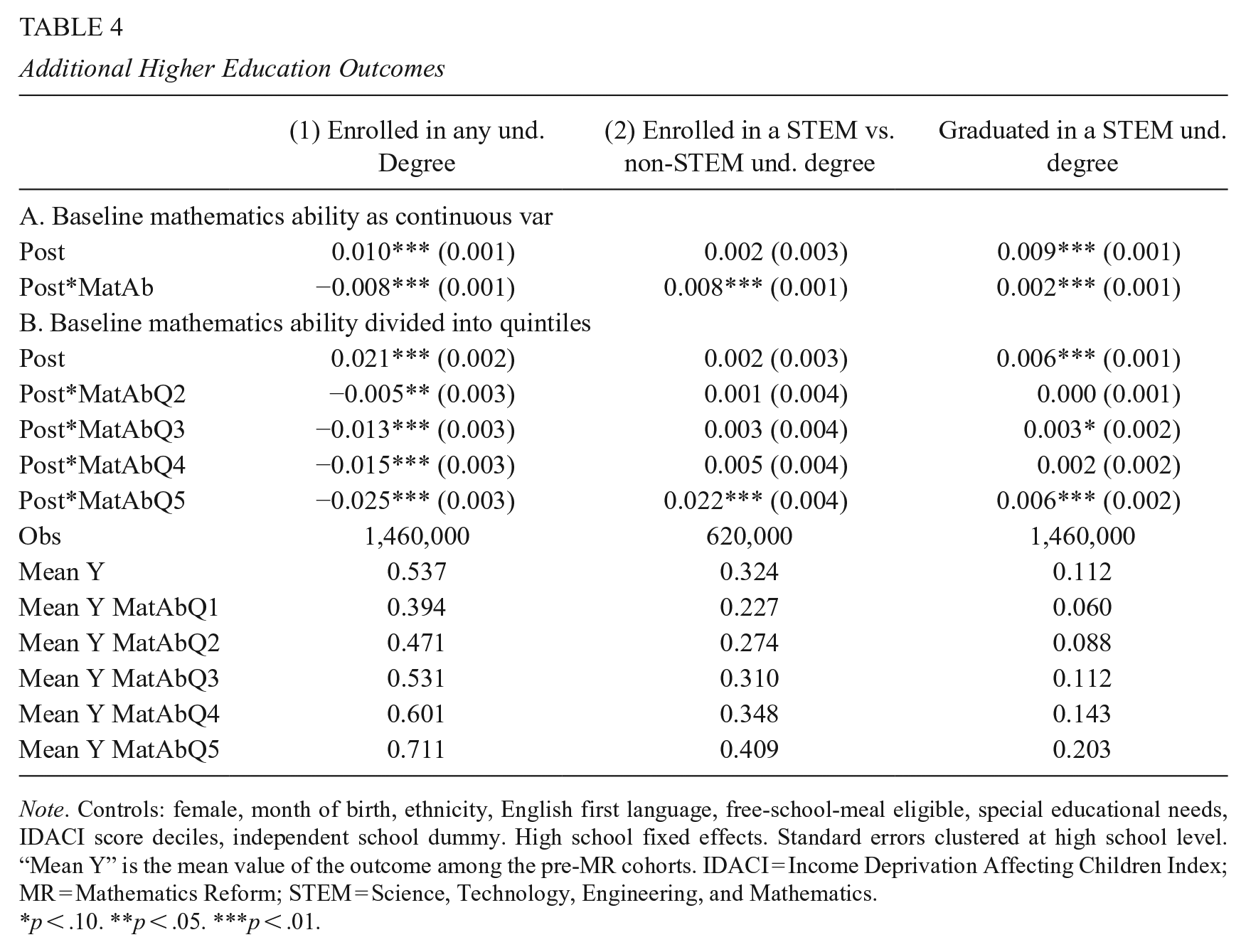
Note. Controls: female, month of birth, ethnicity, English first language, free-school-meal eligible, special educational needs, IDACI score deciles, independent school dummy. High school fixed effects. Standard errors clustered at high school level. “Mean Y” is the mean value of the outcome among the pre-MR cohorts. IDACI = Income Deprivation Affecting Children Index; MR = Mathematics Reform; STEM = Science, Technology, Engineering, and Mathematics.
p < .10. **p < .05. ***p < .01.
The estimates in Column 1 indicate a statistically significant increase in the likelihood of pursuing an undergraduate degree across the entire baseline mathematics ability distribution following the implementation of the MR. Students in the lower end of the distribution experienced a 2pp increase in the likelihood of enrolling in an undergraduate degree. For students in the second, third, and fourth quintiles, the likelihood increased by 1.6pp (0.021–0.005), 0.8pp (0.021–0.005), and 0.6pp (0.021–0.015), respectively. Students in the upper end of the baseline mathematics ability distribution experienced a quantitatively negligible decrease in enrollment of 0.5% relative to the pre-MR quantile-specific mean (0.711). While this pattern aligns with the overall upward trend in higher education participation during the studied period, which has mainly interested disadvantaged students (Crawford, 2012), it does not align with the increase in STEM undergraduate degree participation (and mathematics specialization in high school) following the MR, which predominantly affected students in the upper end of the baseline mathematics ability distribution.
On the other hand, the estimates in Column 2 of Table 4 reveal that the only group of students showing an increased likelihood of pursuing a STEM instead of a non-STEM undergraduate degree in the post-MR period are those at the upper end of the baseline mathematics ability distribution. This increase is non-negligible, amounting to a 2pp or 5.4% increase compared to the pre-MR quantile-specific mean, which is statistically significant at the 1% level. Since this group of students also displayed the greatest rise in mathematics specialization at high school and enrollment in STEM undergraduate degrees, it suggests that the surge in STEM participation is primarily driven by high-ability students, as per their baseline mathematics ability, being more likely to enroll in a STEM versus non-STEM undergraduate programs.
Ultimately, the policy relevance of the increased enrollment in STEM undergraduate degrees hinges on the successful completion of these degrees by the students who chose to pursue them. In Table 4, Column 3 sheds light on the completion of STEM undergraduate degrees among all students. It reveals that students at the upper end of the distribution experienced the most significant increase in successfully graduating in a STEM undergraduate degree after the MR, with a noteworthy overall increase of 1.2pp or 5.9% compared to the pre-MR quantile-specific mean. The fact that the group of students who was more likely to study a STEM undergraduate degree after the MR is also the one more likely to graduate in a STEM undergraduate degree, suggests that the surge in STEM undergraduate degree enrollment directly translated into an increase in STEM graduation rates in undergraduate degrees.
Heterogeneity
Given the higher wages in STEM occupations, it is crucial to understand the reasons behind the underrepresentation of certain groups in STEM subjects at different stages of education. It is well-established that women are less likely to specialize in STEM subjects and to work in STEM jobs (e.g., White & Smith, 2022). Various factors have been explored to explain the gender gap in STEM subjects, including differences in preferences (Zafar, 2013) and self-confidence (Carlana, 2019), as well as institutional barriers in STEM environments (Cimpian et al., 2020; Ganley et al., 2018; Leslie et al., 2015). In the specific context being studied, among the pre-MR cohorts, females were less likely than males to complete high school with a mathematics A-level by 8pp, and this gender gap doubled to 17pp when considering enrollment in STEM undergraduate degrees, which were chosen by only a quarter of women. This aligns with the fact that only 19% of scientific sector jobs in the UK are held by women (Kirkup et al., 2010).
Another significant factor influencing students’ choices and achievements at school and in higher education is their SES (Codiroli Mcmaster, 2017; Cooper & Berry, 2020; Del Bono & Morando, 2022; McDool & Morris, 2020; Rozek et al., 2019). Students from low SES backgrounds are less inclined to choose STEM subjects. Gorard and See (2009) show that in England low SES students are less likely to study STEM subjects after the age of 16, and this can only partially be explained by their lower prior attainment in such subjects. The reasons behind the SES gap in STEM subjects are complex and partly depend on cultural factors within families, such as differences in science capital between high and low SES families (Archer et al., 2012). In the context being studied, high SES students (those in the top two IDACI deciles) were more likely to complete high school with a mathematics A-level than middle-low SES students by 4pp and were more likely to enroll in a STEM degree by 2pp among the pre-MR cohorts.
Considering the significance of gender and SES in STEM participation, a heterogeneity analysis is conducted, focusing on these two characteristics. A triple difference-in-differences regression method is employed to study whether females (high SES students) responded differently from males (low SES students) to the MR in terms of completing high school with a mathematics A-level and enrolling in STEM undergraduate degrees. Note that this method requires only one parallel assumption to hold to be interpreted as a causal estimation (Cunningham, 2021; Olden & Møen, 2022). This would be that the gap between female and male (low and high SES) students in the outcome would have evolved similarly across the baseline mathematics ability distribution in absence of the MR. The time trends of the relevant outcomes across the students’ mathematics distribution are shown in Figure A4 and support this.
Column 1 in Table 5 shows that while high baseline mathematics ability females increased their likelihood of finishing high school with mathematics A-level more than high baseline mathematics ability males, middle and low baseline mathematics ability females increased their likelihood of finishing high school with mathematics A-level less than low baseline mathematics ability males. Despite the marginal statistical significance of these estimates, it is interesting to note that while females responded more to the MR than males at the top of the baseline mathematics ability distribution, the opposite was true at the bottom. This suggests that the factors influencing student decisions to specialize in mathematics in high school differ between females and males across the baseline mathematics ability distribution (Cimpian et al., 2020). Importantly, the changes in the gender gap in mathematics specialization at high school did not alter the gender gap in STEM degree enrollment at university, as evidenced by the lack of significant coefficients of any interaction term in Column 2 of Table 5.
Heterogeneity by Student Gender and Socioeconomic Status
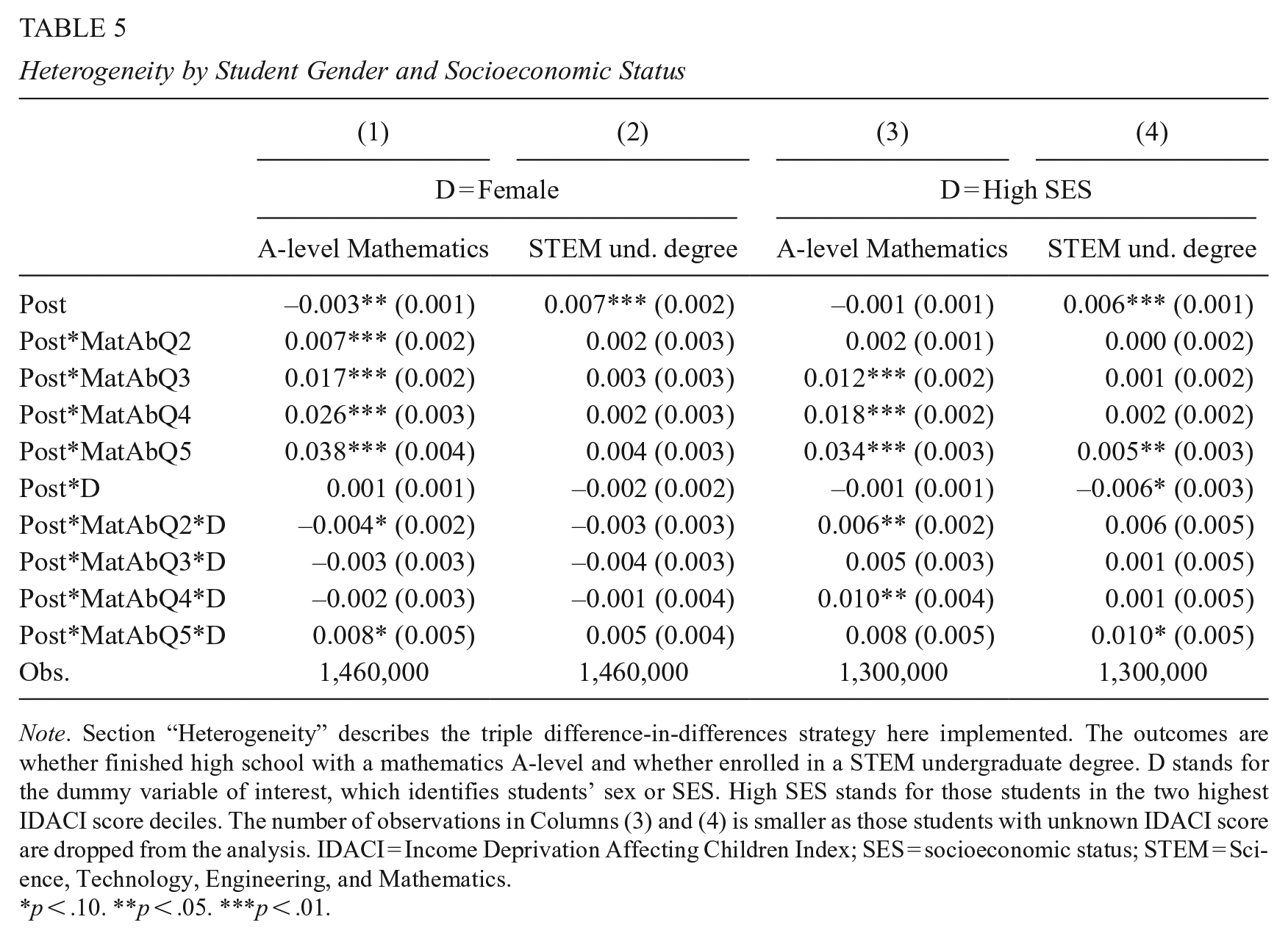
Note. Section “Heterogeneity” describes the triple difference-in-differences strategy here implemented. The outcomes are whether finished high school with a mathematics A-level and whether enrolled in a STEM undergraduate degree. D stands for the dummy variable of interest, which identifies students’ sex or SES. High SES stands for those students in the two highest IDACI score deciles. The number of observations in Columns (3) and (4) is smaller as those students with unknown IDACI score are dropped from the analysis. IDACI = Income Deprivation Affecting Children Index; SES = socioeconomic status; STEM = Science, Technology, Engineering, and Mathematics.
p < .10. ** p < .05. *** p < .01.
The estimates in Column 3 of Table 5 reveal that among middle–low baseline mathematics ability students, those from more privileged backgrounds had a statistically significant higher increase in the likelihood of obtaining a mathematics A-level compared to low-SES students. Specifically, in the post-reform period, high SES students in the second and fourth quintiles had a 0.6pp and 1pp higher likelihood of specializing in mathematics, respectively. Finally, Column 4 of Table 5 shows that, relative to the lowest baseline mathematics ability quintile, high SES students in the highest baseline mathematics ability quintile had a 1pp higher likelihood of enrolling in a STEM degree compared to low SES students, in the post-MR period. However, this finding is only marginally statistically significant at the 10% level. Similar to the gender heterogeneity analysis, the heterogeneity analysis of SES also indicates that the MR did not have a significant impact on existing gaps in STEM participation in higher education.
Discussion and Conclusion
The English Council for Industry and Higher Education has highlighted the nation’s vulnerability due to an over-reliance on overseas postgraduates in STEM subjects (Wilson, 2009). The low supply of STEM workers is attributed to issues within the education system, particularly in high schools, where only a small number of students specializes in mathematics (i.e., pursue a mathematics A-level).
This study presents evidence of a successful intervention, the MR, aimed at increasing the supply of qualified workers in STEM subjects by boosting students’ participation and graduation rates in STEM undergraduate degrees. The MR sought to increase the pool of students choosing to study STEM subjects, thereby increasing the likelihood of obtaining a mathematics A-level qualification upon finishing high school. The findings of this paper reveal that the MR had a positive impact on the likelihood of high school students attaining a mathematics A-level which increases consistently with students’ baseline mathematics ability, as measured by the standardized grades in mathematics at age 11. Students at the top of the baseline mathematics ability distribution experienced a 10.2% increase in A-level mathematics participation post-MR relative to the pre-MR group-specific mean. This increase translated into a 5.4% rise in STEM undergraduate degree enrollment for high baseline mathematics ability students relative to the pre-MR group-specific mean. Notably, the increase in STEM degree enrollment was accompanied by successful graduation from these programs. The increase in STEM enrollment was mainly driven by a shift in preferences from non-STEM to STEM undergraduate degrees. There are four important considerations when interpreting the findings of this paper in a broader context. 15
First, the findings of this study pertain solely to high-performing students. This is because the analysis sample comprises KS5 students, who are individuals opting for an academic path post-16. While this sample selection restricts the generalizability of the findings to students not pursuing academic education post-16, it strengthens the identification strategy by comparing individuals with similar academic inclinations (albeit differing in their baseline mathematics ability).
Second, after the implementation of the MR, there was not an abrupt shift in trends in the outcomes of interest, suggesting that the impact of the MR was gradual. This initial resistance to the reform is likely to be due to some uncertainty regarding its actual success in decreasing the difficulty of the mathematics module taught at high school. This study, by focusing on the first four cohorts of students affected by the MR, estimates only the initial effect of the MR on STEM participation at university, and thus, it is likely to provide a lower bound estimate. Nevertheless, considering the initial impact of the MR allows one to minimize the confounding effects of potential subsequent interventions.
Third, the MR took place in a period characterized by low student interest in specializing in mathematics at high school, which, indeed, was the main reason why the reform was implemented. The MR happened in a period where there was a large pool of marginal students that could, potentially, have been affected by it. If implemented in other periods, its impact could have differed. Educational reforms are typically responses to suboptimal situations, aiming to address existing shortcomings, and the MR is no exception in this regard.
Fourth, the study focuses on full-time enrollment in STEM undergraduate degrees within 2 years of high school completion. This restriction implies that the estimates of STEM degree participation represent a lower bound. Considering both part-time and full-time enrollment in STEM degrees reveals a statistically significant increase in participation alongside the entire baseline mathematics ability distribution of students, not just among high baseline mathematics ability students, although the magnitude of the effect remains increasing in students’ baseline mathematics ability (as shown in Appendix C). Furthermore, high baseline mathematics ability students almost experienced a double increase in STEM undergraduate enrollment if we consider both part-time and full-time enrollment compared to full-time enrollment only (8.9% vs. 5.4% relative to the pre-MR group-specific mean, respectively). The choice of considering only full-time STEM undergraduate degree enrollment is due to two main points. The first point concerns data limitation: it is not possible to observe students indefinitely. Restricting to full-time students allows us to further investigate whether students successfully completed the STEM undergraduate degree in which they enrolled in. Indeed, a policy that increases enrollment but not graduation rates in STEM undergraduate degrees would not be considered successful. The second point is that full-time students represent a “typical” group of students, with higher completion rates and greater utilization of their degrees in the labor market, whereas this may not hold true for part-time students, as shown in England (Averill et al., 2019; Hubble & Bolton, 2021), as well as in the United States and Australia (Fieger, 2015; Shapiro et al., 2013; Taniguchi & Kaufman, 2005). From a policy perspective, it is essential to examine the impact of the reform on students who are more likely to contribute to the pool of qualified STEM workers (full-time graduates), recognizing that the estimates may be downward biased.
In summary, this study demonstrates that in a system where high school subjects can be chosen freely, specializing in mathematics increases the likelihood of enrolling and graduating in STEM undergraduate degrees. The specific incentives required to enhance the STEM student pool and the magnitude of the intervention’s effects depend on the historical period and the type of shortages being addressed. The MR successfully increased the share of highly qualified STEM students without compromising their overall quality by reducing the content studied in high school mathematics. Making mathematics compulsory at the high school level, while still offering advanced courses for interested students, and ensuring that all individuals acquire basic numerical skills post-16 could further expand the pool of STEM workers. The English education system appears to be moving in this direction, as evidenced by the 2008 UK Education and Skill Act.
Finally, it is important to note that incentivizing students to specialize in mathematics may affect different students depending on the stage of education in which the intervention occurs. The MR did not reduce the gender gap or the socioeconomic gap in STEM participation at the university level. Similar patterns have been observed in other interventions that aimed at increasing specialization in mathematics at middle and high school. In England, increasing the availability of science classes for 14-year-olds increased the likelihood of males enrolling in STEM degrees but had no effect on females, thus increasing the gender gap in STEM degrees (De Philippis, 2021). In North Carolina, accelerating algebra coursework in middle school benefited high-performing students but had adverse effects on lower performers (Clotfelter et al., 2015). Furthermore, the increase in minimum high school mathematics requirements in the United States did not affect the probability of attending a STEM degree as this policy primarily impacted black males, which are among the least likely to attend university (Goodman, 2019). The findings of this study, together with those of the cited papers, suggest that interventions aimed at increasing mathematics specialization should occur earlier than adolescence if the goal is to address socioeconomic and demographic gaps in STEM specialization to expand the pool of qualified STEM workers among underrepresented groups.
Footnotes
Appendices
Appendix A Additional figures and tables.
Appendix B
Appendix C
Appendix D
Acknowledgements
This paper benefited from the feedback of many seminar and conference participants. I am thankful to Jennie Golding, Adam Leach, Stephen Lee, and Katie Martin for useful correspondence on institutional settings and data structure. An earlier version of this paper received the Best Paper Award at the Young Economists’ Meeting 2016 in Brno. The data are provided by the Department for Education and the Higher Education Statistics Agency. The author will provide guidance on obtaining the data. The use of the data in this work does not imply the endorsement of any of the organizations cited above in relation to the interpretation or analysis of the data.
Author’s Note
Greta Morando is also affiliated to University of Sheffield.
Declaration of Conflicting Interests
The author(s) declared no potential conflicts of interest with respect to the research, authorship, and/or publication of this article.
Funding
The author(s) disclosed receipt of the following financial support for the research, authorship, and/or publication of this article: I acknowledge the support provided by the Economic and Social Research Council (ESRC) Doctoral Scholarship (award no. ES/J500227/1) and the ESRC Postdoctoral Research Fellowship (award no. ES/S011900/1).
1.
For example, in England (the country studied in this paper), in 2005 the Further Mathematics Support Program started a pilot in some areas in England to promote and support post-16 Mathematics. Since 2008, the government has promoted the adoption of triple science in lower high school, called Key Stage 4. In 2011, a generous bursary scheme was introduced to bring graduates in STEM subjects to teach in schools. All these initiatives, however, do not overlap chronologically with the cohorts considered in this paper because they affect more recent cohorts of pupils.
2.
This reform is also studied in Morando (2020).
3.
Note that the margin of interest in the paper is whether a student studied and attained a mathematics A-level in the last 2 years of high school, conditional on studying at KS5, which is the “academic” track. Hence, the analysis sample does not include those students not studying at KS5, which means those young people studying vocational qualifications or working.
4.
It is worth noting that the triple science reform examined by  does not impact the cohorts analyzed in this paper. To check the robustness of the findings in this paper, I implement a difference-in-differences specification where I additionally control for whether the high schools attended offered triple science. Results remain unchanged.
5.
These other types of interventions are studied, for example, in Cortes et al. (2015), Cortes and Goodman (2014), and .
6.
The changes that first affected the cohort obtaining their A-levels in 2009/2010 are the following: introduction of A* and reduction of modules to study from six to four for all subjects except than for mathematics and natural sciences at KS5; introduction of 2-tier GCSEs at KS4.
7.
AS and A-level, if not failed, are graded from A, the highest mark, to E. A* was introduced in 2010, which is outside the period window considered in this paper.
8.
Undoubtedly, it would be great to observe more cohorts, especially before the MR to establish the pre-reform trends. Such data do not exist as the NPD started being collected with the first cohort observed in this paper.
9.
In the data used for the analysis, the National Pupil Database, A-level exam cohorts are defined by the academic year in which students finished their primary education (Year 6), which corresponds to academic years 1996/1997 and 1997/1998 for the two pre-MR cohorts, and academic years from 1998/1999 to 2001/2002 for the four post-MR cohorts.
10.
Free School Meals is intended as additional support to low-income families during the school term and, hence, it is an indicator of student’s SES.
11.
The number of observations in the whole paper is rounded as requested by the institutions providing the data.
12.
Although for the last cohorts we could have an anticipation effect of the MR. Since students knew about this reform, they could have put more effort in studying mathematics at KS4 with the intention of pursuing its study at KS5.
13.
More specifically, the higher education reform consisted of an increase in fees from £1,000 to £3,000 p/y, which additionally became repayable after graduation for all students through an income-contingent loan scheme. At the same time, maintenance grants were increased for students from low-income families.
14.
The fact that the higher education reform has not significantly affected several higher education outcomes makes it doubtful that any adjustment happened at the previous stages of education, such as on mathematics specialization at high school. This is consistent with what has been found in the related literature. Hassani-Nezhad et al. (2021) find that the later higher education financial reform implemented in 2012 (which increased fees from £3,000 to £9,000) did not affect teenagers’ aspiration in obtaining A-levels that allow for the pursuit of higher education and their intention to go to university. Furthermore, if the higher education reform made students more likely to study high return degrees, these are not only found among the STEM field (Belfield et al., 2019; Walker & Zhu, 2011), where, usually, a mathematics A-level is required.
15.
I thank three reviewers and two editors for pointing these out.
Author
GRETA MORANDO, PhD, is an Associate Professor of Economics at the University of Sheffield and a Visiting Fellow at University College London. Her research focuses on understanding the causes of inequality in human capital development.