




Abstract
We integrate work from human development, psychology, education, and neuroscience to argue for five interrelated developmental principles that together provide the conceptual basis for a fundamental shift in thinking in education about the nature of learning, and hence the work of teaching, and the purpose and design of schools and youth-facing policies. These principles foreground humans’ natural agency, subjectivity, and variability and the dynamic, adaptive interdependence of body, mind, and culture in development and learning. We take the analogy of weaving cloth to highlight the properties and valuable variations of effective educational systems. We argue that reconceptualizing learning is necessary to meaningfully improve schooling and its outcomes, support equity and human dignity, and ultimately, build a sustainable democratic society.
We are in a time when the challenges facing us as a global society are immense. We have created ways of being with one another and with the earth that are fundamentally unsustainable. Educators and families have long known, but are increasingly aware, that our ways of being and of educating too often undermine mental health and relationships, stifle curiosity, recapitulate inequities and harmful power dynamics, and omit individuals’ and whole communities’ needs, desires, and contributions. Our standard educational systems and structures leave young people unprepared to inherit custodianship of civil society and the planet—including many of those young people whom we consider to be “high performing” in the current system—because these systems and structures are generally not designed to prepare students, teachers, and educational systems to operate or meaningfully innovate within evolving civic, cultural, or technological domains (C. D. Lee et al., 2021; UNESCO & MGIEP, 2020).
There is a fundamental mismatch between the developmental needs and potentials of youth and the design of the systems in which youth are meant to develop and learn, and this mismatch directly undermines young people’s potential and well-being. As one example, research has shown that despite young people’s developmental needs for autonomy, competence, and belonging (Patall & Zambrano, 2019), when young people are unsuccessful at school and feeling disenfranchised, schools tighten the reins, offering less choice and fewer instances of care and increasing discipline and surveillance (Eccles et al., 1997; Nasir, 2019). Particularly for young people from marginalized communities, this systems-level tendency is exacerbated by the stratification of K–12 and higher education into higher and lower resourced systems, leaving students either excluded from access to higher quality programming entirely or when granted access, feeling like they do not belong and cannot thrive (Arum et al., 2012). Among students whose talents and strengths are not well supported by standardized schooling practices, even in relatively better resourced systems, the disconnect between the student and their context can leave children and their families stressed and vulnerable to failure. This is particularly true in nations, such as the United States, that have consistently struggled to ensure access to health services and economic stability for their people. Among students who succeed, too often the dispositions of mind that are privileged and rewarded by the system undermine self-actualization, creativity, and the ability to innovate (following Deci & Ryan, 2002; Robinson & Aronica, 2016); overemphasize individualism and competition (Cagan, 1978; Johnson et al., 1981; Vázquez et al., in press); and compromise mental health (Wallace, 2023).
At the core of the solution is a paradigm shift in how we understand human learning and development and the purpose of schools. A wide range of evidence from across disciplines supports this shift in understanding and reveals how many of the most tenacious beliefs on which our modern education system is founded are at odds with current psychological and neurobiological evidence (Immordino-Yang et al., 2019). What is more, these beliefs are deeply rooted in cultural and historical perspectives that recapitulate a reductionist view of learning and a deficit-oriented perspective of the capacities and potentials of young people (Copur-Gencturk et al., 2020; Solorzano & Yosso, 2001; Valencia, 2010). When educators hold these beliefs, they define learning in very narrow ways, including in relation to performance on tests disconnected from thinking in other domains and situations and by achievement levels (e.g., A–F grades; lockstep age groupings) in schools and classrooms where the work does not reflect the interdisciplinary, acculturated, emotionally driven, collaborative, and dynamic nature of motivated, generative thinking (Kohn, 1993). In each of the issues described so far, we see how these problematic beliefs constrain human development and flourishing and preclude systems from accommodating the variable histories, contexts, cultures, and trajectories of development that intertwine in any complex social setting or institution. Too often, the beliefs on which educational decision-making is based, such as the belief in meritocratic achievement (Meroe, 2014), conflict with current understandings of the science of development; they do not represent why and how humans actually learn (Immordino-Yang, 2015; Nasir et al., 2021).
To put it simply, learning is not a single, sequential story, thread, or trajectory, either within individuals, within groups, within settings and systems, or across time (Adichie, 2009). It is not what the system and our narratives of education tell us over and over again: Move up grade level by grade level; just put one foot in front of the other and keep going down the path toward graduation; do this assignment, then that assignment, take the final exam, and you will move ahead to the next course, the next level, and the next school. None of these captures whether or how the person has learned and what personal or group potential that learning has enabled. Similarly, the influences on learning of settings, cultures, or systems are not singular or linear and do not occur in the simple unidirectional ways that can be captured by “magic bullet” thinking about the single most powerful lever or intervention to improve learning—the proverbial “what works” deployed “with fidelity.” Such reductive notions of learning and teaching do not capture humans’ natural developmental trajectories and agentic ways of interacting, creating knowledge, or demonstrating skill (Cantor et al., 2021; Nasir et al., 2021).
Yet we continually reify these beliefs through our narratives about education, which form the basis for our methods, policies, and decision-making. We sort individual learners based on their performance on contrived measures of achievement along linear trajectories, using differential scores as a rationale to provide differential opportunities too often aligned with race, socioeconomic class, gender, disability status, language proficiency, or other essentialized categories (Gordon, 1995). When students perform below desired levels, rather than examining the holistic context in which these youth are working (Boykin, 2014; Knecht et al., 2016), we apply “interventions” to change the student’s performance. Of course, some approaches and practices do work better than others in and across contexts; these should be adapted to the current context and adopted—utilized in ways that enable ownership and agency among the learners and teachers and that honor dynamic, personalized, acculturated trajectories of growth. And of course, specialized supports and opportunities are sometimes needed to enable students with a range of profiles and backgrounds to fully participate in school and to build the skills necessary to access and engage with rich and complex scholarly content. But in understanding learning as a linear, singular story of incremental increases in knowledge and skills and applying interventions that aim at directly altering learning outcomes without addressing developmental processes and contexts, we continue, again and again, to reproduce or deepen social and economic inequalities in schools and in society. We lose the interest of those whose dispositions and talents are not supported in the current system, coerce those who manage successfully within this system to buy into an unsustainable vision of the future, and push our society and planet further toward the brink. A new perspective is needed—one that takes a drastically different stance on the role of schools and other learning settings in the lives and futures of young people, their teachers, and their communities (Gadsden et al., 2009; Lillard, 2023).
This chapter wrestles with critical open questions for education and society concerning human development, learning, and the nature of humans’ biopsychosocial complexity. Envisioning humans and their contexts as mutually constitutive threads in a cloth, we ask: How can we most productively approach the interwoven micro- and macro-adaptations in the systems that make up the individual and context? How can we conceptualize and follow the humanistic threads and patterns that individuals and groups dynamically weave through educational environments and processes to most strategically redesign educational systems to support the emergence of diverse human potentials and contributions? What would it mean to weave a colorful, durable cloth of individuals’ and communities’ relationships, knowledge, and skills, designing educational systems that center equity and dignity and attend to variability of experience? How could education systems be designed to enrich human capacities to invent and sustain vibrant and meaningful lives in a vibrant and healthy society?
We must begin by considering the nature of human development and learning in relation to institutionalized supports for these processes in light of current psychological, neurobiological, and educational evidence. To do so, we organize our considerations around a set of five interrelated principles, each with deep historical roots in scholarship, that we hope will guide future shifts in understanding: (a) embodiment, the notion that humans are living, complex ecological systems with agency and competency; (b) sociocultural embeddedness, the notion that the entirety of humans’ lives play out within dynamically co-constructed cultural frames of behavior and meaning; (c) emergent holism, the notion that the subsystems of humans and their contexts function not additively but mutually constitutively and give rise to at least partially unpredictable emergent potentials greater than the sum of their parts; (d) adaptive epigenesis, the notion that humans’ development is actively self-organized through interaction and learning, not predetermined by a genetic program or profile; and (e) developmental range, the notion that human development and learning are dynamic and context-dependent, not linear or unidirectional, with the exploration of the upper end of one’s current capabilities giving rise to the possibility of new capacities and the cyclic construction and deconstruction of knowledge giving rise to deep understanding.
Taken together, these principles integrate evidence from across several disciplines to explain how learning is context-dependent, adaptive, dynamic, agentic, cultural, and subjective, playing out simultaneously within multiple interdependent biological and psychological developmental systems, within and across people, on multiple time scales (Immordino-Yang, 2015; Ram et al., 2014). In this sense, examining learning and its contexts is like examining the weaving of a cloth—the twists and knots of different threads are interwoven, and distinct patterns, textures, and colors are discernable depending on how the observer zooms in or looks from afar. At one distance, threads can represent people in community, holding each other in place in the weave; further magnified, threads could be composed of the fibers of an individual’s skills and experiences, twisted together across the threads of others as they extend through time. The fibers, patterns, and weaves of various cloths will vary substantially according to available resources, needs, and aesthetics, from thick wool blankets or rugs, to flowing silk scarves, to sturdy nets or straps. Weaving itself is dynamic: It generates out of disparate parts a unified set of patterns, stronger together as a whole. Cloth also needs repair due to its day-to-day use as well as unpredictable accidents and tears. Inevitably, new threads and new patterns will take hold. Thinking of education as supporting the weaving of fibers and also as tending to the condition of the whole cloth underscores the shared features of healthy learning communities with well-designed systems and structures and the substantial and valuable variation that will emerge within and across contexts.
Having outlined five principles of human development that organize learning, we turn to implications for educational environments, considering how we would design structures and systems that align with these principles and prepare young people from diverse backgrounds with the knowledge, skills, and dispositions to invent the future we need (and not simply to manage themselves in the world we have). Here, we argue that to operationalize the aforementioned five principles in practice and research requires a fundamental shift in perspective in which we place the subjective, affectively and culturally rich experiences, interests and expanding mental capacities and dispositions of individuals at the center of consideration (Immordino-Yang & Damasio, 2007; Immordino-Yang & Gotlieb, 2017). Doing so leads to a call for new research questions, methods, and conceptual models to guide the work (Saxe et al., 2023). It means reflecting on the intentions and assumptions we hold and on the kinds of evidence we value and measure. And more practically, it means applying all of this new work and thinking to our education system, creating and expanding school models that position individuals to thread traditional academic skills and knowledge through the broader frame of their emerging competencies and proclivities. Such models are designed around the agency of the learners and teachers themselves in their individual and shared patterns of teaching and learning and in those dynamic moments of transformation their agency and collaboration set in motion. They imbue the work of thinking and learning with new relevance, urgency, and satisfaction, empowering individuals to develop dispositions for curiosity, connection, and engagement as they grow skills and knowledge (Hantzopoulos, 2016).
As we describe, such educational models will inevitably involve multiple pathways to opportunity and multiple means to leverage learning in service of identifying and solving new problems (Nasir et al., 2021). Such models will necessarily reflect the assets and needs of the communities in which they are situated (Daniel et al., 2019; Gutiérrez, 2008). To enact such models will mean helping educators and other practitioners, district leaders, policymakers, and parents to develop the vision to support a different kind of learning environment, one in which cultures of belonging, deep thinking, and critical awareness are fostered; multiple perspectives are systematically deconstructed and considered; and young people’s developing intellectual and civic agency and dispositions of mind are paramount. Current movements consistent with these models are well underway, such as the growing focus on culturally responsive teaching (Ladson-Billings, 1995), social-emotional learning (Jones & Kahn, 2017), whole-child education (Cantor & Osher, 2021), project-based learning (Condliffe et al., 2017), individualized learning (Tomlinson, 2014), and various progressive education models (e.g., Daniel et al., 2019; Hantzopoulos, 2016; Myatt, 2004). But these movements are mostly either available only for particular populations, shoehorned into educational structures with antithetical aims, criticized as a lowering of standards, or considered to be a luxury that is separate from the “regular” learning, as a complement to traditional academic or “cognitive” skills (Farrington et al., 2019; Immordino-Yang et al., 2019). Although this work is good and is founded on good intentions, in practice, it often struggles to integrate the breadth of developmental goals that effective educational systems support.
To capitalize fully on these movements will require a new understanding of the learning process itself—an understanding that integrates the threads of a developing person’s experiences, skills, and knowledge. This new understanding will also extend beyond a focus on singular individuals to appreciate how individuals’ learning and development are woven around and through the learning and development of others with whom they are in relationship, both in the direct sense and in the historical, artistic, or disciplinary sense of shared ideas, learnings, identities, and understandings, to make patterns and a bigger “cloth.” It is the complex interweaving of individuals’ rich experiences, in relationships, collaborating to teach and learn that make the learning community purposeful, coherent, and resilient.
Accordingly, guiding such work will require new research methods that query not simply what students know and do and pedagogical methods that maximize their knowing and doing in highly specific contexts but also their underlying dispositions of mind and their autobiographical experiences—the feeling of learning (Gotlieb et al., 2022a; Immordino-Yang & Damasio, 2007). Like fraying threads and loose fibers, knowledge is frail when educational approaches do not attend to the integration of this knowledge into the whole person, helping that person to meaningfully experience purposeful knowing. The ultimate aim will be to build systems that invite students and teachers to draw on a range of personal and community assets as they weave together their emerging skills and interests, building personal and subjective experiences of knowing. Individuals must certainly expand their skills and knowledge to move purposefully through the challenges of learning. But educators and educational systems must attend much more closely to the dispositions of mind and heart that motivate the learning and make it meaningful. Current systems dispose students to value accumulation of skills and retrieval of information to get the right solution, say the expected thing, and “achieve” in ways that further prop up an inequitable, individualistic society. The systems we are advocating dispose students to embrace complexity, query their own and others’ knowledge and assumptions, value both deep understanding and uncertainty, and most especially, leverage academic learning, with diligence and thoroughness, to enrich and uplift their communities and society as a whole.
Throughout the chapter, we provide examples to share foundational evidence and illustrate the ideas in a range of educational contexts. Our overarching premise is that considering learning outcomes as the end goal of education is a red herring. Learning is the essential means; it must happen. But given the biopsychosocial and temporal complexity of human and planetary ecology and the role of education systems in a sustainable and equitable society, the agentic development of new human capacities and potentials is the aim. Human development is the end game: young adults with capacities to manage the complexity of their ever-changing context and relationships, issues, and challenges with the skills and knowledge to be productive and innovative and with a strong belief that they must play a role—weave their threads through and around those of others—as civically engaged beings. Isolated fibers and threads have little strength, meaning, utility, or support until we attend to the rich and vibrant patterns they can weave.
Five Principles of Development that Organize Learning
In the sections that follow, we introduce each of the five interrelated principles of development that, taken together, provide the conceptual basis for a fundamental shift in educational thinking about the nature of learning and hence the work of teaching and the purpose of schools. Although we present cutting-edge scientific evidence to support these principles, they are grounded in significant historical traditions of scholarship. We believe that these principles provide a conceptual foundation for appreciating the complexities of education in the modern era in order to meaningfully improve schooling and its outcomes, support equity, and ultimately, build a sustainable democratic society.
Embodiment
Western philosophical traditions (Damasio, 1994) and psychological research on learning in the mid- to late 20th century (Gardner, 1985) are dominated by the functional independence of the mind from the body and brain and by the functional separation of the mind’s cognitive, emotional, and social aspects. Many other cultural traditions, and more recently, accumulating scientific evidence (Raeff, 2016), overwhelmingly override these ideas, however. Recent advances across many fields of developmental science have revealed, instead, a deep interdependence of mind, body, and brain in both humans and other animals (for reviews, see Immordino-Yang et al., 2019; Netea et al., 2019; Sapolsky, 2017). Indeed, Overton (2013) explained that
Embodiment includes not merely the physical structures of the body but the body as a form of lived experience, actively engaged with the world of socio-cultural and physical objects. The body as form references the biological point-of-view, the body as lived experience references the psychological subject standpoint, and the body actively engaged with the world represents the socio-cultural point-of-view. (p. 103)
Marshall et al. (2021) noted that Overton’s conceptualization of embodiment accounts for how a dynamic system can construct itself, that is, possess the attribute of autopoiesis involved in the processes of a living, open, and dynamic system:
Living things actively self-maintain themselves through the constant regeneration of the conditions that are necessary to sustain their material existence . . . [and thus reflect] constitutive autonomy . . . in contrast to behavioral autonomy, where the identity of the system is imposed externally by an operator or observer. (pp. 3–4)
A growing transdisciplinary perspective that integrates developmental evidence from neuroscience, psychology, and other fields focuses on how humans, like all life forms, come to the world with a drive to adapt to circumstances, survive, and flourish (Damasio & Damasio, 2022). The legacy of this evolutionary, biological drive is our developmental psychosocial drive for agency and competence (Immordino-Yang & Gotlieb, 2017). At this stage of our evolution, the social and psychological drives that give rise to our minds can be said to emerge developmentally from the physiological homeostatic drives that keep us alive (Immordino-Yang & Damasio, 2007). These drives act bidirectionally, both through managing our internal body states in relation to the social, cognitive, and physical demands presented by the external world, and through coordinating our internally generated bodily and mental action on the world (Varela et al., 1991). Just as formulations of organic and inorganic substances are the materials from which living things become, subsist, and propagate, the social and intellectual formulations of subjective experiences of thoughts and actions spring from and interact with our biology (Deacon, 2010; Slavich, 2020).
Embodiment and the Origins of Agency
From a neuropsychological perspective, agency derives from this interdependence of body and mind—in effect, from the fact that the neurobiological mechanisms involved in feeling and regulating the body and consciousness simultaneously serve as the platform for thinking and feeling (Damasio & Damasio, 2022). This confluence of bodily and mental functions goes far beyond the single-directional influence of the social environment on the individual’s biology, the idea that social experience gets “under the skin.” It means instead that how we think, which is tightly intertwined with how we feel, quite literally shapes the way our brain develops and functions (Gotlieb et al., 2023; Marshall et al., 2021; Schore, 1994). The interoceptive rhythms of the body—cyclic patterns of functioning, such as the rhythms of breaths, heartbeats, or gastric contractions during digestion—serve also to establish rhythms of neural activity in the brain (Engelen et al., 2023). These neural rhythms and their derivative neurobiological processes in turn shape the ways we will think, feel, and act into the future as well as our mental and bodily health (Porges & Porges, 2023), and even mortality risk (Holt-Lunstad et al., 2010).
For example, chronic social stress is associated not simply with the strengthening of circuits in the brain for aggression and vigilance at the expense of circuits for learning and memory; this same stress also results in increased risk of mental health disorders, such as anxiety and depression, and physical health disorders, such as cancer, heart disease, and diabetes (for a review, see Immordino-Yang et al., 2019). For example, studies have shown that individuals, especially women, who self-silence when angry in close relationships have increased risks of heart disease, among other serious mental and bodily illnesses (Maji & Dixit, 2019). This is in part because the immune inflammatory responses individuals mount to environmental pathogens are also mounted to social and emotional stress; although essential for responding advantageously when we encounter germs or a dangerous situation, when chronically present, the chemicals released during these responses are toxic to the body and brain (Shonkoff & Phillips, 2000). This toxicity changes the development of the brain, which also changes the way in which the person will be predisposed to act on and in the social world going forward (Slavich, 2020). Warm and safe relationships buffer the effects of stress, in part through the effects of hormones released in the context of close positive interactions and bonding (see Immordino-Yang et al., 2019). In particular, the hormone oxytocin counteracts the neurobiological effects of the stress hormone cortisol and provides one mechanism by which relationships foster resilience—for the mind, the brain, and the body (Masten, 2015).
In sum, agency is an emergent property of the situatedness of the biological self in the physical, social, and intellectual worlds—the confluence at this stage of evolution of biological and psychosocial drives for survival. It simultaneously describes both directions of influence: the biologically driven psychological agency individuals exert on the world and the impact of the world on the individual’s biology and mind. The principle of embodiment underscores that the urgency humans feel to understand, to know, and to express what we have come to understand to others, reflects the developmental repurposing of neurobiological systems that also keep us alive (Immordino-Yang, 2015).
Embodiment and the Brain Bases of Complex Thinking
The principle of embodiment also is manifested in the anatomical development of the brain. Classic models of neural development and evolution posited a “stacked-hat” anatomical structure in which the lowest and most evolutionary old neural structures manage survival functions independently from more recently evolved higher-level structures that manage emotions, with the most evolutionary new and anatomically plastic regions carrying out complex cognition and actions (MacLean, 1990). However, modern neuroimaging studies of complex mental states and social-affective processes have discredited this idea (see Figure 1). Instead, ample research now makes clear that even our most high-level, nuanced thoughts and feelings, from expertise in math (Zeki et al., 2014), to civic reasoning (Gotlieb et al., 2022a), to identity processing (Becht et al., 2018), to admiration for others’ virtue or compassion for others’ pain (Immordino-Yang et al., 2009), recruit the visceral somatosensory cortices that sense our own “gut” in the direct sense (Craig, 2009). That is, these acculturated psychological capacities recruit the same brain systems implicated when we experience a stomachache or a pounding heart, although in the learning context, we are using them to feel the excitement of having a new idea, the beauty of an elegant mathematical solution, or the disgust of a moral transgression. Given the extensive scientific documentation of such embodied processes, we must acknowledge that social, emotional, cognitive, and cultural dimensions of psychological functioning are deeply interdependent through development and in learning, and inextricably situated in the experience of living in a body. It is no longer possible to defend the notion that growth, development, and intelligence are independent of how one feels, or biologically predetermined, or that evolution has stacked capacities one on another so cleanly.
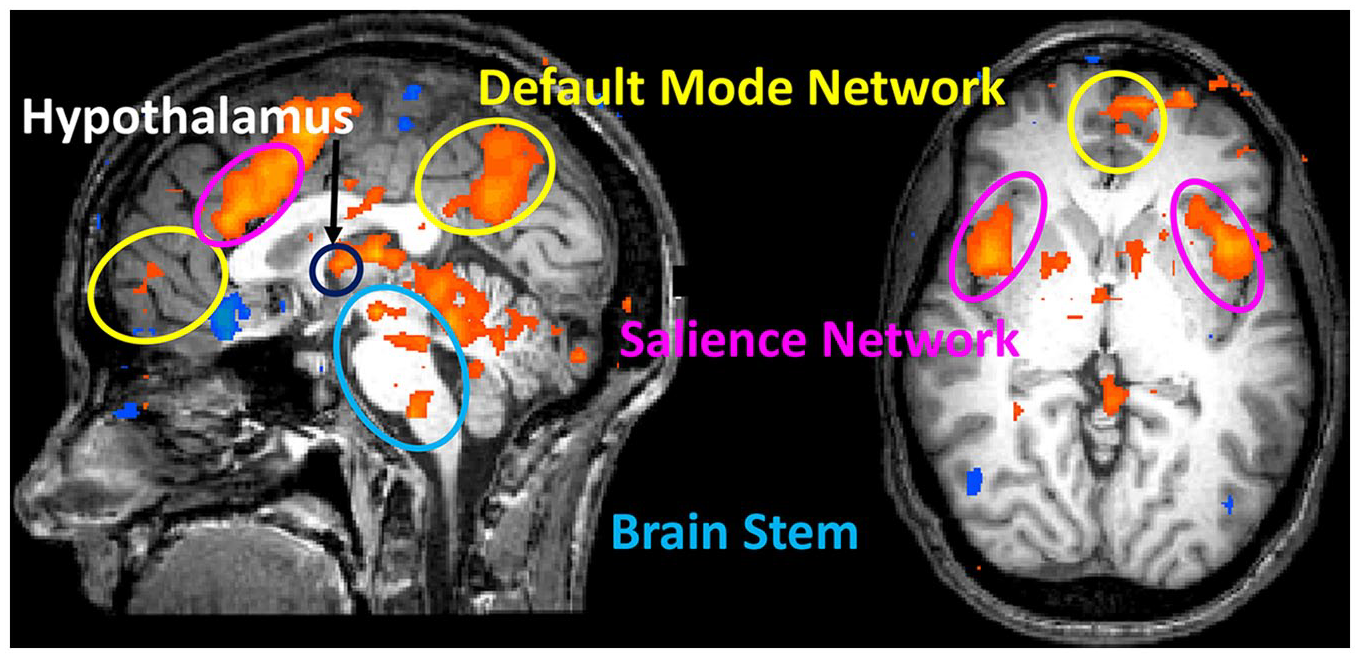
How We Feel: Brain Activity Associated With Emotionally-Engaged Reflections on Complex Social Issues
The anatomical confluence of our psychological and biological functions undergirds the principle of embodiment and explains how we really do live by “gut feelings.” Critical for education, though, is the fact that we develop the ability to invoke and interpret gut feelings within particular kinds of situations through social learning (Immordino-Yang, 2015; Immordino-Yang & Yang, 2017). Just because processing relies on a neurobiological substrate does not mean it is innate or predetermined. We learn through extensive experience thinking about math how to feel interested in math (Cheng, 2023), for example, and we learn through strategically examining the structures and intents of societal institutions and beliefs how to recognize and disrupt historically rooted social biases (Knecht, 2018; C. D. Lee et al., 2021). We recruit physiological mechanisms, such as increased heart rate and blood pressure, both to ready ourselves to act physically in the world, say, to walk up a hill, and as sources of information about the ethical or emotional implications of disciplinary or social information, say, to stand up for a friend, tackle a difficult math problem, write a poignant poem, or argue against injustice. To do this, though, requires lived or imagined experience—that is, opportunities to have learned about the significance of these situations. As we build and integrate the feelings, values, and knowledge that simultaneously constitute both our understandings of issues and our technical and ethical capacities for reasoning, we refine and repurpose neurobiological systems that also manage bodily survival in the service of elaborated, emotionally motivated, culturally shaped cognition and action (Atzil et al., 2018; Duncan et al., 2007; Immordino-Yang et al., 2010). Our physiological mechanisms are felt as one dimension of our lived experiences, and it is the subjective feelings of physiological engagement that give experiences psychological power and lead to meaningful learning (Immordino-Yang et al., 2017, 2019). In academic learning, these feelings of thinking in effect constitute what translates into the motivation to engage with academic ideas—they translate into curiosity, interest, and other knowledge-seeking states (Vogl et al., 2020). Such intrinsically motivated learning states have also been associated with activity in brain regions important for appetite and pleasure—low-level systems involved in biological drives such as hunger, sex, and other forms of reward (Murayama et al., 2010; Sarma & Yoquinto, 2020). And of course, because our interpretations and emotional experiences are shaped by social and cultural learning, engaging with others’ ideas, perspectives, and identities, and engaging directly in relationships and in opportunities to think together with others, can confer benefits that lead to resilience (Riveros et al., 2023). In sum, one major implication of the embodiment principle is that we only think deeply about things we experience emotion about, and conversely, those things we experience emotion about are the things we can learn about and remember. From a neurobiological perspective, it is impossible to think deeply about information or ideas about which we have no emotion (Immordino-Yang & Damasio, 2007).
Current research is also linking embodiment, with its integrated cognitive, emotional, sociocultural, and physical dimensions, to teaching. For example, early evidence is emerging for the importance of teachers’ physiological states in their ability to be maximally effective in their work. The data were collected from an ongoing study examining relations among 40 highly skilled secondary teachers’ pedagogical practices and physiological states and their students’ experiences in that teacher’s class. Participating teachers were nominated for their excellence by their administrators and are working in schools serving marginalized communities in urban Los Angeles with high proportions of first-generation students of color. In the study, a team of pedagogical experts observed and rated the quality of the teachers’ pedagogical practices in a 1-hour class of the teacher’s choosing. A second team measured the teachers’ physiological states using electrocardiograms and other measures just before the start of the observed class and later analyzed the data for patterns associated with stress versus calm readiness that is supportive of social responsiveness. Students were also asked to anonymously rate their experience of that teacher’s class. The researchers found that students’ reported perceptions of care and challenge in that teacher’s class were predicted not only by the teacher’s quality of practices but also (additionally) by the teacher’s physiological state in that context (Kundrak et al., 2022). Specifically, students experienced the class of teachers who showed a physiological profile associated with a threat state as less attuned to their academic and personal support. The research is ongoing and not yet conclusive but speaks to the importance for teachers of a calm, supportive school culture, and to students’ sensitivity to their teachers’ well-being, which is likely subconscious.
In sum, body, brain, mind, and meaning do not function as independent entities but are instead deeply intertwined; the functioning of each influences and depends on the functioning of the others. Our brains and minds reflect our lived autobiographies of emotions, thoughts, and relationships (Overton, 2008; Varela et al., 1991). Taken together, the evidence for the principle of embodiment means that we must attend to students’, teachers’, and administrators’ physical, emotional, and sociocultural health and safety because these lay the groundwork and provide the ongoing support for intellectual health and safety—for the motivated patterns of thinking and feeling that drive both teachers’ and students’ development and organize learning (Gotlieb et al., 2023; Sarma & Yoquinto, 2020).
Sociocultural Embeddedness
The principle of sociocultural embeddedness describes how humans live and learn within dynamically co-constructed cultural frames of activity, behavior, and meaning (Cole, 1995; Raeff, 2016; Rogoff, 2003). The embodiment principle makes clear that all thinking involves cognitive and emotional aspects that reflect the neurodevelopmental intertwining of bodily physiological, neurological, and psychological processes in social context; an extension of this principle, the sociocultural embeddedness principle, posits that all thinking is inherently cultural, framed by individuals’ lived patterns of subjective experience and meaning making (Immordino-Yang & Yang, 2017; Nasir et al., 2006, 2021; Siegel, 2012; Vygotsky, 1978). Like embodiment, the influences of sociocultural embeddedness are bidirectional (or multidirectional). Individuals agentically adapt their way of being and of thinking to accommodate to the features, resources, and constraints of their social and physical contexts, and in so doing, they also act on and change their contexts (Maturana & Varela, 1987). These cycles of adaptations and actions structure the person’s perspective (Fischer & Bidell, 2006) and even the ways in which they interpret embodied neurological information to build conscious social-emotional experience (Immordino-Yang & Yang, 2017).
The essence of the principle of sociocultural embeddedness is that individuals’ development and learning occur in relation to the norms, values, and expectations that surround them in the myriad of contexts in which they live, even when they are working alone or in self-directed ways (Rogoff, 2003). Like threads in a fabric, our work is intertwined with that of the people around us—either those proximal in the direct physical or relational senses or in the intellectual, historic, or identity-relevant senses. In turn, as individuals develop, they act on and so change their contexts, and so contribute to the contexts of others. Through their ideas and intentions as well as their actions, communities of individuals continually renew, together, the sociocultural context in which they are living, including the beliefs, the norms, and the patterns of relationships that organize society’s social fabric—the cloth they are weaving. Human development, therefore, is never culturally neutral or socially separated from the influences of others; there is no such thing as a person whose thoughts and feelings are culturally objective and no such things as knowledge or skills that are learned independent of their cultural frame. Even the most technical and prescriptive of skills, such as the solving of mathematical equations or the conducting of science experiments, are invoked and processed in ways that reflect the beliefs, proclivities, values, and interests of those doing the work (Bang & Medin, 2010; Nasir, 2000; Saxe, 1999; Saxe et al., 1999).
Sociocultural Embeddedness and Academic Learning
The culturally embedded nature of all knowledge has important implications for the ways that young people are positioned to leverage learning opportunities at school and for the ways that learning opportunities can shape not simply what students know, but also the processes by which they think and learn, and even the way their brains will develop (Dehaene et al., 2015; Immordino-Yang & Knecht, 2020; Zacharopoulos et al., 2021). For example, a recent study of children who both sell goods and attend school in Kolkata and New Delhi showed a mismatch between the relatively advanced applied math skills they use in their work and the algorithms and skills taught in their math classes (Banerjee et al., 2023). Apparently, the standard ways of teaching math in school make it difficult for the children to see the connections between the school-relevant math tasks and their informally acquired knowledge of math from their work outside of school. This discrepancy creates a situation in which children’s math knowledge is underappreciated by their teachers, and marks a lost opportunity to build from and formalize the children’s previous knowledge by creating a space where students’ lived knowledge is leveraged in service of academic learning. Because these teachers are unaware of their students’ cultural knowledge assets, or funds of knowledge (González et al., 2005), they also underestimate their capacities and lose the opportunity to make school optimally relevant and useful to their students.
For another example of how the social values in a context shape group-level differences in learning, recent neuroimaging work on 8- to 12-year-old Swiss students’ problem solving in math showed that although students from Montessori and from traditional classrooms received similar scores on a math activity, their neurological patterns of processing errors and correct answers were markedly different (Denervaud, Fornari, et al., 2020). Montessori-schooled youth showed neural activity following errors that suggested they were reprocessing the problem strategically in order to learn from their mistakes. By contrast, traditionally schooled youth showed neural activity following correct answers that suggested they were attempting to memorize those answers. Traditionally schooled participants showed no discernably reorganized neural activity following errors except for activity that suggested negative emotion and arousal. Despite both groups having similar numbers of problems correct, over time, the Montessori-schooled youth grappled with more math problems because, unlike the traditionally schooled students, they did not skip unfamiliar problems. In the end, they also gained more from the task because they were substantially more likely to correct themselves following their errors. The style of learning employed by the Montessori-schooled youth was also determined to be more efficient by a machine algorithm simulating the two groups’ differential styles of engaging with the math content. The implication is that the Montessori students were more effective learners because they were not stymied by negative emotion following mistakes and, in fact, took risks and leveraged errors as learning opportunities. The interpretation is that these students, who had been encouraged to explore the mathematical ideas with other students rather than to privilege quickly retrieving the correct answers, had changed not how much they know but their actual process of learning. The pedagogical style they had been exposed to, essentially a classroom culture of self-directed exploration and learning together with specialized materials through uninterrupted stretches of work time but no explicit tests or grades, had apparently shaped the way these students neuropsychologically interacted with and learned from the math task. The neural and behavioral response patterns shown by the two groups hold implications for their future learning and development (Denervaud, Knebel, et al., 2020) and have been related to their creativity and academic achievement (Denervaud et al., 2019) as well as their emotional development (Denervaud, Mumenthaler, et al., 2020).
As these examples demonstrate, the sociocultural embeddedness of development has important implications for the design of educational environments and for the ways that we understand and assess the learning that takes place in these environments. One implication is that it is important to attend not simply to what students know and can do but also to how they know and to the dispositions of mind they bring to their work (Cantor et al., 2021; Darling-Hammond et al., 2020; Ritchhart & Perkins, 2008). As is apparent from the Montessori study, students’ scores on their tests may not tell educators all that they need to know about how the student is thinking about the work or what they are taking away from it. To better understand the students’ learning involves probing students’ logic and perspectives, which are shaped by the norms and values of the classroom and their lives outside of school. Informed by a deep understanding of children’s home and cultural values and assets, schools must design pedagogical practices to socially support students’ thought processes (Rogoff et al., 2018). In the Kolkata and New Delhi example, this would organically lead to probing how school-based skills relate to and capitalize on students’ lived cultural knowledge in the domain.
A related implication is the need to attend to the quality of relationships and power dynamics of the educational spaces in which youth are learning. In that same aforementioned example, it is likely that Kolkata and New Delhi teachers were unaware of their students’ math knowledge because in typical school power structures, teachers “know” and students do not yet know. In the study of Montessori and more traditionally educated Swiss students, it is likely that the power dynamics in the traditional students’ classrooms habituated the students to quickly please their teachers and satisfy externalized expectations from those with power (be they teachers or parents or simply the larger societal definition of educational achievement and attainment) by providing the correct answers, rather than to explore the content more fully in order to use incorrect answers as a source of information and a chance to learn (Ritchhart & Perkins, 2008).
Sociocultural Embeddedness and Systemic Racism
The sociocultural embeddedness principle also makes clear why racism, made manifest in the differential (and unequal) educational content and pathways made available (Darling-Hammond et al., 2024) and the patterns of daily experiences in schools, classrooms, communities, and media (Nalani & Yoshikawa, 2023), is so detrimental to learning and development. Part of the function of the single story that systemic racism represents is to simplify and organize the sociocultural context around in-groups and out-groups, making clear who belongs and who does not. This bifurcation allows members of particular communities to co-construct categories that justify differential access to important learning resources (e.g., asserting that “those families don’t care about education” or that the “remedial” kids don’t need complex course material). These beliefs allow members of particular communities to explain differences in academic performance by invoking race or ethnicity, a relatively low-effort and cognitively easy means to perpetuate the cycle of privilege and oppression that currently characterizes mainstream education systems. By definition, racism and colonialism are designed to define some people as less than fully human (ross, 2021) and thus as having less potential and not belonging in academic spaces. Because humans function and develop in socioculturally embedded ways, iteratively affirming or undermining each other’s power, racism becomes a pervasive force restricting the opportunities of individuals from targeted groups and even, because of embodiment, impacting physical health (Levy et al., 2016). This marginalization restricts members of these groups from contributing their talents and ideas to certain communities and spaces and thus from most fully developing their potential and influence. It also entitles those from privileged groups to exploit resources and other people for their own gain, knowingly or not, and to slip into easy, surface-level explanations for inequitable situations that absolve the self of complicity. These values and habitual ways of explaining are ultimately unsustainable and damaging to all society and the planet. They lie behind the current spread of racism, nationalism, and xenophobia that we see in many societies today (Nalani & Yoshikawa, 2023). At the same time, there is resilience in the face of these challenges—belief systems and relationships that bolster the agency and determination of oppressed individuals and groups that cannot be suppressed.
Ultimately, the sociocultural organization of school and classroom communities is governed by the adult members, and by policymakers and administrators, following historical precedents. Racist ideologies (e.g., the hierarchy of human value, judging individuals based on IQ and other standardized tests) and practices (e.g., tracking, unequal resource allocation across schools and districts, assigning poorly trained teachers to low-achieving schools) create steep barriers to learning and engagement because they limit opportunities for individuals embedded in the affected systems (Nasir, 2019). These ideologies and practices are an integral part of modern standard education systems and practices and the broader social and economic infrastructure (Bouie, 2020) and track across students’ experiences with the different facets of a school system, from learning to discipline and beyond (Shores et al., 2020). Following the principle of sociocultural embeddedness, the sociocultural context of schooling—its aims and values, dominant practices, and measures of success—must be reinvented for student and teacher learning and well-being to meaningfully improve.
Sociocultural Embeddedness and the Potential of Individuals to Teach and Learn
Connecting the principle of sociocultural embeddedness back to the analogy of weaving, the individuals administering educational systems make decisions in alignment with their beliefs about the nature of learning and the aims of schooling. In effect, because of sociocultural embeddedness, these decisions can be thought of as tightening or loosening the tension on the proverbial threads of development for those in the system, both for teachers and for students. As the settings of the loom are tightened or loosened, the developmental potential of teachers and students is constricted or enabled, making it more or less possible for agentic, healthy development to proceed; for a diversity of pathways to crisscross and fortify the fabric; and for the fibers of learning and innovation to be woven in. When the system’s loom is tensioned too tightly, threads can break. Individuals’ agency is suppressed, and the potential for their development and self-actualization in that space is diminished. When the fabric is tensioned too loosely, threads fray and unravel, disempowering individuals and leaving students feeling disconnected and without purpose. This produces a weak, uneven fabric with holes and loose threads, symbolic of the disenfranchisement and marginalization of youth and the stress and lack of professional support and agency of their teachers. When classroom sociocultural norms and relationships establish space for individuals’ self-expression and self-directed activity while clearly setting the direction of the overall pattern by purposeful design, healthy development and relationships, and meaningful learning and teaching, are enabled (Darling-Hammond et al., 2017; Immordino-Yang et al., 2019). The cloth can be strengthened and enriched, new patterns can be collaboratively generated, and holes and tears can be repaired.
Taking the evidence together, the principle of sociocultural embeddedness explains how all the people in a community contribute to each other’s potential for development and well-being, either positively or not, by iteratively acting on and in the social context in accordance with their needs, beliefs, skills, and values. For this reason, the relationships among individuals in a community and the shared or dissonant values, aims, and beliefs of those individuals are critical features of each member’s learning context (Bronfenbrenner & Morris, 2007). Individuals’ and groups’ potentials emerge from sociocultural spaces and in turn dynamically reshape those spaces moving forward. There is no such thing as a talent, achievement, or failure that is located exclusively within an individual. To improve educational experiences and learning for all children, we must address the beliefs and values of those organizing the systems and design structures that support educators and educational communities to build appropriate and rich relationships that form the fabric in which all individuals are welcome and can thrive (Cantor et al., 2021).
Emergent Holism
The principle of emergent holism reflects current understanding that the component systems that make up humans and their contexts are not like cogs in a machine, each one contributing a bounded, independent piece or function. Instead, these subsystems function in a mutually constitutive way (Rogoff, 2024, this volume), each one enabling and expanding the capacities of the others and each one itself composed of many smaller, integrated systems and processes. In relationship, these pieces or functions give rise to a whole person or community with potential that is novel, emergent, and partially indeterminate in advance. Although researchers can invent constructs corresponding to particular bounded features of people or environments, these never function independently of the rest of the person or system. All other aspects of the person or system are simultaneously enabling the identified feature to emerge or alternatively, constraining it from emerging (Osher et al., 2020). Thus, development is characterized by probabilistic epigenesis and is not predetermined (Gottlieb, 1997, 1998).
Given the embodied and socioculturally embedded nature of human development, the principle of emergent holism can apply to many kinds of systems within and outside the person. The principle of emergent holism can be applied, for example, to a person’s immune functioning, which reflects their adaptive production of specialized cells through the modulation of genes’ activity in response to exposure to environmental conditions and pathogens (for a review, see Netea et al., 2019). In accordance with emergent holism, immune responding also allows the person to respond to novel exposures never before faced and even, in some circumstances, to pass acquired immunity through markers on their genes to future generations. In this way, the emergent capacities of the person (here, capacities to recognize and neutralize pathogens) go far beyond the sum of the person’s specific, acquired abilities and past experiences. The principle of emergent holism describes how, having had particular seminal experiences and opportunities, a person’s future capabilities are built from past experiences in unpredictable and emergent ways that enable the person as a whole to engage adaptively and generatively with novel situations in the world (Fischer & Bidell, 2006; Immordino-Yang et al., 2019).
Emergent Holism in the Brain
Another example of emergent holism comes from new evidence on the dynamically networked organization of the brain (Dragoi, 2024). Although work on the brain from 2 to 3 decades ago sought to identify specific brain regions’ unique contributions to mental processing, many scientists have shifted to a focus on the networks of connectivity between regions. The dynamic balancing of these connectivity states facilitates different neural activity modes—dynamic states of brain potentiation—important for the enactment of characteristic types of thoughts and feelings. The growth and balance of these intricate networks reflect the “cross talk” of neurons, that is, the coordination of neural activity among both closely and more distally interconnected networks of neurons. The basic organization of these networks appears to be present at birth, but it is the way the brain is used, including how a person thinks, feels, and relates to others, that strengthens and tunes these networks dynamically over a person’s lifetime, continually renewing the emergent potential of the whole person in accordance with their changing social roles, identities, and contexts (for a review, see Immordino-Yang et al., 2019).
One example of emergent holism in brain development comes from a coordinated longitudinal study of brain and psychosocial development among a cohort of 65 ethnically diverse adolescents from low socioeconomic status urban neighborhoods in Los Angeles (Gotlieb et al., 2023). The researchers began by asking each participating high school student to watch and discuss with a researcher a set of documentary videos that tell compelling stories about challenges faced by real teens from around the world (e.g., Malala Yousafzai, who won a Nobel Peace Prize for her advocacy on behalf of human rights and girls’ educational opportunities in Pakistan). This 2-hour private interview was videotaped, and teens were encouraged to explain their feelings and questions about each story. Next, participants underwent brain scanning while they watched and thought about these stories again and pressed buttons to report how emotionally engaged they were. The researchers took additional scans of each participant’s brain activity while they were just resting and thinking about whatever they would like, and images capturing their brain’s anatomical development. Finally, the researchers interviewed each participant for roughly an hour more about their own hopes and dreams, their academic interests and goals, their friendships and family relationships, and pressing community issues (e.g., incidents of crime or violence that they knew about and their ideas for why those had happened and what policy ideas they could generate that might help; Gotlieb et al., 2022a). Two years later, when most participants were in 11th or 12th grade, the researchers repeated the interviews and neuroimaging. The team followed up with participants twice more with questionnaires and phone conversations as they transitioned to young adulthood.
The findings speak to the emergent potential of young people to grow themselves, neurologically and psychologically, into whole and healthy beings. As the participants grappled with the meaning of the stories that were shared with them and explained their thinking on personal and community issues, they revealed their dispositions of mind—not only what they can do but more importantly, what they actually do—when given opportunities to engage with the sort of complex, potentially fraught, curiosity-provoking, and relevant content that they saw in the documentaries and discussed from their lived experiences. The research was designed to ask: As these youth go about their daily lives, how inclined are they to think deeply about what they see, learn, and experience? The data revealed that the more a participant spontaneously engaged in thinking about the big issues and personal lessons they could take from the stories—what the researchers called a “transcendent” disposition of mind—the more they grew their brains over the next 2 years. In particular, key brain networks associated with executive control, reflective thinking, emotion, and autobiographical memory became more strongly connected to each other over time (Gotlieb et al., 2022b, 2023). This result was apparent even when participants were just daydreaming in the scanner. The structural thickness of key brain regions and the “network wiring” between these regions also showed effects. In turn, the brain growth (but not the transcendent thinking itself) predicted identity development in late adolescence (Erikson, 1968; Farrington et al., 2019), which in turn predicted young adult life and relationship satisfaction. Critically, none of the longitudinal effects correlated with or were moderated by demographic factors such as IQ, socioeconomic status, or ethnic group, which the researchers had also measured. In effect, the findings underscore the active role youth play in their own brain development as they make meaning of the social world and, in turn, the affordances of that brain development for psychosocial growth, academic achievement, and well-being. No matter the developmental state of the brain at the start or end of the study, it was the teens’ proclivities to grapple with civic and personal issues that predicted their brain’s change over time, which in turn predicted the beneficial psychosocial outcomes. Much as one’s physical fitness improves when one adopts healthy eating and exercise habits (no matter one’s talent in sports), the data suggest that young people’s development and learning depend less on their starting point than on their inclination to think and feel deeply about complex issues, build personally relevant connections, and find purpose and inspiration in their lives (Gotlieb et al., 2022b). The findings underscore the need for support, safe spaces, and rich opportunities to cultivate these mental dispositions in school (Gutiérrez, 2008; Immordino-Yang & Knecht, 2020; C. D. Lee et al., 2021), in accordance with the principles of embodiment and sociocultural embeddedness.
Emergent Holism Within Individuals and Social Groups
The principle of emergent holism also describes how an individual’s or group’s experiences and adaptations within a particular domain or developmental time period become part of the whole of who they are in the moment and moving forward, a fact that also reinforces the intersection of emergent holism, embodiment, and sociocultural embeddedness in human development. Because individuals’ development and learning are never exclusively a property of the individual alone, for either adults or children, the ways that individuals and groups experience educational spaces will determine what they are capable of accomplishing in those spaces. Of course, individuals experience many spaces, not simply school, and so may find other spaces in which to resist what they perceive as constraining in school. Again, there is not a single story of how contexts, individual learning, and development interact (Adichie, 2009). Within many settings that youth experience today, there are people from multiple cultural, linguistic, and community backgrounds present, each having developed in ways that reflect their own histories of sociocultural embeddedness but each also contributing to cogenerating this new sociocultural space in unique and generative ways. Many settings, however, reflect the segregation of groups. The makeup of the school communities in which youth find themselves constitutes an important aspect of the context shaping development of self-awareness, positionality, and identity.
School can be a context in which youth development is enabled, but enabling development means building a space where students and teachers can bring their whole selves. When students and teachers honor each other’s intellectual and civic agency and developmental trajectories, everyone feels like they have a valued place in the community, which allows individuals the agency and freedom to engage in meaningful work in school (Daniel et al., 2019; Hantzopoulos, 2016). Individuals’ embodied ways of being give rise to fruitful explorations of knowing through agentically thinking and doing, collaboratively and alone (Immordino-Yang, 2015). The whole that emerges and the potential for future innovations, collaborations, and dynamic developments toward new capacities and assets are never fully knowable in advance and are greater than the sum of their parts.
Reinforcing the intersection of emergent holism and sociocultural embeddedness, the two together can be used to explain the possibilities for learning and capacity building that can emerge among individuals who are part of social groups who share historical traditions, or among individuals who have different histories but share a common need or aim in the current context. In such situations, individuals have the possibility of forming multiple intersecting identities and relationships that mutually enrich one another and together enable the invention of new ideas, such as new technologies, art forms, or community structures. For example, consider a large refugee camp that emerged overnight after the massive exodus of over 800,000 Rohingya, a single language and ethnic group, from Myanmar to Bangladesh, in the second half of 2017. The resulting massive camp, the largest in the world, incorporated aspects of four cultures and systems intermingling—the social structures of the Rohingya, the host community of Cox’s Bazar district in Bangladesh, the international nongovernmental organization system orchestrated by the United Nations High Commissioner for Refugees, and the Bangladeshi government, as represented by camp authorities and governance. The emergent properties of the intersecting cultural norms, small informal businesses, and reconfigured kinship and social networks of the Rohingya in this crowded, dangerous, and vibrant context became literally more than the sum of their parts—a complex social system in which clothing, language, food, gender relations, and reconfigured household and interhousehold networks shape socialization and child development in extraordinarily dynamic and resourceful ways. Substantial cultural change in this complex and dynamic system occurred in a matter of months, not generations (Goodfriend et al., 2022), and will likely also shape individuals’ cultural assets and collaborative potential beyond this generation.
Another inspiring example of emergent holism can be drawn from the work of Vanessa Siddle Walker (2019), who documented the teaching and learning that occurred in the South in Black schools during the era of legal Jim Crow segregation. In an era where Black schools were severely underresourced, Black school leaders, teachers, students, and communities worked together to garner resources (with communities taxing themselves extra to support the schools because their tax dollars largely went to support White schools) and provide a high-quality instructional environment for students where they were held to high expectations and provided with multiple supports and relational connections. Teachers built strong relational ties with students and with families, and they did so because they knew that it was important for weaving the fabric of the school and the community together and to be able to support families through the challenges that the Jim Crow South created. This community’s organizing and mobilization was central to providing essential resources that supported learning and allowed teachers to hold students to very high academic standards.
As we can see, the principle of emergent holism applies at various levels of analysis to mechanisms of development and learning. In each case, this principle refers to the idea that individuals’ and communities’ development is dynamic, conjured over time, not fully predictable, and more than the sum of its parts. Individuals and communities can pull from and weave together diverse assets that are themselves the results of past opportunities for agentic adaptation to new contexts and information. The learning that ensues is ingenious and novel, constructed collaboratively on the fly in response to needs and opportunities. Wrapped around developmental processes, such learning endows all people with the possibility of conjuring unpredictable emergent potentials—functional and creative new patterns, invented just in time, that never existed in exactly that way before. Of course, when those new patterns prove valuable to others, those patterns are appropriated and repeated and can become more broadly influential—at least until the next dynamic interactions take place or new needs arise and disruptive change occurs once more.
Adaptive Epigenesis
One startling discovery of the Human Genome Project is the finding that humans have fewer genes than many plants and about the same number as goldfish (for a review, see Immordino-Yang et al., 2019). This remarkable discovery reinforces the principle of adaptive epigenesis, which states that human development is self-organized through experience and learning, not predetermined by an inherited genetic profile (Lerner & Overton, 2017). Our complement of genes functions not as instructions to grow a prespecified person but as experience-dependent contingency plans that are activated and deactivated as the person adapts to their environment through development (Moore & Shenk, 2017). Our immense potential for intelligence, creativity, and adaptivity has apparently been enabled through the loss of genetic specificity through evolution (Deacon, 2010) and the commensurate offloading of responsibility for developmental processes onto cultural experience and social learning (Rogoff, 2003; Tomasello, 2016). Our very nature, extensive research shows, is organized through a lifetime of nurture (Gottlieb, 1997, 1998; Jablonka & Lamb, 2005).
The core of the principle of adaptive epigenesis is that our biology and mind are co-constructed by engaging with safe environments and people that offer meaningful opportunities to explore, observe, imitate, and learn. Extensive evidence from across multiple fields of developmental science reveals that our cognitive and emotional profiles are associated with brain development and that our brain development is shaped by the way we feel in relationships, what we learn to do, and the habitual and acculturated patterns of reflections and emotions we engage (Immordino-Yang et al., 2019). For example, genes involved in brain development are turned on and off by hormones that are released into the body and brain as individuals respond to stress or lack of control, which tends to accelerate young people’s neurobiological and social development, curtailing potential (Sumner et al., 2019). Genes that increase neural plasticity and enable the brain to grow in accordance with new social roles and experiences are released when individuals feel safe, socially connected, and agentic, for example during a healthy transition to parenting (Saxbe et al., 2018). The current research on adolescents’ coordinated brain and psychosocial development also speaks to the principle of adaptive epigenesis by revealing how the patterns of thoughts and feelings adolescents habitually engage when faced with interesting and compelling social stories, which can be described as civic and intellectual dispositions of mind, predict the future development of their brain irrespective of the state of their brain at the beginning or end of the study (Gotlieb et al., 2023).
One implication of the intersection between embodiment, sociocultural embeddedness, and adaptive epigenesis is that our development, including the development of our brain and body, is reliant on social relationships and opportunities for cultural learning together with others (Rogoff, 2003). Perhaps nowhere is this more starkly demonstrated than in studies of institutionally raised Romanian children. These children demonstrate that when babies and young children are fed and sheltered but neglected socially, not receiving the care and close attention of a dedicated adult who loves and is available to them, there are catastrophic physical, social, and mental consequences for development. Children raised under such conditions are not only socially and cognitively delayed; in fact, their bodies and brains are also significantly underdeveloped and small compared to those of their peers raised in families. It appears that our genes do not contain instructions for how to grow a full person in the absence of the social-relational triggers and exchanges that are felt in the body and in the mind during relational interactions (Immordino-Yang et al., 2019; Sheridan et al., 2012). Our adaptive epigenesis has a profound implication: Humans rely on relationships—in essence on each other—to grow, develop, and learn. This implication speaks to the important role teachers and other educators, as well as peers and families, play in children’s lives.
Adaptive Epigenesis in Academic Learning
Adaptive epigenesis also is evidenced within the scope of learning academic skills. For example, learning to read and to do math are both known to shape the networks of the brain in durable, measurable ways (Dehaene et al., 2015; Zacharopoulos et al., 2021). As individuals learn to phonologically decode and read, the regions of the brain associated with visual perception, sound processing, language, and meaning are integrated into characteristic network formations. The anatomical organization of these networks reflects novel patterns of cognitive, emotional, and social processing that the reader is coming to engage as they learn new ways of processing visual symbols and linguistic sounds. All of this happens in the context of social interactions with their reading partners, in relation to their subjective interpretation of the written content, and with the aligned purpose of enjoying stories and accessing interesting or useful information (Wolf & Barzillai, 2009). In math learning, regions of the brain involved in processing of space, quantity, and time, and those involved in language, are reorganized in relation to regions involved in physiological arousal, bodily movement (like counting on one’s fingers and managing one’s body in space), and higher-order planning (Ansari, 2008). In both reading and math learning, as individuals grapple to access, interpret, and internalize happenings, concepts, and symbols, they grow their brains and minds in accordance with the expectations and needs presented by the sociocultural and cognitive context. Our neurobiological systems and the mental skills and dispositions that depend on them develop through motivated use. This means that the development of our brains and minds reflects our opportunities and needs to learn, which in turn depend on the sociocultural, affective, and embodied contexts in which we are operating.
Overall, the principle of adaptive epigenesis underscores the notion that meaningful learning, including academic learning, cannot be adequately described simply as the acquisition of information. Similarly, meaningful learning cannot be adequately measured simply by testing one’s ability to retrieve or recall on cue. Instead, learning is the reflection of a lived developmental adaptation, an active process of internally focused sensemaking and externally focused self-expression and action in the world. This point means that all learning is inherently subjective and constructed, individualized, and fundamentally dependent on the sociocultural, affective, cognitive, and physical features of the context in which one is working. Because of embodiment and sociocultural embeddedness, the adaptive epigenetic act of learning changes who a person is and what that person can be capable of in a particular context, which, commensurate with emergent holism, also changes who they are positioned to become (Dixon-Román, 2017).
Developmental Range
The principle of developmental range describes how human development and learning are dynamic and context-dependent, not linear or unidirectional. People know and can do things in context (Fischer & Bidell, 2006). Because contexts change inside the embodied individual and in the sociocultural space, as well as in the cognitive and affective dimensions of one’s understanding of a situation, meaningful knowing or doing is more like conjuring an organized potential or disposition to act or think in a particular way than it is like retrieving a stored entity (Gutiérrez & Rogoff, 2016). There is no knowledge or skill that exists as an entity in the brain of a person, ready to be deployed once retrieved, and there is no “level” of skill or learning that once achieved by a person becomes a durable, stable property of that person moving forward. Although certainly there are things we do not know and cannot do under any circumstances, skillfully “knowing” and “doing” become increasingly possible depending on the real-time dynamics of a situation. Knowing and doing exist on a shifting continuum and result from a relation between the person’s facility, which reflects development and their affective and cognitive experiences in similar situations, and the conduciveness of the context, which in part reflects the individuals’ perception of the supportiveness of the situation.
Developmental Range and Learning
The principle of developmental range makes clear that knowledge is not something stably stored in one’s head for later retrieval. Instead, knowledge and skill are reflections of dynamic potentiations enacted as active adaptations within situations, either real or imagined. Be it an academic skill like solving quadratic equations or a social skill like calming a distraught toddler, what one can understand and accomplish in any given moment is a dynamic function of the relation between the knower’s past experience, which has also shaped their development, and the current context, including its social, cognitive, physical, cultural, and affective aspects (Dixon-Román, 2017). Because of this relation, a learner can manage, say, complex mathematical calculations when at school with their teacher priming the relevant information and procedures but may not manage these same calculations when the context is dramatically different, for example, during a high-stakes test or at home, away from the contextual cues from the classroom that support the learner in knowing (Fischer & Bidell, 2006). Similarly, highlighting connections between developmental range and sociocultural embeddedness, children can engage in relatively complex mathematical reasoning in a cultural context in which they feel agentic and comfortable, such as on the basketball court (Nasir, 2000) or when working with their families as street vendors (Banerjee et al., 2023), and yet fail to call up their math skills effectively in a structured classroom activity because the context of the classroom is not interpreted by them as relevant to the ways they know and think about math, as a safe environment in which one can make and correct an error, or as a space where they will feel smart and capable.
Developmental Range and Variation Across Individuals and Groups
An important aspect of the principle of developmental range is that individuals are individuals—that is, they vary from each other, and no two people are exactly the same (Rose et al., 2013). At the same time, groups of individuals who share experiences may develop similarly in some respects. Whereas the previous section described the implications of developmental range for the dynamic effect of context on individuals’ or groups’ skill levels, this section describes how individuals or groups with the “same” level of skill can nonetheless perform tasks in different ways that reflect their differing developmental orientations to the problem or domain of thinking. The origins of these developmental differences are many. They can be due to chance, intrinsic individual variation, cultural variation, variation in the internal (e.g., emotional) or external (e.g., social or physical) context in which the person is working, or, related, variation in the person’s previous experience. For example, such an effect can be seen at the level of the group in the Montessori versus traditionally schooled adolescents’ math learning described earlier in this chapter. In that example, the behavioral response patterns the groups showed to errors and correct answers and their neural processing suggested that these groups’ orientation to solving math problems differed, with implications for their longer-term math learning and intellectual development (Denervaud, Fornari, et al., 2020; Denervaud, Knebel, et al., 2020). Importantly for educators to know, it was impossible to capture the difference between these groups’ orientations from the “learning outcome” measured; youth from the two different schooling backgrounds got the same number of math problems correct. This example highlights one reason why educators must consider the range of ways a person can engage with a task or domain and the implications for that person’s broader development and learning and not simply the level at which that person can perform in a given context.
Another example of the way that developmental range is influenced by the profile of the learner can be seen in the cases of two adolescents who compensated for the surgical removal of either their right or left cerebral hemisphere (basically, half their brain) to cure life-threatening neurological conditions (Immordino-Yang, 2007). Each of these adolescents is missing half of the brain regions that would normally be recruited for almost all tasks, yet they surprised researchers and physicians with their abilities to actively reframe tasks to suit what they “ought not” be able to accomplish (Immordino-Yang, 2008). For example, each adolescent made a highly competent self-portrait when offered the opportunity (see Figure 2). Yet one glance illustrates these remarkable adolescents’ differences in their approach to the same assignment and hence differences in the ways their developmental range of capability appeared. While Nico, who retains only his left cerebral hemisphere, figured out a strategy to copy his face part for part using a mirror set to the side of his painting easel, Brooke, who retains only his right cerebral hemisphere, constructed a drawing that includes many tiny and meaningless squiggles arranged so that they form a face when viewed as a whole. Both adolescents successfully completed the task and enjoyed themselves in the process. Both also, consistent with adaptive epigenesis, put in months of self-directed work to develop his unique skill profile.
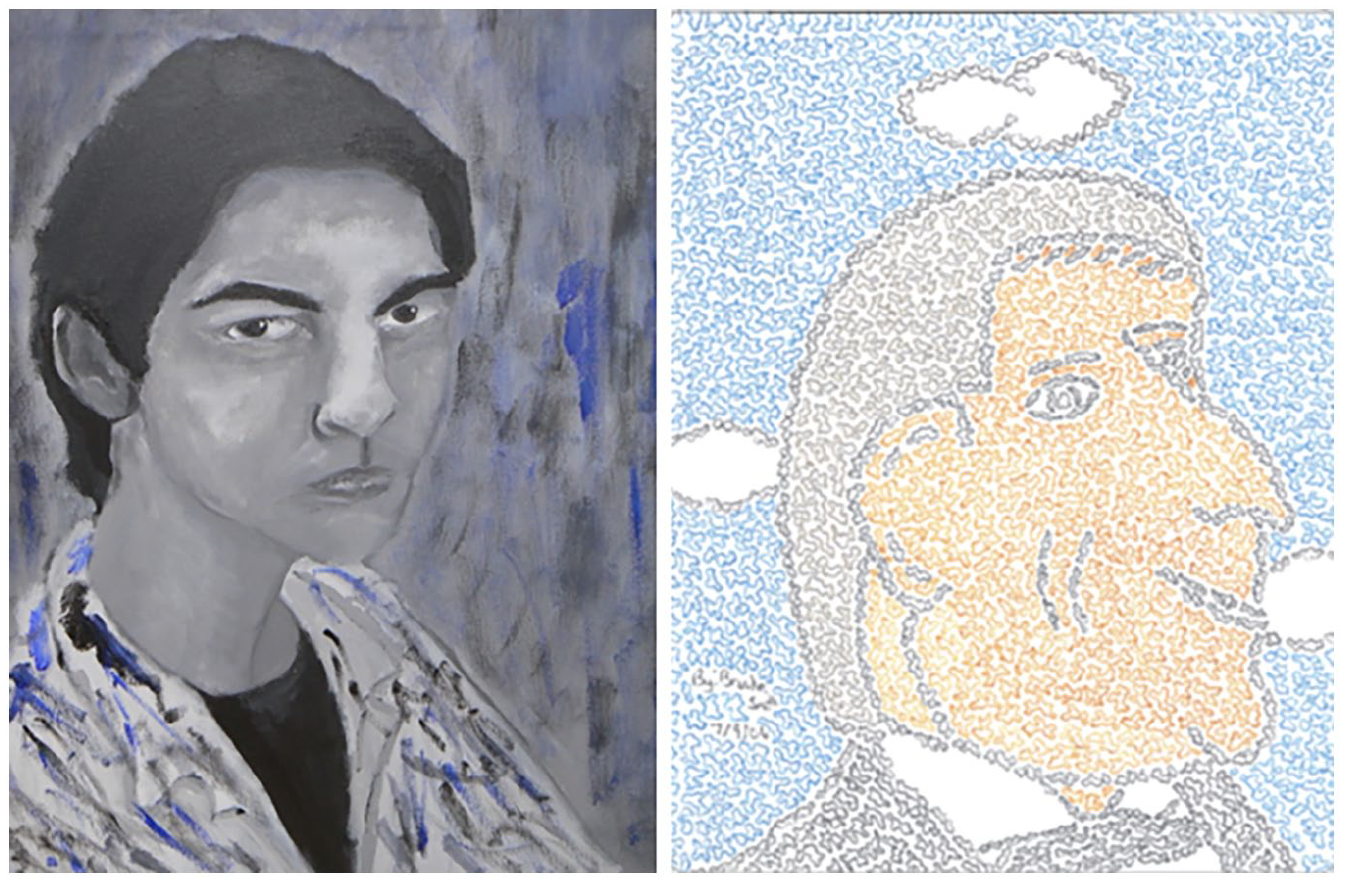
Portraits by Adolescents Retaining Only Their Left (on Left) or Right (on Right) Cerebral Hemisphere
This differential development highlights how accommodating learners’ developmental range is not simply a matter of adjusting the level of skill required by an assignment. Instead, it is a matter also of providing multiple entry points and paths through the work. Nico’s and Brooke’s teachers enabled the boys to make portraits by encouraging them to enter into the open-ended but specific task from their own individual way of understanding and engaging. These adolescents represent an extraordinary example of developmental range in skill via the confluence of adaptive epigenesis (each adolescent strived in their own way to adapt the task to suit their strengths), embodiment (e.g., Nico physically organized his easel and mirror to invent a technique that compensates for his left-side visual deficit), sociocultural embeddedness (evidenced in each boy’s extensive support from educators and family and their desire to produce portraits in the first place), and emergent holism (each boy leveraged his unique neurological profile to conjure artistic creations far beyond what could have been expected).
Developmental Range and the Social Context of School
Because knowing does not exist as a stable level and because individuals vary in their strengths and preferences, high-quality education involves the systematic adjustment of the contextual support for knowing within a domain or situation, strategically placing and removing scaffolds and resources to help learners deconstruct and reconstruct understandings, grappling just at the upper edge of their capability (Ritchhart & Perkins, 2008). The strategic management of scaffolds and resources depends on educators deeply knowing their students (Rogoff et al., 2018) and their ability to provide students the safe space for agency to construct rich and varied developmental trajectories toward intellectual and personal fulfillment. These efforts also leverage biological processes, through the effects of hormones that are released in the context of safe relationships, such as oxytocin, and through the effects of neurotransmitters that are released when learning feels intrinsically interesting and powerful, and hence rewarding to think about, such as dopamine. Together, these socially triggered neurobiological responses create the appetite for more learning and the curiosity to seek it. These responses are triggered through educators’ interactions with students; in their framing of content, problems, and issues; in the structures of assignments, activities, assessments, and feedback; and in the cultivation of social classroom contexts conducive to vibrant intellectual and civic wrestling with complex, relevant information. The conditions that are associated with these responses are supported when students work on meaningful problems and when they are encouraged to bring lived experiences and cultural ways of thinking and knowing to the work (Montalto, 2023; Newmann et al., 2016; Rogoff et al., 2017; Sogbanmu et al., 2023). Of course, when skilled educators work together to create school contexts supportive of belonging and intellectual exploration and commitment (Darling-Hammond et al., 2017; Winn, 2020), the dynamic cycling that constitutes students’ and teachers’ learning processes unfolds in accordance with the principles of development already described. This dynamic cycling reflects embodiment (by leveraging individuals’ agency and drive to physically and socially manage and thrive), sociocultural embeddedness (by leveraging internalized affordances of co-constructed relationships and shared values and aims), and emergent holism (by leveraging just-in-time possibilities based on lived developmental adaptations and growth).
Developmental Range and the Power of Lived Experience
One important extension of the principle of developmental range is that whereas the learning sciences have focused mainly on semantic and procedural recall as the primary outcomes of schooling, these foci do not capture the dynamic processes and dispositions by which young people and adults develop and self-actualize through their learning. Because levels of knowing and doing are made possible through dynamic interactions, or coactions, between the person and their context, a person’s past experiences within a context are foundational to their capacities for learning at any given time and place (Rogoff et al., 2018). Accordingly, new interdisciplinary evidence underscores the importance of autobiographical memories—implicit and explicit memories for lived experiences—for organizing development and making complex, adaptive patterns of knowing and doing in a particular context possible (Immordino-Yang, 2016; Immordino-Yang et al., 2012; H. Lee et al., 2023). This autobiographical organization of knowledge means that the context in which a person is working and their developmental experiences within similar contexts are of critical importance even though these cannot be adequately captured by performance on traditionally constructed tests (Boykin, 2014; Gordon, 1995).
Given the confluence of developmental range with embodiment, sociocultural embeddedness, emergent holism, and adaptive epigenesis, autobiographical memory processes become the cultural, developmental frame around which learned facts and procedures are woven. It is through autobiographical, lived, and felt experience that learning can holistically organize a person’s mind, relationships, dispositions, and skills through time. Autobiographical processes recruit the same neural processes that enable future-oriented and creative thought; reflective, inferential, and transcendent thought; and agency (Immordino-Yang, 2016). These neural processes are also central, then, to the invention of new technologies, contexts, and ideas (Beaty et al., 2016) because they enable individuals to connect their here-and-now self to bigger ideas, values, identities, and understandings that transcend contexts. Although semantic and procedural learning can constitute strong fibers, weaving these together through one’s autobiographical experience is what empowers learning to shape development so that learning changes who the person is now and will become. In accordance with the principle of developmental range, learning that empowers development is not incremental, as if it simply involved the acquisition of bits of information, or linear, as if it involved increases in skill level that once achieved are stable and available to the person to use forever. Instead, this principle makes clear that powerful learning experiences are nonlinear and personal. Education that orchestrates opportunities for powerful learning experiences leverages emergent holism in accordance with the principle of developmental range, enabling individuals to weave many sturdy and colorful threads to produce patterns and potentials that depend on lived experiences of the learning process and vary dynamically with context. Such learning shapes development and cannot be fully determined in advance.
Implications for Educational Practice and Youth-Facing Policy
The five principles outlined in this chapter have fundamental implications for how we design education practices and policy to support learning. Our current systems were designed at a time when the science suggested at worst, that young people were empty vessels to be filled with discrete pieces of knowledge and at best, that they were active thinkers and that learning occurred through exploration and sensemaking. Our education systems were largely not designed to account for the deep connections between cognition and emotion; the developmental interweaving of knowledge and skill through relational, biopsychosocial processes; or for the dynamic context dependence of skills and knowledge. What we now know about learning and development would suggest several design principles that should undergird education and learning systems. These design principles include centering positive developmental relationships; providing multiple entry points and pathways to learning opportunities and demonstrations of achievement; supporting the developmental needs of the whole person; supporting teachers’ and administrators’ understanding of relational developmental processes and the practices that promote them; redesigning curriculum, assessment, and accountability structures to align with and support the complex, cultural nature of human development and learning; and aligning youth-facing policy with developmental aims. In the following, we describe each briefly.
Center Positive Developmental Relationships
All learning is cultural. Given the biological underpinnings of learning processes and the integral nature of emotion, cognition, and sociality in brain function and learning, it is essential that schools, classrooms, and education systems attend to the relational qualities of the schooling and learning context, building a cultural context conducive to meaningful learning. This attention includes ensuring that there are strong, safe, and positive relationships between educators and students and among peers (Cantor et al., 2021; Darling-Hammond et al., 2017; Noddings, 2005). Research has highlighted what it looks like when educators and young people have strong relationships and the ways that this both leverages and produces opportunities for learning that serves the individual’s development, especially in difficult learning moments (McKinney de Royston et al., 2021; Nasir et al., 2014; Osher et al., 2020). Importantly, this cultural space includes all of the relationships that surround young people and teachers in learning environments—among teachers and students, among administrators and other adults in the building, and among peers. It also can include relationships between community members and the school and the integration of school-based activities into communities and vice versa (Covelli et al., 2022; Daniel et al., 2019; Montalto, 2023).
Provide Multiple Entry Points and Pathways
The research literature makes clear that learning is tied to social context, emotional salience, lived experience, and personal interests (Cantor & Osher, 2021; Immordino-Yang et al., 2019). It is also clear that to varying degrees, these will look different for each learner and will vary dynamically with aspects of their context, including their internal and developmental contexts (Fischer & Bidell, 2006). This variation means that the same content might be approached differently based on background, interests, and existing cultural and community knowledge or by learners with various interests, proclivities, and neuropsychological profiles (e.g., Bornstein, 2019).
Thus, to empower learners to engage in conceptual reasoning and epistemological dispositions to value complexity as they study in academic content domains, academic content needs to have multiple entry points—that is, various starting points into the foundational ideas and concepts of the discipline such that the content maximizes students’ opportunities to engage with the intellectual domain in a way that has meaning and relevance for them and feels agentic. This variation also means that educators, curriculum, and the organization of learning environments need to allow for and value multiple learning pathways (Bang et al., 2021). Approaches that target instruction to support the developmental ranges at which students are working have proven effective in large-scale systems that otherwise rely on rote, lecture-based teaching with a one-size-fits-all approach (Banerjee et al., 2017). Effective education does not simply produce a standardized, predetermined product. It is instead about weaving a colorful cloth that reflects community members’ rich skills and relationships, with generative patterns that integrate complex knowledge and ideas and can look different in different contexts.
Support Whole Person Developmental Needs
Centering relationships and providing multiple entry points and pathways are parts of a broader sensibility to ensure that a “whole person” perspective undergirds decisions that shape teachers’ and learners’ experiences, including the organization of school and district practices (Cantor et al., 2021; Darling-Hammond et al., 2017; Knecht et al., 2016). This whole person, developmental focus involves attending to young people’s physical and emotional needs and ensuring that each person feels that they fully belong and have something important to contribute to the work. Attending to young people’s and adults’ needs requires structures and practices that enable a balance of autonomy, agency, and connection in culturally aware ways (Rogoff et al., 2018) across the developmental span. Community schooling, where a range of services from health care to parent support are available in the school building, is one approach that has proven successful in improving students’ capacities to engage in academic learning (Maier et al., 2017). Restorative practices and social justice norms in the context of problem-driven curricula, visible exchanges and interrogations of knowledge, and portfolio demonstrations of work process can also be efficacious and developmentally supportive systems supporting youth and teacher development of advantageous dispositions of mind in the context of academic work (Condliffe et al., 2017; Hantzopoulos, 2016; Winn, 2020).
Support Educators’ Understanding of Developmental Processes and the Practices That Promote Them
Given the current political climate and the pervasive misconceptions of learning implicit in standard modern school design, it will be difficult to create schools and classrooms that leverage the five principles of development if educators are unaware of the relevant developmental science (Darling-Hammond et al., 2024). In particular, to rework our education system and dismantle problematic structures, educators must understand the implications of research underscoring the centrality of relational experiences and individuals’ perceptions of agency as well as the natural and dynamic complexity of human variability and variation (Fischer & Bidell, 2006). Thus, ensuring that human development and learning science is a part of the core curriculum in teacher education and professional development programs is critical for schools and classrooms to be designed with both students’ and teachers’ developmental needs in mind. Toward this end, there are several teacher education programs that have centered understanding child and adolescent development (Darling-Hammond et al., 2017), which is a start, and still others that are willing to challenge structural models such as “one teacher/one classroom” in favor of models that distribute expertise across teams to encourage collaboration (Basile et al., 2023). For meaningful educational innovation to take hold at scale, we simply must seriously attend to the qualities of relationships and emotional experiences individuals construct through their work in these spaces, be they youth or adults. The ways people feel in learning contexts fundamentally shape how people come to think in those contexts and in turn what they will be positioned to think about, learn, and accomplish going forward.
Redesign Curriculum, Assessment, and Accountability Structures to Align With and Support the Complexities of Human Development and Learning
The developmental principles that we describe in this chapter, if enacted in schools, could lead to a rich and comprehensive rethinking of the purpose of schools and the learning that they are designed to support. It is not simply the case that reductionist views of learning and biologically deterministic views of development happen incidentally to result in motivation, engagement, and mental health issues in education and structural inequities in outcomes. The problem is not just about reductionism, and the fix is not just about correcting deficits through interventions. Educational experiences undermine the potential of many individuals and communities because of an often implicit system of beliefs, false assumptions, and crucial, often racist, myths about biology, development, learning, and genetics (C. D. Lee et al., 2021; Lerner & Overton, 2017). This system of beliefs now very explicitly specifies the exclusion of teaching about race, gender identity, labor practices, and other aspects of diversity, history, and context in a growing number of states and districts in the United States. Even our well-meaning and well-resourced attempts to micromanage children’s learning and teachers’ practices cannot solve the problem at scale or over the long term. The only truly productive way forward is to collaboratively and courageously reimagine the design and goals of educational systems in accordance with new understandings of learning and to design new and context-appropriate ways to support diverse human developmental trajectories toward intellectual and civic empowerment and self-actualization (Philip & Sengupta, 2021). In parallel, we must design measures that adequately capture progress toward these aims, support critical community-building toward new ways of working and thinking in the field, and hold the design of contexts and practices responsible for individuals’ and communities’ outcomes (Gordon, 1995; Knecht et al., 2016; Stein, 2016).
Align Youth-Facing Policy With Developmental Aims
Several implications for policy conceptualization and implementation follow from the systems principles we put forward here. First is the consideration of policy itself as an open system with emergent properties over time. Public policy at a national level is built of channels of resources, communications, and power across the federal, subnational (e.g., state, province), and municipal or local levels. Education systems, for example, typically involve resources, curricular guidelines, and workforce lines of authority across the national ministry, state or subnational ministries, local education officers at the district or municipal levels, and finally, teachers, parents, and students at the community and school levels. Each stakeholder group and element in this complex system should ideally work together toward the common goal of supporting the healthy development of all youth through high-quality opportunities to learn. Yet research has shown that in recent decades in much of the majority world, policymaking has been oriented toward increasing access and has largely neglected the larger goal of improving developmental opportunities to meaningfully learn (Pritchett, 2015). To realign education systems toward learning and the development it enables, which includes but goes far beyond increasing access, each of the communication, accountability, and resource loops between the different stakeholders at different levels must be reoriented toward human growth processes and experiences rather than simply increasing enrollment. This reorientation means, for example, that information must pass openly and easily across systems levels and components, informing improvements in the work of the various stakeholders—from national officials, policy leaders, union leaders, and teacher groups to local parent groups, principals, and teachers. Such alignment of system functioning at different levels and across different stakeholder groups toward the common goal of improving learning has been termed “education systems coherence” (Pritchett, 2015).
Second, inclusion of the perspectives of multiple populations within any particular jurisdiction, state, province, or country in policy can leverage open multidirectional systemic influences and enable attention to holism. For example, the Colombian early childhood policy De Cero a Siempre incorporates a modality that is specifically designed to create responsive, multidirectional dialogue between indigenous groups’ worldviews and the federal policy. This modality, named “modalidad propria” or “our own modality,” provides the opportunity and structures for each of the over 100 indigenous language groups of Colombia to define their own interpretation of the national early childhood program standards—from learning goals to curricular content, staffing, and specific areas of resource allocation (Motta & Yoshikawa, 2018). For example, the early health services in a particular tribal context may include cooperation of a local healer with the local community health worker representing the national ministry of health. The curriculum of one tribal group was built around learning the ways of the land—from agriculture to weather patterns, art, and nutrition—represented in a cyclical worldview grounded in generations of early socialization.
Finally, policy influence is not a solely top-down process but may involve the agency of stakeholders at any point or level in the system. Consider the outsized influence on systems of a single youth advocate, whether Malala Yousafzai or Greta Thunberg. In the more mundane arena of typical curricular reforms, implementation depends on the understanding and agency of individual teachers making meaning of policy directives (Coburn, 2005, 2016). Once the classroom door shuts and class begins, policy implementation inheres in the culture of networks of teachers, coaches, principals, and the agentic responses of students and parents.
Toward a Paradigm Shift: Learning Opportunities Constructed to Reveal and Nurture the Emergent Potentials of Young People
In sum, we have argued that a fundamental shift in perspective is needed in how those in the field of education understand learning and development, which, when appreciated, will have profound implications for how we design and evaluate schools and educational systems. Taken together, the interdependent principles we lay out build from historical perspectives and new evidence to reconfigure our core understanding of human development in relation to learning, in service of a new approach to the design of schooling and the work of teaching. The educational, developmental, and neurological evidence is clear that learning is a complex, fully integrated, whole-person and interpersonal process and that emotions, the experience of the body, and a person’s sociocultural context are the sturdy fibers holding together the human learning process. We believe that this understanding changes and should change much of the thinking undergirding how education systems and classrooms should be organized. It is critical that education and learning systems revolve around the experiences and emergent capacities of people (and not require people to override their natural learning processes to accommodate what happens in schools). Of course, some systems and traditions of schooling are designed in alignment with these principles and can be models to learn from (Nathan et al., 2024). However, these are not broadly available, often not recognized for their work, and do not operate at scale or in the mainstream. To move toward a more sustainable and just future for society and the planet, the policies that guide and structure our work in systems of education must also be aligned with these insights. The implications for how we redesign educational systems and for how we rethink classrooms and the profession of teaching are equal parts exciting and daunting. The task ahead is undoubtedly one of the most critical of our time.
One way to capture the enormity of the task is to liken it to a Copernican shift in understanding, a moment of the kind that Thomas Kuhn (2012) referred to in his book, The Structure of Scientific Revolutions. This shift in understanding is akin to when Copernicus realized that the earth and all of the other planets revolve around the sun (rather than seeing the movement in the heavens from the perspective that humans are at the center, as was previously accepted). This realization led at once to a more parsimonious model of heavenly observations and to a fundamental reinterpretation of the organization of the universe and our own place in that universe. Kuhn characterized such moments by their discontinuities—by the abrupt ruptures of perspective and assumptions that cause the field to move from a paradigm that was previously unquestioned to a new paradigm. Once shifted, it is impossible to unsee from the new perspective. Kuhn wrote about such periods like the one we are in now, when disruptions caused by the historic failures of our education models to address human variation and the dynamic contextualized nature of learning, the acute and enduring effects of the pandemic, new appreciation of the long-standing effects of systemic racism, and the realization that the planetary environment is changing have crashed together. The result is an overwhelming period of what appears like unsurmountable complexity and turmoil, social and political polarization, inequity, and calls for justice. From this dauting and turbulent confluence, however, also emerges an appetite for fundamental conceptual change. Simply changing what we do or what we measure is important but not sufficient. Until we understand and see from a new perspective, fixes will be temporary, complicated, and awkward, like Western, pre-Copernican descriptions of the movements of heavenly bodies.
There comes a point when some of the field’s most basic models of learning no longer serve society well; we have reached that point. The separations conceptualized between emotion and cognition; between relationships, culture, and academic learning; between knowledge and context; and between learning and development are no longer tenable. Aiming for equity and well-being in a system built on counterproductive beliefs and models can never succeed.
A New Center of Educational Gravitation: Individuals’ Developmental Experiences of Learning
The insights that would result from engaging with the developmental principles we outline represent such a Copernican, or fundamental, shift in perspective. When our core understanding of a system changes, our perspectives on all aspects of the system must change, too. In education, we have built a robust and long-standing architecture based on a largely flawed understanding of learning and, in fact, of personhood. New insights reveal that to adequately educate young people and build systems geared toward the ways humans actually learn requires a major perspective shift—a rethinking of the roles and purposes of schools and education systems. Learning outcomes can no longer be understood as the center of the educational universe. Instead, the subjective, lived experiences of the individuals in the system must be the focus around which all design decisions and evaluations revolve. Meaningful and durable learning is enabled when individuals experience thinking and understanding as powerful and agentic activities—activities they invent collectively and individually as they move through specially designed, developmentally and culturally supportive contexts and opportunities. Accordingly, schooling and the learning that would result from this new paradigm recenter around the subjective experiences of the people in the system, in context and over time. Schooling would embrace the developmental variation that naturally exists while supporting each learner in constructing for themselves meaningful and satisfying intellectual and civic contributions to our collective societal cloth. The education system, including teacher professional development, assessment practices, and policymaking, would provide room to wrestle with the complexity of humans’ biopsychosocial realities. The result would be a change in perspective that lands in simplicity, clarity, and a new way forward.
To conclude, formal education is among humans’ most important societal inventions. In our current system, standard structures and practices of schooling are conceptualized from a very particular perspective that is limiting and stifling, exclusionary, and too often at odds with the values of those not from the dominant perspective. We have built an entire system on the assumption of the independent individual, in competition with others and with nature, whose achievements are captured by a limited set of cognitive abilities, retrievable procedures, and semantic memories. This approach is not sustainable. No longer can we gear instruction as if only cognitive processes were involved in learning, in siloed ways that fail to consider young people’s daily lived experiences or emergent potentials. No longer can we ignore the primary nature of emotional connection and the empowering force of personal agency in the learning process. No longer can we fail to account for the cultural, situated, emergent, and embodied nature of the learning process itself or the emergent developmental potential the learning process enables and depends on. Schooling moving forward must be designed to accommodate the multiple dimensions of individuals’ development simultaneously, attending to the relationship between individual and context, to macro and micro processes, to social and cultural contexts and disciplinary domains, and to the experience of self in community and in history. Perhaps most important of all, schooling in this new perspective will nurture the emergence of contributions, capabilities, explorations, and discoveries by our young people that will build the sustainable and healthy world that they and their children will inherit.
Footnotes
Acknowledgements
D. Knecht, C. Kundrak, A. Blodget, E. Gonzalez, M. De Franca Steil, B. Rogoff, D. Osher, C. Lee, and R. Lerner provided comments and/or edits on earlier versions of the chapter; C. Kundrak helped with references.

Authors
MARY HELEN IMMORDINO-YANG is the Fahmy and Donna Attallah Professor of Humanistic Psychology and a professor of education, psychology, and neuroscience at the University of Southern California. She is the founding director of the USC Center for Affective Neuroscience, Development, Learning and Education (candle.usc.edu) and a member of the National Academy of Education. A former public middle school science teacher, her research integrates methods from human development psychology and neuroscience to understand how humans come to experience the world, think, and feel and the ways that teaching and learning reflect and support these sociocultural, embodied processes.
NA’ILAH SUAD NASIR is the president of the Spencer Foundation. Her research focuses on the cultural and radicalized nature of learning. She is a Past President of American Education Research Association and served on the faculty of the University of California, Berkeley, and Stanford University. She is a member of the American Academy of Arts and Sciences and the National Academy of Education and is a Fellow of the American Education Research Association.
PAMELA CANTOR, is a professor of practice at Arizona State University. Her work focuses on the science of learning and development and unlocking human potential and its application to teacher practice, educator development, and student learning. A child and adolescent psychiatrist specializing in trauma, her writings have crystallized key scientific concepts about the nonlinear and individual pathways by which learning unfolds and how human potential will get revealed in settings designed specifically for this purpose. Dr. Cantor joins collaborations, organizations, and coalitions seeking to transform our learning ecosystems based on these principles.
HIROKAZU YOSHIKAWA is a community and developmental psychologist and a university professor at New York University. His research focuses on programs and policies in the areas of early childhood, immigration, poverty reduction, and gender identity and sexuality. His current projects include partnerships with nongovernmental organizations in Latin America, the Middle East, and South Asia and projects in the United States on poverty reduction, gender and sexuality alliances, and transformative interviewing and listening. He is a fellow of the National Academy of Education, the American Academy of Political and Social Science, and the American Academy of Arts and Sciences.