




Abstract
This review brings together scholarship from creative educational experiences (CEE) and connected learning to describe a connected arts learning framework, reframing arts education in the 21st century with a focus on connecting youths’ interest-driven art making to opportunities through supportive relationships. Such a framework pushes the arts education field to consider outcomes beyond artistic skill acquisition and academic achievement to include a broader range of opportunities, including those civic- and career-related; promote interest development through targeted exposure to new forms of art making; create and implement professional development and programming to emphasize networks and connections; and draw from culturally sustaining practices to bridge connections between spaces for learning. A connected learning lens applied to what we know about high quality arts education sharpens our focus on how CEE can cultivate equity and social/cultural connection for youth.
Introduction
Research in arts education has demonstrated a range of positive outcomes, including that participation in the arts corresponds with achievement in other subject areas (Guhn et al., 2020; Jindal-Snape, 2018), improved cognitive processes such as executive functioning (Holochwost et al., 2017), and increased compassion for others (Bowen & Kisida, 2019). Some research has also explored civic and pro-social outcomes of the arts, showing links between arts participation, increased community involvement, and civic engagement (e.g., Catterall, 2009; Catterall et al., 2012). Building on this work on the positive outcomes of arts education, the field has been expanding the range of arts practices, contexts, and outcomes that are studied and recognized. Motivated by equity concerns, researchers have increasingly looked at culturally relevant and sustaining approaches as essential dimensions of arts learning experiences (e.g., Kraehe et al., 2015; Shaw, 2016). This has also meant an expanding embrace of more diverse and non-dominant forms of artistic expression (e.g., Barniskis, 2012).
These growing areas of emphasis in arts education align with the “connected learning” approach and framework that has emerged out of ongoing research-practice partnerships over the past decade (Ito et al., 2013; Ito, Arum, et al., 2020). In a nutshell, connected learning is when a young person is engaging in an area of interest, supported by relationships and community, and in ways connected to civic, career, or academic opportunity. Connected learning complements research in the arts by providing a framework for how to support learner-centered and equity-oriented creative educational experiences (CEE). A connected learning approach also accounts for how new media and digital technologies mediate and shape how learning happens, recognizing the value of social networks, access to information, and affordances of new tools for learning and art making. This review brings together scholarship from CEE and connected learning to describe a connected arts learning framework, reframing arts education and learning in the 21st century with a focus on connecting youths’ interest-driven art making to opportunities through supportive relationships. Such a framework pushes the arts education field to consider outcomes beyond artistic skill acquisition and academic achievement to include a broader range of opportunities, including those civic- and career-related; promote interest development through targeted exposure to new forms of art making; create and implement professional development and programming to emphasize networks and connections through art making; and draw from culturally sustaining practices to bring in families and bridge connections between spaces for learning.
To guide our review, we sought to align the existing literature on CEE in the arts with the three major tenets of connected learning: (a) drawing on youth interests to create meaningful and equitable learning experiences; (b) leveraging key relationships (i.e., peers, mentors, family) to build participants’ networks; and (c) connecting youth to opportunities. This review is inclusive of research that frames arts learning as leading to increased achievement in other academic subject areas (e.g., Guhn et al., 2020) and also toward social and cultural outcomes, such as youth developing identities through participation in arts’ communities of practice. In so doing, connected arts learning surfaces how high-quality arts organizations can expand the range of arts’ outcomes that are studied and recognized, support deep connections between initial interest and the fostering of networks across contexts, and advance more culturally sustaining approaches to arts education in the 21st century.
Background
Connected Learning
Connected learning was established by an interdisciplinary network of scholars, designers, and practitioners who sought to understand the opportunities for learning afforded by today’s changing media ecology, as well as design learning environments for advancing educational equity (Ito et al., 2013; Ito, Arum, et al., 2020). Connected learning emphasizes that learning happens most powerfully at the intersection of youth interests, supportive relationships, and academic, civic, and career opportunities (Figure 1). Connected learning offers a framework for understanding the social and cultural factors that contextualize arts education and the academic and civic outcomes that have been well documented in research to date (Arts Education Partnership, 2004; Catterall, 2009; Deasy et al., 2002). In particular, connected learning offers a framework for understanding the arts’ role in personal, social, and emotional development, and how to center arts education in the communities, culture, and identity of diverse youth in ways that lead to economic, civic, and academic empowerment.
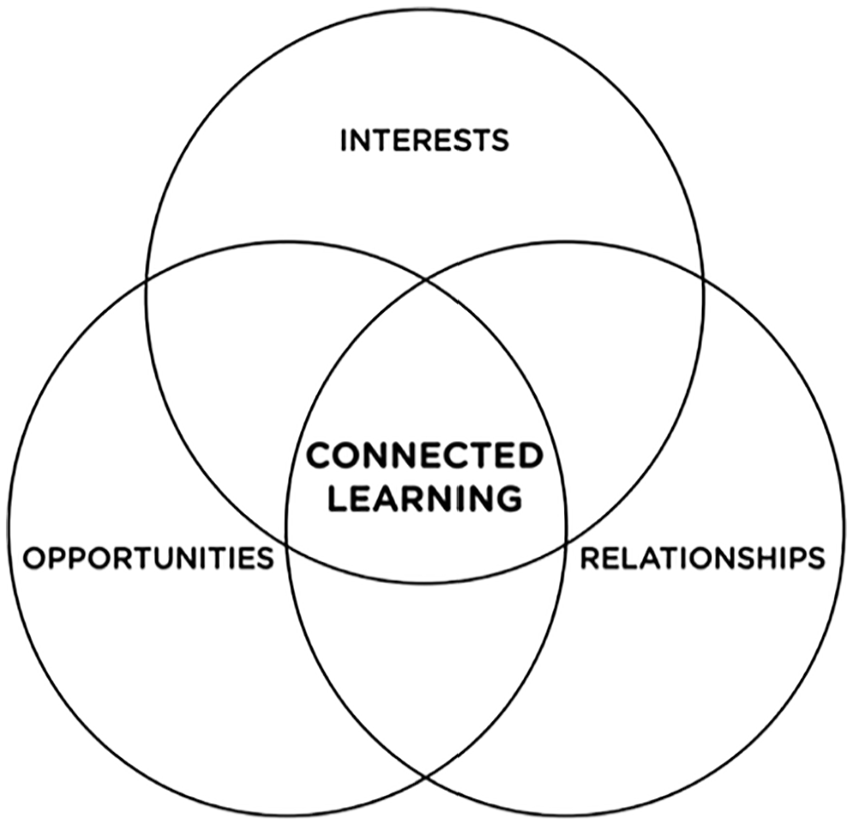
Model of Connected Learning
Notably, a connected learning perspective on CEE is culturally responsive as it emphasizes how non-dominant youth might realize academic, civic, and career outcomes through a connected approach, accounting for how to center their interests within a broader ecosystem of supports that connect home, school, community, and future opportunities (see Figure 2). Rather than one-size-fits-all approaches to designing learning environments, connected learning argues for culturally responsive programs that are tailored to specific interests and identities, and have an explicit emphasis on community connection. For non-dominant youth, this means programs that do not rest on Eurocentric or colonial cultural assumptions, and may include anti-racist approaches that foster positive ethnic identity and critical consciousness (eg., Cammarota 2007; Hipolito-Delgado & Zion, 2015; Terriquez 2015).
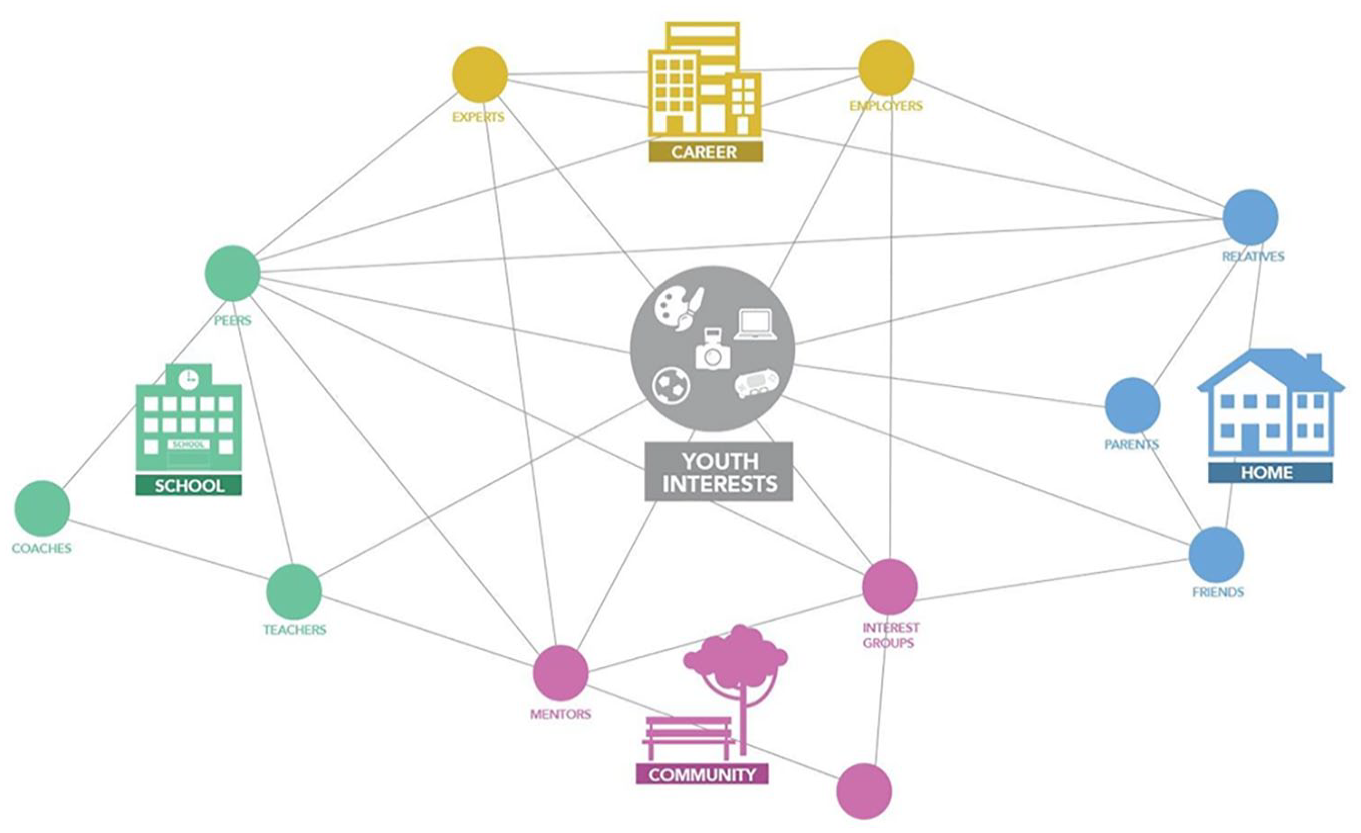
Youth Interests Support Connections Across Settings
Defining Creativity Within CEE
Prior research on creativity has emphasized the mental processes embedded in problem solving, the creative process (e.g., Torrance, 1974), and individual aspects of creativity that originate from domain experts (e.g., Simonton, 1994). This review instead positions creativity as part of a social and cultural negotiation process, aligned with Csikszentmihalyi’s (2015) systems view of creativity, which acknowledges that creativity is socially and historically situated and “that any attribution of creativity must be relative, grounded only in social agreement” (p. 49). Csikszentmihalyi (2015) further explains that this social agreement and systems view lives at the intersection of individuals (e.g., aspiring artists), domains (e.g., the arts), and fields (e.g., social institutions relevant to the domain). That is, individuals work alone or in coordinated groups to produce new variations of a domain, which are then evaluated within the bounds of a larger field. This kind of creativity rejects the idea that creativity is solely a function of individual cognitive processes and instead acknowledges the sociocultural nature of creativity and the creative process (Glăveanu, 2010), thus broadening conceptions of creativity as constituted through social interaction.
In pushing back against dominant notions of expertise (i.e., aptitude or proficiency) within the creativity field, we reason that formal expertise is not equitably distributed and available; therefore, within the lived practices of CEE in the arts we argue that expertise is distributed within local communities of practice and held by members who participate at various levels within those communities rather than a jury of experts in a domain. This sociocultural orientation toward creativity aligns with Plucker and colleagues who articulated a definition of creativity on the interactional level in which people create products that are “both novel and useful as defined within a social context” (2004, p. 90). That is, in CEE we consider creativity to be something that has both social and personal meaning for participants and is constructed through an intrapersonal process of learning and development, through what has been termed “mini-c creativity” (Beghetto & Kaufman, 2007; Kaufman & Beghetto, 2009).
For connected arts learning, the questions of “creativity for whom” and “creativity in what context” (Plucker et al., 2004, p. 92) are central, as flows of power and notions of ideas about what constitutes expertise are negotiated. Thus, creativity in the context of connected arts learning includes the social and cultural ways creativity is shaped and how local communities of practice create their own definitions of expertise. How creativity is defined within connected learning communities is greatly influenced by interactions that bring together new and emergent domains. For example, in online communities, participants determine the creativity of work building from their prior knowledge and experience with other ways of working. Social media platforms and online communities shape how ideas are vetted within communities of practice, and so expertise and creativity within these new and emergent communities are constantly in flux (Peppler & Solomou, 2011; Peppler & Dahn, in press). Notably, these new ways of engaging and interacting to evaluate creative work have the potential to broaden what is determined to be creative by the field (Phonethibsavads et al., 2020).
Aligned with a connected learning perspective, the review takes an expansive view of the arts and highlights shared practices stemming from CEE that include both traditional arts disciplines (e.g., drama, music, dance, visual arts) as well as new forms of engagement made possible by developing technologies (e.g., TikTok, media arts, e-textiles, video editing, electronic music production). Our wide lens on what constitutes CEE in the arts is aligned with Eisner (2002), who warned in his prolific writing on arts education that “we certainly do not want to promote the idea that [aesthetic experiences in the arts] are restricted to objects incarcerated in museums, concert halls, and theaters” (p. 123, emphasis in original). By opening up what counts as “the arts” to extend beyond dominant, elite, and Eurocentric definitions, young people are reframed as producers within a participatory culture (e.g., Jenkins et al., 2018), poised to be in positions of power through the interrogation of histories as they seek to “find their voices and play participatory and articulate parts of a community in the making” (Greene, 1995, p.132) and “speak in their own voices in a world where other voices define the mainstream” (p. 190). We align with Sawyer’s (2019) argument that artists are not the sole arbiters of creativity, that creative teaching can happen across disciplines when the process of learning is framed as a creative endeavor centered on devising questions and problem solving. Connected learning environments also consider the dynamic processes of creativity (Walia, 2019) with attention to how those processes of creativity support CEE for young people.
CEE in the arts can occur in a wide range of contexts and spaces, including schools, museums, libraries, community centers, parks, science centers, as well as online and in home settings. Connected learning often emphasizes the out-of-school spaces and self-organizing practices of youth so the review tends to favor arts learning that occurs in afterschool programs, through weekend offerings, and in workshops or classes provided by community-based organizations. This view takes a continuously expanding view of what counts as out-of-school arts learning aligned with previous efforts at field definitions of out-of-school arts learning, which have been both robust and ongoing (Peppler, 2017a; Poyntz et al., 2019).
Literature Selection and Methods
Based on the premise that social dialogue and interaction are at the heart of community knowledge (e.g., Nasir & Hand, 2006), we searched for key portals of dialogue within the arts and connected learning fields to identify elements of CEE that are both creative and connected. Rather than conduct a broad search of all CEEs, we felt that focusing in more depth on those that exemplified a connected approach would offer a way of surfacing equitable and learner-centered approaches to CEE. The review was motivated by the conceptual goals of the chapter to consider arts education and learning with a 21st century lens, by focusing on connecting youths’ interest-driven art making to opportunities through supportive relationships.
We identified two major sources for literature: (1) Arts Education Partnership’s ArtsEdSearch (https://www.artsedsearch.org/), a double-blind peer-reviewed, field-curated online database of research articles focused on the impact and benefits of the arts in education; and (2) The Connected Learning Alliance website (https://clalliance.org/publications), which includes an archive of major connected learning reports, publications, and resources. ArtsEdSearch was chosen for its focus on how arts education in both in- and out-of-school contexts affects learning and development outcomes—that is, the database is learner-centered (instead of focused on teachers or pedagogy), which aligned with our goal of identifying CEE that were creative and connected for learners. Additionally, the rigorous double-blind review process through which research is chosen for inclusion in ArtsEdSearch helped us locate high quality studies. We acknowledge the limitations of using ArtsEdSearch as the sole source of arts research, although its policy and advocacy-focused goals are aligned with our equity-centered orientation and emphasis on civic and community connection. The Connected Learning Alliance publication page was used as a key source since it includes the most up-to-date connected learning scholarship.
As part of this focused approach to gathering literature from the ArtsEdSearch database, we read abstracts and key findings summaries for all 302 references available as of April 2021 (time of compiling the review). In our reads of each summary, we looked for articles that referenced key constructs of connected learning, including interest-driven learning, academic, career, or civic opportunities, supportive relationships, sponsorship of youth interests, shared purpose and practices, and connections across settings (i.e., home, community, school). From the Connected Learning Alliance website, we reviewed the collection of 37 publications as of April 2021, searching abstracts and executive summaries for explicit links between connected learning and art making or similar forms of creative activity. Our systematic review across these sources of community dialogue resulted in 56 articles from the ArtsEdSearch database and 12 articles from the Connected Learning Alliance website. We then queried these articles using a connected learning lens to identify connected and creative experiences and theorize around how connected arts learning can support more equitable experiences, especially for non-dominant youth, by incorporating culture and creativity through youth interest and voice, drawing on supportive relationships to build youth networks, and creating inroads to future opportunities. To do so, we categorized/coded each of the articles (Jesson et al., 2011; e.g., Philip & Gupta, 2020) according to the connected learning framework. Generating themes in concert with reviewing articles was an iterative process. We first focused on the three major spaces within the connected learning framework—opportunities, interests, and relationships. When we found substantial areas of research situated within those categories, we decided to break each one down further. The connected learning codes we used included: (1) Opportunities (academic, civic, workforce); (2) Interests (self-organizing practices, identity development); and (3) Relationships (peers, mentors, and family). For example, we found a wealth of research linking arts participation to academic achievement and academic performance in other subject areas as well as community-based art making that we then made into their own separate academic and civic opportunities topic strands. As we reviewed the themes, we synthesized articles included in the categories and titled each section to describe the elements of CEE that are creative and connected to clarify the elements of connected arts learning.
Defining Elements of Connected Arts Learning Through the Reviewed Literature
Opportunities to Shape Identities and Strengthen Networks
Expanding Academic Opportunities to Shape Learners’ Identities
Much of the reviewed literature on academic opportunities aims to make links between arts participation and academic achievement based on standardized testing measures. Although a meta-analysis of studies from 1950–1999 on arts participation and academic achievement found no compelling evidence to suggest that participation in the arts has a causal relationship with academic achievement outcomes (Winner & Hetland, 2000), arts researchers continue to produce research that pursues this thesis. Some studies make claims that participation in music leads to increased academic achievement outcomes in reading and math (e.g., Southgate & Roscigno, 2009). Holochwost et al. (2017) found that music participation had a positive impact on first to eighth grade students’ academic achievement outcomes, executive function, and memory, while Guhn et al. (2020) found that instruction in instrumental music related to increased academic achievement in high school.
Studies of arts integration have also aimed to uncover how the purposeful integration of the arts in curriculum leads to academic achievement, claiming, for example, that drama integration corresponds with better math and reading scores as well as increased student engagement (Walker et al., 2011). Scripp and Paradis (2014) showed that school-based arts integration led to statistically significant differences in standardized testing measures in reading and math compared to schools without an arts integration model, and Snyder et al. (2014) found positive results of an arts integration model on achievement for middle school students, as well as a positive effect on school climate. The intention of this work is often rooted in a focus on equity to argue how the arts can support academic success and narrow “the achievement gap.”
Overall, much of the literature we reviewed studied the achievement-related benefits of the arts, although many studies concerned with academics have additionally traced other factors that might be included in a more holistic connected arts perspective, including the personal, social, and civic outcomes of the arts (e.g., Catterall et al., 2012; Heath & Roach, 1999). Promising from a connected arts learning perspective, several studies consider large sample sizes and are longitudinal to show how different forms of arts participation impacts academic outcomes and achievement over time (e.g., Barry, 2010; Catterall et al., 2012; Winsler et al., 2020).
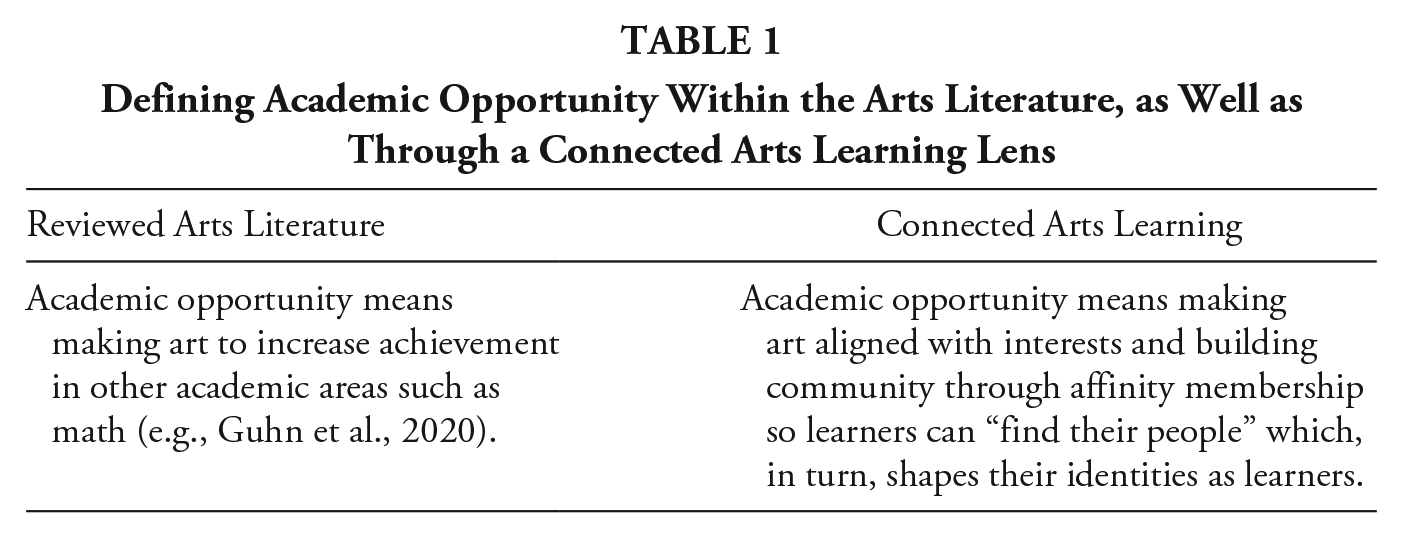
Though we acknowledge the rhetorical power of linking arts participation to academic achievement, a connected arts learning perspective extends beyond the measurement of individual academic benefits of the arts (usually through standardized test measures) to the social and cultural affordances of arts participation as it relates to academics and supporting youths’ interest-driven learning. From this connected arts perspective, academic outcomes are part of a larger ecosystem that takes a holistic view on the benefits of the arts to show how participation may lead to both traditional and non-traditional academic benefits (e.g., better grades, but also belonging to a new academic community of practice). Connected arts learning can amplify the social and networked aspects of academic opportunities, including how sponsorship of youth interests in the arts can lead to and support learning opportunities that support the development of interest and voice while connecting youth to new learning communities and affinity groups. This shift in focus is more about learners “finding their people” and building community through their interests in the arts which, in turn, shapes their identities as learners (Table 1).
Defining Academic Opportunity Within the Arts Literature, as Well as Through a Connected Arts Learning Lens
Networks of Civic and Participatory Engagement in the Arts
Our review found many studies that investigated relationships between civic engagement, community, and the arts. Research has shown a number of benefits of art making around civic issues, including that multimodal art making can support civically engaged practices (Shields et al., 2020), and that the arts are particularly helpful in exploring sensitive social issues to develop cross-cultural understanding and inspire social change (Clover, 2006).
Furthermore, experiences in community-based art making can improve a participant’s sense of agency and understanding of unequal power dynamics within social change efforts (e.g., Nelson, 2011). Research affirms that making art about civic issues concerning one’s community can broadly support students’ sense of community, creativity, and empathy (e.g., Barniskis, 2012), and that including a specific social justice focus can simultaneously support a focus on transformation and social change through art (e.g., Grace & Wells, 2007).
Other studies link any kind of participation in the arts to pro-social outcomes, such as volunteerism, community involvement, or civic participation (e.g., Catterall, 2009) as well as a greater sense of connection to one’s community (e.g., Stevenson & Deasy, 2005). Furthermore, the arts can offer youth opportunities to use their imaginations within complex contexts, thus generating a greater sense of awareness and commitment to one’s community as well as greater self-esteem compared to peers, command of complex language, and engagement in critical dialogue with mentors (e.g., Heath & Roach, 1999).
In much of this community-based arts work, students collaborate with professional artists to make art about important civic issues relevant to their immediate communities and, in the process, develop new skills and forms of expression (e.g., Kang Song & Gammel, 2011; Krensky, 2001). Dewhurst (2014) argues that engaging in “activist art” making develops students’ skills for critical thinking, leadership, community engagement, and communication.
Pre-service teachers who learn how to teach art through community-based methods can positively increase their confidence and skills as teachers (Russell-Bowie, 2009). Other high-quality research in the arts has looked at how educators and administrators explore civic issues and their own understandings of equity and social justice using arts as an inquiry-based tool for critical examination (Boske, 2012). With adult learners, arts-based storytelling has been shown to be a catalyst for change that has transformed learners’ views of themselves and their potential to contribute to social and political change (Wiessner, 2005). Research has also shown that through community-engaged arts, seniors can develop more meaningful community roles even later in life, deepen their identities as artists, and develop intergenerational connections with collaborating artists (e.g., Moody & Phinney, 2012).
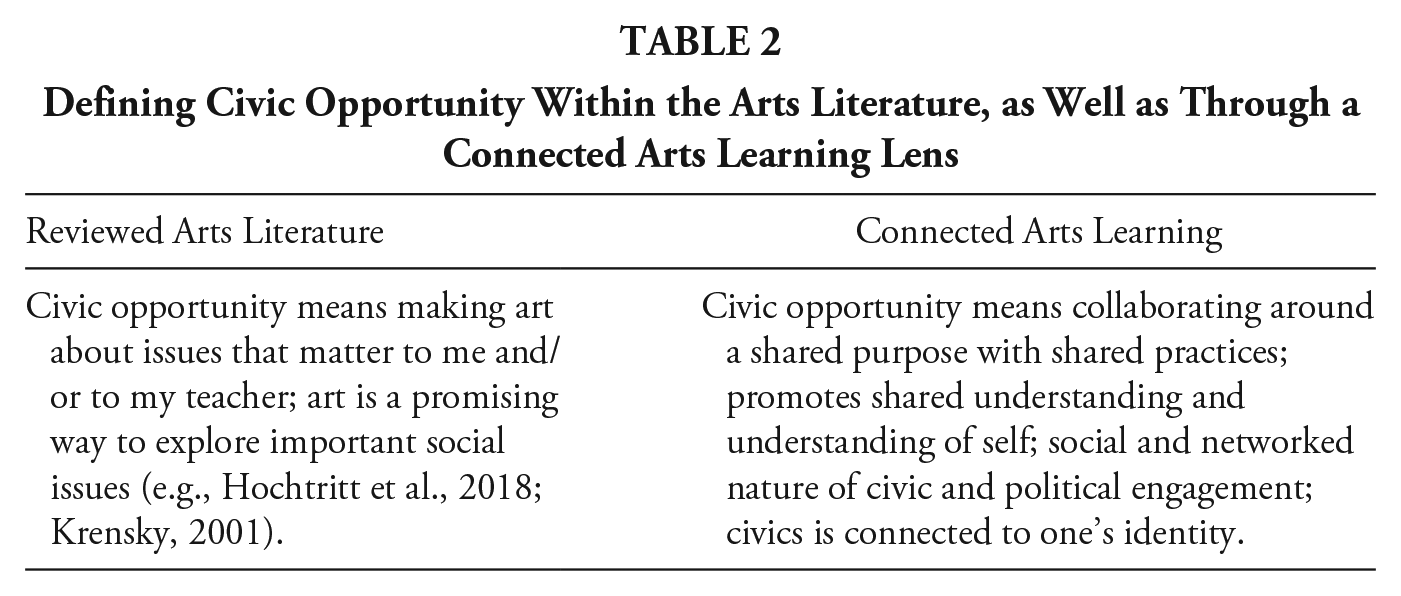
The arts literature we reviewed largely describes processes and individual effects of art making around civic and community issues. From a connected arts learning perspective, some of this work touches on the collaborative and relational nature of art making such as how community arts programs can build a sense of community and connection amongst participants (Lowe, 2001). A connected arts learning framework can further extend the civic opportunities of art making to emphasize how collaborating around a shared purpose and engaging in shared practices can build relationships between people as well as support their developing identities as civic actors within a political world, thus highlighting the social and networked nature of civic and political engagement (Table 2). Aligned with the social turn of connected arts learning, Freedman (2000) explained that such art making is about learning how to “communicate about social issues in social ways” (p. 323).
Defining Civic Opportunity Within the Arts Literature, as Well as Through a Connected Arts Learning Lens
Connected arts learning builds from promising lines of arts education research by extending the notion of civic opportunities to investigate how online spaces have been shown to shape civic life and participatory culture for youth, countering the narratives that speak to young people’s general disinterest in political life (e.g., Jenkins et al., 2018). A connected learning perspective illuminates how young people use forms of communication enabled by new technologies for political engagement and shape their identities as civic actors who can transform their communities. Broadly speaking, a connected arts perspective highlights how youth engage with broader networks and communities as part of civic and political art making processes. Further, the production-centered nature of art making can support the connected learning literature with a focus on making tangible artifacts (e.g., murals, theatrical productions) for social change as part of communities of practice.
Career Opportunities as Lifelong Learning
The review identified only a couple of articles that focused on links between K–12 arts education and professional workforce or career opportunities. One arts education study showed that, among other benefits, some high school students reported more interest in future work opportunities after participating in a school arts technology program (Betts, 2006). A separate study showed that partnerships between schools and the professional arts sector can positively impact student engagement, voice, and creative skills (Imms et al., 2011).
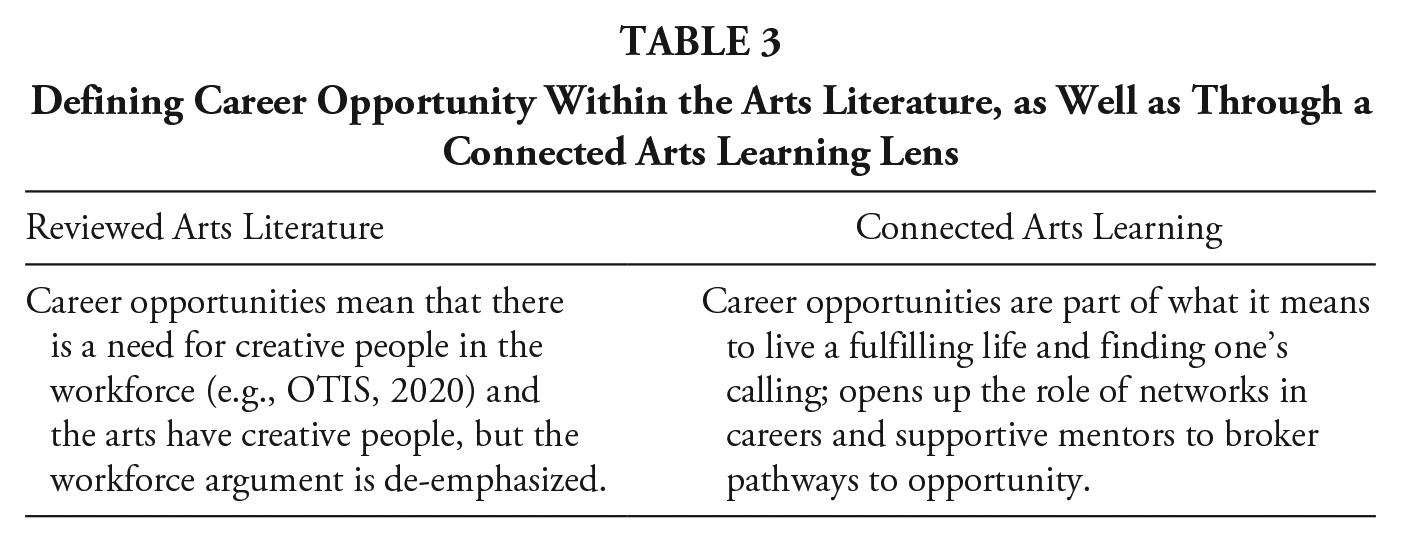
We were not surprised that the arts education field has largely avoided making direct economic arguments for arts participation, aligned with a shared belief amongst many arts advocates that the arts do more than prepare people for jobs. However, a connected arts learning approach understands career opportunities as part of what it means to live a fulfilling life and to do good work in the world beyond an instrumental link to the workforce. For example, connected learning scholars have researched youth occupational identity, described as a “vision of their future selves in the workforce, what they like to do, what they believe they are skilled at, and where they feel they belong” (Callahan et al., 2019, p. 6, our emphasis). This notion of an occupational identity pushes beyond the need to find a job for economic means and toward the goals of nurturing self-efficacy, self-concept, and a sense of belonging aligned with one’s work.
An annual report from Otis College of Art and Design (2020) provides context for the need to connect arts education and career opportunities. The report describes the need to train a skilled workforce for a growing sector of creative industries and professions in the creative economy. Aligned with a connected arts learning framework, the report emphasizes that technology is transforming the creative industries, arguing that digital advances present innovative ways to engage new audiences, produce new platforms and modes of distribution, and invent new forms of art making and creative production. Some connected learning scholars have examined how young people are creatively and dynamically transforming and redefining industries, often in digitally-mediated ways (e.g., Watkins, 2019). Sefton-Green and colleagues (2019) have shown how digital technologies have inspired growth of opportunities in creative work and explored the inventive ways that youth have gained entry to the creative workforce in fields such as film, games production, music, and visual arts.
A connected arts learning framework can add value to the reviewed arts education research with a focus on how to build from youth interests and supportive relationships with mentors to broker new career opportunities for youth where they feel like they belong and can make a difference (Table 3). Given a prominent gap in the arts literature we reviewed, connected arts learning can push the limits of the research to include a focus on how the arts can lead to real-world economic opportunities for youth so that young people begin seeing their own interests in the arts as part of their future work and contributions to a community.
Defining Career Opportunity Within the Arts Literature, as Well as Through a Connected Arts Learning Lens
Developing Interests and Voice Through Participation in the Arts
Self-Organizing Practices of Youth in Art Making
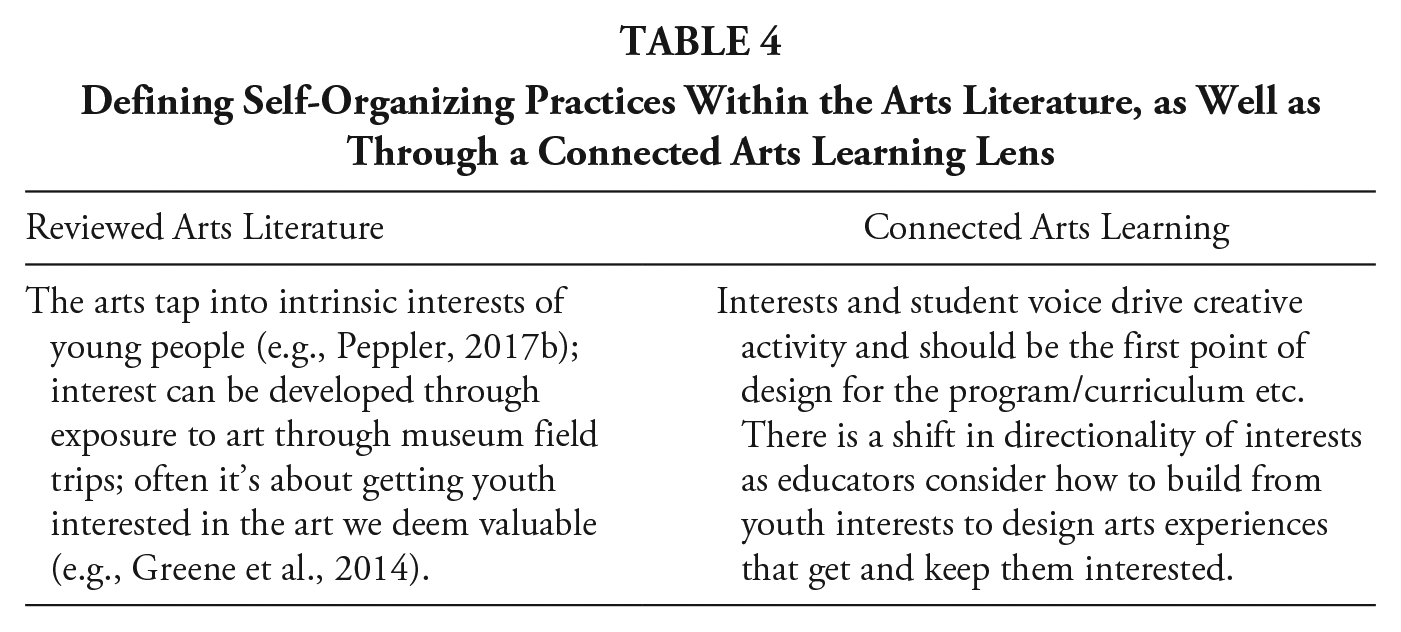
Overall, in the reviewed arts education literature there is consensus that the arts tap into the intrinsic interests of young people and that interest can be cultivated through exposure to the arts through art making and as audience members. Research has investigated how interest in art making can result in increased youth engagement, motivation, and a desire to stay in school for “at-risk” high school students (e.g., Barry et al., 1990). Other work has looked at developing interest in art, finding that exposure through activities like art museum visits and other cultural activities that cultivate learners’ interest in art as a discipline. For example, in a large-scale randomized-control study of K–12 students, Greene et al. (2014) found positive gains in an interest in art, as well as measures of critical thinking, historical empathy, and tolerance after a single visit to an art museum. Kisida et al. (2018) found exposure to the arts through a museum-educational program positively influenced young students’ attitudes toward art. Additionally, the production-centeredness of art making for engaging interest is implicit across the arts education literature (e.g., Shields et al., 2020), although more process-oriented conceptual and participatory social practice art can also nurture interest (e.g., Kennedy, 2013).
A connected arts learning framework extends the connection between interest and the arts to all aspects of how arts experiences ought to be designed and implemented with student voice in mind, thus shifting the directionality of interest from how to get young people interested in art to how to draw from the interests of young people to build engaging arts-based experiences (Table 4). Interest-driven learning is foundational to the connected learning literature that explores how youth use new media across a variety of settings to engage in creative pursuits with communities of practice through online platforms (e.g., Ito et al., 2018; Peppler & Dahn, in press).
Defining Self-Organizing Practices Within the Arts Literature, as Well as Through a Connected Arts Learning Lens
Some of the connected learning work profiles interest-driven learning that occurs through out-of-school programs in which youth “hang out” and deepen their interest-based learning through the use of digital technologies (e.g., Chang-Order et al., 2019; Widman et al., 2020). A large focus of the connected learning work is on interest-driven learning experiences as influenced by creative technologies, online spaces (e.g., Watkins & Cho, 2018), and membership in new affinity groups such as those within online gaming communities (e.g., Salen Tekinbaş, 2020). Recent connected learning work has also looked at the creative ways young people use social media for self-expression to explore their passions and interests (Ito, Odgers, et al., 2020). A connected arts perspective makes the interest-driven learning of young people central to the design of arts learning experiences from the start and also extends the focus in arts education literature to online and hybrid learning spaces to focus on new opportunities for networking and engaging in shared practices and purpose outside of traditional arts education settings.
Identity Development and Self-Efficacy Through Art Making
Identity development is intertwined with the art making process and very much part of the reviewed arts literature base. Sullivan and McCarthy (2007) describe the symbiotic process of identity development in art making, as: reciprocal, where artists simultaneously invest themselves in their artistic activity and, in the process, change themselves, perhaps by changing their sense of how their activity contributes to the world they inhabit. That is, they create who they are as a part of what they do including the affective, emotional, and cognitive sense they make of what they do. (p. 237–238)
Some research has looked at how young children develop their personal identities (Malin, 2012), social skills, and confidence (e.g., Simpson Steele, 2019) through art making. Other work has looked at how art teacher identities can be shaped through engagement with sociocultural curriculum meant to increase the critical capacities of educators (e.g., Kraehe et al., 2015).
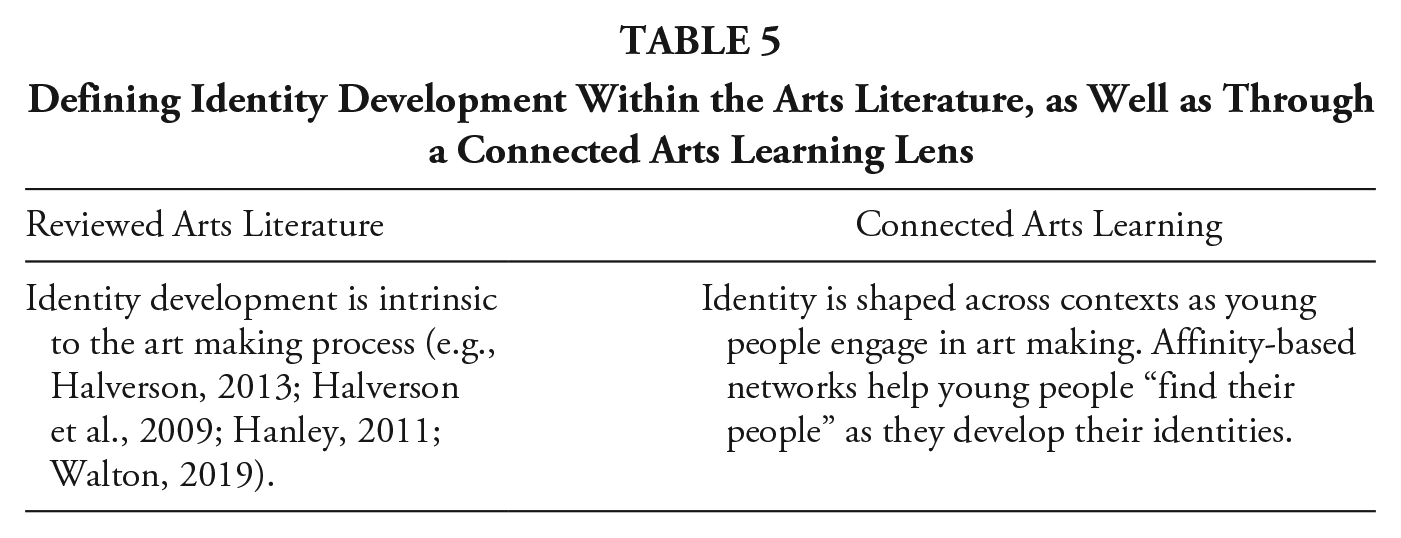
Given the centrality of identity in art making, arts education research has studied how identity develops through particular art forms, such as developing a stronger sense of self or positive identity through dance and embodiment (e.g., Bond & Stinson, 2000; Katz, 2008). Researchers have studied how identity is shaped through participation in music classes such as how peers, parents, and teachers shape the social identities of students in high school choirs, improving self-acceptance and self-understanding (e.g., Parker, 2014). Researchers have also found that guitar courses have supported students in safely exploring their personal identities while improving their music ability (Seifried, 2006). As an additional example from music, in one study, teachers who used culturally responsive pedagogy forged stronger and more meaningful connections with their students’ musical and cultural identities, and students perceived the culturally responsive practice and curriculum as more fully honoring their backgrounds (Shaw, 2016).
In addition to music and other art forms, theatre seems to be a particularly rich discipline for youth to develop positive self-identity, such as through engagement in process drama practices (e.g., Gervais, 2006) or spoken word, which, in one case, researchers linked to additional positive influences in literacy development, self-confidence community building, and relationships with peers and adults (Weinstein, 2010). Research has looked at how identities form through theatrical and narrative storytelling processes, such as Halverson’s (2005) study of LGBTQ+ youth who wrote and performed stories that allowed them to develop their social identities and explore new “possible selves” (Halverson, 2005). Also through drama, Holloway and LeCompte (2001) showed how students turned an embedded history of violence against women into developing self-efficacy and agency through artistic practices such as focusing, open-mindedness, and self-expression to support new visions of the self in both the present and future. Larson and Brown (2007) studied how emotion and emotional development was a central part of students’ participation in a high school theatre production and how, through the process, they learned ways to manage positive and negative emotions.
A connected arts learning lens amplifies identity work from the arts education literature, emphasizing the multiple influences on learners’ identities as they are shaped and connected across settings, including home, community, school, and online contexts (Table 5). Like some of the arts education literature, connected learning also highlights how asset-based approaches to culture and identity can support learners as they engage in meaningful learning experiences, adding that affinity networks help youth find peers and supportive mentors sharing similar interests and identity affiliations.
Defining Identity Development Within the Arts Literature, as Well as Through a Connected Arts Learning Lens
Relationships as Brokering Networks to New Opportunities
Supportive Relationships and Ensemble-Based Forms of Art Making
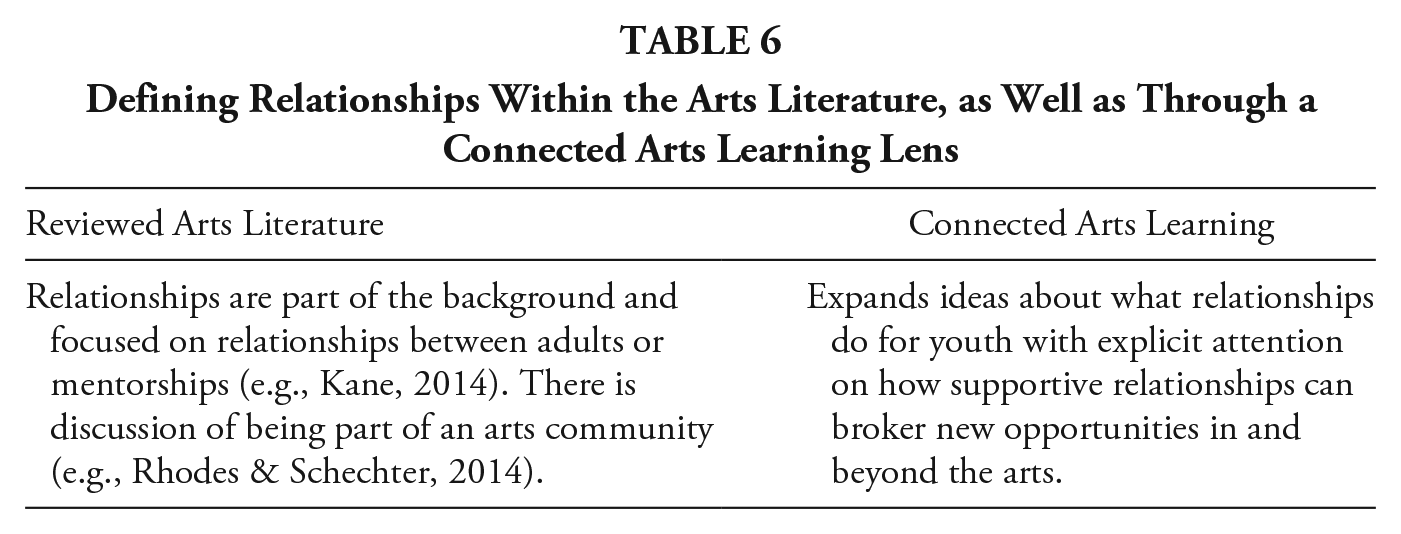
Supportive relationships are key to cultivating and sustaining students’ interests in the arts. The reviewed arts literature looked primarily at relationships between teachers and artists, mentorship models, and relationships within artistic ensembles. One study of teachers and artists in a school arts classroom context found that open dialogue and willingness to compromise had positive effects on cultural partnerships between teachers and artists as mutually beneficial learning experiences (Cote, 2009). Another study of adult relationships found that teachers and teaching artists working together can support a shift in classroom teacher beliefs and behaviors about the benefits of arts integration (Schlaack & Steele, 2018).
Some literature also highlights the benefits of mentorships and building supportive relationships with peers in the arts. In the context of a music and dance arts program, peer and supportive adult networks fostered students’ resilience, self-concept, and self-regulation (Baum et al., 1999). One study looked at how mentorship relationships can support community health as well as the continued survival of art forms that may otherwise be lost (Peters, 2010). One case study found that when former high school students reflected on the value of their music education, on the whole, they explained that being part of a music community of practice and the relationships they built with others was more important than the music skills they learned (Countryman, 2009). Additional research located the value of relationships within the art form itself—through community-based photography, youth showed positive relationship-building skills and increased their sense of agency within their communities through the photography documentation process (Goessling & Doyle, 2009).
Connected arts learning can expand how supportive relationships can broker new opportunities, create networks, and connect settings in and beyond the arts (Table 6). Connected learning scholars have also looked at how online affinity networks support the building of youth networks and offer youth opportunities to connect with one another over shared interests through new media (e.g., Ito et al., 2018). Additionally, although we found one study that looked at how parents/caregivers responded to and adapted music in storytelling sessions for use in the home (de Vries, 2008), our search did not surface many examples for how families supported participation in the arts. Although the arts education literature does not deny the existence of these supportive relationships, it is not often a focus of study, perhaps because relationships do not have a direct effect on policy and so arts researchers have not been properly funded to study them in detail. A connected arts perspective foregrounds the value of supportive relationships through peers, mentors, and family members, highlighting how supportive adults can broker new opportunities and support the development of youth interests and voice.
Defining Relationships Within the Arts Literature, as Well as Through a Connected Arts Learning Lens
Discussion
Connected arts learning is centered on youth interests, supported by a range of caring relationships, and oriented toward more equitable outcomes for non-dominant youth. In bringing together connected learning and arts literature, the goal of this review is to consider arts education and learning through a 21st century lens by focusing on connecting youths’ interest-driven art making to opportunities through supportive relationships. Such a shift encourages the arts education field to consider a broader range of creative opportunities, place central the role of interest development (including broad exposure to spark interest and ways to deepen it over time) in arts experiences, and place greater value on the strengthening of networks across a young person’s learning ecosystem. Here, we highlighted the social and cultural supports for arts learning, civic and community connection, and de-emphasized outcomes in the reviewed arts’ education literature.
As an agenda for research, the intersection between CEE in the reviewed arts and connected learning literature suggests new ways that arts education can create more equitable opportunity structures by drawing on the social and cultural interests of youth in a digitally mediated world, building on supportive relationships to connect young people to opportunities in and beyond the arts. In terms of its implications on learning, this connected learning lens on prior arts research locates arts in the context of personal, social, and emotional development, and considers connection to career outcomes, civic participation, and academic and social life. Through this examination, connected arts learning reframes how equitable and culturally sustaining approaches for CEE can draw upon youth interests in the arts, and recruit mentors, families, and peer networks into learning experiences.
Such culturally sustaining approaches for CEE suggest a holistic and community-connected consideration of stakeholders and outcomes. From a policy perspective, connected arts learning as a framework can support the design of new programs and ways of connecting communities in ways that meet the demands of the 21st century, such as developing models of professional development that go beyond teaching the art form itself to placing a greater emphasis on connecting the arts to future opportunity in a range of fields and outcomes. Considering the affordances of connected CEE prompts us to rethink funding investments to support and reward a broader range of educational outcomes, such as supporting programs that are deeply entrenched in developing young peoples’ identities in ways that connect back to their communities, supporting opportunities for professional development that emphasize broadening social networks, and placing community arts organizations not in competition with one another for funding, but incentivized to engage in deeper coordination.
Further, a connected learning lens on CEE in the arts centers youths’ social and cultural connection in relation to creative practices—a practice of CEE rarely offered to non-dominant youth. This emphasis comes in addition to a closer examination of the role of the arts in a variety of other outcomes, including those beyond those described in this review, such as mental health and wellness (e.g., Kosma et al., 2020; Stuckey & Nobel, 2010), openness (e.g., Campbell, 2018), a focus on family relationships as supporting interest-driven learning (e.g., Zimmerman & McClain, 2014), and the transferable value of a production-centered orientation (e.g., Peppler & Dahn, in press). As such, a connected arts learning lens allows us to identify overlooked—yet critical—areas of research that can inform decisions pertaining to policies and practice of arts experiences. In addition, many successful arts organizations may already be thinking strategically about cultivating youth opportunities for future workforce, mental health and wellness, and civic engagement through the arts; this framework may shine new light and explanatory power on what makes their current efforts effective.
This review reveals how the arts play a strong role in interest discovery for young people, and it is therefore important that all youth have access to a range of CEE in the arts to develop their interests and voice. Research on the arts positions the role of the performance, or the opportunities to showcase that work and to be recognized for their contributions, as central to the arts’ experience. Through orchestral concerts, plays and productions, exhibits and galleries, the arts place an emphasis on recognizing the unique voice that creators bring to their work. This type of social recognition by the larger community in turn leads to greater identity development that could serve as a model for areas of civic life and other academic experiences. These shared artifacts (e.g., physical or performative) are one of the primary drivers for the depth of CEE offered through the arts (Peppler et al., 2021).
Within the arts education literature, we did not find much evidence of intergenerational program models and the role that linking the arts to family units (e.g., ballet folklorico, spoken word) means for children and their communities. These models provide learners with a cultural immersion experience through their art form that teaches them about their families’ heritage, as well as offer researchers opportunities to examine the role of older learners apprenticing younger performers in ways that are different from traditional K–12 classrooms. Furthermore, much of the research literature on arts learning focuses on how to optimally train learners for content acquisition, without considering the natural brokering roles that educators play in linking learners to opportunities and how they can be more successful in this role. A connected arts learning lens, however, encourages us to view arts learning experiences as supporting pathways from early arts experiences to future opportunity, whether it is in the art form, or linking to other academic or workforce experiences. Furthermore, connected learning considers the growing networks to their peers, families, and larger communities, as an equally, if not more, important outcome for engaging in the arts. We need to mindfully cultivate and measure these networks over time in order to evaluate the pathways a learning experience offers for youth.
In sum, a connected learning lens applied to what we know about high quality arts education sharpens our focus on how CEE can cultivate equity and social/cultural connection for all youth. This helps to underscore the ongoing value of CEE in the arts in the 21st century as we wrestle with the impact of the COVID-19 pandemic, in addition to new understandings around lifelong learning, upward economic mobility through employment, and cultivating a more socially just society.
Footnotes
Acknowledgements
This review is based on work supported by The Wallace Foundation (Grant ID#20200248). We thank our reviewers, as well as Amy Gedal Douglass, Lucas Bernays Held, and Bronwyn Bevan from The Wallace Foundation for their support and insightful comments on earlier drafts of this manuscript. We would also like to thank Mishael Sedas and Lora Cawelti from University of California, Irvine, for their research assistance.
Authors
KYLIE PEPPLER is a professor of informatics and education at University of California, Irvine, who engages in research that focuses on the intersection of the arts, computational technologies, and interest-driven learning. Her work has been consistently supported by the National Science Foundation as well as a range of foundations, federal, and industry partners, including the Gordon and Betty Moore Foundation, the Spencer Foundation, and the Wallace Foundation, among others. Dr. Peppler currently sits on the editorial boards for the International Journal for Computer Supported Collaborative Learning and Computer Science Education and has recently served as guest editor for the British Journal of Educational Technology, Sustainability, and Digital Culture in Education.
MAGGIE DAHN is an associate project scientist at the University of California, Irvine. Maggie engages in design research to study how people learn in different contexts, and her background as a visual arts and classroom teacher informs her perspective on how children and youth learn in and through the arts, the affordances of art making for the development of voice and identity, and issues of access and equity in arts education. Maggie’s work has been published in Computer Science Education, Teachers College Press, Arts Education Policy Review, and Learning, Media, and Technology.
MIZUKO ITO is the director of the Connected Learning Lab, Professor in Residence and John D. and Catherine T. MacArthur Foundation Chair in Digital Media and Learning at the University of California, Irvine, and co-founder of Connected Camps, a non-profit providing online learning experiences for kids in all walks of life. Her work decodes digital youth culture for parents and educators, offering ways to tap interests and digital media to fuel learning that is engaging, relevant, and socially connected. Her most recent publications include: Affinity Online: How Connection and Shared Interest Fuel Learning; From Good Intentions to Real Outcomes: Equity by Design in Learning Technologies; The Connected Learning Research Network: Reflections on a Decade of Engaged Scholarship; and Social Media and Youth Wellbeing.