




Abstract
Early childhood education and care (ECEC) remains a priority area for public policy, internationally and in Australia. However, an analysis of empirical research published internationally up to 2008 has identified a bias toward positivist methodologies within a “scientific/psychological’ rather than educational perspective and with a focus on the interactions between preschoolers, family, and child care variables. For some researchers, this bias raises concerns that public policy in ECEC is based on limited research perspectives. This chapter examines research focusing on the Australian context and published between 2010 and 2014 to determine whether this bias exists in Australian research. We explore the quality of ECEC research to develop an overall understanding of the current situation of ECEC research in Australia. Our findings suggest that Australian research in ECEC is very dissimilar to research published internationally, especially in its reliance on qualitative paradigms and a focus on the educators (principals, teachers, and teacher aides). The strong qualitative focus may allow a diverse range of voices within the ECEC sector to be heard and identified, moving beyond traditional notions of historically marginalized individuals and communities that dominate other education research areas.
Over the past decade, Australia has become increasingly aware of the importance of early years in the formation of children’s development. Consistent with efforts to enhance benchmarks, the Australian government is committed to raising standards in early childhood education and care (ECEC) through the National Quality Framework, including minimum standards in staff and supervisor certifications, system policies and procedures, and children’s health and safety (Australian Children’s Education & Care Quality Authority, 2014; Council of Australian Governments, 2009). Despite the demand by policymakers to adopt strategies based on rigorous research, many researchers in ECEC in Australia believe that the National Quality Framework ignores research that has the potential to “meet the Government’s goal of giving children the best possible start in life” (Fenech et al., 2012, p. 5; Shonkoff & Fisher, 2013).
However, research in ECEC is not without its issues. In an analysis of 338 ECEC research articles published internationally between 1980 and 2008, Fenech (2011) identified a bias against qualitative research paradigms in preference for positivist (and quantitative) perspectives. Fenech concluded that ECEC research must include methods within constructivist, critical/feminist, and poststructuralist paradigms in order to broaden conceptions of value and “quality,” allowing for a full range of stakeholders’ voices to be heard.
Fenech’s (2011) analysis raised issues related to the perceived quality of qualitative methodologies in research more generally. For example, authors who specialize in qualitative methodologies have opined that their academic peers, journal editors, and policymakers overlook the importance and legitimacy of their research studies (Ceglowski et al., 2011; Freeman et al., 2007; Schuermans, 2013; Tracy, 2010) in favor of objective, quantitative, and positivist/postpositivist research approaches (Morse, 2015). Such vituperations (Ceglowski et al., 2011; Chattoe-Brown, 2015; Winsler, 2015) are pertinent in understanding the state of ECEC research in Australia.
The specific aim of this chapter is to describe the state of Australian research in ECEC, addressing not only its research focus but also its quality. The chapter begins with a brief review of conceptions of quality in education research, followed by a discussion of the role of research rigor in education research. This chapter presents the steps taken for a meta-ethnographic analysis with a representative sample of Australian research in ECEC published between 2010 and 2014, including an analysis of the paradigms and methods used in this research, the research participants, and the focus of the research. From this analysis, we share our reflections on why Australian ECEC research is different to international ECEC research and other education research areas. Finally, considerations for the future direction of Australian research in ECEC are discussed.
As researchers, we do not label ourselves as qualitative or quantitative researchers. Rather, the methods we engage with are guided by our understandings of ontology, epistemology, and knowledge construction, based on our beliefs (which are not prescribed). To us, truths are socially constructed and context/culturally specific. Accordingly, our beliefs shape the types of question we ask, the methodologies employed, and our interpretation of data (Guba & Lincoln, 1994). We also acknowledge that multiple realities can exist, depending on which perspective is taken.
In sharing our positionality, epistemology is the way in which knowledge is acquired and validated. For Maynard (1994, p. 10), epistemology is a “philosophical grounding for deciding what kinds of knowledge are possible.” In this case, we draw upon a meta-ethnographic analysis. All three authors believe that knowledge is constructed through inductive processes where context-specific evidence is collected, where patterns and commonalities are identified to build ideas (Patton, 2015). We develop categorical thinking by developing broader categories that are compared and contrasted in our thinking (Maxwell & Miller, 2008). This form of inductive reasoning “takes a discovery-oriented approach grounded in data, instead of attempting to prove or disprove hypotheses deduced from theories” (Hong & Cross Francis, 2020, p. 209). This also means that we are guided by our understanding of theory and literature within early childhood education, expanding our knowledge of diversity of research methods and methodologies.
Conceptions of Quality in Australian Education Research
Considerations of research quality in Australian education research gained momentum in the early 2000s with the implementation of the Research Quality Framework by the then Federal government (Blackmore et al., 2006). As outlined in the special issue of the Australian Educational Researcher titled Counterpoints on the Quality and Impact of Educational Research, Australian education research needs to identify and perpetrate high-quality research, ensuring that this research has impact in the community. The broad drivers for research quality and associated impact include increased differentiation and accountability by Australian universities, enhanced international competitiveness with quality research viewed as a marketable educational commodity, and the perception that quality research supports economic development (Blackmore & Wright, 2006).
For policymakers in Australia, quality education research should make a substantial positive impact on desirable outcomes for diverse learners (Alton-Lee, 2006). However, impact depends as much on the effective marketing of the research as it does on quality (B. Levin, 2006; Wilson & Loble, 2006). As a number of authors in the special issue of the Australian Educational Researcher pointed out, a certain degree of serendipity is essential if education research is to make an impact.
It is also important to note the distinction between research that makes an impact for educational practice (big “I” impact), and research that makes an impact on new knowledge (little “i” impact). For policymakers, education researchers should make a difference to educational outcome—its impact is clearly linked with improvements in students learning, for example. On the other hand, research that is highly valued by the research community because of its quality is highly cited, enhancing its impact within that community.
Of course, when research is published in peer-reviewed journals, it can be argued that the criteria of quality have been met because of the peer review process (Winsler, 2015). The process is not without its problems, including the potential for philosophical or political bias (Callahan & Moon, 2007), an author’s reputation may predetermine the quality of the research (Gradmann et al., 2014), or the peer review panel may be unqualified to evaluate a manuscript fairly and objectively (Ceglowski et al., 2011; Gradmann et al., 2014).
The question raised in Fenech (2011) was whether or not the preferences of policymakers unfairly advantages positivist research paradigms. According to Fenech, the evidence suggests that in the period 1980 to 2008, “quality” in ECEC was defined within a narrow perspective and was underpinned by predominantly positivist research paradigms. Fenech argued that there are significant advantages to employ “qualitative methods” (p. 112), such as postpositivist, constructivist, critical/feminist agendas, and poststructuralist paradigms, for example, in order to broaden the notion of quality. This would enable conceptualizations of “quality” of ECEC to extend beyond children’s development to include the “voices” (p. 112) of stakeholders, including babies and infants, parents, practitioners, and educators.
Fenech’s (2011) concerns were echoed more broadly within education with “quality” generally conceptualized within a positivist paradigm (Ceglowski et al., 2011) and focusing too narrowly on student learning. In bridging the divide, Ercikan and Roth (2006) suggested that the distinction between qualitative and quantitative methods is unjustified on either ontological or epistemological grounds. Importantly, they argued that demonstrating generalizability is problematic for both methods, and that the interpretation of all data is subjective, irrespective of the paradigm used.
J. R. Levin and Kratochwill (2013) warned that both qualitative and quantitative methods have been hampered by a lack of rigorous research methodologies, a lack of supporting evidence, and a lack of consistency in data collection and data analysis. The challenge, then, is to implement approaches that incorporate the most rigorous aspects of qualitative and quantitative methods and to develop “theoretical insights and practical solutions simultaneously, in real world contexts, together with stakeholders . . .” (McKenney & Reeves, 2012, p. 7) using methods that “orient research towards a uniform criteria of substantive meaningfulness and mathematical rigor” (Fisher & Stenner, 2011, p. 89). Less than a “technique,” Fisher and Stenner (2011) acknowledged the need to respect the motivations that inform qualitative and quantitative paradigms as well as the need to create a “dialogue” to locate meaning and context-based data.
Efforts to raise and demonstrate the quality of qualitative research have focused on identifying a set of criteria to assess research rigor (Morse, 2015; Northcote, 2012; Tong et al., 2007; Tracy, 2010; Trainor & Graue, 2014; Smith et al., 2018). Dissatisfied with the conventional criteria outlined in Guba and Lincoln (1989), Morse (2015) argued for a return to the terminology used in quantitative studies as a first step in demonstrating rigor in qualitative research, specifically, internal validity (“credibility”), external validity (“transferability”), and reliability (“dependability”). Morse also argued for an increasing role of generalizability in the demonstration of rigor in qualitative research. Although rigor is itself not sufficient to determine quality, it is a necessary condition, especially for “external evaluators” (p. 2) concerned with substantiating the value of the research.
According to Morse (2015), internal validity is the extent by which a research question represents the phenomenon under investigation, and is demonstrated when others who may not have similar experiences recognize the context of what is being studied. External validity is demonstrated when the results extend beyond the original context to other individuals, settings, times, and institutions. Reliability is demonstrated when the results of the study can be repeated.
Rigor in qualitative research is achieved when the researcher adheres to and describes strategies that demonstrate internal validity, external validity (or generalizability), and reliability. In addition, accounting for and disclosing research approaches “to all aspects of the research process are key to evaluating their work substantively and methodologically” (Anfara et al., 2002, p. 28).
On the issues of sample size and appropriateness, Morse (2015) recommended a two-step process in selecting participants to avoid too small a sampling, and risk rendering the research “superficial and obvious” (p. 1214). Instead, it was important to consider a convenience or quota sample to establish the framework for the data collection, followed by a theoretical sampling. Additionally, a “critical analytic strategy for the development of validity” (p. 1215) required the inclusion of negative case analyses: The views of participants regarded as outliers in the phenomenon under investigation should be included to provide opportunities to test both the internal and external validity of the research.
In terms of establishing reliability, Morse (2015) recommended that strategies be used to demonstrate that the findings and conclusions from one group of participants are confirmed with other participants. In terms of applying codes to analyze interviews, structured and unstructured interview processes should be differentiated with predetermined codes for semistructured interview data but not unstructured interview data. Finally, reliability is met when data are verified at each step of the processes, and when participant inclusion is fully and completely justified.
Ethical standards are equally important when demonstrating research rigor (American Psychological Association, 2020; Davies & Dodd, 2002; Fennell, 2014). Traditionally, ethical standards in research emphasize objective values by the application of rigorous methods of research, including the minimizing of adverse and long-term effects on participants in a study. This is usually evident when researchers apply and are awarded ethics approvals from their various institutions in order to conduct their research. Additionally, ethics also includes the reporting of research (American Psychological Association, 2020; Fennell, 2014) and is demonstrated when the study cites the work as being a true and accurate reflection of the research conducted, and contributes to the researched field. In order to meet deeper levels of rigor in research, assertions of originality in the study work, conflicts of interest and acknowledgment of the work of other researchers or authors should be expressed in order to avoid the perception of unethical research practice.
In this chapter, quality as an “external” feature of the research is determined by the readers of the published research (Yates, 2006, p. 121). The need for a multidisciplinarian approach when assessing quality in the social sciences is necessary to stimulate positive development within educational policy and practice (Furlong, 2013; Furlong & Oancea, 2007; Oancea & Furlong, 2007). We suggest that a multidisciplinarian approach allows a widening of what counts as relevant dimensions in research to also include rethinking about marginalized voices/communities, scalability of research, research design, and the actual “solution on demand environment” we live in (Martin, 2009).
Method
Identification of Research Focusing on Australian ECEC
This chapter focuses on empirical research in the context of ECEC in Australia. The research was located using keywords “early childhood,” “early learning,” “early years,” and early education” and “Australian” and restricted to research in international and Australian peer-reviewed journals published from January 1, 2010, to December 31, 2014. The search located a total of 323 articles from 17 journals. Of these, internationally based research studies (n = 20), and literature reviews, critiques, and responses to articles (n = 64) were removed from the selection. A final number of 239 articles were retained for analysis.
Many of the articles (71%) were published in three journals, namely, Australasian Journal of Early Childhood (n = 98), the Contemporary Issues in Early Childhood (n = 28), and Early Childhood Development and Care (n = 43). The remaining 29% of articles were sourced from 14 journals. In order to facilitate the further analysis of the research a cross section of articles was randomly selected, yielding a final sample of 49 articles (20%) from nine journals (Table 1).
ECEC Research With an Australian Context Published Between 2010 and 2014
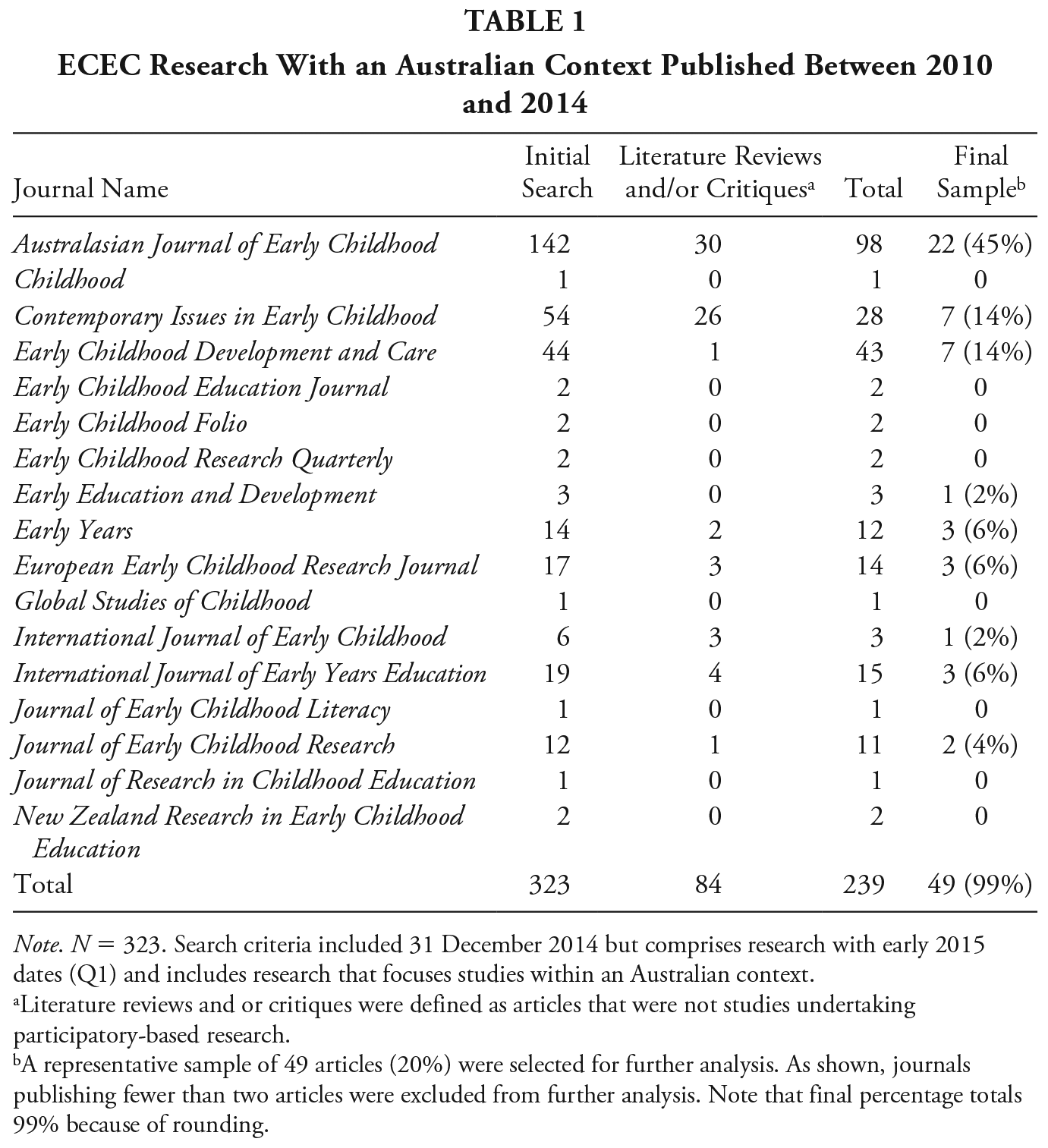
Note. N = 323. Search criteria included 31 December 2014 but comprises research with early 2015 dates (Q1) and includes research that focuses studies within an Australian context.
Literature reviews and or critiques were defined as articles that were not studies undertaking participatory-based research. bA representative sample of 49 articles (20%) were selected for further analysis. As shown, journals publishing fewer than two articles were excluded from further analysis. Note that final percentage totals 99% because of rounding.
Analysis of Research in Australian ECEC
This study reviewed quantitative, qualitative, and mixed-methods studies using a meta-ethnographic (Noblit & Hare, 1988) and meta-interpretation of research (Weed, 2005). Through the process of meta-ethnography, the researchers compare and analyze individual studies while creating new interpretations (Atkins et al., 2008) from the studies as a single collective while still maintaining the “richness” of research published (Weed, 2005).
Each of the 49 articles was sorted and analyzed in seven ways, including research paradigm, research type, research method, participant group, participant focus, and research aspect based on criteria described in Hatch (2002) and Fenech (2011). Further details of each criterion is as follows:
Research paradigm reflects the assumptions that defines the worldview between positivist, postpositivist, constructivist, critical/feminist, and post-structuralist paradigms.
Research type reflects the kind of research applied, and invariably identifies with the research paradigm, or a combination of paradigms.
Research method reflects the distinction between qualitative, quantitative, and mixed methods.
Participant group reflects the “participants” from whom data are obtained, for example, children, educators, and family.
Participant focus highlights the main focus of the research, for example, preschooler, child care center staff, researcher.
Research aspect reflects the second dimension of the focus where, for example, research involving the child may emphasize their development such as numeracy or literacy development, communication, physical health, or sense of community.
One author had the primary task of sorting each article for the seven criteria. Each of the remaining authors checked a proportion of the articles for consistency. Any disagreements were resolved through discussion between all authors. For example, a hypothetical research aims to understand how children’s (participant group = children) cognitive development (participant focus = cognitive development) is influenced by parenting style (research aspect = parenting style). The research may also be situated within a postpositivist paradigm (research paradigm), using qualitative methods (research method) such as grounded theory (research type). Research that did not specifically describe a theoretical framework was characterized using the methodologies recommended in Hatch (2002) and Fenech (2011) and disagreements resolved through discussion between the authors (Weed, 2005, p. 25).
Results
This section begins with the descriptive analysis of Australian research in ECEC in the period 2010 to 2014, including research paradigm, research methods, research type, participant group, participant focus, and research aspect. We also discuss the implications of such research findings on quality in ECEC research.
Australian ECEC Research: Descriptive Analysis
In the period between 2010 and 2014, 48% research articles in Australian ECEC was framed within a postpositivist paradigm, followed by constructivist (32.6%), critical feminist (14.3%), and poststructuralist (6.1%) paradigms. Of the final two paradigms, only 2.0% takes a positivist paradigm or is a combination of the constructivist/critical feminist paradigm (Figure 1). This result is in stark contrast to Fenech’s (2011) findings, where, from an international perspective, a positivist paradigm accounted for 83.7% of all articles published between 1980 and 2008.
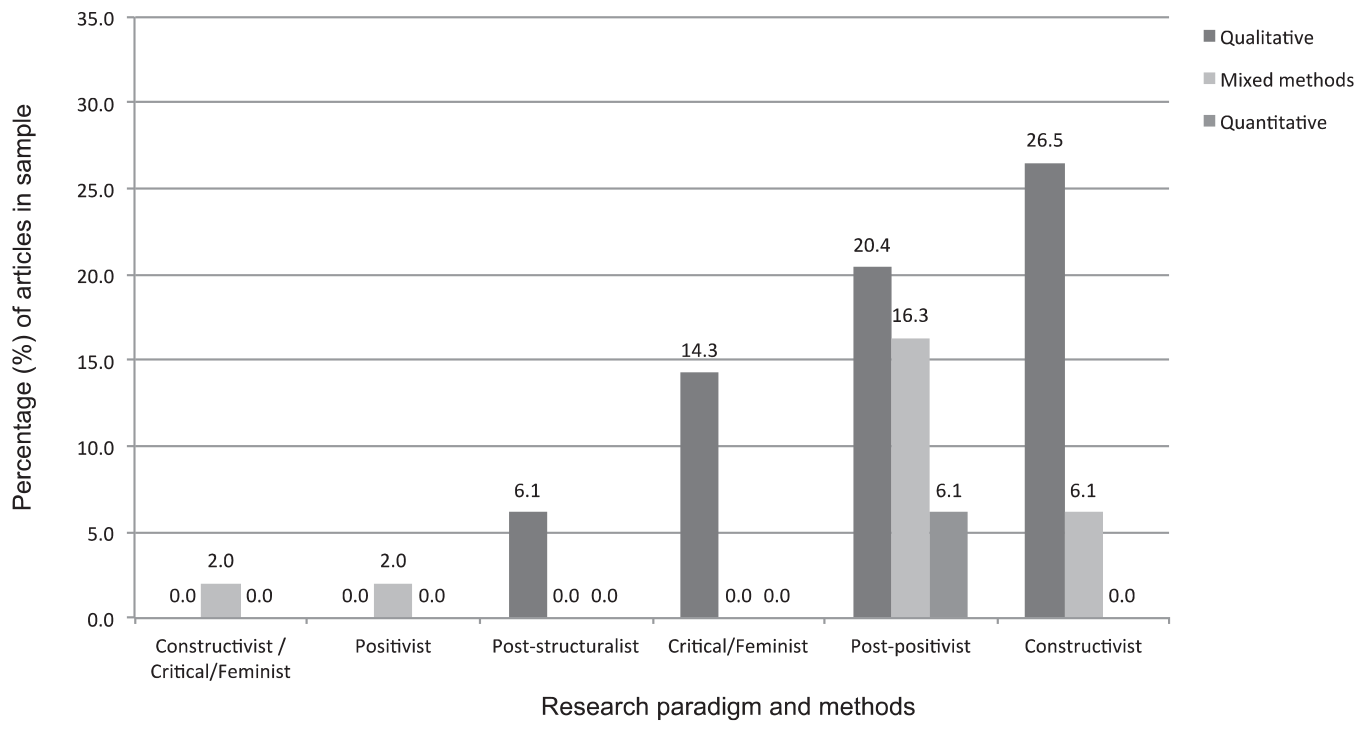
Research Paradigms and Methods in the Sample Articles (n = 49) Categorized as Described in Hatch (2002) and Used in Fenech (2011)
Fenech’s (2011) study also found that postpositive paradigms accounted for 13.5% of all international research; however, the same paradigm in the Australian context produced 42.8%—three times greater than all ECEC research published internationally. Similarly, 20% of all Australian research was based on either poststructuralist (6%) or critical/feminist (14%), again in marked contrast to the figure of 0.6% as reported in Fenech.
In the Australian context, qualitative methods accounted for 67.3% of all research, with the remainder based on mixed methods (27%) or quantitative methods (6%). Again, this result is in stark contrast to that reported in Fenech (2011) with only 7.1% of international research utilizing qualitative methods and 87% using quantitative methods. Mixed methods account for 27% of all Australian research, against 5.6% of research reported in Fenech (2011).
A closer look at the research types used in Australian ECEC research showed that interview studies accounted for 32.7% of all research (Figure 2). The remaining 67.3% of research utilized 12 research types, with phenomenological studies and grounded theory both having 14.3%. All remaining 10 types of research accounted for less than 8% of all research.
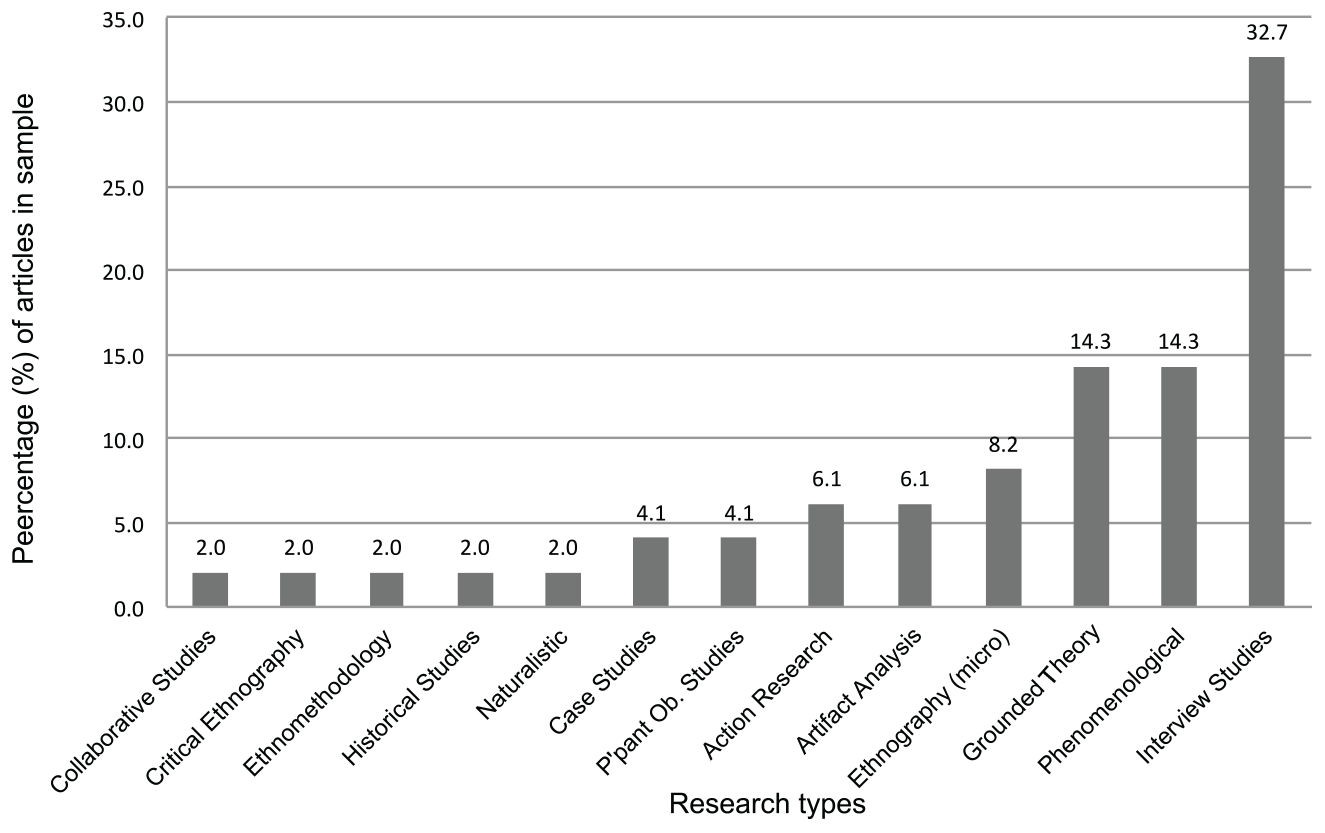
Research Types Used in the Sample Articles (n = 49) Categorized as Described in Hatch (2002)
In terms of participant groups, 40.8% (38.8 + 2.0) of Australian research in ECEC was based on the perspectives of educators (including principals, teachers, teacher aids, center staff, and special needs educators), followed by 28.6% children (including toddlers, preschoolers, primary junior, primary senior), families 18.3% (16.3 + 2.0), and 12.2% system (including the interactions between educators, parents, and policy; Figure 3). The remaining perspective was that of the community (2%).
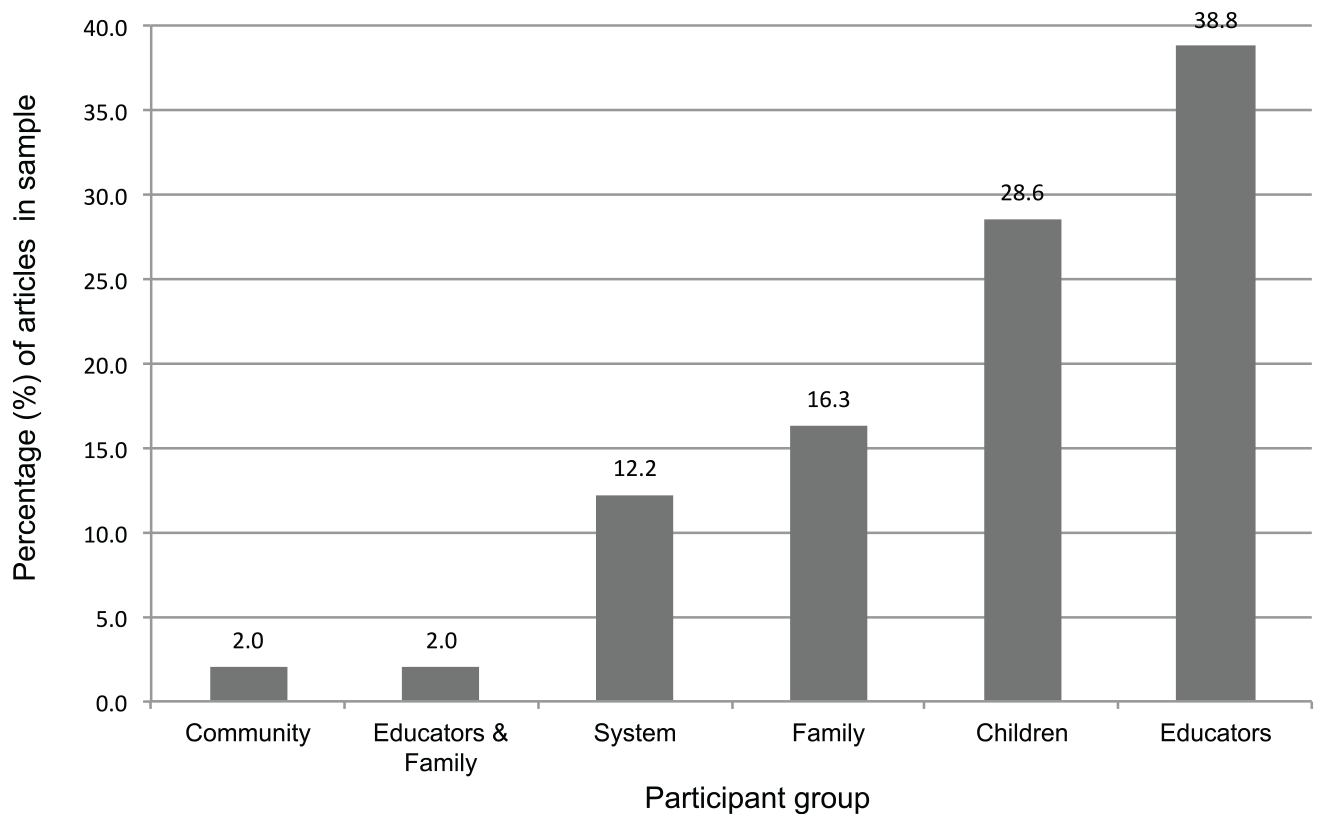
Participant Groups as Themes Studied in the Sample Articles (n = 49) in Early Childhood Education Research
When compared to international research published in the period 2000 to 2008, Fenech (2011) found that 73.3% (151 out of 170) were based on the “perspective” (p. 106) of the researcher, followed by 15.6% of practitioners and EC teachers, and 10.6% of parents. Least of all (0.5%) were the “perspectives” of children. Clearly, the most dramatic difference in Australian ECEC research is the complete absence of the researcher as participant group, the proportion of research focusing on educators (40.8% in Australian research compared to 15.6% internationally), and the proportion of research focusing on children (28.6% in Australian research compared to 0.5% internationally). The other major difference is the high proportion of research in Australia focusing on the perspectives of systems (12.2%) compared to 0% internationally.
In terms of research focus, 50.2% of Australian research in ECEC sought to understand the functioning of educators (including principals, teacher/educators, teacher aids, child care center management, special needs educators; Figure 4). This proportion is not surprising given the large proportion of this group as participants in the research. This proportion was followed by 25.4% focusing on a better understanding of children (including toddlers, and primary school–aged students) but not infants. In terms of a better understanding of families, 14.3% of research focused on parents/caregivers/extended families. However, no research focused on the relationship between children and their families (i.e., children/family).
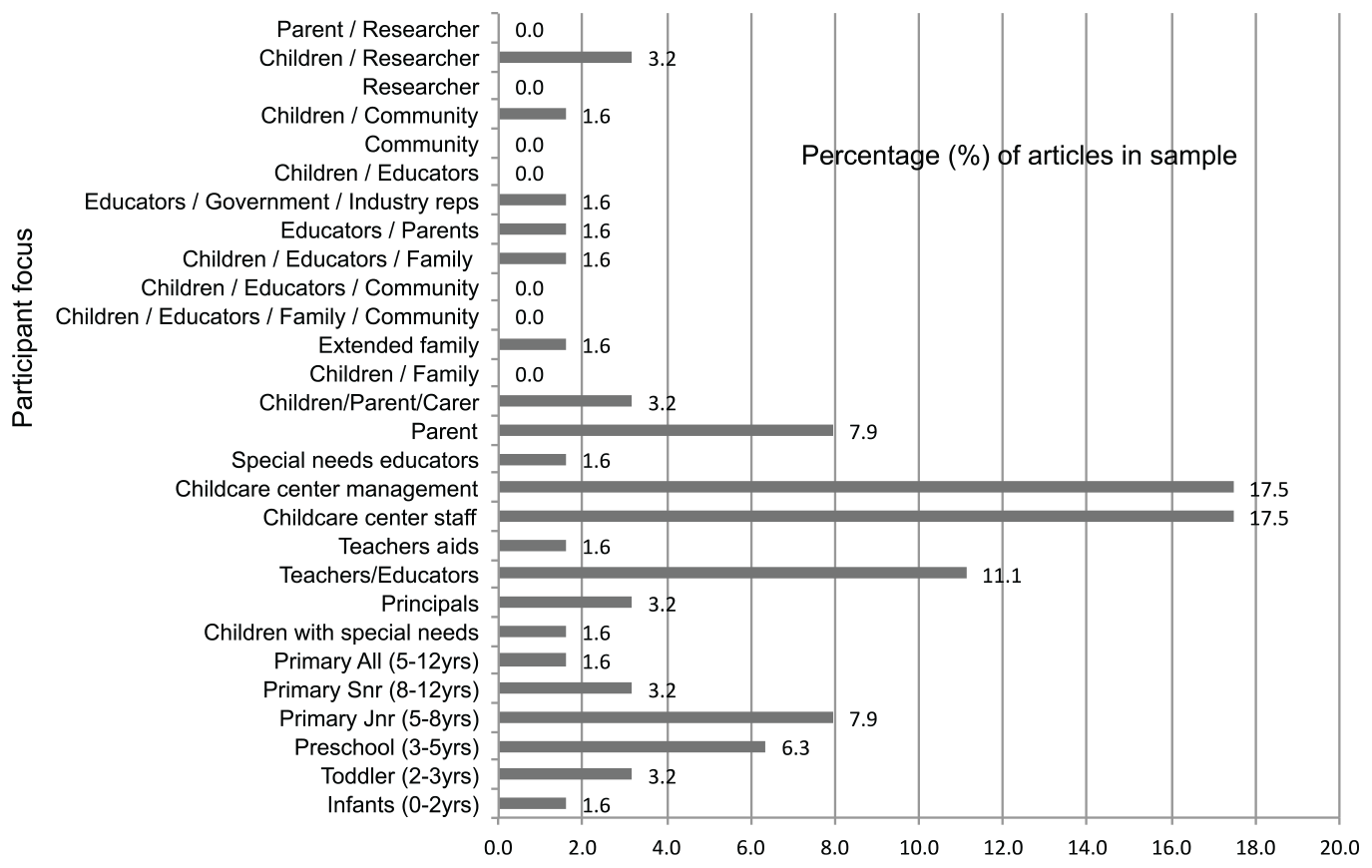
Participant Focus as Themes in the Sample Articles (n = 49) in Early Childhood Education Research
The research focus included research that sought to understand the outcomes of interrelationships between children and their families, or children, their families, and educators. The proportion of research devoted to understanding these outcomes was estimated as 4.8% of all research. Finally, 1.6% of research focused on children within their community, followed by 3.2% of research on the relationship between children and researcher.
In terms of research aspects, 54.5% of Australian research emphasized on a better understanding of child development, including numeracy and literacy, language/communication, social/emotional/behavioral development, values and culture, physical health, and sense of community (Figure 5). The next aspect was family, representing 14.5% of all research, including family values and culture, work-family balance, parenting values, and access to ECEC. Curriculum also represented 14.5% of all research, including numeracy and literacy, learning tools, pedagogy and curriculum design, and physical development. The least studied aspect was in understanding the role of the community, representing 3.6% of all Australian research in ECEC. Here, community was studied in relation to the children’s cognitive development and cultural diversity.
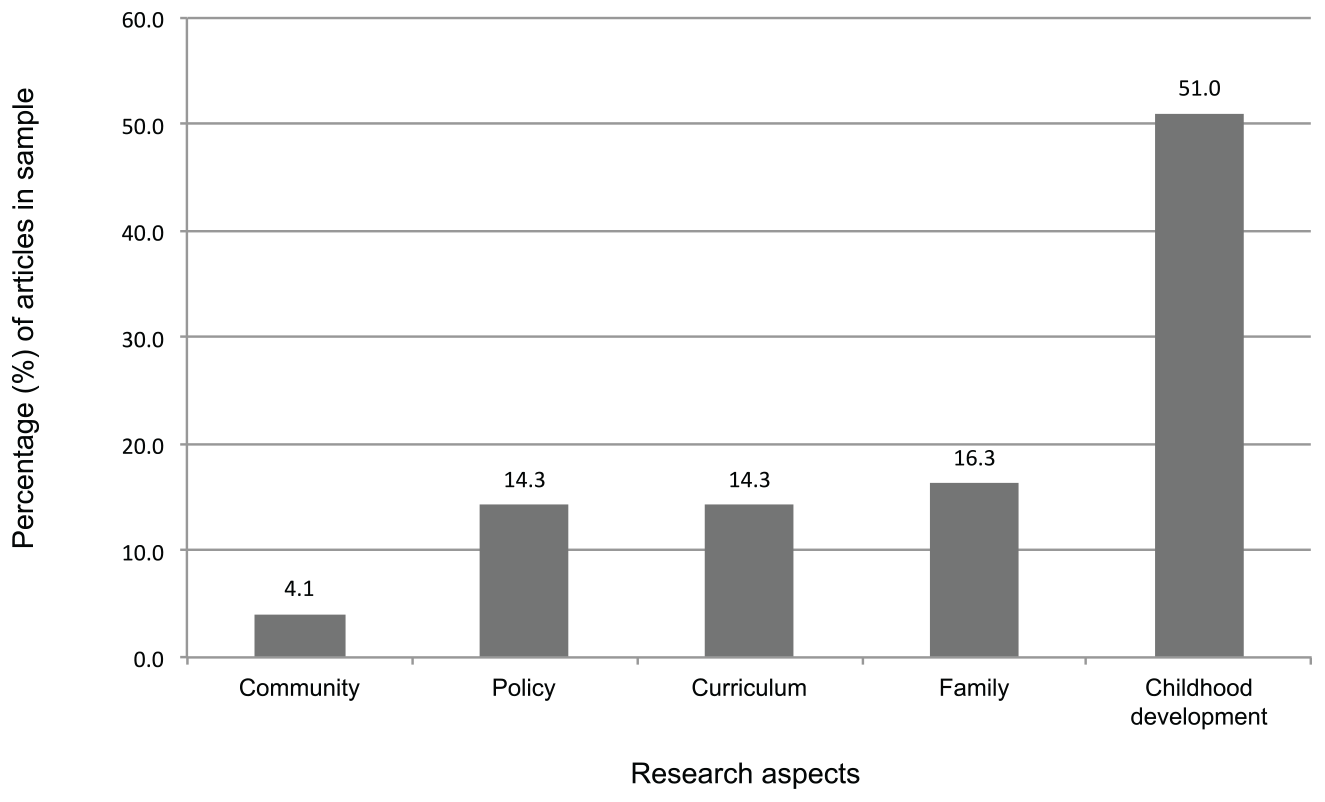
Research Aspects Studied as Themes in the Sample Articles (n = 49) in Early Childhood Education Research
Discussion
As Fenech (2011) pointed out, research “quality” in international research appears to be biased toward positivist paradigms (and associated quantitative methods) at the expense of qualitative methodologies. In order to test these findings in the Australian context, this chapter describes the outcomes of an interpretive analysis of a representative sample of Australian empirical research focusing on ECEC between 2010 and 2014. The analysis describes the research paradigm and methods, research type, focus, and aspects as well as participant groups used in this research, following the procedures outlined in Hatch (2002) and Fenech (2011).
Sixty-seven percent of ECEC research in Australia published in the period between 2010 and 2014 was based in qualitative methods and utilized interview studies as the predominant method of data collection. Quantitative methods accounted for only 6% of research methods. This result is in stark contrast to the findings described in Fenech (2011) where the proportion of positivist research is closer to 84%. It is possible that Fenech’s findings were quickly viewed within Australia as innovative and immediately implemented, or Australia’s research methods had already been following a qualitative pathway that then quickly accelerated. In any case, the discrepancy between international research and Australian research within the ECEC field requires consideration, with rethinking needed into heterogenous research methods to enhance quality and practice within ECEC research. ECEC as a research field is relatively new in the world (past 30 years) and furthermore relatively new within Australia without established research traditions and large-scale foundational studies. As such, ECEC research also provides new possibilities for ECEC given no existing baggage around research traditions and research design.
In terms of assigning research paradigms and type, positivist and postpositivist research was relatively straightforward compared to the others. However, identifying the research paradigm and type for other research was not as straightforward, particularly as nearly 45 % of qualitative studies did not articulate their paradigms, or align their paradigms with their methodologies. We speculate that when the research clearly articulates and justifies their epistemology, methodology, and methods, as well as their analysis (where relevant), the perceived rigor of their study will be enhanced.
In the representative sample of Australian research in ECEC, the participant groups were predominantly educators (40.8%), followed by children (28.6%), families (18.3%), and systems (12.2%). Thus, the voices of educators (principals, teachers, and teacher aides) are viewed by researchers as central to the development of ECEC in Australia. While the voices of principals, teachers, and teacher aides are often marginalized in education research with large quantitative studies, qualitative studies in ECEC research provided new understandings and representations around the development of ECEC in Australia, allowing spaces for voices to be heard. Part of the abundance of adult voices in the ECEC research sample may also have been because of access to ECEC sites. Generally, access to adults in the ECEC profession may have been easier to recruit for participation because advertising of material is easier (especially with mailing lists of employees, etc.), the ECEC professionals were literate, and the ECEC professionals may have had high levels of self-efficacy to contribute to the improvement of the ECEC community. Involvement in the research studies may also have provided ECEC professionals with connections to university (allowing for the sharing of professional learning) and researchers.
Another point for consideration is that the ECEC professionals may also have been more comfortable with qualitative studies that allow direct contact with researchers and provide a sense of connection and partnership. Rather than being “researched on,” many of the qualitative studies may have provided opportunities for “researched with,” empowering ECEC professionals to become important partners and in a relationship with the researcher, hence providing justification for small-sample studies. Given that the ECEC sector is based on strong personalized relationships and concepts of relationships and partnerships are advocated in key policy and steering documents, the concept may also be an innate way of working between adults in the ECEC profession. Professionals are used to working in relationships with other adults to support children and their families. It would seem possible that ECEC researchers (many who have previously worked in the field) also understand the importance of close relationships that can be achieved through qualitative research methods.
What is deficient in these data is research that aims to understand the relationship between children and their families, and family-school/-community relationships. The voice of infants in Australia and Fenech’s 2011 research study also highlighted a gap, and it is argued that significant advantages to employ “qualitative methods” (p. 112), such postpositivist, constructivist, critical/feminist agendas, and poststructuralist paradigms are required in order to broaden the notion of quality in research. This would enable conceptualizations of “quality” in research of ECEC to extend beyond children’s development to include the “voices” (p. 112) of stakeholders such as babies and infants, parents, practitioners, and educators.
One explanation for this absence may concern access and ethical processes with children. Families may not want to have young children involved in research studies. Likewise, some families may not want to be involved in research studies for fear of being judged and the actual commitments (e.g., time) to be involved. Disrespect for culture or previous negative experiences with researchers and professionals may also contribute to low participation rates. Thus, while researchers may want to include marginalized voices, it can be difficult. As Erickson (2006, p. 237) suggests relationships are “power-laden, preconstructed by history, and weighted by social gravity.”
The need to include research that seeks to understand the family/child relationships in ECEC is important due to the impact that positive family communication and school relationships have on a child’s development and success in school and beyond (Emeagwali, 2009; Epstein, 2010; Epstein & Dauber, 1991; Epstein et al., 2007; Epstein & Sheldon, 2012). Epstein and Sheldon (2012) called for more research to be conducted in order to understand what works, and to develop strategies for “systems” (families, children, schools, and communities) to work together.
We suggest that the heterogenous focus of qualitative research helps contribute to build a diversity of understanding within ECEC research that leads to acceptance of diverse research methods and approaches over time to work with voices that have been silenced, ignored, or not accessed. Part of this response should include reflecting on current research perspectives, paradigms, and designs to create new possibilities that can cultivate transformative agency for marginalized communities and people. Such reflection can be a reimagining beyond intervention-style projects that “move beyond deficit views of epistemic heterogeneity as the driving theory of change” (Bang & Vossoughi, 2016, p. 174).
A starting point could be what Bang and Vossoughi (2016, p. 174) called a “widening of what counts as relevant dimensions of the empirical to include historical, relational and axiological perspectives and the ways these are embodied and experienced.” They suggested that when undertaking equity-oriented work, “there needs to be a commitment to theories of change, forms of praxis, and axiological commitments that are examined, articulated and theorized as part of scholarship and practice” (p. 175). For example, a research on father’s involvement in early childhood setting is rigorous when a multidimensional perspective of theory, practice, and values are taken into account. The theoretical history of patriarchal/matriarchal society of the context of study, the practices involving fathers relating to early years learning and care, and the value placed on fathers’ involvement are all fundamental to informing findings. Taking the same example, this notion of widening also acknowledges that when rigor in research is ignored without critical reflexivity in particular, some equity discourses may simply be repackaged and reproduced, rather than actually transforming inequities and political structures (Booker et al., 2014: Philip & Azevedo, 2017). Critical reflexivity refers to “the ways new forms of visibility constitute refusals of the deficit frames that deem particular practices and ways of knowing and being invisible, and create openings for the assertion of alternate values” (Bang & Vossoughi, 2016, p. 181). Given that the ECEC Australian research community contributes largely with qualitative studies, there is much potential for the transformation of important research within ECEC that moved beyond reproducing inequity discourses to providing new transformations. This approach includes new perspectives around forming relations and forms of accountability when working with families.
Another area for consideration is neo-liberal perspectives around scalability of research. In the studies reviewed, sample sizes were small and reproduction of certain research designs difficult. While we live in an era of scalability of research projects, it seems fitting to also reexamine the assumptions that drive such efforts within ECEC. Given that ECEC is a relatively new field of research within scholarly research in academic settings (emergence in the past 30 years) and works with marginalized voices and communities, smaller sample sizes and the uniqueness of context need to be considered. Erickson (2014) suggested that the idea of scaling in education research is ultimately flawed because it is based on assumptions about time, people, and practicality that may not be true. Rather, he suggested that notions of “scaling up,” “best practice,” and “high-fidelity implementation” that are common within research agendas at play will continue to fail because they “require the future that is not original; that holds still,” suggesting that what works in one context at one time will not hold true for other contexts and time periods. Perhaps this provides strong support for the notion of qualitive, localized studies within ECEC research where cultures and local contexts are acknowledged within research agendas. Given the diversity across Australian research, the current ECEC research reviewed may actually be a truer representation of ECEC in Australia with a smaller and considered understanding of localized communities.
With such a consideration, Erickson (2014) invited researchers to consider low-fidelity implementations as a way forward. The approach involves celebrating and valuing local adaptions and policies that allow and provide “custom tailoring or practices to fit the particularity of local circumstance” (p. 4). The approach values the diversity of contexts, time, and places and cultivates the transformative ideas of the importance of local place and understanding. One suggestion is that Australian ECEC research already considers “low-fidelity implementations” with valuable insights for other education research areas about understanding culture and context.
Another key reflection on the ECEC research agenda is around a current research funding climate that focuses on “solution[s] on demand” (Martin, 2009). The case for consideration is the current focus on research that addresses the challenges surrounding ECEC within the constraints and marginalization that COVID-19 has created. Multiple funding bodies have made calls for concentrated funding for solutions for ECEC-related aspects that demand for not only a multidisciplinary approach but also scalable and cost-effective research. Return on investment of time, money, and effort is yet another consideration that research in ECEC in Australia has to take into account, thus demanding a far more innovative imagination on research methodology and its impact on society.
Conclusion
From this review, we have been able to determine that ECEC research in Australia is different in profile to international ECEC research. ECEC research is largely qualitive in nature and has diversity in paradigms and topics. However, it is not possible to determine whether this variability is specific to Australian research in ECEC or qualitative research more generally. What we can advocate from this, however, is that ECEC research is in a unique position where it has possibilities to be world leading in developing new approaches and developing heterogenous paradigms and designs within qualitative research. While ECEC research is relatively new in Australia and internationally, the research area has the potential to make important contributions to moving beyond equity work that takes on deficit views of epistemic heterogeneity as the means of change. We do not argue that quantitative research is not important and suggest there is a place and time for normative research. Rather, Australian ECEC research is a unique field that, through critical reflexivity, can provide new ways of thinking and understanding for the educational community.