




Abstract
Engaging young individuals through second-chance education (SCE) is crucial for providing alternative pathways to gain relevant qualifications and improve their career and life prospects. This research synthesis aimed to identify patterns that better define why and how SCE can be considered a complement to mainstream education. It focused on the compensation aspect of SCE, emphasizing its role in encouraging a return to education or accessing the labor market. The study systematically examined research articles tackling SCE in Western Europe to reveal unique characteristics, explore students’ experiences, and address its outcomes. Adopting a configurative approach, this study analyzed 68 records organized around three domains: pedagogic design of second-chance education, students’ experience through SCE programs, and measured outcomes of these programs. Results revealed SCE’s student-centered approach, flexibility, and trust-oriented nature, promoting personal growth, social skills, and employability. More longitudinal and quantitative studies are needed to assess long-term effects.
Keywords
Education is central to achieving the UN’s sustainable development goals (UNESCO, 2017) and expanding participation has become a global policy priority (UNESCO, 2019). Yet inequalities persist, especially in secondary education. In Europe, early school-leaving disproportionately affects youth from lower socioeconomic backgrounds (Bayón-Calvo et al., 2020; Lavrijsen & Nicaise, 2015; Salvà-Mut et al., 2023), migrant or ethnic minorities (Hippe & Jakubowski, 2018; Nygård, 2021; Pikkarainen et al., 2021; Pikkarainen & Kykyri, 2023), and those with mental health challenges (Esch et al., 2014; Minh et al., 2023; Wintersteller et al., 2022). Gender disparities also persist, with boys showing higher dropout rates than girls (Barone & Barra, 2022; Borgna & Struffolino, 2017; Salvà-Mut et al., 2023). Early school-leaving reflects cumulative disadvantages (Pikkarainen et al., 2021; Van Praag & Clycq, 2020), leaving young people without diplomas especially vulnerable to limited access to higher education, unstable employment, and lower lifetime earnings (Rumberger, 2011), social exclusion (Jahnukainen & Järvinen, 2005; Thompson et al., 2014; Van Praag & Clycq, 2020), and poor mental health (Brown, 2021; Reuter et al., 2022). In 2021, 8.6% of youth in Europe and North America left school without qualification, with significant variations across countries (UNESCO, 2021). Reengaging this group remains a pressing challenge (OECD, 2019).
In response, countries in Europe (Bunting et al., 2017; Gallacher et al., 2002; Glorieux et al., 2011; Nordlund et al., 2013; Portela-Pruaño et al., 2019; Schuchart & Schimke, 2022; Van-Praag et al., 2017) and elsewhere (Amitay & Rahav, 2018; Bloom, 2010; Day et al., 2013; Gueta & Berkovich, 2022; Murray & Mitchell, 2016; Ross & Gray, 2005) have implemented second-chance education (SCE) programs. These initiatives reengage youth in education or vocational training, offering tailored pathways that improve qualifications and employment prospects (European Commission/EACEA/Eurydice, 2015). SCE relies on practical, experiential, hands-on learning (Marhuenda-Fluixá & Chisvert-Tarazona, 2022; Martínez-Morales, 2020); flexible curriculum pathways; small classes; high-quality teacher–student relationships; and additional support services (Murray & Mitchel, 2016). SCE has the potential to help young people who lacked supportive learning environments during their schooling (OECD, 2012) or who, due to migration, could not fully attend education at the appropriate age or under equitable conditions. Therefore, SCE promotes social inclusion for students excluded from mainstream schooling.
Although SCE initiatives are widespread, research remains fragmented, focusing mainly on program designs, participants’ experiences, and, to a lesser extent, program outcomes. This fragmentation hinders the identification of common traits that define SCE as an articulate educational response. Our review addresses this gap by examining European SCE research to identify shared elements of design, participants’ experience, and outcomes. As such, our review attempts to identify what characterizes SCE across Europe, and whether it can be considered a coherent model for successful reengagement of early school-leavers.
Accordingly, this synthesis review sought answers to the following research questions:
Theoretical Framework
The term second-chance education (SCE) is widely used in the literature on adult and further education, yet comprehensive and consistent definitions remain elusive. To clarify the concept, we examined SCE through three interconnected dimensions: its features, the challenges it addresses, and its intended effects.
Features of SCE
The United Nations Institute for Statistics defines SCE as programs for individuals who never attended school, left before completion, or seek qualifications for further education (UIS, 2011). Similarly, the Study of European Terminology in Adult Education describes it as reentry into formal learning, distinct from higher education and from initial or continuing learning (Brooks & Burton, 2008).
The European Commission frames SCE as positive discrimination to counter dropout consequences and promote social reintegration and employment (European Commission, 1995). Since 1995, European policy has encouraged municipalities and NGOs to develop SCE (European Commission/NESSE, 2011a) as a “rescue” or “remedial” strategy (European Commission/NESSE, 2011b), focused on those who failed to complete secondary education. SCE targets young people without upper secondary qualifications, supporting European policy to reduce early school-leaving (European Commission/EACEA/Eurydice, 2015). It thus offers a “second” opportunity to those with “interrupted” or “non-standardized” educational pathways, an alternative to mainstream education.
SCE is defined as providing formal and nonformal learning leading to primary, lower, and upper secondary equivalencies in high-income countries (Desjardins, 2017; Myers et al. 2014). Boeren and Whittaker (2018) differentiated between basic skills training and the credential-based programs, reserving “second chance education” specifically for the latter. This distinction is necessary because completing upper secondary education is seen as the minimum standard for labor market entry and successful transition to adulthood (Boeren & Whittaker 2018; Schoon, 2015; Squires 2020).
Challenges Related to SCE
SCE engages vulnerable individuals who, for personal, school, or community factors (Squires, 2020), could not thrive in mainstream education. Unlike secondary schools that sometimes push students out (De Witte et al., 2013), SCE overcomes alienation by fostering supportive relationships with a curriculum tailored to learners’ needs (Ross & Gray, 2005). Research indicates that SCE participants often start with low self-confidence (Clancy & Holford, 2018; Fenge, 2011; Hickey et al., 2020) and demotivation toward education perceived as irrelevant (Bunting et al., 2017; Loquais, 2018). Participants also report learning difficulties (Calvo et al., 2012) and poor literacy skills (Zaffran & Vollet, 2018), resulting in underachievement (Fenge, 2011), as well as obstacles to engage in academic work, including large groups (Anderson & Peart, 2016; Hickey et al., 2020), lack of teacher support (Görlich & Katznelson, 2015), and institutional impersonal treatment (Jóhannesson & Bjarnadóttir, 2016).
A key challenge for SCE teachers is reengaging students who felt disregarded or excluded in prior schooling. To rebuild confidence, SCE emphasizes flexible, personalized learning plans over standardized curricula. Research highlights trust-based relationships, support-oriented and flexible teaching (Day et al., 2013; Merino et al., 2022), reduced teacher-student ratios, learner-centered methods (Murray & Mitchell, 2016; Ross & Gray, 2005), and institutions responsive to participants’ backgrounds and needs (Murray & Mitchell, 2016). Yet, the SCE characteristics vary greatly across studies, raising questions about whether SCE shares common features that could define pedagogic and non-pedagogic strategies to meet participants’ needs and effectively improve their prospects in terms of access to further education or employment.
Potential of SCE
Research on SCE’s potential is limited and mixed. Survey data suggested limited scope for obtaining an upper-secondary qualification later in life, and only a small proportion of early school-leavers return to education and training (GHK, 2005). Moreover, credentials obtained later in life carry less labor market value than mainstream diplomas (De Witte et al., 2013; Smyth et al., 2013). Yet other studies highlight economic, personal, and social returns, including improved confidence, skills, and better employment prospects (Vorhaus et al., 2011). Research on school-to-work transitions suggests complex nonlinear trajectories that include multiple entries and exits into education and training (Merino et al., 2022; Nygård, 2021; Salvà-Mut et al., 2023), where well-organized and easily accessible chances of SCE might have a positive outcome on individuals (GHK, 2005).
Research has not fully elucidated the outcomes of SCE and the mechanisms through which it satisfies the social and educational needs of a heterogeneous and complex group of young individuals. With few exceptions (Högberg, 2019b; Nordlund et al., 2013, 2015), most studies are small-scale, rely on self-reported data, and rarely report on long-term effects such as income, inequality, or well-being. A better understanding of the challenges and outcomes helps assess SCE’s contributions at individual, social, and economic levels.
In undertaking this synthesis, we closely looked at how research has considered SCE features, challenges, and outcomes. We sought to provide a systematic account of research from a descriptive and integrative perspective, rather than to evaluate SCE. We also paid attention to the significant contributions of research on the potential of SCE. Given the absence of any specific regulation on SCE, school systems apply their own regulations. We aimed to define more precisely what SCE is and why initiatives, programs, and schemes that comply with these features may be considered as such. Through our research synthesis, we attempted to analyze in further detail the pedagogic and organizational design, participant experience, and outcomes that make them unique while also allowing for a rich heterogeneous manifestation of practice.
Methods
We conducted this synthesis using a configurative, exploratory, and iterative approach aimed at identifying patterns to deepen understanding of a phenomenon (Newman & Gough, 2019). Through thematic analysis, we extracted, clustered, and synthesized themes to answer our research questions (Thomas & Harden, 2008), following Newman and Dough’s (2019) phases—designing the search framework and construction of the selection criteria, developing the literature search strategy, selecting and assessing studies, extracting and coding data, synthesizing results—and applying Alexander’s (2020) guidelines, to ensure the quality of the review process.
Search Framework and Construction of Selection Criteria
First, we formulated the research questions, outlined methods, and developed a conceptual framework using PICO guidelines (University of Murdoch, 2023), which define population, interest, and context in systematic quality reviews. We focused on individuals aged 16 to 29 years who left school without a lower or upper secondary diploma and on SCE programs that provide this age group with the opportunity to either obtain such diplomas or access the labor market in Western Europe and the United Kingdom.
Second, we devised our selection criteria for the inclusion/exclusion of contributions: empirical studies on SCE initiatives—general or vocational—serving participants without an upper secondary education diploma who resumed education after leaving mainstream schools. We included studies in European Union countries and the United Kingdom, given shared educational policies committed to extending participation (Boeren & Whittaker, 2018). Additionally, we restricted our scope to studies published after 1995, when the European Commission’s White Paper on Education and Training (1995) first mentioned SCE as a strategy to reengage young individuals in education.
We excluded studies on school-based programs aimed at preventing early school leaving, higher education reentry, and adult education targeting individuals over 30 years old, as our focus was on programs that reengage youth in completing upper secondary qualifications. This decision was based on the observation that programs for adult learners often involve initial education and lower secondary education or alternative preparation for accessing higher education (European Commission/EACEA/Eurydice, 2015).
Literature Search Strategy
We identify relevant studies using the following primary search terms: “second chance schools” OR “second chance education,” “reenter school” OR “reenter education,” “reentry students,” “alternative schools” OR “alternative education,” “adult education.” We search Web of Science and Scopus as principal search engines, with ERIC (Education Resources Information Center), Dialnet, CAIRN.Info, and GoogleAcademic as supplementary search engines (Gusenbauer & Haddaway, 2020). The search covered 1995–2023 and was restricted to peer-reviewed articles, which are generally considered higher quality (Alexander, 2020).
We searched in English and Spanish and added French and Portuguese terms—for example, “écoles de la deuxième chance” (CAIRN.Info) and “segunda oportunidade formação” (Google Scholar)—to address the lack of French and Portuguese articles in the main search, despite the well-established SCE schemes in both countries (European Commission/EACEA/Eurydice, 2015). These additional searches yielded relevant studies representing those contexts with some success and helped mitigate potential language bias (Neimann Rasmussen & Montgomery, 2018; Rockliffe, 2022; Zenni et al., 2023).
The literature search in late 2022 and early 2023 retrieved 5,374 records. After removing duplicates (1,383) and records published before 1995 (426), 3,565 unique records remained for screening and eligibility assessment (Newman & Gough, 2019).
Screening and Eligibility Criteria
Following Moher et al.’s (2015) approach, we excluded publications outside the scope of this review through manual title screening (2,989 records). The reasons for exclusion were as follows: back to school after illness, back to work, back to school after studying abroad or returning from overseas (i.e., absence of interruption in the educational trajectory), economic analysis of dropping out or returning to school, reopening schools after COVID-19 lockdown, remedial education for bilingual students, second language studies, second-chance breakfast programs, second-chance schools in prisons, education in prison, and training for professionals in correctional education. We then read abstracts (301 records), excluding records for the following reasons: editorials, conference proceedings, other nonresearch papers, other participants’ age, back to higher education, continuing education after a gap year in higher education, and non-European and non-UK-based studies. Of the remaining 275 records, 33 were inaccessible (17 were books/book chapters not available in our libraries—from two major public universities in Spain—or through interlibrary loan, 9 unsubscribed journals, 7 conference proceedings not identified in the previous search stage), resulting in 242 full texts for final selection.
Two researchers screened the texts and excluded 175 records based on our inclusion/exclusion criteria—6 proceedings, 36 theoretical articles, 6 articles based on document analysis, 72 based on studies conducted in non-European countries, 24 doctoral and master theses, and 30 articles not related to the focus of our study (e.g., access to higher education, resuming higher education, teacher training)—resulting in 67 records for full-text, in-depth review and quality appraisal.
Citation screening added 12 records. For this process, we examined the reference lists of the included articles to identify additional relevant works. Of these, three were excluded for not meeting geographic or empirical criteria (Polidano et al. 2015; Macedo et al., 2018; McGregor & Mills, 2012). Nine records were retained, resulting in a final sample of 76 records for quality appraisal.
Quality Appraisal
Assessing the study quality of primary studies is crucial to ensure the reliability of a systematic review (Wilson & Anagnostopoulos, 2021). We used Pluye et al.’s (2009) scoring system for mixed-methods research and mixed studies reviews (Appendix 1), which allows evaluation across diverse study types. Two researchers independently reviewed and scored each study using specific criteria: qualitative studies were assessed on objectives, design, context description, participant selection, data collection and analysis, and researcher’s reflexivity; quantitative studies on objectives, sampling, and measurement justification; and mixed-methods studies on objectives, combined data collection and analysis, and results integration. Rating followed Pluye et al.’s (2009) recommendations (see Supplemental Tables S1 and S2). Inter-rater reliability (Cohen’s k .75; Cohen, 1960) confirmed consistency, with disagreements resolved by discussion. Low-rated studies were excluded from further analysis, though low scores often reflected insufficient information provided in the article to fully apply the criteria, rather than poor execution (Kyndt et al., 2017). After appraisal, eight records were excluded, leaving 68 for analysis. Figure 1 shows a flowchart of the study selection process (Page et al., 2021).
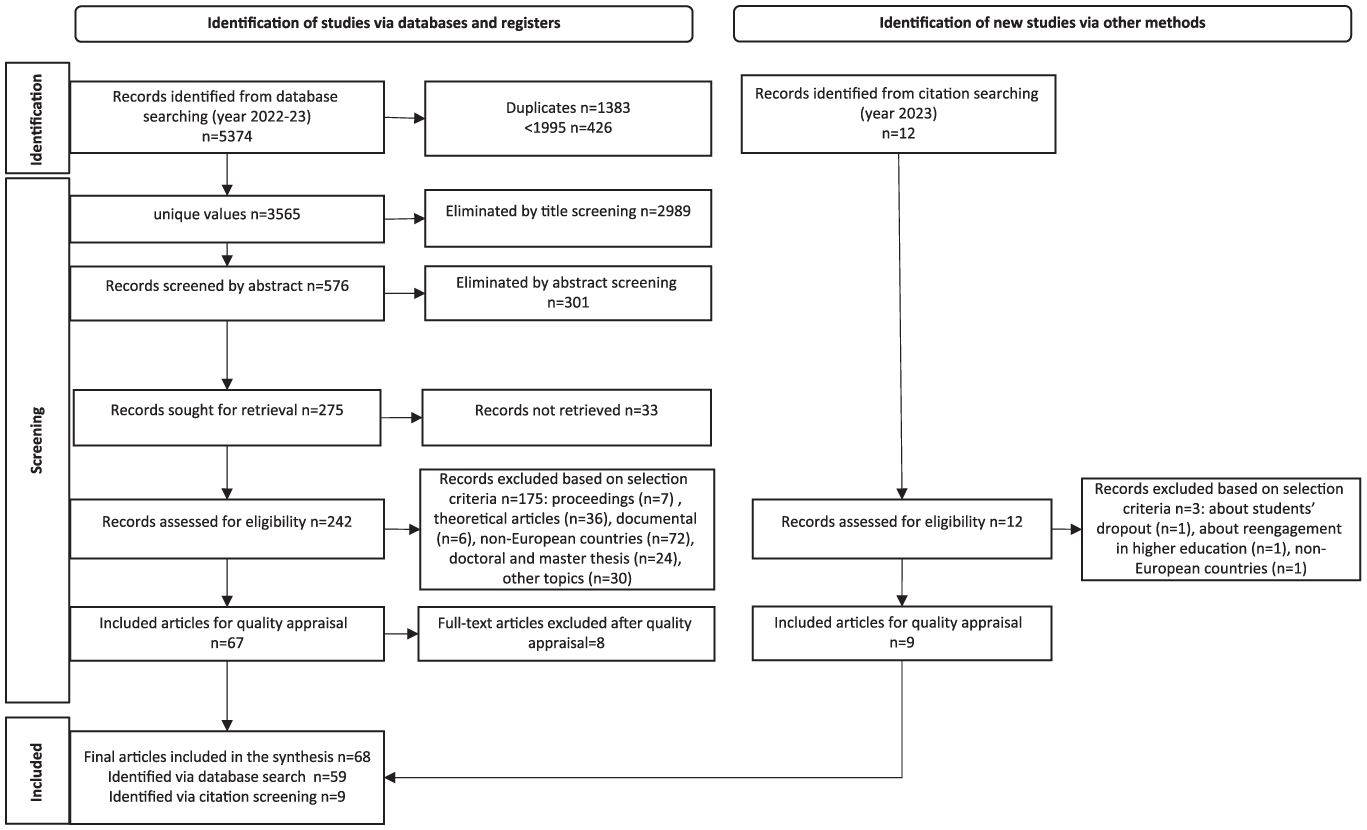
Flowchart of the literature search and selection process (Page et al. 2011).
Data Extraction and Synthesis
Data extraction was conducted in two phases. First, each study was assigned an identification code, after we designed a coding table to extract descriptive information (author(s), year, title, country, participants’ age, name of the program, and study design). We used a spreadsheet to manage and store this information. An overview of the studies included is presented in Supplemental Table S3.
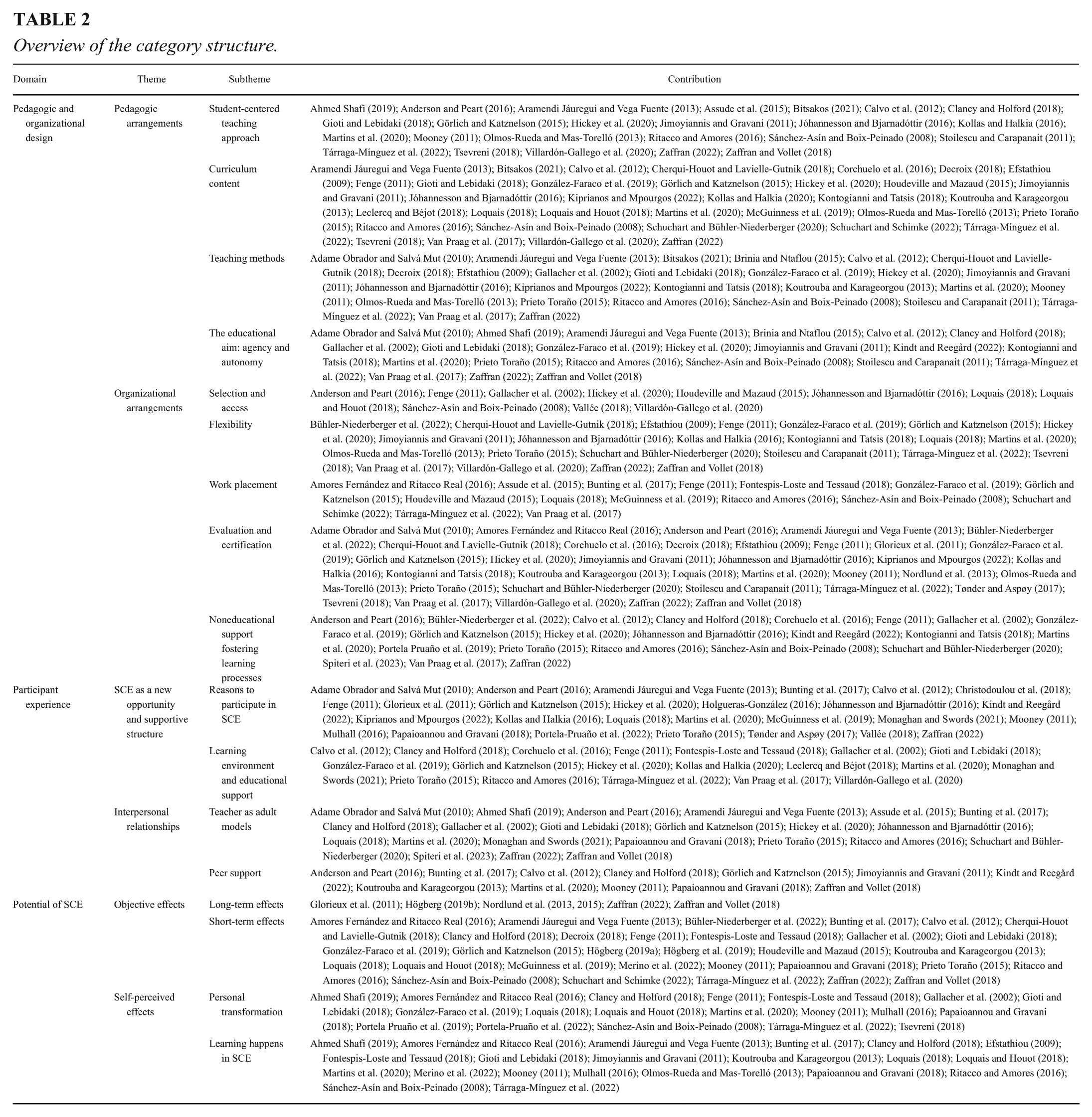
Second, we used thematic synthesis to code data addressing our research questions. Thematic synthesis involves the systematic coding of data and the generation of descriptive and analytical themes (Thomas & Harden, 2008). Using an inductive approach, we developed an open codebook of major categories (Miles et al., 2014). Relevant paragraphs of the primary studies were coded into this codebook, extracting the exact words from the reviewed articles. The codebook was iteratively refined as new studies were analyzed and consistently checked across texts. Codes were organized into a hierarchical tree structure (Thomas & Harden, 2008), yielding three domains, six themes, and 17 subthemes. All coding was conducted with MaxQDA software.
Finally, we drafted a domain-based summary of findings. One author wrote themes and subthemes, which were reviewed and rewritten by the full research team. Through this process, abstract interpretations and relations among themes and subthemes emerged, leading to a definitive version of the category structure agreed by all four authors. The findings were then written to capture the main points in each analytical theme, further restructured by reviewer’s feedback.
Limitations
We acknowledge a number of methodological limitations. First, we restricted our synthesis to peer-reviewed “white literature” (Lawrence et al., 2014), excluding gray literature due to difficult access and heterogeneity (Alexander, 2020), though publication bias remains a concern (Adams et al., 2017; Mahood et al., 2014). Second, while our research synthesis used a multilanguage approach including English, Spanish, Portuguese, and French search terms, excluding other European languages may have introduced bias and limited coverage of European SCE research. Third, despite careful manual selection, relevant studies may have been overlooked due to database limitations or human error. Fourth, although all included studies were appraised, their quality varied, as appraisals do not ensure uniformly high standards.
Results
Overview of the Selected Articles
Publications on SCE have gradually increased, though unevenly across years and countries (see Figure 2). Spain, France, and Greece produced the most studies, while others like Portugal, Denmark, and Romania had few, and some countries like Italy, Finland, and Malta had none (see Table 1). However, our aim was not cross-country comparison or program evaluation but to describe how European research defines SCE and its potential to reengage early school-leavers.
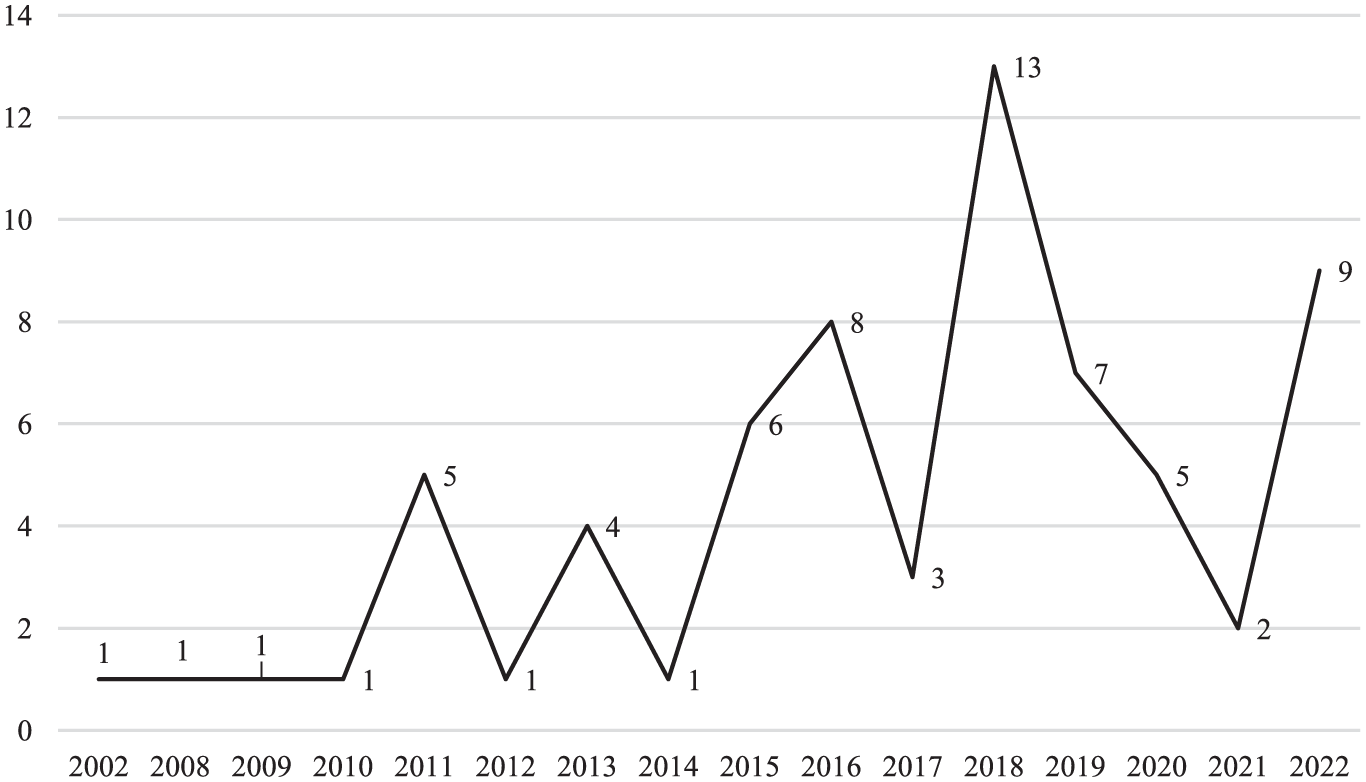
Number of published articles per year.
Overview of the selected studies.
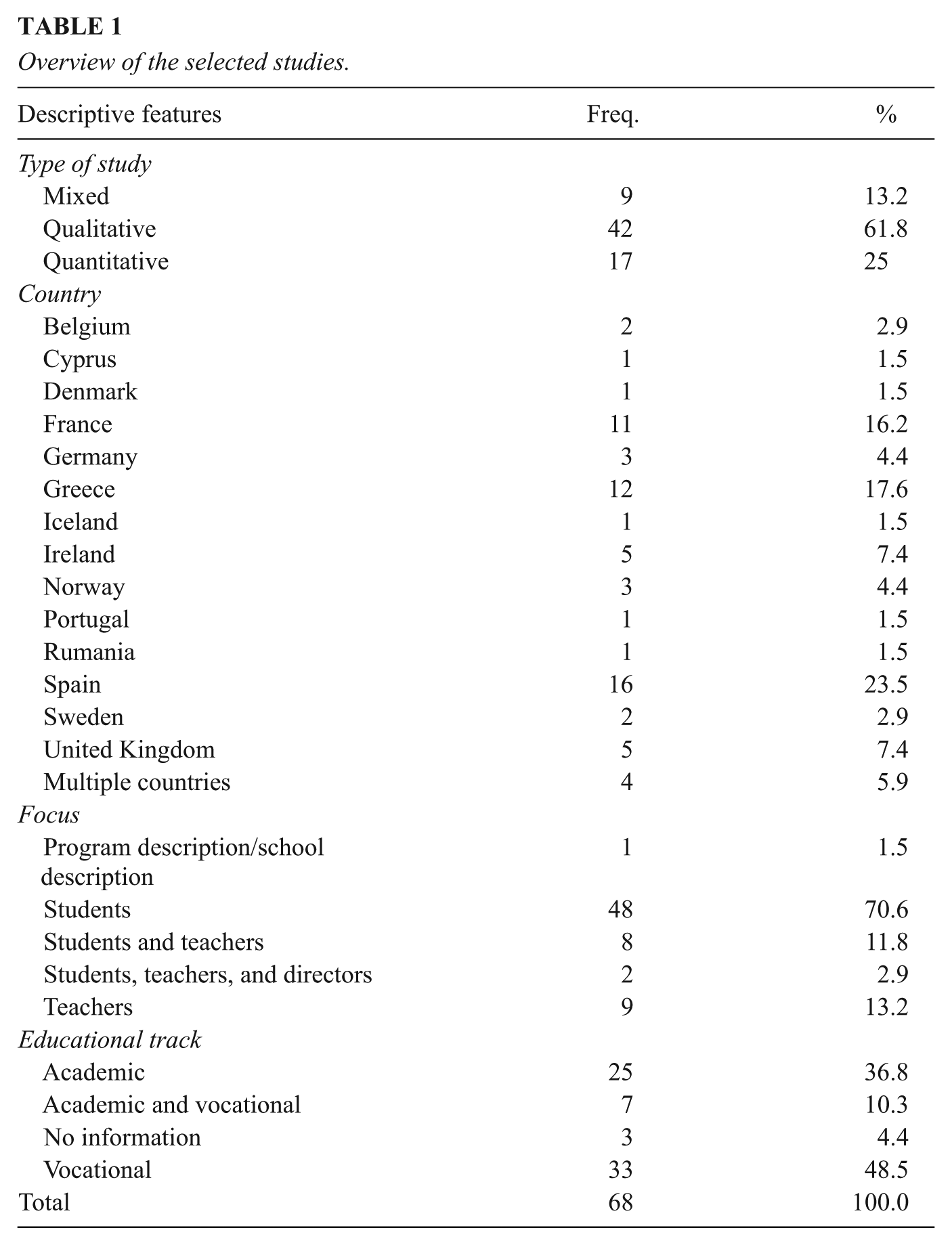
Most studies used qualitative methods (61.8%), followed by quantitative (25%) and mixed-methods (13.2%) (see Table 1). Qualitative studies relied on interviews, focus groups, and observations; quantitative studies used surveys, institutional data, and large datasets like the European Social Survey (Högberg, 2019a) or Swedish Longitudinal Integrated Database for Health Insurance and Labor Market Studies (Nordlund et al., 2013, 2015). Other quantitative studies used data provided by institutions offering SCE courses (Merino et al., 2022). Mixed-methods studies drew on data collected through interviews and self-reported questionnaires (see Table 1).
Most articles reported students’ perspective (70.6%), with fewer including teachers (13.2%), and both students and teachers (11.8%), or students, teachers, and headteachers (2.9%). Only one study reported on program description (González-Faraco et al., 2019). SCE initiatives were mainly vocational track (48.5%), or academic (36.8%), with some combining both (10.3%). Three of the articles (4.4%) did not offer enough information for classification (Högberg, 2019a, 2019b; Högberg et al., 2019) (see Table 1).
Findings of the Synthesis and Analytical Overview
We analyzed 68 original studies across three domains: SCE design, students’ experience, and program outcomes.
The first domain covered pedagogical design (student-centered teaching approach, curriculum content and structure, teaching methods, and the educational aim: agency and autonomy) and organizational arrangements (selection and access, flexibility, job placement, evaluation and certification, and non-educational support fostering the learning process). The second domain explored participants’ reengagement in education, as well as what brought them back to education, including contrasts with prior schooling, motivations to attend and persevere, and relationships with both teachers and peers. The third domain focused on program outcomes, both objective (e.g., income progression, reduced inequality, improved well-being, program completion rates, employment rates, progression to further education, and dropping out rates) and self-perceived (personal transformation and learning). Table 2 shows an overview of the category structure and primary studies contributing to each subtheme.
Overview of the category structure.
Pedagogic and Organizational Design of SCE
Pedagogical Arrangements
Student-centered teaching approach
Research highlighted individualized and student-centered teaching (Clancy & Holford, 2018; Hickey et al., 2020; Zaffran, 2022) that were deemed conducive to participants’ engagement in education (Görlich & Katznelson, 2015), catering to their individual needs and interests (Kollas & Halkia, 2016) and helping them find learning significant and highly relevant to their perceived daily life (Sánchez-Asín & Boix-Peinado, 2008). SCE was shown to recognize students’ core skills and capacities and strengthen their well-being (Hickey et al., 2020), based on respecting everyone’s learning process (Olmos-Rueda & Mas-Torelló, 2013) (also discussed in the participants’ experience domain). Studies emphasized the importance of identifying students’ needs and interests—often before the design of the learning experience—during the recruitment and diagnostic assessment phases (Bitsakos, 2021; Gioti & Lebidaki, 2018; Ritacco & Amores, 2016).
These programs tailored teaching methods to the participants’ characteristics, offering person-centered, scaffolded support and mechanisms to identify individuals’ needs (Clancy & Holford, 2018; Jimoyiannis & Gravani, 2011; Stoilescu & Carapanait, 2011; Tárraga-Mínguez et al., 2022). This is in clear relation to the findings of RQ2, explained later; here, we show how the approach taken by teachers and trainers makes it possible.
Such an approach that favors personalized practice certainly allows for experiential learning to be addressed in SCE and to engage in an education that proves relevant, meaningful, and useful for young people. Of course, certain organizational implications are considered to make this possible: flexibility of time allocated to subjects and pacing of the content to adapt to the students’ rhythm and formative assessment, increasing the pace when necessary, and forming heterogeneous groups, in which interest in a subject decides the shaping criterion.
Curriculum content
SCE programs offered varied forms of knowledge, ranging from theory to practice and across vocational, social, and personal skills. Our analysis revealed that these initiatives tended to focus on technical-professional skills and work-related competences (Leclercq & Béjot, 2018; Loquais, 2018; Ritacco & Amores, 2016; Tárraga-Mínguez et al., 2022)—indispensable skills for facilitating students’ transition to the labor market (Calvo et al., 2012; Olmos-Rueda & Mas-Torelló, 2013; Van-Praag et al., 2017), which are often overlooked in traditional secondary schools that privilege academic knowledge.
However, developing personal and social skills is important as well. These include self-confidence, autonomy, punctuality, and knowing how to conduct oneself, all of which have relevant implications in acquiring a work ethic that satisfies the labor market needs. Students need to learn “some personal qualities” (Houdeville & Mazaud, 2015, p. 37) to be able to behave in different social environments, such as the school itself, their own free time, and, certainly, the workplace (Cherqui-Houot & Lavielle-Gutnik, 2018) and to enable learners to become active and confident members of the community (Gioti & Lebidaki, 2018) through participation, expression of their own ideas, and creativity.
Hence, some initiatives focused on relational and personal aspects—something teachers often do before addressing academic content (Prieto-Toraño, 2015). Either students engage in the cultivation of their self-esteem and confidence (González-Faraco et al., 2019) or they will hardly face the academic demands of learning other kinds of knowledge. However, time and funding constraints can lead to tensions between focusing on more personal and relational aspects and technical-professional approach (Van-Praag et al., 2017). Academic track initiatives also emphasized school-based skills, such as language, math, and science (Kiprianos & Mpourgos, 2022; Kollas & Halkia, 2020; Schuchart & Schimke, 2022).
SCE seriously engaged in content, often by providing students with academic and vocational knowledge without ignoring the need to learn other relevant issues, with basic literacy being particularly relevant. The reported SCE schemes did not ignore the importance of tackling personal and social issues, and they combined all of these to balance knowledge acquisition and engagement. In the end, SCE students are youngsters who need all those different kinds of knowledge for their present life and not only for their future chances of employment or to pursue further academic studies. To address all these content areas, SCE tended to adopt the common structure of a modular curriculum, deemed the most suitable for facilitating flexibility (as also explained later when addressing the organizational arrangements).
Teaching methods
Most articles highlighted integrative pedagogic approaches; practice-oriented, project-based learning; and technology-based teaching methods. SCE used teaching methods that integrated different knowledge and abilities, such as project-based learning (Cherqui-Houot & Lavielle-Gutnik, 2018). Furthermore, the programs often used school workshops to facilitate practical, meaningful learning that could contribute to the acquisition of vocational skills.
Teaching often drew on students’ daily lives (Koutrouba, 2013) and emphasized the use of examples taken from students’ professional or personal experiences (Aramendi-Jáuregui & Vega-Fuente, 2013; Jimoyiannis & Gravani, 2011) and their social surroundings (Kipriano 2022), which students valued (Martins 2020; Olmos-Rueda & Mas-Torelló, 2013).
In addition, studies emphasized collaborative methods, promoting peer-led collaboration (Hickey et al., 2020), teamwork (Kiprianos & Mpourgos, 2022), and teacher–student collaboration (Cherqui-Houot & Lavielle-Gutnik, 2018). Technologies were used, when possible, embedded in the teaching methods to foster collaboration and manage students’ learning (Brinia & Ntaflou, 2015; Kiprianos & Mpourgos, 2022; Mooney, 2011; Jóhannesson & Bjarnadóttir, 2016). The studies also highlighted strategies that included group-led discussions (Hickey et al., 2020) and practical activities inside or outside the classroom or school (Martins et al., 2020).
The studies reported on a tailored didactic approach of SCE, relying upon cooperative work and collaboration among peers and teachers, with a pace that suited the needs of the students and helped them advance to become and feel competent and satisfied. This was also related to the participant experience domain, specifically linked to interpersonal relationships.
Educational aim: agency and autonomy
SCE promoted autonomy by offering learners the opportunity to tailor the program to their needs while demanding commitment on their side, through “teaching and learning practices that promote (. . .) students’ active involvement and decision making” (Jimoyiannis & Gravani, 2011, p. 225) and allowing students to “take their own decisions” (Aramendi-Jáuregui & Vega-Fuente, 2013, p.451).
Analysis revealed that students appreciated the conditions of autonomy and sense of agency that were developed in the classrooms (Ahmed Shafi, 2019; Martins et al., 2020). For example, in some cases, students were given the opportunity to choose their own grouping and even types of exams (Calvo et al., 2012). Students also valued the opportunities to make decisions about the content of their studies (Gioti & Lebidaki, 2018; Jimoyiannis & Gravani, 2011) and make suggestions about their learning (Martins et al., 2020).
These “spaces of agency” (Martins et al., 2020) provided by the SCE initiatives gave young individuals the opportunity to engage in “‘authentic inquiry” (Ahmed Shafi, 2019), finding meaning and practical application. The autonomy-supportive climate served to connect with students’ own competences, enabling them to build their self-confidence (Martins et al., 2020) and encouraging them to invest time in their learning project (Zaffran & Vollet, 2018).
However, two of the articles (Ahmed Shafi, 2019; Calvo et al., 2012) reported overprotection practices on the side of teachers, which hindered possibilities of autonomy for students. Giving them responsibility over their own learning process is important, and teachers and trainers must be aware of it.
Stakeholders must therefore question the extent to which SCE is capable of providing agency and autonomy when it has content to deliver but lacks the time to fulfill its role. The most relevant issue might be the acknowledgment that staff in SCE trusts in the possibilities of the students enrolled—young people who have become used to listening that they are not valid or capable, that they are underachievers, and that they are slow or weak learners.
Organizational Arrangements
Selection and access
Studies, particularly from France and Spain, did discuss a selection process to access SCE programs (Houdeville & Mazaud, 2015; Loquais, 2018; Loquais & Houot, 2018; Vallée, 2018), wherein participants were required to demonstrate their motivation to complete the training (Houdeville & Mazaud, 2015) and their engagement with the program (Loquais, 2018). This selection process often resembled a motivational interview conducted at the beginning of the course to gather information about participants’ expectations, assess any challenges they may face, and initiate the process of establishing trust-based links with students (Vallée, 2018; Villardón-Gallego et al., 2020).
The need for selection procedures stems partly from the scarcity of available positions, given that SCE is not compulsory, and availability depends on location (e.g., Iceland; Jóhannesson & Bjarnadóttir, 2016), and partly from institutions’ efforts to match their offer to young people’s needs, to avoid early dropout and ensuring meaningful participation. The offer of SCE tended to be limited, but it adhered to certain quality criteria that facilitate reengagement: smaller classes (Anderson & Peart, 2016; Hickey et al., 2020), informal settings (Gallacher et al., 2002), and locations that are commonly geographically and culturally close to students (Fenge, 2011; Sánchez-Asín & Boix-Peinado, 2008).
The consequence of this selection process is that the success of SCE has relied on the recruiting practice of the institution, which will consider whether work placements are on offer or official accreditation of qualifications will be available at the end of the process. These institutions also consider the diagnostic assessment that they conduct with young applicants. Appropriate recruitment is crucial to the interests of both the individuals and the institution. As such, SCE institutions are highly heterogeneous. All of these are facilitators of the pedagogical arrangements identified in the previous section.
Flexibility
Flexibility was a common feature of SCE, displayed curriculum design, teaching autonomy, scheduling, and accommodations for different learning rhythms and sites. Programs often offered open or customizable curriculum design, allowing participants to choose among different pathways or define their own itinerary (Jimoyiannis & Gravani, 2011; Tárraga-Mínguez et al., 2022). Educators enjoyed a high degree of autonomy in selecting or adapting content (Cherqui-Houot & Lavielle-Gutnik, 2018). Occasionally, programs operated without a prespecified curriculum (Kontogianni & Tatsis, 2018) and, thus, lacked certification.
SCE commonly used a modular system (Olmos-Rueda & Mas-Torelló, 2013; Prieto Toraño, 2015; Stoilescu & Carapanait, 2011; Van Praag et al., 2017), enabling students to progress at their own pace and focus on the aspects they found most relevant, with respect to the subjects and workshops they registered for. Flexible timetables supported part-time study (González-Faraco et al., 2019; Fenge, 2011) or alternated between ordinary and second-chance schools (Prieto-Toraño, 2015). SCE courses exhibited considerable variation in terms of duration, with some spanning 8 months (Loquais, 2018; Zaffran & Vollet, 2018) and others extending up to 2 years (Efstathiou, 2009; Stoilescu & Carapanait, 2011). This modular design and flexibility accommodated diverse personal trajectories—a key reason students enrolled (Tárraga-Mínguez et al., 2022).
Therefore, flexibility is a landmark of SCE that applies to different dimensions of institutional and curricular arrangements. First, it concerns time and pace, which adapt to each student’s rhythm and affect grouping around subjects and workshops. Second, flexibility has stimulated a trend toward de-standardization of the curriculum, allowing for heterogeneity, where homogenization is often the pattern. Third, all of these happen within the constraints set by the formal recognition that SCE intends to achieve; the more formal the qualifications get, the less room there is for flexibility.
Work placements
SCE programs offered vocational qualifications with practical learning, notably through work experience that prepared students for the labor market (Bunting et al., 2017; Fontespis-Loste & Tessaud, 2018; Görlich & Katznelson, 2015; McGuinness et al., 2019). These placements rarely conferred apprentice status, except in Germany (Schuchart & Schimke, 2022), and often tended to be short, regardless of qualification or level within the National Qualifications Framework. In certain programs, participants alternated between school-based education and workplace learning (Van-Praag et al., 2017). However, work experience was not a universal feature of SCE programs (McGuinness et al., 2019).
Labor-market orientation necessitated collaboration between the school and the employer, yet the role of company trainers was largely absent from the studies. While little is said about placement organization or supervision, studies acknowledge that work experience offered a great opportunity not only for the young people but also for SCE institutions by increasing the potential benefits of their educational practice.
Evaluation and certification
Assessment in SCE was mainly formative, often emphasizing self- and peer assessment (Tárraga-Mínguez et al., 2022; Villardón-Gallego et al., 2020) and, in certain cases, replacing grades (Zaffran & Vollet, 2018) or end-of-term examinations (González-Faraco et al., 2019; Jóhannesson & Bjarnadóttir, 2016) with alternative approaches.
Formative assessment in SCE relied on various methods, such as tutorship, observations, trainee’s logs, forms, and reports (Olmos-Rueda & Mas-Torelló, 2013, Tsevreni, 2018), fostering reflection, autonomy, and authentic learning. In Germany, however, SCE frameworks maintained traditional exams and grading, enabling participants to earn recognized qualifications and access higher education (Bühler-Niederberger et al., 2022).
SCE institutions awarded a range of formal and nonformal qualifications, from primary education (Adame-Obrador & Salvà-Mut, 2010) to lower and upper secondary (Anderson & Peart, 2016; Aramendi-Jáuregui & Vega-Fuente, 2013; Koutrouba & Karageorgou, 2013; Nordlund et al., 2013) as well as initial vocational training certificates (Amores Fernández & Ritacco Real, 2016; Tárraga-Mínguez et al., 2022), trade or journeyman’s credentials granting apprentice status (Mooney, 2011; Tønder & Aspøy, 2017), and certificates of acquired abilities (Decroix, 2018; Loquais, 2018). In some cases, SCE helped participants prepare for official exams to earn their target certifications (Glorieux et al., 2011).
The observed SCE programs made use of formative assessment to increase the learning potential of enrolled students, with the expectation of students earning an officially valid qualification—be it academic or vocational—that would allow them to progress into further education or access employment. Initial assessment during and right after the selection process ensures completion and certification. Furthermore, as explained in the previous section, the more oriented SCE was toward certification and qualification, the less flexibility it tended to show.
Noneducational support fostering learning processes
SCE offered resources rarely available in mainstream education, including economic funding, support from noneducation professionals (e.g., psychologists and social workers), smaller and informal settings, conflict prevention norms, and family support. Economic incentives encourage attendance (Anderson & Peart, 2016; Gallacher et al., 2002; Görlich & Katznelson, 2015; Schuchart & Bühler-Niederberger, 2020) but could be removed if participation was irregular or interrupted (Portela-Pruaño et al., 2019; Zaffran, 2022).
SCE relied on additional staff (Van Praag et al., 2017) or established connections with other institutional agents, including counsellors, psychologists, and social workers (Kindt & Reegård, 2022; Martins et al., 2020; Prieto Toraño, 2015), to promote students’ inclusion by offering them guidance and counselling services. Conflict prevention norms (Anderson & Peart, 2016; González-Faraco et al., 2019; Prieto Toraño, 2015) and family involvement (Calvo et al., 2012; Corchuelo et al., 2016; González-Faraco et al., 2019) were also measures that fostered students’ involvement by helping prevent disruptions. Additional measures such as childcare (Gallacher et al., 2002) and housing support (Clancy & Holford, 2018) further enable participation, particularly for women, remote students, or those in youth protection systems.
Participant Experience
SCE as a New Opportunity and Supportive Structure
Reasons to participate in SCE
Studies noted two primary reasons for reengaging in SCE: access to employment and advancement in their educational pursuits. Many young individuals sought to overcome the prolonged period of inactivity (Zaffran, 2022) and demonstrated a desire to become more serious and move forward (Görlich & Katznelson, 2015). Although finding a job would help them achieve this goal, they needed vocational training to make this possible, as a lack of qualifications limited access to the labor market. Other participants joined SCE because it would improve their employment prospects (McGuinness et al., 2019; Portela-Pruaño et al., 2022; Vallée, 2018) or it was perceived as important in terms of better career prospects and job security (Kiprianos & Mpourgos, 2022; Tønder & Aspøy, 2017). In addition, students also enrolled in SCE to complete or continue their interrupted studies (Glorieux et al., 2011; McGuinness et al., 2019; Mooney, 2011).
Other reasons to join SCE included personally engaging with the subject (Mooney, 2011), gaining self-awareness (Vallée, 2018), challenging and transforming the associated stigma (Christodoulou et al., 2018), and appreciating the inherent value of the experience (Papaioannou & Gravani, 2018). Internalized societal expectations regarding school (Kindt & Reegård, 2022; Monaghan & Swords, 2021) and family pressure were also mentioned as reasons to resume education (Kiprianos & Mpourgos, 2022; Portela-Pruaño et al., 2022).
Research revealed that young people enrolling in SCE had sufficient motivation, an expectation of change in trajectory, and the will to find in SCE a way to satisfy their needs and interests. This is certainly related to the selection process mentioned previously, as the initial motivational diagnostic interview allowed SCE staff to identify youth with a greater likelihood of reengagement.
Learning environment and educational support
SCE was reported to provide a supportive environment, where students felt they received the additional support they needed to learn (Fenge, 2011; Monaghan & Swords, 2021). Moreover, they perceived that teachers cared about them (Calvo et al., 2012) and were genuinely concerned about every student’s success (Villardón-Gallego et al., 2020). Students appreciated teachers who knew them personally (Corchuelo et al., 2016). The articles shed light on the possibility of reengagement in SCE and the enabling features, in terms of how students feel respected, considered, and listened to, in huge contrast to their negative experience in ordinary schools. Indeed, when explaining why students attended SCE, the articles often reported how the young students expressed feeling so good in SCE in opposition to their memories from mainstream secondary school. In this regard, experience in SCE could be defined as confronting the ordinary school system.
Second-chance schools fostered resilience, well-being (Clancy & Holford, 2018), and self-confidence (Van Praag et al., 2017) while placing great emphasis on personal development and recognition (Gioti & Lebidaki, 2018; Ritacco & Amores, 2016; Tárraga-Mínguez et al., 2022). Research defined the environment as a suitable space where participants could feel comfortable (Monaghan & Swords, 2021). Furthermore, SCE institutions sought to create spaces that promoted communication, dialogue, and mutual respect (Görlich & Katznelson, 2015; Prieto-Toraño, 2015) and supported their students in daily life and in the face of societal struggles (Van-Praag et al., 2017), enabling them to be committed citizens and learners (Gallacher et al., 2002). The literature analysis revealed the formation of social bonds and friendships among students, highlighting the supportive environment for peer-to-peer interactions and the emergence of an atmosphere of care and respect among participants. This provided a sense of belonging and fostered learning processes, all of which led to learning acquisition.
Articles reported a supportive learning climate that addressed students’ needs for belonging, recognition of competence and progress, and satisfaction with themselves and the institution, guaranteeing attendance and continuity of the learning and development processes.
Interpersonal Relationships
Teachers as adult role models
SCE fostered strong, supportive teacher-student relationships, with educators or mentors investing time and resources in them (Martins et al., 2020; Zaffran, 2022), showing interest in students’ opinions (Jóhannesson & Bjarnadóttir, 2016) and well-being (Gallacher et al., 2002). Studies highlighted strong student–teacher relationships, with educators showing concern for students’ personal circumstances and challenges (Assude et al., 2015; Martins et al., 2020; Zaffran, 2022). These models were regarded as extremely helpful (Gioti & Lebidaki, 2018), supportive (Ahmed Shafi, 2019), patient (Adame-Obrador & Salvá-Mut, 2010), and approachable (Aramendi-Jáuregui & Vega-Fuente, 2013). Students perceived their teachers as having the following qualities: cheerful, helpful, encouraging, supportive, warm, friendly, and affective (Ahmed Shafi, 2019; Aramendi-Jáuregui & Vega-Fuente, 2013; Gioti & Lebidaki, 2018; Jóhannesson & Bjarnadóttir, 2016). Adults place high expectations on students’ outcomes (Anderson & Peart, 2016) and support students by discussing their learning progress, with formative assessments playing a key role in building trust (Ahmed Shafi, 2019; Görlich & Katznelson, 2015).
Participants described their relationships with SCE staff as being based on trust and connection (Aramendi Jáuregui & Vega Fuente, 2013; Görlich & Katznelson, 2015; Ritacco & Amores, 2016), expressing that teachers “believed” in them and deemed them capable of learning (Jóhannesson & Bjarnadóttir, 2016; Zaffran, 2022), proving that the teachers were committed to the students (Anderson & Peart, 2016). Teachers spending time with the students was interpreted as an expression of the latter’s worth and trust (Görlich & Katznelson, 2015); teachers were perceived as a reliable support (Martins et al., 2020), thus becoming significant adults that truly respected, appreciated, and expected the success of the participants (Ahmed Shafi, 2019; Loquais, 2018; Zaffran, 2022). The teachers also helped students recover confidence by encouraging them to overcome the deficiency stigma and avoiding any negative judgments about students’ abilities, consequently gaining the students’ trust (Ahmed Shafi, 2019; Clancy & Holford, 2018; Martins et al., 2020).
In addition, positive teacher–student relationships fostered a “sense of safety” for students (Clancy & Holford, 2018; Hickey et al., 2020), leading students to regard SCE institutions as safe spaces contributing to their feeling of well-being (Görlich & Katznelson, 2015) or as a fair space (Monaghan & Swords, 2021), where participants would not feel victimized—crucial for building confidence and self-esteem (Görlich & Katznelson, 2015).
Feeling well and safe, even when challenged, was identified as an important key to promoting personal development and facilitating learning processes. The reported SCE programs managed to secure these conditions. Furthermore, their formative assessment focused on the content and not the person. The students learned from feedback without feeling judged, helping them achieve the criteria to progress in their learning and development, both of which could contribute to enhancing competence and awareness of such achievement.
Peer support
Social structure (Mooney, 2011), informal networks (Bunting et al., 2017), and the creation of social capital (Papaioannou & Gravani, 2018) through peer-to-peer relationships were also reported as assets of SCE. Studies described relationships among students as amicable and positive (Jimoyiannis & Gravani, 2011). The students valued the bonds they formed within the group (Koutrouba & Karageorgou, 2013) and felt supported by their classmates in academic matters (Anderson & Peart, 2016; Bunting et al., 2017) and personal issues (Martins et al., 2020; Mooney, 2011).
Group cohesion was relevant to enhancing students’ learning experience (Mooney, 2011), as being part of a group was essential for participants to involve themselves in educational activities (Görlich & Katznelson, 2015), resulting in workgroups being made easier (Görlich & Katznelson, 2015), given that students helped each other to get the work done (Anderson & Peart, 2016). The bonds that participants established with peers also prevented dropping out (Bunting et al., 2017). Zaffran (2022) argued that commitment to the institution was strengthened by the formation of new networks and social relations, which acted as a protective factor against dropping out. However, in some cases, high turnover of students limited the consolidation of groups, leaving some isolated and fostering insecurity among classmates or aversion toward school (Calvo et al., 2012; Kindt & Reegård, 2022).
Despite the problems, research on SCE does not report bullying or conflict in peer relations—issues commonly found in research on secondary schools. The relations that SCE promoted among peers, considering the heterogeneous group of youngsters that they served, were solid and relevant to promote the sense of belonging while satisfying personal development within the group. All of these set up an appropriate basis for a good climate for learning.
Potential of SCE
Objective Effects
Long-term effects
Few articles investigated the long-term effects of SCE. These studies incorporated diverse measurements, including income progression (Nordlund et al., 2013, 2015), reduced inequality (Glorieux et al., 2011; Zaffran, 2022), and improved well-being (Högberg et al., 2019). Using a sample from Nordic countries, Nordlund et al. (2013, 2015) observed that SCE had “impressive effects on the income progression of poorly educated people” (2015, p. 538), providing evidence that SCE could improve long-term labor market prospects for low-educated people. This was also reflected in greater income development compared with medium-educated people (Nordlund et al. 2013). Meanwhile, Zaffran (2022) and Glorieux et al. (2011) revealed that SCE could not reduce preexisting inequalities: SCE initiatives assured a positive result (program completion, employment, and education progression) for those who already had educational advantages. These authors argued that participants who succeeded in SCE already had socioeconomic and educational advantages and that, therefore, SCE did not have great added value. Additionally, Högberg et al. (2019) identified only small effects of SCE opportunities on mitigating the negative effects of unemployment on young individuals’ well-being.
Short-term effects
To describe the results regarding this subtheme, we structured our analysis around engagement, retention, progression, and certification.
The analyzed literature reported on engagement through various measures, with studies showing SCE helped students regain curiosity, responsibility, and motivation for learning and developing new working habits (Prieto-Toraño, 2015; Sánchez-Asín & Boix-Peinado, 2008; Gioti & Lebidaki, 2018; Mooney, 2011, Gallacher et al., 2002). Teachers stated that SCE restored students’ interest (Amores Fernández & Ritacco Real, 2016), enabling students to recover from being pushed to the periphery of the educational system (Prieto-Toraño, 2015), often reflected in improved attendance of students with a long history of absenteeism (González-Faraco et al., 2019), or promoting better and higher aspirations for educational progression (Fenge, 2011). Sources of engagement for students included learning practical and useful knowledge (Gioti & Lebidaki, 2018); avoiding boredom (Görlich & Katznelson, 2015); joy, well-being, and satisfaction (Aramendi-Jáuregui & Vega-Fuente, 2013); subject interest (Mooney, 2011); and proving personal capability (Fenge, 2011). In addition, positive teacher–student and peer relationships foster engagement (Görlich & Katznelson, 2015), as do future plans and new expectations (Papaioannou & Gravani, 2018). Furthermore, SCE’s small and informal settings proved vital to engage students who had often experienced traumatic situations in ordinary schools (Clancy & Holford, 2018).
However, not all students became motivated; many faced barriers to reengagement (Gallacher et al., 2002), such as family breakdowns (Loquais, 2018) or mental health issues (Bunting et al., 2017), or continued to live in precarious situations that hindered their chances to commit to long-term projects (Loquais, 2018), had limited support networks (Bunting et al., 2017), or lacked self-confidence (Cherqui-Houot & Lavielle-Gutnik, 2018). Students at risk of dropping out of SCE included those attending involuntarily (Loquais, 2018), who tended to isolate themselves (Mooney, 2011), or who lacked the necessary ability (Schuchart & Schimke, 2022). Socioeconomic background was also a key factor: students from less privileged family backgrounds and older participants were more likely to drop out (Bühler-Niederberger et al. 2022; Schuchart & Schimke 2022). Finally, Fontespis-Loste and Tessaud (2018)—the only article addressing dropout in SCE—showed that 17% of the students dropped out of the program without qualifications.
Research also reported contradictory evidence regarding successful completion and achievement, as “positive outcomes” (Decroix, 2018, p. 2) encompassed obtaining a qualification, securing employment, and progressing to upper levels of education. Reported completion and qualification rates ranged from 50% (Bühler-Niederberger et al., 2022) to 80–83% (Sánchez-Asín & Boix-Peinado, 2008; Calvo et al., 2012). While some studies argued that SCE upheld mainstream competence standards (Koutrouba & Karageorgou, 2013; Papaioannou & Gravani, 2018; Schuchart & Schimke, 2022), others contended that these programs had lower requirements for earning a diploma (Amores-Fernández & Ritacco-Real, 2016), raising concerns about the guarantee of an equivalent level of competence.
Regarding employment, SCE participants were more likely to transition from unemployment to employment than peers without qualifications (Högberg, 2019b; McGuinness et al., 2019). Job placement rates after completion varied widely from 82.11% (Sánchez-Asín & Boix-Peinado, 2008), 40.2% (Tárraga-Mínguez et al., 2022), and 24.4% (Merino et al., 2022) to 13% (Fontespis-Loste & Tessaud, 2018). Notably, such data need to be contextualized, given the variation in the labor market across regions and countries. Sánchez-Asín and Boix-Peinado (2008) showed that the jobs obtained by SCE students were often precarious, though still valuable for gaining work experience (Amores-Fernández & Ritacco-Real, 2016). Access and progression in higher levels of education also differed, with progression rates among 25% (Fontespis-Loste & Tessaud, 2018), 27% (McGuinness et al., 2019), 43.4% (Merino et al., 2022), and 59% (Amores-Fernández & Ritacco-Real, 2016). Evidence suggested that older students tended to secure employment, whereas younger students tended to progress to higher levels of education (Merino et al.,2022).
Self-Perceived Effects
Personal transformation
Personal growth, behavior change, improved self-confidence, and life-changing experiences were among the perceived results of participating in SCE. Articles highlighted the relevant benefits on students’ personal identities (Gallacher et al., 2002; Mooney, 2011), as they perceived themselves as successful learners (Fenge, 2011), felt better about themselves (Mooney, 2011), or even changed their appearance (Ahmed Shafi, 2019). Students reported striving to distance themselves from their previous trajectory (Loquais, 2018) by renewing their commitment to school activities (Martins et al., 2020) and overcoming the stigma of dropout (Papaioannou & Gravani, 2018). Participation also led to improved relationships with others (Martins et al., 2020), reduced disruptive behavior (González-Faraco et al., 2019; Papaioannou & Gravani, 2018), and adoption of healthy habits (Amores-Fernández & Ritacco-Real, 2016). SCE helped students develop agency over their behavior and emotions (Papaioannou and Gravani (2018; Mulhall, 2016), pursue personal projects (Loquais, 2018), and build self-confidence (Amores-Fernández & Ritacco-Real, 2016; Mooney, 2011; Tsevreni, 2018) in overcoming difficulties (Tárraga-Mínguez et al., 2022) and a belief in their capacity to succeed (Gallacher et al., 2002).
Learning happens
Studies provided evidence of students improving skills and gaining knowledge or simply expressing a positive sense of accomplishment (Bunting et al., 2017), including greater awareness of local and global politics and economics (Clancy & Holford, 2018) and participation in social and political discussions (Gioti & Lebidaki, 2018). Moreover, students felt they improved basic skills, such as literacy, writing, and speaking (Gioti & Lebidaki, 2018; Koutrouba & Karageorgou, 2013; Papaioannou & Gravani, 2018). In addition, they acquired new employment-related skills, such as technical skills in particular occupations (Merino et al., 2022; Olmos-Rueda & Mas-Torelló, 2013; Tárraga-Mínguez et al., 2022), job search techniques (Fontespis-Loste & Tessaud, 2018), and transversal skills, such as communication and teamwork (Martins et al., 2020). Ritacco and Amores (2016) found that students were satisfied with SCE for enhancing their learning experience and increasing their interest in learning.
However, the articles also had contrasting views regarding how these programs enabled students to reach the minimum competence level. Studies showed that 19.6% of the students remained completely apathetic toward the learning process (Sánchez-Asín & Boix-Peinado (2008) and considered SCE too basic to offer substantial possibilities in terms of progression (Loquais, 2018).
The self-perceived results of SCE can be considered appropriate outcomes. Despite not being measurable or publicly acknowledged, these results already influenced the lives of the youth involved, with significant positive effects. According to our analysis, students were thankful for SCE and, to a certain extent, it helped them reconcile with education and educators.
Discussion and Synthesis of Common Components of SCE
Our research synthesis contributes to clarifying the dimensions that explain SCE as a pedagogic device that reengages early school-leavers by providing complementary and compensatory services to young people whose needs were not properly covered by the mainstream systems. The first research question explores the key characteristics of SCE programs, where the literature identifies common features that satisfy the varied multidimensional needs of students. Across countries, SCE is designed in collaboration with mainstream schools, emphasizing student-centered learning, in safe environments that support both personal and social development. Programs are typically organized in reduced, heterogeneous groups, allowing for flexible, hands-on, and project-based methods. Student-centeredness facilitates greater responsibility, autonomy, and agency, encouraging students to take ownership of their educational path, compared with mainstream education. Curriculum content includes basic literacy skills, social and personal skills, and vocational and academic knowledge. This breadth of the curriculum makes it adaptable to the highly heterogeneous group of participants, helping them build skills, pursue their goals, and find possible vocations.
SCE entails a range of organizational arrangements, enabling tailored responses to students’ needs. Participation is voluntary, and selection procedures, where enforced, focused on motivation to learn rather than academic records, ensuring proper matching between the offer of SCE and the needs and capacities of potential participants. Participants’ heterogeneity is the result of a prominent feature of SCE: flexibility. Flexibility defines access, curriculum, and duration: students follow individualized paths, adapted to their own pace and rhythm, supported by formative assessment practices, increasing the chances to succeed. Assessment in SCE aims to achieve a recognized qualification and to stimulate personal development. It also focuses on acquiring social, personal, and technical skills with marketable value that facilitate labor market access (Smyth et al., 2013). These aims are more relevant than mere academic success (De Witte et al., 2013). Related to access to the labor market, these initiatives promote employment access through combined school- and work-based learning, primarily associated with vocational tracks. Given the vulnerable condition of SCE participants, programs often include noneducational support to foster learning and engagement, aligning with research that highlights institutional support as key to early school-leavers’ reengagement (Ross & Gray, 2005).
The second research question focuses on how young individuals enrolled in SCE programs perceive and experience their return to education, unpacking the dynamics that may contribute to the success of SCE. The literature emphasizes key distinctions between SCE and mainstream secondary education, mainly regarding the role of teachers and peers, as well as the recognition of students’ abilities and potential to succeed. Common features of SCE across Europe include trust in students’ capacities, higher expectations in their developmental trajectories, value in their contribution as adult citizens, and stronger confidence in personal and social growth. SCE is thus characterized by a supportive and trusting climate that provides a safe space for learning, relationship-building, and development, even for students facing harsh conditions in life, such as limited family support or migration-related challenges, all of which are elements that hinder well-being and learning. While support networks within SCE are highly significant, they cannot always compensate for all the needs that students sometimes carry with them.
The third research question examines the potential of SCE programs presented in the reviewed literature. Much of this research relies on self-reported data from students, teachers, and trainers, seeking to elucidate their lived perspectives and experiences within SCE programs. This extends beyond simply “giving voice” to participants and reflects an effort to capture how they perceive and make sense of the changes in their lives owing to their involvement in SCE. While this body of qualitative research offers rich and meaningful insights—often highlighting perceived improvement in skills, engagement, and personal development—it rarely provides measurable, observable, and verifiable evidence of outcomes. Few studies contrast these findings with external indicators, such as qualifications attained or transitions into employment or long-term effects on educational progression, income, living conditions, or well-being. Current evidence remains scarce and fragmented, with most research emphasizing short-term effects, such as engagement measured through daily attendance, increased motivation or aspirations, or renewed interest in learning. More research is needed to identify whether SCE improves participants’ education, employment, and living conditions—an issue of effectiveness (Inbar & Sever, 1989). This limitation hinders robust consideration of the tangible impact of SCE programs and makes it difficult to obtain relevant information to estimate whether attending SCE satisfies similar aims as mainstream education. It is important to note, however, that our research approach is not evaluative: we only attempted to elucidate the functioning of SCE.
Policy Recommendations
Understanding the curricular and organizational features of SCE and their reported effects has allowed us to provide insights that may inform policymakers at the local, regional, national, and global levels on how to expand SCE’s impact. Although our sources are European, evidence shows that SCE, while reaching only a minority of students, has the capacity to compensate for educational inequalities and improve educational experience. In this sense, we follow the hints suggested by Boveda et al. (2023, p. 365) of “disrupting complex and intersecting educational inequities.” Our review provides a solid basis for policy recommendations for several reasons: we have focused on SCE, an often-overlooked topic; we have searched in Europe, including multiple language sources; and we have done so while conducting empirical research in cooperation with second-chance schools.
Our recommendation pertains to increasing the offer of SCE to allow more early school-leavers to benefit from attending it as an alternative to their status. Unlike dropout prevention strategies focused on school structures (Freeman & Simonsen, 2015), SCE provides compensatory education, for which our research synthesis has provided good examples and ideas that make them work properly and that should be enhanced by stable and sufficient funding. Such funding is essential for planning an offer that is publicly known to young people and guidance officers, and for the efficient use of this resource.
SCE uses motivational interviews, entry assessments to match offer and demand, tailored teaching programs, enriched curriculum, integrative pedagogies, and connection of formal to informal learning. Together, these dimensions foster reengagement but also require significant staff, time, and investment.
Some other features of SCE are the result of the training of staff, which also provides hints to the initial and further education of teachers and trainers with a view on student relations: respecting the pace and rhythm of the learner, allowing learners to make decisions that affect the organization and pedagogy of the programs, giving formative feedback to students, and assessing their progress and informing them about their progress even in the absence of formal accreditation. SCE is particularly valuable for at-risk groups, and ensuring that teachers are prepared for these contexts is essential to making SCE an equitable and inclusive opportunity.
Our research synthesis also reveals the importance of local interactions in SCE, from adapting vocational modules to articulating the demands of young people and companies to facilitate practical training on the job. These connections also satisfy noneducational needs that have to be resolved to allow learning but imply staff investment and time to develop and strengthen.
Two additional notes are important when considering policy recommendations. First, the literature reviewed on SCE examines practices across various European contexts, not only in terms of statistics on early school-leaving and labor market access but also in educational policies. Research covers countries with segregated and comprehensive secondary education systems; dual and school-based vocational education systems; countries where academic and vocational pathways offer equal progression opportunities and others where choices are restricted; countries with robust youth policies; and countries that lack such policies. This is worth considering when eliciting policy recommendations.
Second, achieving successful transitions depends on the attendance and participation of young people who have left the education system. Retention, attendance, and satisfaction are signs of success, but continuation and reengagement in mainstream education and access to and progression in qualified employment are desirable aims. These outcomes can equip former early school-leavers with better transition into working and adult life, decent work, and successful further education.
Future Research
Our synthesis reveals important knowledge gaps. Limited research addresses whether SCE promotes inclusion or reinforces segregation, both in education provision and in its long-term effects on social integration. Selection procedures may leave out young people who cannot find other opportunities—an area that needs further study. Research should also track why participants leave SCE. Furthermore, exploring cooperation between SCE and mainstream schools, including alternating pathways (Prieto-Toraño, 2015), could shed light on the debates around segregation and inclusion and provide access to certifications that SCE cannot provide. Such collaboration may improve not only satisfaction and attendance but also achievement and recognition.
Research on SCE has lacked a gender perspective, despite evidence that gender strongly shapes early school-leaving (Borgna & Struffolino, 2017; Salvà-Mut et al., 2023; Struffolino & Borgna, 2021). This aspect is often overlooked in SCE research, both in terms of participation and outcomes related to gender. Integrating a gender perspective into SCE research would provide valuable insights into whether and how SCE initiatives address gender inequalities (in Spain, research has indicated that one-third of SCE students are women; Martínez-Morales, 2021).
De Witte et al. (2013) considered the relevance of alternative credentials provided in SCE, yet research offers contradictory results on whether these enhance or hinder access to further education or employment (Glorieux, 2011; Högberg, 2019a, 2019b; Norlund, 2013, 2015; Zaffran, 2022; Zaffran & Vollett, 2018). Historically, vocational and academic post-compulsory qualifications had a very different prestige in Europe, but recent reforms have increasingly focused on facilitating wider access to tertiary and higher education, regardless of the qualification pathway. The emphasis has shifted toward promoting enrolment and progression in upper secondary and higher education, rather than reinforcing distinctions between vocational and academic qualifications (Green et al., 1999; Lasonen & Stenström, 1995; Raffe, 2003) or even pointing to hybridization of vocational education and training (VET) and higher education (Graf, 2013) and the academic drift of VET (Gonon et al, 2025). This evolving approach emphasizes the value of qualifications in supporting lifelong learning and career development, aligning with SCE’s focus on flexible, personalized pathways for reengagement in education and labor market integration.
Our review can be read as an invitation to change the current consideration of dropping out and early school-leaving as a point of no return, framing it instead as a temporary interruption in adolescence caused by a combination of multiple factors (Dupéré et al., 2015) that can be overcome later in life. When early school-leavers find chances to reengage, such as through SCE, or when they find the motivation in solving the need they feel to be more educated, then they can achieve better qualifications and find access to better opportunities in adult and working life.
Supplemental Material
sj-docx-1-rer-10.3102_00346543251400769 – Supplemental material for Reengaging Early School-Leavers Through Second-Chance Education: A Research Synthesis From a European Perspective
Supplemental material, sj-docx-1-rer-10.3102_00346543251400769 for Reengaging Early School-Leavers Through Second-Chance Education: A Research Synthesis From a European Perspective by Ana Inés Renta-Davids, Fernando Marhuenda-Fluixà, Julián Bell-Sebastián and Davinia Palomares-Montero in Review of Educational Research
Supplemental Material
sj-docx-2-rer-10.3102_00346543251400769 – Supplemental material for Reengaging Early School-Leavers Through Second-Chance Education: A Research Synthesis From a European Perspective
Supplemental material, sj-docx-2-rer-10.3102_00346543251400769 for Reengaging Early School-Leavers Through Second-Chance Education: A Research Synthesis From a European Perspective by Ana Inés Renta-Davids, Fernando Marhuenda-Fluixà, Julián Bell-Sebastián and Davinia Palomares-Montero in Review of Educational Research
Supplemental Material
sj-docx-3-rer-10.3102_00346543251400769 – Supplemental material for Reengaging Early School-Leavers Through Second-Chance Education: A Research Synthesis From a European Perspective
Supplemental material, sj-docx-3-rer-10.3102_00346543251400769 for Reengaging Early School-Leavers Through Second-Chance Education: A Research Synthesis From a European Perspective by Ana Inés Renta-Davids, Fernando Marhuenda-Fluixà, Julián Bell-Sebastián and Davinia Palomares-Montero in Review of Educational Research
Footnotes
Appendix
Scoring system for mixed studies reviews (Pluje et al., 2009, p. 540).
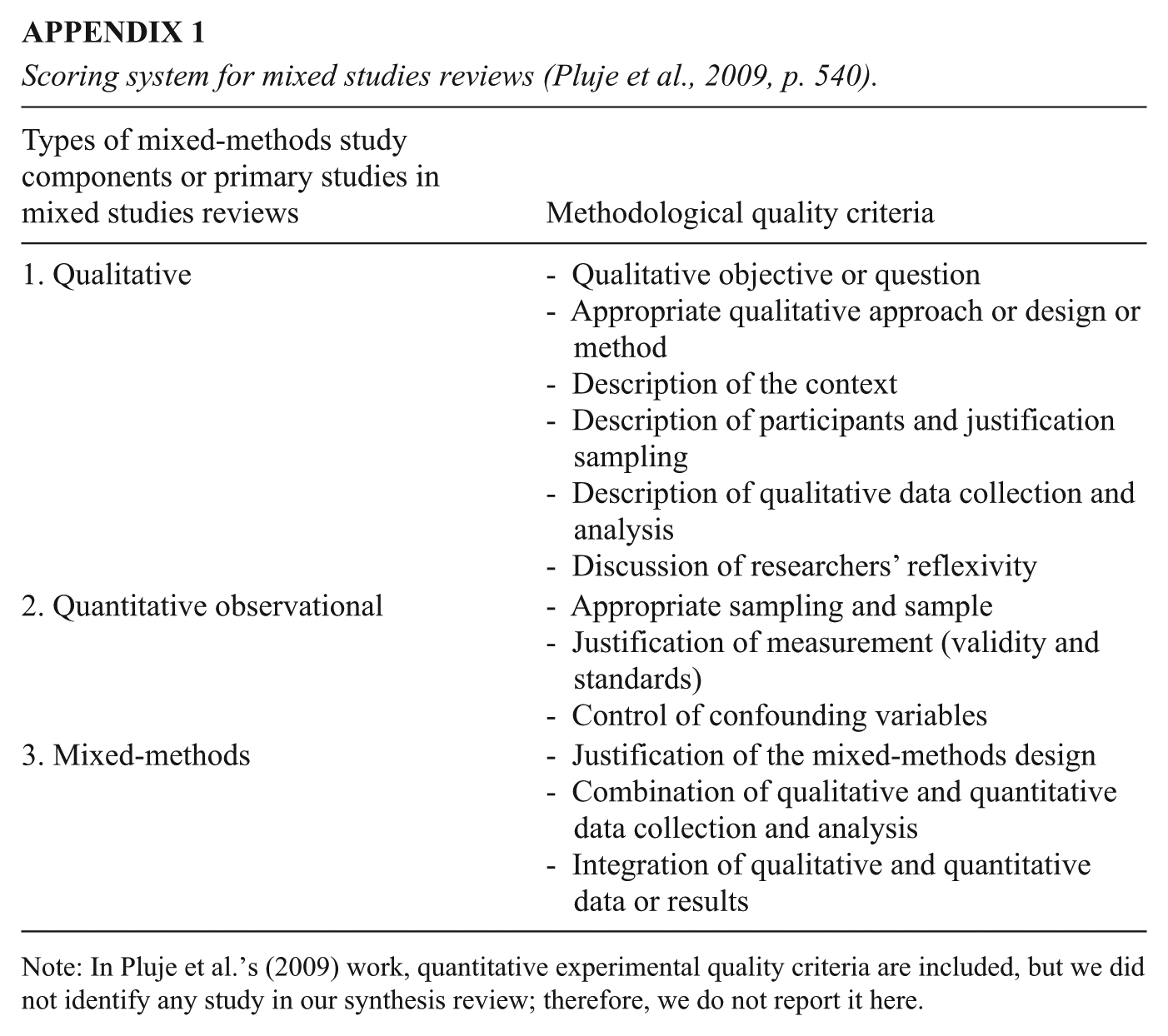
| Types of mixed-methods study components or primary studies in mixed studies reviews | Methodological quality criteria |
|---|---|
| 1. Qualitative | - Qualitative objective or question - Appropriate qualitative approach or design or method - Description of the context - Description of participants and justification sampling - Description of qualitative data collection and analysis - Discussion of researchers’ reflexivity |
| 2. Quantitative observational | - Appropriate sampling and sample - Justification of measurement (validity and standards) - Control of confounding variables |
| 3. Mixed-methods | - Justification of the mixed-methods design - Combination of qualitative and quantitative data collection and analysis - Integration of qualitative and quantitative data or results |
Note: In Pluje et al.’s (2009) work, quantitative experimental quality criteria are included, but we did not identify any study in our synthesis review; therefore, we do not report it here.
Acknowledgements
The authors thank the reviewers for their thorough evaluation and constructive feedback over several rounds. We have tried to consider their comments and suggestions, which have substantially improved the clarity, precision, and overall quality of the manuscript. The authors thank Editage for English-language editing.
Funding
The authors disclosed receipt of the following financial support for the research, authorship, and/or publication of this article: This research was supported by the Department of Innovation, University, Science and Digital Society of the Valencian Community under Grant AICO/2021/254. This work was conducted during a stay of the first author at the Universitat de València, supported by the URV Requalifica program (2021-URV-RQ-06), and during a stay of the second author at the Swiss Federal University for Vocational Education and Training, supported by the Salvador Madariaga Program (Reference PRX22/00214).
ORCID iDs

Authors
ANA INÉS RENTA-DAVIDS is an associate professor in the Pedagogy Department of the Universitat Rovira i Virgili, Spain. She holds a PhD in Education from Universitat Rovira i Virgili (2013) and Master Erasmus Mundus for Training the Trainers from the University of Granada (2009). Currently, she is member of the research group EDIT (Educational Leadership, Transformation, and Sustainability). Her main research interests are the relationships between education and work. Her main research lines are workplace learning, employability, informal learning, competence development and competence evaluation, and teacher initial and continuous education.
PROF. DR. FERNANDO MARHUENDA-FLUIXÀ is a full professor at the Universitat de València, Spain. He holds a PhD in philosophy and educational sciences and is coordinator of the research team Transicions (GIUV2013-093), which does research on vocational education, vocational training, and transitions from education into work, with a particular focus on people who live in vulnerable conditions. Lecturer for the bachelor’s in social education (didactics and organization in formal and nonformal education institutions, training for employment and social inclusion) and in the master’s in social economy (qualitative research methods and research in work integration enterprises).
JULIÁN BELL-SEBASTIÁN is a PhD candidate in the doctoral program in education at the Universitat de València, Spain. He holds a master’s degree in secondary education teaching, specializing in educational guidance, and graduated in pedagogy at the same institution. He is a member of the research group Culture, Diversity and Development (CUDIDE) and is also a collaborator of the research group Transicions.
DAVINIA PALOMARES-MONTERO holds a PhD in sociology from the University of Valencia. She is a tenured professor in the Department of Didactics and Scholar Organization in the Faculty of Philosophy and Sciences of Education at Universitat de València, Spain. She is a member of the research group Transicions. She is interested in the study of higher education curriculum design, vocational training, and the analysis of multidisciplinary innovation for social change.
References
Supplementary Material
Please find the following supplemental material available below.
For Open Access articles published under a Creative Commons License, all supplemental material carries the same license as the article it is associated with.
For non-Open Access articles published, all supplemental material carries a non-exclusive license, and permission requests for re-use of supplemental material or any part of supplemental material shall be sent directly to the copyright owner as specified in the copyright notice associated with the article.
