




Abstract
School-choice programs may increase schools' incentives for marketing rather than improving their educational offering. This article systematically reviews the literature on the marketing activities of primary and secondary schools worldwide. The 81 articles reviewed show that schools’ marketing has yet to be tackled by marketing academics or other social scientists outside the education field. Market-oriented U.S. charter schools and their international equivalents have stimulated recent research, but geographical gaps remain, particularly in countries with long-established school-choice policies and in rural areas. Schools deploy a range of marketing techniques with the intensity of activity directly correlated to the level of local competition and their position in the local hierarchy. Studies have analyzed schools’ use of market scanning, specific words and images in brochures, branding, segmentation, and targeting. These marketing activities are rarely accompanied by substantive curricular change, however, and may even contribute to social division through targeting or deceptive marketing activity.
Keywords
Introduction
Choice-based mechanisms as a means of allocating students to schools are now incorporated in a variety of ways into a broad range of school admission policies in different countries worldwide. Parental choice of school has been part of the English education system since 1988, for example, and it is similarly well established in countries such as the United States, Chile, Sweden, and increasingly across Europe (Bettinger, 2011; Boterman et al., 2019; Epple et al., 2017; Fack et al., 2019; van Zanten and Kosunen, 2013; Wilson and Bridge, 2019). With education policies in many countries moving toward more market-like arrangements—in which schools compete for pupils and therefore funding, and parents choose schools—the issue of school choice has become much more significant in both understanding and determining students’ educational outcomes. Despite its political popularity, however, the effect of school choice is a somewhat contested field. Exponents have argued that increasing competition between schools through parental choice based on published measures of quality raises school quality and thereby students’ educational outcomes (essentially, test scores) (Hoxby, 2003) and that choice promotes increased equality of access to “good” schools by breaking the geographical link between pupil residence and school (Cantillon, 2017). Critics of choice have countered that in fact standards have not been raised, and there is still a middle-class advantage in the education market, which leads to potential social inequalities and division (Jabbar et al., 2019; Wilson and Bridge, 2019). Both sides claim to hold the theoretical and empirical imperative (Bridge and Wilson, 2015), whereas the evidence to support either side is mixed (De Haan et al., 2016; Dijkgraaf et al., 2013; Gibbons et al., 2010; Hoxby, 2000, 2007; Lavy, 2010; Rothstein, 2007; Wilson, 2013).
Central to these debates—and therefore to the (in)equitable effects of school choice on educational outcomes—are questions about how schools respond to the incentives created by operating in a choice-based market for students. As well as providing an incentive to improve quality or productivity, school choice also presents an incentive to employ marketing techniques to attract students. Such marketing practices may be linked to schools’ innovative agenda around differentiating themselves in the education marketplace—through the provision of different curricula, for example, placing more emphasis on technology, sport, or the arts, which in turn links to broader debates about different school types and the creation of real choice for parents. There may also be the incentive for a school to use marketing techniques in less positive ways, however, to attract certain types of pupils to the school, which in turn links to the literature on covert selection practices by schools, their effects on equalities of access, and the potential social divisions that may result (Abdulkadiroğlu et al., 2020; Allen et al., 2012; Hsieh and Urquiola, 2006; Thrupp, 2007; West et al., 2004, 2006). For example, a recent national audit study of 6,452 schools in school-choice systems across the United States highlighted the practice by schools of selectively providing application information to families, finding that schools respond less often to messages from those students perceived to be more challenging to educate, including those with Hispanic-sounding names and those with a special educational need (Bergman and McFarlin Jr, 2020). As the authors state (p. 5): “impeding access to information about how to apply could reduce opportunities for disadvantaged students even when there is, ostensibly, equal access (‘open enrolment’).” The question for the present paper, therefore, is whether schools use information selectively in their marketing practices to achieve a similar outcome—and if so, how.
Academics have recently noted, however, that “only a handful of scholars have made headway into the practices and outcomes of educational marketing” (DiMartino and Jessen, 2018, p. 14 [1] 1 ). Indeed, there are only two previous literature reviews (Oplatka and Hemsley-Brown, 2004 [289] and 2012 [291a]): the first from the 1990s comprising 25 papers; the second adding a further nine papers published through to 2011. The contribution of the present paper is to extend and update these earlier reviews by providing the first-ever systematic literature review of research into the effects of marketing by schools.
A key initial aim of our review was to map and scope the breadth of existing literature on the types of marketing practices employed by schools within choice-based allocation mechanisms. Linking to the various kinds of literature outlined previously, we were particularly interested in exploring themes relating to the effects of schools’ marketing practices on educational outcomes broadly defined: does marketing enable innovation and differentiation across schools in terms of the education provision offered, or are such practices more concerned with targeting certain pupil types? (How) does this differ across different types of schools and/or different degrees of competition faced in local areas, and what are the implications for (in)equalities of access and potential social divisions that may result?
Our paper proceeds with a discussion of how we define the key but contested, terms of school choice and marketing practice before describing our systematic review methodology. We then explain how we extracted and categorized the data before we present an in-depth thematic analysis that forms the substantive part of this paper. We conclude with a discussion of our findings and implications for future research and policy.
Scope and Parameters of the Review
The scope of our review is purposely broad as a key initial aim is to map and scope the breadth of existing literature on the types of marketing practices employed by schools within choice-based mechanisms for allocating pupils to schools. As we discuss later, we place no geographical or disciplinary restrictions on our literature searches and consider all stages of compulsory schooling in both the state and private sectors. The breadth of the scope of our review is similarly reflected in the broad definition of school choice we employ. Following Wilson and Bridge (2019), we define school choice as: Choice-based admissions policies . . . which seek to provide families with a degree of discretion in the selection of the school their children will attend. This includes policies that give families at least two options, with parents able to express a preference regarding which school they would like their children to attend. (p. 3202)
This definition includes a variety of policies that break the deterministic link between residential location and school attended. These policies can broadly be classified into systems of “open enrollment” or “opt out” (Wilson and Bridge, 2019). “Open enrollment” provides a systematic market rule for assigning pupils to schools based on households’ expressed preferences. This system was established in England in 1988 (Burgess et al., 2011) and New Zealand in 1991 (Ladd and Fiske, 2001) and is also in place in Finland, Ghana, Romania, Singapore, Turkey, and some U.S. states (Fack et al., 2019; Seppënen, 2003). In open-enrollment systems, households submit rank-ordered preferences for schools, which are honored subject to school capacity constraints and published tie-break admissions criteria, managed by a central admissions authority (a local authority in England, for example) (see Burgess et al., 2019, for a description of this in practice in England). “Opt out” programs allow households to choose alternative school(s) instead of a default neighborhood school. This choice could be through a voucher scheme, where vouchers provide the means to attend fee-paying schools, as was the case in Chile (Hsieh and Urquiola, 2006), or to attend other state schools, as in Sweden and several US states (Epple et al., 2017; Lindbom, 2010). The precise design of school-choice systems within these two broad classifications is extremely varied: vouchers can be “topped up” by parents or not; fee-paying schools can be included or excluded from the system; the number of schools for which households can express a preference varies between a single school and being unrestricted; the assignment mechanism can encourage households to express their true preferences or not (Abdulkadiroğlu and Sönmez, 2003, 2013; Cantillon, 2017; Chen and Sönmez, 2006; Pathak, 2017; Wilson and Bridge, 2019).
A new dimension to school choice, and schools’ marketing practices, has been added by the growth in the number of charter schools and similar since the early 1990s (Abrams, 2016; Epple et al., 2016; Gill, 2016). These have appeared in different parts of the world—the United States, Sweden, Hong Kong, New Zealand, and Chile, for example—and sometimes with different nomenclatures, such as academies or free schools, both of which are found in England and Wales (Eyles et al., 2016). Operating somewhere between private and state schools, they offer (mainly) free education and are open to all but are allowed to operate in a manner that is at least partly autonomous from government control while remaining accountable. Some of these schools are established to attract particular groups within a local population by having specific specialties or facilities—for example, faith schools or small-studio schools. As we discuss later, some of the schools’ marketing practices observed in the literature have been driven by these charter schools and/or their umbrella organizations, and we note the emergence of for-profit charter schools in the United States.
We take a similarly broad approach to how we consider schools’ marketing as a starting point for our review. The term “marketing” has spawned a range of definitions in its 70-year history. Philip Kotler, whose world-leading textbook Marketing Management is now in its 15th edition (Kotler and Keller, 2016), recounts how the concept has evolved through phases: from Henry Ford’s vision of production-led marketing, where the focus was to drive down assembly-line costs to make cars affordable for all, to the product concept, where the focus was, like Dyson’s bagless vacuum cleaner, on creating innovations to make a product stand out from those of competitors, and the sales concept where, like intrusive Facebook adverts, the emphasis is on communicating benefits as loudly as possible. Today, marketing is about understanding consumers and aligning the whole organization to create, deliver, and communicate that value to them (Kotler and Keller, 2016). Marketing is increasingly adopted outside the sphere of consumer goods and services: by charities for fund-raising purposes (e.g., Sargeant, 1999) and by public services, particularly in health. The adoption of marketing by schools is a recent phenomenon, and there is currently no comprehensive documentation on how it is used on a country-by-country basis. Nor is there any systematic regulation of marketing practices by schools—an issue to which we return later. We do not know, therefore, if schools use marketing techniques to understand the needs of local parent groups and to improve and alter the offering accordingly or, alternatively, if schools use marketing (communications) techniques to create a (false) sense of the school offering or to deliberately target pupils that are easy to teach or will boost league table rankings, creating social division and inequity in access to educational provision. A central question in our review is thus what motives drive school marketing. The technique of market targeting has been particularly contested over the years concerning inequalities. Moore et al. (1996) and Alaniz and Wilkes (1998) found evidence of tobacco and alcohol companies deliberately targeting ethnic minority groups with their addictive products, including selling strong malt liquor to more vulnerable groups. On the other hand, “social marketing” has been used by many governments, particularly Australia and the United Kingdom, to target health and behavior change messages to groups with a high prevalence of smoking, drinking, or drug taking and other prosocial messages such as encouraging recycling or doing more exercise (e.g., Lee and Kotler, 2008). Our review aims to establish whether marketing is being used more to understand needs and to craft more appropriate education or, consciously or inadvertently, to create social division.
Methodology
Systematic Review Design and Search Process
We followed the four-step PRISMA process for conducting and reporting systematic reviews (Moher et al., 2020): identification, screening, eligibility, and inclusion. Each step is discussed in turn and summarized in Figure 1.
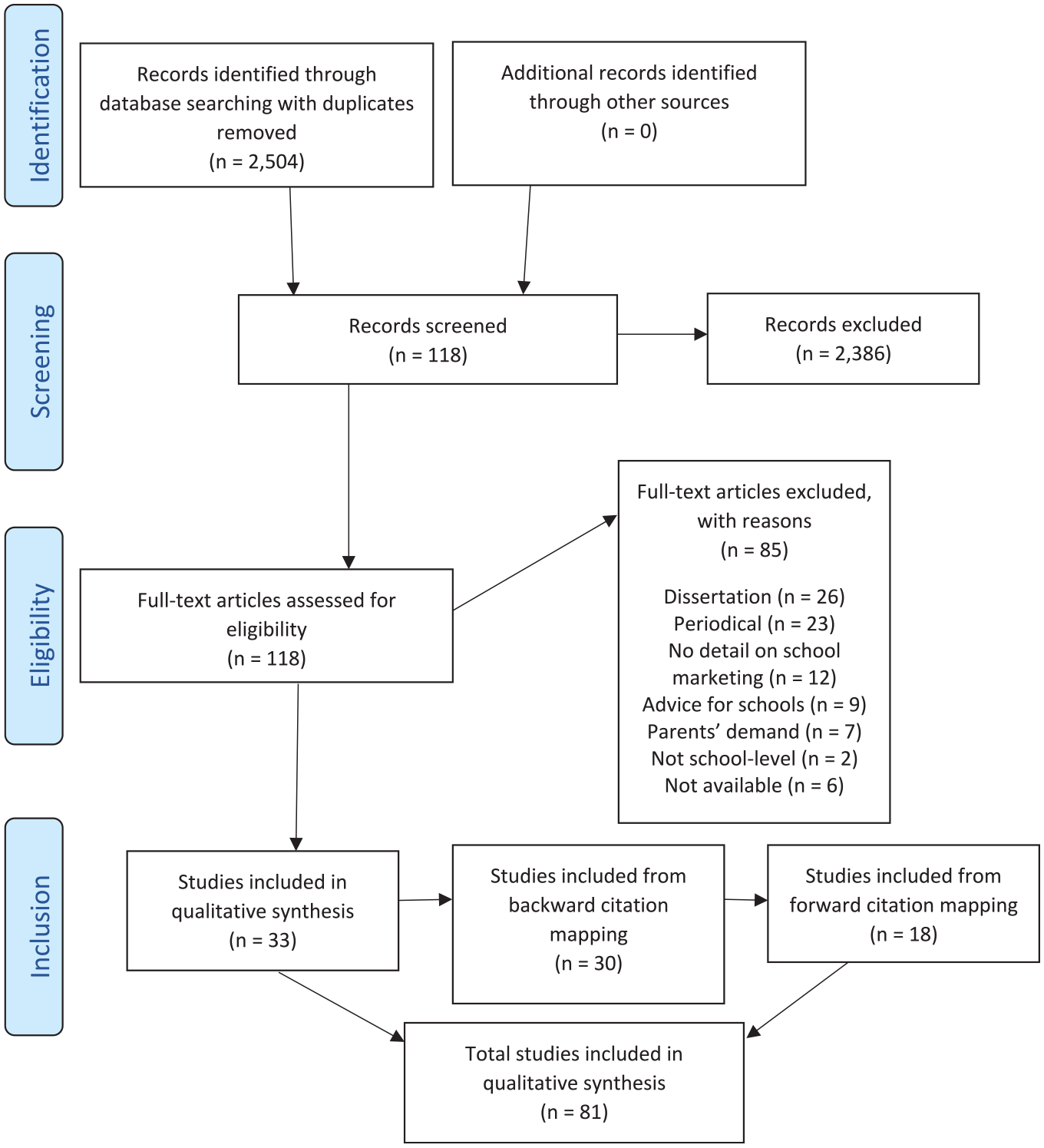
PRISMA flow diagram of our review process.
Identification
Given the cross-disciplinary scope of our review, spanning both the marketing and education literature, and that both draw on a range of disciplines such as economics, psychology, sociology, communication theory, and behavioral economics, our strategy for identifying literature began with electronic searches of 35 general and specialist databases, as listed in Table 1.
Databases searched
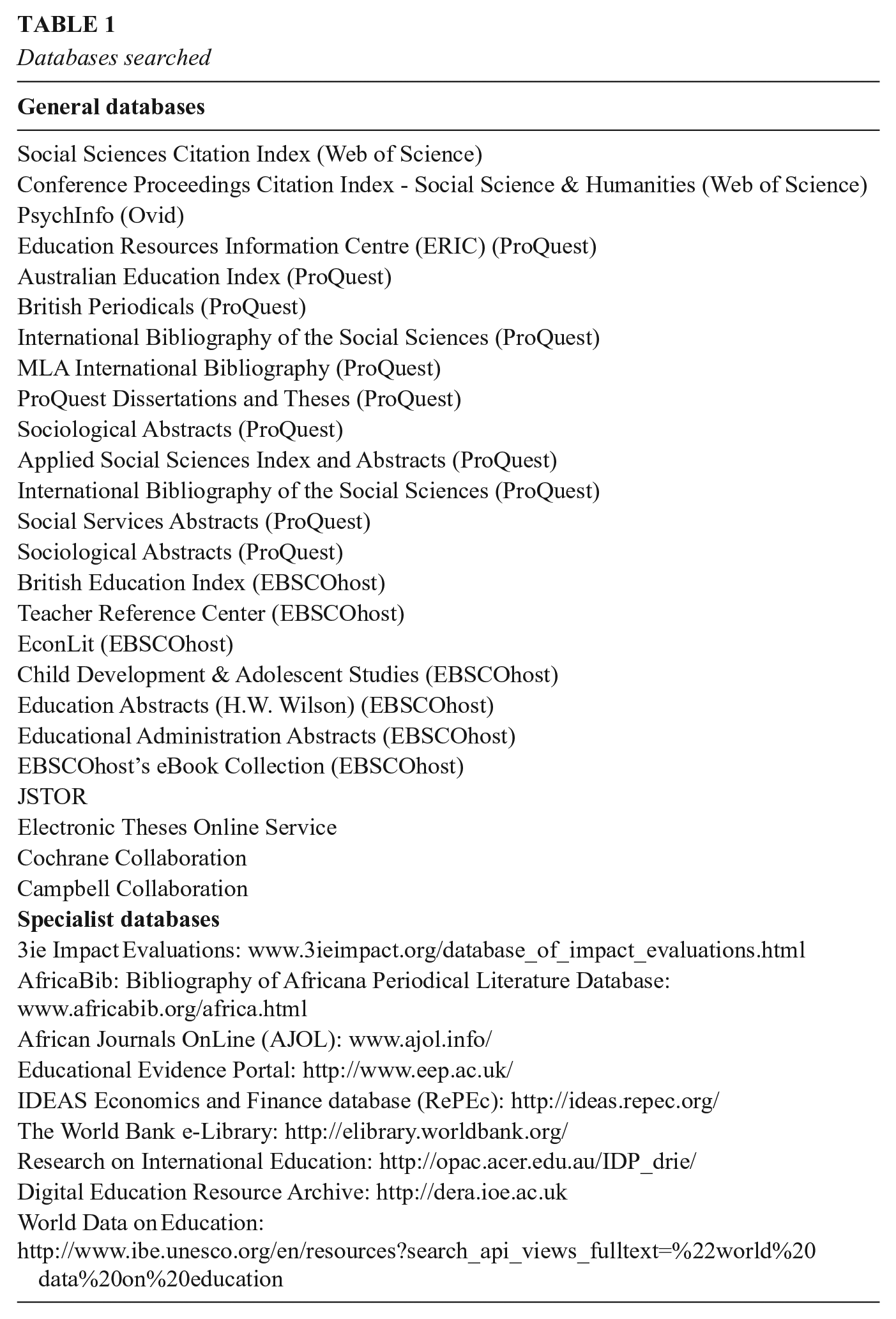
We placed no restrictions on the geography of the research focus, either in the country, community, or rural/peri-urban/urban setting. No time period or study design filters were applied.
Given the scope of our review, we selected the generic term “marketing” to encapsulate all aspects of the activity and supplemented it with “promotion” and “marketing communication.” This went beyond the search terms used in the previous literature reviews (Oplatka and Hemsley-Brown, 2004 [289], 2012 [291a]), which just used the term “marketing.” Given our focus on school choice, we also included the term marketiz/sation, which is a more politically focused term referring to the restructuring of public services that take place when competition is introduced into service provision environments (e.g., Chaudhuri and Belk, 2020). Our search terms are given in Table 2.
Search terms used in database searches
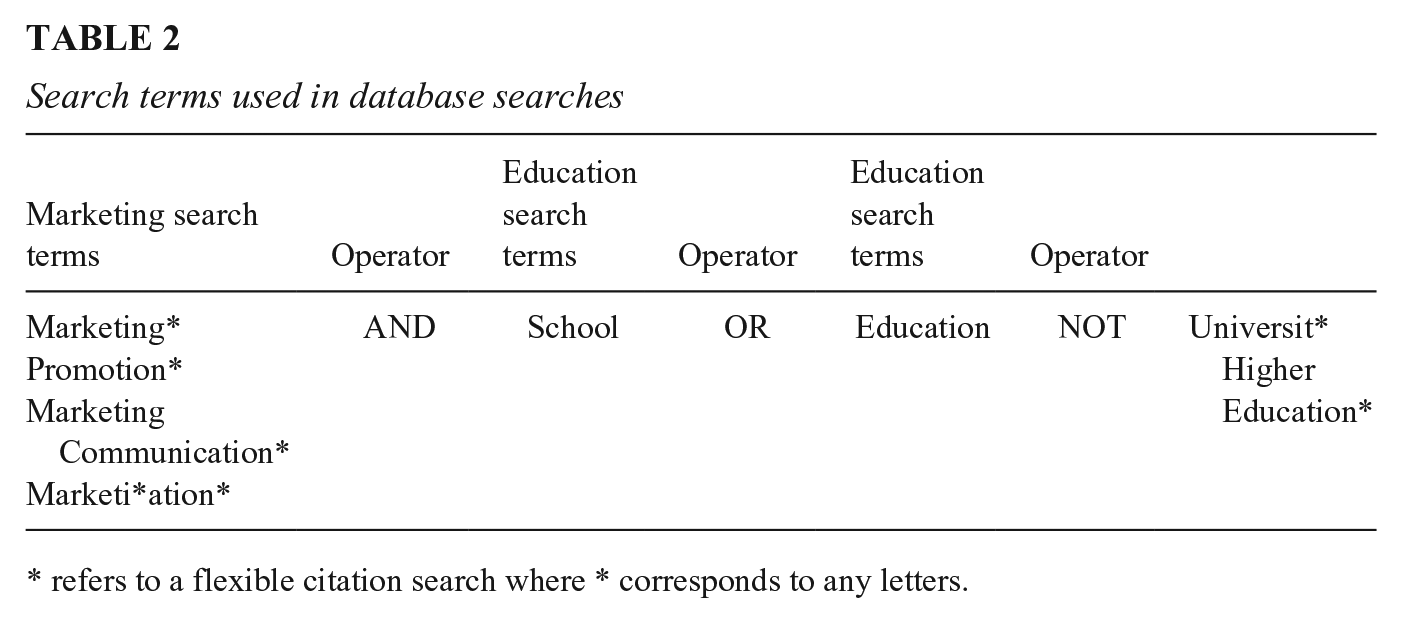
* refers to a flexible citation search where * corresponds to any letters.
One concern may be that our search criteria could exclude studies that describe marketing activities without recognizing them as such—for example, “open house” events where a school presents to prospective parents. We are confident that we have captured relevant studies such as these, however, through forward- and backward-citation mapping. Indeed, we report on studies that explicitly discuss such events as part of our dataset.
The database search was supplemented with additional searches of the relevant gray literature using OpenGrey (www.opengrey.eu/) and the National Technical Information Service (NTIS; www.ntis.gov/). Searches of gray literature led to no additional studies being included, suggesting that the discussion has primarily been academic to date; we return to this point below. This initial search strategy identified a total of 3,287 papers that, when duplications were removed, were reduced to 2,504 original papers, as shown in Figure 1.
Screening
Two rounds of screening adhering to systematic review protocols were then undertaken (Pawson et al., 2005; Whittemore and Knafl, 2005). Excel spreadsheets were used throughout to log the results of all screening processes and inclusion/exclusion decisions.
The first round of screening was carried out by Author 1 and Author 2. Author 1 undertook the initial screening of titles and abstracts of all 2,504 articles.
Inclusion and exclusion criteria.
The following inclusion criteria were applied:
Compulsory education—that is, primary or secondary schools or international equivalents
State or private schools (and the interaction between the two)
Discussion or description of schools’ marketing approaches and/or activities (in their broadest sense)
Theoretical and/or empirical studies
An example of an article that met the inclusion criteria is Zancajo (2018), as this empirical article measures and analyzes schools’ marketing strategies in Chile and how these chosen activities are influenced by the local education market structure around them. For an example of a theoretical study that meets the inclusion criteria, Lubienski (2006) scrutinizes the theory for how schools respond to competitive incentives, including “innovations in administration,” rather than innovating in the classroom to attract pupils. (These included references are given in Appendix 1, which contains the full list of data sources.)
We additionally set the following exclusion criteria:
Theses, dissertations, commentaries, editorials, periodicals
Non-English language texts
An example of an excluded article is Karsten et al. (2001), as it does not discuss or present evidence on marketing/branding/advertising strategies used by schools. Another example is Wen-qi (2011), as although the title contains the phrase “promotion strategies” for schools, the abstract is unrelated to marketing practices.
This initial screening yielded 154 papers (“yes,” 96; “maybe,” 58). These 154 studies were all screened by Author 2 (title and abstract) and results were compared and discussed by Authors 1 and 2 on a case-by-case basis. This process left 118 articles. An example of an article excluded at this stage is West (1992), as on closer inspection we saw that it focuses on the characteristics of schools that parents value and the resulting implications for schools’ marketing activities, rather than how schools currently employ marketing. Although the content has some relationship to our study, this article did not meet our inclusion criteria of “discussion or description of schools’ marketing approaches and/or activities.”
Note that the exclusion of non-English texts may skew the dataset toward Anglo-Saxon countries. The following section shows that research is predominantly focused on the United States, followed by the United Kingdom and Australia. There is a broad range of countries across continents present in the systematic literature review, however, except Africa.
Eligibility
The second, more detailed screening of the 118 papers was then carried out by Author 1 with Author 2. This involved analysis of full-text articles by Author 1 to ensure each study fit the inclusion criteria specified previously. Studies that did not fit the criteria were excluded, and reasons for exclusion were noted (detailed in Figure 1). This yielded 39 papers (“yes,” 27; “maybe,” 12). These 39 studies were all screened by Author 2 (full-text analysis) and results were compared and discussed by Authors 1 and 2 on a case-by-case basis. After discussion, the final number of papers from the initial search was 33.
In addition, Author 1 also undertook both reverse and forward citation mapping of references. Reverse citation mapping was completed during data analysis. Forward citation mapping was conducted after the initial data extraction. This yielded an additional 52 papers. Again, Authors 1 and 2 screened these 52 papers using full-text analysis, and results were compared and discussed by Authors 1 and 2 on a case-by-case basis, resulting in 31 papers from reverse-citation mapping and 19 papers from forward-citation mapping, although one paper from each list was unobtainable and therefore excluded from the final dataset.
Inclusion
Overall, the three preceding steps of the systematic review process yielded a total of 81 papers that formed the final dataset. The full list of these papers, with their unique numeric identifiers, is given in Appendix 1.
Categorization and Principles of Data Analysis
Data analysis in research reviews “requires that data from primary sources are ordered, coded, categorized and summarized into a unified and integrated conclusion about the research problem” (Whittemore and Knafl, 2005, p. 550). We followed realist synthesis protocols (O’Campo et al., 2015; Pawson et al., 2005; Wilson and Bridge, 2019) designed to produce a critical understanding of complex policy intervention effects in different situations. Specifically, this approach involves identifying how a particular program (school choice) works for whom and under which circumstances (here, pupils and teachers in different education settings) given the potential response(s) of key actors (here, the marketing practices of different types of schools).
As explained in the introduction, the school-choice and marketing literature informed our research questions:
Q1: Do schools respond to school choice through marketing practices that enable innovation and differentiation across schools in terms of the education provision offered, or are such practices more concerned with targeting certain pupil types?
Q2: (How) does this differ across (a) different types of schools, and/or (b) different degrees of competition faced in local areas?
Q3: What are the implications for (in)equalities of access and potential social divisions that may result?
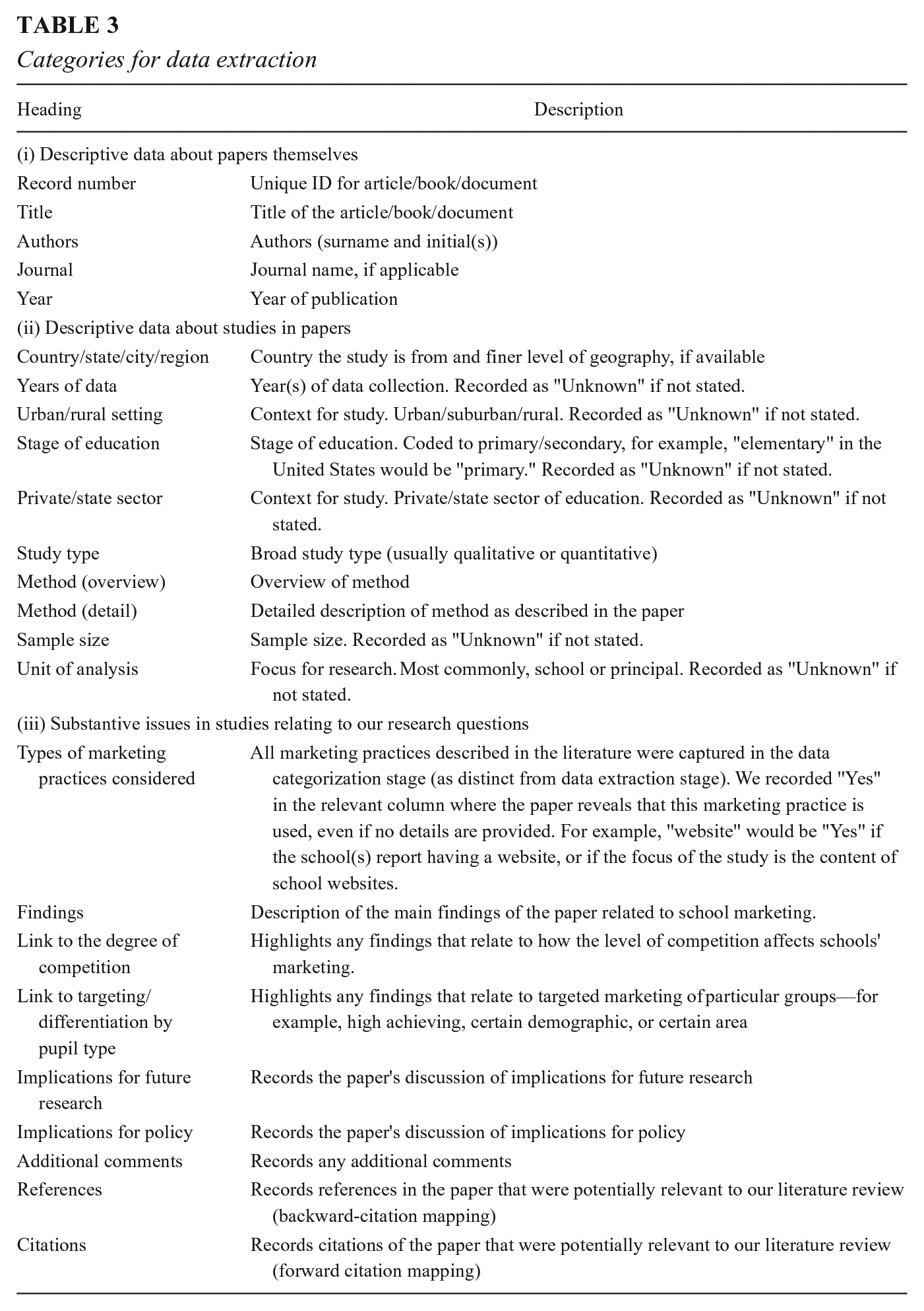
These three research questions informed the categories chosen for data extraction, and these were agreed upon by the authors a priori. These chosen categories were used as the column headings of a shared Excel spreadsheet into which the results were input and are listed in full in Table 3.
Categories for data extraction
There is inevitably some degree of subjective interpretation when analyzing data from a broad range of primary sources (Alexander, 2020; Cooper, 1982), hence the need to be explicit regarding both the categorization of the data extracted from the reviewed literature and the principles guiding the subsequent analysis of the literature review data. We address each of these two issues in turn below.
Categorization of the Data
The data for analysis were extracted from the reviewed literature by Author 1 after a process of moderation with Author 2. Table 3 shows the categories we used to organize our extracted data. We identified three types of data that we judged most useful in our overall goal of addressing our three research questions. These are indicated in Table 3 as follows:
(i) Descriptive data about the papers themselves. These data comprised the record number, the title of the paper, the name of the journal, the year of publication, and the name of the authors. This helped us keep track of the 81 papers and analyze the type of journals in which studies have been published over time.
(ii) Descriptive data about the studies presented in the papers. This included the geographical setting of the study, the year(s) of data collection, stage of education, and whether the study considered the private or state sector as well as the methodologies, and the sampling and unit analysis of the studies. Collectively (i) and (ii) provide the data necessary for a comprehensive description of our dataset and, therefore, of the current literature on marketing and school choice—a key aim of our review.
(iii) Substantive issues in the studies relating to our research questions. The third group of categories in Table 3 is necessarily more open, informed by the literature, and linked to our three questions as per the realist systematic review approach (O’Campo et al., 2015; Pawson et al., 2005; Wilson and Bridge, 2019). Addressing Q1 requires both a full understanding of the breadth of marketing practices employed by schools (in Table 3: “Types of marketing practices considered”) and an analysis of the findings of research into such practices (in Table 3: “Findings”). “Link to degree of competition” and “Link to targeting/differentiation by pupil type” enabled us to fully explore the research findings relating to Q2 and Q3, respectively, across our unique comprehensive dataset. “Implications for future research” and “Implications for policy” allowed for an overview of directions signposted by previous authors. Finally, “References” and “Citations” informed the forward- and backward-citation mapping described previously.
Principles Guiding Thematic Analysis
In answering our research questions, our core focus was the relationship between marketing and educational outcomes in school-choice systems—whether marketing leads to educational innovation for all or the targeting of a narrow range of pupil types. We, therefore, employed an iterative process (O’Campo et al., 2015) of examining the different categories of primary data to identify patterns in the relationships between marketing activity and educational innovation and targeting in different types of schools, the degree of competition, and the (in)equalities of access across different student types.
We first investigated the breadth of marketing practices employed by schools in the papers in our dataset to map and scope the literature. We then explored the extent to which we could identify patterns in these practices in relation to our other data categories (as listed in Table 3), which enabled us in turn to thematically code such patterns as they emerged from the data. The breadth of our data categories enabled us to identify any such patterns both chronologically and geographically, as well as in relation to different types of schools; pupils; and, crucially, degree of competition within any local education market. This provided a comprehensive picture of schools’ marketing practices and the educational outcomes that result.
As noted previously we were particularly interested in exploring the relationship between marketing and educational outcomes, including whether marketing leads to educational innovation for all or the targeting of a narrow range of pupil types. Drawing on the results from the school-choice literature, we wanted to investigate whether this varied with the level of local competition and whether marketing practice might be related to social division. It was from the iterative process we employed of analyzing the data across the categories in Table 3 that our four themes emerged along with several subthemes:
Types of marketing practices deployed by schools, including subthemes: market research and market scanning; vocabulary and images used in brochures and other publicity material; and branding.
Links between marketing and local education competition.
Effects of marketing on educational provision, including subthemes: involvement of principals and staff in marketing; substantive pedagogical changes in schools that have adopted marketing; misleading/deceptive marketing.
Effects of marketing on social division.
We now turn to an in-depth analysis and discussion of our analysis. We first focus on the descriptive statistics of our dataset—namely, data included in sections (i) and (ii) of Table 3—to map and scope the breadth of the evidence base on schools’ marketing practices. We then turn to the more substantive analysis of data captured in section (iii) of Table 3 and present our analyses of the emergent themes and subthemes derived from our systematic review.
Results
Descriptive Statistics of the Dataset
As stated previously, our final dataset comprised 81 outputs: 69 peer-reviewed journal articles and 12 book chapters. Table 4 provides summary statistics on year of publication, geography of study, journal type, phase of education (primary/secondary), sector (state-funded/private), and methodology employed. The literature has predominantly been published in education journals or journals concerned with education in conjunction with another field. Only five articles in our dataset were published in a field other than education and only one of these was in a marketing journal. This may be because early papers explore how the introduction of school choice affects all aspects of how schools function, not only the response of marketing practices. Also, schools’ marketing practices are generally intertwined with the local education context—for example, pupil demographics and the degree of competition between schools.
Summary statistics
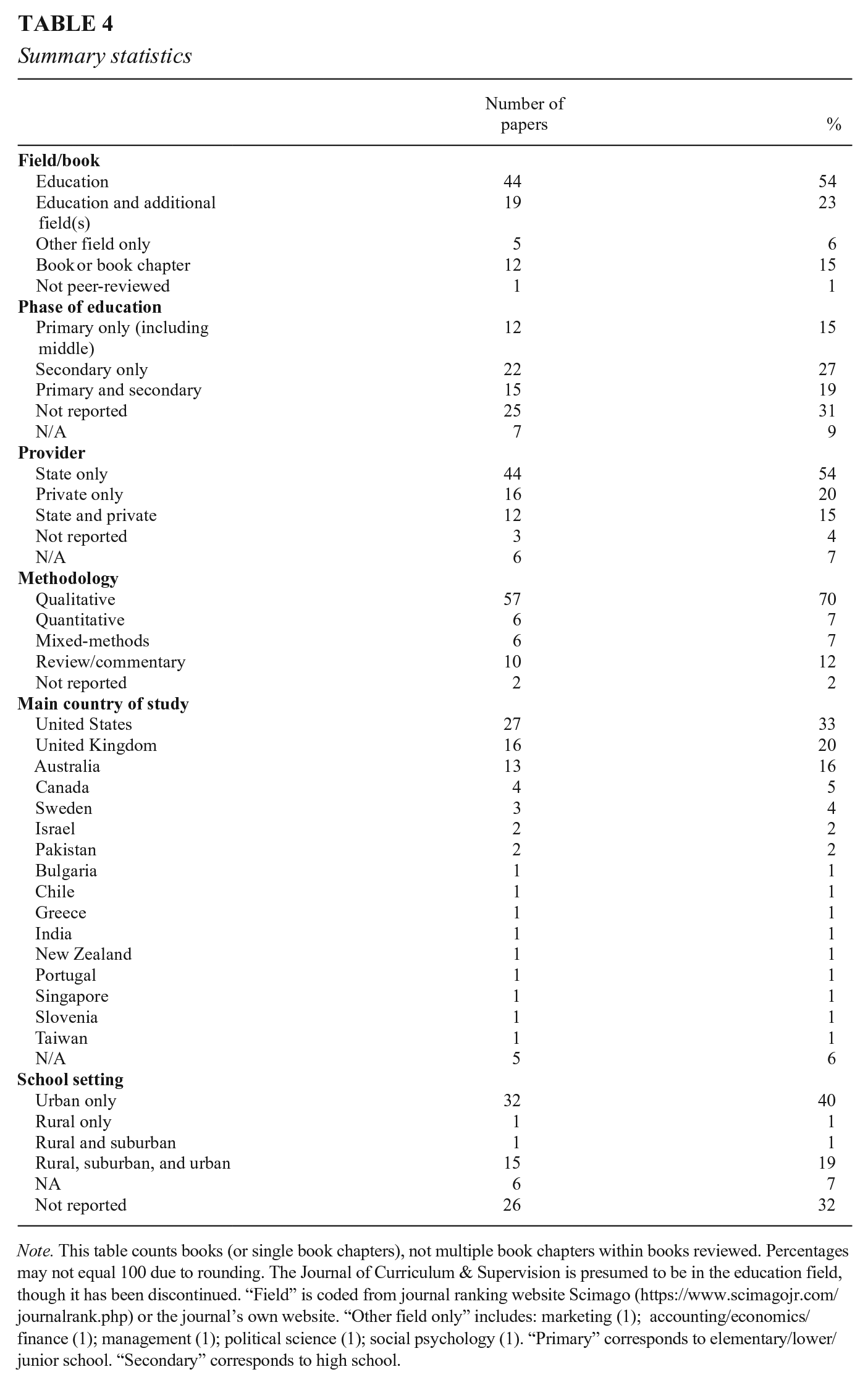
Note. This table counts books (or single book chapters), not multiple book chapters within books reviewed. Percentages may not equal 100 due to rounding. The Journal of Curriculum & Supervision is presumed to be in the education field, though it has been discontinued. “Field” is coded from journal ranking website Scimago (https://www.scimagojr.com/journalrank.php) or the journal’s own website. “Other field only” includes: marketing (1); accounting/economics/finance (1); management (1); political science (1); social psychology (1). “Primary” corresponds to elementary/lower/junior school. “Secondary” corresponds to high school.
A full list of the journals represented in our dataset is provided in Table A2 in a supplementary file online. Figure 2 shows that research in this field has grown over time, with 2012, 2016, and 2018 the years when the largest number of papers were published.
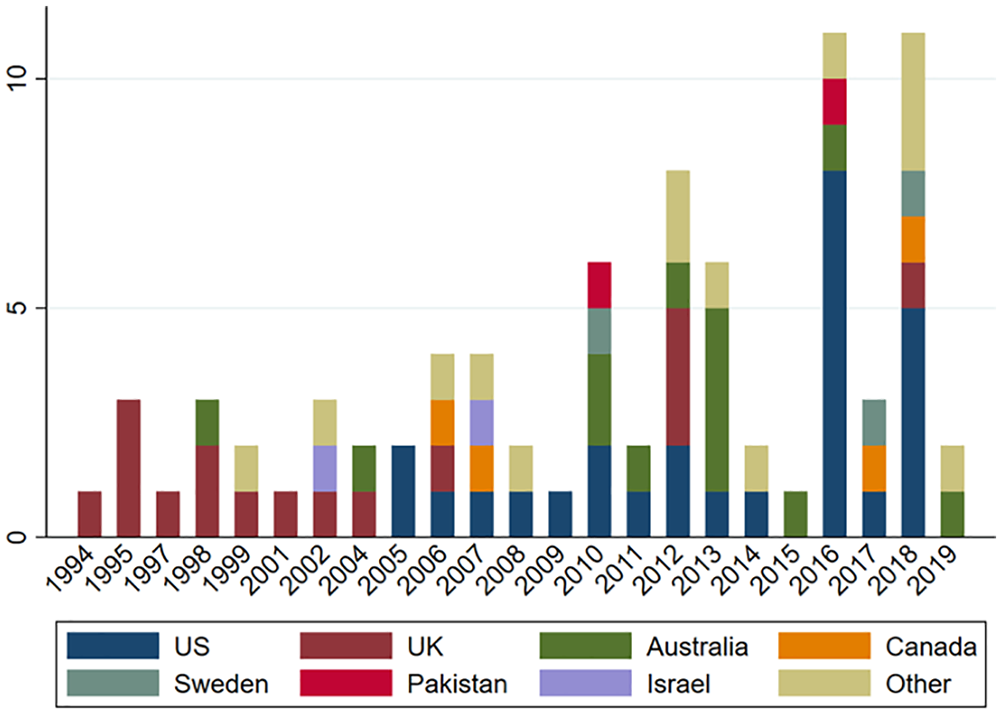
Frequency and geography of publications over time.
Table 4 and Figure 2 show that the research is largely focused on the United States, the United Kingdom, and Australia. It is interesting to note that there are few articles from countries with long-established methods of choice-based allocation mechanisms, such as Sweden, Chile, and New Zealand. Early literature was mainly from the United Kingdom, whereas later literature is dominated by research from the United States, perhaps because of the strong emergence of charter schools in this country in later years. A range of countries across continents are represented, however, except for Africa.
Although, perhaps surprisingly, a large percentage (31%) of papers don’t report the phase of education of interest in their research, Table 4 shows that existing research has considered the marketing practices and contexts of both primary and secondary schools and their international equivalents. There are roughly twice as many papers focusing on secondary schools than primary schools, perhaps suggesting that marketing practices are more pertinent to this phase of education, or that the consequences are more important.
Table 4 also shows that just over half of the research is conducted in the state sector (54%), a figure that includes charter schools in the United States and free schools/academies in England, as described in the introduction; 20% consider only private schools and 15% a mix of both. Of the 49 papers that report the geographical setting for the study, 47 are located in either wholly or partly urban contexts. This reflects the broader literature on school choice, which highlights the need for many feasible schools in a geographical location to create real choices for parents (Burgess et al., 2011; Calsamiglia et al, 2020; Fack and Grenet, 2010; Walker and Weldon, 2020). In their international systematic review of school choice, allocation, and segregation, Wilson and Bridge (2019) find a strikingly consistent result: urban school-choice systems are associated with higher levels of segregation across all geographical locations. Finally, almost all of the empirical studies in our dataset employ qualitative methodologies.
Schools’ marketing is clearly an emerging field of study within education and education management but has yet to be tackled by marketing academics or, indeed, by other social scientists. Research appears to have been stimulated by the growing presence of more market-oriented (and sometimes profit-oriented) US charter schools and their equivalents in other parts of the world. However, there remain geographical gaps in this literature, particularly in studies on countries with school-choice policies such as Chile, Sweden, and New Zealand. Research on marketing activities in primary schools is also lacking, as are studies using quantitative methods and research in rural areas.
Thematic Analyses
We now turn to our analysis of the substantive themes emerging from the literature. As noted previously, we were particularly interested in exploring the relationship between marketing and educational outcomes—for example, whether marketing leads to educational innovation for all or the targeting of a narrow range of pupil types. We wondered whether this varied with the level of local competition and whether marketing practice might be related to social division. Four themes emerged from the literature: (1) types of marketing practices; (2) links between marketing and local education competition; (3) links between marketing and educational provision; and (4) links between targeting and potential implications for social division. The results of our analysis are reported in the following four sections.
Marketing Activities Deployed by Schools
The focus for the largest group of papers (63 in total) is the type of marketing activities deployed by schools. The main marketing strategies, techniques, or approaches that have been investigated are targeting (33 papers), differentiation (21 papers), vocabulary and images used in publicity material (18 papers), branding (11 papers), and market research and market scanning (11 papers).
We present our analysis on three of these activities—namely, market research and market scanning, vocabulary and images, and branding—here. We return to “differentiation” in the section on the links between marketing and educational provision and “targeting” in the section on links between targeting and potential implications for social divisions.
Market research and market scanning
Although not universal practice across all schools, particularly reflected in the early literature, our review reveals that the competitive element introduced by a school-choice policy stimulates some schools to take stock of the other schools in the area (market scanning) and the communities they are all serving (market research). Eleven papers explore how schools use market research or market scanning to understand pupils, parents, and competition from other schools in the area [30, 81, 105, 107, 111, 219, 289, 305, 421, 426, 449]. Early literature [289] points to information collection as ad-hoc rather than systematic: Evidence from the UK, the US and Israel suggest that most school management teams are unlikely to base their marketing decisions on reliable and systematic marketing research findings or on formal consumer scanning such as the results of questionnaires on parental attitudes. (p. 384)
More recent literature from Chile [30], however, found that schools with medium or high levels of perceived competition used market scanning more systematically. They consciously researched the preferences of parents through surveys or informal chats with existing and prospective parents. Paper [305] shows the same practice in Australia and [421] in England, where the authors note that open evenings are used as tools for market scanning as much as for providing information to parents. In total, 28 papers in our dataset discuss the role of open evenings in school marketing.
Vocabulary and images used in brochures and other publicity material
Marketing theory would suggest that it is in a school’s interest to not only create and deliver the features of its educational provision that meet parents’ and pupils’ needs better than the competition but also to communicate these. Thus choosing the right words and images for publicity material is important. Eighteen papers deconstruct images and words used in school brochures and other publicity material [1, 26, 27, 31, 32, 37, 84, 88, 226, 233, 236, 273, 281, 285, 301, 419, 423, 462]. Seven of these relate to Australian private schools [31, 32, 226, 281, 285, 301, 423] and show, in the words of one paper, that schools “use rhetoric to enhance their reputation and image and to leverage advantage in a competitive neo-liberal market” [281, p. 14]. Most of the literature is critical of the way words and images are used, with a study of primary school websites in Greece concluding that “schools choose to present a ‘rosy’ picture of their internal life through their websites, mainly by presenting exceptional moments of this life while simultaneously downplaying or even concealing their ordinary everyday routines” [419, p. 412]. A Swedish study of a compilation of school brochures offered to parents to aid choice [37] likewise found: “the school information can be described as made up of normative illusions that do not inform about the praxis of schools and scarcely serve the purpose of contributing to the progressing dialogue between schools and families” (p. 184).
The notion of marketing as a means to “sell” to parents the kind of child their offspring could be is also put forward. Some schools position the child as a kind of product and offer “capability and confidence” [301, p. 252], while others sell (spiritual) values, with [285] concluding that: “Parents seeking to purchase self-esteem and/or emotional literacy in an educational package can be captured through the judicious articulation of religious rhetoric in which the spiritual and the emotional are closely relational” (p. 384).
Paper [423] observes the use of different images for different social classes of pupils. While in the promotional material of elite schools, “images are selected that display students acquiring a middle-class habitus through the availability of cultural capital associated with the arts, music and competitive sports” (pp. 818–819), government schools are much more likely to show images of studying, which “visually reiterates that these are work locations, where students are expected to be engaged and disciplined” (p. 816). They note that “Here the preference for style of photography speaks to our assumptions about the kinds of discipline needed for different classes of students.” And underlining this is the implicit message that the advertised school provides solutions whether it is a “‘truth’ that the elite private school can provide it all” [226, p. 21] in Australia or a depiction of a community as plagued by violence or poverty that needs a Charter Management Organisation (CMO) in a U.S. inner city to sort it out [236].
Branding
Eleven papers are concerned with branding [1, 25, 71, 75, 78, 81, 204, 410, 421, 431, 449]. The concept of the brand is complex and entire master’s programs are devoted to the subject. In its simplest terms, a brand is a “name, term, sign symbol (or a combination of these) that identifies the maker or seller of the product” (Kotler and Armstrong, 2018, p. 245), but it also encompasses the practice of creating a brand “personality” (Aaker, 1997) and the calculation of brand equity (Feldwick, 2002). Schools have certainly begun talking about brands, but so far this does not seem to have gone beyond Kotler and Armstrong’s basic definition. Paper [75], for example, noted that the Center City District schools in their study were branded to give the symbolic distance between them and other schools in Philadelphia using “banners and signage” (p. 169) such that a “signature” was created for each school (p. 170). Some reported that beyond using the brand to stand out from competitors, “schools had to profile themselves and construct strong and distinct images or ‘brands’ in order to attract certain categories of learners” [71, p. 523]. However, branding is important and more advanced for the new type of non-fee-paying, autonomous public schools referred to as charter schools, free schools, or academies. In the United States in particular (home of charter schools), these are often managed as a branded group that may be a not-for-profit CMO such as KIPP or a for-profit Education Management Organisation (EMO) such as Academia. Many national CMOs have extensive “branding manuals” or “style guides” with which the individual schools in their portfolio must comply [1]. These can cost between $20,000 and $50,000 to produce—showing the perceived importance of branding. Branding has also become part and parcel of the targeting strategies we will talk about later. Figure 3 shows that branding has gained more interest from academics in recent years.
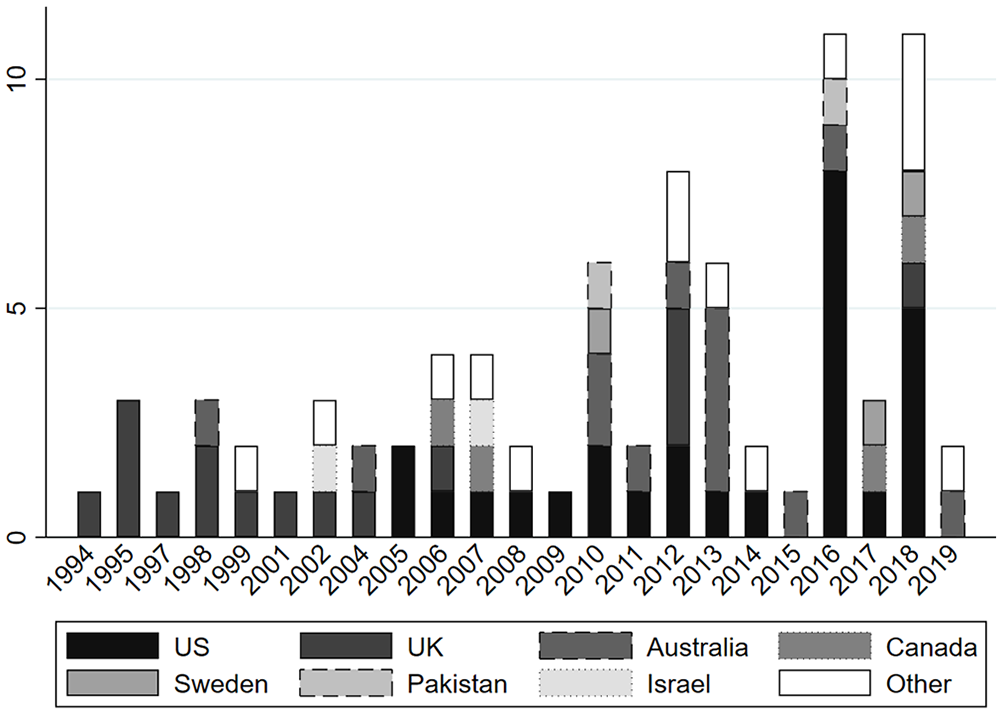
Frequency and geography of publications over time.
Links Between Marketing and Local Education Competition
Variation in the perceived need for marketing by local context and, in particular, by the intensity of local competition has been a constant theme since the inception of this literature. Twenty-nine papers address this [1, 25, 30, 33, 39, 43, 44, 52, 58, 71, 72, 81, 95, 105, 107, 206, 219, 224, 263, 273, 275, 288, 289, 305, 404, 407, 423, 438, 455]. There is evidence, across both the earlier and the later literature, that schools identify and react to key competitors [25, 39, 52, 108] and that the amount of competition in the local area is positively correlated with the amount of marketing activity [1, 5, 30, 33, 43, 72, 289, 305]. Early literature notes that schools in less competitive areas can avoid using marketing [224, 25, 305] and paper [72] concludes that “the extent of competition a principal experiences, is consistently and positively associated with the likelihood of substantial marketing or recruiting efforts” [p. 66]. Competition in turn affects spending on marketing [1], which is a feature of more recent research.
The hierarchical position occupied by a school in a local education market also influences the extent of marketing activity [25, 30, 33, 58, 72, 105, 224, 263, 455]. High-attaining schools that are over-subscribed appear to be shielded from competitive pressures to market their school [30, 33, 202, 455], whereas the literature notes the “fight for survival” at the bottom of the hierarchy, making marketing a necessity [25, 263]. Paper [275] argues that differences in the adoption of marketing may also be correlated with the local policy context, whereas others show that in rural areas where there are few choices, local schools may have de facto monopoly power and therefore no need to market.
Marketing activity also varies by the types of schools in a local area. This is addressed in seven papers [1, 43, 58, 71, 107, 273, 423] with the role of U.S. charter schools an increasingly important feature in the literature. As noted in relation to branding above, CMOs and EMOs have a heavy focus on marketing activity [1, 43, 58], particularly in terms of marketing spending, with some authors arguing that this comes “potentially at the expense of more academic positions” [1, p. 39]. For-profit EMOs like Academia have profit as an additional incentive to attract pupils, which may intensify the use of marketing activities. Paper [1] shows that CMOs in their sample all report having “teams of individuals who visit schools to ensure compliance” in branding (p. 33). EMOs are most likely to use expensive marketing strategies such as radio and website advertisements [107], and larger groups of CMOs and EMOS are more likely to target particular “clients” in terms of “specific populations or locations” [273, p. 72]. These for-profit incentives may affect the behavior of other, competing schools. For example, paper [43] finds evidence that many charter schools target pupils enrolled at independent schools—the type of school that would be expected to respond to retain their pupils and therefore their profit. Targeting specific populations or locations by CMOs and EMOs [1, 42, 273] may induce a response from schools serving those groups, although these schools may not have the resources to compete if outside the independent sector.
Like charter schools, private schools devote more resources to marketing than public (state) schools [43]. Six separate studies in Australia [31, 32, 226, 281, 285, 423] look at the intense marketing efforts of private schools—paper [423] finding striking differences in the content of marketing between public and private schools—with private schools more likely to show students engaged in sporting, cultural, and social activities and public schools more bound by expectations to show students disciplined and engaged in schoolwork. The differences in resources devoted to marketing across school types leads to concern in the literature about inequality and an “increasingly uneven playing field” [1, p. 44].
There is a wide geographical spread in this literature review, but it is difficult to draw firm conclusions about geographical insights. This is because, as shown in Figure 2, there is little overlap in the time periods studied across countries. For example, evidence from the United Kingdom is concentrated in the early literature, whereas evidence from the United States dominates the later literature. Differences in marketing practices across the countries found in the literature could therefore be due to timing rather than structural differences. Our review found no evidence that there were distinct patterns of marketing within cities or across counties within countries, which perhaps would be expected in response to their local characteristics. For example, for New York City (which had the highest number of articles in our review), two out of five articles focused on diversification, but there were no other common themes across the five papers. This could suggest that schools' responses depend on even more local characteristics, such as their location within the city. Future research could explore how the school-choice environment influences schools’ marketing practices—for example, the prevalence of for-profit schools, excess capacity, and strength of incentives for schools to recruit pupils.
Effects of Marketing on Educational Provision
The literature includes three groups of papers that deal with the effects of marketing on educational activities: those examining the role of principals and teachers in marketing activities; those weighing up whether there is substantive pedagogical change behind the marketing communications effort; and a final set that considers whether the marketing is misleading or deceptive.
Involvement of principals and staff in marketing
Thirteen papers analyze the involvement of principals and staff in school marketing [1, 105, 110, 111, 204, 241, 246, 288, 291c, 292, 410, 416, 421]. Traditionally, the principal (headteacher) of the school has been responsible for marketing the school [105, 111, 246, 291c, 416]. Paper [111] notes the importance of the principal, “whose personal characteristics, leadership style, vision, morality, and even physical appearance are strongly related to his/her role in the marketing and image-building of the school” [111, p. 213].
Early literature acknowledged the lack of formal marketing training and the need for professional development [111, 246] that contributed to “ad-hoc” principal and staff engagement with marketing. In contrast, recent research from Australia [410, 421] and the United States [1] demonstrates the emergence of marketing professionals. This is seen as evidence of marketing’s transition to an “integral part of these organizations' institutional fabric” [1, p. 30]. These marketing professionals can occupy senior positions within the school or organization [1, 410, 421] and are responsible for monitoring brand consistency, fostering a business ethos within the school, and facilitating positive media.
In Australia and the United States, there is evidence that teachers are more actively engaged in marketing, despite the emergence of senior marketing professionals. Overall, the findings suggest “a shift in the goals of teachers away from the classroom to marketing” [1, p. 117], which infers that recruiting pupils is “organizationally more important than high-quality teaching” [1, p. 116]. In some cases, teachers are encouraged to have “branded interactions with their students” (for example, repeating the school’s mission statement) [1, p. 104] and are often expected to be involved with community outreach events. Outside these events teachers were involved in active recruitment: “While some were on the streets or going door to door, others were participating in social media campaigns. Sometimes teachers were even expected to reach out to parents ‘for leads’ of possible recruits” [1, p. 114].
Substantive pedagogical changes in schools that have adopted marketing
Sixteen papers assess the important issue of whether embracing marketing in response to the competition has resulted in schools differentiating their offering and in genuine pedagogical enhancement [33, 35, 36, 43, 44, 72, 105, 224, 267, 269, 273, 305, 419, 426, 440, 455]. The conclusion is that marketing, more often than not, is used as an alternative to making substantive classroom changes. Paper [33] finds that just a third of thirty New Orleans charter school leaders reported academic and operational improvements, but many more focused on “marketing or promotional activities” [33, p. 369]. Paper [44] finds that only 13 percent of 143 Milwaukee school principals report “a lot of instructional or curricular change,” whereas 30 percent report “no instructional or curricular change” [p. 155], concluding that their survey results “provide suggestive evidence that school leaders feel competition but that they respond to this competition by trying to influence the information available to families instead of trying to adjust their offerings to better serve student needs” [p. 158].
Four papers comment on why this may be the case [43, 267, 269, 455]. Paper [43] recognizes that “innovation and improvement” compete with “promotional efforts to improve a school’s (or district’s) competitive position” for school effort and investment [p. 470]. Marketing, or “promotional effort,” is relatively risk free and inexpensive [43, 267, 269] compared to substantive change. Paper [455] summarizes schools’ incentives with reference to game theory, where “the prudent strategy is defensive and involves taking the middle ground” [455, p. 34]. Paper [305] documents an aversion to the risk of innovation in the UK in case it worsens the school’s ratings in the short term. This points to marketing in schools mainly being what Kotler and Keller (2016) would term a “sales focus” rather than a genuine attempt to align the offering with the needs of parents and pupils.
Where substantive change is observed, it is often in terms of “finding a niche in the market” [33, p. 369]. Indeed, seven papers find evidence of successful strategic differentiation [33, 35, 36, 105, 224, 305, 440, 426]. As we will see in the next section on segmentation and targeting, however, this strategy is potentially socially divisive.
Misleading
/Deceptive Marketing
Most concerning is a group of eighteen papers that present evidence of misleading or deceptive marketing [1, 26, 37, 43, 58, 63, 78, 110, 226, 258, 274, 281, 285, 419, 423, 438, 459, 465].
Seven studies find that impressions made in schools’ promotional material cannot be verified [1, 26, 37, 226, 281, 285, 423]. Paper [423] concludes that images used by Australian private schools suggest claims about the school that are “wholly unmeasurable and completely subjective” (p. 28). A study on non-elite private schools in Canada [26] also notes that claims were often “essentially unverifiable.” Another Canadian study of state secondary schools [285] indicates, “it remains difficult, if not impossible, to gauge the value or value-addedness of the educational package that is being promoted” (p. 378).
Two papers [1, 274] point to the misrepresentation of the school demographic in the marketing messages. For example, a study in New Orleans [274] reported that public schools over-represent white students. In one extreme case, the school enrolled eight white students, but four out of ten pupils pictured on the website were white.
Six studies show a mismatch between image and reality [1, 63, 78, 281, 459, 465], with [465] noting “a school-level emphasis on developing and promoting an image of a good school that has little to do with the experiences of educators and the education of students” (p. 376), and [78] reporting parents’ frustration that “practical reality could not keep up with marketing hyperbole” (p. 466). This results in parents simply not having enough information on which to base a sound decision on which school to send their child to [63].
Perhaps most concerning are findings from a study in Taiwan [438] that reports that a national decrease in the population of school-age children together with government promotion of the marketization of education has led to fiercely competitive local education markets and a proliferation of unethical or even illegal practices. A strictly anonymous survey of 41 school principals throughout the country found that the most frequent “marketing” methods used were: schools making unannounced visits to prospective students’ parents, bribing teachers at feeder schools to recruit students, forcing students to enroll at a certain school by collecting their diplomas from feeder schools, publishing excellent students’ names and photographs without permission, and using bribery to recruit excellent students and then using them as publicity tools. (p. 458)
The respondents defined bribery as the giving of gifts or money to teachers at feeder schools or inviting them to attend “lavish banquets, ostensibly held for the purpose of feting them for their diligent teaching" (p. 459). The survey revealed that principals felt compelled to use these tactics when faced with school closure due to falling enrollment in a competitive local education market or response to other schools using unethical tactics. As a Confucian society, the instances of bribery were seen as much more serious than those of breaches of privacy.
Effects of Marketing on Social Division
A great deal has been written about the problematic use of market segmentation and targeting by schools and its implications for inequalities of access and social division. Thirty-three articles are devoted to this subject [1, 43, 58, 107, 423, 71, 105, 224, 25, 289, 30, 305, 33, 404, 81, 95, 118, 119, 16, 247, 27, 274, 275, 29, 292, 426, 432, 440, 468, 75, 78, 84, 88]. This subject has gained substantially more attention over time, as Figure 4 illustrates.
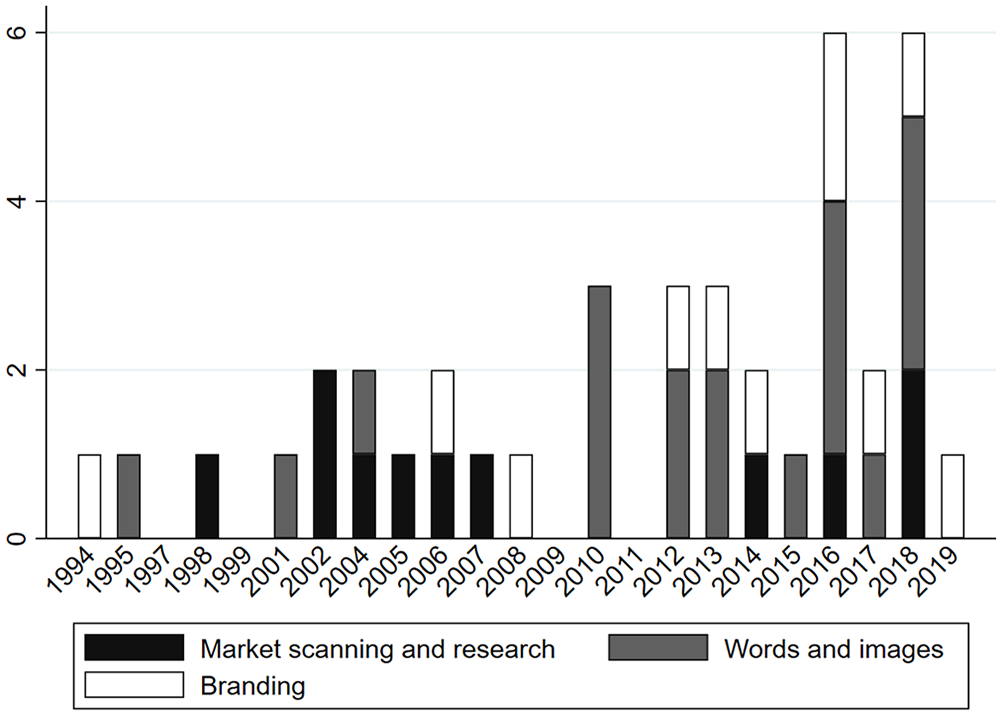
Marketing activities over time.
The first literature review [289] noted, “studies revealed that principals are well aware of the need to segment the target market and tend to decide on which group of students/parents their marketing effort should focus” (p. 385). More recent work demonstrates increasing sophistication. For example, an outdoor media executive who works with CMOs interviewed in paper [1, p. 81] explained, “They're specific to literally, I mean, we'll have conversations, and it's like, ‘We just want to be in these zip codes.’”
Segmentation can be used for positive pedagogical reasons—different learners may require different learning environments. A study in Sweden of vocational and academic schools [71] found that “the upper secondary schools in both Bay City and River Town sought to attract different learners . . . thus fostering differentiation through homogenization” (p. 526). They noted that “the idea that different pedagogic models were suitable for different students was commonly expressed by principals, students and teachers” (p. 528). Segmentation and targeting for reasons of educational values or philosophy are also reported in Israel [105] where the purpose of targeting was to ensure that pupils from different areas were brought together rather than separated (as in the Swedish study). Interviewed principals “tended also to stress the importance of integration between students from south and north of the city, an educational and social issue that is deeply rooted in the community of Tel Aviv” (p. 226). Meanwhile, in New Orleans [95] two oversubscribed schools, unlike their competitors, continued in their marketing effort as they felt a “moral obligation to go out and make sure we're reaching everyone” (p. 18). In another U.S. study [119], principals saw the absence of targeting as a “threat to their mission to serve a diverse group of students” (p. 13).
Segmentation and targeting are typically driven by nonpedagogical motives. Paper [95] argues, “Schools’ marketing and recruitment strategies also served to screen, select, or exclude students” (p. 15). Indeed, in paper [1], advertising executives in New York reported that CMOs specifically target low-income communities of color, which may “maintain racial segregation and even exacerbate it” (p. 152). In other studies, these strategies are being used to benefit the school rather than the pupils. For example, paper [440] reports that in Canada, “Rather than fostering efficiency and improving students’ results, the all against all competition encourages schools to develop marketing strategies to recruit high achieving students in order to increase schools’ performance” (p. 3). Likewise, in the United Kingdom [224, p. 139], targeting was used to attract pupils that are “likely to enhance a school's league table performance with minimal investment.” One principal went so far as to say, “You have to get these kids which are going to give us the results. That has to be our number one priority” [81, p. 356], and another UK study [292] reports that teachers “associate successful marketing with the recruitment of so-called better or more able students, who they would find more enjoyable and stimulating to teach” (p. 189). Meanwhile, in the United States, paper [75] reports school strategies of targeting “highly educated, professional parents living downtown” (p. 168) while excluding “low-income African-American parents” from outside the neighborhood (p. 172).
This relates to a broader point about the interaction between the local context and school-choice environment in shaping schools’ marketing practices and therefore social division. Paper [75] studies a gentrifying U.S. city, where the marketing of schools is part of a broader effort to attract and keep the “knowledge workers” in the city center at the expense of marginalizing lower-income and minority households. Paper [404] highlights the importance of the social context for the marketing of schools: “in the form of legacies of desegregation policies, the regulatory system that controls how education providers access potential customers or the degree of competition within a particular market” [p. 125]. Through a critical discourse approach applied to school websites, observing markedly different segmentation between groups of schools, paper [88] concludes that “choice is likely to lead to the segmentation and stratification of educational options, with negative results for equity” [p. 38]. Further research could focus in detail on the relationship between the existing inequalities in the local population (for example, by race or class) and schools’ marketing strategies. This links to broader debates around the implications of the education market structure for social injustice (Tieken and Auldridge-Reveles, 2019).
Discussion
Choice-based mechanisms are now a central means by which students are allocated to schools in state-funded education systems worldwide. The effects of school choice on educational outcomes are, however, largely dependent on how schools respond to the incentives created. In theory, parents choose schools on the basis of publicly available measures of school quality, and schools will respond by raising the quality of their educational provision in order to attract more students and therefore funding. In practice, the picture is more mixed, with evidence of schools engaging in a range of activities aimed at attracting certain types of pupils to their school. The provision of information—both in terms of the information itself and to whom it is targeted—is key to the outcomes of school choice. The marketing practices of schools is therefore an area of increasing interest, as such practices may be focused on market segmentation and targeting as well as, or instead of, supporting pedagogical innovation, creating real differentiation, and therefore genuine choice in the education marketplace.
This paper presents the first systematic review of schools’ marketing practices in choice-based systems. It is therefore purposely broad in scope, both in terms of the literature surveyed and the definitions of school choice and marketing practices employed. Our aim was to scope and map the range and type of marketing activities deployed by schools, with a focus on key questions prompted by and linked to the major issues raised in the school-choice literature: To what extent does school marketing support pedagogical innovation or differentiation, or are such practices more concerned with targeting certain pupil types? (How) does this differ across school types and the degree of competition they face in the education marketplace? And what are the implications of such practices for (in)equalities of access to different schools and the potential social divisions that may result?
We find that schools deploy a broad range of marketing activities across different media, from traditional brochures to online presence and face-to-face events. The school principal has traditionally led such activities, supported by a wide range of teacher-led engagement, but there is evidence from Australia and the United States of an increasing role for marketing professionals based within schools. The amount of marketing activity differs across various types of schools, with clear evidence from the United States of CMOs—both individual schools and their umbrella organizations—playing a leading role. We also find that marketing activity is positively correlated with the degree of competition schools face in their area, but not uniformly. Schools at the bottom of the hierarchy in a local education market engage in more marketing practices than those at the top, which are more often already fully subscribed.
Although there is a small amount of evidence of schools’ marketing practices supporting pedagogical innovation and differentiation, most of the evidence suggests the opposite: schools generally employ marketing tools as an alternative to genuine pedagogical change, and this effect is heightened in response to competition. Marketing activity is being used to segment the market and attract certain pupil types, and schools are increasingly sophisticated in their segmentation activities. This links to the disturbing evidence of misleading and/or deceptive marketing practices by schools, which include nonverifiable claims about the education package offered as well as misleading demographic messages regarding the student population. The increasing focus of this literature on issues around (in)equalities of access and social division underlines the concerns around the effects of schools’ marketing practices on segmentation—and hence segregation—by pupil type, and the resultant effects on increasing social division across schools and, given the known link between school and residential choice, across neighborhoods in urban areas (Black and Machin, 2011).
This systematic review has confirmed some results from the broader school-choice literature. First, schools do respond to competition—here, through marketing—but the extent to which they do so depends on their position in the hierarchy of the education marketplace in which they are situated. This illustrates the “ceiling effect” for fully subscribed schools and concurs with evidence on the effects of school league tables more generally. The incentives created by “name and shame” for schools at the bottom of the table are stronger than the equivalent “name and fame” incentives for those at the top (Bevan and Wilson, 2013). Second, the ways in which schools respond to the competition created by school choice are not necessarily only those intended, or desired, by policymakers. The evidence shows that, rather than schools using marketing to support pedagogical innovation and improve quality, resources and effort are diverted toward potentially divisive marketing practices, aimed at attracting certain types of pupils—often those seen as high performing—to the school. This strongly resonates with the evidence on covert selection practices of schools more generally (Bergman and McFarlin Jr, 2020, and references therein). Indeed, one way in which schools’ marketing practices may be characterized, given our findings, is as the latest manifestation of a much broader set of covert selection practices that have been identified from the introduction of market-based incentives for schools in systems of school choice.
Alongside the resonances of our findings with the broader school-choice literature, the absence of any literature from the discipline of marketing in this area is particularly noticeable. The marketing discipline has much to offer in understanding how schools’ marketing could be used to benefit families, schools, and policymakers but has so far been largely absent. Relatedly, advertising regulators do not seem to have this issue on their radar, with no special regulations for protecting this most important of subjects that have consequences for young people across the globe. Our findings suggest a pressing need for a new, interdisciplinary research stream in marketing and education policy research to inform much-needed regulatory reform in this area.
Implications for Future Research and Policy
There are some very clear thematic gaps in schools’ marketing research. If we are to quantify the suggestion from our review that marketing is used as an alternative to substantive change then future studies could measure the relative budget allocations for curricular enhancement on the one hand and marketing activity on the other. Most studies so far have considered one marketing activity at a time (e.g., branding or imagery). Future research could study the effects of the totality of marketing activity by schools. Longitudinal studies are needed to understand how marketing activities may change or maintain student composition and outcomes over time. And so far, few studies have considered the impact of marketing imperatives on teacher well-being.
We have already mentioned the absence of any specific marketing regulations for schools. This is an issue for the International Chamber of Commerce from which advertising regulations around the world stem. Of particular concern are misleading and deceptive adverts. The implications for policymakers in countries that already have or are considering school-choice policies are also profound. If marketing as currently practiced does not result in curricular enhancement but instead incentivizes social division, then different incentives must be developed that redress the balance, through alternative—independent, trusted—sources of information and/or regulation of schools’ own marketing and information provision. If parents are not receiving objective information about schools, as is suggested by our review, then governments need to find ways to quality control that information to prevent schools’ marketing practices from exacerbating social divisions within choice-based education systems.
Footnotes
Appendix

Notes
Authors
ELLEN GREAVES is a Max Weber fellow at the European University Institute, Badia Fiesolana, San Domenico di Fiesole, 50014, Italy; e-mail:
DEBORAH WILSON is dean of the faculty of humanities and social sciences at the University of Bath, Claverton Down, Bath, UK, BA2 7AY; e-mail:
AGNES NAIRN is professor of marketing and pro vice-chancellor of global engagement at the University of Bristol, 5 Tyndall Avenue, Bristol, UK BS8 1TJ: e-mail: