



Abstract
The transition to fully or partially online instruction for K–12 students necessitated by the 2020 COVID-19 pandemic highlighted the current lack of understanding of practices that support K–12 student learning in online settings in emergency situations but also, more troublingly, in K–12 online teaching and learning more generally. A systematic review of literature regarding K–12 online teaching and learning in the United States was therefore conducted to begin to fill this gap and to inform the work of policy makers, researchers, teacher educators, teachers, and administrators as they negotiate the changing role of online instruction in our nation’s educational systems. The review revealed a set of contextual conditions that are foundational to student learning in K–12 online settings (prepared educators, technology access and autonomy, students’ developmental needs and abilities, and students’ self-regulated learning skills). The literature also pointed to seven pillars of instructional practice that support student learning in these settings (evidence-based course organization and design, connected learners, accessibility, supportive learning environment, individualization, active learning, and real-time assessment).
The COVID-19 pandemic has introduced unprecedented challenges to educational institutions in the United States and globally. Now, nearly a year into the COVID-19 pandemic, public and private schools and school districts continue to grapple with challenges associated with transitioning from fully face-to-face instruction at brick-and-mortar schools to fully or partially online instruction. Students also face significant challenges as they attempt to navigate online learning at home with varying levels of adult support. It is important to note here the difference between emergency remote teaching, “a temporary shift of instructional delivery to an alternate mode due to crisis circumstances” (Barbour et al., 2020, p. i), and intentionally planned and executed online teaching in noncrisis circumstances. The COVID-19 pandemic, however, illuminated gaps in the knowledge base for transitioning to and implementing effective practices in K–12 online teaching and learning at the policy, infrastructure, administration, and teaching levels (Barbour et al., 2020). K–12 education is the terminology used in the United States, which generally refers to elementary and secondary school grades kindergarten (age 5–6) through grade 12 (age 17–18). This systematic literature review was conducted to provide an updated, methodologically robust review identifying effective online instructional practices specific to K–12 settings, as recent research has pointed to the need for additional evidence due to the constantly evolving nature of online and virtual learning environments (e.g., Arnesen, Hveem, et al., 2019; Barbour, 2019; Cavanaugh et al., 2004; Farmer & West, 2019; Ferdig et al., 2009; Greenhow & Askari, 2017; Heafner & Handler, 2018; Means et al., 2013; Molnar et al., 2019; Patrick & Powell, 2009; Picciano, Seaman, Shea, & Swan et al., 2012; Pulham & Graham, 2018). Though there is a formidable gap in the knowledge base in this area, there is concurrently an urgent need to synthesize the extant research to inform current and future practice based upon the realities pressed upon K–12 educational systems by the COVID-19 pandemic.
This systematic literature review investigated the empirical research base regarding online delivery of full-time instruction for K–12 students in the United States. The goal of the study was to generate a comprehensive list of considerations for online K–12 education that could be leveraged to inform the work of teachers, teacher educators, researchers, administrators, and policy makers in the wake of the emergency-based online delivery of K–12 curriculum necessitated by the COVID-19 pandemic and to provide evidence-based guidance for the resulting longer term shifts in educational practice that are likely to result from the pandemic. The resulting model will serve as a baseline for additional research in focused on online K–12 educational delivery. This review is unique among reviews of online instructional practices because of its focus on informing the transition from instruction in brick-and-mortar settings to instruction that is partially or entirely online and because of its focus on constructs specifically relevant to K–12 pedagogy. Past reviews of online instructional practices have often synthesized findings from K–12 settings and postsecondary and adult education settings, a phenomenon reflective of the more robust research base in online learning in postsecondary settings. Although this review also draws on definitions and findings from postsecondary settings where the research base in K–12 is particularly thin, the focus is on pedagogical principles appropriate for K–12 instruction as distinct from andragogical practices appropriate for postsecondary and adult learners.
A wide variety of terminology is used in varied and nuanced ways in educational literature to describe student learning mediated by technology, including terms such as virtual learning, distance learning, remote learning, e-learning, web-based learning, and online learning (e.g., Moore, Dickson-Deane, & Galyen, 2011; Singh & Thurman, 2019). For example, in a systematic review of the literature, Singh and Thurman (2019) identified 18 different terms encompassing 46 definitions that were used to describe the phenomenon of teaching and learning using web-based technologies. The ways these terms were used varied on several variables including the type of technology used, the degree of reliance on technology, the relative timing of instruction and learning (i.e., Are students participating in the course as the teacher is instructing or at another time?), and students’ physical location (Singh & Thurman, 2019). Likewise, Moore et al. (2011) found that terminology to describe online learning environments was used inconsistently in the literature they analyzed and was also used inconsistently by respondents to a survey they conducted. Moreover, these authors noted the difficulties that this inconsistency in language presents for researchers and instructional designers in framing and discussing their work.
Since the focus of this review is on K–12 instruction conducted entirely or partially online with students learning in an out-of-school environment, we chose to adopt Singh and Thurman’s (2019) definition that defines “online education” as:
education being delivered in an online environment through the use of the internet for teaching and learning. This includes online learning on the part of the students that is not dependent on their physical or virtual co-location. The teaching content is delivered online and the instructors develop teaching modules that enhance learning and interactivity in the synchronous or asynchronous environment. (p. 302)
The terms online learning, online teaching, online education, and remote instruction will be used throughout this review to refer to the phenomena described in this definition. The terms hybrid and blended are used to describe a mix of online and face-to-face instruction. To address the relative timing of instruction and learner interaction with course content, the term synchronous is used to describe real-time instruction and student interaction with course content, and the term asynchronous is used to describe instruction in which students engage with course content that has been pre-prepared, without real-time teacher-student interaction.
The purpose of this systematic literature review was twofold: (1) to determine the background and structural characteristics that schools and educators should consider prior to embarking upon a transition to online delivery of K–12 instruction, which are coined “foundational contextual factors” for our review, and (2) to reveal the key pedagogy and other strategies that educators should employ for empowering student learning in a virtual environment, which are called “instructional components” for this review. Moreover, this systematic literature review was focused on addressing the following research questions: (1) What foundational contextual factors should be considered when embarking upon delivery of online K–12 instruction? And (2) what instructional components are essential for K–12 student learning in online education settings?
Background
Before presenting the systematic review, this section highlights some important context for the landscape in which this study was conducted. The greatest challenge encountered during this review was that most schools in the United States have utilized virtual and/or hybrid formats for instruction in limited ways, including online delivery for either a single type of course (e.g., advanced placement, college credit coursework, credit recovery, scheduling conflicts, other coursework not available at the school) or an occasional alternative to in-person instruction to avoid loss of instructional time due to weather (e.g., hurricanes). Entirely online K–12 schools in the United States have historically been mostly charter schools offering alternative formats for students who choose online instruction—schools that research suggests frequently underperform as compared to face-to-face schools (e.g., Anthony, 2019; Barbour, 2019; Digital Learning Collaborative, 2019; Gemin & Pape, 2017; Hill & Lenard, 2016; Picciano, 2017; Toppin & Toppin, 2016). U.S. state-wide virtual schools, although enrolling large numbers of students, have historically focused on supplemental online instruction, such as keyboarding instruction, workforce readiness certifications, and single courses targeted to specific populations of learners (Digital Learning Collaborative, 2019). At the same time, however, enrollment in U.S. district-specific online schools is growing, although data from these schools tends to be less available than from larger, statewide online learning platforms such as those mentioned above (Digital Learning Collaborative, 2019). In addition, most of the online instruction in the United States prior to COVID-19 was asynchronous in nature (e.g., Molnar et al., 2019) or blended, with a combination of online and face-to-face instruction (e.g., Amro & Borup, 2019; Futch, deNoyelles, Thompson, & Howard, 2016; Gurley, 2018; Halverson & Graham, 2019; Park & Shea, 2020; Powell et al., 2015). Findings from studies conducted in these settings are limited in their application to the context of full-time and live (synchronous) K–12 teaching. Although there is evidence that online schools provide affordances to, can produce promising outcomes for, and are serving growing populations of students with disabilities and health issues (Liu & Cavanaugh, 2011), the current research base is only beginning to provide nuanced insights into outcomes of online instruction for students from these and other underserved backgrounds. This may be due to the historically disproportionately low participation of students from these groups in charter schools and/or advanced coursework offered online in public schools (e.g., Arnesen et al., 2020; Frankenberg, Siegel-Hawley, & Wang, 2010; Gulosino & Miron, 2017; Mann, 2019; Mann & Dawkins, 2014) and represents a growing, but still emerging, area of inquiry.
Previous reviews of literature have detailed shortcomings in the evidence base regarding best practices in K–12 online instruction. Several reviews have noted the lack of quantitative and randomized studies regarding best practices in K–12 online instruction (e.g., Arnesen, Hveem, et al., 2019). In addition, the research base for online learning in K–12 includes a predominance of literature that tends to be descriptive, interpretive, and based upon qualitative studies with small sample sizes (e.g., Cavanaugh et al., 2004; Curtis & Werth, 2015; Hu, Arnesen, Barbour, & Leary, 2019; Means et al., 2013). It is also important to note that experimental studies are “almost never possible in real life situations” where creating randomized control designs within existing classrooms and schools is fraught with difficulties (Lowes, 2018, p. 93). In addition, much of the research is “methodologically questionable, contextually limited, and overgeneralized” (Molnar et al., 2019).
Much of the literature on online teaching and learning does not clearly differentiate findings between K–12 and higher education settings and adult learners (e.g., Bernard et al., 2009; Kennedy et al., 2018; Means et al., 2013; Van der Kleij et al., 2015). Interestingly, the Quality Matters standards for K–12 online courses (Kennedy et al., 2018) and K–12 online teaching (Shattuck & Burch, 2018) are grounded in literature reviews that combined K–12 and higher education literature with little differentiation between settings. We are troubled by this lack of differentiation between the developmental characteristics of learners and therefore chose to focus our review on studies and phenomena appropriate for K–12 learners.
While developmental characteristics certainly vary among same-age learners, there is a correlation between human development and chronological age that influences students’ approaches to learning and that should be reflected in teaching practices. Knowles (1984) differentiated between adult learners and younger learners, positing that adult learners generally possess characteristics that differentiate them from children. These include a greater capacity to self-direct, having a richer set of experiences from which to draw, readiness to learn tasks related to social roles, a shift from subject-centered to problem-centered learning, and a shift to internal rather than external motivation to learn (Knowles, 1984). The principles of andragogy—or adult learning—draw on these developmental characteristics and include the idea that adult learners largely direct their own learning in the context of their lived experiences and with an orientation toward immediate real-world application, with educators acting in the role of facilitators. Essentially student developmental characteristics place them on a continuum between pedagogy (teacher-directed learning) and andragogy (student-directed learning). While there is no set age or grade-level demarcation for the appropriateness of pedagogy versus andragogy, higher education and adult learning literature focuses on instructional techniques oriented toward students around age 18 and older who are expected to assume greater responsibility for directing their own learning. We therefore believe that it is more appropriate to focus on pedagogical instructional phenomena for the K–12 grade bands where students are more reliant on teachers to scaffold their learning experiences. We also acknowledge the crucial role teachers play in supporting students’ ability to become the mature, independent adult learners Knowles (1984) described. This review is intended to focus on instructional techniques that provide such support to young learners in an online setting.
The emergence of COVID-19 sparked a new dependence on and utilization of online teaching and learning unmatched in previous decades. Some evidence suggests that students can experience learning in these online settings comparable to that which they experience in face-to-face settings, and some researchers have begun examining features of the online teaching and learning necessitated by COVID-19 restrictions (i.e., Carter et al., 2020; Christensen & Alexander, 2020; Johnson, Veletsianos, & Seaman, 2020).
Outside of the context of COVID-19, research findings suggest that students can perform equally well in online environments as they do in face-to-face settings (e.g., Patrick & Powell, 2009). Means et al. (2013) found in their meta-analysis of 99 empirical studies encompassing learners aged 13 to 44 that students in online courses performed at least as well as their peers in face-to-face courses. Similarly, Meyers, Molefe, and Brandt (2016) examined the eMINTS program’s 3-year implementation; findings of this randomized cluster control trial demonstrated no significant differences in student achievement in mathematics and communication arts. Some studies focused on adult learners have found that performance in online courses can be even higher than in traditional face-to-face settings. For example, Mickey and Yoran (2010) found in their meta-analysis of 125 studies across a 10-year period comparing virtual and face-to-face coursework in undergraduate, graduate, and adult nondegree programs that “attaining higher learning outcomes” (p. 7) occurs more frequently in distance than in traditional environments with effect sizes growing larger over time.
Method
This systematic review was conducted with the purpose of constructing meaning from the extant research base regarding online delivery of instruction, particularly for K–12 students in the United States, to identify salient themes within the scant current knowledge base (Greenhalgh & Peacock, 2005; Thomas & Harden, 2008). This focus was required by the funding agency for this project. Our review included developing research questions; determining the corpus of search terms; selecting databases; developing justifiable inclusion and exclusion criteria, assessing Every Student Succeeds Act (ESSA) tiers of evidence from the Institute of Education Sciences What Works Clearinghouse (American Institute for Research, 2019; Thomas & Harden, 2008) as required by our sponsor; extending search results beyond results of a database search; recognizing meaningful outcomes, patterns, and trends; and communicating contributions. According to the Institute for Education Sciences (2020), Tier One studies are strong evidence, arrived at through well-designed and implemented randomized control experimental studies. Tier Two studies provide moderate evidence achieved through similarly designed quasi-experimental studies. Tier Three studies provide moderate evidence and include correlational studies. Tier Four includes studies that demonstrate a rationale with either a logic model or theory of action, supported by research that includes qualitative studies. Some of the research to date on K–12 online learning has included qualitative case studies that were deemed important to include in this review by both the researchers and the sponsor. Articles that met at least the ESSA Tier Four or higher were considered for inclusion in this systematic literature review. Additionally, a few nonempirical articles written regarding the impact of COVID-19 on K–12 policy and schooling were selected. Once these steps were completed, the papers were analyzed and coded for emergent themes.
Three search engines were used for this study: EBSCO, ERIC, and Education Database. These search engines were selected based upon their breadth and tendency to be more encompassing than other databases—“opening the door to more diverse research documents”, (Alexander, 2020, p. 12). The initial primary search terms employed were “online”, “virtual”, “distance”, and “remote” with the terms “learning,” “instruction,” and “school” appended to each. There was no particular year range used for the search; rather, we opted for an open search that would yield a historical picture that could be narrowed through the implementation of our inclusion criteria and Institute for Education Sciences (2020) Tiers of Evidence. The initial search yielded 362 articles. Forty-two duplicate articles were removed from the results. Our systematic literature review included a snowball sampling strategy where additional studies were identified through review of the citations of articles from our initial search. An additional eight articles were included in the review from the snowball method (e.g., Greenhalgh & Peacock, 2005), bringing the total to 328 articles. The screening process included two rounds of review where our search inclusion and exclusion criteria were used to narrow down our pool of articles appropriate for inclusion. The first round of screening was focused on the title and abstract of the article. In the first round of screening, 54 articles (16%) were excluded, 21 of which focused on studies of higher education exclusively (6%); 25 of which (8%) did not focus on virtual, distance, or online delivery of instruction; and 8 of which were internationally focused (not U.S.-centric). Regarding the 25 articles that were not focused on virtual, distance, or online delivery of instruction, exclusion criteria included those that examined the use of mobile learning (e.g., cell phones), those with specific software focus, and those that were reports of theoretical or methodological approaches to studies of virtual learning. A sample of excluded articles is provided in Table 1.
Sample of Excluded Articles From SLR
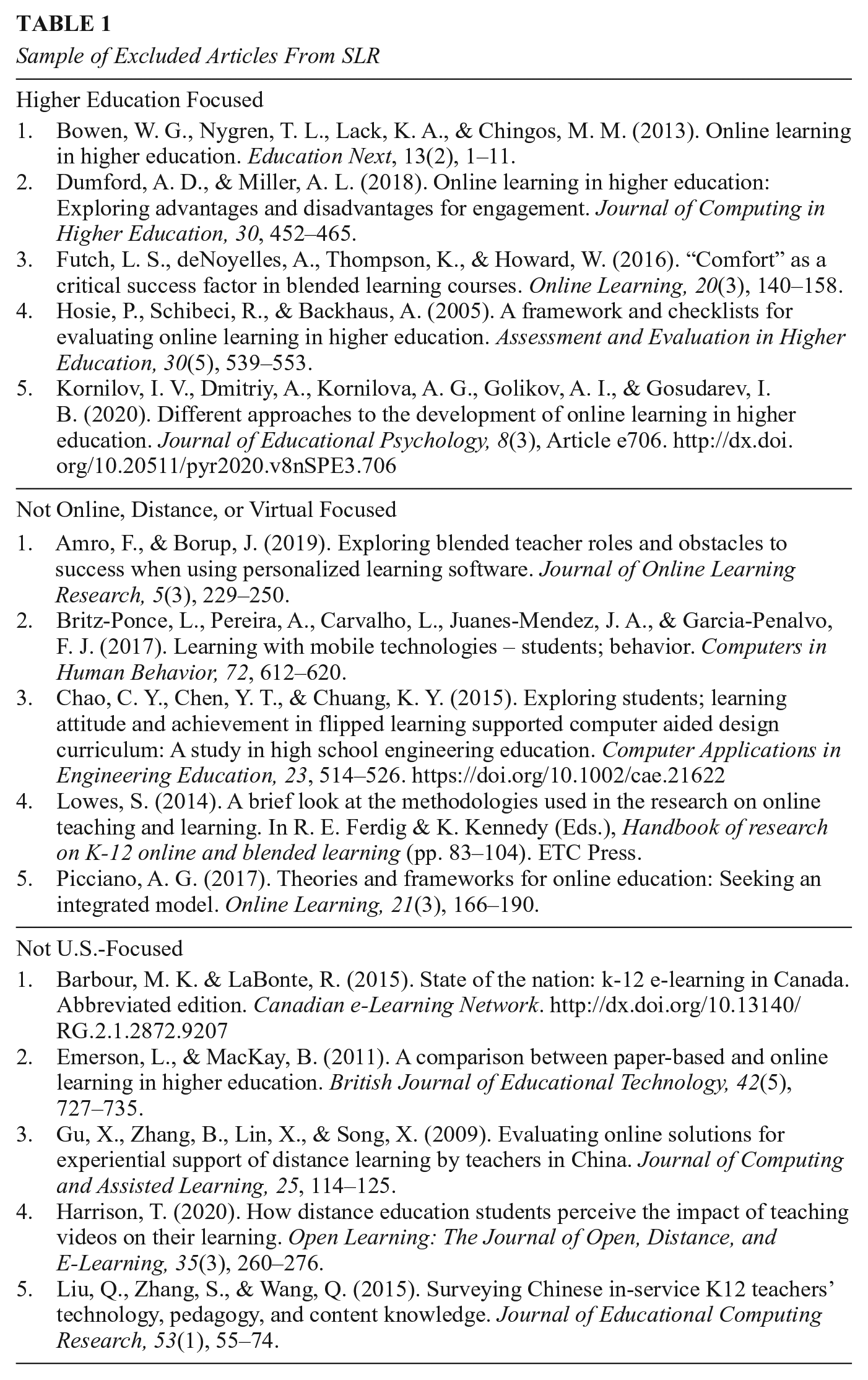
The second round of screening involved assessing full-text articles for eligibility utilizing the ESSA Tiers of Evidence (American Institute for Research, 2019) to determine which articles should be included in the review based upon the rigor of the research. Twenty-three articles (6%) were eliminated that did not meet the ESSA Tiers of Evidence (Institute for Education Sciences, 2020). The resulting 251 articles included the following: 7 that met ESSA Tier One criteria (3%), 14 that met ESSA Tier Two criteria (6%), 70 that met ESSA Tier Three criteria (28%), and 155 that met ESSA Tier Four criteria (61%). Five articles were included (2%) that described policy or were standards documents or other pivotal publications that were not empirical studies. These pieces were included for context purposes. The screening for this systematic literature review revealed a need for more quasi-experimental and randomized control design studies of virtual, online, and/or distance learning in K–12 education.
The Preferred Reporting Items of Systematic reviews and Meta-Analyses (PRISMA) framework, an evidence-based set of standards for systematic literature reviews and meta-analyses, informed the methods used to select and analyze literature for this systematic review (PRISMA, n.d.). Figure 1 presents a PRISMA flow diagram that summarizes the process used to identify studies. It is important to note that though our review was systematic it was not exhaustive and the writing and review process for this manuscript has extended over 18 months. As a result, this review is a synthesis of the findings presented in the selected papers and may not have encompassed the entire current research base in this area. For example, social media has emerged over the past year (Web 2.0) as a primary tool for connecting learners, as well as uses including assessment, differentiation, and engaging learners (e.g., Greenhow, Galvin, Brandon, & Askari, 2020; Van Den Beemt, Thurlings, & Willems, 2020), but this review largely excluded the knowledge base on K–12 teaching online with social media due to the limited research published in this area pre-pandemic. In addition, the sponsorship of the study required that we focus our review on literature relevant to K–12 online instruction within the United States.
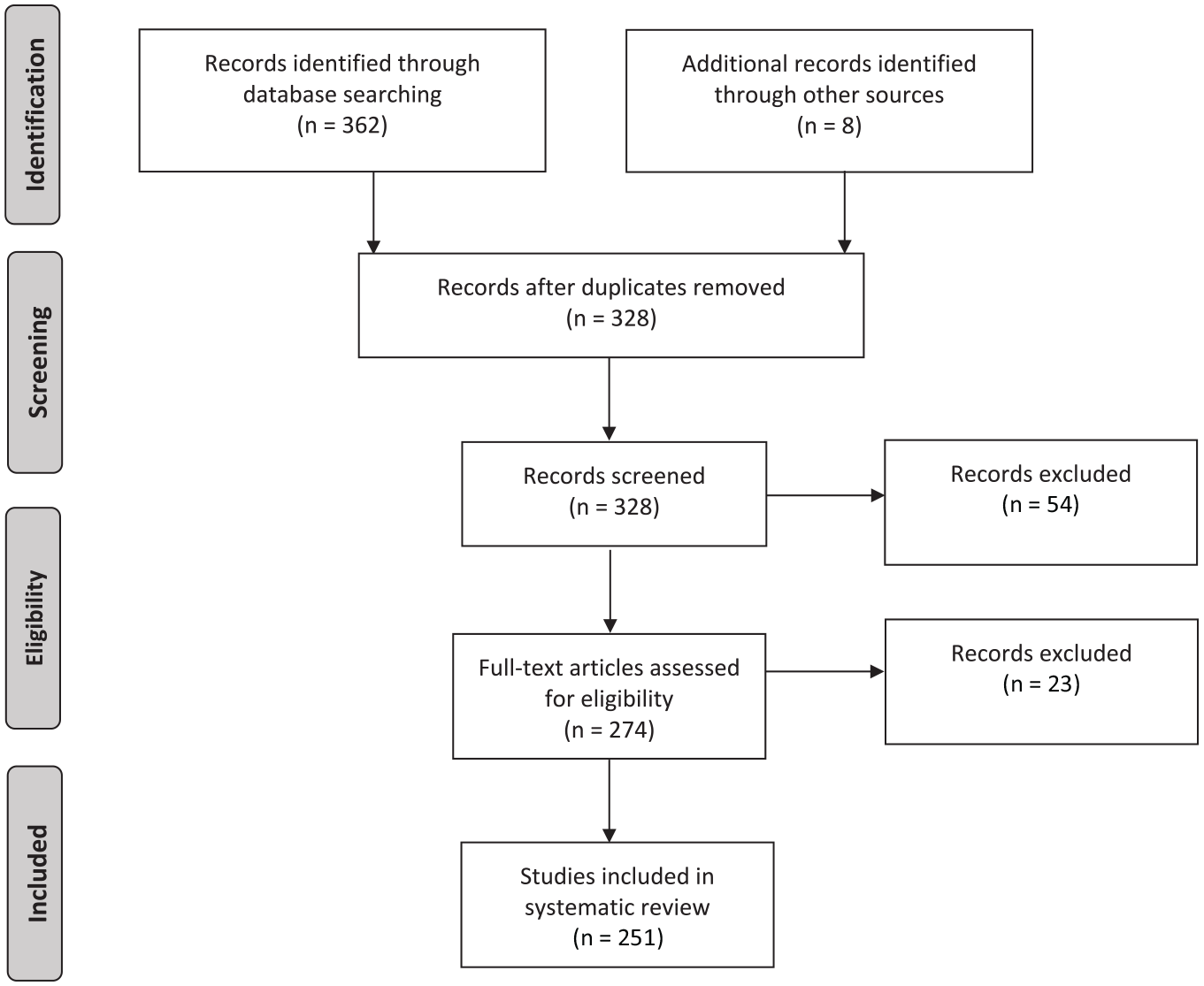
Preferred Reporting Items for Systematic Reviews and Meta-Analyses (PRISMA) diagram of selection process.
An information database was constructed using the articles included in the systematic literature review. The database included general information (e.g., article title, authors, publication date, publication, and abstract), research type (e.g., research questions, methods), and a summary of findings. The authors used PRISMA guidelines in accounting for methods of data collection and analysis for each study (PRISMA, 2020).
Data Analysis
Instead of using a conceptual framework to structure the coding process, thematic synthesis was used to analyze the articles where themes emerged from the primary studies (Thomas & Harden, 2008). The three stages of this approach were (1) coding selected text, (2) development of descriptive themes, and (3) generation of analytical themes (Thomas & Harden, 2008). For each article, findings, discussion, and implications were coded independently by the authors of this manuscript and then collaboratively discussed. Emerging codes were identified, descriptive themes were developed, and analytical themes were generated. See Figure 2 for an example of emerging and descriptive codes and resulting analytical theme of evidence-based course design. Numerical summaries were generated according to the analytical themes that were evident in selected papers for the study (shown in Table 1).
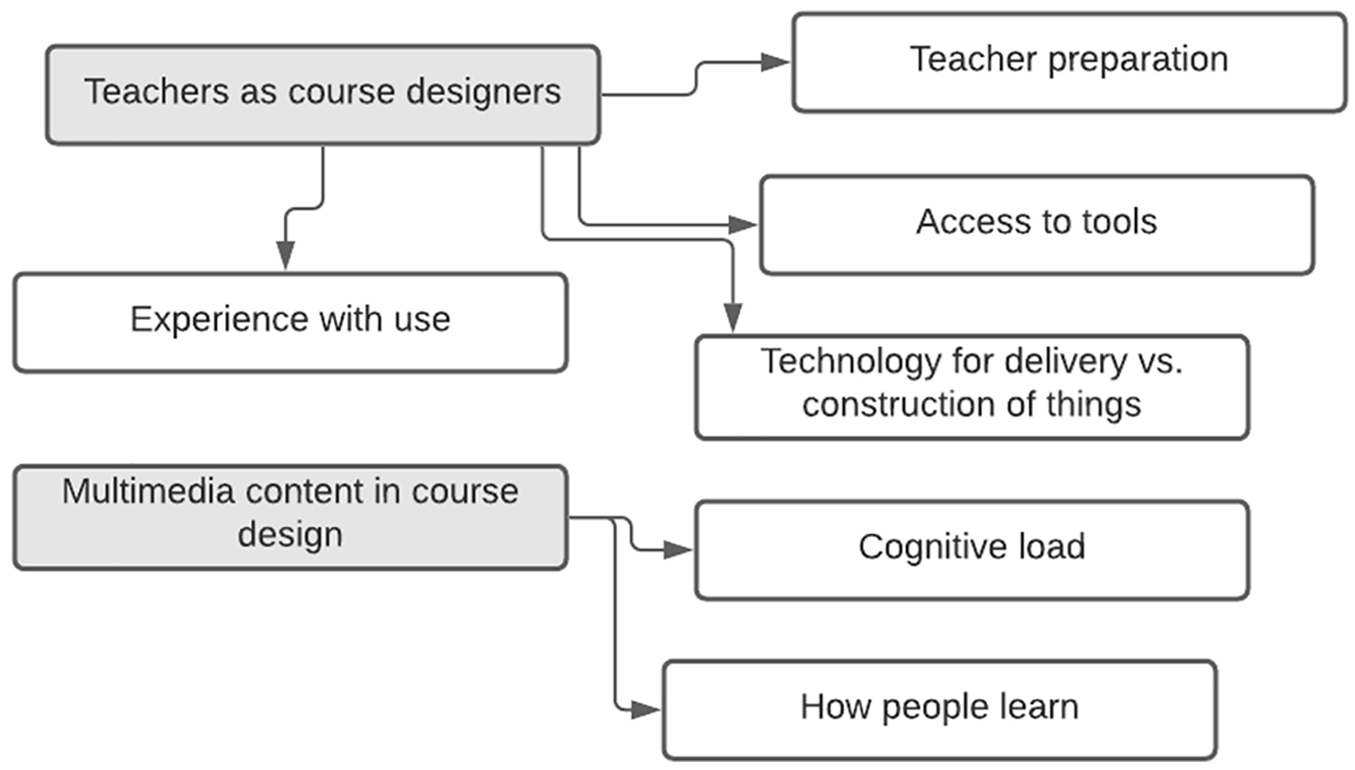
Sample Descriptive Themes—Evidence-Based Course Design.
Results
The results of this study are presented through addressing the two research questions. The first research question is focused on the foundational contextual factors that should be considered when delivering K–12 instruction online. The second research question is concerned with identifying the essential instructional components for K–12 learning in online education settings. The results are summarized in the K–12 Online Learning Conceptual Framework (Figure 3) and include in the center of the diagram the foundational contextual factors that are key to consider when building out the essential instructional components for K–12 online learning, located at the perimeter of the diagram.
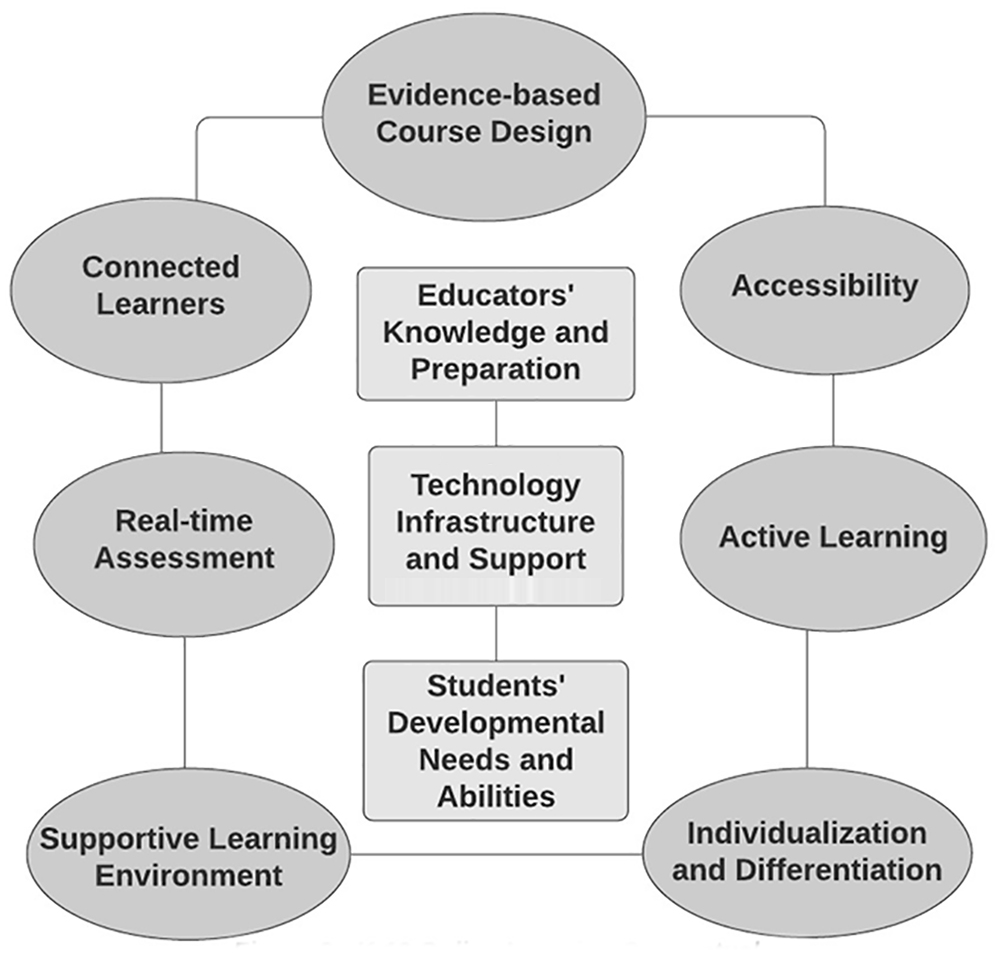
K–12 Online Learning Conceptual Framework.
Foundational Contextual Considerations for K–12 Online Instruction
The review of research literature, as well as a scan of key published works (e.g., books, practitioner articles, commentaries) regarding online instruction overall and K–12 virtual schooling experiences, yielded three important contextual considerations that must be attended to when designing full-time and/or part-time online instruction for K–12 learners. These factors are related to infrastructure and student characteristics that are relatively fixed in the short term and that should be understood before designing instruction and should be considered when making instructional design decisions. These factors are educators’ knowledge and preparation for online instruction, technology infrastructure and support, and students’ developmental needs and abilities. It should be noted that contextual factors such as students’ developmental needs and abilities are equally as relevant for in-person instruction as for online instruction. Our focus in this review was on the nuances of how these factors interact with the medium of instruction with the aim of understanding the impact of such factors on teaching in the online setting with its particular affordances and challenges.
Educators’ Knowledge and Preparation for Online Instruction
Forty-two articles (16%) alluded to educators’ limited knowledge and experiences regarding online delivery of K–12 schooling. Research has revealed the importance of teacher preparation for online teaching, both through preservice teacher preparation and professional development (e.g., Christensen & Alexander, 2020; Dawson & Dana, 2018; Moore et al., 2017; Pulham & Graham, 2018) as well as lending insight into the characteristics and/or skills of successful online teachers (e.g., Ferdig et al., 2009; Moore-Adams et al., 2016; Parks et al., 2016; Pulham & Graham, 2018) and the lack of preparation for teachers to teach online (e.g., Heafner & Handler, 2018; Parks et al., 2016; Trust & Whalen, 2020).
Not surprisingly, many of the skills and knowledge reported in literature as effective for online teaching were first demonstrated as evidence-based practices in face-to-face settings (Moore-Adams et al., 2016). Existing literature strongly suggests that certain best practices from traditional (i.e., face-to-face) instructional settings transfer to online or blended learning. Available evidence is highly context-specific, however. For example, Anthony (2019) found evidence from a collective case study of elementary blended learning classrooms that “best teaching practices from traditional class-rooms – especially (1) demonstrating flexibility and responsiveness, (2) using assessment in instruction, and (3) engaging students in learning tasks – do, in fact, have a substantial impact on student learning in blended elementary classrooms” (p. 25). Other researchers, however, emphasize that different skills are needed for online instruction than for face-to-face instruction (Barbour, 2019; Pulham & Graham, 2018; Pytash & O’Byrne, 2018) and caution against simply putting existing courses into online formats (Means et al., 2009).
Teacher preparation programs are faced with the challenge of preparing future teachers for new and uncertain instructional realities in the wake of the pandemic (e.g., Ferdig et al., 2009). There is evidence, however, that programs positing their ability to prepare teachers for online instruction may not be grounded in evidence-based best practices (e.g., Moore-Adams et al., 2016), suggesting that even those teachers who have received pre-service training in online instruction may lack a toolbox of best practices for this task.
The lack of evidence-based teacher preparation for online settings is a crucial point since research reveals that teacher quality is a crucial limiting factor in student achievement regardless of student background, including students’ underserved status (e.g., Darling-Hammond, 2010; Darling-Hammond et al., 2017; Opfer & Pedder, 2011). Over two decades of educational effectiveness research have demonstrated the link between teacher quality and student learning (e.g., Darling-Hammond, 2010). A plethora of research has demonstrated the need to provide professional development to teachers when implementing new strategies or curricula (e.g., Loucks-Horsley et al., 2010), indicating that without this important training, the fidelity of implementation—whether teachers actually use strategies effectively and as intended—is low (e.g., Harris & Sass, 2011; Opfer & Pedder, 2011; Yoon et al., 2007). Therefore, even if a teacher has been effective in traditional face-to-face instruction, transitioning to online synchronous instruction is a proposition riddled with challenges particularly in emergency settings where there is little time for thoughtful planning and development of course materials (e.g., Archambault et al., 2016; Arnesen, Graham et al., 2019; Geiger & Dawson, 2020).
Technology Infrastructure and Support
Since the first use of online technologies to deliver educational content around 1994, institutions of higher education and other organizations have capitalized on the advantages of the internet in terms of its flexibility, adaptability, and economy (de Freitas et al., 2015) to deliver focused, discipline-specific educational content to adult professionals (Quinn et al., 2019). Little research exists, however, regarding the crucial issue of how K–12 school districts can concurrently transform their overall delivery modes, build organizational capacity, and strategize how to consistently incorporate distance/virtual learning components for students for the long term in order to shift agilely between face-to-face, hybrid, and fully online settings (e.g., Clements et al., 2015; Dawson & Dana, 2018; Farmer & West, 2019; Martins Gomes & McCauley, 2016; Mayes, 2011).
It is important to note that the opportunities afforded by technology may not be available to all educators and learners. Technology access is used here to refer to infrastructure gaps in access (e.g., students who do not have internet-enabled devices available to them or who do not have access to reliable internet access) rather than to accessibility, which refers to technology design that enables its use by learners of various abilities and disabilities. The latter is a feature of course design that will be discussed in response to the second research question. Gaps in equitable access to technology tools and internet connection have been referred to as the digital divide, a term denoting the opportunity gap between those with and those without access to the devices and connectivity necessary to learn online (Crossland et al., 2018; Dolan, 2016; DiMaggio et al., 2004; Wladis et al., 2016). Several factors are related to students’ access to technology for educational purposes, including student socioeconomic status, school district resources, teacher knowledge and use of technology in support of learning, and infrastructure considerations such as internet speed and firewalls within schools (Dolan, 2016; Gallagher et al., 2019; Yu et al., 2018).
Access to technology typically differs based on socioeconomic status and race and follows the traditional “have” and “have not” pattern, however it is noteworthy that the definition of the digital divide is widening to also include the “can” and “cannot” view of technology use in education (Crossland et al., 2018; DiMaggio et al., 2004; Dolan, 2016; Downes et al., 2020). The research base regarding impacts of hybrid or fully online K–12 instruction on underrepresented students is sparse (e.g., Crippin et al., 2018). Of key importance in all types of instruction for students from underserved backgrounds, however, are quality of curriculum, student interest in the topic, and use of self-directed as well as group-based hands-on activities to promote engagement (Elrick et al., 2018). The incorporation of technology in education can support students in becoming not only consumers but also producers of information, a use of technology in which students learn by doing and become able to construct knowledge rather than simply passively consuming it (Crossland et al., 2018; Dolan, 2016).
Twenty-one articles reviewed (8%) discussed the challenges inherent with technology access issues and students’ need for parental support in virtual or online environments. These issues are closely tied to students’ home learning environments, a student characteristic that may be difficult for teachers to fully understand and even more difficult to influence. In spite of the difficulties posed by teaching students who are learning in remote settings, technology does offer affordances because of the unique opportunities for individualization, individualized learner interactions, and learner control of pacing (Collins & Halverson, 2018; Crossland et al., 2018). Students’ abilities to access these affordances depends on their access to technology and their ability to use that technology, the latter of which is a phenomenon that may rely on the support of parents or adult caregivers.
Furthermore, teachers’ access to support and connections to colleagues are also factors that should be considered when navigating the transition to entirely online instruction. Hawkins et al. (2012) pointed out that shifts in teacher and student roles are challenging and can cause feelings of isolation for teachers as well as learners if not implemented well. The desire to be connected to a community of teachers to engage in dialogue about practice, problem-solving, growing online teacher identity, and removing barriers is a hallmark of effective teachers and is especially important in navigating the new challenges that come with a transition to online teaching (i.e., Johnson & Fargo, 2010; Linton, 2017; Richardson & Alsup, 2015).
School districts must consider how to provide supports to teachers in the short term throughout transitions to online instruction while also considering how to upskill their staff through professional development for the longer term so that teachers can learn to master the appropriate online teaching and learning strategies and technologies (e.g., Clements et al., 2015; Dawson & Dana, 2018; Farmer & West, 2019; Larkin, 2016; Margolin et al., 2019; Parks & Oliver 2016; Roy & Boboc, 2016). One way to do this could be through the use of web-based platforms for professional development purposes (e.g., Means et al., 2013; Quinn et al., 2019).
Students’ Developmental Needs and Abilities
Nineteen (7%) of the articles reviewed suggested that the developmental levels of younger K–12 students can create barriers to success in virtual K–12 learning. The rapid shift to online and remote K–12 instruction has occurred, in some cases, without time and capacity to consider students’ developmental needs in spite of the vast difference between online learning for adult learners, adolescents, and young children (Barbour, 2018). A number of researchers have investigated student behaviors and/or characteristics as integral predictors of success or retention in online courses (e.g., Hung et al., 2020; Kim et al., 2014; Kwon et al., 2019; Pazzaglia et al., 2016; Roblyer et al., 2008; Zheng et al., 2020). However, as Rice (2006) pointed out, “a paucity of research exists when examining high school students enrolled in virtual schools, and the research base is smaller still when the population of students is further narrowed to the elementary grades” (p. 430).
The American Academy of Pediatrics (2016) set forth new guidelines on the kind and amount of media with which children should engage based on developmental considerations of children ages 5 to 18. Recommendations included that children ages 2 to 5 limit screen time to less than 1 hour a day and that children who are 6 years of age and older have consistent limits on their screen time but do not prescribe specific limits beyond directing parents to balance the amount of time children engage with media with healthy sleep and eating patterns. The duration of online learning sessions per day should be carefully determined and sequenced with flexibility in recognition of age-appropriate expectations for children’s attention spans (e.g., Ruff & Lawson, 1990). Several studies have illuminated the need for research to inform policy and guidelines for online learning in order to address the current issues that developers, teachers, and administrators face in crafting approaches to instructional design that are developmentally appropriate for multiple age and ability levels (e.g., Rozitis et al., 2018).
Two crucial issues related to students’ developmental capabilities must be considered when designing online educational experiences for K–12 students. The following sections will discuss the need to understand and adapt to students’ level of autonomy in technology use and in learning and students’ self-regulated learning capabilities.
Autonomy
We use the term autonomy here to refer to a learner’s ability to access and engage with course content independently. For younger students who may lack technological and learning autonomy, the involvement of a parent or other adult becomes critical to student engagement and success in online K–12 instructional settings (Borup et al., 2015; Curtis & Werth, 2015; Liu et al., 2010; Sorensen, 2012). Parental involvement in traditional school settings has long been associated with increased student success and achievement (e.g., Miller et al., 2017). Although research on parental support in online education is far less abundant than for traditional school settings, a growing number of studies link parental involvement in the online setting with student achievement and satisfaction (Waters et al., 2018). More specifically, Curtis and Werth (2015) found that parents play the important roles of monitor, mentor, and motivator for K–12 students who are learning online. Other factors, such as school policies, parent demographics, student perceptions, and student needs, play significant roles in influencing the degree of parent involvement (Waters et al., 2018). For example, Curtis (2013) conducted a mixed-methods study on the relationship between student success and the influence of parental involvement in an all online high school. The crucial factors for student success were identified as communication, transparency, and individualization by the school; self-motivation, engagement, and accountability by the student; and monitoring, mentoring, and the ability to motivate students by parents.
Parents are often much more extensively involved in online learning environments than in traditional face-to-face school settings but are not generally supported with resources and information about pedagogical practices that support student success (Borup et al., 2015; Curtis, 2013; Curtis & Werth, 2015; Stevens & Borup, 2015). These findings have important implications for the future as the number of students learning from home and the number of parents cast in the role of teacher assistant increase (Carter et al., 2020).
Students’ Self-Regulated Learning Skills
The ability to manage one’s own behaviors is recognized to be an important factor in human development generally (Zimmerman, 2002) and in academic success in childhood and adolescence more specifically (Dent & Koenka, 2016; Duckworth et al., 2009). Learning in online settings may pose additional challenges to students’ motivation to learn and require them to exercise self-discipline in their learning behaviors to a greater degree than in face-to-face learning settings (Carter et al., 2020). Self-regulation is a concept, therefore, that is of prime importance in education (e.g., Dent & Koenka, 2016; Dignath et al., 2008; Labuhn et al., 2010; Pui, 2016) and may be worthy of extra attention in online learning settings (Carter et al., 2020; Huh & Reigeluth, 2018; Lock et al., 2017).
Zimmerman (2000) describes self-regulation as a cyclical process of “forethought, performance or volitional control, and self-reflection” (p. 34). Zimmerman (2002) went on to apply these ideas to learning and posited that self-regulatory behaviors can support students’ motivation to learn and become lifelong learners. These ideas were conceptualized in a framework for self-regulated learning (SRL) that describes how students can learn to be “proactive in their efforts to learn” (Zimmerman, 2002, p. 65). The importance of students’ capacities for SRL in K–12 is evidenced by the association of SRL with positive student learning outcomes (Dent & Koenka, 2016; Dignath et al., 2008; Peters & Kitsantas, 2010; Roblyer et al., 2008). SRL involves a cyclical, iterative process that comprises the following stages: (1) forethought before learning: goal setting and self-awareness of interest and efficacy; (2) performance during learning: performance of tasks while attending to core concepts and monitoring one’s own progress; and (3) self-reflection: reflecting on task performance in the context of expectations and satisfaction with task performance (Zimmerman, 2002). In sum, instruction for K–12 learners in any setting should be structured with careful attention to learner developmental capabilities and self-regulation capacities. These considerations become especially important in online environments where learners are required to interact with technology regularly and where they may be tasked with regulating their own learning more than in face-to-face classrooms.
Essential Components for Online K–12 Instruction
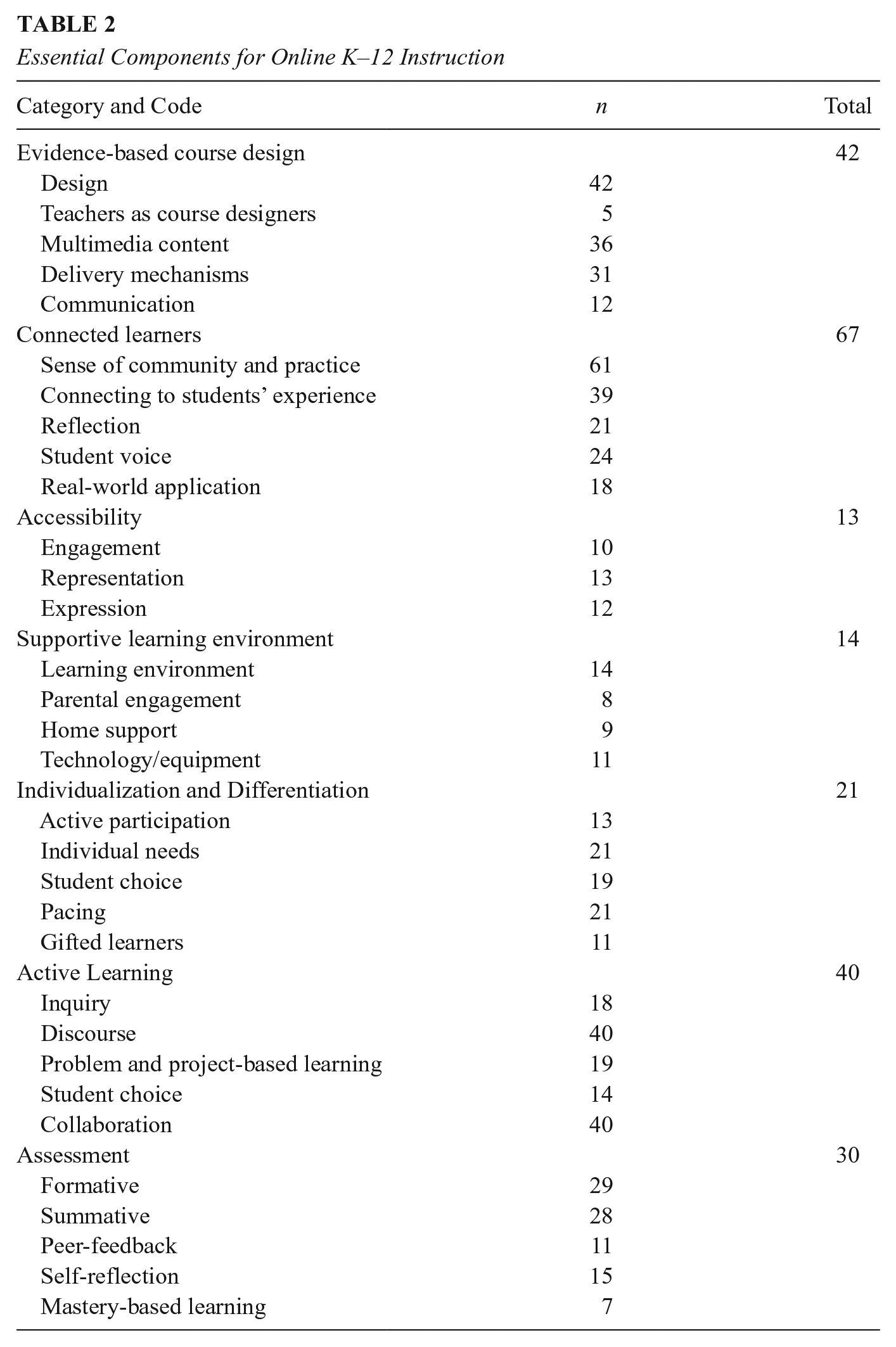
The findings of this study revealed seven key pillars of an evidence-based approach to designing and delivering K–12 education in online formats. The seven pillars that comprise the K–12 Online Teaching Conceptual Framework are evidence-based course design, connected learners, accessibility, supportive learning environment, individualization and differentiation, active learning, and real-time assessment (Table 2).
Essential Components for Online K–12 Instruction
Evidence-Based Course Design
The term course design is used here to refer to the development of the means by which course content is delivered to learners. Forty-two articles (15%) revealed findings related to the importance of course design in the delivery of virtual or online instruction. As noted above, much of the research in K–12 online learning has focused on effectiveness generally, and the research base regarding specific best practices, including course design, is thin (e.g., Arnesen, Hveem, et al., 2019; Barbour, 2019). This is particularly problematic because, especially with rapid shifts to online instruction, K–12 teachers are increasingly thrust into the role of instructional designers, a role for which they may not be well prepared and for which there is little guidance (Barbour, 2018; Watson, 2007). There is, however, a sound evidence base in the cognitive science field for the use of multiple forms of media in online instruction (Clark & Mayer, 2016; Mayer, 2017; Mehlenbacher, 2010), and findings indicate that evidence-based course design is a crucial pillar for providing students with meaningful online learning experiences (Cavanaugh et al., 2004; Chen et al., 2018).
Despite the paucity of research regarding best practices in online course design specifically for K–12, there is evidence that the design of courses is a key factor in learning. For example, Cavanaugh et al. (2004) found in their meta-analysis of over 100 studies that well-designed online virtual learning environments can elicit at least the same academic outcomes as traditional face-to-face classroom learning.
Although the course design guidelines laid out in the National Standards for Quality Online Courses (NSQ, 2019) were developed using a literature base that incorporated research findings for adults as well as K–12 learners (Kennedy et al., 2018), these standards are generally aligned with the body of research from the learning sciences and instructional design principles more generally. This literature base has been used to inform the design of online courses with a focus on reducing cognitive load (Sweller, 2008, 2020) and engaging learners in user experiences that optimize learning by creating environments that are navigable, visually streamlined, and clearly organized (Clark & Mayer, 2016). The NSQ (2019) standards include a variety of guidelines organized by the following themes: course overview and support, content, instructional design, learner assessment, accessibility and usability, technology, and course evaluation. As noted above, the evidential support for the individual guidelines is culled from a review of literature that combined both higher education and K–12 research, much of which was in the form of small sample, qualitative studies (Kennedy et al., 2018), and therefore, the following discussion will reference these standards only as they align with findings from this review.
Good course design reduces the user’s cognitive load by streamlining navigation, organizing content intentionally, reducing the number of spaces a user must interact with to complete a lesson, and limiting the scope of navigation (Clark & Mayer, 2016). This includes the need for an online course to include specific directions on how to navigate the learning platform and use any tools employed by the course, explicit directions on how to engage with others in an online environment (i.e., “netiquette”) (Quality Matters, 2019), expectations for communication, and clear instruction on how to engage with content (Dikkers, 2018; DiPietro et al., 2008).
Course design should be driven by course content and sound pedagogical practice. Barbour et al. (2018) identified the need for course developers to begin with ideas about content and specific lessons before beginning to develop any technology-based content. Additionally, although students should have opportunities to engage with content in multiple ways (DiPietro et al., 2008; Heafner & Handler, 2018), course designers should be consistent in keeping navigation through the course simple and streamlined (Barbour, 2007) and logically sequenced (NSQ, 2019). Students should also have opportunities to participate quietly, without posting content (Wilton, 2018). In addition, online courses should include clearly stated objectives and instructions (DiPietro et al., 2008) and include opportunities for teachers to model their expectations on how to engage with materials and other users (DiPietro et al., 2008).
Teachers as Course Designers
Many teachers report feeling unprepared to design and teach online courses (e.g., Trust & Whalen, 2020). This is not surprising given evidence that teacher preparation courses for online instruction may not be evidence based or grounded in the cognitive science foundations of online course design (e.g., Moore-Adams et al., 2016). There is some indication that experienced online teachers incorporate evidence-based instructional design principles into their courses. DiPietro et al. (2008) studied teachers in virtual classrooms across disciplines with at least 3 years of online teaching experience and found that teachers employed aspects of course design including clearly organizing and structuring course content, establishing clear deadlines for self-pacing, and providing multiple opportunities for students to engage with course content. Additionally, the teachers in DiPietro et al.’s (2008) study modeled how to use technology like discussion boards and other communication tools, recognizing potential issues with and students’ access and knowledge of technology.
Teachers have access to many tools to facilitate learning in online environments, but because these different technologies have different purposes in online courses, they should be used intentionally and with an understanding of their capabilities and limitations (e.g., Borokhovski et al., 2012; Drexler, 2018). In a systematic review of literature regarding synchronous online learning, Martin et al. (2017) found that technology tools were the most reported independent variables in the studies they reviewed, although it was not always clear whether the tools were being used to deliver content, to facilitate student interaction, or for some other purpose. Evidence does suggest that the use of synchronous tools that permit real-time interaction (e.g., audio and video-based tools) allow for more interactions, greater perceptions of cognitive and social presence, and opportunities to provide students with real-time feedback (e.g., Cui et al., 2013; Kozan, 2016; Martin et al., 2017; McClannon et al., 2018; Whiteside, 2015). Regardless of the technology tools used, technologies used in online teaching and learning should be tied to learning objectives and driven by course content (DiPietro et al., 2008), must be employed in ways that support student cognition and effective pedagogy in order to support positive student learning outcomes (Barbour, 2018; Clark & Meyer, 2016; Ferdig, 2006), and should be used intentionally and strategically in the context of overall learning processes (Drexler, 2018).
Teachers designing online instruction are faced with an array of technology tools from which to choose (e.g., Carlson et al., 2012). Learning management systems (LMSs) are most often prescribed by schools, leaving teachers with little choice in this regard, however teachers’ abilities to use the LMS and software effectively are crucial (Pulham & Graham, 2018). These abilities are closely tied to how students are challenged to use technology within courses and, evidence suggests, when using technology as “a construction and representation tool as opposed to simply for information retrieval and communication” (Crippin et al., 2018, p. 368). Likewise, Drexler (2018) concluded that specific technology tools should be incorporated for purposes such as facilitating collaboration and students’ ability to take control of their own learning. Teachers should understand how technology tools can be used by students to self-regulate their learning and should carefully scaffold students’ use of technology tools to ensure that they meet this goal, employing tools that allow students to monitor their own progress (e.g., checklists) and scaffold their ability to learn with increasing levels of autonomy (Lock et al., 2017).
Multimedia Content in Course Design
Research in cognitive sciences has provided specific guidelines regarding the use of multimedia to present content in online learning (Clark & Mayer, 2016; Mayer, 2017; Mehlenbacher, 2010). The aim of effective multimedia design is to produce conditions that maximize the capacity for an individual to engage in active learning processes by employing strategies that reduce cognitive load and improve the learning experience and learning outcome (Mayer, 2017). Cognitive load theory contends that effective instructional design reduces extraneous processing, manages essential processing, and fosters generative processing (Mayer, 2017). In his synthesis of research, Mayer (2017) found significant and replicable support for the proposition that designing multimedia content presentation around these aims can improve learning, although he noted that much of the statistically significant evidence comes from lab-based research trials and that additional research within educational contexts should be conducted. It should be noted that Mayer’s (2017) research was conducted with the aim of identifying principles for course designers in presenting course content as opposed to student use of and interaction with specific technology tools for “construction and representation” (Crippin et al., 2018, p. 368).
The first of the goals of multimedia design Mayer (2017) investigated, reducing extraneous processing, refers to creating experiences that reduce a user’s need to attend to features that do not directly contribute to learning. The second goal, managing essential processing, refers to attending to the cognitive effort that a learner uses to mentally represent material by, for example, presenting material that is not too complex for the developmental abilities of learners. Lastly, fostering generative processing refers to being mindful of the cognitive effort a student uses to make sense of content.
Mayer (2017) found support in the research for the principles for multimedia use in online course design related to these three aims. Specifically, Mayer (2017) found that people learn better with multimedia content when:
• extraneous material is removed
• important information is highlighted
• graphics and narration are used alone than when used with on-screen text
• corresponding words and pictures are presented near each other on the screen
• corresponding words and pictures are presented simultaneously
• multimedia lessons are broken down into small user-paced segments
• they learn key terms prior to engaging with multimedia
• words are presented in spoken form in multimedia
• multimedia lessons are presented in conversational style as opposed to formal style
• when human voices are used instead of computer-generated voices
• on-screen graphics use human-like gestures and language.
In sum, course design should align with evidence-based best practices for instructional design (Clark & Mayer, 2016; Mayer, 2017), including practices to facilitate ease of navigation through courses (Barbour, 2018; Mayer, 2017). Technology tools should be chosen intentionally and thoughtfully integrated into courses (Crippin et al., 2018; Pulham & Graham, 2018), align with course objectives and sound pedagogical practices (Barbour et al., 2018; DiPietro, 2008; Drexler, 2018), promote students’ ability to increasingly self-regulate their learning (Lock et al., 2017), and provide students the opportunity to engage with content in multiple ways (DiPietro et al., 2008; Heafner & Handler, 2018; Wilton, 2018). These principles, as well as the evidence base regarding human learning in technologically based settings (e.g., Sweller, 2020; Sweller et al., 2019), should form the basis for teacher preparation programs that aim to prepare teachers for online instruction (e.g., Moore-Adams et al., 2016; Trust & Whalen, 2020).
Connected Learners
Sixty-seven articles (26%) discussed the importance of designing online or virtual K–12 courses to include pedagogies and activities that create a community of connected learners and connect course content to students’ lives and experiences. The literature reviewed indicates that learners’ perceptions of connection—both to others in the learning community and to course content—are key to effective online learning. It is not surprising that social interactions within K–12 online environments tend to be less frequent and less organic than in face-to-face settings (e.g., Mann, 2019). The importance of these social interactions was, however, highlighted by Lave and Wenger (1991), who asserted that learning is situated within social contexts and that establishing shared experiences and interaction in learning, or communities of practice, in classroom environments promotes student engagement and participation. In addition, research has demonstrated that making learning relevant to students’ experiences by grounding instruction within real-world, meaningful challenges and problems in K–12 classrooms results in more authentic learning, deeper conceptual understanding, and greater retention of knowledge (e.g., Breiner et al., 2012; Johnson, 2013; Rennie et al., 2012; Roehrig et al., 2012), Students can also connect to course content through reflection that focuses on finding relationships and relevance of course content to their own life experiences (e.g., Choi et al., 2017; Patrick & Powell, 2009; Perels et al., 2009).
Sense of Community and Presence
Constructivist views of learning posit that students are active participants in constructing their own learning and point to the crucial importance of social interaction as a component of learning (e.g., Vygotsky, 1978; Wenger, 1998). Within the literature on online learning environments, interactions between learner and content, learner and learner, and learner and instructor are the basis for a deeper construction of knowledge and can help to transcend the perception of psychological distance students may experience within an online course, creating greater feelings of connectedness and belonging (e.g., Dikkers, 2018; Thormann & Fidalgo, 2014).
Historically, distance and/or virtual education has rarely included learner-to-learner interactions, often out of concern for bullying and cheating and the tension between meeting students’ individual needs and the time demands associated with collaborative learning (Barbour, 2007; Borup, 2016a, 2016b). Perspectives toward learner-to-learner interactions are rapidly shifting, however, as K–12 schools transition to fully online formats in the wake of COVID-19 and recognize that social interaction is key to establishing communities of inquiry that reflect the dynamics of face-to-face learning (e.g., Dikkers, 2018; Garrison, 2009; Geiger & Dawson, 2020). Researchers have also suggested that virtual coursework has particular advantages that can be leveraged including the potential to provide for geographically larger and more diverse communities of practice than face-to-face instruction (Lantz-Andersson et al., 2018) and the ability to provide flexibility for learners to access and participate in coursework that may not otherwise be available to them (Dede et al., 2009). In addition, online instruction provides unique opportunities for individualized learning through, for example, the use of technologies that allow for student choice of mode of content delivery, grouping of students by learning needs, and providing accelerated options for gifted learners (e.g., Blatchford et al., 2006; McCarthy, 2020; Olszewski-Kubilius, & Corwith, 2011).
The establishment of communities of practice within online courses has been directly linked to student persistence in virtual learning environments (Boston et al., 2009), and Ferdig et al. (2009) identified the establishment of community and student collaboration as best practices within online instruction. Evidence supports the proposition that the dialogue, discussion, and collaboration that typifies communities promotes connections among peers in online settings and promotes success in online learning (Coryell & Chlup, 2007; Guldberg, 2008; Rieck & Crouch, 2007; Slotte & Tynjälä, 2005; Snyder, 2009; Song & Hill, 2009). Because of the potential for student learning associated with the formation of online learning communities, it has been recommended that online communities of practice be developed in online courses as mechanisms of support and encouragement (Blair & Hoy, 2006; Coryell & Clark, 2009; Guldberg, 2008).
The Community of Inquiry (CoI) model of online education highlights the importance of social presence in courses (Garrison, 2009). The term presences, as used within the CoI model, refers to interactions between learners and between learners and instructors that are focused on students’ content learning within an online course (Garrison, 2009; Sanders & Lokey-Vega, 2020). Social presence, defined as communication and a sense of community within a group, is foundational to learners’ feelings of connection to others in online learning environments, and there is evidence that employing strategies to support such interactions in online courses can lead to increased student achievement and learner satisfaction (Borup et al., 2013; Dikkers, 2018; Whiteside, 2015). Sun and Chen (2016) identified several strategies that contribute to successful online courses, including the promotion of social presence through interactions and the creation of an online learning community. These strategies resulted in greater student engagement, success in reaching learning goals, and increases in student performance and satisfaction. Strategies for the development of an online learning community include incorporating community building early and consistently throughout the course, involving both learners and instructors, creating shared space using synchronous and asynchronous technologies and strategies, and designing tasks that require collaboration and discussion (Dikkers, 2018; Webb et al., 2008; Yuan & Kim, 2014).
Connecting Course Content to Students’ Experiences
Students’ perceptions of the relevance of their learning to real-life situations and their own experiences can impact the ways that they engage with course content and enhance student learning outcomes (e.g., Breiner et al., 2012; Johnson, 2013; Rennie et al., 2012; Roehrig et al., 2012). Besides the benefits of learning communities noted above, there is some evidence that strategies related to the formation of Communities of Inquiry (Garrison et al., 2000) can support the relevance of course material to students’ lived experiences. Lawrence’s (2020) study of online high school teachers using grounded theory, for example, found that ongoing and frequent dialogue with students, the teacher’s focus on getting to know students, intentional efforts to build class community, and adapting instruction to students’ needs and interests made learning relevant to students.
Community engagement through co-teaching, field trips, guest speakers, mentoring, and internships have also been linked to growth in disciplinary interest and achievement generally (e.g., Mann & Dawkins, 2014; Stoeger et al., 2019). Technology provides unique opportunities to incorporate real-world situations into student learning, giving students access to experiences and phenomena that may otherwise be unavailable to them due to geographic and resource constraints (NRC, 2011). The National Research Council (NRC, 2011) cited several ways that educators can leverage technology to create real-world connections for their students, including the use of software programs that permit modeling and the application of concepts to real-world situations and the use of technology platforms to provide access to videos, simulations, and demonstrations. Evidence indicates the use of technology for these purposes is effective when incorporated into well-designed courses (Heafner & Handler, 2018; Lehrer & Schauble, 2000; Lesh et al., 2010; Sokolowski, 2015).
Web-based technologies can also be used to contextualize learning and provide students with connections to real-world contexts, experiences, and individuals. Evidence suggests that virtual field trips can result in student learning while connecting students with people and real-world situations (e.g., Adedokun et al., 2012; Han, 2020; Harrington, 2011; Puhek et al., 2012). Although the evidence regarding virtual field trips is sparse and primarily gleaned from descriptive studies with small sample sizes (e.g., Han, 2020; Harrington, 2011), findings suggest that virtual experiences have “value for carefully targeted learning objectives of in-curriculum material, especially when the real environment is not available” (Harrington, 2011, p. 185). Likewise, technology affords opportunities for students to access the potentially transformative impact of adult role models and mentors (e.g., Estrada et al., 2018; Finkel, 2017; Riegle-Crumb et al., 2011). Evidence for online mentoring in K–12 tends to be narrowly focused—for example, on girls in STEM (e.g., Stoeger et al., 2020). There is some evidence in the literature, however, that limited technology-mediated connections with professionals—by virtual workplace visits (Adedokun et al., 2015) or by engaging virtual speakers (Johnson et al., 2020a)—can have positive impacts on student attitudes and perceptions of careers (Adedokun et al., 2012, 2015). Furthermore, web-based programs such as eCYBERMISSION (eCM) (Johnson et al., 2020b), a program that challenges teams of students to identify and solve problems in their communities, can have positive impacts on student learning and on skills such as communication, leadership, and creativity (Johnson et al., 2020b).
Making Personal Connections Through Reflection
Student reflection on content and on their own learning is another way that learners make connections between course content and their own lives (Zimmerman, 2000). The research base regarding the use of self-reflection in K–12 online settings is limited, and of the three articles that suggested student self-reflection as a best practice for online teaching and learning, two (Hew & Cheung, 2013; Means, et al., 2009) included both K–12 and higher education studies in their syntheses. Evidence does suggest, however, that self-reflection can have positive impacts on K–12 students’ learning (e.g., Choi et al., 2017; McLoughlin & Lee, 2010; Patrick & Powell, 2009; Perels et al., 2009) and that more frequent self-reflection is associated with improved learning outcomes (Choi et al., 2017; Hew & Cheung, 2013; Means et al., 2009). Choi et al. (2017) suggested that self-reflection practices should be differentiated and that factors such as “learner ability, task complexity, timing, and prior knowledge” (Choi et al., 2017, p. 97) should be considered when creating self-reflection tools and strategies. Hew and Cheung (2013) found that Weblog technologies in particular could be used productively for reflection when “supported by activities such as Socratic questioning, peer review and self-reflection” (p. 47).
Accessibility
Accessibility in online learning is defined, for the purposes of this review, as the use of technology tools to support students of all abilities while meeting the unique needs of students with disabilities (McAlvage & Rice, 2018). Thirteen articles (5%) focused on the importance of providing clear and facilitated access to learning in online and virtual K–12 schooling. Although the range of characteristics of students engaged in online learning has expanded dramatically due to pandemic conditions, it should be noted that there were issues and challenges associated with meeting the needs of all learners in online environments even before the pandemic (Basham et al., 2018). The scale of this disparity has become glaringly obvious as students, parents, and teachers face learning conditions that pose challenges for even the most supported and able learners.
Universal Design for Learning (UDL) is recognized as a course design framework that aims to improve outcomes for learners over a wide range of abilities. Although UDL was originally intended to provide a framework for designing effective instruction for students with disabilities and other nontypical learning needs (e.g., Basham et al., 2016; Basham & Marino, 2013; Burdette et al., 2013), the framework has been shown to be beneficial for all learners, and UDL was incorporated into federal policy via the ESSA (2015). Three main points have emerged as best practices within UDL: providing multiple means of engagement, providing multiple means of representation, and providing multiple means of action and expression (CAST, 2018). UDL, as applied to online learning, can support learners using design concepts such as providing multiple opportunities for students to engage with content and multiple ways to demonstrate mastery through the use of technology (Basham et al., 2018; Dikkers, 2018; Smith et al., 2016). The foundational premise of UDL that learning opportunities are highly diverse makes fidelity to the framework multifaceted and complex and creates difficulties in isolating and identifying best practices (Basham et al., 2018). Efforts to study UDL are complicated by the lack of a clear definition and the fact that it is frequently categorized using other terminology such as personalized learning, multiple forms of assessment, or scaffolded exercises (Lokey-Vega & Stephens, 2019). It is not surprising, therefore, that only 12 articles met the review criteria and, of those, only four focused on pre-K–12 learners.
In an analysis of peer-reviewed articles on UDL, Al-Azawei et al. (2016) highlighted the promise of UDL to enhance students’ learning by reducing barriers that impact all students, including those who have learning disabilities. They reported that students reported high satisfaction, had positively engagement, and had increased learning outcomes in courses using UDL to reach all learners (Basham et al., 2018).
The body of UDL research specific to online learning is growing but has been often tied to a particular technology or to the use of technology tools as supplements to face-to-face learning activities. For example, Rappolt-Schlittmann et al. (2013) measured content knowledge and science motivation for students using Universally Designed notebooks compared to those using traditional paper-and-pencil science notebooks in a randomized control study of fourth-grade students (including students with IEPs) across 8 schools and 28 classrooms. These researchers identified positive learning outcomes and increases in motivation in students using the notebooks and concluded that the underlying use of UDL along with the technology was able to provide multiple opportunities to engage students with content and reduce barriers to learning.
Supportive Learning Environment
Fourteen articles (5%) found that a learner’s environment is critical to the effectiveness of K–12 online schooling. As noted in the foundational contextual considerations section, a student’s home environment represents a preexisting set of conditions that is relatively fixed in the short term. This section, therefore, focuses on findings that suggest specific factors educators should recognize as they approach their instructional design and interact with students and actions they can take regarding home support for student learning.
Foundational literature in human development supports the idea that students’ ability to learn is closely tied to their learning environments. Roblyer et al. (2008) confirmed, via a survey of 2,800 high school students, that a student’s learning environment impacts performance in online courses as much as do students’ personal characteristics and that models to predict student success should account for environmental factors such as technology access. The role of instructors in modifying learners’ environments is limited, however Milheim’s (2012) findings suggested that instructors can facilitate students’ needs in terms of self-esteem and self-actualization by providing feedback, creating opportunities for collaboration, and fostering online learning communities.
Borup, Graham, et al. (2020) advanced the Academic Communities of Engagement (ACE) framework that describes how environmental support factors impact students’ engagement in online learning. Borup, Graham, et al.’s (2020) ACE framework outlined how two types of communities—the course community and the personal community—can support students’ abilities to engage in online learning. The ACE framework connects a student’s affective, behavioral, and cognitive engagement to the supports present in the course community—the teacher, peers, and others within the boundaries of a course—and the student’s personal community—parents, siblings, and others whose relationship with the student falls outside of course boundaries (Borup, Jensen, et al., 2020). Borup, Graham, et al. (2020) concluded that students are most likely to engage effectively with online learning when their course and personal communities are integrated by, for example, parents being explicitly invited to participate in children’s learning.
Research has demonstrated the critical role that parental engagement plays in a student’s success in school (e.g., Sheldon & Epstein, 2002), and there is corresponding evidence for the importance of other aspects of students’ learning environments in online settings. Curtis and Werth’s (2015) case study suggested that parent support and availability is important to students’ success in online learning environments. Further evidence for the role of the learning environment, and particularly that of engaged parents, was provided by Oviatt et al.’s (2018) survey of adolescent students enrolled in online courses. These students reported that they received instructional help and encouragement from parents more often than from teachers. Borup (2016a), in his case study of online high school teachers, found that parents supported students in several ways, including assisting them with schedules, providing support for relationships, monitoring students’ engagement with coursework, and providing auxiliary academic instruction. The role of parent support was also highlighted by Carter et al. (2020), who found in their review of self-regulated learning in K–12 online learning that parents or other adults were often recruited and relied upon to support student learning.
Little research has addressed the plight of young online learners who may lack substantial home supports, and the evidence base for how educators and schools can support these students in online learning is therefore nearly nonexistent. Of concern are students who may have limited autonomy in technology use and self-directed learning capacities because of their age (Barbour, 2018) or other developmental factors such as the ability to self-regulate (Lowes & Lin, 2015).
Individualization and Differentiation
For the purposes of this review, individualization refers to tailoring instruction and learning activities to meet individual students’ needs, while differentiation refers to tailoring instruction and learning activities to meet the needs of various subgroups of learners within a class (Bray & McClaskey, 2013). Twenty-one articles (8%) found that tailoring instruction for student needs within K–12 virtual or online coursework is an important element of student success. Online technologies hold enormous promise for assisting educators in creating individualized learning environments both in the face-to-face classroom as well as online learning environments (U.S. Department of Education, 2017). With such tailored instruction, learners are given the opportunity to transcend the role of passive consumers of information to become active participants in their own learning (Basham et al., 2016).
There is some evidence that online courses can provide opportunities to adjust technology and resources for individual students or groups of students that are not as readily available in face-to-face settings. McCarthy (2020), for example, found that web-based conferencing in online elementary courses allowed teachers to assist in the pacing of the course, provided choices to students regarding delivery of course content, allowed for peer-to-peer interactions during activities, enabled teachers to determine needs for individualized support, allowed for grouping students by learning needs, and facilitated targeting different content and materials based on student needs (Blatchford et al., 2006). There is evidence that supports the notion that technology provides affordances for providing accelerated options for gifted learners in particular (e.g., Olszewski-Kubilius & Corwith, 2011; Thomson, 2010).
The use of technology to individualize instruction should be approached strategically. The digital use divide—the significant difference between learners who use technology for active learning and those who simply utilize it to passively to consume information (U.S. Department of Education, 2017)—points to the importance of attending to not just whether but also how technology is used in instruction. Technology can provide affordances for individualized learning by using, for example, stimulus-response analytics that allow the technology to progressively increase in difficulty (Basham et al., 2016; Shute & Zapata-Rivera, 2012).
The research for individualized learning practices in online settings is primarily focused on student outcomes for specific online programs and interventions for students in face-to-face or hybrid learning environments (Hill et al., 2017). In their study, Hill and Lenard (2016) found that students participating in the Achieve3000 online early literacy program, which provided individualized curriculum for students, performed similarly to students in face-to-face control group classes. After the second year of participation, the researchers found a significant difference for students using the intervention online curriculum. In a similar study, Borman et al. (2015) also found significant differences between treatment and control schools in a 1-year, quasi-experimental study of schools using the Achieve3000 online literacy curriculum in Grades 3–8.
There is evidence more generally, however, that students who experience individualized learning can experience larger gains in mathematics and reading learning as compared to similar learners in comparable classrooms (Kosko et al., 2018; Pane et al., 2015; Pilli & Aksu, 2013; Sharp & Hamil, 2018).
Online individualization can take the form of tutoring, homework tools, and/or additional remediation support, and research has demonstrated significant impacts in mathematics and reading related to these types of programs in randomized control studies. Students participating in the ASSISTments online mathematics intervention program had higher mathematics scores than their nonparticipating peers (Roschelle et al., 2016), suggesting that the individualization features of the program enhanced student learning. Likewise, Wang and Woodworth (2011) conducted a study of the DreamBox Learning mathematics supplemental program, which provides adaptive instruction for students in grades K–5 with the ability to individualize instruction. These authors identified significantly higher mathematics scores for students who had participated in the program. In regard to reading skills, Perry (2014) found significant growth in reading skills for students who participated in an online and at-home 1:1 tutoring program in reading for middle school students. Similarly, Wijekumar et al. (2017) found significant differences in reading scores for schools participating in the web-based Intelligent Tutoring System for the Text Structure Strategy (ITSS) program compared to the control schools.
Pulham (2018) identified aspects of differentiation and individualization including pacing, choice, and accommodating learning styles as important competencies for online teachers. In a study of 118 online teachers in two cyber schools, most teachers agreed that tailoring instruction to student needs involved varying the content, process, and products based on learners’ needs (Beasley & Beck, 2017). A national survey of 3,600 teachers, however, found that teachers were reluctant to give learners control of pacing, content, and learning activities, suggesting that most teachers are not highly proficient in their understanding and implementation of individualized learning environments (Gross et al., 2018).
Active Learning
We define active learning as learning activities in which students engage with course content and other learners through a variety of teaching strategies such as discourse, problem and project-based learning, and inquiry learning (e.g., Barell, 2006). Forty articles (15%) discussed the importance of actively engaging all learners in K–12 virtual or online learning. Among the evidence-based practices that have been demonstrated to be effective in traditional classes and have also been linked to positive results in an online environment, there is particular support for active learning grounded in real-world contexts, including inquiry-based learning (e.g., Bai, 2019a, 2019b; Fortus et al., 2005; Geiger & Dawson, 2020). Overall, student-centered active learning is key to effective K–12 learning in both face-to-face and online settings (e.g., Huett, 2018). In fact, though Mayer (2017) found that in course design teachers should structure how the course materials are presented to students to reduce cognitive load in accessing materials so that actual content of course assignments and activities can maximize the capacity for an individual to engage in active learning processes.
Discourse
From a sociocultural perspective learning is a process that relies heavily on discourse between individuals (Mercer et al., 2004; Wenger et al., 2002). Strategically facilitating discourse between teachers and students and between peers in online settings is an important way to support students’ meaning-making processes (Choi & Walters, 2018). Peer-to-peer discourse, including feedback and reflection, can assist learners in achieving instructional learning goals (e.g., Tasker & Herrenkohl, 2016). This type of discourse can also prepare students for authentic tasks in school and beyond (Black, 2018).
Discourse between teachers and students assists in the achievement of learning objectives and relies on carefully designed questioning that can allow the teacher to access prior knowledge, foster students’ critical thinking, and facilitate classroom discussions (Leahy et al., 2005, Mayeshiba et al., 2018; Michaels et al., 2008). DiPietro et al. (2008) found that discussion boards were one means by which instructors were able to engage, motivate, and assess learners and that the discourse assisted with course pacing and collaboration between students and between students and the teacher.
Problem- and Project-Based Learning
Research focusing on problem- and project-based learning in online K–12 is quite sparse, however the benefits of collaborative work, problem solving, and grounding learning in real-world contexts—all key components of these approaches—are supported by the literature base in K–12 online learning (e.g., Boston et al., 2009; Di Pietro et al., 2008; Ferdig et al., 2009; Pulham, 2018; Rayens & Ellis, 2018). Problem- and project-based learning are instructional approaches that allow students to learn disciplinary content through solving problems grounded in real-world contexts (e.g., Boling & Beatty, 2010; Gültekin, 2005; Rosa & Lerman, 2011). In problem-based learning, student teams are presented with the context of a problem or challenge and work through a progression of activities and open-ended research to develop their own solutions to the problem and/or challenge, which may be a tangible product, a process, or a system (e.g., Barell, 2006; Hmelo-Silver, 2004; Johnson, 2003; Lambros, 2004). In project-based learning, learners solve problems in the context of a case or project, and instructors act as facilitators who allow learners to solve problems and communicate findings (Hmelo-Silver, 2004, Toolin, 2004) and can be used to promote student learning in various subjects including mathematics, science, social studies, and literacy (e.g., Duke et al., 2020; Gültekin, 2005; Kingston, 2018; Toolin, 2004). In a review of literature that focused on experimental or quasi-experimental studies of project-based learning in grades K–8, Merritt et al. (2017) found overall improvement of academic achievement, knowledge retention, conceptual development, and attitudes towards the subject area in settings that used project-based approaches.
Lokey-Vega et al. (2018) used modified project-based learning in an online environment called project-based online learning (PBOL) in the subjects of literature and chemistry. Lokey-Vega et al. (2018) found that instructors had difficulties implementing PBOL but noted that the lesson structure model and presentation model became quite prescribed over time so that it differed substantially from a traditional, more open-ended project-based learning approach. The authors theorized that the psychological distance (Moore, 1993) between participants could account for the difficulties in implementation.
Inquiry-Based Learning
Inquiry-based learning is grounded in constructivist approaches that emphasize learner exploration with instructor scaffolding (e.g., Bybee et al., 2006; Harrison, 2014; Vygotsky, 1978), and evidence supports the efficacy of inquiry-based learning approaches in increasing achievement in mathematics and science (Craig & Marshall, 2019; Marshall et al., 2016; Merritt et al., 2017). The NRC’s A Framework for K-12 Science Education describes eight scientific and engineering practices essential for science (asking questions and defining problems, developing and using models, planning and carrying out investigations, analyzing and interpreting data, constructing explanations and designing solutions, engaging in argument from evidence, and using mathematical and computational thinking) that comprise an inquiry-based approach to learning science (NRC, 2012). As with problem- and project-based learning approaches, the benefits of the components of inquiry-based learning such as discourse, critical thinking, and the grounding of instruction in real-world contexts are supported by the K–12 online evidence base (e.g., Choi & Walters, 2018; Leahy et al., 2005; Mayeshiba et al., 2018).
Real-Time Assessment
Thirty articles (11%) focused on the need for authentic assessment to be used frequently within online K–12 schooling. Assessment is a key feature of teaching and learning in K–12 but one that is subject to misunderstanding and, therefore, common misapplication in practice (Johnson et al., 2019; Popham, 2008). The term assessment is often understood to mean end-of-unit or end-of-course testing of student knowledge via school-level or policy-mandated instruments. Meaningful classroom assessment, however, is a carefully planned process (Taras, 2005) that, in addition to measuring students’ mastery of a set of defined knowledge and skills, produces data useful to both students and teachers during the learning process (Sondergeld et al., 2016).
Both formative and summative assessments aim to provide data about student understanding and mastery and should be incorporated as part of an overarching assessment plan (e.g., Black, 2018; Furtak et al., 2016; Sondergeld et al., 2016). It is important to note that there is not a firm dividing line between formative and summative assessment, and summative assessment ideally will be used formatively by teachers to, for example, identify gaps in student understanding (Black, 2018; Mitten et al., 2017; Taras, 2005).
Formative Assessment
Research suggests that learning outcomes are improved when teachers can understand and interpret formative assessment data and use those data to guide instruction (Furtak et al., 2016; Kingston & Nash, 2011). Formative assessment practices include a wide range of strategies to elucidate students’ thinking, including classroom discussions, exit slips, student journals, and tasks for which students receive feedback from teachers and/or other students (Hattie & Timperley, 2007). In sum, any student work or discussion to which the teacher or peers respond to correct misconceptions, focus on areas of misunderstanding, or otherwise respond to student thinking about concepts or performance of tasks can be considered formative assessment (Black, 2018; Black & Wiliam, 1998).
Formative assessment is an important component of online teaching and learning. Besides the potential positive impacts on student learning, the interactive nature of formative assessment activities may reduce what Rice (2006) called the psychological distance, or sense of student isolation, associated with online learning. DiPetrio et al.’s (2008) findings illustrated the need for assessment in K–12 virtual schooling to use various strategies emphasizing student autonomy and to attend to multiple learning styles. Online discussions can be a fruitful formative assessment tool since they provide important opportunities for connections between students and teachers and can provide information to teachers regarding student understanding (Pulham & Graham, 2018). Students’ course experiences are enhanced by timely teacher feedback as evidenced by Turley and Graham’s (2019) findings that students experienced the lack of teacher feedback and lengthy teacher response times as the least satisfactory elements of their experiences.
A strategic formative assessment plan can provide multiple opportunities for teachers to provide students with feedback on their work within a lesson or unit of instruction (Sondergeld et al., 2016). Evidence supports the use of feedback as a best practice in K–12 online teaching generally (e.g., DiPietro et al., 2008; Kearns, 2012; Kerton & Cervato, 2014). More specifically, evidence suggests that feedback in online instruction supports student learning when it is frequent and meaningful (Cavanaugh et al., 2009); includes elaborated explanations as opposed to simply indicating, for example, that a response is correct or incorrect (Van der Kleij et al., 2015); and is used by the teacher to adjust instruction (Pulham & Graham, 2018).
Formative assessment literature also suggests that there are benefits to the use of technology tools that can generate immediate feedback to students (e.g., Heppleston et al., 2011), transmit data on student performance to teachers (e.g., Sheard & Chambers, 2014), and facilitate students’ ability to assess their own and their peers’ work (e.g., Heppleston et al., 2011; Mao & Peck, 2013). The importance of timely feedback is illustrated by Roschelle et al.’s (2016) randomized field trial of 2,850 seventh-grade mathematics students using an online homework program that included timely feedback and data provided to teachers; students using the program had higher test scores than the control group, suggesting that the feedback feature of the program was impactful.
Summative Assessment
When considering summative assessments in the context of online teaching and learning, teachers and course designers should be cognizant of several important considerations, including students’ access to the technological platform on which the assessment is administered and students’ developmental capabilities and skills, such as keyboarding ability and reading abilities, that may affect students’ ability to demonstrate their knowledge.
The issue of student fidelity is often perceived as a serious challenge in online summative assessment. Watson (2007) in a report of the North American Council for Online Learning (NACOL) noted that parents and policymakers frequently perceive that it is easy for students to cheat in online courses and may question the outcomes of such assessments, although this review identified no evidence that supported this perception. Watson (2007) and Watson et al. (2016) suggested that teacher presence is key to ensuring that assessments are administered in ways that ensure fidelity of implementation. Watson (2007) also specified that “crucial assessment decisions remain the teacher’s to make” (p. 12).
Despite the important role of the teacher in assessment, there is sparse guidance in the existing literature regarding teacher practices in designing and administering summative assessments in online courses. Promising online assessment practices identified by DiPietro et al. (2008) included using multiple strategies to assess student learning, using assessment strategies that permit students to demonstrate their learning in ways that are personally meaningful, and using strategies for assessment that accommodate a range of student learning styles (DiPietro et al., 2008).
Discussion
This systematic literature review was conducted with the purpose of determining the foundational contextual considerations and essential instructional components for teaching and learning in U.S. online K–12 educational settings. Therefore, this study did not consider research in this area that had been conducted in other countries as it was outside the scope of the funded research. The review synthesized findings across quantitative and qualitative research. Though there is an established research base on the essential components of online instruction for adult learners (i.e., higher education), the developmental needs, situational characteristics, and support systems required for early childhood through high school learners are greatly varied; thus, findings from this study begin to reveal important considerations and instructional requirements for success in the K–12 arena. Findings in this systematic literature review regarding Research Question 1 demonstrated there are three distinct considerations that should be understood by teachers and other instructional designers when planning and implementing an approach to full-time online K–12 education. These considerations are educators’ limited experience with and preparation for online teaching and learning, technology infrastructure and support, and students’ developmental needs and abilities. Findings regarding Research Question 2 revealed seven essential instructional components for K–12 student learning in online education: (1) evidence-based course design, (2) connected learners, (3) accessibility, (4) supportive learning environment, (5) individualization and differentiation, (6) active learning, and (7) real-time assessment.
Need for Teacher Training
The most striking finding from the review of literature was the dearth of K–12 teacher preparation to deliver online instruction (e.g., Archambault et al., 2016; Arnesen, Hveem, et al., 2019; Geiger & Dawson, 2020). This finding is echoed by Molnar et al.’s (2021) report on virtual schooling in the United States that identifies evidence-based teacher preparation and professional development as a pressing need. K–12 teachers are often thrust into the role of instructional designers without specific training in the nuanced differences between face-to-face and online modes of instruction (e.g., Arnesen, Hveem, et al., 2019; Barbour 2018; Watson, 2007), a finding that suggests the need for teacher professional development in course design. It is important that teachers who are expected to design their own courses be familiar with evidence-based course design principles since course design influences students’ academic outcomes (Cavanaugh et al., 2004) and student satisfaction and engagement in course content (i.e., Chen et al., 2018; Crippin et al., 2018; Pulham & Graham, 2018).
Since teacher quality is directly linked to student success (e.g., Darling-Hammond, 2010), the fidelity of implementation of face-to-face pedagogies that are transitioned to online may decrease without understanding best practices for and nuances of online instruction (e.g., Harris & Sass, 2011; Opfer & Pedder, 2011; Yoon et al., 2007). To address this challenge, schools and districts should provide real-time support in the form of professional development, resources, and time for collaboration with peers (e.g., Clements et al., 2015; Dawson & Dana, 2018; Hawkins et al., 2012; Johnson & Fargo, 2010; Johnson et al., 2010; Martins Gomes & McCauley, 2016). This is especially important when educators are cast in the dual role of instructional designer and teacher. Support for teachers moving their courses online should range from technological support to professional development oriented toward effective online teaching practices. Findings of this study suggest that professional development activities should focus not just on online teaching pedagogies but also on phenomena such as best practices in multimedia design and the capabilities and limitations of technology tools.
Affordances of Technology
The digital divide still permeates access to technology, which creates an enormous obstacle to online delivery of K–12 education (e.g., Crossland et al., 2018; DiMaggio et al., 2004; Dolan, 2016; Wladis at al., 2016). Teachers and other instructional designers should make attempts to learn about issues with technology access students may face, including working with administrators and districts to ensure that students have equitable access to internet-enabled devices, identifying geographic areas that lack or have unreliable internet access, and identifying students who may lack transportation to designated Wi-Fi hotspots, and issues families may have with unreliable access to electricity sources due to homelessness or other socioeconomic factors. Barbour et al. (2020) highlighted the issue of access to technology devices and internet service as a basic consideration for emergency remote instruction and pointed for the need for contingency planning as schools move into a future where the need for rapid transitions to online schooling could be the norm rather than the exception. Access to information about student access to computers and Internet service is crucial since it affects decisions about the synchronous versus asynchronous timing of instruction, the ways that group work is structured, and how course content may be delivered in settings with varying access to internet connections.
Technology tools can be used in a variety of ways in an online setting and can provide affordances in, for example, facilitating collaboration and promoting student ownership of learning through self-regulation (e.g., DiPietro et al., 2008; Drexler, 2018; Lock et al., 2017). Teachers selecting technology tools are, however, faced with a bewildering and quickly changing landscape of open-source and subscription-based tools with varying capabilities. Because of the rapidly changing nature of technology, teachers should be equipped with a framework within which to evaluate tools’ suitability to match technology tools to their students’ developmental capabilities and to learning objectives while ensuring that students can use tools in ways that promote active learning.
Consider Student Developmental Level
The online class environment should be structured and scaffolded so that students can access and engage with the content with ease (Carter et al., 2020; Milheim, 2012) and in a way that attends to students’ affective, behavioral, and cognitive development while also developing a sense of community within the course (Borup, Graham, et al., 2020). Students’ developmental needs and abilities are important to consider prior to building and implementing a K–12 online course or entire school-day delivery mechanism. There are vast differences between young children and adolescents as learners (Barbour, 2018), and student success online is highly dependent upon engagement and the types of learning activities used (e.g., Hung et al., 2020; Kim et al., 2014; Kwon et al., 2019; Pazzaglia et al., 2016; Roblyer et al., 2008; Zheng et al., 2020).
Teachers should familiarize themselves with students’ developmental capabilities in terms of both students’ content learning capabilities and their technology usage capabilities. As online instruction becomes ubiquitous, new guidelines and understandings of issues such as developmentally appropriate amounts of screen time and the effects of online education on students’ social and emotional development are emerging. Teachers and districts should make efforts to access the most current guidance from the medical and academic communities regarding developmentally appropriate use of technology and issues regarding students’ social and emotional development.
Role of Parents
For K–12 students and students in grades K–8 most specifically (Barbour, 2018), parental support and engagement becomes critical when instruction is delivered in an online mode (Borup, 2016a; Curtis & Werth, 2015; Oviatt et al., 2018; Roblyer et al., 2008). Parental involvement can make a difference in the level of engagement and success of K–12 students within an online K–12 education delivery environment (Borup et al., 2015; Curtis, 2013; Curtis & Werth, 2015; Stevens & Borup, 2015). However, many parents have limited experience themselves with online learning overall and use of technology and online platforms specifically (e.g., Carter et al., 2020; Curtis & Werth, 2015). These difficulties were echoed by Ricker, Belenky, and Koziarski’s (2021) findings that although parental involvement is especially important in online schooling settings, providing parents with access to learning management systems is not sufficient to ensure the beneficial effects of this involvement.
In terms of parent or caregiver engagement, teachers should make efforts to communicate directly with adult caregivers. Teachers should make efforts to discover the most effective means of communicating with caregivers (e.g., email, phone, text, written communication by mail) and should communicate with caregivers at the start of the course, explaining expectations for students’ home learning environments (e.g., a working surface, minimal background noise), expectations of caregivers as students engage with course content (e.g., for young children, parents may need to be available to help students learn to navigate the LMS or to transition between screens), and suggestions for ways that parents can support their students.
Meaningful Student Engagement
Findings of this study further substantiated the need to engage students as active learners in the online setting in a way that mirrors the types of interactions and student-centered learning approaches that are impactful in face-to-face settings (Bai, 2019a, 2019b; Choi & Walters, 2018; Fortus et al., 2005; Geiger & Dawson, 2020). Connecting course content to students’ experiences and interests is an evidence-based strategy to increase student engagement both in face-to-face and online K–12 settings. Strategies to create relevance to course content can be based upon engagement with the community by incorporating, for example, virtual field trips, industry-experts as guest speakers, and virtual mentors for students as they work on team projects (Adedokun et al., 2015; Han, 2020; Harrington, 2011; Johnson et al., 2020a; Johnson et al., 2020b). Teachers should also consider how self-reflection can increase perceptions of the relevance of course content to students’ own lives and provide students with opportunities to consider how the content they are learning in class connects with their experiences and interests (Choi et al., 2017; Means et al., 2009; Perels et al., 2009). By shifting students’ focus from the relatively narrow world of the class setting to the broader community and to their own lives, teachers can support students’ interest in content matter and can help to reduce feelings of isolation while exposing students to real-world problems related to content and offering real-world examples of content application.
Enabling learners to feel connected both to course content and to a community of learners within the course is another key aspect of an evidence-based approach to K–12 online instruction. Because of the evidence showing that feelings of connectedness facilitate student persistence (e.g., Boston et al., 2009; Dikkers, 2018; Thormann & Fidalgo, 2014) and correlate with increased student achievement and satisfaction (Borup et al., 2013; Dikkers, 2018; Whiteside, 2018), teachers should consider how they can create an environment where students feel connected to a community. This is particularly important considering Jackson et al.’s (2021) findings that in spite of the need for instruction that accounts for student diversity, teachers may struggle to understand their students’ identities. Discussion and collaboration are tools that help forge those connections among learners (Coryell & Chlup, 2007; Guldberg, 2008; Rieck & Crouch, 2007; Slotte & Tynjälä, 2005; Snyder, 2009; Song & Hill, 2009). Teachers may wish to consider how they can create connections with students by, for example, sharing some personal information about themselves and their interests with students. Teachers should also leverage active learning strategies such as group problem-solving and discussions that help to create connections between learners.
Individualization and Assessment of Progress
Individualization and differentiation within online delivery of K–12 education are essential components of effective K–12 online learning environments (Bray & McClaskey, 2012; Curtis & Werth, 2015). Strategies such as differentiating curriculum (Blatchford et al., 2006; Borman et al., 2015), providing homework tools with intervention support (Roschelle et al., 2016), using web-based conferencing, and providing student choice regarding delivery of course content (McCarthy, 2020) can enhance student learning and meet students’ individual needs. Online tutoring programs have also demonstrated promise in meeting individual students’ learning needs (Perry, 2014; Wijekuman et al., 2017). K–12 schools should consider how they can adapt learning activities to students’ needs through curricular choices, interventional support, and leveraging adaptive technologies to individualize online delivery of coursework.
Assessment of student learning in online K–12 education settings is essential both to understand student progress and to provide feedback to inform instructional plans (Heppleston et al., 2011; Sheard & Chambers, 2014; Turley & Graham, 2019). Teachers should attend to research findings indicating that timely and substantive feedback to students on their work can be vitally important in K–12 online environments (DiPietro, 2008; Pulham & Graham, 2018; Van der Kleij et al., 2015). Including opportunities for students to interact through, for example, discussions and peer assessment can serve the dual purposes of providing students with feedback on their work while also providing critical opportunities for building classroom community (e.g., Heppleston et al., 2011; Mao & Peck, 2013).
Although discussion boards within online environments have been identified as a tool for engaging in formative assessment of student learning that informs course pacing and enhances collaboration and discourse between students and with the teacher (DiPietro et al., 2008), there is little understanding of best practices in facilitating and guiding students’ use of discussion boards in the K–12 online setting. Furthermore, there is a need to better understand practices for how to use discourse to support learning online with the youngest learners who may not have the writing or keyboarding capacities to actively engage in text-based discussion board conversations.
Key Takeaways
This systematic literature review of the research on K–12 online teaching revealed both foundational considerations and essential components of quality K–12 online delivery of instruction. Teaching and learning in the K–12 setting has some essential differences from teaching and learning in postsecondary settings due to the developmental capacities of students. Translating research from this review to practice is therefore essential to enabling K–12 teachers to successfully make the transition to either part- or full-time online teaching. The key takeaways from this study for researchers, policy makers, teacher educators, administrators, and K–12 educators are as follows:
Recognize the challenges for K–12 students and parents regarding both experience with online learning and technology access for online schooling.
Recognize that teachers have little experience and training as instructional designers; they should be provided with support, resources, professional development, and time to be proficient with online teaching.
Develop a quick start guide for students and parents to use that is focused on what to expect in online teaching including best practices and guidance in, for example, technology needs, required parental support, and appropriate environments for learning.
Understand the importance of incorporating self-regulated learning (SRL) instruction and supports into online courses.
Understand and apply basic components of online course design and select materials and tools that are appropriate for students’ developmental capacities, learning objectives, and timely and substantive feedback and assessment.
Design course navigation that streamlines the age-appropriate student experience and aligns with the intended learning outcomes.
Utilize principles of multimedia design to reduce cognitive load and enable students to achieve the desired learning outcomes.
Construct instructional materials that effectively implement multimedia design principles.
Analyze tools and select those that best enable course delivery that support students in meeting learning objectives.
Recognize the importance of establishing a community of learners within K–12 online classrooms.
Engage online learners in authentic, real-world-based learning.
Utilize strategies and tools for differentiating and individualizing instruction online.
Assess student learning online through formative and summative methods.
Limitations
Like other syntheses of research findings, this systematic literature review has limitations that should be considered. Most notably, due to limitations imposed by the study’s funding entity, the scope of this review was limited to online instruction in K–12 settings in the United States. This meant, therefore, that literature focused on international settings, such as Barbour et al.’s (2016) work and Davis, Eicklemann, and Zaka’s (2013) work regarding virtual schooling in New Zealand and Furey and Stevens’ (2008) work focused on rural schooling in Canadian provinces, was not within the scope of the literature reviewed.
In addition, many of the available published studies included in this review of K–12 online instruction are based upon schools that have elected to provide a few courses or components of a face-to-face course online. Further, other studies are from totally online schools or programs. The context of these findings should be considered. However, their experiences do provide insight into how K–12 schools that normally operate in person could make progress in moving things to a virtual format. Our analysis also did not specifically examine differences in instructional models and environments. Rather, the focus was to elucidate best practice strategies and approaches across K–12 with some attention to emerging grade-band examples.
An additional limitation is that the literature on K–12 online instruction is an emerging area and though our review was intended to be comprehensive in nature. There was a paucity of research regarding emergency and/or full transitions of entire schools to online learning prior to 2020 when this review was conducted. We acknowledge that the body of literature pertaining to online teaching and learning is growing rapidly because of the conditions associated with emergency remote learning necessitated by the COVID-19 pandemic. Although this body of work postdated the review of literature, we have incorporated relevant works published more recently into our discussion.
Finally, our review revealed a dearth of extensive examinations of long-term impacts of K–12 online instruction on student learning. Therefore, the findings reported in this study in regard to student learning are based upon short-term experiences with online learning (e.g., 1–2 years at best). It should be noted, as Molnar et al. (2021) pointed out, that the use of contemporary technologies for educational purposes has a rich history that predates computer technologies, and there may be lessons to be learned from other iterations of distance learning including correspondence courses and the use of television programming. An examination of these modes of education, although beyond the scope of this review, might provide insight into longer term outcomes of distance learning.
Conclusion
The field of research on K–12 online education delivery and outcomes is an emerging area is growing considerably in the wake of the COVID-19 pandemic. This systematic literature review was conducted in response to the need to better understand the evidence-based practices within the research base that could guide the design and implementation of online K–12 education in a full-time format. Though the literature in this area had mostly been associated with the delivery of less than full-time delivery of schooling and/or specialized online schools where teachers were trained and supported to teach online, there are several findings from these studies that provide important insight for K–12 schools embarking upon emergency shifts to all-day, online delivery of instruction and for schools planning for more flexible modes of instructional delivery as a result of the COVID-19 pandemic. In this review, we discussed both foundational considerations and essential components that should be considered when planning for the delivery of K–12 online instruction. These considerations and components are applicable to both emergency remote instruction and to planned online instruction and provide a useful lens through which to consider a future where modes of instructional delivery may require a historically unprecedented flexibility (Barbour et al., 2020). Though many schools have returned to primarily face-to-face learning formats, many also have begun to offer permanent remote or hybrid learning options for K–12 students, highlighting the importance of investigating and reflecting upon how current approaches are working. As a result, policy makers, administrators, and teachers should consider integrating the findings of this review into frameworks for state policies regarding virtual schooling have not been informed by the evidence base (Molnar et al., 2021).
This review provides a lens for guiding future research and policy in K–12 online education. Future studies should examine the various approaches K–12 schools have employed in the wake of the pandemic to better understand more fine-grained best practices regarding, for example, various grade bands, school locations (urban, rural, suburban), socioeconomic groups, student backgrounds, and teachers’ levels of experience and training. Researchers may wish to look to studies such as Furey and Stevens’s (2008) investigation of infrastructure for web-based schooling in rural Canada and Barbour et al.’s (2016) recommendations for interschool collaboration and professional development to support virtual learning in rural schools. Furthermore, there are rich opportunities to investigate the effectiveness of the myriad approaches and platforms that have been used in K–12 online teaching and learning. Research is also needed to understand what types of supports K–12 teachers need in regard to training, planning time, curriculum, and technology access to deliver instruction effectively. In addition, research to learn more about parental experiences, needs, and the support systems at home has the potential to inform student success. For example, Borup, Jensen, et al. (2020) reiterated the potential usefulness of their ACE framework for K–12 teaching and learning online in a study of schools situated during the COVID-19 pandemic. Their findings suggested that examining student supports and engagement in a variety of settings could help to refine the framework and lend insight into the development of an instrument that could be useful in assessing students’ supportive networks.
There is still much to learn about what works regarding the delivery of online instruction in K–12 education. By carefully investigating the educational conditions created by the COVID-19 pandemic, research can inform future online education in K–12 with the goal of providing robust and engaging student learning experiences that prepare students for the future.
Footnotes

Note
This research was supported by the U.S. Department of Education’s Institute of Education Sciences under a subcontract to North Carolina State University, via Contract 91990020F0350 to Grant Thornton Public Sector, LLC. Mention of trade names, commercial products, or organizations does not imply endorsement by the U.S. Government.
Authors
CARLA C. JOHNSON, EdD, is a Professor in the College of Education and Faculty Research Fellow at North Carolina State University (NCSU). Her current line of research is focused on teaching, learning, and policy related to providing equitable education and outcomes for all K–12 students, with specific focus on science, technology, engineering, and mathematics (STEM) education. Her research is organized into two primary areas: (1) effective instructional practice for underrepresented students in urban and rural settings and (2) policy implementation including STEM schools, STEM professional development, STEM regional partnership networks, and STEM outreach programs. She utilizes mixed-methods approaches to her research including case study and grounded theory.
JANET B. WALTON, PhD, is a Senior Research Scholar in the College of Education at North Carolina State University. Her research is focused on collaboration between schools and community stakeholders for STEM education and problem- and project-based learning pedagogies. With this research agenda, she works to forge productive relationships between K–12 schools and local business and community stakeholders to bring contextual STEM experiences into the classroom and provide students and educators with innovative resources and curricular materials. She utilizes mixed-methods approaches in her research.
LACEY STRICKLER is a Research Associate in the College of Education at North Carolina State University. Her research interests lie in science teaching and learning from early childhood to the undergraduate level. She utilizes mixed-methods approaches in her research.
JENNIFER BRAMMER ELLIOTT is Director of Instructional Design at North Carolina State University. Her research has focused understanding best practices in the use of learning technologies in K–12 and higher education. Her work explores learning with games and simulations in immersive technologies, with a focus on complex systems understanding. She utilizes mixed-methods approaches in her research.