




Abstract
Video and coaching as vehicles for teachers’ professional development have both received much attention in educational research. The combination of the two, video coaching, where teachers watch and discuss videos of their own practice with a coach, seems especially promising, but there is limited insight into how the design leads to desired teacher and student outcomes through mediating enactment processes. This review systematically synthesized the occurrences and co-occurrences of video coaching design features, enactment processes, teacher outcomes, and student impacts as reported in 59 empirical studies. The literature corpus contained information on design features for all studies, but the video coaching enactment processes were described in only half of the studies. Altogether, the studies showed that video coaching can support some positive teacher outcomes, such as changes in pedagogical behavior, but evidence was not consistently reported for all types of outcomes. Few studies examined impacts on learners. Taken together, this review revealed important gaps in knowledge, which highlights the importance of paying attention to unpacking teacher learning processes.
Video and coaching as vehicles for teacher learning and development have both received much attention in the educational research, as evidenced by the number of literature reviews devoted to these topics over the past decade (Gaudin & Chaliès, 2015; Kraft et al., 2018; Marsh & Mitchell, 2014; Tripp & Rich, 2012). With regard to the use of video, these reviews have contributed to understandings of the affordances of using video recordings for teacher learning (Marsh & Mitchell, 2014), how video can be used to support teacher reflection (Tripp & Rich, 2012), and productive approaches to using different types of videos for teacher learning (Gaudin & Chaliès, 2015). In addition, these reviews have provided insight into the outcomes of video analysis for teacher learning, most notably, their reflective abilities (Marsh & Mitchell, 2014) and professional vision (Gaudin & Chaliès, 2015; Marsh & Mitchell, 2014), that is, the ability to notice and interpret salient classroom moments (Sherin, 2001). In addition, video feedback can support the skills professionals need to interact with contact professions (Fukkink et al., 2011).
In a similar vein, coaching has received much attention, especially driven by the No Child Left Behind Act (active from 2002 to 2015) in the United States, and continuing under the Every Student Succeeds Act (active from 2015 onwards), in both of which policymakers and educational leaders emphasized a focus on teacher performance and student learning outcomes (Connor, 2017). Coaching is consistent with research-based ideas about effective teacher professional development, including key features such as a focus on content, active learning, sustained duration, coherence, and collective participation (Desimone & Pak, 2017), and there have been notable efforts to create frameworks for instructional coaching (Kurz et al., 2017). A recent meta-analysis showed that coaching is an effective approach to enhancing teacher instruction and student outcomes, although the effects diminish when programs are scaled up (Kraft et al., 2018). Other meta-analyses from early childhood education also emphasized the importance of adding a coaching element, for instance, to enhance pedagogical quality (Egert et al., 2018), and coaching was associated with the quality of educator–child interactions and educators’ provision of educational materials (Markussen-Brown et al., 2017). The combination of video and coaching, which we refer to as video coaching, where in-service teachers watch and discuss videos of their own teaching practices with a coach, seems particularly promising for in-service teacher professional development.
Yet, even though valuable work has been done to enhance understanding of video and coaching interventions, in particular, by making visible the effects of (a) coaching on teacher instruction and student achievement (Kraft et al., 2018), (b) video feedback on the interaction skills of professionals (Fukkink et al., 2011), (c) and the reported changes in teachers’ professional vision as a result of video viewing (Gaudin & Chaliès, 2015), the mechanisms and outcomes of video coaching for in-service teachers have not yet been investigated in a literature review (to our knowledge). The existing reviews mentioned above did not focus specifically on the combination of the two components, but on related interventions or (combined) participant groups, thereby making it difficult to understand the underlying theories of action for video coaching specifically for in-service teachers. Distinguishing between in-service and preservice is important, because the learning needs and opportunities are likely to differ. Moreover, it seems highly plausible that salient differences could be expected between preservice, in-service teachers and other professionals concerning the materials used and how teachers participate. For instance, materials for preservice teachers might align most heavily with national teaching certification frameworks, whereas other frameworks (e.g., new curricula or standards) might be more relevant for already certified in-service teachers.
Knowing how an intervention supports its outcomes is important for multiple reasons. First, it is important to understand how an intervention is enacted for replication purposes. Second, elaborating the inputs, processes, and outcomes supports the building of theoretical understanding of how video coaching can contribute to teacher learning and development. Specifically, there is limited insight into what the designed or planned video coaching interventions are composed of, and how design choices influence outcomes through their enactment. Third, it is important for practitioners, such as coaches, to know what powerful video coaching looks like in practice in order to implement and adjust their practices to steer them in the desired direction. Making this knowledge available to them can help them shape their practices. In sum, this study extends insights from previous reviews to reach its objective, with the aim of systematically reviewing the design features, enactment processes, teacher outcomes, and student impacts of video coaching interventions for in-service teachers that have been reported in the empirical literature (qualitative, quantitative, and mixed methods). In so doing, it aims to identify specific characteristics of video coaching intervention design and enactment that might predict certain outcomes. Detailed articulation of such hypothesized relationships is valuable for intervention design and can also serve as the basis for subsequent testing.
Theoretical Framework
Defining Video Coaching
Video coaching is defined as a professional development approach in which teachers or coaches record teaching episodes and engage in video-based one-to-one or group-based discussions in a sustained manner (van der Linden & McKenney, 2020). Clearly, video coaching is composed of two essential features, namely, professional guidance through coaching and the use of video to capture teaching episodes. As for teachers, “coaching is characterized by an observation and feedback cycle in an ongoing instructional or clinical situation” (Joyce & Showers, 1981, p. 170), and the observation and feedback cycle are thought to be active ingredients of effective coaching (Connor, 2017). Coaches can work with teachers individually or in groups (Denton & Hasbrouck, 2009; Hasbrouck & Denton, 2007). “Ongoing” and “sustained” require that the video coaching efforts last more than one cycle, being combined with at least one additional activity, for example, repeated observation plus feedback. A coach provides expert support; this role is often fulfilled by other educators (Darling-Hammond et al., 2017), but it could be fulfilled by people in different educational capacities, such as a mentor, an administrator responsible for teacher development, an instructional coach working inside or outside the school, or a researcher. Finally, coaching can be focused on domain-specific or general pedagogical issues (Connor, 2017).
In the literature on teacher coaching, different varieties of coaching have been described, some of which focus on teacher practices and student learning outcomes, while others focus on implementing schoolwide change processes and target not only the teachers but also the school leaders. Some approaches are focused on implementing reform practices with high fidelity, a technical approach (Denton & Hasbrouck, 2009); programs such as My Teaching Partner (Gregory et al., 2017) and Classroom Strategies Coaching (Reddy et al., 2017) seem to belong in this category. In this type of program, the coach has an “instructional expert” role. Other approaches focus on problem solving with the aim of improving student outcomes; in these types of programs, the coach is more of a facilitator, collaborator, and learner, or makes reflection on knowledge and beliefs central to the coaching, where teachers explore the thinking behind their actions, and the coach supports this thinking (Denton & Hasbrouck, 2009).
With regard to the video part of video coaching, video should be understood as video recordings of classroom episodes that depict the classroom practices of (one of) the teacher(s) being coached, so that the video is aligned with the observational part of teacher coaching. The use of classroom video offers affordances for teacher learning, because these videos are especially useful for analyzing complicated classroom communication, encouraging teacher talk, and supporting the illustration of past events that might be difficult to articulate (Marsh & Mitchell, 2014). Other types of videos, such as video recordings of unknown teachers, could also be included and have shown promising results (e.g., Seago et al., 2004; Seago et al., 2017) but are not essential features of video coaching.
Models of teacher change can support reasoning as to how interventions could support teachers and their students, and associated implications for the design of professional development. Guskey’s (2002) model of teacher change describes teacher change as a sequential process, where professional development leads to changes in teachers’ practice, which in turn leads to changes in student outcomes, which in turn leads to changes in teachers’ beliefs and attitudes. Building on Guskey’s work, Clarke and Hollingsworth (2002) proposed the interconnected model of professional growth, which illustrates specific change pathways and the role of reflection in the process. Here, we examine influences present in both models with regard to their implications for video coaching. First, professional development should take into account that change is a gradual and difficult process (Guskey, 2002) and that the anxiety that comes with trying new things can be managed with the support of a skillful coach. In addition, coaching seems especially suitable for tailoring generic program principles to contextual needs. Second, because change in student outcomes can yield change in teacher beliefs, professional development should provide regular feedback on student learning to the teachers (Guskey, 2002), and video coaching could provide opportunities to do this by focusing on student learning (in recording and viewing videos). Third, the idea of growth through reflection and action, as emphasized by Clarke and Hollingsworth (2002), clearly connects with the structure of video coaching, because video coaching requires teachers to enact teaching, record these practices, and look back at these practices with the overall aim of developing further. In addition, this model illustrates the iterative nature of interactions that can lead teacher learning. Finally, professional development should provide continued support and pressure for teachers to implement and maintain new practices (Guskey, 2002). Implementing a coaching cycle more than once could aid teachers in developing their practices, and support through coaching can be tailored as needed. Taken together, this already sheds some light on essential design features of video coaching, but more is needed to gain insight into the mechanisms of this professional development approach.
Modeling Video Coaching Logic
Logic models can be used to plan, develop, and evaluate theories of action for interventions (Greene, 2018), such as teacher video coaching. Logic models are graphic representations of the most important elements of educational programs and have been used since the 1980s, primarily in the United States (Greene, 2018). These models usually include the inputs (e.g., time, money, resources), activities (e.g., training, experiences), outputs (immediate benefits for the participants), and the short-term and long-term outcomes (learning gains or changes in well-being). Logic models can also be viewed as causal change models and therefore can act as roadmaps for crafting evaluation focus and questions, as well as for thoughtful development (Greene, 2018). These causal change models are also known as theories of change or program theories, which depict the theoretical foundations of change processes (Jones & Rosenberg, 2018). Conjecture maps (Sandoval, 2014) are specific versions of logic models that emphasize, among other things, observable phenomena during enactment processes, which helps with investigating whether and how a design yields (anticipated) results. In this study, the conjecture map consists of four elements (design features, enactment processes, teacher outcomes, and student impacts), shown in Figure 1 and described hereafter.
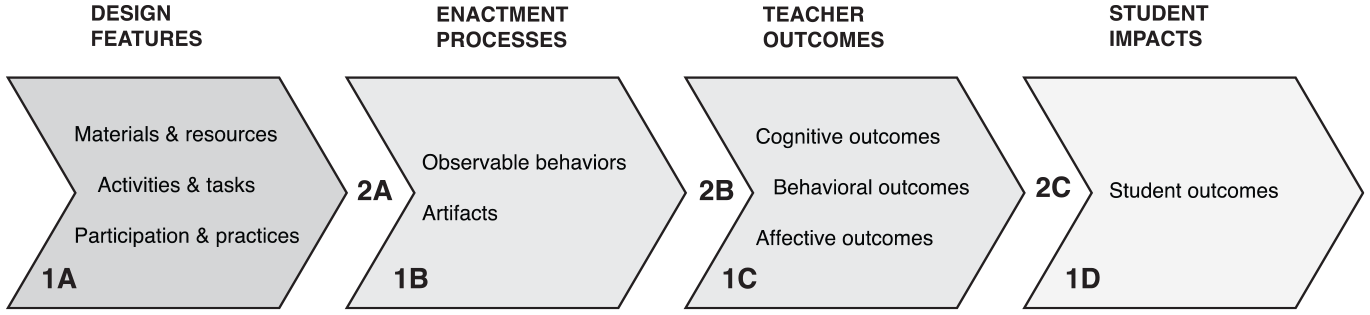
Conjecture map framework in relation to the research questions.
Design Features
The design features embody the intended or planned intervention and usually consist of three different components, namely, the materials and resources, the activities and tasks, and the participation and practices (McKenney & Reeves, 2019). First, the materials and resources consist of the inputs that are designed, collected, and/or curated (either in physical or digital format) that are intended for use during the intervention, such as the videos of the classroom practice of the teacher being coached. Second, the activities and tasks include the main learning events that participants will engage in (McKenney & Reeves, 2019). In the context of video coaching, one can expect that analyzing past practices will be an essential part of the planned intervention. Third, the participation and practices describe intentions for human action during the intervention, which includes the different roles and responsibilities that participants are meant to fulfill but can also include prescribed norms for discursive practices (McKenney & Reeves, 2019). An example of this design component is the role that the coach fulfils, for example, being a facilitator who is responsible for supporting teacher learning.
Enactment Processes
The enactment processes embody the enacted design, that is, the processes that arise when the participants engage with the design (Sandoval, 2014). The enactment processes mediate between the design features and the outcomes of the intervention. These processes fall roughly into two categories, namely, observable interactions and artifacts (Sandoval, 2014), or more broadly, observable behaviors and created artifacts. First, observable behaviors are the actions undertaken by the participants when taking part in the intervention that show behaviors that could influence learning outcomes. A behavior to be observed during video coaching enactment is that teachers and coaches engage in reflection on the video recording. Second, artifacts are the products that are created during the intervention; these are important because they can capture the participants’ thinking processes (Sandoval, 2014). Teachers might produce annotations to the videos (Rich & Hannafin, 2009), which can be analyzed in order to understand teachers’ sensemaking processes.
Teacher Outcomes
The outcomes are the effects of the intervention for the in-service teachers. When designing and developing interventions, the outcomes should be understood as expected or anticipated effects that directly align with the intervention objectives and the indicators used to evaluate the intervention (Greene, 2018). In the context of teacher video coaching, these effects can be broadly understood as three types of outcomes, namely, cognitive, behavioral, and affective outcomes.
First, cognitive outcomes within the context of this study refer to changes in teachers’ knowledge that occur as a result of video coaching. Teacher knowledge includes both general and subject-specific knowledge of teaching and learning; Shulman (1986) identified pedagogical knowledge, content knowledge, and pedagogical content knowledge, among others, and his descriptions of these are often referred to (Toom, 2017). Pedagogical knowledge (PK) encompasses general knowledge about teaching, which initially was described as generic principles of classroom organization (Shulman, 1986); later work described additional types of knowledge in this category, such as knowledge of learners and learning, classroom management, instruction and curriculum, assessment, and educational goals (Grossman, 1990; Park & Oliver, 2008b). Content knowledge (CK) encompasses knowledge of the subject being taught, including facts and concepts as well as their organization within that specific domain (Grossman, 1990; Park & Oliver, 2008b; Shulman, 1986). Pedagogical content knowledge (PCK) integrates content knowledge and pedagogical knowledge: How to teach a subject to students of different backgrounds and age levels, and what makes certain topics more or less complex (Shulman, 1986). For example, in the context of science education, PCK is composed of the following aspects (among others): knowledge of relevant student understandings, of the curriculum, of instructional strategies and representations for teaching the subject, and of assessments of learning within the subject (Park & Oliver, 2008b). PCK is explicitly regarded as more than just collective knowledge about teaching the subject. It also encompasses constructed knowledge that is developed through analyzing past practices, planning, or through teaching (Carlson & Daehler, 2019; Park & Oliver, 2008b).
Second, affective outcomes could also be part of the outcomes of video coaching. In this study, these outcomes are conceptualized as teachers’ educational beliefs and attitudes. Teacher beliefs have been defined by different authors, but there is a lack of consistency in the definitions and how similar constructs are researched (Fives & Buehl, 2012). Beliefs have several functions, including the filtering of information and experience, the framing of situations and problems, and the guiding of intention and action (Fives & Buehl, 2012). In this study, the definition by Pajares (1992) is used, which positioned teachers’ educational beliefs as a broad term that includes beliefs about the educational system, schooling, students, teaching and learning, the nature of knowledge, and teaching efficacy. Clusters of beliefs around one topic together form a disposition or attitude toward a particular topic that drives action agendas (Pajares, 1992), which can be professional, pedagogical, or educational in nature. Finally, even though knowledge and beliefs are not the same construct, they are interwoven and can be difficult to distinguish empirically but can exist separately (Fives & Buehl, 2012). For the purposes of this study, beliefs will be investigated separately from knowledge, even though we expect that they might not always be reported as such in individual studies.
Third, behavioral outcomes within the context of this study can be understood as general pedagogical or domain-specific classroom practices. Pedagogical teaching behavior encompasses all classroom practices that are not specifically bound to a subject. These practices, such as classroom management behavior, providing a safe learning climate, providing clear instruction, teaching learning strategies, and establishing efficient classroom management, are centrally positioned in teaching effectiveness research because they encourage student achievement, as evidenced by multiple review studies (van de Grift et al., 2017). In addition, there are instructional behaviors that are specifically linked to a subject such as mathematics or history, which can include, for example, domain-specific teaching behaviors that align with conceptions of enacted PCK: The specific knowledge and skills utilized by an individual teacher . . . in a particular setting, with a particular student . . . or group of students . . . with a goal for those students to learn a particular concept, collection of concepts, or a particular aspect of the discipline. (Carlson & Daehler, 2019, p. 83)
In addition, domain-specific instruction could include core teaching practices for different subject-domains; for instance, for the science and mathematics subject-domains these practices include eliciting student ideas and supporting sense-making during instruction (M. McDonald et al., 2014).
Student Impacts
As stated above, the effects of a video coaching intervention could even go beyond its immediate participants and have an impact on student outcomes. Investigations of teacher professional development can include outcomes such as student achievement, that is, their performance on assessments, and student engagement: a multifaceted construct that refers to the student’s active participation in academic and co-curricular or school-related activities, and commitment to educational goals and learning (Christenson et al., 2012). Even though there has been conceptual overlap between engagement and motivation, most engagement scholars agree that motivation refers to intent, whereas engagement has more to do with action, as initially proposed by Russell et al. (2005, as cited in Christenson et al., 2012).
Conjectures
Conjectures can be made about relations between the conjecture map elements (Sandoval, 2014), that is, about which design features yield which enactment processes, how enactment processes engender teacher outcomes, or ways in which teacher outcomes influence student impacts. These conjectures are (testable) hypotheses about the ways in which design features, such as videos of one’s own practice, contribute to enactment, that is, to observable behaviors and/or artifacts, such as the creation of curriculum materials, and about the way these enactment processes contribute to the teacher outcomes, that is, cognitive, behavioral, or affective outcomes. In addition, conjectures can be made relating the teacher outcomes to the student impacts. In meta-analytic reviews that test teaching effectiveness, authors often use process–product models, focusing on teaching acts (processes) that affect student outcomes (products), which can often be explained by presage variables (such as teacher personality or experience), and influenced by the conditions in which teaching takes place (Seidel & Shavelson, 2007). The conjecture mapping described above includes attention to key process–product model elements, while also generating a visible theory of action for in-service teacher video coaching. This makes it especially suitable for exploratory studies.
About This Study
The overarching goal of this study is to map what empirical research tells us about the theory of action underlying video coaching for in-service teachers. As such, the first goal of the study is to identify the design features, enactment processes, outcomes, and student impacts of video coaching interventions as described in the literature. The second goal of this study is to investigate relationships between these elements. Specifically, as shown in the conjecture map of Figure 1, the following two research questions were investigated:
Method
A systematic literature review was conducted following the procedure detailed by Petticrew and Roberts (2006), in which the literature was searched following a predefined procedure, studies were selected using predefined criteria, and the data were extracted and synthesized. Acknowledging the value of both qualitative and quantitative research for studying educational interventions in general and video coaching in particular, in light of our aims, no one form of research was privileged over another.
Design of the Search Procedure
The online databases Eric, PsycInfo, Web of Science, and Scopus were searched, because these contain relevant scientific literature on educational research in general, and were therefore most likely to house studies on video coaching. Keywords were derived from a database thesaurus and from those found in selected key articles. Queries were refined through pilot searches during which different combinations of keywords in the title, abstract, and keyword fields were entered across databases to determine if relevant articles would be identified. The results were inspected for articles on different types of video coaching interventions, such as My Teaching Partner and video clubs, and the search procedure was refined accordingly. For instance, the pilot queries revealed that key articles would be missed if coach, facilitator, coaching, or coaching synonyms were required in the title, abstract, or keyword search (Step 1). So, to reduce the risk of omitting relevant studies, the use of this inclusion criterion was postponed to the full-text search (Step 3); in the database query (Step 1), (synonyms for) a broader term, professional development, were used. Subsequently, refined queries confirmed that key articles, including the ones that described themselves as coaching interventions, were included. The final procedure used consisted of a five-step selection process (Figure 2). The search was completed in January 2018.
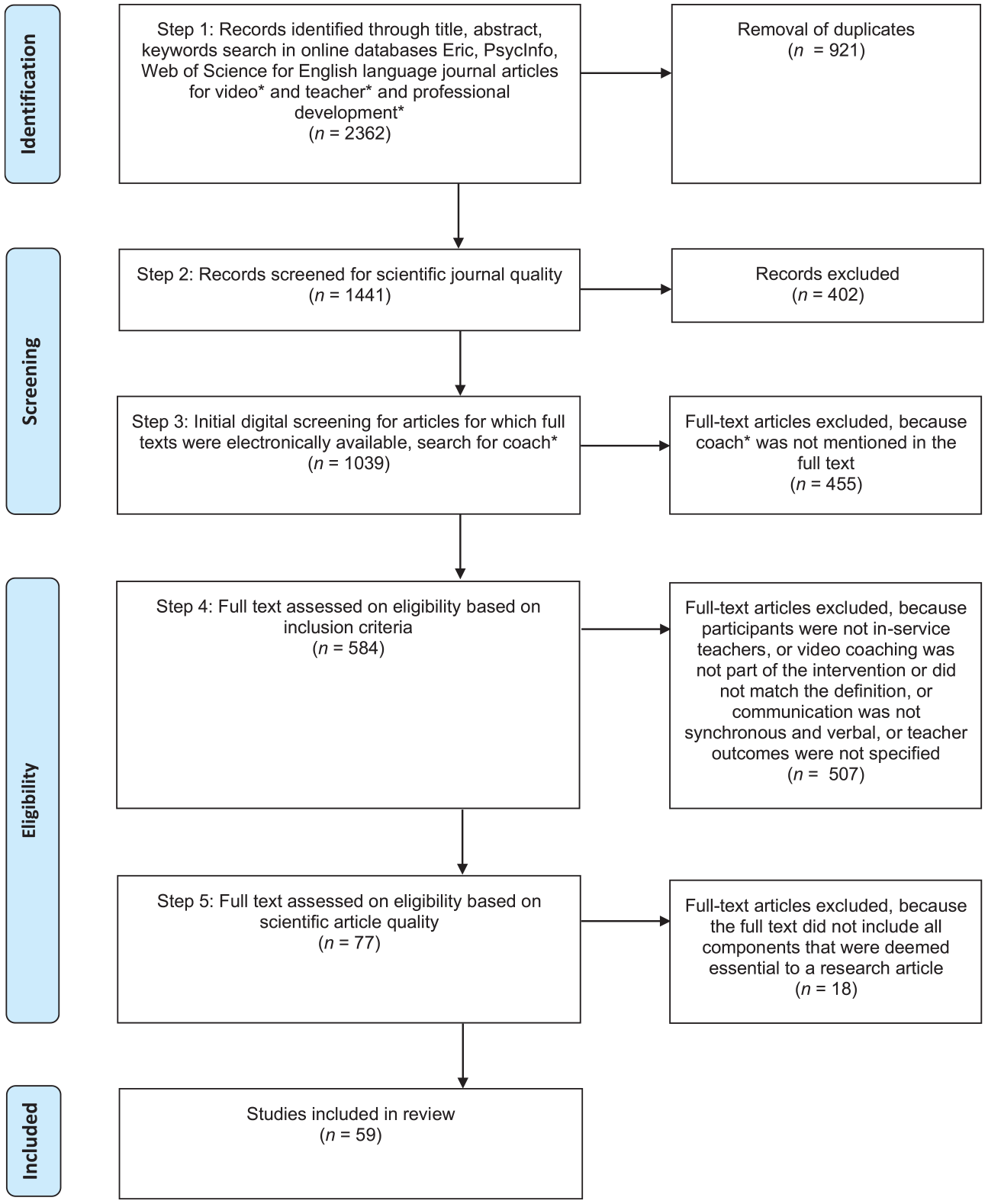
Selection process.
Selection Process
First, titles, abstracts, and keywords were searched using Boolean operators for combinations of the keywords: video* AND (teacher* OR educator* OR instructor* OR lecturer*) AND (“professional development” OR “inservice education” OR “in-service education” OR “inservice teacher education” OR “in-service teacher education” OR “inservice learning” OR “in-service learning” OR “inservice teacher learning” OR “in-service teacher learning” OR “professional growth” OR “staff development” OR “faculty development”). The search was then limited to scientific journal articles (not just abstracts or meta-data) written in the English language. After removing duplicates, the search yielded a combined total of 1,441 unique articles. Second, articles that were not published in scientific journals included in the 2018 Social Sciences Citation Index were excluded. This listing was used as a proxy for scientific journal quality, because these journals have demonstrated the robustness of their peer-review processes, as well as a production history according to their publication schedule, which are considered an indicator of journal quality. We added this proxy measure because the quality of the articles seemed to vary greatly, and through this measure the journal quality could be guarded in a transparent, consistent, and efficient manner. We checked and confirmed that key articles were not omitted through this step. This second step narrowed our results to 1,039 articles. Third, the results were refined by searching the available PDF full texts of the articles using Boolean operators for key words related to coaching, using Adobe Acrobat, namely, coach OR coaches OR mentor OR mentors OR facilitator OR facilitators OR trainer OR trainers OR expert OR experts OR tutor OR tutors OR counsel(l) OR counsel(l)ors. This narrowed the results to 584 articles. Fourth, relevant studies were selected by applying the following inclusion criteria to the abstract and full text of the documents, which narrowed the results to 77 articles:
Participants: research that described a professional development intervention for in-service teachers working in early childhood, primary, secondary, tertiary, or vocational education.
Video coaching: video coaching was part of the professional development design and matched the definition used in this article.
Synchronous verbal communication: communication between the teacher(s) and coach was verbal and synchronous in nature.
Outcomes: the research reported on an empirical study that investigated the teacher outcomes of video coaching.
It must be noted that articles that focused on descriptions of the enactment of video coaching discussions and the role of the facilitator, but did not report on changes in teacher outcomes resulting from those discussions, were omitted at this step (e.g., Coles, 2013). These studies are very valuable for understanding how video coaching interventions are enacted and experienced. However, for mapping a proposed theory of action, it was deemed essential to focus on studies reporting (at least) teacher outcomes.
Fifth, scientific article descriptive quality indicators were applied to the texts of the remaining studies to ensure that the essential components of research articles were present. The introduction was checked to determine whether the authors described the research objective. The method section was checked for presence of a description of the sample and the context of the study, the data collection procedures, the data analysis procedures, and whether the authors provided commentary on the strengths or weaknesses of the chosen methods (when absent, the discussion/limitations section was checked). Finally, the results section (and conclusion) was checked to determine whether the authors answered the research question using empirical evidence from their study. If the article contained information for all of the scientific article quality indicators, then we included the article in the review and started data extraction.
This last step completed the selection procedure and brought the final selection to 59 articles that were included in this review. The selection of studies was discussed within the research team and completed through mutual agreement between the authors. There were biweekly meetings to discuss progress and questions. The first author presented a written summary of the studies to discuss, either by email or during the meeting, after which the other team members shared their views. The summaries included the reference for the study, a description of the study including questions relating to the inclusion criteria, and excerpts to illustrate the study if needed. This process helped fine-tune the selection criteria as new issues were encountered.
Extraction Process
After selection, each article was read completely to gain understanding of its content. First, in order to provide a description of the corpus, metadata, such as the study title, authors, year of publication, journal title, research methods, country, educational level, and academic subject, were extracted. Second, to answer the research questions, conjecture-map data were extracted from specific sections that fit the conjecture-map elements as described in the theoretical framework. Data for the design features were extracted from the method section and in some cases from the theoretical framework/literature review section of the articles, but only if these sections described the intended or planned intervention. Data for the enactment processes were mainly extracted from the results section of the articles, because these sections described what happened when the intervention was implemented in practice. In some articles, data on the artifacts produced were extracted from the method section. Data on teacher outcomes and student impacts were extracted from the results section of the articles. Where fitting, entire paragraphs were extracted, and when paragraphs contained relevant data for multiple categories, these paragraphs were assigned to multiple categories.
Data Analysis
Data analysis was executed in two parts. First, individual articles were analyzed to identify codes and create a codebook. Second, to answer the research questions, the aggregate occurrences and co-occurrences of conjecture-map concepts within the corpus were investigated. (Effect sizes were not aggregated because this would not have helped answer the research questions.) Data analyses were undertaken by the first author and discussed with the other authors until mutual agreement was reached. This form of peer debriefing serves as a viable alternative to joint coding or intercoder reliability checks (Evers, 2015). Detailed descriptions are given in the next sections.
Individual Analysis
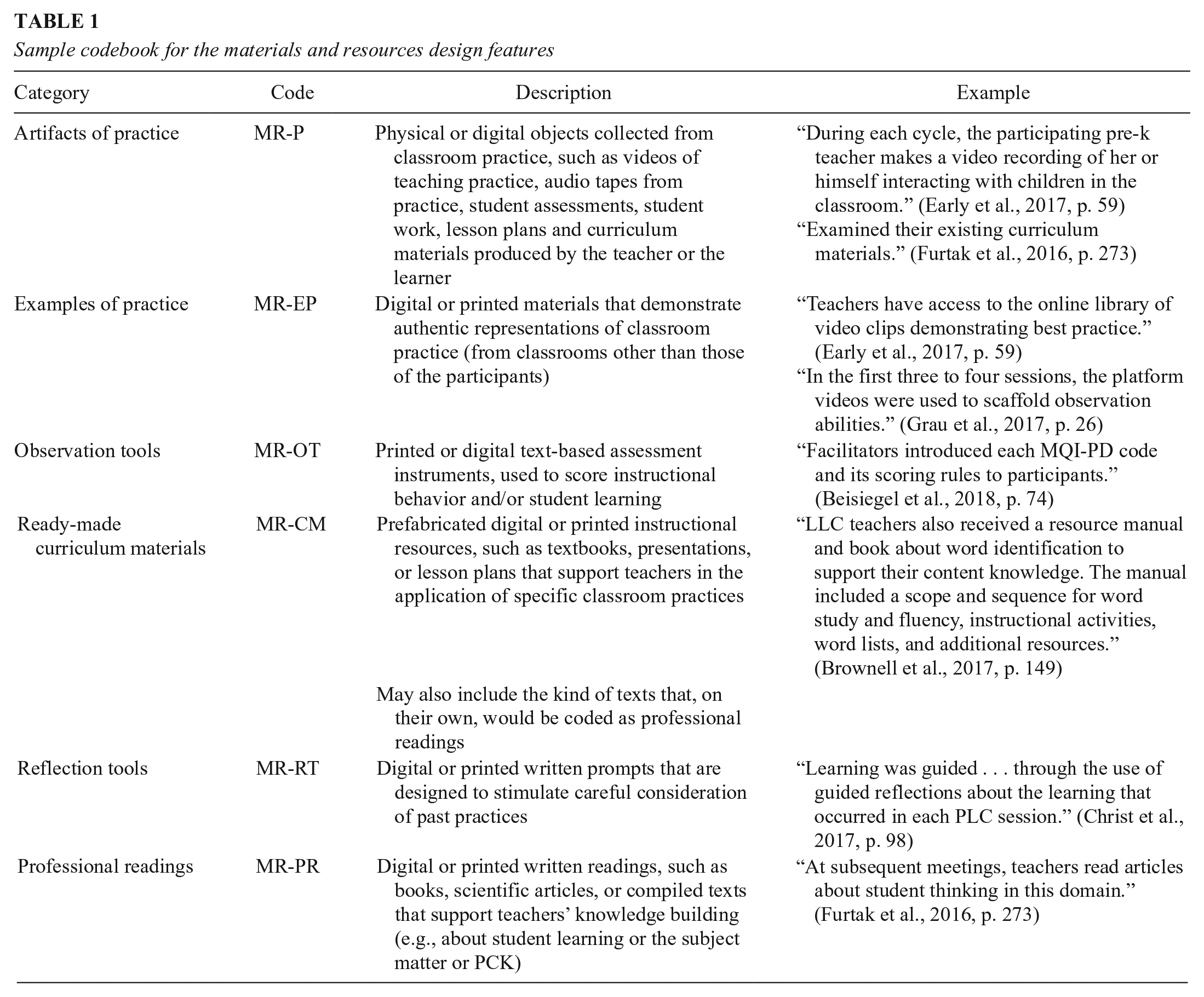
Inductive analysis of the extracted data was conducted to create a preliminary codebook for the conjecture map elements. Extracted conjecture map data were imported into Atlas.ti. The extracted text within each of the conjecture map categories was divided into meaningful excerpts. A meaningful excerpt consisted of a paragraph, a sentence, or part of a sentence that communicates one idea. Descriptive preliminary codes were assigned to these excerpts. Through an iterative process of grouping the codes, categories of concept codes were developed until saturation was reached, meaning that the extracted data did not lead to the creation of new codes. Coding saturation began to become apparent after 10 articles had been analyzed, and this tapered off during analysis of the next 20 articles. Thereafter, no further substantive changes were made to the codebook. The iterative development of the codebook and the coding itself were discussed during the biweekly meetings. Unlike the inclusion discussions, which used summaries, the data analysis discussions focused on raw data extracted from the corpus. The first author presented a table containing each code, a description, and multiple quotes from the corpus. The code names and descriptions were discussed to fine-tune their wording to represent the meaning of the extracted data, until 100% consensus was reached. This was the case for all of the analyses. A small part of the codebook is presented in Table 1; the complete codebook is available upon request. The finalized codebook was applied to all included articles. Data on the teacher outcomes and student impacts were not only coded by category (such as content knowledge) but also by the type of evidence presented (descriptive evidence or inferential statistics). Those data were initially coded as (1) negative results, (2) no change (also includes predominantly no change), (3) sometimes positive (the proportion of no change to positive results was unclear, rendering a majority decision impossible), or (4) predominantly positive. Predominantly positive results for inferential statistics included significant gains (scale or clear majority of the items), and significant difference from control (scale or clear majority of the items). When studies investigated (aspects of) an outcome with different measures, namely, using both qualitative evidence and inferential statistics, then both are reported, and this is explicitly mentioned in the Results section. These identified code occurrences were exported to an Excel table and recoded in SPSS. Because the unit of analysis for the deductive coding was the article, and the frequency of codes within articles was not of interest, code occurrences were transformed to categorical data (0 = not present and 1 = present) using SPSS. This resulted in a large summary table where the rows on the horizontal axis represented each of the articles and the vertical columns represented the codes. The summary table constituted both the final product of the individual analysis and the starting point for the aggregate analysis.
Sample codebook for the materials and resources design features
Aggregate Analysis
The unit of analysis then switched from the article to the aggregate conjecture map elements. In order to understand what the empirical literature reveals about the presence of video coaching elements (design features, enactment processes, teacher outcomes, and student impacts), frequencies were computed for each of the codes and descriptive statistics for the metadata. Next, to understand the relationships between the video coaching constructs, co-occurrences of these elements were inspected for a subset of the data. To investigate co-occurrences, the analysis took teacher outcomes as the point of departure for analysis, first analyzing co-occurrences between specific teacher outcomes and student impacts, then between specific teacher outcomes and enactment processes, and finally between specific enactment processes and design features. The reason for taking teacher outcomes as a starting point is that these are considered to be central in mapping a theory of action, and without (at least) teacher outcomes this would not be possible. Furthermore, we utilized critical case (positive case) selection to investigate a subset of the corpus for co-occurrences. Specifically, only teacher outcomes for which three or more studies reported any positive changes, including sometimes positive changes, were included in this part of the analysis. Similarly, only co-occurrences that were found in at least three studies are reported in the Results section. For example, to understand which student outcomes were featured in studies which reported changes in teachers’ PCK, a selection of the corpus reporting on those outcomes was investigated for co-occurring student outcomes. Consequently, this analysis yielded theories of action (or lack thereof) for the different teacher outcomes.
Since project reports sometimes span multiple articles, we checked for redundancies of findings in our corpus. In this case, the sample characteristics, data sources, and teacher outcomes were checked for similarities. While we did find articles that appeared to report on the same project, and in a few cases possibly the same sample of participants, none of the articles reporting on the same broad categories of teacher outcomes used the same data sources. Therefore, we are confident that frequencies for the occurrences of design features or enactment processes accurately reflect how often certain features were reported in relation to teacher outcomes.
Results
Description of the Corpus
More than half of the 59 included studies were conducted in the United States of America, and most of the other studies stemmed from European countries. No studies from the African continent met the inclusion criteria, and only a handful of studies from South America, Asia, or Australia were included. Most studies were published in the past decade, the majority between 2014 and 2018. The corpus includes studies from all educational levels (early childhood education to tertiary education). Most studies were focused on teachers from early childhood to secondary education. Academic subjects varied, and there were many studies where coaching was focused on pedagogy. An overview is presented in Figure 3.
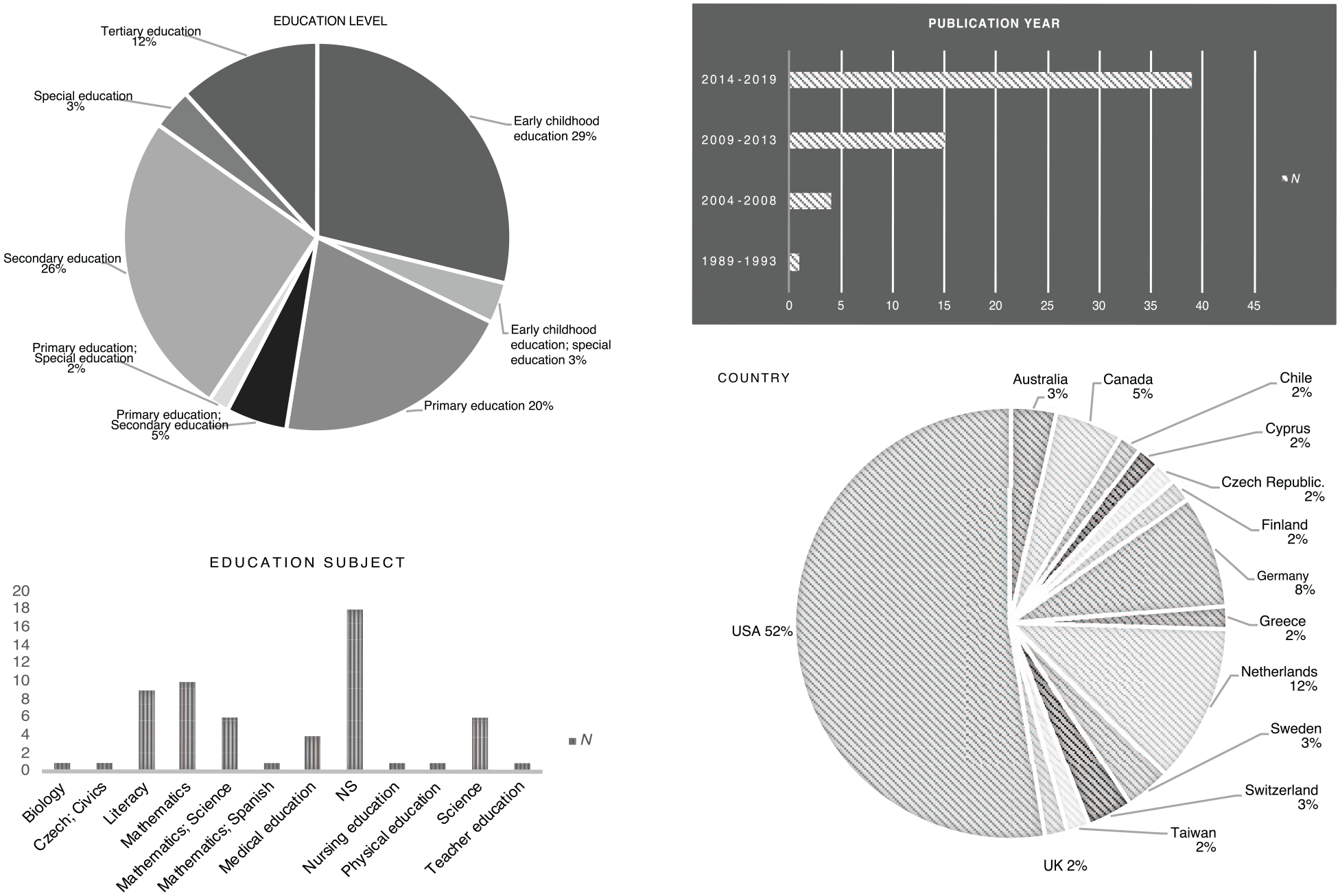
Overview of the corpus.
Occurrences Within the Corpus
Taking individual articles as the unit of analysis, the following section answers Research Question 1. The results are organized by the categories described in the theoretical framework and shown in Figure 4. Thus, in sequential order we will describe the identified design features, enactment processes, teacher outcomes, and student impacts, along with how often they occurred within the set of 59 video coaching studies (codes used are given in parentheses). An overview of the occurrences within the corpus per article can be found in Supplemental Table S1 (available in the online version of the article).
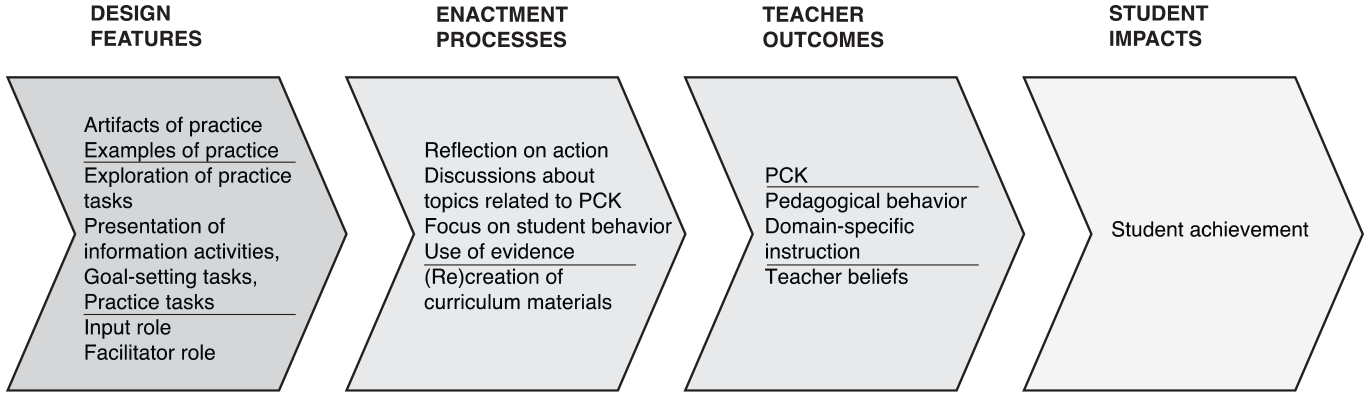
Most frequently occurring constructs in relation to the conjecture map framework (Research Question 1).
Research Question 1a: Design Features
In the following section, we summarize the reported design features of video coaching interventions related to materials and resources, activities and tasks, and participation and practices. The reported design of video coaching interventions showed considerable variability. The total number of design features reported in the corpus of 59 studies ranged from 2 to 12 features (see online Supplemental Table S1). The studies in our corpus most often reported the presence of artifacts of practice and examples of practice (materials and resources); exploration of practice tasks, presentation of information activities, goal setting tasks, and practice tasks (activities and tasks); and an input and facilitator role (participation and practices) as part of the design. The results are described in more detail hereafter.
Materials and resources
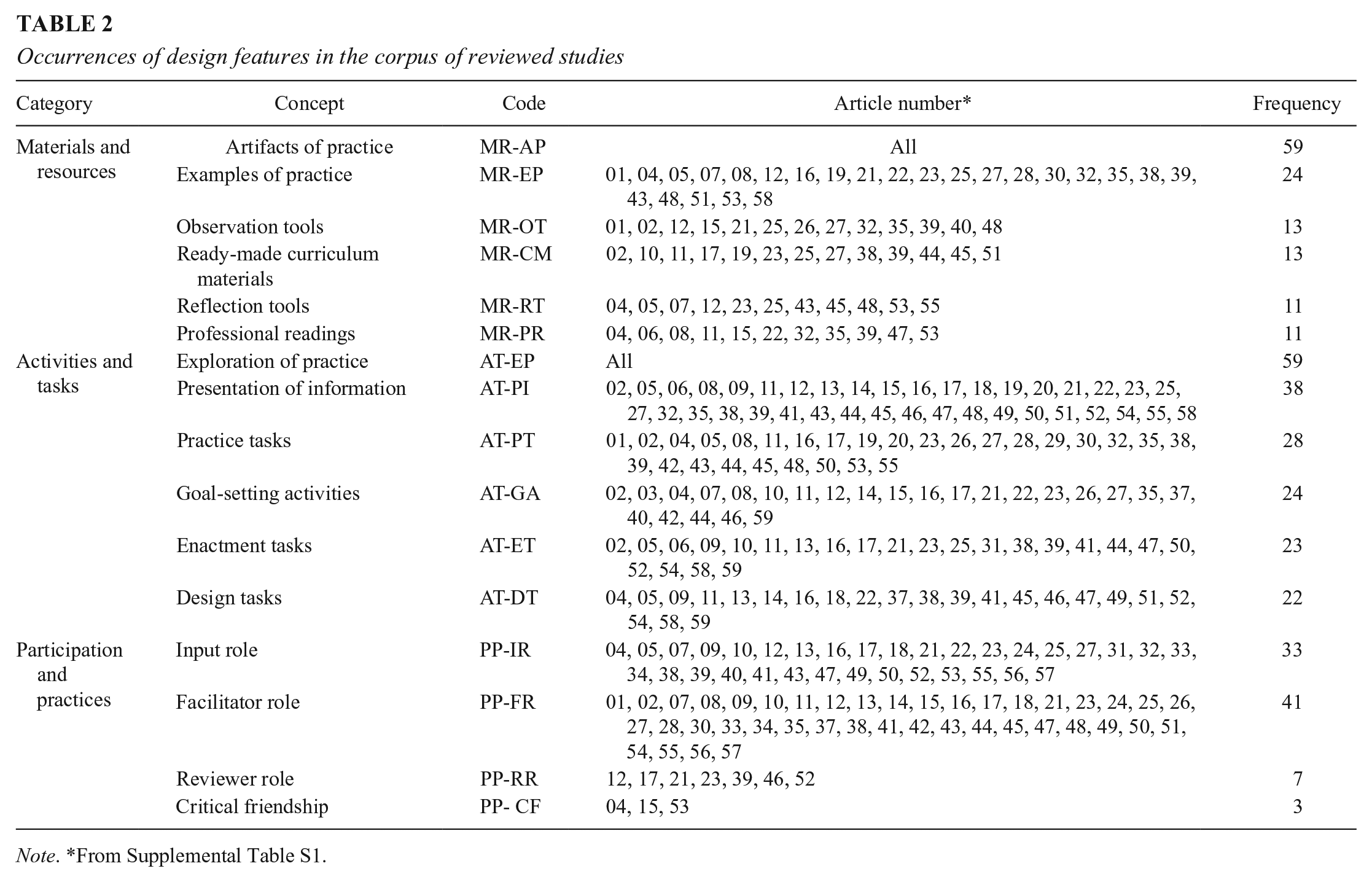
Six types of materials and resources were identified within the corpus, some of which were mentioned more frequently than others. An overview is presented in Table 2. Consistent with the selection criteria, all 59 studies described the use of artifacts of practice (MR-AP), which are physical or digital objects collected from classroom practice, such as student assessments, student work, lesson plans and curriculum materials produced by the teacher or the learner, audio tapes, or, as one would expect, videotapes of teaching practice, as in the following example: “During each cycle, the participating pre-k teacher makes a video recording of her or himself interacting with children in the classroom” (Early et al., 2017, p. 59). Furthermore, 41% of the studies reported the use of examples of practice (MR-EP), which are digital or printed materials that demonstrate authentic representations of classroom practice (from classrooms other than those of the participants) intended for different purposes, such as “demonstrating best practice” (Early et al., 2017, p. 59), or “to scaffold observation abilities” (Grau et al., 2017, p. 26). In addition, 22% of the sample mentioned the use of ready-made curriculum materials (MR-CM), which are prefabricated digital or printed instructional resources, such as textbooks, presentations, or lesson plans that support teachers in the application of specific classroom practices (these may also include the kind of texts that, on their own, would be coded under professional readings): LLC teachers also received a resource manual and book about word identification to support their content knowledge. . . . It supported teachers in selecting appropriate words for instruction, teaching decoding rules, sequencing multisyllabic word analysis strategies, and selecting activities for instruction. (Brownell et al., 2017, p 149)
Similarly, 22% of the studies mentioned the use of observation tools (MR-OT), which are printed or digital text-based visual assessment instruments used to score instructional behavior or student learning, such as the Mathematical Quality of Instruction for Professional Development instrument (MQI-PD): “Facilitators introduced each MQI-PD code and its scoring rules to participants” (Beisiegel et al., 2018, p. 74). Moreover, 19% of the corpus reported the use of professional readings (MR-PR) as input for professional development; these included digital or printed written readings, such as books, scientific articles, or compiled texts that support teachers’ knowledge building, for example, “Teachers read articles about student thinking in this domain” (Furtak et al., 2016, p. 273). Likewise, 19% of the studies reported the use of reflection tools (MR-RT), which are digital or printed written prompts designed to stimulate careful consideration of past practice and/or how to improve their future practice.
Occurrences of design features in the corpus of reviewed studies
Note. *From Supplemental Table S1.
Activity and task structures
Six types of activity and task structures were identified, two of which were mentioned in more than half of all studies, while the other four were mentioned in more than one third of all studies. All 59 studies stated that teachers engaged in exploration of practice activities (AT-EP), where participants considered or analyzed their own practice in a more or less systematic manner using video recordings of practice, which was expected given the selection criteria. Furthermore, 64% of the studies in the corpus reported that teachers engaged in presentation of information (AT-PI) activities in which participants were provided with access to knowledge, for example, through attending lectures, doing readings, or participating in discussion about readings. For example, “In the first workshop, teachers received input on productive classroom discourse by a facilitator” (Kiemer et al., 2015, p. 96). Next, 47% of the sample reported that teachers engaged in practice tasks (AT-PT), in which participants rehearsed targeted skills outside the classroom, for instance, through role-playing or practice discussions: They practiced using the activities with each other, envisioning how they would facilitate their activities with students, and anticipating the types of feedback they would provide if different types of student ideas were surfaced in class (Practice Using the Tasks). (Furtak et al., 2016, p. 273)
Teachers engaged in goal-setting activities (AT-GT) in 41% of the studies; these are activities in which participants determined learning objective(s), for instance, through creating an action plan: “The coach also develops an action plan for improvement with the teacher and goals for the next cycle including which dimensions of the CLASS-S to consider implementing in subsequent interactions with students” (Gregory et al., 2014, p. 150). Moreover, 39% of the sample mentioned that teachers engaged in enactment tasks (AT-ET), where participants implemented (new) instructional strategies in their own classrooms. Finally, 37% of the corpus reported that teachers engaged in design tasks (AT-DT), during which participants planned and/or constructed future lessons and/or materials.
Participation and practices
Four types of participation and practices were identified, two of which were mentioned by more than half the articles, while the other two were mentioned much less often. In 69% of the 59 articles, the coach enacted the role of a facilitator (PP-FR) and scaffolded teacher learning by providing support or resources during task execution, for example, providing feedback on the implementation of instructional strategies or asking questions to support reflection/interaction: “These facilitators practiced offering feedback—‘what progress is made towards the learning objective?’—and ‘feed forward’—‘what action needs to be undertaken to make better progress?’” (Meijer et al., 2017, p. 825). Furthermore, 56% of the corpus described how the coach enacted the role of input provider (PP-IR) and provided input to stimulate teacher learning before the start of a task, for example, through selection of videotaped classroom practices and/or readings. In 12% of the studies, the coach enacted the role of a reviewer (PP-RR) and tracked participants’ progress by assessing the quality of their instructional behavior with reference to a set of standards, such as an assessment tool: The “nice work” clip helps the teachers see how their behavior in a particular interaction with students elucidate the principles of one of the dimensions of the CLASS-S. The “consider this” clip helps a teacher observe another interaction with students that typically reflects a CLASS-S dimension upon which the teacher needs to improve. (Gregory et al., 2014, p. 149)
Specific discursive practices were only occasionally described, with 5% of the studies explicitly mentioning that participants should interact in a way that is best described as a critical friendship (PP-CF), a situation where participants communicated in an open, friendly manner, and where trust was established that allowed for a critical investigation of each other’s practice.
Research Question 1b: Enactment Processes
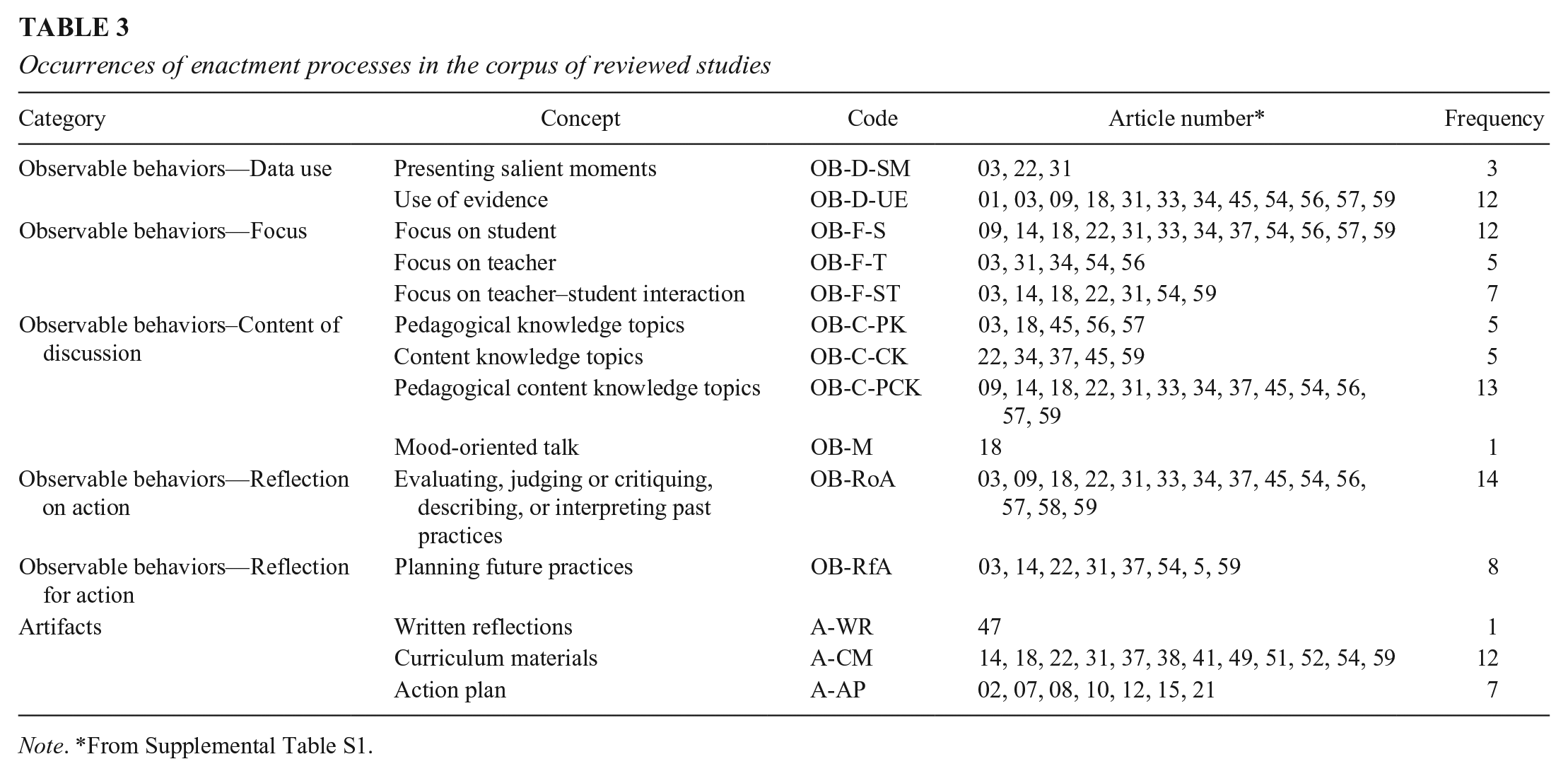
In the following section, we summarize the identified enactment processes (directly, through observable behaviors, and indirectly, through resulting artifacts) that occurred during participation in video coaching interventions. The number of enactment processes reported in the 59 empirical studies ranged from 0 to 9 (see online Supplemental Table S1), but fewer than half of all studies included data on the enactment processes. Only 27% of the sample reported on observable behaviors that occurred during video coaching enactment. In addition, 34% of the sample reported on the construction of artifacts during the enactment of video coaching interventions. An overview of the identified enactment processes is presented in Table 3. Most often studies reported that participants reflected on action, talked about topics related to PCK, focused on student behavior, used evidence for their reasoning, and (re)created curriculum materials. The results are described in more detail hereafter.
Occurrences of enactment processes in the corpus of reviewed studies
.Note From Supplemental Table S1.
Observable behaviors
A number of studies reported that reflective behaviors occurred during video coaching. Almost all of the studies that mentioned observable behaviors (24% of the 59 studies) reported reflection on action behaviors (OB-RoA), in which the participant and/or coach engaged in an assessment of past (classroom) events as depicted in teachers’ artifacts of practice, or depicted the nature, attributes, or characteristics of a past (classroom) situation, or tried to give meaning to events that had taken place (in the classroom). Some of these studies reported (the importance of) an interpretive stance during reflection on past actions: In Meeting 7, by contrast, the teachers had taken responsibility for initiating these sense-making activities. . . . Thus, not only did the teachers, over time, come to use more sophisticated strategies for reasoning about student thinking (which serves as evidence of the development of knowledge-based reasoning), they also came to notice more complex issues of student thinking in the videos. (Sherin & van Es, 2009, p. 27)
In addition, 14% of the studies reported reflection for action behaviors (OB-RfA), where teachers consciously considered future teaching scenarios: When collectively planning the first lesson (Meeting 2). . . . The teachers all agreed to use a variation of teaching methods such as demonstrations, small group discussions and more traditional lecturing with the help of a PowerPoint presentation and using the whiteboard in order to make the students identify the critical features and overcome learning obstacles. (Nilsson, 2014, p. 1805)
Seven studies reported both reflection on action and reflection for action behaviors during video coaching. When teachers reflected, a number of topics were discussed. In 22% of the articles, the content of the discussion was focused on topics related to pedagogical content knowledge (OB-PCK), that is, knowledge of students’ understanding of the subject, of the curriculum, of instructional strategies and representations for teaching the subject, and of assessments of learning within the subject: David [teacher] realized that he did not understand Daniel’s [student] statement, and the teachers then, together, worked to make sense of Daniel’s idea. They explored what Daniel meant by the term “curved” and what features of the conical flask Daniel was likely considering. In addition, the teachers began to connect Daniel’s idea with what another student, Tina, stated previously, about a graph comprising two connected line segments. (Sherin & van Es, 2009, p. 26)
In addition, 8% of the studies reported that discussions focused on topics related to content knowledge (OB-CK), that is, knowledge of the subject being taught. Similarly, 8% of the studies reported that discussions focused on pedagogical topics related to general knowledge about teaching not specific to the subject (OB-PK): “Eight conversations focused on more general pedagogical issues like lesson planning, assessment tools, and other issues related to implementation within the school district’s model of instruction” (Shanahan & Tochelli, 2014, p. 18). Finally, one study reported mood-related communication (Article 18 from Supplemental Table S1; OB-M), where teachers exchanged praise that contributed to a positive learning environment.
During reflection, attention was paid to certain classroom aspects. One fifth of the articles reported a focus on student behaviors (OB-F-S); for example, in Article 57, teachers increasingly focused on analyzing student mathematical thinking in video clubs: Early on, the teachers gave little attention to mathematical thinking . . . even when prompted to do so by the facilitator. . . . Instead, the majority of the teachers’ comments focused on pedagogical issues. Over time, however, attention to student mathematical thinking increased. (Sherin & van Es, 2009, p. 26)
In addition, 12% of the corpus reported a focus on teacher-student interaction (OB-F-ST), specifically on the cause–effect relationship between teaching and learning: “Watching their interaction on video, the educator clearly saw how P did not experience the intended object of learning” (Bjorklund, 2012, p. 511) and 8% of the studies reported a focus on teacher behaviors (OB-F-T): “In both cycles of observations, mentors and mentees reliably critiqued mentees’ instruction” (Ceven McNally, 2016, p. 488).
A number of studies reported on the way data were used during video coaching. One fifth of the corpus explicitly reported that teachers used the available evidence (OB-D-UE), that is, the body of information (gathered from artifacts of practice) to support their reasoning or their decision making: “Teachers in these groups referred to the language of the MQI-PD, cited evidence in the clip” (Beisiegel et al., 2018, p. 76). And finally, 5% of the sample reported on the importance of sharing and watching salient teaching moments (OB-D-SM), which are video excerpts that illustrate more or less effective teacher practices and/or examples of student learning.
Artifacts
The analysis of the corpus revealed that three types of artifacts were produced during video coaching. One fifth of the 59 studies mentioned the (re)development of curriculum materials (A-CM) or digital or printed instructional resources, such as textbooks, learning environments, workbooks, presentations, and lesson plans that were constructed or adapted during video coaching sessions. For instance, in Article 51, teachers created their own inquiry-based lesson plans that they implemented in their own classrooms while being videotaped, on which they later received feedback from their coach. In addition, 12% of the studies reported on the creation of action plans (A-AP), or written digital or printed strategies for improvement, including concrete professional development actions to be executed in the upcoming teaching period, that were developed or adapted during video coaching sessions, for example, “A collaborative weekly coaching meeting which included developing a plan for implementing the targeted BEST in CLASS strategy with the focal children” (Conroy et al., 2015, p. 148). Finally, one study, Article 47, reported on the development of written reflections (A-WR), or reflective writings about teaching practice that were developed or adapted during the course of a video coaching intervention, where teachers thought back on what they learned from teaching the past lesson.
Research Question 1c: Teacher Outcomes
In the following section, we summarize the identified outcomes (cognitive, behavioral, and affective) for in-service teachers who participated in video coaching interventions, how often these occurred within the corpus of 59 studies, and the nature of the evidence given for each outcome (see online Supplemental Table S1 for an overview per article). Table 4 presents an overview of all identified video coaching outcomes and their frequencies of occurrence. In regard to teacher outcomes, positive changes in teachers’ pedagogical behavior were most often reported, followed by positive changes in teachers’ PCK and domain-specific instruction. The results are described in more detail hereafter.
Occurrences of teacher outcomes in the corpus of reviewed studies
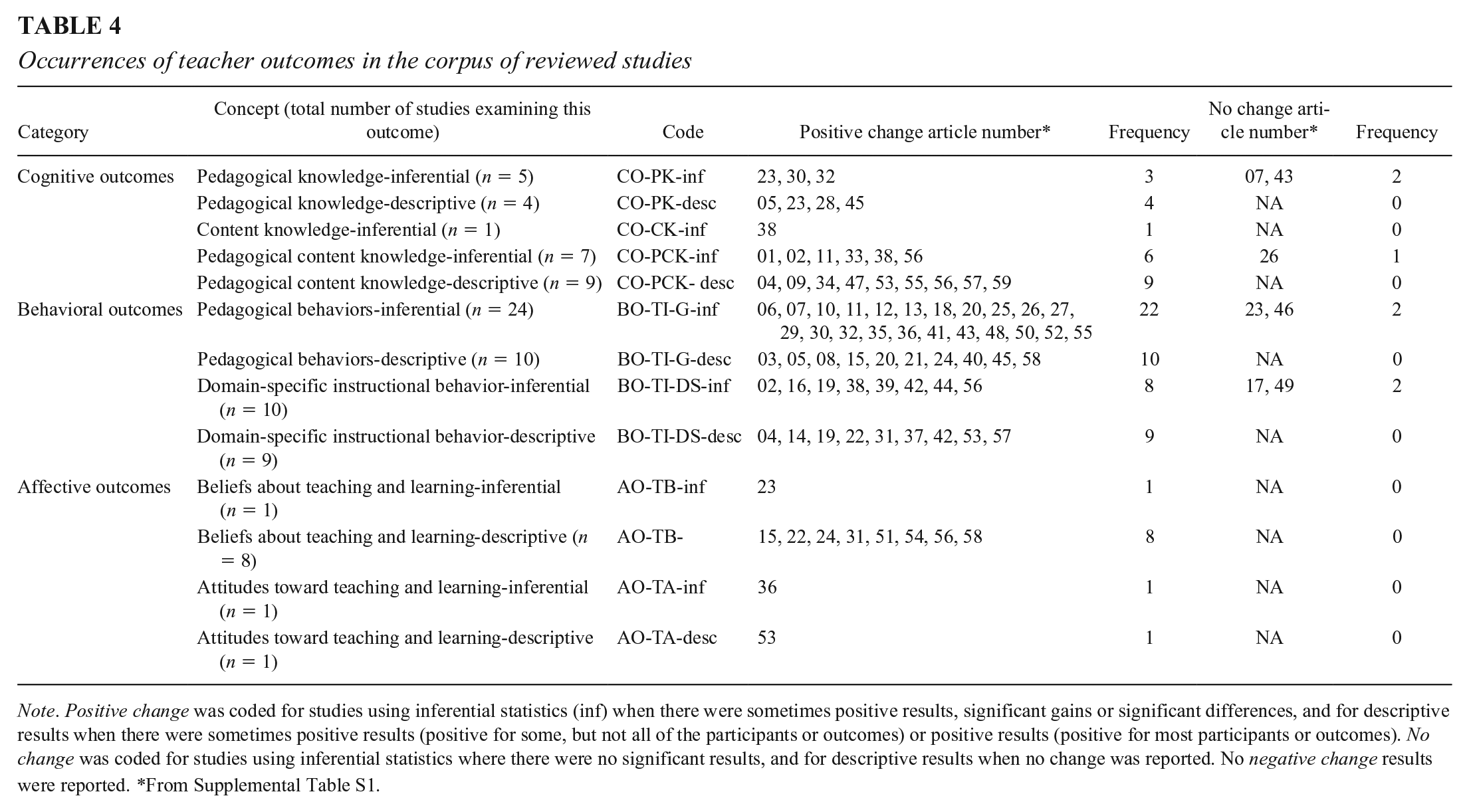
Note. Positive change was coded for studies using inferential statistics (inf) when there were sometimes positive results, significant gains or significant differences, and for descriptive results when there were sometimes positive results (positive for some, but not all of the participants or outcomes) or positive results (positive for most participants or outcomes). No change was coded for studies using inferential statistics where there were no significant results, and for descriptive results when no change was reported. No negative change results were reported. *From Supplemental Table S1.
Cognitive outcomes
Approximately one third of all studies reported positive changes in teacher knowledge; however, the number of studies addressing each type of knowledge differed considerably between teacher knowledge types. Overall, 25% of the 59 studies reported positive changes in teachers’ pedagogical content knowledge (PCK), that is, the knowledge of how to teach a specific subject (Article 56 included both descriptive and inferential evidence). Ten percent of the corpus reported statistically significant positive changes in teachers’ PCK (CO-PCK-inf). One of these studies reported differences compared to a control group, for instance, in teachers’ ability to analyze science lessons (Article 38), three studies reported differences between pretest and posttest (Articles 11, 33, 56), and two studies reported sometimes positive changes, meaning that teachers showed statistically significant improvement on approximately half of the PCK outcome measures (Articles 1, 2). Fifteen percent of the sample reported descriptions of positive changes in teachers’ pedagogical content knowledge (CO-PCK-desc), for instance, during mathematics video clubs in which teachers developed their mathematical lesson analysis abilities during the course of the training: Thus, we see here that they discussed a range of topics, with a primary focus on pedagogy, particularly as it relates to the reform curriculum, and classroom climate . . . later in the series of meetings, though, the teachers initiated and sustained a detailed focus on examining and interpreting students’ mathematical thinking based on the events in the clip. (van Es & Sherin, 2010, p. 166)
One study reported no changes in teachers’ PCK (Article 26; CO-PCK-no change).
Second, 10% percent of the full corpus reported positive changes regarding teachers’ pedagogical knowledge (PK), that is, general knowledge of teaching. Article 23 reported both descriptive positive results and a statistically significant difference on some, but not all competences regarding guiding students’ reflections. Five percent of the corpus reported (some) statistically significant changes in pedagogical knowledge after training (CO-PK-inf), based on self-reports (Articles 23, 30, 32), although not all outperformed the control group (Article 32). Last, 7% of the corpus reported (some) descriptive positive changes in teachers’ pedagogical knowledge (CO-PK-desc), for instance, teachers reported gaining: “Professional knowledge of teaching and learning processes: didactical training, professionalism, supporting students in their learning, and being able to assume the students’ perspective” (Johannes et al., 2013, p. 159). Two studies reported no change in teachers’ PK (CO-PK-no change; Articles 7, 43). Finally, positive changes in teachers’ content knowledge (CK), subject-matter knowledge within a specific teaching domain, were only reported in one study (Article 38).
Behavioral outcomes
A total of 44 of the 59 studies in the overall corpus reported positive changes in instructional behavior, either pedagogical behavior or domain-specific instruction. First, 53% of the overall corpus reported positive changes in teachers’ pedagogical behavior, which encompasses all classroom practices concerning the organization of learning environments and teaching that are not related to a particular teaching domain. Thirty-seven percent of the sample reported statistically significant changes in teachers’ pedagogical behavior after video coaching (BO-TI-G-inf). Seven studies (Articles 6, 18, 20, 26, 27, 30, 35) found that the intervention group receiving video coaching outperformed the control group on more than half of the outcome variables. For instance, participants in a video coaching intervention for caregivers in Dutch child care centers outperformed the control group on all outcome variables at posttest and on four out of six outcome behaviors at follow-up (Article 27). In addition, four studies (Articles 11, 29, 50, 55) reported statistically significant changes in teacher pedagogical behavior for more than half of the measured outcomes from pretest to posttest. For example, in a study where teachers were engaged in a video coaching intervention to enhance their feedback behavior (Article 50), results showed that teachers improved their feedback behavior in all areas (frequency of feedback, frequency of specific feedback, ratio of positive and negative feedback). One study noted particular teaching behaviors predicting student outcomes (Article 52). Ten studies reported that teachers changed their pedagogical behavior on just some outcomes or that effects diminished on the retention test (Articles 7, 10, 12, 13, 25, 32, 36, 41, 43, 48).
Moreover, 17% of the 59 studies reported descriptive evidence of teachers changing their pedagogical behaviors after participating in video coaching interventions (BO-TI-G-desc). Seven studies presented descriptive evidence that most teachers changed their pedagogical behavior after training (Articles 5, 8, 20, 21, 24, 45, 58). For instance, in a study in which teachers engaged in a My Teacher Partner coaching intervention, teachers watched video examples of effective teacher–student interactions and engaged in coaching activities where they discussed videotaped classroom episodes with a coach to improve the quality of their interactions with children in preschool: “On average, teachers did improve over the course of the year in their classroom interactions in all three class domains, with the greatest improvement appearing in instructional support” (Pianta, DeCoster, et al., 2014, p. 504). Three studies presented data that some, but not all, teachers changed their pedagogical behaviors after video coaching (Articles 3, 14, 40). For instance, in an intervention to promote teachers’ transformative learning to stimulate the students’ inquiry attitude, researchers found that teachers changed behaviors in only two out of the four groups and not in all behavioral areas: A different picture emerged when examining the frequencies of the interventions. . . . We saw a substantial frequency increase in reflection and critical reflection. Zooming in on a group level, it became clear that this increase could be explained by one master’s group and one bachelor’s group. (Meijer et al., 2017, p. 834)
Two studies reported no changes in teachers’ pedagogical behavior after taking part in the intervention (BO-TI-G-no change; Articles 23, 46).
Second, 25% of the corpus reported positive changes in teachers’ domain-specific instruction (Articles 19 and 42 reported both descriptive and statistically significant changes). In nine studies, there was descriptive evidence of teachers changing their domain-specific instructional behavior after video coaching (BO-TI-DS-desc). Six studies described predominantly positive changes in teachers’ domain-specific instructional behavior (Articles 14, 19, 22, 31, 37, 53). For example, a pre-school educator changed her mathematical practice after gaining understanding that the child experienced difficulty understanding larger numbers, through watching and discussing videotaped lesson episodes with a coach: Some of the practices improved are: the use of amounts that are possible to grasp, the importance of focusing on one aspect at a time and bringing in variation within this aspect, and the need for a clearly visualized shape and/or feature and demarcated whole. (Bjorklund, 2012, p. 512)
Also, three studies reported positive changes for some but not all teachers (Articles 4, 42, 57).
In addition, eight studies reported statistically significant changes in domain-specific instruction after participating in the intervention (BO-TI-DS-inf). In one study (Article 39), teachers outperformed the control group on most outcome variables after participating in the intervention. Teachers improved the quality of the classroom language environment and their instructional behavior, including language modeling. Two studies reported changes in teachers’ domain-specific instruction measured before and after the intervention (Articles 38, 56). Finally, three studies reported sometimes positive outcomes, either statistically significant changes for approximately half of the measured outcomes (Articles 2, 16, 42, 44) or that teachers’ domain-specific instruction predicted student gains early, but not later in the intervention (Article 19). Two studies reported no statistically significant changes in teachers’ domain-specific instruction (BO-TI-DS-no change; Articles 17, 49).
Affective outcomes
About one fifth of the corpus reported positive changes in teachers’ affective outcomes. Changes in teachers’ beliefs were found most often, based on descriptive evidence. A total of eight studies reported descriptive changes in teachers’ beliefs about teaching or learning for most of the participating teachers (AO-TB-desc; Articles 15, 22, 24, 31, 51, 54, 56, 58). For instance, Article 15 showed that after professional development, all teachers changed their beliefs about stimulating students’ internal inquiry attitudes and 75% of the teachers changed their beliefs about stimulating students’ external inquiry attitudes. In addition, one study (Article 23) presented evidence for positive statistically significant changes in teachers’ beliefs (AO-TB-inf) for some, but not all, outcomes. In addition, one study (Article 53) reported descriptive positive changes in teachers’ attitudes toward their profession (AO-TA-desc), and one study (Article 36) reported statistically significant changes in teachers’ job satisfaction, for some, but not all, measured aspects (AO-TA-inf).
Research Question 1d: Student Impacts
In the following section, we summarize the reported student impacts from in-service teachers’ video coaching interventions, in terms of the number of studies and nature of the evidence for each type of outcome. An overview is presented in Table 5. Compared with the teacher outcomes, there was little evidence of positive student impacts, but there was some evidence for changes in student achievement and engagement. The results are described in more detail hereafter.
Occurrences of student impacts in the corpus of reviewed studies
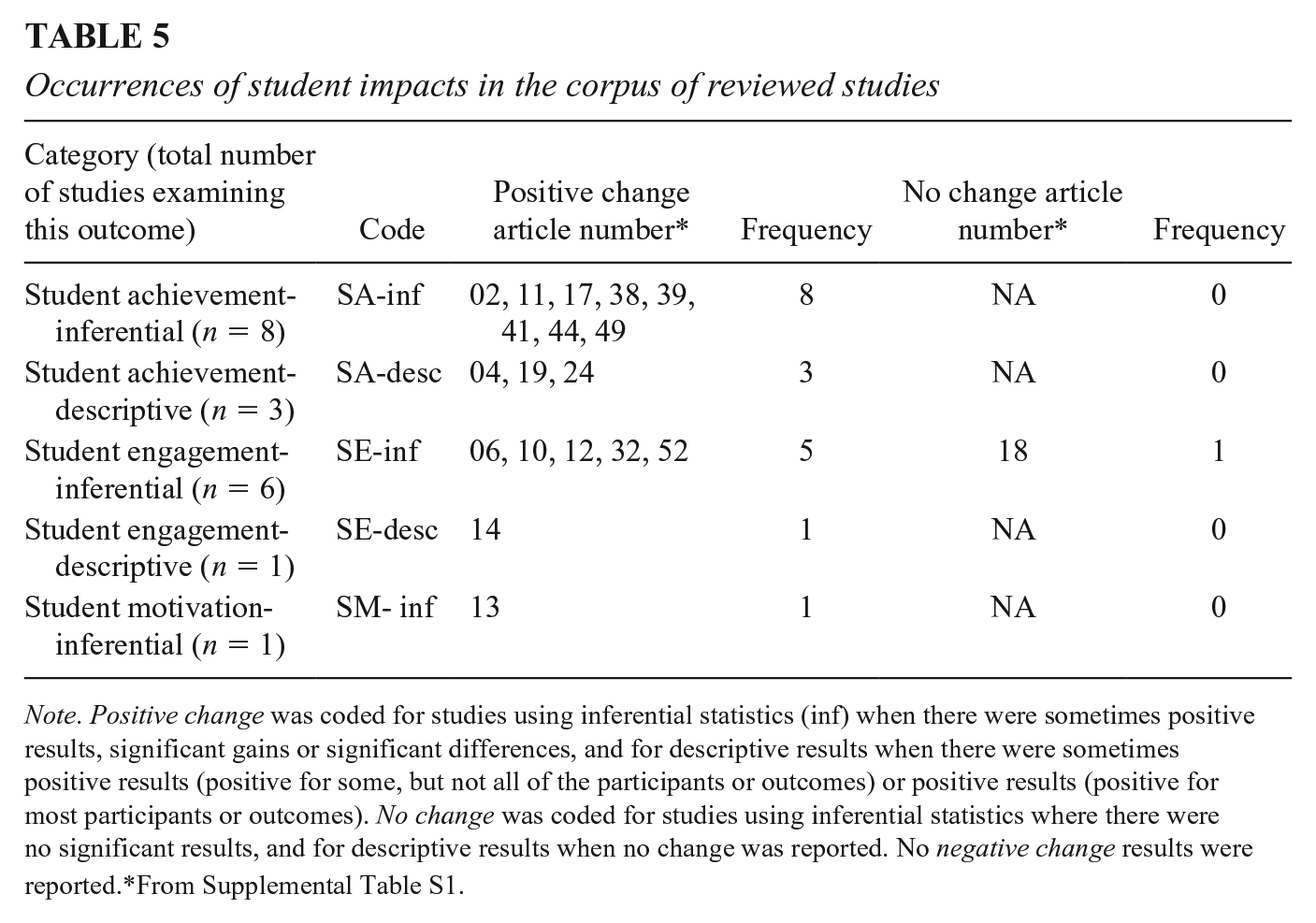
Note. Positive change was coded for studies using inferential statistics (inf) when there were sometimes positive results, significant gains or significant differences, and for descriptive results when there were sometimes positive results (positive for some, but not all of the participants or outcomes) or positive results (positive for most participants or outcomes). No change was coded for studies using inferential statistics where there were no significant results, and for descriptive results when no change was reported. No negative change results were reported.*From Supplemental Table S1.
Thirty percent of the corpus reported student impacts, that is, changes in student achievement, engagement, and motivation. First, 19% of the corpus reported on student achievement. Eight studies reported statistically significant changes in student achievement (SA-inf; Articles 2, 11, 17, 38, 39, 41, 44, 49), of which four studies reported that students performed better than the control group (Articles 2, 38, 39, 41). Students whose teachers participated in the STeLLA program, a program to support the professional development of science teachers through video analysis: “outperformed their peers in all content areas, making more than twice the gains in science knowledge” (Roth et al., 2011, p. 134). Two studies reported statistically significant gains for students (Articles 11, 17), and two studies reported sometimes positive results (Articles 44, 49). In addition, three studies provided descriptions of positive changes in student achievement (SA-desc; Articles 4, 24, 19).
Second, 10% of the overall corpus reported positive changes in student engagement, with one study describing positive changes (SE-desc; Article 14), while four studies reported statistically significant changes in students’ active participation in academic and/or co-curricular or school-related activities (SE-inf) after their teachers participated in video coaching interventions (Articles 6, 10, 12, 32, 52). Article 10 reported statistically significant differences between the intervention and control groups for multiple indicators of children’s engagement. Two studies reported statistically significant changes in student engagement from pretest to posttest (Articles 12, 52). Article 32 presented sometimes positive results, with statistically significant gains in some areas compared with a control group, but not in other areas. One study reported no changes in students’ engagement (SE-no change; Article 18). Finally, one study (Article 13) found a statistically significant increase in students’ interest in the subject compared with their peers in the control group (SM-inf), heightening their motivation for learning mathematics and science.
Co-occurrences
In this section, we summarize the reported co-occurrences associated with any positive teacher outcomes (including sometimes positive results). As mentioned previously, we have included only the teacher outcomes for which at least three studies reported any evidence of positive changes. Similarly, only co-occurrences which were found in three or more studies are reported. This means that teachers’ CK and teachers’ attitudes were excluded from this part of the analysis. For each outcome, the results are given for co-occurrences between teacher outcomes–student impacts (2C in the model, as shown in Figures 5, 6, 7, and 8), teacher outcomes–enactment processes (2B), and enactment processes–design features (2A), in that order.
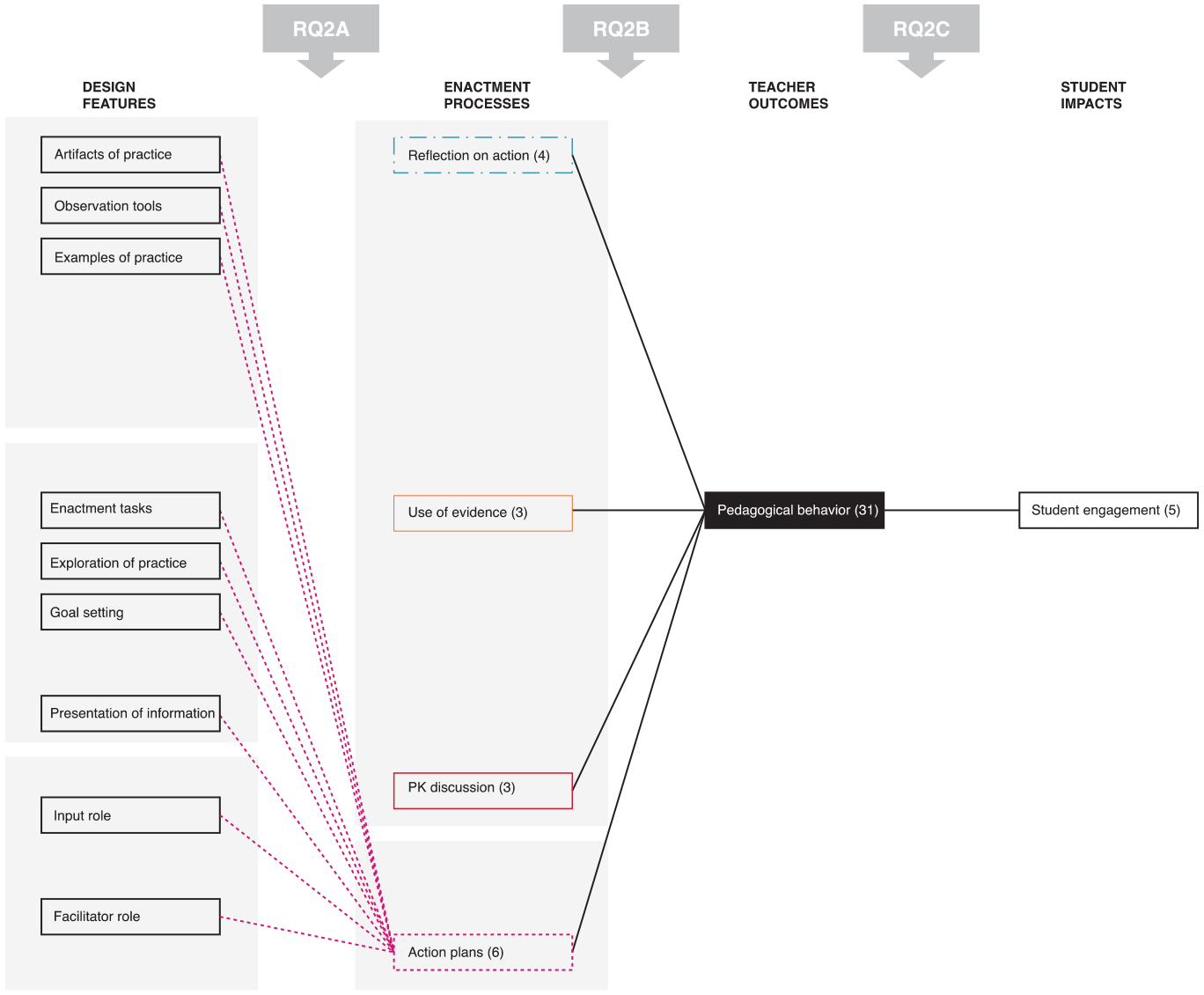
Conjecture map for teachers’ pedagogical behavior (Research Question 2).
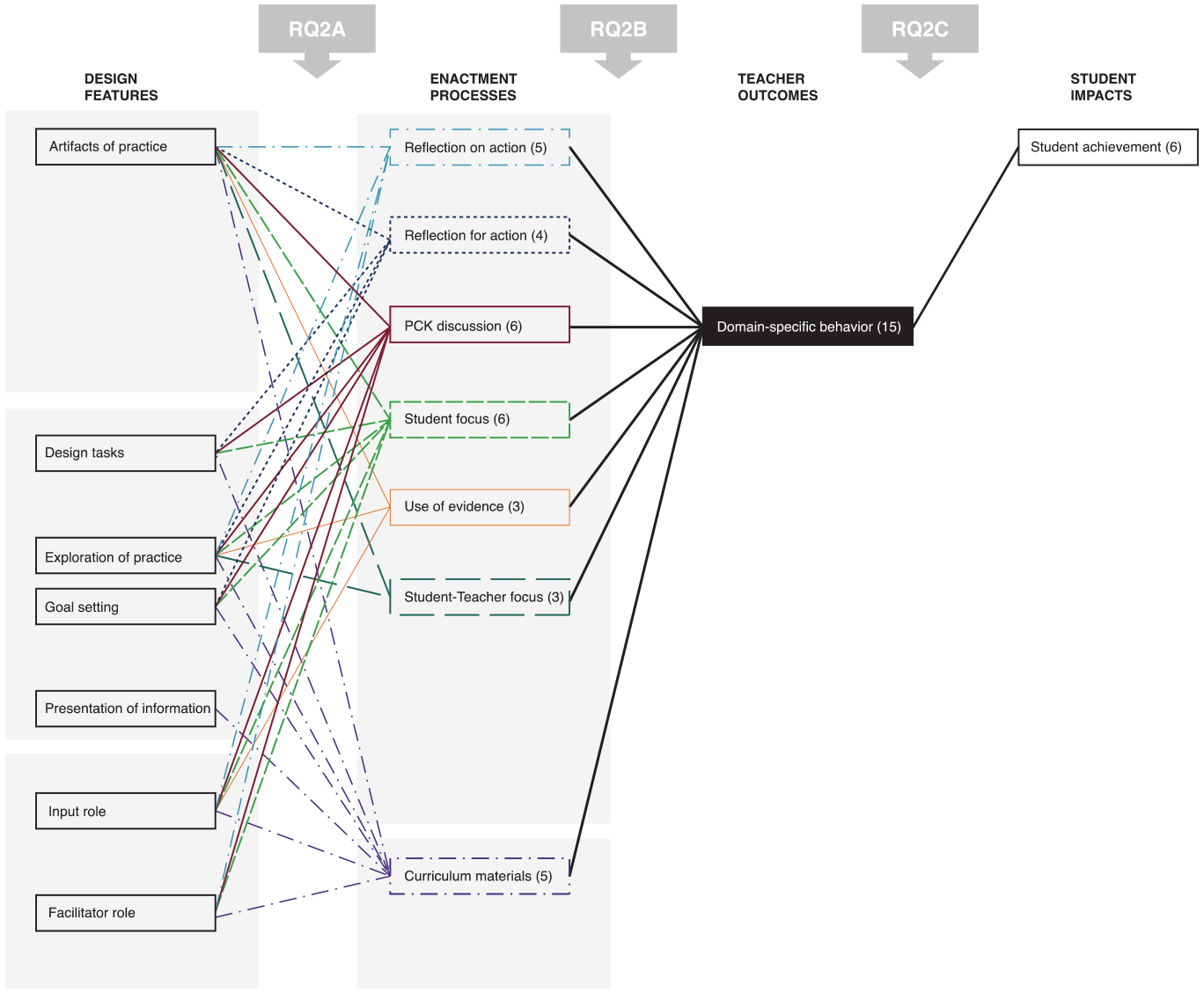
Conjecture map for teachers’ domain-specific instruction (Research Question 2).
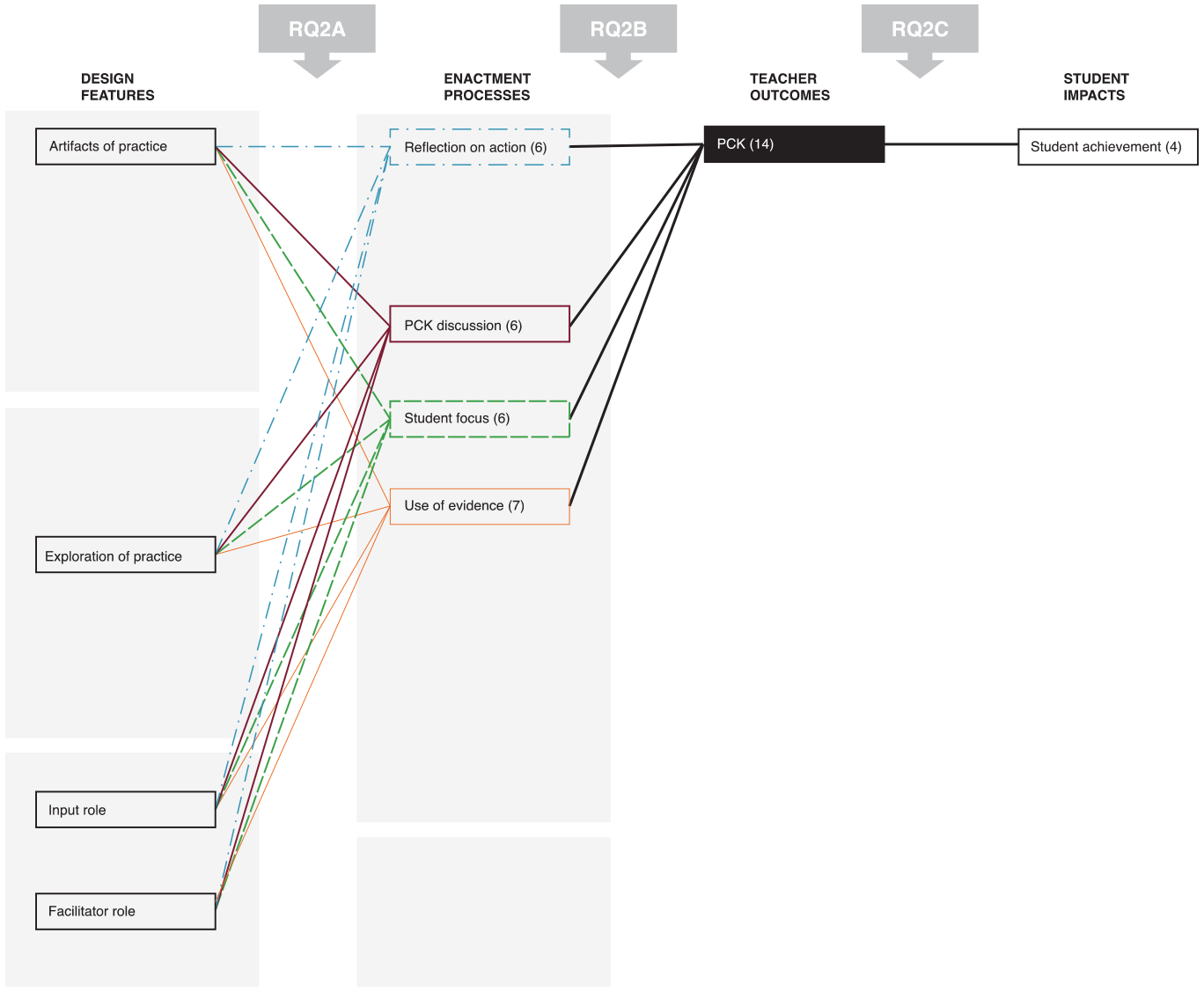
Conjecture map for teachers’ PCK (Research Question 2).
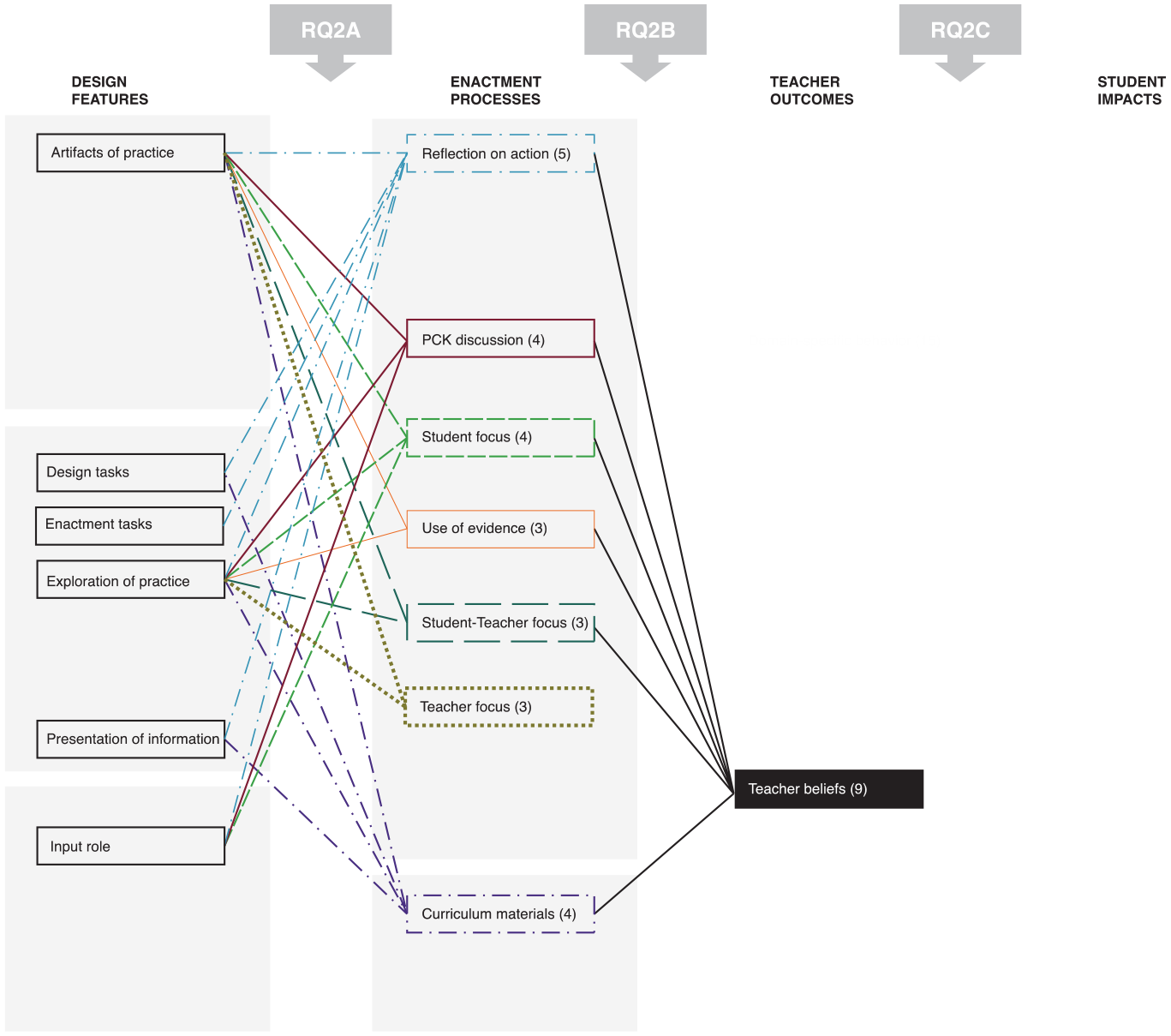
Conjecture map for teachers’ beliefs (Research Question 2).
Teachers’ Pedagogical Behavior
Inspection of co-occurrences in the 31 selected studies that reported positive changes in teachers’ pedagogical behavior yielded no clear theory of action for how these outcomes were achieved, through a lack of data on enactment processes (see Figure 5). In comparing teacher outcomes and student impacts, the results show that positive changes in pedagogical behavior co-occurred with positive changes in student engagement in five studies (Research Question 2C). Only 12 of 31 studies reported on enactment, six of which reported the creation of action plans, four reported reflection on action, and another three mentioned use of evidence and PCK discussions, respectively (Research Question 2B). In this subset of 31 studies, it is surprising to find that no other enactment processes were reported more than three times and that the ones reported were not reported very often. In reviewing enactment and design features for this subset reporting changes in teachers’ pedagogical behavior, only action plans co-occurred more than three times with the following design features: artifacts of practice, observation tools, examples of practice, enactment tasks, exploration of practice tasks, goal-setting tasks, presentation of information tasks, an input and a facilitator role (Research Question 2A).
Teachers’ Domain-Specific Instruction
Inspection of the co-occurrences for the 15 studies reporting positive changes in teachers’ domain-specific instruction revealed a potential theory of action (see Figure 6). In comparing teacher outcomes and student impacts, the results show that positive changes in domain-specific instruction co-occurred with positive changes in student achievement in six studies (Research Question 2C). Next, co-occurrences between teachers’ domain-specific instruction and enactment processes were inspected. Changes in domain-specific instruction co-occurred with discussions about PCK-related topics (six studies), a focus on student behavior (six studies), reflection on action (five studies), curriculum materials (five studies), reflection for action (four studies), the use of evidence (three studies), and student–teacher focus (three studies; Research Question 2B). Exploration of practice and artifacts of practice co-occurred with all of the above-mentioned enactment processes, and will not be mentioned hereafter to minimize repetition. Reflection on action further occurred together with a facilitator and input role, and reflection for action co-occurred with design and goal-setting tasks. PCK-related discussions and a focus on student behavior occurred together with all four design features mentioned for the reflection processes. The same applies for the creation of curriculum materials, with the additional co-occurrence of presentation of information activities. Finally, the use of evidence also co-occurred with an input role.
Teachers’ Pedagogical Content Knowledge
Inspection of the co-occurrences for the 14 studies reporting positive changes in teachers’ PCK revealed a potential theory of action, which is rather clear (see Figure 7). In comparing outcomes and impacts, the results show that positive changes in PCK co-occurred with positive changes in student achievement in four studies (Research Question 2C). Next, co-occurrences between teachers’ PCK and enactment were inspected. Positive changes in teachers’ PCK occurred together with reflection on action (six studies), discussions on PCK-related topics (six studies), a focus on student behavior (six studies), and the use of evidence (seven studies; Research Question 2B). All of these enactment processes in turn co-occurred with artifacts of practice, exploration of practice tasks, and an input and facilitator role (Research Question 2A).
Teachers’ Beliefs
Inspection of the co-occurrences for the nine studies reporting positive changes in teachers’ beliefs revealed a potential theory of action, which is fairly clear, but for which the evidence is limited (see Figure 8). In comparing teacher outcomes and student impacts, the results show that positive changes in teachers’ beliefs did not co-occur with positive changes in student outcomes in at least three studies (Research Question 2C). Next, co-occurrences between teachers’ beliefs and enactment were inspected. Changes in beliefs co-occurred with reflection on action (five studies), discussions about PCK-related topics (four studies), a focus on student behavior (four studies), curriculum materials (four studies), the use of evidence (three studies), and student–teacher focus (three studies) and teacher focus (three studies; Research Question 2B). Exploration of practice and artifacts of practice co-occurred with all above-mentioned enactment processes. Reflection on action occurred together with design tasks, enactment tasks, presentation of information activities, and an input role. PCK-related discussions and a focus on student behavior also co-occurred with an input role, and the creation of curriculum materials occurred together with design tasks and presentation of information activities.
Additional Observations
Interestingly, many of the 31 studies that reported positive changes in teachers’ pedagogical behavior provided no data on enactment processes. It seems that the design features of artifacts of practice (mentioned in all 31 studies in this category), exploration of practice tasks (all 31 studies in this category), presentation of information activities (23 studies), practice tasks (16 studies), goal-setting (12 studies), and examples of practice (13 studies) could be supportive of changes in teachers’ pedagogical behavior. However, the mechanisms through which this would happen remain unclear, due to the lack of enactment information.
Summary of Main Findings
The objective of this study was to gain insight into what the empirical literature has to say on how video coaching can influence teacher outcomes and potentially impact student learning. Therefore, driven by two research questions, this review systematically identified and summarized the occurrences and co-occurrences of video coaching design features, enactment processes, teacher outcomes, and student impacts, as reported in empirical literature on video coaching interventions for in-service teachers from early childhood education to tertiary education from all teaching domains. Four databases were searched and a five-step selection process resulted in a total of 59 studies included in this review.
Research Question1 asked: What (a) design features, (b) enactment processes, (c) teacher outcomes, and (d) student impacts were identified in the empirical research on in-service teacher video coaching and how often did they occur? With regard to this question, the video coaching design features appeared more often than the enactment processes, teacher outcomes, and student impacts, and varied from simple to rather complex. The included studies most often reported the presence of artifacts of practice, examples of practice (materials and resources), exploration of practice tasks, presentation of information activities, goal-setting tasks, practice tasks (activities and tasks), and an input and facilitator role (participation and practices) as part of the design. Only about half of the studies reported on enactment processes, and the ones that did often reported that participants reflected on action, talked about topics related to PCK, focused on student behavior, used evidence for their reasoning, and (re)created curriculum materials. With regard to teacher outcomes, positive changes in teachers’ pedagogical behavior were most often reported, followed by positive changes in teachers’ PCK and domain-specific instruction. Compared to the teacher effects, there was very little evidence of positive student impacts. An overview is presented in Figure 9.
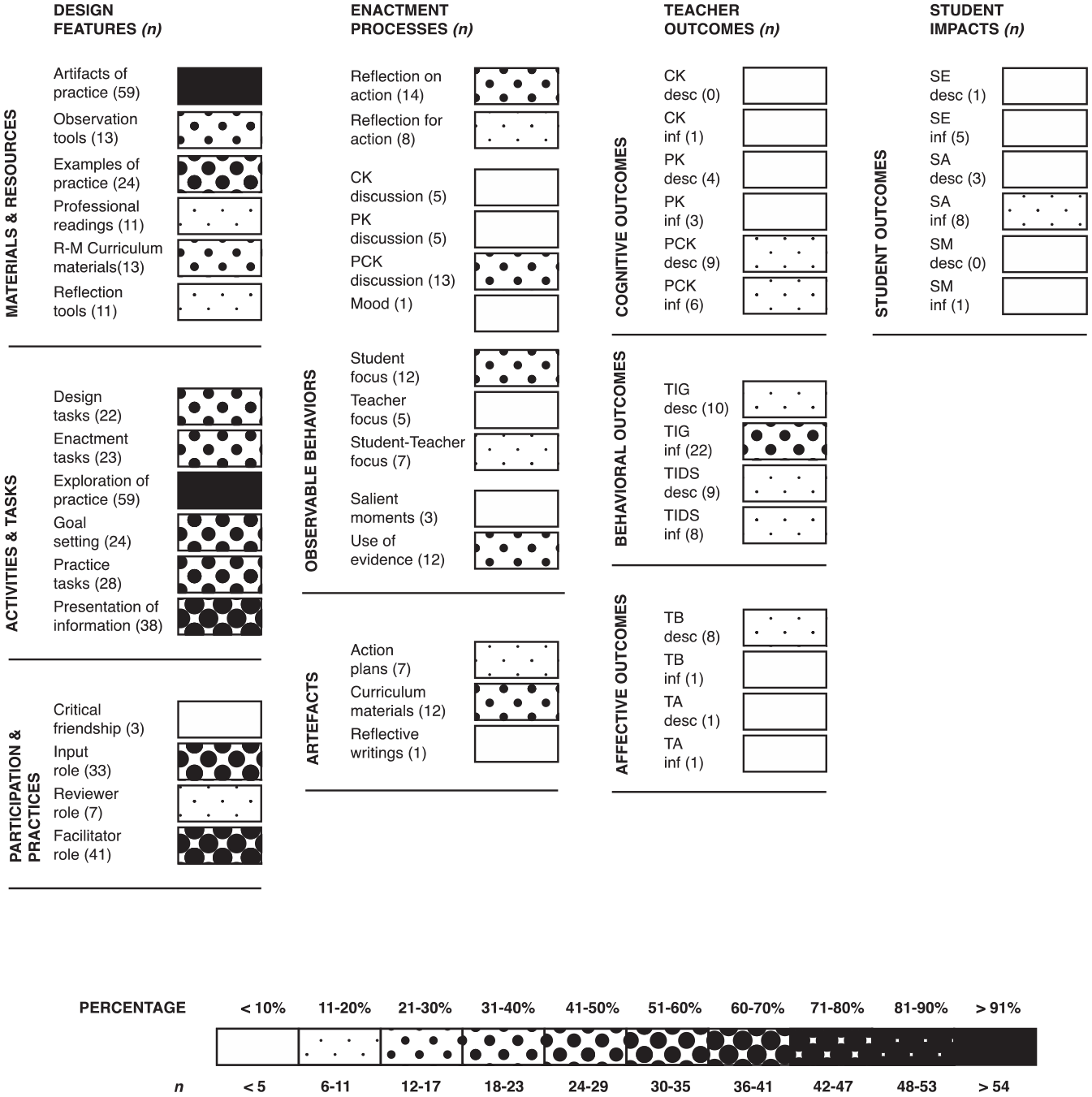
Overview of occurring constructs within video coaching design features, enactment processes, teacher outcomes, and student impacts.
Research Question 2 asked: For studies that showed positive teacher outcomes, what co-occurrences were there between (a) design features and enactment processes, (b) enactment processes and teacher outcomes, and (c) teacher outcomes and student impacts? With regard to this question, the literature showed that there is evidence, (though limited) for possible relationships between the constructs identified (in answering Research Question 1). The possible relationships can best be summarized as the following conjectures:
Improvements in teachers’ domain-specific instruction can be supported through enactment of reflection on action, reflection for action, a focus on students and on student–teacher behavior, PCK-related discussion topics, and the development of curriculum materials. Artifacts of practice, exploration of practice, design tasks, goal-setting tasks, and presentation of information activities, together with having input and facilitator roles, can support this combination of enactment processes.
PCK development can be supported through reflection on action, student focus, PCK-related discussion, and the use of evidence. In turn, all of these enactment processes can be supported by artifacts of practice and exploration of practice, along with having input and facilitator roles.
Positive changes in teachers’ beliefs can be supported through enactment of reflection on action, a focus on students and on student–teacher behavior, the use of evidence, PCK-related discussion topics, and the development of curriculum materials. Artifacts of practice, exploration of practice, design tasks, enactment tasks, presentation of information activities, coupled with the presence of input and facilitator roles, can support this combination of enactment processes.
We had hoped to develop stronger conjectures on the relationships between the teacher outcomes and student impacts, but the data on how designs were enacted were very limited. This points to an important gap in the current knowledge base. In particular, we observed a salient lack of evidence on the enactment processes that yielded (positive) changes in teachers’ pedagogical behavior. Enactment processes were only reported on six times in the 31 total studies reporting positive changes in pedagogical behavior. This is important, because enactment data are needed to map theories of action, develop evidence-informed interventions, and replicate studies.
Discussion
The results from this review provide the foundation for video coaching theories of action. Much promising work has been done in this area, and the outcomes for teachers are encouraging. However, it must also be noted that the evidence for how design features supported some of the (more promising) outcomes is limited, and further work is needed in this regard. In the following sections, we reflect on the outcomes of video coaching and how these relate to previous findings, discuss unresolved issues and challenges in video coaching, and articulate the implications this review holds for research, policy, and practice. The suggestions below take our results as a point of departure.
Positive Outcomes of Teacher Video Coaching in Light of Related Reviews
In this section, we consider what the review has taught us about the outcomes of teacher video coaching, and how this relates to existing reviews on video viewing and coaching. Most notably, the included studies report positive changes in teachers’ classroom practices, especially pedagogical behavior. These promising findings are in line with findings of some previous reviews but contradict others. For example, the finding that teachers made changes in their practice is in line with the recent meta-analytic review on causal evidence from (quasi)experimental studies of (web-based and face-to-face) coaching, which found pooled effect sizes of 0.47 SD for pedagogical practices and 0.49 SD for instruction (Kraft et al., 2018). Conversely, a different review on video viewing reported limited evidence of changes in teachers’ classroom practice (Gaudin & Chaliès, 2015). A possible explanation could lie in the different focus of the reviews, as the Gaudin and Chaliès (2015) review included literature on the use of different types of videos (self, other, peers) for learning for in-service and preservice teachers, and was not specifically focused on interventions that included a coaching component.
In addition, this review shows that video coaching supported the development of domain-specific teaching knowledge (PCK), including professional vision. This finding is supported by the results of existing reviews on video viewing in teacher education and training (Gaudin & Chaliès, 2015; Marsh & Mitchell, 2014) and is promising, because this type of knowledge is possessed by expert teachers in particular, and is crucial for effective teaching of a subject (Park & Oliver, 2008a). Reflection on one’s own practices appears to be important for developing this type of knowledge within video coaching. However, it should be noted that teachers do not always reflect in ways that support their learning, for instance, by describing events or making quick judgements (Sherin & van Es, 2009), which is unfortunate, but expert guidance can beneficial to help deepen their reflection (Gaudin & Chaliès, 2015). A recent study has shown that video-based peer feedback is more supportive for developing preservice teachers’ professional vision when combined with expert feedback (Weber et al., 2018).
Comparing outcomes from this review to existing reviews, the combination of video and coaching seems promising. Existing reviews have shown that the analysis of videos (self, other, peers) could support cognitive outcomes, such as professional vision, but there was not much evidence for changes in behavior (Gaudin & Chaliès, 2015). Information gained from video viewing might not always automatically be transferred to changing one’s own classroom practice, and expert support might be needed to make these changes. A recent study comparing digital video-based and face-to-face feedback environments found that digital video feedback in combination with expert feedback led to more high-quality suggestions (feedback behaviors) by preservice teachers in a practicum setting illustrates this notion (Prilop et al., 2020). Reflection was reported as an important outcome of video-viewing studies (Marsh & Mitchell, 2014; Tripp & Rich, 2012), but in this review reflection was more often reported as an enactment process that supported other outcomes, as was visible in Figures 5 through 8.
Gaps and Challenges in Empirical Video Coaching Literature
This review shows an important gap in knowledge with regard to a video coaching theory of action for pedagogical behavior, which is surprising, because this is the outcome for which the most evidence was found. Consequently, it was not possible to develop (strong) conjectures for the way that video coaching design features could lead to enactment processes that in turn supported these outcomes. Successful programs, such as My Teaching Partner, described design features through which teachers and coaches worked together to improve teaching according to teaching effectiveness frameworks (e.g., Gregory et al., 2014). Within this program, coaches reviewed participants’ practices using a teaching effectiveness framework and provided feedback in order to support alignment of teaching practices with that framework. In addition, participants took part in a workshop and had access to a video library with examples illustrating the framework in practice. While this review confirms previous findings that interventions (in this case, coaching) that use models of effective practice can yield professional development (Darling-Hammond et al., 2017), it does not reveal how the ingredients work together in video coaching practice, or how enactment supports change in teachers’ pedagogical behavior. Given the design of these interventions it seems plausible that the feedback provided was directive and geared toward getting practices aligned with standards of teaching effectiveness. Gaining insight into these details would support coaches in aligning their coaching repertoire with the learning objectives of the teacher(s) receiving the coaching and/or those of the coaching program.
This review further reveals a very limited evidence base for changes in teachers’ attitudes and some evidence for changes in teachers’ beliefs. This is somewhat surprising, because video coaching as a professional development approach appears suitable for promoting these types of outcomes. For instance, it is plausible that throughout coaching, teachers could have mastery experiences or vicarious experiences by watching their peers succeed, which are important for enhancing self-efficacy (Bandura, 1997). A recent study showed that digital video-based reflection and feedback environments could be especially beneficial for fostering more constructivist beliefs rather than traditional (stemming from transmissive/behaviorist theories of learning) beliefs, and more so than face-to-face or text-based settings (Prilop et al., 2019). Existing reviews mentioned belief changes, but mostly with regard to preservice teachers (Gaudin & Chaliès, 2015).
Finally, this review showed that there was limited evidence for impacts of video coaching on students. The related reviews also presented no clear answer when it came to impact on student outcomes. There were examples where effects of coaching on student achievement were established (Kraft et al., 2018), but other related reviews did not address this. This is surprising, because teacher professional development is designed to ultimately affect student learning. However, it is important to realize that changes in teacher outcomes do not easily translate to changes in student achievement, as shown by Kraft et al. (2018), who estimated that large changes in instructional behavior as a result of coaching are necessary before changes in student achievement occur. A study that did not meet our criteria because no teacher outcomes were included, but is worth mentioning, was a recent study by J. A. Taylor et al. (2017), who reported an effect size of 0.52 SD in favor of students whose teachers participated in a video coaching intervention, compared with students whose teachers participated in a content-deepening program only. This points to a need to further investigate how video coaching should be designed in order to have an effect on student outcomes, because the current body of evidence does not present a clear answer to this question.
Methodological Discussion
The results of this review were shaped by the methodological choices made. Previous related reviews did not provide an elaborated map of in-service teacher video coaching design, enactment, outcomes, and impact that provided clear indicators for a theory of action, which would be needed for a meta-analytical approach. To generate such a map, and based on the types of interventions mentioned in related reviews, an inclusive approach was taken that welcomed studies from different philosophical backgrounds and associated research traditions, to build theoretical understanding of the phenomenon of in-service teacher video coaching. A conjecture mapping approach was taken to create this theory of action, with large generic categories that left no salient features behind. In order to map the theory of action, included studies had to at least report on the teacher outcomes from the intervention, meaning that studies only reporting on design and enactment (or learner outcomes) were not considered in this review. To represent the variety of studies in the corpus fairly, outcome evidence was summarized on the article level for each type of variable and type of evidence. This resulted in percentages of studies from the full corpus exhibiting specific characteristics. This approach was chosen (e.g., as opposed to identifying an outcome and reporting the percentage of studies that investigated that specific inputs and processes yielding that outcome) because the aim of the study was to represent what literature tells us about video coaching, namely, to present a map of the field. We do acknowledge that, since co-occurrences must be derived from the same sample, it would be likely to find little empirical support for patterns between teacher outcomes and enactment processes (or enactment processes and design features) when it comes to teacher outcome categories for which a limited sample of studies was identified in the first place. In the next section, the limitations of the study are addressed.
Limitations
The results of this review could have been influenced through our selection criteria and analysis approach. We chose to focus on peer-reviewed articles published in high-quality scientific journals to ensure the quality of the corpus. As a result, book chapters, unpublished dissertations, conference papers, research reports, and other gray literature were excluded from this review. We recognize that the corpus was not fully inclusive, due to the exclusion of these as well as of non-English studies, and studies without PDFs. Publication bias could explain why not much negative evidence was reported in the included studies. We chose to focus on scientific articles that were published in the English language, because it enhances the verifiability of the results. However, important work published in other languages may have been excluded, and language bias could explain why most of the studies in the review corpus were conducted in the United States of America. In addition, we only looked at the co-occurrences of concepts that emerged through the analysis in order to generate possible conjectures to be tested in future studies and meta-analyses. While this approach allowed us to create detailed knowledge about this type of intervention, by bringing together what is known about it, this study does not provide insight into the strengths of the relationships revealed in this review, and the results should be interpreted as such. Nevertheless, the results can help stakeholders leverage existing work by building on the most promising directions identified in this study, and addressing the gaps that warrant attention in future research. Next, we acknowledge that there are other conceptualizations of the relationship between teachers’ attitudes, beliefs, and dispositions besides the ones used to guide this review (e.g., using the theoretical framework from the individual studies could be used as an alternative approach). However, to ensure consistency across the review, the framework as depicted in Figure 1 was used for all included studies. Furthermore, while other variables, such as instructional time, could have an influence on the outcomes, these were considered to be beyond the scope of the review. Finally, we acknowledge that there were studies of enactment processes that did not meet one or more criteria for inclusion in the review, for instance, because they did not include information on teacher outcomes. In addition, we acknowledge the possibility that studies in our corpus reporting nonsignificant results might have lacked statistical power due to their small scale and that our approach to analysis did not attempt to compensate for this possibility.
Implications for Practice, Policy, and Future Research
The results of this review give indications of how to design video coaching interventions for different teacher outcomes, but this does not mean that all seemingly effective features should be combined without good reason. When designing professional development, such as video coaching, it is likely that multiple outcomes are targeted simultaneously. When looking across the results for teachers’ PCK, domain-specific instruction, and beliefs, one might be tempted to combine all of the seemingly effective design features into one intervention, expecting that this will result in all these outcomes. However, as combining individually tasty ingredients does not necessarily guarantee a collectively tasty dish, solid reasoning for how powerful elements work together is required.
In part, this seems due to the fact that, even though similar design features or enactment processes might be present across a range of studies, the content, and manifestation of these features could easily vary depending on the objective. For example, videos of practice to support teachers in changing their beliefs about how students learn mathematics could be completely different from those used to support teachers in aligning their practices with standards of effective teaching. Furthermore, it is not only the goals, but also the stance taken on how to achieve them, that affects the design and enactment of interventions. The corpus in this review included a variety of video coaching programs, some of which took more situated approaches, whereas others aimed to support teachers’ deliberate practice of evidence-based approaches to effective teaching. This is consistent with the existing literature, which has noted that some professional development interventions can be classified as highly adaptive, being responsive to changing goals, resources, and circumstances, whereas others are highly specified, with goals, content, and materials being predetermined to provide a particular experience (Koellner & Jacobs, 2015). One could view these distinctions along a continuum, the middle of which might contain interventions with elements of both. For instance, programs could start from a highly specified framework emphasizing effective teaching, during which participants become interested in how student behavior is affected by changes made in the classroom, and then allow the goals, content, and materials to be adapted accordingly to support open-ended exploration of how student behavior manifests itself within that particular context. Alternatively, professional development could start off with participants conducting a situated exploration of student learning, conclude that a given framework emphasizing evidence-informed instructional strategies might address the phenomena discovered, and decide to specify the goals, content, and materials to support enactment of these specific instructional strategies. It should be noted that, while this review can give direction regarding features to include when designing video coaching interventions and the enactment processes to aim for, a clear and well-justified theory of action is needed to further detail the specific requirements for video coaching interventions in line with their aims.
Coaches or schools wanting to implement video coaching should be aware of these findings and how they can be used to shape coaching practices. This review points to some helpful results, especially when domain-specific practices are the area of interest, and offers hypotheses for the way video coaching design could support these outcomes, which can be used as guidance for design. In addition, having insight into common design features could help with design thinking in the early phases of developing a coaching program. Unfortunately, it is hard to say which enactment processes support positive changes in pedagogical behavior; the awareness that research does not provide a uniform answer to this is important. In addition, this review also illustrates that video coaching is not commonly utilized for all types of outcomes, and research is needed to establish the usefulness and effectiveness of video coaching when it comes to developing content knowledge, pedagogical knowledge, and affective outcomes (attitudes, in particular), and for supporting student outcomes.
This review also holds implications for policy, and especially for how research funding might be allocated. Investigations that have the objective of establishing how learning occurs when interaction with the learning environment happens seem especially needed when it comes to video coaching. In this way, the development of black box interventions in which learning is oversimplified as a linear causal pathway between the design (or input) and outcomes is avoided. Hence, this line of reasoning implies that efforts to create theory about how interventions work in practice and under different conditions are of great importance for the development of interventions, and qualitative methods can often help shine light on the enactment processes during the initial phases of evaluation (McKenney & Reeves, 2019). These insights can help shape redesign efforts, while also developing theory on how interventions work under different conditions. Redesigned interventions can be tested in later stages of the research project. Funding efforts that try to close the identified gaps in relation to changes in teachers’ pedagogical behaviors and the student impacts of video coaching are especially needed in order to further knowledge within the field. Specifically, policymakers should pay attention to the theories of action driving studies, the evidence supporting claims about these theories, and/or the actions that are undertaken within studies to further develop theories of action. The enactment of interventions deserves special attention in this regard.
Future research should test the conjectures that were revealed within this study. For example, research is needed to understand how video coaching can support changes in teachers’ pedagogical behavior, the extent to which video coaching can affect student outcomes, and connections between the two. In this review, the articles that reported changes on teachers’ pedagogical teaching behavior elaborated on the outcomes themselves more than the design or enactment of the interventions that engendered them. Given this, along with the fact that many studies were excluded for providing enactment process data but not outcomes data, it seems plausible that in-depth studies of enactment and outcomes are present, but reported separately due to length restrictions. This is important, because this information is needed to support the training of coaches in this area. To shed light on this gap in the research, an especially promising direction could be the use of mixed method studies, for example, featuring qualitative investigation of enactment in relation to quantitative measures of successful and unsuccessful outcomes at the student or participant level. A number of questions can be asked in this regard. For instance, how do reflection processes play a role in studies aimed at improving pedagogical behavior? What do teachers and coaches pay attention to? Do they reason based on context or is their reasoning knowledge-driven?
Another recommendation pertains to reporting research in which design features, enactment processes, and teacher outcomes are investigated. In larger projects, results are often broken up into different articles, some reporting on design and enactment, others on the outcomes, which can be difficult for an outsider to merge together. Authors could be encouraged to link the study they are reporting to other studies from the same project, by referencing published and unpublished works from the same project. Using a conjecture map (or another type of logic model) could help readers understand how the different studies fit together and provide evidence for the theory of action. The connected studies could be made available on the project website or the research group website as additional resources.
A similar approach could also be taken by researchers reviewing published findings. In this case, relevant projects could be identified though initial searches focusing on articles reporting positive results, and the (principal) investigators could be approached to provide access to reports that detail other aspects of the same project. These documents could be used to identify the relevant design features, enactment processes, and teacher outcomes necessary for generating a conjecture map, as described above. Then, the coding could be verified and complemented (if necessary) with an interview with the (principal) investigator, for example, as done in the review by Roblin et al. (2018).
Finally, this review also points to a gap in research on student impacts, which need to be further investigated. A recent study showed that, in comparison with the content-deepening PD program, a video coaching program significantly improved teachers’ knowledge and practice, and that there was a strong relationship between teaching practice and student learning (Roth et al., 2019). Existing evidence on the relationship between teacher change and effects on student outcomes (e.g., Kraft et al., 2018) points to the hypothesis that a fair amount of behavioral change is needed on the teachers’ side to affect student outcomes. This is important to keep in mind for future research.
In closing, the conjecture-mapping approach of this review provides a language and structure for understanding how research can help provide insight into video coaching mechanisms. As such, it constitutes the kind of argumentative grammar (Kelly, 2004; Sandoval, 2014) for unpacking learning processes (not just black box models) that is vital for understanding how interventions lead to outcomes and impacts. Educational research is conducted in, through, and for practice. It strives not only to build understanding about whether or not learning takes place, but especially about how, for whom, and under what circumstances learning takes place. This type of knowledge is vital for monitoring as well as improving educational interventions. Thus, for professional development programs in general and video coaching in particular, thorough investigation of the enactment processes is crucial for understanding whether, how, and in what way learners interact with the learning environment. Doing so reduces the risk of creating black box models and puts the focus where it needs to be: on the intervention map as a whole.
Supplemental Material
sj-pdf-1-rer-10.3102_00346543211046984 – Supplemental material for Teacher Video Coaching, From Design Features to Student Impacts: A Systematic Literature Review
Supplemental material, sj-pdf-1-rer-10.3102_00346543211046984 for Teacher Video Coaching, From Design Features to Student Impacts: A Systematic Literature Review by Sara van der Linden, Jan van der Meij and Susan McKenney in Review of Educational Research
Footnotes

Notes
Authors
SARA VAN DER LINDEN is a PhD candidate at ELAN, the Teacher Development section of the Learning, Data Analytics, and Technology (LDT) department within the Faculty of Behavioural, Management and Social Sciences (BMS) at the University of Twente, PO Box 217, 7500 AE Enschede, the Netherlands; email:
JAN VAN DER MEIJ is the director of vocational education at Het Erasmus, PO Box 341, 7600 AH Almelo, the Netherlands; email:
SUSAN MCKENNEY is chair of ELAN, the Teacher Development section of the Learning, Data Analytics, and Technology (LDT) department within the Faculty of Behavioural, Management and Social Sciences (BMS) at the University of Twente, PO Box 217, 7500 AE Enschede, the Netherlands; email:
References
Supplementary Material
Please find the following supplemental material available below.
For Open Access articles published under a Creative Commons License, all supplemental material carries the same license as the article it is associated with.
For non-Open Access articles published, all supplemental material carries a non-exclusive license, and permission requests for re-use of supplemental material or any part of supplemental material shall be sent directly to the copyright owner as specified in the copyright notice associated with the article.
