




Abstract
Numerous national and state endeavors have advocated for approaches, funding, and programs focused on expanding the science, technology, engineering, and mathematics (STEM) workforce of the nation and investing in education to cultivate a more diverse and impactful cohort of students who pursue STEM pathways. Educators, support personnel, and policymakers are in a position to engage in discussions about expanding STEM college readiness (STEM-CR) and participation. However, few are cognizant that STEM-CR is a progression that students strive for in developing skills, behaviors, and attitudes that spans over time. The current study established and validated a measurement model of student STEM-CR in mathematics and science utilizing the High School Longitudinal Study of 2009. The model was created based on a multidimensional and theoretical perspective of college readiness using a confirmatory factor analysis and modeling approach that accounted for measurement invariance. The sample (N = 16,044) comes from a racialized/ethnoracial and socioeconomically diverse high school population in the United States. The findings confirmed that STEM-CR involves four related yet distinct dimensions of Think, Know, Act, and Go. Results also demonstrated soundness of these STEM-CR dimensions by race and gender (key learning skills and techniques/Act). Academic self-efficacy was the strongest dimension of our STEM-CR model and strongly predicted academic achievement and college enrollment. Research and practice implications are discussed.
Keywords
Over the next century, projections from the U.S. Department of Commerce suggest that the science, technology, engineering, and mathematics (STEM) industry will offer the highest salaries and greatest growth potential (Fayer et al., 2017; Langdon et al., 2011). To meet this demand, the United States must produce a highly skilled STEM workforce to remain competitive in the global economy (Falco & Summers, 2019; Hussar & Bailey, 2014). However, a small number of U.S. students pursue STEM-related degrees and careers (Hussar & Bailey, 2014). STEM majors account for only 24% of all bachelor’s degrees awarded, and many graduates with STEM degrees end up in non-STEM fields (Malcom & Feder, 2016; Wang et al., 2013). Furthermore, underrepresented and first-generation students are more likely to require remedial courses in STEM education, which often do not count toward graduation (X. Chen, 2016; Conley, 2010). Additionally, low-income youths often exhibit decreasing engagement in math and science-related activities, leading to a readiness gap between high school and postsecondary education (Lombardi et al., 2011; Martin et al., 2015).
This gap emphasizes a need for education researchers and practitioners to have a suitable framework that measures STEM college readiness (STEM-CR) for a diverse student population. The limited number of validated self-reported measures that take a multidimensional view of college readiness (CR) has made it challenging to examine dimensions and consequences of STEM-CR and how aspects of this phenomenon are developed and interrelated over time (Wang et al., 2016). To bridge CR and STEM education, a theoretically driven framework is needed to support student pathways to higher education and STEM fields (Klasik & Strayhorn, 2018; Wang et al., 2016). To address this issue, we developed and organized a framework of CR for secondary students, specifically, Black, Indigenous, and people of color (BIPOC) who are underrepresented in the STEM pipeline (Holcomb-McCoy, 2021; Suarez et al., 2021). Our framework uses an established CR model by David Conley (2010) that captures factors important for students to be prepared and successful in higher education. This study seeks to identify whether components of Conley’s framework can further our understanding about differences in BIPOC student CR in STEM.
Knowledge from this STEM-CR framework is essential because it can support the capacity of educators to detect students who are most vulnerable to disengage in math and science and design multitiered and distinct STEM programming. The present study uses an invariance model approach to test the psychometric properties of our STEM-CR framework in math and science domains utilizing the High School Longitudinal Study of 2009 (HSLS:09; National Center for Education Statistics [NCES], 2016) to answer the following research questions:
Research Question 1: Do college readiness dimensions of Think, Know, Act, and Go reflect high school student college readiness in math and science?
Research Question 2: Do these college readiness dimensions differ by race, gender, and grade level?
Research Question 3: To what degree do these college readiness indicators predict academic achievement and college enrollment?
Literature Review
Conley (2010) created a CR model (see Figure 1) that encompasses both academic and nonacademic factors across four primary aspects: (a) key cognitive abilities (Think), (b) content knowledge (Know), (c) learning abilities (Act), and (d) transition knowledge (Go). Key cognitive abilities (Think) are the purposeful actions that enable students to participate, learn, comprehend, retain, utilize, and apply content from various disciplines (Lombardi et al., 2011). Key content knowledge (Know) is the understanding of academic disciplines pertinent to a career that is chosen. Key learning skills (Act) are the self-management abilities, attitudes, and habits that are necessary for students to learn and perform effectively, efficiently, and appropriately (Conley, 2010; French, 2014). Ultimately, key transition knowledge (Go) refers to the information and behaviors that are necessary for students to understand the norms, culture, expectations, and systemic processes associated with entering and navigating a postsecondary environment and support their career or academic goals. This multidimensional framework for CR emphasizes the crucial abilities and skills that distinguish students who are capable of succeeding in a college-level course in high school or postsecondary institutions without additional instruction.
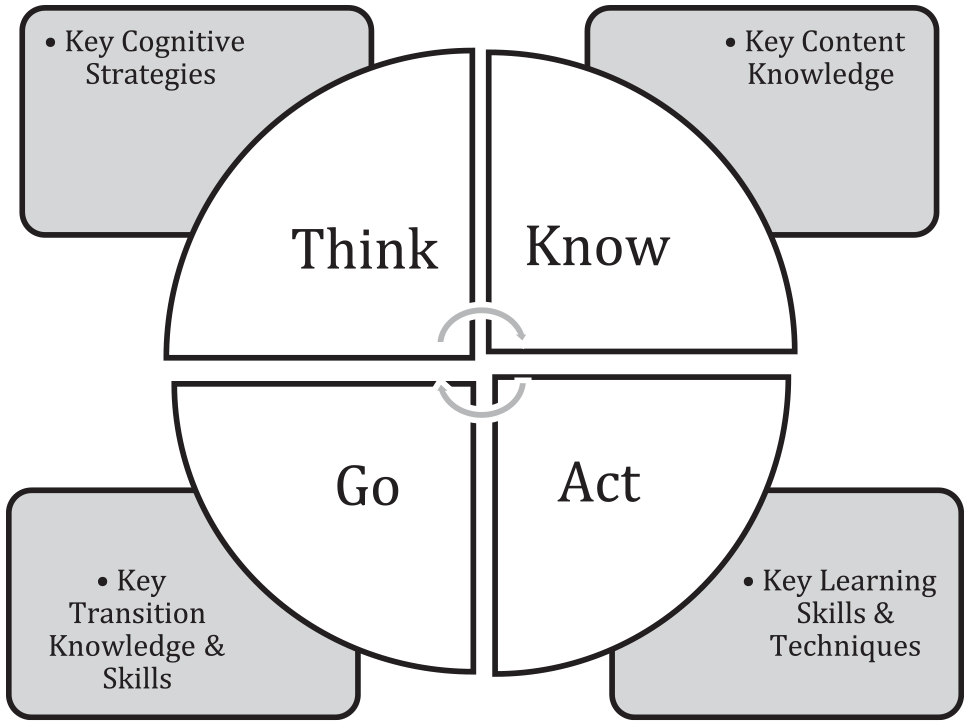
Conley’s (2012) four dimensions of college and career readiness
In the past, measuring CR was typically done by evaluating academic accomplishments in high school. This included using markers like grade point average (GPA) and scores on standardized college admission tests. Nonetheless, these standards do not always capture all of the knowledge and aptitudes necessary for achieving in introductory college math and science courses. According to Fredricks et al. (2004), Brown and Conley (2007), and Wang et al. (2017), these standards are sometimes not enough. In addition to academic skills, research suggests that various traits and abilities have been found to boost achievement in STEM occupations (Conley, 2010; Farrington et al., 2012). Engagement, or the intersection of academic and nonacademic capabilities that enable academic success, was described by Farrington et al. (2012) as a multifaceted concept. Psychosocial beliefs about academic mindsets (e.g., self-efficacy and sense of belonging) allow for knowledge to be achieved, which then positively affects learning strategies, academic perseverance, and social skills (Barton, 2023). Ultimately, this results in desirable academic behaviors—such as homework completion and class attendance—that are integral to academic success (Sablan, 2014; Shepard, 2018). The Allensworth and Easton (2007) model proposes this sequence of behaviors. For the sake of promoting STEM-CR, Conley (2012) believes it is vital to hone all four dimensions—cognitive strategies, content knowledge, academic behaviors, and contextual skills—in a fluid and unified way. Consequently, a range of student-level factors must come under scrutiny to accommodate such a complicated and layered construct.
When it comes to gauging a student’s CR, it is important to consider factors specific to their school. One such factor is the level of resources and opportunities a school offers for BIPOC students to study STEM subjects. Research by Wang and Dangol (2016) and Wang et al. (2013) highlighted the crucial role of access to curricular resources in shaping students’ higher education prospects. In schools across America, BIPOC students are grappling with opportunity gaps that hinder their learning and academic achievements. These gaps impact access to educational resources like advanced math and science courses such as calculus, algebra, and physics (Carter et al., 2013; Darling-Hammond, 2013; Ellis & Helaire, 2022; Martinez & Guzman, 2013; Milner, 2012). In the world of education, there exists a disparity in the provision of essential courses that can lead to selective colleges and significant careers in STEM. An analysis by the National Association for Gifted Children (as cited in Olszewski-Kubilius & Clarenbach, 2014) revealed that only 29% of high schools with significant BIPOC student enrollments encourage the study of calculus compared with the 55% that provide it. A divergence of such courses can be seen in physics as well, with only 40% of schools enrolling BIPOC students promoting it versus the 66% of the remaining schools. The status quo, as presented by the U.S. Office for Civil Rights (2012), demands an urgent directive that can rectify these discrepancies.
In the pursuit of academic success, many BIPOC students face hurdles in accessing honors and Advanced Placement (AP) courses. Various studies, including those conducted by Wang and Degol (2014) and Callahan et.al (2010), have highlighted this issue. High school students’ success largely depends on their access to quality courses because it significantly impacts their college education opportunities. Those who complete college-prep curriculum tend to be well prepared and avoid the need for remedial courses. High school students from underserved communities are being deprived of opportunities to immerse themselves in STEM-CR culture due to limited access to rigorous college-bound curricula. Consequently, they are not equipped academically to pursue their postsecondary pathways in STEM fields.
Established by the ACT in 2009 (as cited in Contreras, 2011), CR standards evaluate high school course rigor and performance, identifying the required subject-area test scores to attain a 50% chance of scoring a B or higher in college or a 75% chance of scoring a C or better. Unfortunately, benchmark results show that Black, Latina(o), and Native American students have notably lower benchmark scores than White and Asian American peers, which implies an inadequate preparation for academic and career pursuits (ACT, 2009; Contreras, 2011). These statistics illustrate the demand for better programming and measurements for schools with insufficient resources and infrastructures to support STEM-CR. A different drawback to achievement indicators of CR is their limited scope, offering a poor warning for learners struggling with specific subject matter. Moreover, these benchmarks create a narrow portrait of readiness, solely focusing on academic performance and excluding affective, behavioral, and contextual factors that impact a student’s career and academic interests.
Focusing CR solely on AP classes can be problematic because research has shown that enrollment in these courses does not guarantee high passing rates on AP or ensure access to a pathway toward a career in STEM fields. Success in these classes requires students to have access to high-quality instruction, tutoring, and curricular resources exams (Contreras, 2005). In 2018, only three out of 10 Black students who took an AP exam passed with a score of 3 or greater, which represents a passing score, and only 4.3% of those students achieved this score. Among Latina(o) students, four out of ten 10 an AP exam, and 23.6% of them passed with a score of 3 or greater. For Native American students, only three out of 10 who took the AP exam passed with a score of 3 or greater, which represented a passing score, and a mere 0.2% of them achieved this score (College Board, 2018). These low passing rates highlight the fact that enrollment in AP courses alone is insufficient to ensure that underrepresented students have access to the same materials and teachers as their peers, which is essential for optimal preparation for these exams and STEM opportunities. Therefore, efforts to increase enrollment in AP classes must be accompanied by academic support to help students succeed in these courses (ACT, 2020).
Consequently, because of these differential opportunities (i.e., fewer AP courses, larger class size), students’ beliefs about their abilities and, as a consequence, their performance can also be affected by situational factors operating when they are being evaluated (Rivas-Drake et al., 2014). This phenomenon, referred to as “stereotype threat,” is widely experienced by BIPOC students. For instance, a study conducted by Spencer et al. (1999) found that when girls were reminded of the stereotype that boys are better in math, they performed worse on a math test than their male counterparts who were not reminded of the stereotype. This suggests that the stereotype threat can negatively impact academic performance and undermine the potential of individuals who belong to stereotyped groups (Stoet & Geary, 2012). Similarly, if a male student is told repeatedly that they should be good at math because they are male, they may feel added pressure to perform well in math, and this may lead to increased anxiety and decreased performance. It is essential to be mindful of these stereotypes and avoid reinforcing them to avoid creating unnecessary pressure and stress on individuals who do not fit the stereotype, specifically when it involves STEM opportunities (Cvencek et al., 2015; McKellar et al., 2019; Woodcock et al., 2012).
Gender and racial stereotypes about academic performance can adversely affect BIPOC students’ academic self-concept and social-emotional well-being (Rivas-Drake et al., 2014). Additionally, the threat and endorsement of gender and racial stereotypes also has implications for school engagement and academic self-efficacy (Ellis et al., 2018). Particularly, studies indicate that when BIPOC believe they are subjected to stereotypes about their academic competence and ability, they are less likely to engage in academic tasks (i.e., homework, class activities, and discussions) and develop relationships with teachers and peers (Holland 2012; Steele, 1997). These dynamics play a role in how students identify themselves as persons who can enter a STEM field, their academic self-efficacy in STEM courses, participating in STEM courses and class activities, and embracing the usefulness of STEM course content.
The opportunity gaps and stereotypes BIPOC students experience provide deeper insight into how an individual and their context affects college readiness. Yet the multidimensionality of constructs related to Think, Know, Act, and Go to STEM-CR especially for BIPOC students remains underexplored in existing CR studies. Additionally, Conley’s (2012) model reflects the idea that CR is a continual process that students work toward, developing skills, behaviors, and attitudes across a continuum of time, thus justifying the need for markers of all four dimensions both early and later in high school. To address these limitations, the present study aims to develop and validate a conceptual framework that measures STEM-CR in science and math (see Figure 2). We expand on existing research by examining the goodness of fit for a multiple group structural equation model (SEM) of student STEM-CR (F. F. Chen et al., 2013). Construct validation activities include confirmatory factor analysis and measurement invariance testing by grade, gender, and ethnicity with a heterogeneous national sample using the High School Longitudinal Study of 2009 (NCES, 2016).
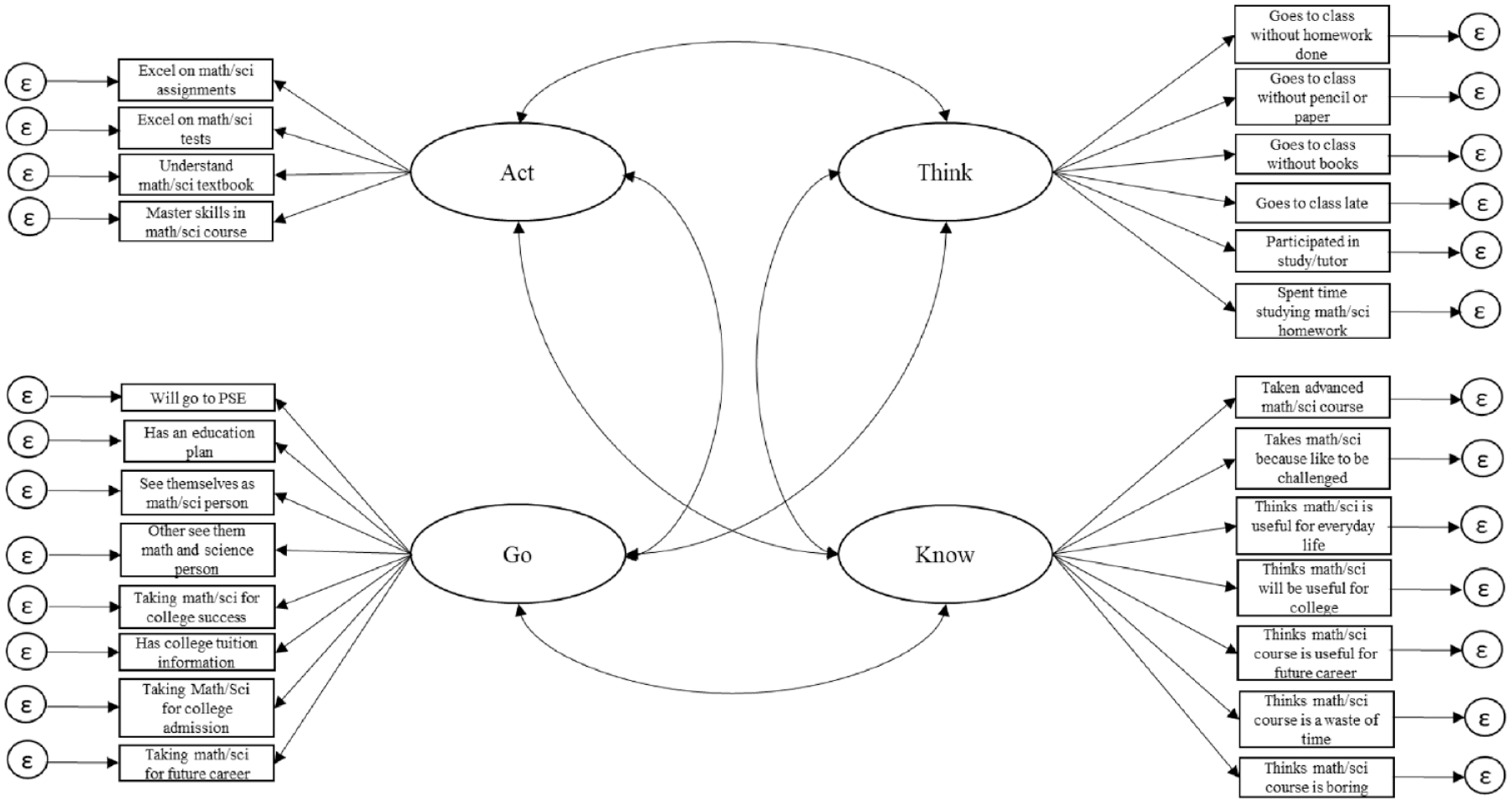
Illustration of hypothesized model of science, technology, engineering, and mathematics college readiness (STEM-CR)
Methods
Data
The High School Longitudinal Study of 2009 (HSLS:09) is an ongoing, nationally representative survey of approximately 23,503 ninth- and 12th-grade students nested within 944 public and private high schools in the fall of 2009 (Alvarado & An, 2015). HSLS:09 administrative, school counselor, and student samples are nationally representative and state representative for a subset of 10 states (Alvarado & An, 2015). We used the restricted data file from the baseline wave that was completed in the fall of 2009, when students were in the first semester of ninth grade, and the first follow-up that was completed fall 2013, when students were in the 12th grade (Alvarado & An, 2015). The HSLS:09 data were useful for this study because they contained variables with a nationally representative high school sample that included items that closely aligned with the dimensions of Conley’s (2012) model of CR: (a) key cognitive strategies, (b) key content knowledge, (c) key learning skills, and (d) key transition skills that aligns to one’s academic readiness for college.
STEM-CR Variables
Our STEM-CR model consists of 25 dichotomous variables from the HSLS:09 in ninth grade (base year) and 12th grade (first follow-up). These items were selected as proxies to represent STEM-CCR in math and science across four latent variables (e.g., Think, Know, Act, Go). “Think” was conceptualized as student’s involvement in academic and classroom actions, presence of positive behavior, and absence of distracting behavior (Conley, 2010; Fredricks et al., 2004). “Know” is defined as the presence of a student’s interests, identity, and positive emotional reactions to the usefulness of math and science in their lives (Conley, 2010; Eccles & Wang, 2012; Wang et al., 2016). “Act” is conceptualized in terms of self-regulated learning, or student confidence to perform in math and science courses and use of deep learning strategies to attain and maintain academic goals (Lent et al., 1991; Zimmerman, 1990). “Go” is operationalized as a student’s dedication to and prioritization of relevant STEM-CR activities they perceive as highly important to pursuing a career in math and science (i.e., academic matriculation-admission procedures, financial aid information, academic and career options; Conley, 2010). Appendix A (in supplemental section available on the journal website) describes the measurement properties of each of these observed variables.
The first two outcome variables are math GPA (Ingels et al., 2013, Appendices G–L) and science GPA (Ingels et al., 2013, Appendices G–L). Both of these outcome variables come from the HSLS 2013 Update and High School Transcripts Data File (Ingels et al., 2013). The goal of this updated data file was to obtain distal outcome information about existing survey respondents at first follow up (12th grade). Outcome information included high school GPA and completion, postsecondary applications and enrollment, financial aid applications and offers, and employment. Science GPA was a continuous composite variable assessing student high school GPA in life and physical courses. Math GPA was operationalized as a continuous composite variable assessing student high school GPA in mathematics courses. The third outcome variable in this study is college enrollment. This variable is derived from the second follow-up survey instrument that indicates whether respondents were enrolled in postsecondary education and whether they were employed full-time, employed part-time, unemployed, or not in the labor force. This variable was recoded into a dummy variable reflecting whether a student enrolled in postsecondary education (0 = not enrolled, 1 = enrolled). These outcome variables were selected to establish predictive validity of our STEM-CR model because empirical literature strongly indicates that past achievement is a strong predictor of future academic achievement in STEM education and college enrollment is a critical antecedent for entering into a STEM college major (Means et al., 2021; Museus et al., 2011).
Study Sample
A total of 16,044 ninth- and 12th-grade students completed survey items at both waves to capture dimensions of our STEM-CR framework. The ninth-grade sample included 9,474 students, and the 12th-grade sample included 9,526 students. Of the total sample, 49.7% were male, and 50.3% were female. In the ninth-grade and 12th-grade samples, 60% of students were White, 11% were Black, 16% were multiethnic, 9% were Asian, and 4% were Latinx. The overall GPA of students in the ninth-grade and 12th-grade samples was 2.85 and 3.02, respectively. Females had a higher overall GPA in ninth grade (3.01) than males (2.71). Likewise, 12th-grade GPA was higher for females (3.21) than males (2.91). The overall GPA in the ninth-grade sample was higher for Asian students (3.31) than White (2.94), multiethnic (2.64), Latinx (2.51), and Black (2.41) students. Likewise, the overall GPA in the 12th-grade sample was higher for Asian (3.23) and White (3.11) students than multiethnic (2.85), Black (2.69), and Latinx (2.67) students.
Data Analysis
Figure 2 illustrates our hypothesized measurement model of STEM-CR. Appendix B (available on the journal website) describes our protocol for developing our hypothesized STEM-CR model. This model was developed to assess the multidimensionality of high school students’ academic experiences and behaviors that facilitated their academic preparation for and interest in math and science. This model was constructed based on an extensive review of existing educational CR measurement models (Lombardi et al., 2013); Conley’s (2010) multidimensional theoretical components of CR of Think, Know, Act, and Go; STEM literature focused on academic preparation in math and science; and findings from field studies with adolescent students.
Confirmatory factor analysis was implemented to assess and establish construct and predictive validity of our STEM-CR model (Cronbach & Meehl, 1955; Kline, 2015). We estimated correlations (i.e., factor loadings) of math and science variables representing STEM-CR in ninth and 12th grade could be modeled, respectively, with a four-factor model guided by dimensions of Conley’s (2010) CR theoretical framework of thinking, knowing, acting, and going. Goodness-of-fit indices were used to assess how well each hypothesized measurement model fit with the data. Appendix C (available on the journal website) describes procedures for assessing model fit of our hypothesized model. Table S1 (available on the journal website) displays modified model fit statistics for ninth- and 12th-grade STEM-CR in math and science for the total sample. Table S2 (available on the journal website) displays the proportion of student responses to items included in our modified four-factor STEM-CR model. Table S3 (available on the journal website) displays factor loadings from our modified four-factor STEM-CR measurement model for math and science. All factor loadings reached statistical significance at the p = .05 level or above.
After establishing a well-fitting STEM-CR model, we conducted a multiple-group test of measurement invariance to determine whether our latent variables of Think, Know, Act, and Go were psychometrically equivalent, or had the same meaning among students, across race (White, Black, Latinx, Asian, and multiracial), gender (male vs. female), and grade level (ninth and 12th; Putnick & Bornstein, 2016). Tables S4 and S5 (Appendix D, available on the journal website) describe our procedures for establishing measurement invariance of our STEM-CR model.
Using STATA statistical software (StataCorp, 2019), we conducted hierarchical ordinary least squares regression analysis to examine the extent to which our outcome variables (e.g., 12th-grade math GPA and 12th-grade science GPA) were predicted by observed variables representing each construct in our STEM-CR model. This analysis was performed in five steps (i.e., five regression models). Demographic variables were examined in our initial regression model (Step 1). Subsequently, variables reflecting each STEM-CR construct (Think, Know, Act, and Go) were separately entered into the second, third, fourth, and fifth models (i.e., the full model). Results on these outcomes are reported in the full model. Additionally, logistic regression analysis, with corresponding odds ratios (ORs), was performed to estimate whether our STEM-CR constructs for math and science increased the likelihood of college enrollment at 12th-grade follow up. A 95% confidence interval was the metric used to assess statistical significance of ORs and standardized beta estimates.
Results
Unequal Measurement Invariance by Grade
Table 1 shows factor loadings for math and science after testing for unequal invariance by grade (i.e., time). Act, as an unobserved variable, yielded the strongest relationship with all its corresponding observed variables. The largest factor loading increases (.05–.08) from ninth grade to 12th grade for these observed variables were in science. Think was strongly related to observed items of going to class without homework, going to class without pencil or paper, and going to class without books. Taking a math course because a respondent liked to be challenged was the strongest indicator of our Know factor from ninth grade to 12th grade. Seeing oneself as a math or science person and whether respondents thought others saw them as a math and science person were the strongest indicators of Go.
Unequal Measurement Invariance Factor Loadings for Math and Science Grouped by Student Grade Level
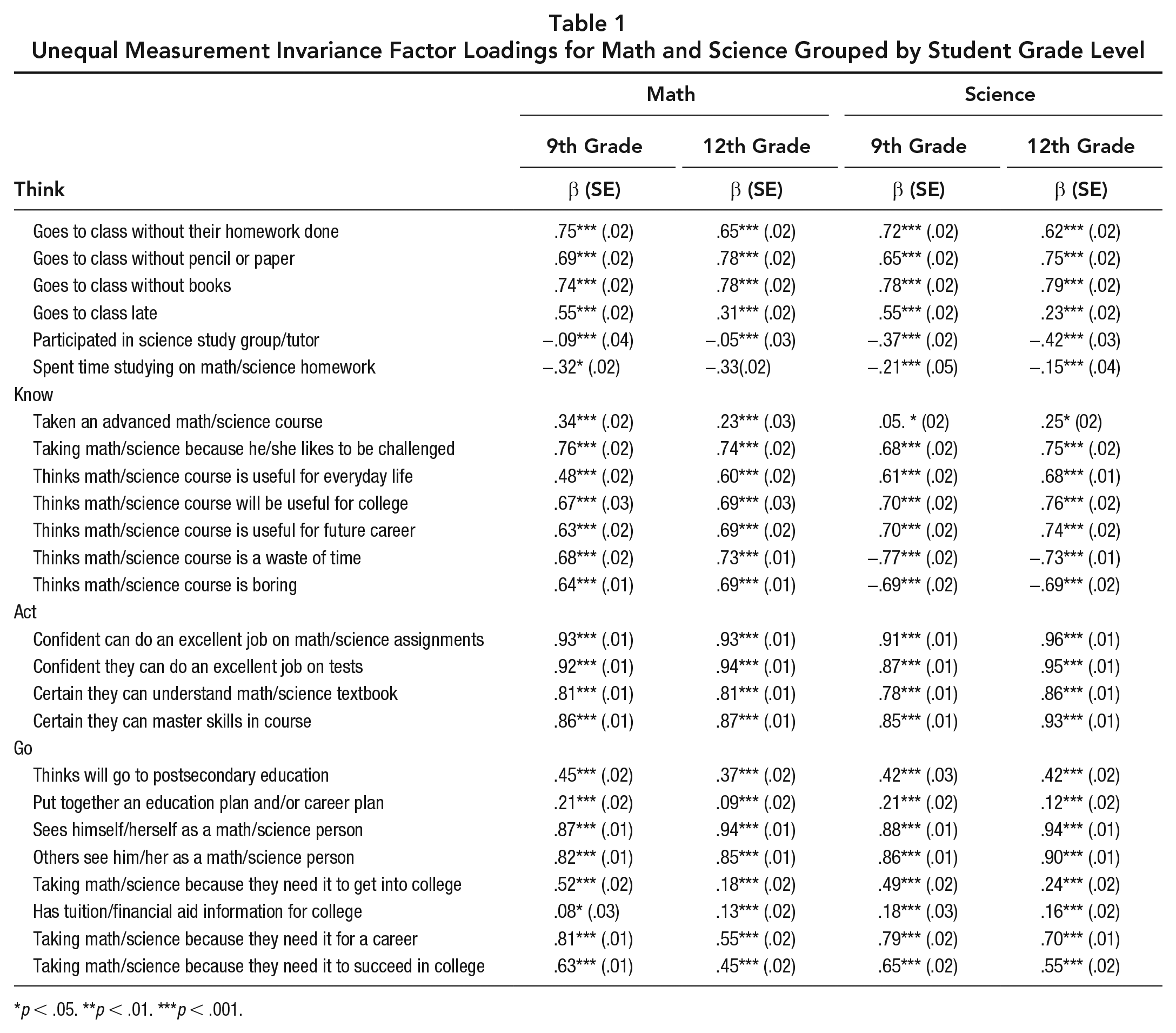
p < .05. **p < .01. ***p < .001.
Unequal Measurement Invariance by Gender
Table 2 displays factor loadings for math and science in ninth and 12th grades after testing for unequal measurement invariance between males and females. Act had the strongest relationship with observed variables in our STEM-CR model. Notable differences in factor loadings were found in our Think construct among females in ninth- and 12th-grade math and science. The relationship between engage and going to class without completing homework in math and science decreased from ninth grade to 12th grade, although the association between going to class without a pencil or paper and engage increased during this same time period. Additionally, correlations between going to class late and our Act construct decreased for males and females in ninth and 12th grades. Associations between our Know construct and students taking a math and science course because they liked to be challenged increased for males and females in ninth and 12th grades. Finally, for our Go construct, factor loadings assessing whether student saw themselves as a math person increased for males and females in ninth and 12th grades. In ninth grade, factor loadings for males and females were .32 and .30, respectively, and increased to .91 and .94, respectively, in 12th grade. Factor loadings for whether males thought others saw themselves as a math person in ninth grade was .36 in ninth grade and .86 in 12th grade. Similar factor loading increases were also found among females in ninth (β = .31) and 12th grades (β = .90). Male and female respondents who indicated taking math because they needed to for a career was highly associated with our Go construct (β = .95) in ninth grade. However, the strength of this relationship decreased for males (β = .53) and females (β = .50) in 12th grade. In science, this relationship was not as strong for males (β = .32) and females (β = .30) in ninth grade and was weaker in 12th grade (males: β = .20; females: β = .50).
Unequal Measurement Invariance Factor Loadings for Math and Science Grouped by Student Gender
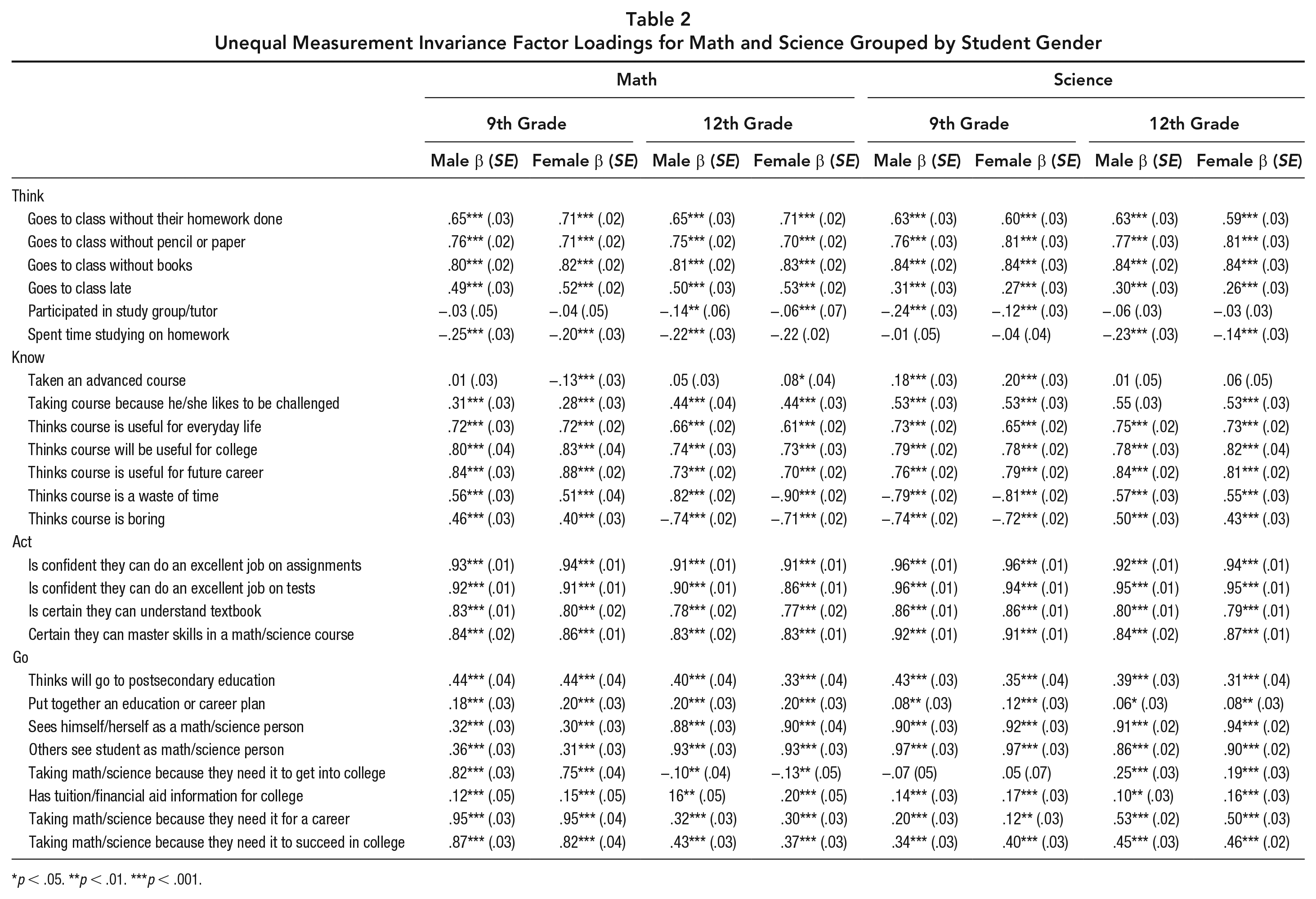
p < .05. **p < .01. ***p < .001.
Unequal Measurement Invariance by Race-Ethnicity
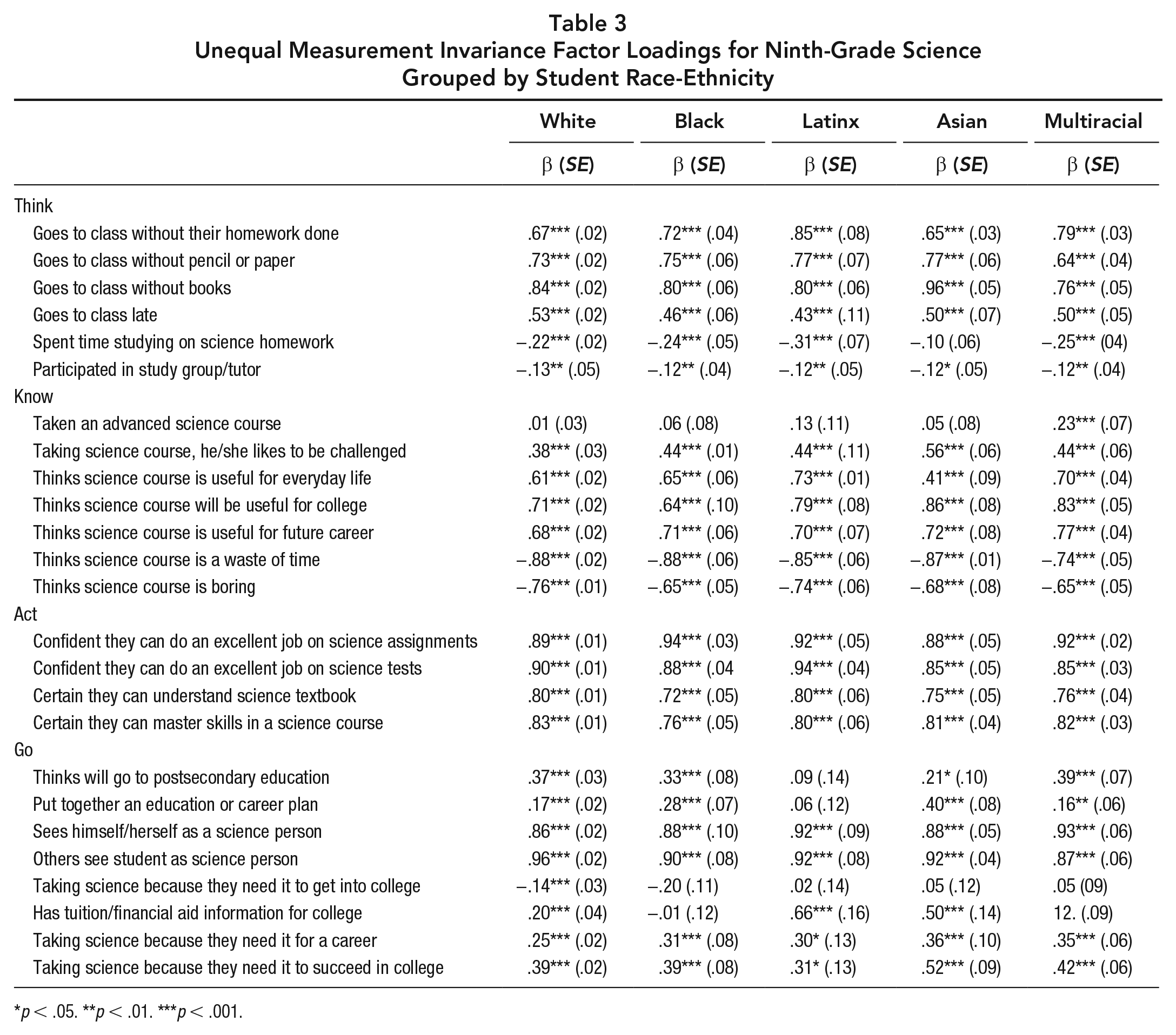
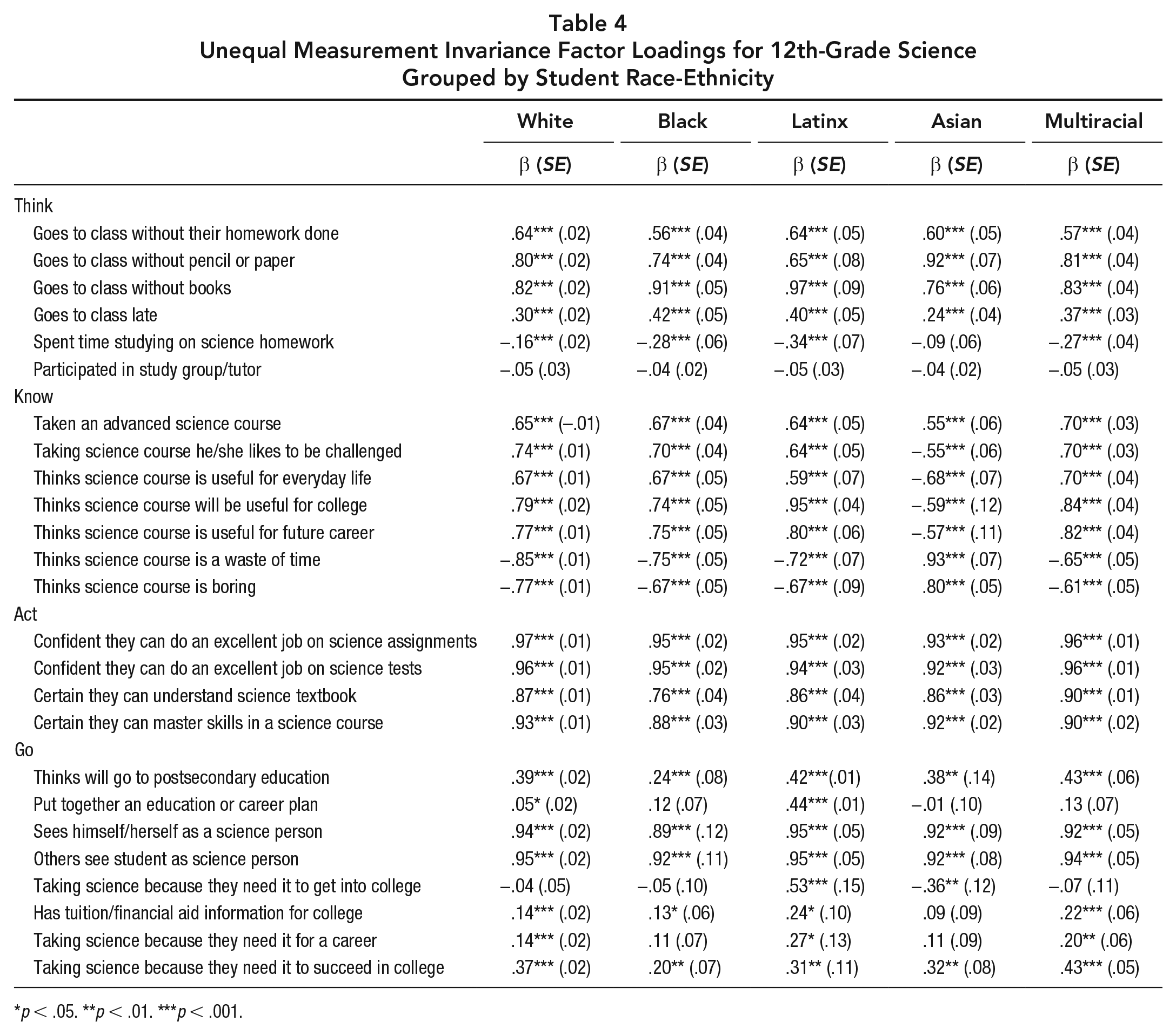
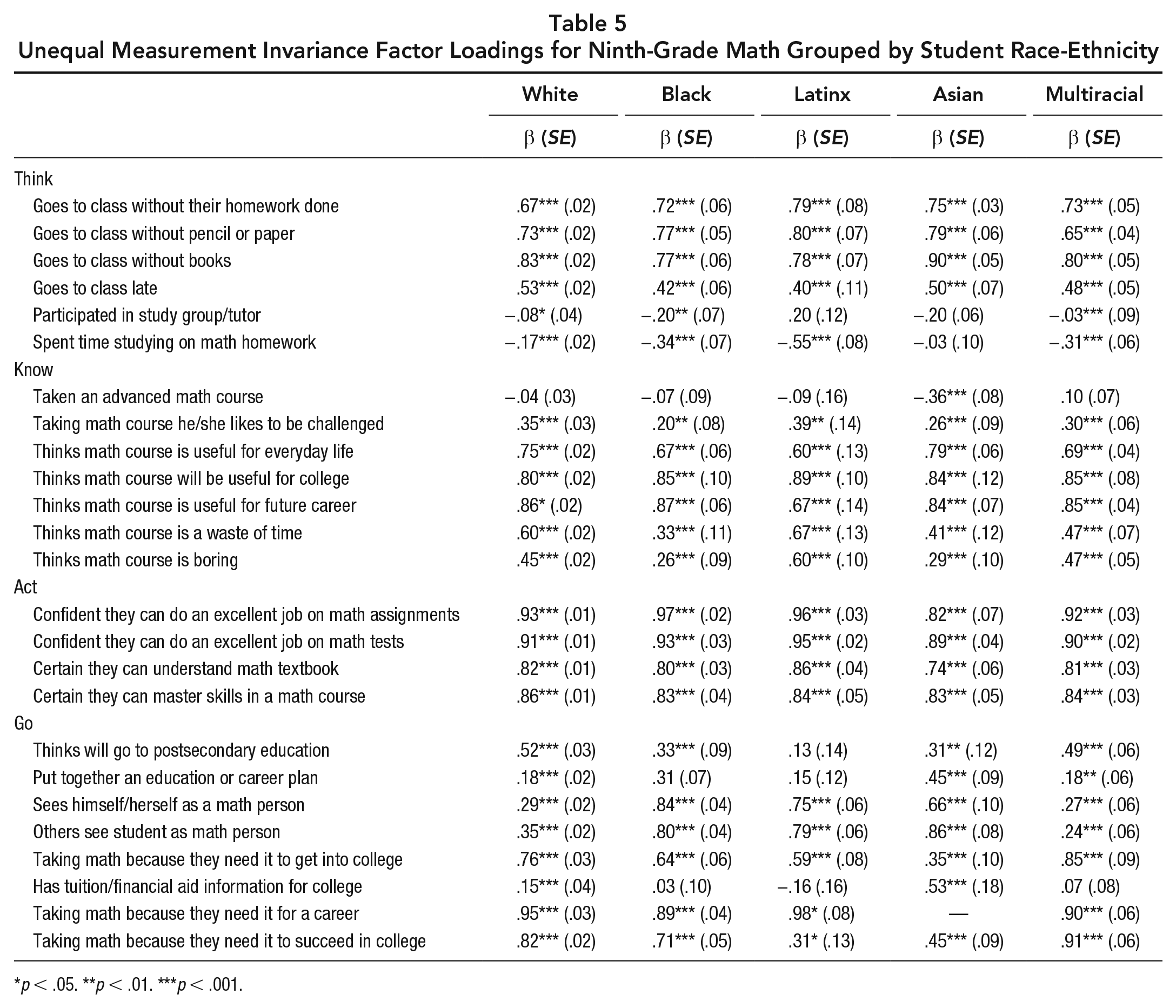
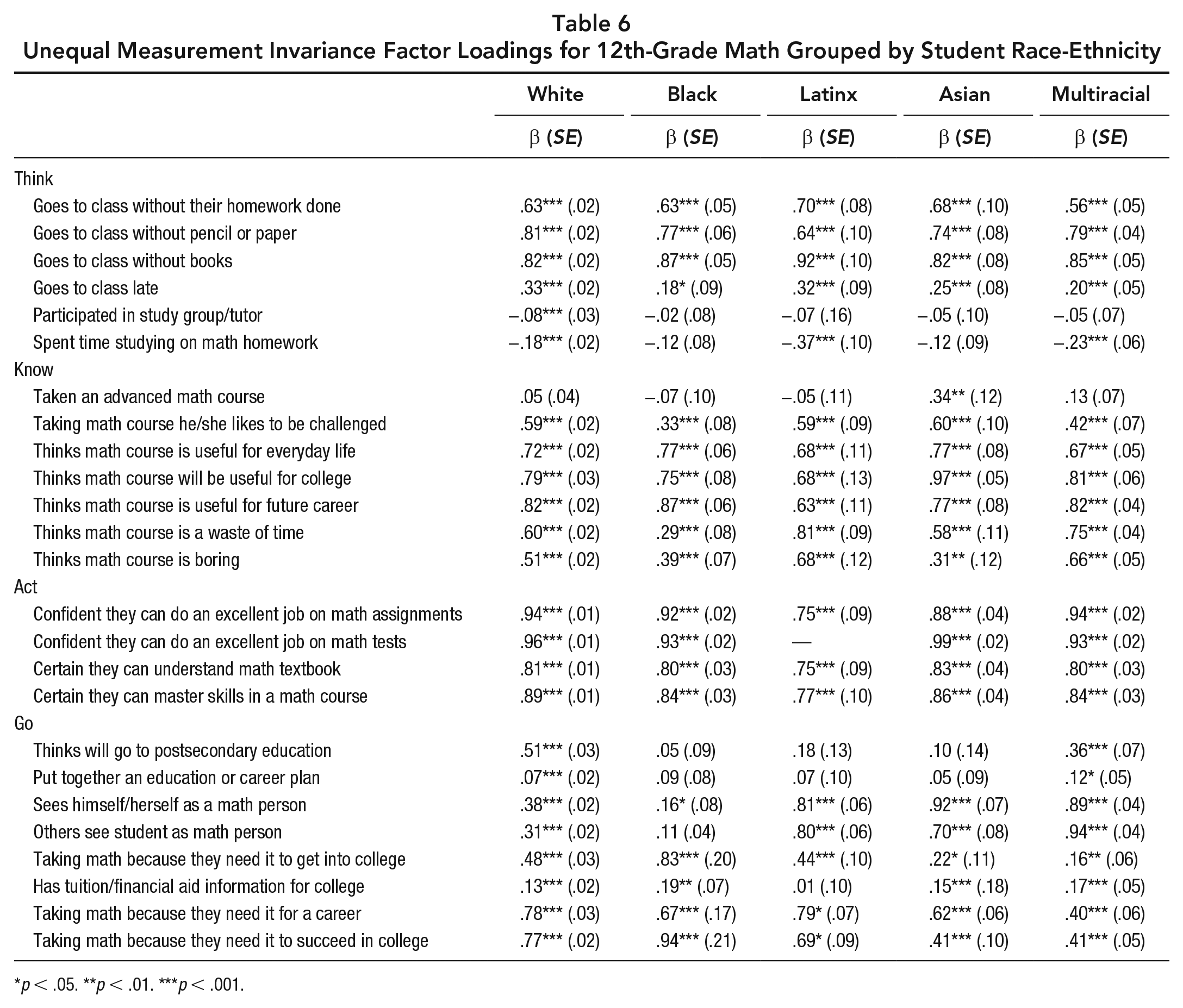
Tables 3 through 6 display factor loadings for math and science in ninth and 12th grades after testing for unequal invariance by race-ethnicity. Going to class without homework done, going to class without with pencil or paper, and going to class without books in math and science were the strongest dimensions of Think for all racial-ethnic students.
Unequal Measurement Invariance Factor Loadings for Ninth-Grade Science Grouped by Student Race-Ethnicity
p < .05. **p < .01. ***p < .001.
Unequal Measurement Invariance Factor Loadings for 12th-Grade Science Grouped by Student Race-Ethnicity
p < .05. **p < .01. ***p < .001.
Unequal Measurement Invariance Factor Loadings for Ninth-Grade Math Grouped by Student Race-Ethnicity
p < .05. **p < .01. ***p < .001.
Unequal Measurement Invariance Factor Loadings for 12th-Grade Math Grouped by Student Race-Ethnicity
p < .05. **p < .01. ***p < .001.
Going to class without math homework had the strongest association with Think among Latinx (ninth grade: β = .79; 12th grade: β = .70) and Asian (ninth grade: β = .75; 12th grade: β = .68) students. In science, this item was the strongest indicator of engage among Latinx (β = .85) and multiracial (β = .79) students in ninth grade and Latinx (β = .64) and White (β = .64) students in 12th grade. Going to class without pencil and paper was also strongest among Latinx (β = .80) and Asian (β = .79) respondents in ninth-grade math. However, in 12th grade, this item was stronger for White (β = .81) and multiracial (β = .79) students. In science, engage had the strongest association with this observed variable among Latinx and Asian (β = .77) students in ninth grade and White (β = .80) and Asian (β = .92) students in 12th grade. Going to class without books as an element of Think was stronger for White (β = .83), Asian (β = .90), and multiracial (β = .80) students in ninth grade. Whereas in 12th grade, this item was stronger for Black (β = .87) and Latinx (β = .92) students. In science, this observed variable was a stronger indicator of engage for White (β = .84) and Asian (β = .96) respondents in ninth grade and Black (β = .91) and Latinx (β = .97) students in 12th grade.
Taking a math course because of its usefulness for everyday life had the strongest association with Know among White (β = .74) and Asian (β = .79) students in ninth grade and had the weakest association for Latinx (β = .68) and multiracial (β = .67) students in 12th grade. In science, this item was strongest among Latinx (β = .73) and multiracial (β = .70) students in ninth grade and White (β = .67), Black (β = .67), and multiracial (β = .70) respondents in 12th grade. Math course utility for college was a very strong dimension of Know for all racial-ethnic students in ninth grade and was strongest among Asian (β = .97) and multiracial (β = .81) students in 12th grade. In science, this item was also strong for Asian (β = .86) and multiracial (β = .83) students in ninth grade and Latinx (β = .95) and multiracial (β = .84) students in 12th grade. Whether respondents thought their math course was a waste of time had the strongest association with our Know factor among Latinx students in ninth (β = .67) and 12th grades (β = .81). In science, this dimension was strong for all racial-ethnic groups in ninth grade and even stronger for Asian respondents in 12th grade (β = .93). Know in math and science produced high factor loadings for all racial-ethnic groups.
Seeing oneself as a math person was the strongest indicator of Go for Black (β = .84), Latinx (β = .75), and Asian (β = .66) respondents in ninth grade. However, in 12th grade, this item was a weaker indictor of Go for Black students (β = .16). Whether respondents thought others saw them as a math person was also strongest among Black (β = .80), Latinx (β = .79), and Asian (β = .86) students in ninth grade. In 12th grade, this observed variable was a weaker indicator of Go for Black students (β = .11) and a stronger indicator among multiracial students (β = .94). In science, this item was a strong indicator of Go for all racial-ethnic groups in ninth and 12th grades. Taking math because respondents needed it for college admission (β = .85) and to succeed in college (β = .91) were strong indicators of Go for multiracial students in ninth grade. In 12th grade, these items were the strongest indicators of Go for Black students (β = .76). Finally, putting together an education or plan and having college tuition information were not strong indicators of Go in ninth grade and 12th grade for all racial-ethnic groups in math and science.
STEM-CR Prediction of Academic Achievement and College Enrollment
Table 7 displays estimates from our hierarchical regression analysis on math and science GPA. STEM-CR constructs of Know (β = .56), Act (β = .53), and Go (β = .57) positively predicted math GPA after including race and gender as covariates in our full model (Step 5). Think negatively predicted math GPA (β = –.42). Know (β = .17), act (β = .28), and Go (β = .79) also positively predicted science GPA. In addition, Think was negatively associated with science GPA (β = –.43) in that, the less engaged a student is in science, the lower a student’s GPA is in science.
Summary Hierarchical Regression Models of Science, Technology, Engineering, and Mathematics College Readiness on Science and Math Grade Point Average
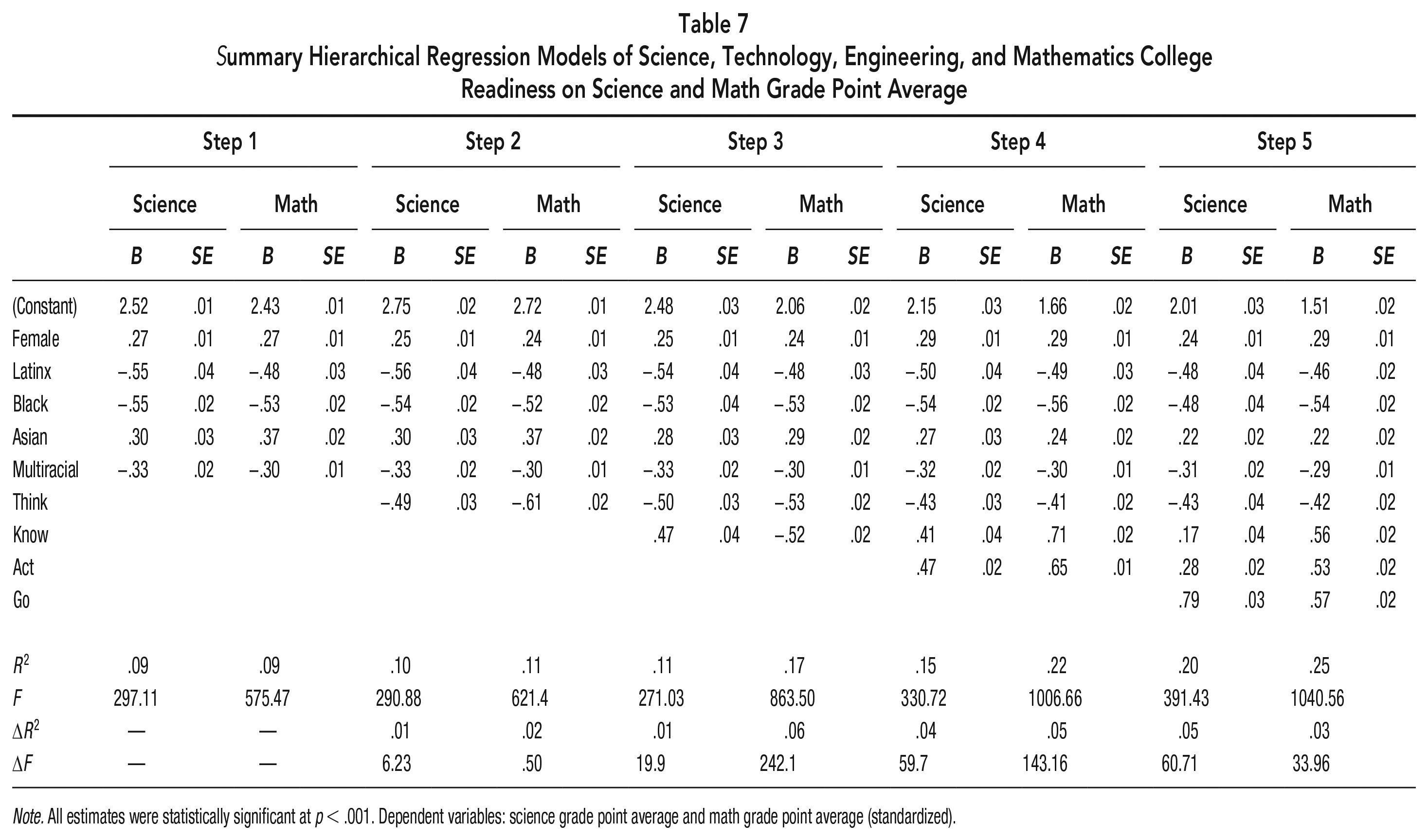
Note. All estimates were statistically significant at p < .001. Dependent variables: science grade point average and math grade point average (standardized).
Table 8 shows logistic regression results with corresponding odds ratios (ORs) for our math STEM-CR model. The likelihood of college enrollment was higher for Latinx (β = .16) and Asian (β = .13) students. These students also had increased odds of enrolling in college (Latinx: OR = 1.17; Asian: OR = 1.04). The likelihood (β = .14) and odds (OR = 1.15) of college enrollment was higher for our Think construct. In science, our logistic regression results indicate that the likelihood of Latinx students enrolling into college in our STEM-CR model was .20 with an OR of 1.21. This finding indicates that Latinx students had a higher likelihood (β = .20) and increased odds (OR = 1.21) of enrolling in college. The likelihood (β = –.10) and odds (OR = .91) of college enrollment were lower for the Act construct.
Summary of Logistic Regression and Odds Ratio Models of Math and Science STEM College Readiness Constructs on College Enrollment
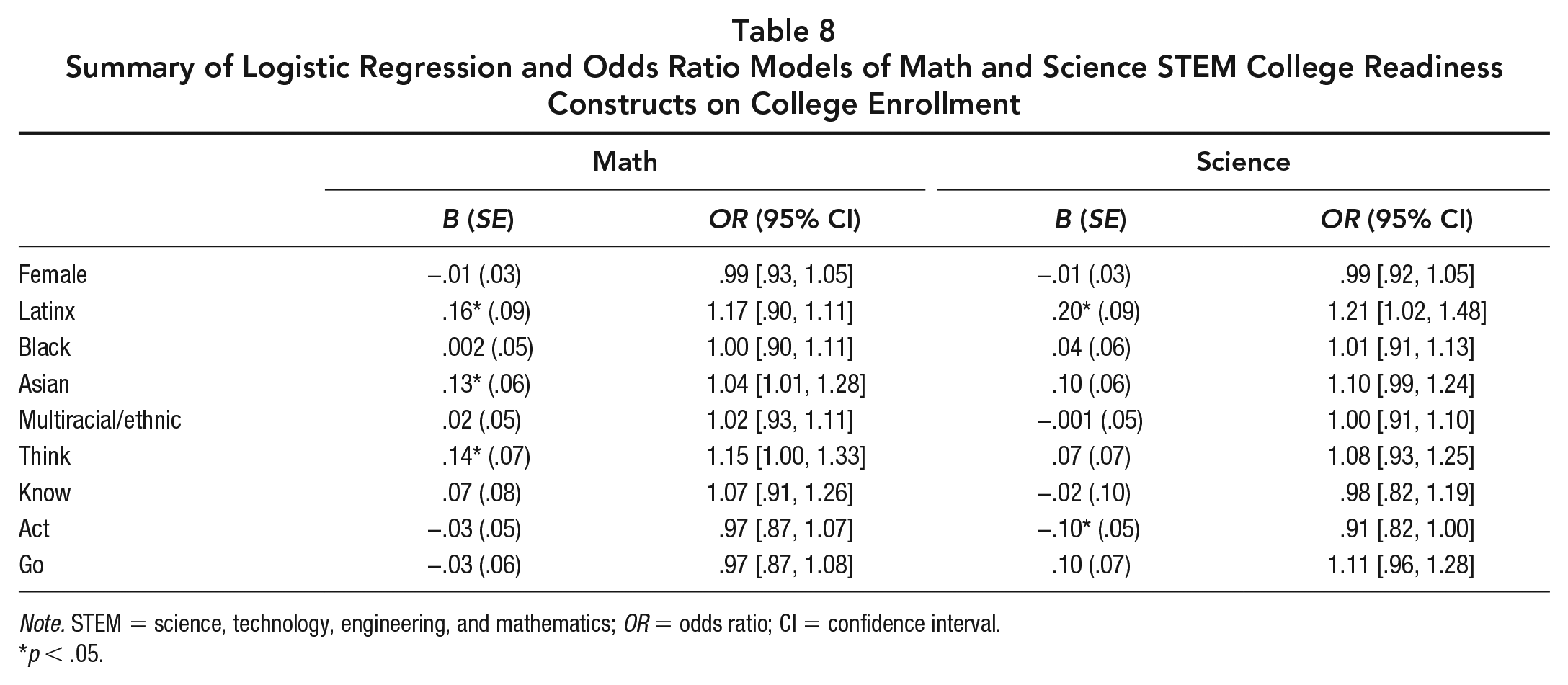
Note. STEM = science, technology, engineering, and mathematics; OR = odds ratio; CI = confidence interval.
p < .05.
Summary and Discussion
This study makes a unique contribution through the development of a multidimensional measure for assessing high school students’ STEM-CR in science and math using Conley’s (2010) model of CR (Wang et al., 2016). This study demonstrates that a longitudinal measurement model of CR highlighting the emotional, behavioral, and cognitive characteristics students need to pursue a postsecondary education pathway in math and science is possible. CR factors in our model include having resources necessary to engage with content in the classroom (Think), understanding the utility of the content they are learning throughout the life span (Know), having academic self-efficacy to complete tasks associated grasping content they are learning (Act), and personally identifying with math and science content (Go).
Measurement invariance allowed us to compare STEM-CR factors across different demographic groups, including race, gender, and time. These factors were strong indicators of STEM-CR, but there was considerable variability between and among groups. In math, students who found it challenging and useful in their daily lives and future career were strong indicators of knowing, with the relationship increasing by grade, race, and gender. Similar patterns were observed for science, with the association between knowing indicators and enjoyment of the challenge increasing for both males and females in ninth and 12th grades. Asian and multiracial students showed the importance of math knowing from ninth grade to 12th grade, and multiracial students taking science courses also emphasized its significance. In 12th grade, all racial-ethnic groups recognized the utility of math and science for everyday life, college, and career. However, Latinx and multiracial students’ connection to math utility for everyday life was weakest in 12th grade compared to White and Asian students, although in science, Latinx, Black, and multiracial students had the strongest connection in 12th grade. Latinx students also showed the highest recognition of math utility for future careers across ninth to 12th grade.
Additionally, there was variation in students going to an education or career in math and science by race. Expectation for attending college in ninth and 12th grades was a strong subdimension of going for White and multiracial study participants. Math identity at baseline was a strong indicator of going for Black and Latinx students but was not a strong dimension in 12th grade. Black, Latinx, and Asian student reports of whether other persons in their life saw them as math person was also a strong dimension of going at baseline. Taking math courses for college admission and college success became stronger indicators of Go among Black students in our study from ninth grade to 12th grade. In contrast, the strength of these going indictors were mixed among Latinx students during this time frame. Taking math courses for college enrollment became a weaker indicator of going among Latinx students, whereas taking math courses because it supports college success became stronger from ninth grade to 12th grade.
Our findings reemphasize the complexity between the dimensionalities of racial-ethnic identity (e.g., exploration, resolution, centrality, positive affect, public regard) and psychosocial processes (e.g., self-esteem, self-concept, depression symptoms, and prosocial interactions) that can support student adjustment to STEM education (Rivas-Drake et al., 2014; Umaña-Taylor et al., 2014; Wang et al., 2013, 2016).
One complexity is that academic motivation to pursue STEM might be promoted or impeded by the educational expectations that school personnel have about BIPOC students pursuing a career in STEM. For instance, when others (i.e., school personnel) see BIPOC students as STEM-going, they might push the group toward courses and put together an education or career plan for a STEM career. BIPOC students who experience this positive evaluation have greater school belonging, higher academic competence, and higher grades, which help in persisting and matriculating toward graduation and odds of enrolling into college (Rivas-Drake et al., 2014). On the other hand, BIPOC students may identify themselves as a future scientist or mathematician in a STEM field but adults and peers in their lives may not have the same educational and career expectations. In turn, this mismatch in education and career expectations may negatively affect the guidance and resources to support their pathway to higher education and a potential career in STEM.
Another complexity to pursuing STEM for BIPOC students is how academic identity takes shape in pursuing a STEM career and protective functions. When BIPOC students understand the importance of their own group membership, self-concept, or self-definition of oneself, research has suggested that these students have higher academic motivation, prosocial tendencies, and peer acceptance and popularity (Rivas-Drake et al., 2014). As BIPOC students develop this STEM identity, they start to recognize those around them who could potentially be role models or mentors of similar racial-ethnic background who are in STEM-related professions and teaching positions. If the environment provides BIPOC students guidance to pursue a STEM career, access to enrichment programs, and coursework that is engaging, they start to believe they are capable of developing an academic identity that is STEM-focused. These students begin to evaluate their environment and take inventory of in-group members who navigated a STEM field and begin to believe that their own group (i.e., being Latinx) is capable of entering a STEM field/career.
Additionally, our results in this study suggest that a relationship exists between racial-ethnic identity, gender identity, and math identity. This result extends previous research describing how these social identities influence science identity among high-achieving BIPOC undergraduate women while pursuing a science major and career (Carlone & Johnson, 2007). Furthermore, our study longitudinally observes potential changes in one’s math identity based on the interactions BIPOC high school students have with other people in their lives who see them as a math person.
Our findings also indicate that math identity is a critical factor in mitigating stereotype threat for females and males in our study by 12th grade (see Table 2). This finding is particularly promising because it suggests that gender-based beliefs about identifying as someone who can be and excel in math is essential for validating one’s competence to perform well in STEM courses and their future orientation toward pursuing a STEM career. This discovery extends prior math and science literature that has found the traditional gender stereotypes students adopt are significantly related to GPA and academic confidence (Casad et al., 2017) and academic self-concept and motivation in grade school and middle school (Passolunghi et al., 2014; Plante et al., 2013; Rivas-Drake et al., 2014). Traditional gender stereotypes in STEM education have been found to be negatively associated with academic outcomes for girls and positively associated with academic outcomes for boys (e.g., GPA, college-bound coursework taken; Plante et al., 2013). Yet our model indicates that as female and male students progress from ninth to 12th grade, so does their key transitional knowledge (Go) related to self and others identifying with math.
Our STEM-CR model also forecasts potential STEM-related outcomes of academic achievement and college enrollment. Think was a slightly lower predictor of math GPA than science GPA after accounting for other STEM-CR dimensions and demographic characteristics in our model. Students who were high on indicators of our Think construct in math were more likely to enroll into college. In contrast, students who were high on indicators of thinking in science had no significant effect on the likelihood of student college enrollment. Indicators reflecting our Know construct also significantly predicted ninth grade and 12th grade GPA in math and science but did not significantly predict college enrollment. Math acting was a stronger predictor of math GPA than science acting on science GPA after accounting for other STEM-CR and demographic characteristics in our model. Findings from our study also indicate that students with low acting characteristics in science were less likely to enroll in college, whereas math acting had no significant effect on the likelihood of student college enrollment. Finally, although both statistically significant, science going was a stronger predictor of science GPA for all study participants than math going. However, going to higher education and career in math or science were not significant predictors of college enrollment.
Our findings reflect the quality of a student’s involvement in academic settings and learning activities, which covary with their ability to connect the content they are learning and feel confident in their tasks and skills and their STEM identity. The Think component of our model complements prior studies that have found engagement to be a strong intervening variable of the learning experiences, interests, and outcome expectations of students (Fredricks et al., 2004) and individual and contextual factors that influence one’s pursuit of an education and career in STEM (Fredricks et al., 2004; Martinez & Guzman, 2013; Wang et al., 2016).
Findings pertaining to our Know construct support literature suggesting that many students begin high school with STEM interests and intentions to pursue a career in math- and science-related fields but that too many abandon this goal after their ninth-grade year, either because they perform poorly, lose interest, feel uncomfortable in the course, or some combination thereof (Wang et al, 2016). Some demographic groups, particularly by race and ethnicity, are at greater risk for underperforming or discontinuing math and science courses, which limit their future in STEM pathways. We discovered that STEM-CR knowing indicators may account for barriers to STEM pathways and engagement among racial-ethnic minority students, and our findings suggest that perceived utility value makes these relationships complex.
Act in our STEM-CR framework was reflective of academic self-efficacy in math and science. Prior research has found this component of acting to be a strong intervening variable of the learning experiences, interests, and outcome expectations of Black, Latinx, and Asian adolescents (Dickenson et al., 2017). This aspect of our model also aligns well with prior research that utilizes social-cognitive career theory to explicate individual and contextual factors that influence one’s pursuit of an education and career in STEM (Lent et al., 1991, 2000). Similar to Grigg et al.’s (2018) study, we found math and science acting at baseline (ninth grade) as a strong predictor of math and science achievement in 12th grade. Our findings (see Table 2) also confirm existing research indicating that female and male students differ in their confidence in acting-related attitudes and behaviors, such as excelling in homework assignments and tests and understanding math and science course material (Cheryan et al., 2015; Patterson & Bigler, 2018; Umaña-Taylor et al., 2014).
Although our findings confirm the importance of student self-efficacy in math and science course content and academic achievement, we found students in our study had lower odds of going to higher education even though they were efficacious in math and science course content. This finding points out the importance of understanding self-efficacy and achievement within a broader CR framework to support confident BIPOC student matriculation into higher education. For instance, school personnel who support BIPOC student CR may need to leverage their expertise and resources to other domains (i.e., thinking, knowing, and going) to further complement programs that cultivate self-efficacy (i.e., acting) in math and science. This approach may be necessary to improve the odds of BIPOC students enrolling into college after high school. Our findings suggest that these types of support may be needed to enhance student academic preparation for class while explaining the value of taking a science course to promote STEM education and career pathways.
Implications for Education Practice
BIPOC students have been underrepresented in STEM subjects, in part because so few are encouraged to pursue STEM careers—those considered the “best and brightest” in the field (National Science Board, 2010), often referred to as an approach to talent sourcing (Byars-Winston, 2014). Therefore, our STEM-CR model proposes a growth-oriented approach to fostering and identifying STEM-CR potential, especially for those BIPOC students with limited opportunities to develop potential in STEM achievement (National Science Board, 2010). This growth-oriented approach to STEM-CR is based on the fundamental belief that equal opportunity for STEM development should be promoted to support the flourishing and success of BIPOC students (Byars-Winston, 2014).
Through focusing on individual components of STEM-CR, professionals can utilize strategies that increase students’ knowledge of STEM careers, increase the perceptibility and enjoyment of STEM fields, and construct students’ confidence and strength in STEM contexts (acting; Byars-Winston, 2014; Diekman et al., 2010). Recognizing STEM careers necessitates educators to consider the possibilities of STEM careers outside of traditional fields. STEM fields that are traditionally outside of the job description include social media developers, novelists, new methods of marketing and public relations, and legislative advocates (West, 2023). Educators may increase students’ knowing knowledge of STEM by encouraging students to document their experiences on social media platforms (e.g., TikTok, Snapchat, Instagram Stories) that relate to STEM and the impact it has on their daily lives (West, 2023).
When it comes to STEM education, educators must recognize the sociocultural factors that can result in students losing interest in STEM education. Melguizo and Wolniak (2012) highlighted how economic and structural factors, such as the high marketability of STEM skills in non-STEM careers, can lead to diversion. Sociocultural reasons for diversion include unappealing work conditions, perceived conflict between work and family life, and a lack of a sense of belonging (American Association of University Women, 2010). It is essential for educators to support students in overcoming these challenges. This is especially important for BIPOC students, who often face hostile environments. Individual and contextual interventions can be implemented to develop STEM efficacy beliefs, cultivate resilience, and challenge internalized stereotypes about underrepresented groups in STEM. We also recommend future research that incorporates critical race and gender perspectives in our STEM-CR model and policies and practices that can deliver culturally responsive STEM programming tailored to the diverse identities and lived experiences of BIPOC students.
Study Contributions, Limitations, and Future Research Directions
In their discussion of improving the measurement of college readiness, Klasik and Strayhorn (2018) stated: Another way to improve the measurement of readiness might be to find a practical way to assess nonacademic college readiness traits like those proposed by Conley (2010), although there may be potential problems with the measurement of noncognitive abilities in high-stakes contexts like college admissions. (p. 341)
This study extends this ongoing discussion by incorporating Conley’s (2012) model of CR to holistically assess academic and noncognitive factors that play a role in the CR development of BIPOC students in STEM-related course content such as science and math. By examining student variation by race and gender in math and science preparation using specific components of Conley’s framework of Think, Know, Act, and Go, we were able to identify a longitudinal model of STEM-CR that combines multiple theoretical perspectives on academic preparation in math and science and its influence on future college enrollment for female and BIPOC students.
Despite the value of this research to the literature on the contribution of CR and STEM to education, it is important to recognize the limitations of this study in the interpretation of its findings. First, this investigation utilized secondary data from the 2009 Longitudinal Study of High School Students to create a STEM-CR model. Integrating multiple forms of data, such as self-reported information and sampling techniques (e.g., oversampling of underrepresented groups and regions of the country), can be beneficial to its ability to explore STEM-CR holistically. Additionally, data that the STEM-CR model is based on are more antiquated. However, significance and strength of the results of this study are sufficient to evaluate our STEM-CR model with additional secondary data. Second, future investigations must determine test-retest reliability of the STEM-CR scales, whether scores fluctuate over time, and whether scales are affected by changes in the learning environment. Additionally, invariance of the STEM-CR was only examined across time, gender, and ethnicity. Future investigations should assess measurement invariance of this model across different age groups, grades (e.g., 10th and 11th grades), and first-generation college students. We acknowledge that our model is predicated on the examination of individual demographic characteristics (e.g., race and gender); however, variation within groups of our constructs should be considered in future research. This would be pertinent when considering high school’s characteristics and their effect on our outcomes. Ultimately, we were able to demonstrate construct and predictive validity; we recommend future studies investigate whether discriminant validity can be derived from our STEM-CR model.
Conclusion
Our research confirms the interrelatedness of Think, Know, Act, and Go in our STEM-CR framework and highlights its contextual importance. Understanding the contribution of each component to academic success and career interests in math or science is a significant question. Our multidimensional model allows for investigating these relationships across race and gender while also aiding in the development of tailored STEM-CR interventions for students. Our research contributes empirical evidence of the promising psychometric properties of STEM-CR in advancing and improving student opportunities to obtain a STEM education and career.
Supplemental Material
sj-pdf-1-edr-10.3102_0013189X231193309 – Supplemental material for A National Study Exploring Factors Promoting Adolescent College Readiness in Math and Science (STEM-CR)
Supplemental material, sj-pdf-1-edr-10.3102_0013189X231193309 for A National Study Exploring Factors Promoting Adolescent College Readiness in Math and Science (STEM-CR) by Robert R. Martinez and James M. Ellis in Educational Researcher
Footnotes

Authors
References
Supplementary Material
Please find the following supplemental material available below.
For Open Access articles published under a Creative Commons License, all supplemental material carries the same license as the article it is associated with.
For non-Open Access articles published, all supplemental material carries a non-exclusive license, and permission requests for re-use of supplemental material or any part of supplemental material shall be sent directly to the copyright owner as specified in the copyright notice associated with the article.
