




Abstract
Research on the dearth of teachers of color has focused on disparities in college enrollment, completion, and academic major. The present study examines whether disparities may begin earlier. Analyses of nationally representative longitudinal data show that students of color are 2 to 4 percentage points less likely to hold teaching career expectations than White students in Grade 9—a pattern that remains stable during high school and 7 years later. Controlling for academic and socioeconomic backgrounds reduces the gap between Latinx and White students, but the gap persists for students of other racial and ethnic minority groups. Additional findings show early teaching career expectations relate to racial and ethnic disparities among college students who major in education. The study has implications for improving teacher diversity and rethinking pipeline challenges.
Advocates for greater racial and ethnic diversity within the U.S. teacher workforce cite a demographic and democratic imperative for change (Achinstein et al., 2010). Not only are students of color the majority of students in public schools (Snyder et al., 2019), but research shows they may experience higher academic outcomes when assigned to teachers of the same race or ethnicity (McKinney de Royston et al., 2021; Redding, 2019). Additionally, all students benefit from having teachers of color (TOCs) because TOCs may challenge stereotypes and perceptions of racial and ethnic groups, such as stereotypes of who belongs in the profession (G. M. Kim & Cooc, 2020). Yet TOCs are only 20% of all teachers, whereas students of color are 51% of the school population (Snyder et al., 2019). Specifically, about 62% of teachers are White females. 1 This pattern also highlights the intersection of race and gender in teaching—a critical analytic detail left out of many studies about teacher diversity (Leonardo & Boas, 2013).
Research on the lack of TOCs within the teacher workforce points to the lower number of students of color who complete college (Ahmad & Boser, 2014; Carver-Thomas, 2018; Lindsay et al., 2017); therefore, improving college graduation among students of color is a critical component of any strategy to diversify the profession. However, inequality in the teacher workforce may begin earlier, particularly during adolescence when career decisions become more formalized (Gottfredson, 1981, 1996; Tracey et al., 2005). Research in the 1980s first explored the teaching aspirations of high school students to understand teacher shortages (e.g., Roberson et al., 1983). Although less examined in recent decades, adolescence as a formative period can provide insights into when disparities emerge in the teacher recruitment process and inform strategies that support youth of color in becoming teachers, especially because early interest in teaching is malleable (Bianco et al., 2011).
In this study, we contribute to the literature on TOCs and teacher diversity by examining racial and ethnic disparities in the teaching career expectations of adolescents. Using the most recent nationally representative data from the High School Longitudinal Study of 2009 (HSLS:09), we first assessed teaching career expectations by race and ethnicity from Grade 9 to 3 years post–high school. We then examined whether any early gaps in Grade 9 might be related to inequalities in academic achievement, household socioeconomic backgrounds, and schooling experiences. Lastly, we explored whether early racial and ethnic disparities in teaching career expectations may relate to later gaps in a different indicator of who becomes a teacher: majoring in education among college students (Redding & Baker, 2019). Although the overall overrepresentation of women in teaching is well known, we further examined the extent to which gender gaps in teaching career expectations differ by race and ethnicity.
To be clear, the current study focuses on describing early racial and ethnic gaps in teaching career expectations. Data limitations in HSLS:09 preclude addressing whether such gaps relate to becoming a teacher or shaping teacher workforce diversity. However, analyses of the older Education Longitudinal Study of 2002—the precursor to HSLS:09—show that students who hold teaching career expectations in high school have 6.5 to 9.3 times the odds of becoming a teacher 8 years later than peers who do not (see Supplementary Table S1 in the online version of the journal). These analyses also reveal a strong link between early career expectations, majoring in education in college, and becoming a teacher. Thus, evidence of low teaching career expectations among youth of color in the more recent HSLS:09 would not portend well for diversifying the teacher workforce.
We contextualize our findings in multiple ways, including a comparison of racial and ethnic patterns in teaching career expectations with career expectations in other fields, and a comparison with representation within the actual teacher workforce. At the same time, focusing on early career expectations is crucial for two main reasons. First, theoretical and empirical research indicates that early career interests are related to future decisions (e.g., Schoon & Parsons, 2002). Second, a growing body of research shows whether youth of color consider the teaching profession as a career option may depend on their school experiences (Gist et al., 2018; Goings & Bianco, 2016; Graham & Erwin, 2010), which has implications not only for teacher recruitment, but also for improving school climates.
Conceptual Framework
We used social cognitive career theory (SCCT) to conceptualize teaching career expectations of high school students (Brown & Lent, 1996; Lent et al., 1994). SCCT postulates that individual characteristics and contextual factors influence one’s sense of competency (self-efficacy) and expectation of positive outcomes (outcome expectancy) related to an occupation. Both can influence interests in specific occupations and, ultimately, intention and choice. More broadly, individual characteristics (e.g., race, gender, and socioeconomic status) and contextual factors (e.g., school experiences) affect one’s learning experiences that then shape access to, or pursuit of, certain careers. For example, unequal educational opportunities among students of color affect their academic preparation to acquire credentials for specific occupational fields (e.g., Flores & Hondagneu-Sotelo, 2014). An individual’s psychological experience of race or culture may also influence career development or choice (Helms & Piper, 1994), including experiences with racism and sexism (Rollins & Valdez, 2006). Emphasizing environmental and cultural influences, SCCT has been applied in studies of the career development processes of minoritized groups (e.g., Hui & Lent, 2018; Kantamneni et al., 2018; Mau & Li, 2018).
Access to certain career trajectories may also begin with perceptions of whether an occupation is feasible or worthwhile. For example, the lack of racially diverse representation and role models in a particular field may give adolescents of color the impression that they do not belong in it (G. M. Kim, 2020). Some occupational fields may be avoided if they are perceived as more biased against or less receptive toward people of color (Louie, 2004). Racialized notions of who is considered credible in a field may affect outcome expectancy—beliefs that engaging in an activity will result in a positive outcome. Thus, individuals with high interest and self-efficacy in a particular field may still not pursue a specific career path if there are barriers to accessing that career or thriving within it. According to SCCT, lack of diverse representation within a field is a contextual factor (Lindley, 2005) and suggests that students of color may have different views of the same career than their White peers.
Adolescents may adjust their career expectations over time when introduced to specific fields, but teaching is unique as all students are exposed to the profession during their formative years. Youth are likely to acquire information and develop views about teaching as a career more quickly and widely than other occupations, which has implications for recruitment strategies. Following SCCT, teaching career expectations among adolescents of color may be limited or constrained by their school context in the form of negative academic experiences and a lack of TOCs. Different school experiences may also shape students’ sense of self-efficacy as a potential teacher. Yet negative schooling experiences may also inspire individuals from racially minoritized backgrounds to pursue teaching and address inequities that they encountered as students (Choi, 2018; Philip, 2014) and support their communities (Goings & Bianco, 2016). Both possibilities suggest the potential persistence of racial and ethnic disparities in teaching career expectations after accounting for the school experiences of students of color.
Although self-efficacy within SCCT tends to focus on skills or perceptions of one’s abilities in the career of interest (e.g., Y. H. Kim & Choi, 2019), researchers have used test scores and other academic measures as predictors of career expectations (e.g., Riegle-Crumb et al., 2011). Bandura (1997) postulated that one source of self-efficacy is personal achievement. Academic achievement measures have been used in SCCT research to understand youth interest in pursuing science, technology, engineering, and math (STEM) fields (e.g., Fouad & Santana, 2017), but less so for teaching. For teaching career expectations, academic achievement measures (i.e., grade point average [GPA], test scores) can be a proxy for students’ self-efficacy and sense of competency within school; therefore, accounting for racial and ethnic differences in academic achievement should attenuate differences in teaching career expectations.
In the present study, we focus on SCCT’s constructs of self-efficacy and outcome expectancy to examine teaching career expectations among adolescents. We examine race and ethnicity as the key individual factor, but we consider gender as well. Our aim is to understand whether racial and ethnic disparities in teaching career expectations, overall, and by gender, emerge as early as Grade 9 and change thereafter. We further analyze how early disparities in teaching career expectations operate by controlling for SCCT contextual factors related to home backgrounds and school experiences, as well as academic self-efficacy. For example, if racial and ethnic gaps are attenuated when accounting for school belonging more than family socioeconomic status, this attenuation would suggest the greater influence of school-related experiences on teacher career expectation disparities. Lastly, we extend SCCT by exploring the link between adolescents’ early career expectations and career-related decisions in college.
Racial and Ethnic Trends in Early Teaching and Career Interests
By the time students finish college, racial and ethnic disparities in who pursues teaching are clear. White college graduates are nearly twice as likely to major in education than college graduates of color—a key factor for explaining racial and ethnic gaps in who becomes a teacher (Redding & Baker, 2019). Overall, 9.1% of White college students obtain a teaching degree or credential nationally, while a smaller percentage of Latinx (7.1%), Black (6.4%), and Asian (2.3%) students do so (Lindsay et al., 2017). These estimates among college graduates suggest that racial differences in educational opportunity and attainment are not the sole barriers in diversifying the profession. Indeed, students of color are less likely to major in education when accounting for standardized test scores and undergraduate institutions (Redding & Baker, 2019).
The racial and ethnic disparities in education majors point to whether interest in teaching may diverge among students before college. One of the first national studies of high school seniors found Black students had lower teaching career expectations than White peers (Roberson et al., 1983). Early regional surveys revealed Latinx high school students indicated a strong interest in teaching (Mack & Jackson, 1993), while rates were lower for Asian American and Pacific Islander (AAPI) high school students (Summerhill et al., 1998). Mau and Mau (2006) found AAPI high school students nationally in the early 1990s were less likely to maintain teaching career expectations than White students, but persistence of interest was similar among Black, Latinx, and White students; the study did not examine overall rates of students with teaching career expectations. Han et al. (2018) found teaching career expectations among 15-year-olds were significantly lower relative to other occupations in many countries, but the study did not disaggregate trends in teaching career expectations by students’ demographic characteristics.
The terms “expectations” and “aspirations” are used interchangeably in the career development literature (Mau & Li, 2018) and sometimes within studies (Saw et al., 2018). However, there is a distinction between what individuals aspire to and what they expect. Some researchers distinguish between occupational aspirations as the realm of possible options and expectations as the most likely outcome that an individual pursues (e.g., Gottfredson, 1981). Aspirations may develop as abstract representations of possible future outcomes that become refined into expectations as adolescents gain more experience and self-knowledge (Nurmi, 2004). When citing specific studies, we kept the terms used by their authors. However, in our study, we use expectations in relation to teaching because the term more likely reflects whether young people become teachers. Our study’s main outcome variable (see Methods) also specifically asks the career occupation that a high school student expects to have later in life.
Explaining Racial and Ethnic Disparities in Teaching Career Expectations
To understand why disparities in teaching career expectations exist, it can be helpful to review first why individuals pursue teaching. Prior research reveals three major motivations: intrinsic, extrinsic, and altruistic (e.g., Brookhart & Freeman, 1992; Heinz, 2015). Intrinsic motivations cover factors such as enjoyment of teaching and specific subjects, while extrinsic may relate to job security and status. Altruistic motivations may include interest in contributing to society and helping children. Internationally, a desire to work with children, intellectual fulfillment, and interest in making a social contribution are frequently cited reasons for entering teaching (OECD, 2005). The extent to which these motivations differ among students may contribute to disparities in teaching career expectations. Developers of the Factors Influencing Teaching (FIT) Choice scale note that “individuals should be likely to pursue choices … for which they attach value, and which do not demand too great a cost” (Watt et al., 2012, p. 793). Research shows that entry into teaching may be transmitted intergenerationally from teachers to their children (Jacinto & Gershenson, 2021). Although students of color may attach different values to the teaching profession, including from their parents, positive or negative perceptions of teaching are learned by students of all racial and ethnic identities, such as high-achieving students who learn that teaching is not a desirable profession (Mancenido, 2021).
Early surveys of teaching career expectations show racial and ethnic disparities among high school students (Mack & Jackson, 1993; Roberson et al., 1983; Summerhill et al., 1998). Many qualitative studies since then have interviewed students of color and suggest that perceptions of the profession may shape outcome expectancy and perceived self-efficacy. Graham and Erwin’s (2011) study of why high-achieving Black male high school students do not pursue teaching found that some viewed their schools as oppressive institutions where teachers devalued their experiences. A similar study of Black male high school students found that experiences of low expectations from teachers, stereotypes, and microaggressions deterred them from teaching (Goings & Bianco, 2016). Black female high school students have reported similar experiences of excessive punishment, isolation, and limited access to TOCs (Gist et al., 2018). These studies help explain why some adolescents of color are hesitant to pursue teaching—a profession within an institution where they were stigmatized, racialized, and devalued. However, more information about teaching as a career (Bianco et al., 2011; Smith et al., 2004) and early teaching experiences (Bristol, 2014) can foster interest in the profession among Black students.
Low salaries and prestige of teaching deter some from the occupation (Han et al., 2018). AAPIs, for example, report family pressure to strive for positions offering greater financial rewards, social status, and stability (Choi, 2018; Gordon, 2000). Some AAPI parents also fear that their child will not be respected as a teacher due to issues of race and racism (Nguyen, 2008), especially given a lack of AAPI teacher examples (G. M. Kim & Cooc, 2020). Because people who are immigrants with self-reported low English proficiency are more likely to select careers perceived as requiring less English use (Rangel & Shi, 2019), some AAPIs—nearly a quarter of whom are born outside the United States (Lopez et al. 2017)—may choose careers that appear to be less English-dependent. Thus, despite high average academic achievement and positive perceptions of teachers (Gordon, 2000), few AAPIs become teachers themselves or find other fields more attractive (Cooc & Kim, 2022).
The literature suggests Latinx students may view teaching as a favorable career. Flores and Hondagneu-Sotelo (2014) found some Latina students view teaching, in part, as a way to support their families, in contrast to other professions that require longer training and more financial resources. According to this research, gender and social class shape perceptions of teaching. Some enter teaching to pursue social change in their communities and address inequities in schools similar to the ones they attended (Irizarry & Donaldson, 2012). Structural factors may also channel some into teaching, including perceptions of some other fields as elitist and racist, limited social or financial capital to enter other fields, and the growing demand for bilingual teachers in some states (e.g., Flores, 2017). Studies show high interest in teaching among Latino students (Bergey et al., 2019), but also a view of poor school conditions, high job demands, and low salary as barriers to a teaching career.
Overall, earlier research suggests that students of color are likely to have different teaching career expectations than their White peers, and patterns differ among students of color. AAPI and Black students are less likely to report interest in teaching compared to Latinx students. Gender also appears to play a role for different racial and ethnic groups. Given that student demographics and teacher shortages have changed since these early survey studies in the 1980s and 1990s, a more recent assessment of teaching career expectations is needed to understand current views of teaching among young people and whether racial and ethnic disparities have improved. In addition, a long-standing U.S. social context supporting the role of White women as schoolteachers is part of a larger racial project (Leonardo & Boas, 2013). We argue that this history of expectancy that supports White students into the teaching profession and, specifically, White females, contributes to the ongoing equity issue of addressing racial and ethnic disparities in the teacher workforce. Although a growing body of qualitative research shows why young students of color may or may not intend to pursue teaching, no recent quantitative study has empirically examined these contextual factors together or at a national level.
Present Study
Strategies to address the dearth of TOCs often focus less on inequalities that may begin much earlier in the pipeline (Ahmad & Boser, 2014; Carver-Thomas, 2018; Lindsay et al., 2017). The present study addresses limitations of previous research on teaching career expectations and contributes to the teacher diversity literature in three main ways. First, we assessed teaching career expectations among high school students using nationally representative and longitudinal data from HSLS:09, which allowed us to examine more recent trends of the last decade and whether teaching career expectations change from Grade 9 through early adulthood for each racial and ethnic group. HSLS:09 also sampled American Indian and multiracial students, allowing us to gain insights into the teaching expectations of two populations that are usually left out of the teacher diversity literature.
Another contribution of our study is that it examines contextual factors that may contribute to differences in teaching career expectations for students of color. Although we anticipated racial and ethnic gaps as early as Grade 9, we provide new information on whether a range of contextual factors may attenuate the disparities. These findings can inform early outreach efforts to groups underrepresented in teaching (i.e., Bianco et al., 2011; Irizarry & Donaldson, 2012). Evidence of racial and ethnic gaps after accounting for contextual factors provides a more complex picture of the degree to which adolescents of color consider teaching to be a viable career. Related findings would highlight high school programs that cultivate interest in teaching and prepare students for college (Bianco et al., 2011) or grow your own (GYO) programs anchored in strength-based frameworks that support teacher pipelines (Gist et al., 2019).
A third contribution is our examination of the link between early teaching career expectations and later decisions related to teaching. Although prior research provides insight into whether young people are considering teaching, data limitations preclude knowing whether they act on their early career interests. We expand on this area by analyzing whether teaching career expectations in Grade 9 are related to majoring in education during college. Although an education major is not a prerequisite for teaching, and not all states and universities offer the major, students who major in education are much more likely to become teachers (Redding & Baker, 2019). Given that there are racial and ethnic disparities in who majors in education (Lindsay et al., 2017), we also examine whether these patterns relate to earlier differences in teaching career expectations.
In summary, our study asks the following questions: (a) To what extent are students of color less likely to hold teaching career expectations than their White peers from Grade 9 to 3 years post–high school? (b) To what extent do contextual factors (i.e., academic preparation, family context, and school experiences) explain any racial and ethnic disparities in early teaching career expectations among students in Grade 9? (c) To what extent do early teaching career expectations relate to racial and ethnic disparities in education majors among college students? In all main analyses, we further disaggregate racial and ethnic trends by gender.
Method
Data Source and Participants
We used data on student career expectations from HSLS:09. HSLS:09 employed a stratified, two-stage random sample design with schools selected in the first stage and students randomly selected from the sampled schools in the second stage (Radford et al., 2018). As a national study of over 23,000 students from 940 public and private schools, HSLS:09 followed the same cohort by surveying them during Grade 9, Grade 11, and 3 years after high school. The main survey focused on students’ transition from high school to postsecondary education and the workforce, with the purpose of identifying when and why young people pursue different academic courses, majors, and careers. In addition to measures of academic achievement and family demographics, students completed surveys on academic interests, school experiences, and home activities. When combined with surveys of parent backgrounds, school involvement, and educational expectations, HSLS:09 is ideal for understanding the career interests of young people. For Research Questions 1 and 2, we used the full sample to examine students’ early teaching career expectations. For Research Question 3, we restricted the sample to students who attended college to examine choice of major. When estimated with the sample weights, the results generalize to the national student population at the time of the data collection. Table 1 provides a weighted summary of the participants.
Conditional Means of Variables by Student Race and Ethnicity
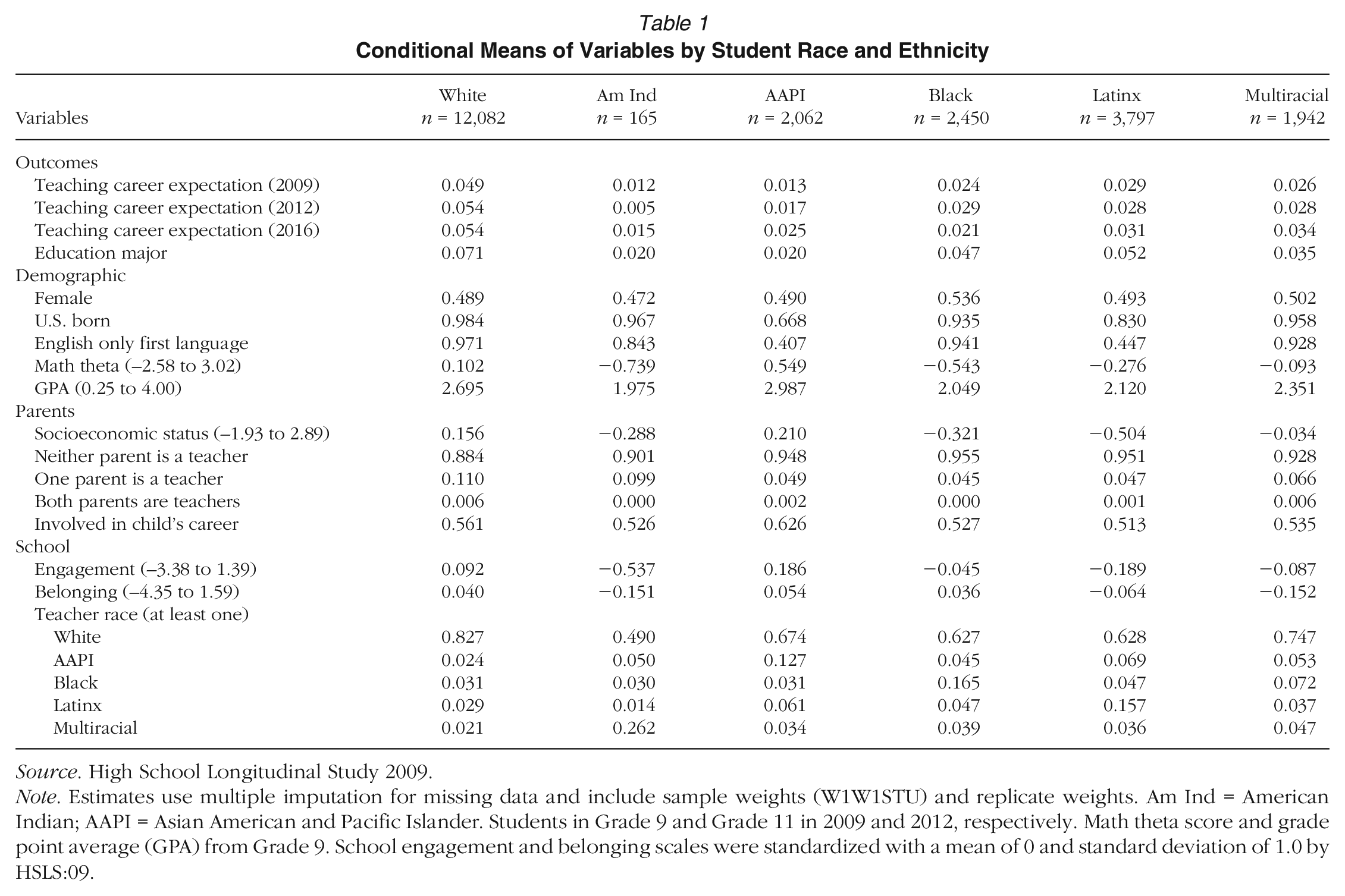
Source. High School Longitudinal Study 2009.
Note. Estimates use multiple imputation for missing data and include sample weights (W1W1STU) and replicate weights. Am Ind = American Indian; AAPI = Asian American and Pacific Islander. Students in Grade 9 and Grade 11 in 2009 and 2012, respectively. Math theta score and grade point average (GPA) from Grade 9. School engagement and belonging scales were standardized with a mean of 0 and standard deviation of 1.0 by HSLS:09.
The first wave of HSLS:09 is now more than 10 years old, yet the dataset has several advantages for addressing our research questions. Primarily, HSLS:09 is the most recent national longitudinal survey of secondary students to include items about occupational expectations. These features allow us to make up-to-date national inferences about how young people across different racial and ethnic backgrounds view the teaching profession. One concern with using any secondary data is whether the results apply to the current moment. In the present study, the question is whether the teaching career expectations of young people in HSLS:09 would be similar or different to the expectations of young people in 2023. Teaching as a career has unfortunately not become more desirable in the last decade, as evidenced by reports of teacher shortages (in contrast to fields such as STEM); therefore, it is unlikely that racial and ethnic gaps in teaching career expectations observed in our analyses of HSLS:09 would be substantially different from those of young people now. As the COVID-19 pandemic has exacerbated inequalities in education, including teacher recruitment and attrition (Carver-Thomas et al., 2021), our findings on racial and ethnic disparities in teaching career expectations may be underestimations.
Measures
Dependent Variables
Within the SCCT framework, we focus on two career expectation measures. Our first outcome is from an open-ended survey question at each time point asking students their expected career occupation at age 30. HSLS:09 grouped student responses into nearly 500 occupations based on the O*NET taxonomy. 2 We created a binary outcome for whether a respondent indicated expecting a career in teaching at any K–12 level (1 = yes, 0 = no). 3 Our second outcome is a binary measure for whether a college student majored in education. About 11,000 participants were enrolled or had attended college at Wave 3. We consider education major as a teaching career expectation measure in that these students are more likely to expect to become teachers than their peers.
Question Predictors
Our key demographic predictors include a vector of indicator variables for the following HSLS:09 racial and ethnic categories: American Indian, 4 AAPI (includes HSLS:09 codes Asian and Native Hawaiian/Pacific Islander), Black, Latinx (HSLS:09 uses Hispanic), multiracial, and White. Few studies of TOCs have included American Indian and multiracial populations. The reference group for race and ethnicity is White due to their preponderance in the teacher population. 5 We also include gender (1 = female, 0 = male) to examine potential gaps by race and ethnicity.
Individual and Family Characteristics
As SCCT and empirical literature suggest that adolescents of color are likely to have different academic preparation and socioeconomic backgrounds that shape educational opportunities and their teaching career expectations, our models control for those factors. For academic preparation and self-efficacy, we use a continuous measure of students’ math performance from a norm-referenced assessment of algebraic reasoning relative to the population of ninth-grade students in 2009 (Ingels et al., 2011). 6 The assessment used a two-stage design with the first stage consisting of items with a range of difficulty, followed by a second stage that adapted items to the appropriate level of students. If model assumptions hold, students’ underlying theta scores, estimated using a three-parameter logistic model, represent their estimated math performance. We also included students’ GPA at the end of Grade 9. Since English language and immigration experiences may shape career expectations, we controlled for binary measures of whether the student’s “first language is English only,” and whether the student was born in the United States.
We controlled for several measures of parent influence on their children’s career goals. The first consists of whether the parents were teachers (0 = none, 1 = one only, 2 = both) given the intergenerational transmission of a teaching career (Jacinto & Gershenson, 2021). We also included a measure from the student survey of whether the parent was involved in the student’s career plans, as well as a continuous composite of socioeconomic status that combines parent education, occupational prestige, and income (see details in Ingels et al., 2011).
Schooling Experiences
Perceptions of teaching as a career are related to positive and negative school experiences, particularly for students of color (Goings & Bianco, 2016; Graham & Erwin, 2010). Following SCCT, we used several measures to account for the context of school experiences. First, HSLS:09 researchers developed a composite measure of students’ self-reported sense of school belonging based on five items related to safety, school pride, teacher and adult relations, and importance of school and good grades (α = .72). A separate composite measure of school engagement was based on four items related to homework completion, lateness for class, and remembering learning materials (e.g., books) for school (α = .67).
Given that having a TOC may shape how students of color view teaching as a career (Gist et al., 2018), we also focused on their teachers’ race and ethnicity. HSLS:09 surveyed each student’s mathematics and science teacher in Grade 9 only. We created separate binary measures for whether a student had at least one AAPI teacher, at least one Black teacher, and so on, for each racial and ethnic group (no teacher identified as American Indian).
Analysis
To assess racial and ethnic gaps in teaching career expectations from Grade 9 to 3 years post–high school (Research Question 1), we fitted the following multilevel logistic regression model with repeated observations nested within individuals (Singer & Willett, 2003):

The probability of expecting a teaching career Y for student i at time j is a function of the year (YEAR with 2009 as the reference category), the student’s race and ethnicity (RACE), and gender (FEMALE);
To identify what factors may be related to early racial and ethnic gaps in teaching career expectations (Research Question 2), we fitted a similar single-level logistic regression model with the Grade 9 sample and sequentially controlled for student demographic characteristics and achievement, parent background, school experiences, and teacher characteristics. Our rationale for the grouping and order of covariates was guided by an interest in first examining proximal influences before proceeding to more distal factors. We focused on Grade 9 to examine early gaps and because most covariates were measured at that time point only. We tested for gender differences in the probability of teaching career expectations by race and ethnicity in each covariate-adjusted model.
Lastly, we estimated a logistic regression model that examines education major among the students who attended college (Research Question 3). We added teaching career expectation in Grade 9 as a predictor to assess whether early career interest relates to and attenuates racial and ethnic differences in education majors. To be clear, this analysis focuses on the association between Grade 9 teaching career expectation and majoring in education for the nonrandom subsample of students who attended college. The results should be interpreted with caution as students who attend college are likely to have different career goals than those who do not; the results with this endogenous subsample (Elwert & Winship, 2014) are likely a biased estimate of the relation between teacher career expectations and education major, which may also affect estimates of racial and ethnic disparities in the latter. Despite these limitations, the association between teacher career expectation and education major is important to examine as a potential pathway into teaching. Our exploratory analyses examined the bivariate effect of teaching career expectations on education major separately and when controlling for individual backgrounds and schooling experiences. We also estimated gender gaps in education majors.
We conducted three additional analyses to examine the extent of racial and ethnic disparities in teacher career expectations. First, we compared disparities in teaching career expectations with other career fields to understand whether trends are unique for teaching. Second, while the longitudinal models identify expectation at each time point, we also analyzed differences in students with teaching career expectations that persisted (same at each wave), declined (initial wave but not by third), or emerged (not initial wave but by third wave) relative to peers without teaching career expectations using multinomial logistic regression. Third, we followed students with initial Grade 9 teaching career expectations through high school and into college to assess which transition points experience the largest declines overall and by race.
All analyses account for the complex survey design of the HSLS:09 and to address missing data. We applied the corresponding sample weights (i.e., W1W1STU for Grade 9 and W4W1STU for the longitudinal sample) provided by HSLS:09 to generalize our results to the population of ninth-grade students in 2009. We also included a set of replicate weights using balanced repeated replication (BRR) to derive appropriate standard errors for each parameter estimate in our models. The inclusion of the sample and replicate weights simultaneously in the analyses account for unequal selection probabilities, stratification, and clustering in the HSLS:09 two-stage random sample design (Duprey et al., 2018, p. 126). The weights also account for participant nonresponse. Second, we imputed missing data for all variables using chained equations that pooled together results from 20 imputed datasets. The variables with the most missing values were parent occupations (31% and 46%)—possibly due to not all parents working in an occupation and not all children having two identified parents. Missing data on the outcome variables increased over time (11%, 14%, and 27%). All weighted analyses (i.e., svy) and imputation procedures (i.e., mi impute) were conducted in Stata 15.1 (StataCorp, 2015).
Results
Describing Gaps in Teaching Career Expectations Over Time
We first present results from multilevel models examining trends in adolescent teaching career expectations over time, by race and ethnicity. Figure 1 shows the plotted results with several key patterns. Primarily, teaching career expectations are low and stable over time. White students have a higher probability of expecting a teaching career at each time point, but there are no statistically significant differences over time within groups. The overlapping confidence intervals also suggest little differences in teaching career expectations among students of color. Overall, less than 6% of all students expected to have a teaching career at any time point.
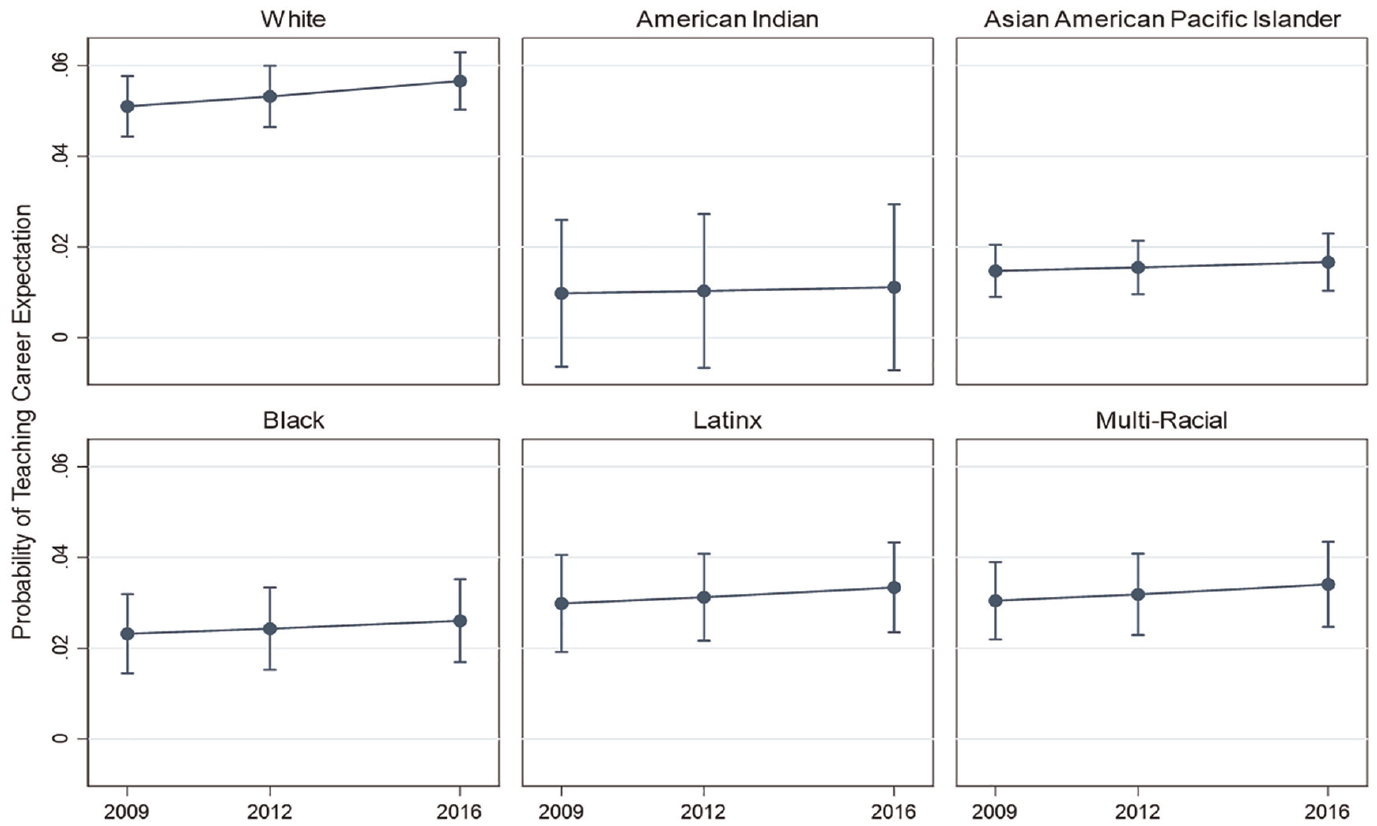
Predicted probability of teaching career expectations over time by student race and ethnicity from multilevel random intercept model with 95% confidence intervals.
In the top panel of Table 2, we present estimated gaps in the average predicted probability of teaching career expectations relative to White students by year from the multilevel model. The first cell in column 2, for example, shows that the probability of American Indian high school students expecting a teaching career is 4.1 percentage points lower than White peers. American Indian, Black, AAPI, Latinx, and multiracial students are less likely to hold teaching career expectations than White students by 2 to 4 percentage points each year (all p < .05). The last column indicates that gaps did not change significantly from 2009 to 2016. The bottom panel presents gender gaps in teaching career expectations. For American Indian students, the gender gap is not statistically different, most likely due to the sample size. For all other racial and ethnic groups, the gap favoring female students ranges from 2 percentage points (AAPI) to 6 percentage points (White). The gender gaps are stable from 2009 to 2016 (see Supplementary Figure S2 in the online version of the journal).
Unadjusted Average Predicted Probabilities (Marginal Effects) of Teaching Career Expectations by Race and Ethnicity and Year From Longitudinal Multilevel Random Intercept Model (n = 22,747)
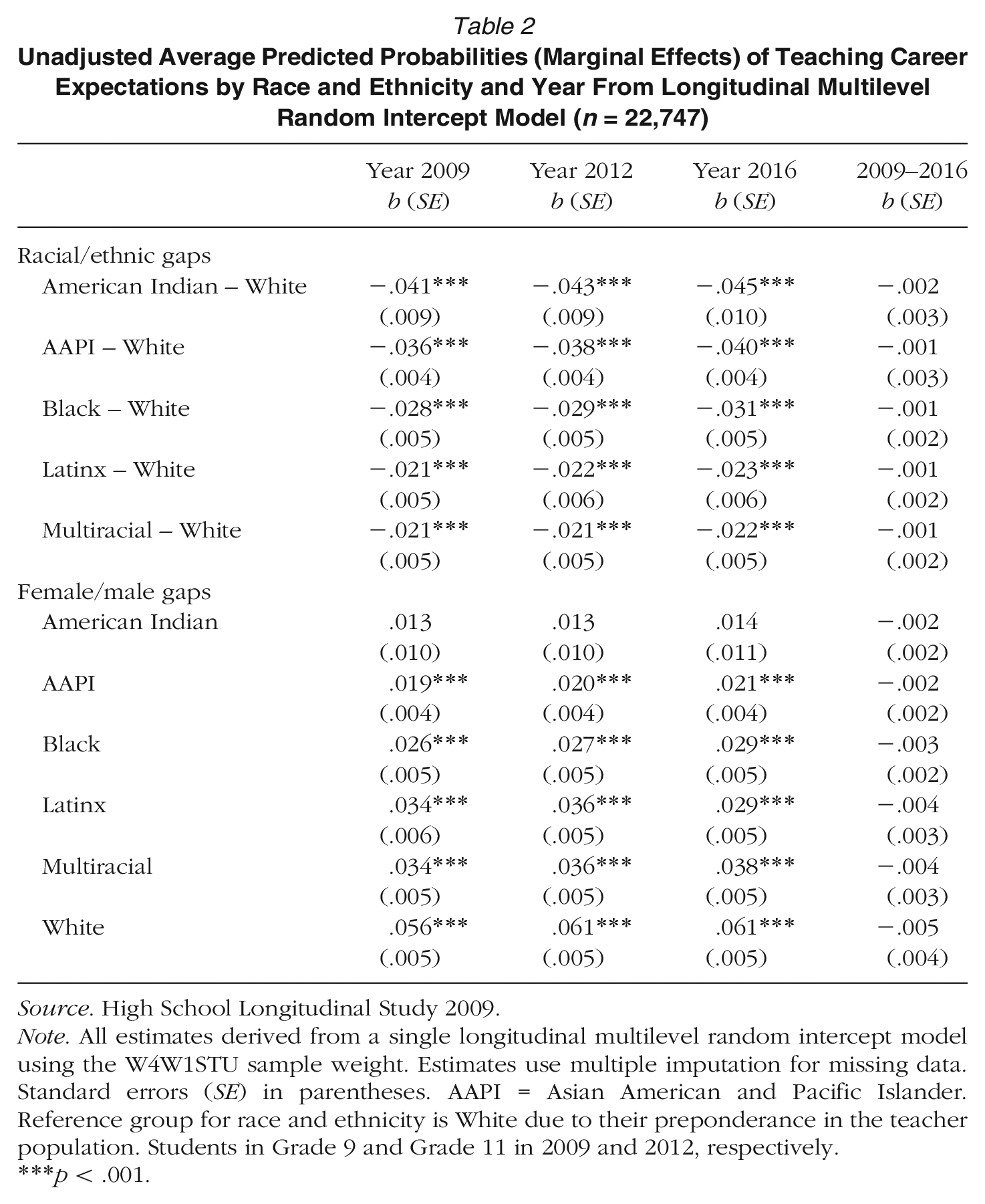
Source. High School Longitudinal Study 2009.
Note. All estimates derived from a single longitudinal multilevel random intercept model using the W4W1STU sample weight. Estimates use multiple imputation for missing data. Standard errors (SE) in parentheses. AAPI = Asian American and Pacific Islander. Reference group for race and ethnicity is White due to their preponderance in the teacher population. Students in Grade 9 and Grade 11 in 2009 and 2012, respectively.
p < .001.
To further assess the uniqueness of the racial and ethnic trends in teaching career expectations and changes over time, we conducted three follow-up analyses. First, we show how teaching career expectations compare to seven other occupations in Figure 2. 9 The results reveal that teaching is the only field where White students have higher expectations of a career than all other racial and ethnic groups at each of the three time points. Whereas teaching career expectations are stable across time, expectations in other fields increase (business), decrease (law, arts/sports), or increase initially but decrease thereafter (health and engineering). Second, we examine the probability of students with teacher career expectations that persisted, decreased, or emerged over the three waves in Figure 3. Multinomial logistic regression results show that the probability of persisting with teaching career expectations is low (less than 2%), and racial disparities are small. In contrast, students with teaching career expectations that decreased or emerged were more likely, particularly for White students relative to students of color.
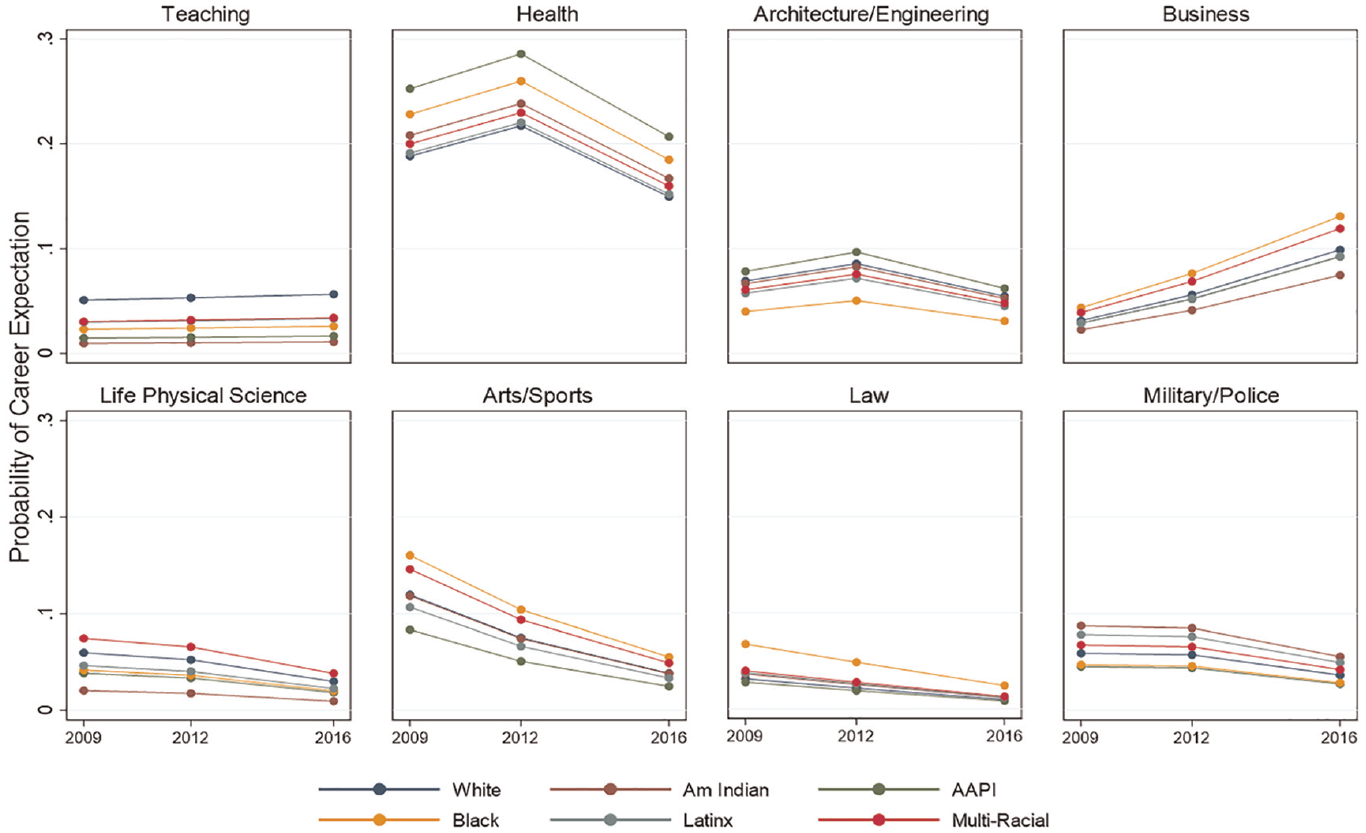
Predicted probability of career expectations over time by field and race and ethnicity from multilevel random intercept model.
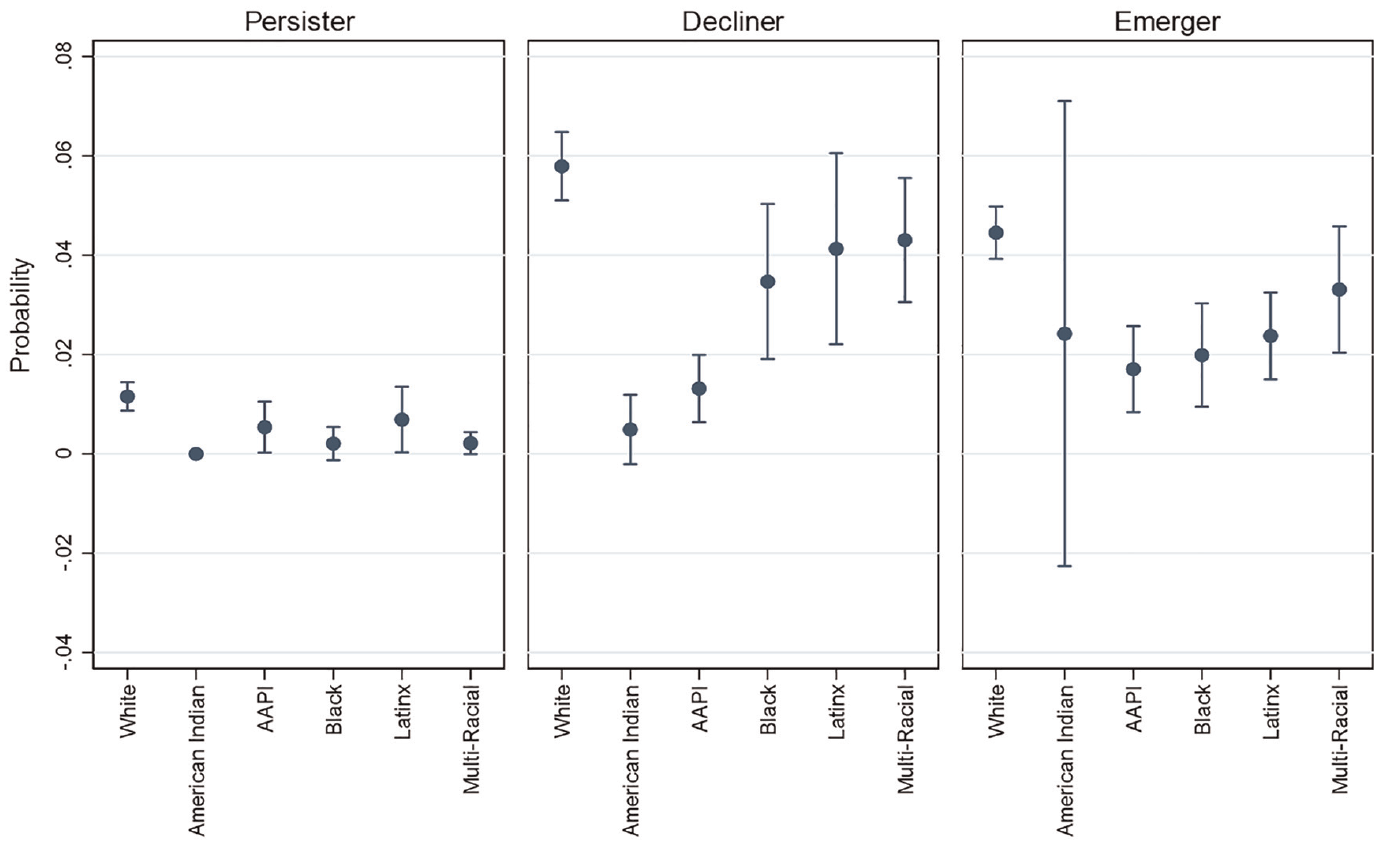
Predicted probability of students with teaching career expectations that persisted, declined, or emerged across three waves from multinomial logistic regression model with 95% confidence intervals.
Third, we follow students with Grade 9 teaching career expectations across different transitions in Figure 4. In contrast to the main longitudinal models that predict similar teaching career expectations at each time point, Figure 4 focuses on an initial group with Grade 9 teaching expectations. The results show a sharp decline in students who maintain teaching career expectations from Grade 9 to 11. Except for AAPI students, this decline is greater for students of color than their White peers. Only 2% (Black) to 14% (White) of students with Grade 9 teaching career expectations persisted to majoring in education. The rates were lower for students of color. Supplementary Table S7 in the online version of the journal shows students with initial teacher career expectations are unlikely to maintain those expectations (about 22%), particularly Black students; those who do not hold initial teacher career expectations are unlikely to ever do so. Students who persist in holding teacher career expectations are more likely to major in education than those who do not, but this is less the case for students of color (Supplementary Table S8).
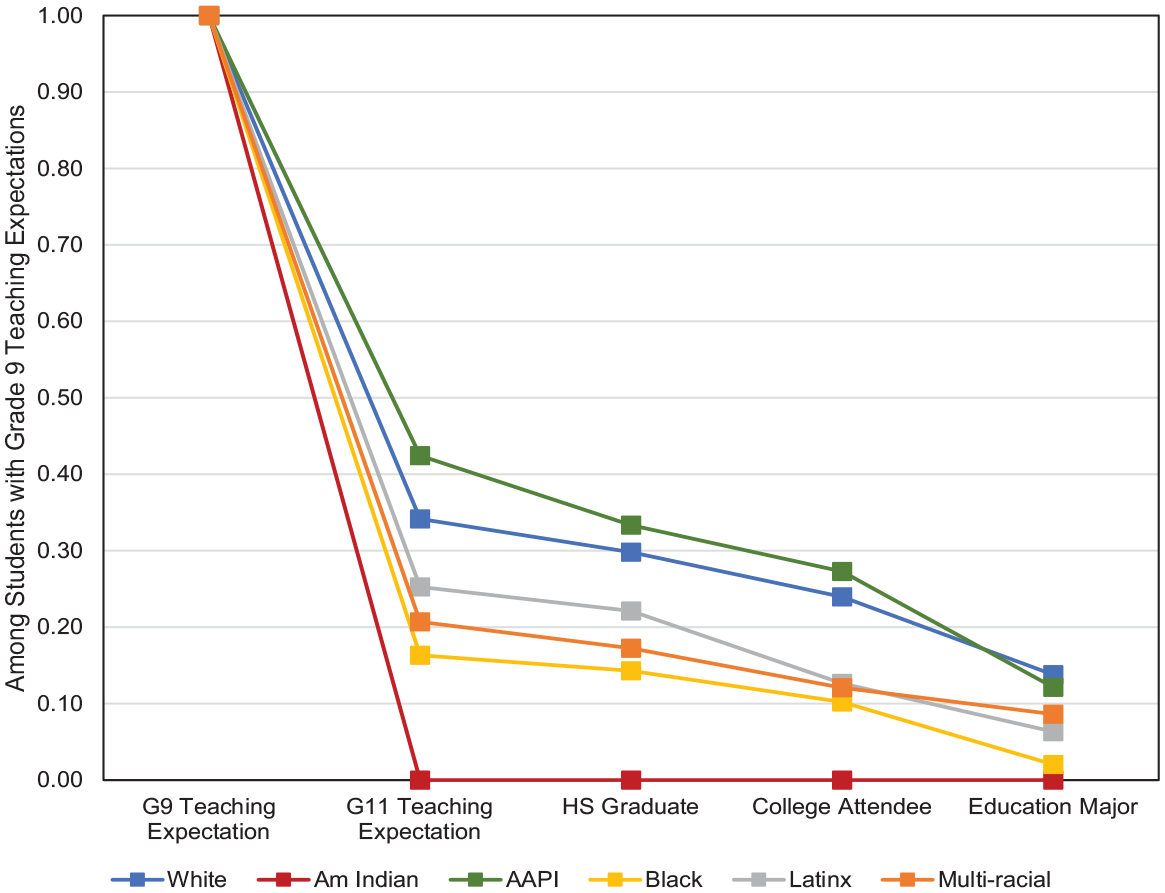
Students who reported teaching career expectations in Grade 9.
Explaining Gaps in Teaching Career Expectations
In Table 3, we examine whether individual background factors and school experiences may contribute to racial and ethnic gaps in Grade 9 teaching career expectations (all parameter estimates are in Supplementary Table S2 in the online version of the journal). Column 1 in Table 3 shows the unadjusted gaps in teaching career expectations (estimates are slightly different from Table 2 due to longitudinal versus cross-sectional samples). The gaps remain when controlling for birthplace, English learner (EL) designation, and academic achievement in column 2, except for Latinx students, who now have similar teaching career expectations as White peers (
Average Predicted Probabilities (Marginal Effects) of Teaching Career Expectations in Grade 9 by Race and Ethnicity (n = 22,747)
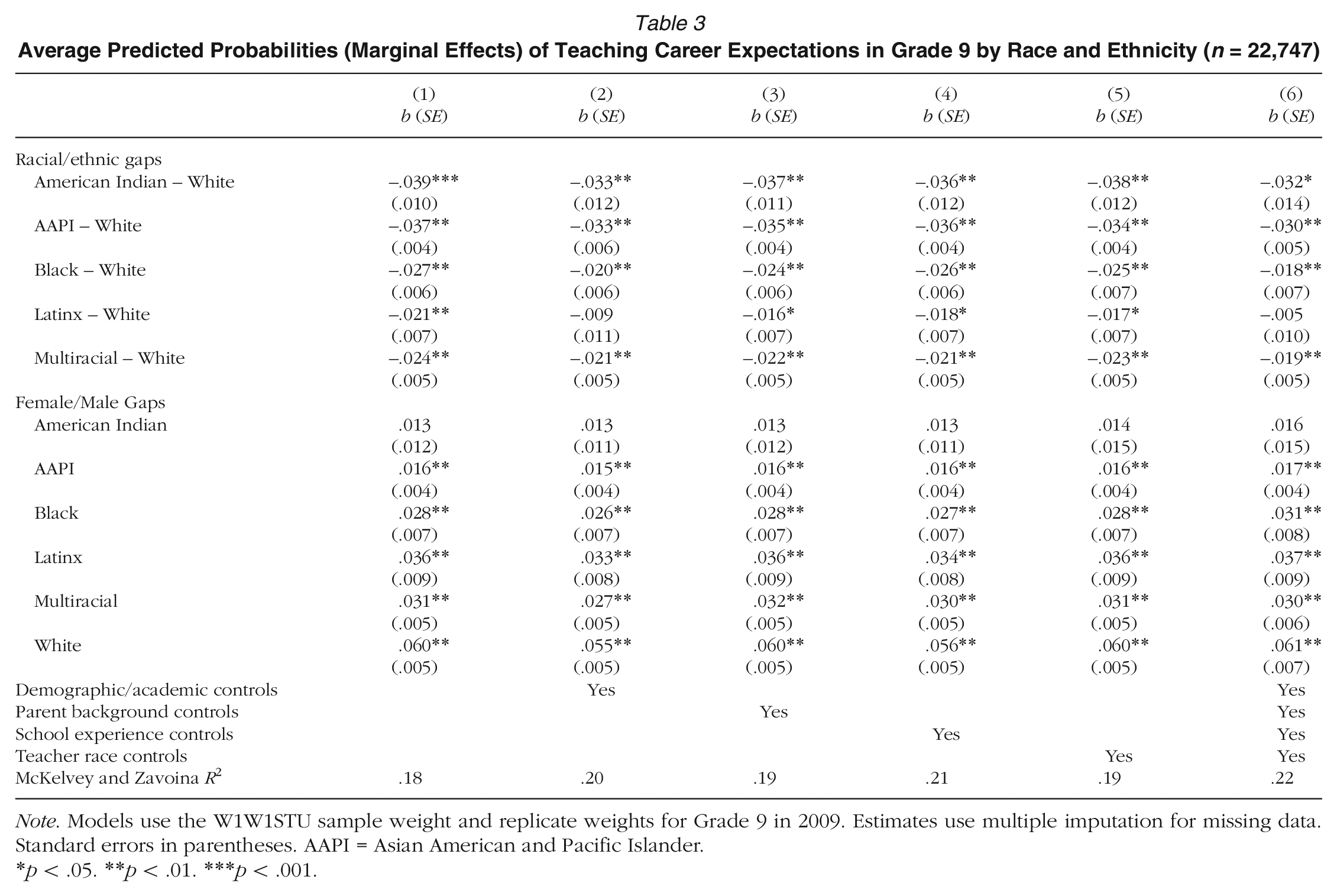
Note. Models use the W1W1STU sample weight and replicate weights for Grade 9 in 2009. Estimates use multiple imputation for missing data. Standard errors in parentheses. AAPI = Asian American and Pacific Islander.
p < .05. **p < .01. ***p < .001.
In addition to examining whether racial and ethnic gaps persist after controlling for the different student and school factors, we also explored whether these same factors have differential effects by race and ethnicity (see Supplementary Table S4 in the online version of the journal). For example, higher math scores are related to lower teaching career expectations for AAPI students. Higher GPA is associated with higher teaching career expectations for White students. Differential effects were generally not statistically significant for Black, Latinx, and multiracial students.
The bottom panel of Table 3 disaggregates gender gaps by race and ethnicity from each covariate-adjusted model. The results further highlight the role of gender in teaching career expectations. Female students are more likely to hold teaching career expectations than male students, regardless of race and ethnicity and potential differences in academic achievement or schooling experiences (except for American Indian students). The unadjusted and adjusted gender gaps are nearly identical. Lastly, in the bottom row of Table 3, for each model we present the McKelvey and Zaviona (1975)r2, a measure of the variability in teaching career expectations attributed to each set of predictors. Race and gender together explain about 18% of the variability. Other sets of predictors contribute an additional 1% to 4%.
Examining Education Majors in College
In Table 4, we explore the relation between early teaching career expectation and racial and ethnic gaps in college students majoring in education (see Supplementary Table S5, in the online version of the journal, for full parameter estimates). Column 1 in Table 4 reports the unadjusted gaps in education majors as a reference. Results show college students of color, on average, are less likely to major in education than White peers; the gaps range from 2 to 5 percentage points (all p < .001). When accounting for individual, parent, and teacher backgrounds in column 2, the Latinx-White gap is no longer statistically significant, while all other gaps are attenuated but remain (p < .05). In column 3, controlling for Grade 9 teaching career expectations alone fully attenuates the Latinx-White gap in education majors; the gap remains for all other students but shows attenuation comparable to column 2 with all other covariates. Not surprisingly, early teaching career expectations are positively related to majoring in education: students who had teaching career expectations are about 8.2 percentage points more likely to major in education than students who did not (p < .001). Separate analyses show that Grade 9 teaching career expectations explain about 4.3% of the variability in education majors, compared to 13.0% when controlling for only gender and race (see McKelvey and Zaviona r2 in the last row of Table 4). When including all controls in column 4, the Black-White and Latinx-White gaps are fully attenuated. A comparison of column 2 (all covariates except teaching career expectation) and 4 (all covariates plus teaching career expectation) indicates that the Black-White gap in education major is related to early teaching career expectations. We also examined effects of each covariate on majoring in education by race and ethnicity (Supplementary Table S6). Notably, Grade 9 teaching career expectations had larger effects on major in education for White students than students of color.
Average Predicted Probabilities (Marginal Effects) of Majoring in Education in College by Race and Ethnicity (n = 12,095)
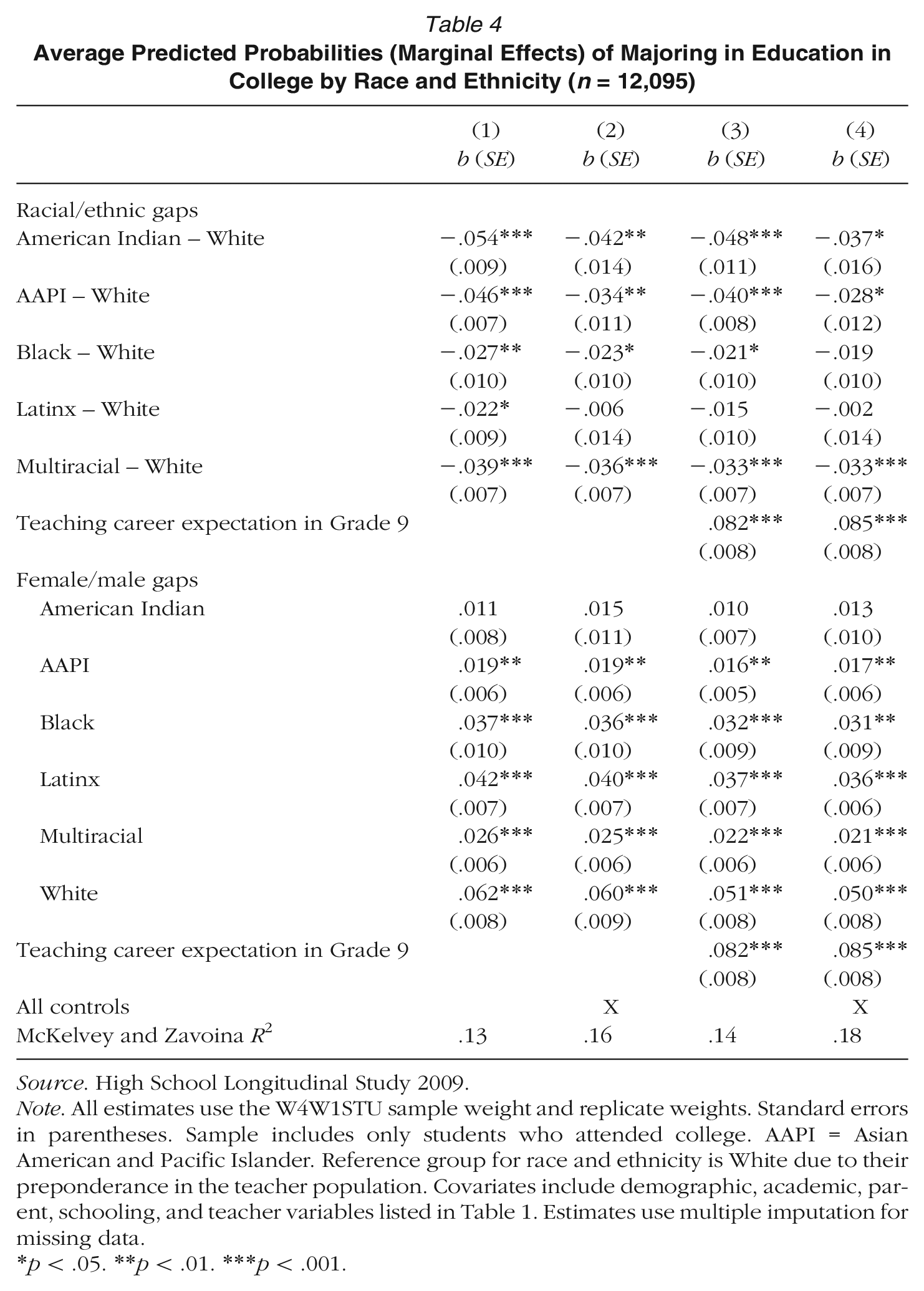
Source. High School Longitudinal Study 2009.
Note. All estimates use the W4W1STU sample weight and replicate weights. Standard errors in parentheses. Sample includes only students who attended college. AAPI = Asian American and Pacific Islander. Reference group for race and ethnicity is White due to their preponderance in the teacher population. Covariates include demographic, academic, parent, schooling, and teacher variables listed in Table 1. Estimates use multiple imputation for missing data.
p < .05. **p < .01. ***p < .001.
The bottom of Table 4 shows gender plays a large role in decisions related to teaching. The female-male gap in majoring in education ranges from 1.9 (AAPI) to 6.2 percentage points (White) in column 1. These gaps remain mostly the same when including all covariates in column 2. Controlling for teaching career expectations attenuates the gender gaps, particularly for White students. The gaps remain the same when adding all covariates in column 4.
Discussion
Research on the lack of racial and ethnic diversity within teaching tends to focus on the lower number of students of color who complete college (Carver-Thomas, 2018; Lindsay et al., 2017). This study expands the literature by examining whether a pipeline issue begins before college within the teaching career expectations of adolescents, particularly if racial and ethnic gaps emerge as early as Grade 9 and change over time. We further identified whether student background factors and school experiences are associated with racial and ethnic disparities in early teaching career expectations. Lastly, to understand how early teaching career expectations may relate to later decisions and behaviors, we explored associations with majoring in education.
Early and Persistent Disparities in Teaching Career Expectations
SCCT literature suggests that access to certain career trajectories begins with perceptions of whether an occupation is feasible or worthwhile. Positive outcome expectation related to teaching is thus important to assess. One contribution of the present study is a national profile of whether students of color at Grade 9 are less likely to hold teaching career expectations than White students. In contrast to earlier surveys that were limited to specific geographic regions (Mack & Jackson, 1993; Summerhill et al., 1998) or certain student populations (Roberson et al., 1983), our findings show lower teaching career expectations for five minoritized racial and ethnic groups. While the low interest in teaching among AAPI (Mau & Mau, 2006) and Black students are consistent with prior research (Roberson et al., 1983), we did not find higher interest among Latinx students (Flores, 2017; Mack & Jackson, 1993). The latter may reflect differences in national versus regional sampling, and also quantitative versus qualitative methods. With little existing research on American Indian and multiracial teachers, our new finding of low teaching career expectations among both student populations is notable. Prior research on addressing the dearth of American Indian teachers has focused on nontraditional university-based programs to recruit paraeducators into the teaching profession, such as within the Navajo Nation (Becket, 1998). Our study results suggest that increasing American Indian and multiracial teachers will also require early recruitment efforts and attention to perceptions of teaching.
The similar teaching career expectations among students of color indicates that there is less variability in how they view the profession. This finding may be due to the smaller sample sizes of each group. However, this pattern is also reflected in the similar proportion of AAPI, Black, and Latinx adults who hold teaching certifications or teacher positions (Lindsay et al., 2017). Although it is less clear why students of color across racial and ethnic groups hold similarly low teaching career expectations, one potential explanation is that despite ethnic and other demographic differences, students of color may share racialized perceptions of teaching (e.g., who “belongs” as a teacher) or racialized experiences within schools that affect teaching career expectations.
To what extent should educators and researchers be concerned that high school students of color are 2 to 4 percentage points less likely to hold teaching career expectations than White peers? A comparison with teacher workforce data (see Supplementary Table S9 in the online version of the journal) shows that the expectation gap mirrors the racial and ethnic gap in who eventually becomes a teacher (about a 2 percentage point difference). Although we are unable to directly link teaching career expectations to the job market, the higher rate of teaching career expectations compared to the lower rate at which individuals become teachers suggests a pipeline issue. Racial and ethnic diversity also declines within the three key populations: K–12 students, students who hold teaching career expectations, and teachers in the workforce. Thus, diversifying the teacher pipeline will clearly require efforts to recruit students of color into the field earlier than college.
Several new findings reveal the complexity in improving teacher diversity. First, teaching career expectations among students of color do not appear to increase over time. Previous research on SCCT related to teaching tends to focus on adolescents at one time point. Our results show racial and ethnic gaps in Grade 9 teaching career expectations remain 7 years later. Students are also unlikely to persist with teaching career expectations, while those who do not hold initial teacher career expectations are unlikely to ever do so; in both cases, the disparity tends to be larger for students of color than White students. Second, in contrast to fields such as business, engineering, and health, where career expectations tend to increase before gradually declining as individuals age (Figure 2), teaching career expectations remain consistently low and appear less related to developmental phases in career aspirations (Gottfredson, 1981, 1996) or societal changes. The consistent gap in teaching career expectations among all students of color relative to White peers does not appear in other fields. These findings show the challenge of diversifying the profession and contribute insight on why the field remains predominantly White in the United States.
Adjusted Gaps in Teaching Career Expectations
SCCT suggests that self-efficacy and contextual factors shape career paths. In our study, self-efficacy in the form of academic achievement helps explain the disparity in teaching career expectations between Latinx and White students; however, for all other minoritized racial and ethnic groups, the disparity persists regardless of the covariates used. One implication of these findings is that programs for recruiting TOCs need to be specifically responsive to different student populations. For example, the results suggest that reducing academic achievement disparities between Latinx and White students may help to close the gap in teaching career expectations. The gap reduction between Latinx and White students is consistent with research indicating Latinx students’ interest in teaching despite academic barriers (i.e., Flores, 2017).
In contrast, the low teaching career expectations of American Indian, AAPI, Black, and multiracial students relative to White students persisted after accounting for student, family, and teacher differences. The larger gaps among American Indian and AAPI students highlight recruitment challenges with both groups. The finding also counters perceptions that the lack of American Indian and AAPI teachers is due to their smaller representation in the overall population. Yet the lack of a relation between parent SES and teaching career expectations, particularly for students of color, was inconsistent with research on how some view the teaching profession in terms of economic stability (Flores, 2017) or lack of prestige (Gordon, 2000).
Controlling for teacher race and ethnicity did not attenuate the teaching career expectation gaps, a surprising finding given research on how TOCs may serve as role models into the profession for students of color (Gist et al., 2018). One potential explanation is there may need to be a critical mass of TOCs before students of color consider teaching as a career possibility. As more than 80% of all current teachers are White (Synder at al., 2019), students of color who have a TOC at any point during their K–12 education may still not expect to become a teacher. Moreover, HSLS:09 included only the math and science teachers of each student; data on all teachers, particularly for high school students who enroll in multiple classes, may better identify the role of teacher-student racial match on becoming a teacher.
Prior research suggests that negative school experiences are an important contextual factor in teaching career expectations, particularly among students of color (Gist et al., 2018; Goings & Bianco, 2016). However, some may choose teaching as a way to address inequities they experienced as students and in their own communities (e.g., Choi, 2018; Farinde-Wu, 2018; Upadhyay, 2009). Although accounting for school experiences did not attenuate the racial and ethnic gaps in teaching career expectations, our study found students who reported more positive school experiences tended to hold higher teaching career expectations than peers who did not, particularly White students. This finding also means negative school experiences were associated with a lower probability of expressing teaching career expectations. Although individuals may be inspired by negative school experiences to enter teaching, we found this is less likely to be the case. Our results highlight the importance of ensuring that schools are positive and supportive environments for adolescents in developing an interest in teaching.
To be sure, the racial and ethnic gaps in career expectations, after controlling for school experiences and other background factors, do not mean that the lack of teacher diversity is a failing of students of color. Rather, the persistence of the gaps suggests that other unmeasured structural factors related to the teaching profession are likely shaping how students of color view teaching. Studies show Black male high school students may avoid teaching as a career because they view the schools they attended as oppressive institutions where teachers devalued their experiences (Goings & Bianco, 2016; Graham & Erwin, 2010), while some AAPI students fear they will not be treated as legitimate teachers (Nguyen, 2008). Such schooling experiences and views of teaching, however, are not captured in HSLS:09. Changing racialized perceptions of the profession is also needed as students of color who pursue teaching continue to face systemic challenges and marginalization in teacher education programs (Brown, 2014; Kohli, 2009).
Education Majors in College
One contribution of our study is that we examine how early teaching career expectations may relate to specific career behaviors and decisions in college. We found students of color are less likely to major in education than White students, with gaps mostly reduced for Black and Latinx student when controlling for differences in background characteristics. In contrast, Redding and Baker (2019) found Black and Latinx students are less likely to hold a bachelor’s degree in education than White students from statistically similar backgrounds. One notable difference is that Redding and Baker examined the majors of college graduates, while HSLS:09 sampled the majors of students still in college. Our findings suggest that while Black, Latinx, and White students from similar backgrounds major in education at comparable rates, barriers to finishing college may result in racial and ethnic disparities in education major among graduates.
An assumption of our study is that teaching career expectations relate to actions that lead to entering the profession. Consistent with SCCT, our results confirm that early teaching career expectations predict majoring in education among college attendees. Early career expectations in other fields are also related to college major choice (see Supplementary Figure S1 in the online version of the journal), but the relation is strongest for teaching career expectations and education major. Majoring in education is not necessarily a requirement for becoming a teacher, but it is key pathway into the field; students majoring in education are 66 percentage points more likely to become a teacher (Redding & Baker, 2019). We found early teaching career expectations contributed to the gap in education majors between students of color and White peers, particularly for Black and Latinx students. This gap may not be as concerning if students of color enter teaching through other routes. However, even as college graduates of color are more likely than White college graduates (5.1%) to enter teaching through alternative pathways (Black 5.3%; Latinx 5.4%; Asian American 2.5%), the rate is not substantially higher (Lindsay et al., 2017).
The strong link between Grade 9 teaching career expectations and education major may be overly optimistic when juxtaposed with how these expectations do not improve over time (Figure 1). Many who hold these initial expectations are unlikely to persist with them by Grade 11 (Figure 4). However, these results are not contradictory. Early teacher career expectations are important for not only predicting later behavior, but also capturing interest in a profession characterized by shortages and a lack of racial and ethnic diversity. Indeed, results further show that those who do not hold early teacher career expectations are unlikely to develop them later. In addition, only 2% of Black ninth graders with teacher career expectations maintained those expectations and majored in education. These results together magnify the enormity of the challenge and how much more needs to be done, in the form of awareness and policies, to support adolescents in developing and sustaining interest in the profession, especially students of color.
Primacy of Gender
Although unsurprising, gender disparities were consistent in all analyses. Our study contributes to teacher recruitment research by highlighting the size of gender gaps in teaching career expectations and showing the overrepresentation of female students across racial and ethnic groups. The gender gaps in teaching career expectations are, on average, larger among White students than for students of color, and these gaps remain the same over time. Furthermore, the gender gaps persist after accounting for potential differences in academic achievement and schooling experiences. These findings point to the challenges of recruiting male teachers and have implications for student learning, especially since access to a teacher of the same gender benefits students from all genders (i.e., Dee, 2007; Muralidharan & Sheth, 2016). 10
Our analyses also reveal male students of color are especially less likely to indicate interest in teaching (about half as likely as White male students). This finding supports qualitative research showing that male students of color, particularly Black male students, are less likely to view teaching as a possible career (Going and Bianco, 2016; Graham & Erwin, 2010). Increasing interest in teaching among male students of color can thus help diversify the teacher workforce. The results further illustrate that recruitment efforts require consideration of race and gender together, as well as how the compounding effects may push some students away from teaching. Early efforts to recruit more students of color into teaching and, specifically, more young men of color, are needed to change the predominantly White women teacher workforce.
Policy Implications
The racialized and gendered teaching career expectations that remain constant over time in this study have implications for early interventions. Indeed, middle and high school teacher pipeline initiatives that aim to stimulate an interest in teaching as a career among young people suggest that teaching career expectations are malleable (Gist et al., 2019). Newer programs that encourage students of color specifically to enter teaching have involved partnerships between school districts and university teacher preparation programs (Bianco et al., 2011; Goings & Bianco, 2016; Hill & Gillette, 2005; Tandon et al., 2015; Villagómez et al., 2016). Although the long-term impact of these programs remains less known, studies show they can have a positive influence on how students of color view teaching as a career, particularly male students (Bianco et al., 2011; Goings & Bianco, 2016). According to these studies, opportunities to take college courses, gain experience working with young children, and learn from faculty of color in these programs can encourage students of color to explore teaching. Conversely, students of color interested in teaching early on may not maintain their interest if they lack access to information and courses needed to enter college (Irizarry & Donaldson, 2012).
Programs aiming to recruit middle and high school students into teaching are relevant given our study’s findings. Research on teacher pipeline programs suggests that teaching career expectations are not only malleable, but also closely linked with educational opportunity or lack thereof for students of color. Effective precollegiate teacher preparation programs provide access to information on becoming a teacher and emphasize critical theoretical frameworks that allow students of color to “see themselves as holders of important knowledge, experiences, and cultural wealth thereby positioning them to become equity oriented, community responsive future leaders” (Gist et al., 2019, p. 19). Situating the present study’s finding within the broader “grow your own” literature shows that increasing interest in teaching among students of color is feasible and important but not enough for long-term change to the racial and ethnic composition of the teaching workforce. Students of color who transition from a high school pipeline initiative may later face barriers in teacher education programs and school placements (e.g., Quiñones, 2018). In short, commitments to fostering interest in teaching among students of color during high school or earlier must be matched with supports through college and in-service teaching.
Limitations and Future Research
Several limitations of the present study should be considered with the main findings. First, although the positive relation between teaching career expectations and education major in college is important, we were unable to assess whether early interest is causally linked to becoming a teacher. Longitudinal data that begin during early adolescence and extend beyond college and into the labor market are needed to estimate the impact of early career expectations on becoming a teacher. Longitudinal data can also help address whether racial and ethnic disparities in teaching career expectations may emerge even earlier in elementary and middle school. Such findings would suggest that the teacher pipeline begins significantly earlier than previous research has shown and that recruitment efforts must respond accordingly.
A related limitation is we were unable to identify why there is a large decline in teaching career expectation by Grade 11 among students who started with this expectation in Grade 9 (Figure 4). For example, for students with Grade 9 teaching career expectations, do they feel pressure to switch to more financially lucrative or socially prestigious fields as they age? Future research should explore the reasons for this decline, especially for students of color who initially hold career expectations but appear to experience the largest drop-off by Grade 11.
Second, the study lacked nuanced information on contexts that may influence career choices and perceptions. Our measure of parent influence consisted of primarily SES, occupation type, and involvement; future research could consider more specific questions about familial support and perceptions of teaching. Qualitative studies involving AAPI (Gordon, 2000) and Latinx students (Flores, 2017) show parents have both negative and positive views of teaching as a career for their children, but it is unclear how these factors contribute to trends at the state or national levels. Another area to explore is whether parent views of teaching may moderate the effect of school experiences on whether a student considers a teaching career.
Third, we were able to account only for the observable characteristics of two subject teachers. Future analyses should consider whether having TOCs in other subjects and in school experiences earlier than Grade 9 may have a cumulative effect on the probability of holding teaching career expectations. We were also unable to assess how TOCs may matter, such as whether greater visibility of TOCs in students’ school experiences helps to normalize teaching as a career for students of color versus TOCs providing mentorship that encourages students to pursue the field. Whether a “critical mass” of TOCs is needed to change views of teaching should also be explored, either in a student’s current school or education up to the present.
Fourth, more research is needed on how racialized perceptions of teaching and who is a credible teacher may influence the career choices of students of color. A limitation of the study is the lack of measures in HSLS:09 asking students about their views of specific occupations. In the case of teaching, such measures can help disentangle whether resources should focus on efforts that help to reform racialized views of who is a qualified teacher at the school level versus efforts that challenge racialized and gendered perceptions associated with certain fields. Another area of further inquiry is whether some students of color agree with these views but still select into teaching out a desire to contribute to changing the racial and ethnic composition of the field.
Lastly, although the present study provides suggestive evidence of current trends in teaching career expectations among American Indian and multiracial students, more research is needed on both populations. One limitation of HSLS:09 is that the survey did not sample Bureau of Indian Affairs schools, where American Indian students may have different educational experiences that affect their perceptions and expectations of entering the teaching profession. Future research should also explore multiracial students’ perceptions about teaching.
Conclusion
The lack of racial and ethnic diversity within the teacher workforce raises questions about how and where to improve the current pipeline. In revealing low teaching career expectations among students of color in Grade 9, the present study shifts the common focus on teacher recruitment in college and later adulthood. Although addressing college completion is still critical for diversifying the teacher pipeline, the results point to the emergence of inequality by Grade 9 in how adolescents of color view teaching as a career. Perhaps more concerning, such views tend to remain fixed over time and mirror racial and ethnic disparities among individuals who major in education and within the teacher workforce. These racial and ethnic gaps in early teaching career expectations are also unique to teaching compared to trends in other career fields. Multivariate analyses revealed that racial and ethnic gaps in teaching career expectations appear related to differences in academic achievement between Latinx and White students. American Indian, AAPI, Black, and multiracial students were consistently less likely to hold teaching career expectations compared to White students, despite controlling for background factors.
The findings provide a different picture of the teacher pipeline—one that requires greater systemic commitments to changing inequities that youth of color experience in school and how such experiences affect their views on the viability of a teaching career. If racial gaps in teaching career expectations appear in Grade 9 and remain fixed over time, efforts to improve racial and ethnic diversity within the teacher workforce must begin before high school. The consequence of not intervening early in the racial gap of the teacher pipeline is a continual dearth of TOCs, even as diverse perspectives within U.S. schools would benefit all students.
Supplemental Material
sj-pdf-1-aer-10.3102_00028312231184839 – Supplemental material for Racial and Ethnic Disparities in Adolescent Teaching Career Expectations
Supplemental material, sj-pdf-1-aer-10.3102_00028312231184839 for Racial and Ethnic Disparities in Adolescent Teaching Career Expectations by North Cooc and Grace MyHyun Kim in American Educational Research Journal
Footnotes
Notes
N
G
References
Supplementary Material
Please find the following supplemental material available below.
For Open Access articles published under a Creative Commons License, all supplemental material carries the same license as the article it is associated with.
For non-Open Access articles published, all supplemental material carries a non-exclusive license, and permission requests for re-use of supplemental material or any part of supplemental material shall be sent directly to the copyright owner as specified in the copyright notice associated with the article.
