






Abstract
Combining Indigenous traditional ecological knowledge (TEK) with scientific research holds promise for more effectively meeting community objectives for the conservation of cultural forest resources. Our study focuses on predicting the abundance of western redcedar trees (Thuja plicata) within the traditional territories of five Indigenous Nations that are part of the N
Introduction
Combining knowledge from different sources and epistemic systems is necessary to understand diversity within and across ecological, social, and cultural systems, important factors underpinning conservation, and natural resource management strategies (Lertzman 2009; Salomon et al. 2018). Accounting for diversity in genetics, behavior, and functional groups, for example, can help to predict a system's ability to adapt and re-organize following perturbations (Folke et al. 2004). Understanding these finer levels of organization can also reveal patterns and structures that are associated with important ecosystem services, such as the provisioning of fish, timber, and carbon (Dhar et al. 2016; Dymond et al. 2014; Schindler et al. 2010). However, conservation initiatives also benefit from an understanding of the broader social-ecological system, which includes biocultural knowledge about specific places and resources (Acheson 2006; Berkes et al. 1994). Indigenous communities may hold different perspectives and interpretations than those founded in Western science about species and the environment that are based on distinct traditional uses, cultural connections, and language (O'Flaherty et al. 2008; Turner et al. 2009). The Inuit, for instance, are well known for their comprehensive vocabulary involving dozens of words to describe the many forms and uses of Arctic ice and snow (Krupnik 2011). Indigenous groups also have traditional names and knowledge bases that reflect local systems of categorizing biodiversity that can differ substantially from scientific taxonomy (Wilder et al. 2016). This biocultural lens can greatly enhance ideas grounded in ecological thinking and the natural sciences by more explicitly accounting for the role of people in ecological processes and change (Lepofsky 2009). It is also critical for understanding Indigenous resources around the world, such as specific growth forms of trees that are tied to different types of traditional uses (Blicharska and Mikusin'ski 2014; Emery et al. 2014; Turner et al. 2009).
Diversity within traditional resources, including cultural classifications developed by local users, can be meaningfully integrated into conservation and natural resource management if researchers and planners work with local communities to understand traditional ecological knowledge (TEK) and other local knowledge. In their often-cited definition, Berkes et al. (2000:1252) describe TEK as “the cumulative body of knowledge, practice, and belief, evolving by adaptive processes and handed down through generations by cultural transmission, about the relationship of living beings (including humans) with one another and with their environment.” Combining TEK with Western science can be a powerful tool in the search for sustainability (Huntington et al. 2011; Kimmins 2008; Lepofsky 2009) and has been used to inform resource management (Charnley et al. 2007), and to understand relationships between environments and species (Polfus et al. 2014). TEK can also help to understand environmental change, including shifting perceptions of baseline conditions, due to its association with specific places over long time periods (Savo et al. 2016). This temporal depth can help reveal species that no longer occupy a local environment or species relationships and behaviors that have changed over time (Huntington et al. 2011; Wilder et al. 2016). The benefits of combining TEK with Western science are becoming increasingly apparent and are advocated by many governments and institutions (Shawoo and Thornton 2019). However, bringing these knowledge systems together in a unified conservation initiative is challenging (O'Flaherty et al. 2008) and increasingly so because of the rapid loss of traditional languages, songs, and knowledge holders around the world (Davis 2010; Fernández-Llamazares and Lepofsky 2019; Turner and Turner 2008).
There is, thus, a profound need to understand biocultural perspectives and classifications of Indigenous resources through TEK when assessing the status and abundance of species and habitats. Excellent examples of such approaches are described in Turner et al. (2009), who provide a review of culturally modified trees around the world. These scholars highlight many situations where TEK formed the basis for understanding distinct tree forms, including bark and branches, that are associated with a wide range of traditional uses and practices. Another case study, led by researchers and Indigenous communities in the Maya Mountains of Central America, shows that categories of medicinal plants and knowledge of suitable habitats developed by Q'eqchi' Maya healers helped researchers understand connections between species distributions and traditional patterns of use (Pesek et al. 2010). In China, Mao et al. (2018) used TEK to develop categories of traditionally used plants to demonstrate the importance of accounting for cultural resources that have more than one purpose and, thus, may be associated with different types of gathering methods. Research in North America also provides some good examples of applying TEK to classify plants and growing sites that support traditional practices (e.g., Diamond and Emery 2011; Emery et al. 2014; Hummel and Lake 2015). Without biocultural classifications of key resources, conservation initiatives and natural resource management will likely fail to account for the full range of locally meaningful, context-dependent diversity within Indigenous territories.
Here we blend qualitative and quantitative data to understand culturally significant, within-species diversity and the long-term sustainability of a keystone cultural resource: western redcedar (Thuja plicata). We use a community-based research approach and a study area that covers the traditional territories of five Indigenous Nations that are part of the N
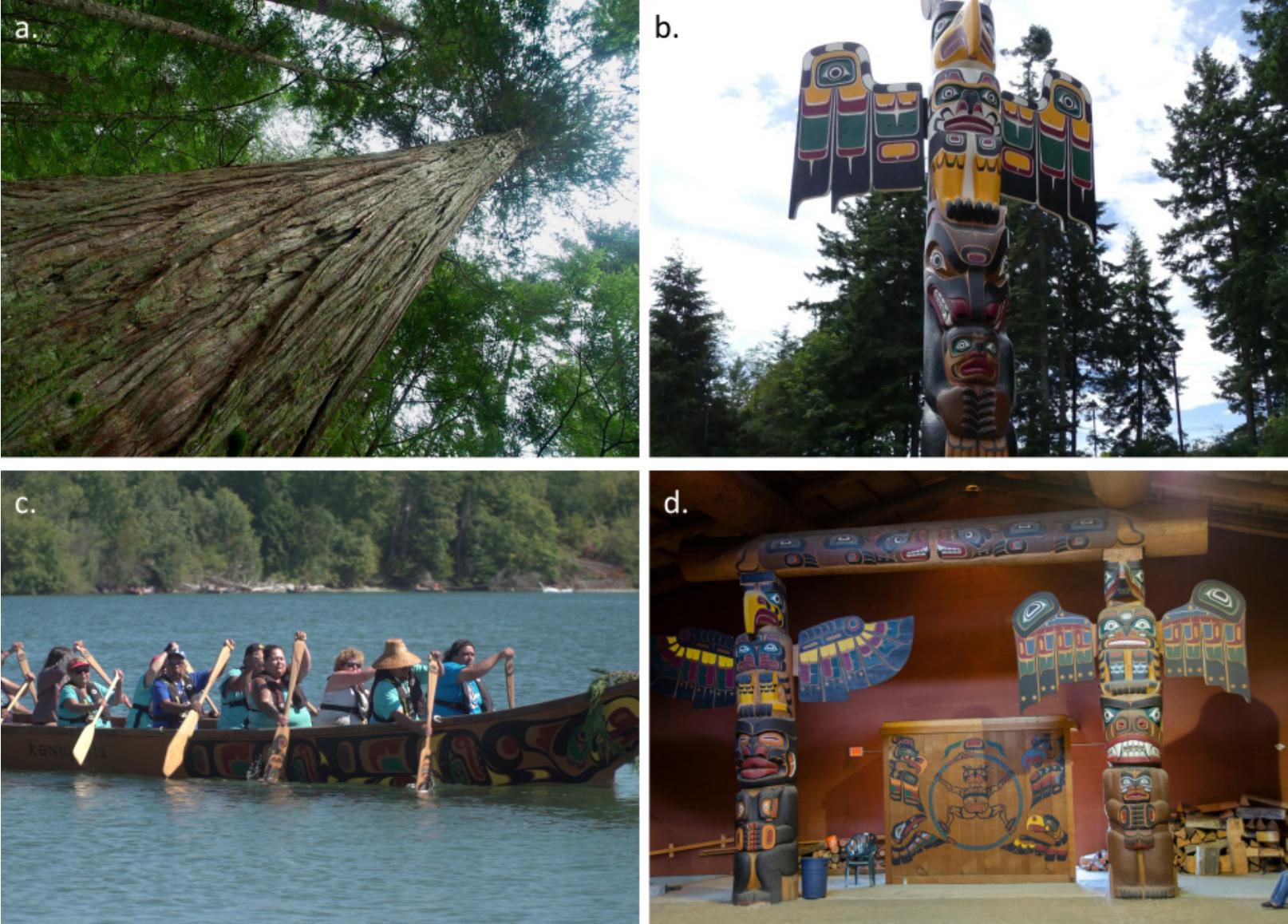
Pictures of (a) a Large Cultural Cedar tree and some traditional practices associated with its wood, (b) totem pole, (c) dug-out canoe, (d) big house (photo credits: Mark Wunsch and Ken Lertzman).
This scarcity stems from industrial forestry practices that target these trees' highly valued timber (Green 2007), as well as the unique environmental conditions, including many centuries of growth (Daniels 2003), required for trees to develop the large sizes and other morphological characteristics suitable for carving large logs. These distinct trees are often referred to as “Monumental Cedar” or “Large Cultural Cedar” (LCC) depending on the local context (see Benner et al. 2019). To address First Nations' concerns about the long-term supply of LCC, including the current status of different culturally important growth forms, the N
Hence, our study contributes to both broad scientific scholarship and this applied LCC strategy. Specifically, our objectives are to 1) categorize different morphologies of western redcedar trees according to their traditional uses by Indigenous wood carvers, 2) assess how accounting for these culturally distinct growth forms refines our predictions of abundance across the traditional territories, and 3) quantify the extent to which forests within these territories contain enough suitable trees to support cultural carving practices over the next three centuries. This overall research approach aims to address, in part, many of the analytical gaps and recommendations identified in Benner et al. (2019), including developing a more nuanced understanding of cultural redcedar, carrying out surveys across the range of environmental gradients within a region, and cross-referencing estimates of abundance with the cultural needs of the communities.
Methods
Study System
Our study area overlaps a subset of forests in the traditional territories of five Kwakwaka'wakw Indigenous groups on the Pacific coast of British Columbia, Canada (Figure 2). These First Nations (as they are referred to in this region of Canada) include the K'ómoks, Wei Wai Kum, Da'naxda'xw Awaetlala, Tlowitsis, and the Mamalilikulla, whose combined territories cover a terrestrial area of 21,604 km2 spread over many islands and adjacent mainland regions. These First Nations assert legal Aboriginal Rights, including title over their unceded territories, and some portions of the territories are part of ongoing treaty negotiations. The territories include moderately sized towns of Indigenous and non-Indigenous people (population, 35,000), as well as other, more remote areas with very low population densities. Archaeological evidence shows Indigenous people and communities occupying this region for over 10,000 years (Fedje et al. 2018). Collaboration among these Nations occurs through the N
These Nations' territories are covered by extensive coniferous forests that form part of the coastal temperate rainforest biome (Wolf et al. 1995) of the Pacific Northwest. Despite being part of this larger biome, natural disturbance regimes and average climatic conditions vary substantially across the study area (Meidinger and Pojar 1991). The south-east portions of the territories on Vancouver Island, for example, are characterized by a climate with average annual rainfall, 1200 mm, whereas more northern and continental areas around Knight Inlet receive more than twice this amount of precipitation and are cooler, with very steep mountainous topography containing permanent glaciers. Due to this environmental heterogeneity, as well as extensive industrial forest harvesting over the past century, forests in this region vary substantially in age structure (B.C. Ministry of Forests, Mining, and Lands 2010; Meidinger and Pojar 1991). Productive ecosystems accessible to timber harvesting typically contain younger forests, whereas areas that are less accessible and less productive—i.e., generally less profitable for harvesting timber—are associated with higher remaining proportions of structurally complex old growth forests.
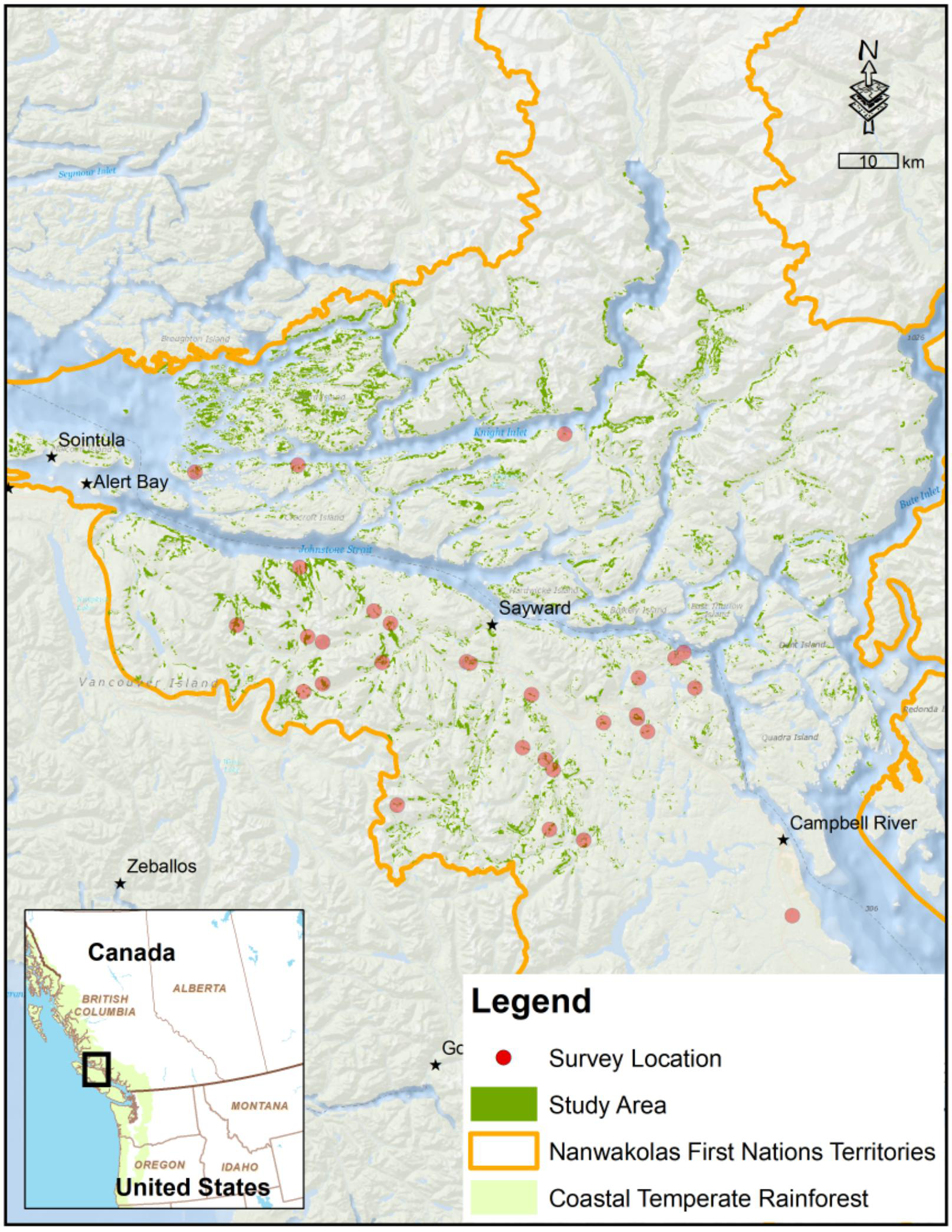
Map of study area, including the location of Large Cultural Cedar (LCC) surveys. This study area, used for survey design and to assess LCC abundance, is based on potentially accessible and suitable LCC polygons (i.e., spatial areas delineated in a GIS) across First Nations territories of the N
Community-Based Research
Our research approach reflects a strong desire to meaningfully co-produce knowledge rooted in science and cultural teachings with our Indigenous partners (Salomon et al. 2018). We obtained ethics approvals from both Simon Fraser University and the N
Carver Interviews
To gain knowledge about tree characteristics that support different types of traditional carving practices, we conducted 13 semi-structured interviews in 2017 and 2018 with carvers from the N
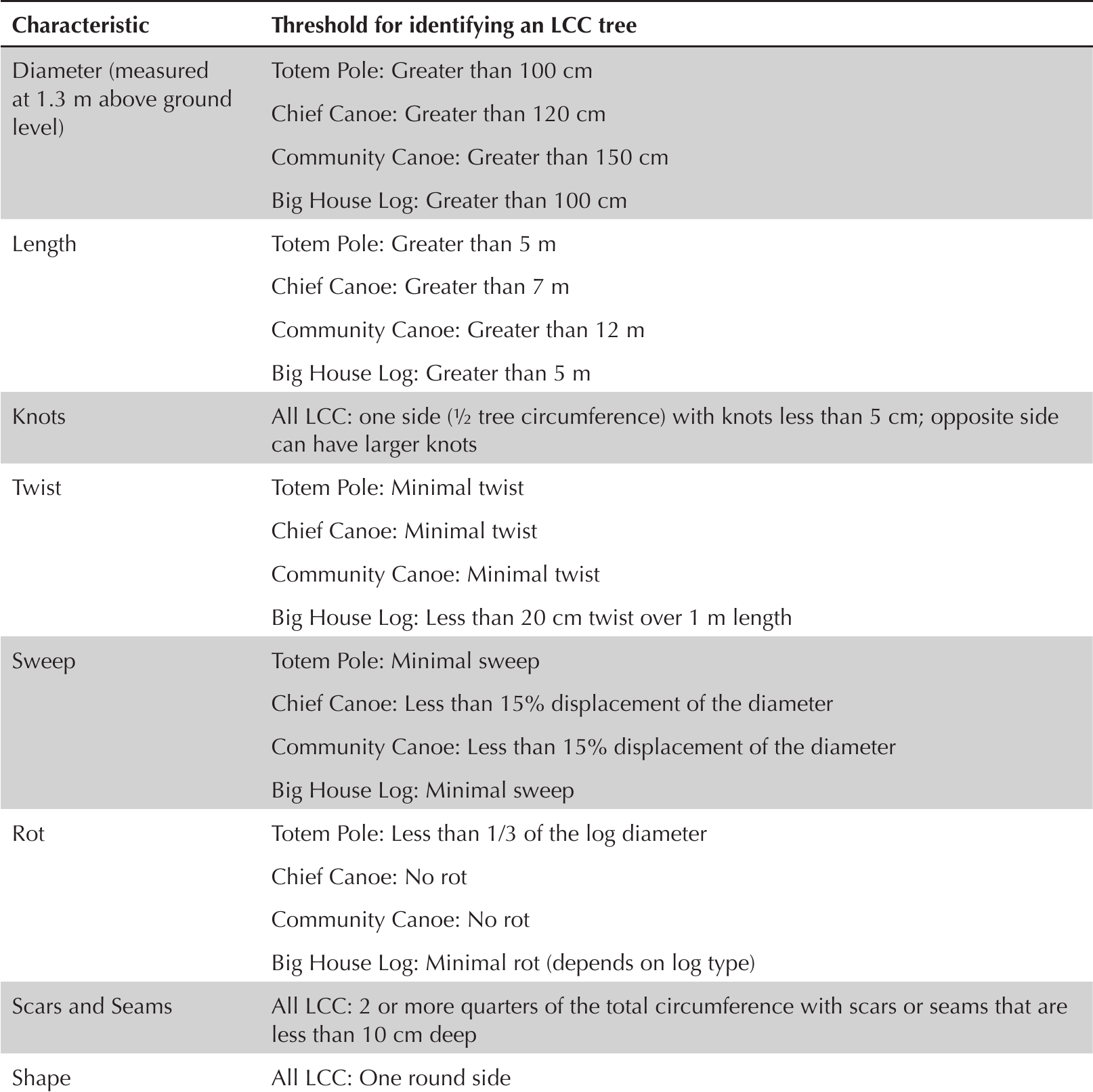
We transcribed and performed thematic content analysis on interview data using the software program NVivo 12 for Mac (NVivo Qualitative Data Analysis Software 2019), which helped us to organize the carvers' knowledge of tree characteristics into general themes. We used these data to develop methods for field surveys that included an LCC identification manual listing the acceptable quantitative thresholds for eight different categories of tree morphological characteristics. These thresholds roughly represent average values that were recorded from our interviews, and include specifications for tree diameter, length, knots, twist, sweep (also known as curvature), rot, scars and seams, and shape (Figure 3; Table 1). The carvers sometimes had individual preferences that deviated from these standards, including more detailed information that reflects variations on the LCC categories. Although western redcedar, as a species, is culturally important and used broadly by First Nations, the larger growth forms that contribute to LCC logs were of most concern to our community research partners because they were considered least available. We also delivered different training sessions based on these methods to a total of 16 First Nation stewardship workers.
Field Surveys
We conducted field surveys across the study area to estimate the abundance of different types of LCC trees that are suitable for canoes, totem poles, and big house logs (Figure 3; Table 1). Small teams that included the First Nation stewardship workers that had completed the LCC training course carried out these surveys in 2017 and 2018. We used a survey design based on attributes listed in the provincial Vegetation Resource Inventory (VRI; Ministry of Forestry, Lands, and NRO 2019) or from forest cover datasets provided by the major forestry tenure holders in the region. These data are based on orthophoto interpretation of forest stand attributes (Ministry of Forestry, Lands, and NRO 2019). Where these two datasets overlapped, we used the tenure holder's data. We were not able to access forest inventory information for portions of a few management units and for some private land, meaning that our study area did not include the full range of stands where LCC might occur within the territories.
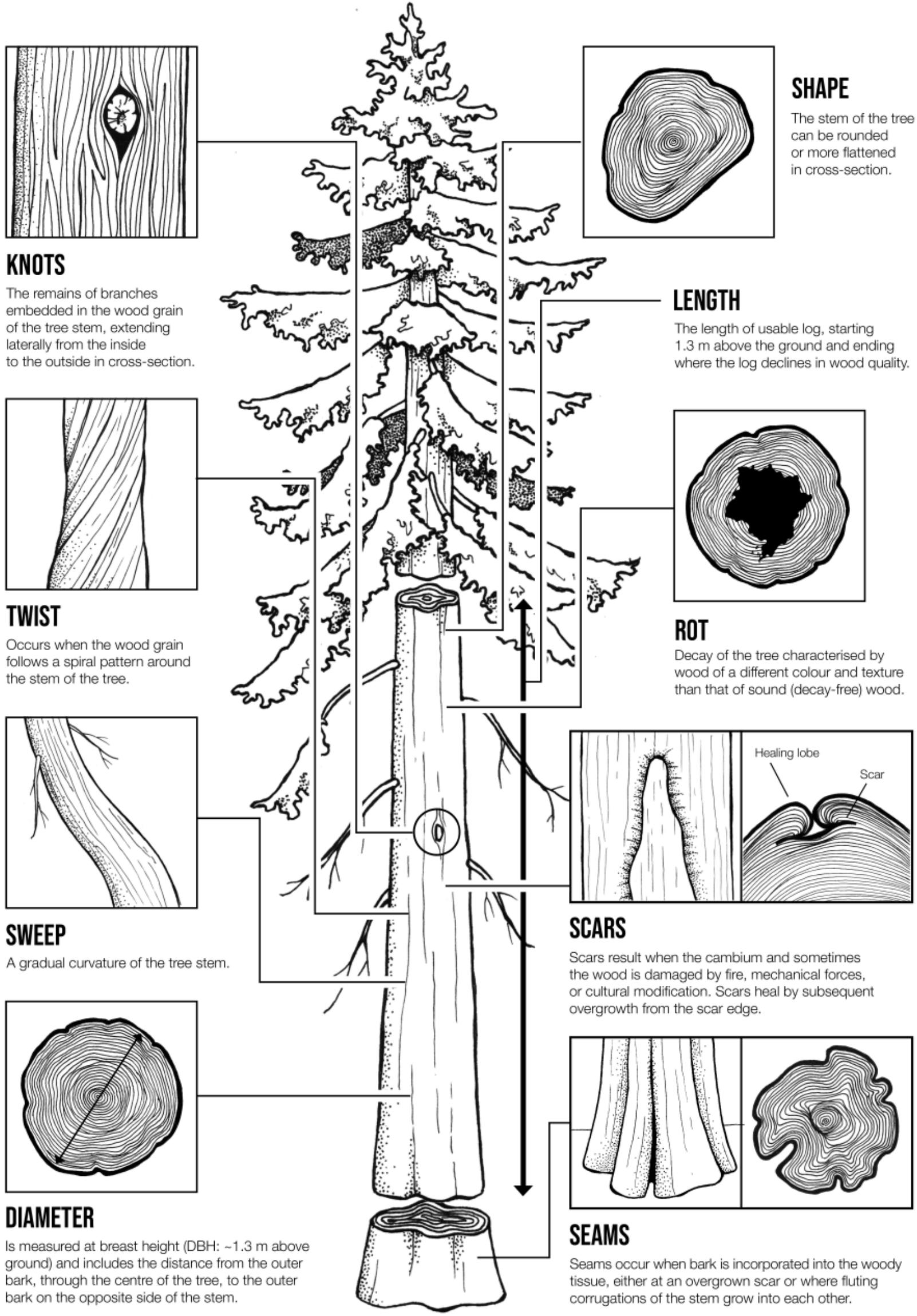
Western redcedar tree with examples and definitions of characteristics that influence a tree's suitability for carving (Illustration by Cecile Liénaux).
Characteristic thresholds for Large Cultural Cedar described by carvers.
We delineated our study area based on forests that have reasonable accessibility for field sampling and future harvesting, as well as potential for LCC occurrence based on the findings outlined in Benner et al. (2019). Finer resolution LiDAR data characterizing tree heights would enhance our ability to identify large trees that are potentially suitable for LCC, but we did not have access to these types of data. In ArcGIS (ESRI 2019), we created a spatial subset of our forest inventory data where the forest cover information contained the following attributes: species composition in the main or upper canopy includes western redcedar, average stand height ≥ 25 m, average stand age ≥ 140 years, and distance to road or ocean ≤ 500 m. The spatial extent of this query represents 69,863 ha—less than 2% of the total terrestrial land base in the N
To ensure that survey effort was spread across the range of environmental gradients in the territories, we used the Biogeographic Ecosystem Classification (BEC) System to stratify the study area according to variants, which represent sub-regional ecosystem types with strong climatic and biophysical similarities (Meidinger and Pojar 1991). We then used ArcGIS to create ten random points within each variant. For each random point, we selected the overlapping forest cover polygon as a target location for a survey.
We navigated by boat, truck, and foot to each polygon using the GPS-enabled mapping application Avenza PDF on an Android tablet. Due to logistical challenges in the field (e.g., excessive snow or steep terrain) and visual observations suggesting the absence of large cedar trees in certain areas (e.g., rocky hillsides with small trees), we did not survey every randomly selected polygon or every portion of each polygon. In total, we surveyed 403 ha (representing 61% of the target area) across 28 polygons, ranging in size from 1 to 83 ha. We conducted multiple belt transects, which varied by location, within each polygon to cover as much area as was physically possible and safe. We determined the precise survey coverage by recording GPS tracks. During the transects, we assessed all potential LCC and recorded detailed information on tree morphological characteristics (Table 1) on a custom form within Avenza PDF. We used a Bluetooth GPS (EOS Arrow 100) to record coordinates and a combination of a Vertex Hypsometer, diameter tape, compass, and other field equipment to measure the tree and site attributes. Although carvers, during our interviews, described examples of using logs from downed trees for traditional carving, these reflect a minority of the usage of cedar and, even with low decay rates, represent a resource of limited availability. Thus, our survey crews followed a methodology that focused on standing trees in this study.
Data Analysis
Our objective was to estimate the potential abundance of LCC across the territories by extrapolating the density of LCC occurrences found within our sample locations to our study area (see polygons in Figure 2). We divided the total number of LCCs located in the field, based on the LCC specifications, by the total surveyed area and then extrapolated this rate to our 69,863 ha study area. We did not assess variation in the spatial distribution of LCC due to reservations by our community research partners about explicitly showing or discussing these culturally sensitive locations. However, the random distribution of the survey effort allowed us to roughly assume that the density calculated from our surveys characterizes abundance across the broader range of environmental gradients in the territories, though our inability to access some logistically challenging terrain may have introduced small biases.
This analysis helps illustrate the abundance of LCC as a broad category of traditional resources. But we also used the data from the interviews with carvers to further refine these estimates into subcategories representing more specific cultural uses: canoes, totem poles, and big houses. We used ArcGIS to match each LCC record with potential uses based on the trees' morphological characteristics. Many LCC trees with a set of specific characteristics can be used for multiple cultural uses (e.g., community canoes and certain big house logs, such as large house beams, both require large trees with few defects). This overlap in log specifications for different types of uses, combined with differences in log specifications within an individual use category (e.g., small poles vs. large poles), makes it challenging to perfectly allocate trees to only a single use. Therefore, in addition to identifying this range of uses, we also allocated LCC trees to three aggregate categories with similar characteristics: Type 1, Type 2, and Type 3 (Table 2). We created a hierarchy for this allocation based on the rarity of the growth form, though the best use for a specific tree is inherently subjective and depends on individual perspectives among carvers and communities.
To better understand whether the territories contain sufficient LCC for current and anticipated future First Nation use, we cross-referenced the abundance estimates of these LCC categories with estimates of the community and carver needs for these cultural products over time. In a previous assessment, the N
Aggregate types of LCC based on similar size requirements. Redcedar trees meeting the definition of LCC (Table 1) are further refined based on log diameter and length thresholds.

Results
Applying Knowledge from Carver Interviews
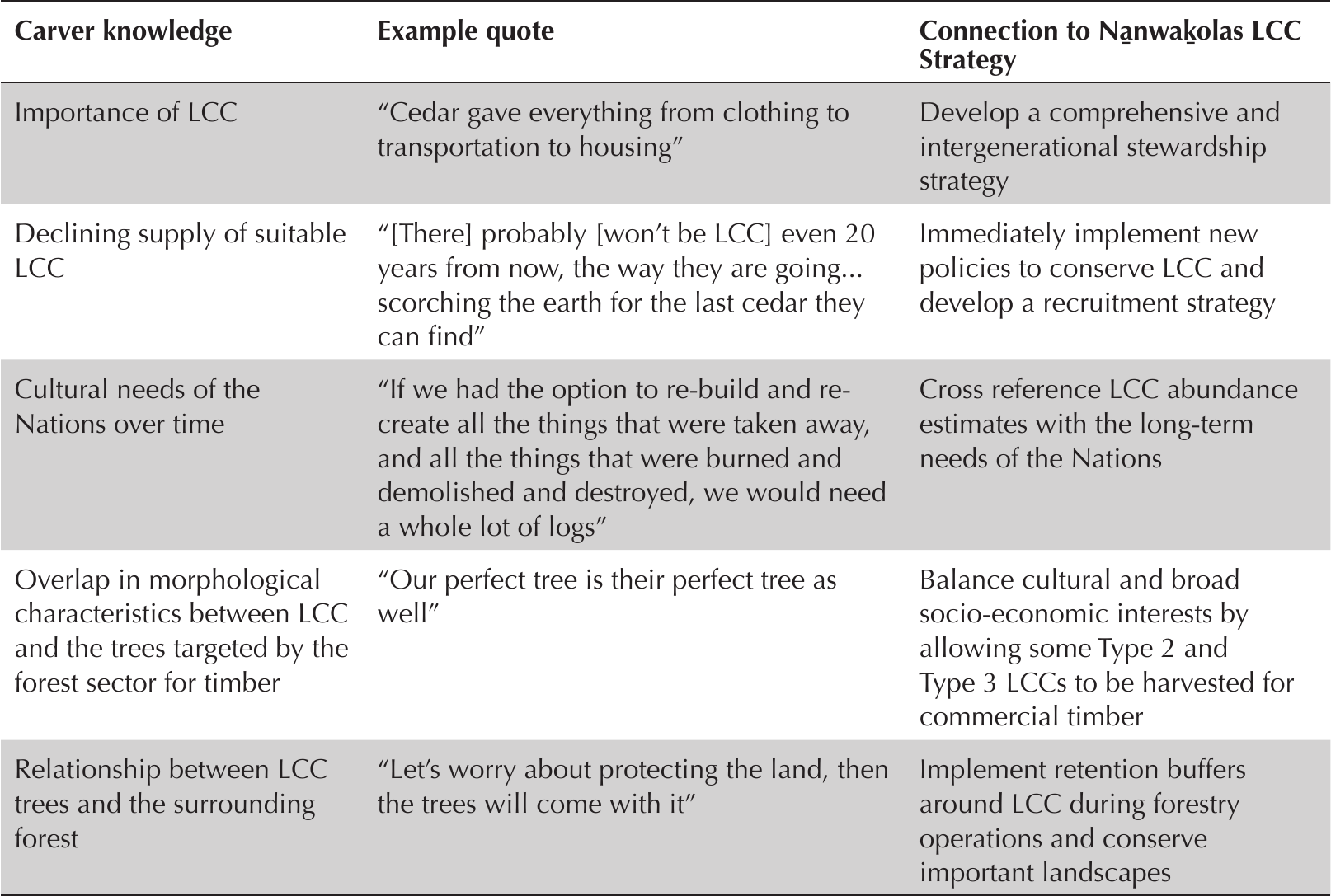
Although all interviewees provided some distinct perspectives and knowledge about cultural carving practices, responses from participants were highly consistent, allowing us to develop a field manual listing the tree characteristics suitable for LCC, including different categories of cultural uses of these trees (Table 1). These criteria generally capture the range of morphological tolerances for LCC expressed during the interviews, with specific thresholds approximately based on the average values reported by carvers. The interviewees also discussed many subtypes of carving products and uses of cedar, but in this study, we only focus on a few broad LCC categories for totem poles, dug-out canoes, and traditional housing logs. In addition to using these interviews to help address the question of “what is Large Cultural Cedar?”, the N
Examples of traditional ecological knowledge and perspectives shared by carvers that informed the N
Predicting the Abundance of Large Cultural Cedar Trees
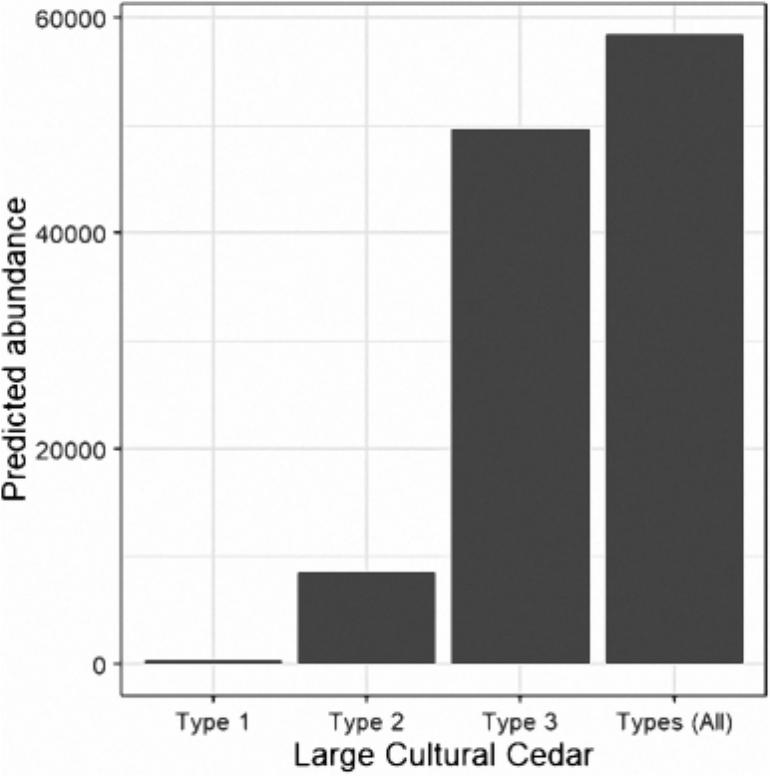
Across 403 ha of surveyed forests in the study area, we frequently observed western redcedar trees. This is to be expected, given that we targeted forest cover polygons that explicitly listed this species as present. However, only 337 of the thousands of redcedar trees encountered met our criteria for LCC (0.84 LCCs/ha). While we recorded some site characteristics at each LCC, our analysis examining associations with specific biophysical characteristics will be addressed elsewhere. The occurrence and density of trees suitable for specific cultural uses varied depending on the acceptable thresholds for each morphological characteristic. The size of observed LCCs (Figure 4) was a major driver of potential cultural use. While most LCC met the minimum specifications for smaller types of building materials for a big house, only a few trees contained larger logs suitable for main house beams. Similarly, the rarest type of LCCs encountered during the surveys were trees suitable for carving community canoes; only two out of the 337 LCC trees from the entire sampled area matched the criteria for this cultural use. Extrapolating our observed density of LCC from field transects to the entire study area shows very large differences in the predicted abundance of Type 1, 2, and 3 LCCs (Figure 5).
Developing Community-Based Policies to Support Intergenerational Stewardship
The staff and member First Nations of the N
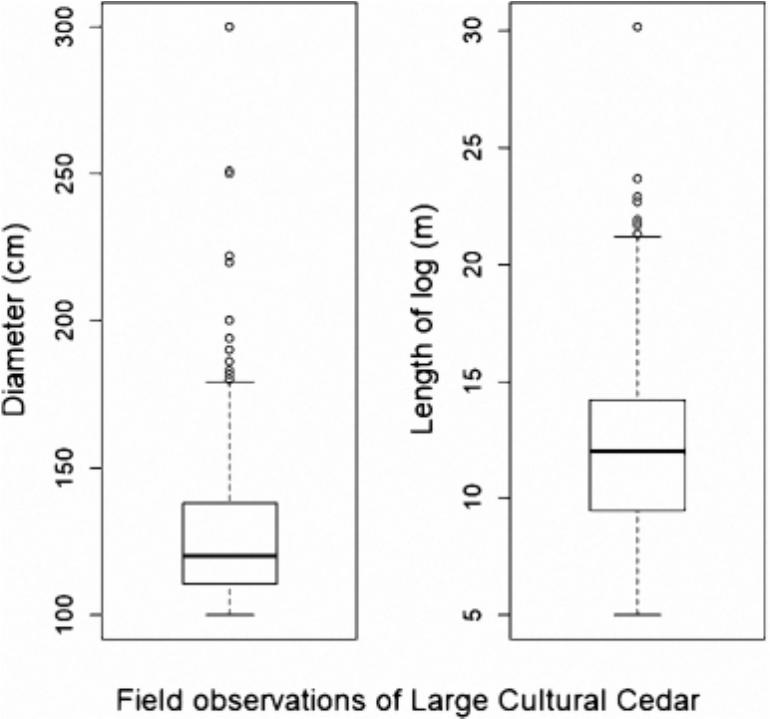
Box plots showing the diameter and length of logs from field observations of Large Cultural Cedar trees (note that minimum diameter = 100 cm and minimum length = 5 m). Logs of suitable size for carving large canoes and totem poles were very rare in our sample.
For example, when cross-referencing abundance estimates with predicted First Nations needs for LCC over 300 years, our results highlight that some LCC categories are rarer than others. While predictions for Type 2 and 3 LCCs show the territories containing more trees than the anticipated needs, predictions for Type 1 LCCs show that community needs are dramatically above the current stock of LCCs (Figure 6). Although the member First Nations did not solely rely on our analysis to reach decisions about retention targets, the policies generally reflect the main quantitative results: Type 1 LCCs require 100% retention, Type 2 LCCs require 50% retention, and Type 3 LCCs require 25% retention (see Supplement).
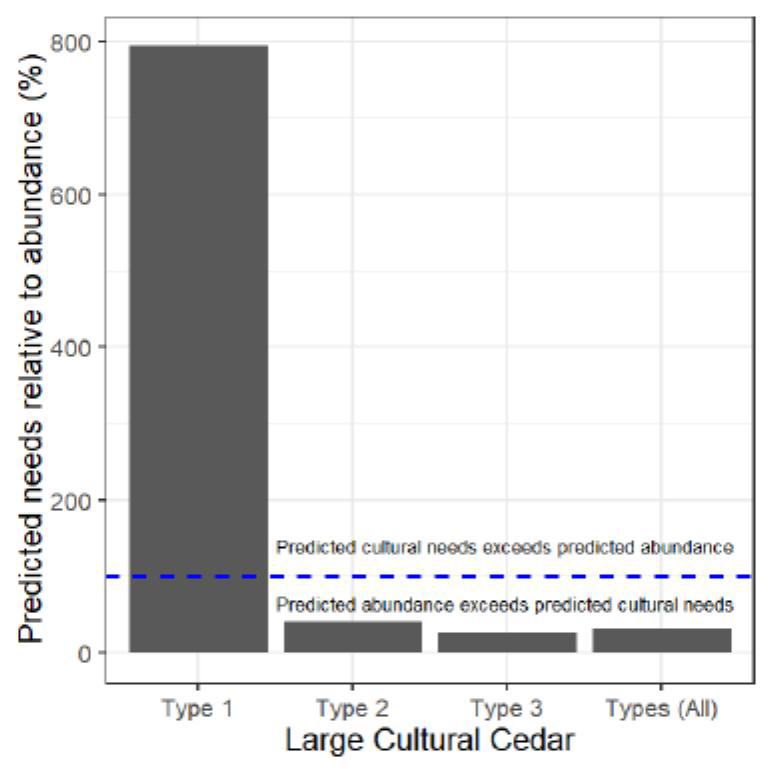
Bar plot showing the extent to which Indigenous communities can meet their cultural needs over time for Large Cultural Cedar (LCC) within their territories. Values on the y-axis represent the predicted cultural needs for LCC for the next 300 years divided by the predicted abundance in the study area, expressed as a percentage. Categories on the x-axis represent different types of LCC (see morphological characteristics in Table 1 and 2). Percentages on the y-axis above 100% (blue dashed line) show where the predicted cultural needs for LCC over the next 300 years exceed the predicted abundance of LCC across the territories. In contrast, percentages under 100% show where the predicted abundance of LCC trees currently exceed the predicted cultural needs.
Discussion
Trees Suitable for Specific Types of Indigenous Carving Practices Are Rare
LCC trees are an important cultural resource that are rare within the Indigenous territories of our study area. When TEK of Indigenous carvers is used to refine the characterization of LCCs based on distinct uses, we see that certain types of trees, such as those associated with the specifications for carving canoes for community use, are nearly extirpated from the land base. For instance, only two of 337 LCCs within our sampled locations and an estimated 347 total LCCs within the study area meet the criteria for these types of trees. This low predicted abundance of suitable trees likely will not meet the cultural needs of carvers and their communities into the future. Even for smaller, less rare Type 1 and 2 LCCs, where our predictions suggest that abundance currently exceeds needs, continued access to this cultural resource is contingent on departing from the status quo in forest management and implementing the new N
An important caveat to these findings is that we did not assess potential LCC recruitment of LCC as smaller trees grow into larger ones, either through younger trees over time developing LCC status or through transitions across LCC types (e.g., Type 2 to Type 1). We also did not account for trees losing their LCC status due to damage, decay, or mortality. These factors, which progress over centuries given the slow growth rate of these long-lived trees, are likely not a large source of error. Because of the combined effects of the natural disturbance regime and logging history, the forests within the study area tend to either be young post-logging stands (< 80 years old), in which case, they will take at least two or three centuries for LCC trees to develop, or they are old (> 250 years old; B.C. Ministry of Forests, Mining, and Lands 2010), in which case, LCC in them are already accounted for in our assessment. Some recruitment may occur, but this is unlikely to substantially affect our predictions in the short-to-medium term.
Our predictions of LCC abundance generally align with knowledge shared during our interviews, which highlighted sustainability concerns, including intergenerational access to this resource. As one carver exclaimed about diminishing wood quality, “It is coming to that point where the logs are getting smaller, they are getting knottier, twisty looking…that's all there is left!” These predictions are also consistent with other studies of LCC in coastal British Columbia. For example, although not explicitly reported in Benner et al. (2019), the predicted density for LCC derived from that study's field validation data is 1.25 trees/ hectare, slightly higher than the 0.84 trees/ hectare reported here. The lower density observed in the present study is consistent with the longer and more intense history of industrial exploitation in this more southern region. Sutherland et al. (2016), who examined cultural ecosystem services in a generally wetter region on the west coast of Vancouver Island that is nearby our study area, did not report density estimates in their research, but generally found that monumental cedar trees are more common in riparian ecosystems than nearby upland forests. These studies use different identification methods for LCC/monumental cedar and focus on different parts of British Columbia's coast—regions that may contain proportionally different levels of old growth cedar stands across the landscape compared to the N
Like most predictions of species abundance, our analysis contains inherent uncertainties and unknowns that are difficult to quantify. For example, due to logistical challenges and limited resources, we were not able to assess every randomly selected polygon from our initial survey design, so some types of forests may not be fully captured in our dataset relative to their distribution across the study area. Data issues, such as inaccurate attributes within forest cover maps, also result in uncertainties about the status of the current land base. Temporal factors, such as impacts from logging and climate change (e.g., Hennon et al. 2012), make projections over centuries into the future even more uncertain. Moreover, uncertainties also extend to projections of community needs over time for cultural resources because these are partly contingent on the continuity of traditional practices and assumptions concerning population growth. Maintaining species with such broad cultural connections as LCC will likely be important to Indigenous communities, regardless of specific quantitative use.
An Industrial Forestry Paradigm Hinders Stewardship of Long-Lived Cultural Resources
The depletion of LCC in our study area reflects a global trend of diminishing supplies of large old trees and the ecosystems that support them, including many species that are culturally important (Albert and Schoen 2013; Benner et al. 2019; Lindenmayer et al. 2012; Moga et al. 2016; Schulze et al. 2008). One way to better understand shifts from historical baseline conditions is to use the approach outlined in Benner et al. (2019), which compares predictions of the distribution of monumental cedar based on field surveys to predictions based on historical occurrence data, such as archaeological records of traditional harvest locations. But even without such retrospective assessments, it is obvious that an industrial forestry paradigm focused on prioritizing the net present value of timber will not generate the types of stands required to provide cultural resources that are dependent on old growth forests.
This is especially the case for culturally important growth forms, such as LCC trees, that require several centuries of growth to achieve suitable sizes. Many carvers in our study also suggested that specific biophysical conditions, such as shade, are needed to produce dense wood grain that is free of large knots. Clearcut openings and subsequent young forests managed on short rotations are common silvicultural practices in managed forests in coastal British Columbia (B.C. Ministry of Forests, Mining, and Lands 2010) and these types of morphological characteristics are unlikely to develop under those conditions. Relative to the time scales of conventional industrial harvest rotations (Binkley 1987; Mathey et al. 2009), these types of old trees cannot meaningfully be considered a renewable resource. Such a perspective is not new; scholars and Indigenous groups have questioned the sustainability of industrial cedar harvesting for decades (Green 2007; Minore 1983; Russo and Zubalik 1992; Yazzie 2007; Zahn et al. 2018). The failure to adequately account for the importance of cultural resources often stems from thinking about species and the environment as homogenous, substitutable commodities, instead of considering their diverse values and the broader ecosystem and cultural services they provide that may not be reflected in economic markets (Blicharska and Mikusin'ski 2014; Chan et al. 2012; Russo and Zubalik 1992; Turner et al. 2009).
Traditional Ecological Knowledge Helps Define and Interpret Biocultural Diversity
The loss of many of the world's Indigenous knowledge systems creates a gap during conservation planning because of its important role in defining and interpreting cultural resources (Berkes et al. 1994; Davis 2010). Consistent with other studies examining Indigenous uses of trees (Benedict 2001; Emery et al. 2014; Turner et al. 2009), our interviews with traditional carvers of cedar revealed a broad range of conditions that make a specific tree suitable for a specific purpose. As one carver said, “there isn't just one family member of cedar, there's six or seven family members.” Accurately representing the nuances shared by carvers is difficult and codifying this knowledge into quantitative thresholds to support the identification of LCC was necessarily reductionist and simplistic. This type of interpretation did not account for the rich qualitative context and relationships between biophysical processes and cultural practices that will be explored in forthcoming studies. The standardized approach to identifying LCC in the field manual, however, was necessary to support efficient and effective LCC data collection by community members with varying levels of field experience and traditional knowledge. These quantitative thresholds were also useful in representing essential elements of TEK in a formal resource planning context because they enabled the N
Our results support the idea that finer resolution assessments of diversity can inform conservation policies that are more directly connected to local ecosystems and their services. Schindler et al. (2010), for instance, show that accounting for the temporal and spatial heterogeneity of sockeye salmon (Oncorhynchus nerka) in Bristol Bay, Alaska, helps predict resilience in salmon populations, which, in turn, supports a more economically viable fishery. Similarly, in forests, stands with more diverse tree species and structures, and management strategies to promote these characteristics are generally more resilient to impacts from mountain pine beetle (Dendroctonus ponderosae) outbreaks and are better able to provide timber and carbon sequestration services over the long term (Dhar et al. 2016; Dymond et al. 2014). This nuanced understanding of system diversity is especially salient when addressing rare biocultural resources and their societal connections. For instance, knowledge about the very distinct tree characteristics that are suitable for carving canoes is directly connected to Indigenous people traveling along North America's coast over millennia and, thus, knowledge about biocultural tree diversity remains intimately tied to traditional and contemporary Indigenous culture.
Hence, developing stewardship strategies based solely on aggregate categories, such as redcedar as a species, large redcedar trees, or even LCC, as a broad category of traditional use would not adequately focus on, identify, and conserve the specific wood forms that are vital for maintaining cultural traditions and connections across generations. If, for instance, the N
We therefore echo other scholars who highlight the importance of combining TEK with Western science when taxa are associated with cultural uses and practices by Indigenous groups. Whether the cultural resource is medicinal plants in Central America (Pesek et al. 2010), marine invertebrates in Alaska (Salomon et al. 2007), large mammals in Canada (O'Flaherty et al. 2008; Polfus et al. 2014), cultural processes, such as the use of fire (Lake et al. 2017), or cultural trees around the world (Diamond and Emery 2011; Turner et al. 2009; Yazzie 2007), TEK has proven valuable in understanding species and management systems that can account for local contexts. When thinking about the management of long-lived species with rapidly shifting distributions and levels of abundance, such as LCC, the knowledge base underpinning stewardship strategies should have a temporal scope that reflects the developmental pathways of the resource. As one carver stated in an interview, “I know this tree was standing somewhere 500 years ago and here I am carving [it], and I always think to myself, this pole was already there 500 years ago… and I just sort of shape it out, give it its final shape.”
Community-Based Research Supports Applied Conservation Goals
This study has theoretical and applied implications for community-based conservation. Our overall approach for understanding and predicting the abundance of traditional resources to support conservation can be implemented in a diverse range of social and ecological contexts. The elements of this approach span many different aspects of the research process that includes substantial work in communities partnering and building relationships between researchers and Indigenous groups, jointly developing research questions, and understanding culturally important resources through interviews with knowledge holders. It also includes fieldwork carried out jointly by academic and community-based research partners, and, finally, analysis that addresses the anticipated cultural needs over time of communities and their resource users. This collaboration and co-production of science also emphasized respectful data sharing and capacity building within the communities. Many of these elements have been used or recommended in other studies involving community-based research with Indigenous groups (Chan et al. 2012; Huntington et al. 2011; Salomon et al. 2018; Wilder et al. 2016), but rarely are they all blended into a single project.
Our research is also distinct in that the key findings, which emerged through gathering and applying TEK, are being directly used by Indigenous communities to develop and implement new forestry policies within the study area (see Supplement). Such applied uses of TEK are broadly relevant to scholarship on this topic, including translational ecology, more broadly (Enquist et al. 2017), because of the paucity of concrete examples where this epistemic system is put into practice and policy. Developing effective applied policies for conservation and natural resource management based on an academic study is much more likely when Indigenous communities and their knowledge holders are full partners in all aspects of research collaborations.
Footnotes
Acknowledgments
We are extremely grateful to all the staff at the N