




Abstract
The government's dubious bioterror case has sent a dangerous message.
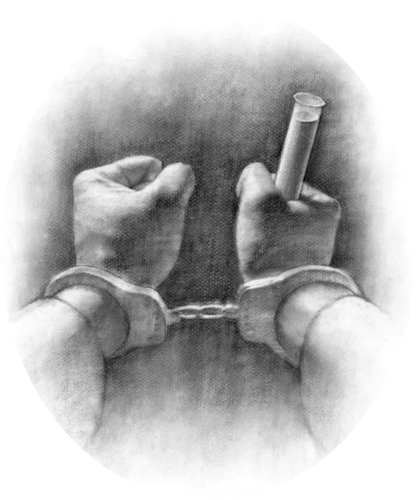
The U.S. government's post-9/11 effort to make citizens more “secure” has had some frighteningly destructive consequences. One of the most egregious examples is the government's prosecution–using new departmental powers of Homeland Security and the PATRIOT Act–of Thomas C. Butler, a distinguished scientist and doctor.
By the time you read this, Butler will have been in prison for well over a year. It's a curious place for the U.S. government to put the man who is credited by the World Health Organization with saving the lives of more than two million children every year through a cholera treatment he helped to develop. Moreover, at the time of his arrest in 2003, Butler was researching ways to protect Americans from plague, a weaponizable pathogen.
Human plague, endemic in the United States, in Texas and other parts of the Southwest, is caused by the bacteria Yersinia pestis and carried by rodents. From time to time, plague spreads to Americans who hunt or handle the infected rodents. But across the globe in Tanzania, plague is far more common and kills people regularly.
Butler, then a professor of medicine, chief of the Infectious Diseases Division of Texas Tech University, and one of the most knowledgeable and experienced clinical scientists in plague infections, was worried that if the disease were to arise in the United States–either naturally or through terrorism–the country would be ill-equipped to treat the victims. Both streptomycin and chloromycetin, the two antibiotics currently recommended to treat plague and prevent death, are old and not readily available at U.S. health centers. Butler felt that it was urgent to test the efficacy of two other readily available antibiotics–gentamicin and doxycycline. Researchers at the Centers for Disease Control and Prevention, Fort Detrick, Fort Collins, and at the Food and Drug Administration agreed and were happy to collaborate in his research.
Scientists at the University of Tanzania also agreed to work with Butler and designed a study to evaluate doxycycline (taken by mouth) and gentamicin (an injection) to treat plague patients at Tanzanian health facilities. In 2000, Butler spent his own money (later reimbursed from grant funds) to get the study off the ground. He had working approval for more than a decade with the Texas Tech administration for his international research grants and contracts. The responsible Tanzanian authorities had approved the research. For his colleagues in Africa, Butler allowed his lab to serve as a reference laboratory through which plague specimens were analyzed and exchanged. During the study he shared samples with the collaborating U.S. government laboratories.
In January 2003, Butler could not locate 30 plague samples at his lab. He noted the missing specimens in his records and immediately reported the discrepancy to the Texas Tech safety officer, as per regulations. But instead of conducting a standard internal investigation, Texas Tech officials immediately called the police, the FBI, and the Department of Homeland Security. The White House was informed about the missing samples, and about 60 FBI agents soon arrived in Lubbock. The result was a modern-day witch-hunt.
Butler was interrogated without legal representation and without sleep and was ultimately induced to sign a statement with the promise that his signature would settle the matter and allay any public panic. But after signing, he was arrested, his research records were confiscated, and he was forbidden to contact any colleagues who might be called as witnesses.
His honest accounting of samples launched a tidal wave of paranoia. It was reported that Attorney General John Ashcroft informed President George W. Bush and head of Homeland Security Tom Ridge that, “We may have a plague attack in Texas.” It is understandable to worry about missing specimens (which have never been located and are presumed to have been inadvertently autoclaved), but going after Butler makes little sense, especially because it was his honesty that brought the missing vials to light.
“Butler's honest accounting launched a wave of paranoia. Ashcroft reportedly told Bush and Ridge,
He was eventually acquitted of all the serious charges brought against him but found guilty on the much lesser counts of mislabeling a package sent to Tanzania, as well as on several financial counts related to his Texas Tech contracts. Judge Sam Cummings–“Maximum Sam”–gave Butler a two-year sentence, far less than the minimum dictated by federal guidelines, citing Butler's outstanding services to society. On June 8, his lawyers appealed his case in the U.S. Court of Appeals.
Virtually all of Butler's colleagues and professional organizations have rushed to his support, and his case has been addressed by the Committee on Human Rights of the National Academy of Sciences. “This seemingly selective prosecution of Dr. Butler raises extremely serious concerns not only of individual rights but also for the scientific community generally,” wrote committee chairman Joseph Birman in a letter to the Justice Department. “Our government, in these troubled times of biological and chemical threats to our nation, needs the research, the knowledge, and the cooperation of the scientific community. It does not need to put our scientists in peril of massive criminal investigations and prosecutions for some perceived misstep.”
None of the bioterrorism charges were ever tenable or plausible. As I wrote in a June 2005 Clinical Infectious Diseases editorial penned with 13 colleagues, “Many news sources have run stories suggesting that Butler may have been a victim of the widespread fear about bio-terrorism and may have been singled out, presumably to serve as an example, as part of a flawed strategy to fight bioterrorism.”
Butler has a wife and four children, two of them young. He has lost his tenured professorship, medical license, and spent his savings and retirement on legal defense. He is incarcerated in the federal penitentiary at Fort Worth. He refused a plea bargain, as he and his attorneys do not believe he is guilty of any illegal activity.
From an academic standpoint, a chilling question has gone unanswered–why did the Texas Tech administration join the government in prosecuting a highly respected, tenured faculty member with an impeccable record for scientific research? And why did the government pursue so vehemently a case against an outstanding researcher? Perhaps Butler attorney Jonathan Turley has the answer to that. Last summer he told a reporter, “It would have been a personal embarrassment for John Ashcroft” to drop the case.
The U.S. government would like the public to believe that the dangerous plague doctor is in jail and that the country is safer because of it. But the truth is that we have removed from action the only scientist who had embarked on the very research that could save lives should there be a bioterror attack using plague. The government has demonstrated that those who work to protect us are themselves very vulnerable.