



Abstract

I didn't see 2001: A Space Odyssey when it was first released in theaters 32 years ago because I was busy preparing to be born. My generation may have slept, cried, or breast-fed our way through the moon landings, but many of us took Stanley Kubrick's promise to heart: One day, when you're all grown-up, there'll be really powerful computers, hotel rooms in orbit, and a base on the moon. Humans will be off exploring the outer planets and contacting aliens. Just wait.
Now 2001 has finally rolled around. We've got the computers all right, and most of them are more cooperative than HAL. But our exploration of space seems to have fallen short. More than three decades after Neil Armstrong took his first small step, mankind is still stuck in low-Earth orbit.
Instead of chasing alien artifacts off Jupiter, we're building another space station a couple hundred miles overhead. And many in the space community think the International Space Station (iss) is a giant leap to nowhere in particular.
“The space station is the biggest single obstacle to the exploration of space,” says University of Maryland physicist Robert L. Park, director of the Washington office of the American Physical Society. “With the $100 billion that the space station will cost over its lifetime we could have explored the solar system.”
The space station now under construction 220 miles above the Earth is an undertaking of impressive scale. When completed in 2006, it will have a mass of nearly a million pounds, more than four times the size of the Russian space station Mir, and its solar panels will provide 60 times more power. It will have 43,000 cubic feet of pressurized cabin space–three times the size of the average U.S. home–including six laboratories and sufficient life support and habitation areas for a seven-person crew. Construction will require 80 space shuttle flights, 1,900 hours of space walks, and the financial and engineering contributions of 16 nations.
NASA says the space station will further the cause of space exploration by allowing people to learn to live and work in space, assemble complex structures, and deal with the effects of weightlessness and the discomfort of living long periods in close quarters. The astronauts will spend their time operating an impressive microgravi-ty research center, tending experiments that examine the behavior of everything from protein crystal growth to fluid mechanics to their own bodies.
“If we ever want to go to Mars, set up a long-duration moon base, or visit asteroids, we're going to need to know a lot about the human body and how it responds to muscle atrophy, bone degeneration, fluid shifts, and radiation,” says nasa spokesperson Kristen Larsen in Washington. “The space station is essential for that sort of research.”
Few space scientists see it that way. Throughout the years of congressional debate over whether to fund the project, leading scientists lined up to oppose it on the grounds that the scientific return would never justify the tremendous cost.
“I think it's a political failure that the United States was unable to channel funds towards the main [aerospace] contractors in a form that led to a more inspiring outcome,” says Britain's Astronomer Royal, Sir Martin Rees of Cambridge University. “It was never justified as a scientific project.”
Scientists argued that the micro-gravity research planned for the station has already been done. Decades of research aboard the space shuttle, Mir, and the first U.S. space station, Skylab, have provided answers to virtually every pressing question proposed for the iss. As for space exploration, the real challenges to future manned missions are out there in interplanetary space. Robot probes and landers could provide far more valuable and relevant information at a fraction of the cost of constructing a large orbital station.
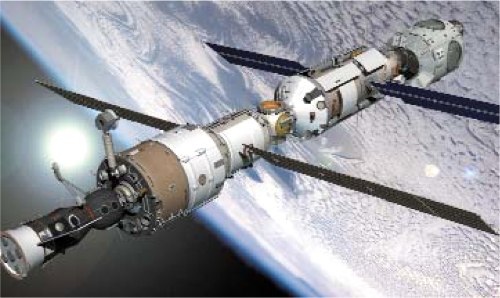
Artist's rendering of Japanese experiment module.

“The experiments that are planned for the space station aren't bad science, they're just unimportant science,” Park says. “Now that the taxpayers are spending all this money to put it up there, I think the scientific community will have to do our best to make the most of it. But it's hard to see anything useful coming out of it.”
At the same time, the station will soak up most of the limited resources budgeted for space exploration, to the detriment of more relevant space missions. Nasa estimates the iss will cost U.S. taxpayers about $39 billion through its first 10 years of operation. But that figure doesn't include a wide range of additional nasa expenditures, from communications and ground personnel to the cost of actually lifting payloads into orbit with the space shuttle. Those costs will add another $2.5 billion per year, according to a report last year by the government's General Accounting Office, which also estimated that an additional $100 million in annual equipment upgrades should be added on. Given the state of the Russian space program (on which the iss relies) and other uncertainties, many observers think the true cost to U.S. taxpayers may run as high as $100 billion.
Compare that with recent unmanned missions. The unmanned Cassini mission to Saturn cost $3.4 billion, and the Galileo project (which discovered possible oceans on Callisto and analyzed those on Europa) was $1.35 billion. The successful Mars Pathfinder mission was a mere $270 million, and the proposed Kepler space telescope (which will be able to detect Earth-sized planets in other solar systems) is estimated at $286 million.
“Nasa is canceling or scaling back scientifically important missions because they don't have the money,” says science writer Timothy Ferris, professor emeritus at the University of California at Berkeley. “The reason is that they've been involved in this extravagantly costly manned program, this stepping stone to nowhere.”
So why is the space station being built? Because in the 1960s the United States committed itself to two extremely expensive projects–the moon and the war in Vietnam–and manned space policy has yet to recover. Together, the Apollo program and the Vietnam War left nasa with nowhere to go.
Until Apollo, the master plan for manned space exploration was the “stepping stone” approach popularized by Wernher von Braun in the 1950s. Von Braun, a German World “War II V-2 rocket designer who eventually became a top nasa official, insisted that a space station first be assembled in Earth orbit. A space shuttle would be developed to provide efficient “bus service” to the station, which would in turn serve as the construction, support, and launch facility for future missions to the moon, Mars, and beyond. This plan ensured that after humans landed on the moon, all of the essential infrastructure for future space exploration would already be built and paid for. A permanent lunar base and manned Mars missions could follow whenever we were ready.
President John F. Kennedy's plan to win the space race by going directly to the moon threw a wrench into the works. The triumphantly successful Apollo program got men to the moon many years ahead of the von Braun plan, but when the moon dust settled, no infrastructure remained to support future missions. “If we'd selected von Braun's method we would have gone to the moon, we'd have built a space station, and we'd be off to other places by now,” says John F. Graham, assistant professor of space studies at the University of North Dakota in Grand Forks. “What happened was just what von Braun was afraid of: We ended up trapped in low-Earth orbit.”
By the time Neil Armstrong was walking on the moon, the Vietnam conflict was consuming American lives and money at an astounding rate. With the country tearing itself apart, public interest in space exploration waned. The final Apollo missions were scrubbed and NASA's budget was gutted. “President Nixon said we can't pay for the Vietnam War, the Great Society, and space missions, so he got rid of the space missions,” says Graham. Nasa, which wanted to go back and build a space station and a space shuttle, was told to choose between the two. They chose the shuttle, a bus to nowhere.
“Ever since then the manned space program has been troubled by a lack of clearly defined goals,” says Ferris. “Nobody wanted to go back to the moon, and nobody wanted to pay to go to Mars. They didn't have funding for a space station, so they were using the shuttle to launch satellites that would have been cheaper and easier to launch without it.”
Committed to the shuttle program, nasa lobbied for a space station for it to go to. The Reagan administration gave the go-ahead in 1984, but the project quickly spun out of control.
The station was designed and redesigned, its cost rocketing from $8 billion to $32 billion. Public and political support was lukewarm. Scientists felt NASA's limited resources would be better spent on cheaper unmanned missions to Mars and the moons of Jupiter and Saturn. With the support of major contractors, the project scraped through Congress by a single vote at the start of the Clinton administration.
“Every state in the union had to have a part of the space station regardless of efficiencies,” says Graham. “I love the space program, but this is definitely a pork barrel project.”
“With the collapse of the Soviet Union, the station was redesigned to bring Russia and 14 other countries on board in an international partnership. In its current incarnation the International Space Station not only gives Boeing something to do, it keeps thousands of Russian engineers from seeking employment in Iraq or North Korea. The station is a successful political project, if not a scientific or exploratory one.
“The space station program has been a success at meeting the economic and security goals that were laid out for it when the Russians were brought in,” says John Logs-don, director of the Space Policy Institute at George Washington University in Washington, D.C. “None of the states involved in the station have been involved in missile proliferation and it's provided employment to a lot of people [in Russia] with highly marketable skills.”
“The reality is that space policy has been intricately involved with foreign policy,” says analyst Charles Vick of the Federation of American Scientists, who says the station is a wonderful carrot on the world stage. “If you really want to be a democratic republic and abide by the strategic arms and nonproliferation treaties, then you can be part of the space game, you can be up there with the best of them.”
Few in the space community approve of how the station was designed, but now that it's under construction most are setting their objections aside. Maybe it should never have been built, but once the space station is constructed, NASA's manned program will have nowhere to go but outward.
“It may just be a baby step and many of us were hoping for more by now,” says Pat Dasch, executive director of the Washington-based National Space Society. “But having a permanent human presence above the Earth is a significant human achievement. It's the stuff dreams are made of, and hopefully we won't step back from them again.”
