




Abstract

New analyses of the results from the Women's Health Initiative have revealed that the risk of heart disease with hormone therapy is dependent on age and years since menopause.
The publication of the original Women's Health Initiative results on hormone therapy, in 2002, led to a significant drop in use of hormone therapy for peri- or post-menopausal women when the studies were prematurely discontinued due to an increased risk of heart disease, breast cancer and stroke. New analyses of the data now suggest that the risk of heart disease is dependent on the age of the woman and how long after menopause the hormone therapy is initiated. The risks of stroke and breast cancer, however, appeared to remain constant.
While the results did not reach statistical significance, they indicated that younger women and those initiating hormone therapy within 10 years of the menopause were less likely to suffer coronary heart disease than older women or those starting hormone therapy later after the menopause. Among older women and those with a large gap between menopause and initiation of hormone therapy, the risk of heart disease seemed to be greatest in those who had symptoms such as hot flashes and night sweats, which may be linked to heart risk factors such as high cholesterol, hypertension and obesity.
The reanalyses, published recently in the Journal of the American Medical Association, combined data from the estrogen-alone and estrogen plus progestin arms of the Women's Health Initiative (involving a total of 27,347 women). The analyses divided the women into three age groups (<50, 50–60 or >60 years) and three categories of gaps between menopause and hormone therapy initiation (<10 years, 10–19, or >20 years).
“What the findings suggest is that coronary risk from hormones is not increased close to the menopause; however, there is increasing risk for women from hormone therapy as they move further from the menopause”, summarized Jacques E Rossouw, lead author of the study. “We also find that the stroke risk from hormones is increased irrespective of years since menopause. Finally, we found that the increased risk in the older women is really confined to those who have persistent hot flashes and night sweats, and in part that seems to be because those women have more of the conventional risk factors like high blood pressure, high cholesterol, diabetes, overweight, and so forth, and that's a new finding, too.”
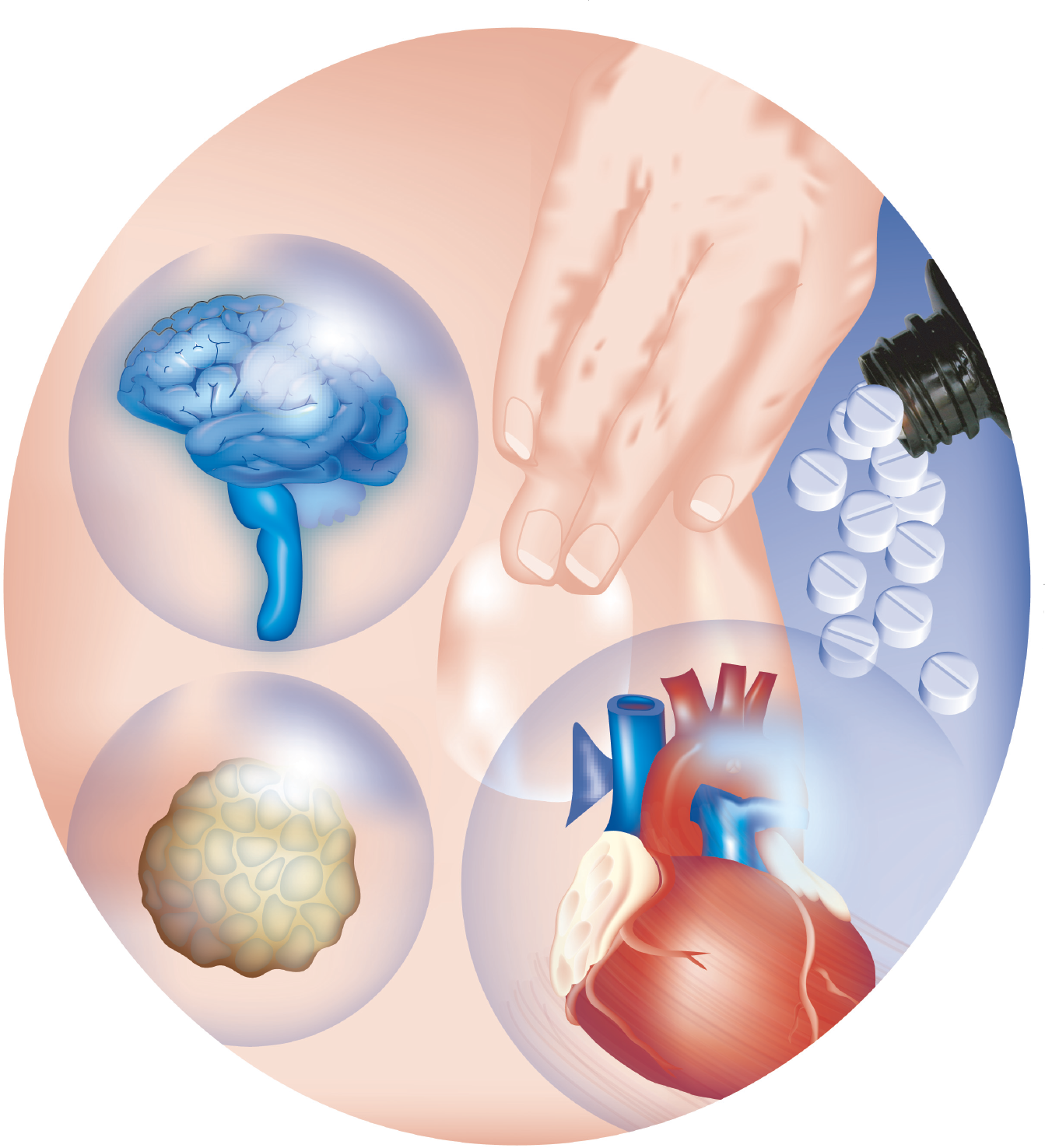
“This analysis should be appreciated mainly for the somewhat-positive message for the short-term use of hormone therapy for menopausal symptoms”, continued Dr Rossouw. “For those women who were afraid to use it before, there's some encouragement here that it might be a reasonable thing to do in the short term. But it doesn't change anything about our overall recommendations – that is, you don't use hormone therapy for the prevention of heart disease at any age.”
The investigators plan to follow-up these analyses with new trials to investigate the association between coronary heart disease and hormone therapy in women younger than 50 years and those who start hormone therapy very soon after menopause. In the future, they hope to be able to separate the effects of age itself and time from menopause, to determine which is the key factor in modifying hormone therapy-induced heart disease. “It seems that it's the lowering of estrogen levels, rather than age, which is somewhat more important, but it's hard to be sure, because they are so highly correlated”, Dr Rousseau stated. “For what it's worth, we think that years since menopause, that is, years since reproductive hormone levels were decreased either naturally or surgically, seems to be the more important factor. It does support a hormone hypothesis.”
Source: Rossouw JE, Prentice RL, Manson JE et al.: Postmenopausal hormone therapy and risk of cardiovascular disease by age and years since menopause. JAMA 297, 1465–1477 (2007).
In brief…
Steiner AZ, Xiang M, Mack WJ et al.: Obstet. Gynecol. 109(3), 581–587 (2007).
Investigates the endometrial effects of unopposed estradiol therapy for postmenopausal women in two clinical trials. The studies randomized 218 healthy menopausal women to receive either 1 mg micronized 17β-estradiol or placebo daily for up to 3 years and women were given annual ultrasound scans to determine endometrial thickness. Women receiving estradiol had an increased risk of hyperplasia, uterine bleeding and endometrial biopsy.
Reports data on the long-term effects of switching from tamoxifen to exemestane. A total of 4724 postmenopausal women who had been diagnosed with invasive early breast cancer and completed 2–3 years of tamoxifen therapy were randomized to either continue taking tamoxifen or switch to exemestane for the remainder of the 5-year course of endocrine therapy. Switching to exemestane was associated with an unadjusted hazard ratio of 0.76 after an average follow-up period of 4.6 years, leading to a modest improvement in overall survival.
Donahue RP, Rejman K, Rafalson LB, Dmochowski J, Stranges S, Trevisan M: Diabetes Care 30(2), 354–359 (2007).
Suggests that women show elevated levels of blood biomarkers of diabetes earlier than men. The study used data from 1455 people enrolled in the Western New York Health Study, who did not have diabetes or cardiovascular disease at the start of the 6-year study. Biomarkers of endothelial function, thrombosis, inflammation and diabetes were measured. Women who developed pre-diabetes (abnormal glucose levels) had higher levels of biomarkers for endothelial dysfunction and thrombosis at baseline, suggesting that the negative cardiovascular effects of diabetes may start earlier in female diabetics.
Patches may be safer than pills for hormone therapy
A French study has suggested that transdermal hormone therapy may be less likely to cause blood clots compared with oral formulations. Blood clots are one of the major risks of postmenopausal hormone therapy, making up nearly half of all serious adverse events reported in the estrogen plus progestin arm of the Women's Health Initiative.
“If you're talking about women who are recently menopausal, the patch could be enough to very dramatically change the benefit–risk ratio”, according to JoAnn Manson of Harvard University (MA, USA), who co-authored an editorial discussing the new study.
The study, known as Estrogen and Thromboembolism Risk (ESTHER), was an observational, case–control study, comparing 271 postmenopausal women aged 45–70 years who had suffered a first idiopathic venous thromboembolism with 610 matched controls. Oral estrogen therapy conferred a fourfold increased risk of venous thromboembolism, while transdermal estrogen users had no increased risk.
The investigators behind the study feel that the differences between the various modes of hormone administration warrant further study in large randomized, controlled clinical trials, a belief echoed by Dr Manson.
“Whether hormone therapy is in vogue or out of vogue, there will be many women with impaired quality of life who will be seeking treatment for menopause symptoms”, stated Dr Manson. “We need to push for more research for women so they will have clear answers to these questions.”
Source: Canonico M, Oger E, Plu-Bureau G et al.: Hormone therapy and venous thromboembolism among postmenopausal women: impact of the route of estrogen administration and progestogens: the ESTHER study. Circulation 115(7), 840–845 (2007).
MRI highly effective at identifying contralateral breast cancer
A new study, published recently in the New England Journal of Medicine, has confirmed the efficacy of magnetic resonance imaging (MRI) in detecting contralateral tumors in women diagnosed with breast cancer. MRI detected 90% of tumors missed by mammography and clinical breast exam, doubling the number of tumors in the contralateral breast that were detected at initial diagnosis.
“One in ten women diagnosed with cancer in one breast will develop the disease in the opposite breast. Having a better technique to find these cancers as early as possible will increase the chances of successful treatment,” commented Elias A Zerhouni, Director of the NIH, which funded the study.
The study, known as the American College of Radiology Imaging Network (ACRIN) study, involved approximately 1000 women recently diagnosed with cancer in one breast, who had already undergone mammogram and clinical breast exam of the opposite breast. The benefit of MRI was consistent across age, race, breast density and type of tumor.
“Although no imaging tool is perfect, if the MRI is negative, the chance of cancer in that breast is extremely low. A potential outcome that we would be delighted to see is fewer unnecessary bilateral mastectomies”, concluded principle investigator Constance Lehman.
Source: Lehman CD, Gatsonis C, Kuhl CK et al., ACRIN Trial 6667 Investigators Group: MRI evaluation of the contralateral breast in women with recently diagnosed breast cancer. N. Engl. J. Med. 356(13), 1295–1303 (2007).
New breast cancer drug approved by the FDA
The US FDA recently approved a combination of new drug lapatinib (Tykerb®), together with the existing drug capecitabine, for the treatment of human epidermal growth factor (HER)2-overexpressing advanced breast cancer in women who have already been treated with an anthracycline, a taxane and trastuzumab.
Lapatinib is a kinase inhibitor, targeting several molecules involved in cell survival, including the HER2 protein. Unlike trastuzumab, a monoclonal antibody, lapatinib enters the cell and blocks the action of HER2. This difference in mechanism of action means that lapatinib may still be effective in women who are no longer responding to trastuzumab.
A novel anticancer drug, lapatinib, has been approved by the US FDA for the treatment of advanced breast cancer.
“Today's approval is a step forward in making new treatments available for patients who have progression of their breast cancer after treatment with some of the most effective breast cancer therapies available”, enthused Steven Galson, Director of the FDA's Center for Drug Evaluation and Research. “New targeted therapies such as Tykerb are helping expand options for patients.”
The decision to approve the drug was based on a study in 400 women with HER2-positive advanced or metastatic breast cancer. Half received standard capecitabine-alone treatment, while half received capecitabine plus lapatinib. The group receiving lapatinib had a significantly greater time to progression and a 10% increase in tumor response rate. The survival data from the study are not yet available.
Side effects of the drug include diarrhea, nausea, vomiting, rash and hand–foot syndrome. Decreases in heart function have also been reported in some patients, but these are rare and generally reversible.
Lapatinib will be distributed by GlaxoSmithKline, who hope to have the drug available within weeks.
Source: FDA Press release. Available at www.fda.gov.
Stroke treatment outcomes worse for women
Women treated with recombinant tissue plasminogen activator (rtPA) after a stroke are less likely to recover function than men, but are more likely to survive, according to new research by investigators at Columbia University (NY, USA).
“Other studies have shown that women have worse functional outcomes after stroke; this shows that this is also true when women are treated with rtPA”, commented lead author Mitchell SV Elkind.
The study involved 333 patients treated with rtPA within 3 h of a stroke. After 3 months, 47% of men had good functional outcomes compared with 30% of women.
The mechanism behind the superior response to rtPA among men is uncertain but Dr Elkind raised the “possibility that women have higher levels of substances in the blood that can cause clots.”
He went on to stress that “women are definite candidates for treatment with rtPA, which is still our only approved medical treatment for acute ischemic stroke.”
Source: Elkind MS, Prabhakaran S, Pittman J et al., GAIN Americas Investigators: Sex as a predictor of outcomes in patients treated with thrombolysis for acute stroke. Neurology 68(11), 842–848 (2007).
Low-dose aspirin cuts death rate in women
Long-term use of low-dose aspirin appears to cut the death rate from cardiovascular disease and cancer in women, according to a long-term observational study involving 80,000 women.
The Nurses' Health Study has tracked the women since 1976, examining various aspects of their lifestyle and health. Women who reported regular aspirin use had a 25% lower risk of death, including a 38% lower risk of death from cardiovascular disease and a 12% reduction in cancer deaths.
However, previous observational studies, including the Women's Health Study, which followed 40,000 women for 11 years, have found no association between aspirin and death rates, leading some experts to question the results of the new study.
Although these results are interesting and may provide a starting point for further studies, lead author Andrew T Chan does not feel that they should affect the advice given to women regarding regular aspirin use. “I tell women that, at this point, the decision calls for consultation with a doctor. Aspirin does have side effects, so it is something that has to be individualized. It would be very naive to recommend that treatment for all women across the board.”
Source: Chan AT, Manson JE, Feskanich D, Stampfer MJ, Colditz GA, Fuchs CS: Long-term aspirin use and mortality in women. Arch. Intern. Med. 167(6), 562–572 (2007).
If you have newsworthy information, please contact: Charlotte Barker, Commissioning Editor, Women's Health, Future Medicine Ltd., Unitec House, 2 Albert Place, Finchley Central, London N3 1QB, UK,