





Abstract
The NuvaRing® is a vaginal ring contraceptive that releases a daily dose of 15 μg ethinylestradiol and 120 μg etonogestrel through the vaginal epithelium, thereby avoiding the daily fluctuations in serum levels typically observed with combined oral contraceptives. Each ring is designed for a single 3-week use followed by a 1-week ring-free period. The ring offers robust inhibition of ovulation, yielding a Pearl Index of 0.65 for European women in registration trials. The ring has the same contraindications as combined oral contraceptives. The vaginal ring is a highly effective, safe and well-tolerated method of hormonal contraception designed for reproductive-aged women who desire freedom from the daily pill.
The NuvaRing® is a vaginal ring designed for use as a hormonal contraceptive. It has been available on the contraception market for approximately 2–3 years in most industrial countries. Its approval in the UK is still pending. It has since gained a substantial market share that is still increasing in the USA and most European countries.
The development of controlled-release formulations for vaginal delivery began using progestin-only rings in 1970, but difficulties with irregular bleeding patterns were encountered [1]. Initial combination sex-steroid rings for clinical trial purposes were multi-compartment rings made of Silastic®. Production shifted to a ring made of ethylene vinyl acetate in 1993, which allowed larger-scale production and resulted in the development of a transparent and flexible vaginal ring of 54 mm outer diameter (Figure 1). The vaginal ring offers a contraceptive method without the necessity of daily pill intake.
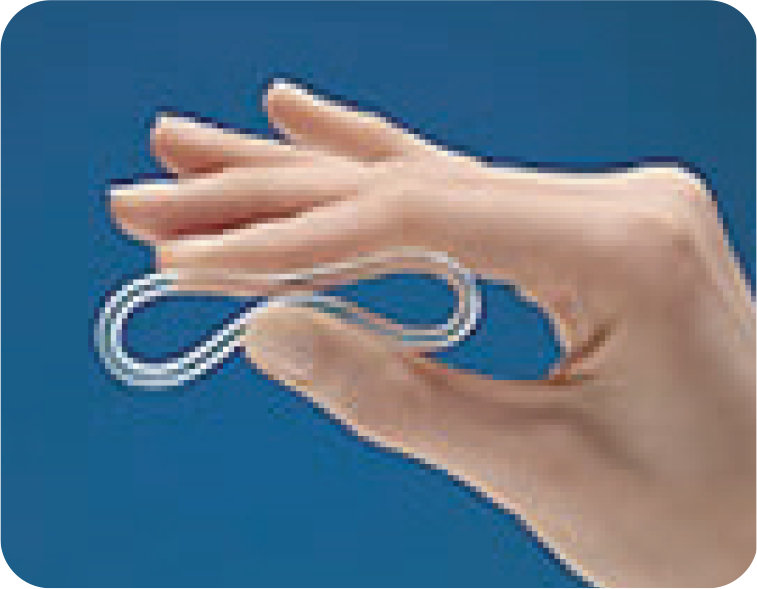
The vaginal ring (NuvaRing®).
Method of use
Each ring is designed for a single and continuous 3-week period of use, followed by a 1-week ring-free period for withdrawal bleeding (Figure 2). The first ring insertion is recommended on the first day of menstrual bleeding. Insertion and removal is easily performed by the woman herself (Figure 3). The position for insertion perceived as the most convenient may differ between individuals [2]. The exact position of the ring (e.g., whether it fits around the neck of the cervix or not) is not critical for its contraceptive efficacy, as long it is entirely inserted into the vagina. Exact instructions are provided by the manufacturer [101,102], as well as free patient-support tools that vary from country to country, including NuvaTime® [103], an electronic device to remind the users when to insert and remove the ring, agenda stickers, e-mail, SMS text message services or personal computer programs.

Treatment scheme and intended bleeding pattern with the vaginal ring.

Insertion of the vaginal ring.
A woman can also use two rings consecutively without a ring-free interval to avoid withdrawal bleeding, but the likelihood of irregular bleeding or spotting during the following cycles increases when the standard regimen is altered. If it is to be used immediately after pregnancy, it is recommended the ring be inserted by the fourth week after delivery unless the woman is breastfeeding. Women with conditions such as descensus uteri, cervical prolapse, cystocele or chronic constipation may find the ring uncomfortable or difficult to retain in the vagina. Otherwise, the vaginal ring constitutes an option for the sizable proportion of women who are candidates for the combined oral contraceptive (COC) pill but require freedom from the constraint of taking a pill every day [104].
Chemistry
The ring is made of ethylene vinyl acetate and the hormonal load is uniformly dispersed in the central core, surrounded by a membrane that controls the continuous hormone release from the ring. The estrogenic compound is represented by ethinylestradiol, as in most combinations. Etonogestrel, the biologically active metabolite of desogestrel, is used as a progestin [3]. A daily dose of ethinylestradiol 15 μg and etonogestrel 120 μg is released through the vaginal epithelium.
Pharmacodynamics
The vaginal ring releases steroids, which are absorbed into the circulation through the vaginal epithelium, thereby inhibiting the hypothalamic–pituitary–ovarian axis and preventing ovulation. Using the vaginal ring as recommended results in inhibition of ovulation in a pharmaco-dynamic study, as judged by vaginal ultrasound, and gonadotrophin and progesterone serum concentrations [4]. During an additional 2 weeks of use with the same ring, ovulation continued to be inhibited. When altered use of the ring was examined, it was observed that 3 days of use suppressed ovarian activity, resulting in the need of recruitment of a new cohort of follicles. After delayed ring insertion (median 11 days), follicles developed to 13 mm, but subsequent insertion of the ring inhibited ovulation in all women [5]. The vaginal ring has not been shown to provide a physical barrier to sperm penetration, neither is it thought to protect from sexually transmitted disease.
Pharmacokinetics & drug interactions
The vaginal route is an attractive option for hormone delivery as it avoids gastrointestinal interference with absorption, a possible cause of method failure in cases of severe diarrhea or vomiting. The pharmacokinetics of the two components of the vaginal ring, ethinylestradiol and etonogestrel, are characterized by the avoidance of the daily fluctuations in serum levels as typically seen with COCs. After ring insertion, ethinylestradiol concentrations peak on days 2–3 and then gradually decline. Maximum etonogestrel levels are achieved approximately 1 week after insertion of the ring, and then remain steady for the remaining 2 weeks. The absolute bioavailability of ethinylestradiol and etonogestrel is 55 and 102%, respectively, equivalent to or higher than oral administration of the compounds. The vaginal ring delivers a daily dose of ethinylestradiol 15 μg and etonogestrel 120 μg. When comparing the vaginal ring with a COC containing ethinylestradiol 30 μg and desogestrel 150 μg, the mean steady-state serum concentrations of etonogestrel are very similar in both products, but the systemic exposure of the user to ethinylestradiol is only half of this level with the vaginal ring [6]. In a comparison of ethinylestradiol pharmacokinetics in three hormonal contraceptive formulations, the vaginal ring, the transdermal patch and a COC containing ethinylestradiol 30 μg, exposure to ethinylestradiol in the NuvaRing group was 3.4-times lower than in the patch group and 2.1-times lower than in the pill group. Serum ethinylestradiol levels of subjects showed much lower variation with NuvaRing than with the patch or the COC [7].
Concomitant use of local antimycotics, spermicides and tampon usage do not reduce steroid absorption, so they are not expected to affect the contraceptive efficacy of the ring [8,9]. Drugs that increase metabolic clearance of sex hormones by inducing hepatic cytochrome P450 enzymes such as barbiturates, anticonvulsants, certain antibiotics and St. John's wort [10] may decrease the contraceptive efficacy of hormonal contraceptives. Although data on this issue are very limited, women who use these drugs concomitantly are advised to add a barrier method contraception in addition to vaginal ring use until 7 days after discontinuation of the drug. However, antibiotics such as oral amoxicillin or doxycycline do not alter the pharmacokinetics of the vaginal ring and may be used without fear of reduced efficacy [11].
Clinical efficacy
The clinical efficacy of a contraceptive is a function of both the pharmacological properties of the compounds delivered and the users' compliance. A contraceptive suitable for the majority of women needs to be easy to handle, reliable and reasonably priced, conditions seemingly fulfilled by the vaginal ring. Before the vaginal ring was launched, large, multicenter trials were conducted in Europe and North America to assess the clinical contraceptive efficacy and the acceptability and tolerability of the product [12].
Overall, 2586 women have used the vaginal ring in clinical trials in this process, providing data from 24,507 cycles, which correspond to 1879 woman years. A total of 21 pregnancies occurred, yielding a Pearl Index of 1.18 (95% confidence interval [CI]: 0.73–1.80) for the combined American–European data [13] and a Pearl Index of 0.65 (95% CI: 0.24–1.41) for the European data alone [2]. The contraceptive efficacy of the ring was independent of the women's body weight [14]. A difference in Pearl Indices between North American and European contraception studies has been consistently observed and is most likely caused by educational, cultural and socioeconomic factors [15]. From the author's personal point of view, the acceptability of the vaginal ring to a woman is strongly influenced by her own perception of her genitalia and her willingness to interfere with them manually.
Unsatisfactory bleeding patterns are a major reason for a woman to withdraw from a certain method of contraception. With the vaginal ring, cycle control was perceived as acceptable or better by the majority of women in all studies. The incidence of irregular bleeding episodes was less than 5% for the European study [13] and 5.5% for the combined North American and European studies. Overall compliance with the method was high, with all study criteria fulfilled in 85.6% of cycles [13]. In a comparative trial with a COC containing levonorgestrel 150 μg and ethinylestradiol 30 μg, the incidence of irregular bleeding was lower with the vaginal ring from the first cycle onwards [16]. In a further study comparing the cycle characteristics of the vaginal ring with a COC containing drospirenone 3 mg and ethinylestradiol 30 μg, breakthrough bleeding or spotting during cycles 2–13 was, in general, less frequent with the ring than with the COC (4.7–10.4%) [17]. Another trial comparing cycle control with the vaginal ring with a COC delivering ethinylestradiol 30 μg and levonorgestrel 150 mg demonstrated the superiority of the vaginal ring [18].
In the author's experience, the positive data derived from clinical studies mirror the impressions gained in daily clinical practice – at least for middle-European women. Highly satisfactory results can be achieved provided the woman (and possibly her partner) is properly counseled. Decisive factors include the desire to be free from daily pill intake, the comfort the woman has with placing the ring and acceptance by the male partners of the ring's presence during sexual intercourse.
Safety & tolerability
As the mechanism of action of the vaginal ring is similar to those of COCs, the same contraindications apply and, should any of these conditions arise for the first time during the use of the product, it should be discontinued (Box 1).
With respect to the hemostatic system, overall data indicate that the vaginal ring has minimal effects on hemostatic parameters [19]. Only factor VII levels increased with the vaginal ring after six treatment cycles compared with a COC containing levonorgestrel 150 μg and ethinylestradiol 30 μg [19]. The NuvaRing also had a minimal effect on the lipid profile.
Contraindications for use of the vaginal ring.
Presence or history of venous or arterial thrombotic/thromboembolic events
Presence of severe or multiple risk factors for venous or arterial thromboembolism in
– Dyslipoproteinemia
– Uncontrolled hypertension
– Prolonged immobilization
– Systemic lupus erythematosus
– Hemolytic uremic syndrome
– Sickle cell disease
History of prodromi of thrombosis or cerebrovascular affliction
History of migraine with focal neurological symptoms
Diabetes mellitus with vascular involvement
History of pancreatitis associated with hypertriglyceridemia
Presence or history of severe hepatic disease
Presence or history of benign or malignant liver tumors
Known or suspected sex hormone-dependent malignancies
Undiagnosed vaginal bleeding
Hypersensitivity to components of the vaginal ring
Suspected or known pregnancy
Compared with baseline, total cholesterol did not change after six cycles of treatment with the vaginal ring [20]. In another 6-month trial, no clinically relevant effects on carbohydrate metabolism or adrenal or thyroid function were detected during ring use [21]. In a 2-year, open-label, multicenter trial in 103 premenopausal women aged 18–35 years, long-term use of the vaginal ring had no adverse effects on endometrial histology [22]. A total of 97% of women displayed normal cervical cytology at the end of the 1-year study period. The remaining 3% displayed abnormal cervical cytology at the beginning of the trial, which did not change throughout the study period [13]. The ring had no clinically relevant influences on blood biochemistry, hematology, blood pressure, heart rate or body weight in any of the cited studies. Vaginal infections do not represent a contraindication for ring use. In a recent trial, larger numbers of Lactobacillus colonies present were positive for hydrogen peroxide production during ring use compared with a COC containing ethinylestradiol 20 μg. All other laboratory data, including yeast colony counts, Nugent Gram stain score, vaginal white blood cell count, vaginal pH and discharge weight, were not significantly different by method. Therefore, it was concluded that some women may notice an increase in vaginal wetness during contraceptive ring use, while the vaginal flora in general appeared to be improved [23].
Spontaneous, unwanted expulsion of the ring occurs infrequently in around 0.5% of users. There is no evidence that the number of previous pregnancies affects the rate of ring expulsion. Expulsion is most common with straining. If the ring is extruded, there is no affect on contraceptive reliability provided it is replaced within 3 h.
As judged from published data and from the author's personal experience as a gynecologist, the vaginal ring is well tolerated. Estrogen-related side effects include breast tenderness (2.6%), nausea (3.2%), headache (5.8%) and emotional lability (2.8%), and were observed at lower frequency with ring use compared with COCs. The incidence of device-related adverse events such as foreign-body sensation or vaginal discomfort were low (4.4 and 2.4%) [13]. The prevalence of vaginitis was not increased as compared with the general female population.
In general, fewer than 3% of women report feeling the ring in their vagina. During sexual intercourse, the ring should initially be left in place, as only a small proportion of women and their partners are bothered by the ring during intercourse (<10%) [16]. Absorption of female sex hormones through the penis during intercourse is negligible. In the event that either partner finds the ring uncomfortable, it may be removed for intercourse provided it is reinserted within 3 h.
Regulatory affairs
The vaginal ring has been approved by local drug authorities, with the indication of hormonal contraception, in 2002 in the USA, 2003 in Europe and 2004 in Canada. Approval in the UK is still pending. The vaginal ring is approved for use in all women of reproductive age. In agreement with the recommendations for other combined hormonal contraceptives, women older than 35 years of age who smoke or women with a risk of thromboembolic complications should be advised to use an estrogen-free regimen.
Conclusion
For a long period of time, the focus of product development was the reduction of the steroid doses delivered to women. Few hormonal contraceptives other than COCs were available. However, in recent years, a number of new products have emerged, with new compounds or alternative routes of delivery. The vaginal ring is an example of the latter category, offering a safe, reliable and easy-to-use method for women who need contraception. The vaginal ring represents an important option for women who prefer a low-dose contraceptive method without the need to take a daily tablet.
Future perspective
The vaginal ring provides reliable hormonal contraception for women, yet frees them from the constraint of taking a COC daily. In practice, this method may increase compliance and decrease the likelihood of method failure [24]. The vaginal ring could therefore be evaluated for use in developing countries, which are affected by birth-control logistics. The product may soon be marketed in Asia and Latin America. The ring can also be used to lengthen the cycle, since many women prefer less frequent withdrawal bleeding. The ring has been used in an extended manner that reduces the number of bleeding days but increases unscheduled spotting [25]. This allows the user to select the schedule that best fits their lifestyle or current circumstances.
Information resources
In addition to the references indexed in most medical databases and cited herein, the product monograph offers comprehensive information regarding all aspects of the vaginal ring and can be obtained from the manufacturer (NV Organon, PO Box 20, 5340 BH Oss, The Netherlands) upon request. The company also supports a homepage (www.organon.com) with detailed animations of the vaginal ring. Registration for professional information may be required.
Executive summary
Each ring is designed for a single and continuous 3-week period of use, followed by a 1 -week ring-free period for withdrawal bleeding. The first ring insertion is recommended on the first day of menstrual bleeding.
The ring is to be placed entirely into the vagina; insertion and removal can easily be performed by the user.
The vaginal ring is a highly effective, well-tolerated and safe method of hormonal contraception designed for women of reproductive age who desire freedom from daily pill intake.
The vaginal ring delivers a daily dose of ethinylestradiol 15 μg and etonogestrel 120 μg through the vaginal route, avoiding the daily fluctuations in serum concentrations typically observed with combined oral contraceptives (COCs). The absorbed steroids inhibit the hypothalamic-pituitary-ovarian axis.
When compared with a COC containing ethinylestradiol 30 μg, the vaginal ring delivers only half of the systemic load of ethinylestradiol to the subject.
The vaginal ring reliably inhibits ovulation and yields a Pearl Index of 0.65 for European women if used correctly.
The ring has the same contraindications as COCs.
Cycle stability and bleeding patterns are satisfactory and are superior to COCs in some studies.
The vaginal ring is well tolerated. Estrogen-related side effects include breast tenderness (2.6%), nausea (3.2%), headache (5.8%) and emotional lability (2.8%).
The incidence of device-related adverse events such as foreign-body sensation or vaginal discomfort is low (4.4 and 2.4%).
During sexual intercourse the ring should be left in situ. Less than 10% of women or their partners either feel the ring during intercourse or mind its current use.
A ring-free period of less than 3 h/day does not reduce contraceptive reliability.