





Abstract

To the Editor:
Cryotherapy is commonly used in sports medicine to reduce the pain of acute injuries. Ice packs, cryomassage, ice bath immersion, contrast baths, and vapor coolant sprays are various methods of performing cryotherapy. Vapor coolant sprays used for cryotherapy usually contain propane, butane, or chloroethane [ethyl chloride, C2H5Cl]. Chloroethane drops the skin temperature from 33°C to less than 10°C within 10 seconds after application. 1 For this reason, cooling the skin area by spraying closely for a prolonged time can cause frostbite injury. Chloroethane is used rarely in health care facilities, given the availability of topical anesthetic gels. However, it is popular in sports medicine and prehospital areas and might be included in some wilderness first aid kits.
Cold injuries may be seen with the improper use of both cold packs and vapor coolant sprays. Nevertheless, complications such as sensations of pressure, burning, and pain; alteration of pigmentation; corneal damage; dermatitis and skin irritation (especially after chronic exposure); and frostbite and necrosis due to prolonged application may rarely occur. 2
Frostbite injury is considered a potential complication of improper topical application of chloroethane and has been described as a complication of other topical coolants/anesthetics.3,4 Nevertheless, no case reports describe frostbite injury due to chloroethane application. Here we describe a case of frostbite due to improper application of chloroethane vapor coolant spray. A 19-year-old male patient presented to our emergency department complaining of blistered lesions on his right calf. The previous day he experienced pain in his right calf while running, and he applied vapor coolant spray (Chloraethyl spray, Adroka AG, Allschwil, Switzerland) to the injured area for 20 to 30 seconds. The application of chloroethane was from approximately 15 to 20 cm above the skin. Twenty-four hours later he developed blisters on his calf at the site of application. He denied having exposed the area to any heat source. Physical examination revealed noninfected blisters accompanied by erythematous skin in an area 8 cm × 15 cm on his calf (Figure) felt to be consistent with superficial frostbite. Management included aspiration of the blisters and application of bacitracin antibiotic ointment. He followed a course of regular dressing changes, and the lesions healed without complication over 14 days. On telephone follow up 6 months later, the patient complained of black pigmentation at the injured area.
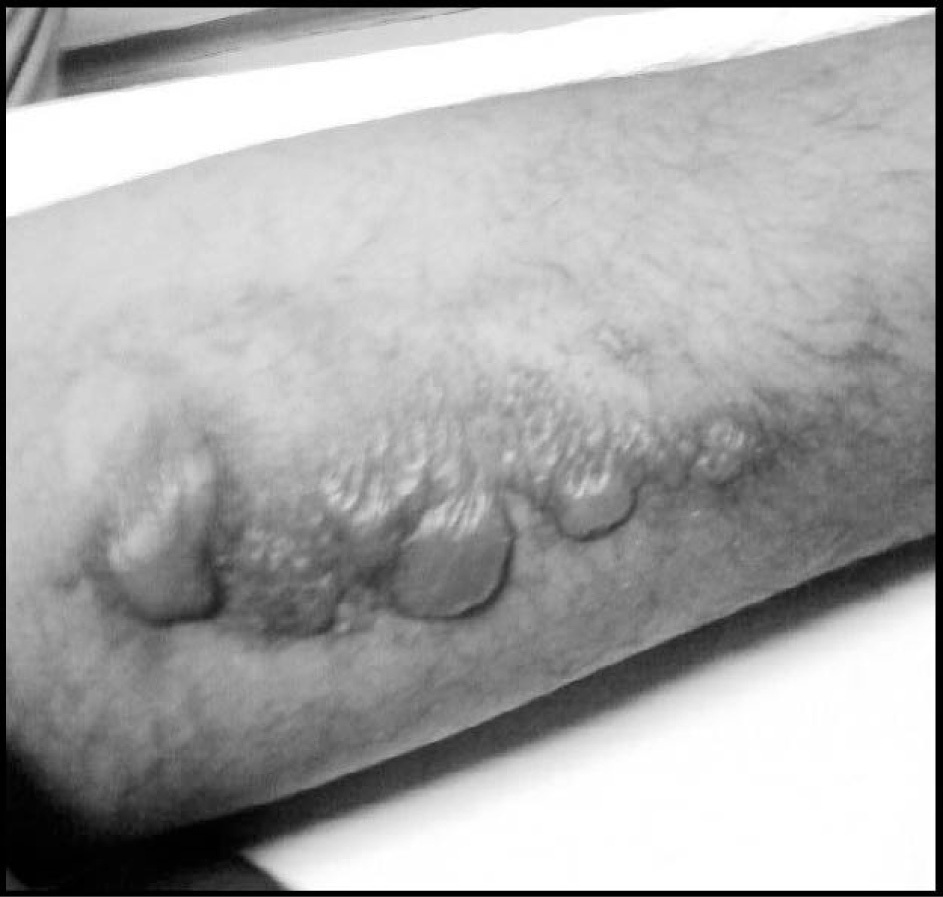
Second-degree frostbite injury caused by chlorethane application spray on the right calf of the patient.
There are occasional case reports in the literature of toxic dermatologic effects of propane and butane.3,4 Lacour et al 3 reported a case of deep frostbite in an 8.5-year-old child after the improper use of a toilet air freshener containing propane and butane. The injury was so severe that a skin graft was ultimately required.
Management of blisters associated with frostbite is somewhat controversial. Current approaches include leaving blisters intact, simple aspiration, and debridement. Hemorrhagic blisters should not be debrided, because this often results in tissue desiccation and worsened outcomes. 5 Aspiration for hemorrhagic blisters is also controversial. Topical antibiotics, such as bacitracin, are standard therapy for these injuries. However, systemic antibiotics should not be used unless there is evidence of superinfection of the injured tissue (eg, surrounding cellulitis). Although the evidence supporting its use is scant, aloe vera cream may be helpful in the treatment of frostbite blisters given its anti-inflammatory effects through inhibition of the arachidonic acid cascade. 6
This case illustrates the importance of using care in applying cryotherapy, including topical application of vapor coolant sprays, to areas of injury in order to avoid inducing a cold injury.
Footnotes
Funding
This letter was supported by the Akdeniz University Foundation.