





Abstract
To the Editor:
We read with interest the article entitled “Wild Boar Attacks” by Gunduz et al published in a recent issue of Wilderness and Environmental Medicine, wherein 3 cases of nonfatal attacks on humans by wild boar were reported from rural Turkey. 1 A typical wild boar attack results in the infliction of multiple penetrating injuries to the lower part of the body caused by the tusks. 2 We herein report an unusual and rare case of fatal head injury caused by a wild boar attack.
The incident occurred when the unfortunate victim, a 26-year-old male laborer, was returning home with a fellow laborer through the tropical rain forest of Western Ghats in Karnataka State of India. Every late evening after work in the nearby arecanut farm, the two traveled the footpath home. The victim and his friend had engaged in no intentional threatening behavior to provoke the wild boar and had no knowledge of the boar when attacked from behind. The victim initially sustained abrasions and puncture wounds to the back of his thighs (Figure 1), which were caused by the boar's tusks. He slumped to the ground and then was again attacked by the boar. This time, one of the animal's tusks penetrated the victim's cranium, resulting in a fatal craniocerebral injury (Figure 2) that was confirmed at autopsy. The incident occurred approximately 15 km from the nearest health care center, and the victim was pronounced dead on arrival. His friend was uninjured.
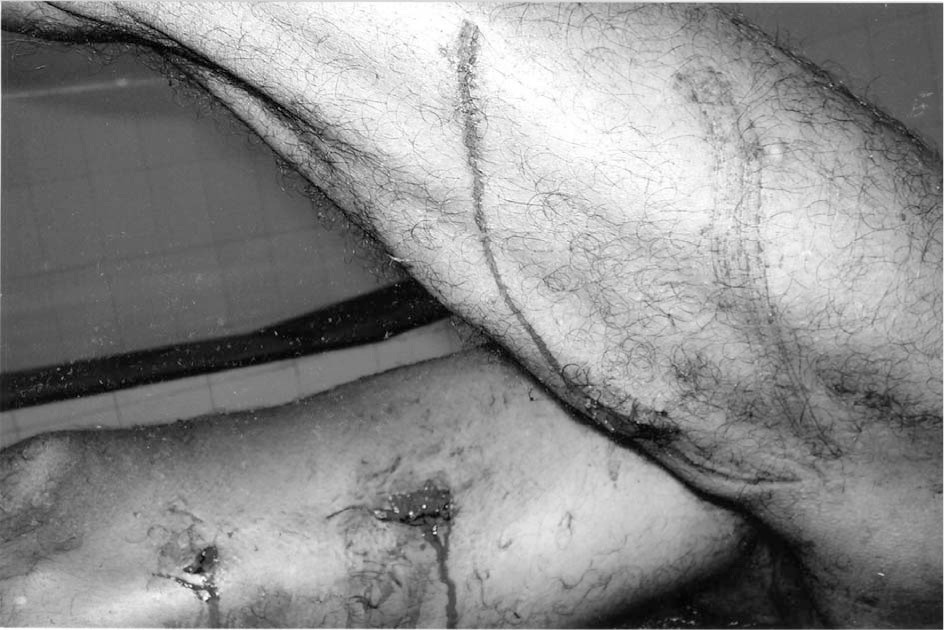
Abrasions and puncture wounds on the thighs.
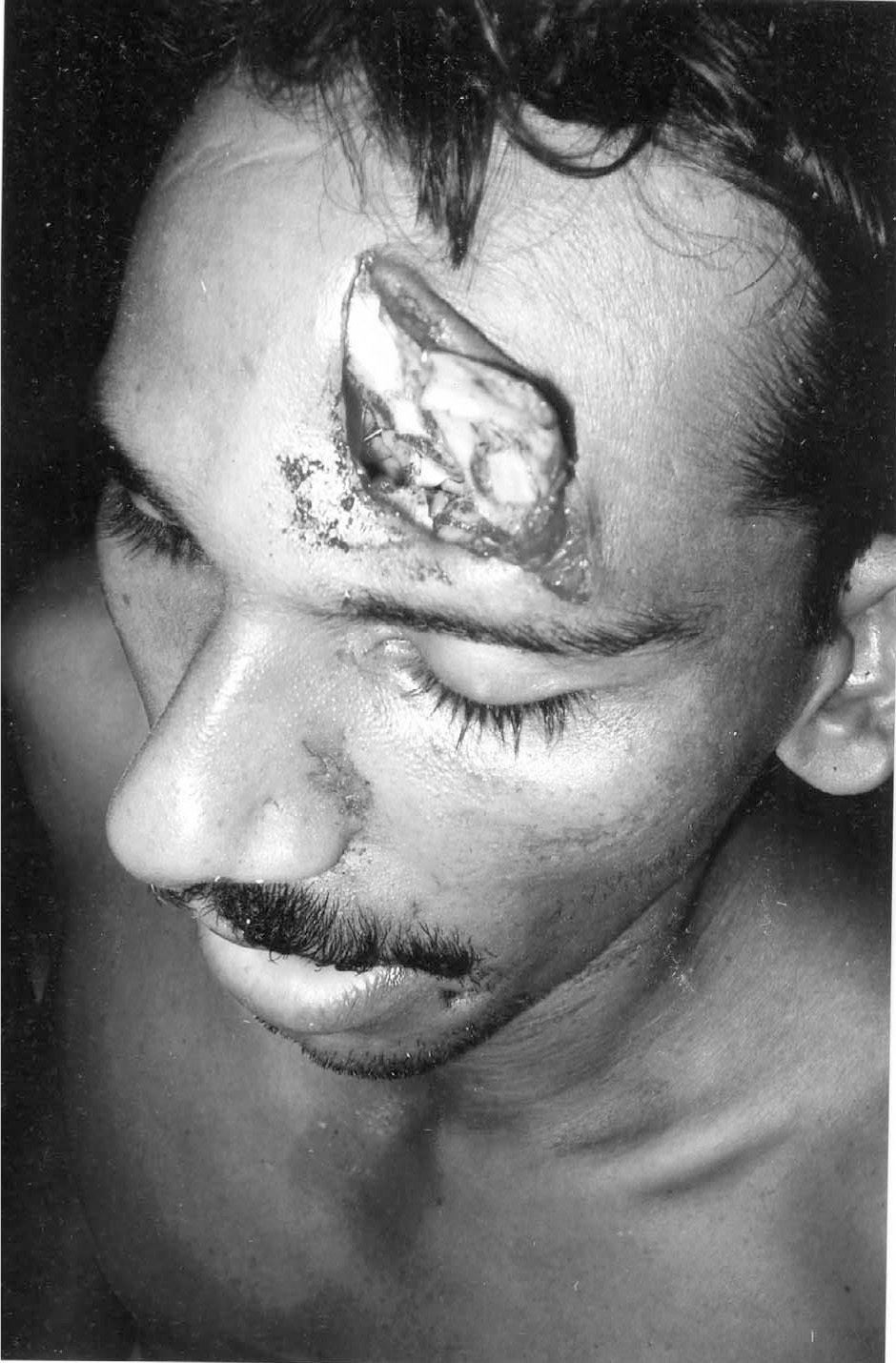
Craniocerebral injury.
To our knowledge, this is the first report of a case of fatal craniocerebral injury caused by a wild boar and further serves to confirm the danger associated with these animals.