






Abstract
Lizards of the Teiidae family are large reptiles measuring up to 2 meters long. If threatened, they can demonstrate aggressive behavior by whipping their tail and occasionally biting. Here, we report a severe injury following a Teiidae lizard bite on the right index finger of a human. There was significant soft tissue damage and an avulsion fracture of the distal phalanx. He was treated with conservative wound care and prophylactic antibiotics. He developed no evidence of secondary infection and underwent delayed skin grafting.
Introduction
Tegus (teiùs, teiú-açu, tejo, tiju, tejuaçu, tejuguaçu ou tiú) are large South American lizards reaching up to 2 meters (approximately 6.5 feet) in length (Figure 1). They are classified in the Squamata order, Teiidae family, Tupinambis genus. The most common species is Tupinambis merianae (Duméril and Bibron, 1839). 1 –5 They are found throughout Brazil, mainly in cerrado (savannah-like) regions, and are also found in Argentina and Uruguay. 6 They are terrestrial and can be found in sunny areas with short grass or rocks. They may come close to human dwellings in order to feed on domestic birds and eggs. When threatened, the lizard usually tries to escape. If this is impossible, it violently brandishes its tail, which can cause severe blows. It may also bite, causing significant lacerations. The teeth, as in most of the Teiidae and Varanidae (monitor lizards), are not very large, but they have a solid base and firmly adhere to the jaw (Figure 2). The great advantage these lizards have is the crushing force of their bite, which, together with their dentition, can destroy soft tissue and bone. 7 Human injuries from Teiidae lizards are rare.
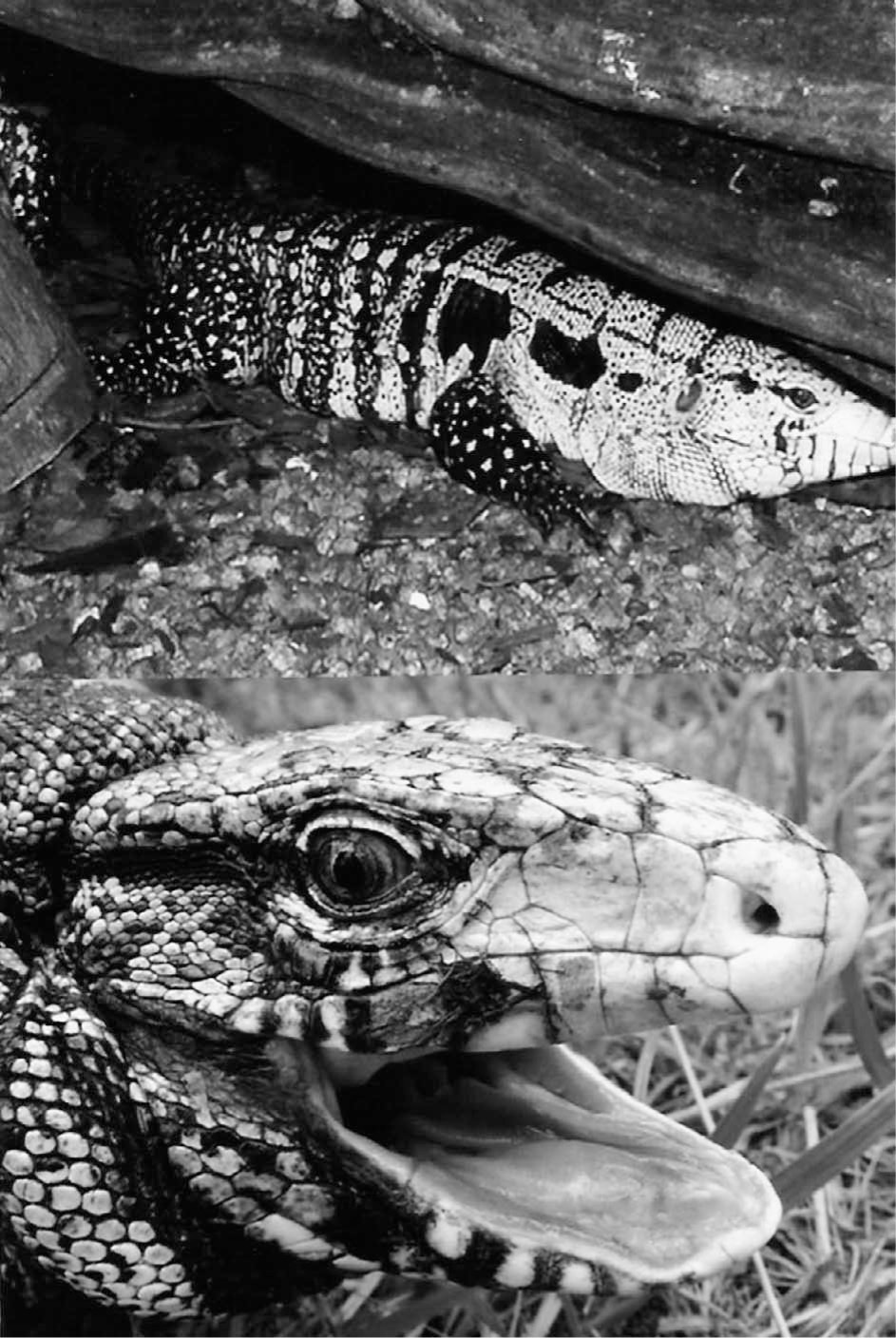
The Teiid lizards (Teiu, Tegus) are large lizards measuring up to 6.5 feet in length. They can cause serious lacerations to humans with their powerful jaws and strong teeth (photograph by Vidal Haddad Jr and Domingos Garrone Neto).
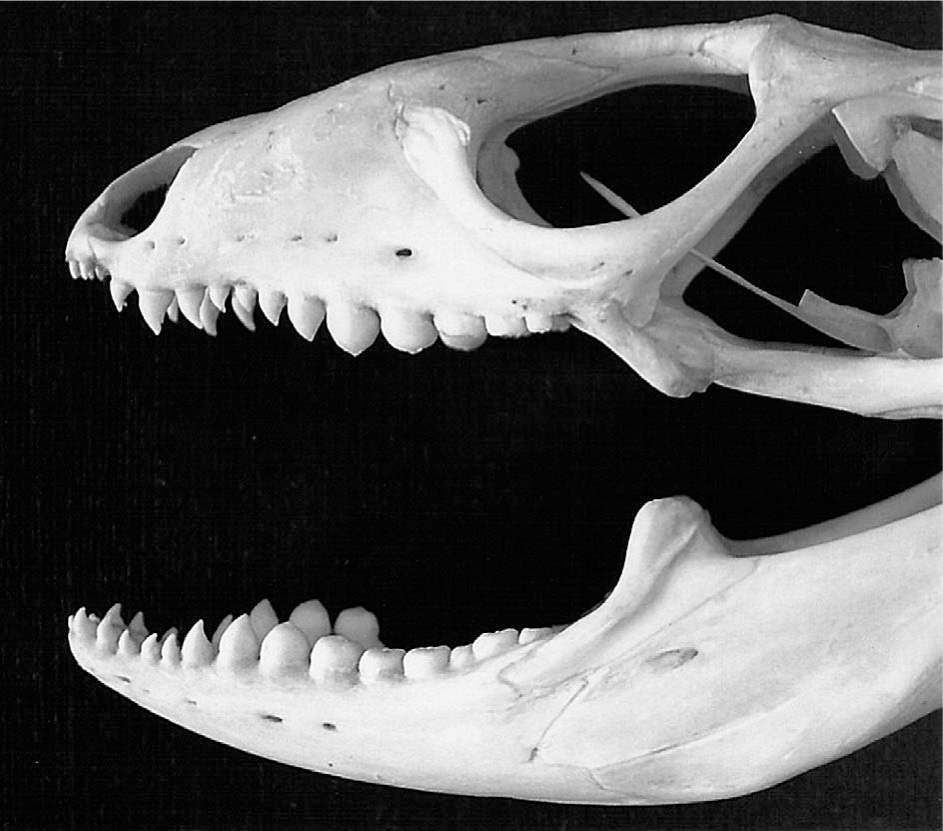
View of the head of a Teiidae lizard (anatomic preparation) showing the animal's teeth and jaws (photograph by Domingos Garrone Neto).
Case Report
A 42-year-old male musician was bitten by a Teiidae lizard in his back yard, located in an agricultural zone next to an area of the preserved Brazilian Atlantic Forest in Ubatuba on the north coast of São Paulo State, Brazil. The patient reported that the lizard measured approximately 1.5 meters and had presumably approached his home to prey on nearby poultry and eggs. The victim's dog attacked the lizard and during the melee, the patient intervened, trying to separate the animals and was bitten by the lizard on the end of the index finger of his right hand. This caused loss of soft tissue and an avulsion fracture of the distal phalanx (Figures 3 and 4). Following the bite, the patient developed intense bleeding and persistent inflammation and required attention at an emergency care unit. The intense pain persisted for more than 10 hours, even with the use of an analgesic (paracetamol). The bite area was extensively irrigated and a compressive dressing was applied. He received analgesics and a tetanus immunization. He was placed on prophylactic cephalexin 2 grams per day for 10 days to prevent infection. The patient was followed for 15 days, and the wound resolved without infection, but the pain only faded in the fourth day after the bite, although the pain was not as intense as in the first 10 hours. A cutaneous graft was applied in the site of the bite, with good aesthetic and functional results.
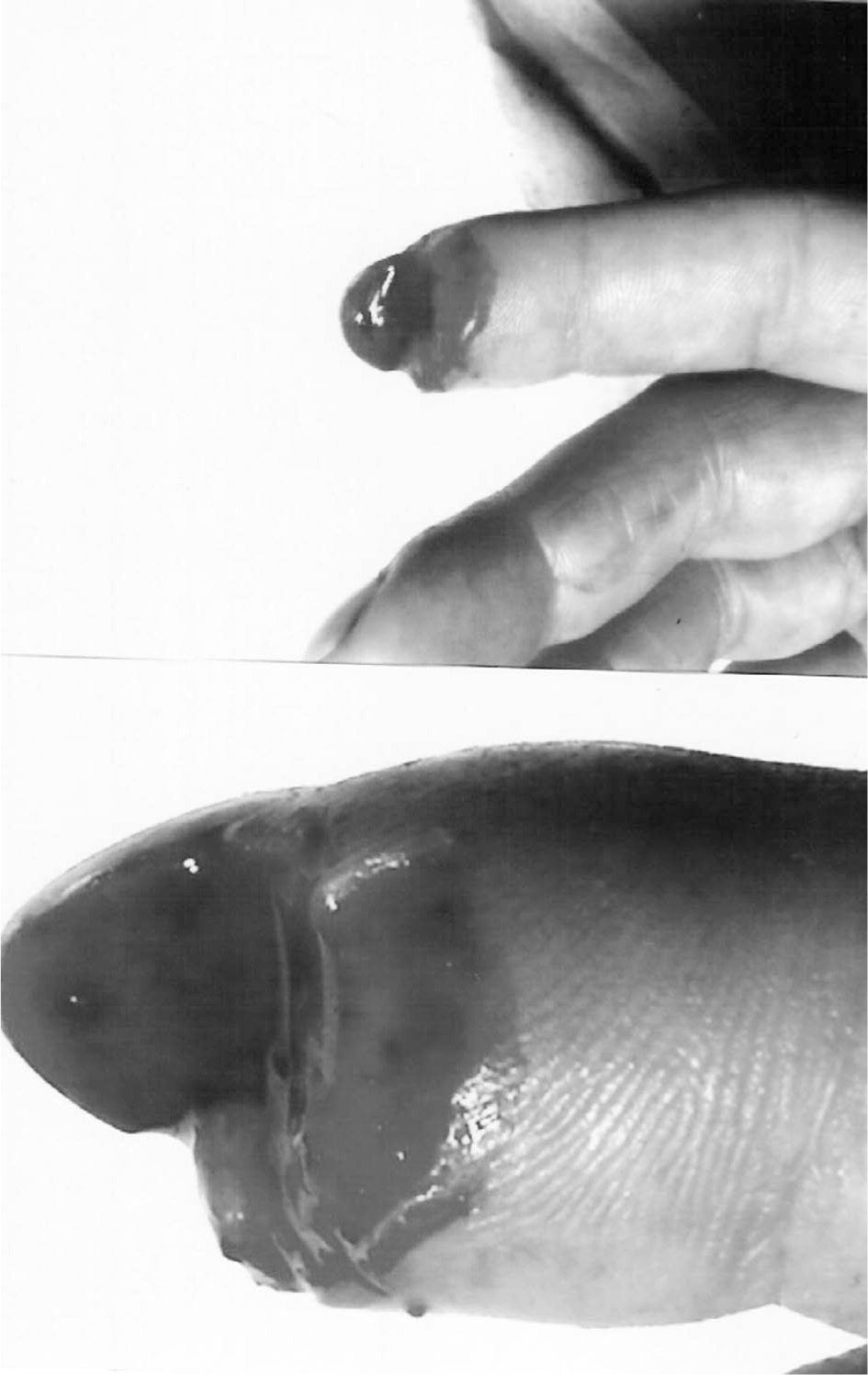
Laceration with loss of soft tissue on the end of the index finger of the victim's right hand. Bleeding was intense, and the pain excruciating (photograph by Vidal Haddad Jr).
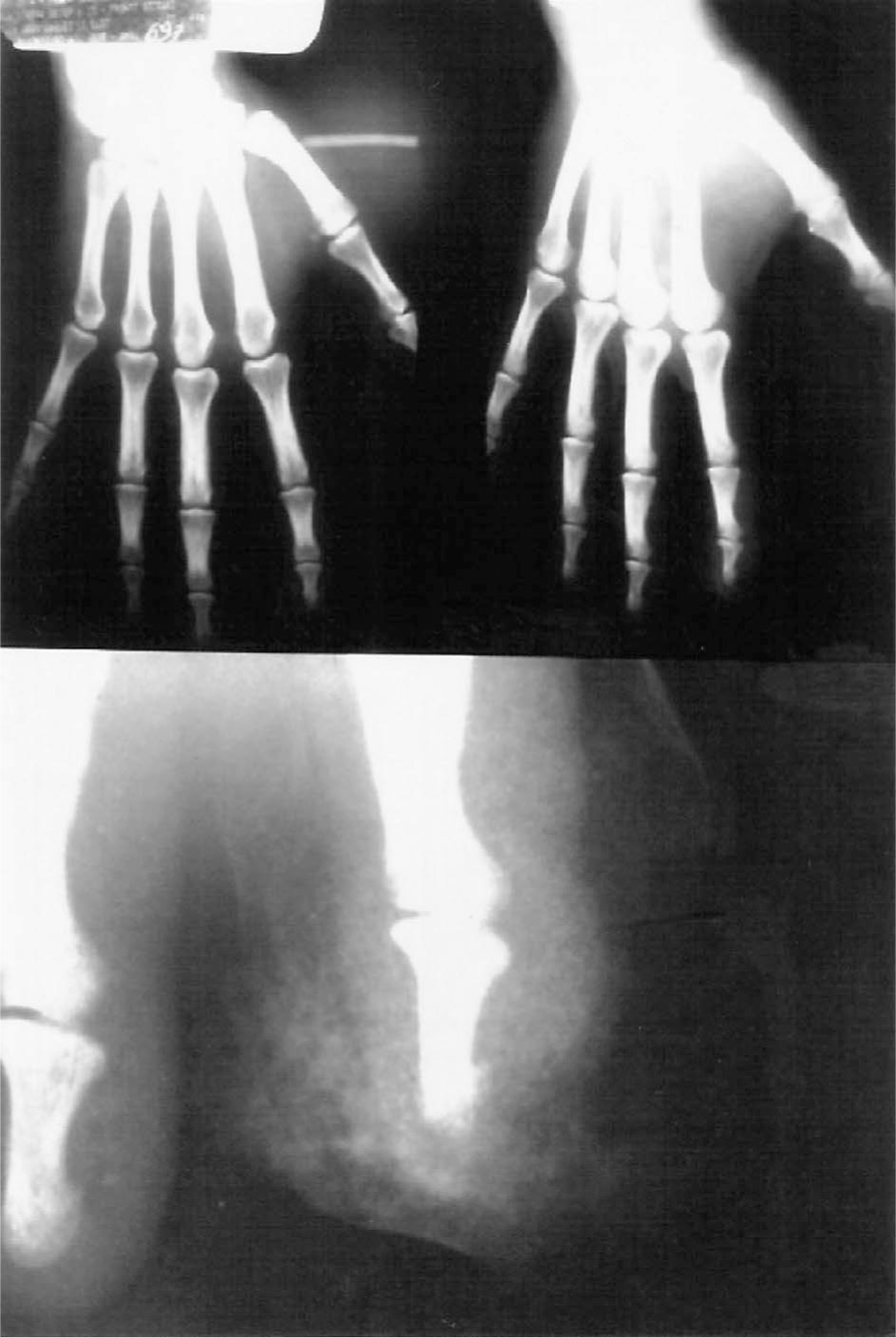
Radiological exam of the injured hand. Note the loss of soft tissue and a bone fragment from the phalanx (photograph by Vidal Haddad Jr).
Discussion
The Teiidae are large lizards with strong teeth and a powerful bite that can crush and seriously injure human tissues. However, reports of injuries by Teiidae are rare, and a search of the medical literature failed to turn up any reported cases. Tegus do not often attack without provocation, as observed in this case.
Secondary bacterial infections may follow lizard bites and should be anticipated and possibly prevented with antibiotic prophylaxis. Recently, the presence of salivary toxins has been demonstrated in Varanidae lizards (monitor lizards), with demonstration of venom glands and classic local signs of envenomation following bites. 8 It is interesting to note the intense and prolonged pain seen in our patient, pain that was disproportionate to the wound. Future research may uncover some form of envenoming apparatus in the Teiidae as well.
Conclusions
Injuries by Teiidae lizards are rare. This reported case demonstrates, however, the potential damage that can be caused from a large Teiidae lizard bite. It should be a warning to researchers who work with these animals or to laypersons that encounter these lizards in the wild or keep them as pets.
Footnotes
Acknowledgments
We would like to extend special thanks to Gerson Rodrigues do Nascimento and Divino Gonçalo Justino of Bauru Zoo, São Paulo State, Brazil, for the images of T. merianae and Flávio da Silva of the Department of Zoology, Instituto de Biociências, Universidade Estadual Paulista, São Paulo State, Brazil (jaw images of T. merianae).