






Abstract
To the Editor:
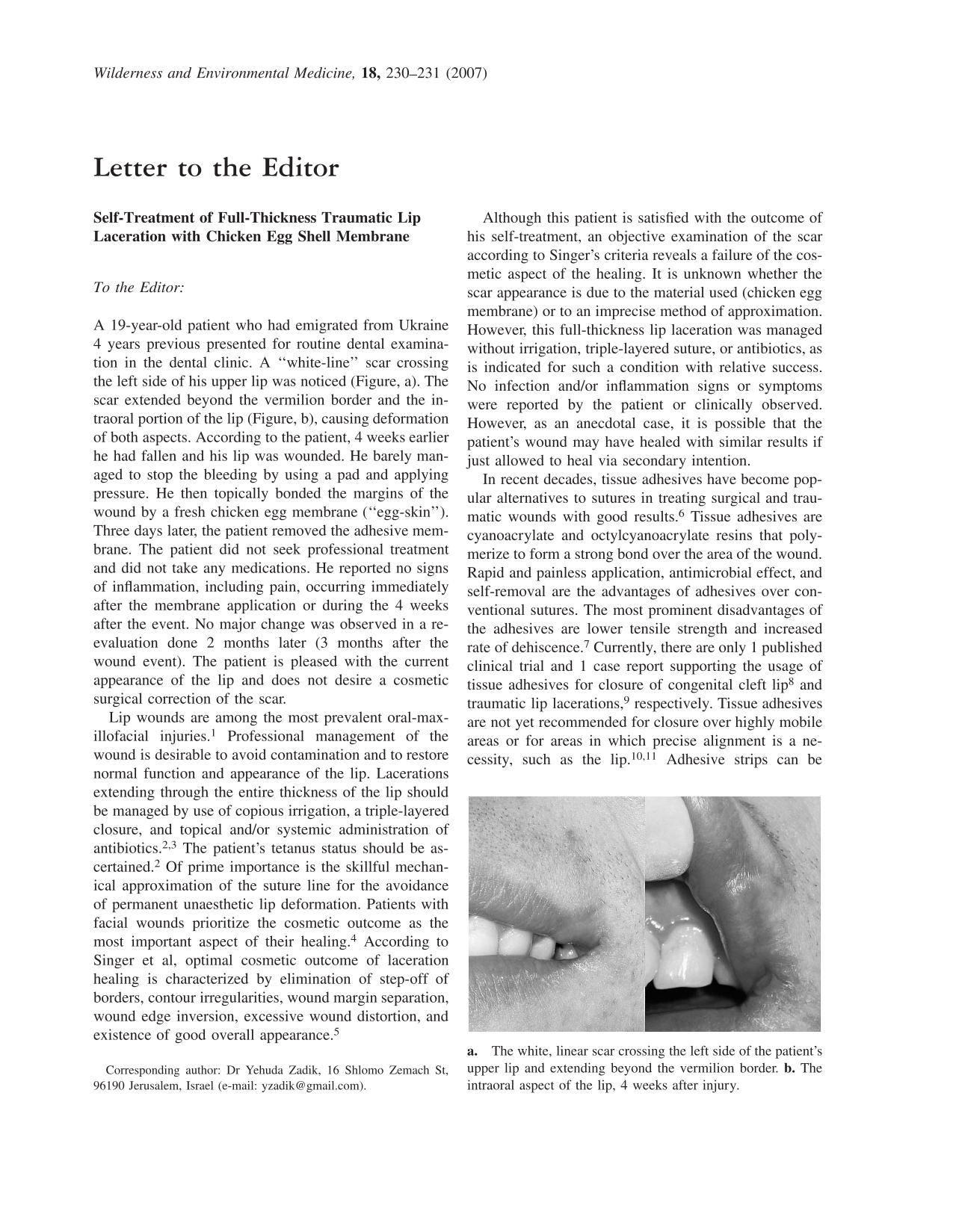
A 19-year-old patient who had emigrated from Ukraine 4 years previous presented for routine dental examination in the dental clinic. A “white-line” scar crossing the left side of his upper lip was noticed (Figure, a). The scar extended beyond the vermilion border and the intraoral portion of the lip (Figure, b), causing deformation of both aspects. According to the patient, 4 weeks earlier he had fallen and his lip was wounded. He barely managed to stop the bleeding by using a pad and applying pressure. He then topically bonded the margins of the wound by a fresh chicken egg membrane (“egg-skin”). Three days later, the patient removed the adhesive membrane. The patient did not seek professional treatment and did not take any medications. He reported no signs of inflammation, including pain, occurring immediately after the membrane application or during the 4 weeks after the event. No major change was observed in a re-evaluation done 2 months later (3 months after the wound event). The patient is pleased with the current appearance of the lip and does not desire a cosmetic surgical correction of the scar.
Lip wounds are among the most prevalent oral-maxillofacial injuries. 1 Professional management of the wound is desirable to avoid contamination and to restore normal function and appearance of the lip. Lacerations extending through the entire thickness of the lip should be managed by use of copious irrigation, a triple-layered closure, and topical and/or systemic administration of antibiotics.2,3 The patient's tetanus status should be ascertained. 2 Of prime importance is the skillful mechanical approximation of the suture line for the avoidance of permanent unaesthetic lip deformation. Patients with facial wounds prioritize the cosmetic outcome as the most important aspect of their healing. 4 According to Singer et al, optimal cosmetic outcome of laceration healing is characterized by elimination of step-off of borders, contour irregularities, wound margin separation, wound edge inversion, excessive wound distortion, and existence of good overall appearance. 5
Although this patient is satisfied with the outcome of his self-treatment, an objective examination of the scar according to Singer's criteria reveals a failure of the cosmetic aspect of the healing. It is unknown whether the scar appearance is due to the material used (chicken egg membrane) or to an imprecise method of approximation. However, this full-thickness lip laceration was managed without irrigation, triple-layered suture, or antibiotics, as is indicated for such a condition with relative success. No infection and/or inflammation signs or symptoms were reported by the patient or clinically observed. However, as an anecdotal case, it is possible that the patient's wound may have healed with similar results if just allowed to heal via secondary intention.
In recent decades, tissue adhesives have become popular alternatives to sutures in treating surgical and traumatic wounds with good results.
6
Tissue adhesives are cyanoacrylate and octylcyanoacrylate resins that polymerize to form a strong bond over the area of the wound. Rapid and painless application, antimicrobial effect, and self-removal are the advantages of adhesives over conventional sutures. The most prominent disadvantages of the adhesives are lower tensile strength and increased rate of dehiscence.
7
Currently, there are only 1 published clinical trial and 1 case report supporting the usage of tissue adhesives for closure of congenital cleft lip
8
and traumatic lip lacerations,
9
respectively. Tissue adhesives are not yet recommended for closure over highly mobile areas or for areas in which precise alignment is a necessity, such as the lip.10,11 Adhesive strips can be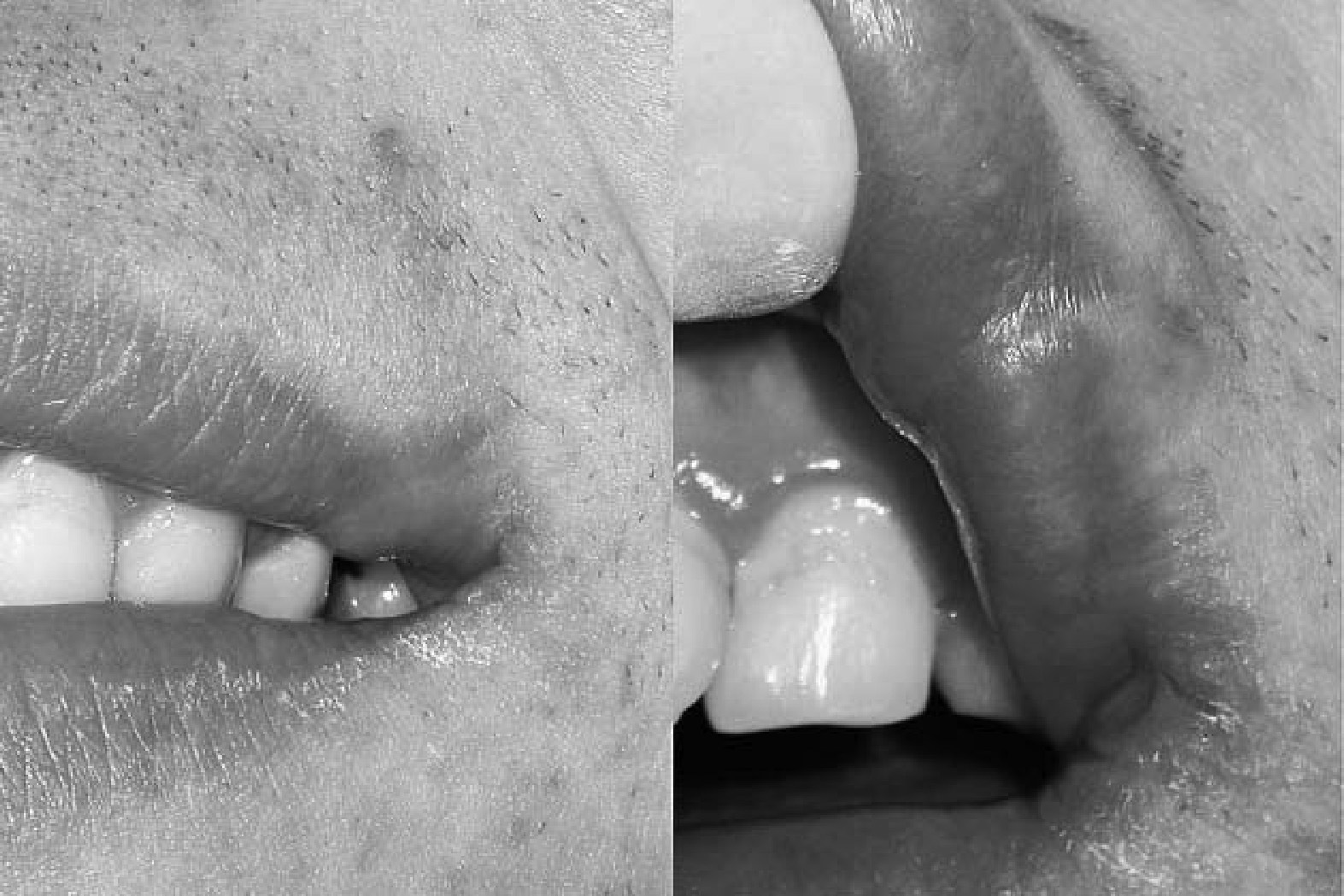
The chicken biologically active egg membrane contains types I, V, and X collagens, retains albumen, prevents penetration of bacteria, and is essential for the formation of eggshell. 12 Ostrich egg membrane (with or without eggshell powder) has been offered as a facilitation to bone regeneration in cranial defects but with little adjunctive effect. 13 However, as a skin graft donor site dressing, egg membrane possesses properties of pain relief, wound protection, promotion of healing, and low cost. 14 It seems that chicken egg membrane is worthy of further research for surgical applications.