




Abstract
In Quality function deployment (QFD) approach, customers tend to express their needs in linguistic terms rather than exact numerical values and these needs generally contain vague and imprecise information. To overcome this challenge and to use the method more effectively for complex customer-oriented design problems, this paper introduces a novel intuitionistic Z-fuzzy QFD method based on Chebyshev’s inequality (CI) and applies it for a new product design. CI provides the assignment of a more objective reliability function. The reliability value is based on the maximum probability obtained from CI. Then, the expected values of lower and upper bounds of interval-valued intuitionistic fuzzy (IVIF) numbers are determined. A competitive analysis among our firm and competitor firms and an integrative analysis for the different functions of QFD is presented. The proposed Z-fuzzy QFD method is applied to the design and development of a hand sanitizer for struggling with COVID-19.
Keywords
Introduction
With each passing day, customers’ expectations of the product that they are planning to purchase are increasing. Today, manufacturers and service providers must meet customer demands at the maximum level in order to be successful and maintain their continuity. Their competitive advantage depends on the aesthetic success of the product they offer for sale as well as the technical features. Customers generally expect the product to be affordable, durable, easy to use and appealing to the eye. However, it is difficult, even impossible sometimes, for the producers to meet all these demands at the same time due to economical and timewise limitations. Companies must first prioritize customer needs in order to determine the best product they can produce using their competencies and the maximum customer demands they can respond to. One of the most used methods for this purpose is Quality Function Deployment (QFD).
House of Quality (HOQ) is a special and mostly used part of QFD which is named for its shape that reminds of a house with a roof on top. A classical HOQ consists of some parts in matrix form such as customer demands (CDs), customer evaluations (CEs) of those demands, technical descriptors (TDs), relationship matrix between CDs and TDs, and correlation matrix among TDs. In some recent studies, new matrices are added eligibly to the common parts such as technical difficulty and direction of improvement of TDs, and competitive analysis for both CDs and TDs. The HOQ matrices are generally constructed by an effort of a team of experts and multiple customers. Since humans tend to express their thoughts and ideas linguistically rather than exact and precise numbers, this brings vagueness and impreciseness to the design and development process. To overcome this obstacle and deal with complex problems more realistically, the fuzzy set theory has been applied successfully for decades.
The fuzzy set theory was introduced in the literature by Zadeh (1965) as ordinary fuzzy sets which are represented by an x value and its membership degree. Later, in 1986, intuitionistic fuzzy sets (IFSs) have been developed as a generalization of Zadeh’s ordinary fuzzy sets by Atanassov (1986) which involve the degrees of membership and non-membership together with experts’ hesitancies for an x value. Later, neutrosophic sets are introduced in the literature by Smarandache (1998) which consist of three components truthiness, indeterminacy, and falsity where these components can be assigned independently. Pythagorean fuzzy sets are developed by Yager (2013) and allowed the squared sum of the membership and non-membership degrees to be at most one. Picture fuzzy sets (PiFS) have been developed by Cuong (2015) in order to define a fuzzy set by membership, non-membership, and hesitancy degrees so that their squared sum is at most equal to one. As an extension of PiFs, Kutlu Gündoğdu and Kahraman (2019) developed the spherical fuzzy sets that the squared sum of three components (membership, non-membership, and hesitancy degrees) to be between zero and one. One of the latest extensions of intuitionistic fuzzy sets is circular intuitionistic fuzzy sets developed by Atanassov (2020). They add the uncertainty of the membership and non-membership degrees by defining a circle with radius “r” for these values.
In this paper IVIFSs are employed in the proposed QFD method taking into consideration the reliability of the assigned IVIF numbers. The reliability in this method is handled by Z-fuzzy numbers developed by Zadeh (2011). Z-fuzzy number is an ordered pair of fuzzy numbers where the first component is a real-valued uncertain variable as a restriction on the values. The second component is a measure of reliability for the first component. Z- fuzzy numbers are used to make computations with fuzzy numbers which are not totally reliable. A Z-fuzzy number can represent the information about an uncertain variable, whose first component represents a value of the variable, and the second component represents an idea of uncertainty or probability. In other words, the second component shows how sure the decision maker is with the first component (Yaakob and Gegov, 2015). Chebyshev’s inequality is employed to calculate the maximum probability to determine the expected values of lower and upper bounds of the IVIF number in the first component. Thus, we obtain more realistic and objective results compared to classical Z-fuzzy approaches.
The advantage of our study and its contribution to the literature can be explained as follows. In most of the Z-fuzzy number studies, sufficient details on how to construct the reliability function are not presented. This study scientifically explains how to create the reliability function and integrate it into the restriction function with the help of Chebyshev’s theory. Obtaining the extreme values in IVIF numbers through the integration of reliability factor is realized by using probability theory. Therefore, this paper offers a very different Z-fuzzy number idea from Zadeh’s classical Z-fuzzy proposal. The advantage of our method is that it presents the QFD approach under intuitionistic fuzziness with all its aspects such as technical difficulty, competitive analysis through CDs and TDs.
The rest of this study is organized as follows. Section 2 presents a literature review on fuzzy QFD (F-QFD). Section 3 gives the preliminaries for intuitionistic Z-fuzzy numbers based on Chebyshev’s inequality. Section 4 develops the intuitionistic Z-fuzzy QFD method based on Chebyshev’s inequality. Section 5 illustrates the application of the proposed model on a new hand sanitizer design and development. Section 6 concludes the paper with discussions and future directions.
Literature Review
A literature review on F-QFD based on Scopus database gives a list of 185 publications. Figure 1 shows the distribution of the F-QFD publications with respect to years.
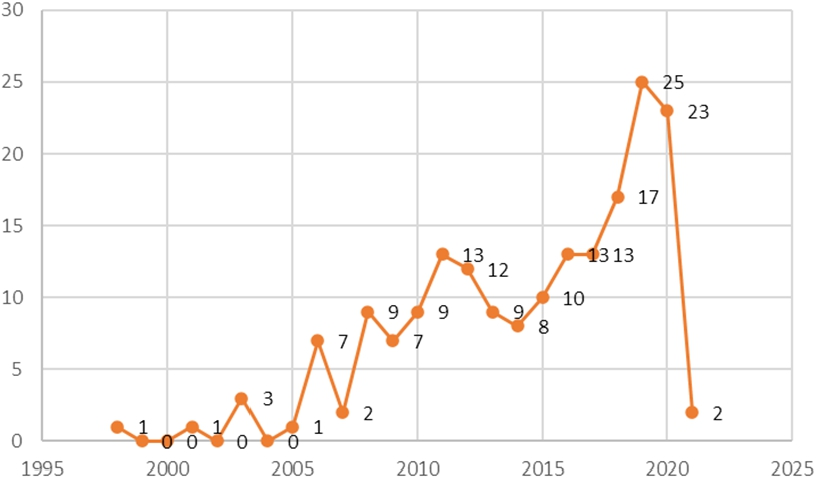
Distribution of the F-QFD publications with respect to years.
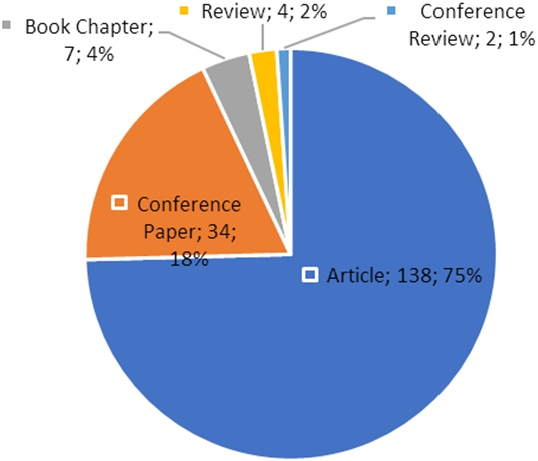
Document type distributions of F-QFD publications.
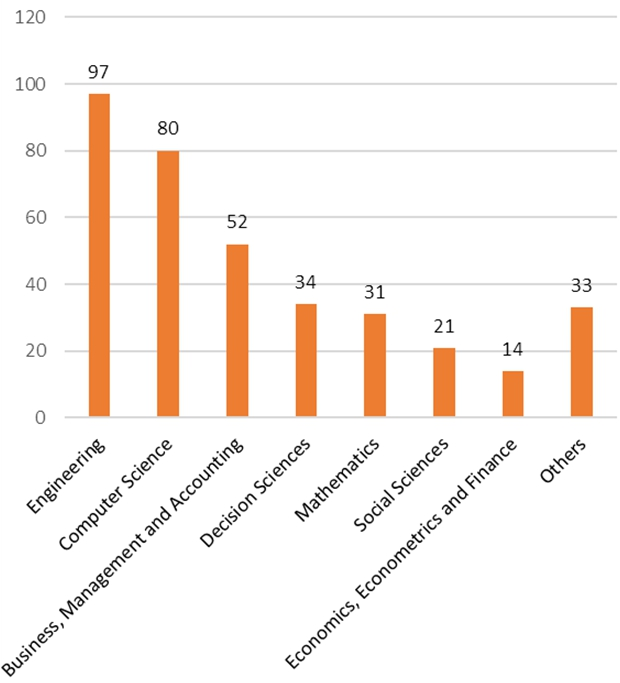
Document type distributions of F-QFD publications.
After the first study on F-QFD was published in 1998, the highest publication rate was attained in 2019 with 25 studies.
As given in Fig. 2, most of the F-QFD studies are in article form which is followed by conference papers and book chapters.
F-QFD has been applied to many subject areas. Figure 3 shows the frequencies of these publications. Engineering, computer science, and business, management and accounting are the most frequently applied subjects, respectively.
Some representative F-QFD studies are presented in Table 1 together with the type of fuzzy sets used, integrated methods, and application areas.
We can conclude at the end of the literature review that TFNs are used more than other types of fuzzy numbers. The most integrated methods with F-QFD are AHP, ANP, TOPSIS, FMEA, and DM, respectively. The most used extensions of ordinary fuzzy sets with F-QFD are IFNs, HFNs, T2FNs and SFNs, respectively. The application areas of F-QFD are quite different from delivery drone design to choosing the ideal gas fuel at wastewater treatment plants. A focused application area of F-QFD is not observed in this comprehensive literature review.
Some representative F-QFD studies.
Some representative F-QFD studies.
Type of fuzzy sets abbreviations: Triangular Fuzzy Numbers (TFNs), Interval-Valued Triangular Fuzzy Numbers (IVTFNs), Trapezoidal Fuzzy Numbers (TpFNs), Interval Type-2 Fuzzy Numbers (IT2FNs), Intuitionistic Fuzzy Numbers (IFNs), Interval-Valued Intuitionistic Fuzzy Numbers (IVIFNs), Hesitant Fuzzy Numbers (HFNs), Interval-Valued Pythagorean Fuzzy Numbers (IVPFNs), Spherical Fuzzy Numbers (SFNs).
Integrated methods abbreviations: Analytic Hierarchy Process (AHP), Analytic Network Process (ANP), Choquet Integral Method (CIM), COmplex PRoportional ASsessment (COPRAS), Data Envelopment Analysis (DEA), Data Mining Methods (DMM), Decision Making Trial and Evaluation Laboratory (DEMATEL), Decision Tree (DT), Define-Measure-Analyze-Improve-Control (DMAIC), Delphi Method (DM), Design Structure Matrix (DSM), Evaluation Grid Method (EGM), Failure Mode and Effects Analysis (FMEA), Fuzzy Axiomatic Design (FAD), Fuzzy Delphi Method (FDM), Fuzzy Inference System (FIS), Grey Decision-Making Approach (GDM), Grey Relational Analysis (GRA), Group Decision Making Approach (GDM), Group-Organization Approach (GOA), Interpretive Structural Modelling (ISM), KANO, Machine Learning (ML), Mathematical Modelling (MM), Morphological Analysis Method (MAM), Multi-Objective Decision Model (MODM), Multi-Objective Goal Programming (MOGP), Multi-Objective Linear Programming Model (MOLPM), Multi-Phased 0-1 Optimization Model (MPOM), Multiple-Criteria Decision-Making (MCDM), Preference Ranking Organization METHod for Enrichment Evaluation (PROMETHEE), Principal Component Analysis (PCA), Rough Set Theory (RST), Service Quality (SERVQUAL), Structural Equation Modelling (SEM), Technique for Order of Preference by Similarity to Ideal Solution (TOPSIS), Theory of Inventive Problem Solving (TRIZ), Value Stream Mapping (VSM), VIekriterijumsko KOmpromisno Rangiranje (VIKOR).
In this section, we first present the preliminaries of single-valued intuitionistic fuzzy (SVIF) and IVIF sets with some of their arithmetic operations. Then, ordinary Z-fuzzy numbers are introduced. And finally, Chebyshev’s inequality-based interval-valued intuitionistic Z-fuzzy numbers are developed.
Ordinary fuzzy sets are defined as in Eq. (1) (Zadeh, 1965):
Intuitionistic fuzzy sets (IFSs) are defined as in Eq. (2) (Atanassov, 1986):
The addition, multiplication of two SVIF numbers, multiplication by a scalar, and power operations on SVIF numbers are presented as in Eqs. (3)–(6), respectively (Atanassov, 1994):
The score function of SVIF numbers is presented in Eq. (7) (Zhang et al., 2012):
Let closed subintervals be represented by
The lower and upper end points are represented by the symbols
For any x, the hesitancy degree can be computed by Eq. (10):
Let
A Z-fuzzy number is defined by Zadeh (2011) as an ordered pair of fuzzy numbers,
A Z-fuzzy number can be defined as in Fig. 4.
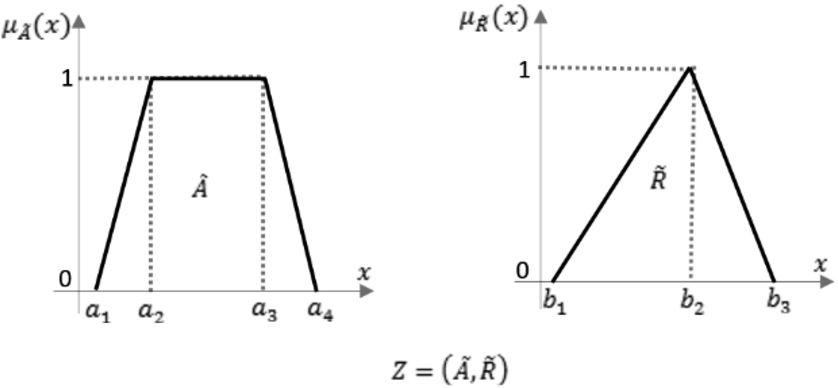
A Z-fuzzy number.
The expected value of a fuzzy set is calculated as in Eq. (12) (Zadeh, 2011):
Consider a Z-fuzzy number
The triangular fuzzy reliability function can be converted into a classical number by Eq. (13):
Z-fuzzy number converted into a single ordinary fuzzy number.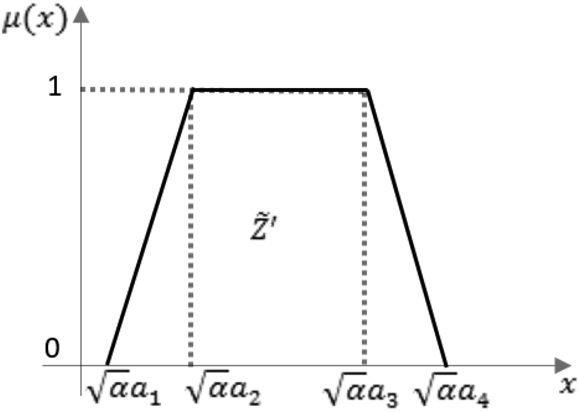
In the next section, ordinary Z-fuzzy numbers will be extended by a new approach using Chebyshev’s inequality. In this approach, reliability component of the Z-fuzzy number is calculated more objectively based on Chebyshev’s probability terms.
Chebyshev’s inequality provides the maximum probability between two points with a given mean and variance as illustrated in Fig. 6 when the distribution of the considered data is not known. Let’s assume that
Chebyshev’s inequality is given in Eq. (15):
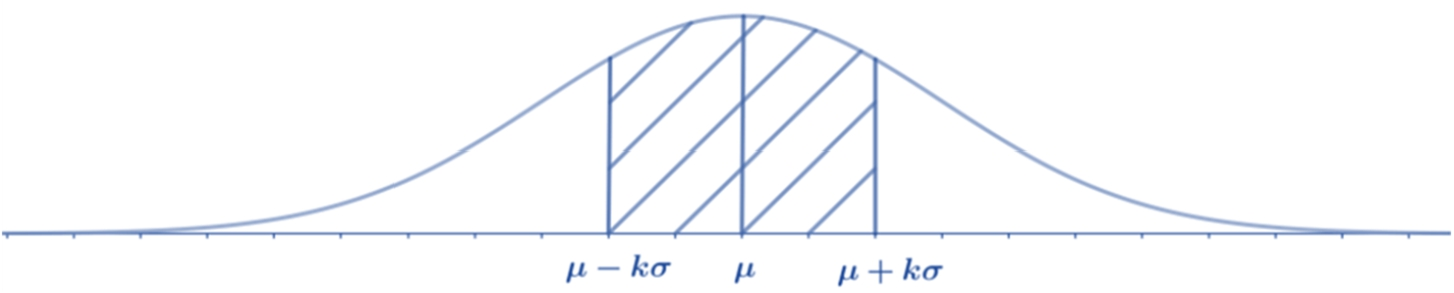
Chebyshev’s inequality.
Assume that n number of linguistic evaluations is given as
Next operation is to find k value in Eq. (15) in a way that the maximum reliability
In this section, we present our novel Chebyshev’s inequality based intuitionistic Z-fuzzy QFD approach. The proposed approach requires the number of experts to be
Linguistic and corresponding numerical scale for the weights of criteria.
IVIF correlation scale.
Relative technical difficulty
Fuzzy relative absolute priority (

Scale to indicate the position of our company.
Indicators.
COVID-19 is a contagious disease, first identified in China, in December 2019 and has since spread worldwide, leading to an ongoing pandemic. Centres for Disease Control and Prevention recommend washing the hands with soap and water for at least 20 seconds to prevent the spread of the virus and minimize the risk of getting infected. However, in many cases especially at public places, they are mostly not available. In such situations, hand sanitizers with at least 60% of alcohol are the most suggested solutions. Hand sanitizers (Fig. 8) are generally liquid, gel or foam form of agents applied on the hands to remove viruses/bacteria/microorganisms.

Hand sanitizer representation.
In this section an application on hand sanitizer design and development will be presented in steps to illustrate the proposed novel intuitionistic Z-fuzzy QFD approach based on Chebyshev’s inequality.
To determine the CDs for hand sanitizer, a questionnaire was designed to ask their expectations from this product. This questionnaire was distributed to the e-mail addresses of the customers of one of the largest markets in İstanbul. The total number of the customers was 2078 and 219 of them replied. Based on these responses, the following CDs from a hand sanitizer product were determined: Easy storage, compact package, nice smell, fast absorption and/or drying, moisturizing formula, aesthetic design, powerful formula, environmentally friendly and cruelty free, easy and convenient use, and no hard chemicals. After determining these CDs from the customers, we gathered a small focus group to interview and discuss with them the importance degrees of these CDs. Then we asked a chemical cleaning supplies producer in İstanbul how these CDs can be met by which TDs. The producer firm determined the following TDs: Active ingredients, hazardous ingredients, colour, fragrance, package design, and compliance with laws. The relations between these CDs and TDs can be seen in Table 8.
Now the steps of the proposed intuitionistic Z-fuzzy QFD approach based on Chebyshev’s inequality will be given in details in the following.
Scale for experience level of customers and experts.
CDs, linguistic customer evaluations, and aggregated SVIF values.
To have a better understanding with the calculations, a sample calculation is given in Table 7 showing the aggregation operation for the customer demand “Easy Storage, Compact Package” evaluated by three customers.
Sample calculations of linguistic CD translation into SVIF value.
k values are found by trial-and-error and interpolation methods.
Linguistic relationship matrix between CDs and TDs, and their aggregated SVIF correspondences.
To have a better understanding with the calculations, a sample calculation is given in Table 9 showing the aggregation operation for the relation between the CD “Nice Smell” and the TD “Active Ingredients” evaluated by three experts.
Sample calculation of linguistic TD’s translation into SVIF value.
k values are found by trial-and-error and interpolation methods.
Linguistic technical difficulties of TDs and their aggregated SVIF correspondences.
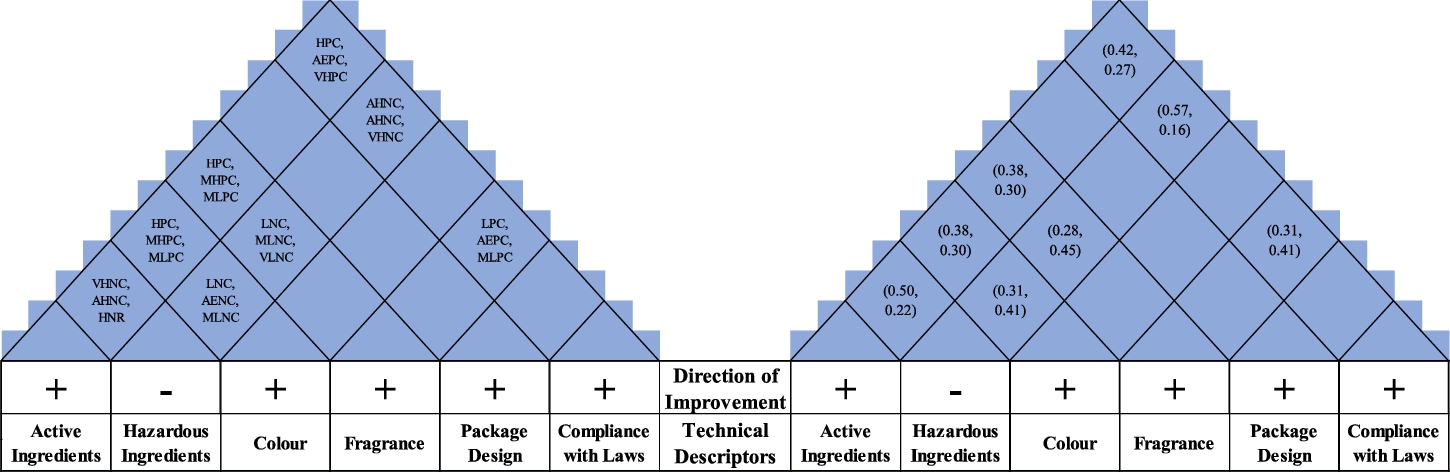
Linguistic and SVIF correlation matrices.
Absolute priorities of TDs.
To better explain this step, a sample calculation is given below for TD “active ingredients”.
First, we multiplied each SVIF customer evaluation value with the corresponding cell in the relation matrix for TD “active ingredients” by using Eq. (4) and then summed these values up by using Eq. (3). Results are shown in Table 12. We added up each SVIF value separately to the summation of the previous ones by applying Eq. (3) successively. The summation result is found to be (0.68, 0.01). Next, we defuzzified this value with Eq. (7) and the result is found as 0.76, where
Results of SVIF multiplication of customer evaluations by relation matrix of Active Ingredients.
Next, to find the correlation correction factor for TD “active ingredients”, first we defuzzified the SVIF correlation values. Then applied Eq. (31) as
Finally, we applied Eq. (30) as follows:
Relative absolute priorities of TDs.
Results of competitive analysis through CDs.
In order to better explain the operations used in this table, a sample calculation is presented below for CD “Easy Storage, Compact Package”.
Results of competitive analysis through TDs.
In order to better understand the operations used in this table, a sample calculation is presented below for TD “Active Ingredients”.

Scale indicating the location of our company.
As mentioned above, the whole linguistic HOQ matrix and the whole aggregated SVIF HOQ matrix are given in Figs. 11 and 12, respectively.
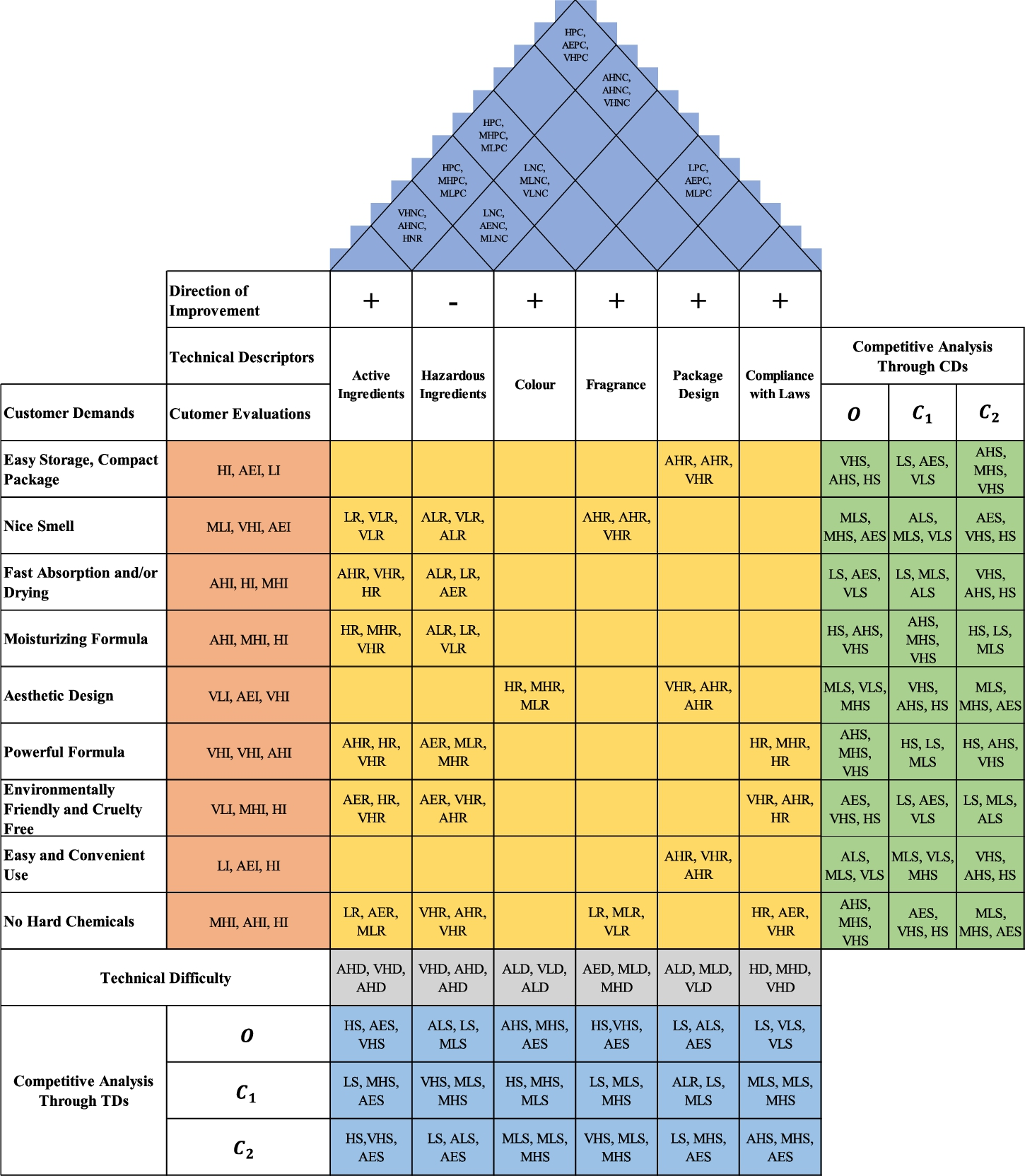
Linguistic HOQ.
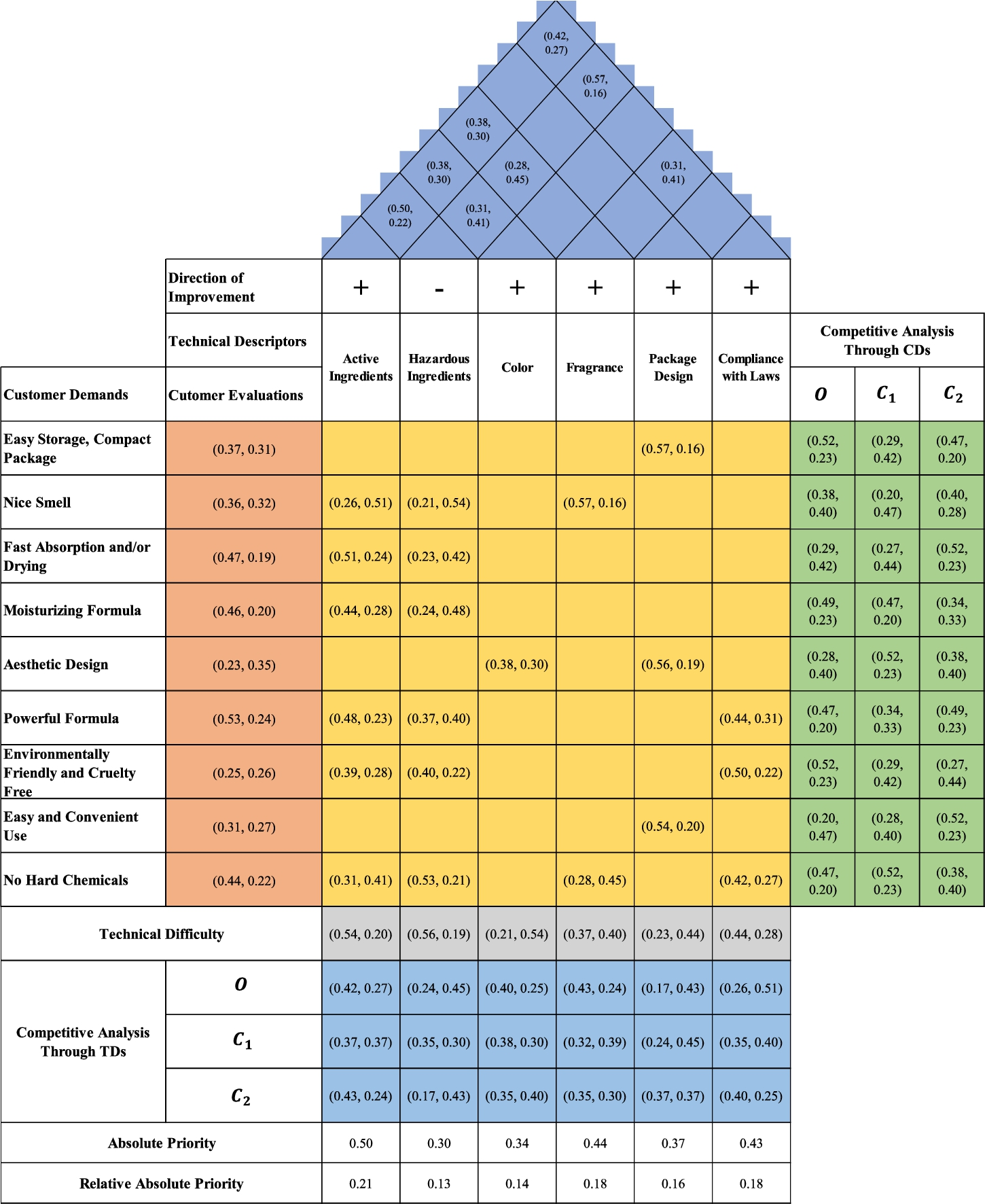
Aggregated SVIF HOQ.
In the literature, the QFD approach has been an effective tool to incorporate customer voice into product design and development. The voice of customer is often included in the QFD approach in linguistic expressions that contain a certain degree of ambiguity. It has been seen that this uncertainty has been modelled mostly with the help of fuzzy sets in the literature. More than ten extensions of ordinary fuzzy sets have been proposed to the literature, each aiming to model human thoughts in a more detailed and accurate way through membership functions. Our review revealed that the most used extension in QFD approach is intuitionistic fuzzy sets and the most often integrated decision-making tool is AHP method. In most of the QFD studies the reliability to the assigned fuzzy values of QFD parameters are not considered. The purpose of this study was to develop a novel approach integrating the reliability with the assigned fuzzy values of QFD method based on the principles of the probability theory. The contribution of our method to the literature is the presentation of a new reliability integrated QFD approach under intuitionistic fuzziness with all its aspects such as technical difficulty, competitive analysis through CDs and TDs. Intuitionistic Z-fuzzy numbers have been developed and successfully applied to represent the uncertainty in linguistic terms of CDs and TDs. Chebyshev’s inequality allowed us to objectively obtain the degree of reliability of the restriction function, which is subjectively determined in the previous studies. This study also proposed a model that successfully integrates parts of the QFD approach that are often considered separately in the literature. This model comprehensively integrated customer evaluations, relationship matrix, correlation matrix, and technical difficulties of TDs, to calculate the absolute priority degrees of TDs. One limitation of our study is that IVIF division and subtraction operations are not precisely defined in the literature which forces us to use defuzzification when these operations are needed.
For further research we suggest IVPF, IVSF or IVPiF sets to be used in our model instead of IVIF sets. Besides, aggregation operators can be differentiated by using intuitionistic fuzzy Einstein aggregation operators such as the intuitionistic fuzzy Einstein weighted geometric (IFEWG) operator, or the intuitionistic fuzzy Einstein ordered weighted geometric (IFEOWG) operator. Alternatively, the linguistic intuitionistic fuzzy weighted partitioned Heronian mean (LIFWPHM) operator or the linguistic intuitionistic fuzzy partitioned geometric Heronian mean (LIFPGHM) operator can be used.