




Abstract
Ligand Based Virtual Screening methods are used to screen molecule databases to select the most promising compounds for a query. This is performed by decision-makers based on the information of the descriptors, which are usually processed individually. This methodology leads to a lack of information and hard post-processing dependent on the expert’s knowledge that can end up in the discarding of promising compounds. Consequently, in this work, we propose a new multi-objective methodology called MultiPharm-DT where several descriptors are considered simultaneously and whose results are offered to the decision-maker without effort on their part and without relying on their expertise.
Introduction
Drug development has always been an area of constant progress due to its direct application in society. This has been especially noticeable in recent years due to highly transmissible and deadly diseases such as Zika (Petersen et al., 2016), Ebola (Baize et al., 2014), and now COVID-19 (Mehta et al., 2020). Although a milestone in terms of development time has been achieved with the latter (Kim et al., 2020), the chances of failure are usually high and in fact, 90% of drugs that enter clinical trials fail to gain United States Food and Drug Administration (FDA) approval and are not marketed. Additionally, 75% of the costs are due to failures in the design pipeline (Tollman, 2001; Leelananda and Lindert, 2016). Consequently, the entire drug development process can take 12–15 years and exceed more than $1 billion (Hughes et al., 2011). To reduce costs, time and to improve the success rate, many new techniques and methodologies have been developed. One of these techniques is Virtual Screening (VS), which has been gaining ground in recent decades (Tanrikulu et al., 2013). VS is an in silico technique that allows the processing of large libraries with millions of compounds to find new compounds similar to a reference molecule based on one or several descriptors (Wang et al., 2009; Hamza et al., 2012; Boström et al., 2013; Kumar and Zhang, 2016). It is normally used as a filter to reduce the number of compounds to be studied in the later stages of drug development, one such example being High-Throughput Screening (HTS) to reduce costs and time (López-Ramos and Perruccio, 2010; Kar and Roy, 2013). This has increased the popularity of these techniques, which have shown great progress over the last two decades.
In terms of the VS methods, two categories are dependent on the available information of the compounds: Structure-Based Virtual Screening (SBVS) and Ligand-Based Virtual Screening (LBVS). The former is applied when the three-dimensional structure of the therapeutic target is available and it is exploited in order to propose hits, either obtained by experimental methods (X-ray crystallography (Lu et al., 2006) or Nuclear Magnetic Resonance (NMR) (Stark and Powers, 2011)) or through the construction of molecular models. An example of SBVS is the docking (Brooijmans and Kuntz, 2003; Morris and Lim-Wilby, 2008; Pagadala et al., 2017), a technique where the objective is to find the best coupling between two molecules: a receptor and a ligand. In contrast, LBVS is used when we exploit information derived only from one of several active or inactive ligands which usually happens when the three-dimensional structure of the drug target is not available. This includes Quantitative Structure-Activity Relationship (QSAR) (Karelson, 2000), shape matching techniques (comparison of global or partial shape between molecules) (Hawkins et al., 2007) and similarity search techniques using 2D/3D descriptors.
As far as we know, most LBVS methods proposed in the literature optimize the compounds by focusing on a single descriptor. A variety of descriptors can be considered: shape similarity, electrostatic similarity, aromatic potential, desolvation potential, or atomic property fields. For example, ROCS (OpenEye Scientific Software, 2021) or WEGA (Yan et al., 2013) find the most similar molecule to a given query in terms of shape similarity. In addition, the recently proposed OptiPharm has proved to be a very competitive piece of software when optimizing shape similarity or electrostatic potential (Puertas-Martín et al., 2019, 2020; OpenEye Scientific Software, 2020). Nevertheless, to increase the success of the predictions, the experts look for candidate compounds with similarities to the given query in more than one descriptor simultaneously. To do so, they face the query molecule to the whole database with one of the tools previously mentioned. They then carry out a post-processing phase that usually consists of sorting the compounds according to their scoring value, selecting the top of them, and analysing the subset of molecules by extracting or computing values related to the second descriptor of interest. This post-processing phase may be challenging and require much training and knowledge on the part of the expert (Tresadern et al., 2009; Maccari et al., 2011; Chu and Gochin, 2013; Kim et al., 2015; Kossmann et al., 2016; Woodring et al., 2017), basically because most of the time, there are descriptors in conflict, and an improvement in one leads to deterioration in the other.
A solution to these problems lies in multi-objective optimization. This has been used in different areas such as engineering (Marler and Arora, 2004), food (Ferrández et al., 2019), economics (Tapia and Coello, 2007) or energy (Cui et al., 2017). Within the VS field, solutions can be found using techniques such as QSAR, Docking, de novo design and even library design (Nicolaou and Brown, 2013), although, in the LBVS field there are few solutions found and, as far as we know, none applied to shape and electrostatic. In this work we propose:
A new multi-objective software called MultiPharm able to optimize LVBS problems with many descriptors, simultaneously. For the sake of testing, we have solved a bi-objective optimization problem with shape and electrostatic similarity descriptors.
A new decision-making methodology called MultiPharm-DT. Notice that there is usually no single optimal solution in multi-objective optimization but a group of alternative results with different trade-offs. Such a set of solutions is called the Pareto set (or efficient set) (Coello and Lamont, 2004), together with the corresponding set of scoring vectors, the Pareto front. With this new tool, the experts or decision-makers can solve a multi-objective LBVS problem and decide which Pareto optimal solution(s) fits their preferences more suitably, without any post-processing or additional effort from their side.
These new proposals may represent a real challenge since it is a non-convex multi-objective optimization problem and its resolution requires new methods beyond the generalization of single-objective global optimization techniques, as previously has been done (Pardalos et al., 2017).
The rest of the paper is organized as follows. Section 2 introduces the concepts of multi-objective optimization as well as the methodology currently used in the literature. This section also outlines a new proposal which includes a new methodology and a new tool. Section 3 describes the database used and the tool configurations. Section 4 shows the results obtained, detailing the different cases. Finally, the conclusions are summarized in the last section.
This section initially describes the multi-objective problem that we will address and defines some essential concepts about multi-objective optimization. Later we will briefly detail the two possible methodologies employed to deal with the problem. The first one is widely used in the literature, and it is based on optimizing only one descriptor followed by post-processing from the expert’s side. The second one consists of the simultaneous maximization of all the descriptors and helps reduce the expert’s effort.
The Multi-Objective Optimization Problem
This paper aims to maximize both the shape
The shape similarity score is calculated using a weighted Gaussian model (Grant and Pickup, 1995; Grant et al., 1996; Yan et al., 2013), which is widely used in other works (Yan et al., 2013; Cui et al., 2015; Lo et al., 2016) and can be expressed mathematically as follows:
The electrostatic similarity (Böttcher and Bordewijk, 1978) between A and B is obtained by calculating the (3):
In a similar fashion to (1), the Tanimoto metric is used to normalize the value. For (4), the range value is
For optimization purposes, we look for the target’s pose that maximizes both the shape and electrostatic score values. To do so, we consider that the query remains in the same position during the whole optimization process. A pose
The multi-objective optimization problem can be then defined as:
The need to tackle this problem from a multi-objective perspective can be seen in Fig. 1. It shows an example where the query molecule DB01155 and the target DB01208 are considered as input. Figure 1(a) shows the pose obtained when the shape similarity is maximized. As can be seen, a high value of
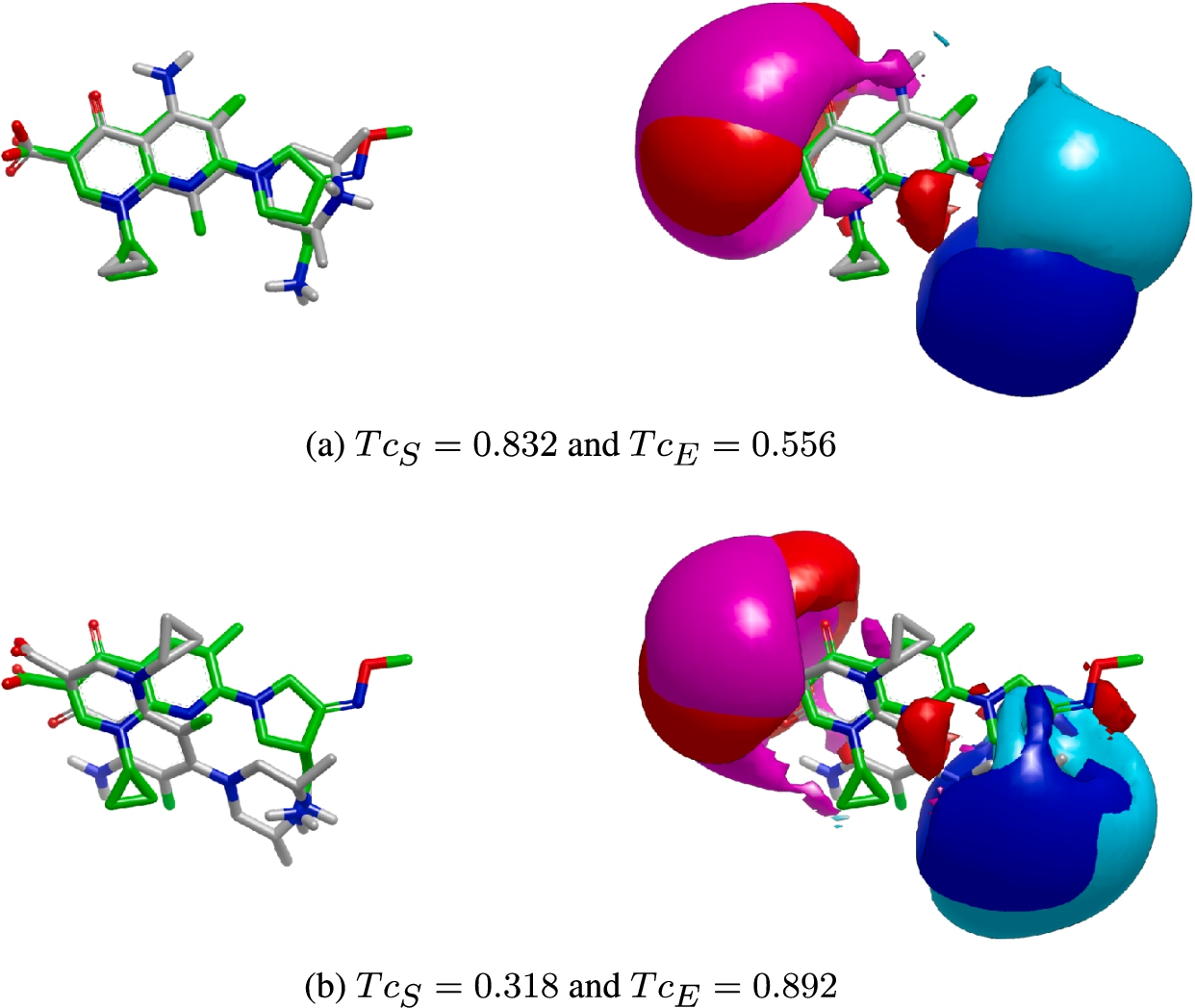
Example of the conflict existing between the shape and electrostatic optimization. We have considered the query molecule DB01155 represented in green and fixed in 3D space, and the target molecule DB01208 depicted in gray. We show the overlap of their structures on the left and their electrostatic charges on the right. To the latter, the positive charge for the query (resp. target) is represented in blue (resp. cyan) and the negative in red (resp. magenta). (a) Shows the optimal pose obtained when the shape similarity is maximized. With such a pose we obtain a
When multiple objectives are present, the concept of an optimal solution, as in the single-objective problems, does not exist (Pardalos et al., 2017). Then, before addressing the optimization problem, it is necessary to explain what solving a multi-objective problem means. In a single-objective context it is easy to determine when a pose
For two feasible poses
Figure 2 illustrates the concept of dominance. Notice how the objective space is represented, i.e. we have mapped a set of solutions
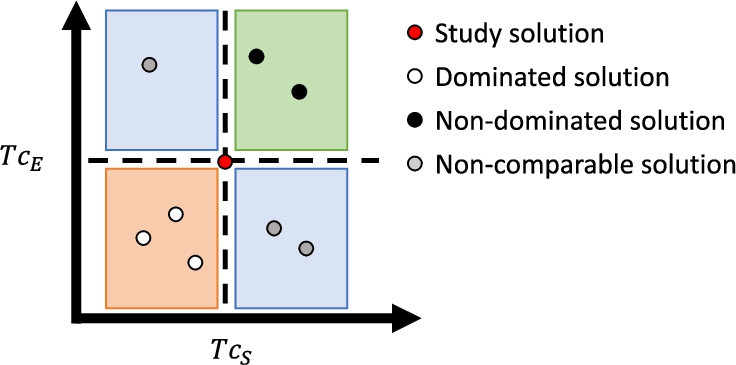
Concept of dominance. Let us consider the solution in red as a reference. The solutions represented by black dots have better similarity values in the two objective functions than the red one. Consequently, the black solutions dominate the red one. Likewise, the solutions in white are dominated, since they have worse similarity values in both descriptors than the red one. Finally, the gray solutions have better similarity values in one property and worse in the other, so they are non-comparable solutions regarding the reference solution.
A pose
Therefore, solving a multi-objective problem like the one in (5) means finding the whole non-dominated subset formed by all the efficient poses, whose corresponding
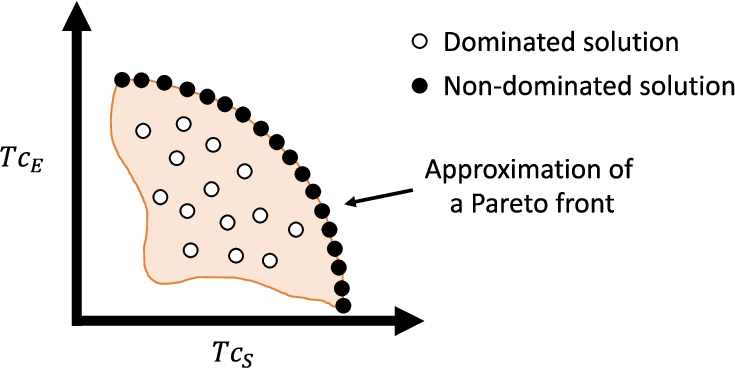
An example of an approximation of the Pareto front for two objective functions (
This subsection describes the methodology used in the literature that is characterized by the use of single-objective software for the selection of candidate compounds. As will be seen, regardless of the case, not only is a significant effort required to determine which molecules to select for evaluation, but the selection is highly dependent on the available information and expert knowledge, which can rule out promising results.
The most widely used methodology in the literature consists of facing the query molecule to the whole database by optimizing the shape similarity. This procedure, denoted as Mono-Shape throughout this paper, is illustrated through an example in Fig. 4(a), where the Query molecule is DB09074, and the database consists of the rigid compounds from the well-known FDA. Initially, the Query is compared to each compound
The first workflow (
However, if the decision-maker’s preferences include molecules with both high shape and electrostatic similarities, which we named the second workflow (
Finally, another possible way to proceed might be to compute the average value between
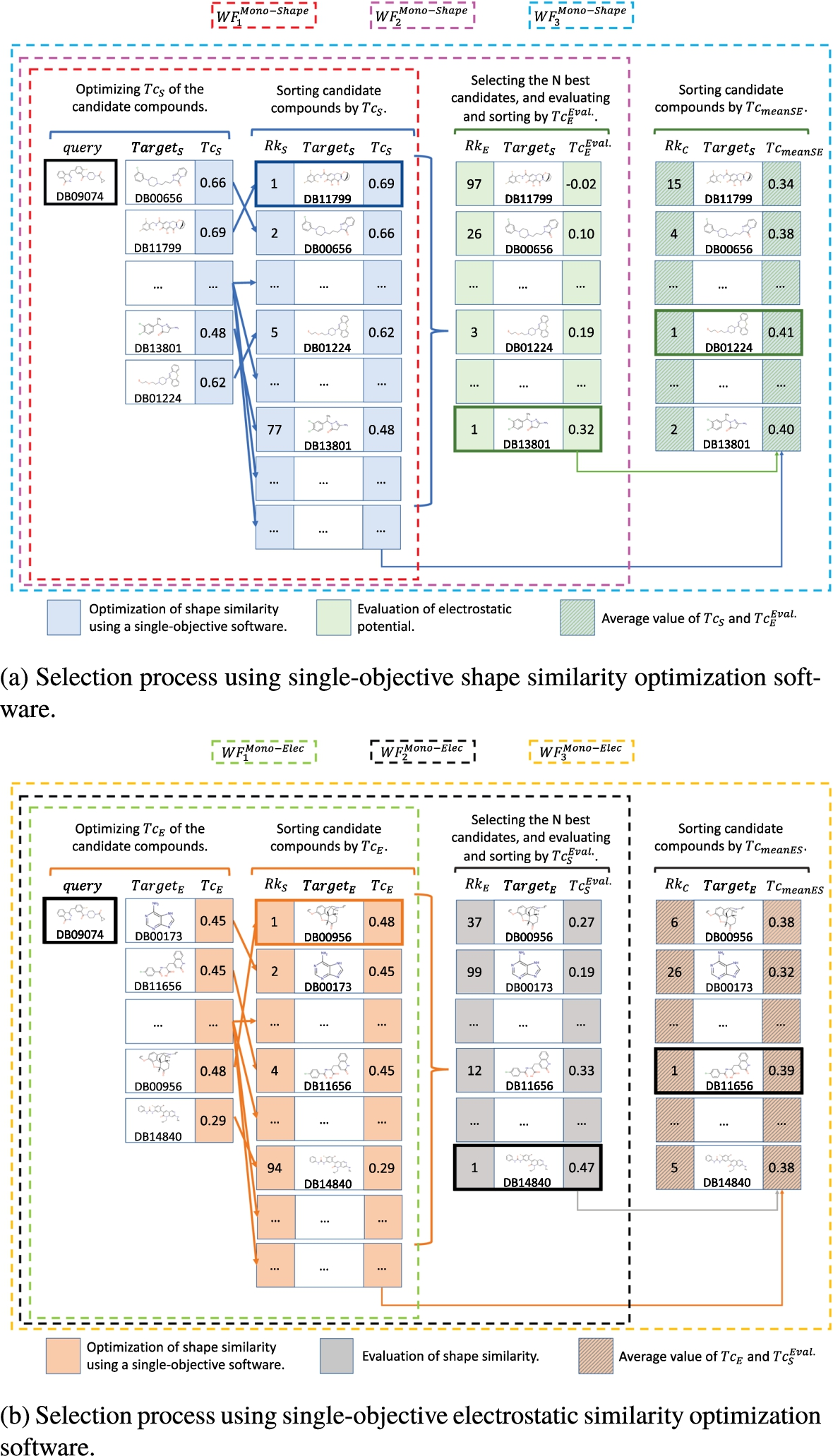
Selection process using single-objective software. Each compound in the database is optimized to maximize the value of a descriptor (
Let us now itemize the obtained predictions when we optimize the electrostatic similarity instead of the shape similarity, denoted as Mono-Elec. We can now consider the expert has a single-objective tool available to maximize the electrostatic similarity of two molecules. As previously, to illustrate the procedure, the same query and database are selected (see Fig. 4(b)). Similarly, the query molecule faced the whole database by optimizing the electrostatic similarity of each target, and a list of candidate molecules sorted according to their
To summarize both methodologies, Mono-Shape and Mono-Elec, it has been shown that the decision-maker needs a great deal of knowledge and experience to be able to carry out many decisions (
This section describes the methodology proposed in this work. For this purpose, it has been divided into two parts. Firstly, we will detail the tool, called MultiPharm, which has been developed to support this methodology. Secondly, MultiPharm-DT will be explained. It is the compound selection strategy based on a decision tool that implements the expert’s preferences.
MultiPharm, the Multi-Objective Optimization Tool
This subsection is devoted to explaining MultiPharm, a new tool designed to deal with LBVS multi-objective optimization problems. As a result, it can obtain a set of predictions without any post-processing from the expert’s side.
MultiPharm can solve any LBVS multi-objective optimization problem with up to m objective functions that depend on the position of the molecules. In other words, it can deal with any objective function used to measure the similarity between two given molecules. Its structure is defined in Fig. 5 and the procedures implemented are explained below.
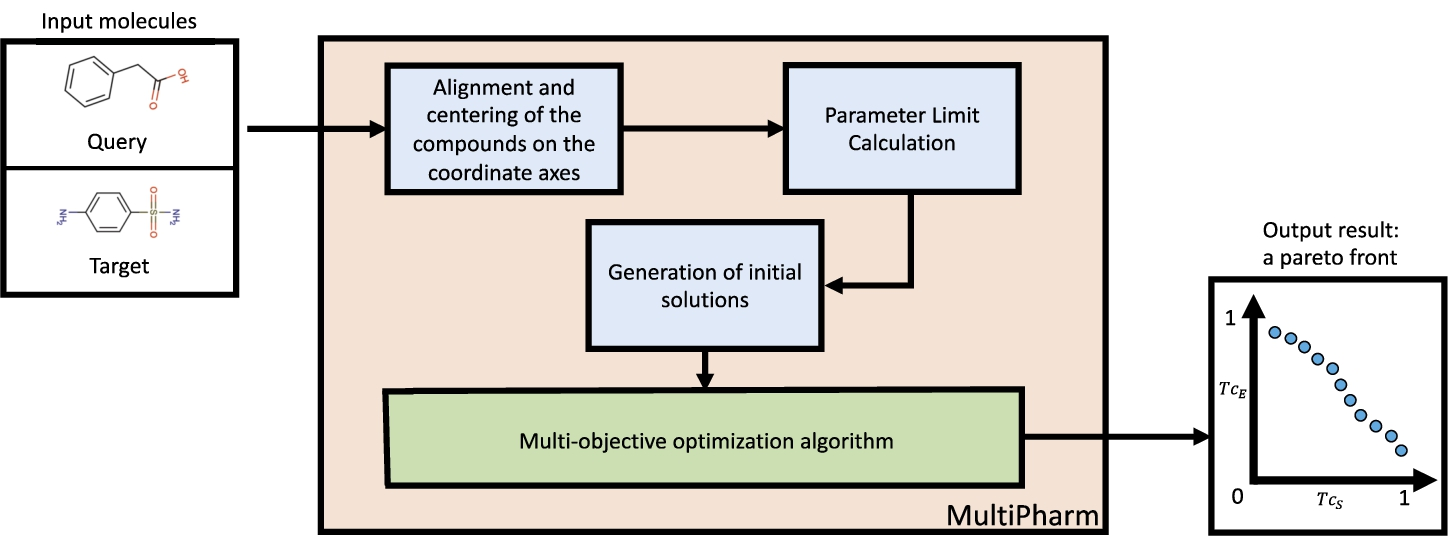
MultiPharm tool structure. Two molecules are received as input parameters. After applying alignment mechanisms to them and calculating the boundaries of the optimization parameters, a set of initial poses is generated. After that, the position of the target molecule is modified by a multi-objective optimization algorithm to optimize the shape and electrostatic similarities with the query molecule. The result obtained is a set of poses with different similarity values in each descriptor.
Alignment and centering compounds. The first step consists of preprocessing the input molecules. The processing performed on the compounds databases before applying VS techniques to them is well known. Consequently, the position of the molecules is entirely random and it influences the solutions. To avoid this, MultiPharm places the centroids of the pair of molecules at the origin of coordinates. Subsequently, it aligns the compounds using PCA such that the longest axis is aligned with the X-axis and the shortest axis of the molecules with the Z-axis. In this way, the initial solutions generated have a good starting point and do not depend on the position of the compounds in the database.
Parameter limit calculation. Since each pair of input compounds can have different sizes, the corresponding limits of the decision parameters are dynamically computed for each particular instance. θ is the rotation angle applied to the axis formed by the 3D points in space
Initial solutions. Once the parameters are defined and limited, we generate the initial solutions. We carry out an empirical study to obtain a good set of starting poses for this problem, which consists of creating 300 solutions from the centred and aligned molecules’ initial position. After that, we divide them into 4 groups: three of them with 80 solutions obtained when rotating the target molecule by different angles at each axis
Multi-objective optimization algorithm. MultiPharm is a wrapper for a multi-objective optimization algorithm. It means that it can include any of the multi-objective optimization algorithms proposed in the literature, such as NSGA-II and SPEA-II (Zitzler et al., 2001; Deb et al., 2002; Durillo and Nebro, 2011). However, for the problem at hand, and taking previous experiences (Puertas-Martín et al., 2019, 2020) into account, we consider that MOEA/D (Zhang and Li, 2007) is an excellent alternative to prove the efficacy of the multi-objective methodology. As such, it is implemented as part of the MultiPharm tool.
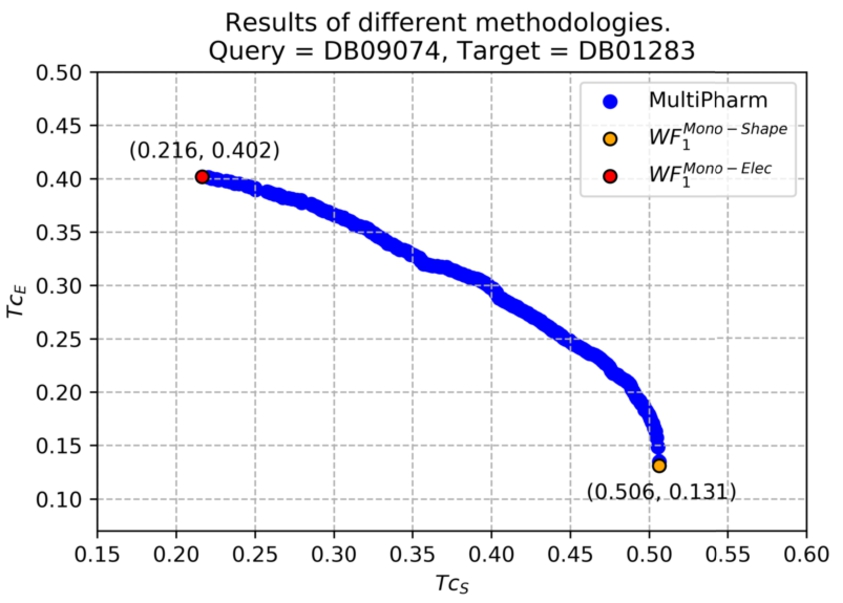
An example where results obtained by comparing the query DB09074 and the target DB01283 are shown. In yellow (resp. red) is the value obtained by optimizing the electrostatic potential similarity (resp. shape) with single-objective software. It is observed that only two solutions (poses) are obtained. However, the multi-objective tool provides a greater number of solutions in which a balance between both properties is sought. In addition, single-objective solutions are shown. They are located at the extreme points of the Pareto front.
MOEA/D stands for Multi-Objective Evolutionary Algorithm based on Decomposition. It transforms the multi-objective problem into several scalar optimization problems using a decomposition method. All these subproblems are simultaneously solved considering a set of uniformly distributed weight vectors. With each generation, the population is formed by the best solution found for each subproblem. This population evolves throughout the optimization procedure taking the neighborhood information into account. We refer the interested reader to Zhang and Li (2007), Li and Zhang (2008) for an in-depth description of the optimization algorithm.
MultiPharm obtains, as a result, a Pareto front (and of course, its corresponding efficient set). Figure 6 shows the Pareto front obtained as a real example where the query molecule was DB09074 and the target molecule was DB00504. Notice that each blue circle represents the value of
The Decision Tool: MultiPharm-DT
The execution of MultiPharm over a database will obtain a Pareto front for each pair (query, target). It could be too much information for the expert, even considerably more than the one managed with the single-objective perspective. In this work, we have also implemented a decision tool, called MultiPharm-DT, to reduce the quantity of information given to the expert. Although one could consider many different selection criteria, we opted to implement a mechanism that obtains the Pareto front of the paretos as part of MultiPharm-DT.
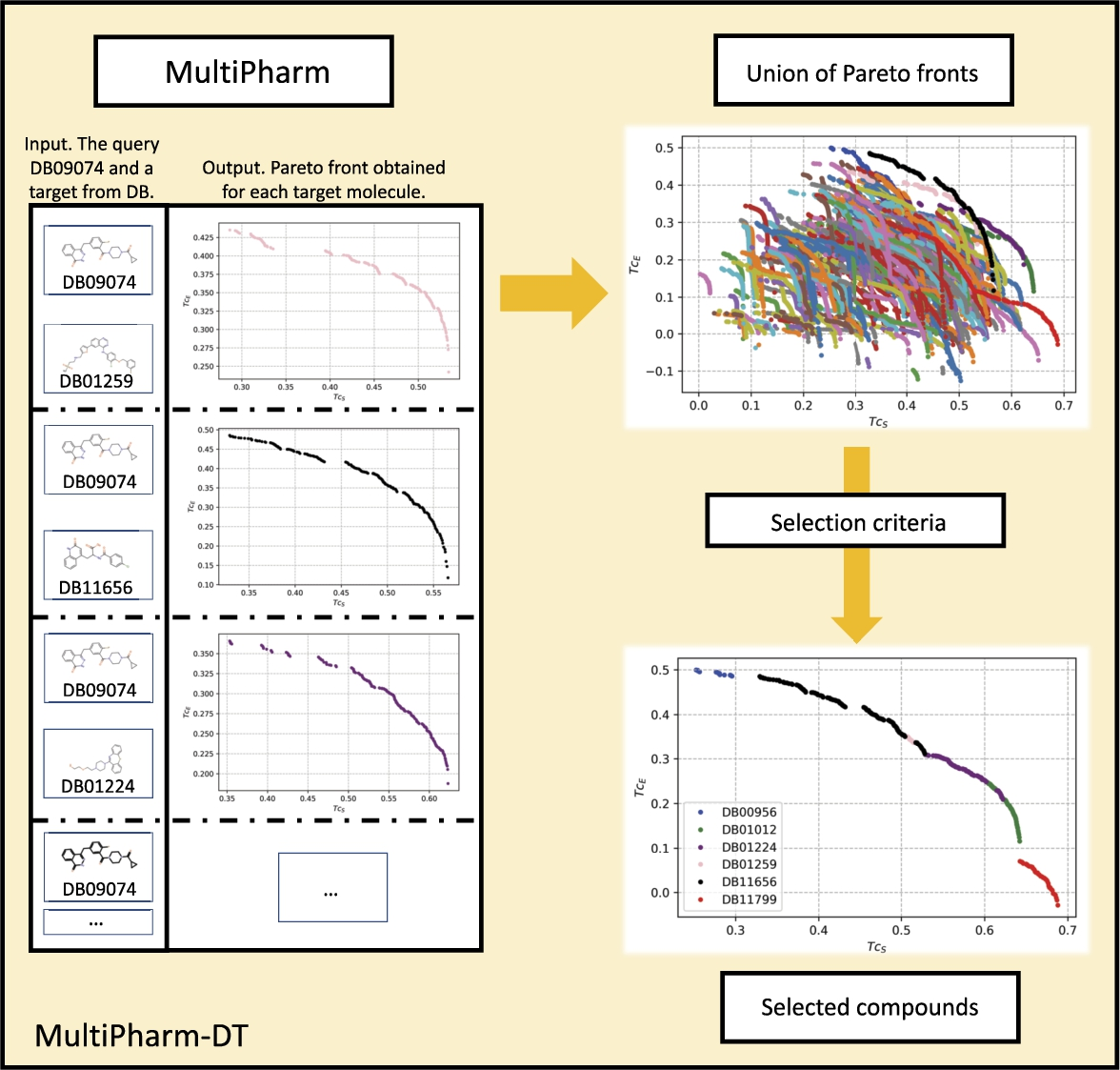
Selection process for the most similar compounds following the multi-objective methodology. The query molecule is compared with the whole database, consequently obtaining a Pareto front for each target molecule. Subsequently, all the fronts are mixed and it is left to the decision-maker’s discretion which compounds to select. For this example, the compounds with non-dominated poses have been selected.
Figure 7 helps to illustrate this mechanism. As can be seen, MultiPharm-DT merges all the particular Pareto fronts. At this point, the experts can compare them, see the similarities of the compounds from the database with the query molecule, and extract information in different ways. Apart from the union of the paretos, MultiPharm-DT applies a decision mechanism and provides a filtered solution. The expert is able to select the most appropriate compound for their preferences at a glance. That means they will select the compound DB00956 if they are looking for a molecule with high electrostatic similarity. If their preferences are inclined towards shape similarity, they will choose the compound DB11799. However, if they are interested in proposing compounds with a balance between the two descriptors, they will choose from the compounds DB01012, DB01224, DB01259 or DB11656. Finally notice that for each compound, the multi-objective methodology offers a set of possible poses, as mentioned in subsection The Multi-Objective Optimization Problem, which could also be of great interest to the decision-maker.
Database
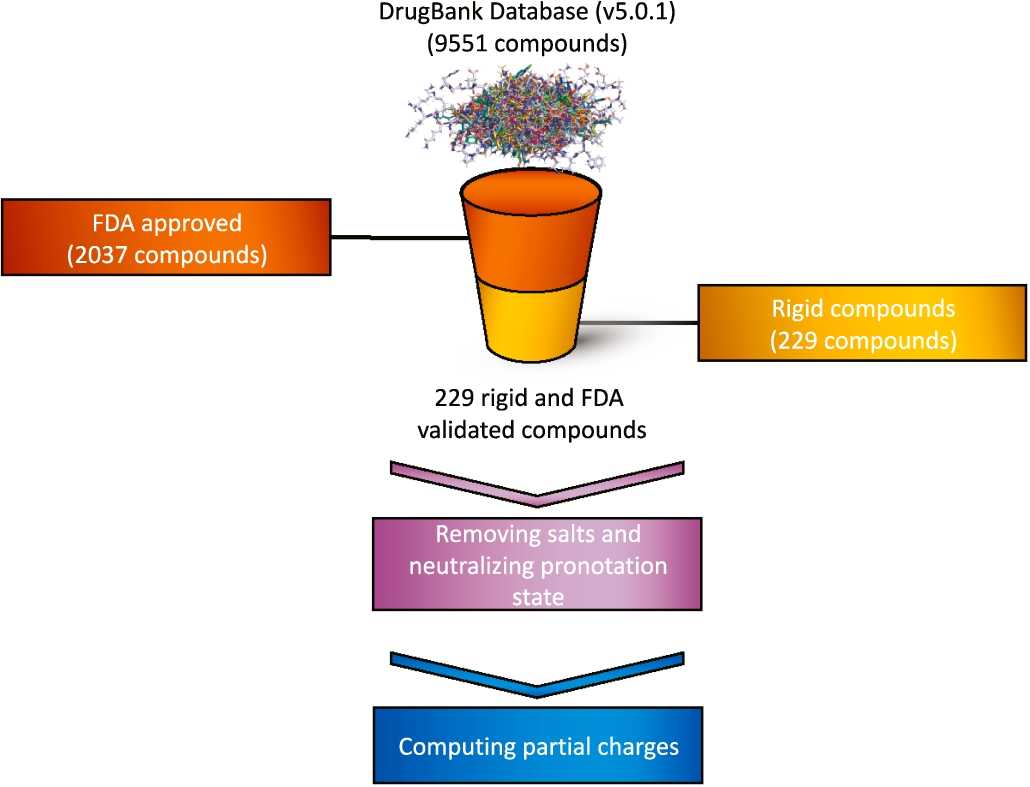
Only validated and rigid compounds are selected from the original database. The compounds are then processed by removing salts, neutralizing the pronotation state and computing the partial charges.
The database used in this work was obtained from DrugBank v5.0.1 (Wishart et al., 2018) and mol2 files necessary for the VS calculations were set up by using AmberTools (Case et al., 2017). This took the form of removing salts and neutralizing their protonation state, computing partial charges by MMFF94 force field, adding hydrogen atoms and minimizing energies (default parameters) (Halgren, 1995) (see Fig. 8). From this database, we selected those compounds that were rigid and validated by the FDA, a federal agency of the United States Department of Health and Human Services. This subset was classified by its number of atoms in groups. A compound (query) was selected randomly from each group, as shown in Fig. 9. Consequently, 32 molecules were selected for analysis against the rest of the database. And in order to compare software and methodologies on an equal footing, hydrogen atoms were considered for shape and electrostatic similarity.
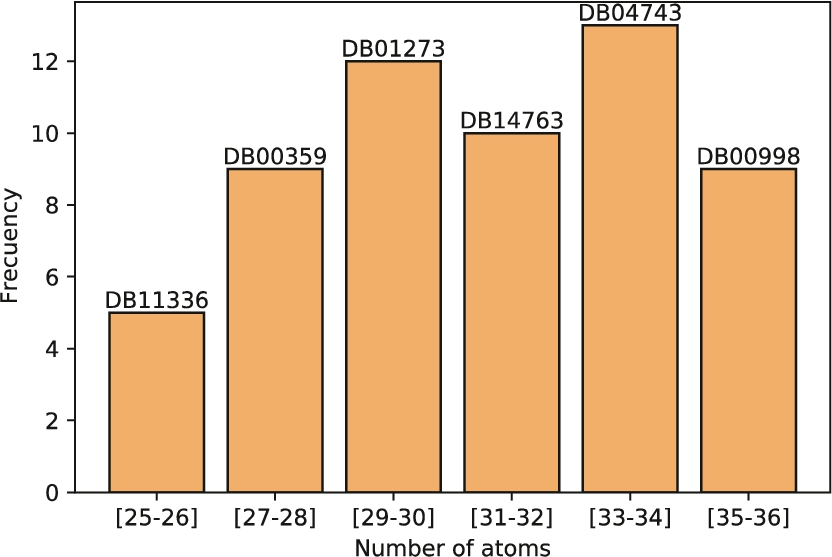
Molecules are grouped by their number of atoms. Queries molecules are randomly selected from each group. This process has been performed on the whole database although in this figure only molecules containing between 25 and 36 atoms are shown.
All the experiments in this work have been executed using 18x Bullx R424-E3, which consists of 2 Intel Xeon E5 2650 (16 cores), 64 GB of RAM memory and 128 GB SSD (
Software Configuration
To compare the two methodologies, we decided to use OptiPharm in its two versions (Puertas-Martín et al., 2019; Puertas-Martín et al., 2020) and MultiPharm. OptiPharm is a recent piece of software designed to work with the LBVS problem which implements an evolutionary global optimization algorithm that can solve any optimization problem related to the similarity of two compounds, a query and target molecules. It implements procedures to adjust the latter to the query molecule, remaining unchanged throughout the optimization process. OptiPharm has proved to be very competitive when maximizing the shape similarity, as well as the electrostatic. For a more comprehensive explanation of the software and the obtained results, reading the original works (Puertas-Martín et al., 2019; Puertas-Martín et al., 2020) is recommended. It is also available in the free-to-use server BRUSELAS (Banegas-Luna et al., 2019).
OptiPharm and MultiPharm can be parameterized in order to adapt them to different problems and the preferences of the user. Focusing on the quality of the solutions, the configuration established for OptiPharm is the same as published in other works. This will be called OptiPharm Robust (OpR) and its input parameters are: N = 200,000 function evaluations,
Results and Discussion
Before proceeding with the results, it is necessary to explain how we will compare both methodologies, i.e. MultiPharm-DT versus Mono-Shape and Mono-Elec. Our goal is to prove that we can obtain more predictions of interest with the multi-objective methodology, but (i) without the participation of the expert, (ii) with less computational effort and (iii) with more accuracy. To do so, the 32 query molecules are faced against the database. The results are summarized in Table 2. To understand such a table, we will focus on a particular row, more precisely, on the one corresponding to the query molecule DB09516. The pertinent results appear in Fig. 10 and Table 1.
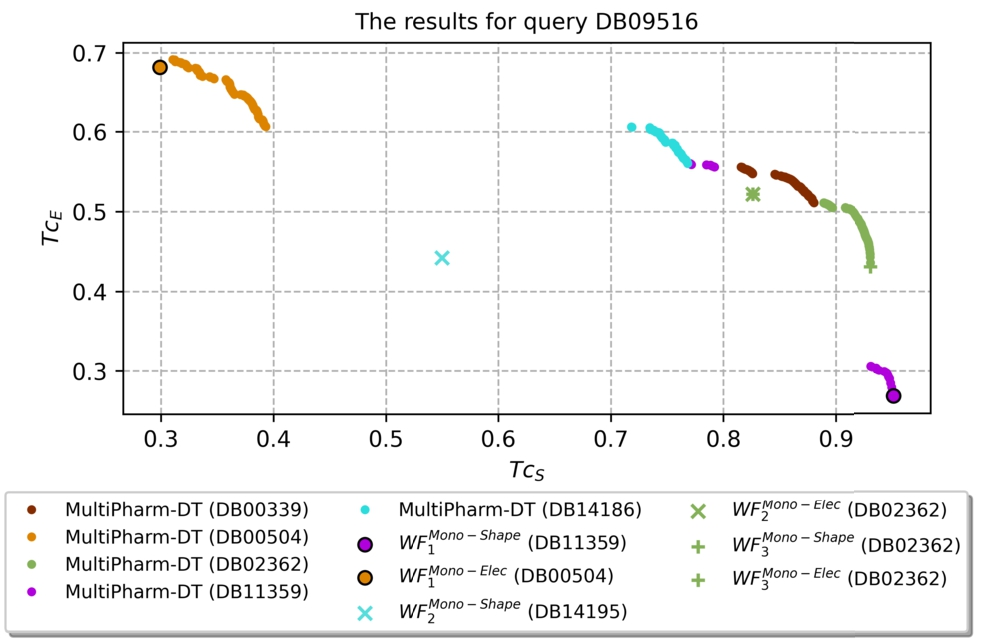
The predictions obtained by the single-objective and multi-objective software for the query DB09516.
Summary of the results obtained for both single and multi-objective methods for the query compound DB09516. The most similar compound is shown for Mono-Shape and Mono-Elec, and the list of compounds with non-dominated MultiPharm-DT solutions (poses).
In the figure, we show the solution found by each workflow (
Nevertheless, the predictions achieved by MultiPharm-DT dominate the ones obtained by
The performance observed in the previous paragraph for the DB09516 query follows the normal trend for all the experiments; the only solutions that can compete with the ones obtained by MultiPharm-DT are those provided by
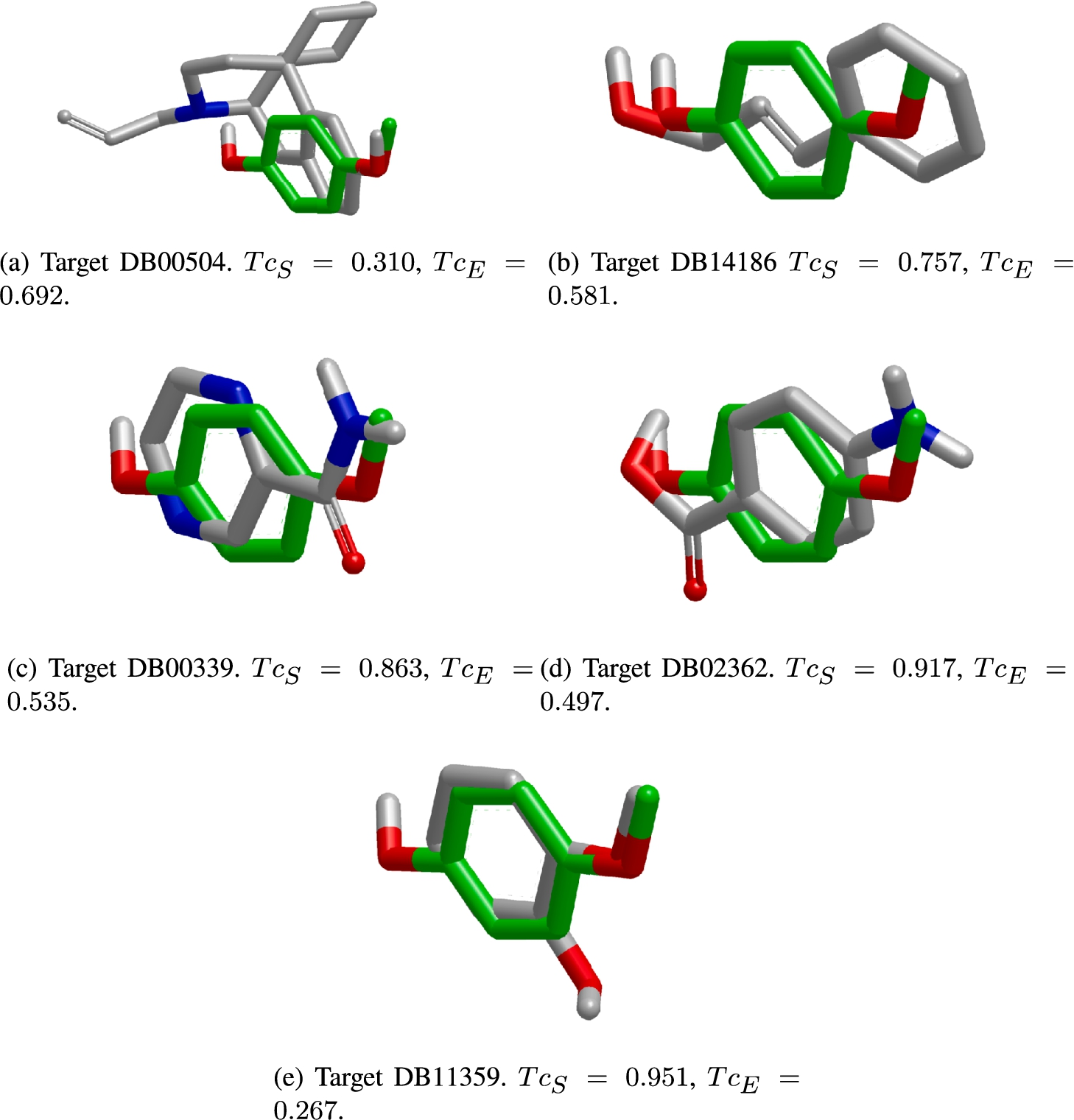
The predicted compounds obtained for query DB09516 sorted by
The information depicted in Fig. 10 is also summarized in Table 1. In such a table, we only include the predictions provided by
Once the specific case is explained, we provide some statistics for the complete set of experiments. All the results appears in Table 2, which follows the same structure and information as Table 1.
As can be seen in the table, for 23 out of 32 cases, MultiPharm-DT obtains a set of predictions that include those obtained by
It is important to remember that given a particular query, MultiPharm-DT generates a Pareto front. After that, the decision-makers have different poses to choose the one that best fits their interest, i.e. the one with a better balance between the scoring functions. On the contrary, the single-objective workflows only provide the pose that maximizes one descriptor, without considering the other one.
In this subsection, an exhaustive analysis of the results from Table 2 is performed, showing the values of
Results obtained for 32 query compounds from the rigid and validated database.
Results obtained for 32 query compounds from the rigid and validated database.
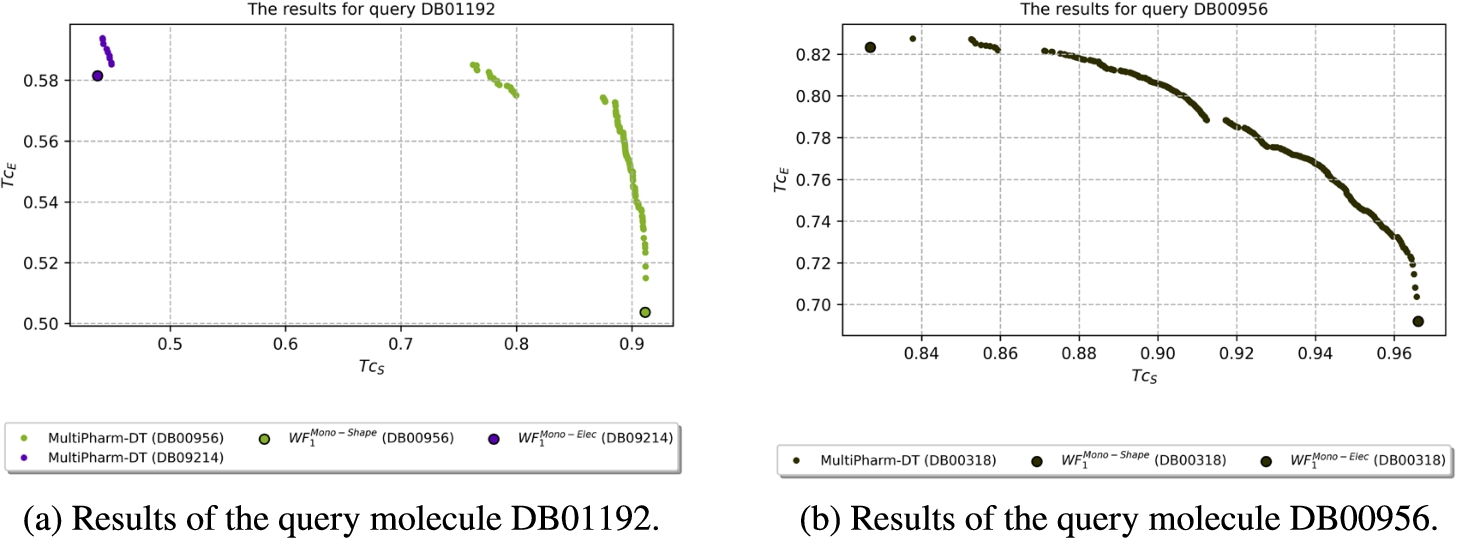
Results where
The second group of compounds consists of 14 queries. It is characterized by MultiPharm finding more compounds in addition to those from
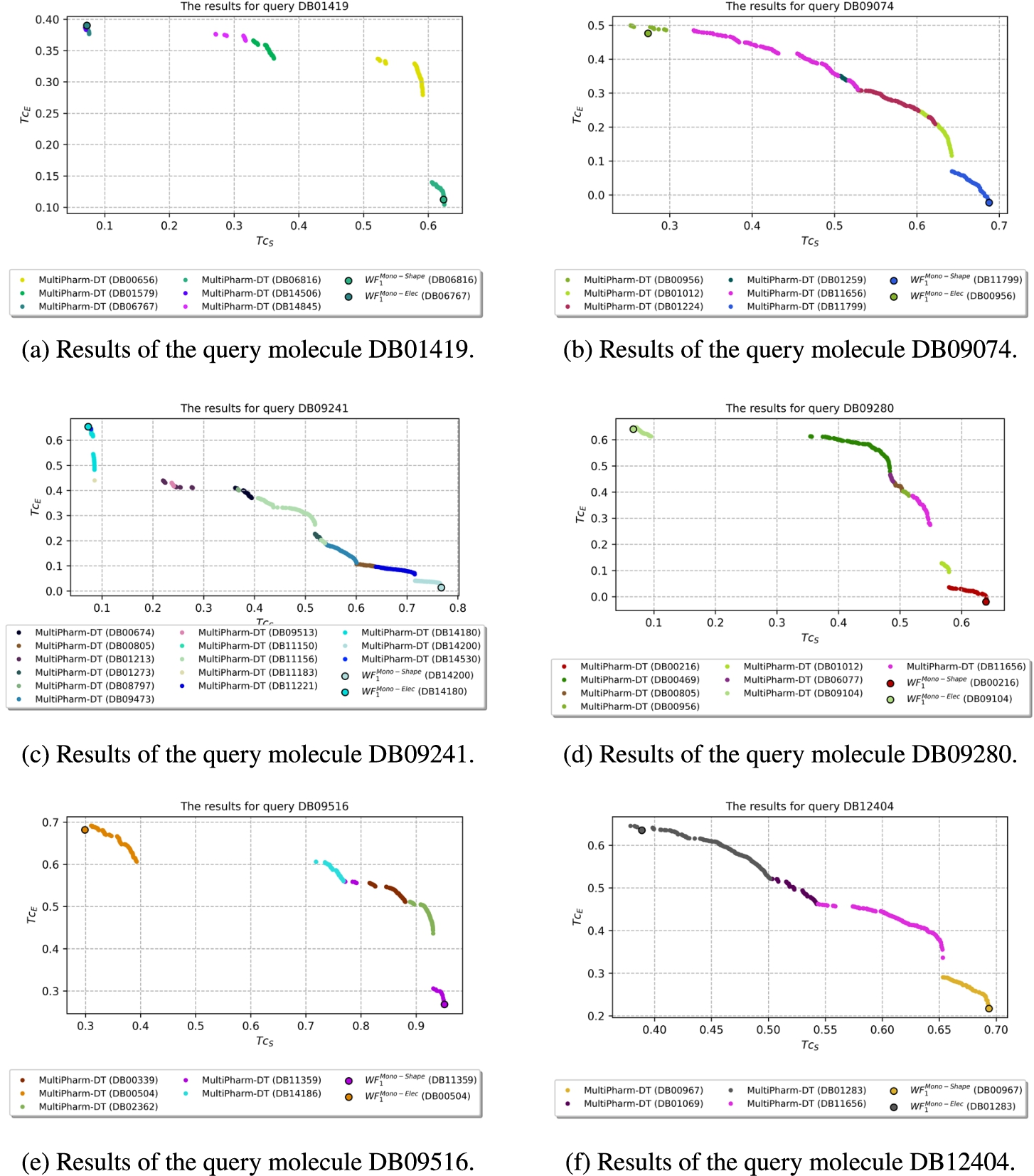
Results where MultiPharm-DT get more compounds than with
Finally, the third group consists of the remaining 9 queries, where MultiPharm finds several molecules, but among them, only one belongs either to
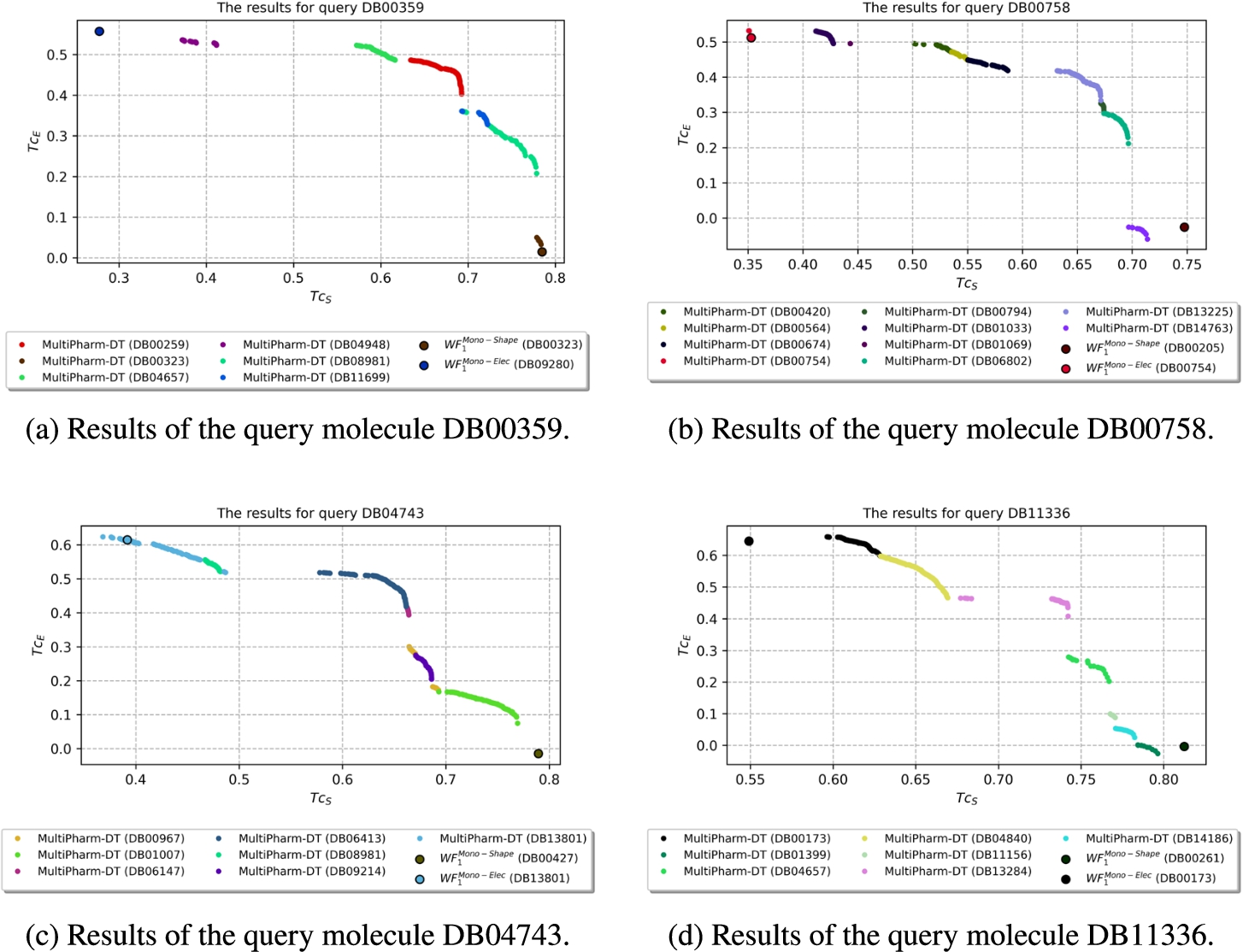
Results where
In view of all the above results, it can be seen that this new methodology with MultiPharm-DT is able to widen the knowledge about the compounds to be selected since different poses with similarity values in both descriptors are known for each compound. Indeed, it improves the quality of the decisions and allows good compounds to be selected without the knowledge or action of a decision-maker, which greatly facilitates the appropriate choice of compounds.
Finally, as a general comment, it is important to mention that MultiPharm-DT provides more valuable predictions than the single-objective workflows, in terms of quantity and quality. Interestingly, this is in a single run without the expert’s participation. Furthermore, without considering the expert’s effort, obtaining the solutions for the single-objective methodology will cost 200,000 evaluations per workflow (a total of 400,000 evaluations) while MultiPharm-DT only requires 200,000. It is clear to see then that the advantages of using MultiPharm-DT, in terms of computing time, are sizeable.
In this work, we propose a new methodology for solving LBVS problems that require the optimization of several descriptors simultaneously. It is composed of a new tool, named MultiPharm, and a decision mechanism, named MultiPharm-DT. As a result, a set of predictions is obtained that can be directly offered to the decision-makers without any participation on their side.
This new method has been compared with the one currently being followed in the literature, which entails solving an optimization problem that includes a single descriptor and analysing the obtained solutions taking a second descriptor into account. This system requires a concerted effort on the part of the decision-maker to select the best compounds because they have to relate both descriptors via post-processing that becomes more costly as the number of compounds to be processed increases.
To test this new approach, a set of rigid, FDA-approved compounds has been used. In addition, shape and electrostatic similarities have been used although it is possible to use MultiPharm with a larger number of descriptors. As the results have shown, multi-objective solutions provide more information on compound similarity and a larger number of quality candidate compounds without performing any post-processing. In terms of computational time, multi-objective optimization is much faster than trying to replicate the same behaviour with single-objective.
In the future, new algorithms will be included in this novel tool so that the expert can select the most suitable algorithm for their problem. Following this line, new objective functions will be added to improve decision-making knowledge. Finally, it would be wise to employ the flexibility of the compounds so that they are not treated as rigid compounds, regardless of their nature.
Supplementary Material
The development of this work has generated a large number of results. Consequently, all the results obtained can be found in the compressed attachment, classified in 4 folders: All. Pareto fronts obtained by MultiPharm for all compounds. Clean. MultiPharm-DT solutions. Comparative. The MultiPharm-DT compounds and those obtained by AllWorkflows. The MultiPharm-DT compounds and those obtained by Project name: MultiPharm. Project source code repository: Operating system(s): Windows, Linux and MacOS. Programming language: Java. License: Mozilla Public License 2.0. Any restrictions to use by non-academics: licence needed, contact with the authors.
The databases belong to their authors and access to them depends on any applicable restrictions.
Footnotes
Acknowledgements
This research was partially supported by the supercomputing infrastructure at Poznan Supercomputing Centre, the e-infrastructure program of the Research Council of Norway, the supercomputer centre at UiT – the Arctic University of Norway and by the computing facilities at the Extremadura Research Centre for Advanced Technologies (CETA–CIEMAT), funded by the European Regional Development Fund (ERDF). CETA–CIEMAT belongs to CIEMAT and the Government of Spain. The authors also acknowledge the computing resources and technical support provided by the Plataforma Andaluza de Bioinformática at the University of Málaga. Powered@NLHPC research was partially supported by the supercomputing infrastructure at the NLHPC (ECM-02).