






Abstract
In this study, the air permeability of ultrafine glass fiber felts (UGFFs) as a function of bulk density and thickness was predicted by three analysis methods including linear fitting, polynomial fitting, and an artificial neural network (ANN). A 36-set database was obtained by the measurements of samples produced by the fame blowing process. It was shown that the ANN structure with six neurons in the hidden layer was optimal. The ANN model showed much better quality of predicting the permeation rate compared with linear fitting and polynomial fitting, which was evaluated by three important parameters, namely mean relative error (MRE), mean squared error (MSE), and correlation coefficient (R). The prediction diagrams applying the ANN model also matched the theoretical analysis very well, which verified the advantages and practicability of ANN.
Introduction
Due to the advantages of cheap, large specific surface area, high chemical stability, strong temperature resistance, and easy processing, glass fiber felts have gradually become the main products of air filter materials. Glass fibers are more resistant to high temperatures and corrosion compared to cottons and linens, and they have greater strength and stronger size stability compared to chemical fibers. 1 , 2 Since their resistance to high temperature and fire is unmatched, glass fiber filtration materials have achieved rapid development.
The mean fiber diameter of glass fiber felts prepared by the fame blowing method is usually below three microns, which are called ultrafine glass fiber felts (UGFFs). In the past decades, the preparation technology of fame blowing has been improved continuously, and a complete set of technological processes has been formed. There has been much research on the acoustic and thermal insulation performance of glass fiber felts,3–5 but their filtering performance has not drawn much attention so far.
The indexes of filtration performance mainly include filtration efficiency, filtration resistance, air permeability, and dust capacity. Among them, air permeability indicates the permeation rate of gas to materials such as film, coating, and fabric, which affects the filtration efficiency of the whole filter to air. Usually, air permeability is defined as the ability of a sample to pass through air under fixed pressure differentials on both sides of the test sample, that is the velocity of airflow passing through both sides of the test sample under certain test conditions.
There have been a series of investigations about the air permeability of fibrous materials.6–9 Celik 10 applied regression analyses using the SPSS 21.0 package program to predict the air permeability of air-laid nonwoven fabrics, and a regression equation was obtained for the prediction of air permeability by using porosity, thickness, and fabric weight. Afzal et. al 11 modelled the effect of knitting parameters on the air permeability of polyester/cotton interlock fabrics. It was found that the air permeability decreased with decreased knitting loop length and increased yarn linear density. The model was validated by an unseen dataset; the predicted and actual values were in good agreement. However, the models were too complicated and not suitable for computing the air permeability directly. Therefore, it was necessary to develop a new model to analyze the air permeability of UGFFs.
An artificial neural network (ANN) is a technique basically used to map random input vectors to the corresponding random output vector without assuming any fixed relationship between them. Neural networks can learn from past data, recognize hidden patterns or relationships in historical observations and use them to forecast future values. 12 Because of its many advantages, ANNs have been widely used to analyze and predict the properties of materials, including the sound insulation and heat insulation performance of UGFFs.13–15 The ANN model showed excellent agreement with the measured results and it has been proved very appropriate for the estimation of properties of UGFFs.
In recent years, many researchers have applied the ANN model to predict the air permeability of fabrics.16-18 Mitra et al. 19 applied two modeling methodologies for the prediction of air permeability of plain woven handloom cotton fabrics. Four basic fabric constructional parameters, namely ends per inch, picks per inch, warp count, and weft count, were used as inputs for ANN and regression models. ANN models demonstrated superiority over the regression models both in terms of correlation coefficient and mean absolute error. Gultekin et al. 20 developed an artificial intelligence method to predict the porosity and air permeability properties of hydroentangled nonwoven fabrics from their texture features. According to ANN results, these were predicted with high accuracy from their texture images. These examples have shown that the ANN model is very effective in predicting the air permeability of fabrics.
The present study compares the accuracy in predicting air permeability of UGFFs among three different approaches: the ANN model, linear fitting, and polynomial fitting. The specific principles and comparative accuracies of the various data analysis approaches in application to air permeability and the discussion of results are given. Results arising from this study provide important reference materials for utility companies in assessing air permeability and selecting a more accurate approach to estimate future filter demands. 21
Experimental
Materials
In this study, the UGFFs were prepared by the fame blowing process (Fig. 1). 22 First of all, glass balls or blocks were placed in a furnace and heated to over 1300 °C to a pellucid liquid. Secondly, glass liquid was pulled through the metal leakage plate to form primary filaments under the traction of drawing rollers, and then secondary fibers were formed by fame blowing. Thirdly, under the force of negative pressure wind and fame blowing air flow, glass fibers were transmitted to a perforated mesh through the flow tube. Meanwhile, the adhesive solution was sprayed to the mesh belt, which made the surface of the fibers evenly coated with adhesive. Lastly, glass fibers were cured at high temperature (220–270 °C) in the curing oven to form the glass fiber felts. The final dimensions of the glass fiber felts were 5–65-mm thick and were cut to 10-m long and 1-m wide.
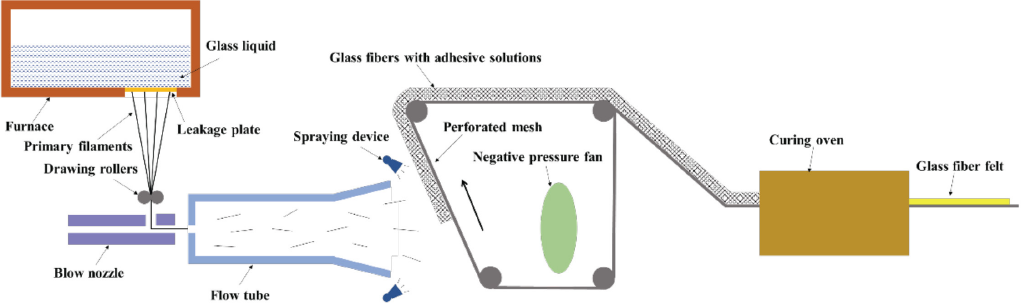
Preparation process of glass fiber felts.
Measurement of Air Permeability
The air permeability of UGFFs was measured using a numerical air permeability tester (Changzhou Hongtai Textile Instrument Co. Ltd.) according to the standard ISO 9237-1995, and the schematic diagram is shown in Fig. 2. Before measurement, the samples were pretreated at 20 °C and 65% humidity. The test area was 20 cm2 and the pressure difference was set as 200 Pa. To ensure the accuracy of data values, different positions of the same sample were measured more than 10 times, and the average value was calculated.
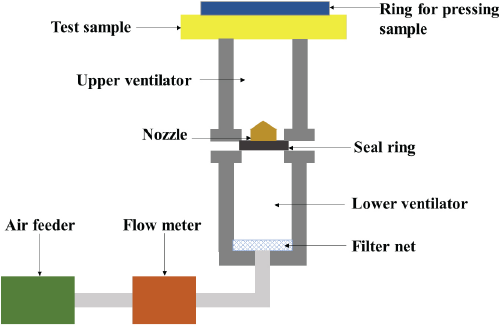
Schematic diagram of air permeability tester.
Data Analysis Methods
Linear Fitting and Polynomial Fitting
On the basis of experimental data, a correlation equation calculating the permeation rate of UGFFs as a function of thickness and bulk density can be presented using the fitting method. Linear fitting is the most common and simplest fitting method, which can be expressed as Eq. 1.

To improve the accuracy, a cubic polynomial was also adopted. This correlation equation can be expressed as Eq. 2.

Aij is the coefficient of the polynomial, which can be determined by MATLAB language on a personal computer.
ANN Model
ANN consists of numbers of simple processing elements called neurons, which are connected to others through direct communication links. Each link is accompanied by a weight representing information being used by the network to solve the problem. 23 The output of a neuron is computed according to Eq. 3.

In this study, the back propagation neural network was applicated, which is the most well-known and widely used ANN type for function approximation in various fields of science and engineering currently. 24 Fig. 3 shows the structure of the ANN model, which consists of input, hidden, and output layers. The bulk density and thickness of UGFFs were set as input parameters and the permeation rate was regarded as the output parameter. Due to the few parameters in this model, one hidden layer is enough. A tansig function was applied between the input and hidden layer, and to avoid the output from being restricted to a small range, a purelin function was used between the hidden and output layers.
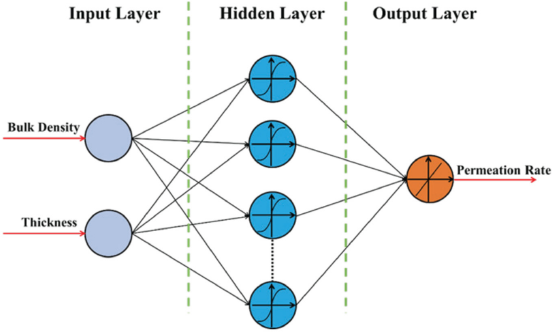
Structure of the ANN model.
Before proceeding with the simulations to define the permeation rate from an experimental data set, the ANN model must be trained. In other words, each weight and bias must be defined through a learning procedure from available data of the permeation rate. 25 Fig. 4 shows the training process of the ANN model. Bayesian Regularization was selected as the learning algorithm, which shows a better accuracy than other algorithms. For the purpose of improving the network training process, the training data should be normalized, resulting in a new group of data with zeroed average and unit standard deviation.
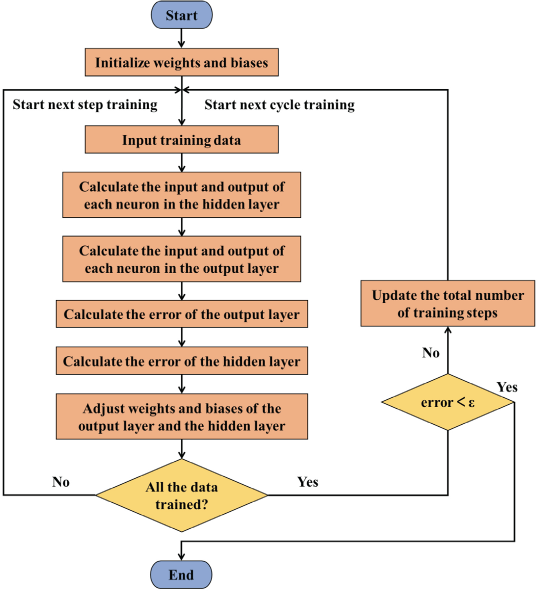
Training process of the ANN model.
For obtaining the optimal structure of the ANN model, that is to say the optimal number of neurons in each hidden layer, a trial and error procedure was used. By varying the number of neurons in each hidden layer, the network was changed and the resulting network was trained in such a way that the precision was maximized. There were three kinds of principles to evaluate the precision: mean relative error (
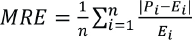

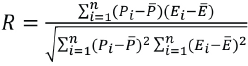
The model with the lowest
Results and Discussion
Comparison of the Tree Methods
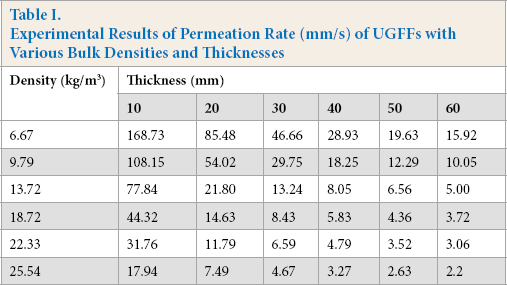
After measurements, a database of permeation rate of UGFFs with different bulk density and thickness was established. The database consisted of a 36 set of data, which can be seen as Table I. The optimal number of neurons in the hidden layer is referred to in Eq. 7.
Experimental Results of Permeation Rate (mm/s) of UGFFs with Various Bulk Densities and Thicknesses
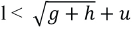
l is the number of neurons in the hidden layer.
Values of
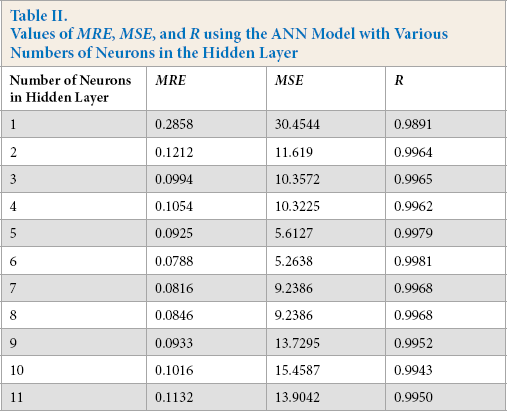
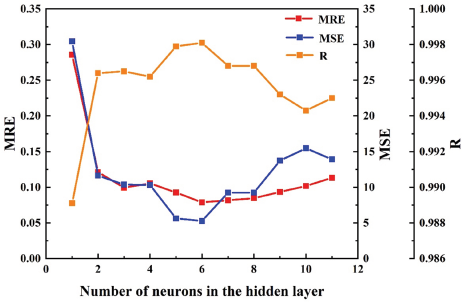
The values of
Besides the ANN model, the equations for linear (Eq. 8) and polynomial fitting (Eq. 9) were also confirmed by determining each coefficient.


The values of
Values of
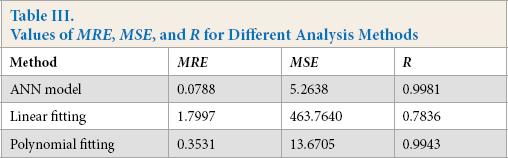
Fig. 6 shows the relationship curves of bulk density and permeation rate of UGFFs with various thickness predicted by different analysis methods compared with the experimental data. When the thickness was fixed, the permeation rate of samples decreased with bulk density gradually. When the bulk density was below 15 kg/ m3, the downward trend was rapid, and when the bulk density was greater than 15 kg/m3, the decline slowed significantly.
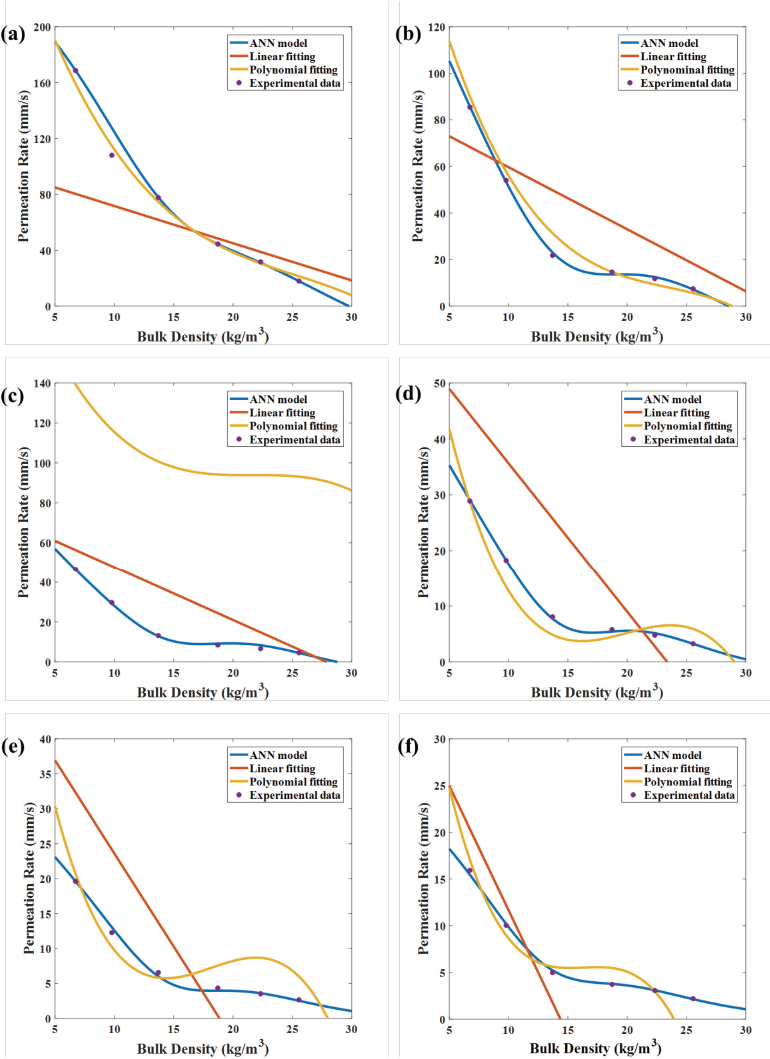
The relationship curves of bulk density and permeation rate of UGFFs with various thicknesses predicted by different analysis methods compared with the experimental data. (a)
Fig. 7 shows the relationship curves of thickness and permeation rate of UGFFs with various bulk densities predicted by various analysis methods compared with the experimental data. When the bulk density was fixed, the permeation rate of samples declined with thickness all the time. When the thickness was 25 mm, there was a marked turn in the trend. The declining trend was rapid below 25 mm and slow greater than 25 mm. In Figs. 7 and 8, most of the points that represent the experimental data fell on the curves of the ANN model, which verified the high accuracy of the ANN model.
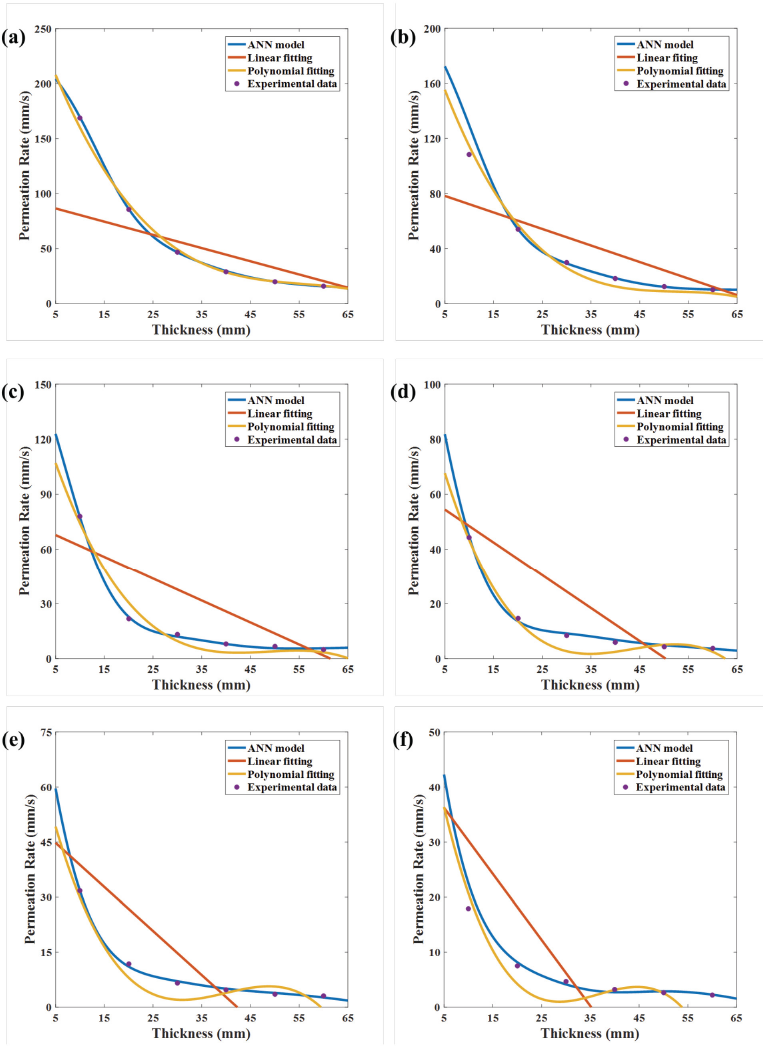
The relationship curves of thickness and permeation rate of UGFFs with various bulk densities predicted by different analysis methods compared with the experimental data. (a)
Fig. 8 gives the prediction surfaces of permeation rate of UGFFs as a function of bulk density and thickness by the above three methods. To compare the prediction results and the measured results more intuitively, all the measured results were plotted as colored dots in the figures. In Fig. 8a, all the colored dots are basically on the surface of the mesh, which further proves that the estimation quality by the ANN model was quite satisfactory.
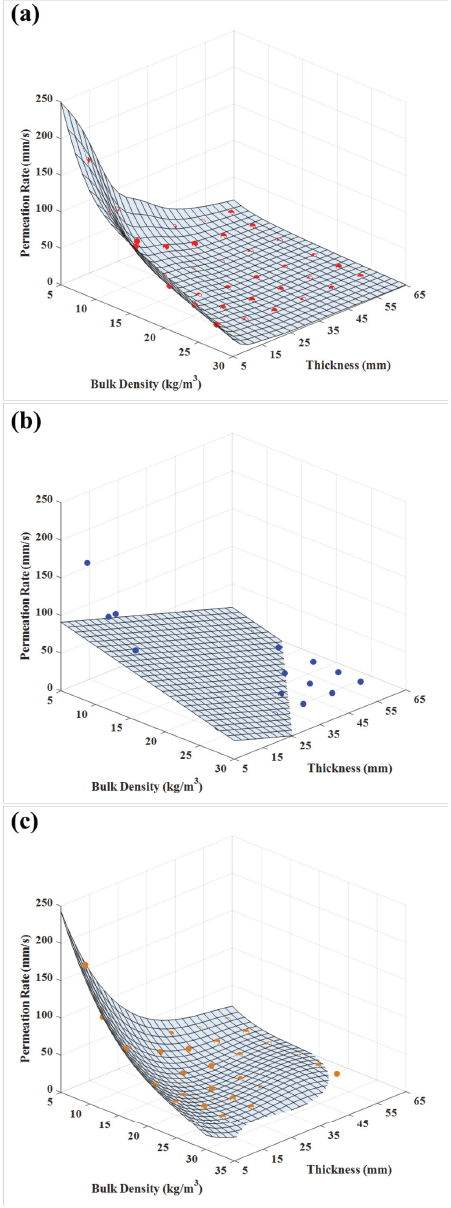
Prediction surfaces of permeation rate of UGFFs as a function of bulk density and thickness by three methods compared with measured data plotted as colored dots. (a) ANN model, (b) linear fitting, and (c) polynomial fitting.
Analysis of Prediction Results
According to the micro morphology of a representative sample of UGFF observed using a scanning electron microscope (SEM), it can be seen that the UGFF consisted of a large number of fibers overlapping each other to form a network structure (Fig. 9). A mass of pores formed by glass fibers show different shapes and sizes and are connected to each other. The measured pore size distribution is shown in Fig. 10. The pore size of 5 μm occupied nearly 34%, which was the maximum proportion. The largest pore size was 89.7 μm, which occupied 0.089%. After calculation, the average pore size was 13.4 μm. In general, the air permeability increases by increasing the directionality of the fibers. 26 Determined by their preparation technology, the fiber orientation inside the UGFFs was random and there was no obvious direction of fibers. Therefore, the permeability of UGFFs was worse than woven fabrics.
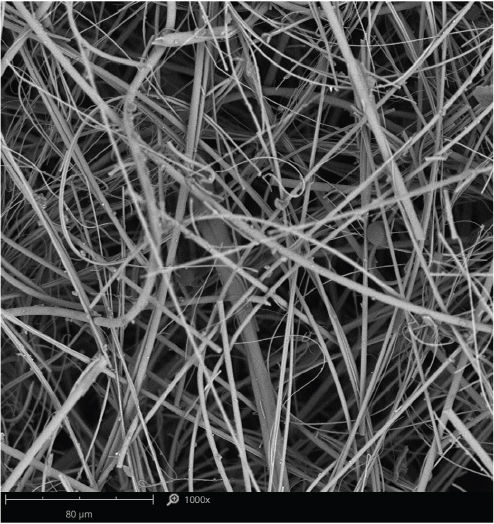
Micro morphology of UGFFs observed by SEM.
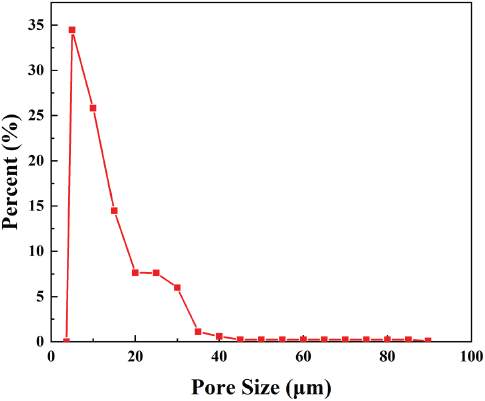
Pore size distribution of UGFFs.
Fig. 11 gives the schematic diagram of air flowing through UGFFs with different thickness. Increased felt thickness improves the overall quantity of fibers. When air flows through the felt, there are a large number of contacts between air and fibers. As the quantity of fibers increases, the air molecules will constantly reflect inside the felt and the total path gets longer, leading to a reduction of the kinetic energy. Meanwhile, the increase in fibers improves the friction probability of gas molecules, converting kinetic energy into heat energy. The combination of the above two factors leads to the weaker air permeability of UGFFs.
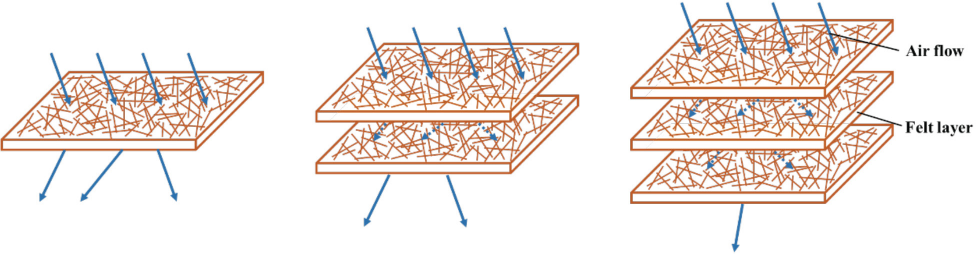
Schematic diagram of air flowing through UGFFs with different thicknesses.
Fig. 12 gives the schematic diagram of air flowing through UGFFs with various bulk densities. The increased felt bulk density led to the increase of fiber quantity per unit volume, so the total surface area of fibers and the contact area between air molecules and fibers are enhanced. Based on the same reasons as described above, the air permeability of UGFFs will be reduced. The theoretical analysis is consistent with the prediction results of the ANN model. When the bulk density was greater than 15 kg/m3 or the thickness was greater than 25 mm, the resistance of fibers to air was high enough so that the permeability was very small and even close to zero.

Schematic diagram of air flowing through UGFFs with different bulk densities.
Besides thickness and bulk density, the adhesive content also has an influence on the air permeability of UGFFs. With increased adhesive content of glass fiber felts, the fibers overlap more closely with each other and the structure is more stable. When air flows through the felt, there will be a collision with the fibers. The stable structure makes the air flow consume more kinetic energy after the collision. It is also easy to form small gaps with the tightly bonded fibers inside, which increases the contact area between the air flow and the fibers and more energy will be consumed.
Conclusion
To predict the air permeation rate of ultrafine glass fiber felts in terms of bulk density and thickness, three analysis methods were adopted including linear and polynomial fitting, and the ANN model. The best ANN configuration was confirmed by a trial and error procedure, which had six neurons in the hidden layer. The values of
In conclusion, these studies showed that the ANN model had great advantages in predicting the permeability of the felts. It can be applied to further study, not only for the permeability, but also other parameters, to characterize the filtration performance of felts.
Footnotes
Acknowledgements
The present work was supported by the National Natural Science Foundation of China (Grant No. 51772151 and 51705113). This work was also supported by the Equipment Advanced Research Field Foundation of China (No. 61409220204 and No. 61409220210), the Natural Science Foundation of Jiangsu Province (Grant No. BK20191192), and the Priority Academic Program Development of Jiangsu Higher Education Institutions.