




Abstract
This paper reviews briefly the history of Canada's civilian nuclear energy program and the consideration of the problem of long-term disposal of nuclear waste. It shows that, after a period of twenty years of initial official deliberations on this problem, the decision making process foundered in the face of a specific dilemma: how to include, within an integrated assessment framework, both “technical” (expert judgment) and “social” (public acceptability) considerations. It argues that an expanded risk management framework, illustrated below, now provides such a framework:
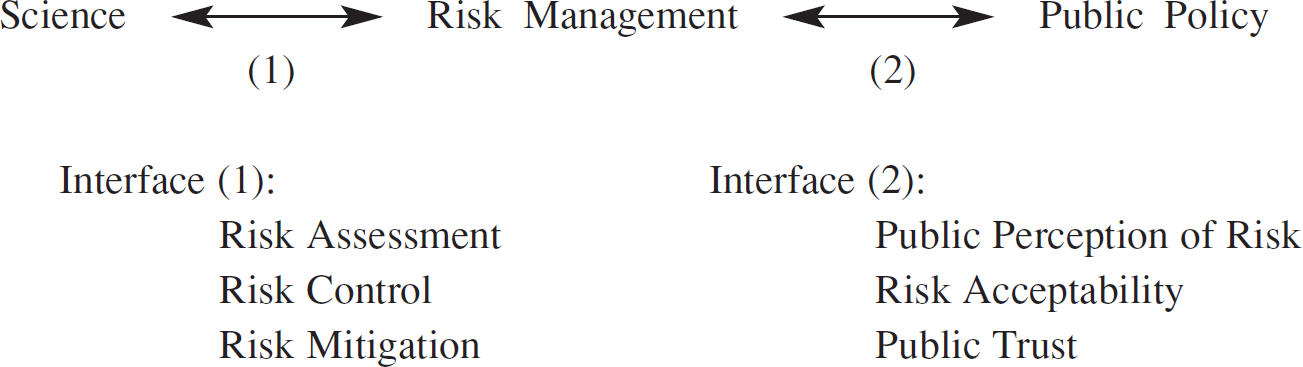
The remainder of the paper reviews and comments on a decision making exercise, carried out in Canada in the year 2004, and using a method known as multi-attribute utility analysis (MAU), that provided a new approach to the issue of the management of nuclear waste. It argues that the MAU method has some distinctive advantages, over earlier approaches, where intrinsically controversial risk management situations are concerned.
Get full access to this article
View all access options for this article.