






Abstract
Background
Previous studies of death during law enforcement restraint have focused on lying restraint positions; this study extends this work to seated restraint positions.
Methods
Lung function in a standing control position was compared with lung function in seated positions using 40 volunteers.
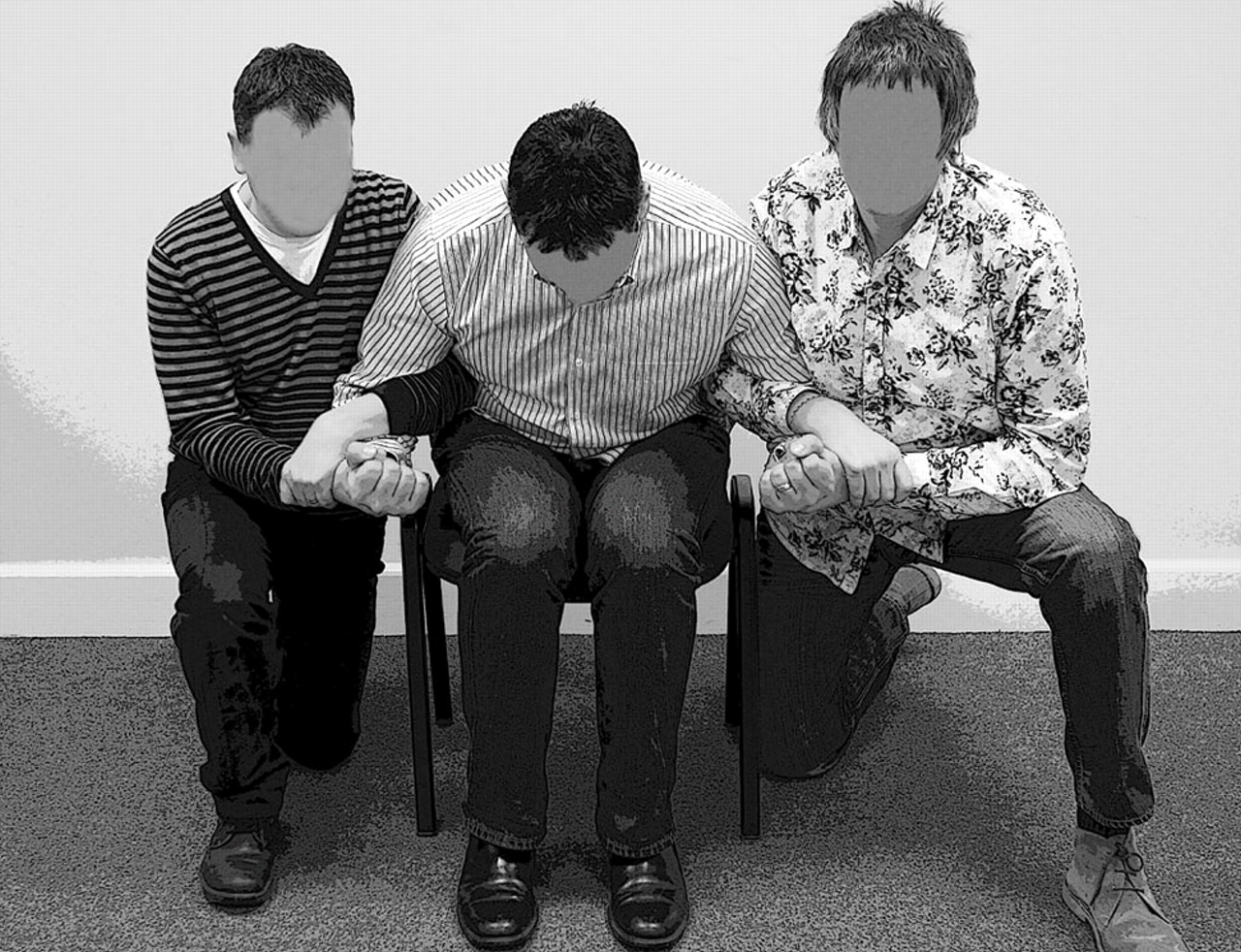
Seated, leaning forward, restraint applied
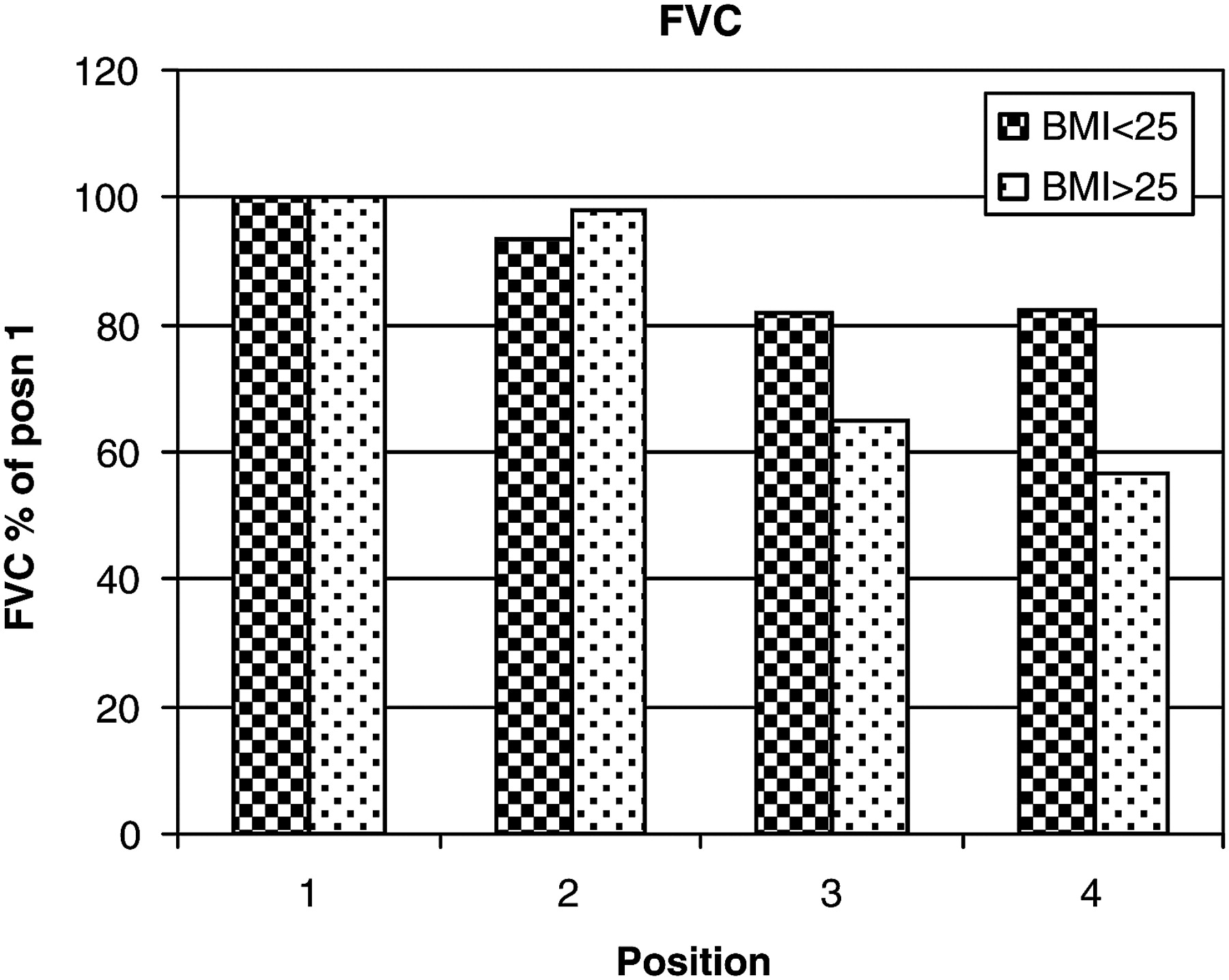
Effect of position on lung function (forced vital capacity – FVC). Notes: position one: standing control (=100%); position two: seated control; position three: seated, leaned forward, no restraint; position four: seated, leaned forward, restrained
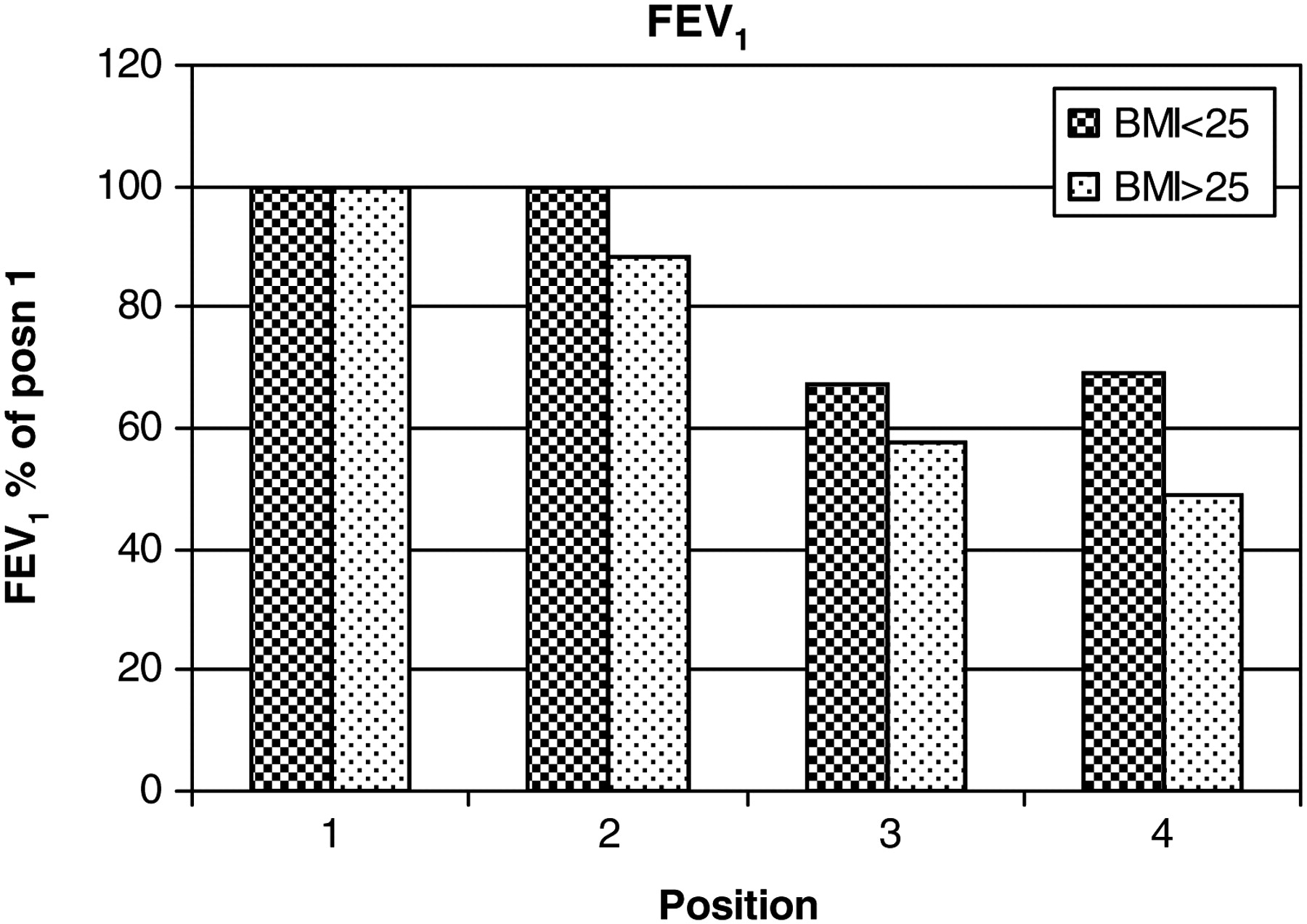
Effect of position on lung function (forced expiratory volume in one second – FEV1). Notes: position one: standing control (=100%); position two: seated control; position three: seated, leaned forward, no restraint; position four: seated, leaned forward, restrained
Results
No significant reduction in lung function was detected in an upright seated position. When participants were leant forward while seated, significant reductions in lung function occurred. The application of restraint holds in the seated, leant forward position resulted in a non-significant further reduction in lung function. Reductions in lung function were greater in those participants with higher body mass index (BMI).
Conclusions
Seated restraint positions with the person leant forward may increase the risk of harm or death during prolonged restraint. The risk will be further increased where the person exhibits higher BMI.
Get full access to this article
View all access options for this article.