Abstract
Summary
Beagle dogs continue to be used in experimental studies and preclinical and clinical trials, many of which address the usage of anaesthesia. In order to reduce the number of animals, researchers tend to conduct several experiments on a single animal. The question arises, however, as to whether or not this frequent usage involves more than simply additional stress and discomfort for the individual animal. Within the framework of an existing study involving six female Beagle dogs, we investigated the effects of repeated (5) isoflurane anaesthesia with xylazine/levomethadone/fenpipramide premedication carried out at short intervals (2 weeks) and compared these with the effects of two treatments intermitted by a longer resting period (8 weeks). To verify our hypothesis that frequent anaesthesia affects the dog's wellbeing more than the occasional anaesthesia, the following parameters were measured at regular intervals: body weight, body temperature, respiratory rate, blood pressure, reflexes and heart rate, both at rest and during a treadmill exercise. In addition, recovery behaviour subsequent to anaesthesia was monitored for one hour. Our observations indicate that the anaesthetic effects are most prominent 24 h after the anaesthetic treatment. However, crossover analysis of our data cannot show that there is no statistical difference of whether dogs were anaesthetized occasionally or frequently. In our study, it appears that frequent anaesthesia within a two-week period did not affect the wellbeing and general health of Beagle dogs in a super-additive manner and that a minimum of two-week testing-free period is sufficient to ensure complete recovery from the unwanted effects induced by anaesthesia.
Beagle dogs continue to be used as laboratory animals in the development of new drugs or diagnostics, as well as for preclinical and clinical research. Complex questions and stressful or painful procedures often make it necessary to perform experiments under anaesthesia. In order to reduce the number of animals, researchers commonly conduct more than one experiment on the same animal. With regard to animal welfare, however, it needs to be ensured that the stress and discomfort for the single animal is not more than additive. To date, guidelines for anaesthesia in laboratory animals do not address the re-application of anaesthetics, and it is also true that no regulations exist with regard to repeated anaesthesia in companion animals as patients. Neither state committees, commissions concerned with the welfare of laboratory animals nor scientific or medical research societies have published respective recommendations to date.
In Germany and other European countries, isoflurane in combination with xylazine/levomethadone/fenpipramide premedication is a common anaesthetic scheme for dogs. So far, most of the studies have concentrated on investigating the effects following one-time anaesthetic treatment for a maximum of 24 h. For example, it was found that xylazine decreases the level of circulating catecholamines and increases the blood glucose concentration (Ambrisko & Hikasa 2002). For the time of sedation and partly beyond it xylazine causes bradycardia, decreases in body temperature and breathing rate (Rector et al. 1996, Ilback & Stalhandske 2003). The effects of a xylazine/levomethadone/fenpipramide combination are comparable with what is described for xylazine alone (Kramer et al. 1996). Isoflurane is one of the most widely applied volatile anaesthetics in veterinary medicine and was reported in dogs to cause unwanted effects, such as depression of myocardial contractility, hypoventilation, cerebral vasodilation and triggering of malignant hyperthermia, and that it causes irritation to the respiratory tract (Galloway et al. 2004). With reference to behaviour, isoflurane was found to impair learning and memory in aged rats 24 h up to two weeks after treatment (Culley et al. 2003, Alkire & Gorski 2004). In view of these postnarcotic impacts, it appears likely that repeated isoflurane anaesthesia with xylazine/levomethadone/fenpipramide pretreatment will increase the unwanted effects of the drug. There have only been a few studies to our knowledge that investigate the influence of repeated use of isoflurane, each of them from a different perspective. One report shows that repeated exposure to isoflurane involves no additional risk for men (Nishiyama et al. 1998) and dogs (Byles et al. 1971), in terms of liver and kidney functions. Repeated isoflurane anaesthesia was revealed as not impairing spatial learning or motor ability in mice. Instead, it appeared to facilitate the acquisition of the memory task (Butterfield et al. 2004). Another study conducted in Beagle dogs postulates no neurophysiological effects for repeated isoflurane anaesthesia measured by the force, motor and sensory nerve conduction velocity of the tibial nerve (Juri 2003).
The influence of repeated general anaesthesia on the wellbeing of laboratory animals has not to date been the focus of scientific investigations. For that reason, we wanted to investigate whether frequent courses of anaesthesia applied at short intervals (5 anaesthetic treatments within 8 weeks), in the form of isoflurane together with a common premedication with xylazine/levomethadone/fenpipramide, affect the wellbeing and general health of Beagle dogs more markedly than the infrequent ones (2 anaesthetic treatments within 8 weeks). Within the framework of an existing study (detailed ultrasonic examinations), we had the opportunity to conduct a pilot study of standardizing the time intervals between the anaesthetic medications and were able to perform a detailed analysis of physiological and physical parameters including postanaesthetic recovery. In order to minimize procedural variables, the study was performed on six female Beagle dogs of the same age (13-14 months old) that had been obtained from the same breeder. Two groups were formed and treated in a crossover design with two different anaesthetic schemes in order to exclude seasonal variations and premedication effects.
Materials and Methods
Animals
The study was conducted on six female Beagle dogs obtained from Harlan France SARL (Gannat, France). At the beginning of the experiment, the dogs were 13-14 months old and weighed approximately 8.9-9.4 kg. The dogs were vaccinated with Cammed® SHP LT, de-wormed regularly with Drontal plus® and treated once against fleas with Frontline spot on®.
Housing conditions
Housing conditions were in accordance with the rules of the German Animal Welfare Regulation of May 2001. The six dogs were kept as one group in an indoor kennel (21 m2) at the Institute of Pharmacology and Toxicology, School for Veterinary Medicine of the Freie Universität Berlin, Germany. The kennel was illuminated by daylight, supported by an artificial light scheme (lights on from 06:00 to 18:00 h). Temperature was kept at 18 ± 1°C and relative humidity at 55 ± 10%. The dogs had access to an outdoor kennel (64 m2) for at least 3 h per day, and were walked in the nearby historical park most days of the week.
Feeding
Tap water was available ad libitum from an automatic water supply. Each dog was fed approximately with 200 g of ssniff Hd-H, 10 MM diet (Soest, Germany) at around 13:00 h each day.
Experimental procedures
The experiments were approved by the State Office of Health and Social Affairs Berlin (no. A0101/98). Anaesthesia was performed at the facilities of the Bayer Schering Pharma AG Berlin, Germany. Five months before the actual experiment (at an age of 8-9 months), the dogs were premedicated with xylazine and levomethadone/fenpipramide and anaesthetized with enflurane in order to prove the suitability of the animals for anaesthetic treatment, which means, dogs that showed tachycardia or arrhythmia during anaesthesia were excluded from the following experiments. In our case, all six animals passed the test. In addition, for a period of seven weeks, the dogs were taken to the Bayer Schering Pharma AG once a week without any treatment, in order to accustom them to the new surroundings, new staff and to the transportation procedure. They were moved there in transport boxes in an air-conditioned car. For the experiments, the dogs were taken there one day before the anaesthetic treatment. There, they were kept over two nights either singly or as a group of two animals in indoor kennels under standardized conditions (temperature 20 ± 1°C; humidity 60 ±5%; artificial light scheme with lights on 06:00-18:00 h).
The study was designed as a crossover test with two different anaesthetic schemes (frequent with short intervals versus occasional with a long interval), so that each dog was tested under both study conditions (Table 1). Taking into account that each of the six dogs was anaesthetized seven times, a total of 42 narcoses were conducted.
Treatment schedule of the crossover study
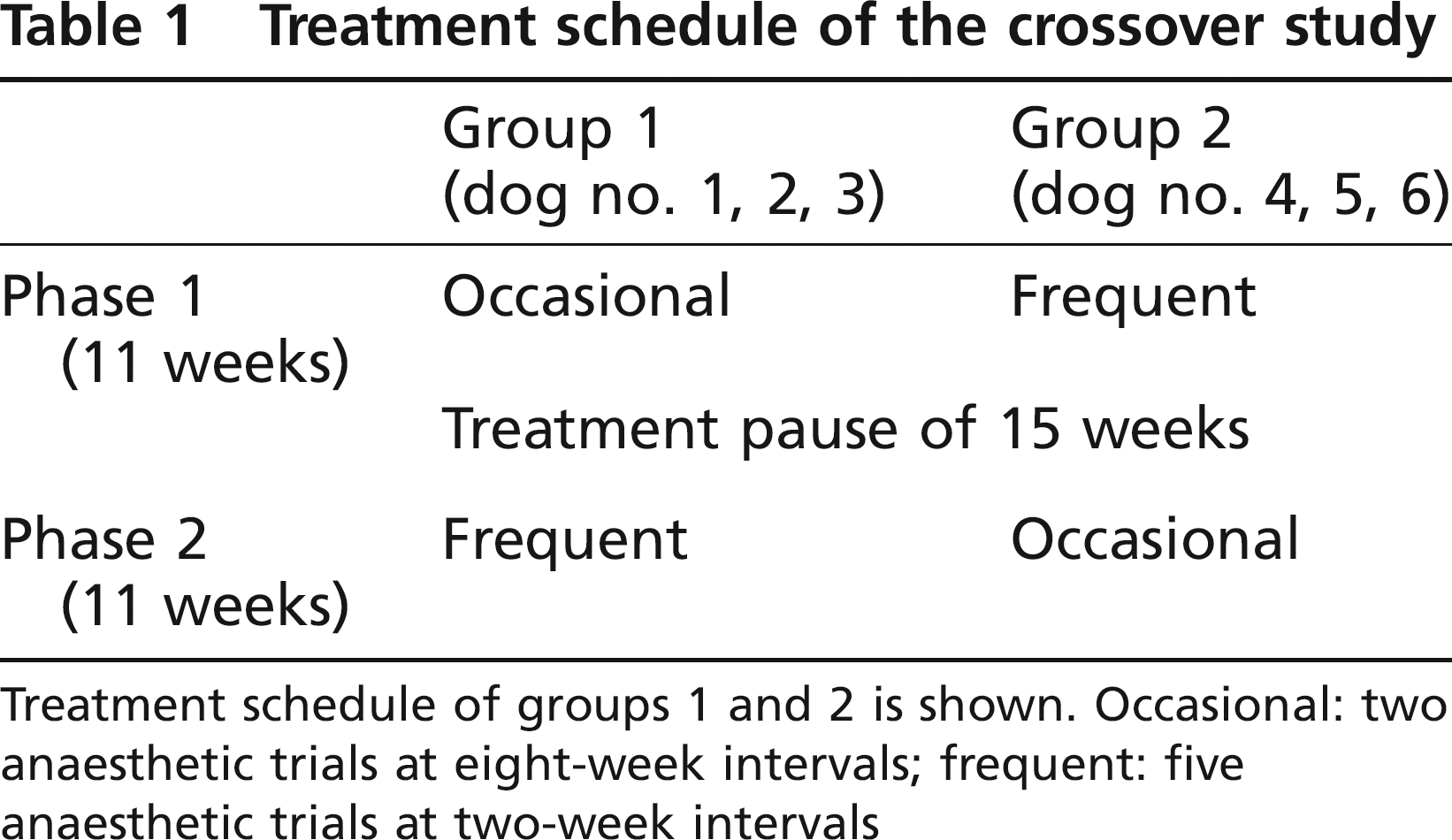
Treatment schedule of groups 1 and 2 is shown. Occasional: two anaesthetic trials at eight-week intervals; frequent: five anaesthetic trials at two-week intervals
Before any anaesthetic treatment, the dogs were fasted for approximately 20 h. On the actual experimental days, the dogs received 2.0 mg/kg body weight (bw) xylazine (Bayer AG, Leverkusen, Germany) and 0.5 mg/kg bw levomethadone and 0.025 mg/kg bw fenpipramide in a fixed combination (Polamivet®, Intervet Co, Unterschleissheim, Germany) as premedication in order to gain a deep sedation for endotracheal intubation. Two-thirds of the mixture were administered subcutaneously into the lateral chest wall, one-third was administered intramuscularly into the hamstring muscle to extend the duration of the premedication effect. Following endotracheal intubation, the animals were anaesthetized with an inspired gas mixture containing 1-3% isoflurane (Curamed Pharma GmbH, Karlsruhe, Germany) in 23% O2 (rest nitrogen), endtidal isoflurane concentration was about 2%. The dogs respired spontaneously and reached stage III of general anaesthesia. The stage of general anaesthesia was monitored continuously by controlling the respiratory stability and by testing the palpebral reflex and pain reaction. Monitoring also included electrocardiogram and arterial oxygen saturation. The duration of anaesthesia varied randomly between each dog and group from 3.4 to 7.9 h. During anaesthesia, the dogs were placed on a heating mat on top of the operating table. Its temperature was adjusted to the dog's body temperature, which was kept at about 37.5°C. The animal's body temperature was continuously rectally recorded during anaesthesia. Room temperature of the operating theatre was kept at 23 ± 2°C.
Investigations
One day before and one, seven and 14 days following anaesthesia, the following parameters were taken and the following recordings and investigations were carried out: bw, rectal body temperature, respiratory rate, blood pressure measured at the right foreleg (Memoprint, Scil Animal Care Company GmbH, Viernheim, Germany), testing of cranial nerve functions (direct and indirect pupillary reflex, swallowing reflex, lid closure reflex and testing of the N. trigeminus function by the palpebral reflex, by touching the nasal mucosa and by opening the dog's muzzle (Arndt 1994)). In order to test the general fitness of the animal's heart rate before and during an ergometric training on a treadmill (Trimline 7600, H-P-Cosmos Sportgeräte GmbH, Traunstein, Germany) was recorded with the heart rate monitor Polar A1 (Polar Electro GmbH, Büttelborn, Germany). The test lasted 5 min at a speed of 4 km/h with an incline of 12%. Heart rates were measured for one minute before and after speeding for every 10 s and the means were calculated. In addition, the behaviour during recovery from anaesthetic treatment was monitored. Directly after extubation, recovery from anaesthesia continued to be observed for an hour by video camera. During this period, the dogs were kept in a temperature-controlled box at 30°C. Recordings were made during the first 30 min of awakening, starting with the first head-lifting, beginning and duration of motor activity accompanied by coordinated movement, as well as resting behaviour. Shivering time was measured over the course of one hour. First food (ca. 370 g Pedigree Pal®, Fa. Mars, USA) was offered about one hour after the end of anaesthesia when the animals could walk normally and were taken out of the recovery box.
Statistics
The data were analysed by a 2 × 2 crossover analysis. The null-hypothesis was that occasional and frequent anaesthesia affects the chosen parameters in a similar manner. Due to the experimental design we expected a maximal effect after the last anaesthesia of one phase, i.e. for occasional anaesthesia the second treatment and for frequent anaesthesia the fifth treatment. After viewing the collected data it appeared that the maximal treatment effect was shown 24 h after medication. Since the group size was too small (2 × n = 3), this assumption was not verified by statistical analysis. However, the 24 h values of the first and the last treatment of one phase were chosen to calculate the differences for the crossover analysis. The data are presented as estimates of means (occasional-frequent) ± standard errors. A significant effect was given if P < 0.05.
Results
Body weight
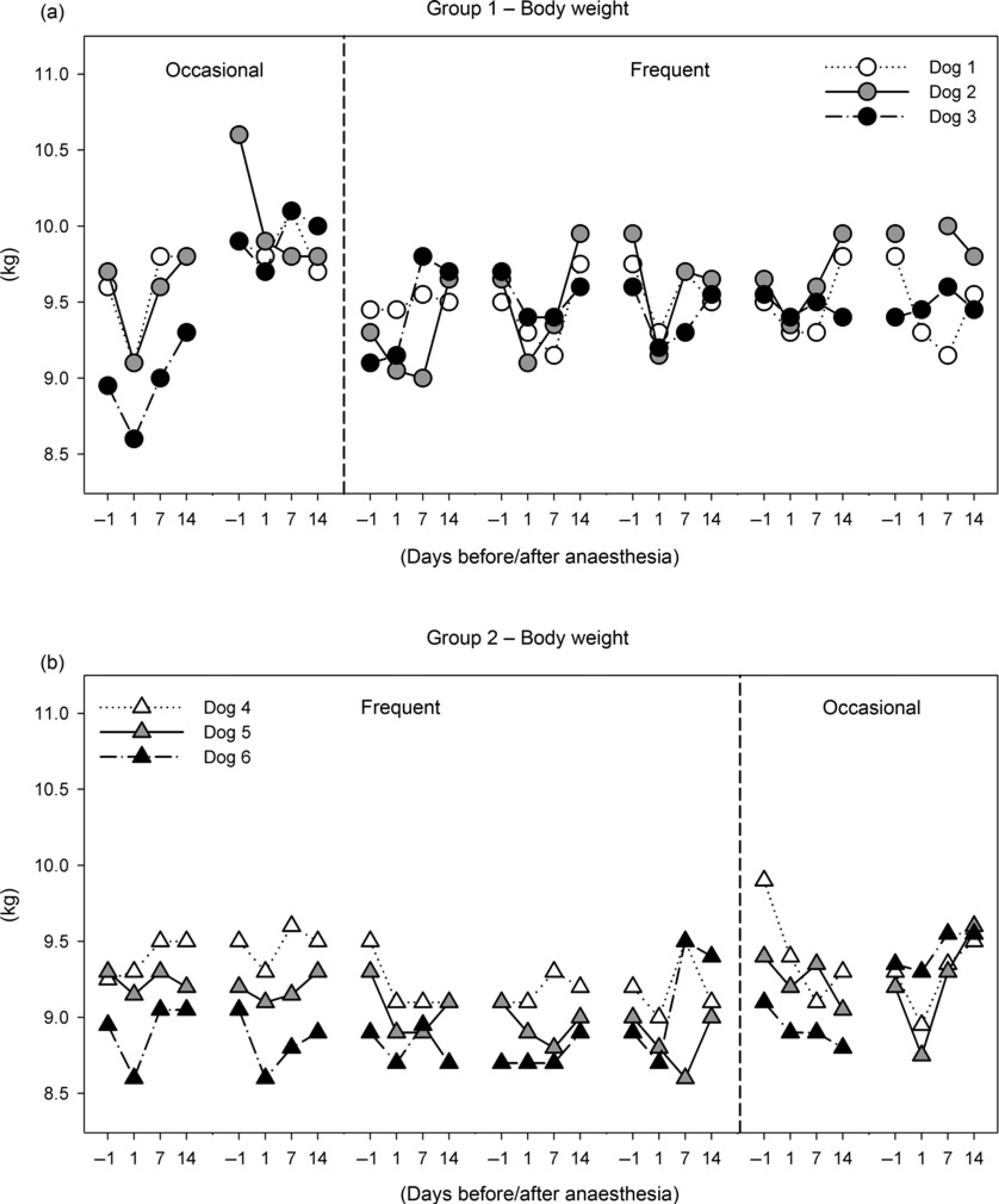
A summary of the mean body changes is presented in Figure 1. No difference was detected between both anaesthetic schemes (-0.3 ± 0.3 kg; P = 0.41). In 36 out of 41 cases (= 85.7%), a loss of bw of 0.1-0.8 kg was registered within the first 24 h following anaesthesia. In the first treatment group, we measured for dog 3 an unrealistic decrease in bw of 2.5 kg 24 h after the very last anaesthesia. This must have been a recording error, as in the clinical investigation the animal showed no further alterations. The data of this animal were therefore excluded from statistical analysis. In general, in 35 out of 41 cases, the weight loss was compensated within a period of two weeks (Appendix Figures 1a, b).
Body weight. Data are presented as mean ± standard error mean (kg) averaged across the six dogs for occasional and frequent treatment one day before (-1) and one (1), 7 and 14 days after anaesthetic treatment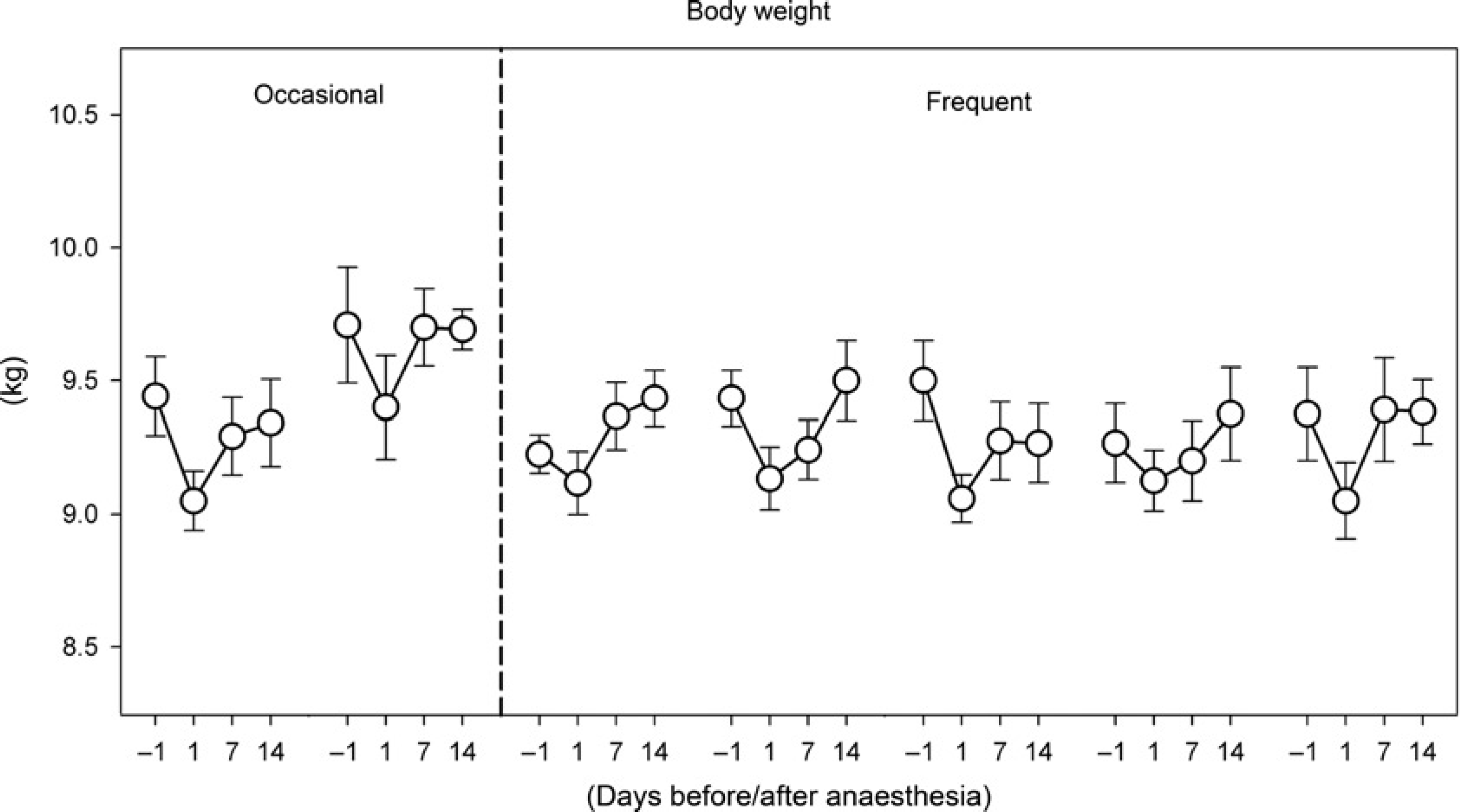
Body temperature
The crossover analysis revealed no differences between both treatment phases (0.2 ± 0.1°C; P = 0.158). A critical and clinically important increase in body temperature (>39.5°C; Paddleford & Erhardt 1988) occurred only in three dogs within the first 24 h after anaesthesia: in dog no. 2 after the very first anaesthesia, in dog no. 5 after the second and in dog no. 6 after the second and third anaesthesia during the frequent treatment scheme. However, the increase in all cases was below 40.0°C. No critical decrease of body temperature below 37°C was observed.
Cranial nerve functions
No investigated reflexes revealed alterations at any time during the testing.
Respiratory rate
With one exception, only variations within the reference range of 15-35 ventilations per minute (Pickrell et al. 1971) were observed. One dog showed a higher frequency once before the first and once after the second anaesthesia. Statistical analysis could not prove a significant difference between occasional and frequent anaesthesia (1 ± 3 ventilations per minute; P = 0.87).
Blood pressure
In addition, blood pressure recordings neither exceeded nor fell below the reference ranges (Egner 2002) of systolic blood pressure (90-145 mmHg) and diastolic blood pressure (60-115 mmHg), although variations within the ranges occurred. Changes in blood pressure were irrespective of the treatment scheme (systolic blood pressure 2 ± 2 mmHg; P = 0.43, diastolic blood pressure -1 ± 3 mmHg; P = 0.82).
Heart rate before training
A summary of the mean changes in heart rate is presented in Figure 2. In the majority of our dogs (76.19%), the resting heart rates increased within the reference ranges of 105.5 ± 26.9 beats per minute (bpm) (Hanton & Rabemampianina 2006), 24 h after treatment (Appendix Figures 2a, b). There was no difference in the individual heart rate between occasional and frequent anaesthesia (6 ± 8 bpm; P = 0.50).
Resting heart rate and heart rate after training. Data are presented as means ± standard error mean (bpm) averaged across the six dogs for occasional and frequent treatment one day before (-1) and one (1), 7 and 14 days after anaesthetic treatment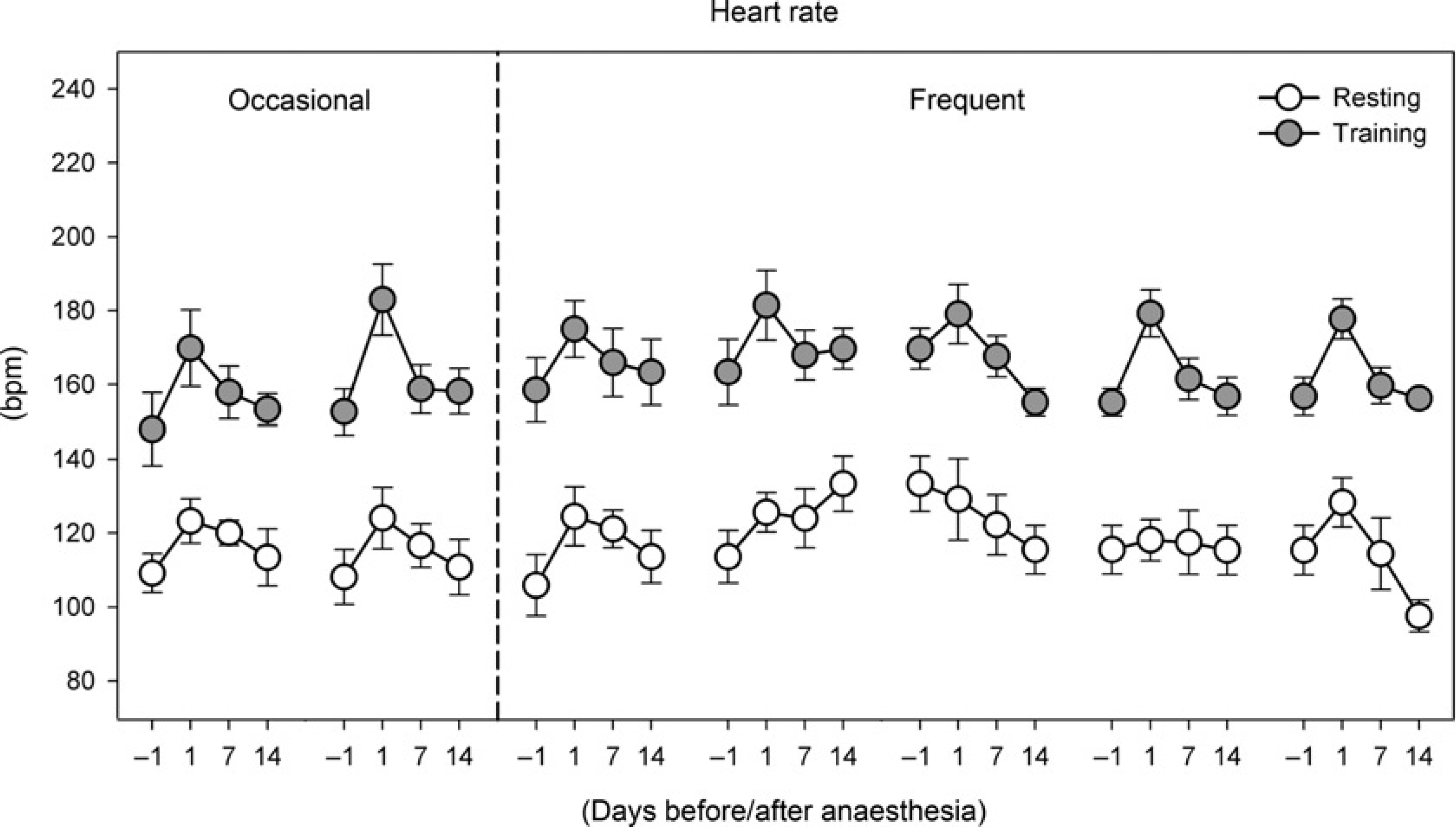
Heart rate during training
With regards to the increase in heart rate, the treatments occasional versus frequent did not statistically differ during training (7 ± 6 bpm; 0.32). In all cases, the heart rates were increased during the treadmill exercise in comparison with those before training (Figure 2). Compared with the recordings before the anaesthetic treatments, we observed enhanced individual heart rates 24 h after anaesthesia in 40 cases. Within a week, in 33 out of 42 cases, the heart rates returned to comparable levels as measured before the anaesthetic treatment (Appendix Figures 2c, d).
Recovery from anaesthesia
Figure 3 shows the duration of awakening behaviour, motor activity and resting behaviour during the first 30 min after extubation for each dog. The dogs differed markedly in the proportion of resting and activity, whereas duration of awakening was very similar (0.4-5.4 min). In most cases (4 out of 6 dogs), however, the individual profile for each dog remained stable during the experiment. Interestingly, we also observed shivering behaviour during the first hour of recovery, even though the dogs were kept in a temperature-controlled box at 30°C (Table 2). This behaviour appeared independently from activity and resting and was randomly distributed between the treatment groups and trials. In general, there is no indication that either the recovery period or shivering time depend on either the number of anaesthesia trials or the interval between them.
Recovery behaviour, motor activity, and resting behaviour within the first half hour after the end of anaesthetic treatment. Data are presented as the duration (min) of each event for every single dog. Data for the first and last trials of the occasional and frequent anaesthesia regimens are shown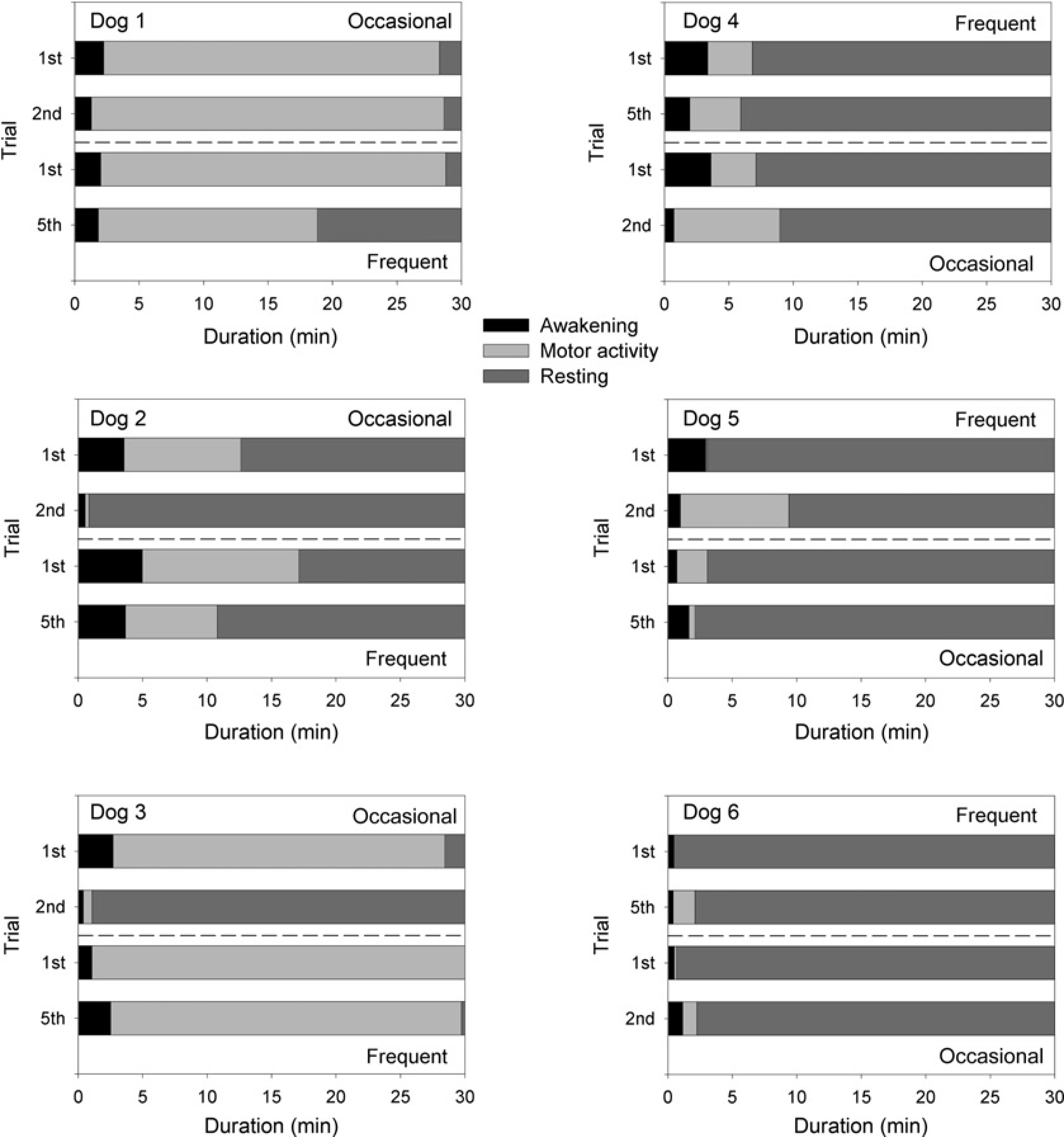
Appearance of shivering behaviour (min) up to one hour after anaesthesia
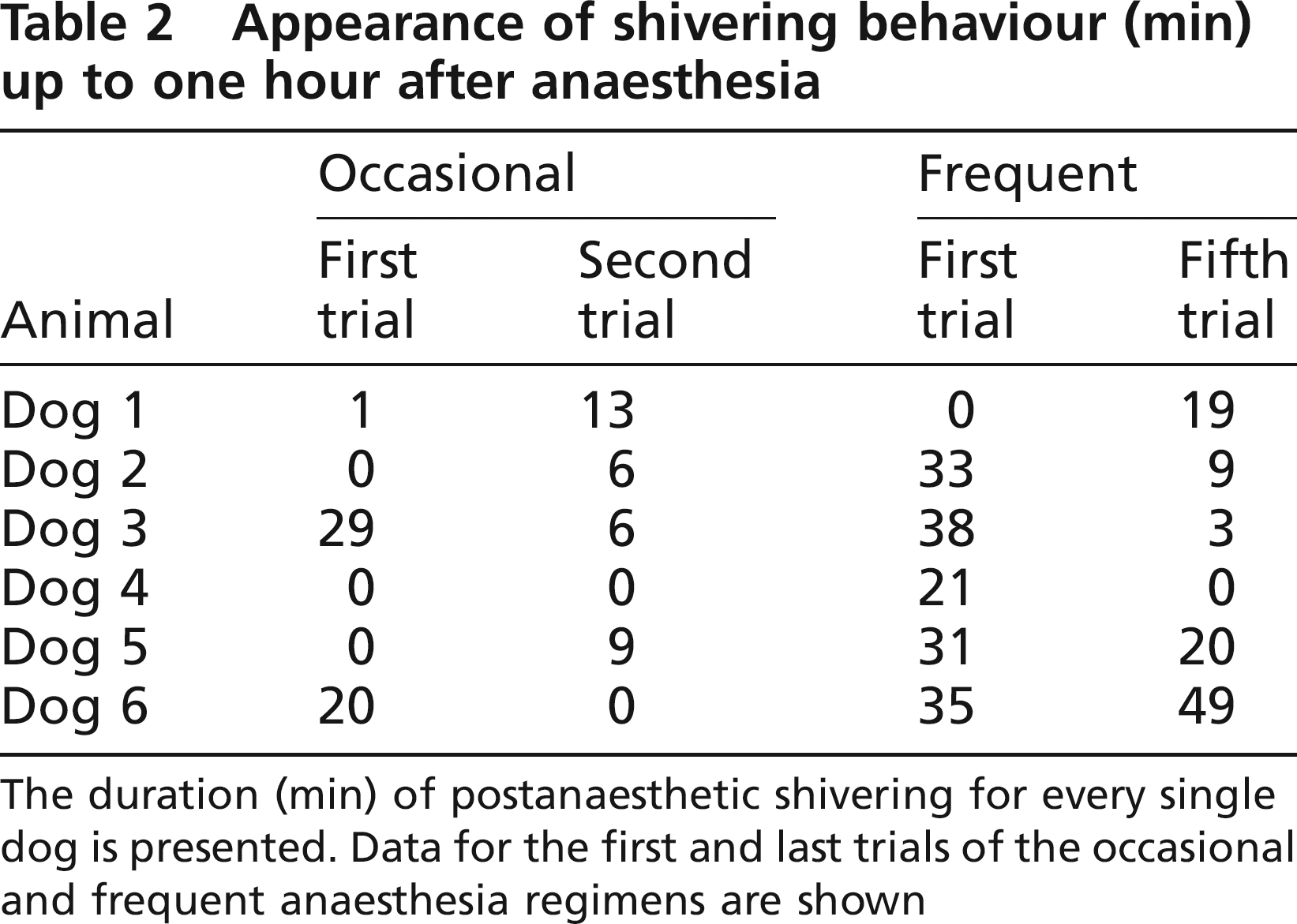
The duration (min) of postanaesthetic shivering for every single dog is presented. Data for the first and last trials of the occasional and frequent anaesthesia regimens are shown
Discussion
In order to investigate whether frequent anaesthesia within short intervals of two weeks affects the wellbeing and general health more than two narcoses with a longer resting period, a crossover design containing six female Beagle dogs was chosen. Within one phase, both groups were tested at the same week if the experimental protocol allowed it, so the influence of seasonal or ageing effects was excluded.
Wellbeing is defined as the absence of excessive stress and describes a positive mental state that reflects the level of welfare and comfort of an animal. Stressors, including general anaesthesia, affect the behaviour and physiological and biochemical parameters in various ways (Resources 1992). In this study, we focused on the distinct indicators related to behaviour, physiology and stress. Crossover analysis revealed that none of the chosen parameters differed between both the treatment schemes. Therefore, our hypothesis that frequent anaesthesia in two-week intervals affects the animal's wellbeing more than the occasional anaesthesia could not be corroborated. However, one has to bear in mind that a small number of animals were tested and that this result might be true only for our group of dogs.
Even though it was not in the focus of our study, we observed that the anaesthesia procedure itself affected certain physiological parameters. This observation could not be substantiated by statistical analysis since the number of animals was too small.
Following most anaesthetic treatments, our dogs consistently lost weight. One reason for the weight loss could be that the dogs were fasted for 20 h. However, after anaesthesia they were offered food as soon as they were walking and taken out of the recovery box. So, they should have had some time to regain weight until the first weighing after anaesthesia was conducted. Another reason for the loss of bw could be traced to the drug treatment itself. Volatile anaesthetics are known to induce nausea and even emesis. In addition, the premedication with xylazine and levomethadone that was administered is sometimes known to lead to vomiting in dogs, even though vomitus was not observed in our Beagle dogs. It is also possible that stress effectuated by transport, new surroundings and staff led to reduced feeding behaviour, thus resulting in reduced bw Nonetheless, this effect was compensated in 83.3% of the cases within no more than two weeks.
In four cases, the body temperature exceeded the reference range of 39.5°C. Temperatures returned, however, to initial levels after seven days. Since isoflurane, xylazine and levomethadone all lead to rather hypothermia up to a few hours post-anaesthesia (Kramer et al. 1996, Ilback & Stalhandske 2003, Kramer et al. 2005), we assume that the increase in body temperature was mainly caused by the experimental conditions and not because of the anaesthetic agents. In our case, transport stress, reintegration into the group or positive agitation to ‘come home’, can also produce a rise in body temperature (Marazziti et al. 1992).
The resting heart rate measured before the treadmill exercise was slightly, but notably, increased on the day following after most of the anaesthetic treatments. This effect was even more pronounced during the treadmill exercise. A similar observation was made by Strasser et al. (1997). They were able to demonstrate that the subtle signs of age in Beagle dogs associated with cardiovascular functions become manifest during the exercise. Even though the experimental design, e.g. test duration and incline of the treadmill, differed from ours, the heart rates of their dogs at rest (120 ± 19) and after exercise (208 ± 28) were similar to the ones we measured before the first anaesthesia (109 ± 18 and 146 ± 27, respectively). As for bw, the increased heart rate 24 h after anaesthesia cannot be traced back solely to the drug treatment; stress may also have caused the enhancement.
Demeanour during recovery, i.e. awakening, motor activity and resting, was not markedly altered by the anaesthetic scheme. Recovery from general anaesthesia depends on the animal's body temperature during anaesthesia, e.g. hypothermia was shown to be associated with a slower recovery (Pottie et al. 2007). In our study, hypothermia was prevented during and after anaesthesia, therefore, a short awakening duration was expected. Indeed, awakening times for all dogs were consistently low during all trials. Individual differences in recovery were seen in the duration of resting and activity. However, except for two dogs, the individual pattern was consistent for all the trials. The occurrence of shivering following anaesthesia was striking, which also could not be associated with the treatment scheme. Postoperative shivering is considered as a serious complication (Sarti et al. 2005) and is regarded, on the one hand, as a thermoregulatory response (Greif et al. 2003) and on the other hand, as a primarily pharmacological effect mainly of volatile anaesthetics even in patients with normothermia (Eberhart et al. 2005, Hasankhani et al. 2007). Isoflurane was found to reduce the threshold for shivering in children (Xiong et al. 1996) and premedication with xylazine/levomethadone is known to decrease the body temperature in dogs (Kramer et al. 1996). Eberhart et al. (2005) pointed out that young age rather than core body temperature is a major risk factor for postoperative shivering, which could be the case for our study as well.
Respiratory rate and blood pressure appeared to be unaffected by anaesthesia, only variations within the reference ranges were discovered throughout the entire experiment. Testing of cranial nerve functions also revealed no abnormalities. The latter finding is in-line with an investigation in cats, during the course of which no changes in behaviour or EEG abnormalities were observed for up to seven days following a single treatment with isoflurane, sevoflurane or enflurane (Kurata et al. 1996).
In summary, our study could not reveal an impact on the parameters investigated that could be connected with the differences in interval of two or eight weeks or with the differences in frequency of five or two courses of anaesthesia. However, anaesthesia including premedication, together with the experimental procedure, appeared to affect to at least some extent the wellbeing of our Beagle dogs. This was expressed one day after the anaesthetic treatment mainly through a loss in bw, as well as by a reduced physical performance on the treadmill. All the measured parameters returned to normal levels in most of the cases after one week or two at the latest. As a result, it can be assumed that frequent anaesthesia does not influence the wellbeing of the beagle dogs in a super-additive manner. An interval of at least two weeks between the anaesthetic treatments appears to offer a sufficient recovery period for dogs. Given that this was a pilot study using six female Beagle dogs, further studies need to be conducted to corroborate our observations.
Footnotes
Acknowledgement
We wish to thank Robert Ivkic (Schering AG) for his excellent technical assistance.
Note Appendices are available with the online version of this article.
Appendix
Figure 1 a, b Body weight (bw). The bw (kg) for each dog one day before (-1) and one (1), 7 and 14 days after anaesthetic treatment of group 1 (a) and group 2 (b) are shown. Dog 3 showed an unrealistic decrease in bw of 2.5 kg 24 h after the very last anaesthesia, therefore this value was omitted Figure 2 (a-d) Heart rates. Resting heart rates (a, b; bpm) and heart rates at 4 km/h speed (c, d; bpm) for each dog one day before (-1) and one (1), 7 and 14 days after anaesthetic treatment are shown