





Abstract

Paul Klee (1879–1940) was born in Münchenbuchsee, near Bern in Switzerland. From 1898 he
studied art at the Academy of Fine Arts in Munich with Heinrich Knirr and Franz von Stuck
and graduated with a degree in fine art in 1901. In Munich he became associated with the
art group known as Der Blaue Reiter, which included Wassily Kandinsky,
Gabriele Münter, Alfred Kubin, August Macke and Franz Marc, and contributed 17 pictures to
their second exhibition in 1912. A 1919 exhibition gave him worldwide fame, and he taught
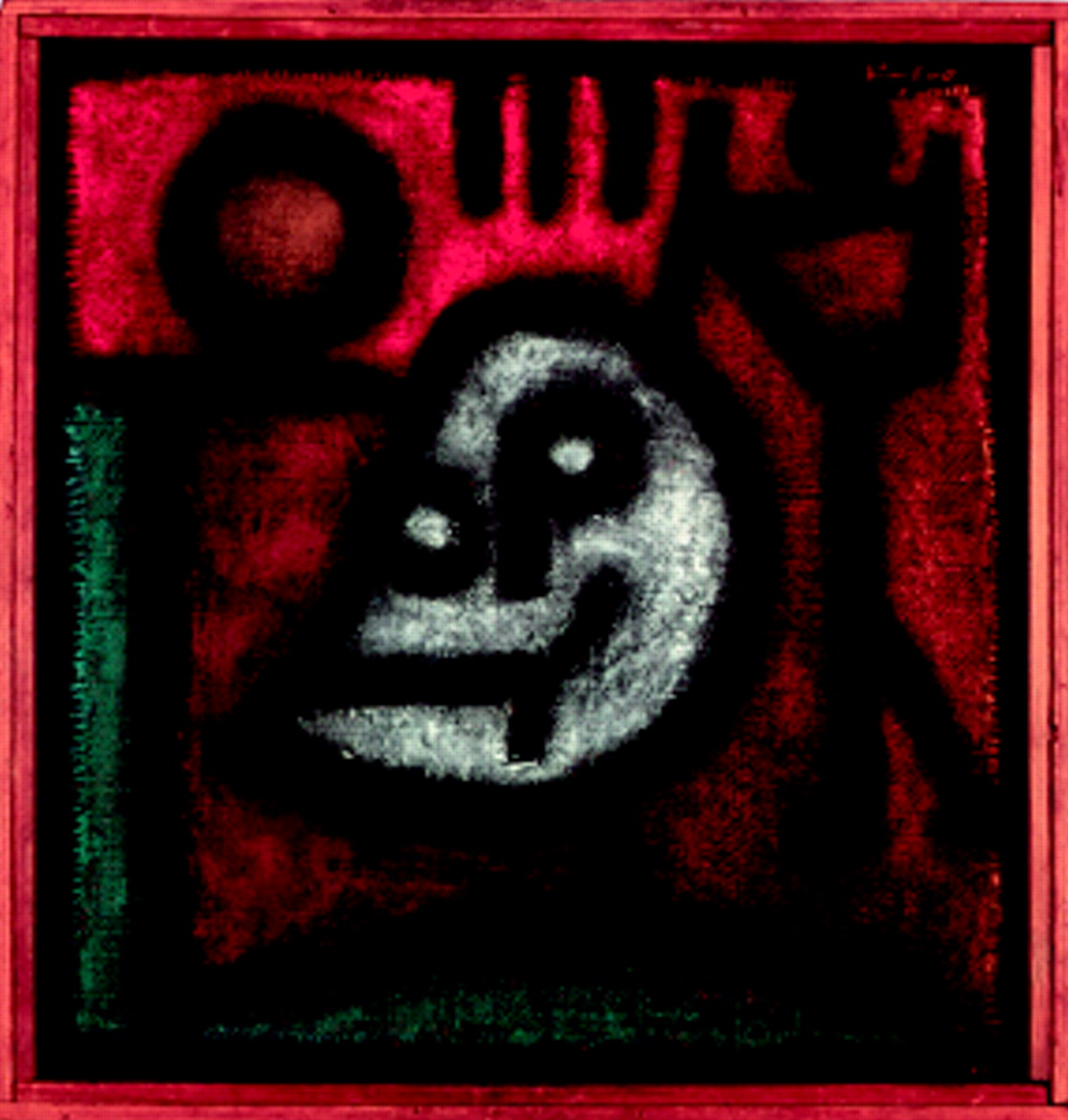
painting at the Bauhaus, first in Weimar Paul Klee in 1939 Paul Klee's Tod und Feuer (1940) (Oil and tempera on jute, 46.7 x
44.6 cm; Zentrum Paul Klee, Bern, Switzerland)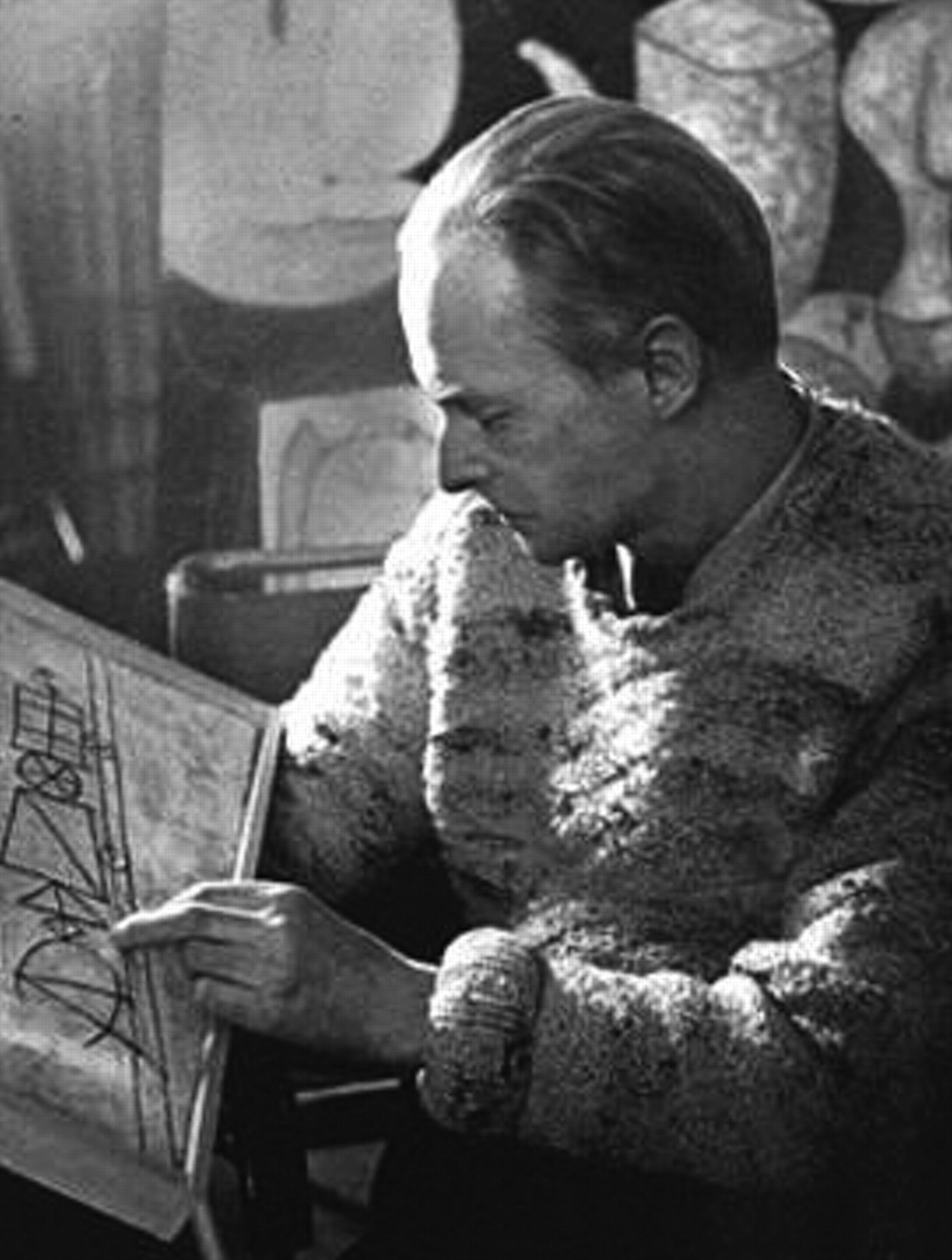
In 1937 Klee was bracketed with Marc Chagall, Otto Dix, Max Ernst, George Grosz, Wassily Kandinsky, Oscar Kokoschka, Laszlo Moholy-Nagy and Piet Mondrian in a reactionary Munich exhibition of ‘entartete Kunst’ (degenerate art), a term that encompassed Bauhaus and cubism, Dada and expressionism, Fauvism, impressionism and surrealism. Others whose work was not included in the exhibition, but who were also regarded as degenerate, included Pablo Picasso, Fernand Léger and Joan Miró, whose paintings the Nazis burned. Klee's response to being compared to the mentally ill was the insurrectionary painting Revolution des Viaductes (1937).
In 1935 Klee started to suffer from scleroderma, with fatigue, a skin rash, difficulty in swallowing, shortness of breath on exertion and pain in the joints of his hands. 2 His productivity suffered, and his fingers became so affected by the disease that he could hardly paint at all. A photograph of 1939 shows some of the features of the disease (Figure 1). His style became on the whole simpler, less colourful, and dominated by thick black lines. Paintings from this last period depict the agonies that he suffered during this time. Tod und Feuer (Figure 2) is an excellent example. The painting is dominated by a face that foretells his imminent death, in German tod. The mouth has the shape of a letter T, the right eye is an O, and the left eye and nose together make a D. The red flames emerging from the head symbolize the burning features of the disease and the grey area beneath symbolizes the perhaps welcome prospect of release.
Tod und Feuer also features as the name of a track on an album by the Swiss Jazz Orchestra (2007), whose other tracks are also named from paintings by Klee – Rosenwind, Übermut, Büste eines Kindes, Ad Parnassum, Der Seiltänzer, Paukenspieler and Individualisierte Höhenmessung der Lagen, the painting that is featured on the cover.
Klee's epitaph is poignant: ‘Diesseitig bin ich gar nicht fassbar. Denn ich wohne grad so gut bei den Toten, wie bei den Ungeborenen. Etwas näher dem Herzen der Schöpfung als üblich. Und noch lange nicht nahe genug.’ ‘I cannot be trapped in the here and now. For I consort as much with the dead as with the unborn. Somewhat closer to the heart of creation than usual. But not nearly close enough.’ He wrote these words for the catalogue of an exhibition at the Galerie Goltz, Munich in 1920. They presage the torment of his final years.
Scleroderma was first described by Carlo Curzio of Naples in 1753.
3
Bishop Francisco Domonte, depicted in Bartolome Esteban Murillo's painting of
Archangel Raphael, which dates from 1680, has been suggested to have had scleroderma or
even systemic sclerosis,
4
although the features are hard to discern. But now look closely at Rembrandt's
Portrait of a Scholar from 1631 ( Rembrandt's Portrait of a Scholar (1631). (Oil on canvas, 104 x
92 cm; The Hermitage, St Petersburg, Russia)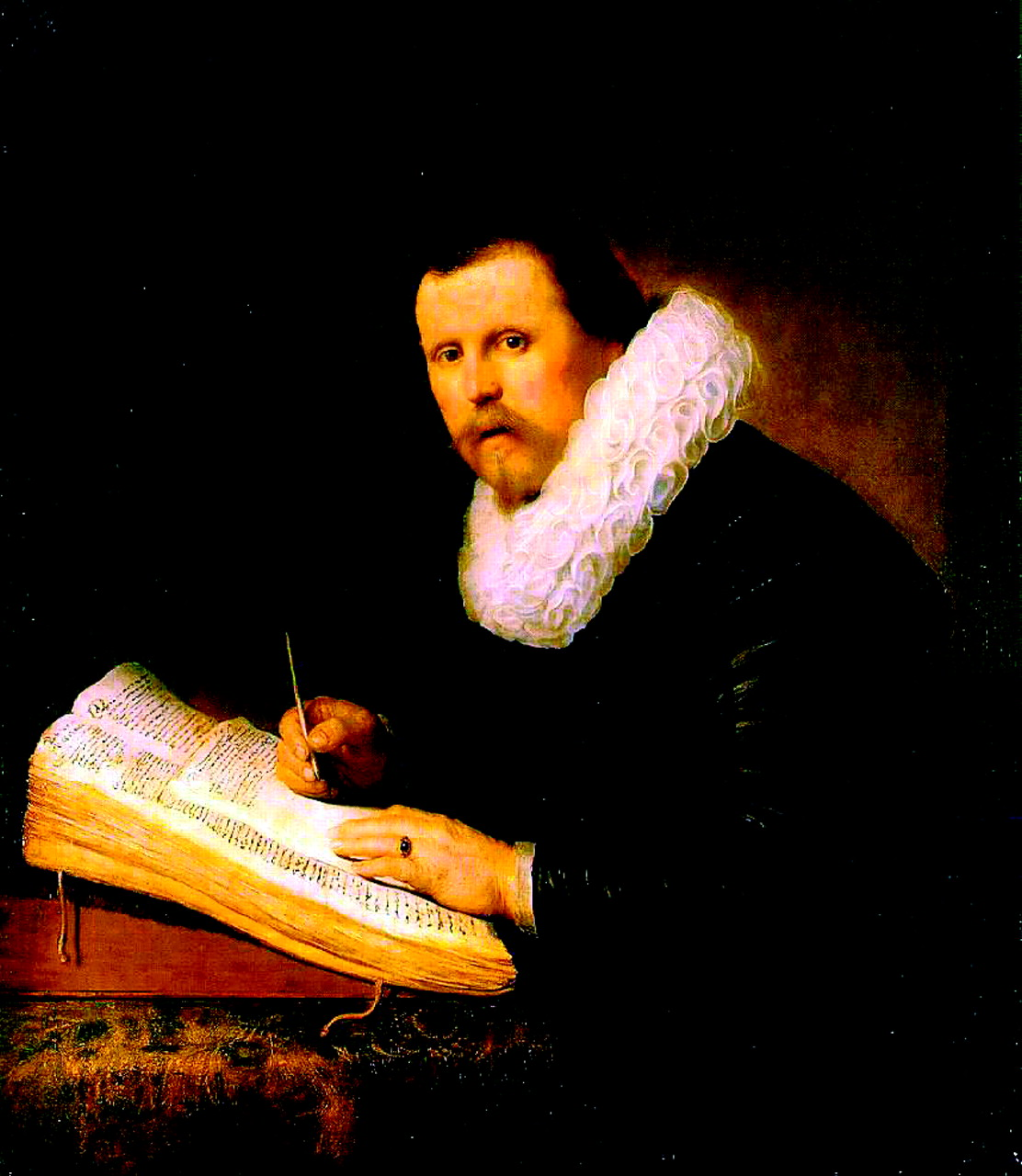
Footnotes
DECLARATIONS
Footnotes
Acknowledgements
None