




Abstract
Summary
Objective
To explore how patients use record access, its impact and the benefits and drawbacks of using it.
Design
Qualitative study using focus group interviews, individual interviews and telephone interviews.
Setting
General practice offering electronic access to full medical records using PAERS system.
Participants
Forty-three patients aged between 20 and 71 years participated. Of these, nine were in the healthy group, eight had long-term health conditions, 10 were in the mental health group and 16 were pregnant.
Results
Three themes emerged as to how patients used record access – participation in care, quality of care and self-care strategies. Record access was used to help prepare patients for consultations, compensate for poor or complex communication during consultations and to reduce the fragmentation of care. Record access had a small impact on health behavior intentions. Overall patients felt that record access reinforced trust and confidence in doctors and helped them feel like partners in healthcare.
Conclusion
This study suggests that record access improves shared management, with patients using their records to improve interactions with healthcare providers, make decisions about their health and improve the quality of the care they receive. These findings also suggest a possible long-term potential for record access to improve health outcomes.
Introduction
Record access is now available to UK patients in a number of formats. Pregnant women have carried their own maternity record for some years. NHS Connecting for Health (NHS CfH) began enabling access to a patient's Summary Care Record in a small number of early adopter sites in 2007. Some GP surgeries are just beginning to offer access to the full GP record. Advocates suggest that record access has the potential to promote shared decision-making and improve health outcomes. 1, 2
Existing research suggests that patients perceive record access as helpful and as having a positive effect on communication without increasing anxiety, 3, 4, 5, 6, 7 improving trust between patients and professionals, confidence in self-care, compliance in chronic disease and accuracy of records. 8, 9, 10, 11, 12, 13, 14, 15, 16, 17 There is also evidence for its safety. 1 Many clinicians, however, are concerned about the safety of record access.
Little is known about how patients actually use record access. Additionally, existing research has provided patients with limited or no exposure to their records in order to evaluate impacts. 18 The aim of our study was to determine how patients used record access in real life, and the benefits and drawbacks of using it from the patients' perspective.
Methods
Setting
The research, funded by NHS Connecting for Health (CfH), was conducted in 2005 in a general practice in south-east London which has enabled access to paper records for 25 years and which in 2003 installed a kiosk in the waiting room providing patients with secure access to their full electronic GP record.
The electronic system
The system used in the study is called PAERS and offers patients details of consultations, prescriptions, letters, demographic details, investigation results, allergies and vaccinations. 19 These data are linked with patient information leaflets relevant to the patient's diagnoses (Figure 1).
Authentication is by fingerprint and birth date. The system reaches into the general practice server, pulls out the record and re-formats it to make it easier for the patient to navigate and understand the content. There is no centrally-held database.
Recruitment of patients
A total of 159 patients who had accessed their medical records using the PAERS system
were eligible. A clinician with rights of access to their notes divided patients into
groups chosen because of expected differences in their experiences of record access.
We included in the study pregnant patients and focused on their views of using their
paper maternity records (booklets), to compare experiences of record and paper
access. Pregnant women could choose electronic access as well. Midwives in this
general practice enter data into the EMIS system. However here we focus on pregnant
women's views about their paper records. The condition groups consisted of: Long-term condition group (long-term group – LTG) (n=71).
This included patients with CVD, hypertension, diabetes; Pregnant women, with experience of paper pregnancy record access (pregnancy
group – PG) (n=19); Patients who used mental health services (mental health group – MHG)
(n=30); Patients with no particular health issues (healthy group – HG)
(n=39).
A recruitment letter, patient information sheet and consent forms were sent to eligible patients by the clinician.
Data collection and analysis
One researcher conducted focus groups and another (VB) telephone interviews and one-to-one interviews for those patients who preferred that approach. We chose focus groups for reasons of efficiency and because we were keen to understand issues from the patients' points of view. Focus groups at the surgery lasted up to 90 minutes; telephone interviews and surgery interviews lasted up to 20 minutes. Patients developed ideas and themes in the groups. In total we conducted four focus groups (one for each condition group), 19 telephone interviews and three one-to-one interviews. A total of 43 patients took part, nine in the healthy group, eight in the long-term group, 10 in the mental health group and 16 pregnant women (Table 1).
A formal semi-structured interview guide was used for all interviews. This was derived partly from having talked informally to patients who were using the system and from specific questions that the research team wanted to address. The topic guide is available on request.
Emerging issues in an interview or group were introduced into subsequent focus group
discussions. All discussions were audio-taped, transcribed and imported into data
management software NVIVO v.2.
20
A qualitative content analysis framework was used to analyse the data.
21,
22
Transcripts were read repeatedly, and patterns and themes identified.
Cross-case analysis was undertaken to compare differences between the groups. The electronic system Patients (n) participating in focus groups and one-to-one
interviews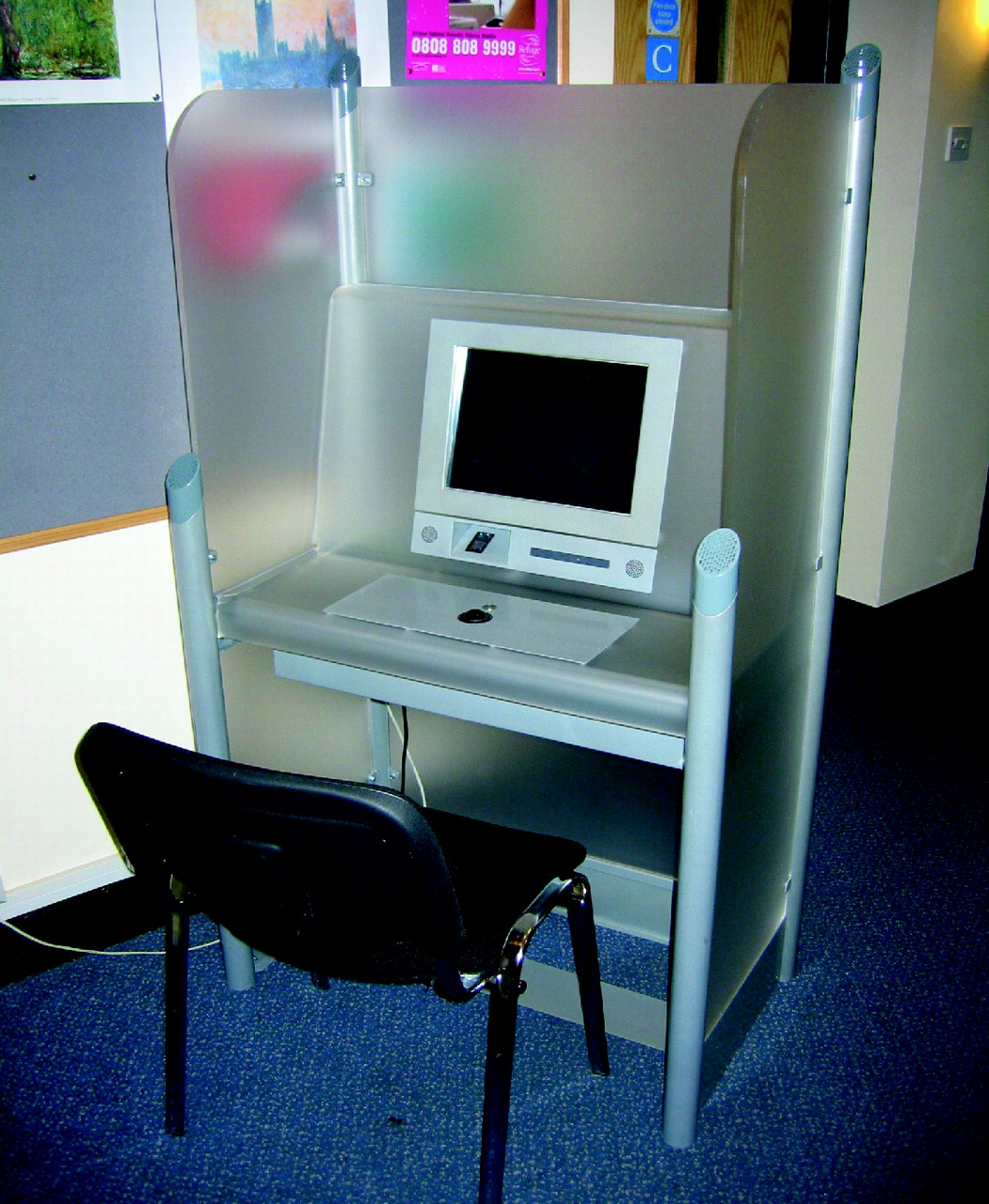
Results
Profile of the sample
Of the 43 people who agreed to participate, the majority were women (n=35). In the healthy group there were a total of six men and three women. In the long-term group there were six women and two men. In the mental health group there were eight women and two men.
Participants were aged between 20 and 71 years with a mean age of 42 years and a median of 40. Just over half of the participants were aged between 25 and 44 years (Table 2).
The average time patients had been attending the general practice was 3 years, with a range of 1–25 years. Thirty patients (70%) were white British with 11 (25%) from other ethnic groups, with no recorded ethnicity information for two patients.
The majority of patients who had registered to use the PAERS system were aged between 25 and 44 years of age across all condition groups. We do not have any other demographic information available to indicate the profile of non-responders. We also know, from a quantitative study that followed this study, that reasons for non-response could have been related to patients' infrequent use of the system or their experiences of technical difficulties when registering.
Main findings
Overall patients were generally positive about their experiences of accessing their records. Negative comments concerned technical difficulties experienced when they first started using the system. Findings focus on how patients use access to their primary care records and their perceptions of benefits and drawbacks benefits and drawbacks. The data are presented as quotations and indicate to which condition group patients belonged.
How records were used
Age (years) of patients by group
The majority of patients talked of accessing their records during the time they were
waiting to be seen by their general practitioners (GPs). Patients who saw themselves
as having health problems accessed records more frequently than those who saw
themselves as healthy.
I have only done it about 10 times. Well, I have a few illnesses going.
(Male patient, LTG)
Patients frequently described themselves as being ‘curious’ and ‘just nosy’.
Well, it's me being nosy really, looking at my past records … curiosity
more than anything else. (Female patient 7, MHG)
Using record access to increase participation in healthcare
Tracking illness and care over time
Patients used record access to do things themselves, for instance looking back at
what had been done for a particular ailment in the past to help them decide what
would help now.
I was just tracking the progression of an ailment when I think I first
brought it to the attention of the doctor, and what management of treatment
I had had over a period of time and I was basically trying to work out, what
I could do next from what they had done in the past … (Male patient 5,
HG)
Record access enabled patients to look at the history of conditions, trace the causes
of symptoms and compare test results.
Well I have had cystitis twice and … I have had a look at my records
and I was able to see, you know, the bulk of what caused the cystitis the
last time and compare it with my history in the past … (Female patient 5,
LTG)
I have blood pressure, so I can look and monitor how my blood pressure
is going. That type of thing. (Male patient 2, LTG)
Pregnant patients used their paper records to plan:
It helped me plan and think about planning things and what you might
like, you know, like things I might have overlooked especially when it's
your first child … (Female patient 4, PG)
Pregnant women also referred to their maternity records to manage their health when
they fell ill.
There was a little box in there which said that if you have sudden
headaches or pain passing urine or things like and it told you what to do
and when to see your doctor which I found quite helpful. (Female patient 2,
PG)
Partners in care, more confident and more in control
Record access helped patients to become more confident, for example, by challenging
some things if necessary. Some patients felt more like partners in their healthcare,
more confident and more in control of their health.
I like the idea of transparency, patients having a more equal
relationship with the doctors and being able to discuss things and being
open about everything … I think it all goes towards that idea that the more
information and the more empowered the patients are, the more they feel
confident and able to you know deal with their problems. (Female patient 4,
HG)
You know what's happening and you know what they are doing, and its not
like it was years ago, you didn't know what they were doing, they could have
just written anything about you and said anything about you that you didn't
agree with but if you look at it you can say well I don't think that's
right. (Female patient 6, LTG)
Quality of care
Preparation for appointments
Patients used record access to make appointments with the GP more effective by
updating themselves on previous consultations and test results, thus generating
relevant questions.
… You really want to use that 10 minutes to maximum effect so I find
I have to prep up and refresh my memory … so when I hit the doctor, I am
up and running and he knows that I have already read the thing and I put
my points about the data in front of him. (Male patient 1, MHG)
I have an appointment coming up (at the hospital) and I want to find
out more about what happened in the past cos they (hospital health
professionals) ask all these questions about your history at the
appointments and sometimes these things happened 10 years ago and you
don't clearly remember. (Female patient 4, HG)
Pregnant women used their paper records in similar ways to those accessing
electronic records.
The booklet (paper maternity record) was helpful because it had
places where you could write comments to remind yourself to ask doctors
or midwives things and it helps you think about and ask about what's
coming up next. (Female patient 1, PG)
Clarifying clinicians' communication
Patients could refresh memories, understand why things had been said and improve
their knowledge.
Doctors obviously give you their opinion in the meeting but they can
write down something completely different on the system and sometimes it
can be quite an insight to actually read that and actually now I
understand why they have said that or you know may get a different
understanding by reading your notes. (Female patient 1, MHG)
Record access was used to provide clarity and reassurance, and to compensate for
what some patients sometimes perceived as poor or rushed communication.
I have been in and out of hospital with irregular heartbeats and
they just send you out with a discharge letter, that's it. You can go in
(to the surgery) a couple of days later and get the letter that the
consultant has sent to your doctor explaining what happened, what's going
to happen what they are going to do … It just made me more aware of what
was going on … I think you get that reassurance that it's there in black
and white. (Female patient 4, LTG)
I look at it to get clarification because it helps me understand
what was written during my appointment … to be honest, the midwife is
always in such a rush I don't always understand everything she is saying.
(Female patient 3, PG)
Using record access to enhance self-care
Patients felt that seeing information in the record confirmed the need to make
lifestyle changes.
I think just seeing it in that black and white sitting there
officially that makes a bit of a difference. (Female patient 1,
LTG)
For others, record access reinforced verbal advice.
It's good to see it on the computer but it's also good when another
human or a man or a doctor says to you, you must do this, then it does
sink in as well. (Female patient 4, LTG)
Relationships with professionals
Record access reinforced trust and confidence in GPs. Patients felt reassured that
doctors were communicating fully and nothing was hidden.
I think it gives me more confidence, when I go and see the doctor, I
feel, not that I am as clever as them, but that I know what's going on
and I trust them and I feel that the communication is better, because if
you don't know what's going on, you might not trust them, or you might
think they are not telling me everything, you know, so, it makes me feel
better. (Female patient 4, LTG)
There is no secrecy at all, what the doctor writes about the patient
is available for the patient to see, so it's more open. (Female patient
5, LTG)
Discussion
We believe this to be the largest and most comprehensive study of patients' active engagement in real time with their full electronic record as opposed to looking at records for the purposes of research. Record access seems to offer a useful mix of increased participation and control which can make care more effective. Negative comments about record access concerned some of the technical difficulties experienced by some patients when first trying to access the system.
Three themes emerged as to how patients use record access: participation in care; quality of care; and enhancing self-care.
Participation in care
Pregnant women used record access to ask questions and clarify information at their follow-up maternity appointments.
Particularly among frequent users of healthcare, patients believe that record access improves shared management by enabling them to improve understanding, monitor their own conditions and to see patterns, for example, by comparing test results and to learn from past consultations.
Record access improved relationships because patients felt that access not only enhanced their confidence in GPs but also helped patients to express opinions and questions. This correlates with other studies 1 which found that record access enhanced patients' understanding of their care. 6, 23
Quality of care
Patients were keen to use their time with clinicians as effectively as possible and used record access to actively prepare for consultations with primary and secondary care.
Record access was used to provide reassurance and clarify poor communication, enabling patients to better understand the dialogue with professionals and its consequences. This is in contrast with clinicians' concerns that patients may not understand the record. 1
Patients also used record access to reduce fragmentation of care, and to improve the quality and speed at which it was delivered.
The study reminds us that there is an undercurrent of suspicion from patients that clinicians may not fully inform them about their care and its risks and benefits. That suspicion is rarely correct, and record access tends to be reassuring. This supports previously reported findings. 2
Enhancing self-care
Record access was reported to have a small beneficial effect on health behaviour. Patients felt that seeing advice in ‘black and white’ reinforced health messages. This is concordant with previous research 3 and links with evidence that record access improved adherence to treatment by patients who had heart failure. 16
Record access appeared to help patients develop self-care strategies including planning for later stages of pregnancy.
It is worth noting patients' feelings that the record was not theirs: they felt that they were being ‘nosy’. Despite this particular general practice enabling record access for many years, patients still regard their data as the property of the clinician. This attitude may be a useful marker of a sense of empowerment and ownership. It is also worth noting that current legislation suggests that the owner of the record is the Chief Medical Officer and the GP is the data controller.
Strengths and limitations
We studied a range of different patients including those with long-term health problems, mental health issues, healthy and pregnant patients. The sample was biased towards women, partly because of the focus on the pregnancy record. The study was carried out in the patients' general practice. Patients may have been less ready to raise concerns. Researchers independent of the general practice (VB and MW) collected data to minimize this. The findings may also have been different if carried out in a practice without a history of record-sharing.
Implications for primary care
This study should be reassuring to clinicians about patients having record access. It remains to be seen whether the NHS Connecting for Health approach to access to the Summary Care Record will have the same benefits as have been described here. Record access may become a key component of shared decision-making.
Conclusions
This study suggests that record access improves shared management, with patients using their records to improve interactions with healthcare providers, make decisions about their health and improve the quality of the care they receive. Patients in this study showed a responsible and thoughtful use of record access. These findings suggest the potential of electronic record access systems to have beneficial effects on health outcomes and the prospect of increasing shared decision-making. A challenge for future studies will be to measure these outcomes once electronic access becomes well-established.
Footnotes
DECLARATIONS
Footnotes
Acknowledgements
The authors would like to thank the patients who participated in the study and staff of the general practice who helped with recruiting patients and accommodating the focus groups. They would also like to thank Mahsa Gharebaghi for coordinating the project and conducting the focus groups