





Abstract
Summary
Objectives
To assess whether medical students on graduate entry/fast- track programmes perform as well as students on standard courses.
Design
Retrospective cohort study.
Setting
University of Birmingham Medical School.
Participants
Medical students on graduate entry/fast-track course and standard (5-year) course (‘mainstream’).
Main outcome measures
Examination marks from all assessments taken simultaneously by graduate entry course (GEC) and mainstream course students once the cohorts have combined: i.e. for the final three years of the programme. Honours awards for 2007 and 2008 graduates.
Results
In total 19,263 examination results were analysed from 1547 students. Of these 161 were GEC students and 1386 were mainstream medical students. On average mainstream students, male students, overseas students and students of South Asian ethnicity obtained lower examination marks than graduate entry students, female students, home or EU students and students of non-South Asian ethnicity, respectively. Graduate entry students were significantly more likely to achieve honours degrees than mainstream students.
Conclusion
On average the academic performance of Graduate Entry medical students at the University of Birmingham is better than mainstream medical students.
Background
Four-year graduate entry courses were first introduced in the UK in 2000 reflecting the goal of widening participation and increased medical student intake to meet current and future demands. 1, 2, 3 Graduate entry students are generally more mature than non-graduate entry medical students. They are ‘highly motivated and committed’ and, it has been suggested, ‘are much more self-directed, challenging, demanding, questioning’. 4 Furthermore, it has been suggested that student maturity brings certainty and motivation to career choice while a prior degree may affect approaches to studying and cooperativeness. 5 However, mature students have been shown to experience significant stress during medical training and may not cope well in such an intensive learning environment. 2, 6
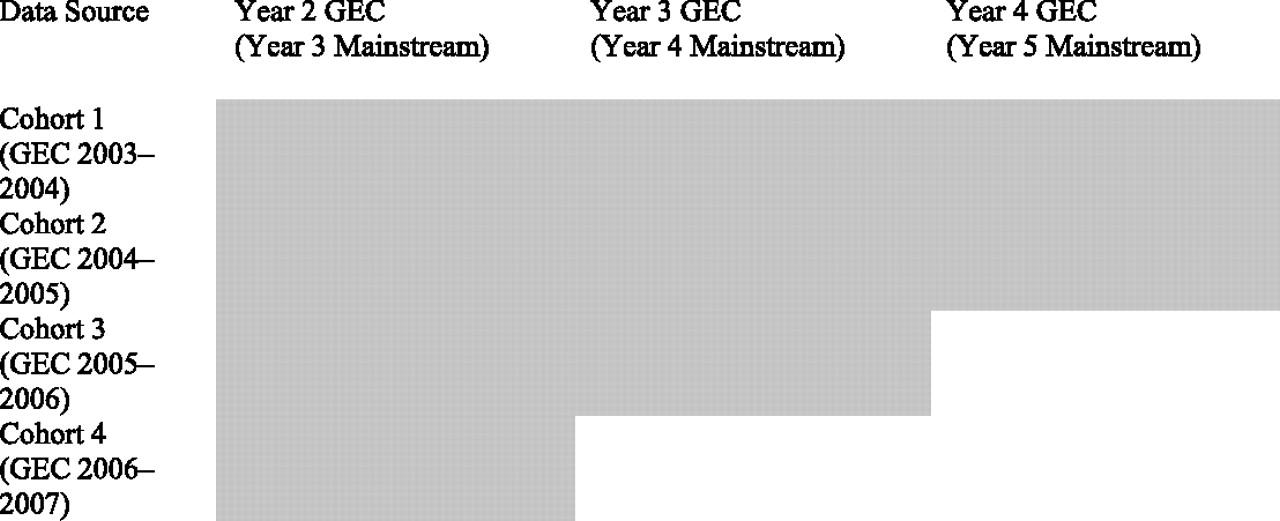
Available data following the integration of GEC and mainstream medical students
Currently 16 medical schools in the UK offer graduate entry courses (GECs) but evaluation of the impact of previous tertiary education on academic performance during medical school training in the UK is extremely limited and is further complicated by the considerable differences in entry requirements. In Australia all graduate entry medical students must sit the Graduate Medical School Admissions Test (GAMSAT) which is a professionally designed and marked selection test developed by the Australian Council for Educational Research. 7 In the UK this has been adopted by five UK medical schools offering GECs. 8 Furthermore some medical schools accept a full range of non-science graduates whereas others require first degrees in life sciences. Evidence from Australia suggests that overall academic achievement (measured as award of medical school honours) and research careers between graduate entry candidates and school leavers is similar, 2 while evidence from a Dutch University suggests that a one-year transitional programme increases knowledge to level sufficient for graduate entry students to enter into the fourth year of a 6-year medical curriculum. 9 Early experience at Leicester/Warwick Medical Schools suggests that GEC students at Warwick and Leicester perform at least as well as those on the five-year Leicester course and that the overall pass rate of graduate entrants from bioscience backgrounds has been higher that that of school-leavers. There is, however, also preliminary evidence to suggest ‘more school-leavers obtain distinctions, suggesting that really high-fliers may choose medicine at the stage of school-leaving’. 10
Evaluation of graduate entry programmes is necessary to determine whether mature students are able to meet learning objectives in this shortened course. 10, 11 In this study we aimed to assess whether GEC students attained academic standards that were at least as good as those achieved by mainstream or conventional entry medical students in the same institution.
Methods
The University of Birmingham has, in addition to its 5-year medical course, offered a 4-year graduate entry course (GEC) since 2003. At Birmingham, unlike some other schools, the student's first degree must be in a life science and there is an additional requirement for A-level chemistry. As with most other schools, students must have achieved first or upper-second class honours (≈ top 20% graduates), although due to high demand all students accepted to the course to date attained first-class honours. 12 The GEC at Birmingham is split into two phases. Phase 1 is one year of theory, provided predominantly through the medium of problem-based learning, plus clinical experience in primary care. At the end of Phase 1 GEC students should have met the same learning objectives and achieved the same level of knowledge and clinical skills as students completing their second year of the 5-year undergraduate MBChB course. In Phase 2 GEC students fully integrate with the main course, having the same opportunities and assessments over the remaining three, largely hospital-based years of the course.
Data source
Examinations taken by mainstream and graduate entry students
Honours points were obtained for all 2007 and 2008 graduates from both the mainstream and GEC cohorts. Each examination was categorized as predominantly clinical (essentially involving contact with real or simulated patients, usually OSCE) or non-clinical (i.e. largely theoretical, usually MCQ) by two assessors (JP and RZ). Re-sit marks were excluded with only first-sit marks being considered in the analyses. South Asian ethnicity was predicted using the Nam Pehchan name recognition software. 14
Statistical analyses
Analyses were performed using SAS V9.1 (SAS Institute, Cary, North Carolina, USA). The relationship between examinations results and gender, South Asian ethnicity, overseas status and entry route (mainstream vs. GEC students) were assessed using a mixed model with identity link and normal error, with student as a repeated measure and examination sitting (year of exam and student cohort) as random effects. Interaction terms were assessed and Akaike's information criterion was used to determine the best model fit. 15
Average examination marks were predicted for students with different demographics for GEC and mainstream based on model regression coefficients. The 95% CI were estimated using the predict statement in the SAS ‘mixed’ procedure.
In secondary supportive exploratory analyses we evaluated whether the GEC students performed significantly better than mainstream students by assessment type, i.e. clinical, non-clinical or a combination.
The difference in the proportion of students obtaining honours degrees in the GEC compared to mainstream cohorts was examined using Fisher's exact test.
Results
In total we analysed 19,263 examination results from 1547 students. Of these 161 were GEC students and 1386 were mainstream medical students. Student demographics are shown in Table 2.
Predictors of examination success
In multivariable analyses, GEC students performed significantly better than their mainstream counterparts (p <0.0001) which is captured by the main effect and a highly significant interaction term (Table 3). Our model results also showed that male students, overseas students and students identified to be of South Asian ethnicity on average obtained lower examination marks than female students, home or EU students and students of non-South Asian ethnicity, respectively. The interaction terms indicate that on average non-South Asian, home or EU students performed better than their counterparts with a larger increase in average mark observed in the GEC cohort (Table 3).
Predicted average examination marks based on student characteristics
Student demographics by cohort
Predictors of examination success
Overall significance for GEC vs. Mainstream p <0.0001; overall significance for ethnicity p <0.0001; overall significance for residency p <0.0001
Effect of assessment type on examination success
Exploratory analysis of the relationship between student cohort and performance in different examinations suggests that GEC students perform better than mainstream students in their clinical exams (on average 1.7 points higher; 95% CI 0.7 to 2.7, p<0.0001).
Honours degrees
Of the 355 students graduating from medicine in 2007, 50 students (14.1%) were awarded the degree with honours. The proportion of students attaining honours was significantly higher in the GEC group compared to mainstream (37/313 mainstream students [11.8%] and 13/42 GEC students [31.0%]; p <0.01).
Similar results were observed with the 2008 graduates. Of the 403 graduates, 44 students (10.9%) were awarded honours degrees with 34 of the 361 mainstream students (9.4%) and 10 of the 42 graduate entry students (23.8%) attaining honours (p =0.01).
Discussion
Principal findings
Our results indicate that on average the GEC students performed significantly better than their mainstream counterparts and were more likely to graduate with honours. The lower 95% confidence intervals indicate that it is highly unlikely that the mean results for GEC students would be inferior to the results of mainstream students and demonstrates that the GEC students were able to meet learning outcomes in this intensive shortened course.
Predicted average marks by student characteristics
Strengths and limitations
Strength of our study is that at Birmingham GEC students fully integrate with mainstream students in Phase 2 allowing comparison across multiple assessments. Our results clearly demonstrate that on average our GEC students perform better than their mainstream counterparts; however we would urge caution regarding the generalizability of the results to other graduate entry courses with different admission criteria. Currently, due to the popularity of the course, all students enrolled on the Birmingham GEC have at least first class honours degree in life sciences and are home/EU students. There is the potential that GEC students thrive because of the closer attention from/greater individual interaction with academic staff, both because of cohort size and because of the nature of PBL.
Self-recorded ethnicity may be regarded as preferable to the use of name recognition software, however, this is not without limitations 17 and self-recorded ethnicity was not available to us for students at an individual level.
At the University of Birmingham Medical School, no overseas students have currently been admitted to the GEC due to difficulties in determining the equivalency of degree programmes and to high demand from home/EU students. In the mainstream cohort, overseas students on average have worse examination performance than home/EU students. This is consistent with work from Australia and may reflect previous learning experiences, barriers to communication and other challenges associated with living abroad. 18 Students from ethnic minorities and male students have also been shown to perform less well in medical examinations on average than white students and female students and our findings are consistent with this. 19, 20, 21, 22 In the GEC cohort there were small numbers of students of South Asian ethnicity on which our results are based, however, a strength of our modelling approach is that we have considered all available examination results (GEC years 2–4) for each student by using repeated measures analysis. Reassuringly, the absolute differences in average marks between home/EU vs. overseas or those from different ethnic groups are relatively small, but may suggest additional support is required for some students. In addition further consideration needs to be given to student diversity in curricula and assessment development, and to ensure that differences do not arise due to negative stereotyping. 23
Conclusions
The results of this work indicate that concerns over whether GEC students can attain the same standards as students on the 5-year MBChB course are misplaced. It is clear that GEC students at the University of Birmingham on average outperform their colleagues in the mainstream cohort. This may reflect greater maturity both in life and learning experience, or the selection of highly-motivated students with a proven track record at graduate level. 10
Further research is required to explore whether this is a consistent effect in other medical schools with different admission criteria and whether students continue to excel during their career.
Footnotes
DECLARATIONS
Footnotes
Acknowledgements
None