





Abstract
Summary
Highlighting the importance and recognition of palmar fasciitis and polyarthritis syndrome, a paraneoplastic syndrome related to ovarian and other malignancies.
Case Report
Ovarian cancer accounts for 5% of cancer deaths among women and has a tendency to be clinically silent in early disease so that many patients present with locally advanced or metastatic disease. 1 This case highlights awareness and recognition of palmar fasciitis and polyarthritis syndrome, a paraneoplastic syndrome related to ovarian and other malignancies. It also demonstrates for the first time a possible aetiological role for the pro-fibrotic connective tissue growth factor (CTGF), which was found to be greatly elevated in this patient.
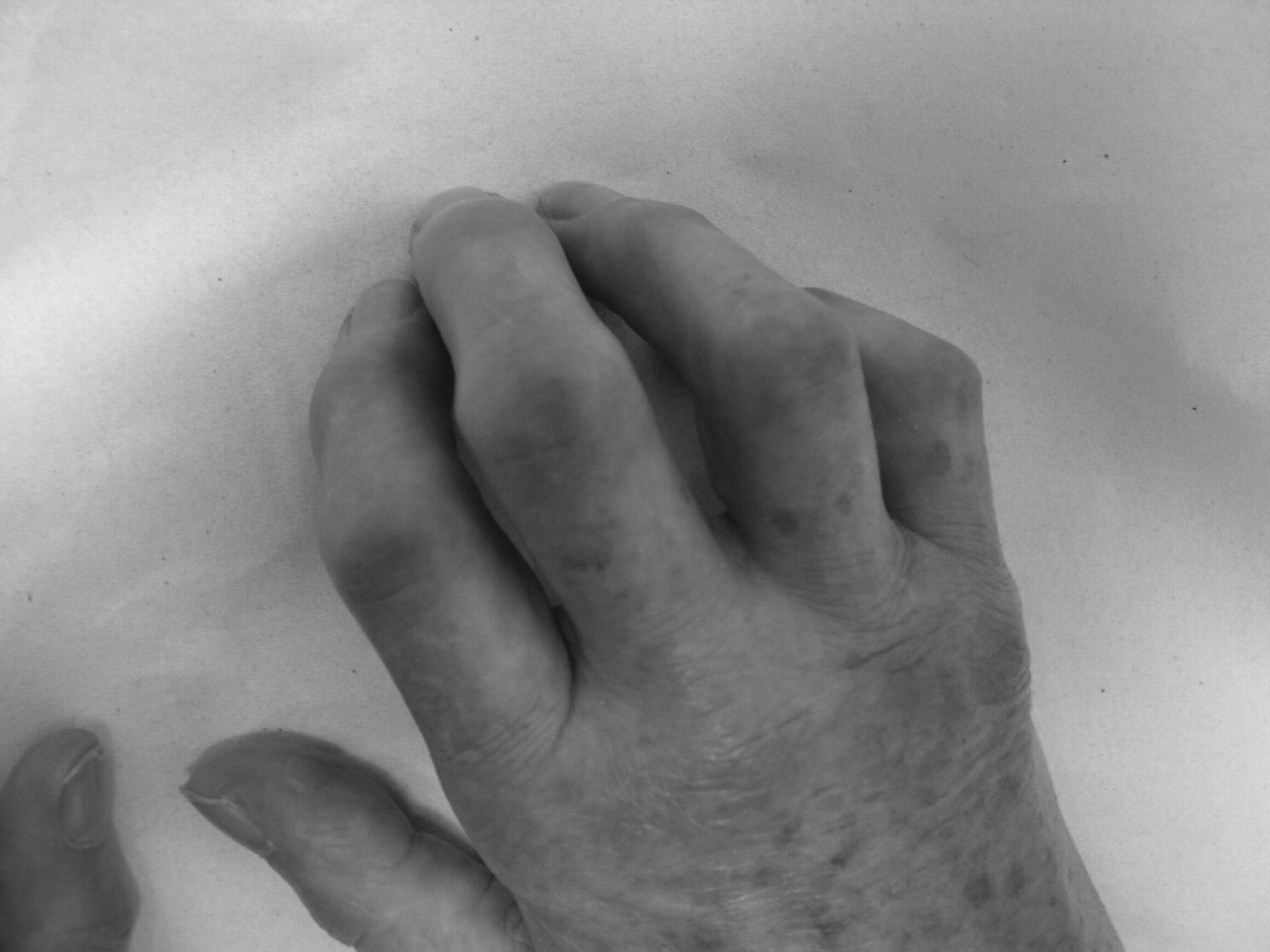
A 74-year-old retired lady presented with a history of thickening and contracture of the palms. Four months prior to presentation she had noted lumpy areas developing on the palms and this had progressed rapidly to severe generalized thickening of the palmar areas with positive ‘groove sign’ (Figure 1). In addition, flexor contractures and proximal interphalangeal joint synovitis had developed (Figure 2). Previously she had enjoyed good health and her only medication was etodolac 600 mg od taken for arthralgia. There had been no other systemic symptoms and on examination she appeared well. The rest of the physical examination was unremarkable.
A diagnosis of palmar fasciitis and polyarthritis syndrome (PFPAS) was made. Because of the strong association between this condition and underlying malignancy, clinical examination was followed by blood testing for tumour markers and pelvic ultrasound scan. These showed elevation of CA-125 at 120 U (normally <35 U) and a pelvic mass was identified. Laparoscopic examination showed widespread malignant deposits within the pelvis and cytology of fluid from within the pelvis yielded poorly differentiated adenocarcinoma. CTGF was also measured in this patient, and compared with a normal range established using healthy controls. Whole CTGF in this patient was significantly elevated at 139 U, compared with a control value of 24.1±5.5 U (mean±SEM).
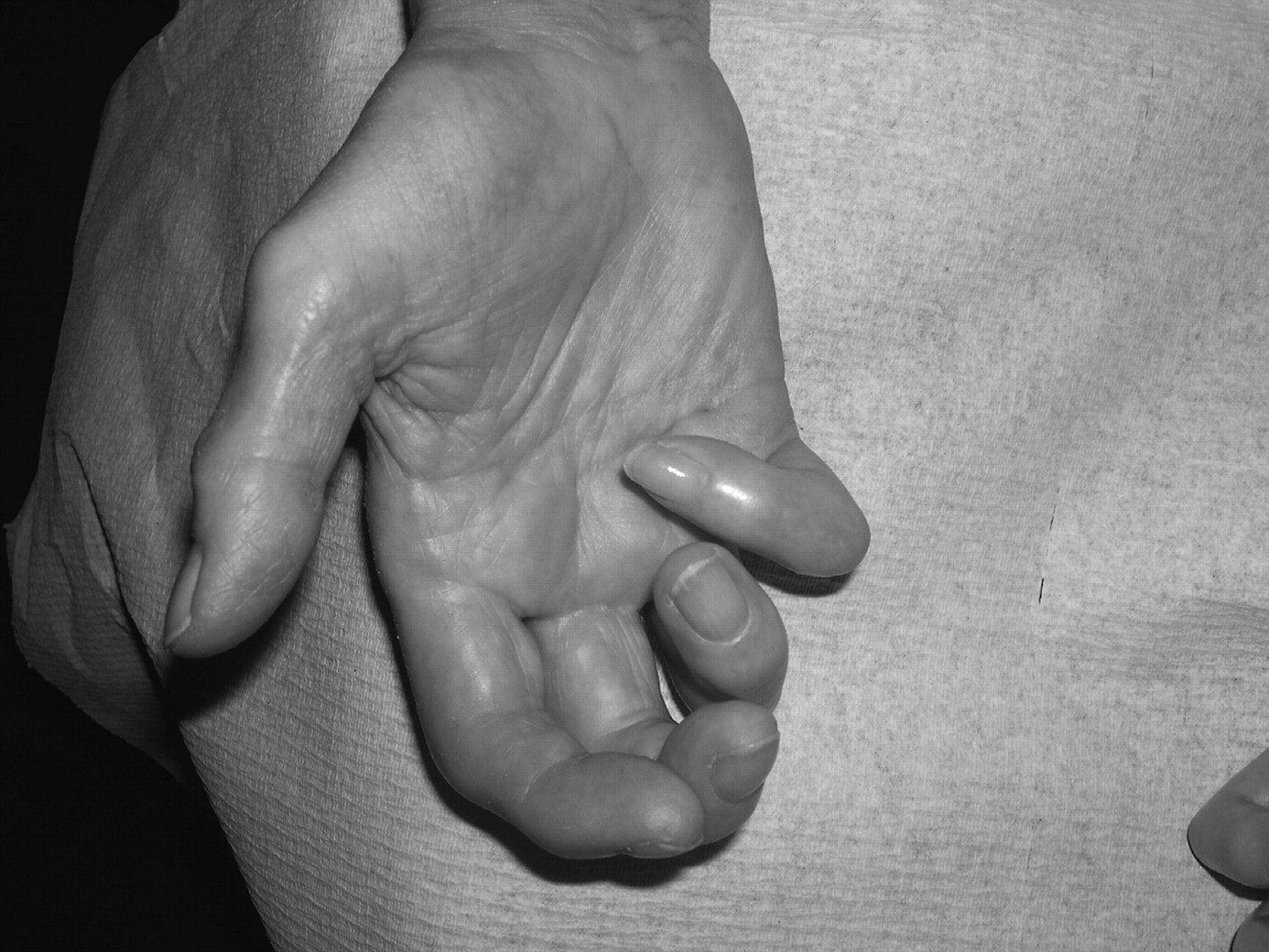
Following six months of chemotherapy including carboplatin and paclitaxel, her condition
was found to stabilize. The palmar thickening improved markedly but the patient was left
with flexor contractures ( The palmar surfaces were hard and wooden feeling with deepening of the palmar
crease causing a ‘groove sign’ Proximal interphalangeal and metacarpophalangeal synovitis Follow up appearance after six months of chemotherapy. Palmar thickening has
improved but the patient has severe residual flexor contractures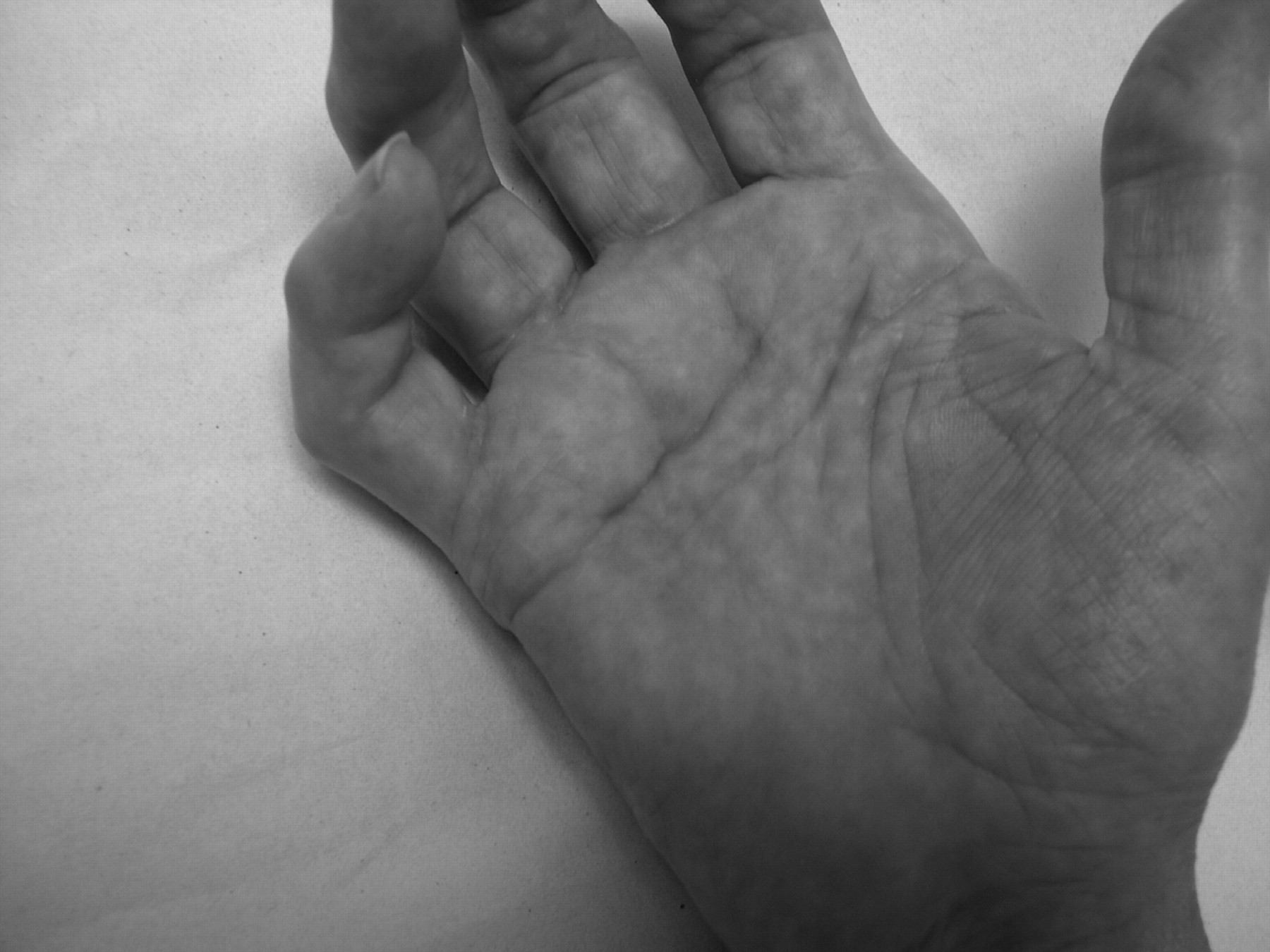
Discussion
The association between neoplasms and a variety of rheumatological conditions in the elderly has been well documented. 2 PFPAS is an example of such a paraneoplastic syndrome. It was first described by Medsger et al., 3 and is characterized by rapidly progressive flexion contractures of the hands, an inflammatory fasciitis, fibrosis, a generalized inflammatory arthritis syndrome (hands with or without additional joint involvement), and the diagnosis of a neoplasm. 4 It has been most commonly described in the setting of ovarian carcinomas but has also been demonstrated in association with extraovarian adenocarcinoma, 5 carcinoma of the prostate, 6 haematological malignancies, 7 lung neoplasms, 8 carcinoma of the breast 9 and pancreatic neoplasms. 7
The differential diagnosis for PFPAS includes rheumatoid arthritis, Dupytren's contractures, scleroderma, eosinophilic fascitiis and reflex sympathetic dystrophy. 10 Our case illustrates the importance of this diagnosis, as the ovarian primary may be clinically silent at the time of presentation with fasciitis. In previously reported cases of ovarian-associated PFPAS, the diagnosis of ovarian carcinoma was made an average of nine months after the onset of hand symptoms. 4
The aetiology of this condition remains unknown but possible explanations include the release of fibrosis-enhancing soluble factors from neoplastic cells, 3 an autoimmune phenomenon provoked by presentation of autoantigen within the malignant tissues, 11 or the invasion of palmar connective tissues by transformed matrix producing cells. A pathological fibrotic mediator such as CTGF may be a common intermediary to all these processes. CTGF is thought to play a key role in chronic fibrosis in scleroderma, 12 but this is the first documented case of PFPAS in which CTGF has been measured.
Treatment with anti-inflammatory drugs or steroids has proved to be of limited benefit in PFPAS, but treatment of the underlying malignancy, as in this case, is associated with improvement, although many patients may be left with residual contractures. 4
Footnotes
DECLARATIONS
Footnotes
Acknowledgements
None