





Abstract
This is the last in a series of articles on making evidence-based medicine work for you. The series is based on the book ‘Attenti Alle Bufale’ by Tom Jefferson (www.attentiallebufale.it).
Quick instrument
This is a really difficult one, because there is no internationally accepted definition of what a good Inclusion in library lists: as subscription costs rocket you only go for the best Indexing (NLM, ISI): basking in reflected prestige of the indexing body Citations: your colleagues will cite what they read and like Not throwaway: a study has shown that throwaway journals present lower quality information (but use better language) Not publishing single drug company-sponsored supplements: bias galore Indexes of scrutiny: more authors, but also more editors, equal more scrutiny and better quality Indexes of competition: higher number of submissions with space limits mean a more desirable journal Proportion of articles doomed by their design: rise in RCTs (considered the most reliable study design) as a proportion of all submissions Use of structure and instruction (CONSORT, etc): a structured presentation minimizes risk of low-quality, biased research being published and aids clarity Editorial evaluation and research: the editors take an interest in their journals and are willing to learn more about them Number of errors and corrections published Long waiting times for publication: few resources, possibly little interest Quality of editors and peer reviewers Cost per article to the readers (cost of subscription divided by number of articles of interest in a year) Presence of post publication peer review: index of openness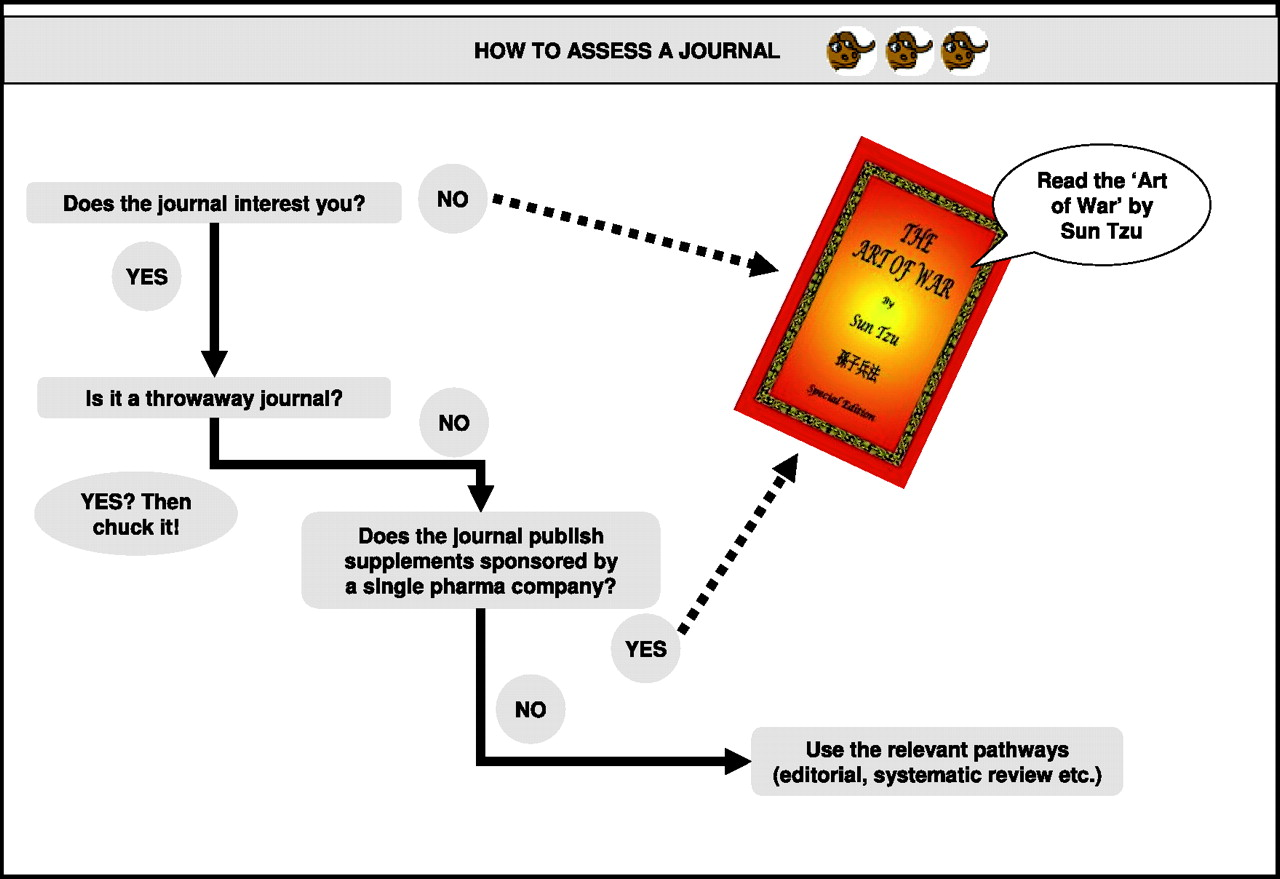
Rationale
Few of these indicators have an empirical basis. Some, such as the numbers of mistakes, are intuitive. For others such as the impact factor (which has become gospel, despite its purely quantitative nature) there is no evidence of their effectiveness in distinguishing ‘good’ from ‘bad’ journals. The quotes are necessary because, as we have seen, no one knows what good and bad mean with regard to journals. The only real evidence points against reliance on throwaway journals or those which publish single-sponsor supplements.
Use these indicators if you wish, or develop your own. But be ready to change your mind if and when we have more evidence.
Footnotes
DECLARATIONS
Footnotes
Acknowledgements
None