






Abstract
Background
The efficacy of germinated barley foodstuff (GBF) on tumour necrosis factor-alpha (TNF-α), interleukin-6 (IL-6) and -8 (IL-8) in patients with ulcerative colitis (UC) has not yet been examined. The aim of the present study was to determine the effect of administration of GBF on serum TNF-α, IL-6 and -8 levels in UC patients in remission.
Methods
Forty-one patients with UC were divided into two groups, namely control and GBF group. Twenty-one patients in the control group received standard treatment while 20 patients in the GBF group received 30 g of GBF daily by oral administration during two months of the study along with standard drug therapy.
Results
Levels of TNF-α, IL-6 and -8 all decreased in the GBF group compared with baseline during the two-month study, while in the control group all values rose. For IL-6 and -8 this effect was significant, P = 0.034 and 0.013, respectively.
Conclusions
The results of the present study showed that the consumption of GBF may reduce the level of serum TNF-α, IL-6 and -8 in patients with UC. This investigation was designed as a pilot study and the results may provide a basis for more future clinical trials.
Introduction
Inflammatory bowel disease (IBD) is typified by ulcerative colitis (UC) and Crohn's disease. It is a common disorder characterized by recurrent and serious inflammation of the gastrointestinal tract. 1–4
As the colon harbours an enormous number of coexisting bacteria, the role of microflora in the pathogenesis of UC is regarded as principal. 5–7 Previous animal studies have shown that disruption of mucosal barrier function may induce abnormal immune responses to luminal bacteria, which result in acute and chronic intestinal inflammation. 8–10 Activated macrophages produce a potent mix of broadly active inflammatory cytokines, including tumour necrosis factor-α (TNF-α), interleukin-1 (IL-1), and IL-6. These cytokines enhance the inflammatory process itself and tissue destruction, which eventuate in the clinical manifestations of disease. 11
To modify the intestinal microflora and reduce inflammatory cytokines in UC, many clinical trials have been carried out in which prebiotic preparations were administered to patients. Germinated barley foodstuff (GBF) is a prebiotic product used in UC patients. It is derived from the aleurone and scutellum fractions of germinated barley and consists of insoluble glutamine-rich protein and dietary fibre. 12–15 GBF could induce the production of short-chain fatty acids (SCFAs) (mainly butyrate) by the action of Eubacterium and Bifidobacterium in the gut lumen. Previous studies in animal models showed that SCFAs can directly inhibit the production and/or release of TNF-α. 16
TNF-α is an important proinflammatory cytokine that has some role in promoting intestinal inflammation in UC. 17 One study has shown that the degree of disease activity in UC correlates with serum levels of TNF-α. 18
IL-6 and IL-8 are also potent cytokines with an essential role in immune regulation and inflammation, and are considered important factors in the development and perpetuation of colitis. 19,20
As the results of previous studies showed the positive effects of GBF on inflammation factors such as IL-8, 21,22 and until now there has not been any human studies to evaluate the effect of GBF on inflammatory responses in UC patients, this study was carried out.
Material and methods
GBF preparation
GBF is a food made of the aleurone layer, scutellum and germ of germinated barley. It mainly consists of water-insoluble dietary fibres and glutamine-rich proteins. The detailed production process of GBF was described previously. 12 Briefly, after germination, barley is mashed and filtered to extract the endosperm, and then the residue is milled and sieved to obtain GBF.
Subjects and treatments
Approval for this trial was granted by the ethical committee of the relevant Nutrition and Food Sciences Institute, and all subjects gave informed written consent. In the present study, we enrolled forty-one patients (26 men and 15 women) with UC in remission from outpatients with disease severity from mild to moderate based on the criteria of Truelove and Witts. 23 The diagnosis of UC was based on clinical and endoscopic features. Of the 41 participants, 28 had left-side colitis and 13 had pancolitis.
The patients were randomly divided in two groups: GBF treated and control group. Subjects in the control group (21 patients) received only standard drug therapy; however, the GBF group (20 patients) received 30 g of GBF per day (3 times a day) by oral administration during the two-month trial with standard drug therapy. Pretreatment and post-treatment values of serum TNF-α, IL-6 and -8 were measured using a commercial cytokine-specific ELISA kit according to the manufacturer's instructions (Human TNF-α and IL-6 and 8 Elisa kits [Diaclone, Besancon Cedex, France]).
Statistical analysis
Results were expressed as mean ± standard error of the mean (SEM). The results were normally distributed (Kolmogorov–Smirnov test). Differences in mean values were analysed with paired t-test. Statistical significance was a value of P < 0.05. Statistical analysis was performed using the Statistical Package for the Social Sciences (SPSS Inc, Chicago, IL, USA) version 11.5.
Results
The baseline characteristics of participants in GBF treated and control groups are presented in Table 1. No significant difference was found between the two groups in age, weight, body mass index and disease duration. There were also no significant difference between the pretreatment serum values of TNF-α (P = 0.28), IL-6 (P = 0.19) and IL-8 (P = 0.6).
Baseline characteristics of participants in case and control groups
GBF, germinated barley foodstuff; TNF-α, tumour necrosis factor-α; BMI, body mass index; IL, interleukin
*Statistical significance was a value of P < 0.05
Figure 1 presents the effect of GBF consumption on serum TNF-α values. In the control group (no GBF), a non-significant increase in TNF-α was seen after two months of study (P = 0.08). In the treatment group, the production of this cytokine decreased (P = 0.18).
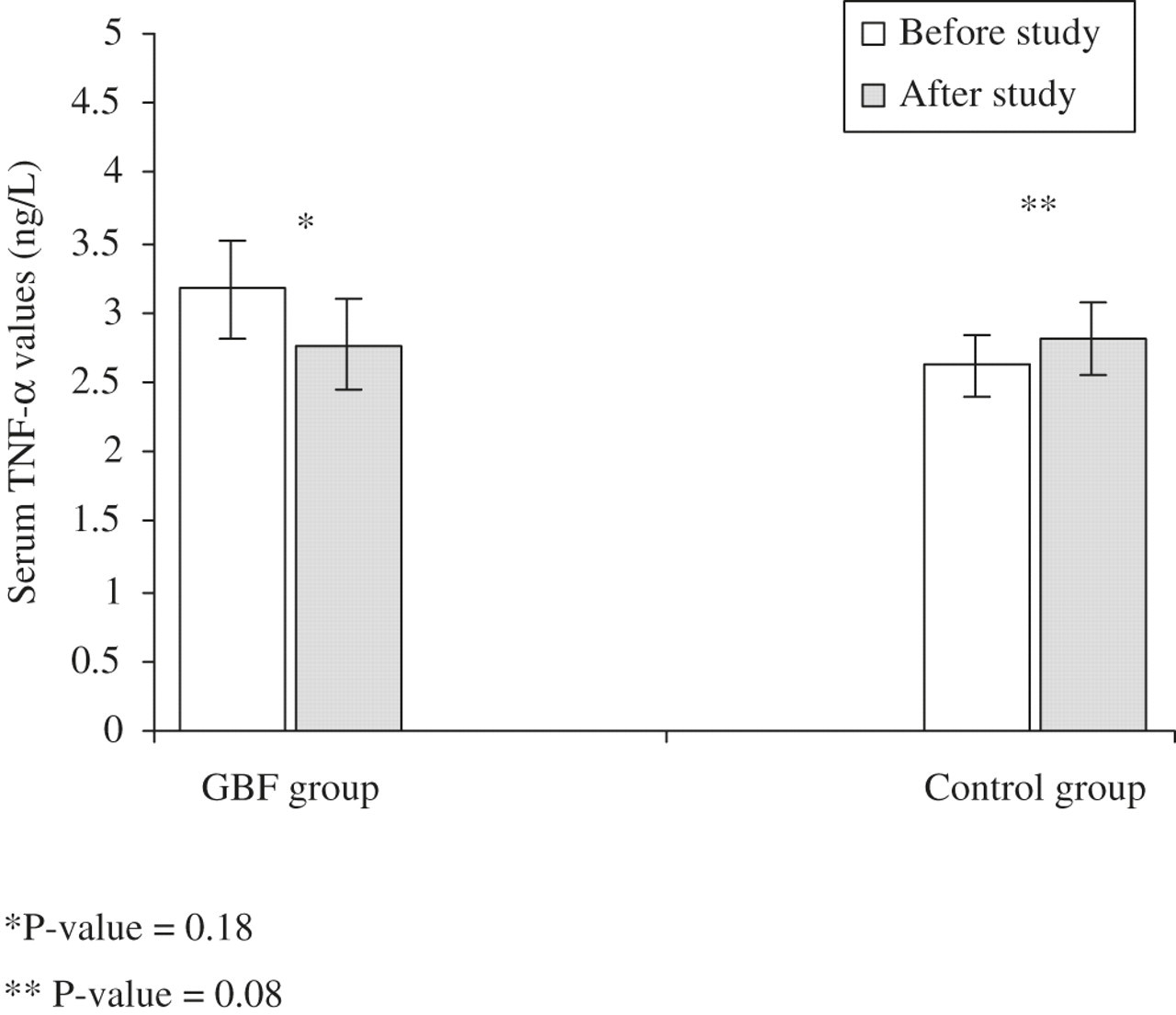
Effect of germinated barley foodstuff (GBF) consumption on serum tumour necrosis factor-α level. Error bars show standard error of the mean. *P value = 0.18; **P value = 0.08
In the case of IL-6 (Figure 2) in the control group, the quantity of this cytokine increased (P = 0.46) but in the treatment group a significant reduction in IL-6 occurred (P = 0.034).
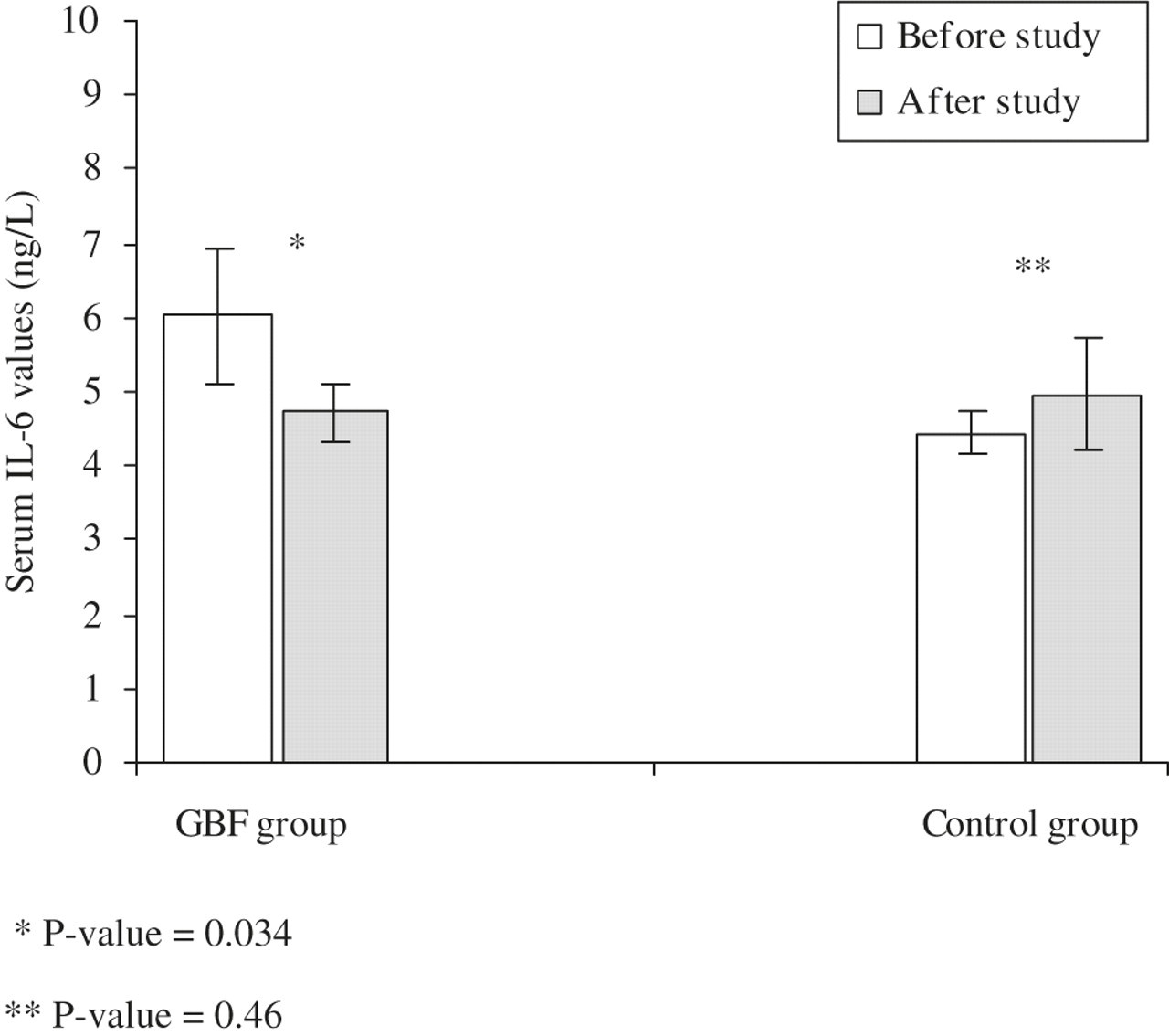
Effect of germinated barley foodstuff (GBF) consumption on serum IL-6 level. Error bars show standard error of the mean. IL, interleukin. *P value = 0.034; **P value = 0.46
The mean serum IL-8 (Figure 3) in the treatment group was significantly decreased (P = 0.013) compared with baseline but in the control group an increase was seen (P = 0.35). Patients in the GBF group did not report any side-effects from GBF therapy.
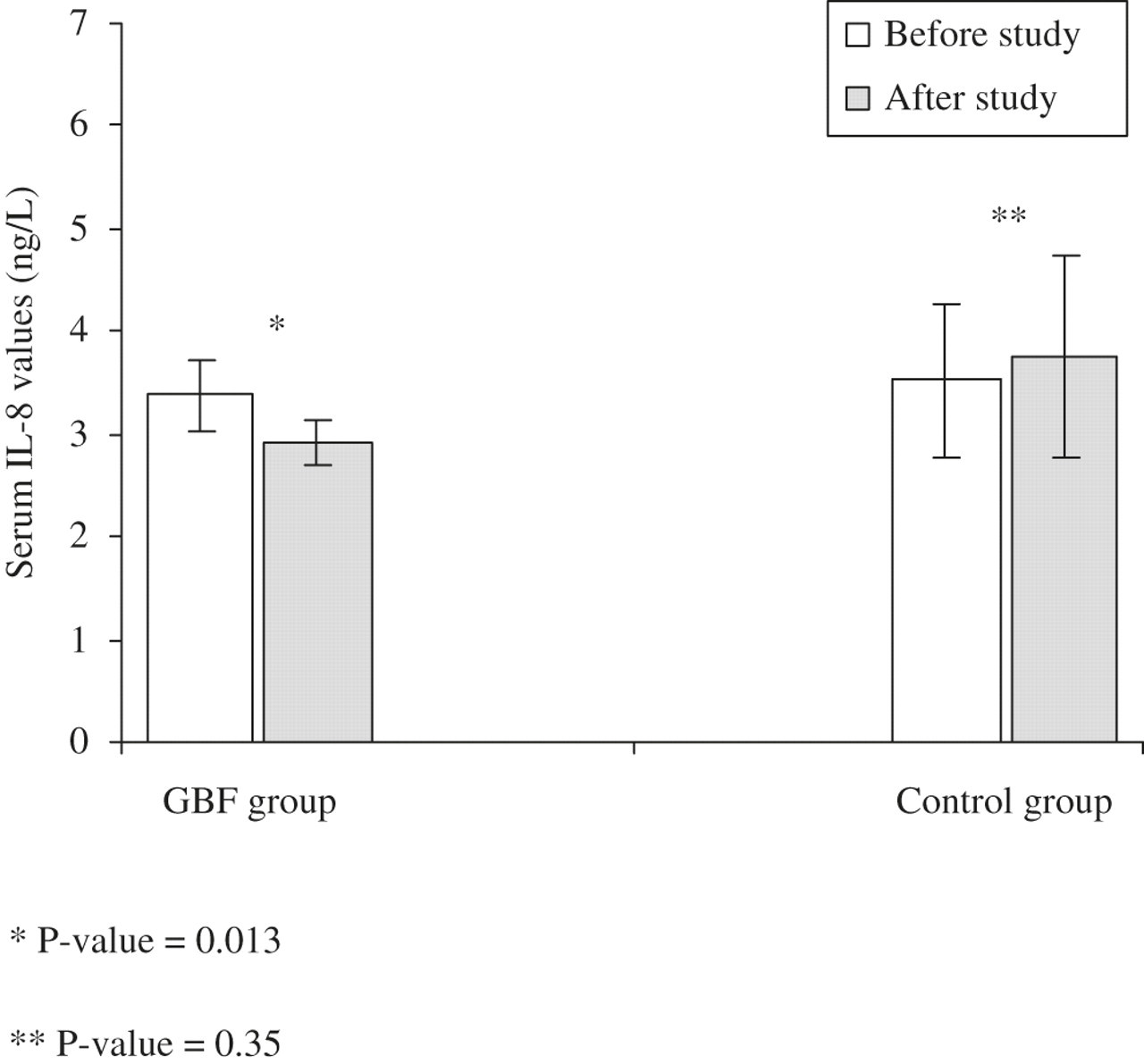
Effect of germinated barley foodstuff (GBF) consumption on serum IL-8 level. Error bars show standard error of the mean. IL, interleukin. *P value = 0.013; **P value = 0.35
Discussion
There is increasing experimental evidence to support a role for luminal bacteria in the development of IBD and its chronicity. Bacterial endotoxins may enhance proinflammatory cytokine production (IL-1, IL-6, IL-8 and TNF-α). There is evidence that TNF-α, as well as interferon-γ, promote the increase in colonocyte permeability. 24–26 Dietary factors, such as fibre, actively modify the intestinal microbial balance towards non-pathogenic bacteria by decreasing the amount of these bacteria and they may be effective in reducing inflammatory cytokine production. 27–31
The anti-inflammatory effect of fibre has been evidenced both in human IBD and in experimental models. Besides, in vivo studies in experimental models of colitis, researchers have reported the ability of dietary fibre to attenuate the production of proinflammatory cytokines, including IL-6, IL-8 and TNF-α. 27,28,32–34
In previous studies in animal models, Kanauchi and collaborators 12–14 found that the administration of GBF and its fibre fraction to rats significantly increased cecal butyrate production, and also the number of butyrate-producing Eubacterium limosum (E. limosum), with a decrease in colonic pH.
Fermentation of dietary fibre in colon contributes to production of SCFAs, namely butyrate, propionate and acetate. SCFAs can directly inhibit the production and/or release of cytokines, like TNF-α, thus contributing to the intestinal anti-inflammatory activity ascribed to dietary fibre. In this sense, it has been reported that butyrate decreases TNF-α production by intestinal biopsies and by isolated lamina propria mononuclear cells, 35 as well as in the human monocytic cell line THP-1. 27
Butyrate has been reported to suppress the biological effects of TNF-α in different intestinal epithelial cell lines, i.e. HT-29, T84 and Caco-2, probably via inhibition of nuclear transcription factor-κB (NF-κB) activation. 36,37 NF-κB is a transcription factor, described to be activated in human IBD. 38
Kanauchi et al. showed that three kinds of SCFA (butyrate, acetate and propionate) promoted a significant decrease of IL-6 production in a dose-dependent manner. Lactate only showed a decrease in IL-6 production at 0.1 mmol/L, and succinate had no anti-inflammatory effects at any dose level. 39
Kanauchi et al., in a spontaneous colitis model, showed that GBF significantly suppressed IL-8 production 15 and also Rogler et al. revealed that GBF attenuated inflammatory cytokine (i.e. IL-8) production. 38
Another fraction of GBF that may reduce production of inflammatory factors is glutamine. Previous studies in rats showed that the consumption of glutamine lowered concentration of serum TNF-α. 40
Fox et al. 41 revealed that enteral diets, which are supplemented with glutamine (GLn), significantly improved the nutritional status, decreased intestinal injury, decreased bacterial translocation and also lowered concentrations of the potent inflammatory cytokines IL-8 and TNF-α in rat with induced colitis. These researchers suggest that glutamine may have inhibited synthesis, release and action of these inflammatory cytokines, resulting in the improvement in disease outcome.
In conclusion, the results of the present study showed that the level of serum TNF-α, IL-6 and IL-8 decreased in the GBF consumers and these results were statistically significant except in the case of TNF-α. As this investigation was designed as a pilot study, the results may provide a basis for more future clinical trials with larger sample sizes, healthy control groups and more doses of GBF.
DECLARATIONS