




Abstract
A power-shovel is essentially a revolving crane mounted on a self-propelled carriage and equipped with a digging device. The paper describes the process of calculation of forces for the stage of digging, that is, for the time when the dipper is in contact with the excavated face, and the influence of forces arising during slewing on the boom and the handle.
It is shown that the maximum values of the main forces acting in the shovel are governed by the maximum values of the bail-pull and of the braking torque of the crowd-motion. In view of the fact that the handle and boom form a toggle arrangement, the induced forces will reach destructive values unless the governing forces are controlled.
Equations relating the forces are established and, as an example, a 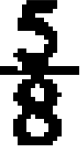 cu. yd. power-shovel, weighing 17·3 tons is analysed. The main forces are evaluated and presented graphically for the area of action of the dipper after which the critical loading conditions are specified.
Get full access to this article
View all access options for this article.