



Abstract
Slip in face centred cubic (fcc) metals is well documented to occur on {111} planes in 〈110〉 directions. In body centred cubic (bcc) metals, the slip direction is also well established to be 〈111〉, but it is much less clear as to the slip planes on which dislocations move. Since plasticity in metals is governed by the collective motion and interaction of dislocations, the nature of the relevant slip planes is of critical importance in understanding and modelling plasticity in bcc metals. This review attempts to address two fundamental questions regarding the slip planes in bcc metals. First, on what planes can slip, and thus crystallographic rotation, be observed to occur, i.e. what are the effective slip planes? Second, on what planes do kinks form along the dislocation lines, i.e. what are the fundamental slip planes? We review the available literature on direct and indirect characterisation of slip planes from experiments, and simulations using atomistic models. Given the technological importance of bcc transition metals, this review focuses specifically on those materials.
Introduction
In face centred cubic (fcc) metals, plasticity is generally thought to occur by the motion of dislocations on well defined planes and directions. These groupings of planes and directions are called slip systems, and are the conventional way of describing plastic deformation caused by dislocation slip. In fcc metals, slip generally occurs on {111} planes in 〈110〉 directions. The perfect Burgers vector is a/2〈110〉, which is a close packed direction, and represents the shortest repeat length in the crystal. The slip planes, {111}, have the largest interplanar spacing of those containing close packed directions. The relatively low stacking fault energy in most fcc metals allows the dislocations to split into partial dislocations dissociated onto these close packed planes. The planar nature of the dislocation cores and the metallic bonding make slip on these planes relatively easy. Thus, pure fcc metals are quite ductile, often exhibiting strains to failure in excess of 50%.
In the case of body centred cubic (bcc) metals, slip is more complex. It is clear from numerous experiments1 – 5 that slip occurs in the closest packed 〈111〉 direction and the Burgers vector is a/2〈111〉. However, identifying the specific planes on which slip occurs in bcc metals is less straightforward. The planes with the largest interplanar spacing are {110} followed by {112} then {123}. No stable stacking faults have been found in bcc metals, though twinning and adiabatic shear banding6 – 12 are observed at low temperatures and/or high strain rates, with twinning occurring unambiguously on {112} planes via the propagation of a/6〈111〉 twinning dislocations, in agreement with the theoretical twinning element.13 Thus, at first glance, it appears that slip in bcc metals could occur on either {110} or {112} planes.
The mechanical behaviour of pure bcc metals exhibits a transition from parabolic hardening at low temperatures, to classical three stage hardening at high temperatures.14 – 21 At higher temperatures, the initial rounding of the stress–strain curve is labeled stage 0 and dominated by the activation of mixed dislocations.1 Owing to the high mobility of edge dislocations and non-screw dislocations, stage 0 slip occurs on a number of slip planes, regardless of the relevant Schmid factor, with hardening in this regime due to the exhaustion of easy sources. During stage I, slip is controlled by screw dislocations, a single dominant slip system is established, and hardening is generally not pronounced. Anomalous slip can occur in stage I, and corresponds to the activation of a dominant slip system, usually involving {110} planes, that has a low resolved shear stress.1, 22, 23 Pure bcc metals in single crystal form are, in general, relatively ductile. For example, Fig. 1 shows the mechanical response of pure single crystals of tungsten at various temperatures. At 76 K, tungsten exhibits over 20% strain to failure. This may seem surprising given the common conception that tungsten is a relatively brittle metal.
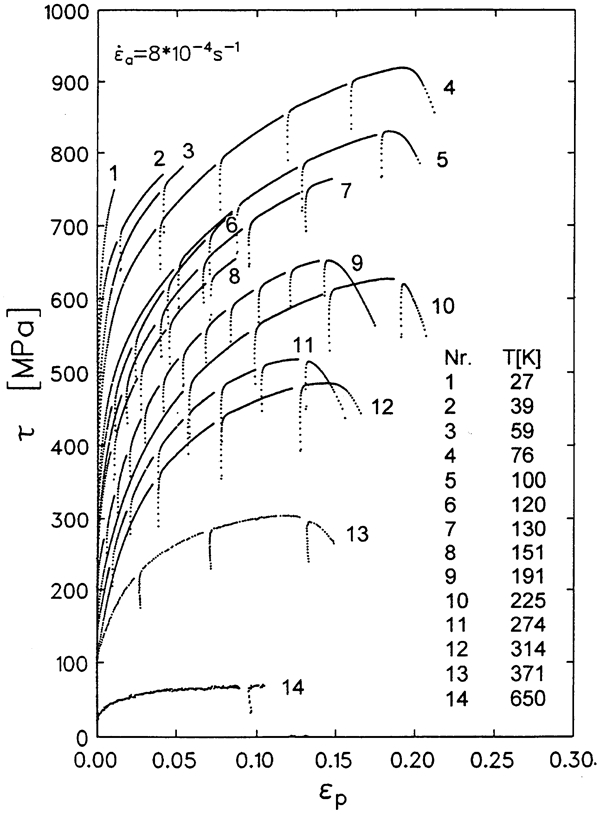
Stress–strain curves for pure tungsten single crystals at various temperatures, from Ref. 24: tungsten shows ductility above 20% down to 76 K and dramatic drops in flow stress from 27 to 650 K
Unlike fcc, bcc metals exhibit yield strengths and flow properties that depend strongly on temperature and strain rate below a critical temperature that is around 10–25% of the melting point. The flow stress can decrease by over an order of magnitude as the temperature increases from 0 K to the critical temperature, as shown in Fig. 1. This temperature and strain rate dependence is caused by the thermally activated motion of screw dislocations impeded by intrinsic lattice friction. In contrast, edge dislocations in bcc metals, which may be important for plasticity at higher temperatures, have been shown to have low lattice friction and high mobility from both experiments25 – 30 and molecular dynamics simulations.31 – 38 Thus, the rate controlling mechanism of low temperature and low rate plasticity in bcc metals is screw dislocation motion.
Since plasticity in bcc metals at low temperatures is likely governed by screw dislocations, there is some ambiguity as to the nature of the slip planes involved. Screw dislocations inherently do not have a well defined slip plane. In fcc metals and basal glide in hcp metals, the ambiguity is absent because screw dislocations split into partial dislocations bounding a stacking fault, establishing a well defined slip plane. As will be discussed in this review, the splitting of screw dislocations in bcc metals has never been observed experimentally, and thus the exact nature of the slip planes is ambiguous. This has led to the idea of pencil glide where slip occurs in the 〈111〉 directions but not on well defined slip planes.39
This poses challenges for numerical modelling of deformation and texture evolution in bcc metals. Conventional crystal plasticity models generally assume that slip occurs on specific planes and directions, giving rise to crystallographic rotation during plastic deformation.40 – 43 If different slip planes are chosen for a bcc crystal plasticity model, then the predicted texture evolution will be different.44 Thus, it is critically important for modelling texture evolution in bcc metals to establish the correct model for the slip systems.
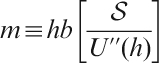
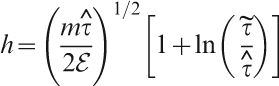
In addition to establishing the macroscopic slip planes for crystal plasticity models, it is also scientifically important to establish the fundamental slip planes. Since screw dislocation motion is thermally activated, it will likely occur by the nucleation of kink pairs, presumably on well defined atomic planes. The energetics of kink pair nucleation depend on the nature of those planes, since this dictates the kink pair height. Thus, the nature of the planes on which kink pairs nucleate has a direct impact on the temperature and strain rate dependence of the flow strength in bcc materials.
In this paper, we review the evidence from experiments, modelling and simulations, regarding the identification of slip planes in bcc metals. Specifically, we will primarily attempt to answer two questions: what are the slip planes in bcc metals, and on what planes do kink pairs nucleate (i.e. what are the fundamental, atomic scale slip planes)? Because of the technological importance of bcc refractory metals in high energy applications, and the widespread importance of steel, this review will focus on the bcc transition metals.
Direct experimental observations of slip planes in bcc metals
Slip trace analysis has been used for many decades to directly observe slip. Deformation experiments, whether by tension, compression, bending, or indentation, all result in the extrusion of slip planes onto the free surfaces. These slip traces can be imaged in a number of ways, including optical microscopy, scanning electron microscopy (SEM) with electron backscatter analysis, transmission electron microscopy (TEM), Laue X-ray diffraction streaking analysis and atomic force microscopy. Examples of optical and TEM slip trace analysis are shown in Fig. 2. Figure 3
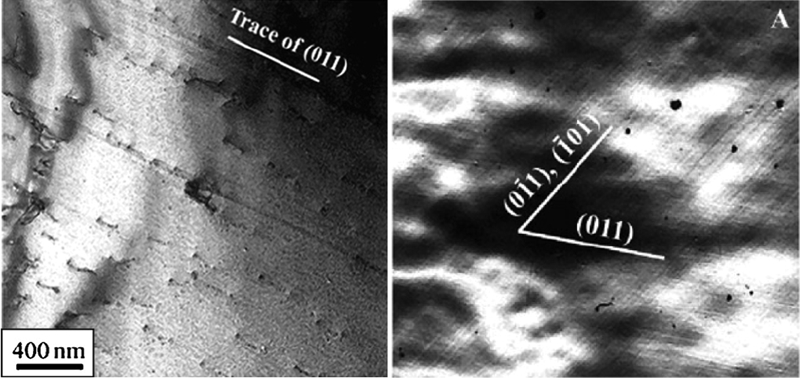
Comparison of a bright field TEM micrograph of slip traces in molybdenum and b corresponding optical slip traces observed on the free surface at room temperature: reproduced with permission from Ref. 45
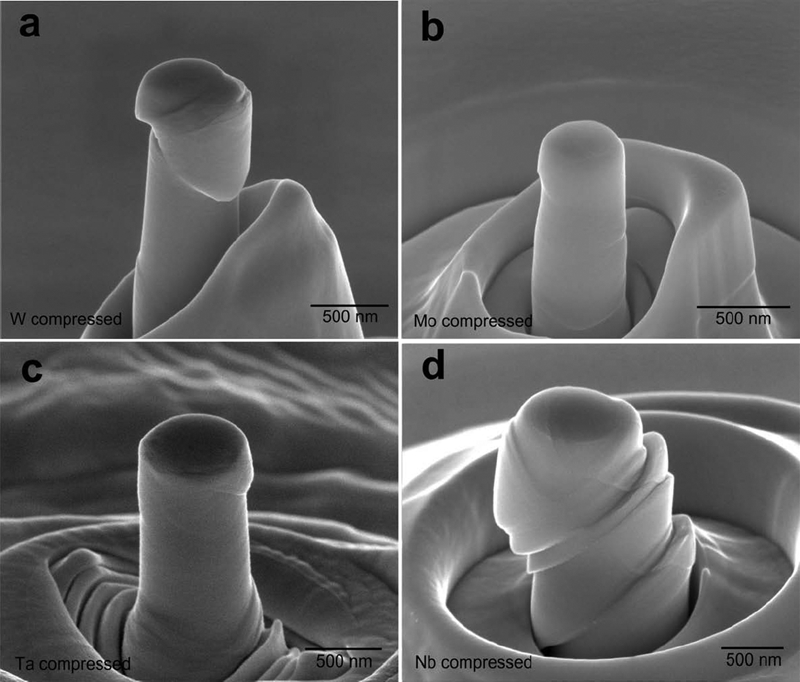
Images (SEM) of a tungsten, b molybdenum, c tantalum and d niobium submicrometre pillars after compression:49 slip planes in niobium can be indexed to {110} and are the most clear of all the materials: reproduced with permission from Ref. 49
Micro- and nanopillar compression have recently emerged as methods for observing deformation behaviour in small volumes of material with a high ratio of surface area to volume, examples of which are shown in Fig. 3. Pillars in the micrometre regime and below show a size dependent strength,46 although the size effect in bcc pillars is often weaker than in fcc metals,47, 48 and depends on the particular material48 – 50 and the crystallographic orientation of the pillar.51 – 53 Most studies of pillar deformation focus on size effects, and relatively little attention has been devoted to direct observation of the slip planes. Kim et al. 54 examined the slip traces in niobium pillars using SEM and found the planes to generally agree with {110} slip for their (001) oriented pillars in both tension and compression. Han et al. 50 examined vanadium nanopillars and arrived at a similar conclusion, i.e. that slip likely occurs on {110} planes. However, an extensive investigation of slip planes in a variety of materials (e.g. tantalum, niobium, tungsten and molybdenum) has not been performed. Furthermore, all of the studies have been conducted at room temperature in only a few, usually high symmetry, orientations. Perhaps additional insight could be gained by examining slip traces in pillars with constant diameter but varying crystallographic orientation.
A common technique for understanding the complex orientation dependence of the slip planes is the χ−ψ plot, a notation introduced by Taylor,4 and now a standard method of visualising slip trace results.1,
55 The angles χ and ψ are defined on a portion of the cubic stereogram as illustrated in Fig. 4. It is assumed that the single crystal is loaded in uniaxial tension (or compression) such that the pole of the tensile axis S lies in the 



Part of the cubic stereogram illustrating the definition of the angles χ, ψ and ξ that relate the pole of the loading axis S and the pole of the observed slip plane P. The pole of the plane with the maximum resolved shear stress that contains the slip direction [111], Q is measured by the angle χ relative to the


Plots of ψ versus χ for iron–3% silicon single crystals at 77 K in a tension and b compression. The same plots at 293 K in c tension and d compression. The plots show that the average slip planes at 293 K approximately correspond to the MRSS plane and at 77 K either the MRSS plane or the
From the extensive literature of tensile and compressive testing of single crystal bcc transition metals, several typical slip trace features emerge. The observed slip traces depend on both temperature and orientation. At very low temperatures, slip appears to be planar. In this regime, the slip planes are often observed to be {110}, although for certain orientations and loading conditions, {112} slip is sometimes observed. At higher temperatures, the slip traces appear to become more wavy, diffuse and branched. These characteristics can arise even when the fundamental slip plane is {110}-type, since there are three {110}-type planes that intersect any [111] slip direction. Dislocations in bcc metals do not generally dissociate into extended partial dislocations. While dislocation reactions are not the subject of this overview, it is worth noting that the binary reaction of two 〈111〉-type dislocations can render the resulting dislocation effectively sessile with the resulting burgers vector on the non-close packed (100) plane. This binary junction barrier can be overcome with sufficiently high stresses or temperatures. All of these ‘typical features’ of bcc metals have important exceptions which depend largely on the specific material. Thus, the following section reviews slip observations for several bcc metals individually.
Molybdenum
Molybdenum has been studied extensively at temperatures as low as 4·2 K, using optical slip trace analysis,18,45,57 – 62 electron microscopy,20,21,45,58,60,61,63 – 65 and X-ray Laue.3, 18, 60 Kitajima et al. 62 observed pure {110} slip in all of their samples at 4·2 K, but were unable to determine the slip traces at 77 K using optical analysis. Guiu and Pratt18 conducted a comprehensive study of the slip planes in [110], [100] and [941] oriented single crystals in tension from 77 to 413 K, using both optical microscopy and X-ray Laue diffraction. The authors noted slip traces at 77 K on {110} and some {112} planes, which were clearly crystallographic. Lau and Dorn59 obtained similar results showing refined crystallographic slip at low temperatures on both {110} and {112} planes. However, Kaun et al.58 observed primarily {110} slip in their room temperature tensile experiments. Richter60 and Hsiung45 similarly have observed only {110} slip. Chen and Maddin3 used both optical slip trace analysis and X-ray Laue to conclude that, at room temperature, only {110} slip was operative and wavy slip traces were comprised of elemental {110} slip. To complicate matters further, Vesely65 found slip on both {110} and {123} planes.
Most of these observations were made near or below the critical temperature where flow is thermally activated. However, flow at high temperatures (e.g. creep) can also be observed. Maddin and Chen66 observed slip bands in high temperature molybdenum above 1573 K to occur only on {110} slip planes. Similar observations were made by Tsien and Chow67 for flow above 1273 K. Flow at high temperatures may involve edge and mixed dislocations which could make determining the slip planes easier because mixed dislocations generally have well defined slip planes.
Niobium
Plastic deformation in niobium below ∼175 K has been reported by many authors16,17,22,23,68 – 71 to occur primarily on {110} planes in tension and compression of various crystallographic orientations. There are two notable exceptions to this, as follows. The first is the work of Chang et al. 72, 73 who noted {112} slip at 77 K in specimens near the [111]–[110] border of the stereographic triangle. However, these specimens would not slip unless they were predeformed at room temperature, for which {112} was the observed slip plane. It is reasonable to assume that this preworking had some influence on the subsequent slip behaviour at lower temperatures. The second is the due to Bowen et al.,74 who reported some instances of slip on {112} planes below 175 K. Above 175 K, slip was observed on either {110} and {112} planes depending on temperature, loading direction and orientation of the single crystal as detailed in the work of Duesbery and Foxall.16, 71 Maddin and Chen75 used optical slip trace and X-ray Laue diffraction analysis to observe only {110} slip at room temperature in tension and compression experiments across the unit triangle.
Tungsten
Tungsten, perhaps not surprisingly, appears to pose the most difficulty for slip trace analysis. This might be due to its very high melting temperature, but is likely not related to its mechanical properties, since pure tungsten exhibits significant ductility before failure, and appears to twin only at low temperatures or just before fracture itself.24, 76, 77 Beadmore and Hull,76 Rose et al.78 and Garlick and Probst79 all reported difficulty in identifying slip traces in Tungsten. Beadmore and Hull76 were unable to observe any slip traces in their experiments, while Garlick and Probst79 were able to identify slip traces at strains above 10%. However, Kaun et al. 58 and Schadler80 were able to identify slip traces at strains below 10% in their experiments.
Nonetheless, the available evidence suggests slip on {110} and {112} planes. Garlick and Probst79 conducted room temperature tension tests of tungsten in a number of different orientations and found both {110} and {112} slip using optical microscopy. Specifically, their observations showed that orientations near the 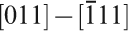
Tantalum
Slip traces in tantalum are often quite wavy and make determining slip planes rather difficult even below 1 K.82 – 84 However, Shields et al. 11 were able to determine that at 4·2 K, tensile testing produced slip on {110} planes, whereas compression generated twinning on {112} planes. Mitchell and Spitzig15 found slip traces indicating {110} slip at 4·2 K and MRSSP slip at all other temperatures. Similarly, Byron and Hull85 and Hull et al. 86 found that slip generally occurred close to MRSSP, with a preference for {110} slip at lower temperatures. These deviations from MRSSP to {110} slip were further enhanced when the specimens were loaded in compression rather than tension. Smialek and Mitchell82 found that adding a few hundred ppm of C, O, or N made the slip traces straight, indicating {110} slip. Wasserbach22 and Wasserbach and Novak23 identified anomalous slip in tantalum single crystals at 77 K and below, with slip occurring on {110} planes. These results suggest that tantalum slips on {110} planes, at least fundamentally, but that MRSSP slip is more characteristic of the macroscopic response.
Vanadium
Compared to the other bcc transition metals discussed in this section, there are relatively few studies on the direct observations of slip in Vanadium. Wang and Bainbridge9 observed {112} slip in a single specimen of impure vanadium, but that particular sample was reported to have exhibited brittle fracture, and the authors were unable to identify slip planes in any other instance. Bressers87 studied numerous crystallographic orientations at temperatures from 77 to 298 K. Macroscopically, slip was observed at high temperatures in non-crystallographic directions close to MRSSP. As the temperature was reduced, greater deviations from MRSSP slip occurred with a tendency towards {110} slip. At a temperature of 77 K, {110} slip was clearly identifiable. Slip on {112} planes was only rarely observed, and the corresponding slip traces appeared wavy. Mitchell et al. 88 also observed {110} slip in their specimens oriented at the center of the unit triangle for temperatures between 77 and 500 K. However, Greiner89 observed slip on {112} planes in their bending experiments at both 77 and 293 K.
Iron and Fe–Si alloys
Slip in iron single crystals has been studied extensively, and as in studies of the other bcc metals, slip trace analysis shows that identifying slip planes is quite complex. Spitzig and Keh90 provided an informative summary of the work performed before 1970.5,91 – 98 In all of those studies, the observed slip planes encompass a wide range of possibilities, including {110}, {112}, {123}, MRSSP and general non-crystallographic orientations. However, specific comparisons are difficult because the observations are complicated by issues of purity, loading condition, temperature, strain rate and crystallographic orientation. Nonetheless, the observations by Spitzig and Keh90 agree with those earlier studies, suggesting slip in pure iron on a wide variety of planes.
Recent work by Caillard99, 100 on pure iron at temperatures between 100 and 300 K shows that screw dislocations move on {110} planes. His findings indicate that edge dislocations can glide on either {110} or {112} planes and the observed slip on {112} planes is an artifact of the thin foil geomerty. However, dislocation sources, which require the motion of screw dislocations, always move on {110} planes. Furthermore, the addition of 110 ppm carbon did not affect the nature of the slip planes, suggesting that impurities might not alter the fundamental slip planes, but rather the degree of cross-slip. This type of detailed TEM work is critical to our understanding of dislocation motion and the identification of specific slip planes and systems in bcc metals.
Most of the preceding discussion has focused on relatively pure metals because impurities introduce additional complexity to the behaviour of dislocations. However, a substantial body of research has been performed on Fe–Si alloys, and thus it is worth considering the evidence therefrom. Noble and Hull101, 102 studied slip traces in Fe–3%Si at a variety of temperatures (room temperature and below) and tensile orientations. They concluded that at low temperatures slip tends to be on well defined {110} planes, and moves toward MRSSP slip at higher temperatures. Similar work was conducted by Taoka103 who observed wavy {112} slip, which Noble and Hull101 interpreted as composite {110} slip events. In contrast, Erickson104 used etch pit analysis to provide evidence of {112} slip via edge dislocations. The electron microscopy of Furubayashi26 was unable to determine slip planes, but Saka and Imura27 observed both {110} and {112} slip in the electron microscope for tensile orientations that favour {112} slip.
One of the most comprehensive studies of slip planes in bcc metals was conducted on Fe–3%Si by Sestak et al. 56,105 – 108 using four point bend tests. While this method is obviously not directly comparable to tension and compression testing, it does allow for both tensile and compressive stresses to occur in a single sample. Using the visualisation method of Taylor, as described above, the χ−ψ plots for five different temperatures in both tension and compression were produced, as shown in Fig. 5. At 77 K in compression and χ<0°, crystallographic {110} slip was observed. However, at χ>0°, slip was on the MRSSP. For tension, {110} slip was observed for a large range of χ values, and both non-crystallographic and {112} slip were observed near χ = ±30°. At 293 K, the curves suggest slip on the MRSSP in both tension and compression.
Reliability of slip trace analysis
Studies using thin foils suggest that slip may be influenced by the presence of the free surfaces. Specifically, in an examination of very thin foils of molybdenum, Vesely64, 65 noted that the active slip systems are those that have not only a Burgers vector nearly parallel to the surface, but also a high resolved shear stress. This is because screw dislocations can annihilate at the free surface, while edge dislocations can continue the process of plastic deformation. Similar results were obtained by Luft and Kaun,61 who studied thin foils with different exposed faces and compared their results to those obtained using cylindrical rods. While the macroscopic stress–strain curves were essentially the same regardless of the geometry, the observed optical slip traces depended on the exposed crystal surface. When correlated with TEM images, the authors noted that the subsurface dislocation structure dictated the slip traces but was not necessarily representative of the bulk plastic processes. This can lead to a misinterpretation of slip trace analysis using optical results. Hence, the results from optical slip trace analysis may be unreliable in determining which slip planes are responsible for bulk, rather than surface, plasticity.
Summary of direct experimental observations
From these direct observations of slip, it is clear that there is no consistent set of slip planes that operate in bcc metals. In general, at low temperatures, slip appears planar and almost always occurs on {110} planes. As temperature increases, there is an increasing propensity for diffuse, wavy slip, and slip activity is observed on {110}, {112} and {123} planes (in order of increasing rarity), eventually tending toward net slip on the MRSSP. The change in observed slip planes from {110} to other slip planes and MRSSP slip at higher temperatures appears for many materials to agree with the conclusions of Seeger109, 110 that the slip planes change from {110} at low temperatures to {112} at higher temperatures, with the transition occurring around 100 K. Unlike in fcc metals, where slip is predominantly on the 〈110〉{111} slip system (with other slip systems such as the 〈110〉{001} observed at high temperatures in some cases), the direct experimental observations of slip in bcc metals suggest the possibility of multiple competing slip systems, with the relative activity of each depending on a number of factors including material, temperature, purity, and loading. While TEM observations by Caillard99 – 101 (as discussed in the section on ‘Iron and Fe–Si alloys’) suggest a robust, consistent, and predictable behaviour, the generality of these findings can only be ascertained through further study.
Slip planes inferred from flow stress measurements
In the previous section, we reviewed the determination of the slip planes in bcc metals using slip trace analysis. In general, this approach attempts to reveal the macro- and/or microscopic slip planes that are operative during plastic deformation. However, owing to the high probability of cross-slip of screw dislocations, which control plasticity, the macroscopic slip planes may not be the same as the planes upon which fundamental slip occurs. In this section, we review the use of kink pair nucleation theory to analyse the temperature dependence of the flow stress and the associated slip planes. Since kink pairs should nucleate on well defined slip planes, their height h, as shown in Fig. 7, can be related to the formation energy of the kinks themselves. Since this analysis predicts the planes on which kinks are nucleated, the results can be regarded as indicative of the fundamental, atomic scale slip planes in the crystal.

a transition (or activated) state of regime I where kink pairs are fully formed at high temperatures and low stresses and b transition state of regime II where dislocation does not reach next Peierls valley at low temperatures and high stresses
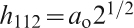
The slip planes can be identified by comparing the kink height h, as determined from experiments, to the known kink heights associated with each type of slip plane. The kink height on the {ijk} slip plane can be denoted as h
ijk. The three postulated slip planes in bcc metals are {110}, {112} and {123}. For these three possible slip planes the kink heights are: 

One of the important features of plasticity in bcc metals is its strong temperature dependence, which is a result of the thermally activated motion of screw dislocations.1,
112,
113 Owing to the non-planar core of the screw dislocations in bcc metals, they have high lattice friction and thus their motion is the controlling mechanism in low rate deformation.1,55,114
–
116 Kink pair nucleation theory has been developed113,
117,
118 to model this thermally activated motion, and to explain the temperature and strain rate dependence of the flow stress. The approach assumes that the resolved shear stress from flow stress measurements can be decomposed into two parts


There are two general methods for determining the flow stress of bcc metals as a function of temperature and strain rate to reveal the inherent lattice friction. For the flow stress measurements to be meaningful, the samples must be pure single crystals, preferably oriented for single slip to reduce the effects of dislocation interactions. One method, introduced by Ackermann et al. 119, 120 involves the cyclic deformation of single crystal rods. The samples are predeformed above the critical temperature until the cyclic stress–strain curve saturates, which removes the stage 0 hardening from non-screw dislocations and establishes a well defined flow stress. Then, low cycle deformation is preformed at different strain rates and temperatures, allowing for many tests from the same single crystal. Flow stress measurements made in this way are shown in Fig. 6. An alternate method used by Brunner and Glebovsky77 involves successive tensile deformation, wherein the specimen is first deformed at high temperature into a regime where no work hardening is present, and then the temperature is lowered and the flow stress measured. This strategy also provides a method of obtaining multiple flow stress measurements from one sample, but due to the large tensile strains, it generally requires more samples than the cyclic deformation method.

A plot of the shear stress τ resolved onto the {110} of highest Schmid factor with the obstacle stress subtracted off for pure Niobium.119 The individual points are obtained from different strain rates and the solid lines are the fit of Seeger’s model. The line tension (LT) and elastic interaction (EI) regimes of Seeger’s model are labeled along with the transition stress between the two regimes
The applied strain rate, which is assumed to be equal to the plastic strain rate 

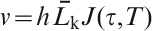




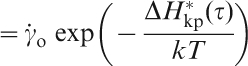
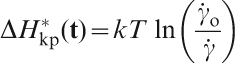

Kink pair theory developed by Seeger
The activation enthalpy of the kink pair can be described in two regimes, as shown in Fig. 7. Figure 7a shows the fist regime where the kinks are fully formed and well separated, and the activation enthalpy can be described completely through elastic interactions. Figure 7b shows the second regime where the kinks are not fully formed, and do not reach the next Peierls valley such that the energetics are dominated by the line tension of the dislocation and the shape of the Peierls potential.
Following Hirth and Lothe,2 the activation enthalpy of two fully formed and well separated kinks can be written as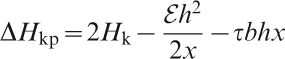
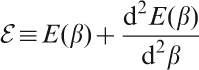



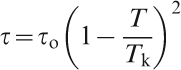
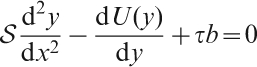
In the line tension (LT) regime, the enthalpy of kink pair formation is governed by the line tension of the dislocation and the Peierls potential. The general equation for the shape of a dislocation line in the presence of a Peierls potential is113,
117



In two particular cases, the solution can be obtained analytically. If the Peierls potential takes the form of the Eshelby potential,121 then the kink pair activation enthalpy is




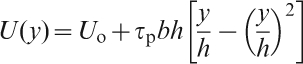
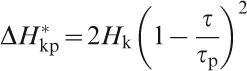
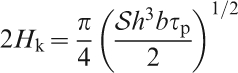
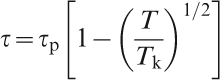
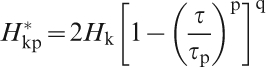
From the preceding discussion, it is clear that the choice of the Peierls potential changes the functional form of the kink pair formation enthalpy and hence the temperature dependence of the flow stress. In recent work, Butt et al. 118 introduced a kink pair theory that ignores the shape of the Peierls potential, leading to a linear relationship between the square root of the flow stress and the temperature. Their approximations produce a solution without the need to specify the Peierls potential. However, due to the assumed shape of the LT model, a Peierls potential is implied, instead of assumed, and it is not clear if that form makes physical sense.
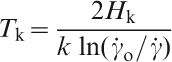
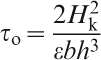
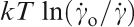
To determine the slip planes on which kink pair nucleation occurs, both the EI and LT models must be fit to experimental data. For the EI model, the procedure is rather straightforward. First, the double kink formation energy 2H
k can be determined from the strain rate dependence of the critical temperature. Specifically, this can be accomplished by plotting the log of the applied strain rate versus the inverse of the knee temperature T
k, as shown in Fig. 8a
. The knee temperature itself must be determined at each strain rate by fitting the LT model to the experimental data. The 0 K EI stress τ
o can also be determined from this fit. Equation (8) can provide a relationship between double kink formation enthalpy, the 0 K extrapolated stress and the kink height h by evaluating equation (8) at 0 K and noting that the kink pair enthalpy is zero. This results in

a plot of logarithm of strain rate versus inverse of temperature for pure Niobium (slope can be used to determine 2H
k unambiguously and b plot of

For the LT model, similar information can be extracted from a global fit of equation (14), from which 2H
k, 
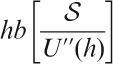







Seeger’s approach has been used to determine the slip planes from experiments on molybdenum,122, 123 tungsten,124 iron,125, 126 tantalum127, 128 and niobium.119 Figure 6 contains an example of the EI and LT models using Seeger’s theory fit to experimental flow stress data for niobium and Table 1 lists the results of the fits for each material and regime. The analysis shows that slip occurs in the EI regime on {112} planes and at moderate temperatures in the LT regime. Low temperature flow stress data suggest slip on {110} planes in α-iron and tungsten. This supports Seeger’s suggestion110 that slip preferentially occurs on {110} planes at low temperature but occurs on {112} planes at higher temperatures, possibly due to changes in the dislocation core structure. However, none of this analysis suggests that slip on {123} planes is possible.
Predicted fundamental slip planes using theory developed by Seeger
The model proposed by Butt
Butt118 has also developed a kink pair theory for bcc metals that aims to determine the fundamental slip plane from experimental data. The essential features of the model are the same as Seeger’s, with a linear relationship between temperature and kink pair formation energy (equation (6)). Thus, the difference in the models is primarily in their approach to estimating the kink pair activation energy in the low temperature regime where the LT model is appropriate.
The formulation of Butt,118 which is an extension of the work of Feltham,129 gives the activation energy of a kink pair as

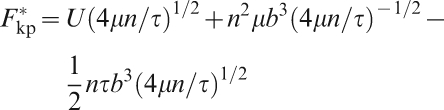



Nonetheless, one can attempt to extract the slip planes by fitting the model to experimental data. Noting that n 3 = [F k/(μb 3)]−(4μ/τ o), the slip planes can be estimated from h = nb. The slip planes determined from the kink pair theory of Butt are listed in Table 2. The relationship between n and the slip plane, which is useful in interpreting the results, are: n 110 = 0·943, n 112 = 1·633 and n 113 = 1·885. The results from all of the studies are mixed. For example, Tungsten seems to slip on {110} below 220 K and {112} above from Ref. 118 (which agrees with Seeger’s model) but on {110} at room temperature from Ref. 130, a clear contradiction. Molybdenum seems to always slip on {110} planes, contradicting the results of Hollang et al. 122 The result for iron seems relatively consistent and agrees with the work of Brunner.125,, 126, 131 132 The result for niobium also seems to agree with Seeger’s results. Vanadium at higher temperatures may even slip on {123} planes according to this analysis, which is rather unexpected. However, it is worth noting that many values of n are ∼1·3, which is between 0·94 and 1·63, suggesting ambiguity in the choice of slip plane. Table 1
Predicted fundamental slip planes using theory developed by Butt
Summary of slip planes inferred from flow stress measurements
The kink pair theory presented by Seeger117 for use in evaluating slip systems, provides a compelling solution to the problem of identifying the fundamental slip planes on which kinks form. The theory suggests that at moderate temperatures, slip occurs on {112} planes both in the EI regime and the LT regime; and that at very low temperatures, slip should occur on {110} planes. However, there are still many questions that the analysis leaves open. One pertains to the true applicability of the microscopic theory of screw dislocation motion to interpreting bulk experimental data. While the theory can be reconciled with experimental data, it is not clear whether it can provide meaningful determination of fundamental information such as the planes on which kinks nucleate.
Recent work by Caillard on iron single crystals has shed some light on this issue.99, 100 He preformed in situ straining experiments to investigate dislocation motion in the temperature range between 100 and 300 K. From these experiments, he showed that screw dislocations always move on fundamental {110} planes, in contradiction to the findings of the kink pair theory described here. Furthermore, the experiments show a jerky motion of screw dislocations at low temperatures, further suggesting that kink pair theory might not be applicable in that regime. Despite the importance of that study, additional work of this type is needed to establish that this behaviour is in fact generally applicable to bcc metals at low temperatures.
It is also worth noting that the kink pair theory presented here could be compared against atomistic simulations. The nature of the stress dependence of the kink pair theory can be compared against energy barrier calculations using interatomic potentials, for example, to determine if the functional forms are correct. However, most atomistic simulations to date have preformed such calculations on {110} planes instead of the {112} planes. This is likely due to the {110} planes having lower energy barriers than {112} planes at 0 K. The next section addresses atomistic simulations and their predictions of slip planes, where these points will be examined in detail.
Atomistic simulations
Atomistic simulations have been instrumental in elucidating the mechanical properties of bcc metals, e.g. in demonstrating that the non-planar core of the screw dislocations leads to strong lattice resistance and thermally activated plasticity.55, 115, 116, 135, 136 Furthermore, they have shown that edge dislocations have planar cores, low lattice friction, and consequently high mobilities.31 – 38,137,138 Atomistic simulations have also confirmed the existence of the twinning/antitwinning asymmetry.135,139 – 141 Given the success of atomistic simulations in describing the fundamental processes of plastic deformation in bcc metals, they should provide considerable insight into the identification of active slip planes.
To date, all atomistic simulations of bcc metals predict that slip should occur fundamentally on {110} planes. Aggregate slip has been found to produce ‘pure’ {110} slip, or to occur on conjugate {110} planes producing a net {112} slip, depending on the material and the interatomic potential. (Note that the predicted universality of fundamental {110} slip is at odds with the model of Seeger’s117, 119 discussed in the previous section.) In this section, we discuss atomistic predictions of the dislocation core structures and the identification of edge and screw slip planes at 0 K and finite temperature.
Screw dislocation core structure
Atomistic simulations have been used extensively to investigate the structure of screw dislocation cores in bcc metals141 – 150 and several review papers have been written on the subject.114, 116, 151, 152 The screw dislocation core structure is responsible for the high lattice friction, and thus the temperature and strain rate dependence, of plastic deformation in bcc metals. As such, accurate predictions of the core structure are imperative to the prediction of the slip planes in bcc metals, and a discussion of the available evidence in that regard is important in the present context.
Our fundamental understanding of dislocation cores comes from arguments based on crystal symmetry. According to Neumann’s principle,153, 154 the physical properties must at least exhibit the symmetry elements of the point group of the crystal it represents. For screw dislocations, this has been interpreted to mean that the core structure must obey the threefold screw axis symmetry of the 〈111〉 zone and the diad axis of the 〈110〉 direction; or else it must have a number of energetically equivalent structures to satisfy the broken symmetry.149 This is evident in most atomistic simulations of screw dislocation cores which show either a single non-degenerate core that satisfies the full symmetry of the 〈111〉 zone (also called the compact core), or a degenerate core that breaks the 〈110〉 diad symmetry as shown in Fig. 9a and b . In point group theory, the degenerate core structures satisfy C3 symmetry, which is a three fold rotation axis, and the non-degenerate cores satisfy D3 symmetry. These two types of dislocation cores are also called polarised and non-polarised respectively.155 The nature of the dislocation core, e.g. polarised or non-polarised, is important, because it dictates the number of different types of kinks that can nucleate on the dislocation line.156, 157
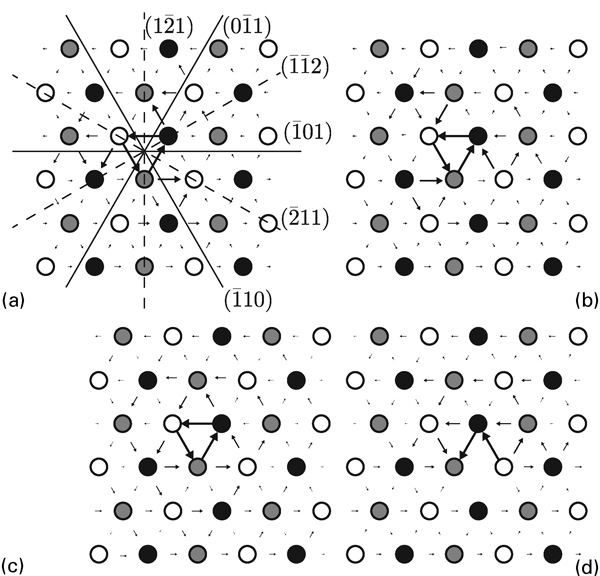
Four examples of dislocation cores in bcc metals plotted using the standard differential displacement map. The two polarised, or degenerate, cores are shown in a and b exhibiting C3 symmetry. c The symmetric core exhibiting the full D3 symmetry of the 〈111〉 zone. d One of the three possible split core configurations, the other three are related through the threefold rotation axis. In each plot the largest arrow corresponds to the largest of the magnitudes of the relative displacements in the direction parallel to the Burgers vector (out of the plane) between the rows of atoms. For a–c, the largest magnitude is b/3, while the largest is b/2 in d. The arrows point to the atom which is displaced out of the plane relative to the atom at base of the arrow. The colors of the atoms represent the three stacking planes in the 〈111〉 zone and therefore atoms of different colors have different positions out of the plane
The dislocation cores shown in Fig. 9 are plotted using a differential displacement map, which projects the perfect lattice (in this case bcc) along the zone that corresponds to the dislocation line (in this case the 〈111〉). The different atom colors (black, white and grey) represent the different stacking sequence in the 〈111〉 zone, which has a ABCABCABC stacking sequence. The arrows represent the relative displacements between the atoms it connects along the direction normal to the projection plane. The atom at the head of the arrow is displaced out of plane relative the atom at the tail. The largest of the arrows typically represent some fraction of the Burgers vector, often b/3 if the core is compact or polarised and b/2 for the split core. This type of mapping is the most straightforward way to visualise screw dislocation cores and is now the de facto method for studying bcc screw dislocation core structures.
Considerable effort114,116,142 – 144,146–148,156,158,159 has been devoted to determining if the screw dislocation core is polarised or not. Since the predictions from empirical potentials are ambiguous, ab initio methods have been used as the standard for establishing a reliable indication of the actual core structure, at least at 0 K. Ismail-Beigi and Arias146 conducted one of the first ab initio studies of screw dislocation cores using density functional theory in both molybdenum and tantalum, and found non-degenerate core structures for both materials. Similar results were obtained by Woodward and Rao.147 Frederiksen and Jacobsen148 also directly computed core structures using density functional theory and found the non-degenerate core structures in iron and molybdenum. Similar results were found by Ventelon and Willaime for iron.158 Finally, Romaner et al. 159 have shown the non-degenerate core structure is also preferred in tungsten. Thus, numerous studies have consistently shown that the non-degenerate or compact core structure is preferred for tantalum, iron, molybdenum and tungsten at 0 K. This suggests that the compact core is preferred by all pure bcc transition metals at 0 K, though an even more complete study of the core structures would be useful. Specifically, the core structures in V, Nb and Cr have not been determined using ab initio methods. Finally, it would be useful to show that the core structures do not vary with the different psuedo-potentials and exchange correlation functions typically used in density functional theory as well as the number of electrons explicitly treated.
A third type of dislocation core is the split core143, 160, 161 which is planar in nature and resides on a specific {110} plane. The split core structure is generally thought to coexist with the compact or unpolarised core, with the split core being a metastable configuration between two energetically equivalent compact cores.162 The split core breaks the threefold symmetry axis and therefore is triply degenerate, with forms existing on each of the three {110} planes in the 〈111〉 zone. Owing to the confinement of the split core to the {110} plane, this core structure dictates that motion of the dislocation, i.e. slip, will occur on {110} planes. Even though the split core exists on, and must move on, a {110} plane, this does not guarantee that net slip is on {110} planes, since net {112} slip can occur by motion of the split core on alternating {110} planes.
Even though several empirical interatomic potentials predict a split core, this structure is rarely observed in ab initio density functional theory calculations. Specifically, Ventelon and Willaime158 have shown that the split core does not exist in iron from Peierls potential calculations. Similarly, Segall et al. 163 have shown that the split core is absent in molybdenum, but does exist in tantalum, at least within the local density approximation. Given that all density functional theory calculations to date predict a compact core structure, it is of great interest to determine what materials also permit a split core structure.
While it seems reasonable to assume that the core structure predicted from atomistic simulations should correspond in some way to the glide planes predicted in those same simulations, a large body of simulation predictions suggest that no such correlation exists. Table 3 contains the predicted net slip planes at 0 K from various interatomic potentials, along with the corresponding predicted stable core structure (compact or polarised). The core structure does influence the energetics and potentially the kinetics of screw dislocation motion, but the available evidence suggests that the core structure does not dictate the net observed slip planes in any straightforward manner.
Predicted effective slip planes of infinitely long screw dislocations in bcc metals at 0 K
Slip planes at 0 K
One of the most popular methods for determining the slip planes of bcc screw dislocations is to simulate slip at 0 K. These simulations are typically performed using energy minimisation with a single isolated screw dislocation core in an (effectively) infinite medium.114, 135, 141 The atomic positions are equilibrated under the application of various stress states, until the screw dislocation core begins to move. As mentioned previously, the results obtained in this manner consistently predict fundamental slip on {110} planes and net slip on either {110} or {112} planes. Results for a variety of interatomic models are listed in Table 3.
In many cases, the twinning–antitwinning asymmetry is measured in this fashion by varying the angle between the MRSSP and the 


The twinning–antiwinning assymetry is evaluated in atomistic simulations by varying the MRSSP between


These results support the notion that {110} slip occurs when the loading direction is near χ = 0°, and {112} slip occurs for large and small values of χ, which corresponds to the observations from slip trace analysis. However, some potentials only predict net slip on one type of plane or another. The BOP potential for tungsten, also developed by Mrovec et al.,165 predicts slip only on {110} planes. In this case, at finite temperatures, net slip can still be observed on the 


Establishing the nature of the active slip plane(s) of screw dislocations in an infinite medium is not as straightforward as it might at first appear. A number of authors have used various methods to simulate an isolated screw dislocation. The most common boundary condition is based on the fixed anisotropic displacement field, as illustrated in Fig. 11a . In this approach, the boundary atoms are fixed according to the anisotropic elastic displacement field, and atoms in the active region are allowed to relax. An extension to this method involves using Green’s functions to relax the incompatibility forces between the fixed and active regions, thus enhancing the accuracy and/or reducing the required system size.170 – 172
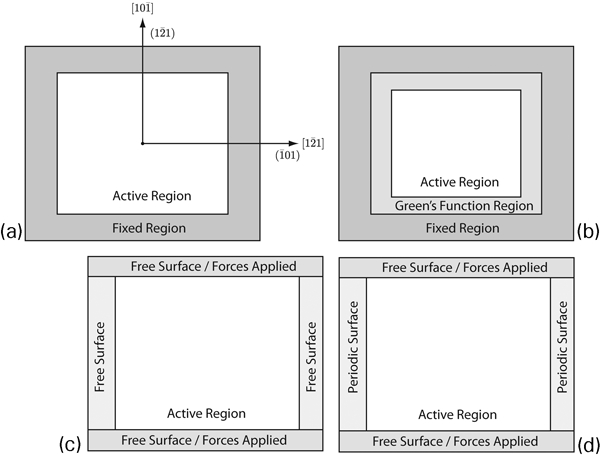
The various boundary conditions used in atomistic simulations. a Boundary conditions where the atoms in the fixed region are set according to the anisotropic elastic solution, b the same boundary conditions as a except the Green’s function region relaxes the incompatability between the two regions. c The thin film geometry used by Chaussidon et al. 166 where the top and bottom surface are either free or fixed according to the two-dimensional dynamics scheme. d The boundary conditions for a periodic thin film. All boundary conditions here use periodicity along the dislocation line direction; in and out of the page
Dislocation motion can also be studied in a thin film simulation geometry,166, 173, 174 which can permit finite temperature simulations and, if periodicity is maintained in one of the two directions perpendicular to the line direction, can accommodate dislocation motion over relatively long distances. However, these methods introduce some dependence of the predicted behaviour on the exact configuration of the boundary condition. For example, Chaussidon et al. 166 used two different boundary conditions, free and two-dimensional dynamics, which both relax constraints along the dislocation glide direction and are periodic along the line length. The boundary conditions placed on the third surface, normal to the other two, were either completely free or fixed in only the displacements normal to the surface. The authors found that dislocation motion was generally along {110} planes except when the MRSSP was near the twinning direction, in which case net {112} slip was observed. However, the transition between {110} and {112} slip, as well as the Peierls stress, depended on which of two boundary conditions was used. Furthermore, Gilbert et al.173 found that, using the same potential as Chaussidon et al. 166 but with periodic bounds along the glide direction and free normal to the glide direction, the net slip planes were {112}. The results of Chaussidon et al. and Gilbert et al. demonstrate that the boundary conditions are important to the predicted glide planes.
Molecular statics, as discussed above, can only provide information at 0 K and under and applied stress equal to the Peierls stress. This does not necessarily reflect conditions of lower stresses and/or higher temperatures. The slip planes at temperatures above 0 K, and hence at stresses below the Peierls stress, are determined from the energetics of the kink pair mechanism discussed in the section on ‘Slip planes inferred from flow stress measurements’. Historically, this issue has been examined using a continuum model which is limited by the treatment of the elastic interactions and the dislocation core. Atomistic simulations, however, can provide the kink pair formation energy without the need for these approximations. The energy barrier and reaction pathway between Peierls valleys can be determined unambiguously using methods such as the nudged elastic band.179 – 182 This approach should predict kinks to nucleate on planes with the lowest kink pair formation energy.
Many authors have investigated the energetics of kink pair formation using atomistic simulations.136,143,156,157,161,162,164,183 – 187 This approach reveals several important issues associated with using interatomic potentials to represent the activation energy of kink pair formation. For example, the results depend inherently on the potential used. For example, the kink pair formation energy using the Mendelev EAM potential162 and the potential of Johnson and Oh157 exhibit different activation energy profiles. Furthermore, the suite of EAM potentials developed by Gordon187 show different Peierls barriers in iron, despite the potentials producing the same nominal elastic properties. This demonstrates that the kink pair formation energy is dependent on the shape of the Peierls energy landscape, which is dependent on the specific potential used in atomistic simulations. Furthermore, it suggests that the continuum theory developed in the previous section, which depends on the Peierls potential, may not be accurate enough to determine the nature of the slip planes.
To further complicate matters, the existence of the split core structure alters the shape of the Peierls potential. The split core configuration exists as a local minimum in the path between two compact core structures, and its effects on dislocation motion have been described by several authors110, 161, 162 and are shown in Fig. 12. As noted by Gordon et al.,162 a Peierls potential containing a minimum can result not only in discontinuities in the activation energy as a function of stress, but also the nucleation of partial kinks at high stresses and low temperature that can transform the compact core into the split core.
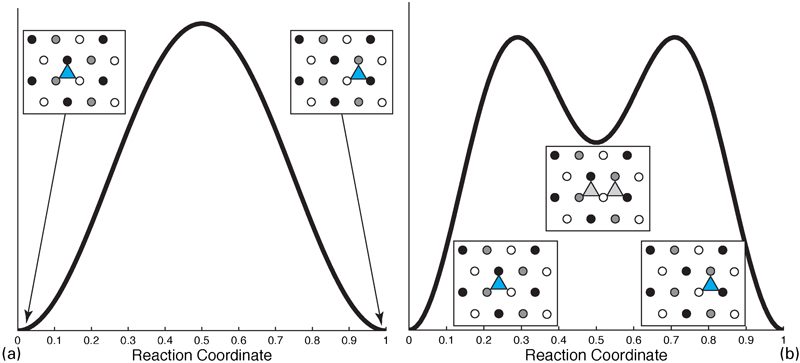
Two different Peierls potentials as predicted from atomistics
Unfortunately, energy barrier calculations are not commonly used to elucidate the nature of the slip planes. One notable exception is the work of Takeuchi and Kuramoto161 who investigated the energetics of a model bcc metal. The authors computed the energetics of transitions between different metastable states, and used transition state theory to compute dislocation velocities and to predict ψ–χ plots as a function of temperature. Unfortunately, their idealised potential corresponds to only a two-dimensional ‘material.’ Nonetheless, their approach is amenable to computing the energetics of kink pair activation for realistic interatomic models in order to fully understand glide of screw dislocations.
Finite temperature simulations
While the predictions of slip planes at 0 K have proven useful in understanding slip in atomistic models, there is no guarantee that these predictions are applicable at higher temperatures. The computation of kink pair energetics can, in part, mitigate this issue. However, that method does not always capture the effects of dislocation core transformations on slip. Seeger,110 for example, has argued that the slip planes change from {110} at very low temperatures (usually <100 K) to {112} at higher temperatures due to a fundamental change in core structure. This would suggest that even energy barrier calculations at 0 K would miss the change in fundamental slip planes. Thus, it is imperative to study both core structures and slip planes of screw dislocations at finite temperature using atomisics models.
There have been only a few studies on screw dislocation motion at finite temperature using molecular dynamics,166, 173, 174, 188 most of which are for iron. One reason is that meaningful comparisons between theory and experiments at the same temperature are dubious188 due to the high strain rates and stresses required for screw dislocation motion in simulations. Despite these limitations, the results of such simulations do provide some insight. Most importantly, none of the MD simulations report fundamental slip of screw dislocations on {112} planes regardless of temperature. This contradicts the hypothesis of Seeger and the theoretical interpretations of kink nucleation on {112} slip planes at moderate temperatures. In addition, Gilbert et al. 173 have shown that the screw dislocation core does undergo a change in structure between 350 and 400 K, using the Mendelev potential for iron, from a compact core to the polarised structure. However, the dynamics of the dislocation motion do not exhibit any significant change between the temperatures over which the core structure changes. This provides further evidence that the polarisation of the core is not significant in the overall dynamics of screw dislocation core motion.189
Finite temperature molecular dynamics can also provide insight into how the slip planes vary with stress and temperature, e.g. in the work of Chaussidon et al.166 The authors show that for the Mendelev potential for iron, which predicts slip on {110} planes at 0 K, slip occurs on planes very near to {110} at low temperatures. At these low temperatures and low stresses, the kinks nucleate on {110} planes and travel across the screw dislocation line to annihilate before another kink forms, a process that the authors refer to as the single kink pair regime. However, as the temperature and stress increases, the average slip plane changes from the 


Edge dislocations, as previously mentioned, are generally thought to have low lattice friction and high mobilities. This suggests that if edge dislocations on either the {110} or {112} planes have sufficiently high lattice friction, those planes may not be operative slip planes at low temperaturs in bcc transition metals. In a recent comprehensive study on iron, Monnet and Terentyev36 studied the mobility of both types of edge dislocations. The authors found that at 0 K, the Peierls stress of {112} edge dislocations is an order of magnitude higher than that for {110} edge dislocations and exhibits slight twinning–antitwinning asymmetry. However, the critical stress required for dislocation motion was found to decrease dramatically with temperature, and to disappear completely around 200 K. These results suggest that at low temperatures, edge dislocations are difficult to move on {112} planes and thus {110} planes would be the likely slip planes. This agrees in principle with experimental observations of low temperature slip on {110} planes, though these results are unable to provide any insight into higher temperatures.
Summary of atomistic simulations
Atomistic simulations have universally confirmed that the screw dislocations in bcc metals are non-planar and give rise to high lattice friction. While they do not show full agreement on the nature of core polarisation, all ab intio results to date predict compact core structures for pure bcc transition metals. Furthermore, the core polarisation might not have a significant impact on the dynamics of dislocation motion. Atomistic simulations have also shown that edge dislocations have low lattice friction and high mobilities, also in agreement with experiments.
Kinks are found to nucleate on {110} planes regardless of the interatomic potential, boundary condition, or material. This appears to contradict the findings in the section on ‘Slip planes inferred from flow stress measurements’ based on the theory of Seeger, which suggests that kinks nucleate on {110} planes at very low temperatures and {112} planes at higher temperatures. In contrast, atomistic simulations suggest that the nature of the average or net slip planes of screw dislocations is strongly dependent on the material, potential, boundary conditions and temperatures used in the simulations. Atomistic methods, however, have the potential to predict the average glide plane of a dislocation from a combination of energy barrier calculations and finite temperature simulations. The energetics of dislocation motion can provide the activation energy of the kink pair mechanism as a function of stress magnitude and orientation. Transition state theory, or perhaps kinetic Monte Carlo methods, could be used to determine the predicted average glide plane as a function of temperature and stress. Then, finite temperature molecular dynamics could be used to not only establish the consistency of the glide planes and core structure as functions of temperature and stress, but also validate the models based on energetic considerations.
Discussion
The purpose of this review is to examine the body of evidence supporting the identification of macroscopic slip planes in bcc metals, and the planes on which dislocation kink pairs nucleate. The former is of critical importance to understanding crystallographic rotation during the macroscopic deformation of single and poly-crystals. The latter is equally important because the slip planes directly affect the energetics of the kink pair formation process and thus the temperature and strain rate dependence of plastic flow. However, it is clear from the combination of extensive experimental and theoretical work that neither of these has a simple or well established answer.
The macroscopic slip planes have typically been determined using slip trace analysis using both optical and electron microscopy of exposed free surfaces in bulk materials. While this method has proven to be very useful in identifying slip planes in fcc metals, it appears to have limited utility in bcc metals. This is because the slip traces observed on the exposed free surfaces are representative only of the local subsurface dislocation dynamics which are directly affected by the local surface orientation. Hence, slip traces may not be representative of bulk slip processes.
Crystal rotations, from which average slip planes can be derived, can be determined in several different ways. X-ray Laue has been used to characterise the slip planes. This method, combined with high resolution electron backscatter diffraction may provide a much more robust measure of crystal rotations. However, these studies need to be conducted over a variety of single crystal orientations and temperatures to construct a general map of the active slip systems. Furthermore, such methods would be very useful when compared to observations made with slip trace analysis.
Atomistic simulations have also made contributions to understanding slip behaviour in bcc metals, and hold even greater promise for future studies. Specifically, the slip planes can be determined from the activation energy of the kink pair process via transition state theory. This approach can reveal the average velocity of an isolated screw dislocation as a function of both stress and temperature. However, this method is based on the fundamental assumption, common to most theoretical treatments, that the slip planes in the macroscopic deformation can be directly correlated to the motion of an isolated screw dislocation.
This simple assumption can be tested by discrete dislocation dynamics simulations, which hold the potential to link single dislocation behaviour to the macroscopic response.190 – 195 Since the mobility of single screw dislocations can be input into these models, a connection between the single dislocation behaviour and collective behaviour can be determined. However, to date most studies are focused on predicting the stress–strain response rather than the crystallographic evolution, which may be a more important issue in discrete dislocation dynamics simulations of bcc metals.
The determination of the average slip planes are of critical importance for modelling the texture evolution in bcc polycrystals. In the standard crystal plasticity formulations, the plastic rotations are composed of the antisymmetric part of the tensor product of the slip direction and slip plane of each slip system, multiplied by the scalar slip rate on the slip system. Thus, if one assumes different slip planes, the crystallographic rotation during plastic deformation will be different, resulting in different hardening responses and texture evolution.44 Current bcc crystal plasticity models are empirically based, assume a specific set of slip systems, and do not depend on temperature.43,44,196 – 200 Hopefully, a better understanding of the slip systems in bcc metals and their temperature dependence will enable the development of more physically robust crystal plasticity models.
In developing physically based crystal plasticity models for bcc metals at low temperatures, non-Schmid effects are prevalent due to the high lattice friction and must be considered in addition to the nature of the slip planes. Considerable work has been devoted to determining these effects from atomistic simulations.135,136,201 – 203 These non-Schmid effects manifest themselves in the yield surfaces of single crystals43,200 – 203 and can be incorporated into non-associative crystal plasticity models.43, 197, 200, 204, 205
The fundamental slip planes, i.e. those on which kinks nucleate, are directly related to the energetics of kink pair nucleation. This fact has been exploited in the work of Seeger et al. to relate the flow stress to the height of the nucleated kinks and hence to the fundamental slip planes. The continuum theory, developed by Seeger, when fit to rate and temperature dependent flow stress data, provides a consistent set of slip planes. The model predicts slip on {110} planes at low temperatures for a few materials, and {112} slip in all materials tested, for temperatures above ∼100 K. However, this work relies on not only the shape of the assumed Peierls potential, but also the assumption that the flow stress can be directly related to the collective motion of isolated screw dislocations.
In contrast, all atomistic simulations to date, using a large variety of different interatomic and ab initio models, exhibit fundamental slip on {110} planes at 0 K. The few finite temperature simulations that exist, confirm the findings at 0 K: kinks only nucleate on {110} planes regardless of the average, net, or effective slip planes. The discrepancy between the analytical model fit to flow stress data and the atomistic predictions is most likely due to the assumptions about the shape of the Peierls potential, which has been shown to depend strongly on the choice of interatomic models.
However, the accuracy of many empirical potentials are still questionable and their predictions are still neither robust nor well accepted. Further confidence can be gained by developing more robust interatomic models that are calibrated with density function theory and more accurately represent the angular dependent bonding in bcc metals. As these models begin to converge on a common prediction of kink pair energetics, dislocation core structures, and net slip planes, confidence in our interatomic models will increase.
It is also worth noting that this review focuses on the slip behaviour of pure bcc transition metals. It is well known that impurities, even in very small concentrations, can affect the flow properties of bcc metals. Thus, trace impurity concentrations in the experiments may contribute significantly to the seemingly disparate evidence, and may explain some of the apparent contradictions in the observations of slip planes. Furthermore, determining how impurities change the nature of slip in bcc metals is equally important as those of pure bcc metals.
Footnotes
Acknowledgements
Sandia National Laboratories is a multiprogram laboratory managed and operated by Sandia Corporation, a wholly owned subsidiary of Lockheed Martin Corporation, for the US Department of Energy and National Nuclear Security Administration under contract no. DE-AC04-94AL85000.