




Abstract
Scale is commonly deployed as a descriptor in the extant project management literature without an associated discussion of what this means. Following a literature review and synthesis of 172 papers we identify three findings. First, most papers addressed the foundational concept of scale obliquely, suggesting a conceptual gap. Second, where scale is mentioned, it is mostly in association with large-scale projects and megaprojects. There are few papers discussing small- to medium-scale projects. Third, the limited categorization of scale is linked to limited discussion of its managerial implications. We then synthesize this research to establish a project scale framework and position future research avenues.
Introduction
The scale of a project is frequently used as a meaningful descriptor (Söderlund, 2010; Maier & Branzei, 2014; Davies, 2017). Projects are characterized as large (Toor & Ogunlana, 2010; Lewis et al., 2023), small (Sohail et al., 2002), or—increasingly—mega (Flyvbjerg, 2014; Denicol et al., 2020), with the apparent implication that such designations are both important and reflect an accepted set of constituent properties. Despite this, there appears to be limited work in the project management literature offering clarity regarding definitions, or scales, for project scale (Hetemi et al. 2021; Ansar et al., 2017; Lycett et al., 2004). There have been some attempts at precision; Flyvbjerg (2014, p. 6), for example, suggests that megaprojects are “large-scale” and “complex” ventures, and this is defined as costing “more than US$1 billion, taking many years to develop and build, involving multiple stakeholders, is transformational and will impact millions of people.” Some scholars have offered (broader) reflections on the scale of projects as part of their study. Jørgensen et al. (2017, p. 1576), for example, qualify their findings by stating: “the small size of projects in this study [may] make the results not relevant for larger projects.” Söderlund (2010) reports the success of large-scale transformation projects to be contingent on high-quality project management/knowledge integration practices. Other work, such as that by Artto et al. (2009, p. 1), asks related questions such as “are programs just scale-ups of projects, or do they represent something unique?” but the most common approach in the extant project management literature is to invoke scale by implication (e.g., Maier & Branzei, 2014; Aranda-Mena et al., 2009). Consequently, the literature largely fails to consider scale as a focal concern.
In this article, we argue this is an important conceptual and pragmatic limitation. Conceptually, for example, what are the dimensions of project scale? When academics or practitioners describe a project as large, does this refer to physical size, financial commitment, or something else? How do these dimensions interact? What are the meaningful boundaries among small-, medium-, and large-scale projects? Pragmatically, all project management practices are contingent on an accurate diagnosis of current and potential scale (de Waard et al., 2014). Lacking a meaningful measure could therefore lead to scale–practice misalignment (e.g., inappropriate or insufficient modularization) with significant implications for the management of project delivery and performance (Artto et al., 2009). Given this context, our article presents, to the best of our knowledge, the first systematic review and synthesis (Chbaly & Brunet, 2023) of academic literature on: (1) scale (and its dimensions) and (2) scale-related management practices in the project management field. We analyzed 172 papers from the leading project management journals that explicitly mentioned scale with a view to igniting a debate around what we believe to be an important project construct (Zerjav et al., 2023).
Our contributions to prior studies are threefold: First, the review confirms that a significant majority of papers (90%) address scale by implication or assumption and, consequently, there is a definitional and conceptual gap. We address this gap through the presentation of a guiding framework to classify and evaluate projects of differing scales. Second, most mentions of scale (65%) are associated with “large”-ness, with very few papers (10%) describing small(er) or midsize projects. We consider the scholarly and practical implications of this finding. Third, an inconsistent and underdeveloped basis for categorizing scale raises important questions for related managerial practices. The article concludes with future research opportunities centered on the themes of: (1) scale and value; (2) scale and scaling (up and down); (3) scale and time/temporality; and (4) scale and other project constructs.
Methodology
Literature reviews are a vital research tool to establish key themes and relationships among concepts, thus driving and enabling more structured future research efforts (Söderlund, 2011; Derakhshan et al., 2018; Denicol et al., 2020; Alzoubi et al., 2023). We adopted a systematic literature review (SLR) and synthesis approach to examine the published literature on project scale (Denyer & Tranfield, 2009), because of its ability to cope with substantial amounts of information, and support and derive meaning in a transparent and reproducible fashion (Tranfield et al., 2003; Crossan & Apaydin, 2010; Suhonen & Paasivaara, 2011; Lappi et al., 2018; Wang et al., 2022). Following Denyer and Tranfield (2009) as well as Denicol et al. (2020), we separated the literature review into distinct stages to address researcher bias, ensure procedural transparency, and ensure outcome replicability (Klein & Müller, 2020).
Selecting the Sample Population
The first activity involved identifying and reviewing the core project management journals and, following prior SLRs in project management (e.g., Derakhshan et al., 2018), we selected: (1) Project Management Journal® (PMJ); (2) International Journal of Project Management (IJPM); (3) International Journal of Managing Projects in Business (IJMPB); and (4) Project Leadership and Society (PLS). While we fully appreciate that project management scholarship does not reside solely in project management journals, but also in fields such as operations management (e.g., Ramasesh & Browning, 2014), construction management and economics (e.g., Lahdenperä, 2012), and innovation/general management (e.g., Koch & Schermuly, 2021), we wanted in the first instance to understand how scale has been addressed in core project management journals. We excluded project management books (and book chapters) from this SLR (following recent reviews such as those from Denicol et al., 2020 and Papadonikolaki et al., 2022) as they are often categorized into gray literature (Adams et al., 2017), not systematically included in the databases commonly used for SLRs (Denicol et al., 2020), and often not subject to the same detailed peer-review processes as journal publications (Papadonikolaki et al., 2022). Conference proceedings/papers were also excluded (Cantarelli & Genovese, 2021) for similar concerns regarding variable consistency and quality of peer-review processes (Gunasekaran et al., 2015).
In narrowing our sample population, we were able to include all journal issues in all the key project management journals (from 1982 to 2022). This ensured that any subsequent argumentation and analysis built on the entirety of the core project management literature. Both the Web of Science (WoS) and Scopus databases, the world’s largest and leading scientific citation search platforms (Li et al., 2018), were used (following other recent SLRs in the project management field, e.g., Denicol et al., 2020; Papadonikolaki et al., 2022).
Search Processes
The search stage involved agreeing on key search terms (and synonyms thereof). “Scal*(e)” was selected as the primary search stem. This stem therefore included words such as “scaling” and “scaled” too. Although the differences between the terms are subtle, they do possess differing connotations (Delisle & Olson, 2004) with the expectation that “scaling” might elicit some greater discussion of temporal and processual dynamics. We chose not to use any additional search terms as common synonyms/related terms for “scale” as this could have biased our sample.
We searched for the key term(s) in the title and abstract of all journal articles. In executing the search, we found a significant number of papers (n = 172) in which scale was a focal construct (e.g., Lycett et al., 2004) or contextual entity (e.g., Hetemi et al., 2021). No papers were subsequently excluded from our sample. Web of Science and Scopus returned identical outputs. The following results, by journal, were returned: IJPM (n = 121), IJMPB (n = 32), and PMJ (n = 19). PLS returned no papers that met our search criteria.
Analysis
The analysis stage followed a three-step, iterative analytic process. First, we used a structured coding framework utilizing accepted best practice guidance (e.g., Gioia et al., 2012) to clarify the meaning of scale (Pittaway et al., 2004). More specifically, we used codes such as “large,” “small,” and “mega” to assess how scale has been defined and discussed. We found a heavy skew toward large projects. During the coding process, we examined each paper in its entirety and extracted several key pieces of information (such as industry type and geographic data) to assist the subsequent analysis. All coding was performed by the lead researcher to ensure consistency (Strauss & Corbin, 1998). Results were refined in discussion with the wider authoring team to mitigate any potential single-coder bias (Tangpong, 2011).
In step two, we analyzed the precise nature of scale definition (e.g., Dille & Söderlund, 2013; Patanakul et al., 2016). We evaluated how different papers justified their categorical labels (e.g., small, large, mega) for scale. Here, we carefully examined each paper (in full) and extracted any precise metric, which was used as justification for a project being classified as a certain scale.
In the last step, we focused on the challenges and management practices associated with project scale. Given the studies split into a large group of large designated projects (e.g., Vo et al., 2021) and a much smaller group of small designated projects (e.g., Thierie & De Moor, 2017), we separated our results by these two themes. We then applied thematic codes, such as ‘benefits’ and ‘governance,’ and observed differences in the (albeit imbalanced) small- and large-scale project groupings.
Descriptive Analysis
An overview of scale within the project management literature highlights the lack of precision in application. For example, it frequently functions as a noun, denoting the size of various inputs, outputs, processes, and (sometimes simultaneously) as a verb, relating to the action of scaling, to increase or adapt project scope or reach. We also collated all metrics that were used as justification for a project being labeled as a certain scale (Table 1). The modal descriptor for scale was the total whole life cost of the project. All figures were standardized into U.S. dollars (inflation adjusted; year: 2022) to account for variable currencies and inflation (using the U.S. Bureau for Labor Statistics inflation calculator—https://www.bls.gov/data/inflation_calculator.htm). Table 1 illustrates the imprecision that exists. To give a specific example, while Saunders et al. (2016a, 2016b) defined large-scale as US$52 million, Chan and Yu (2005)—10 years earlier—defined large-scale as US$12 billion.
Scale in Extant Project Management Studies
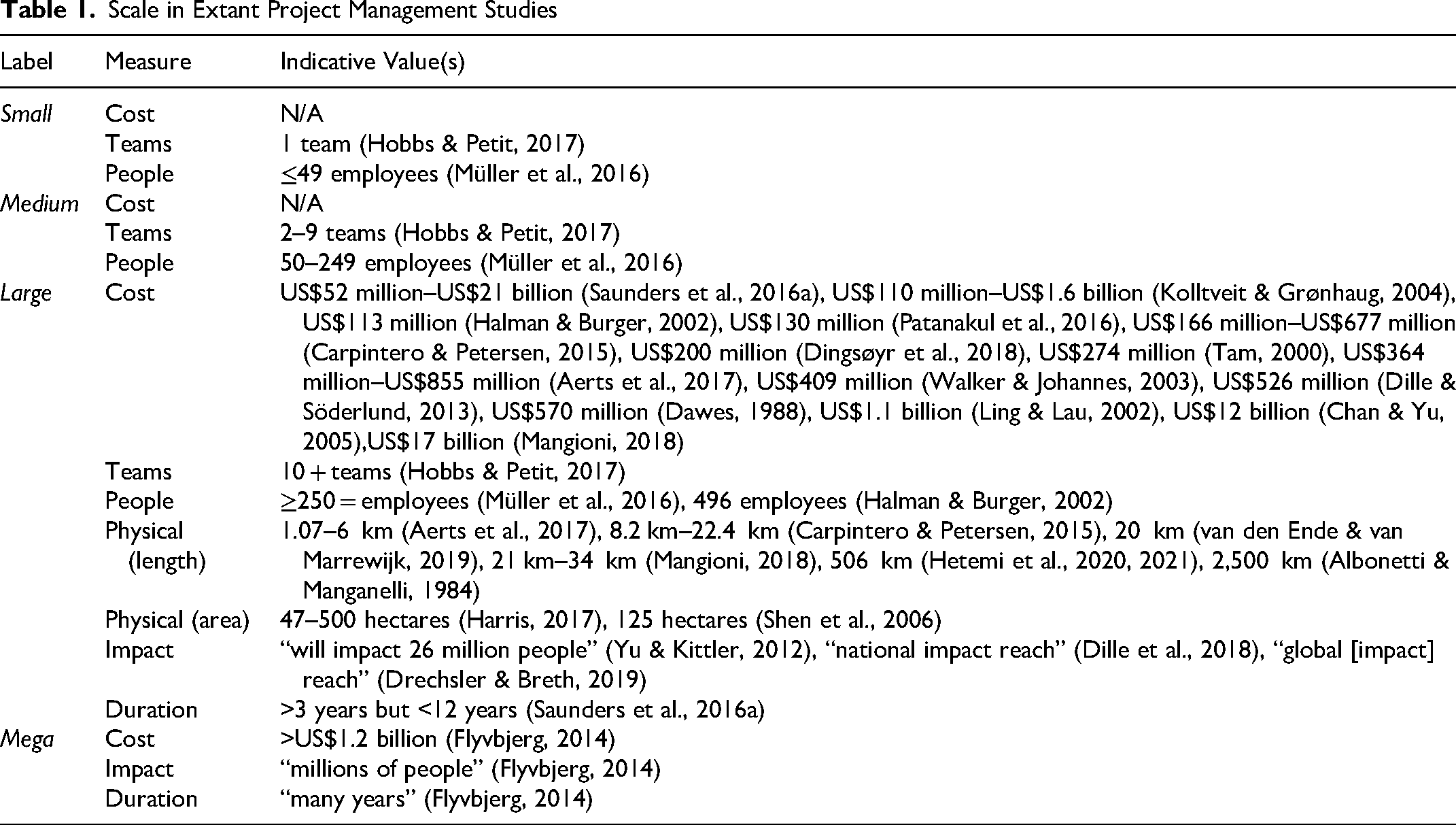
In addition to financial and/or physical size of a project (e.g., Toor & Ogunlana, 2010; Liu & Wilkinson, 2014; Mok et al., 2015; Aerts et al., 2017), there were also several other less common measures such as: (1) number of teams employed on a project (Hobbs & Petit, 2017); (2) number of employees being part of a project (Müller et al., 2016); and (3) number of people the project will impact (Halman & Burger, 2002). There was a strong emphasis on large project descriptors in the sample (e.g., Yeo, 1995; Floricel & Miller, 2001; Frederiksen & Davies, 2008; Ross, 2009; Pitsis et al., 2018). Another descriptive finding was that when authors referenced scale, they were mostly referring to the scale of the project—there was very limited mention of the scale of the program (Artto et al., 2009; Lycett et al., 2004) or scale of processes and tasks within a project (de Waard et al., 2014).
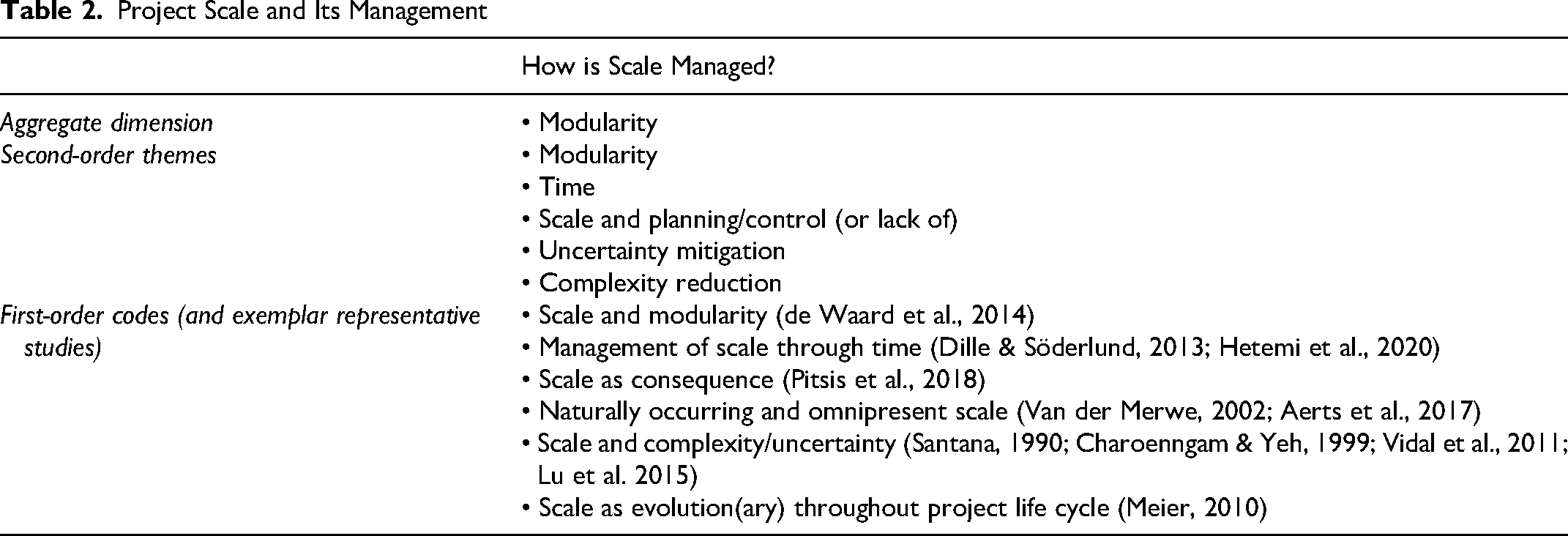
The specific question of how scale was managed featured in less than 15% of the articles surveyed and, where it was (Table 2) modularity was the most frequently, formally, discussed management practice (e.g., de Waard et al., 2014). We first open coded all papers within our dataset, focusing on papers that made a reference to any scale management tools/practices (thereby obtaining first-order codes). We then categorized the codes into second-order themes before arriving at an aggregate dimension. This helped to ensure transparency and assisted us to accurately represent discussions of scale management that have occurred in the literature sample.
Project Scale and Its Management
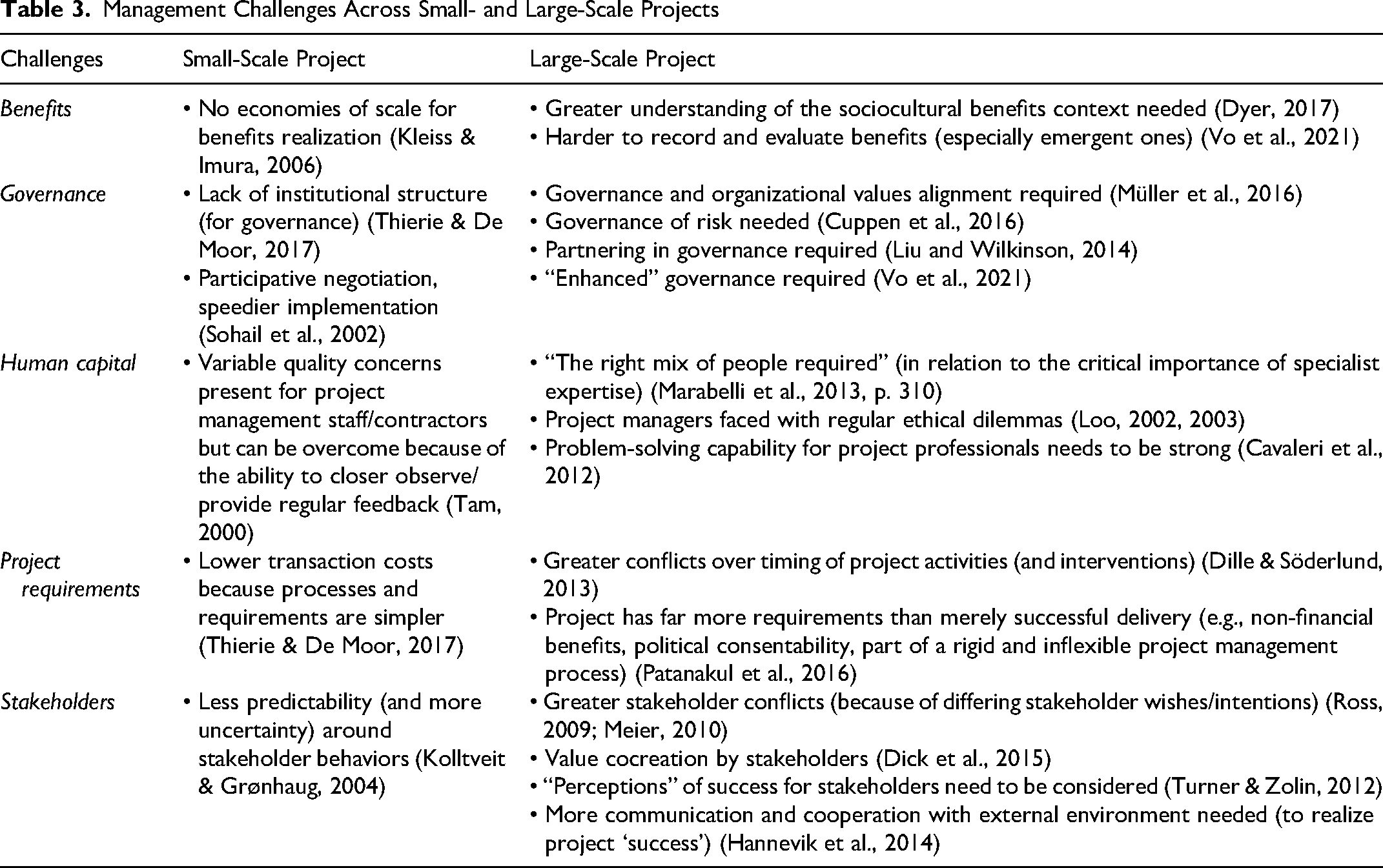
In the last part of the analysis, we looked at the distinct challenges aligned with projects of specific scales and, given the split of the dataset, this was mostly large and some small projects (Table 3). For example, large-scale projects consider perceptions of success to a greater extent (Turner & Zolin, 2012) as they are often used as vehicles for political communication (Harris, 2017).
Management Challenges Across Small- and Large-Scale Projects
Synthesis and Emerging Research Themes
This section presents the four key themes arising from the descriptive analysis: (1) conceptual gap and definitional framework; (2) why is there a bias toward large scale?; (3) modularity and project scale; and (4) time, temporality, and project scale.
Theme 1: A Conceptual Gap and Definitional Framework
Scale as a synonym for size was found in more than 80% of the articles (e.g., Tam, 2000; Ling & Lau, 2002; Walker & Lloyd-Walker, 2016). The precision in the use of the term was limited, however. For example, while some authors described projects costing US$110 million as “large-scale” (Kolltveit & Grønhaug, 2004), others considered projects costing as much as US$17 billion “large-scale” (Mangioni, 2018). We consequently argue that greater clarity is needed for future studies and therefore propose a scale framework (Table 4). To develop Table 4, we used cost as a metric. This is because cost is the modal descriptor of scale and the only shared (precise and quantitative) characteristic present across all types of projects (Ruiz Diaz, 2020). Cost as a measure, for all its limitations, allows for the ready comparison and translation of ideas, thinking, and solutions between domains and across different scales (Nordhaus, 2017).
Preliminary Framework to Classify Project Scale (Based on Total Net Whole Life Project Cost)
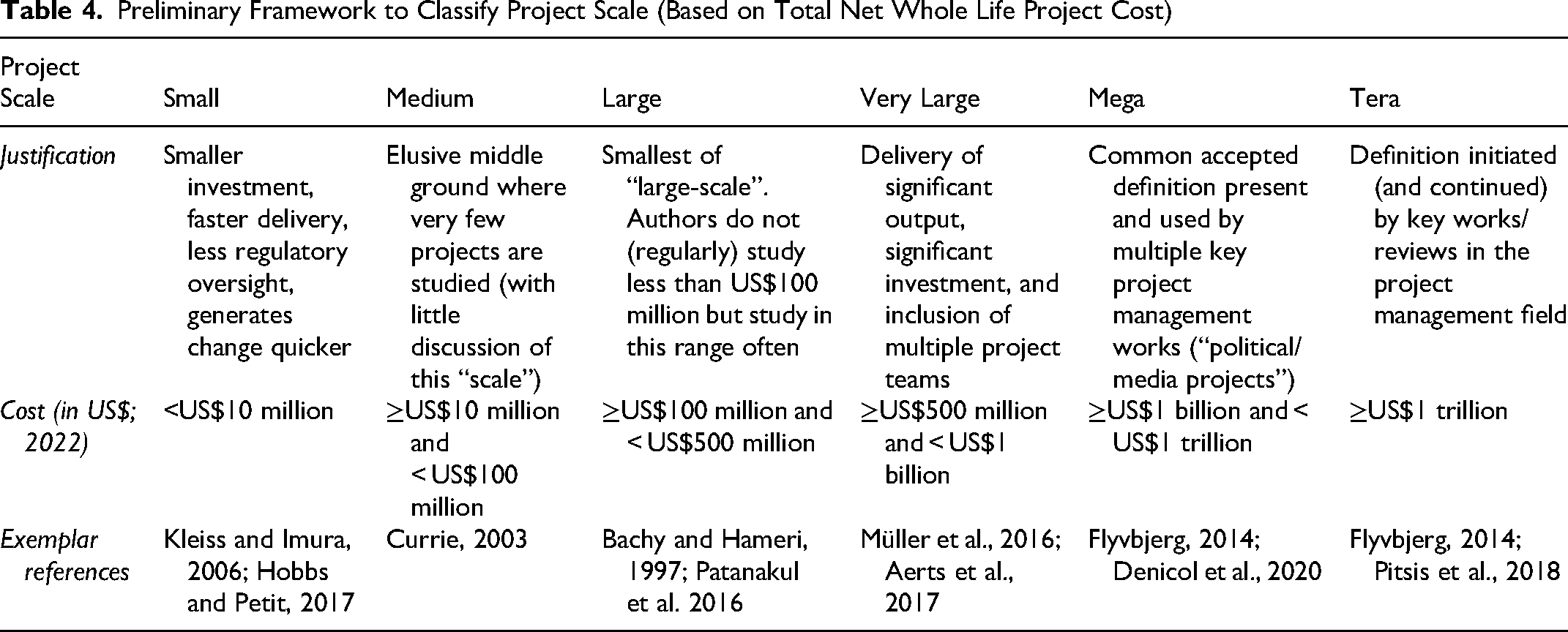
We developed a six-point classification for scale (Table 4). While acknowledging the limitations of existing studies, we propose a framework using existing definitional work such as Merrow et al. (1988) and Flyvbjerg’s (2014) characterization of a megaproject. Our framework is also broadly aligned with some public agencies’ articulation of scale in projects (Institute for Government, 2017; HM Treasury, 2022). We added “tera” to our framework as Flyvbjerg (2014, p. 7) highlighted that “there is no indication that the relentless drive to scale is abating in megaproject development. Quite the opposite—scale seems to be accelerating.”
One of the unavoidable challenges in creating a scale for project scale is the inherent relativity of projects (Lycett et al., 2004); some firms commission and execute projects that cost more than the entire gross domestic product (GDP) of countries (Flyvbjerg, 2014). For example, California High-Speed Rail (CHSR) is projected to cost up to US$100 billion, greater than the GDP of more than half the countries in the world (California High Speed Rail Authority, 2022). Relativity also applies to the type of organization delivering the project. A US$10 million project for a small- and medium-sized enterprise will have different implications/challenges to a US$10 million project executed by a large multinational corporation (MNC). Similarly, other measures of scale (e.g., physical size, people/teams, duration, organization type, type of project) can offer valuable additional insights but will face the challenge of comparability across different types of projects. One intriguing future option could be to develop multiple “scales-for-scale” potentially connecting to some form of project contingency, for example, separation by: (1) infrastructure and construction; (2) government transformation and service delivery; (3) military capability; and (4) information and communications technology (ICT) project categories (cf. Infrastructure and Projects Authority, 2023).
Theme 2: Why Is There a Bias Toward Large-Scale?
Acknowledging some variability in use of the terms large and small, the skew toward large-scale descriptors was pervasive, leading us to conduct further analysis of the meaning of large-scale. Figure 1 illustrates the differential and divergent use of small- and large-scale descriptors in project scholarship over time. Small-scale projects have been neglected in project management research (with some notable exceptions outlined in Table 3 (e.g., Sohail et al., 2002; Thierie & De Moor, 2017). Large-scale projects have received the majority of scholarly attention (e.g., Yu & Kittler, 2012; Flyvbjerg, 2014); in fact, one could argue that large-scale project management is essentially the field?
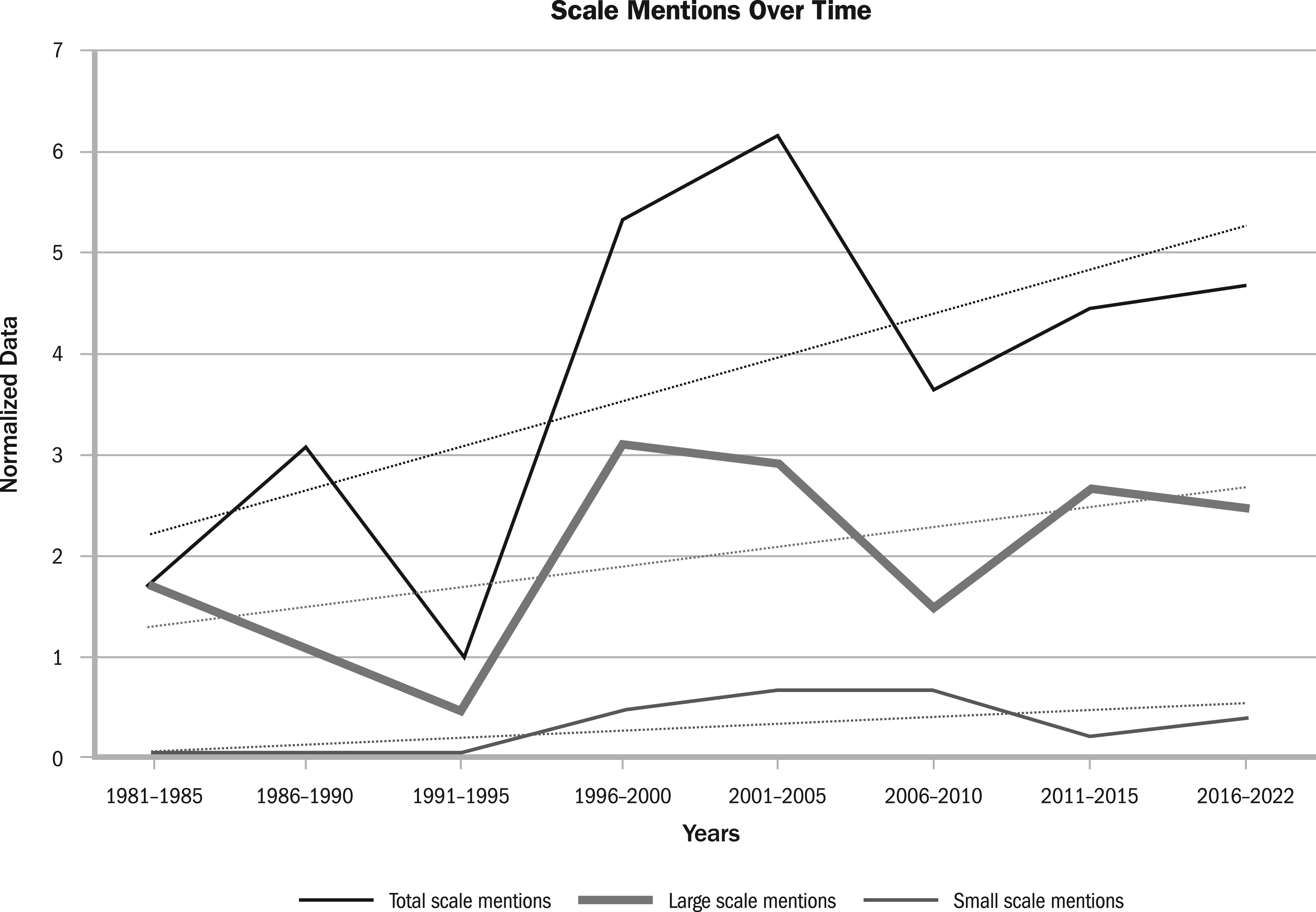
Growth of publications mentioning “scale,” and especially small- and large-scale projects, in core project management journals (authors’ own creation, based on the SLR sample).
Why is this? Is the skew because large-scale projects are more difficult and need more research? Or could it be because of the power (Yeo, 1995), seductiveness (Flyvbjerg, 2014), and political nature of large(r) scale projects (Samset & Volden, 2016; Harris, 2017)? Multiple authors have argued that, in practice, larger projects get commissioned (even if smaller might be more appropriate) because of the power that something large can have in terms of election cycles and political announcements (e.g., Flyvbjerg, 2014; Denicol et al., 2020). Politicians, the public, and media all have opinions about large projects (Williams & Samset, 2010; Samset & Volden, 2016), whereas small-scale projects can be “very different in [substance and] nature” and are often less interesting (Cooke-Davies & Arzymanow, 2003, p. 472). Whatever the underlying explanation, as large-scale projects are the focus of an ever-rising number of studies (Carpintero & Petersen, 2015; Aerts et al., 2017; Mangioni, 2018; Roehrich et al., 2024), this at the very least reinforces the need for more extended debate around what scale (large-small) is.
Some research (n = 16) has investigated small-scale projects. For example, Jørgensen et al. (2017) and Thierie and De Moor (2017) detail how to manage small-scale software development and public–private partnership (PPP) projects. Despite the differing topics, both studies evidenced common challenges for small projects such as variable quality concerns (see Table 3). Here, there seems to be another skew in the sample. If the work is small in scale it tends to skew toward more complex activities (e.g., Currie, 2003). For example, all studies in this part of the sample have focused on new or emerging technologies/tools, industries, or processes. Conversely, studies on large-scale projects have received an even broader coverage of a myriad of topics (e.g., Söderlund, 2010; Marabelli et al., 2013). Perhaps this reflects a bias for scholars to only seek out empirical subjects of sufficient richness but one could argue this does create a potential blind spot in the project management field.
We also observed the absence of scholarship investigating medium-scale projects (Nogeste, 2010; Bakker et al., 2011). Where there have been any mentions of mid-scale, it has been in the definitional context of small- and medium-sized enterprises/projects; upon closer examination, however, such scholarship almost entirely focused on small-scale projects (e.g., Mok et al., 2015). Moreover, from the limited number of studies investigating small-scale projects, we found that there is a common assumption that small is a simplification of large (Marcelino-Sádaba et al., 2014). In other words, large-scale project activities are replicated across all project scales, simply contingent upon project aims, objectives, and funding. As detailed in Table 3, however, small-scale projects (to the extent they have been studied) have fundamental and distinct challenges, including governance (Sohail et al., 2002), stakeholder management (Mok et al., 2015), and benefits management (Vo et al., 2021).
When synthesizing these findings, we argue that there is significant unrealized practical and scholarly potential to be found in studying small- and medium-scale projects. Subsequent research should better consider how project challenges differ among different scales (even if relative). In Table 3, we start to identify some key differences apparent in extant literature. For example, some authors reported that larger-scale projects have more prohibitive and restrictive governance, and detailed ways to overcome this such as scope and boundary setting, clear mechanisms for conflict resolution, and a larger need for coordination (Vo et al., 2021; Liu & Wilkinson, 2014; Roehrich et al., 2023). However, limited reflection, for example, has been made on how restrictive governance differs among a large project, a very large project, and a megaproject. Given that all three of these types of projects are fundamentally different in terms of actors, client/parent organizations, and institutional norms, this might be an important omission.
Theme 3: Modularity and Project Scale
Modularity, the reduction of the whole into—or construction from—smaller components/parts (Phillips et al., 1999; de Waard et al., 2014), is widely cited as a way of managing large-scale projects (Davies & Mackenzie, 2014; Floricel et al., 2016). The main focus of prior studies has been using modularity to (verb) scale down and reduce complexity and the cost of a project (de Waard et al., 2014; Whyte & Davies, 2021). Flyvbjerg (2021) presents a case example involving Tesla’s Gigafactory 1 project in Reno, Nevada. From the outset, Tesla defined a minimum viable production facility and then, as the project needed to scale, additional modular blocks could be added or removed to support further expansion or contraction based on project needs (Tesla, 2022). Ironically, for all the discussion of modularity in the scale literature, this was one of the first empirical examples of how projects could be managed via modularity to scale up in a systematic and structured way.
In applying modularity to the management of scale we identify three functions. First is modularization to address the dysfunction of scale in terms of complexity and uncertainty (de Waard et al., 2014). A frequently used example is the Crossrail underground rail line in central London in the United Kingdom (e.g., Schünmann, 2021; Whyte & Davies, 2021). Second, as illustrated by the Tesla vignette, is modularity to help scale up a project. Here, additional modules can be added to the existing project structure to increase the scale of project operations, thereby increasing the benefits the project will likely generate (cf., project
It is also important to consider these distinct modularity functions as they apply to projects of differing scales (noun). Both examples referenced (Crossrail and Tesla’s Gigafactory) are megaprojects (cost exceeding US$1 billion) and it is essential to better understand the differential benefits that a small project (i.e., costing less than US$10 million) is likely to receive from modularizing compared to a megaproject (Flyvbjerg, 2014).
Theme 4: Time, Temporality, and Project Scale
Time and temporality clearly affect scale and scaling in projects (e.g., Habison, 1985; Lycett et al., 2004; Dille & Söderlund, 2013; Dille et al., 2018). A linear temporality places scale as an unrealized outcome in the ex-ante/front-end project phase (Samset & Volden, 2016; Hetemi et al., 2021). Then, when capital spend begins, or the construction phase starts, scale starts becoming physically enacted (in the in-progress project phase; Meier, 2010). The final project phase (ex-post/back-end) is where the intended scale is realized (e.g., through project completion; Zerjav et al., 2018). This linear logic has significant consequences for the management of project scale with the expectation that a project will be a specific scale at specific points in time. This then leads to the incidental and implicit management of scale through the imposition of controls to check project progress. This reinforces the assumption that scale in projects is cumulative and additive: Scale starts small and continually grows, unless complexity/uncertainty becomes so problematic a reducing intervention, such as modularization, is required. This logic could cause professionals to overlook options to improve project outcomes (Turner et al., 2009) via subtractive changes (i.e., scaling down).
Future Research Agenda
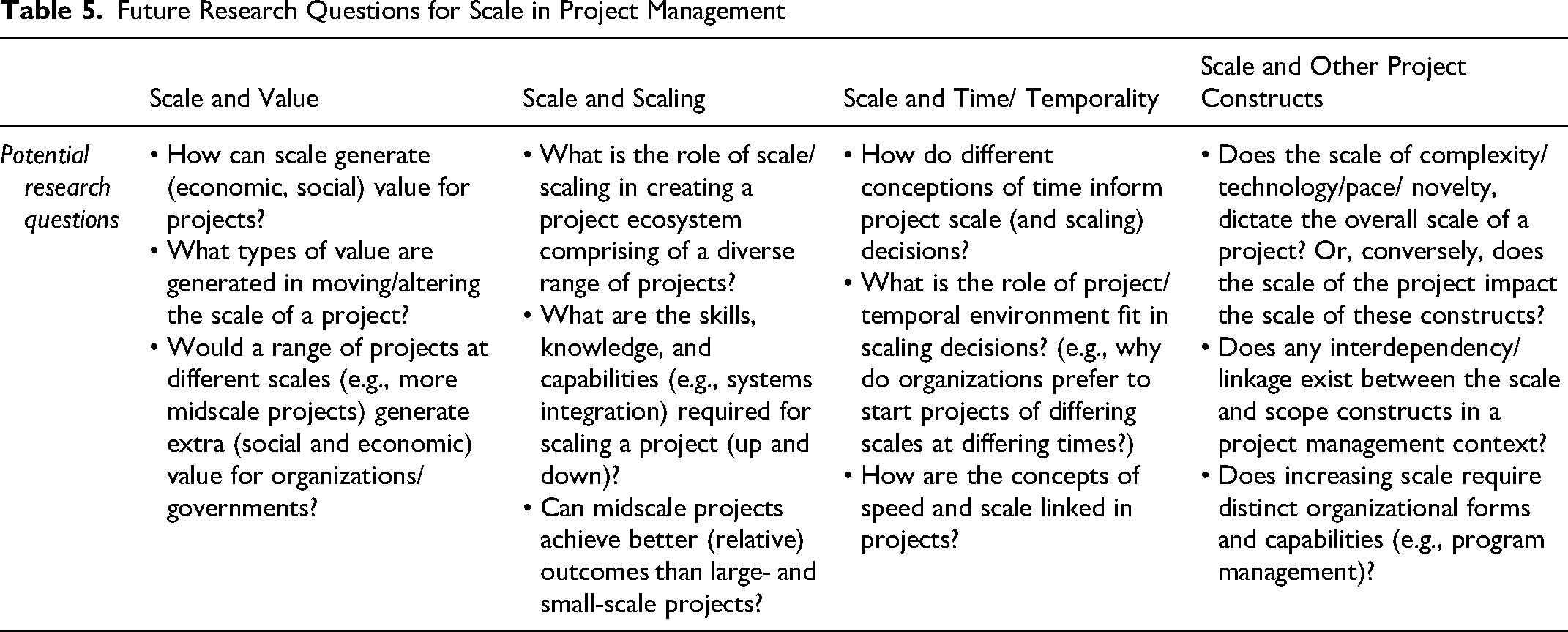
This future research section builds on our systematic literature review and synthesis. Each of the themes has been crafted to further our understanding of scale in projects based on gaps identified within our review. We center possible future research avenues in project management (Table 5) on four key themes: (1) scale and value; (2) scale and scaling (up and down); (3) scale and time/temporality; and (4) scale and other project constructs.
Future Research Questions for Scale in Project Management
We strongly encourage researchers to consider scale as more than merely a depiction of size (as measured by the cost of the project). In this study, we have started to tease out several consequences, qualities, and clusters of practice associated with scale. Merely considering scale as size (cost), as has been done in most existing studies, fails to explore the full richness of this important construct.
The first research opportunity we highlight is to consider how scholarship can address the full range of project scales (noun). How to better understand (relatively) small- and midscale projects is a significant limitation that could be addressed under such a theme (Dittrich, 2022). One specific suggestion is to link this exploration into conversations in the wider management discourse around noneconomic and social value creation (e.g., Caldwell et al., 2017; Gil & Fu, 2022; Roehrich & Kivleniece, 2022). It could be that particular midsized projects are more appropriate to create certain outcomes and values. These projects may also circumvent the potentially prohibitive impediments of large-scale projects, such as stakeholder conflict (Ross, 2009) and enhanced (restrictive) governance (Vo et al., 2021), while also avoiding some of the equally limiting characteristics of small-scale projects (e.g., higher prices due to less economies of scale; Kleiss & Imura, 2006).
The second avenue for future research is understanding the process of scaling projects (verb). When we started the task of crafting the protocol for the SLR, we carefully ensured that keywords included results not just for scale but also terms associated with scaling (Sweetman & Conboy, 2018). Despite an explicit effort to include all relevant terms, very few papers have directly explored the notion of project scaling. In other fields, such as information systems or innovation management, scaling has been shown to have significant positive benefits (while often described as more difficult to execute than initially expected; Sahay & Walsham, 2006; Klingebiel & Joseph, 2015). Here a particularly interesting application might therefore be to explore scaling projects as vehicles for addressing key economic and social challenges (Dittrich, 2022; Ika & Munro, 2022)—if a project is delivering such value, is there scope to increase its scale? In addition, following from the modularity discussions, we know modularity may reduce the reliance on the systems integrator functions (Davies, 2017; Whyte & Davies, 2021), but little is known about how scaling dynamics affect the requirements for systems integration in large projects (Tee et al., 2019).
The third promising research avenue is to deepen our understanding of time (Söderlund, 2010; Söderlund & Pemsel, 2022) and temporality in the context of project scale, an underexplored area in extant studies. Discussions of time that have featured within our sample have adopted a linear processual view of time (Boonstra, 2013) and scale across different project phases. There are alternative perspectives. For example, scale and speed are closely linked in the innovation literature (e.g., Wonglimpiyarat, 2005; Klingebiel & Joseph, 2015) but have received very limited attention from project management scholars. Both scale and speed are important because they are primary drivers that enable or prevent the realization of benefits (Mahmoud-Jouini et al., 2004). To address the problem a project was commissioned to solve, it must be solved at an appropriate scale (e.g., to cover the target population) and at an appropriate speed (e.g., to realize benefits for the target population; Kock et al., 2016). They are also interrelated. For example, if a project is not executed at an appropriate speed, scale (costs) will increase. Additionally, we urge future research efforts to focus on institutional interpretations of time (Lundin & Söderholm, 1995; Geraldi et al., 2020). For example, do certain organizations prefer projects of differing scales at differing times (and are there differences between public and private organizations)? Based on existing research, we already have some tentative insights into the scale of projects initiated according to government election cycles (Samset & Volden, 2016).
As the fourth future research opportunity, scholars could also evaluate the impact of project scale across different project contingencies (van Marrewijk et al., 2008; Winch et al., 2022). We have already flagged the need for scales of scale but, for example, using Shenhar and Dvir’s (2007) Diamond Model, does the scale of complexity/technology/pace/novelty dictate the overall scale of a project? Or, conversely, does the scale of the project impact the scale of these dimensions? Is the complexity dimension merely a synonym for scale, as the most complex projects are nearly always “large in scale” (Shenhar & Dvir, 2007, p. 105)? In a practical sense, projects with significant complexity are likely to be larger (Pitsis et al., 2018), but is this largeness driven by a deliberate and concerted attempt to deliver a larger project or does complexity, for example, create more (emergent) scale? Empirical scholarship seems to suggest this could be the case with multiple papers studying projects, such as the delivery of various Olympic Games, suggesting that complexity can drive the overall scale of a project, requiring new forms of organization and program management capabilities (e.g., Davies & Mackenzie, 2014; Fernandes et al., 2018).
Likewise, what about economies of scale, the cost advantages obtained with increased size and volume of production (Chandler, 1990; Söderlund & Tell, 2011). Scale is often used in this way to distinguish between stages of production (comparing product and process dynamics) in many well-known schemas of industrial organization (e.g., Woodward, 1965; Hayes & Wheelwright, 1984; Wheelwright & Clark, 1992). In such schemas, projects are the low-volume unit stage of unique/highly customized product production processes and at the opposite end of a spectrum from the high-volume production of standardized products (Davies & Hobday, 2005; Maylor et al., 2018). What is less well known is how the project stage (internally) might also vary considerably according to the scale of production, and research could develop a typology using scale as one of the dimensions to distinguish among projects. Project management research might also explore and unpack the close association between project scale and scope constructs (Chandler, 1990; Brusoni et al., 2001; Macher & Boerner, 2006; Freeman et al., 2021).
Conclusions and Methodological Limitations
Guldi (2012, p. 31) reported how at the start of the “infrastructure revolution” in the 1750s, British roadbuilders made it “possible to conceive of [an] entire project of making a way across mountains by combining smaller projects of limited scope,” highlighting that from the development of contemporary project management discourse, consideration of scale has been a focal concern. Despite such an explicit statement, examination of the scale construct in recent project management scholarship has been lacking, forming the motivation of our research study. Based on our comprehensive analysis of extant project management studies mentioning scale, we draw out three key insights to inform future project management scholarship. First, the analysis confirmed that most project management papers (90%) address scale by implication or assumption; consequently, there is a definitional and conceptual gap, which we addressed through the formulation of a classification of project scale. Second, most mentions of scale (65%) are associated with large-ness with very few papers describing small- or midscale projects (10%). We argue that this has important implications for theory and practice in terms of current (and future) project practice and scholarship possessing an implicit large bias. Third, the inconsistent and underdeveloped basis for categorizing scale raises important questions for the clusters of practice associated with the management of project scale. Most existing discussions surround the management of scale by focusing on modularity.
This study also has some limitations. From a methodological perspective, the Web of Science and Scopus databases were used as they offer extensive coverage of peer-reviewed and published academic research and have been deployed in several recent literature reviews within the field of project management (e.g., Denicol et al., 2020) and beyond (e.g., Olsen & Tomlin, 2020). These databases, however, are only as good as the decisions made by the researchers regarding inclusion and exclusion criteria (Bouazzaoui et al., 2020). While every effort has been made to ensure that all relevant articles have been obtained, there is always the risk of some articles being missed (Roehrich et al., 2014).
While we bounded our study on core project management journals, future studies should expand the sample to formally incorporate literature from other fields, such as operations and supply chain management, innovation and general management journals, and field-level journals (e.g., energy sector), as these will inevitably also address (albeit likely in a relative and/or implicit way) project scale. There is also the considerable practitioner or gray literature (e.g., Svejvig & Andersen, 2015; Adams et al., 2017). Such work has not been surveyed in this article, and therefore represents an additional fruitful future research opportunity.
In summary, we believe that scale is a significant (and underexplored) construct which, if developed and explored more formally, has the potential to add significant value to future project management scholarly discourse and practice. We hope the insights and research themes discussed in this article will encourage future research efforts.
Footnotes
Acknowledgments
The authors would like to thank attendees of the 2023 Academy of Management (AoM) conference and the 2023 European Operations Management Association (EurOMA) conference for their generous and constructive feedback, which has provided significant assistance in helping us to greatly improve this manuscript. We would also like to thank Professor Graham Winch (University of Manchester) and Dr. Juliano Denicol (University College London) for their detailed guiding comments on earlier versions of the manuscript.
Declaration of Conflicting Interests
The author(s) declared no potential conflicts of interest with respect to the research, authorship, and/or publication of this article.
Funding
The authors disclosed receipt of the following financial support for the research and authorship of this article: This work was supported by the Economic and Social Research Council (ESRC) in the United Kingdom via a South West Doctoral Training Partnership (SWDTP) Funding Award [Grant Number: #2229577].
