




Abstract
Co-ownership of major projects increases organizational complexity but remains underexplored in project studies. This article examines these complexities, employing an engaged scholarship approach with a group of practitioners facing a significant challenge regarding collaborative governance of a major project. This approach enables us to develop a framework for major projects, which includes four types of collaborative governance mechanism: sensemaking, structural, procedural, and relational. Our work has implications for interorganizational design, suggesting that a project management office (PMO) could play a leadership and integrative role in collaborative governance.
Introduction
Major projects 1 are large-scale, temporary organizations that take many years to develop and evolve in unpredictable political, societal, and economic environments involving hundreds of reciprocal ties (Flyvbjerg, 2014). Stakeholders from different fields collaborate and share their resources and expertise to assure project realization and deliver value (Davies et al., 2009; Gil & Fu, 2021). This multidisciplinarity increases complexity and the difficulty of reaching agreement since stakeholders may have conflicting goals and missions (Matinheikki et al., 2016). Fragmented interests and authority may affect the incentives for stakeholders to work together and make it challenging to build trust among major projects actors (Kujala et al., 2020).
In this article, we explore collaborative governance in major projects, which involve the pooling of resources by multiple actors or stakeholders (i.e., public agencies, nonstate groups) to realize projects and make collaborative decisions (Ansell & Gash, 2008). Collaborative governance increases levels of trust and forges strong relationships among project actors, which, in turn, result in greater levels of accountability and transparency among parties (Crawford & Helm, 2009). However, the inclusion and participation of diverse stakeholders also make this type of governance time and resource intensive, especially as stakeholders may have opposing viewpoints and values (Lehtinen & Aaltonen, 2020). Recent research shows that interorganizational projects raise important complexity issues for which organizational design might generate interesting insights (Fernandes et al., 2023; Fu et al., 2022). Braun (2018) argues that current project organizing structures remain insufficient to establish collaborative governance and develop a common culture and practices when they involve actors from more than a single organization. Furthermore, the governance of projects co-owned by several organizations has barely been explored in project studies. Many questions remain unanswered around how to address the greater complexity of inducing organizations with different cultures and practices to develop a common vision and decision-making process to oversee a major project (Association for Project Management [APM], 2017). To deal with this context, governance mechanisms must be adopted to respond to the uncertainty, dependence, and opportunism that can emerge between organizations who co-own a project (Ghosh & Fedorowicz, 2009). In this article, we explore the following research questions:
What are the main mechanisms for collaborative governance in a co-owned major project? How can co-owner organizations of a particular major project adopt an interorganizational design suitable for collaborative governance?
Based on a major transportation project undertaken in North America, we employ an engaged scholarship approach to propose a framework of interorganizational design that enables collaborative governance. The framework is coconstructed with practitioners closely related to the collaborative governance problem under study, a process we describe in this article. The proposed framework includes four types of mechanisms: sensemaking, structural, procedural, and relational. The article makes both theoretical and practical contributions. First, it highlights how organizational design can integrate underlying mechanisms for enhanced collaborative governance in a major co-owned interorganizational project. Second, it proposes a definition and framework of collaborative governance, which can be used as a practical tool to shape interorganizational design for a major project. Third, it contributes to our understanding of the engaged scholarship methodology, illustrating how the conceptual framework is coconstructed and rooted in the practitioners’ practical problems (Van de Ven, 2007). We begin by presenting a review of the literature on organizational design, interorganizational design, and collaborative governance for major projects. Second, we describe the method based on the engaged scholarship approach. Third, we develop the framework for collaborative governance and explain its emergence through an iterative information gathering process. Fourth, we discuss this framework as well as implications for interorganizational design and consider its theoretical and practical limitations. We conclude the article by proposing future research directions.
Literature Review
Governing major projects to attain performance and create value is a persistent challenge and much of the literature in project studies investigates this question either directly (Pitsis et al., 2014; Vukomanović et al., 2021) or indirectly (Denicol et al., 2020; Qiu et al., 2019). Some studies are rooted in systems theory (Daniel & Daniel, 2019; Söderlund et al., 2017), institutional theory (Biesenthal et al., 2018; Esposito et al., 2021), and complexity theory (Pitsis et al., 2018; van Marrewijk et al., 2008). Other emerging theories in the study of major projects and their governance include contingency theory and the practice turn, as reviewed by Song et al. (2022). Two subsections of the literature are especially relevant to our research questions: first, organizational design and interorganizational design; and second, collaborative governance for major projects. As governing major projects entails important linkages between the actors involved, it is important to consider the main research on these interrelations (Derakhshan et al., 2019).
Organizational Design
In its classical definition (Galbraith, 1995), organizational design refers to the way organizations are configured, as “the structures of accountability and responsibility used to develop and implement strategies, and the human resource practices and information and business processes that activate those structures” (Greenwood & Miller, 2010, p. 78). Yet, for several reasons, research on organizational design has been neglected in mainstream fields such as organization theory. One reason is the increased complexity of studying organizational design and the need to take a holistic view to understand how the configuration impacts the organization’s activities (Greenwood & Miller, 2010). Greenwood and Miller (2010) argue that different organizational types need different theoretical underpinnings to be properly developed and understood, such as contingency theory, institutional theory, and the resource-based view. Nevertheless, these approaches do not explicitly address the organizational design of transitory institutions such as project-based organizations, project-supported organizations, and project networks (Lundin, 2016; Lundin et al., 2015). Temporary organizations are still only marginally addressed outside of project studies (Lundin & Söderholm, 1995).
Within the project studies field, several researchers have addressed the concept of organizational design and how it can be tackled to study projects and their organizational embeddedness. Aubry and Lavoie-Tremblay (2018) present a broad overview of how organizational design has been covered in project management research over the years. They argue that most research is based in contingency theory, with a few contributions anchored in historical studies, social theories, and theoretical pluralism. They suggest that we think of organizational design as a larger social phenomenon with two dimensions: a structural component (as a thing) and a dynamic component (as a process) (Aubry & Lavoie-Tremblay, 2018). They suggest three layers of analysis: a wide, macroview of organizational design; a mesoview of organizational design for managing projects; and a microview of project organizational design. Aubry and Lavoie-Tremblay's (2018) research addresses the mesoview, as they study the configuration of different project management offices (PMOs) as both structures and as trajectories to deliver projects, building on previous work investigating the relationship between PMOs and organizational design (Aubry & Brunet, 2016).
Other scholars have adopted a microview, conducting research on project-organization design. Eriksson and Kadefors (2017) investigate how a large project is designed, looking at its organizational structure, its roles and responsibilities, and the routines developed and performed by project actors. Denicol et al. (2021) propose a framework to address the organizational design of a megaproject, which they refer to as a “project system organization,” encompassing intraorganizational, interorganizational, and system-level design. They identify the multiple and changing actors across these layers and identify four main roles, which are often used in reference to the client: owner, sponsor, client, and partner (Denicol et al., 2021). This work resonates with research conducted by Miterev et al. (2017a), who adopt a contingency-based view to examine key factors that influence the design of the project-based organization and build their analysis around the Star Model (Galbraith, 1995) composed of strategy, structure, human resources, behavior, and processes. To supplement these developments, Miterev et al. (2017b) suggest there is a need to shift the focus to interorganizational design using actor-centric approaches to better understand the complex collaboration patterns involved.
Interorganizational Design
Simard et al. (2018) argue that much of the confusion in this area relates to a lack of clear understanding about governance and organizational design concepts and their similarities, differences, and overlapping components. Engelhart et al. (2023) consider that two strands of research relate to governing large projects: the project governance literature, which is well established (e.g., Müller et al., 2019), and the interorganizational relationship governance literature (e.g., Cao & Lumineau, 2015), which has been far less influential in project studies. The latter strand, mostly based in strategy, operations, and supply chain management, examines the underlying conditions for the use of governance mechanisms with a particular focus on buyer-supplier relationships, alliances, and joint ventures, as they impact the functions of control and coordination between organizations (Engelhart et al., 2023). For example, Fu et al. (2022) explore a transnational interorganizational project and find that a hybrid form of organizing (with a modular structure to reduce interdependencies) is set up to cope with institutional complexity. Using a processual approach, Fernandes et al. (2023) analyze the reconfiguration of an interorganizational project and trace the evolution of structural and instrumental governance parameters through time and project phases. Other researchers find that project networks and interorganizational relationships are an important yet understudied phenomenon (Braun, 2018; Song et al., 2022). For example, drawing on project network theory, Braun (2018) suggests that traditional, single-organization PMOs do not have the capabilities nor the authority to deal with interorganizational project networks, and that a network administrative organization may be able to extend similar services to all network partners.
Interorganizational projects generate considerable tension around control and coordination, which likely relates to the inherent complexity, uncertainty, and temporality of these projects (Engelhart et al., 2023; Esposito & Terlizzi, 2023). Clarifying roles and responsibilities is essential, especially when several organizations play a similar role, such as co-owner organizations. The Association for Project Management (APM, 2017) defines co-owner organizations as organizations that share ultimate control over the decision-making process around project purpose, objectives, scope, finances, resources, roles, and the allocation of risks or benefits; but have different cultures, practices, and governance. In a co-owned project, organizations have heterarchical links, with formal and informal authority relations (Grabher & Thiel, 2014). Winch (2014) and Winch and Leiringer (2016) consider that adopting a strong owner position should help in the case of interorganizational projects, yet that makes one organization the main owner that must then interface with the others involved in the project system (Denicol et al., 2021). Along these lines, Gulati et al. (2012) suggest that we adopt the term “metaorganization design” to study the configuration of a project involving several organizations and larger network communities. The next subsection turns to the concept of collaborative governance to examine how it has been mobilized within different studies.
Collaborative Governance
While the concept of governance has been addressed extensively in project studies (Ahola et al., 2014; Müller et al., 2022), pinning down the concept of collaborative governance is difficult as it is often implicit and not precisely defined. Some researchers have addressed it as a specific type of procurement method for megaprojects, relating it to integrated project delivery (Hall & Bonanomi, 2021) or alliances (Aaltonen & Turkulainen, 2022; Galvin et al., 2021).
Moreover, researchers point out that governance has several distinctive features at each project phase and must be established at the front end of a project to increase the chance of success (Ben Abdallah et al., 2022; Williams et al., 2019). Building on studies within the field of public administration, we define collaborative governance for projects as a governance arrangement where different stakeholders and organizations work together, based on formal, consensus-oriented, deliberative, and collective decision-making to achieve shared goals that could not be fulfilled individually (Ansell & Gash, 2008; Wang & Ran, 2021). Wang and Ran (2021) suggest that governance implies collaboration in its essence, and that collaboration is a strategy to improve governance. They highlight that collaborative governance is an organizational manifestation of institutional design and arrangement for institutional relationships, emphasizing ground rules that actors need to respect to assure procedural legitimacy (Wang & Ran, 2021). From a perspective of organization theory, Klein et al. (2019) argue that formalized governance structures and processes often require adaptation and renegotiation and identify four pathways to allow enhanced organizational value creation and capture (continuity, architectural change, enfranchisement change, and redistribution).
In project studies, Clegg et al. (2002) are among the pioneers to investigate interorganizational collaboration for managing projects, revealing that the informal and behavioral side of governance, referred to as governmentality (Foucault, 1991), is essential for success. Roehrich and Lewis (2010) propose a processual model to study the governance of interorganizational systems, based on two central dimensions: contractual governance and relational governance. These dimensions are expanded upon in the work of Benítez-Ávila et al. (2019) or Benítez-Ávila et al. (2018) in the specific case of public–private partnerships. Kuitert et al. (2023) suggest that collaborating in complex project networks is prone to conflicts, as different organizations have competing values and recommend developing coping mechanisms to tackle these divergences. Along these lines, and building on institutional logics, Frederiksen et al. (2021) study the consequences of internal logic multiplicity for the governance of program organizations, revealing that governance mechanisms are put in place to coordinate activities and practices across organizational spaces while maintaining their compartmentalization. Using a contingency-based perspective, von Danwitz (2018) suggests a model that considers the project context, governance structures, and processes, which all contribute to project performance if properly used. Our own framework, partly inspired by this work, will be developed upon in a subsequent section. First, however, we turn to the method used in our study.
Method
To develop a collaborative governance framework, we adopt an engaged scholarship approach, which is a specific stream within the broad methodological umbrella of action research (Svejvig et al., 2021). An engaged scholarship approach allows academics and practitioners to work as partners in diagnosing (Gilman & Salder, 2021) and solving problems rooted in the professional world in a way that not only advances knowledge, but also provides relevant solutions to the organizational problems under study (Van de Ven, 2007; Van de Ven, 2018). The knowledge thus coproduced can serve multidisciplinary domains, including project management, bringing theory-based solutions to practical problems (Maytorena-Sanchez & Winch, 2022; van Marrewijk & Dessing, 2019). Before elaborating on our engaged scholarship process, the context of the research project should be explained.
Context of the Research Project
The research project took place over 12 weeks from early November 2021 to late January 2022. It began when our research team, composed of four researchers including the authors of this article, was approached by a core team of five practitioners to help them solve what they described as a challenging governance problem. These practitioners worked for a large North American organization (referred to hereafter as the project contractor/operator) in the public transportation sector. Their request came a few years after their organization received a mandate from a government agency to develop a major transportation project and assume responsibility for its operation after delivery.
The problem at hand was related to the governance of that major project, which involved several organizations acting as co-owners. We were asked to help identify governance practices for major projects involving multiple organizations. More specifically, the practitioners requested an evaluation of their current governance structure and a benchmark of best practices for similar projects. However, after adopting engaged scholarship as a methodological approach (see next subsection), the report initially expected by the practitioners was subjected to several dialogical meetings based on theoretical and practical considerations, particularly around collaborative governance. Three rounds of meetings were held between researchers and practitioners to coproduce an optimized project governance framework.
Practitioners explained to us that seven different organizations would have to work together during the execution of the major project and that it therefore required an interorganizational structure. These organizations, considered co-owners of the major project, are described in the next section. As shown in Table 1, each one is called upon to play a distinct role.
Organizations Involved in the Interorganizational Major Project
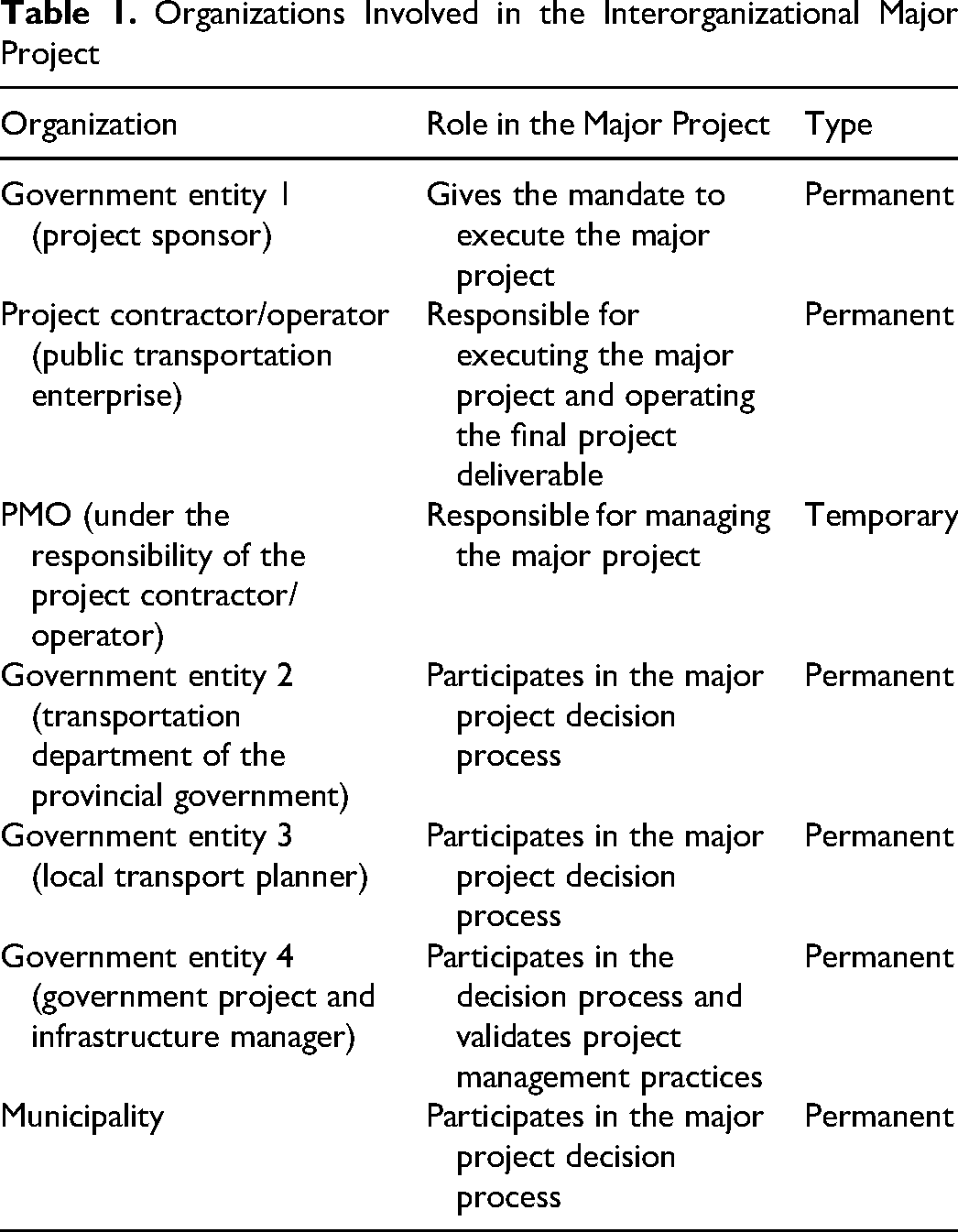
The government (Government entity 1) not only assigns roles and responsibilities to the project contractor/operator, it also involves in decision processes three other government entities (Government entities 2, 3, and 4) and the municipality where the project is to be executed. However, these five permanent government organizations have different goals, strategic objectives, and organizational practices.
Furthermore, as reported by the practitioners, the major project is embedded within a rich social and political environment that represents a challenge for governance. To take up this challenge, the project contractor/operator set up a project management office (PMO) which, as a temporary organization, is responsible for managing the project. The PMO proposed a governance model for the major project. However, certain government entities argued that the proposed governance model neither fit with the project context nor align with their roles and responsibilities. The PMO aimed to resolve this significant barrier as quickly as possible since the government required that the governance structure and processes be finalized before it would approve the business case.
Our engaged research involved several dialogical meetings with five practitioners from the project contractor/operation organization: the CEO of the organization, the major project director, the PMO director, the stakeholder management director, and the procurement project chief. Due to the confidential nature of the mandate, no practitioners from the other co-owner organizations were met, which, as is discussed at the end of the article, constitutes a limitation in this study.
An Engaged Scholarship Approach
The engaged scholarship process described in this article is justified by the need to connect two different perspectives: knowledge production and practical usage. This connection was made possible by the establishment of a partnership between practitioners and researchers. As shown in Table 2, the coproduction and use of knowledge within an engaged scholarship approach are achieved by following a process composed of four interrelated and iterative activities: (1) problem formulation, (2) theory building, (3) research conduct and design, and (4) problem-solving.
Engaged Scholarship Approach Process Definition (Adapted from Van de Ven [2018])
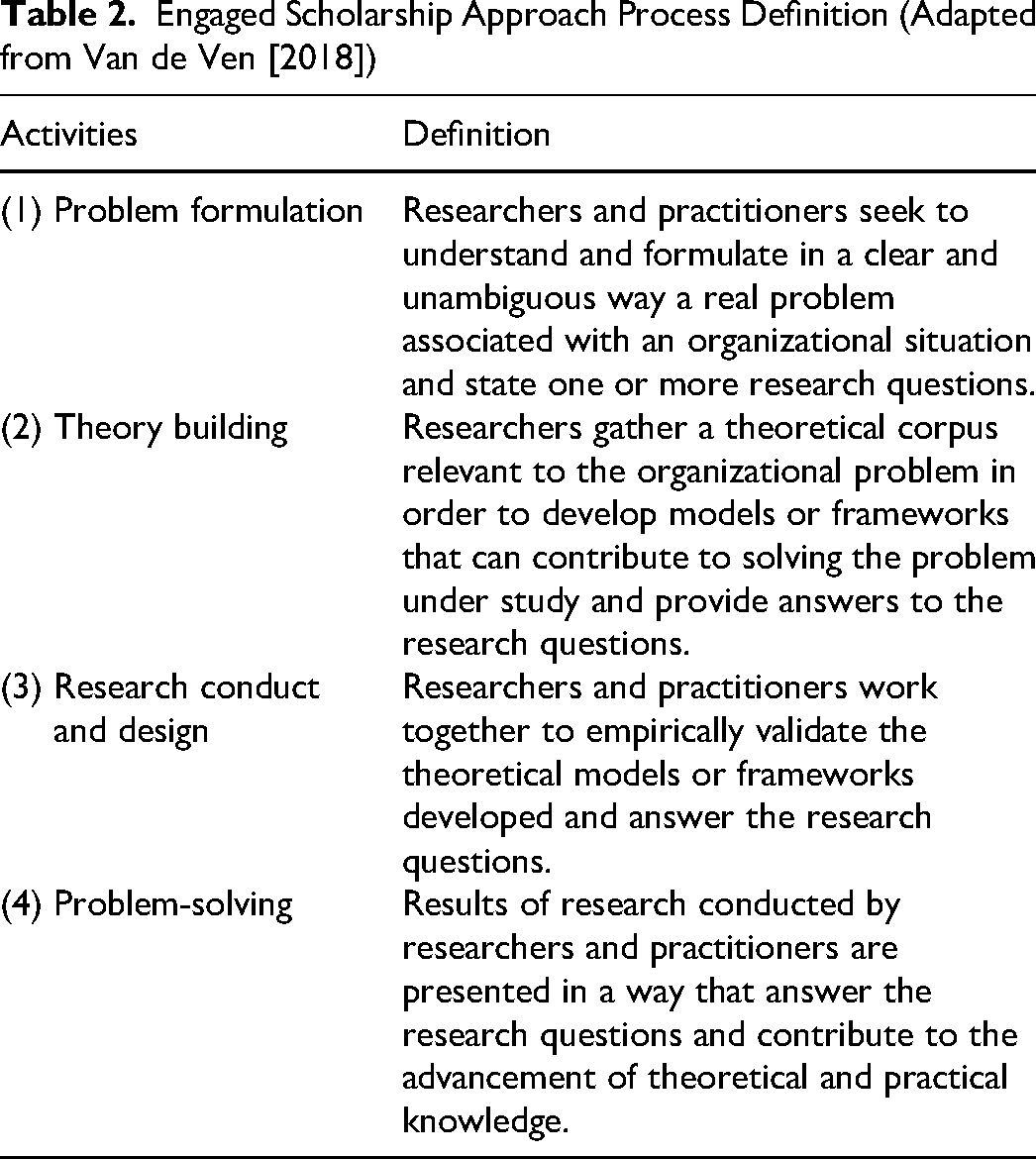
In this article, we present the first two activities in the process, namely problem formulation and theory building. Even though we have completed the research conduct and design, we decided not to include this step to respect the confidentiality clauses included in our research mandate. The article does, however, present the final step, problem-solving, as it provides evidence to answer the research questions and contribute to the advancement of theoretical and practical knowledge (Van de Ven, 2018).
Description of the Engaged Scholarship Process
As researchers committed to better understanding the problem experienced by the practitioners, and to coming up with a conceptual framework that could contribute to solving it, we decided to proceed in iterative loops. The course of knowledge coproduction during the problem formulation and theory building activities is illustrated in Figure 1.
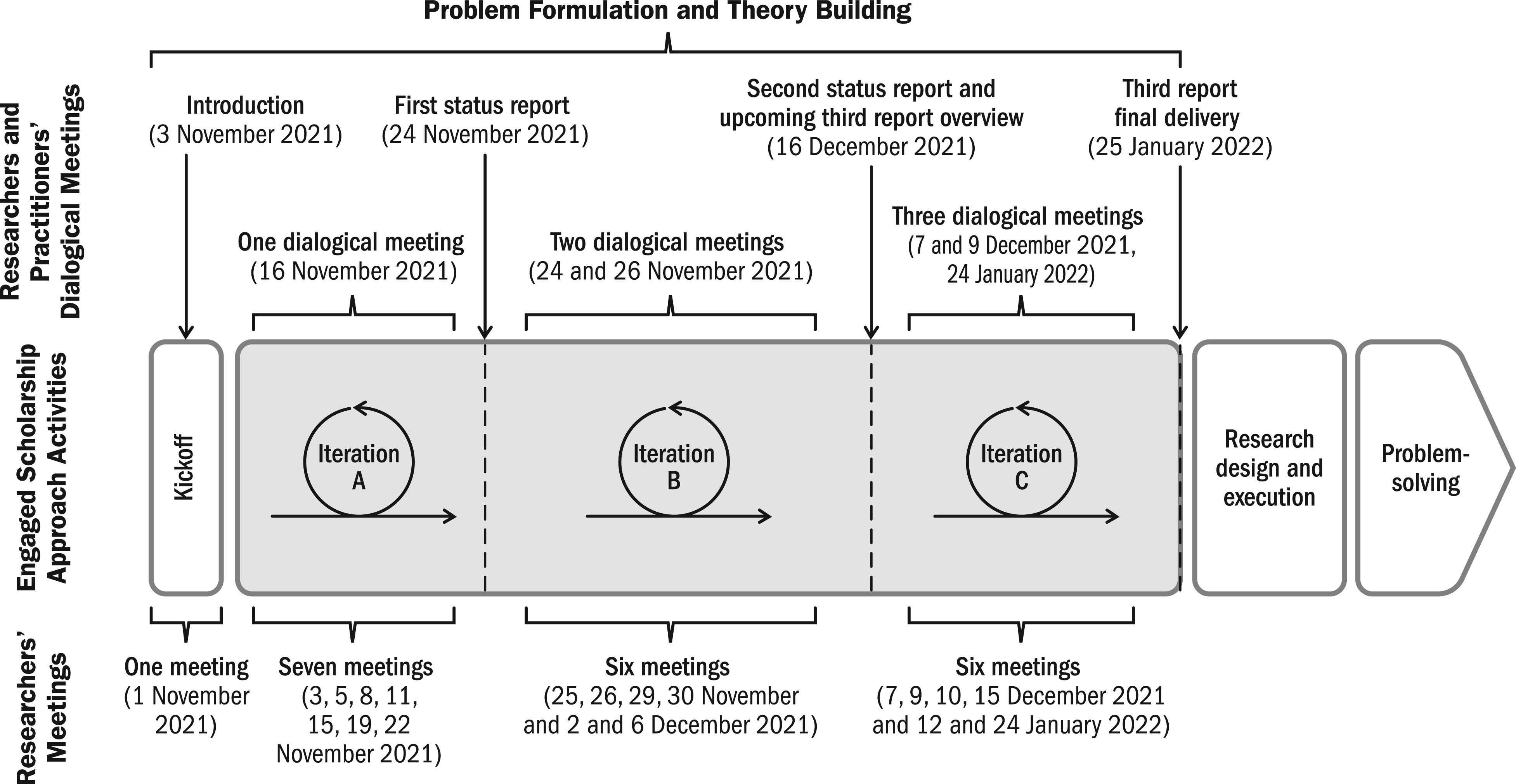
Course of knowledge coproduction during the engaged scholarship process.
As shown in Figure 1, after the project kickoff meeting (1 November 2021), the engaged scholarship process involved three iterations. During Iteration A (3 November 2021), we met once with the practitioners to clarify the problem and identify research questions about collaborative governance before looking for possible answers in the scientific and professional literature. As a reminder, the questions identified were: What are the main mechanisms for collaborative governance in a co-owned major project? How can co-owner organizations adopt an interorganizational design that is suited to collaborative governance? In addition, our research team held six meetings, which served as working sessions. These aimed to develop the first presentation expected by the practitioners (24 November 2021), which contained initial theoretical propositions in response to the two research questions. During Iteration B (25 November 2021–6 December 2021), we met four times with the practitioners. We took the opportunity to show them our evolving framework and collect their comments to refine our theoretical proposals. The end of this iteration was marked by a second presentation and an overview of the content of the final deliverable, a written report. Iteration C (12 January 2022–25 January 2022) involved a dialogical meeting between the research team and practitioners and another joint working session. The dialogical meetings and working sessions contributed to improving the framework we formally presented in the third and final report.
Data Collection and Analysis
Qualitative data collection took place between 3 November 2021 and 24 January 2022. Following the research project kickoff meeting, we held eight meetings, each lasting an average of 1.5 hours by videoconference (via the Microsoft Teams platform) with the practitioners. Each time, we asked questions to improve our understanding of the problem and obtained feedback (views, agreements, leads, authorizations) on emerging results from the analyses. For reasons of confidentiality, we were not allowed to record our meetings with the practitioners. However, the researchers who attended these meetings were allowed to take notes. At the end of each dialogical meeting, these notes were quickly pooled in research team meetings. This approach contributed to the creation of a knowledge base that was sufficiently well founded to allow us to analyze and discuss the various reactions, perspectives, inquiries, and organizational issues expressed by the practitioners. Additionally, it allowed us to identify certain elements that could help us further refine our framework. Collected evidence is illustrated in the form of vignettes (see next section) (Sergi, 2012).
Occasional telephone calls were also held between the lead researcher and the main contact on the practitioner side (the PMO director) for clarification to support the research process. Data collection was completed by consulting in-house documents provided by the practitioners (organizational chart, communication plan, archives) and external documents (government reports, news and current event articles, archives). Analysis of these materials allowed us to progress in the elaboration of our framework and write the reports expected by the practitioners.
Before starting our work sessions, we undertook to identify, in the scientific and professional literature, good practices for the governance of major projects, and more specifically for public infrastructure projects. It should be noted that we relied heavily on recent literature, and this offered only a fragmented and partial reading of our practical problem, which presented us with a theoretical challenge. To meet this challenge, research and practitioner teams opted to exchange ideas through dialogical meetings on a regular basis. In this way, we managed to gradually coconstruct and formalize the framework of collaborative governance presented in this article.
The Framework of Collaborative Governance and Its Emergence
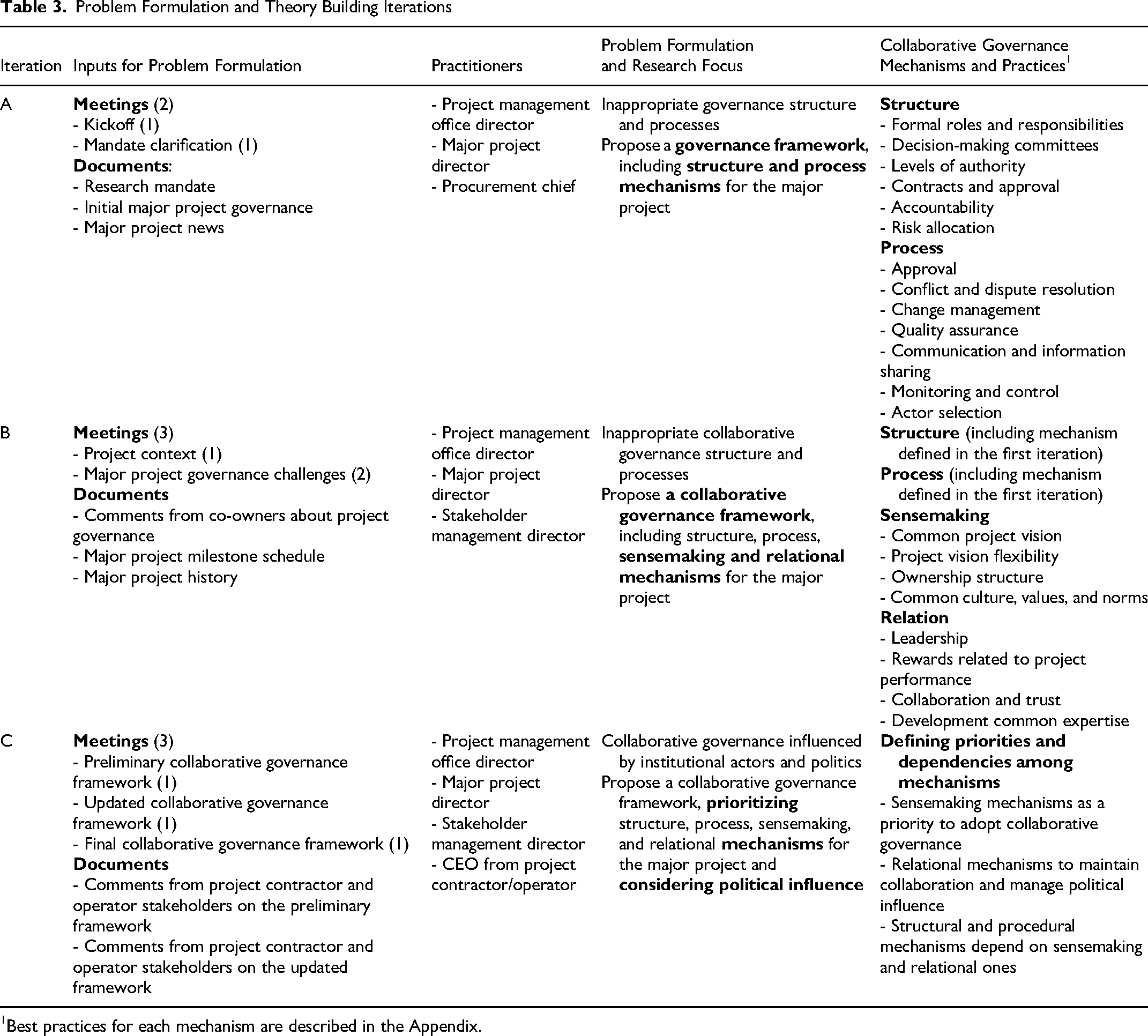
The framework of collaborative governance emerged from activities of problem formulation and theory building that were executed through iterations with the project contractor/operator and directors (practitioners) who were experiencing governance issues on a major project. During each iteration, we worked closely with the practitioners to ground the problem in its context and understand how they perceived the issues and their specific causes and impacts. Then, we developed a conceptual framework of collaborative governance to make sense of the problem and suggest possible solutions. In the last iteration, practitioners had another opportunity to give feedback on the conceptual framework. Their comments helped us improve the proposed framework, which includes collaborative governance mechanisms. As shown in Table 3, there were three specific iterations where we collected evidence from meetings with the practitioners, documents from the major project, and practitioners’ comments on the proposed framework. In the next section, we present the iterations, the process we adopted, and the main outputs of that process.
Problem Formulation and Theory Building Iterations
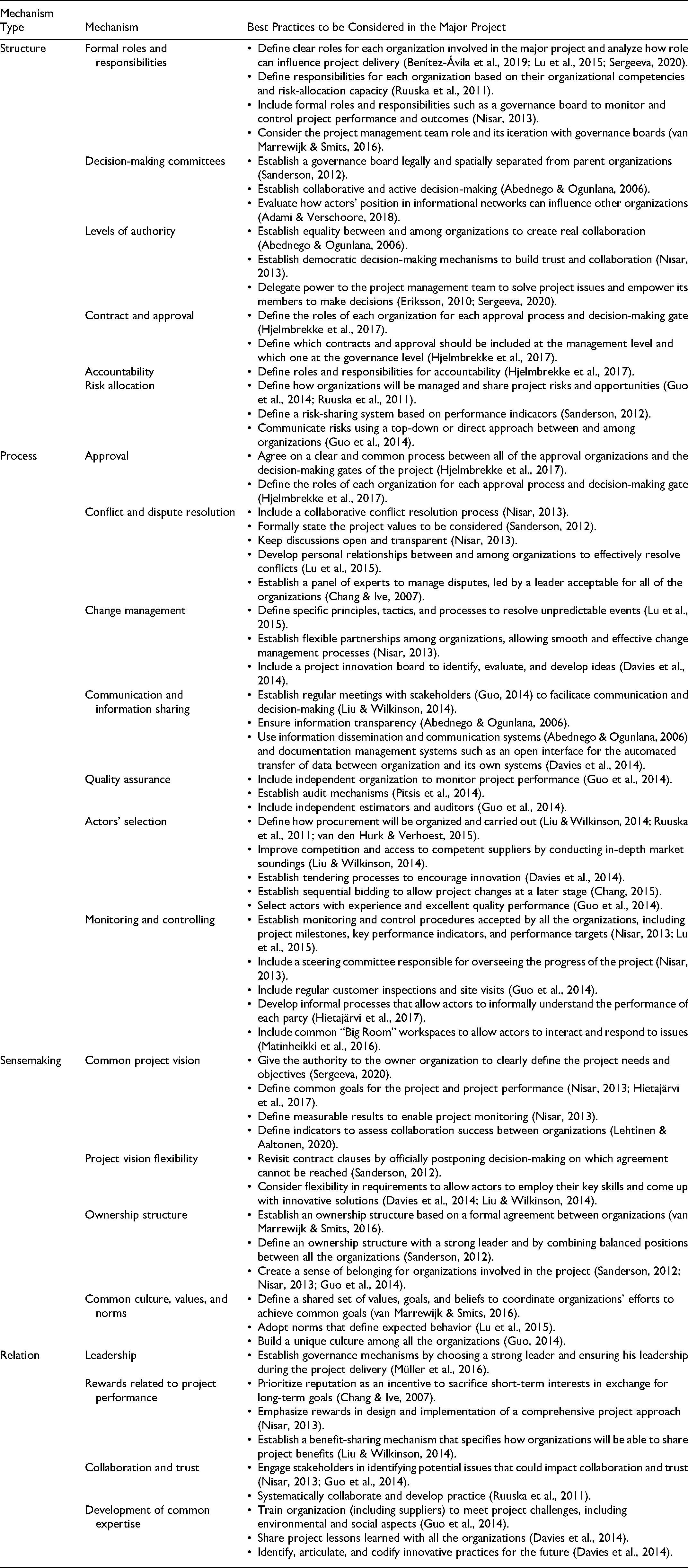
Best practices for each mechanism are described in the Appendix.
Iteration A
The problem formulation process began when practitioners called us to help them solve an organizational problem associated with their major project’s governance. Based on the research mandate, project documents (such as the initial governance structure), and dialogical meetings with the practitioners (see vignette for Iteration A), we formulated a research question with a view to finding possible answers in the scientific and professional literature. This question focused on identifying governance practices for a major project involving multiple organizations. Specifically, practitioners wanted a framework to design the appropriate structure and processes to optimize collaborative project governance.
Vignette: Iteration A—Determining the Governance Problem On 3 November, researchers met the practitioners (PMO director and major project director) to better understand the problem associated with the major project’s governance. Practitioners opened the meeting by presenting the project time line, clarifying the current situation, and explaining their work related to project governance. Specially, they described how different organizations involved in the project governance would intervene in project decision-making but did not accept how project accountability was set up. The major project director stated that all of the organizations involved wanted to lead the project steering committee and define the agenda, but they would not accept responsibility for possible cost overruns. He concluded that they had agreed that the PMO should be the only organization accountable for the project.
Once the problem was formulated, researchers focused on building a theory to encapsulate governance challenges for the major project. To respond to the initial research question, the researchers tried to identify in the literature a framework that included structural and procedural mechanisms. That proved difficult as no generic framework exists given that governance practices are, by nature, dependent on the context and dynamic between actors (Organisation for Economic Co-operation and Development [OECD], 2015). von Danwitz (2018) argues that a project governance structure and related processes should fit within two contextual levels: the project itself (project duration, task complexity, task uncertainty, and level of task interdependency) and the partners’ context (risk and reward structure, number of partners, collaborating history, and heterogeneity of partners).
Based on Hietajärvi et al. (2017), Hjelmbrekke et al. (2017), Narayanan and DeFillippi (2012), and Kujala et al. (2020), we developed a framework including structural governance mechanisms that aim to facilitate decision-making among organizations involved in governance, as well as accomplishing project objectives and monitoring project performance. Structural governance consists of six mechanisms: formal roles and responsibilities, decision-making committees, levels of authority, contracts and approvals, accountability, and risk allocation. These mechanisms address how organizations involved in project governance can structure decision-making and project approval in accordance with their role, responsibilities, level of authority, and risk allocation.
To sustain governance structures, we also included procedural practices in the collaborative governance framework. The procedural mechanisms aim to shape how organizations involved in a project can share project responsibility among themselves and within the project management team (von Danwitz, 2018). We included in the collaborative governance framework six mechanisms to regulate governance processes: approval, conflict, and dispute resolution, change management, information communication and sharing, quality assurance, actor selection, and monitoring and controlling.
Iteration B
To better understand the finer details of the major project governance, we held three other dialogical meetings with practitioners (main director, PMO director, and stakeholder management director) and analyzed the major project documents as a secondary source. Based on the collected evidence, the research team proposed an update to the problem formulation. This took into account that there was not a single project owner, and that other government entities were involved in the decision-making process. Indeed, the case was considered a co-owned project as defined by APM (2017), where several organizations participate in project governance with specific objectives (see Figure 2). We identified roles based on Brunet’s (2021) governance framework for megaprojects and meeting discussions (see vignette for Iteration B). At the institutional level, Government entity 1 was the project sponsor with the legitimacy role; at the interorganizational level, five organizations (three different government entities, the municipality, and the project contractor/operator) were project co-owners with the accountability role; and finally, at the project level, the PMO responsible for delivering the major project had the efficiency role. Each of these organizations had different goals, objectives, and expectations, as well as different decision-making authority levels. Furthermore, each had established a specific governance model for their own projects, which exacerbated tensions around developing a common governance model for this major co-owned project. We therefore proposed reformulating the research mandate to better capture the roles and governance objectives of these organizations. We worked closely with the practitioners to describe specific characteristics related to the organizations involved in the major project. Practitioners understood that the major project was co-owned by several organizations and that they needed to build a common understanding about the project among themselves as well as relational practices to manage collaboration. Thus, the research question focused on proposing a collaborative governance framework, including four mechanisms for major projects, namely structures, processes, sensemaking, and relationships.
Vignette: Iteration B—Defining a Co-Owned Project On 24 November, researchers met with the practitioners (PMO director, major project director, and stakeholder management director) to clarify the role of each organization involved in the major projects’ governance. Practitioners explained how each organization conceived its contribution to project governance. Based on the researchers’ questions, practitioners tried to determine which organization provided legitimacy, accountability, and efficiency to the major project. Practitioners believed that organizations involved in the project did not share the same project vision or governance mechanisms, creating important challenges for collaboration.
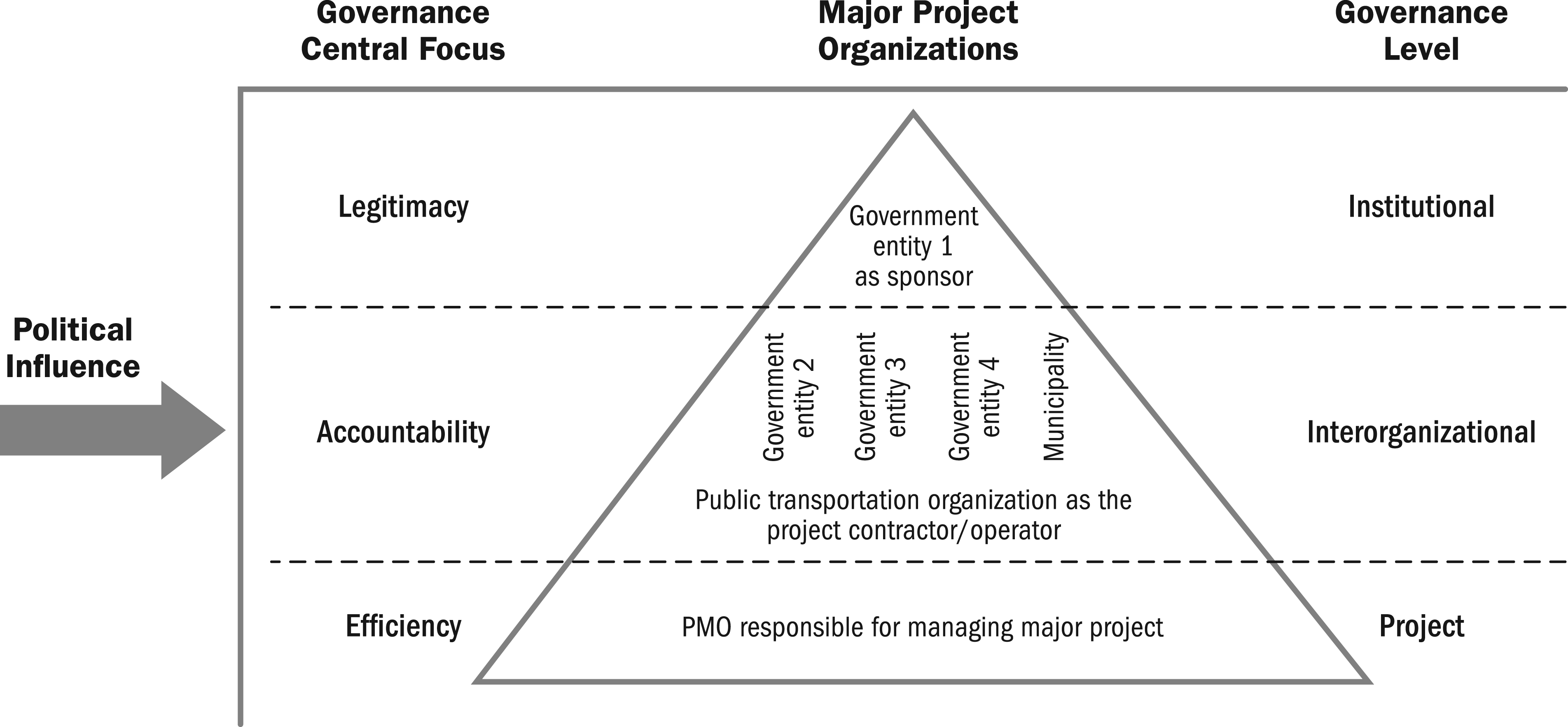
Organizations involved in governance of the major project.
Based on the updated research mandate, we concluded that the governance framework proposed in Iteration A failed to account for project context and governance issues. We proposed extending the framework to capture and deal with co-owner organizations that had different goals, objectives, expectations, and decision-making authority levels. Matinheikki et al. (2016), based on Stubbart (1989), highlight the importance of forming a consensus among all organizations involved in project governance. A lack of sensemaking mechanisms at the project front end can lead to conflicts, especially when organizations engaged attempt to define a structure and process for project governance (Williams & Samset, 2010). Collective sensemaking occurs as individuals exchange provisional understandings and try to arrive at consensus on interpretations and a course of action (Stigliani & Ravasi, 2012). In a project, sensemaking mechanisms (also labeled cognitive mechanisms) are factors that influence shared understanding of the prevailing situation among actors (Matinheikki et al., 2016). We included four sensemaking mechanisms: common project vision; project vision flexibility; ownership structure; and common culture, values, and norms.
To support and reinforce sensemaking and structural and procedural governance mechanisms, we also included relational mechanisms that enable trust and collaboration among actors. These mechanisms facilitate social interactions among organizations, strengthen ties, and enable them to develop and maintain long-term relationships (Matinheikki et al., 2016; Ninan et al., 2023). Furthermore, relational mechanisms fill possible gaps where governance structure and process cannot be applied (Pinto, 2014). The framework includes four relational mechanisms: leadership, rewards related to project performance, collaboration and trust, and development of common expertise.
Iteration C
Based on the problem and research mandate formulated during Iterations A and B, we developed a collaborative governance framework to make sense of the major project context and its governance challenges. This framework was presented to the practitioners who participated in the two prior iterations. Based on oral and written feedback from practitioners, problem formulation was updated to fit the project context. First, organizations involved in the major project were influenced by the political context, including changes in the government’s position on the scope of the project, pressure to accelerate the project, and views on the PMO role (see vignette for Iteration C). These influences impacted the decision-making process and project governance. Finally, practitioners considered the collaborative governance framework difficult as it involved implementing several mechanisms without prioritization. The research focus was therefore revised to propose a collaborative governance framework that was composed of structural, processual, sensemaking and relational practices, and considered political influence.
Vignette: Iteration C—Sensing Political Influence on Project Governance On 9 December, researchers met with the practitioners (PMO director and stakeholder management director). This meeting had two objectives. The first was to complete the presentation of the collaborative governance framework contents (Deliverable 2). The second was to get as much feedback as possible from the managers following this presentation. Faced with the importance of giving more strategic, tactical, and formal authority to the PMO, the practitioners responded to our presentation with some resistance. After reconsideration, they nevertheless agreed that, because it represents the project, the PMO should increase its leadership in governance. However, the practitioners advised proceeding with caution, as “the current gray zone needs to be better defined.” They agreed that as long as the PMO lacked formal authority, external actors would be able to influence project governance. At the end of this dialogical meeting, and based on their understanding of the researchers’ presentation, the stakeholder management director shared the following clear-sighted summary: engaging organizations involved in the project in a co-owned governance structure could make it easier to build trust, meet targets, involve everyone in decision-making, support progress along a same direction, and maintain focus.
To respond to the practitioners’ concerns about political influence on project governance and the prioritization of mechanisms, the research team improved the proposed framework. As noted by Winch (2006) and Joslin and Müller (2016), governance mechanisms are dependent on project context. To better fit with its context, a major project requires a strong project owner who can accommodate and/or resist political pressure (van den Ende & van Marrewijk, 2019). However, this major project did not have a single project owner. Five different organizations played this role, each with different purposes, objectives, and authority. We tried to improve the collaborative governance framework by defining whether strong project ownership could be shared by the five organizations involved in the decision-making process. To do so, we established links between each of the governance mechanisms. As shown in Figure 3, the sensemaking mechanism was seen as a mandatory prerequisite to creating a common vision for the major project and its governance among co-owner organizations. Without a common vision, organizations cannot collaborate and make governance decisions together. Sensemaking mechanisms then influence how governance is structured and which processes are implemented to facilitate collaborative governance. Though relational mechanisms are also dependent on sensemaking mechanisms, they can also sustain structural and procedural mechanisms by enabling strong ties between co-owners. As discussed with practitioners, developing formal and informal relationships among all project owners allows governance structures and processes to be accepted and installed smoothly. Furthermore, relational mechanisms can reinforce a common vision among co-owner organizations when shifts in the context influence project governance. The maintenance of relationships among project owners enables them to discuss and negotiate project priorities and define common strategies to confront shifts that may occur. In this way, relational mechanisms also have an influence on sensemaking mechanisms. These links help to prioritize governance mechanisms, identifying sensemaking and relational mechanisms as priorities to facilitate collaborative governance for co-owned projects.
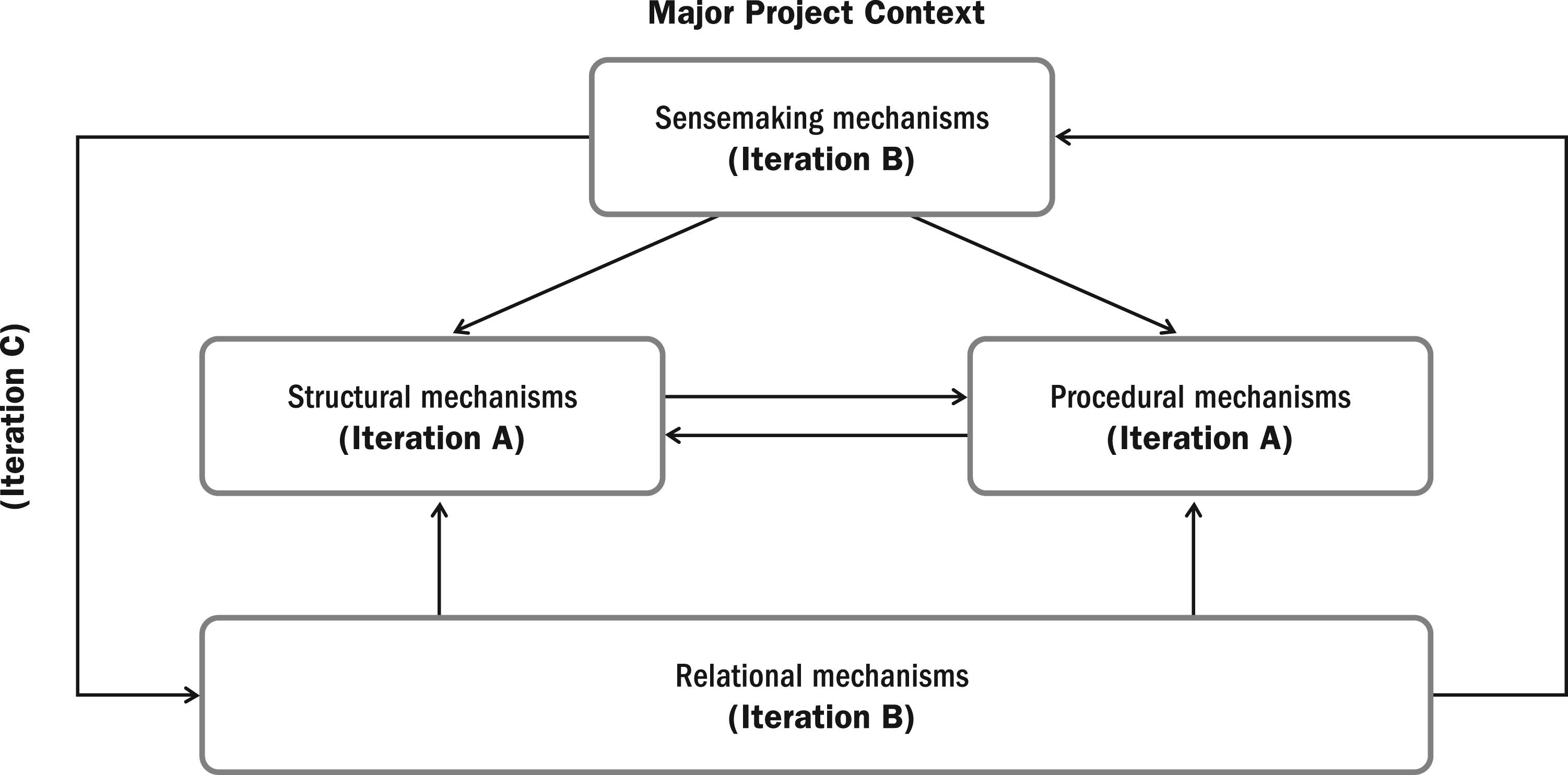
Framework of collaborative governance for a major project with multiple co-owners.
This collaborative governance framework helps us understand project and co-owner context and propose governance mechanisms that consider context. In the next section, we discuss the framework, relate it to prior literature on organizational design, and highlight our main theoretical, methodological, and practical contributions.
Discussion
A Framework for Collaborative Governance Through Engaged Scholarship
Collaborative governance has been insufficiently conceptualized in project studies and is especially lacking for co-owned projects. Drawing on our previous knowledge of the literature and anchored in the practitioners’ quest to optimize governance, we coconstruct a framework based on four types of mechanism important to collaborative governance of co-owned major projects, namely sensemaking, structural, procedural, and relational mechanisms. We also suggest that sensemaking mechanisms should be prioritized upfront among co-owners to align interests, visions, and means to accomplish the project. Best practices for each type of mechanism, provided in the Appendix, offer a promising tool to help practitioners analyze a major project and establish and operationalize collaborative governance among many owners and stakeholders. While not all mechanisms and specific practices need be deployed for each project, the tool provides a means of assessing the situation and how issues might be addressed given current knowledge.
The framework was constructed in a joint effort between researchers and practitioners (Svejvig et al., 2021). As researchers, we sought to find solutions to a real problem experienced by the people involved in this project, and iteratively produced and gathered contextualized and empirically anchored knowledge (Brunet et al., 2021). Several features of this unusual yet fruitful collaboration warrant mention, along with some of the challenges we encountered. First, we found that sustained and frequent communication was needed. As explained in the three iterations described, we first had to clarify the original mandate and convince the practitioners that their initial request (for a benchmark of best governance practices) had to shift to a different output (a framework for collaborative governance). We evolved together on this journey, and along the way gained a better understanding of practitioners’ context, especially regarding political influence (which we underestimated at first) and the linkages between co-owner organizations. Exchanges allowed us to come up with a framework that was enriched with different perspectives in a continuous way.
Second, we experienced tensions, mainly between practitioners and researchers, but also within our research team (Boonstra et al., 2017). Through abduction and iteration, the research process juxtaposed two worldviews, leading to different understandings of, and expectations for, collaborative governance, the proposed framework, and its implementation. For example, during Iteration A, practitioners asked the researchers to focus on structural and procedural mechanisms, without considering relationships among organizations involved in project governance. This led us to question the ownership of the project, as one organization (the project contractor and operator) considered themselves the single project owner, whereas the other organizations (co-owners) were in fact involved in the decision-making process and received project information. During Iteration B, we worked with the practitioners to clarify that there were several co-owner organizations that needed to collaborate on decision-making. We then extended the scope of the research by including sensemaking and relational mechanisms to enable collaborative governance.
Lastly, it is worth mentioning that while we focus in this article on the framework itself in order to respect our ethical engagement regarding confidentiality, it would have been interesting to also study its implementation: which mechanisms were already in place among co-owner organizations and which were prioritized for development. We could also question whether our role as researchers could have evolved toward that of consultant or mediator to resolve conflicts between co-owner organizations, something we chose to avoid.
Implications for Interorganizational Design
The engaged scholarship approach resonates with the work of Avenier (2010), who suggests that organizational design is shaped through a constructivist view. Our proposed framework, which is an artifact yet also a potential tool to assess a project and suggest collaborative governance mechanisms, has implications for interorganizational design. Some insights are offered here, yet we believe that this discussion could be enriched with more work in the years to come. The concepts of co-owned organizations (APM, 2017) and collaborative governance (Ansell & Gash, 2008) are still relatively neglected in project studies, which is a severe limitation given the current importance of major projects and megaprojects (Biesenthal & Wilden, 2014). The project system organization proposed by Denicol et al. (2021) suggests that there are four roles (owner, sponsor, client, and partner) in such projects, but does not address the governance of a major project with several co-owners. The literature offers some interesting avenues, for example paying attention to interorganizational design to understand complex collaboration patterns using actor-centric approaches (Miterev et al., 2017b). The contingency perspective is recommended when shaping and suggesting interorganizational designs for specific co-owned major projects, as these often require adaptation and renegotiation (Klein et al., 2019). The types of mechanisms in our framework somewhat resonate with the Star Model proposed by Galbraith (1995) mobilized in Miterev et al. (2017a), which highlights strategy (our sensemaking), structure (our structural mechanisms), human resources and behavior (our relational mechanisms), and processes (our procedural mechanisms).
From a theoretical perspective, our framework for collaborative governance provides a point of departure for co-owner organizations to adopt an interorganizational design that is suited to their project’s needs. However, given that collaborative governance is prone to conflicts as different organizations have competing values and practices (Kuitert et al., 2023), it is essential to implement mechanisms to tackle these divergences (DeFillippi & Sydow, 2016). Collaboration is a strategy to improve governance (Wang & Ran, 2021), but how can it be operationalized in practice? Some have suggested that hybrid forms of organizing might be adapted to specific projects and contexts (Fu et al., 2022), whereas others advocate governance reconfiguration between project phases (Derakhshan et al., 2020; Fernandes et al., 2023). Much more research is needed to fully understand this important topic. The work of Winch and Leiringer (2016) suggests that strong leadership should be assumed by one of the organizations, however it is also possible for a PMO to play a strong leadership and integrative role in a collaborative governance arrangement (Artto et al., 2011; Aubry & Brunet, 2016; Aubry et al., 2011; Sergeeva & Ali, 2020). In a co-owned project, organizations have heterarchical links, and are not as loosely associated as in a network or an open community (Grabher & Thiel, 2014; Gulati et al., 2012). Whereas Braun (2018) suggests considering a network administrative organization (NAO) to deal with complex project networks, we suggest that an interorganizational PMO might provide strong leadership to embody collaborative governance with several co-owner organizations. In our case, there was a PMO in the project, yet it was associated with a single organization. Since the PMO was implemented by the project contractor/operator, the practitioners considered that it should represent their interests and objectives. However, we suggest that in a co-owned project, a collaborative governance PMO should have a neutral role for all co-owner organizations. This interorganizational design, consisting of governance mechanisms and of a PMO to implement them, echoes the mesoview suggested by Aubry and Lavoie-Tremblay (2018), with the difference that there are several organizations involved as co-owners.
Contributions
This article contributes to a better theoretical understanding of collaborative governance in major projects by considering different mechanisms as proposed in our framework. It also explains how the different mechanisms relate to each other and identifies who, in a major project, should assume leadership to ensure collaborative governance. Furthermore, it offers a methodological contribution, in describing how an engaged scholarship approach can be employed to analyze and help resolve project organization problems. This approach allows us to contribute to opening up perspectives for action research and consultancy interventions and can provide a basis for future research protocols. Lastly, a practical contribution is the list of best practices for each type of mechanism (i.e., the Appendix), which can be used for reflexive assessment and action to put in place interorganizational designs adapted to co-owned projects.
Conclusion
The purpose of this study was to develop an interorganizational design for enabling collaborative governance for projects with several co-owner organizations, as defined by APM (2017). To this end, we employed an engaged scholarship approach to develop a conceptual framework that tackles how co-owner organizations can collaborate in governing a major transportation project in North America. The proposed framework emerged from our discussions with practitioners as a co-construction process, developed through three iterations based on a researcher-practitioner partnership. This framework helps answer two research questions: What are the main mechanisms for collaborative governance in a co-owned major project? And, how can co-owner organizations adopt an interorganizational design that is suited to collaborative governance?
With respect to the first research question, we find that collaborative governance relies on four types of mechanisms: sensemaking, structural, procedural, and relational. In a project where several organizations are involved in the decision-making process, but all have different objectives, cultures, and project governance processes, sensemaking mechanisms should be prioritized to construct a common understanding about the project and its governance challenges. Furthermore, sensemaking and relational mechanisms help deal with political influence on project realization and develop stronger relationships among co-owner organizations. Finally, our research reveals that sensemaking and relational mechanisms determine which governance structures and processes should be implemented to frame project governance.
With respect to the second research question, we find evidence about leadership to adopt an interorganizational design to enable collaborative governance. Even though governance is shared by several organizations, leadership is required to implement sensemaking mechanisms and then propose structural, procedural, and relational governance mechanisms. In our case, the project contractor/operator had the responsibility to accomplish the project and exert leadership to bring the co-owners and sponsor to define common purposes and goals (sensemaking mechanisms), propose and support governance structures and processes, and ensure healthy relations among all (relational mechanisms). More broadly, we suggest the possibility of a PMO playing a leadership and integrative role regarding collaborative governance.
We recognize some methodological limitations in this article. Specifically, it should be noted that the collaborative governance framework developed here has not yet been implemented, to our knowledge, and we can therefore not confirm its practical effectiveness. As well, as other concerned stakeholders (i.e., the four government entities) were never engaged in the dialogical meetings, the research process presents a partial view. In addition, this article focuses more on the first two steps of the engaged scholarship approach: problem formulation and theory building. Research conduct and design are left out to respect the confidential clauses included in our research project. However, this article contributes to the last step, problem-solving, bringing evidence to answer the research questions and contribute to the advancement of theoretical and practical knowledge (Van de Ven, 2018). The proposed framework helped resolve collaboration issues among project owners that had previously blocked project approval. Nevertheless, follow-up evidence would be needed to verify and measure specific outcomes. Also, due to the practical roots of our study, result validity is limited since the collaborative framework was adapted to the specific context of our case. Further studies are recommended to validate collaborative governance mechanisms, their links, and prioritization. Therefore, we hope that this collaborative governance framework will be used to study other projects with different co-owners in different settings to increase validity and replicability. A longitudinal approach to verify how the governance mechanisms are implemented in practice would also be a fruitful research avenue.
In addition to these suggestions, future research might address how project context can influence collaborative governance. In our case, a strong political influence was observed, leading us to prioritize sensemaking and relational mechanisms to create a common project understanding and strengthen relationships between project co-owners. However, since project governance depends on project and stakeholder context (von Danwitz, 2018), contextual variables should also be analyzed to assess the framework’s validity and feasibility.
Footnotes
Acknowledgments
The authors would like to thank Monique Aubry for her insights during the writing and publication process, as well as for leading this research. We are grateful for the collaboration developed with the practitioners of the major public project, who came to us with a tangible problem, which we all worked to resolve. We also acknowledge the work of the editorial team of the special issue: “Project Management Offices and Organizational Design: In Honor of Monique Aubry,” the participants in the special issue workshop, and anonymous reviewers of Project Management Journal® (PMJ) for their helpful suggestions and comments. Lastly, we presented a previous version of this article at the EURAM 2023 conference, and this article benefits from comments made by three anonymous reviewers and conference participants.
Notes

Author Biographies
Structural,Procedural,Sensemaking,and Relational Mechanisms for Collaborative Governance
| Mechanism Type | Mechanism | Best Practices to be Considered in the Major Project |
|---|---|---|
| Structure | Formal roles and responsibilities |
Define clear roles for each organization involved in the major project and analyze how role can influence project delivery (Benítez-Ávila et al., 2019; Lu et al., 2015; Sergeeva, 2020). Define responsibilities for each organization based on their organizational competencies and risk-allocation capacity (Ruuska et al., 2011). Include formal roles and responsibilities such as a governance board to monitor and control project performance and outcomes (Nisar, 2013). Consider the project management team role and its iteration with governance boards (van Marrewijk & Smits, 2016). |
| Decision-making committees |
Establish a governance board legally and spatially separated from parent organizations (Sanderson, 2012). Establish collaborative and active decision-making (Abednego & Ogunlana, 2006). Evaluate how actors’ position in informational networks can influence other organizations (Adami & Verschoore, 2018). |
|
| Levels of authority |
Establish equality between and among organizations to create real collaboration (Abednego & Ogunlana, 2006). Establish democratic decision-making mechanisms to build trust and collaboration (Nisar, 2013). Delegate power to the project management team to solve project issues and empower its members to make decisions (Eriksson, 2010; Sergeeva, 2020). |
|
| Contract and approval |
Define the roles of each organization for each approval process and decision-making gate (Hjelmbrekke et al., 2017). Define which contracts and approval should be included at the management level and which one at the governance level (Hjelmbrekke et al., 2017). |
|
| Accountability |
Define roles and responsibilities for accountability (Hjelmbrekke et al., 2017). |
|
| Risk allocation |
Define how organizations will be managed and share project risks and opportunities (Guo et al., 2014; Ruuska et al., 2011). Define a risk-sharing system based on performance indicators (Sanderson, 2012). Communicate risks using a top-down or direct approach between and among organizations (Guo et al., 2014). |
|
| Process | Approval |
Agree on a clear and common process between all of the approval organizations and the decision-making gates of the project (Hjelmbrekke et al., 2017). Define the roles of each organization for each approval process and decision-making gate (Hjelmbrekke et al., 2017). |
| Conflict and dispute resolution |
Include a collaborative conflict resolution process (Nisar, 2013). Formally state the project values to be considered (Sanderson, 2012). Keep discussions open and transparent (Nisar, 2013). Develop personal relationships between and among organizations to effectively resolve conflicts (Lu et al., 2015). Establish a panel of experts to manage disputes, led by a leader acceptable for all of the organizations (Chang & Ive, 2007). |
|
| Change management |
Define specific principles, tactics, and processes to resolve unpredictable events (Lu et al., 2015). Establish flexible partnerships among organizations, allowing smooth and effective change management processes (Nisar, 2013). Include a project innovation board to identify, evaluate, and develop ideas (Davies et al., 2014). |
|
| Communication and information sharing |
Establish regular meetings with stakeholders (Guo, 2014) to facilitate communication and decision-making (Liu & Wilkinson, 2014). Ensure information transparency (Abednego & Ogunlana, 2006). Use information dissemination and communication systems (Abednego & Ogunlana, 2006) and documentation management systems such as an open interface for the automated transfer of data between organization and its own systems (Davies et al., 2014). |
|
| Quality assurance |
Include independent organization to monitor project performance (Guo et al., 2014). Establish audit mechanisms (Pitsis et al., 2014). Include independent estimators and auditors (Guo et al., 2014). |
|
| Actors’ selection |
Define how procurement will be organized and carried out (Liu & Wilkinson, 2014; Ruuska et al., 2011; van den Hurk & Verhoest, 2015). Improve competition and access to competent suppliers by conducting in-depth market soundings (Liu & Wilkinson, 2014). Establish tendering processes to encourage innovation (Davies et al., 2014). Establish sequential bidding to allow project changes at a later stage (Chang, 2015). Select actors with experience and excellent quality performance (Guo et al., 2014). |
|
| Monitoring and controlling |
Establish monitoring and control procedures accepted by all the organizations, including project milestones, key performance indicators, and performance targets (Nisar, 2013; Lu et al., 2015). Include a steering committee responsible for overseeing the progress of the project (Nisar, 2013). Include regular customer inspections and site visits (Guo et al., 2014). Develop informal processes that allow actors to informally understand the performance of each party (Hietajärvi et al., 2017). Include common “Big Room” workspaces to allow actors to interact and respond to issues (Matinheikki et al., 2016). |
|
| Sensemaking | Common project vision |
Give the authority to the owner organization to clearly define the project needs and objectives (Sergeeva, 2020). Define common goals for the project and project performance (Nisar, 2013; Hietajärvi et al., 2017). Define measurable results to enable project monitoring (Nisar, 2013). Define indicators to assess collaboration success between organizations (Lehtinen & Aaltonen, 2020). |
| Project vision flexibility |
Revisit contract clauses by officially postponing decision-making on which agreement cannot be reached (Sanderson, 2012). Consider flexibility in requirements to allow actors to employ their key skills and come up with innovative solutions (Davies et al., 2014; Liu & Wilkinson, 2014). |
|
| Ownership structure |
Establish an ownership structure based on a formal agreement between organizations (van Marrewijk & Smits, 2016). Define an ownership structure with a strong leader and by combining balanced positions between all the organizations (Sanderson, 2012). Create a sense of belonging for organizations involved in the project (Sanderson, 2012; Nisar, 2013; Guo et al., 2014). |
|
| Common culture, values, and norms |
Define a shared set of values, goals, and beliefs to coordinate organizations’ efforts to achieve common goals (van Marrewijk & Smits, 2016). Adopt norms that define expected behavior (Lu et al., 2015). Build a unique culture among all the organizations (Guo, 2014). |
|
| Relation | Leadership |
Establish governance mechanisms by choosing a strong leader and ensuring his leadership during the project delivery (Müller et al., 2016). |
| Rewards related to project performance |
Prioritize reputation as an incentive to sacrifice short-term interests in exchange for long-term goals (Chang & Ive, 2007). Emphasize rewards in design and implementation of a comprehensive project approach (Nisar, 2013). Establish a benefit-sharing mechanism that specifies how organizations will be able to share project benefits (Liu & Wilkinson, 2014). |
|
| Collaboration and trust |
Engage stakeholders in identifying potential issues that could impact collaboration and trust (Nisar, 2013; Guo et al., 2014). Systematically collaborate and develop practice (Ruuska et al., 2011). |
|
| Development of common expertise |
Train organization (including suppliers) to meet project challenges, including environmental and social aspects (Guo et al., 2014). Share project lessons learned with all the organizations (Davies et al., 2014). Identify, articulate, and codify innovative practices for the future (Davies et al., 2014). |