




Abstract
This study systematically analyzes sustainable operations management (SOM) in major infrastructure projects (MIPs). The study proposes systematic definitions of MIP-SOM and studies sustainability improvement in MIP operations management from complex systems thinking. Based on literature review and deconstructive analysis, a conceptual model of the MIP-SOM system and an integrated framework for MIP-SOM practices were constructed. Additionally, per an in-depth case analysis of the Hong Kong-Zhuhai-Macao Bridge (HZMB), a progressive roadmap for the MIP-SOM was developed. These results offer a systematic theoretical framework to guide MIP-SOM implementation and provide a solution for the substantive improvement of MIP sustainability.
Keywords
Introduction
The large-scale construction and delivery of major infrastructure projects (MIPs) pose significant challenges to operations (Chen et al., 2022; Jia et al., 2022). Effective operational management is conducive to achieving the expected function of MIPs and significantly supports the stable development of society and the economy (Chen et al., 2020). Although many years of experience in infrastructure operations management have provided an essential guarantee for achieving the expected value, the dynamic changes in the operational environment and slow improvement of operation levels in recent years have caused some problems such as frequent safety accidents (Sun et al., 2019), poor service quality (Kidd et al., 2019), low economic benefits (Falcocchio et al., 2018), and adverse ecological impacts (Wang, G. et al., 2005). These issues illustrate that there is an unfulfilled practical need for the systematic exploration of sustainable operations in infrastructure projects (Milani et al., 2021; United Nations [UN], 2015). Therefore, long-term operation, a dynamic environment, and inadequate operational capability make it worth exploring sustainable operations management (SOM) in infrastructure projects (Sohail et al., 2005), which is an effective management tool generally mentioned in manufacturing (Machado et al., 2017).
Over the past several decades, academic research has devoted considerable effort to the sustainable project management (SPM) of MIPs (He et al., 2020; Kivilä et al., 2017; Li, Y. L. et al., 2022). SPM generally implies the use of practices that ensure the social, ecological, and profitable delivery of a project to achieve the social and environmental acceptability of its deliverable throughout its life cycle (Kivilä et al., 2017; Marcelino-Sádaba et al., 2015). SPM primarily provides support for reducing maintenance costs and improving operational social and environmental benefits through life cycle–based sustainable planning, design, and construction activities (Marcelino-Sádaba et al., 2015). However, an operation is traditionally seen as an organizational activity that is different from a construction project (Artto et al., 2016). A construction project is a one-off structure and activity (Zerjav et al., 2018). Based on the infrastructure delivered by construction projects and the integration of goals, organization, resources, and other elements (Jia et al., 2022; Maylor et al., 2008), MIP operation is a continuous and long-term task (decades or even hundreds of years) concerning the production and supply of public goods or services (Chen et al., 2020; Sohail et al., 2005). Therefore, MIP operation is appealing for sustainably improved actions during long-term operation and in complex dynamic environments (Li, Y. L. et al., 2022; Sohail et al., 2005).
The environment has become increasingly complex over the past few years because of various forces such as increasing legislation, technology development, natural hazards, and the diverse demands of consumers (Chen et al., 2022; Jia et al., 2022). Efforts have been made to implement sustainable operational practices in response to dynamic environments. For instance, many studies have pointed out improving MIP operation safety through the optimization of sustainable maintenance strategies in response to functional degradation caused by the increasing frequency and intensity of global extreme weather events (Qiao et al., 2015). Previous studies have also illustrated increasing MIP operational efficiency through intelligent technology innovation approaches in response to reduced efficiency produced by limited resources and capabilities (Wang, M. Z., & Yin, 2022). MIP operation involves the integration and management of goals, organizations, resources, activities, processes, infrastructure, and many other elements (Jia et al., 2022; Maylor et al., 2008). Their sustainable improvement has significant impacts on MIP operation. However, these decision-making and coordination issues are becoming increasingly demanding because of the continuously increasing scale and complexity of MIPs (Li, Y. L. et al., 2022). Although some issues make researchers and operators recognize that sustainable operation is important, they still fail to systematically conduct, import, or implement appropriate sustainable operation practices, indicating that they have not systematically and exhaustively understood sustainable MIP operation practices (Chen et al., 2022).
SOM is an effective management philosophy for sustainable operations in the manufacturing industry (Kleindorfer et al., 2005). It develops a series of practices, which has gradually integrated and evolved into an SOM system (Machado et al., 2017). There is a common agreement that SOM is conducive to systematically improving sustainability operational goals when doing business, whereas its implementation depends on the adaptability of sustainable practices and the process of embedding them into the operations management system (Corbett, 2009; Gimenez et al., 2012; Machado et al., 2017). Therefore, the system cognition of MIP operations management is one of the main steps in systematically and exhaustively understanding and implementing SOM in MIPs. It is necessary to adopt systems thinking to identify the key practices of MIP-SOM, thereby helping operators to understand and implement it. Systems thinking is used to identify the system elements and their interrelationships from the perspective of the whole system, which helps to avoid what would be missed to understand the general behavior of MIPs (Skaržauskienė, 2010). This is conducive to the formation of possible system solutions from top to bottom, overcomes the complexities in project management (Jia et al., 2022; Pitsis et al., 2018), and has been widely applied in the analysis of MIPs (Artto et al., 2016; Zhu & Mostafavi, 2018).
Given the preceding, this study aims to explore the key SOM practices available for MIPs using systems thinking and to analyze the MIP-SOM implementation process of the HZMB using a case study, including the following processes: (1) deconstruction of the MIP-SOM system, (2) identification of MIP-SOM practices, (3) analysis of the MIP-SOM implementation process, and (4) interpretation of the results. Systems thinking depicts system elements, interrelationships among system elements, and the system structure, which can capture the essence of system behavior and identify appropriate practices. A case study can conduct an in-depth examination of the context and demonstrates or uncovers new views from an original perspective. The study of MIP-SOM implementation needs to be conducted from a system perspective, taking improvement strategy dynamicity into account. Rather than describing the details and requirements to carry out sustainable practices in MIP operations, this study deconstructs the MIP-SOM system from the perspective of a complex system; reveals the system structures; identifies an integrated framework of sustainable practices through embedding methods; and explores the dynamic improvement processes, emphasizing the development and implementation of practices for promoting operation safety, quality, efficiency, and value creation. The contribution of this article is to fill the gap in existing MIP research and to emphasize perfecting the theory of MIP life cycle management with an SOM. The results also provide theoretical references to guide MIP-SOM and a solution for the substantive improvement of MIP sustainability.
Literature Review
Systems Thinking
Complexity is an inherent characteristic of MIPs and poses many difficulties for project management throughout the project’s life cycle (Pitsis et al., 2018). Systems thinking integrates system elements and their interrelationships to form an overall solution (Skaržauskienė, 2010). Thus, it creates a scientific framework to explore and understand the complexity of MIPs and helps to avoid what would be missed to understand their general behavior (Jia et al., 2022; Skaržauskienė, 2010). Most current systems thinking–based research models either focus on solving partial complexity problems or reduce complex systems to a few parameters (Jia et al., 2022). Despite the imperfections or absolutely correct systems thinking–based research models, their important role in certain situations is indisputable.
Many studies regard MIPs as complex systems and try to use systems thinking to solve management problems (Artto et al., 2016; Zhu & Mostafavi, 2018). A complex system is an organic whole with specific functions formed by a combination of multiple interrelated and dependent elements based on a certain structure that functions in interactions with the environment (Simon, 1991; Zhu & Mostafavi, 2018). As the longest phase in the life cycle, the operation of MIPs refers to the planning, organization, implementation, and control of operation elements to ensure the continuous and stable function of infrastructures and achieve management benefits (Jia et al., 2022). This indicates that the operation of MIPs is a complex system with typical characteristics; that is, the multiple system elements interact to form the system structure, the system interaction and feedback with the external environment, and the system performs specific system functions (Simon, 1991; Zhu & Mostafavi, 2018).
Many researchers have investigated the elements of MIP systems. Previous studies have identified the environments of MIPs, including legal and regulations, policies (Rad et al., 2017), nature, ecology (Jia et al., 2022), society, culture (Vidal et al., 2011), economics, markets (He et al., 2015), and external stakeholders (Zeng, S. X. et al., 2015). Zeng, S. X. et al. (2015) determined detailed information on MIPs’ external stakeholders and constructed a stable network of these identified stakeholders, including nongovernmental organizations (NGOs), the general public, local communities, the government, designers, contractors, operators, suppliers, employees, and their relationships. In addition, many studies have discussed the system elements that interact to shape the system structure such as technology, organization, objectives, goals, information (He et al., 2015), processes, products (Senescu et al., 2013), activities, tasks, resources, experience, information platforms, and system components (Rad et al., 2017). Furthermore, Liu, K. et al. (2023) studied the management system of a mega railway infrastructure project and considered it as an integrated management system consisting of seven subsystems: objectives, organization, system, resources, methods, control, and appraisal. Based on these valuable references, Jia et al. (2022) attempted to deconstruct the MIP operation system and construct a conceptual system model of MIP operation, composed of the system environment of policies, economics, society, and nature; the system structure of organization, technology, resources, and products; and the system function of operation benefits, services quality, and externality.
Previous studies either only identified the system elements of MIPs (He et al., 2015) or analyzed the general system elements of MIPs operation (Jia et al., 2022); these studies also disregarded the general system structure formulated by their mutual relationships.
Operations Management
Operation is the longest phase in the life cycles of MIPs (Zeng, S. X. et al., 2015). Operations management refers to the effective management of the value-added conversion process of resource input-transform-value output to meet the needs of consumers (Artto et al., 2016; Zerjav et al., 2018), thereby maintaining the basic performance of MIPs. The theoretical connotation of operations management has gone through the development stages of sustainable cost, sustainable quality, sustainable customer, and sustainable responsibility, and has gradually turned to green, responsible, and sustainable operations management (Kleindorfer et al., 2005). It has also developed a management framework with multiple levels, including operational strategies, operational systems, operational processes, and external supply chain (Schmenner & Swink, 1998; Wright & Mechling, 2002). Therefore, the theoretical connotation of modern operations management provides an overall framework for implementation of MIP operational management activities.
The operation of MIPs refers to the integration and management of various operation elements to ensure the stable function of infrastructures during the anticipated service life, thereby achieving management benefits (Jia et al., 2022). Many studies have discussed the realization and even extension of MIP management benefits using effective operations management. For instance, some researchers have focused on the development (Lu & Cai, 2020), evaluation (Qiao et al., 2015), and optimization (Wang, M. Z. & Yin, 2022) of maintenance strategies. Others have concentrated on planning (Li, H. M. et al., 2022), controlling (Hallowell & Harker, 1998), and improving (Yu & Li, 2018) emergency processes and schedules. Additionally, many scholars have focused on the design (Adey, 2019), evaluation (Alshboul et al., 2023), and optimization (Too, 2012) of infrastructure asset management. Many successful experiences have been developed based on the research and practice of MIP operations management, for instance the operation modes of separation of construction and operation to strengthen professional operations; integration of construction and operation to promote seamless operations; the integrated maintenance planning of corrective, preventive, and predictive maintenance to ensure safe operations; and the next-generation information technologies–based integrated management systems, such as the Internet of Things (IoT), cloud computing, big data, and artificial intelligence (AI), to improve intelligent operations. These effective models have primarily been used to optimize operation and maintenance strategies, emergency processes, and asset management, thereby improving operational safety and efficiency. Therefore, it is different from manufacturing enterprises, which take upstream supply chain management, commodity production management, and downstream marketing as the core (Atasu et al., 2020; Kleindorfer et al., 2005). The core of MIP operations management is more of interest to operations and maintenance management with the effective operation mode, maintenance strategies, emergency mechanisms, and facility management to improve operational safety and efficiency.
Previous studies have revealed that the framework of MIP operations management mainly covers the development of strategies, planning of processes, and design of infrastructure and assets, as well as continuous optimization through evaluation. Moreover, the current research on MIP operations management mainly attempts to explore effective maintenance management practices to reduce maintenance costs, promote infrastructure stability (Lu & Cai, 2020), and improve emergency response efficiency in the context of operational risk control and operational safety improvement (Yu & Li, 2018).
Sustainable Operations
MIPs have huge financial investments, whose scale effect and industrial linkage undertake various functions that affect nations and society (Flyvbjerg, 2014). The characterization of the MIP is conducive to the performance framework of its sustainable operations. Examples are the three aspects of the economy, society, and environment (Shen et al., 2011); the two dimensions of the operational benefits and operation capability (Chen et al., 2020); the six indicators of economy, society, environment, resource utilization, health and safety, and project management (Ugwu & Haupt, 2007); and the viewpoints of safety, high-quality, high-efficiency, intelligent, green, reliable, and disaster-resistant infrastructures (UN, 2015). Although sustainability in MIPs can be viewed through different lenses, MIP operation is primarily based on infrastructure and continuously conducts the conversion of resource input and public goods or services output (Chen et al., 2020; Maylor et al., 2008; Sohail et al., 2005). Therefore, the sustainability operational goals of MIPs can be discussed in terms of the safety, quality, and efficiency of the operation process and the value creation of the operation activities.
MIP-SOM is key to achieving its sustainable operational goals. With the development of the sustainability concept, the theoretical connotation of operations management has gradually turned to SOM, generally mentioned in manufacturing (Kleindorfer et al., 2005). SOM is an effective management tool that embraces various practices to support sustainability (economic, environmental, and social aspects) in operations management (Corbett, 2009; Gimenez et al., 2012; Machado et al., 2017). The development of SOM involves a series of practices, which broadly cover the framework of modern operations management such as sustainable supply chain (Kleindorfer et al., 2005), green and lean production (Robichaud & Anantatmula, 2011), total quality management (Egwunatum et al., 2021), total productive maintenance (Zulkifly et al., 2021), and the application of information technology (Ding & Li, 2013). These practices are integrated and evolved into an SOM system (Machado et al., 2017). The SOM implemented in the manufacturing industry is prominent and provides valuable references but does not satisfy MIP-SOM. Long-term operations and dynamic environments make the operations management of MIPs more challenging and complex than that of manufacturing (Jia et al., 2022). The MIP operation remains largely a black box (Jia et al., 2022).
Moreover, sustainability requires organizations and managers to update their strategies, adapt their businesses, and integrate new business priorities (Lubin & Esty, 2010). Avelino and Grin (2017) noted that sustainability is a transition management process of progressive change involving multiple innovations or adaptations. Each type of innovation or adaptation has its own participants and agendas (Kemp et al., 2007). Machado et al. (2017) further suggested that when sustainability requirements are included in the operational strategy, decision-making agendas will be affected by revised priorities, thus forming a new SOM agenda, which is made up of a transition management roadmap involving the evolution of sustainable practices. Therefore, in the field of MIPs, SOM implies the identification of suitable sustainable practices integrated into the management system, as well as the exploration of the progressive management process based on the priorities of optional practices. Therefore, this study defined SOM in MIPs from the perspective of a combination of practice identification and process exploration. The elaborate definition of MIP-SOM, used in this study, is as follows: Appropriate SOM practices that are gradually implemented in the MIP management process, aim to continuously improve the operation safety, operation quality, operation efficiency, and value creation, thereby enhancing the sustainability of the entire life cycle of MIPs. The framework of sustainable practices provides optional schemes for MIP-SOM. The roadmap of progressive management is the final agenda of the progressive management process, which depends on priorities.
Research Methodology
To explore SOM in MIPs, the integration method of literature analysis, deconstructive analysis, and a case study were used, as shown in Figure 1. The research steps were as follows: First, the deconstructive approach was used to deconstruct the MIP-SOM system, revealing its functions, environments, and structures. Second, a literature analysis was performed in which the practices of SOM were analyzed and the corresponding practices that inspired MIP-SOM were gathered. Subsequently, SOM-related practices were systematically embedded into the deconstructive system and the framework of MIP-SOM practices was obtained. Fourth, a case study of the HZMB in China was introduced to examine the applicability of the framework of pre-identified practices and to identify the SOM implementation roadmap from observations, document analysis, and interviews. Next, the results from the literature analysis, deconstructive analysis, and case studies were used to develop a progressive roadmap for MIP-SOM.
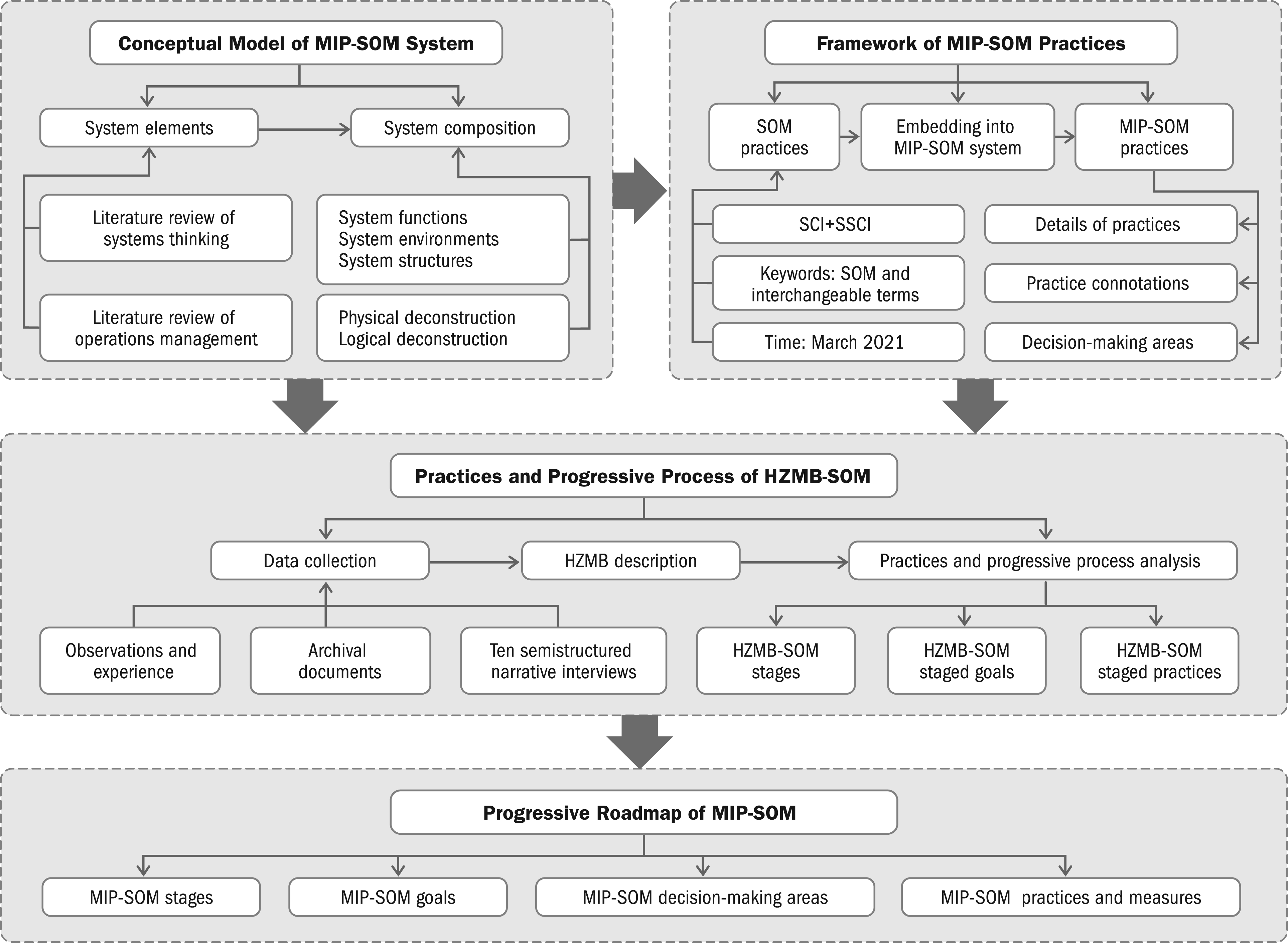
Research framework.
Literature Analysis
Literature analysis is an effective method for obtaining in-depth knowledge in a certain field (Shi et al., 2020), which helps to systematically identify and integrate the knowledge content existing in SOM. This study extracts relevant publications from the Science Citation Index Expanded (SCI-EXPANDED) and Social Sciences Citation Index (SSCI) datasets on the Web of Science (Shi et al., 2020). As the literature closely related to MIP-SOM is limited, the key terms were extended to include SOM. The search was carried out with the following model: TS = sustainable operations management OR sustainable operation OR green operation OR operation* management OR maintenance management OR sustainable supply chain OR green supply chain (Machado et al., 2017). Here, topic search (TS) indicates that the publications including these terms in the Title/Abstract/Keywords (T/A/K) were selected, and ‘*’ denotes a fuzzy search. Time: March 2021. Screening was conducted after initial sampling. A total of 2,128 records were identified. Based on the bibliometric data, 28 SOM practices covering four main decision-making areas of the modern operations management framework were identified: sustainable operational strategy (SOST), sustainable operational system (SOSY), sustainable operational process (SOPR), and sustainable supply chain (SSCM).
Deconstructive Analysis
Deconstructive analysis originates from deconstruction (Avelino & Grin, 2017). Some researchers have proposed that deconstruction can stimulate new views on research topics and stand out as an institutional process that forms research agendas (Cooper, 1989) such as transition management toward sustainable development (Avelino & Grin, 2017; Kemp et al., 2007). This article refers to systems thinking and considers MIP-SOM as a complex system with the capability to achieve sustainability operational goals. Deconstructive analysis was conducted to help identify the internal structures and operation principles of the MIP-SOM system, followed by systematically embedding sustainable practices to explore an integrated framework of MIP-SOM practices. The process of performing deconstructive analysis is intended to reveal the most important components and dynamic signatures of what happens or may happen. Two primary processes are investigated in this study. First, MIP-SOM is an open and complex system. Based on complex system theory, literature analysis, and MIP operational characteristics, it conducts a physical deconstruction of MIP-SOM system elements and identifies the interaction between the system and external environments. Second, based on operations management theory, literature analysis, and MIP operation characteristics, it summarizes the main dimension framework of the MIP-SOM system elements and clarifies the functions and interaction between dimensions. Simultaneously, continuous optimization of the operation process provides a logical deconstruction of the dynamic characteristics of the MIP-SOM system.
Case Analysis
Case analysis is an exploratory research method that involves an in-depth examination of the context and uncovers new views from an original perspective (Liu, Y. et al., 2022; Shi et al., 2020). The case was introduced to help examine the practicality of the framework of pre-identified practice, followed by an exploration of the SOM roadmap used in the case project. This study chose the HZMB as a case. Given its scale, complexity, and sensitivity, multiple excellent cases were explored to summarize successful experiences. Outstanding design, operation, and consultancy companies were invited to plan and conduct operations management, and advanced technologies and management philosophies were adopted to develop three-stage transition management mechanisms and sustainability operational goals. With the enablers of needs, environmental, and social responsibility aspects, the HZMB has been constructed with a high-standard, high-quality concept, and is operated with safe, high-quality, high-efficiency, intelligent, green philosophies (Wang, Z. et al., 2023).
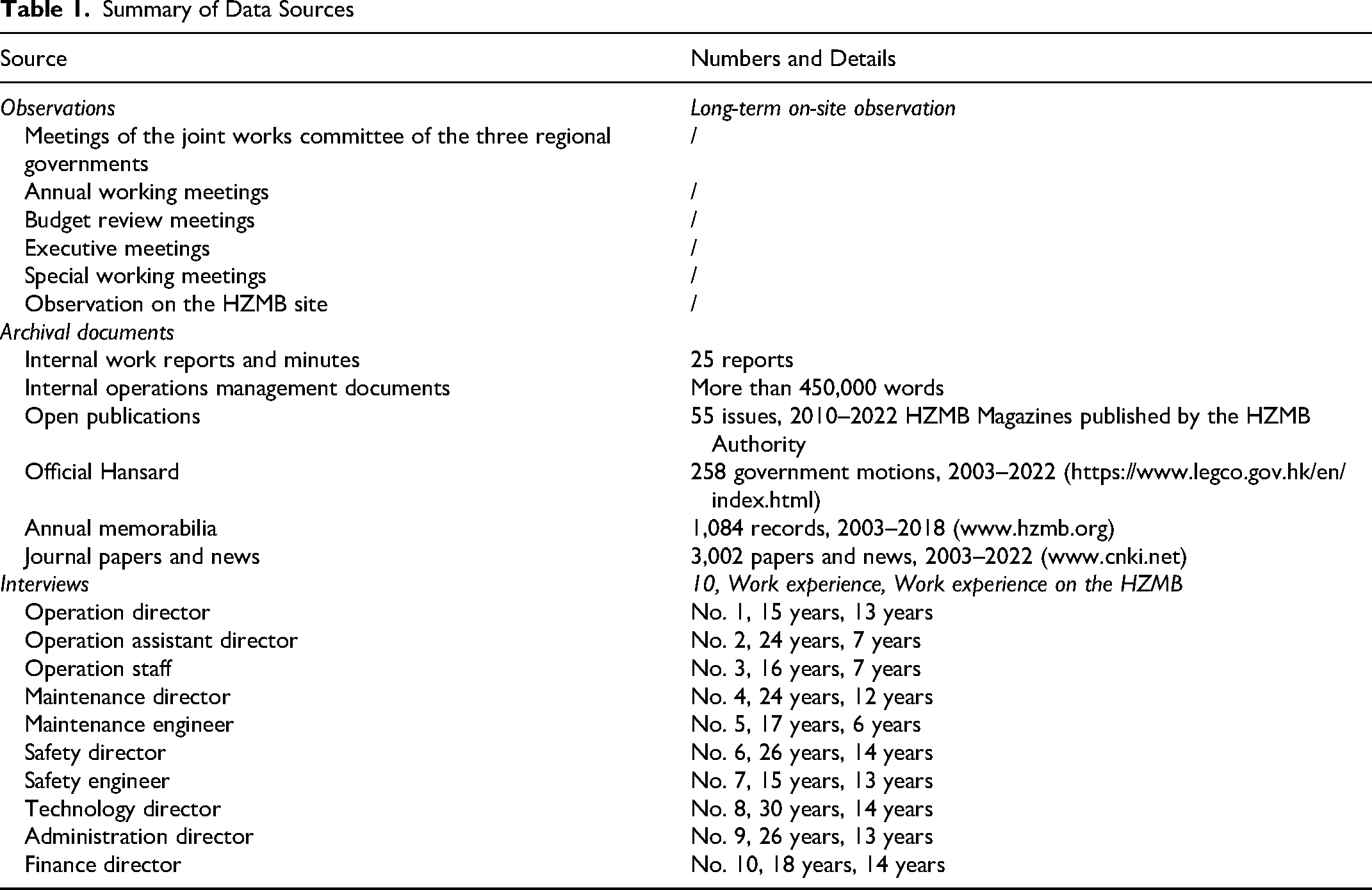
Data collection follows a traditional qualitative analysis strategy and was conducted inductively (Liu, Y. et al., 2022; Shi et al., 2020). Three primary data sources were used: the authors’ observations and experiences, archival documents, and semistructured narrative interviews, as summarized in Table 1. First, one of the coauthors of this article worked on the HZMB management team from 2010 to 2023, having long-term practical experience in the HZMB from construction to operations. Two coauthors have devoted themselves to the basic theory research of MIP management over the past 10 years. The authors have a profound understanding of the case of the HZMB and the theory of MIP management. Archival documents were used as the primary data because they are advantageous for tracing time lines, changes, challenging problems, processes, solution episodes, and action goals (Hu et al., 2018). We gathered reliable longitudinal information on sustainable operational goals and practices in the HZMB. Ten interviews with individuals who play essential roles in key departments were conducted, as shown in Table 1. Directors of each key department were interviewed at least once. They have holistic and detailed knowledge from the HZMB construction and operations. The interview duration ranged from 30 to 90 minutes. The interviews focused on confirming the details of past events and the logic of the case operation stages. The triangulated use of the above archival evidence from multiple sources and subsequent interviews can improve the validity of the research findings (Hu et al., 2018).
Summary of Data Sources
Conceptual Model of the MIP-SOM System
MIP-SOM can be regarded as a complex system with the system environment, the system structure, and the system functions (Jia et al., 2022; Simon, 1991; Zhu & Mostafavi, 2018). First, the system functions refer to achieving the sustainability operational goals of the MIP. Second, the system environment is an element that exists outside the system and has a direct or indirect relationship with it (Rad et al., 2017). In view of the study by Jia et al. (2022), the system environment is divided into economic, natural, social, and policy environments, as well as stakeholders that exist in the corresponding environment. Third, the system structure comprises elements or subsystems with specific functions and relationships (Vidal et al., 2011). Jia et al. (2022) pointed out that the system structure contains many elements such as organization, objectives, goals, activities, tasks (He et al., 2015), processes, products (Senescu et al., 2013), technology, information resources, experience, information platforms, and system components (Rad et al., 2017). However, the complexity of the relationship among these elements is one of the most critical characteristics of MIP complexity and cannot be solved using existing methods (Jia et al., 2022). Therefore, rather than attempting to clearly identify the complex relationship among system elements, this study attempts to deconstruct the dimensional framework of system elements, clarify the function of each part, and reveal the essence of the continuous improvement of MIP-SOM. A literature analysis of operations management reveals the main dimension framework of the MIP-SOM system elements, including operational strategy (goals, tasks), operational process (design, evaluation), and operational system (technology, resource). Simultaneously, the interaction between the system and external environments of complex system characteristics and the continuous optimization of the operation process, such as design (Adey, 2019), planning, implementation (Kabeyi, 2019), evaluation (Alshboul et al., 2023), and optimization (Too, 2012), provide a logical deconstruction of MIP-SOM system dynamics.
As a result, a conceptual model of the MIP-SOM system is proposed, which is the basis for identifying and constructing the framework of MIP-SOM practices, including the MIP sustainable operation strategy (MIP-SOST subsystem), resource (MIP-SORE subsystem), and process management subsystem (MIP-SOPR subsystem) (Figure 2).
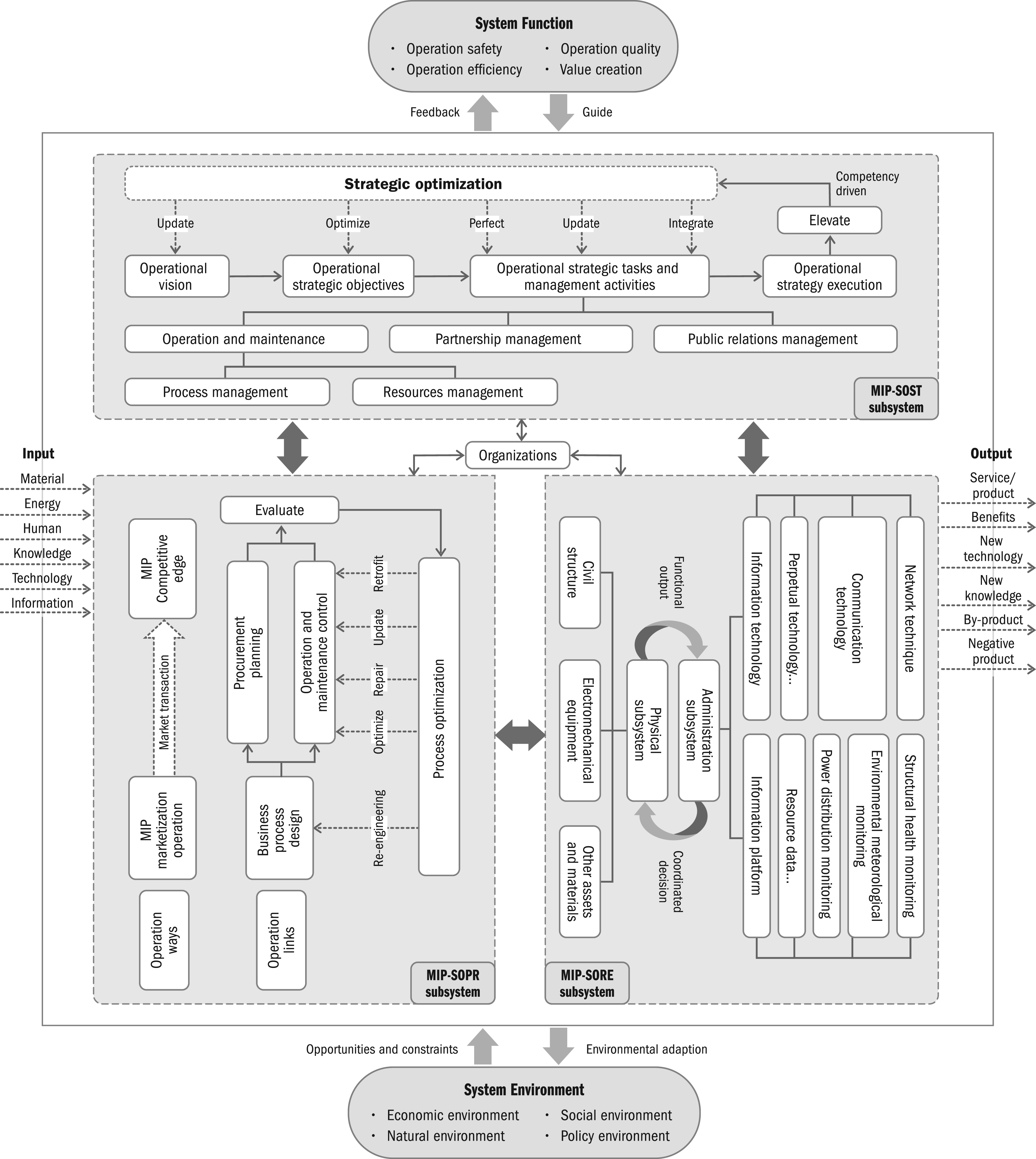
Conceptual model of the MIP-SOM system.
From the results of physical deconstruction, the MIP-SOST subsystem is a guidance and restraint intelligence system. It includes an operational strategic vision, goals, and tasks (Kabeyi, 2019). For MIPs, the key areas of strategic tasks involve external public relations management, partnership management, and management of operations and maintenance activities of internal processes and resources. The MIP-SORE subsystem is a carrier and a structural support system. It covers administration and physical subsystems (Choi, J. et al., 2019). The administration subsystem has a decision-making carrier function. The administration subsystem exerts its function by collecting, identifying, analyzing, processing, and providing relevant feedback about the subject elements’ decision-making and physical subsystems’ reactions, which depend on the information technology and information platform related to information processing. The physical subsystem is primarily based on the operation of a material carrier for a functional output. The MIP-SOPR subsystem is a function and value transformation system and is the key link to SOM. This includes business process planning, procurement, O&M control, and process improvements (Samaranayake, 2009).
From the results of logical deconstruction, the system constantly interacts with the environment and adjusts its behaviors to respond to environmental changes (Choi, T. Y. et al., 2001). The MIP-SOST subsystem strategically positions the operational vision and goals through the exchange of external environmental elements, forming specific management tools and measures for the strategic tasks of key areas and links. Operational strategy optimization (integration, update, improvement, and optimization) is performed through mutual cooperation and collaboration between execution and the post-execution evaluation of operational strategies. In the operation of the MIP-SORE subsystem, under dynamic changes in the external environment, decision-making is carried out through the active and passive perceptions of the administration subsystem and the adaptive adjustment (maintenance, update, and retrofit) of the physical system. Based on the guidance of the MIP-SOST subsystem and the operation of the MIP-SORE subsystem, the MIP-SOPR subsystem performs business process optimization with environmental changes, including reengineering, updating, optimization, maintenance, and retrofitting based on the evaluation results.
Framework of MIP-SOM Practices
Previous studies on MIP-SOM practices are fragmented. This study compares the four SOM decision-making areas and 28 practices in the manufacturing industry with regard to the MIP-SOM system and embeds them into the deconstructive system, as shown in Figure 3. Based on these 28 practices and the MIP-SOM system, a framework of MIP-SOM practices was identified, including three MIP-SOM decision-making areas and 14 practices.
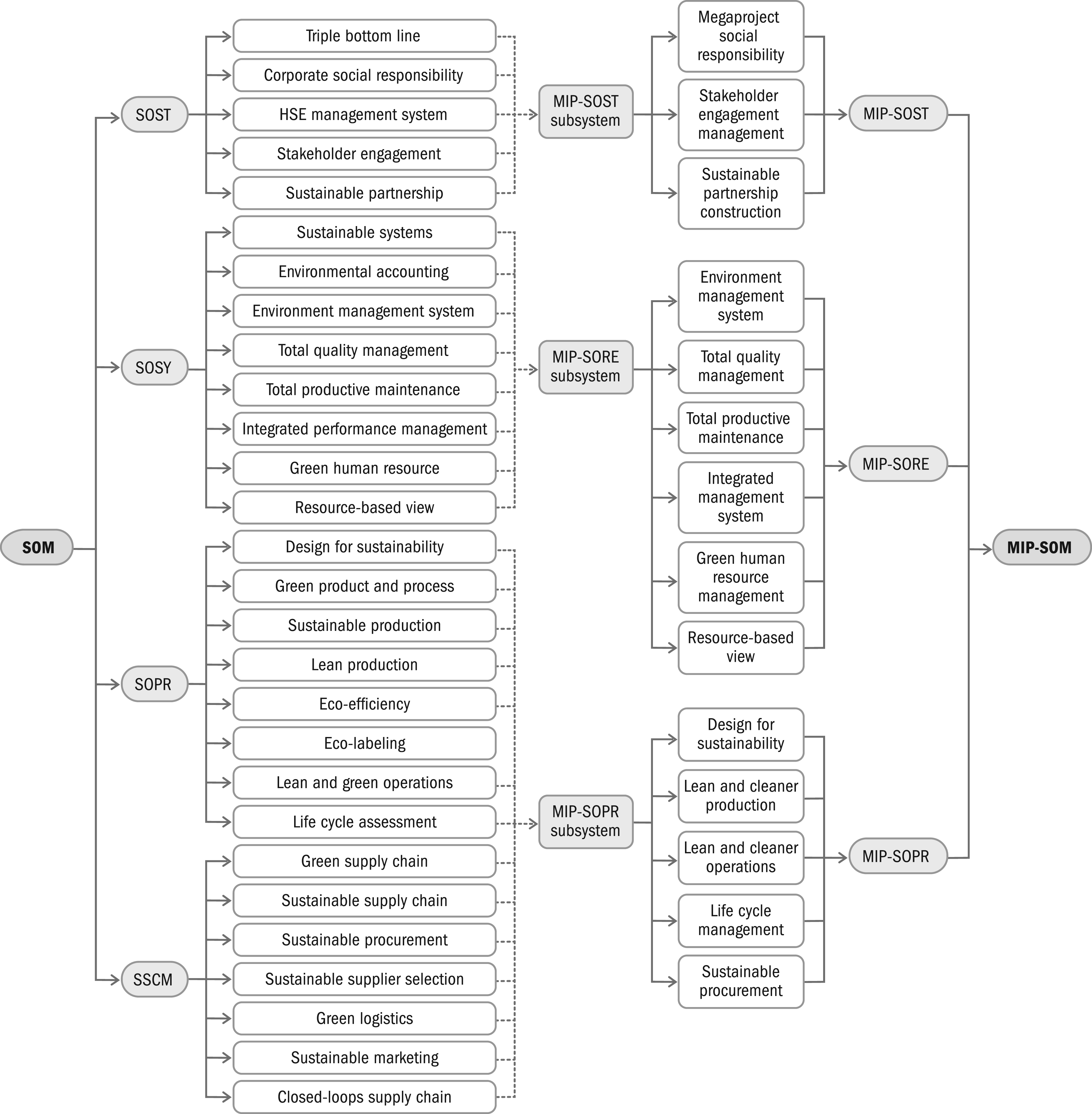
The framework of MIP-SOM practices.
MIP-SOST refers to SOM practices for managing operational vision, objectives, and tasks in the MIP-SOST subsystem, as well as focusing on their continuous optimization issues, thereby playing the guidance and restraint functions of the MIP-SOST subsystem. Therefore, MIP-SOST practices involve operational strategies based on megaproject social responsibility (MSR) (Lin et al., 2017), stakeholder engagement management (SEN) (Cuppen et al., 2016), and sustainable partnership construction (SPA) (Hueskes et al., 2017). MIP-SORE is the organization, coordination, and optimization of the administration and physical subsystems in the MIP-SORE subsystem through the implementation of SOM practices, thereby playing the carrier and structural support functions of the MIP-SORE subsystem. Therefore, MIP-SORE practices include environment management system (EMS) (Marcelino-Sádaba et al., 2015), total quality management (TQM) (Egwunatum et al., 2021), total productive maintenance (TPM) (Zulkifly et al., 2021), integrated management system (IMS) (Ding & Li, 2013; Triantafyllidis et al., 2018), green human resource management (GHRM) (Leilaee & Rezaeian, 2021), and resource-based view (RBV) (Ma et al., 2020). MIP-SOPR primarily implements sustainable planning and management of business process design, procurement process planning, O&M control, and process optimization in the MIP-SOPR subsystem through the implementation of SOM practices, thereby performing the function and value transformation functions of the MIP-SOPR subsystem. Therefore, SOPR practices include the design for sustainability (DFS) (Batouli et al., 2017), lean and cleaner production (LCP) (Robichaud & Anantatmula, 2011), lean and green operations (LGO) (Li et al., 2020), life cycle management (LCM) (Batouli et al., 2017), and sustainable procurement (SPR) (Lingegard et al., 2021).
Case Study: The Hong Kong-Zhuhai-Macao Bridge
Project Description
The 55-kilometer-long HZMB is a large cross-sea passage connecting the Hong Kong Special Administrative Region, Zhuhai City in Guangdong Province, and the Macao Special Administrative Region in China. The HZMB faces the economic, social, and institutional environments of one country, two systems, and three laws, spanning three jurisdictions and three independent customs areas, and consequently different social environments and cultural customs. Simultaneously, the HZMB spans the ship sailing area of Lingdingyang Bay, passes through the Chinese White Dolphins Reserve of the Pearl River Estuary, and is situated in typhoon- and rainstorm-prone areas. Correspondingly, the HZMB needs to confront the stakeholders that exist in the corresponding environment such as suppliers, media, and more than 30 governmental departments (border inspection, customs, traffic, police, fire, and maritime) in Guangdong, Hong Kong, and Macao. These complex circumstances impel the characteristics of the decision-making team, which is called the two-level coordination structure of central and local government, and the three-level governance structure of the HZMB Task Force–the Joint Works Committee of the Three Local Governments (JWCTLG) (i.e., preliminary work coordination group in the planning stage)–the HZMB Authority (Hu et al., 2018). The HZMB Administration is responsible for the construction, operation, and maintenance of the HZMB. Construction was completed in February 2018 and the bridge was opened to the public in October 2018 (Liu, Y. et al., 2022; Wang, Z. et al., 2023).
HZMB-SOM Practices and Progressive Process
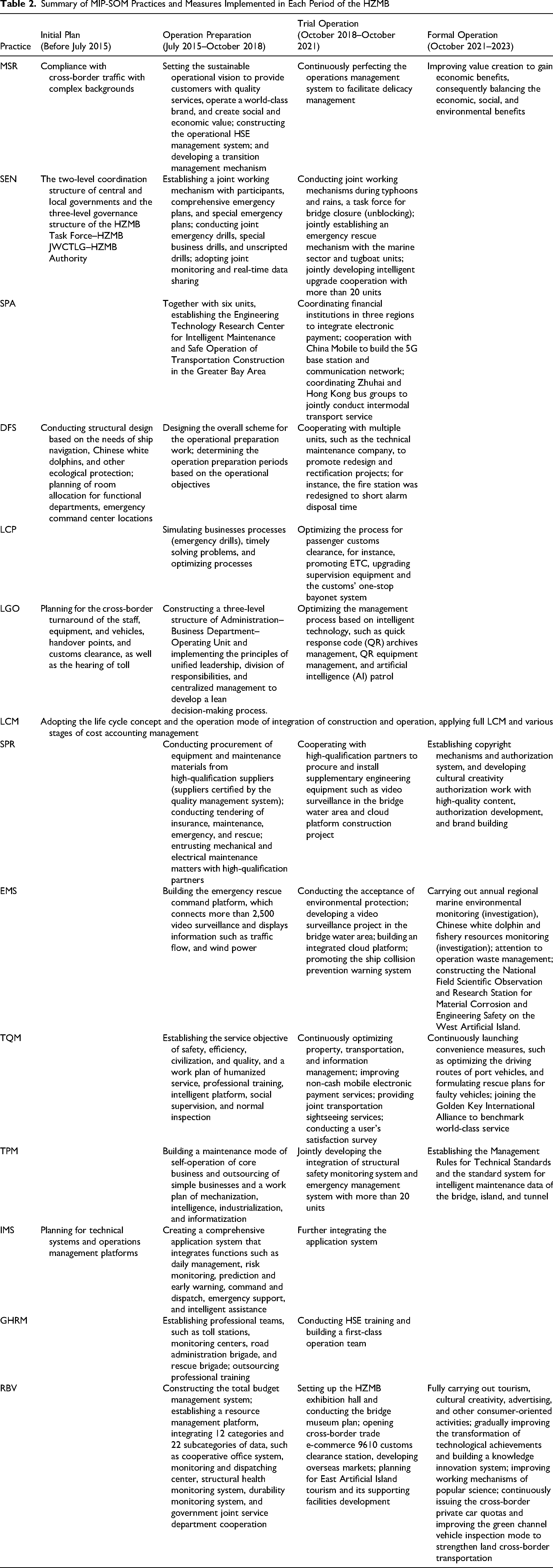
The HZMB creatively develops a transition management mechanism, including three stages of operation preparation, trial operation, and formal operation. Consequently, according to the data collected from the authors’ observations, archival documents, and semistructured narrative interviews, in the case of the HZMB, a variety of instances pertaining to different MIP-SOM practices and the results under which they were coded, consolidated, and sorted by periods are shown in Table 2. It is found that 14 MIP-SOM practices and measures proposed in this article embrace predominant issues to deal with the HZMB sustainability operational goals, though showing different characteristics at each period.
Summary of MIP-SOM Practices and Measures Implemented in Each Period of the HZMB
Stage 1—Initial Operation Plan Period (Before July 2015)
Different from the cross-city and interprovincial bridges or highway projects, the HZMB is the first cross-border project and the first project developed jointly by the three regional governments under the institutional environment of one country, two systems, and three laws. Consequently, project coordination mechanisms, operational compliance issues (cross-border traffic management), and the design and planning of operation-related civil structures and support facilities are essential operational issues to be considered during the construction stage. (Administration director)
First, an effective governance mechanism is one of the most important operations management issues. The two-level coordination structure and the three-level governance structure were creatively established during the construction stage. This governance mechanism plays an important role in coordinating major issues related to the operation preparation stage and reflects the engagement management of key stakeholders. Furthermore, MSR-based operational compliance, such as compliance with cross-border traffic with complex backgrounds, must be considered. The HZMB Cross-Border Traffic Policy Coordination Group was founded in 2012 to conduct relevant studies; it has taken five years to conduct research on these four main topics. Finally, 35 listed items were completed, and the boundary conditions were determined based on compliance and conformity. Furthermore, through comparative analysis of the current two common operation modes (the integration of construction and operation and the separation of construction and operation), the life cycle concept and the operation mode of integration of construction and operation were applied. Therefore, defining governance mechanisms and engagement management of key stakeholders, constructing infrastructure and related support facilities, and implementing the design with life cycle sustainability can be concluded as practices related to MIP-SOST, MIP-SORE, and MIP-SOPR, respectively The aim here is to develop the MIP-SOST subsystem and construct the MIP-SORE subsystem and the MIP-SOPR subsystems to ensure subsequent operational safety such as ship channel safety, structure safety, and political (legal) security.
Stage 2—Operation Preparation Period (July 2015–October 2018)
All things were forewarned. Given the scale, complexity, and sensitivity of the HZMB, as well as the exploration of successful experiences from excellent cases, operation preparatory work for the HZMB operation began before project delivery. To ensure smooth opening of the bridge—as well as operational safety, quality, and efficiency—the main work during the operation preparation stage is to be down-to-earth and carried out through overall planning and top-level design by building models, preparing plans, and establishing rules and regulations. Simultaneously, the support facilities for operational activities should be improved. (Operation director)
By July 2015, the HZMB operation preparatory leading group and working groups were founded, representing the start of the operation preparation period. It organized and held six operational preparation meetings and several special meetings to advance operation preparation. In late 2016, the HZMB Authority set up an Operations Management Department to take the lead in coordinating with various departments. In the early stage of the operation preparation period, the operations management mode was determined, and the overall plan for operation preparation was formulated. The 13 sections and 68 key operational preparatory tasks that must be completed before opening to traffic were sorted and coordinated. Then, various preparatory works were carried out. During the preparation period, more than 70 research and exchange activities on domestic and foreign projects were carried out, for example, market research, technical exchange, and technical consultation. A total of nine joint emergency drills with 24 scenarios and more than 30 special business drills and unscripted drills were conducted. Therefore, improving HSE management mechanisms and working schemes, constructing intelligent resource management platforms and comprehensive management systems, and optimizing business and emergency processes with lean and green concepts can be concluded as practices related to MIP-SOST, MIP-SORE, and MIP-SOPR, respectively, aiming to perfect the MIP-SOST subsystem, improve the MIP-SORE subsystem, and optimize the MIP-SOPR subsystem to ensure the system functions.
Stage 3—Trial Operation Period (October 2018–October 2021)
The ultimate goal of building an outstanding bridge is to effectively use and manage it. The operation of the HZMB is dynamic. During the trial operation period, we analyzed the work content through regular cross-department coordination and work meetings and constantly improved the organizational structure and management system to ensure that our operations management could always match the changing realistic needs and achieve smooth transition and steady improvement through continuous strengthening of collaboration, optimizing adaptation, and innovative technology. (Safety director)
The trial operation period began in October 2018. Several important tasks were conducted in cooperation with universities, research institutes, enterprises, financial institutions, government departments, and other participants in Guangdong, Hong Kong, and Macao. They mainly include strengthening multisubject collaboration, standardizing the innovation of collaborative mechanisms, rectifying the leftover and defective engineering problems existing in the construction process, and effective planning of value-creation activities to increase additional revenue. Several positive results were obtained during the trial operation period; for instance, 12 cross-department rectification projects left by construction were promoted, and more than 100 environmental hazards such as water leakage, electricity leakage, and rat infestation were successfully solved. The HZMB highway port border inspection department carried out 23 large-scale intelligent special renovations and solved more than 200 technical problems; thereby, one round of equipment inspection time was shortened from 4 hours to 50 minutes, and the average troubleshooting time was reduced from 20 minutes to 5 minutes. Therefore, innovating the collaboration mechanisms, repairing defects left by construction, and integrating technologies, information systems, and processes by technological innovation and lean concepts can be concluded as practices related to MIP-SOST, MIP-SORE, and MIP-SOPR, respectively, intending to improve the MIP-SOST subsystem, perfect the MIP-SORE subsystem, and optimize the MIP-SOPR subsystem.
Stage 4—Formal Operation Period (October 2021–2023)
The HZMB spans the entire Lingdingyang Bay and connects three regions, providing a significant geographical advantage. This huge investment requires it to achieve broad economic and social benefits and drive regional development. As time passes, it becomes necessary to further exert social functions. Therefore, it is necessary to fully utilize the advantages of the Port + HZMB and promote the realization of economic and social benefits through resource integration and development and strive to achieve industry leadership and sustainable development. (Operation assistant director)
Acceptance of completion was achieved in October 2021, which represented the start of the formal operation period. During the formal operation stage, the HZMB tends to conduct marketization-based resource integration and development to improve additional value and gain economic benefits, consequently balancing its economic, social, and environmental benefits. Examples include transformation of technological achievements, development of the consumer market, and continuous expansion of cross-border transportation based on location advantages. As for the transformation of technological achievements, a number of innovative construction methods, software, and equipment have been developed during construction and operation; monographs, technical standards, and more than 500 patents have been formed; a total of 40,000 digital collections were launched in May and June 2022, and were sold out immediately. By June 2022, the total import and export value of goods at Zhuhai Port had exceeded 300 billion yuan, and the number of countries (regions) involved in the market had increased from 105 in 2018 to 225 in 2022. Therefore, value creation through resource development, brand building, and technology promotion can be considered as practices related to MIP-SORE, intending to continuously perfect the MIP-SORE subsystem and improve its supportability functions, thereby balancing economic, social, and environmental benefits based on value integration.
Progressive Roadmap of MIP-SOM
The progressive roadmap of MIP-SOM is defined here as an agenda that consolidates the progressive processes (summarized from the case study) of MIP-SOM practices (extracted from the literature and deconstructive analysis) implementation. The roadmap describes the priorities of sustainable practices that address predominant issues affecting operational sustainability goals, as shown in Figure 4.
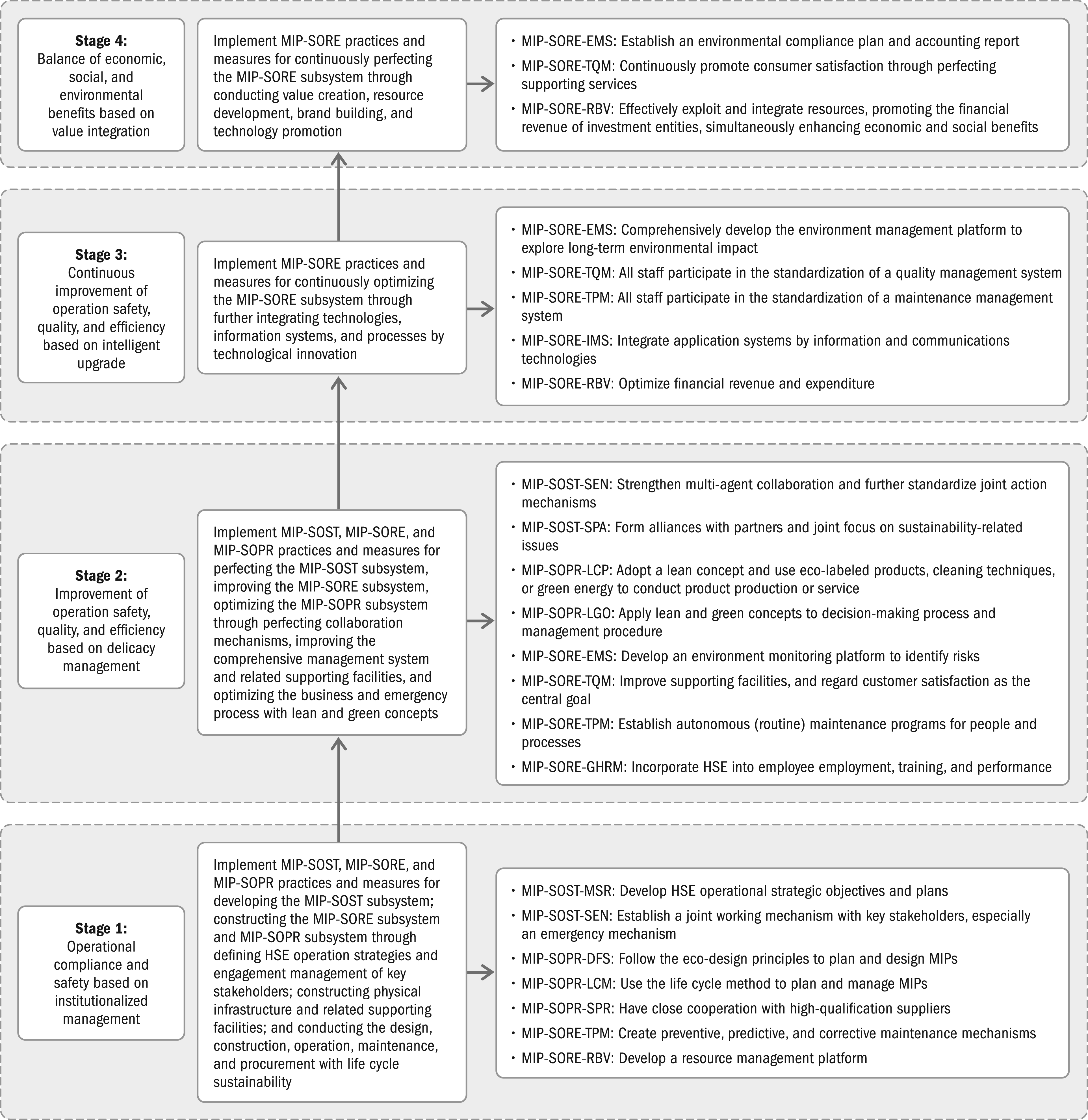
The progressive roadmap of MIP-SOM.
In the initial operational plan phase, MIP-SOM aims to build a system that regulates operational compliance and safety based on institutionalized management. It involves developing the MIP-SOST subsystem by defining HSE operation strategies and trade-offs with partners; constructing the MIP-SORE subsystem by constructing physical infrastructure and related supporting facilities; and constructing the MIP-SOPR subsystem by conducting design, construction, operation, maintenance, and procurement with life cycle sustainability. Among these, MSR and LCM are the two basic and dominant practices of MIP-SOM. MSR reflects voluntary contributions to society and the environment (Zeng, S. et al., 2015). When organizations take HSE responsibility as a voluntary behavior, they can perform in a manner that better represents social ethics, thereby forming the foundation of MIP-SOST and contributing to social and environmental benefits (Lin et al., 2017). Simultaneously, as the MIP-SOM system has the characteristics of multiple participants, MIP-SOM also emphasizes the working and collaboration mechanisms built by SEN (Shi et al., 2020). In addition, MIP designers generally identify life cycle risks and optimize the life cycle system model during the planning and design stage with the help of digital technologies (e.g., BIM) (van Marrewijk et al., 2008). The engineering quality and physical structure of civil structures are related to the intrinsic safety, maintenance costs, and resource consumption during the operation phase (Bettley & Burnley, 2008). A literature survey revealed the majority of O&M problems are attributed to design problems (Mohammed & Hassanain, 2011) such as the ecological problems of the Three Gorges Dam (Wang, G. et al., 2005). As a result, the design and management of MIPs need to embrace life cycle sustainability such as the integrated model of construction and operation of Beijing Daxing International Airport’s full life cycle green management. In addition, MIP’s operational preparations of the operation model of separation of construction and operation should also be preemptive, which is conducive to promoting the seamless connection between construction and operation such as the East Sea Bridge.
Stage 2 aims to implement MIP-SOST-, MIP-SORE-, and MIP-SOPR-related practices and measures to perfect the MIP-SOST subsystem by perfecting collaboration mechanisms and working schemes, improving the MIP-SORE subsystem by improving a comprehensive management system and related supporting facilities, and optimizing the MIP-SOPR subsystem by optimizing the business and emergency processes with lean and green concepts. The effect of the progressive process of MIP-SOM begins to emerge, which is manifested especially in response speed and service quality. Strengthening collaboration mechanisms and forming a strategic alliance can quickly and flexibly access complementary resources and skills from other organizations and become important factors in enhancing emergency processes and efficiency (Li, H. M. et al., 2022). Simultaneously, the optimization of management procedures and operational processes with lean, clean, and green concepts during operations can improve efficiency and productivity and reduce materials and energy consumption, thereby promoting economic and environmental benefits (Bettley & Burnley, 2008). Quality is a prominent concern for MIPs (He et al., 2020). TQM practices related to executive commitment, employee empowerment, and customer focus can help to improve the quality of products and services (Zu, 2009). The TQM practices of organizing, managing, and integrating leadership, strategy, people, resources, and processes can improve project efficiency (Bou-Llusar et al., 2009). With the dynamic change in the environment, MIP maintenance activities are becoming increasingly important themes. Maintenance is the combination of technical and associated administrative actions (BSI, 1984), and TPM would be vital to improving infrastructure availability, safety, and optimizing operation effectiveness (Ahuja & Khamba, 2008). Spreading green ideologies in a cross-functional manner can effectively improve environmental performance (Zaid et al., 2018), and the human resources function is best spread across critical business functions (Wagner, 2013). An effective means is to improve employees’ occupational health awareness and skills through proper occupational health and safety training, thereby contributing to promoting operational safety, quality, and efficiency, as well as environmental goals (Zaid et al., 2018).
In phase 3 of MIP-SOM, the operational goals are to continuously improve operational safety, quality, and efficiency based on intelligent upgrades; and mainly implementing MIP-SORE practices and measures for continuously optimizing the MIP-SORE subsystem through further integrating technologies, information systems, and processes by technological innovation, thereby improving the supportability functions of the MIP-SORE subsystem. Therefore, advanced technological innovation is prioritized and subsequently applied to systems and processes. With an increase in legislation, the adoption of EMS plays an important role in monitoring long-term changes in the external environment and evaluating the environmental impacts of MIP operations (Marcelino-Sádaba et al., 2015). In fact, owing to the large scale and huge dimensionality (Sheng, 2018), management of the environment, quality, and maintenance of MIPs are highly dependent on monitoring systems provided by information and communications technologies (Moore & Starr, 2006); consequently, improving the accuracy and efficiency of the monitoring system is crucial (Fleming et al., 2013). After capturing information on failures, decision-making behavior is coordinated and dispatched according to the maintenance technical manual and emergency measures (Jajac et al., 2009). This indicates the significance of perfecting diagnostic techniques and programs and standardizing management systems (Ahuja & Khamba, 2008). In addition, the complexity of information, resources, and technologies leads to a diversity of related information, which can easily cause confusion in system functions. It is necessary to further integrate management systems and improve the ability and accuracy of system information identification to enhance the speed of the perception of physical system changes, thereby improving the decision-making efficiency of management systems (Fleming et al., 2013).
The final phase of MIP-SOM places more emphasis on balancing economic, social, and environmental benefits based on value integration. This also involves implementing MIP-SORE practices for continuously perfecting the MIP-SORE subsystem by conducting value creation, resource development, brand building, and technology promotion, thereby continuously improving MIP-SOM system functions, that is, operational safety, quality, efficiency, and value creation. The reason for this is the large investment scale and difficulty of investors’ income returns in the short term, which is expected to be a general issue. Large-scale capital is invested in the construction of the MIP and its attribute of the public infrastructure prolongs the payback period. Especially in China, MIP investment entities mainly are investment teams with the dual attributes of government + market (Ma et al., 2020). From the perspective of their government attributes, the service or products provided by MIPs have a certain public interest. However, the operation of MIPs belongs to economic activities and has the operational goal of maximizing profits for the market, forming a decision-making conflict between the social development of the government and the operational interests of the market (Ma et al., 2020). Therefore, based on the RBV concept, competitive advantage should be formed through the effective management and value integration of assets, resources, knowledge, and technologies to increase operating income, create additional value, and promote value proposition, thereby shortening the payback period and balancing economic, social, and environmental benefits (Artto et al., 2016).
Conclusions
The demand for SOM in MIPs to systematically import and implement appropriate SOM practices is increasing. Using a combination of complex systems thinking, operations management, and the characteristics of MIPs, this study systematically explored the framework of MIP-SOM practices through a literature review and deconstructive analysis. Furthermore, we developed a progressive roadmap for MIP-SOMs based on an in-depth case analysis. This study provides a comprehensive analysis method for academic research and guidance for practitioners in implementing SOM in MIPs.
Several issues have been explored during this process. The first question explored the new concepts of SOM in MIPs. Based on the literature review, we define the concept of SOM in MIPs and emphasize two attributes: SOM practices and progressive management processes. The second research question aims to avoid fragmentation traps in the systemic identification of SOM practices. We address this question by providing a systematic framework for SOM practices in MIPs through both a literature review and deconstructive analysis, thereby identifying three decision-making areas and 14 practices. The third question was intended to examine the applicability of the framework of the pre-identified practices and further identify the MIP-SOM implementation roadmap according to an in-depth case analysis. These findings can provide relevant experiences for future practitioners.
Theoretical Value
The theoretical value of this study includes the following four aspects. First, discrepancies remain in the operations and project management of MIPs, which is a neglected area of research. Existing research often confuses these issues, and this study aims to fill this gap. Second, this study provides a new theoretical perspective on conducting operations management in MIPs and promoting sustainable development of MIPs through SOM. Based on the literature review, we propose novel concepts of SOM in MIPs that reveal the dynamic attributes of the progressive process in MIP operations. Third, we construct a conceptual model of the MIP-SOM system and propose a holistic framework for MIP-SOM practices using a method combining a literature review and deconstructive analysis. This study considers MIP-SOM as a complex system and deconstructs it based on complex systems thinking, operations management, and the characteristics of MIPs. This method considers the system complexity and dynamic characteristics, expands the application of complex systems thinking and operations management in MIPs; it also provides a systematic analysis method and research paradigm for academic research on MIP operations management. Fourth, we further develop the MIP-SOM roadmap according to an in-depth case analysis, revealing the progressive process of MIP-SOM, which provides a panoramic and systematic perspective for front-end decision-making.
Practical Implications
This study has three practical implications for MIP managers. First, given the demand for sustainable operations, project decision makers should consider an SOM agenda in MIP operations, which has multiple goals, stages, and decision-making areas. Second, due to the complexity and dynamic of the MIP-SOM system, sustainable practices making contributions to sustainability operational goals involve sustainable operational strategy, process, and system management. Third, MIP-SOM is a progressive management process, and it is necessary for operators to intervene early in the design and construction phase and start with operational compliance and safety, based on institutionalized management. Specifically, MSR-based strategies and LCM are two basic practices that should be considered in the front-end phase. Stakeholder engagement management cannot be overlooked. Efforts to strengthen multi-agent collaboration and standardize joint action mechanisms are recommended. Progressive MIP-SOM processes have begun to emerge with the aim of improving operation safety, quality, and efficiency. They mainly rely on sustainable practices of delicacy management and intelligent upgrade, which refer to improving the management mechanism, optimizing the operation process with lean and green concepts, and intelligently upgrading the operation system with information and communication technologies. Value integration is perceived as the dominant method for promoting investors’ income returns, which makes it important to conduct value creation, resource development, brand building, and technology promotion.
Research Limitations and Future Work
Despite the contributions of our study, it has three limitations that should be considered when interpreting the framework and progressive process of MIP-SOM. First, more case studies must be conducted to test and verify the integrity and replicability of the proposed framework and progressive roadmap. The second limitation is related to the deconstructive analysis. This study deconstructs the system from the perspective of decision-making areas, which cover the main operational activities instead of all elements. Consequently, rather than describing the details and requirements to carry out sustainable practices in MIP operations, this article is limited to the identification of decision-making areas and their optional schemes for MIP-SOM. To provide a detailed guide for practitioners, it is necessary to specifically analyze the dimensional structure of MIP-SOM practices and elicit an assessment model (e.g., a maturity model) to guide the MIP-SOM progressive process in the future. Third, this study was exploratory and limited to the identification of MIP-SOM practices in the proposed SOM practices extracted from the literature review. With technological progress, the MIP-SOM framework is updated regularly, owing to the continuous introduction of new indicators.
Footnotes
Acknowledgments
We would like to thank the support from the National Social Science Foundation of China (No.18ZDA043). Additionally, a special thank you goes to our interviewees from the Hong Kong-Zhuhai-Macao Bridge Authority for their friendship and patience.
Declaration of Conflicting Interests
The author(s) declared no potential conflicts of interest with respect to the research, authorship, and/or publication of this article.
